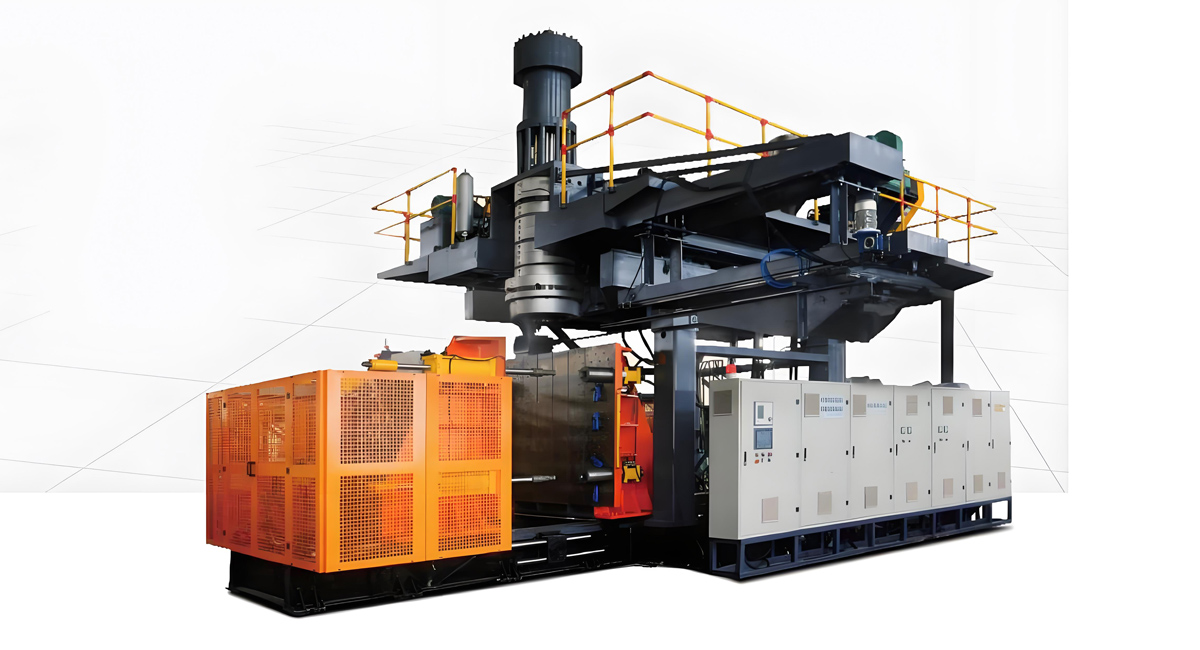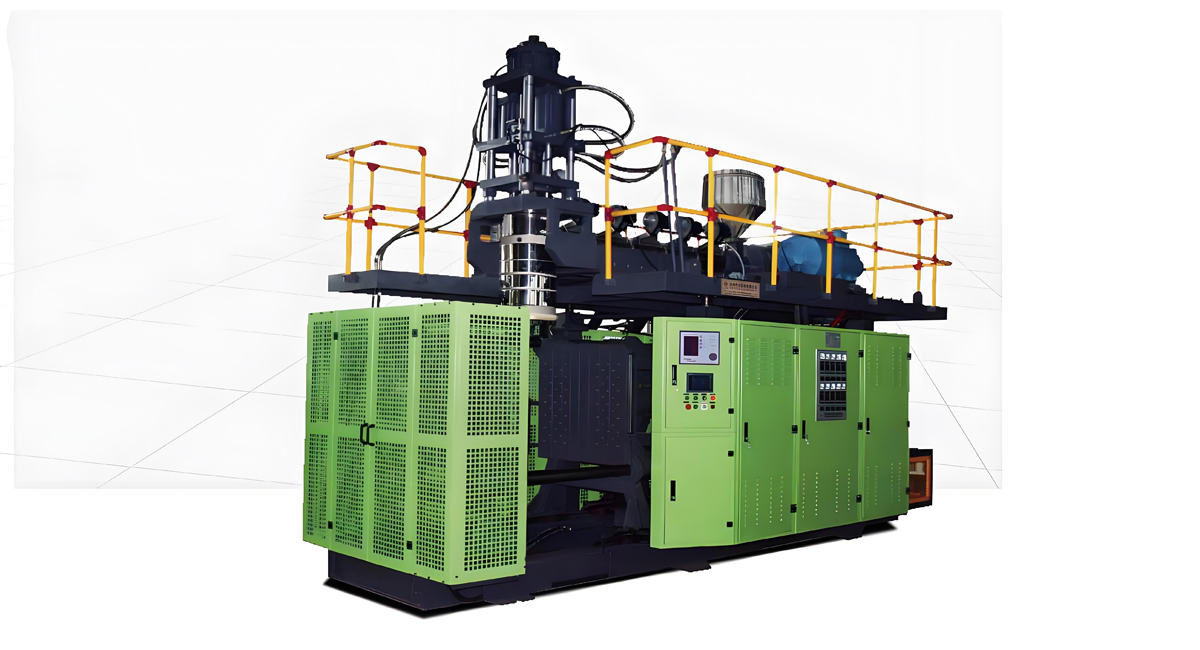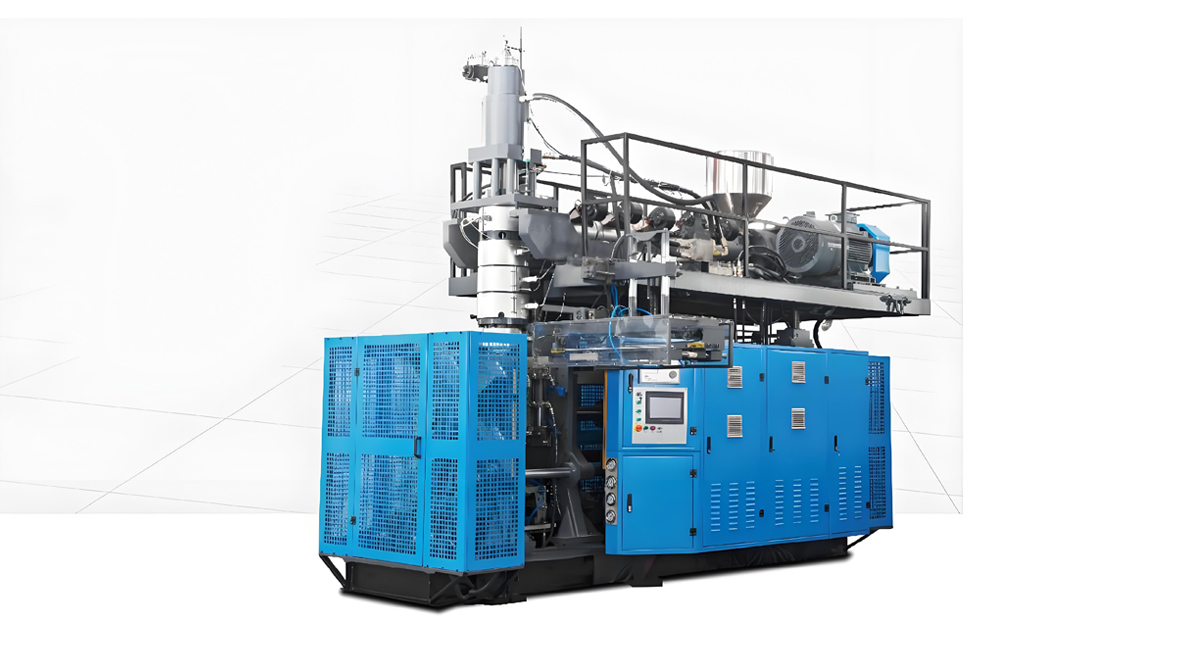

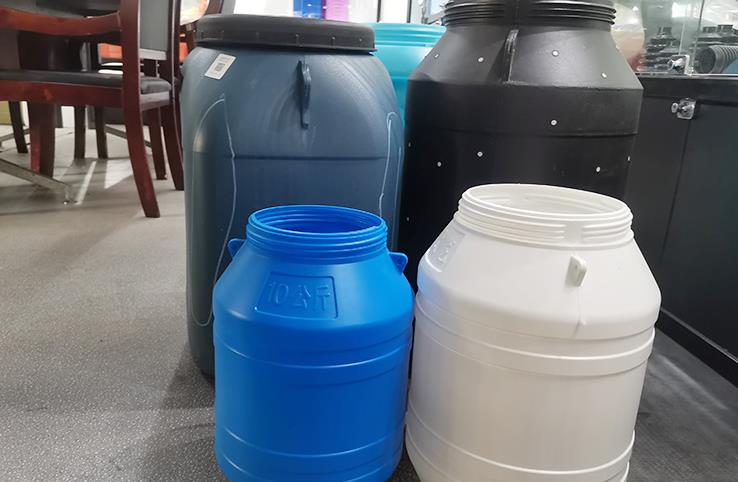
As a key packaging component for chemical storage and transportation, chemical drums are mainly used to store and transport various chemicals (such as acids, alkalis, solvents, oils and chemical intermediates). Their performance directly relates to the safety of personnel, environmental protection and the integrity of chemicals. According to the storage needs, they can be divided into small chemical drums (20L-50L), medium-sized chemical drums (50L-120L) and large chemical drums (120L-200L), with strict load-bearing requirements (dynamic load 0.3t-1t, static load 1t-5t). Chemical drums must meet core performance requirements such as excellent corrosion resistance, absolute leakage prevention, impact resistance, static resistance, chemical compatibility and compliance with international and national standards. The production process puts extremely strict requirements on the extrusion stability, molding accuracy, structural sealing and safety performance of extrusion blow molding machines. Specifically, it can be divided into the following core dimensions, taking into account both equipment performance and the special safety and compliance needs of chemical drums production.
I. Extrusion System: Ensuring Corrosion-Resistant Melt and Layer Bonding Quality
The extrusion system is the core of the extrusion blow molding machine for chemical drums production, which directly determines the plasticizing effect of corrosion-resistant raw materials, the bonding quality of multi-layer anti-seepage structures and the final corrosion resistance and leakage prevention performance of chemical drums. Due to the special requirements of chemical drums for material corrosion resistance and structural density, the extrusion system must meet strict standards.
1. Screw Configuration Adapted to Corrosion-Resistant Raw Materials
The mainstream raw materials for chemical drums production are corrosion-resistant modified HDPE (High-Density Polyethylene) and PP (Polypropylene). HDPE is preferred for its excellent chemical stability and impact resistance, while PP is used for drums storing strong corrosive chemicals (such as concentrated sulfuric acid, concentrated nitric acid). Some high-end chemical drums adopt multi-layer co-extrusion structure (such as HDPE + EVOH anti-seepage layer + adhesive layer) to prevent chemical penetration. Therefore, the extruder screw must be adaptively designed:
- Screw Parameters: The length-diameter ratio (L/D) should be controlled between 32:1 and 35:1, which is higher than that of ordinary water tanks, to ensure sufficient plasticization of modified HDPE/PP and uniform dispersion of anti-corrosion, anti-static additives, avoid melt degradation caused by excessive shearing, and ensure that the melt has excellent corrosion resistance and structural density; The screw diameter is adjusted according to the chemical drum capacity. A screw of Φ70-90mm can be selected for small chemical drums (20L-50L), a screw of Φ90-110mm for medium-sized drums (50L-120L), and a screw of Φ110-130mm for large drums (120L-200L), with corresponding plasticizing capacity (300-500kg/h) to meet the melt supply needs of chemical drums of different specifications.
- Screw Structure: A gradual compression ratio screw with mixing section is adopted, and the compression ratio is controlled between 4:1 and 5:1. The mixing section is added to enhance the dispersion effect of anti-corrosion, anti-static additives and anti-seepage layer materials, avoid uneven distribution of additives leading to reduced corrosion resistance and leakage prevention performance of chemical drums; For multi-layer co-extrusion chemical drums (2-3 layers), multiple sets of screws (2-3 sets) need to be configured to realize synchronous extrusion of different functional layers (HDPE base layer, EVOH anti-seepage layer, adhesive layer), ensure tight bonding between layers (bonding strength ≥1.8MPa), and prevent chemical penetration between layers.
- Screw Material: High-wear-resistant, corrosion-resistant and high-temperature-resistant alloy material (such as 38CrMoAlA + plasma spraying) is selected, and the surface is subjected to deep nitriding treatment (nitriding layer thickness ≥0.6mm) to resist the wear of modified raw materials and additives, avoid screw wear leading to uneven melt extrusion, and ensure the stability of long-term mass production of chemical drums.
2. Barrel and Head Design Meet Anti-Corrosion and Sealing Molding Requirements
- Barrel Temperature Control: Adopt high-precision zoned heating (feeding section, compression section, homogenizing section, mixing section) and cooling design, with temperature control accuracy reaching ±0.5℃. The temperature of each section can be accurately adjusted according to the performance of modified HDPE/PP (when producing HDPE chemical drums, the barrel temperature is controlled at 170-210℃; when producing PP chemical drums, it is controlled at 180-220℃), to avoid melt degradation caused by excessive temperature and insufficient plasticization caused by too low temperature, ensure stable melt extrusion, and effectively control parison sagging (the sagging amount is ≤2mm/m) —— which is crucial for the wall thickness uniformity and sealing performance of chemical drums.
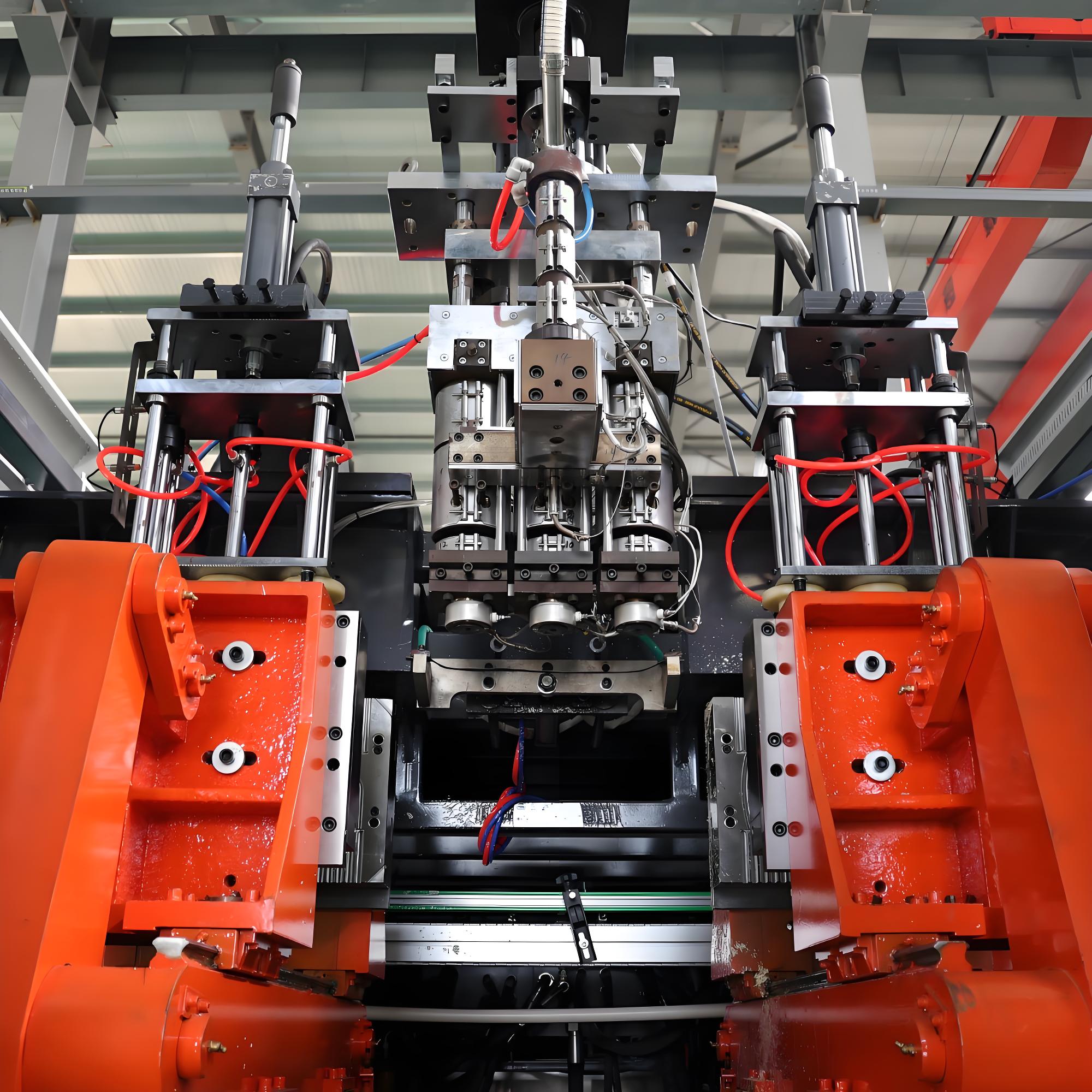
- Head Structure: For single-layer chemical drums, a center-fed accumulator head with high-precision flow channel is adopted, and the accumulator capacity is adjusted according to the weight of chemical drums (for example, the accumulator capacity of 200L large chemical drum model needs to reach 80-100L), which can stably output the parison and avoid parison fluctuation and deflection; For multi-layer co-extrusion chemical drums, a multi-layer co-extrusion head is adopted, with independent flow channels for each layer, and the flow rate of each layer can be precisely adjusted (adjustment accuracy ±1%), to ensure the uniformity of the thickness of each functional layer (the thickness of EVOH anti-seepage layer is controlled at 0.2-0.4mm). The die gap is driven by a servo motor with high precision (adjustment accuracy ±0.01mm), combined with the parison program control system, to realize precise control of the axial and circumferential wall thickness of the parison, compensate for the uneven stretching of the barrel mouth, barrel body and bottom (key sealing parts) during blow molding, and preset corresponding wall thickness parameters to improve the structural strength and sealing performance of chemical drums.
II. Blow Molding System: Ensuring Sealing Performance and Dimensional Precision
Chemical drums need to store various corrosive, volatile and even toxic chemicals, so they have extremely strict requirements on sealing performance, dimensional accuracy and structural integrity. The blow molding system, as the core link of molding, must meet the requirements of precise molding, uniform wall thickness, no defects and reliable sealing.
1. Parison Control Accuracy Meets Anti-Leakage Standards
Chemical drums have extremely strict requirements on wall thickness uniformity (the deviation should be controlled within ±0.1mm). Uneven wall thickness will lead to weak local structure of the drum, uneven cooling shrinkage, easy deformation and chemical leakage, and even serious safety accidents and environmental pollution. Therefore, the parison control must meet:
- Equipped with a high-precision parison wall thickness control system (up to 150 control points), which can accurately adjust the axial and circumferential wall thickness of the parison. For the parison sagging problem that is easy to occur in long parisons (for large chemical drums), compensate by optimizing the extrusion speed curve and increasing the initial thickness of the upper part of the parison, so as to ensure that the wall thickness difference between different parts of the chemical drum (barrel mouth, barrel body, bottom) is ≤0.05mm.
- The parison weight is accurately controlled (control accuracy ±0.5%), and the maximum parison weight should match the chemical drum weight (for example, the parison weight of 200L chemical drum can reach 40-50kg), to avoid insufficient parison weight leading to too thin wall thickness and insufficient corrosion resistance and strength of the drum, or excessive weight causing raw material waste and affecting the lightweight of the drum.
2. Stable and High-Precision Blowing System
- Blowing Pressure and Flow Rate: Adjust according to the size, wall thickness and sealing requirements of chemical drums. The blowing pressure of small chemical drums is controlled at 0.7-0.9MPa, and that of large chemical drums (120L-200L) needs to be increased to 0.9-1.1MPa. Multi-stage pressure control technology is adopted. A lower pressure is used in the initial stage to avoid local excessive stretching and material damage, and the pressure is increased after the material contacts the mold to ensure that the barrel mouth, sealing groove and other key parts are fully formed; The blowing flow rate is stable (flow rate fluctuation ≤5%), to avoid chemical drum defects such as depression, bulge, pinhole and incomplete sealing groove caused by pressure fluctuation. The blow-up ratio is controlled between 2.5:1 and 4:1, to adapt to the cylindrical shape of chemical drums while ensuring the wall thickness, strength and sealing performance.
- Blowing Timing and Cooling: The blowing timing is accurately matched with the parison extrusion speed (response time ≤0.1s), too early or too late will affect the material distribution, avoid the parison being too cold to blow up or deformation due to untimely cooling after blow up; The blowing medium adopts dry, clean, oil-free and dust-free compressed air (moisture content ≤0.01%, oil content ≤0.001%), to avoid bubbles, oil stains and scratches on the inner wall of the chemical drum caused by moisture, oil stains and impurities in the air, which affect the corrosion resistance and sealing performance and prevent chemical contamination. After blowing, inert gas (such as nitrogen) can be filled to prevent the melt from oxidizing and improve the service life of the chemical drum.
3. Mold Adaptability and Efficient Cooling System
- Mold Adaptability: The mold size is accurately matched with the designed size of the chemical drum (dimensional tolerance ±0.1mm), which meets the packaging size standards for chemicals. The mold cavity surface is polished with high precision (surface roughness Ra ≤0.8μm), smooth and free of burrs, to ensure the chemical drum has a flat surface and no scratches (scratches may cause stress concentration and leakage); The mold is designed with a built-in sealing groove (consistent with the barrel cover specification) to ensure the sealing performance between the barrel body and the cover; The mold has excellent sealing performance (air leakage rate ≤0.01L/min) to avoid air leakage during blow molding, leading to incomplete chemical drum molding; The equipment should be compatible with chemical drum molds of different capacities (20L-200L), with a mold thickness adjustment range of 800-1600mm to improve equipment versatility. The mold material adopts corrosion-resistant alloy to avoid corrosion by volatile chemical substances during production.
- Cooling System: A multi-circuit, high-efficiency cooling system is adopted to independently control the temperature of different areas of the mold (especially the barrel mouth and sealing groove), and the temperature difference on the mold surface is controlled within ±3℃, to avoid chemical drum shrinkage and deformation caused by uneven cooling (deformation will affect the sealing performance); The cooling water circuit is designed according to the chemical drum structure, with dense cooling points in thick-walled parts (barrel bottom, barrel mouth) and reasonable layout in thin-walled parts (barrel body). The cooling efficiency meets the production cycle requirements. The cooling time of small chemical drums is controlled at 50-100s, and that of large chemical drums needs to be extended to 150-300s, to ensure that the chemical drum is quickly solidified after molding, improve production efficiency, and ensure the dimensional stability, structural strength and sealing performance of the chemical drum. The mold is also equipped with a temperature feedback device to realize dynamic adjustment of cooling temperature.
III. Clamping System: Ensuring Molding Stability and Operational Safety
Chemical drum molds have high precision, strict sealing requirements and high production frequency. The clamping system is responsible for opening, closing and locking the mold, and its clamping force, stroke and precision directly affect the chemical drum molding quality, production safety and mold service life.
- Clamping Force: Determined according to the chemical drum size, wall thickness and blowing pressure. The clamping force of small chemical drum models needs to reach 800-1500KN, and that of large chemical drum models (120L-200L) should not be less than 1500-2500KN, to ensure that the mold does not loosen or overflow during blow molding, and avoid chemical drum defects such as flash, burr and dimensional deviation (flash will affect the sealing performance). The clamping force is adjustable (adjustment accuracy ±10KN) to adapt to chemical drums of different specifications.
- Clamping Stroke and Template: The clamping stroke is designed according to the maximum mold size and chemical drum shape, generally 1000-2200mm, to meet the needs of mold opening, closing and chemical drum taking out. The template size is matched with the mold (for example, 1600×1800mm template is suitable for 200L chemical drum molds), and the template parallelism error is controlled within 0.05mm, to avoid wall thickness deviation of the chemical drum or mold damage caused by uneven force on the mold during clamping; The mold thickness adjustment range is 800-1600mm, which is compatible with chemical drum molds of different thicknesses and capacities.
- Operational Convenience and Safety: Equipped with automatic clamping, demolding and mold changing mechanisms. The automatic demolding mechanism is designed according to the chemical drum shape (with special clamping fixtures) to avoid chemical drum damage caused by manual demolding and reduce labor intensity; The mold changing mechanism adopts quick-change design (mold changing time ≤40min) to improve production efficiency when switching between different capacity chemical drums. The clamping mechanism has good stability and durability, and can withstand high-frequency opening and closing actions (≥10000 times/month) for a long time, reducing the impact of equipment failures on production. At the same time, a safety interlock device is equipped to prevent accidental operation during clamping, ensuring production safety.
IV. Control System: Realizing Precise Regulation and Batch Consistency
Chemical drums production is mass production of dangerous goods packaging products, which has extremely high requirements on the consistency of product performance, dimensions and sealing performance. The control system must realize precise regulation of all parameters, reduce inter-batch errors, and ensure that each chemical drum meets the safety standards.
- Control Accuracy: Adopt a high-precision PLC control system (such as Siemens S7-1500 series) with high-speed processing capability, which can accurately control key parameters such as extrusion speed, barrel temperature, head temperature, blowing pressure, clamping force and cooling time. The parameter adjustment accuracy is high (extrusion speed fluctuation ≤1%, temperature control accuracy ±0.5℃), and the response speed is fast (response time ≤0.05s), ensuring the coordinated stability of each process and realizing the consistency of mass production (inter-batch dimensional deviation ≤0.1mm).
- Automation Function: It has full-automatic production functions such as automatic feeding, automatic extrusion, automatic blow molding, automatic cooling, automatic demolding, automatic trimming (trimming of flash and burrs) and automatic inspection, reducing manual intervention (manual intervention rate ≤5%), lowering labor costs, and avoiding product defects caused by manual operation errors; Equipped with a real-time wall thickness monitoring and feedback system (adopting ultrasonic thickness measurement technology, measurement accuracy ±0.01mm), real-time monitor the wall thickness changes of the parison and chemical drum, feed the data back to the control system for dynamic adjustment, and further improve the wall thickness consistency. At the same time, it is equipped with an online leakage detection system (air pressure detection method, detection pressure 0.4-0.6MPa, detection time ≥30s), which can automatically detect unqualified products (leakage, uneven wall thickness) and remove them, ensuring the qualification rate of products (≥99.8%).
- Fault Warning and Data Management: It has a complete fault warning and diagnosis function, which can timely detect problems such as extrusion abnormalities, temperature deviations, air leakage, clamping failures and leakage of chemical drums, and issue audible and visual warning signals, and display fault points and handling suggestions, avoiding the generation of batch unqualified products; At the same time, it can record production parameters (extrusion speed, temperature, pressure, etc.), fault information and product inspection results, store data for ≥2 years (meeting the traceability requirements of dangerous goods packaging), facilitate later problem troubleshooting, production process optimization and quality traceability, which meets the quality management requirements of the dangerous goods packaging industry.
V. Auxiliary System: Adapting to the Special Safety and Anti-Corrosion Needs of Chemical Drums
In addition to the core system, the auxiliary system of the extrusion blow molding machine needs to be adaptively designed to the particularity of chemical drums production, especially in terms of raw material processing, safety protection, anti-corrosion and environmental protection, to ensure the smooth progress of production and the performance of chemical drums.
- Raw Material Processing System: Equipped with high-precision raw material drying, screening and mixing devices. The modified HDPE/PP raw materials need to be fully dried (moisture content ≤0.05%) to avoid bubbles and pinholes in the chemical drum caused by moisture, which affect the corrosion resistance and sealing performance; The screening device (screen mesh size ≤80 mesh) removes impurities in the raw materials to avoid wear of screws and molds and defects of chemical drums; The mixing device (mixing accuracy ±1%) uniformly mixes modified HDPE/PP, anti-corrosion agents, anti-static agents and other materials to ensure the uniform corrosion resistance and anti-static performance of the chemical drum. For multi-layer co-extrusion chemical drums, independent raw material processing devices are configured for each layer of materials to avoid cross-contamination. The raw material storage and feeding system adopts closed design to avoid pollution of raw materials by dust and moisture.
- Exhaust System: A high-efficiency exhaust system is set on the barrel, head and mold to discharge air, volatile substances and harmful gases generated during the plasticization of modified raw materials, avoid bubbles inside the chemical drum, ensure uniform wall thickness and dense structure of the chemical drum, and improve corrosion resistance and sealing performance. The exhaust gas is treated by a professional purification device (purification efficiency ≥98%) before emission, meeting the environmental protection requirements and avoiding air pollution.
- Safety Protection System: Equipped with a complete safety protection device to meet the safety production requirements of dangerous goods packaging. Protective railings, light curtains and emergency stop buttons are set in the clamping area, head area and feeding area to avoid operators contacting high-temperature melt, moving parts and high-pressure gas, ensuring production safety; The high-pressure blowing system and hydraulic system are equipped with pressure protection devices to prevent equipment damage or safety accidents caused by excessive pressure; The electrical system adopts explosion-proof and anti-static design to avoid fire and explosion hazards caused by static electricity generated during production (especially for chemical drums storing flammable chemicals); The production workshop is equipped with gas detection and alarm devices to detect volatile harmful gases in real time.
- Environmental Protection and Energy Saving: The equipment meets national environmental protection standards, reducing waste gas, noise and waste emissions (noise controlled below 80dB); Adopt energy-saving heating (electromagnetic induction heating, thermal efficiency ≥90%), cooling systems and variable frequency motors to reduce energy consumption. For example, the average power consumption of small chemical drum models is controlled at 180-250kw, and that of large chemical drum models is controlled at 250-350kw, improving production economy. At the same time, the waste flash and defective products generated during production can be recycled and reused (recycling ratio ≤20%, to avoid affecting the corrosion resistance and sealing performance of chemical drums).
VI. Other Special Requirements
- Capacity and Specification Adaptability: The equipment should be able to flexibly adjust parameters according to the capacity and specification requirements of chemical drums, compatible with the production of chemical drums of different capacities (20L-200L) and specifications (open barrel, closed barrel, with discharge valve barrel). For example, the medium-sized chemical drum model can be compatible with 50L-120L drums, and the production efficiency is adjusted according to the capacity (18-22 pieces/hour for 20L drums, 8-10 pieces/hour for 200L drums), improving equipment utilization. For customized chemical drums (such as anti-static, high-temperature resistant), the equipment can be adapted to special molds and molding processes.
- Compliance and Special Performance Adaptability: Chemical drums need to meet strict international and national standards (such as UN dangerous goods packaging standard UN 1A2/X, GB/T 13508-2018 “Plastic Drums for Packaging”, GB 18191-2008 “Plastic Drums for Dangerous Goods Packaging”). The extrusion blow molding machine must be compatible with these standards, and the produced chemical drums can pass tests such as corrosion resistance, leakage prevention, impact resistance, high and low temperature resistance, anti-static and pressure resistance; For chemical drums storing strong corrosive, high-temperature or volatile chemicals, the equipment must be compatible with special modified raw materials and multi-layer co-extrusion technology, ensuring that the drum does not corrode, leak or deform under long-term storage; For food-grade chemical drums (storing food additives), the equipment and raw material contact parts should be made of food-grade materials to avoid pollution.
In summary, the core requirements of Chemical Drums production for extrusion blow molding machines are “precision, stability, anti-corrosion and compliance”. Compared with water tank, automotive fuel tank and hollow pallet production, it has higher requirements on plasticizing quality, sealing performance, safety protection and compliance, focusing on ensuring the corrosion resistance, leakage prevention performance and safety compliance of chemical drums. It is necessary to ensure the dimensional accuracy, structural strength, corrosion resistance and sealing performance of the chemical drum through reasonable configuration of screw, head and clamping systems, precise parameter control, and complete auxiliary systems, meet the strict standards of the dangerous goods packaging industry, and realize stable mass production. At the same time, it should be compatible with chemical drums of different capacities and specifications, improving production efficiency and product qualification rate.