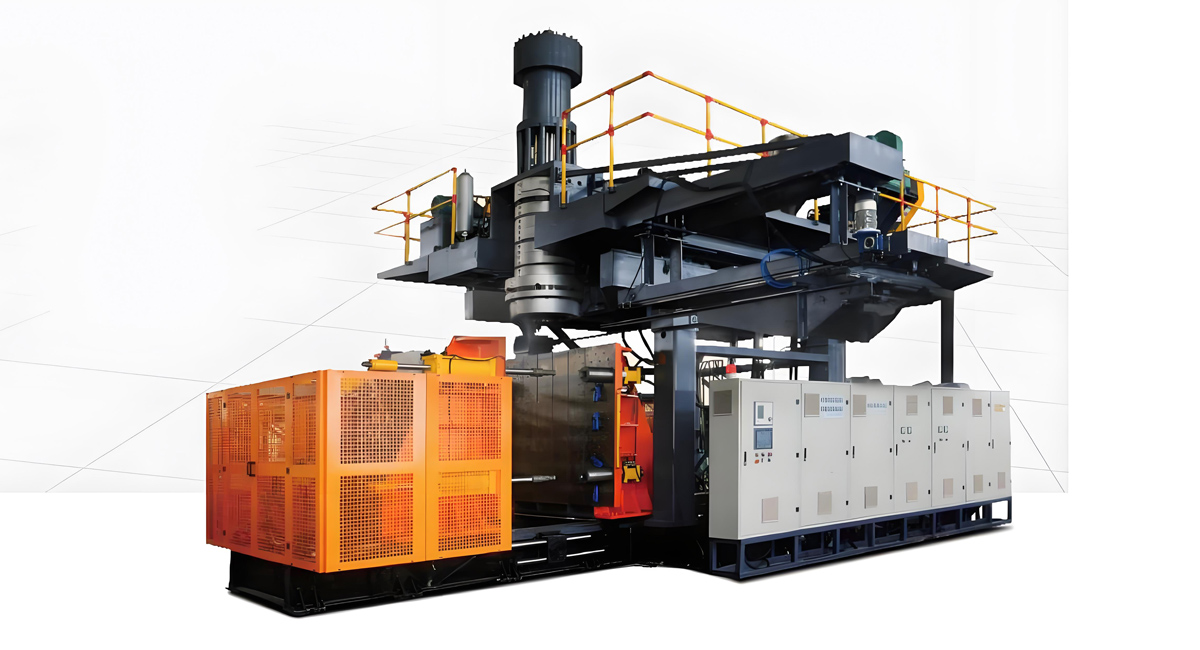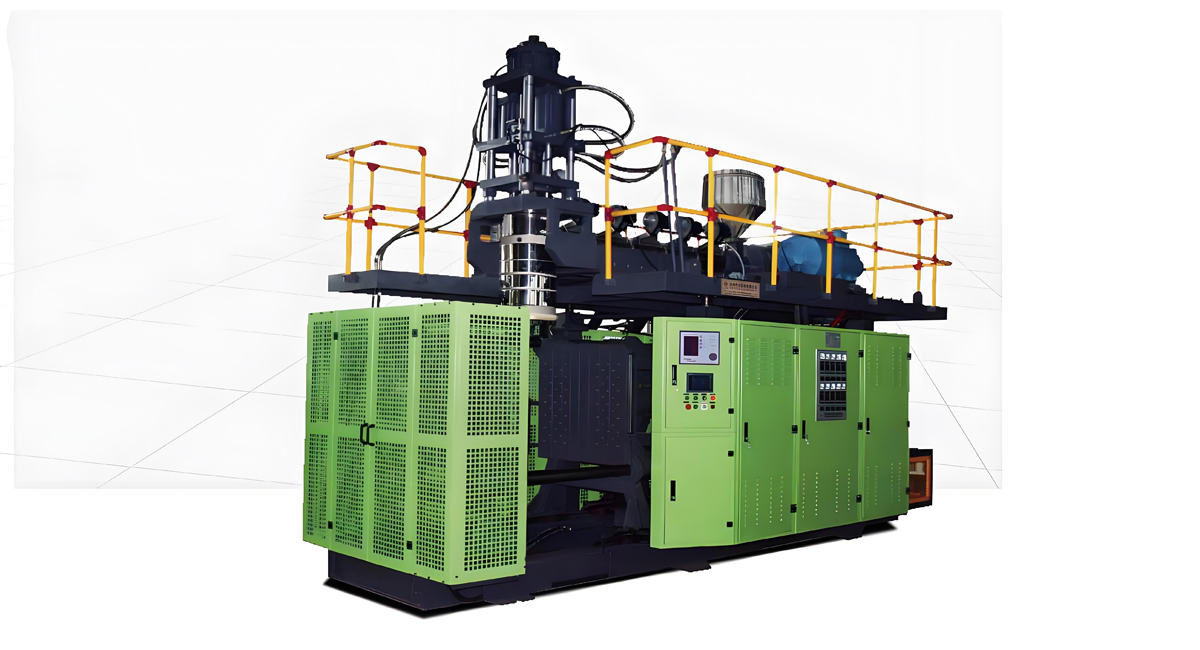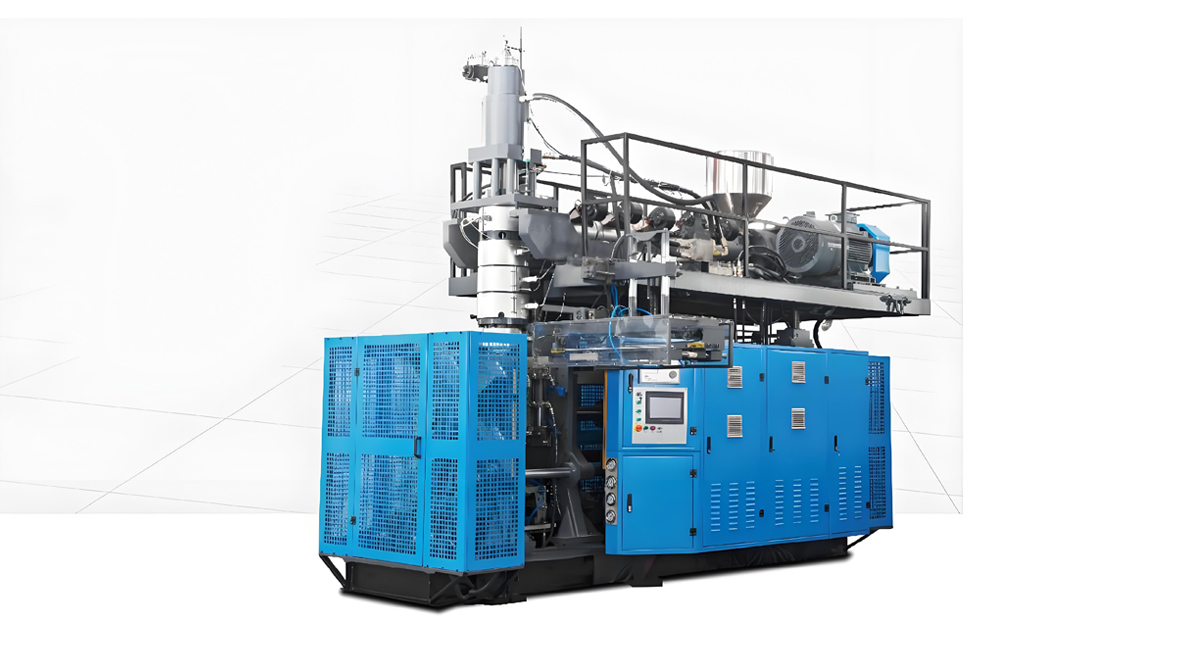
Hydraulic extrusion blow molding machines represent the workhorse of the plastic container manufacturing industry, delivering unparalleled reliability, durability, and production capacity for heavy-duty applications. Apollo hydraulic machines have established themselves as industry standards for producing large capacity containers, industrial drums, intermediate bulk containers, and other demanding applications where performance, durability, and production volume take precedence over energy efficiency considerations. The robust construction, proven technology, and operational simplicity of hydraulic systems make Apollo machines the preferred choice for facilities requiring continuous high-volume production of large plastic containers.
Heavy-duty production requirements demand equipment capable of operating continuously under demanding conditions while maintaining consistent quality and productivity. Apollo hydraulic extrusion blow molding machines excel in these environments, providing reliable operation 24 hours per day, 7 days per week with minimal downtime. The equipment’s proven hydraulic systems deliver the high clamping forces, consistent blowing pressures, and reliable operation necessary for producing large containers with thick walls and complex geometries that would challenge electric systems in terms of force delivery and operational reliability.
Heavy-Duty Production Requirements
Large Capacity Container Manufacturing
Large capacity containers ranging from 20 liters to 1500 liters represent the primary application for heavy-duty hydraulic blow molding machines. These containers serve critical functions in chemical storage, oil and lubricant packaging, industrial materials handling, and transportation applications. The production of such large containers presents unique challenges requiring specialized equipment capabilities that Apollo hydraulic machines provide exceptionally well.
20-50 liter containers commonly used for chemical products, lubricants, and industrial fluids require substantial clamping forces to withstand blowing pressures and maintain mold integrity. Apollo ABLD series machines provide clamping forces from 200kN to 800kN specifically designed for these applications, ensuring consistent container formation without mold flash or dimensional variations. The hydraulic systems deliver stable pressure throughout the blowing cycle that ensures complete container formation even with thick wall requirements.
100-500 liter intermediate bulk containers (IBCs) and large drums represent the upper end of heavy-duty blow molding applications. These containers require enormous clamping forces and substantial material throughput capabilities. Apollo’s largest hydraulic models feature clamping forces exceeding 800kN and extruder capacities exceeding 500kg per hour, providing the production capability needed for these demanding applications. The robust construction of these machines ensures reliable operation despite the substantial mechanical stresses involved in large container production.
High Clamping Force Applications
Clamping force represents one of the most critical specifications for heavy-duty blow molding machines. Large containers with thick walls, complex geometries, and high material viscosities require substantial clamping force to maintain mold integrity during the blowing process. Apollo hydraulic machines provide clamping forces from 150kN for medium capacity containers to over 1000kN for the largest applications, ensuring reliable operation across the full spectrum of heavy-duty production requirements.
Hydraulic systems provide inherent advantages for high clamping force applications through their ability to maintain constant pressure without significant energy consumption. Unlike electric systems that must maintain motor torque continuously to hold clamping force, hydraulic systems maintain pressure through valve control with minimal power consumption once the desired pressure is achieved. This characteristic makes hydraulic systems particularly efficient for applications requiring sustained high clamping forces during extended blow times typical of large container production.
Clamping force distribution is equally important for quality production of large containers. Apollo machines feature clamping systems with multiple hydraulic cylinders arranged to provide uniform pressure distribution across large mold surfaces. This uniform pressure prevents mold deflection that could result in inconsistent wall thickness or flash formation at the mold parting line. The clamping system design ensures that force distribution matches the container geometry, maintaining quality even with complex mold designs.
Continuous Operation Requirements
Many heavy-duty blow molding applications require continuous operation with minimal downtime for maximum equipment utilization and production efficiency. Apollo hydraulic machines are engineered for continuous 24/7 operation with reliability demonstrated in demanding production environments worldwide. The proven hydraulic systems, robust mechanical components, and straightforward design contribute to exceptional uptime and minimal maintenance requirements even under continuous operation.
Heat dissipation represents a critical consideration for continuous operation, as hydraulic systems generate substantial heat during prolonged use. Apollo machines incorporate sophisticated cooling systems including multiple oil coolers, heat exchangers, and temperature monitoring that maintain optimal hydraulic oil temperature even during continuous operation. The cooling capacity is sized appropriately for continuous operation without requiring cool-down periods, enabling true 24/7 production capability.
Material handling systems for continuous operation require reliable performance without interruption. Apollo machines integrate with automated material handling systems that provide consistent material feed without requiring manual intervention. The robust extruder design handles continuous material throughput without excessive wear or degradation, maintaining consistent melt quality throughout extended operation periods. This reliability enables true continuous production with minimal operator intervention.
Apollo Hydraulic Machine Series Overview
ABLD Series for Large Capacity Production
The Apollo ABLD series represents the company’s hydraulic line specifically designed for large capacity container production from 20L to 1500L. This series incorporates specialized design features optimized for heavy-duty applications while maintaining Apollo’s standards for quality, reliability, and ease of operation. The ABLD series serves as the industry standard for manufacturers of industrial drums, chemical containers, IBC tanks, and other large plastic containers.
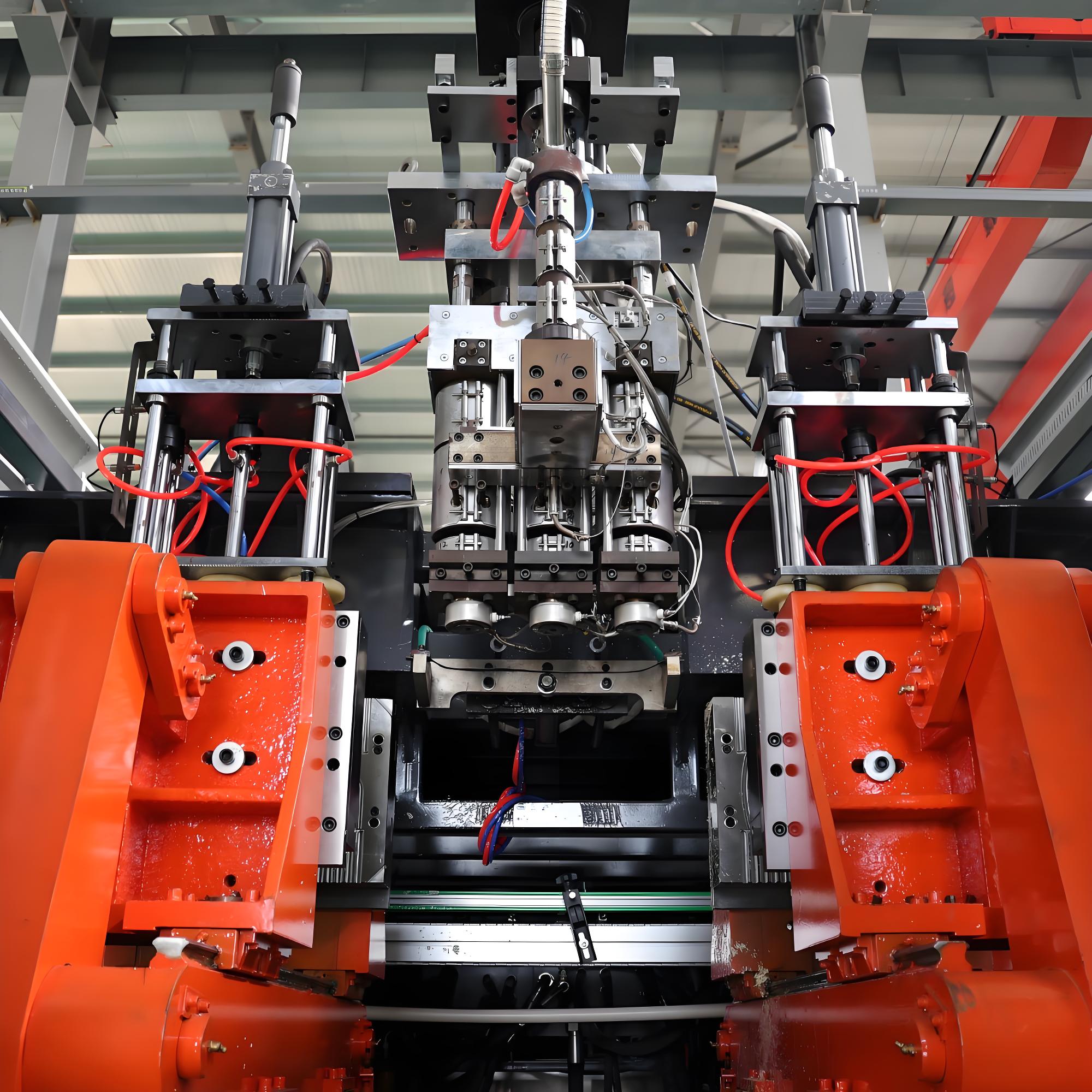
ABLD models feature accumulator head designs that provide substantial material capacity for large containers. The accumulator system stores molten material during parison extrusion and releases it quickly during the blowing cycle, ensuring consistent parison formation even for large containers requiring substantial material volumes. This accumulator design enables production of containers with uniform wall thickness and consistent quality despite the large material volumes involved.
The ABLD series incorporates heavy-duty clamping systems designed specifically for large container production. Clamping forces range from 200kN for entry-level models to over 1000kN for the largest machines. The clamping systems feature multiple hydraulic cylinders with synchronized operation that maintain uniform pressure distribution across large mold areas. This design prevents mold deflection and ensures consistent container dimensions even with large mold surface areas.
ABLB Series for Medium Capacity Production
The Apollo ABLB series provides heavy-duty hydraulic capability for medium capacity containers from 5L to 30L. This series bridges the gap between smaller hydraulic machines and the large ABLD series, offering heavy-duty performance for applications requiring robust operation but not the extreme capacities of the largest machines. The ABLB series serves applications including jerrycans, drums, and industrial containers in the 5-30 liter range.
ABLB models feature continuous extrusion systems with single or multiple die heads that provide flexibility for different production requirements. The continuous extrusion design provides consistent material delivery without the complexity of accumulator heads, making these machines well-suited for applications with moderate production volumes or frequent product changes. The machines can be configured with single die heads for simplicity or multiple heads for higher production capacity.
The clamping systems in the ABLB series provide forces from 80kN to 250kN depending on model, sufficient for containers up to 30L capacity. The clamping systems feature double straight-line guide rails that ensure precise mold alignment and uniform pressure distribution. This design prevents flash formation and maintains consistent container dimensions across multiple production cavities when using multi-cavity molds.
Hydraulic System Components
Apollo hydraulic machines incorporate high-quality hydraulic components from reputable manufacturers including Yuken, Rexroth, and Parker. The hydraulic system design emphasizes reliability, longevity, and ease of maintenance while providing the performance characteristics needed for heavy-duty blow molding applications. The system architecture balances power delivery, precision control, and energy efficiency to optimize overall performance.
Hydraulic pumps in Apollo machines provide reliable power delivery with proven performance in demanding industrial applications. Variable displacement pumps adjust output based on system demand, improving energy efficiency while maintaining required pressure and flow for machine operation. The pump systems are sized appropriately for continuous operation with adequate capacity to handle peak demands during the blowing cycle while operating efficiently during other phases of production.
Hydraulic valves control the precise delivery of hydraulic power to various machine functions including clamping, extrusion, and blowing. Apollo utilizes high-performance proportional valves that provide precise control over pressure and flow rates, enabling accurate control over machine functions critical to quality production. The valve systems are designed for reliable operation under continuous duty with minimal wear and maintenance requirements.
Control Systems and Automation
Apollo hydraulic machines feature advanced control systems that provide precise parameter control, data logging, and automation integration while maintaining operational simplicity. The control systems utilize industrial PLC controllers with human-machine interfaces that enable easy operation by trained personnel while providing the sophistication needed for precise process control and quality monitoring.
Parameter control includes precise setting and monitoring of extruder speeds, die head temperatures, hydraulic pressures, blowing pressure profiles, and cooling times. The control system maintains tight tolerances on these parameters with deviations typically less than 1% from setpoint, ensuring consistent product quality. The system provides real-time display of all critical parameters, enabling operators to monitor process stability and identify potential issues before they affect product quality.
Automation integration capabilities enable Apollo hydraulic machines to interface with automated material handling systems, quality inspection equipment, and packaging lines. The control system provides communication interfaces for integration with plant automation systems, enabling seamless operation within fully automated production facilities. The automation capabilities range from simple standalone operation to fully integrated production lines with minimal human intervention.
Key Technical Features for Heavy-Duty Applications
Robust Mechanical Construction
Heavy-duty blow molding requires substantial mechanical strength to withstand the forces involved in large container production. Apollo machines feature welded steel construction with substantial wall thickness and reinforcement in high-stress areas. The machine frames provide exceptional rigidity that prevents deflection under load, ensuring consistent mold alignment and container dimensions throughout production runs.
The clamping units in Apollo machines feature substantial castings and machined components designed to handle repeated high-force cycles without degradation. Critical components including clamping platens, tie bars, and guide systems are manufactured from high-strength materials with appropriate safety factors to ensure long service life under demanding operating conditions. The robust construction enables years of reliable operation even with continuous heavy-duty use.
Mold mounting systems accommodate large, heavy molds used in large container production. The mold mounting platens feature precision machined surfaces that ensure proper mold alignment and uniform pressure distribution during the blowing cycle. The clamping systems provide adequate force to maintain mold closure even with the high blowing pressures required for large containers with thick walls and complex geometries.
Precision Parison Control
Parison control systems enable production of containers with uniform wall thickness, essential for structural integrity and material efficiency. Apollo machines incorporate advanced parison control technology that maintains wall thickness within tight tolerances even for large containers with complex geometries. The precision parison control enables production of containers with optimal wall thickness distribution that minimizes material usage while ensuring required container strength.
Hydraulic parison programming systems adjust parison wall thickness dynamically during extrusion based on container geometry requirements. The system can create thicker walls at stress concentration areas such as corners and handles while maintaining thinner walls in straight sections for material efficiency. This programmed parison control is particularly valuable for large containers where material costs represent a significant production expense.
Wall thickness measurement and feedback systems provide real-time monitoring of parison dimensions with automatic adjustment capabilities. The systems utilize ultrasonic or laser sensors that measure wall thickness at multiple points on each parison, providing feedback to the parison control system for automatic correction. This closed-loop control maintains consistent wall thickness across production runs and compensates for material variations or process changes.
High-Capacity Extrusion Systems
Large container production requires substantial material throughput capacity. Apollo machines feature extruders sized appropriately for the material requirements of large container production, with outputs ranging from 50kg per hour for mid-size machines to over 500kg per hour for the largest models. The extruders are designed with appropriate screw geometry and L/D ratios to provide adequate melting capacity while maintaining material quality.
Screw designs for heavy-duty applications optimize melting efficiency and material homogeneity while minimizing material degradation. The screws incorporate mixing sections that ensure thorough plasticization of polymer material, critical for consistent container quality in large container production. The screw geometry varies based on material characteristics, with different designs optimized for HDPE, PP, and other materials commonly used in large container production.
Barrel and screw construction materials provide wear resistance necessary for continuous operation with abrasive materials and regrind content. Hardened alloy materials and wear-resistant coatings extend service life and reduce maintenance requirements. The barrels feature efficient heating systems with multiple independent zones that enable precise temperature profile control for optimal material processing.
Advanced Cooling Systems
Cooling represents a critical aspect of large container production, with cooling times often representing the limiting factor for cycle times. Apollo machines incorporate advanced cooling systems that optimize cooling efficiency and reduce cycle times while maintaining product quality. The cooling systems include mold cooling circuits, extruder cooling, and hydraulic system cooling to maintain optimal operating temperatures throughout the machine.
Mold cooling systems feature multiple circuits with independent flow control that enable optimization of cooling rates for different areas of the mold surface. The systems can provide different cooling rates for thick and thin wall sections, optimizing overall cooling efficiency while ensuring proper solidification throughout the container. This controlled cooling prevents warpage and ensures consistent container dimensions across production runs.
Hydraulic system cooling is particularly important for continuous heavy-duty operation. Apollo machines incorporate oil cooling systems sized appropriately for continuous operation, including heat exchangers, cooling fans, and temperature monitoring that maintain optimal hydraulic oil temperature. Adequate cooling prevents hydraulic oil degradation, maintains system performance, and extends component life during continuous operation.
Heavy-Duty Production Applications
Chemical Container Manufacturing
Chemical containers represent one of the most demanding applications for heavy-duty blow molding due to the aggressive nature of the contents and stringent performance requirements. Apollo hydraulic machines produce chemical containers that meet international standards for chemical resistance, structural integrity, and leak-proof performance. The equipment’s robust design and reliable operation ensure consistent production of containers that perform reliably in chemical storage and transportation applications.
Chemical resistance considerations drive material selection and processing parameters for chemical container production. Apollo machines process HDPE and PP grades with enhanced chemical resistance additives to ensure container performance with various chemical compositions. The precise temperature control and mixing capabilities ensure proper incorporation of chemical resistance additives while maintaining material properties that provide structural integrity and environmental stress crack resistance.
Leak-proof performance is absolutely critical for chemical containers, as leaks could result in environmental damage, safety hazards, and regulatory violations. Apollo machines produce chemical containers with exceptional leak-proof performance through precise control over weld seam formation, neck finish, and wall thickness distribution. The machines produce containers that meet UN/DOT certification requirements for chemical transportation, enabling manufacturers to serve regulated markets.
Fuel and Lubricant Drum Production
Fuel and lubricant drums require containers that provide excellent chemical resistance, environmental stress crack resistance, and structural integrity for repeated handling and transportation. Apollo hydraulic machines produce drums ranging from 20 liters to 200 liters that meet the demanding requirements of fuel and lubricant storage. The equipment’s reliable operation and consistent quality ensure that drums perform reliably in demanding service conditions.
Fuel drum production requires materials with excellent fuel resistance to prevent degradation from long-term contact with gasoline, diesel, or other petroleum products. Apollo machines process HDPE grades with fuel resistance additives while maintaining the processing characteristics necessary for quality drum production. The precise control over processing conditions ensures proper incorporation of fuel resistance additives and maintains material properties that provide long-term performance in fuel storage applications.
Lubricant drums require similar performance characteristics with additional considerations for different lubricant chemistries including synthetic oils, gear oils, and industrial lubricants. Apollo machines process appropriate materials for various lubricant types while maintaining consistent quality and dimensional accuracy. The equipment produces drums with proper neck finishes that ensure secure cap engagement and leak-proof performance throughout the drum’s service life.
Intermediate Bulk Container (IBC) Production
Intermediate bulk containers (IBCs) represent the largest common application for heavy-duty blow molding, typically ranging from 500 to 1000 liters in capacity. These containers serve industrial applications including chemical storage, food ingredient storage, and general industrial materials handling. Apollo’s largest hydraulic machines are specifically designed for IBC production, providing the clamping force, material capacity, and production capabilities needed for these demanding applications.
IBC production requires enormous material throughput capacity, with typical IBCs requiring 15-25kg of HDPE material per container. Apollo’s largest hydraulic machines feature extruders with outputs exceeding 500kg per hour, enabling production of multiple IBCs per hour depending on machine configuration and cycle time requirements. The substantial material handling capability enables efficient production of IBCs even with the large material volumes involved.
Structural requirements for IBCs are particularly demanding, as containers must withstand stacking loads, handling forces, and the contents’ weight. Apollo machines produce IBCs with precise control over wall thickness distribution, reinforcing thick wall sections where needed while optimizing material usage. The result is containers that provide required structural performance with material efficiency that improves production economics.
Automotive Component Production
Automotive applications including fuel tanks, fluid reservoirs, and plastic components require heavy-duty blow molding capabilities due to performance requirements and regulatory standards. Apollo hydraulic machines produce automotive components that meet OEM specifications for dimensional accuracy, material properties, and performance characteristics. The equipment’s reliability and consistency are essential for automotive production where quality variations are unacceptable.
Automotive fuel tanks represent particularly demanding applications requiring precise control over wall thickness, leak-proof performance, and material properties. Apollo machines produce fuel tanks that meet automotive industry standards for fuel system components, including evaporative emission requirements. The precise parison control systems enable production of fuel tanks with optimal wall thickness distribution that meets both performance and regulatory requirements.
Automotive fluid reservoirs for coolant, brake fluid, washer fluid, and other applications require similar quality and consistency. Apollo machines produce these components with the dimensional accuracy and material characteristics required for automotive applications. The equipment’s reliability and consistent output enable automotive suppliers to meet just-in-time delivery requirements and maintain quality standards demanded by automotive manufacturers.
Economic Considerations for Heavy-Duty Production
Equipment Investment Costs
Heavy-duty hydraulic blow molding machines represent substantial capital investments that must be justified based on production requirements and projected returns. Apollo ABLD series machines for large container production typically range from $100,000 to over $300,000 depending on capacity, configuration, and included features. ABLB series machines for medium capacity production range from $35,000 to $80,000, representing more moderate investments while still providing heavy-duty capabilities.
Investment decisions must consider not only initial equipment cost but also long-term value including production capacity, reliability, and operating costs. Apollo machines provide proven reliability in heavy-duty applications with many machines operating continuously for 10+ years with proper maintenance. This long service life spreads the initial investment over substantial production volumes, reducing the per-unit cost contribution of capital investment.
Financing considerations affect the affordability of heavy-duty equipment investments. Apollo offers financing options and leasing arrangements that can improve cash flow for new equipment purchases. The predictable production output and proven market demand for large containers make these investments attractive to financial institutions, potentially resulting in favorable financing terms that improve the economics of equipment acquisition.
Operating Cost Structure
Operating costs for heavy-duty blow molding machines include energy consumption, material usage, labor, maintenance, and overhead. Energy consumption represents the largest variable operating cost, with hydraulic machines typically consuming 0.55-0.75 kWh per kilogram of produced material. For a machine producing 200kg per hour in continuous operation, annual energy consumption exceeds 870,000 kWh, representing substantial costs at typical industrial electricity rates.
Material costs typically represent the largest overall cost component, often accounting for 60-70% of total production costs for large containers. Heavy-duty machines produce large containers requiring substantial material volumes, making material efficiency critical for economic viability. Apollo machines optimize material usage through precise wall thickness control that minimizes excess material while maintaining required container strength, improving material efficiency and reducing costs.
Labor costs for heavy-duty blow molding operations vary based on automation level and production organization. Modern facilities with automated material handling, automated container removal, and integrated quality inspection require minimal direct labor, typically 1-2 operators per machine. Facilities with less automation require more direct labor but may have lower capital investment. Labor cost optimization requires balancing automation investment against labor costs while maintaining production efficiency and quality.
Maintenance Cost Considerations
Maintenance costs for heavy-duty hydraulic machines represent a significant ongoing operating expense that must be factored into production economics. Typical annual maintenance costs range from $5,000 to $15,000 per machine depending on size, operating hours, and maintenance practices. These costs include hydraulic oil changes, filter replacements, component overhauls, and routine maintenance activities.
Hydraulic oil consumption represents a significant portion of maintenance costs. Hydraulic oil must be changed regularly, typically every 2000-2500 operating hours, with costs of $500-$1000 per change depending on oil volume and quality. Oil quality and maintenance practices significantly impact oil life, with proper maintenance and oil analysis potentially extending oil change intervals to 3000+ hours and reducing annual oil costs.
Component wear and eventual replacement contribute to maintenance costs. Heavy-duty operation causes wear on hydraulic pumps, valves, cylinders, and other mechanical components over time. Proactive maintenance including regular inspections, oil analysis, and component replacement before failure prevents unscheduled downtime that would disrupt production schedules and increase total costs. Budgeting for component replacement based on expected service life enables proactive maintenance rather than reactive repairs.
Return on Investment Analysis
Return on investment for heavy-duty blow molding equipment depends on production volume, product margin, and market conditions. High-volume production of standard large containers such as chemical drums typically achieves ROI in 18-36 months, depending on market conditions and competition. Specialized applications or lower volume production may require longer payback periods of 24-48 months due to lower production throughput or premium pricing.
Production capacity utilization significantly affects ROI calculations. Heavy-duty machines are designed for continuous operation, and reduced utilization increases the per-unit cost contribution of capital investment. Facilities operating machines 24/7 achieve maximum ROI through spreading capital costs over substantial production volume. Facilities with lower utilization must justify higher per-unit costs through premium pricing or market positioning.
Market conditions and competition affect achievable margins and ROI. Standard commodity containers such as 200L drums face competitive markets that limit pricing flexibility, requiring high production volumes to achieve acceptable ROI. Specialized containers serving niche markets may command premium pricing that improves ROI despite lower production volumes. Understanding market dynamics and competitive positioning is essential for realistic ROI projections.
Installation and Operational Considerations
Facility Requirements
Heavy-duty blow molding machines require substantial facility infrastructure to support their size, weight, and utility requirements. Floor loading capacity must accommodate machine weight plus dynamic loads during operation, typically requiring reinforced concrete foundations. Apollo provides detailed foundation specifications for each machine model to ensure proper support and prevent vibration or settling that could affect machine performance.
Ceiling height and overhead clearance must accommodate machine height plus maintenance access requirements. Large hydraulic machines often exceed 4 meters in height, requiring facilities with adequate clearance. Overhead cranes or hoists may be necessary for mold changes and maintenance activities, further increasing facility requirements. Proper planning for these requirements prevents installation problems and ensures efficient operation.
Utility infrastructure including electrical service, compressed air, cooling water, and material handling systems must be sized appropriately for heavy-duty machine operation. Electrical service must provide adequate capacity for peak power demands during machine operation. Compressed air systems must deliver sufficient volume and pressure for blowing operations. Cooling systems must remove heat generated during continuous operation. These utility requirements must be evaluated during facility planning to prevent limitations on machine performance.
Operator Training Requirements
Operating heavy-duty hydraulic blow molding machines requires trained personnel with understanding of blow molding principles, hydraulic systems, and quality control procedures. Apollo provides comprehensive training programs covering machine operation, parameter optimization, troubleshooting, and preventive maintenance. Training ensures that operators can safely and efficiently operate equipment while maintaining product quality and preventing equipment damage.
Hydraulic system knowledge represents a critical component of operator training, as operators must understand hydraulic principles, system operation, and basic troubleshooting. This knowledge enables operators to identify potential problems early, preventing equipment damage or production disruptions. Understanding hydraulic systems also enables operators to optimize machine settings for quality and efficiency rather than using default settings that may not be optimal.
Quality control training ensures that operators understand quality requirements and can monitor product quality during production. Operators must be able to identify quality problems, understand root causes, and make appropriate adjustments to maintain quality. This proactive quality control prevents production of defective containers and reduces scrap rates, improving production economics.
Safety Considerations
Safety represents a critical consideration in heavy-duty blow molding operations due to the substantial forces, high pressures, and moving machinery involved. Apollo machines incorporate numerous safety features including safety interlocks, emergency stop systems, guarding, and pressure relief devices. Understanding and properly using these safety features is essential for safe operation.
Hydraulic system safety requires particular attention due to high operating pressures and potential for sudden releases of stored energy. Operators must understand hydraulic pressure limits, proper lockout procedures for maintenance, and appropriate response to hydraulic system problems. Training includes specific instruction on hydraulic safety, pressure relief operation, and emergency procedures for hydraulic system failures.
Hot surface safety is important during operation and maintenance, as extruder barrels, die heads, and hydraulic components operate at elevated temperatures. Proper guarding, personal protective equipment, and hot surface awareness prevent burns and injuries. Apollo machines incorporate thermal insulation and guarding to minimize hot surface exposure, but proper training and procedures remain essential for safety.
Comparative Analysis: Hydraulic vs. Electric Systems
Force Delivery Capabilities
Hydraulic systems excel in force delivery capabilities, particularly for sustained high-force applications. Hydraulic systems can maintain substantial clamping force continuously without significant energy consumption by maintaining pressure through valve control rather than motor torque. This characteristic makes hydraulic systems particularly efficient for large container production requiring sustained clamping force during extended blow times.
Electric systems generate force through servo motors that must maintain torque continuously to sustain clamping force. For large container applications requiring sustained high clamping force, electric systems may consume substantial energy maintaining force during extended blow times. Hydraulic systems maintain pressure with minimal energy consumption once pressure is established, providing efficiency advantages for these applications.
Force generation capacity per unit cost favors hydraulic systems for high-force applications. Hydraulic systems can generate extremely high forces through simple hydraulic cylinder designs and pressure multiplication. Electric systems generating equivalent forces require larger, more expensive servo motors and drive systems. For applications requiring very high clamping forces, hydraulic systems typically offer lower capital costs for equivalent force delivery capability.
Reliability and Durability
Hydraulic systems have established reputations for reliability and durability in heavy-duty applications. The proven technology, robust construction, and relative simplicity of hydraulic systems contribute to long service life with minimal unexpected failures. Apollo hydraulic machines have demonstrated reliability through years of operation in demanding production environments worldwide.
Electric systems, while providing advantages in precision and energy efficiency, incorporate complex servo drives, controllers, and feedback systems that may be more sensitive to environmental conditions and power quality. While electric systems are becoming increasingly reliable, hydraulic systems have longer track records in heavy-duty applications and may offer advantages in harsh operating environments with temperature extremes, vibration, or electrical power quality issues.
Component wear characteristics differ between hydraulic and electric systems. Hydraulic components including pumps, valves, and cylinders experience wear from friction and pressure cycling but generally provide predictable service lives with appropriate maintenance. Electric systems have fewer moving parts but may be more sensitive to overload conditions, electrical disturbances, and environmental contamination. For heavy-duty applications with continuous operation, the proven durability of hydraulic systems provides reliability advantages.
Application Suitability
Application suitability depends on production requirements, container specifications, and operating conditions. Heavy-duty applications with large containers, thick walls, and high clamping force requirements are particularly well-suited to hydraulic systems. Applications prioritizing energy efficiency, precision, and cleanliness may favor electric systems despite higher initial costs.
Large container production above approximately 30 liters capacity typically favors hydraulic systems due to force requirements and blow time considerations. The extended blow times for large containers reduce the energy advantage of electric systems, while the high clamping force requirements favor hydraulic systems’ efficient force generation. For these applications, hydraulic systems typically provide the best overall value proposition.
Medium capacity containers from 5-30 liters present a decision point where both hydraulic and electric systems may be suitable. The decision depends on specific application requirements including production volume, container specifications, quality requirements, and operating conditions. Apollo offers both hydraulic and electric models in this capacity range, enabling selection based on application-specific requirements and economics.
Future Developments and Technology Trends
Energy Efficiency Improvements
While hydraulic systems traditionally consume more energy than electric alternatives, technology developments are improving hydraulic energy efficiency. Variable displacement pumps that adjust output based on system demand, regenerative energy recovery during deceleration, and optimized hydraulic circuit design reduce energy consumption while maintaining hydraulic advantages in force delivery and reliability.
Apollo incorporates advanced hydraulic technologies including variable pump control, accumulator systems, and optimized circuit designs that improve energy efficiency by 10-20% compared to traditional hydraulic systems. These improvements reduce operating costs while maintaining the reliability and force delivery advantages of hydraulic technology. Further developments in hydraulic efficiency are expected to continue narrowing the efficiency gap with electric systems.
Hybrid systems combining hydraulic force delivery with electric precision represent an emerging trend. These systems utilize hydraulic actuation for high-force functions like clamping while using electric drives for precision functions like parison programming and wall thickness control. The hybrid approach combines the best characteristics of both technologies, providing force efficiency with precision control.
Advanced Control and Monitoring
Advanced control systems with enhanced monitoring capabilities are being integrated into hydraulic machines to improve performance and predict maintenance requirements. IoT sensors monitor hydraulic system condition including oil quality, pressure, temperature, and component wear, providing early warning of potential problems before they cause downtime. Predictive maintenance based on sensor data reduces unscheduled downtime and extends component service life.
Advanced control algorithms optimize hydraulic system operation by adjusting pump displacement, valve timing, and pressure setpoints based on real-time requirements. These algorithms improve energy efficiency while maintaining performance, reducing operating costs without sacrificing productivity. The systems learn from production patterns and continuously optimize settings for best performance.
Remote monitoring capabilities enable observation and adjustment of machine operation from any location. This capability enables expert technical support without on-site presence, reducing response times and support costs. The monitoring systems track production metrics, quality parameters, and equipment condition, enabling comprehensive oversight of machine operation even from remote locations.
Material Innovation Compatibility
Material innovations including advanced polymers, bio-based materials, and recycled content require processing capabilities that heavy-duty hydraulic machines are evolving to provide. Advanced screw designs, improved temperature control, and enhanced mixing capabilities enable processing of these new materials while maintaining productivity and quality. Apollo machines incorporate these innovations to enable manufacturers to utilize advanced materials without sacrificing production efficiency.
Recycled materials and regrind processing represent growing applications for heavy-duty machines due to sustainability initiatives and cost considerations. Hydraulic machines process recycled materials with appropriate screw designs, filtration systems, and temperature control that maintain material quality despite variable material characteristics. The robust construction of hydraulic machines withstands the abrasive nature of recycled materials better than some electric alternatives.
Bio-based polymers and sustainable materials require processing characteristics that hydraulic systems are adapting to provide. Precise temperature control, appropriate shear management, and adequate mixing capabilities enable processing of these materials while maintaining required properties. The force capabilities of hydraulic systems are particularly valuable for processing bio-based polymers that may require higher processing viscosities than conventional materials.
Conclusion
Hydraulic extrusion blow molding machines from Apollo continue to represent the optimal solution for heavy-duty production applications requiring reliable operation, high clamping forces, and continuous production capability. The proven technology, robust construction, and operational simplicity of hydraulic systems provide exceptional reliability and durability in demanding production environments. Large container production, chemical drum manufacturing, IBC production, and automotive components all benefit from the capabilities that hydraulic machines provide exceptionally well.
While electric systems offer advantages in energy efficiency and precision for certain applications, hydraulic systems maintain advantages in force delivery, reliability, and suitability for heavy-duty applications with large containers and thick walls. The ongoing developments in hydraulic technology including improved energy efficiency, advanced control systems, and enhanced monitoring capabilities are addressing traditional limitations while maintaining hydraulic advantages in force delivery and reliability.
As manufacturers evaluate equipment options for heavy-duty blow molding applications, hydraulic machines from Apollo provide proven performance, reliable operation, and excellent value for applications requiring high clamping forces, large container production, or continuous operation. The combination of robust construction, proven reliability, and continuous technological improvement positions Apollo hydraulic machines as the preferred choice for demanding blow molding applications worldwide.