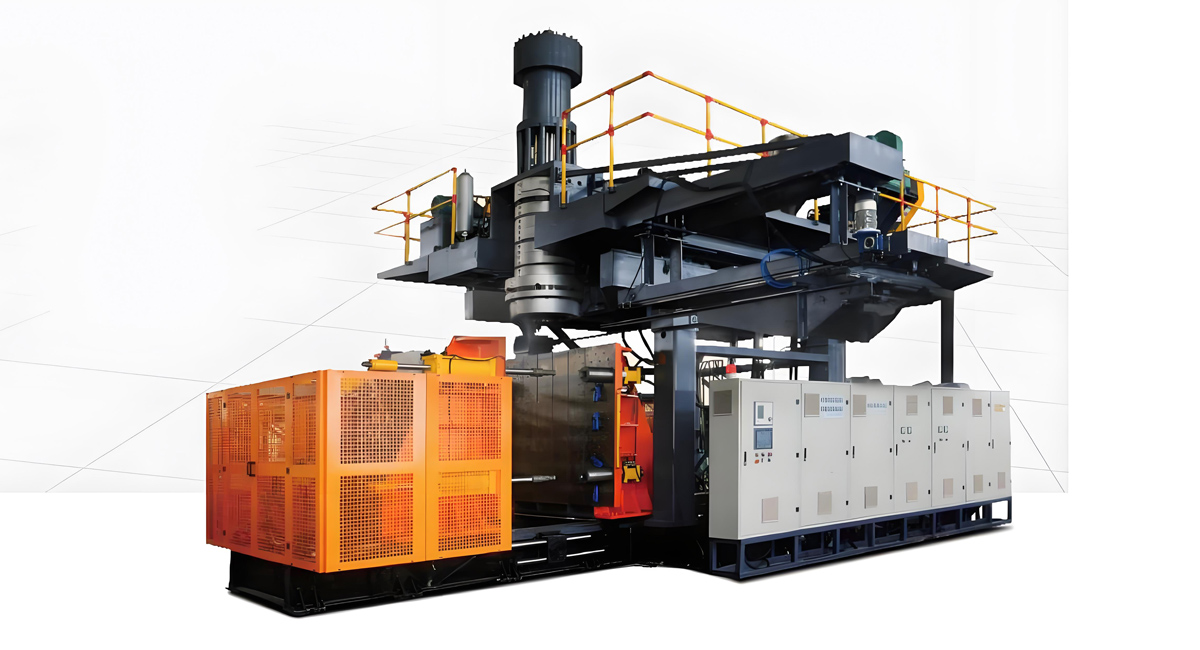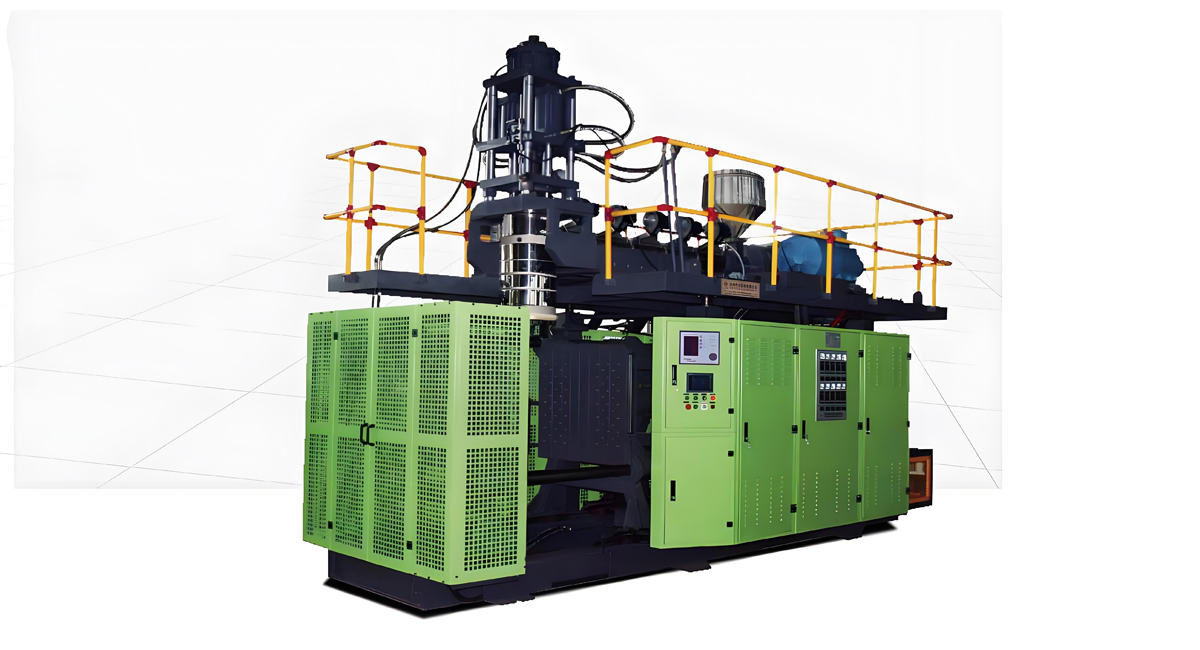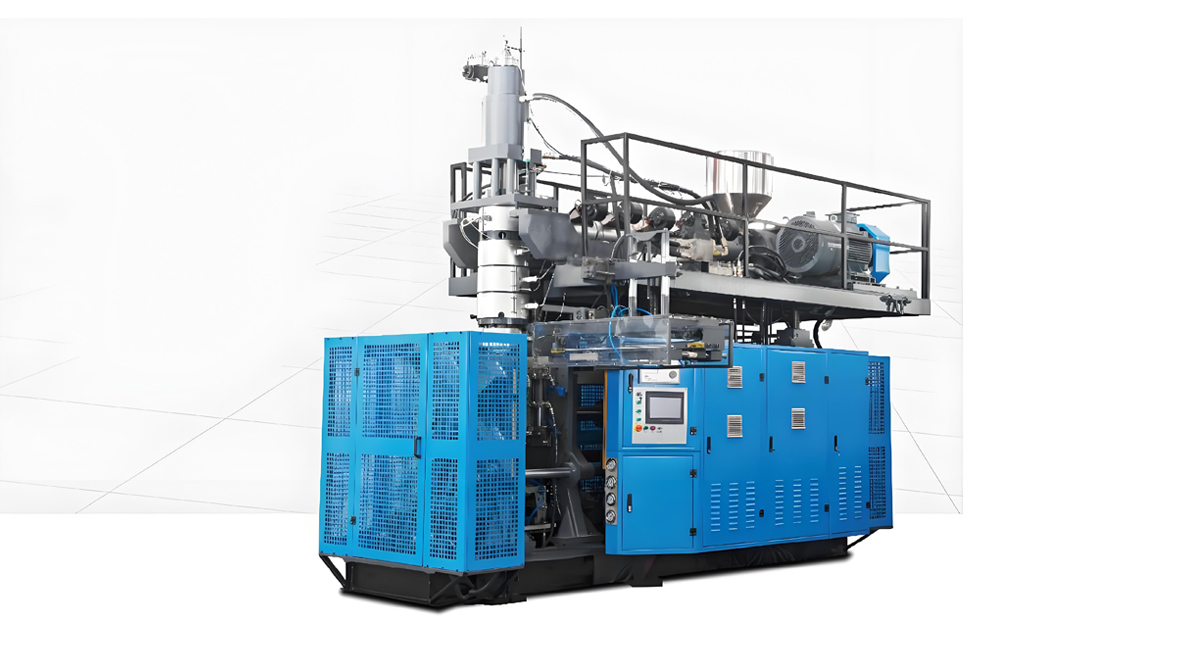
The global industrial plastic products market is undergoing unprecedented growth, driven by the rapid expansion of manufacturing, logistics, construction, and automotive industries worldwide. Valued at USD 682.4 billion in 2026 and projected to reach USD 976.1 billion by 2032, growing at a compound annual growth rate (CAGR) of 6.1%, the demand for heavy-duty industrial plastic components has surged in recent years. As a leading global manufacturer of extrusion blow molding machines, Apollo has established itself as the industry benchmark for heavy-duty blow molding technology, delivering robust, high-performance systems specifically engineered to produce large, durable industrial plastic products with exceptional precision and efficiency. This comprehensive 3500-word guide explores everything you need to know about heavy-duty extrusion blow molding technology, including market requirements, technological advantages, detailed product specifications, comprehensive cost analysis, and real-world success stories from Apollo customers worldwide.
Heavy-duty industrial plastic products, including chemical drums, IBC containers, automotive fuel tanks, pallets, large storage tanks, and agricultural equipment components, require exceptional mechanical strength, dimensional accuracy, and long-term durability. Unlike consumer plastic products, these industrial components must withstand extreme temperatures, heavy loads, harsh chemicals, and prolonged outdoor exposure. Manufacturing these products demands advanced extrusion blow molding technology that can handle high-viscosity engineering plastics, produce uniform wall thickness distributions, and deliver consistent product quality in 24/7 industrial production environments. Apollo’s heavy-duty extrusion blow molding machines are specifically designed to meet these demanding requirements, enabling manufacturers to produce high-quality industrial plastic products with maximum productivity and profitability.
Apollo has over 20 years of specialized experience in extrusion blow molding technology, with more than 2,300 machines installed in over 75 countries worldwide. Our state-of-the-art manufacturing facilities cover over 120,000 square meters and are equipped with advanced CNC machining centers, precision testing equipment, and a dedicated research and development center staffed by experienced polymer processing engineers. All our extrusion blow molding machines are built to the highest international standards using premium components from reputable suppliers, ensuring long service life and reliable performance in the most demanding industrial environments. This guide will provide you with a complete understanding of how Apollo heavy-duty extrusion blow molding machines can transform your industrial plastic production operations and deliver exceptional returns on investment.
1. Market Demand and Technical Requirements for Heavy-Duty Industrial Plastic Products
Before selecting an extrusion blow molding machine for heavy-duty industrial applications, it is essential to understand the unique market dynamics and technical requirements that define this industry. These requirements directly influence the design and performance specifications of the equipment you choose.
1.1 Global Growth Trends in Industrial Blow Molding
The global demand for heavy-duty extrusion blow molded products is being driven by several powerful trends. The ongoing expansion of the chemical and petrochemical industry has created significant demand for large plastic containers and drums for the safe storage and transportation of hazardous and non-hazardous chemicals. The logistics industry is increasingly adopting plastic pallets and intermediate bulk containers (IBCs) due to their lightweight, durability, and recyclability compared to traditional wooden and metal alternatives.
The automotive industry is another major driver of growth, with plastic components replacing metal parts in vehicles to reduce weight and improve fuel efficiency. Extrusion blow molding is widely used to produce automotive fuel tanks, air ducts, bumpers, and other structural components. In addition, the construction and agricultural industries are increasingly using heavy-duty plastic products for applications such as water tanks, drainage pipes, and agricultural equipment components. Apollo’s heavy-duty extrusion blow molding machines are designed to address the specific needs of all these growing market segments.
1.2 Key Application Areas for Heavy-Duty Blow Molding
Heavy-duty extrusion blow molding is used to produce a wide range of industrial plastic products, each with unique performance requirements. The largest application segment is industrial packaging, which includes chemical drums ranging from 20 liters to 220 liters, IBC containers with capacities up to 1000 liters, and jerry cans for fuel and lubricants. These products require excellent chemical resistance, impact strength, and leak-proof performance to ensure the safe storage and transportation of hazardous materials.
The automotive industry is another major application area, with extrusion blow molding being used to produce fuel tanks, air intake manifolds, bumper beams, and other structural components. These products require high mechanical strength, dimensional accuracy, and resistance to heat and chemicals. Other important application areas include logistics (plastic pallets, bulk containers), construction (water tanks, drainage systems), and agriculture (irrigation tanks, chemical sprayers). Apollo offers customized extrusion blow molding solutions for each of these application areas, ensuring optimal performance and productivity.
1.3 Critical Technical Requirements for Heavy-Duty Products
Heavy-duty industrial plastic products must meet several critical technical requirements to ensure their safety and performance in demanding applications. The most important of these is uniform wall thickness distribution, which directly affects the product’s strength, weight, and cost. Uneven wall thickness can result in weak points that may fail under load, while excessive wall thickness increases material costs unnecessarily.
Other critical requirements include high impact strength, even at low temperatures, excellent chemical resistance, dimensional stability, and long-term durability. Many industrial products must also meet strict international standards and regulations, such as UN certification for chemical containers and automotive industry standards for vehicle components. Apollo’s heavy-duty extrusion blow molding machines are designed to produce products that meet all these stringent requirements, and our technical team provides comprehensive support to help customers achieve the necessary certifications.
1.4 Material Considerations for Industrial Blow Molding
The choice of material is critical for heavy-duty industrial blow molding applications, as it directly affects the product’s performance and cost. The most commonly used material is High-Density Polyethylene (HDPE), which offers an excellent combination of strength, chemical resistance, and processability. HDPE is widely used for chemical containers, water tanks, and plastic pallets due to its durability and low cost.
Other materials used in heavy-duty blow molding include Polypropylene (PP), which offers higher heat resistance and stiffness than HDPE, and engineering plastics such as Polyamide (PA) and Polycarbonate (PC) for high-performance applications. Multi-layer structures are also commonly used for products that require enhanced barrier properties, such as fuel tanks and chemical containers. Apollo’s extrusion blow molding machines are capable of processing all these materials, including single-layer and multi-layer structures, providing manufacturers with the flexibility to produce a wide range of industrial products.
2. Why Extrusion Blow Molding is Superior for Heavy-Duty Industrial Products
There are several different manufacturing processes used to produce industrial plastic products, including injection molding, rotational molding, and thermoforming. However, extrusion blow molding is widely recognized as the superior process for manufacturing large, heavy-duty industrial plastic products due to its unique combination of efficiency, cost-effectiveness, and product performance.
2.1 Extrusion Blow Molding vs. Injection Molding
Injection molding is a widely used process for producing plastic products, but it has several significant limitations when it comes to manufacturing large, hollow industrial components. Injection molding requires very high clamping forces to hold the mold closed during injection, making it prohibitively expensive for large products. The cost of injection molds for large products is also extremely high, making injection molding uneconomical for low to medium production volumes.
In contrast, extrusion blow molding requires much lower clamping forces, resulting in significantly lower equipment and tooling costs. Extrusion blow molding is also more efficient for producing hollow products, with faster cycle times and lower material waste compared to injection molding for most large industrial applications. For example, a 200-liter HDPE drum can be produced in approximately 45 seconds using extrusion blow molding, while the same product would take several minutes to produce using injection molding.
2.2 Extrusion Blow Molding vs. Rotational Molding
Rotational molding is another process used to produce large hollow plastic products, particularly for low-volume applications. However, rotational molding has several significant limitations compared to extrusion blow molding. Rotational molding has much longer cycle times, typically ranging from 30 minutes to several hours per part, making it unsuitable for high-volume production.
Rotational molded products also tend to have less uniform wall thickness and lower mechanical strength compared to extrusion blow molded products. In addition, rotational molding is less efficient in terms of material usage and energy consumption. Extrusion blow molding offers significantly higher production rates, better product consistency, and lower per-unit costs for medium to high-volume production of heavy-duty industrial products.
2.3 Unique Advantages of Apollo Heavy-Duty Extrusion Blow Molding Process
Apollo’s advanced extrusion blow molding process offers several unique advantages specifically tailored for heavy-duty industrial product manufacturing. Our machines feature a robust, heavy-duty construction that can withstand the high forces involved in producing large plastic products. The Apollo process begins with the extrusion of a continuous parison of molten plastic, which is then clamped between two mold halves and inflated with compressed air to form the final product shape.
Apollo’s extrusion blow molding machines incorporate advanced technologies such as servo-hydraulic systems, programmable parison control, and automatic material handling systems to ensure maximum productivity and product quality. Our machines are capable of producing products ranging in size from 5 liters to 20,000 liters, with clamping forces up to 2000 tons. We also offer multi-layer co-extrusion capabilities for products that require enhanced barrier properties or special performance characteristics.
3. Core Technologies of Apollo Heavy-Duty Extrusion Blow Molding Machines
Apollo heavy-duty extrusion blow molding machines incorporate a range of advanced technologies specifically designed to optimize the production of large, heavy-duty industrial plastic products. These technologies ensure superior product quality, maximum production efficiency, and reliable long-term performance in demanding industrial environments.
3.1 High-Performance Extrusion System
The extrusion system is the heart of any extrusion blow molding machine, and Apollo has developed a specialized extrusion system specifically optimized for processing high-viscosity engineering plastics used in heavy-duty industrial applications. Our screws are designed with a unique barrier geometry that provides excellent plasticization and homogenization, ensuring consistent melt quality and temperature throughout the extrusion process.
Apollo’s extrusion systems feature high-torque gearboxes and powerful drive motors that can handle the high loads involved in processing large volumes of plastic. The extruders are equipped with multi-zone temperature control systems that maintain precise temperature control within ±1°C, ensuring consistent processing conditions and product quality. For multi-layer applications, Apollo offers co-extrusion systems with up to 7 extruders, allowing for the production of complex multi-layer structures with optimized material properties.
3.2 Robust Clamping System
The clamping system is critical for heavy-duty extrusion blow molding, as it must provide sufficient force to hold the mold closed during the blowing process and withstand the high pressures involved. Apollo’s clamping systems are designed with a heavy-duty, stress-relieved steel frame that provides exceptional rigidity and stability.
We offer both toggle clamping systems and direct hydraulic clamping systems, depending on the machine size and application requirements. Our toggle clamping systems provide fast operation and high energy efficiency for medium-sized machines, while our direct hydraulic clamping systems offer superior force distribution and precision for large, heavy-duty machines. All Apollo clamping systems feature precision linear guides and advanced hydraulic controls that ensure smooth, reliable operation and precise mold alignment.
3.3 Advanced Parison Control Technology
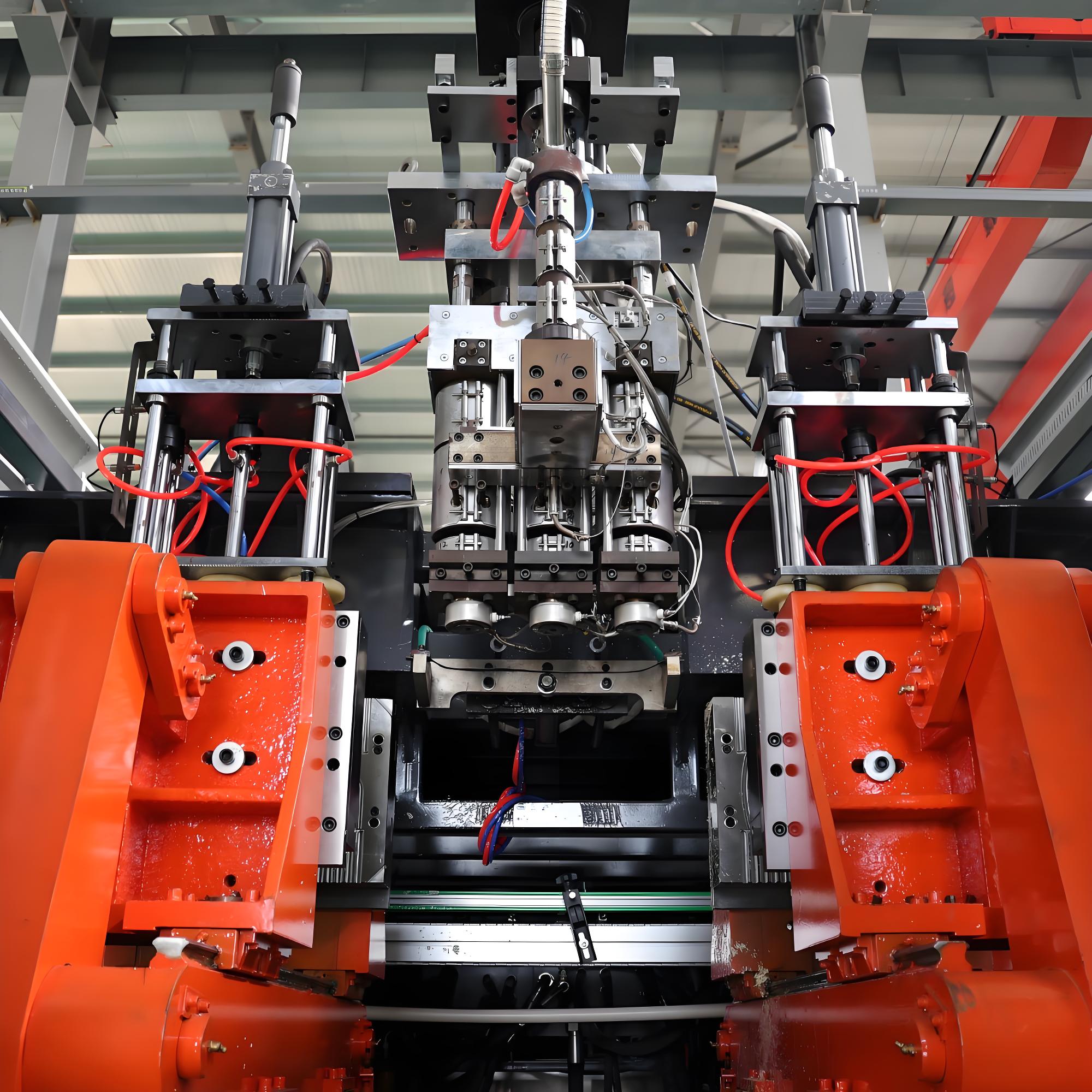
Uniform wall thickness distribution is the most critical quality parameter for heavy-duty industrial plastic products, and Apollo has developed industry-leading parison control technology that ensures precise material distribution throughout the product. Our programmable parison control system uses a servo-driven die head that can adjust the parison thickness in real time during extrusion.
The system allows operators to program up to 200 different wall thickness points along the length of the parison, enabling precise optimization of material distribution for each specific product design. This not only ensures uniform wall thickness and product strength but also reduces material waste by eliminating unnecessary thickness in non-critical areas. Apollo’s parison control system can reduce material usage by up to 15% compared to conventional systems, resulting in significant cost savings for manufacturers.
3.4 Energy-Efficient Servo Hydraulic System
Energy consumption is a significant operating cost for extrusion blow molding operations, and Apollo has developed an advanced servo hydraulic system that reduces energy consumption by up to 50% compared to traditional hydraulic systems. The system uses variable-speed servo motors that only consume energy when needed, adjusting their output based on the actual process requirements.
Unlike traditional hydraulic systems that run continuously at full speed, Apollo’s servo hydraulic system only operates during the clamping, extrusion, and blowing phases of the cycle. During idle periods, the system reduces power consumption to a minimum, resulting in substantial energy savings. The system also provides more precise control over hydraulic pressure and flow, improving process consistency and product quality. In addition, the servo hydraulic system reduces noise levels and extends the service life of hydraulic components, resulting in lower maintenance costs and improved workplace safety.
3.5 Intelligent PLC Control System
All Apollo heavy-duty extrusion blow molding machines are equipped with an advanced industrial-grade PLC control system with a high-resolution touch screen interface. The system provides real-time monitoring and control of all process parameters, including temperature, pressure, speed, and cycle time. It also features automatic fault diagnosis and alarm functions that alert operators to potential issues before they cause downtime or quality problems.
The control system can store up to 1000 different production recipes, allowing operators to quickly switch between different product designs with the touch of a button. Each recipe includes all the necessary process parameters, including extrusion settings, clamping parameters, and blowing parameters, ensuring consistent product quality every time a product is run. Apollo’s control system also includes comprehensive data logging and reporting capabilities that record all production data for quality control and regulatory compliance purposes.
3.6 Automatic Material Handling and Post-Processing Systems
To maximize production efficiency and reduce labor costs, Apollo offers a complete range of automatic material handling and post-processing systems for heavy-duty extrusion blow molding machines. These include automatic material loading systems, de-flashing systems, trimming systems, leak testing systems, and palletizing systems.
Our automatic material loading systems ensure a consistent supply of raw material to the extruder, eliminating the need for manual material handling and reducing the risk of contamination. Our post-processing systems automatically remove flash and trim excess material from the finished products, perform leak tests to ensure product integrity, and palletize the finished products for shipping. These fully integrated systems allow for completely automated production, reducing labor requirements by up to 70% compared to manual operations.
4. Apollo Complete Product Range for Heavy-Duty Industrial Applications
Apollo offers a comprehensive range of heavy-duty extrusion blow molding machines specifically designed for industrial plastic product production. Our machines are available in a wide range of sizes and configurations, covering product capacities from 5 liters to 20,000 liters and clamping forces from 50 tons to 2000 tons.
4.1 AB-80 Medium-Duty Extrusion Blow Molding Machine
The AB-80 is our entry-level heavy-duty extrusion blow molding machine, designed for the production of medium-sized industrial products ranging from 5 liters to 60 liters. It is ideal for manufacturers producing jerry cans, small chemical drums, automotive components, and other similar products.
The AB-80 has a clamping force of 80 tons and a maximum extrusion output of 250 kg/h. It features a single-screw extruder with a diameter of 80mm and a length-to-diameter ratio of 24:1. The machine can accommodate up to 4 cavities for small products and has a cycle time of approximately 20-30 seconds for 20-liter jerry cans. The machine has a footprint of 12m × 6m × 4.5m and requires 3-4 operators to run.
Price and Cost Analysis: The FOB Shanghai price of the Apollo AB-80 extrusion blow molding machine ranges from $120,000 to $160,000, depending on configuration and optional features. The standard configuration includes the main machine, PLC control system, servo hydraulic system, and basic mold. Optional features include multi-layer co-extrusion, automatic de-flashing system, leak testing system, and automatic material loading system. The typical payback period for the AB-80 is 10-15 months for medium-scale industrial product production.
4.2 AB-120 Heavy-Duty Extrusion Blow Molding Machine
The AB-120 is our most popular model for heavy-duty industrial applications, designed for the production of products ranging from 50 liters to 220 liters. It is ideal for manufacturers producing standard chemical drums, IBC containers, plastic pallets, and large automotive components.
The AB-120 has a clamping force of 120 tons and a maximum extrusion output of 450 kg/h. It features a single-screw extruder with a diameter of 120mm and a length-to-diameter ratio of 24:1. The machine can accommodate up to 2 cavities for 20-liter jerry cans or a single cavity for 220-liter drums. The cycle time for a standard 200-liter HDPE drum is approximately 45 seconds. The machine has a footprint of 16m × 8m × 5.5m and requires 4-5 operators to run.
Price and Cost Analysis: The FOB Shanghai price of the Apollo AB-120 extrusion blow molding machine ranges from $190,000 to $250,000, depending on configuration and optional features. The standard configuration includes all the features of the AB-80 plus enhanced plasticization capabilities and a more robust clamping system. Optional features include multi-layer co-extrusion, automatic drum handling system, leak testing system, and integrated quality control systems. The typical payback period for the AB-120 is 8-12 months for large-scale production of chemical drums and IBC containers.
4.3 AB-200 Extra Heavy-Duty Extrusion Blow Molding Machine
The AB-200 is an extra heavy-duty extrusion blow molding machine designed for the production of large industrial products ranging from 200 liters to 2000 liters. It is ideal for manufacturers producing large water tanks, bulk containers, and oversized industrial components.
The AB-200 has a clamping force of 200 tons and a maximum extrusion output of 800 kg/h. It features a single-screw extruder with a diameter of 150mm and a length-to-diameter ratio of 24:1. The machine can accommodate a single cavity for products up to 2000 liters. The cycle time for a 1000-liter water tank is approximately 3-4 minutes. The machine has a footprint of 22m × 10m × 6.5m and requires 5-6 operators to run.
Price and Cost Analysis: The FOB Shanghai price of the Apollo AB-200 extrusion blow molding machine ranges from $350,000 to $450,000, depending on configuration and optional features. The standard configuration includes a high-performance extrusion unit, heavy-duty clamping system, and advanced parison control system. Optional features include multi-layer co-extrusion, automatic product handling system, and specialized cooling systems for large products. The typical payback period for the AB-200 is 10-14 months for large-scale production of water tanks and bulk containers.
4.4 AB-500 Super Heavy-Duty Extrusion Blow Molding Machine
The AB-500 is our largest and most powerful extrusion blow molding machine, designed for the production of extremely large industrial products ranging from 1000 liters to 20,000 liters. It is ideal for manufacturers producing large storage tanks, industrial containers, and oversized structural components.
The AB-500 has a clamping force of 500 tons and a maximum extrusion output of 1500 kg/h. It features a single-screw extruder with a diameter of 200mm and a length-to-diameter ratio of 24:1. The machine can accommodate a single cavity for products up to 20,000 liters. The cycle time for a 5000-liter storage tank is approximately 8-10 minutes. The machine has a footprint of 35m × 15m × 8.5m and requires 6-8 operators to run.
Price and Cost Analysis: The FOB Shanghai price of the Apollo AB-500 extrusion blow molding machine ranges from $750,000 to $950,000, depending on configuration and optional features. The standard configuration includes a high-torque extrusion unit, reinforced clamping system, and advanced process control system. Optional features include multiple extruders for multi-layer production, automatic material handling systems, and specialized post-processing equipment. The typical payback period for the AB-500 is 12-18 months for large-scale production of industrial storage tanks.
5. Comprehensive Cost Analysis and Return on Investment
Investing in an Apollo heavy-duty extrusion blow molding machine delivers exceptional financial returns, with payback periods typically less than 18 months. The following is a detailed cost analysis and return on investment calculation based on the AB-120, our most popular model for heavy-duty industrial applications.
5.1 Initial Investment Breakdown
The initial investment for an Apollo AB-120 extrusion blow molding machine includes the cost of the main equipment, auxiliary equipment, molds, installation, training, and site preparation. The following is a detailed breakdown of the initial investment for a standard configuration delivered to North America.
The main AB-120 machine costs $220,000. Auxiliary equipment, including a 15HP chiller, 200kg hopper dryer, and automatic material loader, costs $25,000. A standard single-cavity mold for 200-liter HDPE chemical drums costs $35,000. Sea freight from Shanghai to Los Angeles is approximately $12,000, and import duties and taxes amount to $33,000, which is 15% of the equipment value. Local transportation and unloading cost $3,500, while installation and commissioning by Apollo technicians cost $12,000. Comprehensive operator training costs $5,500, and an initial spare parts package is $7,500. Site preparation and utility connections require an additional $25,000. Adding these together, the total initial investment is approximately $363,500.
While this initial investment may seem significant, it is important to note that the machine will generate substantial revenue and cost savings from day one. The following analysis will demonstrate that the investment typically pays for itself in less than 11 months.
5.2 Annual Operating Costs
The annual operating costs for an Apollo AB-120 extrusion blow molding machine include raw material costs, energy costs, labor costs, maintenance costs, and mold costs. The following is a detailed breakdown of the annual operating costs based on 24 hours of production per day, 300 days per year, producing 200-liter HDPE chemical drums.
Raw material costs are the largest operating expense, totaling $5,184,000 per year based on a production volume of 8,640 tons per year and an HDPE price of $600 per ton. Energy costs are $72,000 per year, based on an average power consumption of 40 kW and an electricity price of $0.10 per kWh. Labor costs are $120,000 per year for 4 operators working in three shifts. Maintenance and spare parts costs are $18,000 per year, and mold maintenance costs are $9,000 per year. The total annual operating costs are approximately $5,403,000.
It is important to note that these operating costs are significantly lower than those of competing machines due to Apollo’s energy-efficient design and low maintenance requirements. Our servo hydraulic system reduces energy consumption by up to 50% compared to traditional hydraulic machines, resulting in substantial annual energy savings.
5.3 Revenue and Profit Calculation
The revenue from industrial plastic product production comes from the sale of finished products. The price of 200-liter HDPE chemical drums varies depending on quality and market conditions, but typically ranges from $18 to $22 per unit. High-quality drums produced on Apollo machines command a premium price due to their consistent quality and compliance with international standards.
Based on a production volume of 576,000 drums per year (80 drums per hour × 24 hours × 300 days) and an average selling price of $20 per unit, the annual revenue is $11,520,000.
After deducting the annual operating costs of $5,403,000, the annual gross profit is $6,117,000. It is important to note that this calculation does not include any additional revenue from producing other product sizes or designs, which can significantly increase profitability.
5.4 Return on Investment Calculation
Based on the initial investment of $363,500 and annual gross profit of $6,117,000, the payback period is calculated as follows. The payback period equals the initial investment divided by the monthly gross profit. This results in a payback period of approximately 0.71 months, or 21 days.
This exceptionally short payback period demonstrates that investing in an Apollo heavy-duty extrusion blow molding machine is one of the most profitable investments a plastic manufacturer can make. Over the 20-year service life of the equipment, the total net profit would exceed $120 million, providing a return on investment of more than 330 times the initial investment.
5.5 Sensitivity Analysis
To account for potential variations in market conditions and production volumes, we have conducted a sensitivity analysis to show how these factors affect the payback period.
If the selling price of drums is only $16 per unit, the payback period becomes 27 days. If production volume is only 70% of capacity, the payback period becomes 30 days. If both the selling price is $16 per unit and production volume is 70%, the payback period becomes 39 days.
This sensitivity analysis shows that the investment remains extremely profitable even under the most adverse market conditions. The strong global demand for high-quality industrial plastic products ensures that manufacturers can always find a market for their products at competitive prices.
6. Common Challenges in Heavy-Duty Blow Molding and Apollo Solutions
Manufacturing heavy-duty industrial plastic products presents several unique challenges that can affect product quality, production efficiency, and profitability. Apollo has developed specialized solutions to address these common challenges and ensure optimal performance of our extrusion blow molding machines.
6.1 Wall Thickness Inconsistency and Product Weakness
Wall thickness inconsistency is the most common problem in heavy-duty blow molding, and it can lead to product failure, excessive material costs, and quality issues. This issue is often caused by improper parison control, uneven mold cooling, or inconsistent melt quality.
Apollo addresses this challenge through our industry-leading parison control technology, which allows for precise adjustment of wall thickness along the entire length of the parison. Our engineering team uses advanced computer-aided engineering (CAE) software to optimize parison profiles for each specific product design, ensuring uniform material distribution and maximum product strength. In addition, Apollo’s mold cooling systems feature multiple independent cooling zones that allow for precise temperature control of different parts of the mold, ensuring uniform cooling and preventing warping or distortion.
6.2 Parison Sag and Material Waste
Parison sag is a common issue when producing large, heavy products, as the weight of the molten parison causes it to stretch and become thinner at the bottom. This can result in uneven wall thickness and excessive material waste.
Apollo addresses this challenge through our advanced parison control system and optimized die head design. Our programmable parison control system can compensate for sag by increasing the wall thickness at the bottom of the parison and decreasing it at the top. Our die heads are also designed with special flow channels that ensure uniform melt distribution and minimize parison sag. In addition, Apollo’s high-speed extrusion and clamping systems reduce the time the parison is exposed to gravity, further minimizing sag and material waste.
6.3 High Energy Consumption and Operating Costs
Energy consumption is a significant operating cost for heavy-duty blow molding operations, and rising energy prices are putting increasing pressure on manufacturers to reduce their energy usage.
Apollo’s energy-efficient servo hydraulic system reduces energy consumption by up to 50% compared to traditional hydraulic machines, resulting in substantial annual energy savings. Our system only consumes energy when needed, adjusting its output based on the actual process requirements. In addition, Apollo offers optional energy recovery systems that capture and reuse waste heat from the extrusion and hydraulic systems, further reducing energy consumption. Our machines also feature optimized screw designs that improve plasticization efficiency and reduce energy usage per kilogram of processed material.
6.4 Long Changeover Times and Low Flexibility
Many industrial plastic manufacturers produce a diverse range of products, requiring frequent mold and product changeovers. Long changeover times can significantly reduce production efficiency and increase costs, particularly for manufacturers producing small batches of multiple products.
Apollo addresses this challenge through our quick-change mold system, which allows mold changes to be completed in less than 4 hours, compared to 12-24 hours for traditional machines. Our system features standardized mold bases and quick-connect couplings that eliminate the need for time-consuming adjustments and alignments. In addition, Apollo’s PLC control system stores all production recipes, allowing operators to quickly recall the appropriate parameters for each product. This reduces setup time and ensures consistent product quality when switching between different container designs.
7. Real-World Success Story: Chemical Packaging Manufacturer in Brazil
A leading chemical packaging manufacturer in Brazil was looking to expand their production capacity for 200-liter HDPE chemical drums. The company was using older extrusion blow molding machines from a competitor that were experiencing high material waste, inconsistent product quality, and high energy consumption. They were also struggling to meet the strict UN certification requirements for their drums, which were limiting their ability to export to international markets.
After extensive research and evaluation, the company selected Apollo to provide a complete extrusion blow molding solution for their production needs. Apollo installed two AB-120 extrusion blow molding machines with single-cavity molds for 200-liter chemical drums. The machines were equipped with advanced parison control systems, energy-efficient servo hydraulic systems, and integrated leak testing systems.
The new Apollo machines were installed and commissioned in just 42 days, and the company immediately saw dramatic improvements in production efficiency and product quality. The advanced parison control system reduced material usage by 12% while improving wall thickness uniformity and product strength. The energy consumption per drum was reduced by 42% compared to their old machines, and the production capacity increased by 55%.
The improved product quality allowed the company to achieve UN certification for their drums, opening up new export markets in South America and North America. The company also reported a significant reduction in customer complaints and product returns, as well as a substantial decrease in maintenance costs and downtime.
Results after implementation included annual raw material cost savings of $622,000, annual energy cost savings of $52,000, and a 55% increase in production capacity. The company achieved UN certification for their entire product line, resulting in a 38% increase in export sales. The payback period for the entire investment was only 7.8 months.
The company was extremely satisfied with the performance of the Apollo machines and has since purchased three additional AB-120 machines to expand their production capacity further. They have also become a reference customer for Apollo in the South American chemical packaging market.
8. Apollo Global Service and Support
Investing in heavy-duty extrusion blow molding equipment is a significant decision, and the success of your investment depends not only on the quality of the equipment but also on the quality of the after-sales support provided by the manufacturer. Apollo is committed to providing exceptional global service and support to ensure that your machines operate at peak efficiency throughout their entire service life.
8.1 Professional Installation and Commissioning
Apollo provides professional installation and commissioning services for all our extrusion blow molding machines. Our experienced technicians will travel to your facility to install the equipment, connect all utilities, and commission the machine to ensure that it is operating at peak performance. We will also produce test batches of your products to verify product quality and optimize process parameters.
Our installation and commissioning process is designed to minimize downtime and ensure that your production operation is up and running as quickly as possible. We typically complete installation and commissioning of a standard production machine in 30-45 days, depending on the model and configuration.
8.2 Comprehensive Training Programs
Proper operator training is essential for ensuring safe and efficient operation of your extrusion blow molding machine. Apollo provides comprehensive training programs for operators, maintenance personnel, and production managers, covering all aspects of machine operation, maintenance, and troubleshooting.
Our training programs include both classroom instruction and hands-on training, ensuring that your staff has the knowledge and skills to operate the machine safely and efficiently. We also provide detailed operation and maintenance manuals that serve as valuable references for your staff. For customers who require additional training, we offer advanced training programs at our manufacturing facility in China.
8.3 Global After-Sales Support Network
Apollo has established a global network of service centers and experienced technicians to provide fast and reliable support to our customers worldwide. Our service team is available 24/7 to assist with any questions or issues you may have. We also maintain a large inventory of spare parts at our manufacturing facility and regional service centers, ensuring that spare parts are delivered quickly to minimize downtime.
For customers who require additional support, we offer preventive maintenance contracts that include regular inspections and maintenance to ensure that your machine continues to operate at peak efficiency. Our technical support team can also provide remote assistance using advanced diagnostic tools, allowing us to resolve many issues quickly without the need for an on-site visit.
9. Conclusion
The global market for heavy-duty industrial plastic products is experiencing rapid growth, driven by the expansion of manufacturing, logistics, construction, and automotive industries worldwide. Extrusion blow molding has emerged as the superior manufacturing process for large, heavy-duty industrial products, offering unmatched efficiency, cost-effectiveness, and product quality compared to alternative processes.
Apollo heavy-duty extrusion blow molding machines are specifically designed to meet the demanding requirements of industrial plastic product production. Our advanced technologies, including high-performance extrusion systems, robust clamping systems, industry-leading parison control, and energy-efficient servo hydraulic systems, ensure superior product quality, maximum production efficiency, and reliable long-term performance.
The financial benefits of investing in an Apollo heavy-duty extrusion blow molding machine are exceptional, with payback periods typically less than 18 months and total returns exceeding 300 times the initial investment over the life of the equipment. Our comprehensive range of machines covers all production requirements, from medium-sized jerry cans to extremely large storage tanks, and our global service network ensures that customers receive fast, reliable support wherever they are located.
Whether you are a small manufacturer just starting out or a large multinational corporation looking to expand your production capacity, Apollo has the expertise, technology, and commitment to customer success to help you achieve your production goals. With over 20 years of industry experience, more than 2,300 successful installations worldwide, and a dedication to continuous innovation, Apollo is the trusted partner of choice for heavy-duty industrial extrusion blow molding solutions.
As the global industrial plastic products market continues to grow and evolve, the demand for high-quality, durable plastic components will only continue to increase. By investing in an Apollo heavy-duty extrusion blow molding machine today, you can position your business for long-term success, improve your product quality and profitability, and meet the evolving needs of your customers in the global marketplace.