
Extrusion blow molding machine is the core mainstream equipment for mass production of hollow plastic products, widely used in food packaging, daily chemical containers, industrial plastic parts, pharmaceutical packaging and other industries. For novice operators and new factory technical teams, standardized and scientific equipment operation is the key to ensuring stable production, qualified product quality, low failure rate and controlled production costs. Many beginner operational errors such as incorrect parameter setting, non-standard startup and shutdown steps, incomplete pre-production inspection and improper daily maintenance often lead to defective products, equipment abrasion, energy waste and even safety accidents. Apollo extrusion blow molding machines are designed with humanized operation logic, simplified parameter configuration and high stable mechanical structure, which are very suitable for novice learning and standardized batch production. This guide provides a complete, step-by-step operational tutorial for beginners, covering pre-operation inspection, formal startup procedures, parameter adjustment skills, full production operation standards, shutdown specifications, daily maintenance, common fault troubleshooting and operational cost control methods. It helps novice operators quickly master professional operation skills, standardize production processes, reduce operational risks and control comprehensive production costs.
1. Basic Overview of Apollo Extrusion Blow Molding Machine
1.1 Working Principle of Extrusion Blow Molding Machine
Extrusion blow molding is a continuous plastic molding process that integrates plastic extrusion, parison molding, mold clamping, air blowing, cooling shaping and product demolding. Different from injection blow molding equipment, extrusion blow molding machines realize continuous tubular plastic parison extrusion through screw extrusion system. After the parison reaches the set length, the mold clamps and cuts the parison automatically, then compressed air is injected into the parison cavity to expand the plastic material to fit the mold inner wall. After uniform cooling and shaping, the hollow plastic product is demolded to complete the whole production cycle. Apollo extrusion blow molding machines adopt optimized screw extrusion structure and stable hydraulic clamping system, with continuous and uniform parison output, stable blowing pressure and high product molding consistency, which reduces the difficulty of manual operation and parameter debugging for beginners.
1.2 Main Structural Components and Beginner Operation Functions
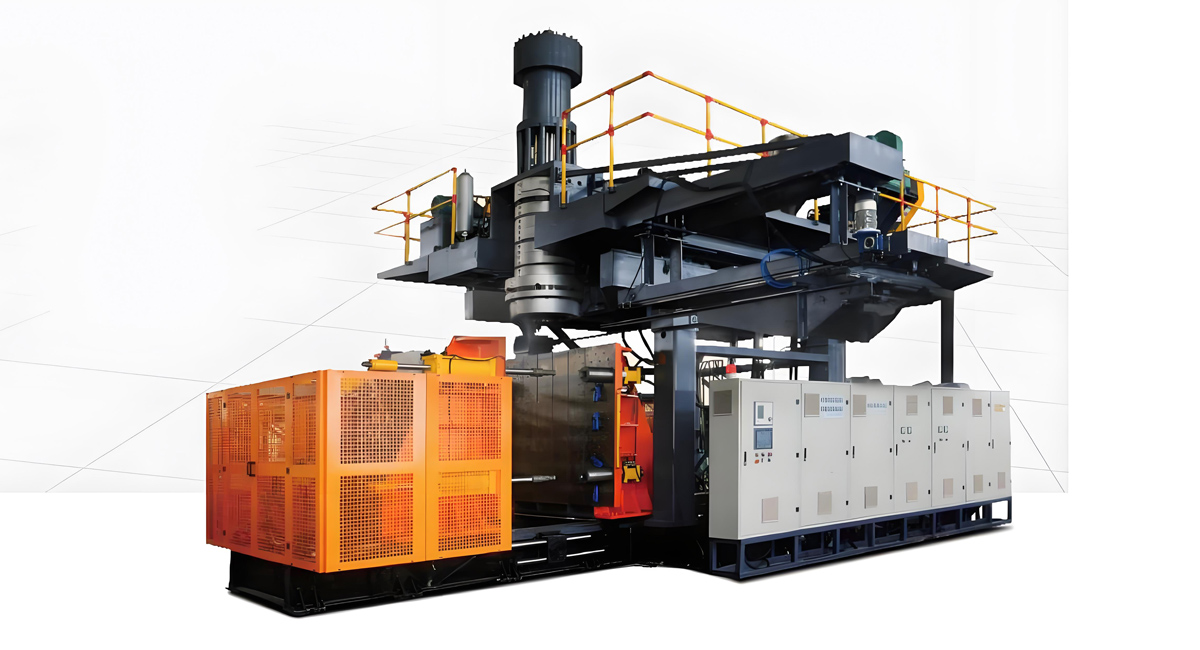
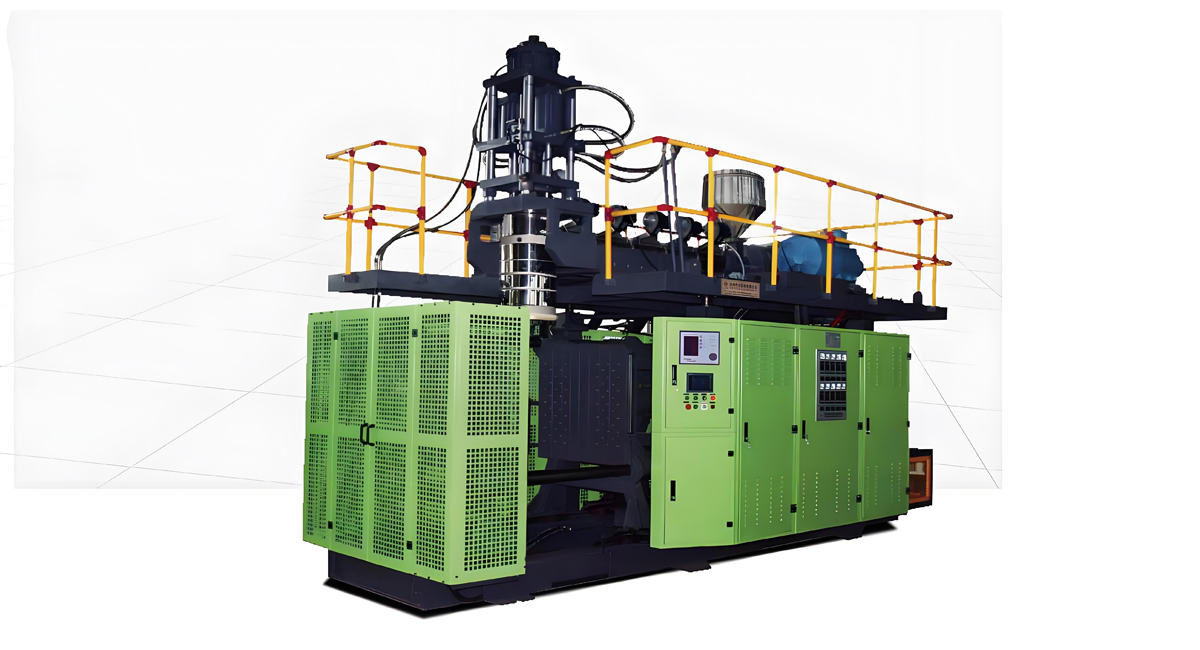
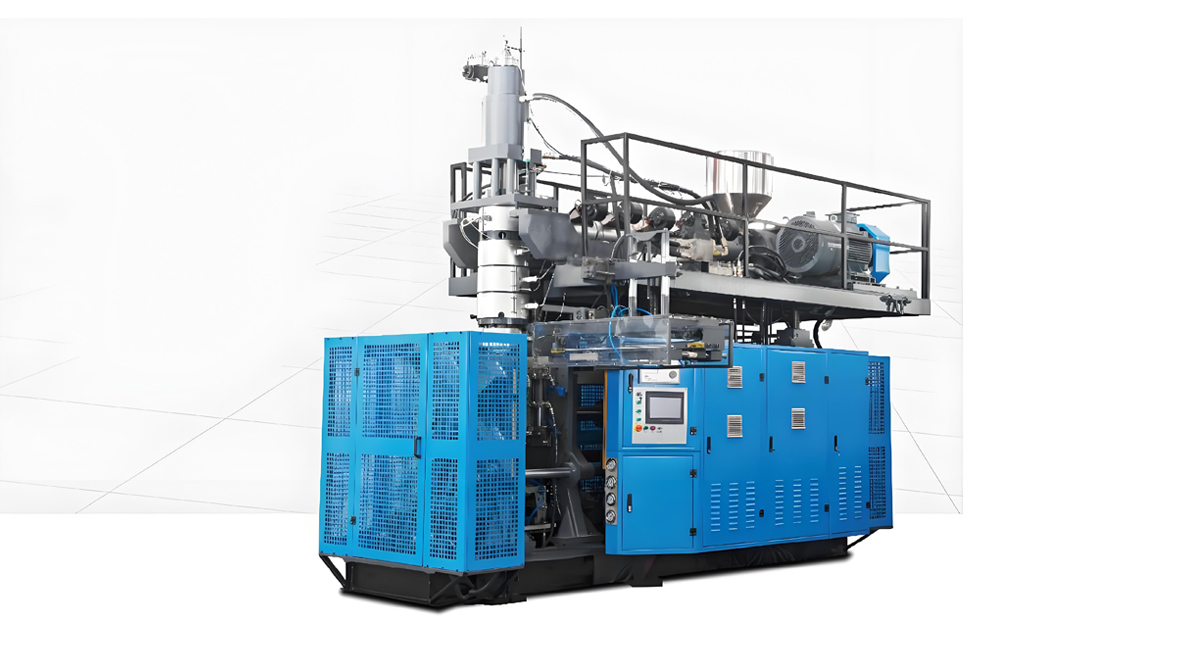
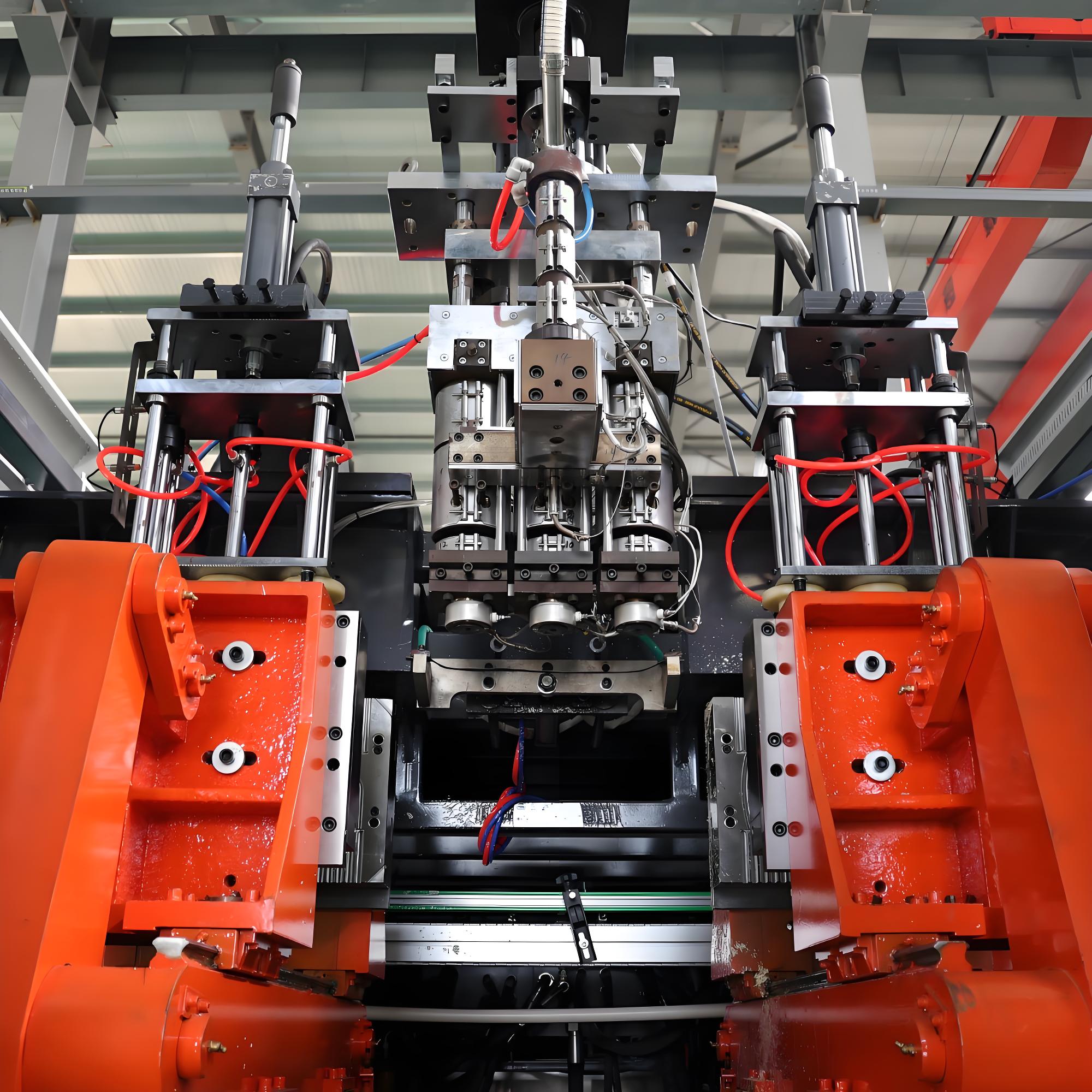
To help beginners quickly get started, the core components of Apollo extrusion blow molding machine and their basic operational functions are sorted out clearly. The extrusion system consists of screw, barrel and feeding hopper, responsible for raw material melting, plasticization and continuous parison extrusion. The hydraulic mold clamping system provides stable clamping force to ensure tight mold closing and avoid flash defects. The blowing system includes air compressor, air storage tank and blowing nozzle, providing constant-pressure clean compressed air for product shaping. The intelligent PLC control panel is the core operation terminal for beginners, realizing parameter setting, equipment start-stop, fault display and production data monitoring. The cooling system ensures uniform cooling of molds and finished products to stabilize product dimensional accuracy. The automatic discharging system realizes non-contact finished product output, reducing manual operation and contamination risks. All functional modules of Apollo equipment are independently controlled with simple logic, which greatly reduces the learning threshold for novice operators.
1.3 Applicable Products and Production Characteristics
Apollo extrusion blow molding machines are suitable for producing various hollow plastic containers with a volume range of 50ml to 20L, covering daily chemical bottles, food storage bottles, industrial plastic barrels, medical auxiliary packaging containers and other products. It supports stable processing of multiple raw materials including HDPE, LDPE, PP and PVC, with strong material compatibility and flexible production. The equipment features continuous cyclic production, stable operating rhythm and low manual intervention demand, which is suitable for novice-operated standardized batch production. Compared with traditional old-fashioned blow molding equipment, Apollo’s optimized structural design reduces frequent parameter fluctuation and mechanical failure, making the production process more stable and easier for beginners to control.
2. Pre-Operation Preparation and Standard Inspection for Beginners
2.1 Safety Inspection Before Startup
Safety inspection is the first and most critical step for novice operators to start production, which can effectively avoid mechanical failure, safety accidents and equipment damage. First, check the overall appearance and protective facilities of the equipment to confirm that all safety protective covers are installed in place without damage or displacement, and the emergency stop button is in normal reset state. Second, inspect the power circuit and hydraulic pipeline to ensure no wire aging, loose wiring, oil leakage or pipeline blockage. Third, clean the equipment operating platform and surrounding area to remove sundries, plastic scraps and dust, keeping the production area tidy and unobstructed. Fourth, confirm that the air compressor and cooling water system are in normal standby state, with stable air pressure and unobstructed water circulation. Beginners must complete all safety inspection items one by one and record inspection status before starting the equipment to eliminate potential safety hazards.
2.2 Mechanical and Mold Inspection
Novice operators need to conduct targeted inspection on mechanical moving parts and molds to ensure stable molding quality. First, manually jog the mold clamping system to check whether the mold opening and closing action is smooth, without jamming, abnormal noise or offset displacement. Second, inspect the mold inner wall for scratches, dirt, rust and residual plastic scraps, and clean and wipe the mold surface to ensure smooth molding surface of finished products. Third, check the tightness of mold fixing bolts to avoid mold displacement during high-load operation leading to product flash and dimensional deviation. Fourth, inspect the extrusion screw and barrel to confirm no foreign matter mixing, and ensure the screw rotation is flexible without abnormal resistance. Standard mechanical inspection can effectively reduce equipment failure rate and product defective rate in formal production, reducing subsequent rework cost and maintenance cost.
2.3 Raw Material Preparation and Inspection
Raw material quality directly determines finished product quality, and beginners need to standardize raw material pretreatment and inspection work. First, select qualified raw materials matching product production requirements, confirm raw material model, purity and moisture content meet production standards, and reject deteriorated, damp and impure raw materials. Second, carry out drying and dehumidification treatment for moisture-absorbing raw materials such as PP and PVC to control the moisture content within the qualified range, avoiding bubble defects and uneven plasticization of finished products caused by excessive moisture. Third, accurately proportion raw materials and auxiliary additives according to production formulas, and ensure uniform mixing to avoid local material performance difference affecting product quality. Fourth, clean the feeding hopper and feeding pipeline to prevent residual old materials and impurities from mixing into new materials, ensuring the purity of molding raw materials.
2.4 Equipment Parameter Pre-Setting
Apollo extrusion blow molding machine is equipped with pre-stored mature production formulas for common products, which is convenient for beginners to set parameters quickly. Novice operators can call the corresponding standard formula according to product specifications and raw material types, including extrusion temperature zoning parameters, screw rotating speed, mold clamping pressure, blowing pressure, cooling time and production cycle parameters. After calling the formula, manually check and fine-tune the parameters according to the actual workshop environment and raw material batch differences to ensure parameter matching. It is forbidden for beginners to modify core parameters at will to avoid large-scale quality fluctuation of products. After parameter setting, save the parameters and conduct idle equipment trial operation to confirm no parameter alarm or abnormal action.
3. Step-by-Step Standard Operation Process for Beginners
3.1 Equipment Startup and Preheating Operation
After completing all pre-production inspections, beginners can start the equipment for preheating operation in strict accordance with the standard steps. First, turn on the total power supply of the equipment and the control system power supply, wait for the PLC system to complete self-inspection, and confirm no system fault alarm. Second, start the heating system, and perform zoning heating for the barrel feeding section, plasticization section, die head and mold according to the set temperature parameters. The temperature rise process needs to be stable and gradual, and it is forbidden to heat up rapidly to avoid local overheating and damage to the screw and barrel. Third, after the temperature reaches the set standard, keep constant temperature for 20 to 30 minutes to ensure uniform temperature of all parts and full plasticization of internal residual materials. Fourth, start the air compressor and cooling water circulation system to stabilize air pressure and water flow for subsequent formal production. The whole startup and preheating process is slow and standardized, which helps beginners form correct operation habits and avoid equipment damage caused by irregular startup.
3.2 Extrusion Parison Debugging and Calibration
Parison molding quality is the key to qualified finished products, and parison debugging is the core operational skill for beginners. After the equipment is preheated stably, start the screw extrusion system at low speed to discharge residual old materials in the barrel until the extruded parison is smooth, uniform in color and free of particles, bubbles and cracks. Then gradually adjust the screw speed and extrusion volume according to the product specification requirements to control the parison thickness and length within the standard range. Beginners need to observe the parison state in real time: if the parison is too thin, appropriately increase the extrusion volume and reduce the screw speed; if the parison is too thick, reduce the extrusion volume and increase the rotating speed appropriately; if the parison wall thickness is uneven, fine-tune the die head gap and temperature parameters. After repeated debugging and calibration, ensure stable and consistent parison state to prepare for formal blow molding production.
3.3 Formal Mold Clamping and Blow Molding Operation
After the parison is stably extruded, enter the formal cyclic blow molding production stage. When the extruded parison reaches the set length, the equipment automatically triggers the mold clamping action. Beginners need to observe the mold clamping state in real time to confirm tight mold closing without gaps and displacement. After mold clamping is completed, the blowing system automatically injects constant-pressure compressed air into the parison cavity to expand the plastic parison and fit closely with the mold inner wall. During the blowing process, keep the air pressure stable, avoid excessive air pressure causing product bulging and cracking, or insufficient air pressure leading to incomplete product shaping. Apollo equipment supports automatic pressure stabilization and timing blowing, and beginners only need to monitor the blowing state to ensure stable operation of the system. After blowing and shaping, enter the cooling and shaping stage to ensure sufficient cooling time to eliminate internal stress of products.
3.4 Product Demolding and Online Inspection
After the product is fully cooled and shaped, the equipment automatically opens the mold and completes non-contact demolding, and the finished product is output through the conveying channel. Novice operators need to conduct real-time online appearance and quality inspection of demolded products. Check whether the product has defects such as flash, deformation, bubble, crack, uneven wall thickness and unclear outline, and detect the dimensional accuracy and sealing performance of finished products randomly. For qualified products, conduct automatic sorting and packaging; for defective products, record the defect types in time and feed back to parameter adjustment. Beginners need to accumulate judgment experience of product defects in the production process, quickly correspond defects to parameter problems, and master basic debugging skills to continuously improve product qualification rate.
3.5 Continuous Cyclic Production Monitoring
After stable production of qualified products, the equipment enters automatic cyclic continuous production. Beginners do not need frequent manual operation, but need to conduct regular patrol monitoring. Monitor the equipment operating sound, temperature, pressure and rotating speed parameters to ensure no abnormal fluctuation; check the raw material feeding status to avoid material shortage and empty machine operation; observe the parison extrusion and product molding status to ensure stable batch quality; check the operating status of air pressure and cooling system to maintain stable production environment. During continuous production, record production data regularly, including output, defective rate, equipment operating time and raw material consumption, to facilitate production statistics and cost accounting.
3.6 Standard Shutdown Operation Steps
Standard shutdown operation can effectively protect the equipment and avoid residual material carbonization and mechanical damage. When stopping production, first stop the automatic production cycle and suspend raw material feeding, and continue low-speed screw operation for 5 to 10 minutes to discharge all residual materials in the barrel. Then turn off the heating system, and stop the screw operation after the equipment temperature drops to the safe range. Next, turn off the air compressor, cooling water system and conveying system in turn, and finally cut off the total power supply of the equipment. After shutdown, clean the mold surface, extrusion die head and equipment surface residual plastic scraps and dust, sort out production tools and raw materials, and complete daily cleaning and finishing work. Beginners must avoid direct power-off shutdown during high-temperature operation to prevent screw jamming and material carbonization failure.
4. Core Parameter Adjustment Skills for Beginners
4.1 Temperature Parameter Adjustment
Temperature is the most critical parameter affecting plastic plasticization and product quality. Beginners need to master zoning temperature adjustment rules of Apollo extrusion blow molding machine. The barrel feeding section adopts low temperature to avoid premature melting of raw materials and feeding blockage; the plasticization section adopts medium and high temperature to ensure full melting and uniform mixing of raw materials; the die head section adopts stable constant temperature to ensure smooth parison extrusion and uniform wall thickness. For different raw materials, match the standard temperature range: HDPE raw material temperature is controlled at 180℃ to 210℃, PP raw material is 190℃ to 220℃, and LDPE raw material is 170℃ to 200℃. If the product has bubble defects, appropriately reduce the plasticization temperature; if the product has rough surface and unmelted particles, appropriately increase the temperature and extend the constant temperature time.
4.2 Speed and Pressure Parameter Adjustment
Screw speed determines parison extrusion speed and production efficiency, and blowing pressure determines product shaping effect. Beginners need to follow the principle of low-speed stable startup and gradual fine-tuning. Low screw speed can ensure uniform plasticization and stable parison output, while excessive speed will lead to insufficient plasticization and unstable parison. The standard blowing pressure is controlled at 0.4 to 0.8MPa according to product volume: small-volume products adopt low pressure, and large-volume thick-wall products adopt appropriately increased pressure to ensure full shaping. Mold clamping pressure needs to match product size to avoid flash caused by insufficient pressure and mold loss caused by excessive pressure.
4.3 Cooling Time Parameter Adjustment
Cooling time directly affects product shaping stability and production efficiency. Too short cooling time will lead to incomplete product shaping, easy deformation and shrinkage; too long cooling time will reduce production efficiency and increase energy consumption. Beginners can adjust according to product wall thickness: thin-wall products with wall thickness less than 2mm adopt 8 to 15 seconds cooling time, and thick-wall products with wall thickness more than 2mm adopt 15 to 30 seconds cooling time. While ensuring product qualification rate, optimize cooling parameters to balance production quality and efficiency.
5. Daily Maintenance and Upkeep Standards for Beginners
5.1 Daily Cleaning Maintenance
Daily cleaning is the basic maintenance work for novice operators, which can effectively extend equipment service life and reduce failure rate. After daily shutdown, clean the residual plastic materials on the screw, die head and mold surface to avoid long-term residual material carbonization affecting subsequent production quality. Clean the equipment surface and operating platform dust and sundries to keep the equipment clean and tidy. Clean the feeding pipeline and filter screen to ensure smooth feeding and pure raw material transportation. Clean the cooling water filter and air compressor filter to avoid pipeline blockage affecting cooling and blowing effect. Standard daily cleaning can reduce equipment failure probability and reduce later maintenance costs.
5.2 Regular Lubrication and Inspection Maintenance
Beginners need to formulate regular maintenance plans for equipment moving parts. Lubricate the mold guide rail, rotating bearing and transmission gear every 3 days to ensure flexible mechanical operation and reduce friction loss. Check the hydraulic oil level and oil quality every week, replace deteriorated hydraulic oil in time and supplement insufficient oil volume to ensure stable operation of hydraulic system. Check the circuit wiring and pipeline fastening status every week to avoid loose wiring and pipeline leakage. Conduct comprehensive temperature calibration of the heating system every month to ensure accurate temperature control parameters and avoid quality deviation caused by temperature error.
5.3 Long-Term Equipment Protection Specifications
For long-term unused equipment, beginners need to master standardized protection methods. Clean all residual materials and dust thoroughly before shutdown for a long time, coat the mold surface with anti-rust oil for protection, and cover the equipment with dust cover. Cut off the power supply and water source completely to avoid equipment damp and circuit aging. For equipment in long-term continuous operation, arrange regular professional overhaul every quarter to check the wear degree of screw, barrel and vulnerable parts, replace aging accessories in advance, and avoid sudden shutdown loss caused by parts failure.
6. Common Beginners’ Faults and Quick Troubleshooting Methods
6.1 Parison Abnormal Defects
Uneven parison wall thickness is the most common problem for novice operation, mainly caused by unstable die head temperature and unbalanced screw speed. The solution is to calibrate die head temperature parameters, stabilize screw operating speed, and fine-tune die head gap. Parison bubble defects are caused by excessive raw material moisture and high plasticization temperature. Beginners need to strengthen raw material drying treatment and appropriately reduce plasticization temperature. Parison surface roughness is caused by residual impurities in the barrel and insufficient plasticization. The solution is to clean the barrel and extend constant temperature plasticization time.
6.2 Finished Product Quality Problems
Product flash is caused by insufficient mold clamping pressure and mold surface sundries. Beginners need to increase mold clamping pressure appropriately and clean mold surface impurities. Product deformation and shrinkage are caused by insufficient cooling time and unstable blowing pressure. It is necessary to extend cooling time and stabilize blowing pressure parameters. Product surface scratches are caused by mold surface damage and foreign matters, which need to polish the mold and clean the mold cavity. Mastering targeted troubleshooting methods can help beginners quickly solve quality problems and reduce defective product loss.
6.3 Equipment Operational Abnormalities
Abnormal equipment noise is mostly caused by insufficient lubrication of moving parts and mechanical jamming. Beginners need to stop the machine for inspection, supplement lubricating oil and clean jamming sundries. Unstable air pressure is caused by air compressor failure and pipeline leakage, which needs to check air tightness and maintain air compressor. Temperature alarm failure is caused by damaged heating ring and temperature sensor deviation, which needs to replace vulnerable parts and calibrate parameters.
7. Operational Cost and Project Price Analysis for Beginners
7.1 Equipment Basic Investment Price
The standard configuration FOB price of Apollo conventional extrusion blow molding machine ranges from 52,000 US dollars to 65,000 US dollars, suitable for small and medium batch production of 50ml to 20L plastic hollow products. The standard package includes host extrusion system, hydraulic mold clamping system, constant-pressure blowing system, intelligent PLC control system and cooling circulation system, supporting formal mass production without additional large-scale modification. Optional customized configurations including multi-cavity mold, automatic sorting system and remote parameter monitoring module are priced at 3,000 to 6,000 US dollars, and beginners can select configurations according to production demands to avoid redundant investment.
7.2 Daily Operating Cost Analysis
In terms of power consumption cost, the installed power of Apollo extrusion blow molding machine is 75kW, and the actual hourly power consumption is 52 to 58kWh after energy-saving optimization. Calculated based on 16-hour daily production and 300-day annual working hours, the annual power consumption cost is about 28,000 to 33,000 US dollars. In terms of raw material cost, standardized novice operation can control the product scrap rate below 1.5%, far lower than the 6% scrap rate of irregular operation, saving 30 to 50 tons of raw materials annually and reducing raw material cost by 40,000 to 80,000 US dollars. In terms of maintenance cost, standardized daily maintenance by beginners can reduce equipment failure rate, with annual maintenance cost controlled at 2,500 to 3,500 US dollars.
7.3 Labor Cost and Comprehensive Benefit Analysis
Apollo extrusion blow molding machine has high automation degree, and a single production line only needs 1 novice operator for daily patrol and monitoring, with annual labor cost of about 38,000 US dollars. Standardized novice operation can stabilize product qualification rate above 98.5%, ensure stable batch order delivery, improve customer satisfaction and repeat order rate. The comprehensive investment payback period of a single production line is 4 to 6 months, with stable long-term production benefit. Standard operation and maintenance by beginners can effectively reduce comprehensive production costs and improve enterprise profit margin.
8. Beginners’ Operation Safety Specifications and Taboos
8.1 Standard Safety Operation Norms
Novice operators must wear standardized labor protection supplies during operation, avoid wearing loose clothes and long hair to prevent entanglement with mechanical moving parts. It is forbidden to stretch hands and tools into the mold cavity and extrusion port during equipment operation to avoid mechanical injury. Adjust parameters and clean equipment only after the equipment is completely stopped and power is cut off. Operate strictly in accordance with startup, production and shutdown steps, and report abnormal equipment conditions to technical personnel in time without blind operation.
8.2 Operational Taboos for Beginners
Beginners are prohibited from modifying core equipment parameters without authorization to avoid large-scale quality accidents. It is forbidden to start the machine at high speed and high pressure without preheating, which will cause equipment wear and screw jamming. It is forbidden to operate the equipment with faults and hidden dangers to avoid expanding failure losses. It is forbidden to leave the equipment unattended during long-term continuous operation to prevent abnormal production and safety accidents. Abiding by operational taboos is the key to ensure equipment safety, personal safety and stable production quality.
9. Apollo Brand Operation Training and Technical Support
Apollo focuses on the R&D and manufacturing of high-efficiency and stable extrusion blow molding equipment, and provides professional one-stop operation training services for novice users. In the pre-production stage, professional technical teams provide targeted one-on-one operational training according to user equipment models and production products, including equipment structure cognition, parameter setting, standard operation steps, daily maintenance and fault troubleshooting, helping novice operators quickly master independent operation skills.
During the formal production process, Apollo provides 24-hour remote technical support to answer novice operational questions in real time and solve production abnormal problems quickly. All equipment enjoys long-term after-sales warranty and regular return visit maintenance services, guiding users to standardize daily operation and maintenance, reduce equipment failure rate and production cost, and ensure long-term stable and efficient operation of the equipment.
10. Conclusion
Standardized operation of extrusion blow molding machine is the core skill that novice operators must master, which directly determines product quality, production efficiency, equipment service life and enterprise production cost. Different from complex traditional equipment, Apollo extrusion blow molding machine adopts humanized design with simple operation logic and stable mechanical performance, which greatly reduces the learning and operation threshold for beginners. By strictly implementing pre-production inspection, standardized startup and shutdown steps, scientific parameter adjustment, daily maintenance and safety operation specifications, novice operators can quickly realize independent and standardized production.
Standard novice operation can effectively reduce product defective rate, equipment failure rate and comprehensive production costs, improve production stability and product market competitiveness. For new operators and new production factories, mastering the complete operation process of Apollo extrusion blow molding machine is an important foundation for realizing standardized, efficient and low-cost batch production, and creates stable economic benefits for long-term enterprise development.