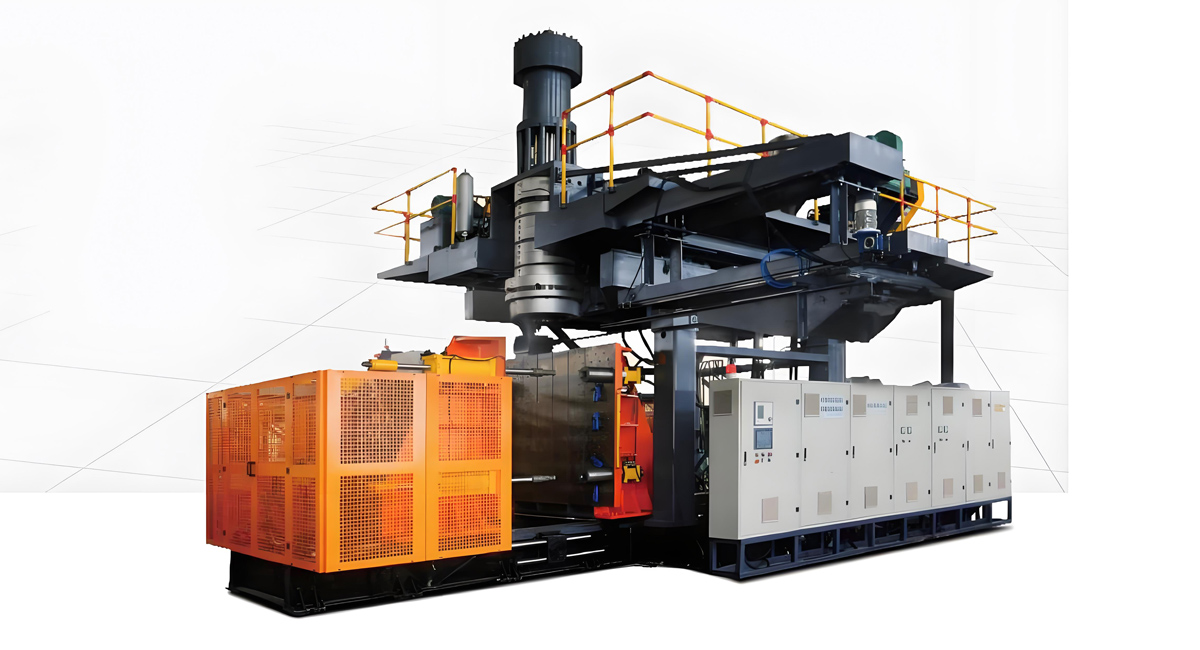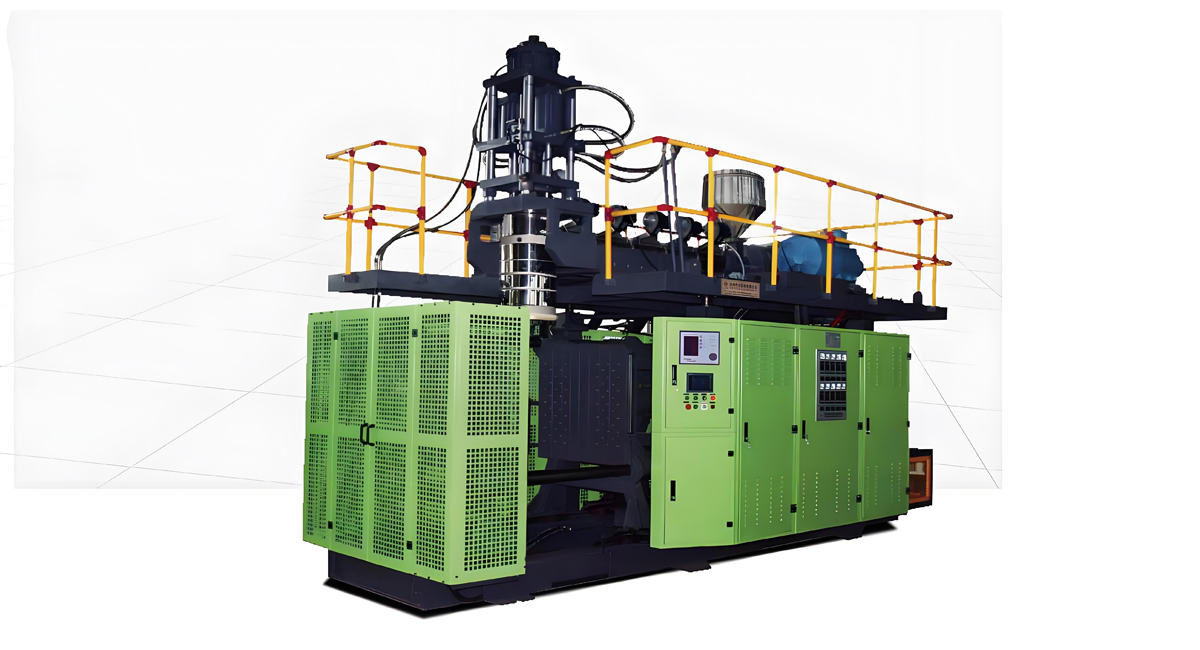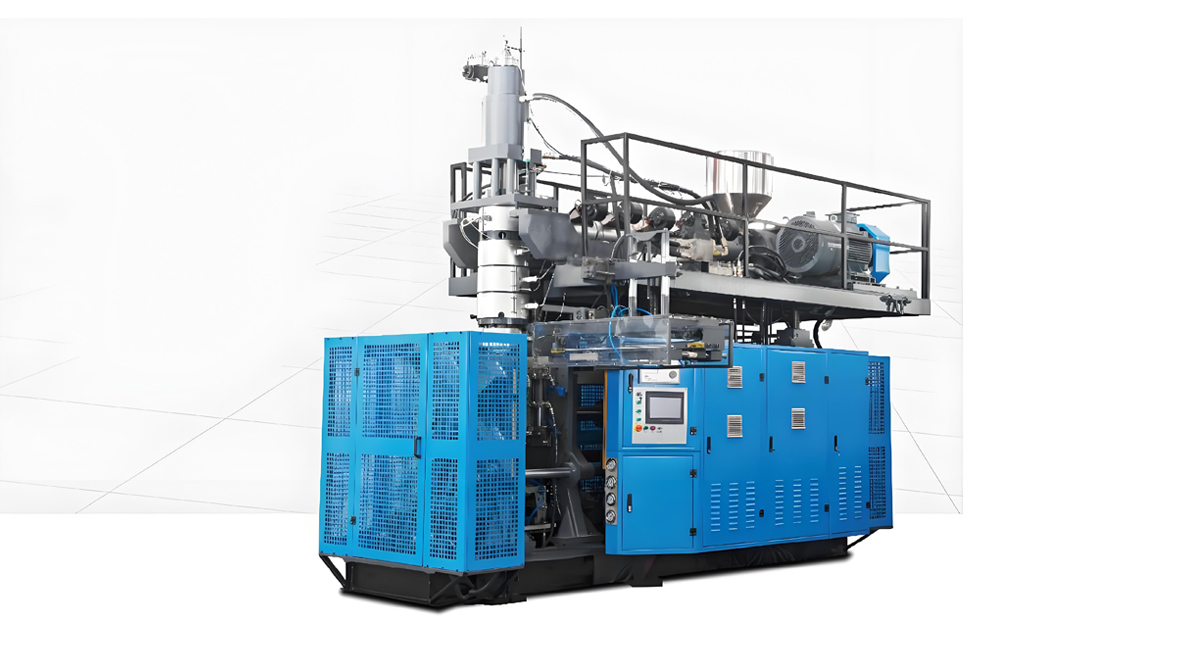

The 2L capacity hollow plastic container is one of the most widely used packaging specifications in household daily chemical and food storage fields. Compared with small-capacity bottles and oversized industrial containers, 2L bottles and jars feature moderate volume, convenient household storage, safe material characteristics, and diverse appearance designs, fully matching the daily consumption scenarios of families and small commercial institutions. Common 2L products include laundry detergent bottles, dish soap bottles, shower gel bottles, and food-grade sealed storage jars for grains, nuts, and preserved foods. As the core manufacturing equipment for such hollow plastic products, the extrusion blow molding machine completes integrated molding from plastic melting to finished product demolding, becoming the standard production equipment for medium-capacity household packaging containers.
APOLLO, a professional manufacturer of precision extrusion blow molding equipment, has independently developed and optimized the 2L EBM machine specifically targeting the production characteristics of household daily chemical bottles and food storage jars. Different from general-purpose blow molding equipment on the market, APOLLO 2L extrusion blow molding machine is upgraded in terms of large-volume parison stability, thick and thin wall control, hygienic molding standards, and long-cycle continuous production efficiency, perfectly solving the common industry problems of unstable bottle body size, low production efficiency, high defective rate, and poor hygienic safety in traditional 2L container production. This comprehensive production guide systematically elaborates on equipment working principles, core structural advantages, standardized production processes, scenario-based application characteristics, common fault solutions, and full-cycle cost performance analysis, providing professional procurement and production optimization references for packaging processing enterprises.
1. Market and Production Overview of 2L Household Containers
1.1 Main Application Scenarios and Product Standards of 2L Containers
2L plastic containers are mainly divided into two core application categories in the consumer market: household daily chemical packaging and food storage packaging. In the daily chemical industry, 2L capacity is the mainstream specification for medium-sized laundry detergent bottles, hand sanitizer containers, dishwashing liquid bottles, body wash and shampoo packaging bottles. Such products require good chemical corrosion resistance, uniform bottle wall thickness, strong compression resistance, and smooth surface printing performance to adapt to daily chemical liquid storage, transportation extrusion, and market printing and labeling needs.
In the food storage industry, 2L sealed plastic jars are widely used for household grain storage, dried fruit preservation, snack storage, and small-batch food sealed packaging. Food-grade 2L containers must comply with strict food contact safety standards, featuring no harmful substance precipitation, good air tightness, anti-oxidation, anti-moisture permeability, and high structural stability to avoid deformation and cracking during long-term food storage and repeated cleaning.
In terms of industry production standards, 2L containers have strict requirements on capacity tolerance, wall thickness uniformity, sealing performance, and appearance flatness. The capacity error must be controlled within ±2%, the bottle wall thickness tolerance is stable within ±0.12mm, and the finished product has no bubbles, scratches, flash, and deformation defects. Only high-precision professional extrusion blow molding machine equipment can meet these standardized mass production requirements.
1.2 Industry Pain Points of Traditional 2L Container Production Equipment
Most traditional ordinary blow molding machines applied to 2L container production have prominent technical bottlenecks and production deficiencies. First, the parison extrusion stability is poor. Due to the large volume of 2L containers, traditional equipment is prone to uneven parison thickness and unstable extrusion volume, resulting in inconsistent bottle body wall thickness, local thin walls, and easy deformation and leakage of finished products.
Second, the production efficiency is low. Traditional semi-automatic blow molding equipment relies on manual auxiliary trimming and feeding, with low hourly output and long molding cycle. It cannot meet the large-batch and fast delivery demands of daily chemical and food packaging orders. Third, the hygienic level is insufficient. Ordinary equipment has dead corners for material residue and poor sealing performance, which easily causes material deterioration and container surface pollution, failing to meet food-grade production standards.
In addition, traditional equipment has high energy consumption and poor cost control capability. The unit energy consumption for producing 2L containers is high, and the defective rate remains at 6% to 10%, resulting in serious raw material waste and increased production costs, which greatly reduces the profit margin of packaging enterprises.
1.3 Core Equipment Requirements for Modern 2L Container Manufacturing
Modern large-scale production of 2L household daily chemical bottles and food storage jars puts forward four core requirements for extrusion blow molding machine equipment. The first is high-precision parison and wall thickness control capability to ensure stable capacity and uniform structure of large-volume containers. The second is hygienic and environmentally friendly molding configuration to meet food-grade and daily chemical packaging safety standards. The third is high-efficiency continuous automated production performance to adapt to large-batch order production. The fourth is low energy consumption and stable long-term operation to reduce comprehensive production costs.
The upgraded APOLLO 2L EBM machine fully covers the above industry core requirements through customized structural optimization and intelligent system configuration, becoming the preferred professional equipment for modern 2L medium-capacity household container production lines.
2. Working Principle and Standard Production Process of 2L EBM Machine
2.1 Basic Working Principle of Extrusion Blow Molding for 2L Containers
The 2L extrusion blow molding machine adopts the thermal plasticizing and pneumatic stretching molding principle, realizing one-time integrated molding of large-volume hollow containers. The whole production process is completed by the coordinated operation of the extrusion plasticizing system, hydraulic mold clamping system, constant-pressure blowing system, circulating cooling system, and intelligent control system. Firstly, food-grade and daily chemical-grade plastic particles such as HDPE, LDPE, and PP are evenly heated and plasticized in the extruder barrel to form stable molten plastic melt.
The precision screw extrusion system quantitatively extrudes tubular plastic parisons matching the 2L container specification. After the parison is extruded to the set length, the high-rigidity mold clamping mechanism quickly closes the mold to clamp and cut off the excess parison. Then, the high-purity filtered compressed air is injected into the closed mold cavity. Under stable air pressure, the plastic parison is evenly stretched and expanded, closely fitting the inner wall of the precision mold to form the outline of 2L bottles and jars.
Finally, the high-efficiency circulating water cooling system rapidly cools and shapes the container. After the internal stress is completely eliminated and the shape is fixed, the mold is automatically opened, and the finished product is demolded and output. The whole process is continuous and automated without secondary processing, which efficiently completes the production of qualified 2L daily chemical bottles and food storage jars.
2.2 Complete Production Process Flow for Household Containers
APOLLO 2L EBM machine formulates a standardized and refined production process for the structural characteristics and safety standards of household containers, ensuring stable quality of each batch of products. The first step is raw material pretreatment, including screening, impurity removal, and constant-temperature drying of plastic particles to remove moisture and dust impurities, avoiding bubble and particle defects on the surface of finished 2L containers.
The second step is segmented heating plasticizing. The extruder adopts multi-stage independent temperature control to accurately adjust the heating temperature according to different raw material characteristics, ensuring full and uniform melting of plastics without thermal degradation or coking residue, which lays a foundation for hygienic production.
The third step is intelligent parison extrusion and wall thickness adjustment. The equipment dynamically adjusts the parison thickness in real time according to the 2L container mold structure, realizing thickened reinforcement at the bottom and mouth of the bottle and uniform thickness of the bottle body, effectively improving the compression resistance and drop resistance of large-volume containers.
The fourth step is high-precision mold clamping and constant-pressure blowing. The stable mold clamping force eliminates flash and mold displacement defects, and the constant-pressure blowing technology ensures uniform stretching of the parison, smooth and flat container surface, and standard dimensional tolerance.
The fifth step is gradient cooling and shaping. Segmented cooling temperature setting eliminates internal stress of large-volume containers, preventing deformation, warping, and cracking of 2L bottles and jars during long-term use.
The sixth step is automatic demolding and finished product sorting. The equipment automatically outputs finished products and cooperates with the trimming system to complete edge cleaning, realizing continuous cyclic production and greatly improving production efficiency.
2.3 Key Technical Control Points for High-Quality 2L Container Molding
The production of qualified 2L household containers needs to focus on three core technical control points of the extrusion blow molding machine. First, parison stability control. Large-volume containers have high requirements on parison extrusion uniformity. Stable screw speed and die head pressure must be maintained to avoid parison deviation and thickness difference, ensuring consistent capacity and structure of finished products.
Second, blowing pressure and speed matching. Excessively high blowing pressure will cause local over-stretching and thin wall of the container, while excessively low pressure will lead to incomplete molding and unclear outline. The constant-pressure and variable-speed blowing system of APOLLO equipment can accurately match the optimal blowing parameters for 2L specifications to ensure full and uniform molding.
Third, cooling balance control. The large volume of 2L containers leads to a large heat dissipation range. Unbalanced cooling will cause inconsistent shrinkage rate and product deformation. The equipment adopts a multi-channel circulating cooling water system to realize synchronous and uniform cooling of the inner and outer walls of the container, ensuring stable product shape and dimensional accuracy.
3. Core Structural and Performance Advantages of APOLLO 2L EBM Machine
3.1 Customized Large-Volume Extrusion Plasticizing System
Aiming at the production characteristics of 2L large-capacity containers, APOLLO equips the 2L extrusion blow molding machine with a customized large-diameter high-efficiency plasticizing screw. The screw adopts a low-shear uniform melting design, which can efficiently plasticize HDPE, PP, and other household packaging special materials, ensuring uniform melt viscosity and stable extrusion output. Compared with ordinary small screws of traditional equipment, the customized screw structure improves plasticizing efficiency by more than 20%, effectively solving the problems of insufficient melting and unstable parison output in large-volume container production.
The extruder barrel adopts multi-stage independent precise temperature control, with temperature control accuracy up to ±1℃. It can adapt to the processing requirements of different daily chemical and food-grade plastic raw materials, avoiding material degradation and peculiar smell, and meeting the hygienic safety standards of household container production. All contact parts of the extrusion system are made of food-grade anti-corrosion and wear-resistant alloy materials, with no harmful substance precipitation and long service life.
3.2 Intelligent Dynamic Wall Thickness Closed-Loop Control System
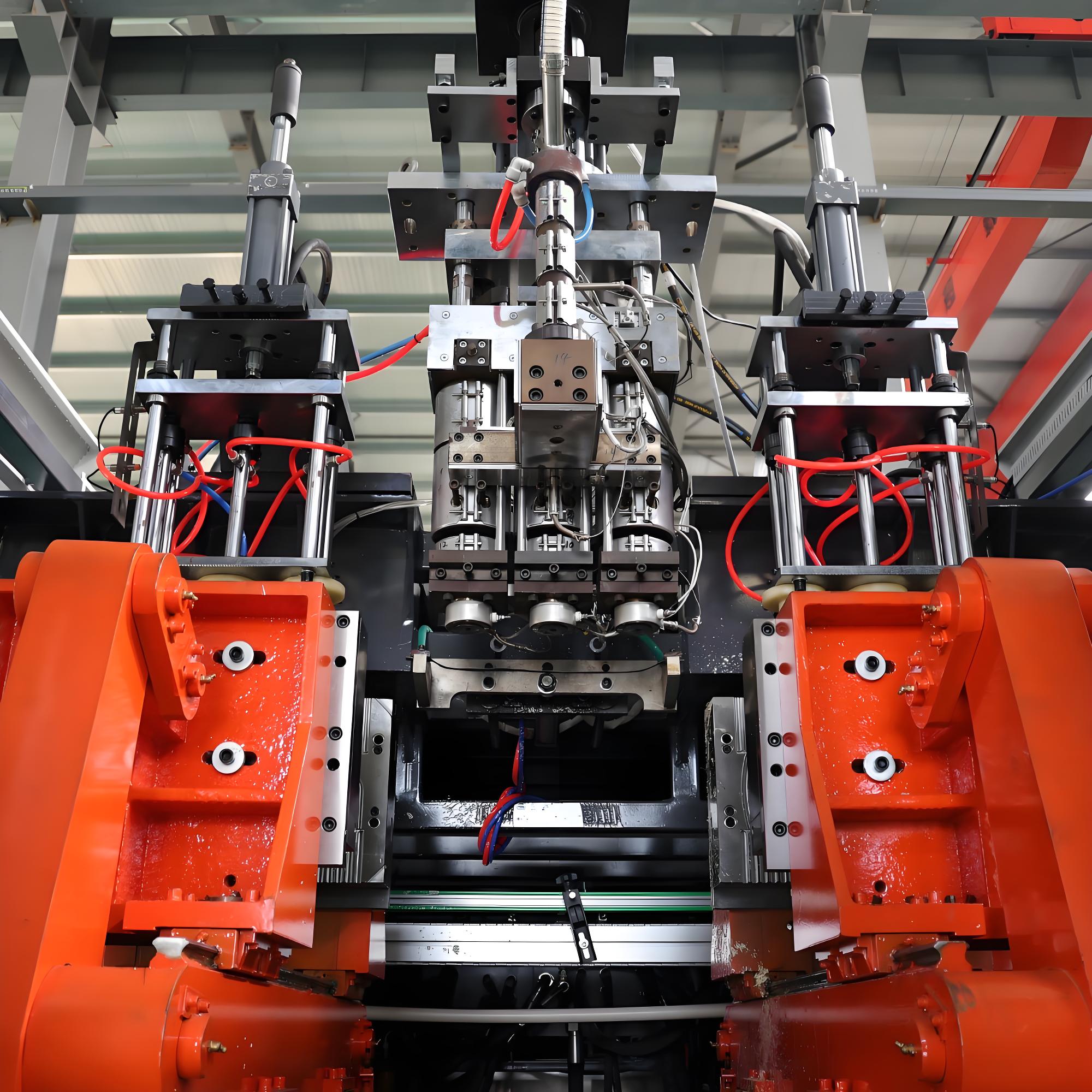
Uneven wall thickness is the most common quality defect of 2L large-volume containers, which easily causes bottle body deformation, liquid leakage, and reduced compression resistance. APOLLO 2L EBM machine is equipped with an upgraded intelligent wall thickness closed-loop control system, which can monitor the parison thickness changes in real time during the extrusion process and automatically adjust the die head gap and extrusion parameters through data feedback.
This precise control technology realizes targeted thickness reinforcement for the easily stressed parts such as the bottom and shoulder of 2L bottles and jars, and uniform thickness of the bottle body. The overall wall thickness tolerance is stably controlled within ±0.1mm, and the capacity error is less than 2%. The finished containers have uniform stress, strong compression resistance and drop resistance, which can adapt to stacking storage and long-distance transportation of household daily chemical and food products, greatly reducing product damage rate.
3.3 High-Rigidity Mold Clamping and Constant-Pressure Purified Blowing System
The equipment adopts a high-rigidity integral cast mold clamping frame, with stable mold closing force and high positioning accuracy, which can effectively resist the expansion force generated by high-pressure blowing of 2L large-volume containers, avoid mold expansion and flash defects, and ensure smooth and flat bottle body without burrs. The optimized fast mold opening and closing cycle shortens the single molding cycle and significantly improves the hourly output of finished products.
The supporting high-purity purified blowing system is equipped with multi-stage air filtration devices to remove dust, moisture, and impurities in the compressed air, ensuring no pollution inside food and daily chemical containers. The constant-pressure blowing technology maintains stable air pressure in the mold cavity, realizing uniform stretching and molding of the parison, clear product outline, and high surface smoothness, which is convenient for subsequent printing, labeling, and surface finishing processes of household products.
3.4 Full-Automatic Intelligent Unmanned Production System
APOLLO 2L extrusion blow molding machine integrates a full-process automatic control system, realizing automatic feeding, automatic plasticizing extrusion, automatic mold clamping and blowing, automatic cooling shaping, and automatic demolding and trimming. The whole production process can be operated by one person with multiple machines, which greatly reduces manual intervention and labor costs. The intelligent touch screen operation interface supports one-click parameter storage and formula switching, which can quickly adapt to the production of different shapes of 2L round bottles, square bottles, and special-shaped jars.
The equipment is equipped with intelligent fault early warning and automatic protection functions, which can real-time monitor abnormal conditions such as over-temperature, over-pressure, mold jamming, and material shortage. It automatically alarms and stops for protection to avoid equipment damage and mass defective products, ensuring long-term stable continuous operation of the production line and meeting the large-batch production demands of household packaging enterprises.
3.5 Servo Energy-Saving and Environmentally Friendly Sealed Structure
Aiming at the high energy consumption problem of traditional large-volume blow molding equipment, APOLLO 2L EBM machine adopts an upgraded servo energy-saving power system and circulating heat preservation structure. The servo motor automatically adjusts power output according to production load, eliminating no-load energy waste. The high-efficiency heat preservation and heating structure reduces invalid heat loss, and the overall comprehensive energy-saving effect is more than 28% compared with traditional ordinary equipment, greatly reducing the unit power consumption cost of 2L container production.
The whole machine adopts a fully sealed dustproof and noise reduction design, with low operating noise and no dust overflow in the production process, meeting the clean workshop production standards of food and daily chemical products. The residual material closed recycling system can recycle excess material heads and unqualified products, realizing 100% material reuse, reducing raw material waste, and meeting green and environmentally friendly production requirements.
4. Scenario-Based Application Advantages for Daily Chemical Bottles and Food Storage Jars
4.1 Production Advantages of 2L Household Daily Chemical Bottles
Household daily chemical products such as laundry detergent and dish soap have high requirements on container chemical stability and appearance quality. The 2L daily chemical bottles produced by APOLLO extrusion blow molding machine have uniform bottle wall density and excellent corrosion resistance, which can resist the long-term erosion of daily chemical surfactants and ensure no swelling, cracking, or leakage during product storage and use. The smooth and flawless bottle surface supports various printing, hot stamping, and labeling processes, improving the appearance grade and market competitiveness of daily chemical products.
The equipment has stable molding accuracy, ensuring consistent caliber and sealing groove size of batch products. The matched bottle caps have good sealing performance, effectively preventing liquid leakage and volatile deterioration of daily chemical products. The standardized batch production capability solves the problems of inconsistent product quality and large color difference in traditional equipment production, helping daily chemical enterprises realize standardized product iteration and large-scale market supply.
4.2 Production Advantages of 2L Food-Grade Storage Jars
Food storage jars require strict hygienic safety, air tightness, and structural stability. All material contact parts of APOLLO 2L EBM machine meet food-grade safety standards, with no harmful substance precipitation, no peculiar smell, and no material residue dead corners. The produced 2L food jars have clean inner walls, good air tightness and moisture resistance, which can effectively isolate external moisture and bacteria, and prolong the storage period of grains, nuts, and dried foods.
The thickened reinforced structure at the bottom and mouth of the jar improves the compression resistance and drop resistance of the product. The jars can be stacked for storage without deformation, which is convenient for household classified storage. The equipment’s precise molding technology ensures stable dimensional tolerance of batch food jars, consistent sealing performance, and compliance with national food packaging safety standards, fully meeting the high-standard production demands of food packaging enterprises.
4.3 Batch Production Consistency and Efficiency Advantages
In large-batch order production, APOLLO 2L extrusion blow molding machine maintains extremely stable operating parameters. The extrusion volume, blowing pressure, cooling temperature, and other core parameters have small fluctuation ranges in long-term continuous operation, ensuring consistent capacity, wall thickness, and appearance of each batch of 2L containers. The product defective rate is stably controlled below 1.2%, which is far lower than the industry average level of traditional equipment.
The optimized production cycle improves the hourly output of 2L standard containers by more than 30% compared with traditional equipment. It can realize 24-hour uninterrupted continuous production, effectively shortening the order delivery cycle, improving the production capacity and market response speed of packaging enterprises, and bringing higher economic benefits to manufacturers.
4.4 Flexible Production and Product Diversification Advantages
Household container products have diverse shapes and customized demands. APOLLO 2L EBM machine adopts a quick-change mold structure design, which can complete mold replacement and parameter debugging in a short time, realizing flexible switching between 2L round bottles, square bottles, flat bottles, and special-shaped storage jars. The equipment supports the production of transparent, frosted, colored, and other different surface effect containers, adapting to the personalized and diversified product layout needs of modern packaging enterprises.
In addition, the equipment has strong material adaptability, which can process HDPE, LDPE, PP, and other multiple packaging materials, meeting the production requirements of different types of daily chemical and food containers, with wide application range and high equipment utilization rate.
5. 2026 APOLLO 2L EBM Machine Price and Full-Cycle Cost Benefit Analysis
5.1 Equipment Procurement Price Grading Estimation
Combined with the 2026 industry market price system and APOLLO equipment configuration positioning, the procurement price of 2L extrusion blow molding machine dedicated to household daily chemical and food container production is divided into three grades according to functional configurations. The basic standard configuration model with conventional extrusion, fixed wall thickness control, and semi-automatic operation is priced at 24,000 to 28,000 US dollars per set, suitable for small processing factories with single product type and small-batch production demands.
The mainstream fully automatic high-efficiency configuration model, equipped with intelligent dynamic wall thickness control, servo energy-saving system, purified blowing system, and full-process automatic production function, is priced at 29,000 to 34,000 US dollars per set. This model is the mainstream choice for medium-sized packaging enterprises, fully meeting the mass production and high-standard quality requirements of 2L daily chemical bottles and food storage jars.
The high-end customized upgraded model, equipped with clean workshop dedicated configuration, intelligent fault diagnosis system, and precise constant-pressure blowing system, is priced at 35,000 to 40,000 US dollars per set, suitable for high-end food-grade and high-precision daily chemical container professional production enterprises.
5.2 Annual Operation Energy Consumption and Maintenance Cost Analysis
In terms of energy consumption cost, traditional ordinary 2L blow molding machines have high power consumption due to non-energy-saving power systems and low thermal efficiency. The annual continuous operation power consumption cost is 3,800 to 4,500 US dollars. APOLLO servo energy-saving 2L extrusion blow molding machine reduces the annual power consumption cost to 2,700 to 3,200 US dollars, saving more than 1,100 US dollars in energy consumption every single year.
In terms of equipment maintenance cost, APOLLO 2L EBM machine adopts high-strength wear-resistant structural parts and optimized mechanical transmission design, with low failure rate and long service life of wearing parts. The annual routine maintenance, lubrication, and vulnerable parts replacement cost is only 350 to 550 US dollars. In contrast, traditional equipment has frequent mechanical failures and aging parts, with annual maintenance cost up to 900 to 1,300 US dollars, and the long-term maintenance cost advantage of APOLLO equipment is very prominent.
5.3 Labor and Quality Loss Cost Comparison
Traditional semi-automatic blow molding equipment requires special personnel for real-time monitoring, feeding, and trimming operation, with high labor input. A single production line needs 2 to 3 operators, resulting in annual labor cost of 8,000 to 12,000 US dollars. APOLLO fully automatic 2L extrusion blow molding machine realizes one-person multi-machine operation, which can reduce the number of on-site operators to 1 person, saving 5,000 to 8,000 US dollars in annual labor cost for enterprises.
In terms of quality loss cost, traditional equipment has a defective rate of 6% to 10% for 2L container production. Calculated based on the annual output of 3 million 2L containers, the annual raw material waste and reprocessing loss is 7,500 to 11,000 US dollars. APOLLO high-precision equipment controls the defective rate below 1.2%, with annual quality loss reduced to less than 2,200 US dollars, greatly reducing enterprise production losses.
5.4 Equipment Investment Return Cycle Evaluation
For enterprises newly purchasing APOLLO 2L EBM machine, the annual comprehensive savings in energy consumption, maintenance, labor, and quality loss reach 10,000 to 15,000 US dollars. The one-time equipment investment can be fully recovered within 2.3 to 3.2 years. For enterprises upgrading from old traditional blow molding equipment, the return cycle can be shortened to 1.8 to 2.8 years. The equipment has a service life of more than 10 years, with stable long-term operation and extremely high cost performance, which can continuously create stable profit growth for packaging processing enterprises.
6. Common Production Defects and Professional Solutions for 2L Containers
6.1 Uneven Wall Thickness and Container Deformation
Uneven wall thickness and finished product deformation are common defects in large-volume 2L container production, mainly caused by unstable parison extrusion pressure and unreasonable cooling parameters. The solution is to calibrate the intelligent wall thickness control system of the extrusion blow molding machine, optimize the die head gap and extrusion speed matching parameters, and adjust the segmented cooling temperature and cooling time. Appropriately extend the low-temperature shaping time to eliminate internal stress of the container and ensure stable and deformation-free product structure.
6.2 Surface Bubbles, Particles and Poor Gloss
Bubbles and particle defects on the container surface are caused by excessive raw material moisture, uneven plasticizing, and residual dirt in the extrusion system. It is necessary to strengthen the raw material drying pretreatment process, adjust the multi-stage temperature of the extruder to ensure full and uniform melting of raw materials, and regularly clean the screw, die head, and mold cavity of the extrusion blow molding machine to remove residual deteriorated materials and dirt, ensuring smooth and high-gloss surface of finished 2L containers.
6.3 Excessive Flash and Dimensional Tolerance Overrun
Excessive flash and dimensional deviation of 2L containers are caused by insufficient mold clamping force and inaccurate mold positioning. Check the mold clamping pressure and positioning accuracy of the equipment, fasten the mold fixing components, and calibrate the mold closing balance parameters. Optimize the parison cutting system to reduce excess material residue at the mold parting surface, realizing no flash, precise size, and consistent batch tolerance of finished products.
6.4 Poor Sealing and Liquid Leakage
Unqualified sealing performance is mainly manifested in irregular container caliber and uneven wall thickness of the mouth part. Use the equipment’s targeted wall thickness adjustment function to optimize the molding parameters of the container mouth, ensure flat and regular end face of the caliber and stable dimensional tolerance, and match standard sealing accessories to effectively solve the leakage problem of daily chemical bottles and ensure the air tightness of food storage jars.
7. Professional Selection Standards for 2L Household Container EBM Machine
7.1 Precision Molding and Stability Selection Standard
When selecting extrusion blow molding machine equipment for 2L daily chemical and food containers, enterprises should first focus on the equipment’s large-volume molding stability and wall thickness control accuracy. It is necessary to select equipment with intelligent dynamic wall thickness adjustment system and closed-loop parameter control function to ensure uniform product structure, stable capacity, and low defective rate, avoiding quality losses caused by insufficient equipment precision.
7.2 Hygienic Safety and Material Adaptability Standard
Household daily chemical and food containers have strict safety and hygienic requirements. Priority should be given to equipment with food-grade material contact configuration, fully sealed clean molding structure, and no residual dead corners. At the same time, the equipment needs to have multi-material adaptive plasticizing capacity to meet the production demands of different packaging raw materials and realize diversified product production layout.
7.3 Efficiency and Energy-Saving Cost Control Standard
Long-term mass production requires equipment to have high efficiency and low energy consumption characteristics. It is recommended to select fully automatic servo energy-saving extrusion blow molding equipment with high hourly output and low unit consumption. APOLLO 2L EBM machine has significant advantages in production efficiency and energy-saving performance, which can effectively reduce comprehensive production costs and improve enterprise market profit margins.
7.4 After-Sales Technical Support Standard
Blow molding equipment production debugging and daily process optimization rely on professional technical support. Enterprises should choose formal manufacturers with perfect after-sales service systems. APOLLO provides full-process services including equipment installation, commissioning, formula debugging, operator training, and regular after-sales maintenance, helping enterprises quickly complete equipment commissioning and stable mass production.
8. Future Development Trend of Household Container Blow Molding Production
With the continuous upgrading of household consumption standards and food safety regulations, the household daily chemical and food container manufacturing industry is developing towards high hygiene, high precision, intelligence, energy saving, and customization. Fully automatic intelligent extrusion blow molding machines will completely replace traditional semi-automatic equipment and become the mainstream production configuration in the industry. Intelligent parameter adaptive adjustment, automatic fault early warning, and unmanned production technology will further improve the intelligent production level of container processing enterprises.
At the same time, green environmental protection and low-carbon production have become the core development trend of the industry. High-efficiency energy-saving extrusion blow molding equipment and recyclable material molding technology will be widely popularized. Customized flexible production equipment that can quickly adapt to multi-shape and multi-specification container production will help packaging enterprises meet personalized market demands and realize differentiated competitive advantages.
9. Conclusion
The 2L extrusion blow molding machine is the core efficient and professional equipment for standardized mass production of modern household daily chemical bottles and food storage jars. Its customized large-volume extrusion plasticizing performance, intelligent precise wall thickness control technology, hygienic sealed molding structure, and fully automatic efficient production mode solve many industry pain points of traditional equipment such as unstable product quality, low production efficiency, high energy consumption, and poor hygienic safety.
As a professional manufacturer of high-performance extrusion blow molding equipment, APOLLO 2L EBM machine is specially optimized for the production characteristics and safety standards of 2L household containers, with prominent advantages in product molding precision, batch consistency, production efficiency, energy-saving operation, and hygienic production. Choosing APOLLO professional extrusion blow molding machine can effectively improve product qualification rate and production capacity for packaging enterprises, reduce long-term comprehensive production costs, ensure stable and reliable product quality, and help enterprises occupy a favorable competitive position in the medium-capacity household packaging market and achieve sustainable high-quality development.