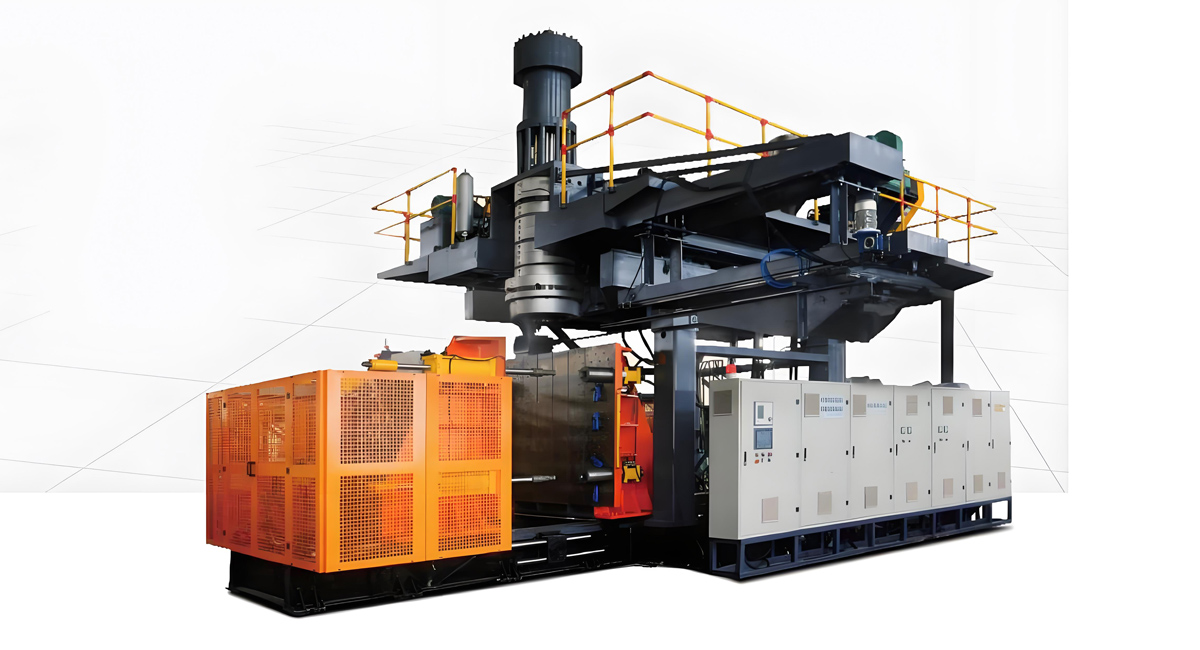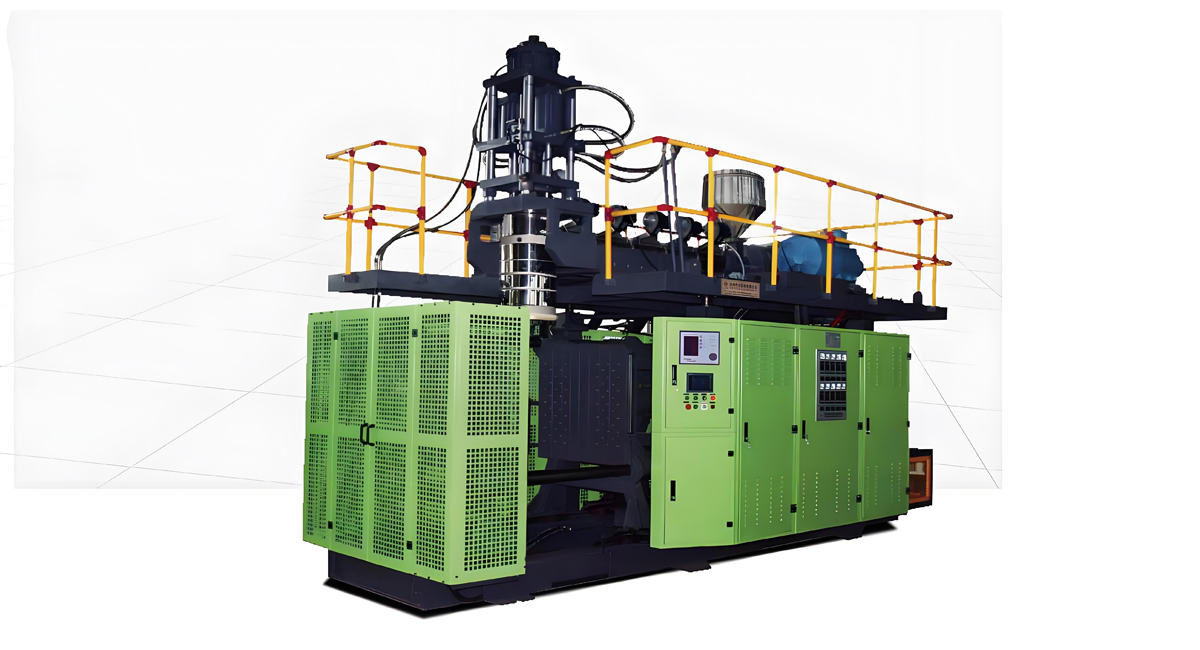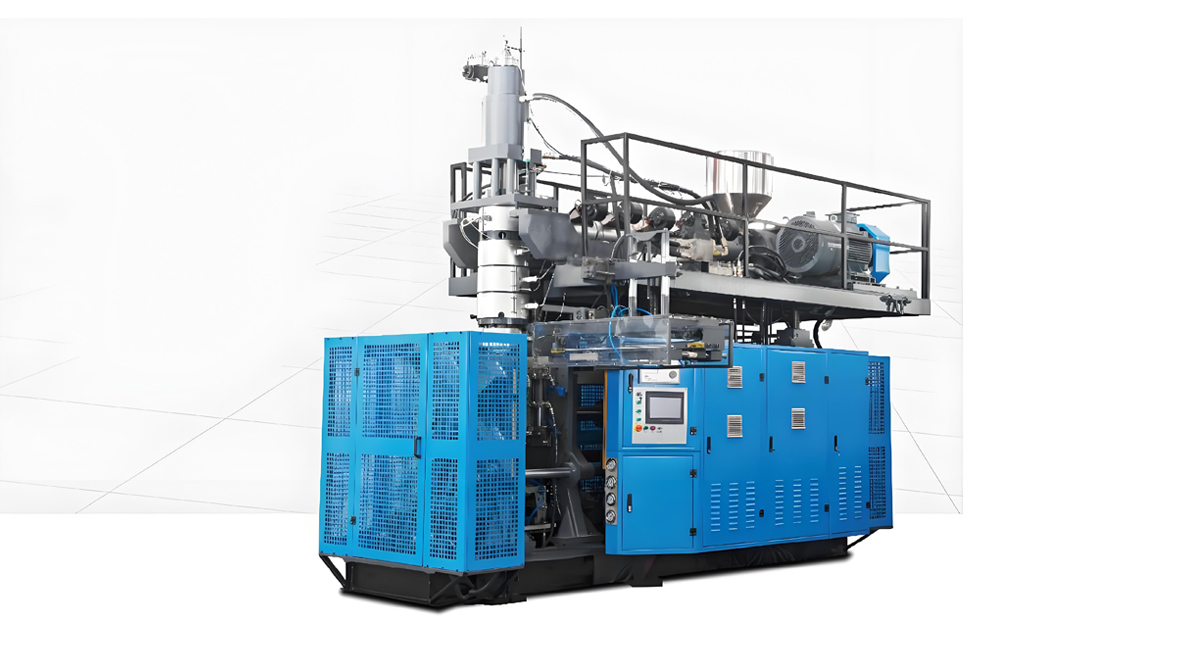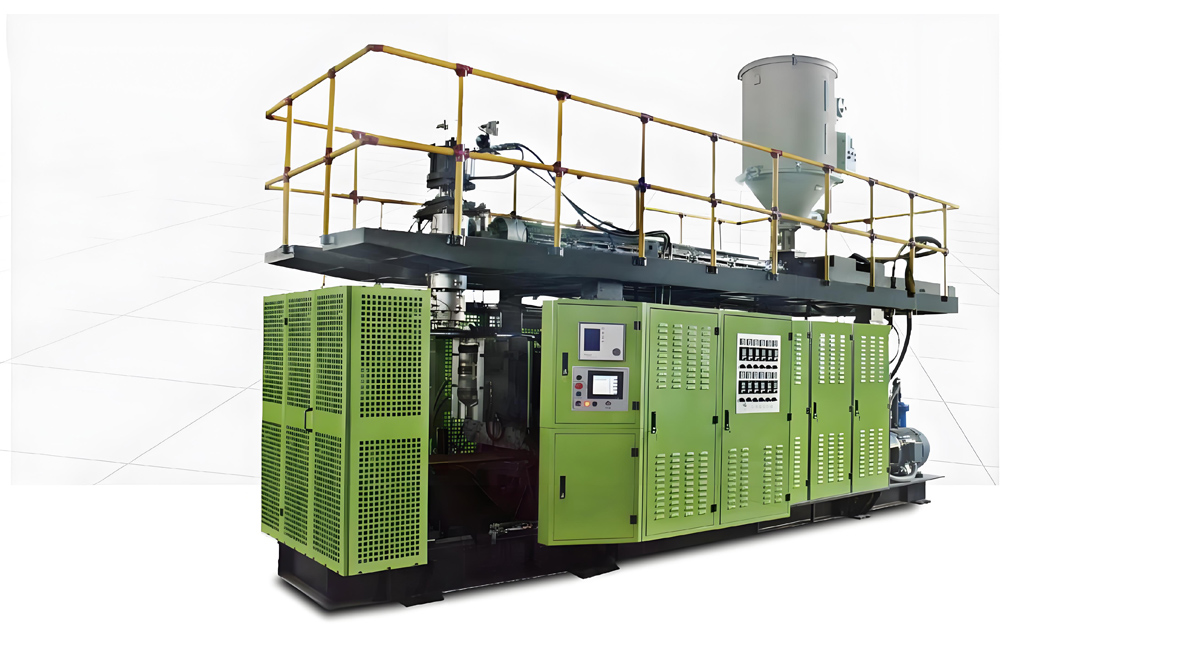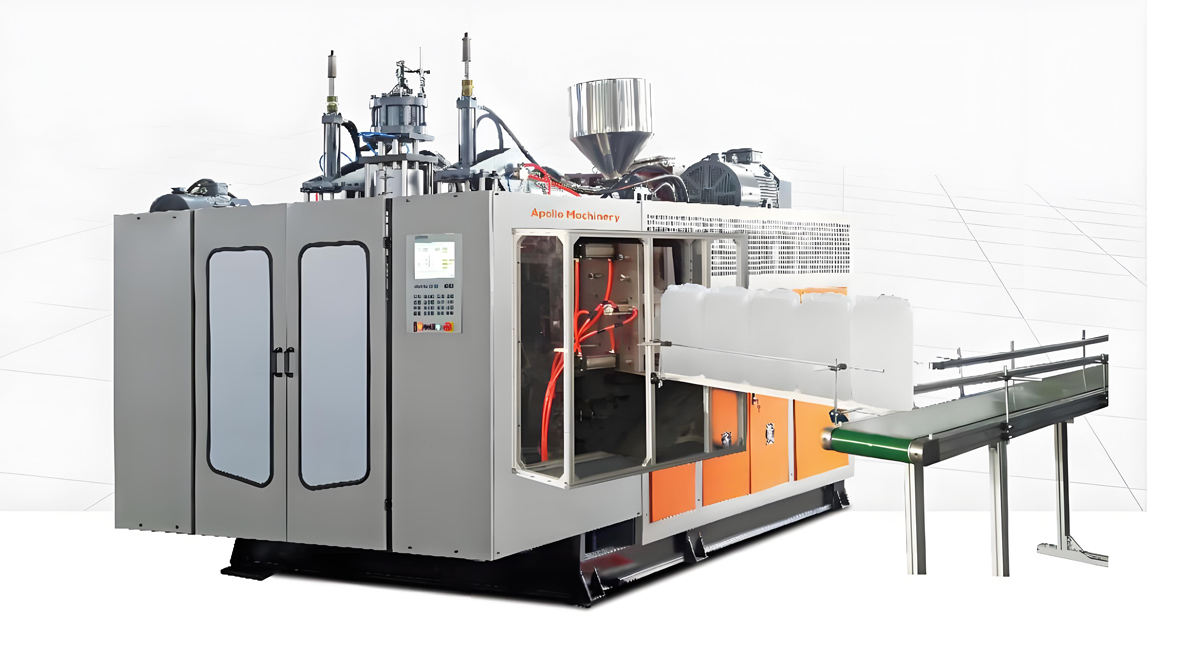

Intelligent touch screen control has moved from a convenience feature to the central nervous system of modern extrusion blow molding. On an EBM line, the touch screen human-machine interface is the operator’s only window into a control system that coordinates extrusion, parison formation, clamping, and blow molding in real time. The difference between a machine that merely runs and one that runs consistently across shifts, materials, and operators is almost always the quality of its parameter storage and recipe management. This guide explains how a well-designed EBM control architecture captures every process variable, protects it, and makes it repeatable through a single touch. Apollo, a Wanplas factory with more than twenty years of experience building automatic extrusion blow molding machines, designs its ABLB and ABLD series around exactly this philosophy: store the knowledge, protect the knowledge, and recall it on demand. Across the Wanplas network of specialized factories, the same principle of digital process memory underpins quality at scale, whether the line is producing a two liter bottle or a one thousand liter tank.
For plant managers, the business case is straightforward. Every manual parameter entry is an opportunity for error, every undocumented change is a loss of process knowledge, and every slow changeover is idle capacity. A control system that treats recipes as managed data assets turns those risks into measurable gains in first-pass yield, changeover speed, and auditability. The following sections walk through the control architecture, the parison programmer, the recipe data model, storage and migration strategies, access control, alarming, changeover, remote service, ergonomics, and the international standards that frame a compliant installation.
EBM Control System Architecture: PLC and Touch Screen HMI
A modern extrusion blow molding control system is built on a deterministic programmable logic controller that executes the machine cycle, paired with a touch screen HMI that presents parameters, trends, and alarms to the operator. The PLC owns the real-time loop: reading thermocouples on the barrel and die head, driving the screw via a servo or inverter, controlling the parison programmer, sequencing the clamping unit, and managing blow and cooling phases. The HMI is the presentation and entry layer, running on a TFT panel that communicates with the PLC over an industrial fieldbus. Separating the control engine from the display keeps the safety-critical cycle independent of the screen, so a frozen display never stops a properly engineered controller from completing a safe state.
The choice of PLC platform shapes everything downstream, from parison resolution to MES connectivity. Siemens S7-1200 and S7-1500 controllers dominate European and export-oriented lines because of their Profinet ecosystem, extensive library support, and native OPC UA server capability. Beckhoff systems use PC-based control with EtherCAT, giving extremely fast cycle times and tight synchronization for high-cavity machines. Mitsubishi FX5U and the broader iQ-F family offer a cost-effective path for smaller single-station machines while still supporting CC-Link IE and Modbus TCP. B&R combinesAutomation PC hardware with Powerlink and strong motion integration. Each is a valid choice; the deciding factors are local service, spare parts lead time, and the fieldbus already standardized in the plant.
PLC Platform Comparison
| Platform | Typical Fieldbus | Cycle Time Class | OPC UA / MES | Relative Cost | Best Fit |
|---|---|---|---|---|---|
| Siemens S7-1200 / S7-1500 | Profinet, Profibus | Low to Sub-ms | Native server | Medium to High | Export lines, MES integration |
| Beckhoff | EtherCAT, OPC UA | Sub-ms | Native server | Medium to High | High-speed, multi-axis |
| Mitsubishi FX5U | CC-Link IE, Modbus TCP | Low ms | Via gateway | Low to Medium | Compact, cost-sensitive |
| B&R | Powerlink, OPC UA | Sub-ms | Native server | Medium to High | Motion-intensive, packaging |
The HMI panel itself is usually a TFT LCD in sizes from 10.4 inches for single-station economy machines to 15 inches on standard ABLB-class lines and 21.5 inches on large ABLD machines or lines with extensive recipe and trend screens. Larger displays let the operator see the live parison curve, temperature overview, alarm list, and production counters on one screen without menu diving. Brightness, viewing angle, and anti-glare treatment matter on a shop floor lit by high-bay lamps, and the panel should be rated for the ambient dust and temperature of a blow molding cell.
HMI Screen Size Selection
| Screen Size | Typical Machine | Information Density | Touch Type |
|---|---|---|---|
| 10.4 inch | Single-station, 200 ml to 5 L | Single process page | Resistive |
| 15 inch | ABLB series, multi-station | Curve plus overview | Resistive or capacitive |
| 21.5 inch | ABLD large, multi-cavity | Dashboard, SPC, trends | Capacitive with overlay |
The fieldbus is the nervous tissue between PLC, drives, I/O, and HMI. Profinet and EtherCAT are the leaders for deterministic control: both deliver cycle times measured in milliseconds or less and support isochronous real-time communication that keeps parison valve motion synchronized with extrusion. Modbus TCP is simple, ubiquitous, and adequate for slower I/O and older retrofits, but it lacks hard real-time guarantees. CANopen remains popular for distributed servo and I/O nodes because of its robustness in electrically noisy environments. OPC UA is not a replacement for these real-time buses; it is the semantic layer above them that carries data to MES, ERP, and the cloud. A sound architecture uses a real-time bus for the machine and OPC UA for the enterprise link.
Industrial Fieldbus Comparison
| Fieldbus | Real-Time Class | Topology | Typical Role in EBM |
|---|---|---|---|
| Profinet | IRT deterministic | Star, line | PLC to HMI, drives, I/O |
| EtherCAT | Sub-ms deterministic | Daisy chain | High-speed motion, parison |
| Modbus TCP | Soft real-time | Ethernet | Retrofit, simple I/O |
| CANopen | ms deterministic | Bus | Distributed servo, I/O |
| OPC UA | Non-real-time | Client-server, pub-sub | MES, ERP, cloud |
Key takeaway: the control system should separate the real-time PLC cycle from the HMI display, use a deterministic bus for motion, and reserve OPC UA for the enterprise link. This layering is what makes an EBM line both safe and connectable.
Parison Wall Thickness Programming and Closed-Loop Control
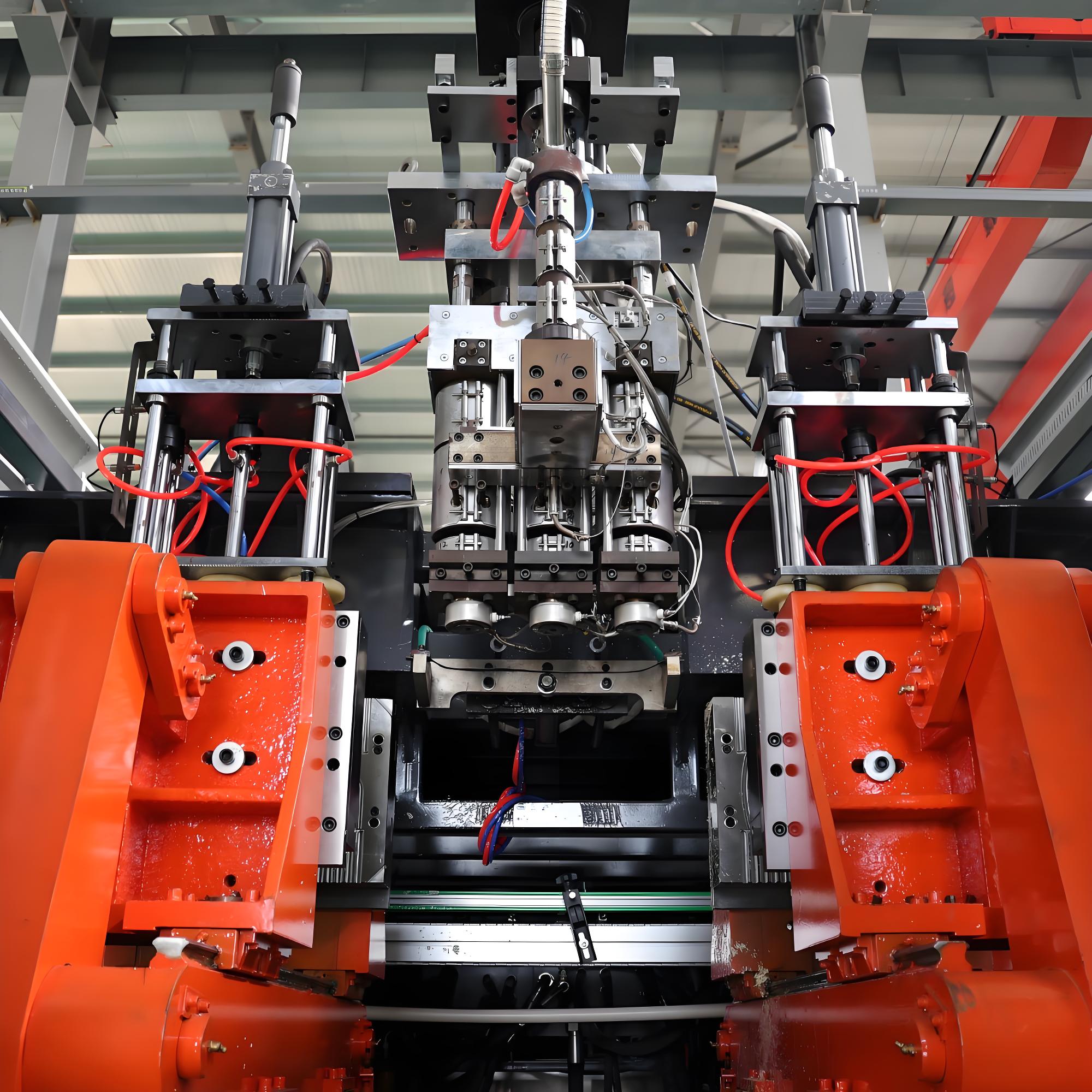
The single most influential control function in extrusion blow molding is the parison programmer. The parison is the hollow tube of molten plastic extruded from the die head before it is clamped and blown into the mold. Because gravity and die geometry cause the parison to thin as it lengthens, the wall thickness must be programmed along its length to avoid thin spots at the closed bottom and heavy material at the top. A parison programmer varies the opening of the die or the position of a mandrel in real time as the parison descends, shaping a predetermined wall thickness profile.
A modern programmer divides the parison length into at least 100 axial points, with many systems supporting 200 or 256 points for finer resolution. Each point carries a valve command that the controller converts into a position for a proportional valve or, on newer servo-driven heads, a servo proportional valve. The control loop is closed: the controller schedules valve motion against the extrusion time, and on advanced systems a position or pressure feedback transducer confirms the valve reaches its target within a few milliseconds. That millisecond-class response is what lets the wall profile track the programmed curve even as melt pressure and temperature fluctuate.
Parison Programmer Specification
| Parameter | Typical Capability | Engineering Note |
|---|---|---|
| Axial points | 100 to 256 | More points, finer control |
| Valve type | Proportional or servo | Servo gives repeatability |
| Closed-loop response | Millisecond class | Tracks melt pressure changes |
| Axial control (AA) | Standard | Lengthwise wall distribution |
| Radial control | Optional, multi-segment | Wall around circumference |
Axial control, often called AA control, manages the wall profile along the length of the parison. Radial or programmed die-sweep control manages wall thickness around the circumference, which matters for asymmetric parts such as handled bottles or containers with a flat side. Radial control is typically achieved with a rotating or oscillating die component or with multiple independent valve segments, and it is more common on advanced or large machines. The stored recipe must capture both the axial point table and, where present, the radial profile so that the part is reproducible.
From a control perspective, the parison programmer is a slave to the recipe: load a recipe and the 100-point curve loads with it. This is why recipe management and parison control are inseparable. A plant that stores the curve only on a scratchpad loses it at the next power cycle; a plant that stores it inside a named, versioned recipe keeps its hard-won optimization permanently. Apollo machines store the complete parison curve as part of each recipe, so a container validated once runs the same way on every shift.
Recipe Data Structure: The Complete Field List
A recipe is the digital fingerprint of a container. It is a named, complete, and validated set of process parameters that, together with a specific mold and material, produces a specific part at a specific quality. Treating the recipe as structured data rather than scattered screen values is the foundation of repeatability. The following field list represents a best-practice EBM recipe and should be considered the minimum a professional control system captures.
Complete Recipe Field List
| Field Group | Field | Example / Range |
|---|---|---|
| Identity | Mold number, recipe name, revision | MOLD-ABLB-05, Rev 3 |
| Material | Material grade, MFR | HDPE BM593, MFR 0.30 |
| Barrel zones | Zone 1 to Zone N temperature | 170 to 210 for HDPE |
| Die head | Head temperature, melt pressure limit | 180 to 200, limit 250 bar |
| Extrusion | Screw speed (rpm) | 40 to 90 rpm |
| Accumulator | Stored shot volume | Measured in cm or gram |
| Blow | Pre-blow pressure, main-blow pressure | 0.5 to 2 bar, 6 to 10 bar |
| Timing | Blow delay, cooling time | 0.5 to 3 s, 6 to 14 s |
| Clamping | Clamping force | Set per mold spec |
| Cycle | Target cycle time | Logged and flagged |
| Parison | Wall thickness curve point count | 100, 200, or 256 points |
Barrel zone temperatures depend on the resin, and the recipe must store the correct window per material. HDPE typically runs 170 to 210 degrees Celsius across the feed, compression, and metering zones. PP runs warmer, around 190 to 230 degrees Celsius, because of its higher melt viscosity and heat history requirements. PVC is the most temperature-sensitive and is kept in a narrow 165 to 185 degrees Celsius band to avoid degradation, with careful attention to residence time and shear. The die head temperature usually sits near the upper barrel zone but is tuned to deliver a homogeneous, low-stress parison. These windows are starting points; the validated recipe records the exact setpoints that worked on the floor.
Barrel Temperature Windows by Resin
| Material | Barrel Range (degree C) | Head Range (degree C) | Caution |
|---|---|---|---|
| HDPE | 170 to 210 | 180 to 205 | Avoid over-temperature yellowing |
| PP | 190 to 230 | 200 to 225 | Watch oxidation at top end |
| PVC | 165 to 185 | 170 to 185 | Narrow band, degradation risk |
Beyond temperatures, the recipe stores the blow sequence. Pre-blow, applied as the parison is captured, uses a low pressure of about 0.5 to 2 bar to gently seat the parison against the mold walls and begin shaping before the main blow. Main blow then expands the part at 6 to 10 bar, depending on container size, wall stiffness, and the need to replicate fine mold detail. Blow delay sets how long the controller waits after clamp close before pre-blow, and cooling time sets how long the part stays locked to set its shape. Clamping force is set per mold specification to keep the parting line sealed without overstressing the platens. All of these values belong in the recipe so that nothing is left to memory.
Recipe Storage, Migration, and MES or ERP Integration
Storing a recipe well means it survives power loss, travels between machines, and feeds the wider plant systems. The baseline storage is non-volatile memory on the controller or an internal SD or CF card that holds hundreds of recipes locally. An operator calls a recipe by name; the controller validates it against the installed mold and loads every field. For backup and portability, a USB export lets a technician carry recipes between machines or to the engineering office. The exported file should be a structured, human-readable format rather than a proprietary binary, which is where CSV, XML, and JSON enter the picture.
CSV is the simplest format and the easiest to open in a spreadsheet, but it is flat and weak at representing the nested parison point table and metadata. XML and JSON both represent hierarchical data cleanly, with JSON favored by modern web and MES tooling and XML still common in legacy industrial systems. The control system should let the plant choose, or at least export JSON or XML that a thin converter maps to CSV for older systems. For multi-machine fleets, a central SQL database becomes the system of record: each machine pushes and pulls recipes through a service layer, so a recipe tuned on one line is available, with approval, on another.
Recipe Storage Format Comparison
| Method | Portability | Hierarchy Support | Best Use |
|---|---|---|---|
| Internal SD or CF | Local only | Native | On-machine recall |
| USB export | High | Depends on file | Machine-to-machine |
| CSV | High | Flat | Spreadsheet review |
| XML | High | Strong | Legacy integration |
| JSON | High | Strong | MES, cloud, web |
| SQL database | Central | Strong | Fleet system of record |
Integrating with MES and ERP is where OPC UA earns its place. Rather than bespoke drivers per machine brand, OPC UA exposes a semantic model: the machine publishes recipe identity, setpoints, actuals, cycle counts, rejects, and alarm states using agreed node names. The MES subscribes, records production, and can push a sanctioned recipe revision back to the machine. Cloud backup adds disaster recovery and version history: every saved recipe revision is timestamped, and a bad change can be rolled back to the last good version. Combined with the audit trail described later, this gives a complete, defensible record of how a part was made.
Best practice: keep recipes in a local non-volatile store for daily use, mirror them to a central SQL system as the fleet record, export JSON or XML for portability, and encrypt a cloud copy for version rollback. OPC UA is the bridge to MES and ERP.
User Access Levels and Audit Trail
Recipes are valuable and dangerous. A single mistyped temperature can scrap a run or, worse, create a safety risk. A disciplined control system enforces role-based access so that each user can do only what their responsibility requires. The four common levels are Operator, Technician, Engineer, and Administrator. The Operator runs production, starts and stops cycles, calls approved recipes, and views trends but cannot edit process limits. The Technician performs setup, calls and fine-tunes recipes within allowed bands, and clears routine alarms. The Engineer creates, edits, and validates recipes and adjusts control parameters. The Administrator manages user accounts, network settings, and system configuration.
Role Permission Matrix
| Action | Operator | Technician | Engineer | Administrator |
|---|---|---|---|---|
| Run production | Yes | Yes | Yes | Yes |
| Call recipe | Yes | Yes | Yes | Yes |
| Edit setpoints in band | No | Yes | Yes | Yes |
| Create or edit recipe | No | No | Yes | Yes |
| Manage users and network | No | No | No | Yes |
The audit trail is the companion to access control. Every change to a controlled parameter is logged with who made it, when it happened, the old value, and the new value. This log is tamper-evident: it cannot be edited from the operator screen, and for regulated industries it is exported to a qualified records system. When a container suddenly drifts out of specification, the audit trail answers the first question every quality engineer asks, namely which parameter moved and who changed it. For pharmaceutical and medical customers, this aligns with data integrity expectations such as those described in ISO 15378, where electronic records and signatures protect the validity of the manufacturing history.
From a practical standpoint, the audit trail also discourages casual tweaking. Operators who know their changes are recorded tend to follow the approved recipe, which stabilizes the line. The control system should let the plant configure which parameters are audited, how long logs are retained, and whether exports happen automatically to the SQL or cloud store. A good rule is to audit every field in the recipe plus alarm acknowledgments and limit changes.
Alarm System, SPC Trending, and Predictive Maintenance
A production-grade EBM control system treats alarms as structured data, not just flashing lights. Each alarm carries a code, a plain-language description, a severity, and a recommended response. The alarm history stores every occurrence with a timestamp so the plant can see repeating faults and their frequency. Common categories include temperature deviation, melt pressure high, blow pressure low, clamp timeout, servo fault, communication loss, and thermocouple open circuit. The alarm code table is part of the documentation every operator should be able to call from the HMI.
Representative Alarm Code Table
| Code | Condition | Severity | First Response |
|---|---|---|---|
| E0101 | Zone temperature deviation | Warning | Check heater and sensor |
| E0203 | Melt pressure high | Critical | Stop, inspect screen and valve |
| E0310 | Blow pressure low | Warning | Check compressor and lines |
| E0405 | Clamp timeout | Warning | Inspect mold and sensor |
| E0508 | Thermocouple open | Critical | Replace sensor, do not run |
| E0612 | Servo alarm | Critical | Reset, check load and cable |
Statistical process control lifts the alarm system from reactive to preventive. The controller records trend curves for key variables: zone temperatures, melt pressure, blow pressure, and cycle time. SPC charts flag when a variable drifts toward a control limit before it breaches, so the team can correct early. Over weeks, these trends reveal wear patterns. A steadily rising barrel zone temperature to hold setpoint signals a degrading heater or a fouled sensor; a lengthening cycle time signals mechanical drag or cooling inefficiency. The control system can surface these as predictive maintenance prompts, telling the planner to schedule a thermocouple check or a lubrication before a failure occurs.
Predictive maintenance is most valuable when tied to the recipe and audit data. Because each container has a known good baseline, any deviation from that baseline is meaningful. The HMI can show a health score per axis or per zone, and the MES can aggregate health across the fleet to optimize maintenance windows. This is the difference between fixing a machine after it breaks and fixing it on a planned stop, which is the core promise of connecting the control system to the plant.
Changeover Optimization with One-Click Recipes
Changeover is where recipe management pays for itself. In a manual changeover, an operator reads the new container’s parameters from a paper sheet or memory and enters them field by field: barrel zones, head temperature, screw speed, accumulator volume, blow pressures, cooling time, clamping force, and the parison curve. Every entry is a chance for a transcription error, and the machine must be babysat while it stabilizes. A one-click changeover instead recalls the validated recipe by name; the controller writes every setpoint, including the 100-point parison table, in seconds, and the operator is prompted only for mechanical steps like mold swapping and material loading.
Manual vs One-Click Changeover
| Step | Manual Entry | One-Click Recipe |
|---|---|---|
| Parameter loading | Key-by-key, error prone | Automatic, validated |
| Parison curve | Rebuilt by hand | Loaded with recipe |
| First-pass yield | Lower, tuning needed | Higher, baseline proven |
| Changeover time | Longer | Shorter |
The philosophy behind fast changeover is the single-minute exchange of die, or SMED, which separates internal tasks that require the machine stopped from external tasks that can be done while it runs. Recipe management is the digital half of SMED: pre-stage the validated recipe so that when the mold is swapped, the controller is already configured. Combined with offline mold preparation and quick-coupling utilities, one-click recipes shrink changeover from a long interruption to a brief, predictable event. For a plant running many SKUs, the cumulative recovered minutes become hours of extra output each week.
First-pass yield improves because the machine starts from a proven baseline rather than a hopeful guess. The operator still verifies the first article, but the number of adjustments needed drops sharply. This protects material, which matters for recycled-content and specialty resins where every scrap kilogram carries cost and sustainability weight. Apollo configures its ABLB and ABLD machines so that a stored recipe also carries the validated first-article checkpoints, guiding the operator through what to measure before releasing the run.
Remote Diagnostics and Cybersecurity Isolation
When a line faults at midnight or a customer runs the machine in another country, remote diagnostics turns a phone call into a screen share. The control system can expose a secure remote channel through a VPN or a cellular 4G module, letting a service engineer view the HMI, read alarms, and even adjust parameters under controlled credentials. Remote desktop on the HMI or a gateway gives the engineer the same view the local operator sees, which is far more efficient than describing symptoms over the phone. For multinational fleets, this is how a Wanplas factory supports customers across more than ninety countries without flying an engineer for every issue.
Remote access, however, is also the largest attack surface, so it must be isolated. The machine should sit behind a firewall on the plant network, with remote sessions permitted only through a VPN tunnel or a whitelist of approved source addresses. The control network is kept separate from the corporate IT network, and the OPC UA link to MES crosses that boundary through a defined, authenticated port rather than an open bridge. Firmware and runtime updates are applied by authorized roles only, and the audit trail records every remote session. These measures reflect the layered security thinking found in modern industrial cybersecurity guidance and keep the production cell both reachable and protected.
A practical deployment uses a cellular 4G router with a private APN for out-of-band access, so diagnostics work even when the plant network is down, while the wired enterprise link carries routine MES data. The cellular path is disabled by default and enabled only for a support window, then closed. This on-demand model limits exposure while preserving the speed of remote help. The same principles apply when integrating with cloud services: encrypt in transit, authenticate per site, and log every connection.
Multilingual HMI, Ergonomics, and Touch Technology
Blow molding plants are global and multilingual, so the HMI must present the same screens in the operator’s language. A well-structured control system separates the text strings from the logic, storing them in a language table that the operator switches from a login or home screen. English, Chinese, Spanish, Arabic, Russian, and other languages can be supported without touching the control code. This reduces training time and misreading of critical values, and it is essential for exporters serving dozens of markets from one machine design.
Ergonomics determines whether the operator actually uses the system correctly. The screen should be mounted at a comfortable height and angle, readable from the normal standing position, with the most-used controls on the first page and the parison curve visible at a glance. Button sizes must suit gloved fingers, and color coding should follow consistent meaning: blue for information, yellow for warnings, red for critical stops. High-contrast text and large numeric readouts prevent the kind of misread that leads to a wrong setpoint.
Touch technology itself is a floor-durability decision. Resistive screens respond to any stylus, a gloved finger, or a pen, which makes them robust in oily, dusty, or gloved environments typical of a blow molding cell. Capacitive screens offer brighter images, multi-touch gestures, and a more modern feel, but they generally need a bare or thinly gloved finger and are more vulnerable to liquid and contamination. Many EBM builders choose resistive panels for the production floor, or fit a capacitive panel behind a protective overlay with external hard buttons for start, stop, and emergency functions. The right choice balances clarity with the reality of gloved, busy hands.
Safety and Standards Compliance
A control system is not complete until it is safe and certifiable. The software is structured per IEC 61131-3, the international standard for programmable controller programming languages, which promotes readable, maintainable, and testable code. Electrical safety follows IEC 60204-1, covering the design of electrical equipment on machines, including emergency stop, safeguarding, and wiring discipline. Machinery safety architecture is governed by ISO 12100 for risk assessment and ISO 13849-1, which defines the performance level, or PL, required for safety-related control functions such as guard interlocking and emergency stop. A properly engineered EBM control system documents the required PL for each safety function and proves it through design and validation.
The CE Machinery Directive is the legal framework for placing machinery on the European market, requiring the machine to meet essential health and safety requirements and carry the CE mark. For food, daily chemical, and pharmaceutical containers, the control and documentation discipline supports compliance with food-contact expectations such as EU 10/2011 in Europe and FDA considerations in the United States, though the material and cleaning validation sit with the processor. For pharmaceutical and medical packaging customers, data integrity expectations such as those in ISO 15378 push the control system toward electronic records, audit trails, and access control that protect the validity of the manufacturing history.
Safety and recipe management intersect at the interlock. The control system must prevent a recipe from running on the wrong mold, must require guards closed before clamp motion, and must refuse a parameter outside a safe envelope even for an Engineer account. The audit trail then records any attempt to override, so safety discipline and process discipline are the same system. This is why a touch screen is never just a display; it is the enforced front end of a safety-certified controller. Apollo builds its machines to these expectations and supports the documentation needed for CE evaluation, which is part of the Wanplas brand’s shared quality commitment across its specialized factories.
Common Faults and Troubleshooting
Even a well-designed system faults, and the difference between a ten-minute recovery and a ten-hour one is a disciplined troubleshooting path. The HMI is the first diagnostic tool: it shows live values, alarm history, and trend curves that localize the fault. The following table maps the most common EBM control faults to likely causes and first actions, all of which are observable from the touch screen before any panel is opened.
Troubleshooting Table
| Fault | Likely Cause | First Action on HMI |
|---|---|---|
| HMI black screen | 24 VDC loss, backlight fuse, panel fault | Check supply, swap spare panel with backup runtime |
| Communication interrupt | Loose bus cable, address conflict, switch fault | Verify cable and node address, ping from gateway |
| Recipe lost | Card corruption, wrong import, overwrite | Restore from USB or SQL, check revision history |
| Parameter drift | Sensor aging, ambient swing, unauthorized edit | Review trend and audit trail, recalibrate sensor |
| Thermocouple open | Broken wire, bad connector, failed sensor | Replace sensor, confirm reading before restart |
| Servo alarm | Overload, cable fault, tuning error | Reset, check load and cable, review fault code |
The troubleshooting discipline is strengthened by the data the control system already holds. A black screen with a live PLC usually points to the panel or its supply, and the remedy is a spare panel plus a USB or SD backup of the runtime so the line restarts quickly. A communication interrupt localizes to the bus when the PLC keeps cycling but the HMI freezes. A lost recipe is almost always recoverable from the USB copy or the SQL system of record, which is why the storage strategy in the earlier section is not optional. Parameter drift is diagnosed by overlaying the SPC trend with the audit trail: if no authorized change appears, the cause is physical, such as a thermocouple or heater, rather than human.
For the service engineer, the alarm history and trend export are the first artifacts requested, because they show not just the current fault but its pattern. A melt pressure high that recurs every few hours suggests an intermittent screen pack blockage or a sticking valve, while a one-off event suggests a transient. The touch screen that stores and presents this history is, in effect, the machine’s medical record, and keeping it complete is as important as keeping the machine clean.
Frequently Asked Questions
What is a recipe in extrusion blow molding and why is it important?
A recipe is a named, stored set of all process parameters required to mold a specific container on a specific mold and material. It captures barrel temperatures, screw speed, parison wall thickness curve, blow pressures, cooling time, and clamping force so the same quality can be reproduced on demand without manual re-entry. Treating recipes as managed data is what lets a plant hold quality across shifts and operators.
How many wall thickness points should a parison programmer support?
A modern parison programmer should support at least 100 axial points, and often 200 or more, to control the hydraulic or servo proportional valve that shapes wall thickness. More points give finer control over weight distribution, material savings, and impact strength at the bottle base and handle. The curve must be stored inside the recipe so it survives power cycles.
Which PLC platform is best for EBM machines?
Siemens S7-1200 or S7-1500, Beckhoff, Mitsubishi FX5U, and B&R are all proven choices. Siemens and Beckhoff offer the strongest Profinet and OPC UA ecosystems for MES integration, while Mitsubishi FX5U is cost effective for smaller machines. The best choice depends on local support, spare parts availability, and the required fieldbus.
How does one-click recipe recall reduce changeover time?
One-click recall loads every stored parameter to the controller in seconds and prompts only mold swapping and mechanical checks. Compared with manual key-by-key entry, it removes transcription errors, shortens setup, and lifts first-pass yield because the machine starts from a validated baseline. It is the digital half of SMED methodology.
What fieldbus should I choose for EBM: Profinet, EtherCAT, or Modbus TCP?
EtherCAT and Profinet deliver the lowest cycle times and deterministic synchronization needed for fast parison control; Modbus TCP is simpler and adequate for slower I/O but offers weaker real-time guarantees. OPC UA runs on top for MES and cloud data, while CANopen remains common for distributed servo and I/O nodes. Use a real-time bus for motion and OPC UA for the enterprise link.
How is audit trail data protected for pharmaceutical customers?
For pharmaceutical and medical applications, the control system applies role-based access, tamper-evident logging, and electronic records aligned with data integrity expectations such as those described in ISO 15378. Each change records user, timestamp, old value, and new value, and logs are exported read-only to a qualified system. This protects the validity of the manufacturing history.
Can the HMI be operated with gloves, and which screen type is better?
Resistive touch screens respond to gloved fingers and styluses, making them robust on the factory floor. Capacitive screens offer sharper visuals and multi-touch but usually need bare or thin gloves. Many EBM builders choose resistive panels for durability or offer a protective overlay with external buttons for critical functions. The decision balances clarity with gloved, busy hands.
What causes parameter drift and how is it prevented?
Drift comes from thermocouple aging, heater imbalance, valve wear, and ambient temperature swings. Prevention uses closed-loop temperature control, periodic sensor calibration, SPC trending of key variables, and scheduled maintenance. The audit trail also flags unauthorized changes that masquerade as drift. Overlaying trends with the log separates physical from human causes.
How does OPC UA connect EBM machines to MES and ERP?
OPC UA provides a standardized, secure semantic model so the machine exposes parameters, counts, alarms, and recipe identities to higher-level MES or ERP without custom drivers. It supports certificate-based authentication and can push production, downtime, and quality data for traceability and scheduling. It is the bridge above the real-time fieldbus, not a replacement for it.
What should I do if the HMI screen goes black?
First confirm the 24 VDC supply and the screen backlight fuse, then check the communication cable between HMI and PLC. A black screen with a live PLC means the HMI panel or its supply has failed; keep a spare panel and a USB or SD backup of the runtime so the line restarts quickly. Never open live electrical panels without proper isolation.
How do I migrate recipes between machines of different brands?
Export recipes as CSV, XML, or JSON and map field names to the target controller through a conversion template. Because each brand names and scales parameters differently, a thin middleware or manual mapping table is required; OPC UA semantic modeling reduces this effort when both sides support it. Validate the migrated recipe on the first article before release.
Is cloud backup of recipes secure?
Cloud backup is secure when it uses encrypted transport, per-site credentials, and role-based access with audit logging. Many plants prefer a hybrid model: local SD or SQL storage for daily use and encrypted cloud sync for version history and disaster recovery, gated behind a firewall and whitelist. Version rollback recovers a bad change to the last good recipe.
Conclusion
Intelligent touch screen control is the layer that turns an extrusion blow molding machine from a mechanical press into a knowledge-preserving production asset. The architecture begins with a deterministic PLC running the real-time cycle and a TFT HMI presenting it through a robust fieldbus such as Profinet, EtherCAT, or Modbus TCP, with OPC UA carrying data upward. The parison programmer shapes wall thickness through a 100-point or finer closed-loop curve that lives inside the recipe. The recipe itself is a complete, validated data structure spanning material, barrel and head temperatures, screw speed, accumulator volume, blow pressures, cooling, clamping force, and the parison profile.
When that recipe is stored on non-volatile media, exported as JSON or XML, mirrored to a SQL system, and connected to MES through OPC UA, the plant gains repeatability, fast changeover, and full traceability. Role-based access and an audit trail protect the data and satisfy the expectations of regulated customers, while alarms, SPC trends, and predictive maintenance prompts keep the line running. Remote diagnostics speeds support, provided it is isolated behind a firewall and whitelist, and a multilingual, glove-friendly HMI keeps the system usable on a global shop floor. Standards such as IEC 61131-3, IEC 60204-1, ISO 12100, ISO 13849-1, and the CE Machinery Directive frame a safe, certifiable installation, with ISO 15378 relevant for pharmaceutical data integrity.
For buyers evaluating an EBM line, the control and recipe system is as important as the clamp or the extruder. Apollo, a Wanplas factory with more than twenty years building automatic extrusion blow molding machines and over four thousand sets running in more than ninety countries, designs its ABLB and ABLD series around structured recipes, secure storage, and connectable control. As part of the Wanplas brand, Apollo shares the group’s quality commitments and supports customers across the full lifecycle from installation to remote service. When you specify your next blow molding line, ask to see the recipe management, the audit trail, and the integration path, because that is where consistent quality is won or lost.