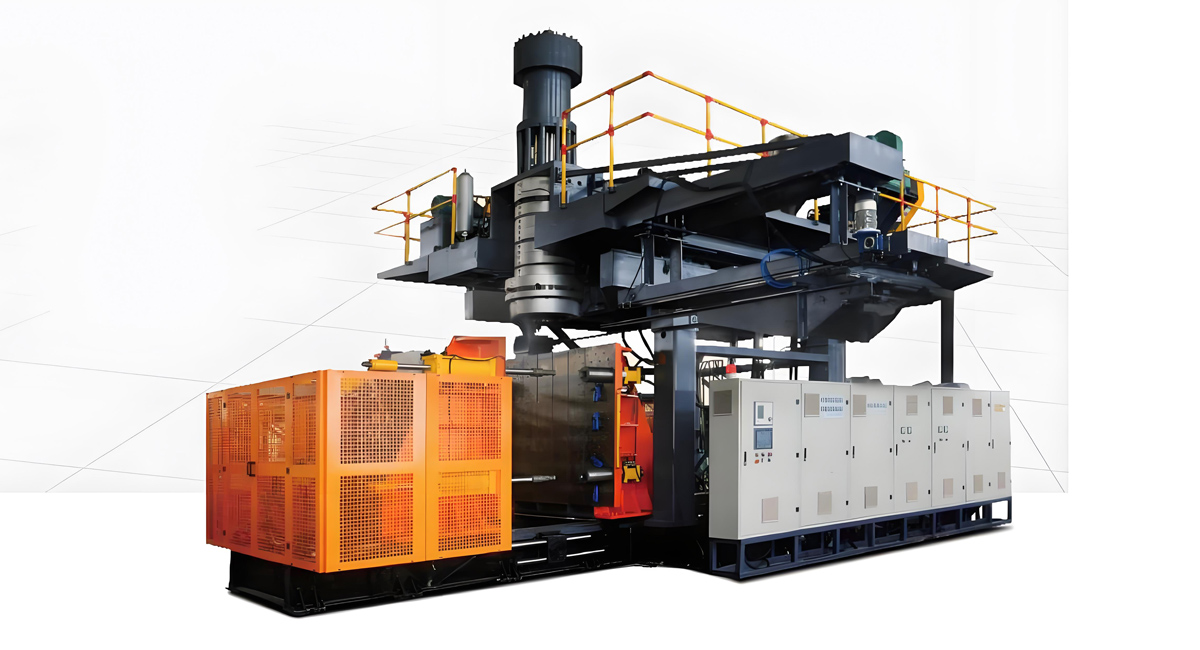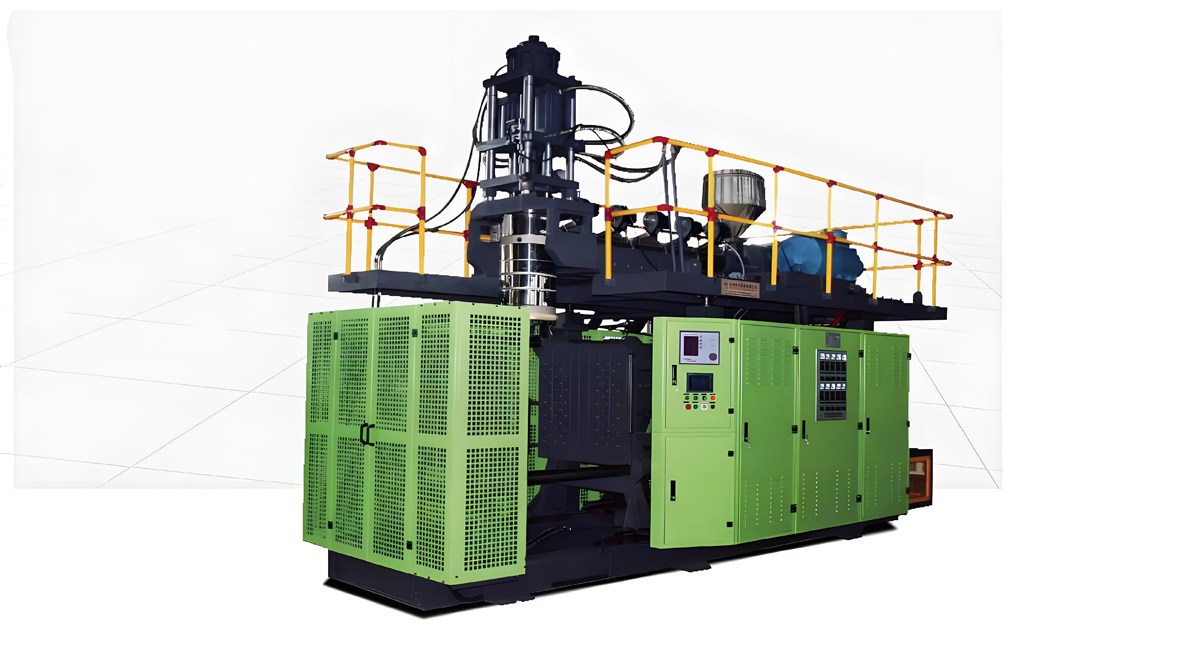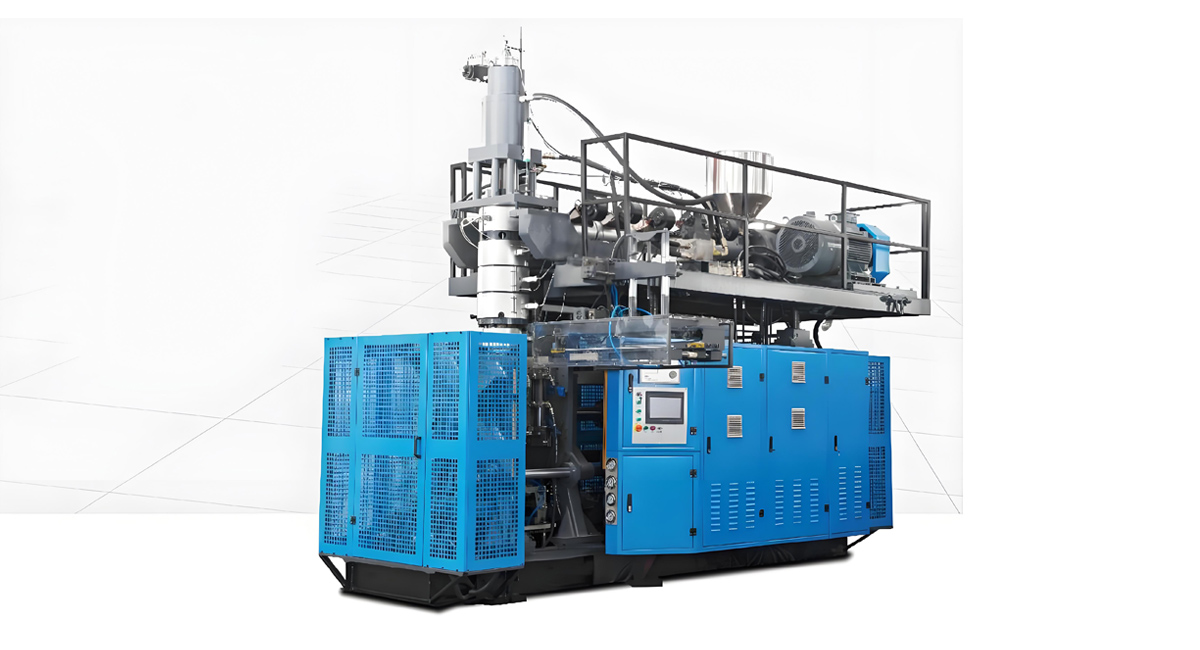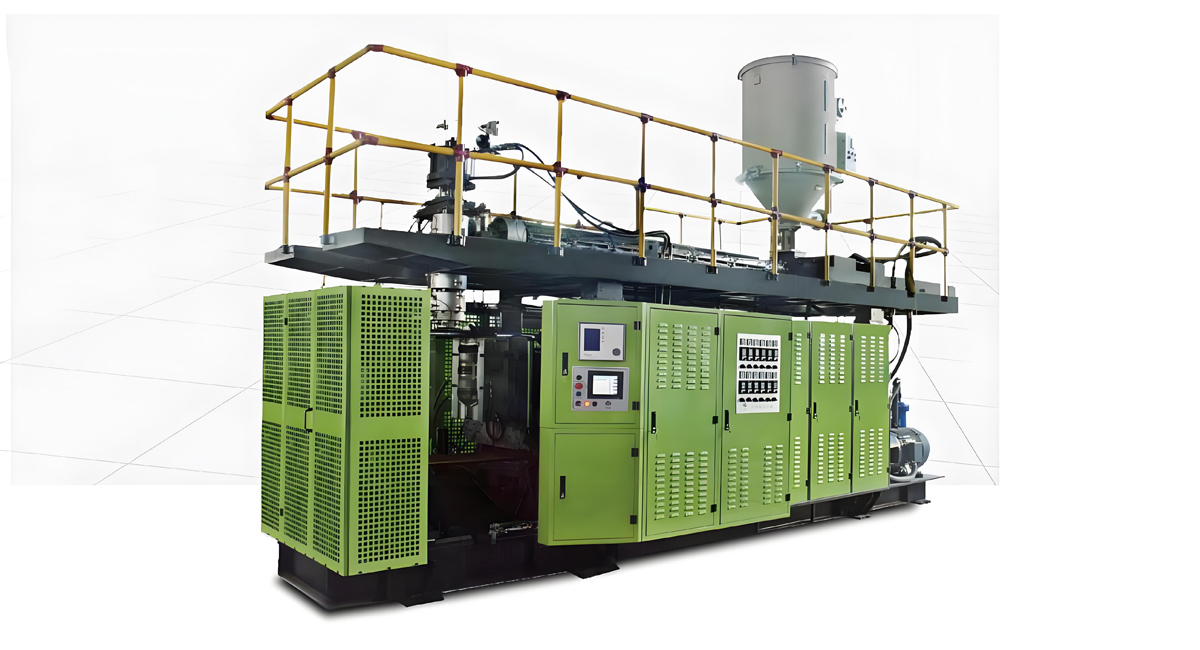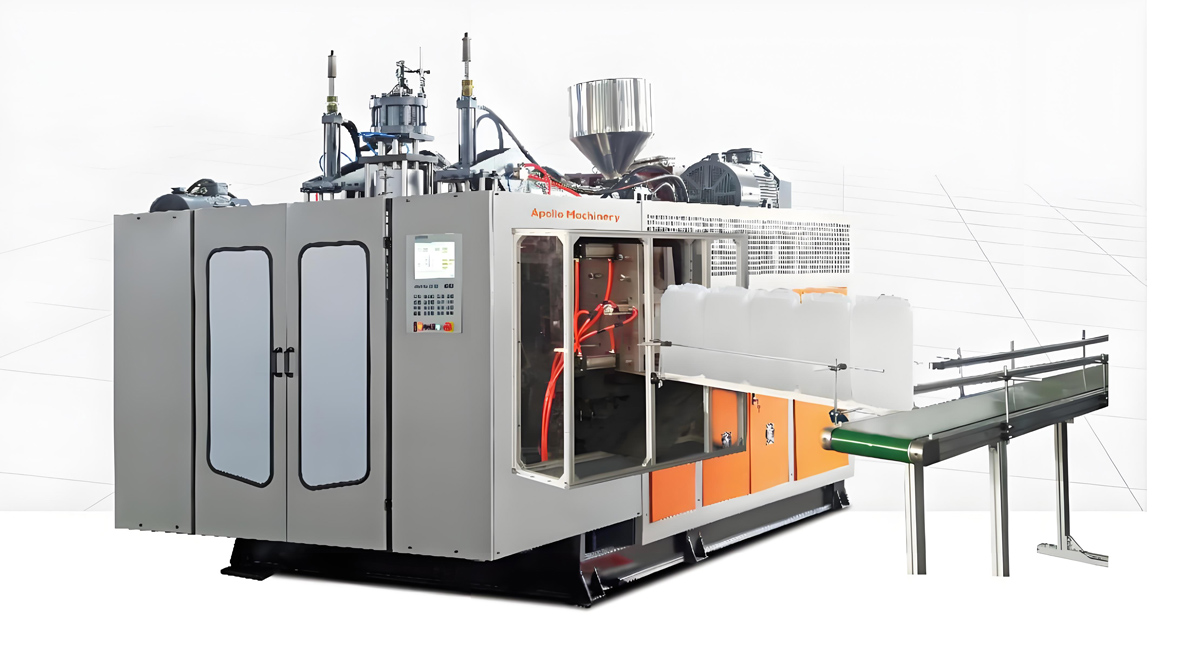
Open a farm gate, walk through a village water point, or inspect a rural sanitation project and you will find a class of plastic product that billions of people depend on but rarely name: the blow-molded tank. Agricultural chemical tanks, drinking-water tanks, rainwater-harvesting tanks, and underground septic or holding tanks are overwhelmingly produced by extrusion blow molding from polyethylene. This is one of the largest and most socially consequential applications of the extrusion blow molding machine outside of bottles and automotive parts, and it sits at the center of three global obsessions: water scarcity, food security, and climate adaptation. This article provides a global application analysis of agricultural and water-storage tank production on extrusion blow molding machines, covering the materials, the large-part process, machine configurations, chemical and potable-water compliance, quality control, sustainability, automation, and the trends reshaping rural and agricultural plastic. For tank producers, equipment buyers, and development engineers, understanding this production system is the key to reliable, compliant, and affordable water and chemical storage worldwide.
What Are Agricultural and Water-Storage Tanks
An agricultural or water-storage tank is any large hollow vessel formed by extrusion blow molding to hold water, agrochemicals, fertilizers, or waste on farms, in communities, and at rural infrastructure sites. The category is far broader than a single barrel. Above-ground water tanks store drinking and irrigation water for households, schools, and villages. Agricultural chemical tanks hold liquid fertilizer, pesticides, and herbicides at the farm and on applicators. Rainwater-harvesting tanks capture storm runoff for later use. Underground and septic tanks manage sanitation and greywater where sewers do not reach. Floatation and buoyancy tanks support aquaculture and irrigation structures. What unites them is a large, seamless, corrosion-resistant hollow geometry that must survive years outdoors, resist aggressive chemicals, and carry substantial liquid loads, which is why extrusion blow molding is the dominant route for these parts rather than steel, fiberglass, or rotational molding at required volumes and wall control.
Why Extrusion Blow Molding for Tanks
Among forming technologies, extrusion blow molding is uniquely suited to large, seamless, chemical-resistant hollow vessels. Welded steel and fiberglass tanks corrode, are heavy, and package poorly for transport to remote rural sites. Injection molding cannot make a large seamless hollow shell without welding multiple pieces. Rotational molding makes large hollow parts but at slow cycle times and with less precise wall control, which matters when dozens of tonnes of chemical or water are at stake and when cost per litre is decisive. Extrusion blow molding, by extruding a large parison and inflating it inside a cooled cavity, produces a single seamless polyethylene shell with favorable, programmable wall distribution and very competitive cost per unit volume. It also scales from a small chemical jug to a multi-thousand-litre vertical tank on the same machine family. For the volumes and price points of global agriculture and rural water, the combination of seamlessness, chemical resistance, and controllable wall thickness makes extrusion blow molding the default technology.
The Global Scale of Tank Demand
Agricultural and water-storage tanks are produced and needed on every continent, and demand is structural rather than fashionable. Water stress affects a large share of the world’s population, and climate change is intensifying droughts, erratic rainfall, and the need to store water when it is available. Agriculture is the largest user of freshwater, so efficient on-farm storage directly affects food security. Rural sanitation programs and rapid urbanization in emerging economies drive septic and holding-tank demand where centralized sewers are absent. Unlike light consumer goods, tanks are bulky and expensive to ship long distances, so production is regional, following agriculture and population rather than concentrating in a single exporting country. This global, decentralized demand means tank producers serve resilient, often government- and donor-supported markets, and it makes water and chemical storage one of the most quietly important applications of the blow-molding machine.
Materials for Durable Storage
The resins behind blow-molded tanks are chosen first for chemical resistance and outdoor durability, then for cost. High-density polyethylene is the workhorse because it resists a wide range of agricultural chemicals, tolerates UV when stabilized, and welds cleanly. Medium-density and cross-linked polyethylene grades offer improved stress-crack resistance and low-temperature toughness for tanks buried underground or exposed to freeze-thaw cycles. For potable-water tanks, only certified food-contact-grade resin is acceptable, and suppliers document the formulation to show no harmful extractables. Recycled and reprocessed polyethylene is increasingly introduced into non-potable and structural layers, provided it passes the same mechanical and odor tests. Unlike many engineering plastics, these polyolefins need no energy-intensive drying, simplifying upstream handling, and their chemical stability is precisely why regulators accept them for water and agrochemical contact.
The Blow Molding Process for Large Tanks
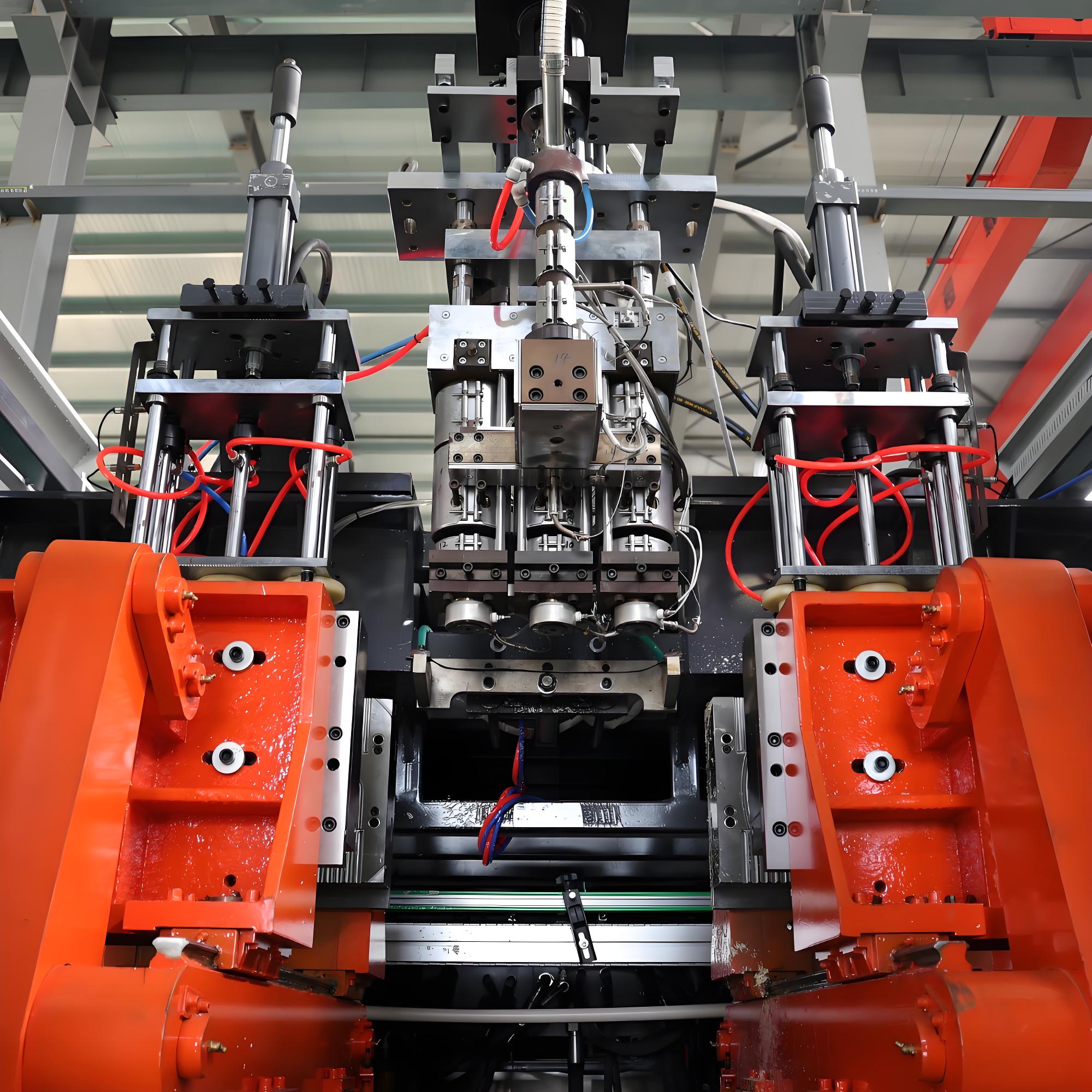
The extrusion blow molding cycle for a tank begins with one or more large extruders melting resin and feeding a die head that forms a heavy parison, the tube of molten plastic that becomes the vessel. Because the part is large, an accumulator head often stores melt and releases it quickly to form a parison of consistent mass. The mold closes around the parison, pinches off the bottom, and a blow pin inflates the parison against the cooled, vented cavity, forming the seamless shell. After cooling, the mold opens and the part is ejected to trimming and fitting stations that remove flash and prepare openings. For tanks, wall-thickness control and freedom from thin spots matter enormously because a weak section can fail under a full load of water or chemical. The cycle is slower than for small bottles, measured in minutes rather than seconds, and downstream operations such as cutting threaded necks, welding fittings, and leak testing are integrated around the blow molder.
Machine Configurations for Large Parts
Tank producers select machine architecture around part size, annual volume, and product mix. Accumulator-head continuous-extrusion machines dominate large and extra-large tanks because they deliver the mass and parison speed these parts require. Shuttle and rotary configurations multiply throughput by running several molds per machine, which helps producers serve seasonal pre-planting and pre-rain demand. Multi-layer coextrusion heads add barrier or recycled-content layers for chemical or sustainable tanks. Large platens and high clamp force are needed to hold big molds against internal pressure. Because tank programs run for years rather than seasons, machine builders emphasize durability, recipe storage, and repeatability, and modern lines integrate deflashing, fitting welding, pressure testing, and marking into a single cell around the blow molder.
Parison Programming for Large Tanks
The economic and safety engine of blow-molded tanks is parison programming. A controller varies the die-gap and parison thickness along its length so material lands where stress concentrates, such as near the base, corners, and threaded openings, while thinning on flat walls to save resin. Without careful programming, a tank would be thickened everywhere to avoid thin spots, wasting kilogrammes of polymer on every unit. With it, the same burst and impact resistance is achieved at lower weight, and the savings multiply across thousands of tanks per year. Recipe management stores the parison profile per tank size, enabling rapid, repeatable changeovers between product families without re-engineering the tooling. For large vessels where wall uniformity governs both safety and cost, programming precision is the single most important capability a tank line can invest in.
Fittings, Baffles, and System Integration
A tank is rarely a bare shell; it becomes a system through fittings, baffles, and integration. Threaded necks accept lids and level gauges. Moulded or welded outlets, valves, and unions connect pumps and pipes for irrigation or chemical transfer. Internal baffles stabilize liquid loads in transport and applicator tanks, reducing surge that could tip a tractor or vessel. Manways and inspection ports enable cleaning and maintenance. Because these features concentrate stress, they must be located in thicker wall regions and welded or moulded with care to avoid leak paths. Designing the tank and its fittings as one engineered system, rather than bolting parts on afterward, is what separates a reliable agricultural tank from a leaking one, and it is a key criterion when qualifying a production line for demanding chemical service.
Chemical Resistance and Barrier
Agricultural tanks spend their lives in contact with liquid fertilizer, pesticides, and herbicides, many of which are aggressive to plastics. Polyethylene resists a broad spectrum of these chemicals, but resistance depends on grade, wall thickness, temperature, and exposure time, so producers validate tank materials against the specific formulations a farm will store. For the most aggressive agents, multi-layer coextrusion adds a barrier or chemically resistant inner layer while keeping a cost-effective structural layer outside. Compatibility charts and documented testing guide specification, and reputable suppliers publish which chemicals their tanks may hold. Getting this wrong is dangerous: a tank that softens or ruptures under load can release tonnes of agrochemical into soil and water, which is why chemical-resistance validation is a non-negotiable step in tank production.
Potable-Water and Food-Safe Tanks
When a tank stores drinking water, the rules change from chemical resistance to human safety. Potable-water tanks must use certified food-contact-grade resin and may require compliance with standards such as NSF or ANSI 61, the European Drinking Water regulations, or local equivalents, which limit substances that could migrate into water. Tanks are engineered to avoid stagnation zones where biofilm could grow, and designs favor smooth interiors that are easy to clean. UV-stabilized outer layers protect contents from algae growth where tanks sit in sunlight. Because a contaminated community water tank can cause widespread illness, producers document resin certification, audit their supply chain, and test at intervals to confirm compliance. For suppliers, potable-water certification is a market entry requirement in many regions, and it is the reason water-tank blow molding carries more documentation overhead than non-potable containers.
Septic, Underground, and Sanitation Tanks
Underground septic and holding tanks are a distinct and growing sub-category driven by rural sanitation and urban fringe development. These tanks must survive burial loads, soil movement, groundwater pressure, and constant contact with waste and greywater without cracking or leaking. Cross-linked and stress-crack-resistant polyethylene grades are preferred because they tolerate the freeze-thaw and chemical environment underground. Designs include baffles that separate solids and liquids, risers for access, and sealed joints that protect groundwater. Because a leaking septic tank contaminates local wells and ecosystems, structural integrity and joint sealing are tested rigorously. Sanitation programs supported by governments and development agencies are expanding access to safe toilets, and blow-molded septic tanks are a quiet backbone of that progress, produced regionally and installed close to where they are needed.
Rainwater Harvesting and Climate Adaptation
Rainwater-harvesting tanks are among the fastest-growing tank applications because they directly address water scarcity and climate variability. By capturing storm runoff from roofs and land, households, farms, and schools stretch scarce water supplies through dry seasons and droughts. Blow-molded polyethylene tanks are ideal for this role: they are lightweight for transport to remote areas, corrosion-free, and easy to connect to simple gutter and pump systems. Modular and stackable designs let users expand storage as needs grow. For climate adaptation, decentralized storage reduces dependence on unreliable centralized supply and builds resilience against erratic rainfall. Development agencies and municipalities increasingly specify blow-molded harvesting tanks in water-security programs, making this one of the most socially significant uses of the blow-molding machine in the coming decade.
Recycled Content and Circular Economy
Agricultural and water tanks are a strong candidate for circular-economy thinking, and that makes sustainability a defining trend for the category. Because many tanks are mono-material polyethylene, they are readily recyclable at end of life, and reprocessed resin can re-enter non-potable and structural tank layers. Leading producers introduce certified recycled content into the outer or structural layer while keeping a virgin inner skin for chemical or potable safety. Take-back and bulk-recycling programs collect end-of-life tanks from farms and villages. For a product often criticized during the plastic-debate, demonstrating that a tank is recyclable, long-lived, and made with recovered material is a powerful story, and it rewards producers who control resin quality and contamination precisely rather than chasing the cheapest feedstock.
Quality Control and Testing
Blow-molded tanks expose process drift seriously because failure carries water, chemical, or sanitation risk. Wall-thickness mapping with ultrasonic or scan tools verifies that no section falls below specification, especially near bases and openings. Drop and impact tests confirm robustness in transport and handling. Hydrostatic and pressure tests check the shell and seams under load. For chemical tanks, compatibility and stress-crack resistance testing validate long-term service. For potable tanks, migration and certification testing confirm safety. The correct response to any defect is to treat it as process data, trace it to a controllable parameter such as die-gap program, melt temperature, or blow timing, and correct the root cause rather than patching individual tanks, which only hides a systemic issue that will recur across the next production run.
Defects and Troubleshooting
Several defects recur across tank programs, and each points to a controllable cause. Thin walls at the base or corners indicate poor parison programming and risk burst under load. Weld-line or pinch-off weakness, where melt fronts meet, signals uneven temperature or low blow pressure and is dangerous on a load-bearing vessel. Flash or sharp parting lines reflect worn molds or clamp issues and can compromise fittings. Sink marks or short shots reveal material or temperature problems. Bubbles or contamination indicate resin or drying issues. The disciplined response is to stabilize the parison program, verify melt temperature and blow pressure, and inspect tooling on a schedule, because a tank that fails in the field can release its contents with serious environmental and human consequences.
Automation and Industry 4.0
Tank lines are increasingly automated because labor cost and consistency both matter, and because certification documentation demands traceability. Robotic handling moves heavy, awkward shells without marking them. Automated deflashing, fitting welding, pressure testing, and laser marking integrate around the blow molder for a largely hands-free flow. Recipe management, remote diagnostics, and data logging support the batch traceability that regulators and development agencies require. Advanced sites feed cycle and quality data into manufacturing systems and apply predictive maintenance to avoid unplanned downtime that could delay a seasonal delivery of irrigation or sanitation tanks. Because a missed planting or monsoon window can strand critical water infrastructure, the digital layer is not optional; it is a contractual requirement, and equipment buyers should choose machines with open data interfaces rather than isolated controls.
Choosing the Right Machine for a Tank Program
Selecting a machine begins with the product mix: small chemical jugs, mid-size water tanks, or extra-large vertical vessels, then annual volume and target markets. Define the largest and smallest parts and the peak seasonal output first, then match accumulator-head architecture, number of cavities or molds, clamp force, and platen size to the target. Decide automation and downstream integration from labor cost and certification expectations. Confirm material compatibility for your potable, chemical, or recycled-content strategy. Verify parison control resolution, wall-thickness capability, and downstream testing such as pressure and leak checks. Insist on reference installations at similar tank scale and on local spare-parts support, because a stopped tank line during a planting or monsoon season can strand essential infrastructure. Finally, model total cost per litre of capacity rather than comparing headline machine prices. The right machine delivers your tanks, at your volume, safe and compliant, at the lowest sustainable cost.
Safety and Functional Requirements
Tank safety is designed in, not inspected in. Structural design keeps wall thickness and geometry within limits that survive fill, transport, burial, and impact. Chemical tanks must resist the specific agrochemicals stored and avoid reactions that weaken the wall. Potable tanks must protect water quality and resist biofilm and algal growth. Sanitation tanks must contain waste and protect groundwater. Overflow, venting, and level control prevent overpressure and spillage. For buried tanks, load rating and joint sealing are safety-critical. Because a tank failure can release tonnes of water, chemical, or sewage into the environment, producers document design limits and operating guidance, and leading suppliers provide specification and installation support rather than simply selling a shell.
Regulatory Landscape
Tank production is shaped by a patchwork of standards that vary by use and region. Potable-water tanks may require NSF or ANSI 61, European Drinking Water approval, or national equivalents that limit extractables. Chemical and agrochemical storage is governed by containment, labeling, and sometimes UN or ADR-style rules for hazardous liquids. Sanitation tanks follow plumbing and environmental codes. Food-contact and recycling rules add further requirements. Because a single design may be sold across regions, leading suppliers certify to the strictest relevant standard and maintain documentation auditors demand. For producers, regulation is a market-entry gate, and it is the reason water and chemical tank blow molding carries more compliance overhead than general industrial containers.
Comparing Blow-Molded Tanks with Alternatives
Understanding the blow-molded tank requires comparing it with alternatives. Welded steel tanks offer familiarity but corrode, weigh more, and package poorly for remote sites. Fiberglass tanks resist corrosion but are heavier and more brittle under impact. Rotational molding makes large hollow parts but at slow cycles and with less precise wall control, which matters at tank volumes. Injection-molded multi-piece tanks require welding and limit size. Blow-molded polyethylene’s sweet spot is a large, seamless, lightweight, corrosion-free hollow vessel with programmable wall control and multi-layer capability, produced at agricultural volumes. Choosing the right method is a function of volume, size, chemical service, and total cost rather than a single best technology, but for mainstream farm and water tanks extrusion blow molding is the settled choice.
Applications by Sector
The blow-molded tank serves an unusually wide set of sectors, which is why global demand is deep and resilient. Crop farming uses chemical and fertilizer tanks on applicators and at storage. Livestock and horticulture rely on drinking and irrigation water tanks. Households and communities use rainwater-harvesting and potable tanks for water security. Municipalities and development agencies deploy sanitation and septic tanks for public health. Aquaculture and irrigation use floatation and buoyancy tanks. Each sector layers its own safety, chemical, or potable standards on top of the common structural need, but all rely on the same manufacturing DNA: seamless polyethylene, precise blow molding, and rigorous quality control. This breadth means a single blow-molding platform can serve many rural and agricultural programs, stabilizing capacity utilization for producers through seasonal and regional changes.
Common Mistakes in Tank Production
Several mistakes recur across tank programs. Under-investing in parison control forfeits the easiest weight and cost savings on a large part. Ignoring wall distribution at bases and openings causes burst or leak failures under load. Treating molds as commodities leads to flash and weak pinch-offs that compromise fittings. Skipping or under-sampling pressure and leak testing ships risk on a safety-critical vessel. Neglecting resin consistency and certification destabilizes chemical or potable compliance. Failing to document recipes and material traceability makes audits and recalls harder. Under-specifying automation invites labor and consistency problems at agricultural volumes. Each of these is avoidable with disciplined engineering, and avoiding them is often the difference between a profitable, compliant tank program and a chronic source of scrap, field failures, and customer escalation.
A Material-Savings Case Study
To illustrate the economics, consider a producer of mid-size water tanks applying precise parison programming to move wall thickness from a uniform heavy section to a programmed profile that thickens only at the base and openings. At the scale of thousands of tanks per year, even a modest per-tank weight reduction removes a substantial tonnage of resin from the supply chain and lowers material cost, provided burst and impact tests still pass with margin. Combined with a recycled-content outer layer and a bulk take-back program that recovers end-of-life tanks, the producer turns a commodity container into a demonstrably efficient and circular product. The investment is mostly in parison-control capability and qualified recycled supply, which pay back through material savings and brand preference. Multiply this logic across a national water-security program, and wall-thickness control becomes one of the highest-return actions available, which explains why leading tank makers invest in it now.
Frequently Asked Questions
Why are many tanks blow-molded? Because the process produces seamless, lightweight, corrosion-resistant hollow vessels with programmable wall control at low cost per litre, ideal for water, chemical, and sanitation storage. Are blow-molded tanks safe for drinking water? They are safe when made from certified food-contact resin and compliant with potable-water standards such as NSF or ANSI 61 and local equivalents. Can tanks hold all agrochemicals? Polyethylene resists many but not all chemicals, so compatibility must be validated against the specific formulation and concentration. How long do these tanks last? With UV stabilization and proper installation, polyethylene tanks serve for many years outdoors and longer when shielded. Why is tank production regulated? Because tanks affect water quality, chemical safety, and sanitation, so potable, chemical, and plumbing rules apply by region.
Conclusion
Blow-molded agricultural and water-storage tanks are among the most socially consequential products made by the extrusion blow molding machine, quietly underpinning water security, food production, and rural sanitation for billions of people. From accumulator-head parison programming and multi-layer chemical barriers to potable-water certification, septic integrity, rainwater harvesting, sustainability, and the circular economy of recycled polyethylene, the production system is mature yet continuously evolving. For suppliers and buyers, success lies in matching machine and tooling to the product mix and regional volume, designing for safe chemical and potable service, controlling wall distribution to save mass and cost, and choosing partners who support the line across seasonal and climate-driven cycles. As global attention on water scarcity and climate adaptation intensifies, the blow-molded tank industry’s ability to deliver reliable, compliant, and sustainable storage will define its next decade, and the extrusion blow molding machine will remain at the center of that essential story.