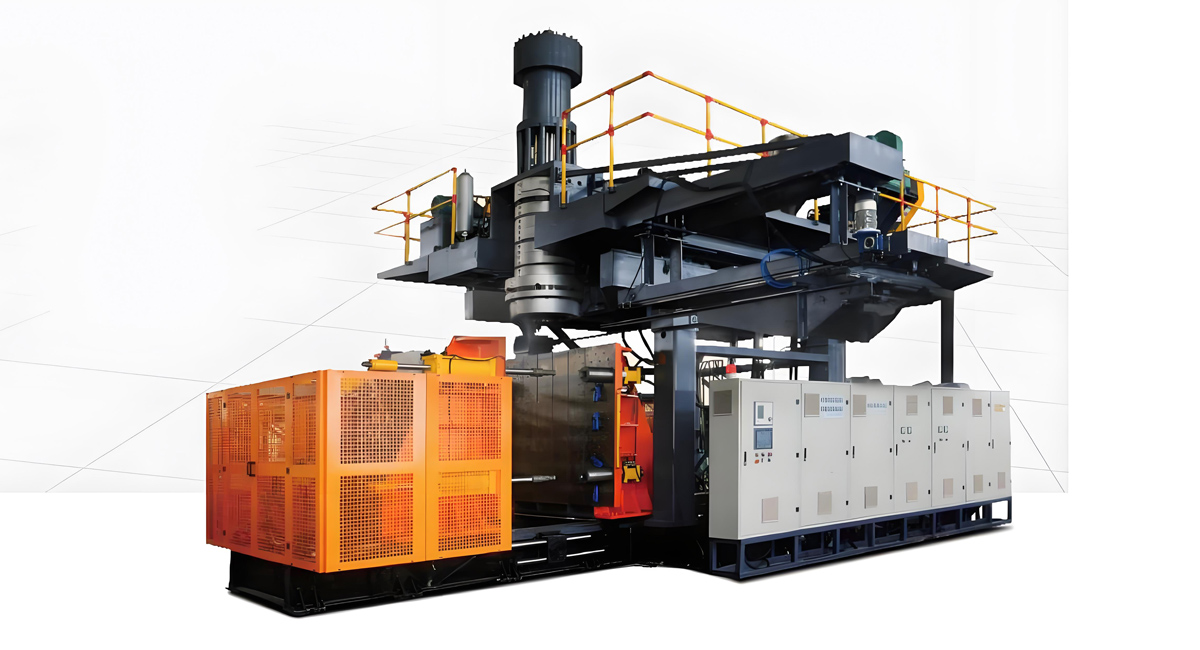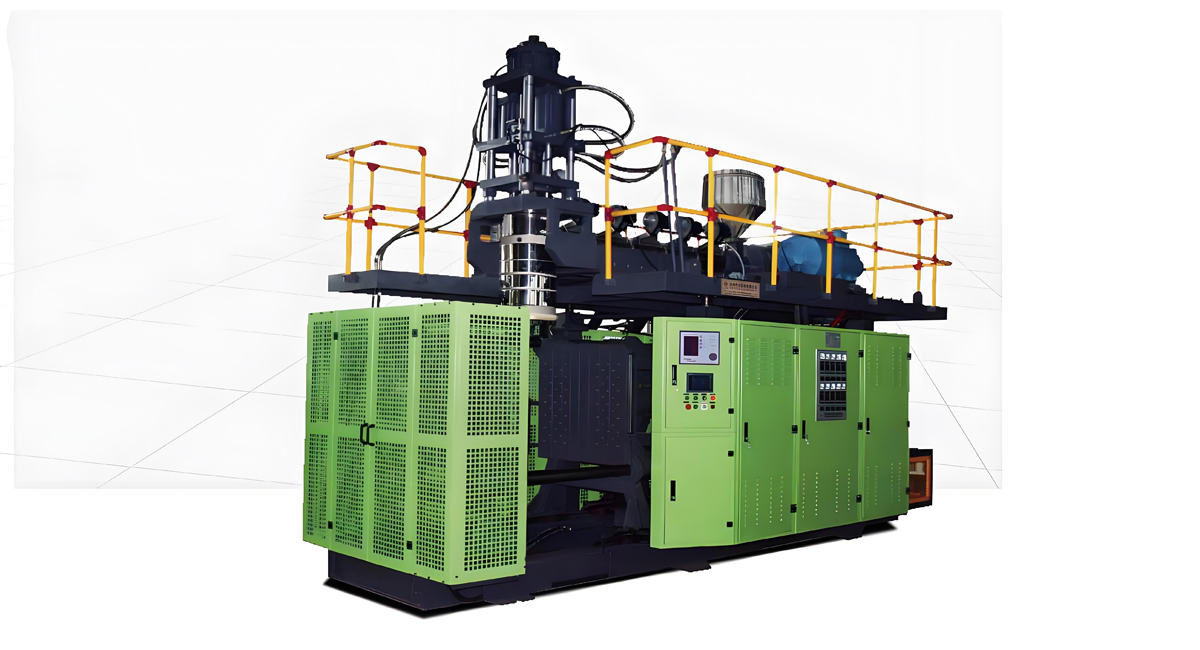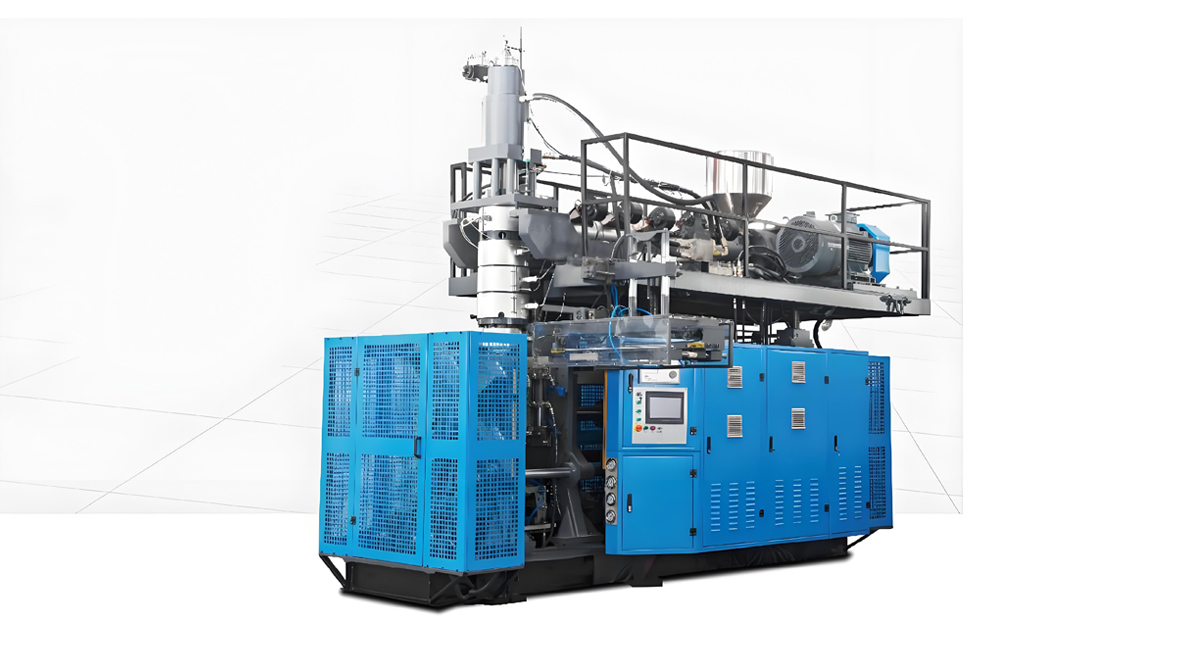
Extrusion blow molding technology is one of the most widely used plastic molding processes for hollow container manufacturing, covering small daily packaging bottles to large industrial plastic containers. The ABLB Series Extrusion Blow Molding Machine developed by Apollo is a full-range customized hollow molding solution designed for 200ml to 20L plastic container production, covering the entire capacity range of daily chemical packaging, food packaging, pharmaceutical containers, industrial chemical barrels and special hollow plastic products. As a core mainstream model of Apollo extrusion blow molding equipment, the ABLB series features standardized modular design, stable molding performance, wide material adaptability and flexible model configuration, becoming the preferred production equipment for medium and small-sized hollow plastic container manufacturers worldwide.
Different from ordinary single-functional blow molding machines on the market, the ABLB Series Extrusion Blow Molding Machine realizes seamless production switching from 200ml mini bottles to 20L large barrels, solving the pain points of single production range and poor equipment versatility of traditional blow molding equipment. With precise extrusion control, stable mold clamping system and intelligent operation configuration, this series of machines ensures high dimensional accuracy, uniform wall thickness and stable batch quality of finished containers. This comprehensive guide systematically sorts out the full model parameters, core structural advantages, applicable materials, industry application scenarios, operation specifications, daily maintenance and detailed cost and price analysis of the ABLB series equipment, providing all-round technical reference and procurement guidance for plastic container production enterprises.
1. Overview of ABLB Series Extrusion Blow Molding Machine
The ABLB Series Extrusion Blow Molding Machine is a professional hollow plastic molding equipment independently developed and produced by Apollo, specially optimized for the full-capacity production demand of 200ml to 20L plastic hollow containers. Adopting mature extrusion blow molding process, the equipment completes continuous plastic extrusion, parison molding, mold clamping, inflation blowing, cooling shaping and product demolding in one automatic cycle, with high production efficiency and stable molding quality. It supports mass production of various thermoplastic materials and is widely applicable in multiple industrial packaging fields.
Apollo focuses on the R&D and manufacturing of high-performance extrusion blow molding machines for a long time, and the ABLB series, as its classic mainstream product line, has undergone multiple generations of technical iterations. The equipment abandons the cumbersome structure and unstable control system of traditional blow molding machines, adopts integrated servo drive, intelligent temperature control and precise hydraulic transmission technology, effectively reducing production failure rate, lowering energy consumption and improving product molding qualification rate. The full model coverage of 200ml to 20L meets the diversified production needs of enterprises for multi-specification and multi-scenario hollow containers, greatly improving equipment utilization and factory production flexibility.
1.1 Core Product Positioning
The ABLB series is positioned as a universal full-range extrusion blow molding machine, balancing high precision, high efficiency and cost performance. It is not only suitable for standardized mass production of small and medium-sized packaging bottles such as daily chemicals, beverages and pharmaceuticals, but also meets the customized production requirements of large-capacity industrial plastic barrels, tool boxes and special hollow parts. It is an all-round blow molding equipment that can cover most civilian and industrial hollow plastic product production scenarios.
1.2 Basic Technical Characteristics
The ABLB Series Extrusion Blow Molding Machine has prominent technical advantages in structural design and performance configuration. The equipment adopts high-rigidity frame structure, which can maintain stable operation for a long time under high-load working conditions without vibration deviation. The high-precision single-screw extrusion system ensures uniform plastic melting and stable parison output, avoiding uneven wall thickness of containers caused by unstable extrusion. The intelligent parison thickness control system realizes dynamic adjustment of parison thickness according to product shape, effectively improving product molding accuracy and material utilization rate.
In terms of automation configuration, the ABLB series is equipped with full PLC intelligent control system, supporting one-key start, automatic cycle operation, parameter memory and fault self-diagnosis functions. The human-machine interaction interface is simple and intuitive, which reduces the operation threshold and error rate. The equipment is also equipped with safety protection devices such as mold anti-clamping protection and overpressure overload protection, meeting international safety production standards and ensuring safe and stable long-term operation.
2. Full Model Classification & 200ml-20L Parameter Specification Guide
The ABLB Series Extrusion Blow Molding Machine is divided into multiple sub-models according to production capacity range, mold configuration and output efficiency, fully covering the product capacity range of 200ml, 500ml, 1L, 2L, 5L, 10L, 15L and 20L. Each sub-model has independent standardized parameter settings and targeted application positioning, realizing precise matching of equipment and production needs. The following is a detailed introduction to the full model classification, core technical parameters and applicable product specifications of the ABLB series.
2.1 Small Capacity Model: 200ml-2L Production Specification
The small-capacity ABLB sub-models are mainly used for the production of 200ml to 2L mini and small-sized hollow containers, covering daily chemical bottles, cosmetic bottles, pharmaceutical liquid bottles, small beverage bottles and household plastic bottles. This model is equipped with high-speed extrusion system and multi-cavity mold configuration, with fast molding cycle and high hourly output, suitable for large-scale standardized mass production of small packaging containers.
In terms of core parameters, the small-capacity ABLB model adopts optimized small-diameter high-efficiency screw, with uniform plastic melting and fast parison extrusion speed. It supports 2-cavity to 4-cavity mold configuration, with an hourly output of 800 to 1200 pieces. The parison thickness control accuracy reaches ±0.1mm, ensuring uniform wall thickness of small bottles and no deformation or leakage. The equipment is compatible with HDPE, LDPE, PP, PVC and other conventional plastic materials, with wide material adaptability and low production failure rate.
This model is the most cost-effective configuration for small and medium-sized packaging factories, with small floor space, low energy consumption and flexible operation. It can quickly respond to small-batch and multi-order production demands while maintaining high-efficiency continuous production.
2.2 Medium Capacity Model: 2L-10L Production Specification
The medium-capacity ABLB model is the most widely used mainstream configuration, targeting 2L to 10L medium-sized hollow containers, including edible oil bottles, laundry detergent barrels, disinfectant barrels, industrial reagent bottles, medium-sized packaging barrels and food storage containers. Balancing output efficiency and molding precision, this model is suitable for most civilian and light industrial packaging production scenarios and is the core equipment for most blow molding enterprises.
The medium-capacity model is equipped with enhanced screw extrusion system and high-stability hydraulic mold clamping system, with stronger plasticizing capacity and higher mold clamping accuracy. It supports single-cavity and double-cavity mold switching configuration, with an hourly output of 300 to 600 pieces. The equipment adopts multi-point parison thickness automatic adjustment technology, which can dynamically adjust the thickness of different parts of the parison according to the structural characteristics of medium-sized barrels, solving the problem of uneven wall thickness at the bottom and neck of large-diameter containers.
In terms of operational stability, the medium-capacity ABLB model optimizes the cooling cycle system, shortens the molding cooling cycle, improves production efficiency on the premise of ensuring product shaping quality, and has strong adaptability to continuous 24-hour industrial production.
2.3 Large Capacity Model: 10L-20L Production Specification
The large-capacity ABLB sub-model is specially designed for 10L to 20L large industrial hollow containers, mainly used for the production of chemical storage barrels, pure water barrels, large industrial liquid packaging barrels, plastic tool boxes and large-capacity storage containers. Aiming at the characteristics of large product volume, heavy weight and high molding stability requirements, this model carries out targeted structural reinforcement and performance optimization.
The large-capacity model is equipped with high-torque thickened screw and large-flow extrusion system, which can realize stable melting and uniform extrusion of high-viscosity plastic materials. The high-rigidity thickened mold clamping frame ensures no mold displacement or deformation during large-scale product molding, and the mold clamping force is stably maintained to meet the molding pressure requirements of large containers. Adopting intelligent full-section parison thickness control technology, the equipment effectively avoids defects such as thin barrel wall, local bubble and uneven shaping of large-capacity barrels.
The large-capacity ABLB model adopts an extended cooling design to ensure sufficient cooling and shaping of large-volume products, eliminate internal stress of products, and avoid deformation and cracking during later use and stacking. It supports long-term stable production of industrial-grade large plastic barrels, with product qualification rate stably above 99%.
3. Core Structural & Performance Advantages of ABLB Series Extrusion Blow Molding Machine
Compared with ordinary extrusion blow molding machines on the market, the ABLB Series Extrusion Blow Molding Machine has obvious advantages in structural design, control system, molding precision and operational stability. All core components are optimized and upgraded by Apollo according to actual production pain points, which can effectively reduce production defects, lower energy consumption and extend equipment service life.
3.1 High-Precision Extrusion Plasticizing System
The ABLB series adopts Apollo’s self-developed high-efficiency plasticizing screw and barrel structure. The screw is made of high-hardness wear-resistant alloy material, with professional gradient thread design, which can realize gentle and uniform plasticizing of plastic materials, avoid material overheating degradation and incomplete melting. The segmented independent temperature control system accurately controls the temperature of each plasticizing section, with temperature control accuracy within ±1℃, ensuring consistent melt viscosity and stable parison extrusion speed.
This high-precision extrusion system completely solves common defects such as uneven parison thickness, material particles and melt fracture in traditional blow molding production, laying a foundation for high-precision molding of 200ml-20L full-range containers.
3.2 Intelligent Parison Thickness Control Technology
Equipped with advanced computer parison thickness controller, the ABLB series equipment realizes multi-point automatic dynamic adjustment of parison thickness. For containers with complex structures such as bottle necks, bottle bottoms and curved surfaces, the system can automatically match the optimal thickness parameters to ensure uniform wall thickness of the whole product, effectively reducing material waste and improving product compression resistance and drop resistance.
The system has a built-in parameter memory function, which can store the optimal thickness parameters of different specifications of products. When switching production models, it can call parameters with one key, avoiding repeated debugging and greatly improving production switching efficiency.
3.3 High-Stability Hydraulic Mold Clamping System
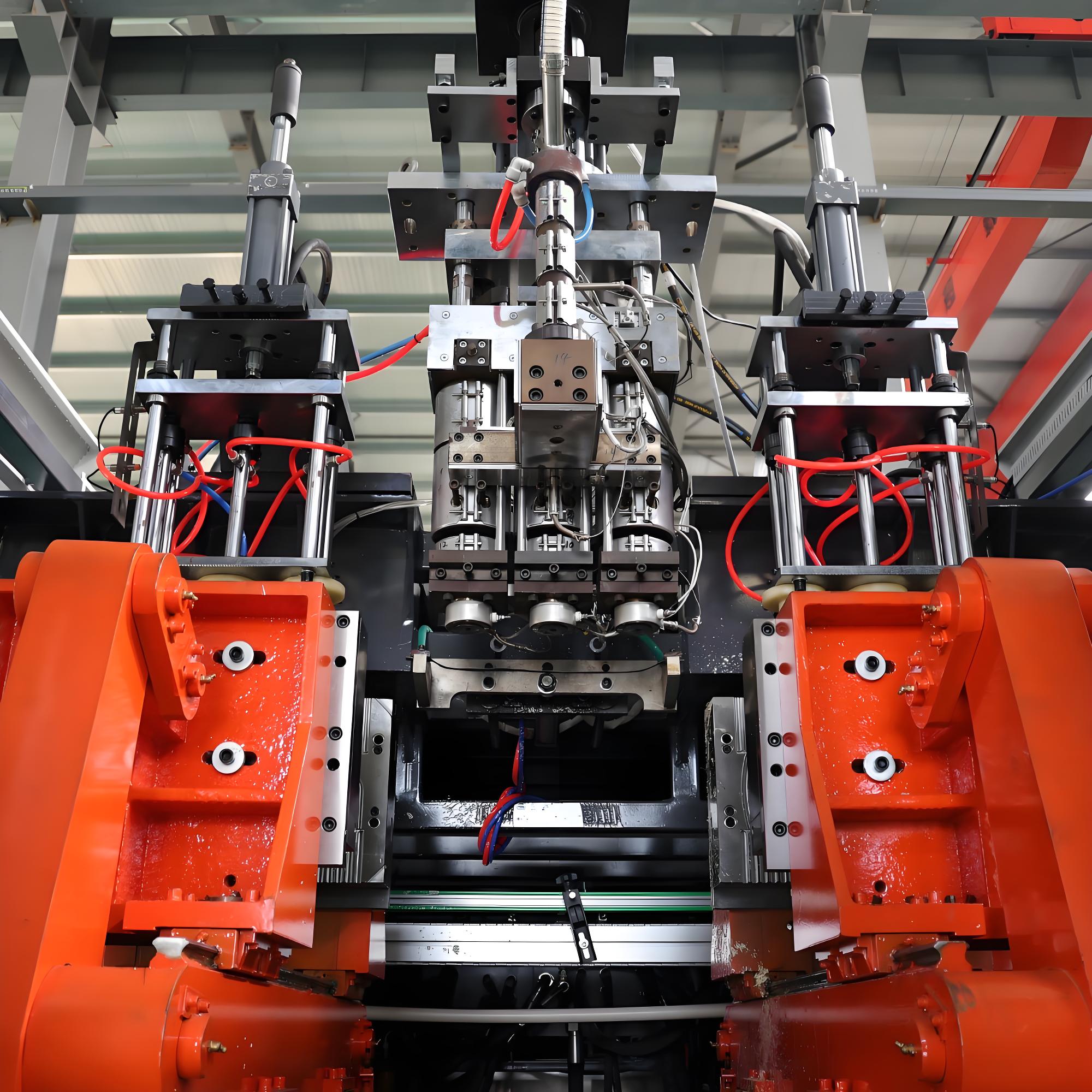
The equipment adopts optimized closed hydraulic mold clamping system, with stable mold clamping force, fast response speed and low vibration. The high-precision mold positioning structure ensures zero deviation mold closing, avoids flash, burr and dimensional deviation of products caused by mold dislocation, and improves the surface finish and dimensional accuracy of finished containers.
The hydraulic system is equipped with energy-saving pressure stabilization technology, which automatically adjusts pressure according to molding requirements, reducing invalid energy consumption. Compared with traditional hydraulic blow molding machines, the energy-saving effect is obvious, and the long-term operation cost is lower.
3.4 Full Automatic Intelligent Control System
The ABLB series is equipped with industrial-grade PLC intelligent control system and touch human-machine interface, realizing full automatic operation from feeding, extrusion, blowing, cooling to demolding. The system supports real-time monitoring of equipment operating parameters, automatic fault alarm and self-diagnosis function, which can quickly locate and prompt abnormal problems such as temperature deviation, pressure instability and equipment jamming, reducing manual maintenance difficulty and failure downtime.
The simplified operation logic reduces the dependence on professional operators, and ordinary workers can master the operation and parameter debugging skills after simple training, saving enterprise labor training costs.
3.5 Durable & Low-Maintenance Structural Design
The whole machine frame adopts integral cast steel structure with high rigidity and strong shock resistance, which can maintain stable operation for a long time under high-frequency working conditions. The core transmission components are treated with anti-wear and anti-corrosion technology, with low wear rate and long service life. The modular component design is convenient for daily disassembly, cleaning and replacement of vulnerable parts, reducing equipment maintenance difficulty and maintenance cost.
4. Applicable Materials & Full Industry Application Scenarios
The ABLB Series Extrusion Blow Molding Machine has ultra-wide material adaptability and industrial coverage, which can meet the production needs of multiple plastic materials and adapt to the packaging and manufacturing requirements of daily chemicals, food, medicine, industry, agriculture and other fields. The full-range model design realizes one machine for multiple purposes and full-scenario coverage, greatly improving the comprehensive utilization value of equipment.
4.1 Applicable Plastic Materials
The equipment is compatible with most conventional thermoplastic materials, including HDPE, LDPE, LLDPE, PP, PVC, PETG and modified composite plastics. It can stably produce pure plastic products and filled modified plastic products, with good molding effect for both soft and hard plastic materials. The adjustable plasticizing temperature and shear force can adapt to the processing characteristics of different materials, avoiding material degradation and performance attenuation, ensuring the physical properties and appearance quality of finished products.
4.2 Small Capacity Product Applications (200ml-2L)
The 200ml-2L small containers produced by ABLB small-capacity models are widely used in daily chemical and pharmaceutical industries, including shampoo bottles, shower gel bottles, cosmetic packaging bottles, hand sanitizer bottles, medical disinfectant bottles, oral liquid bottles and small food packaging bottles. These products require smooth surface, uniform wall thickness, good sealing performance and high appearance finish, which can be fully met by ABLB series high-precision molding technology.
In the consumer goods packaging market, small plastic bottles have large market demand and fast product iteration speed. The efficient and flexible production capacity of ABLB small-capacity models can help enterprises quickly respond to market order changes and realize rapid mass production of new products.
4.3 Medium Capacity Product Applications (2L-10L)
2L-10L medium-sized containers are the most widely used hollow plastic products in the market, covering edible oil packaging barrels, laundry detergent barrels, household cleaning agent barrels, industrial reagent packaging barrels, pet food packaging barrels and catering industry liquid storage barrels. These products require balanced compression resistance, drop resistance and sealing performance, and have strict requirements on batch consistency.
The ABLB medium-capacity model can stably produce standardized medium-sized barrels with stable product quality and low defective rate, which is suitable for long-term mass production of daily consumer goods and light industrial packaging products, and is the preferred equipment for most medium-sized blow molding enterprises.
4.4 Large Capacity Product Applications (10L-20L)
10L-20L large-capacity containers produced by ABLB large-capacity models are mainly used in industrial manufacturing, agricultural production and commercial storage fields, including industrial chemical liquid storage barrels, pure water storage barrels, agricultural pesticide packaging barrels, plastic turnover boxes and large-capacity industrial hollow parts. Industrial large barrels require high structural strength, strong compression resistance and good weather resistance to adapt to harsh storage and transportation environments.
The high-strength molding and stress relief technology of ABLB large-capacity model ensures that large barrels have uniform internal structure, no residual stress, not easy to deform and crack during stacking and long-term storage, meeting industrial-grade product quality standards.
5. Standard Operation Process & Production Optimization Tips
To give full play to the stable performance and high-efficiency production capacity of the ABLB Series Extrusion Blow Molding Machine, standardized operation and scientific parameter optimization are essential. Reasonable operation specifications can effectively reduce product defects, extend equipment service life and improve production efficiency. The following summarizes the standard full-process operation steps and practical production optimization skills of ABLB series equipment.
5.1 Pre-Production Inspection & Parameter Debugging
Before starting production, operators need to conduct comprehensive inspection of the equipment, including checking the tightness of mold fixing parts, the smooth operation of hydraulic system, the normal heating of extrusion barrel and the sensitivity of safety protection devices. After confirming that the equipment is in normal state, set targeted processing parameters according to the product specification and material type, including extrusion temperature, screw speed, mold clamping pressure, blowing pressure and cooling time.
For different capacity products, the parameters need to be finely adjusted: small-capacity products adopt high-speed and low-pressure parameters to ensure high output and smooth appearance; large-capacity products adopt low-speed and high-pressure stable parameters to ensure full product shaping and structural stability. After parameter setting, conduct trial production of 3 to 5 products, check the wall thickness, appearance and size of the products, and start formal mass production after confirming full compliance with standards.
5.2 Formal Production Operation Specifications
During formal production, the equipment runs in full automatic cycle mode. Operators only need to monitor the equipment operation status and product quality in real time, avoid abnormal conditions such as material shortage, mold jamming and temperature runaway. Regularly check the parison extrusion state and product molding quality, and fine-tune the thickness parameters according to slight quality changes to ensure continuous and stable product quality.
It is forbidden to adjust equipment parameters and disassemble components during high-speed operation to avoid equipment failure and safety accidents. For products with continuous production, keep the equipment running continuously to avoid quality fluctuation caused by repeated startup and shutdown.
5.3 Post-Production Shutdown & Maintenance Operation
After daily production is completed, first stop the feeding system, continue extruding the residual materials in the barrel, and close the heating system after the materials are completely discharged. Clean the mold surface and equipment dust, check the wear of vulnerable parts, and record the daily operation status and abnormal problems of the equipment. Close the equipment power and gas source, and complete the standardized shutdown process to ensure the equipment is in a safe standby state.
5.4 Practical Production Efficiency Optimization Tips
In actual production, matching appropriate mold configuration according to product capacity can effectively improve output. Small-capacity products are equipped with multi-cavity molds to increase hourly output; large-capacity products adopt high-precision single-cavity molds to ensure product qualification rate. Regularly calibrate the parison thickness control system and temperature control system to avoid parameter drift caused by long-term operation and ensure long-term stable product quality. Reasonably adjust the cooling cycle time according to ambient temperature to balance production efficiency and molding quality.
6. Daily Maintenance & Common Fault Solutions
Scientific daily maintenance and rapid fault handling are key to maintaining the long-term stable operation of the ABLB Series Extrusion Blow Molding Machine, reducing failure downtime and extending equipment service life. Combined with the actual operation characteristics of the equipment, this chapter sorts out standardized maintenance specifications and common fault solutions.
6.1 Daily Routine Maintenance Specifications
Daily maintenance includes equipment cleaning, component inspection and lubrication maintenance. Clean the residual plastic materials and dust on the equipment surface, mold and extrusion channel every day to avoid material carbonization affecting product quality. Regularly check the hydraulic oil level, air pressure stability and circuit connection tightness to ensure the normal operation of the power system and transmission system. Lubricate the rotating and moving parts regularly to reduce mechanical wear and noise.
Carry out weekly precision calibration on the temperature control system and parison thickness control system to ensure parameter control accuracy. Conduct monthly inspection and maintenance on the screw, barrel and mold wearing parts, replace severely worn parts in time, and avoid production quality defects caused by component aging.
6.2 Common Production Faults & Rapid Solutions
Common product defects include uneven bottle wall thickness, product flash, surface bubble and insufficient shaping. Uneven wall thickness is mostly caused by inaccurate parison thickness parameters or unstable extrusion speed, which can be solved by recalibrating the thickness control system and stabilizing screw operation. Product flash is caused by insufficient mold clamping pressure or mold gap deviation, which can be eliminated by adjusting hydraulic pressure and calibrating mold position.
Equipment operation faults include unstable extrusion speed, temperature failure and automatic shutdown alarm. Unstable extrusion speed is mostly due to material blockage or transmission component wear, which needs to clean the extrusion channel and replace worn parts. Temperature control failure is caused by aging heating elements or sensor deviation, which can be solved by replacing accessories and recalibrating sensors. The equipment has an automatic alarm function for abnormal faults, which can quickly locate problems and reduce maintenance time.
7. Equipment Price & Full-Cycle Cost-Benefit Analysis
The ABLB Series Extrusion Blow Molding Machine has a high cost-performance advantage in the field of full-range blow molding equipment. The following is a detailed equipment price quotation and full-cycle production cost-benefit analysis, providing accurate investment reference for procurement enterprises.
7.1 ABLB Series Equipment Price Range
According to different model configurations and production capacity ranges, the FOB price of Apollo ABLB Series Extrusion Blow Molding Machine is graded and priced. The small-capacity model suitable for 200ml-2L product production is priced at 32,000 US dollars to 38,000 US dollars, with compact structure, low investment cost and high cost performance, suitable for start-up enterprises and small-scale production lines.
The medium-capacity model for 2L-10L mainstream product production is priced at 42,000 US dollars to 50,000 US dollars. This model is equipped with full standard configurations such as intelligent thickness control, energy-saving hydraulic system and automatic fault diagnosis, balancing efficiency, precision and stability, and is the most cost-effective mainstream configuration for mass production enterprises.
The large-capacity model for 10L-20L industrial barrel production is priced at 52,000 US dollars to 60,000 US dollars. It adopts reinforced structural configuration and high-power extrusion system, with higher molding stability and load resistance, suitable for industrial-grade large container production lines. Customized special configurations such as food-grade anti-pollution structure and high weather resistance configuration are priced at 2,000 US dollars to 4,000 US dollars according to demand.
7.2 Production Operation Cost Analysis
In terms of energy consumption, the ABLB series energy-saving optimization design reduces unit power consumption by 15% compared with traditional ordinary blow molding machines. A single medium-sized production line can save 3,000 to 4,500 US dollars in electricity costs every year. In terms of maintenance cost, the low-wear modular structure reduces the replacement frequency of vulnerable parts, and the annual maintenance cost is controlled within 2,500 US dollars, which is 30% lower than that of ordinary equipment.
In terms of labor cost, the full-automatic operation mode reduces manual intervention. A single production line only needs 1 to 2 operators, saving 2 to 3 manual posts compared with semi-automatic equipment, with annual labor cost saving of 10,000 to 15,000 US dollars. The high-precision molding performance reduces product defective rate, cutting annual raw material waste and defective product loss by 25,000 to 35,000 US dollars.
7.3 Investment Payback & Long-Term Benefit Analysis
The ABLB series equipment has a service life of more than 12 years, with long-term stable operation and low comprehensive failure rate. High-quality and high-consistency finished products can meet high-end market and export order standards, with a 10% to 15% market premium compared with products produced by ordinary equipment. The comprehensive investment payback period of equipment procurement is only 3 to 4 months, which can quickly recover the investment cost and bring long-term stable profit growth for enterprises.
8. Apollo Brand Service & Technical Support Advantages
As a professional manufacturer of high-performance extrusion blow molding machines, Apollo has rich technical accumulation and project experience in hollow plastic container molding. The ABLB series, as the core mature product of the brand, has been optimized and verified by a large number of actual production cases, with stable performance and reliable quality.
Apollo provides one-stop full-cycle services including pre-sales model selection guidance, personalized scheme customization, on-site installation and commissioning, production technical training and after-sales long-term maintenance. Professional engineers formulate targeted equipment configuration and parameter debugging schemes according to customers' product specifications, material types and production scale, ensuring that the equipment can quickly reach the optimal production state after installation.
All ABLB series equipment enjoys a two-year full-machine free warranty and 24-hour remote technical support. For equipment operation faults and production process optimization problems encountered by customers, the technical team provides timely professional solutions to ensure long-term stable and efficient operation of the production line.
9. Conclusion
The ABLB Series Extrusion Blow Molding Machine is a full-range universal hollow molding equipment launched by Apollo, covering the full production capacity of 200ml to 20L plastic containers. With its high-precision extrusion system, intelligent thickness control technology, stable hydraulic molding structure and ultra-wide material adaptability, the equipment can meet the diversified production needs of civilian packaging and industrial containers, solving the problems of single production range, low precision and high failure rate of traditional blow molding equipment.
Whether it is small-batch customized production of small daily chemical bottles or large-scale standardized production of industrial large barrels, the ABLB series equipment can achieve efficient, stable and low-cost production. With prominent cost performance, low operation and maintenance cost and perfect after-sales service system, it is the ideal extrusion blow molding machine choice for global plastic hollow container manufacturing enterprises to achieve high-quality production and market expansion.