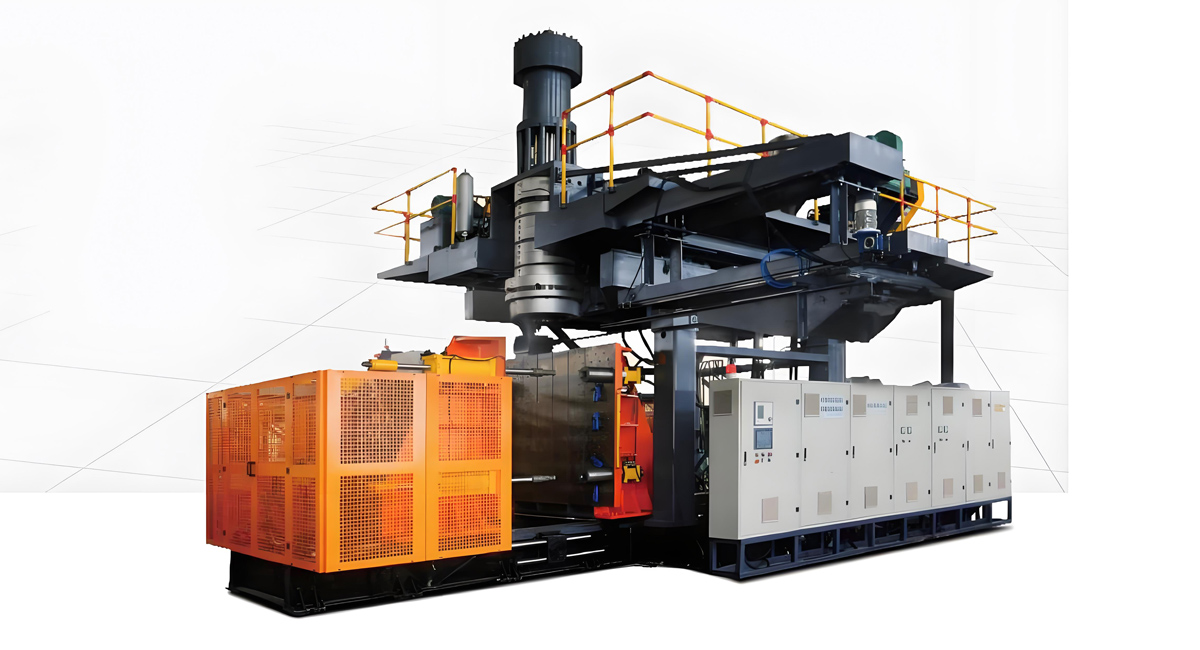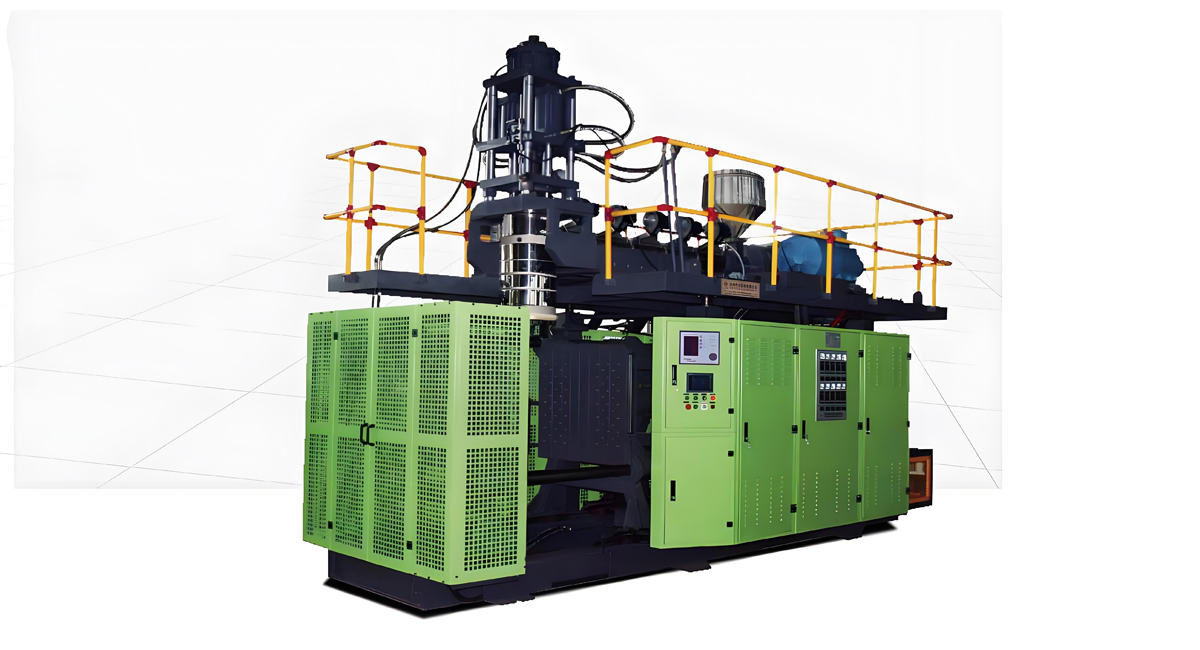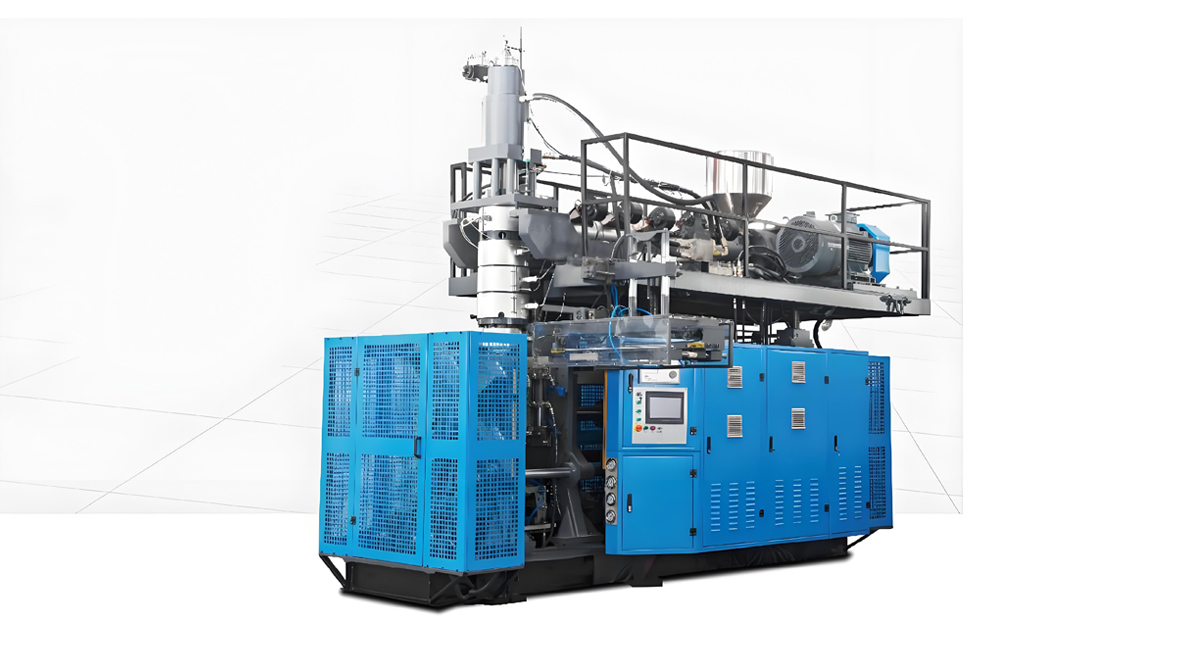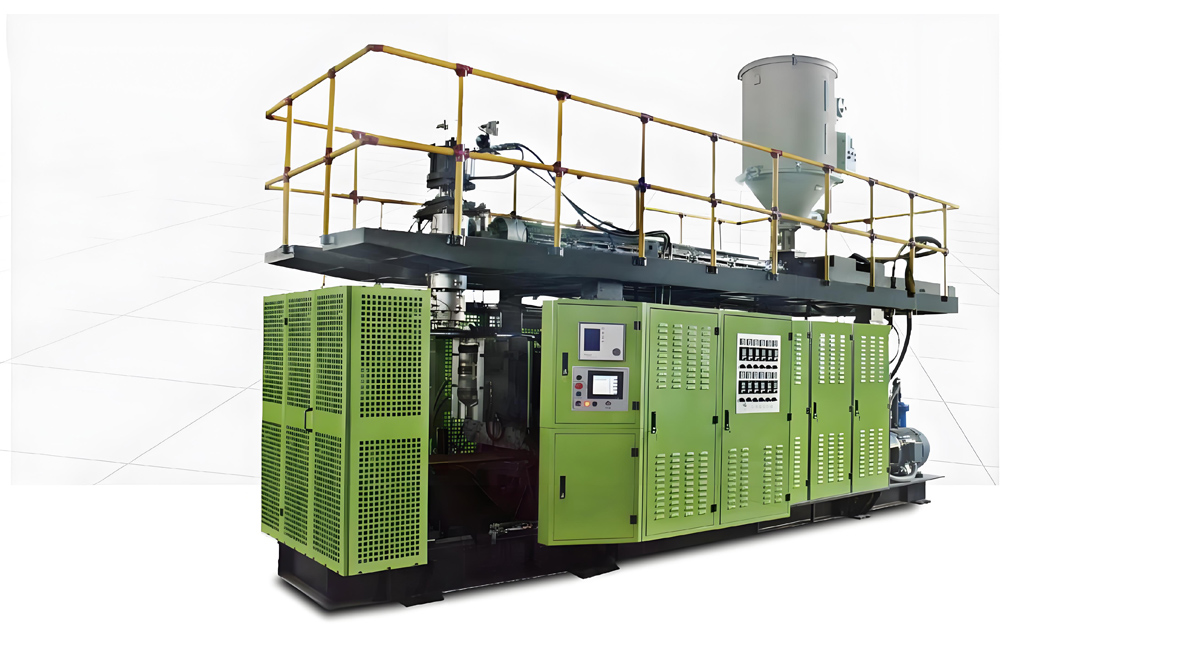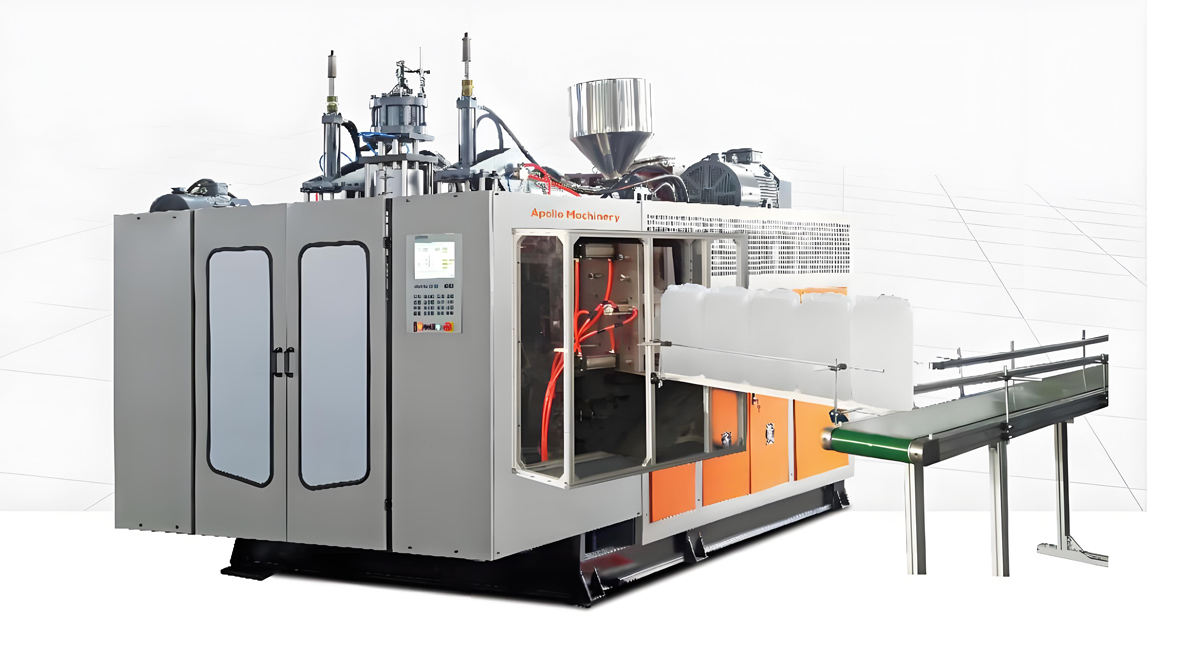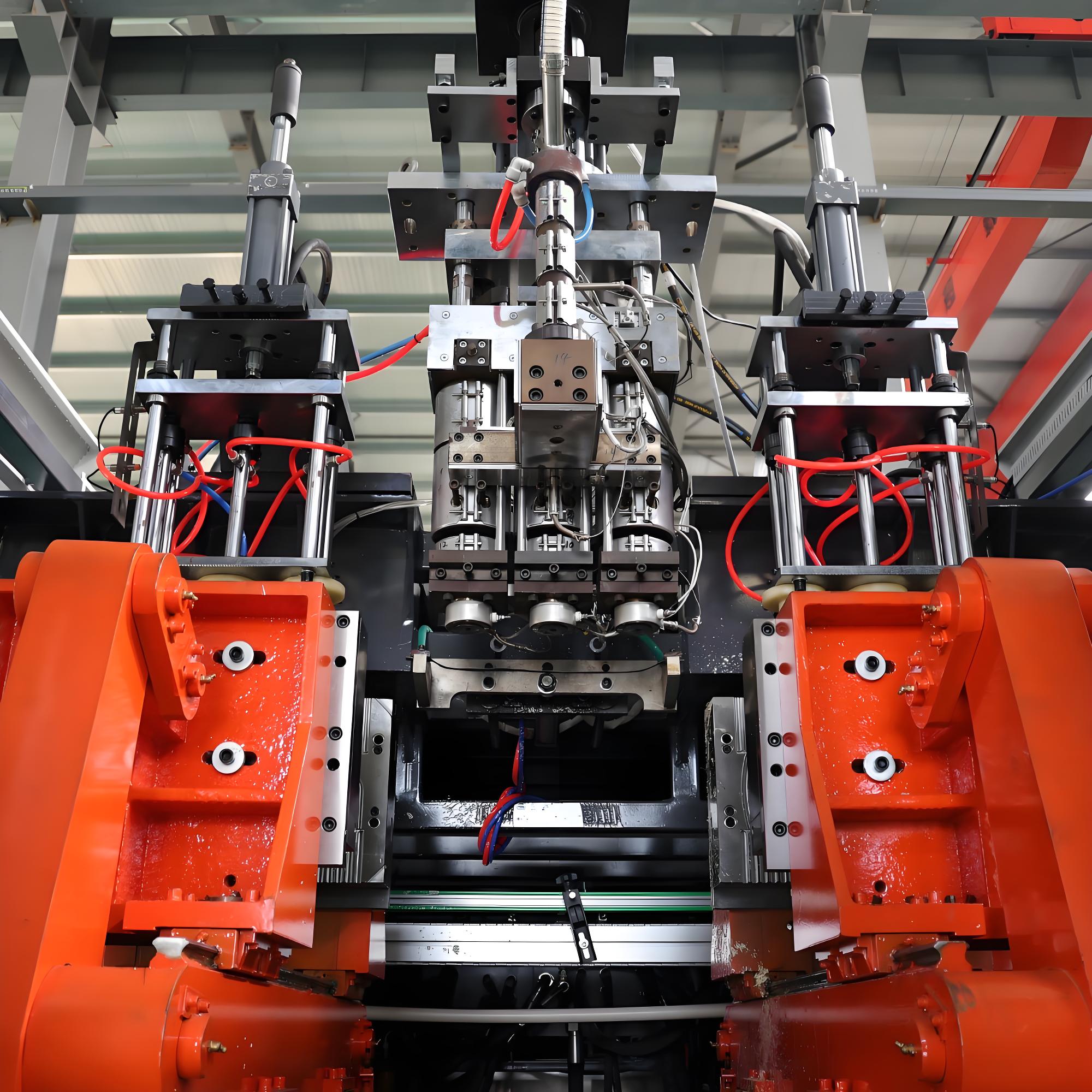

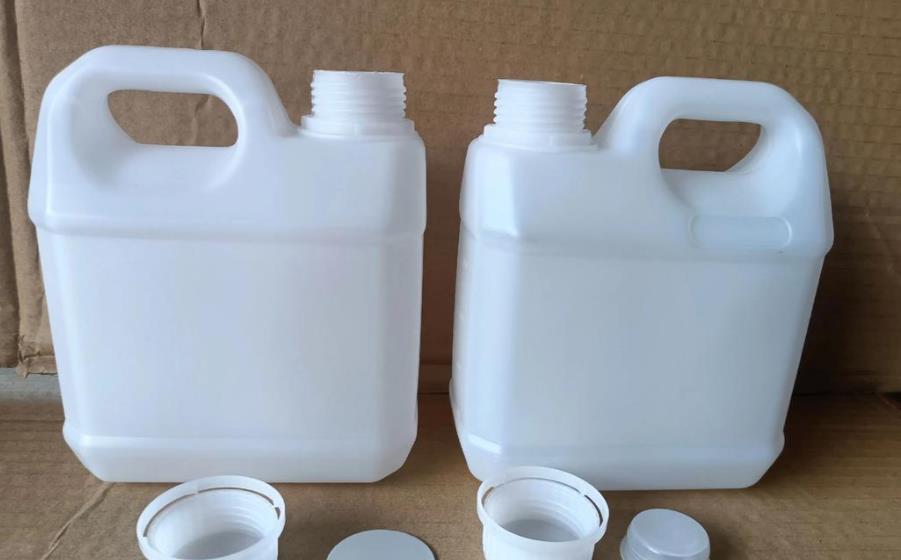
In the production process of plastic bottles by extrusion blow molding, uneven wall thickness is one of the most common and critical issues affecting product quality. This defect not only leads to decreased mechanical properties of plastic bottles, such as insufficient compression and drop resistance, but also may affect the sealing performance and appearance consistency of the products, increasing raw material consumption and production costs. This article will systematically analyze the main causes of this problem and propose targeted solutions based on production practice, providing technical reference for manufacturing enterprises.
I. Core Cause Analysis of Uneven Wall Thickness
The uniformity of the wall thickness of plastic bottles produced by extrusion blow molding machines depends on the stability of the entire process, including raw material plasticization, parison extrusion, blow molding, and cooling setting. Deviations in any link may lead to unbalanced wall thickness distribution. Based on practical experience, the main causes can be divided into five categories: raw material properties, mold design, equipment status, process parameters, and production environment.
(I) Inappropriate Raw Material Properties or Improper Pretreatment
Raw materials are the fundamental factor affecting wall thickness uniformity. Their own properties and pretreatment quality directly determine the plasticization effect and flow stability of the melt.
- Mismatched Melt Performance: If the selected plastic raw material has low melt strength, large flow fluctuation, or the melt index (MI) is outside the applicable range, it will cause uneven sagging of the parison during extrusion. For example, traditional HDPE raw materials are prone to excessive thinning at the bottom when the blow-up ratio exceeds 2:1; while high MI raw materials (5~10g/10min) have excessively strong fluidity, and if not matched with a rapid blow molding process, they will cause wall thickness deviation due to excessive sagging of the parison.
- Problems with Raw Material Mixing and Additives: Uneven mixing of raw materials from different origins or grades, or improper addition ratio of additives (such as antioxidants, nucleating agents), will lead to inconsistent viscosity of the melt after plasticization and uneven flow distribution during extrusion. In addition, impurities mixed in the raw materials or insufficient drying (containing moisture) will cause local melt degradation or vaporization during processing, damaging the uniformity of the melt.
(II) Defective Mold Design or Improper Maintenance
The mold is the “template” for plastic bottle molding. The rationality and precision of its structure directly determine the wall thickness distribution of the parison after blow molding. Common problems are concentrated in the die head, cavity, exhaust, and cooling systems.
- Unreasonable Die Head Structure: The non-streamlined design of the die head flow channel (such as dead corners, steps) will cause melt retention and uneven flow rate; if the die lip gap tolerance exceeds ±0.01mm, or the center of the die core and die sleeve is misaligned, the circumferential wall thickness deviation of the parison will exceed 2%, directly leading to uneven wall thickness of the finished product.
- Improper Cavity and Blow-Up Ratio Design: An excessively large blow-up ratio (maximum product diameter/parison diameter) (exceeding 3:1) is prone to excessive stretching and thinning of the shoulder, bottom, and other parts; asymmetric blow-up ratio is not adopted for complex-shaped products (such as curved special-shaped bottles), resulting in excessive wall thickness in hard-to-fill areas. At the same time, wear and dimensional deviation of the cavity surface will also directly affect the uniformity of wall thickness.
- Failure of Exhaust and Cooling Systems: Failure to open exhaust holes (φ0.5~1mm, spacing 50~100mm) at the high points and corners of the mold cavity, or blockage of exhaust holes, will cause air retention during blow molding, and local areas cannot fully fit the mold, resulting in excessive thickness; uneven temperature distribution of the cooling system (mold surface temperature difference exceeding 3℃) will cause inconsistent plastic shrinkage and expand the solidification difference between thick and thin areas.
(III) Failures or Insufficient Precision of Core Equipment Components
The precision of the extrusion system, blow molding system, and control system of the extrusion blow molding machine is the key to ensuring production stability. Equipment aging and component wear can cause wall thickness problems.
- Unstable Extrusion System: Fluctuations in the screw speed of the extruder, slipping of the motor or gearbox, will cause the melt extrusion volume to fluctuate; loss of control of the temperature in the barrel heating section (fluctuation exceeding ±5℃) will cause incomplete plasticization or excessive degradation of the raw materials, resulting in uneven melt viscosity. In addition, wear of the melt pump and blockage of the filter plate will cause fluctuations in the melt output pressure, further exacerbating wall thickness deviation.
- Fluctuations in Blow Molding System Pressure: Unstable compressed air supply or failure of the pressure stabilizing device will cause the blow molding pressure to fluctuate sharply within the range of 0.2~3MPa, resulting in inconsistent parison expansion speed; improper setting of pre-blow time and blow molding delay time (such as delay exceeding 0.5 seconds) will cause uneven cooling of the parison, resulting in uneven wall thickness such as thick top and thin bottom or local excessive thickness.
- Failure of Wall Thickness Control System: For blow molding machines with electric die lips, if components such as servo motors and electronic rulers fail, it will lead to inaccurate adjustment of the die lip gap; insufficient wall thickness control points (less than 30 points) or unreasonable curve settings cannot compensate for the thin-prone areas of the parison in a targeted manner, resulting in excessive wall thickness deviation of the finished product.
(IV) Unreasonable Setting or Improper Regulation of Process Parameters
The failure of process parameters in extrusion, blow molding, cooling, and other links to reach dynamic balance is the direct cause of uneven wall thickness, especially when the linkage regulation of parameters is insufficient.
- Unbalanced Extrusion Parameters: Excessively high extrusion temperature will lead to excessive melt fluidity and excessive sagging; excessively low temperature will result in poor plasticization, poor melt fluidity, and uneven extrusion volume. At the same time, the mismatch between extrusion speed and traction speed (traction speed not adjusted in real time according to the parison sag ratio) will cause the axial wall thickness fluctuation of the parison to exceed 1.5%.
- Improper Blow Molding Parameters: Low-pressure and low-speed blow molding (0.2~0.5MPa, 1~3 seconds) used for thick-walled products will cause slow mold filling, leading to cooling and hardening of the parison and local excessive thickness; high-pressure and high-speed blow molding (1~3MPa, <1 second) used for thin-walled products will cause excessive local stretching and thinning due to excessive impact. Excessively high or low pre-blow pressure will also affect the initial expansion shape of the parison and exacerbate uneven wall thickness.
- Mismatched Cooling Parameters: Excessively high cooling water temperature (exceeding 25℃) and insufficient flow rate (<2m/s) will lead to low cooling efficiency, slow parison solidification, and increased sagging; failure to extend the cooling time by 20%~30% for thick-walled areas (such as the bottle bottom) will cause local excessive thickness or depression due to shrinkage differences.
(V) Excessively High Production Environment Temperature or Influence of Interference Factors
When the production environment temperature exceeds 30℃, the fluidity of the raw materials will change significantly, and the cooling speed of the parison will accelerate, making it difficult to accurately control the expansion shape; at the same time, interference factors such as workshop dust and vibration will affect the operation precision of the equipment (such as screw speed, die lip adjustment), indirectly leading to uneven wall thickness.
II. Targeted Solutions and Optimization Measures
In response to the above causes, it is necessary to take targeted measures from the entire process of “raw material control – mold optimization – equipment maintenance – process regulation – environmental control” to achieve precise control of wall thickness uniformity.
(I) Optimize Raw Material Selection and Pretreatment Process
- Accurately Match Raw Material Performance: Select materials with appropriate melt strength according to product specifications. For large containers (such as 200L storage tanks), use low MI raw materials (0.3~1.0g/10min); for thin-walled bottles, use high MI raw materials (5~10g/10min) and match with a rapid blow molding process. Priority should be given to long-chain branched polymers (such as mPE, XLPE), which can increase the blow-up ratio to 3:1 and improve wall thickness uniformity by 15%.
- Standardize Raw Material Pretreatment: Raw materials from different origins or grades should be used separately. When mixing raw materials, extend the mixing time to 15~20 minutes to ensure uniformity. Dry the raw materials before use (such as HDPE drying temperature 80~100℃, time 2~4 hours) to avoid moisture content exceeding 0.05%; add 0.5%~1% nucleating agents (talcum powder, silica) to improve melt elasticity and reduce parison sagging.
(II) Optimize Mold Design and Regular Maintenance
- Improve Die Head and Cavity Structure: Adopt streamlined designs such as fishtail type and hanger type for the die head flow channel to avoid melt retention; control the die lip gap tolerance within ±0.01mm and regularly inspect and calibrate with feeler gauges. Optimize the blow-up ratio according to the product shape. For conventional products, control it at 1.5:1~2.5:1; for complex products, reduce the blow-up ratio to 1.2:1 in hard-to-fill areas to ensure a balanced state where draw ratio × blow-up ratio = 3~6.
- Improve Exhaust and Cooling Systems: Add φ0.5~1mm exhaust holes at the high points and corners of the mold cavity; use needle valve type exhaust for deep cavity products; control the cooling water temperature at 15~25℃ and the flow rate ≥2m/s; add cooling nozzles in thick-walled areas to ensure the mold surface temperature difference ≤3℃. Regularly clean the exhaust holes and polish the cavity to avoid dimensional deviations caused by wear.
(III) Strengthen Equipment Maintenance and Precision Calibration
- Ensure Extrusion System Stability: Regularly check the wear of the extruder screw and barrel, calibrate the motor and gearbox to ensure the screw speed fluctuation ≤±1r/min; adopt closed-loop control for the temperature of each section of the barrel, with fluctuation controlled within ±5℃. Regularly clean the melt pump and filter plate to avoid pressure fluctuations caused by blockage; use accumulator-type die heads for large product production to reduce parison sagging.
- Stabilize Blow Molding System Pressure: Install a high-precision pressure stabilizing device at the air source end to ensure the blow molding pressure fluctuation ≤±0.1MPa; adjust the blow molding speed according to the product thickness, using low-pressure and low-speed for thin-walled products and high-pressure and high-speed for thick-walled products. Calibrate the pre-blow time and delay time. For conventional products, the delay time ≤0.5 seconds; in low-temperature environments (<15℃), shorten it to within 0.3 seconds.
- Calibrate Wall Thickness Control System: Select a high-precision wall thickness controller with more than 30 points (such as Moog, B&R), set a compensation curve according to the wall thickness distribution law of the product, and pre-increase the parison thickness by 10%~20% for thin-prone areas (bottle shoulder, bottle bottom). Regularly calibrate the servo motor and electronic ruler to ensure the die lip gap adjustment precision ±0.05mm, and enable the rotating die head (5~10r/min) to offset the circumferential flow rate difference of the melt.
(IV) Precisely Regulate Process Parameters
- Optimize Extrusion Parameters: Set the extrusion temperature according to the raw material properties, such as the barrel temperature of PET bottles is 260~280℃ and the die head temperature is 270~290℃; calculate the parison sag ratio in real time by the weighing method to ensure that traction speed = extrusion speed × (1 + sag ratio), compensating for the wall thickness deviation caused by sagging.
- Precisely Control Blow Molding Parameters: Adopt a segmented blow molding process, first pre-blow at low pressure (0.2~0.3MPa) to initially shape the parison, then complete the blow molding at high pressure (0.8~1.5MPa) to avoid excessive local stretching. Adjust the pre-blow time according to the parison length. If there is thick top and thin bottom, delay the pre-blow time; if there is thick bottom and thin top, advance the pre-blow time.
- Match Cooling Parameters: Adjust the cooling time according to the product wall thickness. The cooling time for thin-walled bottles is 3~5 seconds, and for thick-walled bottles, it is extended to 8~12 seconds; the cooling time for thick-walled areas is additionally extended by 20%~30% to ensure full solidification of the product and reduce uneven wall thickness caused by shrinkage differences.
(V) Control Production Environment and Interference Factors
Control the workshop environment temperature at 18~25℃ to avoid fluctuations in raw material fluidity caused by high temperature; install dust removal equipment and shock absorption devices to reduce the impact of dust and vibration on equipment operation precision. Regularly clean the production site to avoid impurities mixing into raw materials or blocking equipment components.
III. Summary and Notes
The control of wall thickness uniformity in plastic bottle production by extrusion blow molding machines is a systematic work that requires multi-dimensional collaborative optimization from raw materials, molds, equipment, processes, and the environment. During the production process, a regular inspection mechanism should be established to regularly test raw material performance, mold precision, and equipment parameters, and timely detect and solve potential problems; for mass-produced products, online weighing and testing can be adopted. When the wall thickness deviation exceeds ±5%, the machine will automatically stop for adjustment to avoid batch unqualified products.
In addition, the skill level of operators directly affects the precision of parameter regulation. Professional training should be strengthened to ensure that they master core skills such as the operation of the wall thickness control system and the linkage adjustment of process parameters. Through the whole-process refined management and control, the problem of uneven wall thickness can be effectively solved, the stability of product quality can be improved, and raw material consumption and production costs can be reduced.