Importance of Trial Run Testing for EBM Machine Purchase
Conducting a thorough trial run before finalizing the purchase of an extrusion blow molding machine from China represents one of the most critical steps in the procurement process, serving as the ultimate validation of equipment quality, performance capabilities, and manufacturer reliability. Zhangjiagang Apollo Machinery Co., Ltd., with over 20 years of manufacturing experience and more than 4,000 machines operating across 90 countries, understands that trial run testing provides buyers with confidence in their investment decision while revealing any potential issues that could affect production efficiency after installation. A well-executed trial run demonstrates machine performance under actual production conditions, verifies that all specifications meet customer requirements, and ensures that the equipment will deliver the expected quality and productivity levels. For purchasers investing significant capital in extrusion blow molding equipment, the trial run represents the final opportunity to verify that the selected machine meets all technical requirements before committing to purchase and preparing for international shipment and installation.
Pre-Trial Run Preparation and Documentation Review
Effective trial run testing begins well before machine operation, requiring thorough preparation and comprehensive documentation review to ensure that all aspects of the extrusion blow molding machine have been properly specified, manufactured, and configured according to customer requirements. This preparation phase involves reviewing technical specifications, confirming machine configuration details, verifying production capacity requirements, and establishing clear performance criteria against which machine performance will be evaluated during the trial run. Apollo provides detailed technical documentation for customer review before trial runs, including machine specifications, production capacity calculations, material compatibility information, and expected performance benchmarks for the specific applications and products planned for production.
Technical Specifications Verification
Before beginning trial run testing, purchasers should verify that the extrusion blow molding machine configuration matches the technical specifications agreed upon during the quotation and negotiation process. This verification includes confirming machine model specifications such as the ABLB series for 200ml to 30L capacity or ABLD series for 20L to 1500L capacity, depending on production requirements. Specific parameters to verify include maximum product capacity, screw diameter and length-to-diameter ratio, motor power ratings, clamping force specifications, mold size limitations, and expected production rates. For example, an ABLB 90 machine configured for 16L capacity should feature 90mm screw diameter, 24:1 L/D ratio, 37-45KW screw drive power, 120KN clamping force, and maximum mold dimensions of 530x550mm. Verification of these specifications ensures that the machine delivered matches the machine specified and priced in the purchase agreement.
Production Requirements Confirmation
Production requirements confirmation ensures that the extrusion blow molding machine trial run tests actual production conditions rather than generic machine capabilities. This confirmation includes specifying the exact products to be manufactured during the trial run, including material type (PE, PP, PVC, PA, PC, ABS, PS, EVA, TPU, or PETG), product dimensions and capacity, wall thickness requirements, and quality specifications such as transparency, surface finish, or barrier properties. Apollo recommends that trial run testing utilize the actual production materials and product designs that will be used in customer production operations, ensuring that machine performance reflects real-world operating conditions rather than ideal laboratory conditions. This approach reveals any potential issues with material processing, mold compatibility, or product quality that might not appear during testing with standard demonstration materials.
Performance Criteria Establishment
Establishing clear performance criteria before trial run testing provides objective measures for evaluating machine performance and determining whether the equipment meets customer expectations. Performance criteria should include quantitative measures such as production capacity (bottles per hour), cycle time, energy consumption, material waste percentage, and reject rate. Qualitative criteria should include product quality assessment, operator ease of use, machine stability, and noise levels during operation. Apollo recommends establishing minimum acceptable performance criteria before trial runs begin, ensuring that both the manufacturer and purchaser have clear expectations and objective standards for evaluating trial run results. For example, a dual-station ABLB 75 machine producing 1L HDPE bottles should achieve production rates of 800×2 pieces per hour dry cycle with reject rates below 2% under normal operating conditions.
Machine Appearance and Structural Inspection
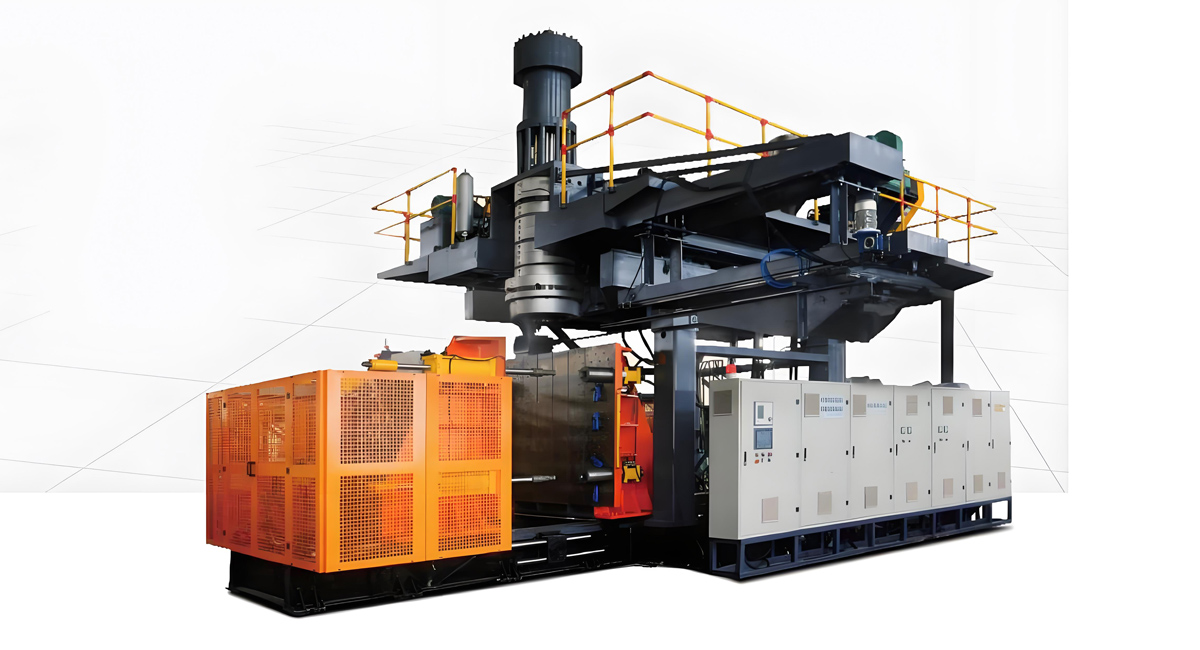
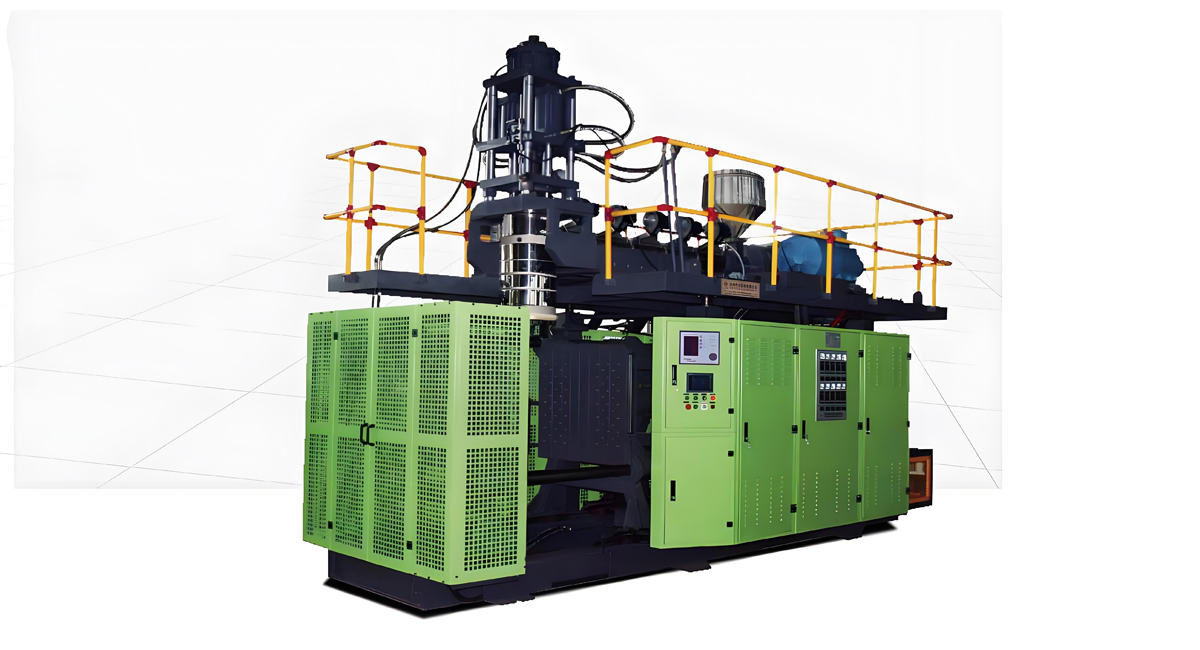
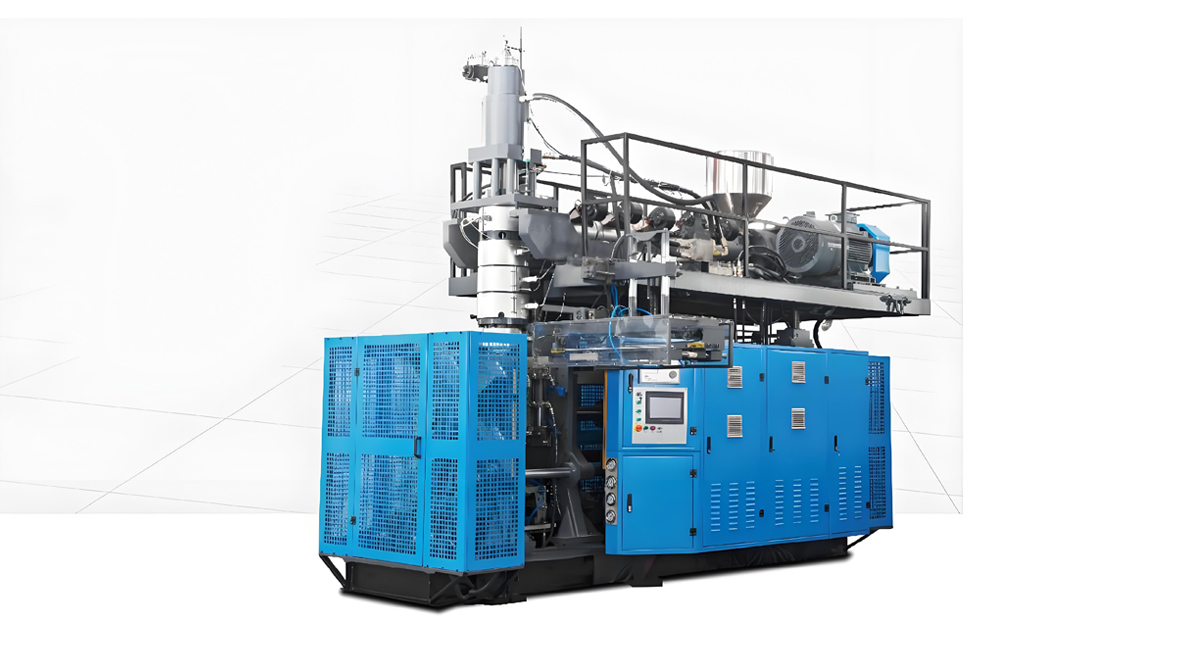
The physical inspection of the extrusion blow molding machine begins with evaluation of machine appearance, structural integrity, and build quality, providing immediate insight into manufacturing quality and attention to detail. This inspection encompasses visual evaluation of welding quality, surface finish, component assembly quality, and overall machine construction standards. High-quality extrusion blow molding machines demonstrate precision manufacturing with clean welds, smooth surface finishes, properly aligned components, and professional assembly quality throughout the machine structure. Apollo machines feature professional-grade construction with high-quality steel components, precision machining, and professional welding that ensures structural integrity throughout years of continuous operation in demanding production environments.
Frame and Base Structure Examination
The machine frame and base structure provide the foundation for stable, precise machine operation, making thorough examination of these components essential during trial run inspection. Evaluation should include inspection of weld quality at all frame joints, verification of frame straightness and alignment, assessment of structural rigidity under load, and examination of base leveling and foundation compatibility. Apollo extrusion blow molding machines feature heavy-duty steel frame construction with precision-welded joints designed for maximum structural rigidity and vibration resistance. The base structure includes integral leveling points and reinforcement for stability during high-speed operation, ensuring that machine performance remains consistent and precise throughout extended production runs. Inspectors should verify that frame components show no signs of distortion, misalignment, or poor weld quality that could affect machine precision or longevity.
Surface Finish and Protective Coatings
Surface finish quality and protective coatings provide important indicators of manufacturing quality and attention to detail, while also affecting machine longevity and ease of cleaning. High-quality extrusion blow molding machines feature smooth surface finishes with professionally applied protective coatings that resist corrosion and facilitate regular cleaning operations. Apollo machines undergo professional surface preparation and coating processes that include degreasing, abrasive blasting to proper surface profile, and application of industrial-grade paint systems formulated for chemical resistance and durability in production environments. Inspectors should evaluate coating uniformity, proper coverage of all surfaces, absence of runs or sags, and proper surface preparation evident through good paint adhesion. The coating should extend into all weld joints and structural areas, with no bare metal exposed that could corrode in production environments.
Component Assembly Quality
Component assembly quality evaluation provides insight into manufacturing standards and attention to detail throughout the machine construction process. This evaluation includes inspection of bolt tightness and uniformity, alignment of moving components, proper routing of cables and hoses, and quality of fastener installation throughout the machine. Apollo extrusion blow molding machines demonstrate professional assembly quality with all fasteners properly torqued, moving components precisely aligned, and all cables and hoses neatly routed and secured with appropriate clamps and strain relief. Inspectors should verify that no temporary or makeshift assembly methods are used, that all components are securely fastened according to engineering specifications, and that assembly quality reflects professional manufacturing standards rather than hurried production shortcuts.
Electrical System Inspection and Testing
The electrical system represents a critical component of extrusion blow molding machine functionality and safety, requiring comprehensive inspection and testing during trial run evaluation. Electrical system inspection encompasses evaluation of control panel quality, component selection and installation, wiring quality, grounding and safety systems, and electrical safety compliance. Apollo extrusion blow molding machines feature electrical systems designed to international standards with high-quality components including Mitsubishi PLC control systems, Schneider contactors and relays, Delta or ABB variable frequency drives, and Siemens motors, ensuring reliable performance and long service life.
Control Panel Evaluation
Control panel evaluation assesses the quality, organization, and functionality of the machine control system that serves as the operational interface for extrusion blow molding machines. Evaluation should include inspection of control panel construction quality, component layout and organization, accessibility for maintenance, and quality of internal wiring. Apollo control panels feature professional enclosure construction with proper ventilation, secure component mounting, clear component identification, and organized internal wiring with proper cable management and strain relief. Inspectors should verify that all components are securely mounted, that control panel doors operate properly and seal effectively, and that the control system includes appropriate operator interface devices such as HMI touchscreen displays that provide intuitive machine control and status monitoring.
Wiring and Cable Quality Inspection
Wiring and cable quality inspection evaluates the electrical installation standards used throughout the extrusion blow molding machine, assessing cable selection, routing, protection, and termination quality. High-quality electrical installations feature properly sized cables for current carrying capacity, appropriate cable types for environmental conditions, secure cable routing and protection, and professional termination methods. Apollo electrical installations utilize industrial-grade cables with proper gauge for all circuits, cable trays and conduits for organized routing, flexible cable protection on moving components, and professional termination with crimped or soldered connections and proper strain relief. Inspectors should verify that no temporary or improper wiring methods are used, that all connections are secure and properly insulated, and that cable protection prevents abrasion or damage during machine operation.
Grounding and Safety Systems Testing
Grounding and safety systems testing verifies that extrusion blow molding machines comply with electrical safety requirements and provide appropriate protection against electrical hazards during operation. Testing should include verification of proper grounding throughout the machine, testing of emergency stop functionality, evaluation of safety interlock systems, and verification of electrical safety isolation. Apollo extrusion blow molding machines incorporate comprehensive safety systems including proper equipment grounding, redundant emergency stop systems with multiple access points, safety interlocks on all guards and access doors, and isolation transformers for operator protection. Trial run testing should include verification that emergency stop systems immediately halt all machine motion, that safety interlocks prevent operation when guards are open, and that all exposed conductive components are properly grounded according to international electrical safety standards.
Hydraulic System Inspection and Performance Testing
The hydraulic system provides power for machine movement and clamping operations in hydraulic extrusion blow molding machines, making inspection and testing of hydraulic systems critical for ensuring reliable machine performance. Hydraulic system inspection encompasses evaluation of pump quality, hose and fitting integrity, control valve functionality, and system performance under load. Apollo hydraulic systems feature high-quality pumps including Hitachi oil pumps, precision control valves, properly sized hydraulic lines, and efficient reservoir design, ensuring consistent hydraulic power delivery with minimal energy consumption.
Hydraulic Pump and Motor Inspection
Hydraulic pump and motor inspection evaluates the quality and installation of the components that generate hydraulic power for machine operation. Inspection should include verification of pump and motor mounting, assessment of drive coupling alignment, evaluation of pump suction line installation, and verification of motor cooling and ventilation. Apollo hydraulic systems feature Hitachi or equivalent quality hydraulic pumps properly mounted with precision alignment to drive motors, ensuring smooth power transmission and extended component life. Inspectors should verify that pump mounting brackets show no signs of vibration or fatigue, that drive couplings are properly aligned and secured, and that pump suction lines are properly sized and routed to prevent cavitation and ensure reliable pump operation.
Hydraulic Hoses and Fittings Evaluation
Hydraulic hoses and fittings evaluation assesses the quality and installation of hydraulic system connections that transport hydraulic fluid throughout the machine. Evaluation should include inspection of hose quality and specifications, verification of proper fitting types and installation, assessment of hose routing and protection, and evaluation of hose clamp and support systems. Apollo hydraulic installations feature industrial-grade hydraulic hoses with appropriate pressure ratings, high-quality fittings properly installed with correct torque requirements, properly routed hoses with adequate bend radii, and secure hose clamping and support that prevents hose whip or chafing during machine operation. Inspectors should verify that hose ends are properly assembled and sealed, that hose routing avoids sharp bends or abrasion points, and that all hydraulic connections show no signs of leakage during static pressure testing.
Hydraulic Control System Testing
Hydraulic control system testing evaluates the functionality and performance of hydraulic control valves and proportional control systems that regulate hydraulic flow and pressure during machine operation. Testing should include verification of proportional valve functionality, assessment of pressure control accuracy, evaluation of flow control performance, and testing of hydraulic safety systems. Apollo hydraulic control systems feature precision proportional valves for accurate motion control, pressure control systems with feedback regulation for consistent clamping force, flow control systems for optimized cycle times, and pressure relief systems for overload protection. Trial run testing should verify that hydraulic controls provide smooth, precise motion without hunting or oscillation, that pressure control maintains consistent clamping force throughout the molding cycle, and that hydraulic safety systems activate appropriately to protect against overload conditions.
Extruder System Inspection and Testing
The extruder system represents the core component of extrusion blow molding machines, responsible for melting and extruding plastic material for blow molding operations. Extruder system inspection and testing encompasses evaluation of barrel and screw quality, heater installation and control, material feeding systems, and extrusion performance. Apollo extruder systems feature precision-machined barrels and screws, efficient heating systems, accurate temperature control, and robust drive systems designed for consistent material processing and high-quality parison production.
Barrel and Screw Inspection
Barrel and screw inspection evaluates the quality and condition of the components that melt and plasticize plastic material before extrusion. Inspection should include evaluation of barrel surface finish and condition, verification of screw wear or damage, assessment of barrel alignment and support, and verification of barrel cooling system installation. Apollo extruder systems feature nitrided or chrome-plated barrels for extended wear resistance, precision-machined screws designed for optimal material mixing and melting, robust barrel support systems that ensure proper alignment, and efficient barrel cooling for temperature control. Inspectors should verify that barrel interior surfaces show no signs of excessive wear or scoring, that screw flights are undamaged with proper clearances, and that barrel mounting allows for thermal expansion while maintaining proper alignment.
Heating System and Temperature Control Evaluation
Heating system and temperature control evaluation assesses the quality and functionality of the systems that heat the barrel and die to proper processing temperatures. Evaluation should include inspection of heater band installation and condition, testing of temperature control accuracy, evaluation of temperature uniformity along the barrel, and assessment of temperature control system response. Apollo heating systems feature high-quality heater bands with proper wattage for each zone, precise temperature control using Mitsubishi PLC controllers with thermocouple feedback, multi-zone temperature control for optimized processing, and rapid heating response for reduced startup time. Trial run testing should verify that temperature controls maintain setpoints within acceptable tolerances (typically plus or minus 1 degree Celsius), that barrel heating shows uniform temperature profiles without hot spots or cold zones, and that temperature controls respond appropriately to process changes.
Material Feeding System Testing
Material feeding system testing evaluates the functionality of systems that deliver plastic material to the extruder, including hoppers, loaders, and feeding mechanisms. Testing should include verification of hopper capacity and construction quality, assessment of feeding consistency, evaluation of material bridging prevention, and testing of automatic feeding systems if equipped. Apollo material feeding systems feature properly sized hoppers for continuous operation, smooth internal surfaces to prevent material hang-up, optional automatic loaders for continuous material supply, and feeding mechanisms that deliver consistent material flow to the extruder. Trial run testing should verify that feeding systems deliver material consistently without fluctuation, that material flows freely without bridging or blockage, and that automatic systems function reliably for extended unattended operation.
Clamping and Mold System Inspection
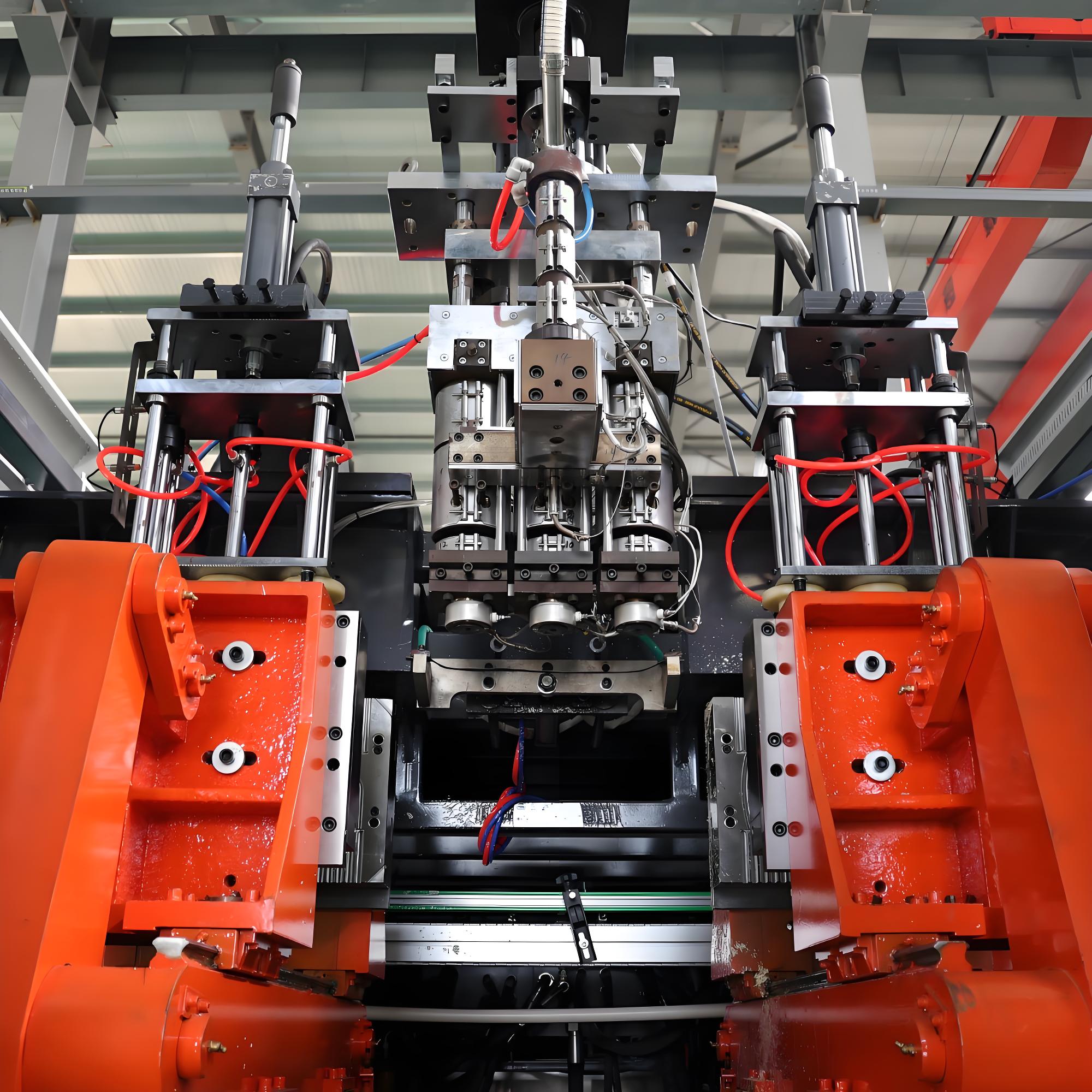
The clamping and mold system provides the force required to hold molds closed during the blowing operation and must provide consistent, reliable performance throughout production cycles. Clamping and mold system inspection encompasses evaluation of clamping mechanism quality, mold mounting and alignment, and clamping force consistency. Apollo clamping systems feature robust construction with adequate clamping force for specified product sizes, precision mold mounting surfaces, and consistent clamping force delivery throughout the production cycle.
Clamping Mechanism Evaluation
Clamping mechanism evaluation assesses the quality and functionality of the system that closes and holds molds during blow molding operations. Evaluation should include inspection of clamping cylinder or toggle mechanism quality, verification of clamping force specifications, assessment of clamping speed and smoothness, and evaluation of clamping mechanism durability. Apollo clamping systems feature heavy-duty hydraulic clamping cylinders with appropriate force ratings for specified product capacities, precision guide systems for mold alignment, smooth acceleration and deceleration for reduced mechanical shock, and robust construction designed for millions of production cycles. Inspectors should verify that clamping mechanisms operate smoothly without hesitation or vibration, that clamping force develops consistently cycle after cycle, and that clamping systems show no signs of oil leakage or mechanical wear during operation.
Mold Mounting and Alignment Verification
Mold mounting and alignment verification ensures that mold mounting systems provide secure, precise mounting with proper alignment for quality product production. Verification should include inspection of mold platen flatness and parallelism, assessment of mold mounting hardware quality, evaluation of mold centering and alignment features, and verification of mold height adjustment systems. Apollo mold mounting systems feature precision-machined platens with excellent flatness and parallelism, high-strength mounting bolts and clamping systems, mold centering pins and alignment features for quick mold changes, and precise mold height adjustment with locking mechanisms. Trial run testing should verify that molds mount securely without rocking or movement, that mold alignment remains consistent throughout extended production runs, and that mold changing systems allow rapid mold changes with minimal downtime.
Clamping Force Consistency Testing
Clamping force consistency testing evaluates the ability of the clamping system to deliver consistent force cycle after cycle, which is critical for maintaining product quality and preventing mold separation during blowing operations. Testing should include measurement of clamping force development and maintenance over multiple cycles, assessment of clamping force repeatability, and evaluation of clamping force response to process variations. Apollo clamping systems deliver consistent clamping force within narrow tolerances, typically maintaining force within plus or minus 2% of setpoint throughout production. Trial run testing should verify that clamping force develops consistently each cycle, that clamping force does not vary significantly between cycles, and that the clamping system maintains force throughout the entire blowing operation without dropping or fluctuating.
Blowing System Inspection and Testing
The blowing system delivers compressed air to inflate the parison and form the product against the mold cavity, making proper inspection and testing critical for ensuring quality product production. Blowing system inspection encompasses evaluation of air delivery systems, blow needle quality and alignment, and blowing pressure and timing control. Apollo blowing systems feature high-capacity air delivery, precision blow needle mechanisms, and sophisticated pressure and timing controls for optimal product formation.
Air Delivery System Evaluation
Air delivery system evaluation assesses the quality and functionality of systems that deliver compressed air for blowing operations. Evaluation should include inspection of air compressor capacity and quality, assessment of air drying and filtration systems, verification of air delivery pipe sizing and installation, and evaluation of air storage tank capacity. Apollo air delivery systems feature properly sized air compressors for specified production rates, air drying and filtration systems for clean, dry air delivery, appropriately sized and routed air delivery lines, and air storage tanks that ensure consistent air pressure availability. Inspectors should verify that air delivery systems provide sufficient air volume and pressure for specified products, that air remains clean and dry without contamination, and that air delivery pressure remains stable throughout high-speed operation.
Blow Needle and Valve System Testing
Blow needle and valve system testing evaluates the quality and functionality of components that deliver air into the parison during the blowing operation. Testing should include inspection of blow needle quality and alignment, assessment of valve response time and sealing, evaluation of blow needle actuation mechanism, and verification of multiple blow timing if equipped. Apollo blow needle systems feature precision-machined blow needles with proper alignment, high-quality valves with rapid response and positive sealing, reliable actuation mechanisms for consistent needle positioning, and optional multiple blow timing for complex product requirements. Trial run testing should verify that blow needles enter and exit the parison smoothly without causing damage, that valves open and close rapidly for consistent blow timing, and that blowing systems produce quality products with proper wall thickness distribution.
Blowing Pressure and Timing Control Assessment
Blowing pressure and timing control assessment evaluates the systems that regulate air pressure and timing during the blowing operation, which are critical for achieving proper product formation and wall thickness distribution. Assessment should include verification of pressure regulation accuracy, evaluation of timing control precision, assessment of multi-stage blowing capability if equipped, and evaluation of process repeatability. Apollo blowing control systems feature precise pressure regulation with feedback control, accurate timing control through PLC programming, optional multi-stage blowing for complex products, and excellent process repeatability cycle after cycle. Trial run testing should verify that blowing pressure maintains setpoint accuracy within narrow tolerances, that blowing timing remains consistent from cycle to cycle, and that product quality shows minimal variation throughout extended production runs.
Product Quality Evaluation During Trial Run
Product quality evaluation represents the ultimate test of extrusion blow molding machine performance, assessing whether the equipment produces products that meet customer quality specifications and requirements. Quality evaluation encompasses measurement of product dimensions, assessment of surface finish and appearance, testing of wall thickness distribution, and evaluation of product consistency throughout production runs. Apollo extrusion blow molding machines are designed to produce high-quality products with consistent dimensions, excellent surface finish, uniform wall thickness, and minimal variation throughout production.
Dimensional Accuracy Verification
Dimensional accuracy verification measures whether products produced during trial run testing meet specified dimensional requirements for length, width, diameter, and other critical dimensions. Verification should include measurement of multiple products throughout the production run, assessment of dimensional consistency, evaluation of process capability to achieve required tolerances, and assessment of dimensional stability over time. Apollo extrusion blow molding machines deliver dimensional accuracy typically within plus or minus 0.2mm for most applications, with excellent process capability indices exceeding 1.33 for stable production. Trial run quality verification should include measurement of at least 50 products from throughout the production run, statistical analysis of dimensional data to determine mean values and standard deviations, and verification that dimensional capabilities meet customer requirements with appropriate process capability margins.
Surface Finish and Appearance Assessment
Surface finish and appearance assessment evaluates product appearance characteristics including gloss, transparency, surface smoothness, and absence of visual defects. Assessment should include visual inspection of multiple products for defects such as splay marks, swirls, scratches, or contamination, evaluation of surface gloss and transparency consistency, and assessment of mold transfer quality and detail reproduction. Apollo extrusion blow molding machines produce products with excellent surface finish quality when properly configured, with uniform gloss, good transparency for clear materials, and faithful reproduction of mold detail. Trial run assessment should include thorough visual inspection of products from throughout the production run, comparison against customer quality standards, and identification of any surface defects that require process or equipment adjustments.
Wall Thickness Distribution Analysis
Wall thickness distribution analysis measures the uniformity of product wall thickness throughout the container, which is critical for product performance, strength, and material efficiency. Analysis should include measurement of wall thickness at multiple points on products, assessment of thickness distribution patterns, evaluation of parison programming effectiveness, and assessment of wall thickness consistency from product to product. Apollo extrusion blow molding machines feature advanced parison control systems including optional parison programming with up to 100 points for precise wall thickness control, enabling excellent wall thickness uniformity across product surfaces. Trial run analysis should include wall thickness measurements using ultrasonic thickness gauges or cut sections from multiple products, evaluation of thickness distribution patterns for optimal strength and material usage, and verification that wall thickness control systems provide consistent results throughout production runs.
Production Performance Testing
Production performance testing evaluates the actual production capabilities of the extrusion blow molding machine under simulated or actual production conditions, measuring cycle time, production rate, energy consumption, and overall efficiency. Performance testing provides realistic expectations for machine productivity and operational costs in customer production environments. Apollo extrusion blow molding machines are designed for high-speed operation with excellent energy efficiency, delivering production rates that meet or exceed specified requirements while minimizing energy consumption and operational costs.
Cycle Time Measurement
Cycle time measurement determines the actual time required for complete production cycles from mold close to mold open and product ejection. Measurement should include timing of each phase of the production cycle including mold close, parison extrusion, mold open, blowing, cooling, and product ejection, identification of potential cycle time reduction opportunities, and comparison against specified cycle time requirements. Apollo extrusion blow molding machines achieve competitive cycle times, with dry cycle times for smaller products (1-5L) typically 6-8 seconds for single-station machines and 4-6 seconds for dual-station configurations. Trial run cycle time measurement should include timing of complete cycles with accurate stopwatches or automated timing systems, analysis of each cycle phase to identify optimization opportunities, and verification that actual cycle times meet or exceed production requirements.
Production Rate Verification
Production rate verification measures the actual number of products produced per hour or per shift, providing realistic expectations for production capacity in customer facilities. Verification should include measurement of actual production over extended periods (minimum 4 hours of continuous operation), calculation of production rates including setup time and planned downtime, assessment of production consistency throughout runs, and comparison against specified production capacity requirements. Apollo extrusion blow molding machines achieve production rates typically ranging from 300-1900 bottles per hour depending on machine model, product size, and configuration. For example, dual-station ABLB 75 machines producing 1L HDPE bottles achieve production rates of approximately 1600 bottles per hour. Trial run verification should include extended production runs measuring actual output over multiple hours, assessment of production consistency and reject rates, and verification that production capabilities meet customer requirements with appropriate capacity margins.
Energy Consumption Measurement
Energy consumption measurement determines the actual power usage of the extrusion blow molding machine during production operations, providing essential data for operational cost calculations and efficiency assessment. Measurement should include measurement of total power consumption during production, calculation of energy consumption per kilogram of material processed, assessment of energy efficiency under different production conditions, and comparison against specified energy consumption values. Apollo extrusion blow molding machines feature energy-efficient designs with consumption typically ranging from 0.4-0.7 kWh per kilogram of HDPE processed for hydraulic models and 0.2-0.35 kWh per kilogram for all-electric models. Trial run energy measurement should include monitoring of electrical consumption using power meters during production runs, calculation of energy efficiency metrics, and assessment of energy consumption trends throughout production to identify optimization opportunities.
Operator Interface and Usability Evaluation
Operator interface and usability evaluation assesses how easily operators can set up, operate, and monitor the extrusion blow molding machine, which significantly affects production efficiency and operator productivity. Evaluation encompasses assessment of HMI touchscreen functionality, control system organization, alarm and messaging systems, and ease of parameter adjustment. Apollo extrusion blow molding machines feature intuitive Mitsubishi PLC-based control systems with touchscreen HMI interfaces designed for operator convenience and efficient operation.
Human Machine Interface Assessment
Human machine interface assessment evaluates the touchscreen or control panel interface that operators use to set up, operate, and monitor extrusion blow molding machines. Assessment should include evaluation of screen layout and organization, assessment of navigation ease and logical flow, verification of touch response and screen visibility, and evaluation of language translation quality if applicable. Apollo HMI systems feature well-organized screen layouts with logical grouping of related functions, intuitive navigation following operator workflow patterns, high-contrast displays visible in various lighting conditions, and professional translation into multiple languages including English, Spanish, Russian, and Arabic for international customers. Trial run assessment should include hands-on operation of HMI controls by actual operators, evaluation of how easily operators learn to use the system, and assessment of how efficiently operators can adjust parameters and respond to production changes.
Alarm and Messaging System Evaluation
Alarm and messaging system evaluation assesses how effectively the machine communicates status information, warnings, and error conditions to operators through the control system. Evaluation should include verification of alarm accuracy and specificity, assessment of alarm prioritization and response requirements, evaluation of troubleshooting information provided with alarms, and assessment of historical alarm logging capabilities. Apollo control systems feature comprehensive alarm systems that provide specific, actionable alarm messages with clear operator guidance, historical alarm logging for trend analysis, and remote monitoring capabilities for diagnostic support. Trial run evaluation should include intentional triggering of alarm conditions to verify proper alarm display and operator guidance, assessment of alarm system responsiveness during production, and evaluation of historical data capabilities for production analysis and troubleshooting.
Parameter Adjustment and Recipe Management
Parameter adjustment and recipe management evaluation assesses how easily operators can adjust machine parameters and save and retrieve production recipes for different products. Evaluation should include assessment of parameter adjustment ease and accuracy, evaluation of recipe save and retrieve functionality, assessment of password protection for critical parameters, and evaluation of recipe transfer capabilities between machines. Apollo control systems feature intuitive parameter adjustment with up/down buttons and numeric entry, comprehensive recipe management allowing unlimited recipe storage and retrieval, multi-level password protection for different operator access levels, and recipe transfer capabilities via USB or network connections for consistency across multiple machines. Trial run evaluation should include testing parameter adjustments during production, testing recipe save and retrieve functions for multiple products, and assessment of how quickly operators can change between different product recipes.
Safety System Verification
Safety system verification confirms that all machine safety systems function properly to protect operators during machine operation, which is essential for regulatory compliance and safe workplace practices. Verification encompasses testing of emergency stop systems, evaluation of safety guard interlocks, assessment of safety light curtains and presence sensing devices, and verification of other safety features. Apollo extrusion blow molding machines incorporate comprehensive safety systems compliant with CE, ISO, and international safety standards.
Emergency Stop System Testing
Emergency stop system testing verifies that all emergency stop devices properly halt machine operation when activated, preventing injury or equipment damage during hazardous conditions. Testing should include testing each emergency stop button individually, verification of immediate stopping of all dangerous motion, assessment of reset requirements after emergency stop activation, and evaluation of emergency stop button accessibility and visibility. Apollo emergency stop systems feature multiple emergency stop buttons positioned at various operator access points, immediate stopping of all motion when any emergency stop is activated, secure reset procedures requiring deliberate action before machine restart, and high-visibility mushroom-type buttons that are readily identifiable and accessible. Trial run testing should include activation of each emergency stop button during machine operation, verification that all motion stops immediately and safely, and assessment of reset procedures to ensure proper restart sequences are followed.
Safety Guard Interlock Evaluation
Safety guard interlock evaluation verifies that safety guards and access doors properly prevent machine operation when opened, protecting operators from hazardous motion and other dangers. Evaluation should include testing each guard interlock individually, verification that machine operation is prevented when guards are open, assessment of interlock switch reliability and durability, and evaluation of guard structural integrity and visibility. Apollo safety guard systems feature robust guard construction with polycarbonate windows for visibility, dual-channel safety interlocks for enhanced reliability, positive locking mechanisms that prevent guard opening during operation, and safety-rated interlock switches with proper contact separation for safety compliance. Trial run evaluation should include testing each guard interlock by attempting to operate the machine with guards open, verification that machine operation is prevented, and assessment of interlock reliability through repeated testing cycles.
Additional Safety Features Verification
Additional safety features verification tests other safety systems beyond emergency stops and guard interlocks, including safety light curtains, pressure relief valves, thermal protection systems, and other safety mechanisms. Verification should include testing of presence sensing devices, verification of pressure relief functionality, assessment of thermal protection systems, and evaluation of any other safety-specific features. Apollo extrusion blow molding machines may include additional safety features such as safety light curtains in mold areas, pressure relief valves on hydraulic and pneumatic systems, motor thermal protection, and other application-specific safety systems. Trial run verification should include testing of each additional safety feature according to manufacturer specifications, verification that safety features function properly under normal and emergency conditions, and assessment of safety feature reliability through repeated testing cycles.
Maintenance and Serviceability Assessment
Maintenance and serviceability assessment evaluates how easily the extrusion blow molding machine can be maintained and serviced, which significantly affects long-term operational costs and machine availability. Assessment encompasses evaluation of access to maintenance points, assessment of component accessibility for replacement, evaluation of lubrication system quality, and assessment of maintenance documentation quality. Apollo extrusion blow molding machines are designed for easy maintenance with good access to all service points, common components for reduced inventory requirements, and comprehensive maintenance documentation.
Maintenance Access Evaluation
Maintenance access evaluation assesses how easily maintenance personnel can access components requiring regular service or inspection. Evaluation should include assessment of access to lubrication points, evaluation of access to wear parts and serviceable components, assessment of work space availability for maintenance tasks, and evaluation of safety considerations for maintenance access. Apollo machines are designed with maintenance in mind, featuring easily accessible lubrication points on all moving components, removable access panels for service access, adequate work space around machines for maintenance tasks, and safety considerations including lockout/tagout provisions for safe maintenance. Trial run evaluation should include demonstration of maintenance access to common service points, assessment of how easily maintenance personnel can perform routine tasks, and identification of any maintenance access limitations that could affect serviceability.
Component Replacement Assessment
Component replacement assessment evaluates how easily common wear and replacement components can be accessed and replaced, affecting maintenance downtime and service costs. Assessment should include evaluation of wear part accessibility, assessment of component removal and reinstallation difficulty, evaluation of component standardization and interchangeability, and assessment of special tools required for component replacement. Apollo extrusion blow molding machines feature standardized components where possible, accessible wear parts for reduced replacement time, modular subassemblies for simplified replacement, and minimal requirement for special tools beyond standard industrial tool sets. Trial run assessment should include demonstration of replacement procedures for common components such as seals, bearings, and electrical components, evaluation of time required for typical replacement tasks, and assessment of component standardization for inventory reduction.
Lubrication System Evaluation
Lubrication system evaluation assesses the quality and functionality of systems that provide lubrication to moving components, affecting machine reliability and maintenance requirements. Evaluation should include inspection of lubrication point accessibility, assessment of automatic lubrication system functionality if equipped, verification of lubricant type and quality, and evaluation of lubricant containment and cleanliness. Apollo machines feature accessible lubrication points on all bearings and sliding components, optional automatic lubrication systems for continuous lubrication, high-quality lubricants recommended for specific applications, and effective lubricant containment to prevent contamination of products and production areas. Trial run evaluation should include verification of lubrication at all specified points, assessment of automatic lubrication system operation if equipped, and evaluation of lubrication system effectiveness through inspection of lubricated components after extended operation.
Price and Investment Analysis
Price and investment analysis during trial run evaluation provides realistic cost expectations for extrusion blow molding machine ownership, including not just purchase price but also installation costs, operational costs, maintenance costs, and return on investment calculations. Apollo extrusion blow molding machines offer competitive pricing with excellent total cost of ownership, providing good value through reliable performance, energy efficiency, and minimal maintenance requirements.
Purchase Price Analysis
Purchase price analysis determines the total investment required for extrusion blow molding machine acquisition including equipment cost, optional features, shipping costs, installation costs, and any required tooling or mold costs. Apollo extrusion blow molding machines offer competitive pricing based on machine specifications and configurations. Typical pricing for Apollo extrusion blow molding machines ranges from $37,000 for smaller ABLB series machines (ABLB 55) up to $66,000 for medium-capacity machines (ABLB 75) and higher for larger capacity ABLD series machines. All-electric models typically range from $145,000 to $285,700 depending on capacity and configuration. Purchase price analysis should include comparison of quoted prices against market benchmarks for similar equipment, evaluation of optional features and their cost justification, and consideration of currency exchange rates and payment terms for international purchases.
Operational Cost Estimation
Operational cost estimation calculates ongoing costs associated with machine operation including energy consumption, labor requirements, material costs, consumable costs, and other operational expenses. Apollo extrusion blow molding machines feature energy-efficient designs that reduce operational costs compared to less efficient alternatives. Energy consumption for hydraulic models typically ranges from 0.4-0.7 kWh per kilogram of material processed, while all-electric models achieve 0.2-0.35 kWh per kilogram, representing 40-60% energy savings. Based on average industrial electricity rates of $0.15 per kWh, an Apollo extrusion blow molding machine processing 200 kg of HDPE per hour would incur annual energy costs of approximately $13,140 for hydraulic operation or $5,256 for all-electric operation assuming 4,000 operating hours annually. Operational cost estimation should include detailed calculation of energy costs based on local utility rates, labor requirements based on automation levels, material costs including scrap rates, and other operational costs specific to customer applications.
Maintenance Cost Projection
Maintenance cost projection estimates ongoing maintenance costs including routine maintenance, periodic maintenance, wear parts replacement, and unexpected repairs. Apollo extrusion blow molding machines are designed for reliability with minimal maintenance requirements. Typical annual maintenance costs for Apollo machines range from $2,000 to $5,000 for all-electric models and $5,000 to $10,000 for hydraulic models, excluding major component replacement. Hydraulic models require periodic oil changes costing $3,000 to $8,000 annually, which all-electric models eliminate. Maintenance cost projection should include estimates for routine maintenance based on manufacturer recommendations, projected costs for wear parts replacement based on expected service life, contingency funds for unexpected repairs, and consideration of maintenance labor costs based on local labor rates.
Return on Investment Calculation
Return on investment calculation determines the financial returns expected from extrusion blow molding machine investment based on production capacity, product pricing, operational costs, and equipment lifespan. Apollo extrusion blow molding machines typically achieve payback periods of 1-3 years depending on application and utilization levels. ROI calculation should include estimation of annual revenue production based on machine capacity and product pricing, deduction of all operational and maintenance costs to determine annual profit, calculation of equipment payback period based on annual profit, and consideration of equipment lifespan and residual value. For example, an Apollo ABLB 75 machine with purchase price of $66,000 producing 1L HDPE bottles at $0.10 each at 1600 bottles per hour for 4,000 hours annually could generate annual revenue of $640,000. Deducting material costs, labor, energy, and maintenance costs of $550,000 leaves annual profit of $90,000, resulting in payback period of less than 1 year. ROI calculations should be conservative and include sensitivity analysis for variations in production rates, product pricing, and operational costs.
Documentation and Warranty Verification
Documentation and warranty verification ensures that purchasers receive complete documentation and warranty coverage that protects their investment and provides support throughout equipment service life. Verification encompasses assessment of technical documentation completeness, evaluation of warranty terms and coverage, assessment of spare parts availability, and evaluation of service support capabilities. Apollo provides comprehensive documentation packages and warranty coverage backed by 20 years of manufacturing experience and support infrastructure.
Technical Documentation Assessment
Technical documentation assessment verifies that purchasers receive complete technical documentation including operation manuals, maintenance manuals, electrical schematics, hydraulic schematics, and parts lists. Apollo provides comprehensive technical documentation packages including detailed operation manuals in multiple languages, maintenance manuals with recommended procedures and intervals, complete electrical and hydraulic schematics, illustrated parts catalogs with part numbers and descriptions, and troubleshooting guides. Trial run verification should include receipt and review of all documentation, verification that documentation matches actual machine configuration, and assessment of documentation quality and completeness for operator training and maintenance purposes.
Warranty Terms and Coverage Evaluation
Warranty terms and coverage evaluation ensures that purchasers understand warranty protection and limitations, providing confidence that manufacturer will address issues that arise during warranty period. Apollo typically provides 12-month warranty covering defects in materials and workmanship, with extended warranty options available for critical components. Warranty evaluation should include review of specific warranty terms and conditions, identification of warranty coverage exclusions, verification of warranty claim procedures, and assessment of warranty service availability and response times. Understanding warranty coverage helps purchasers make informed decisions about extended warranty options and ensures appropriate expectations for support during warranty period.
Spare Parts Availability Assessment
Spare parts availability assessment ensures that replacement components will be available when needed, minimizing downtime for maintenance and repairs. Apollo maintains comprehensive spare parts inventory for all machine models, with recommended spare parts lists provided for each machine. Spare parts assessment should include review of recommended spare parts lists, verification of critical component availability, evaluation of spare parts pricing and lead times, and assessment of spare parts stocking recommendations. Critical spare parts for immediate stocking typically include seals for hydraulic cylinders, common electrical components, sensor devices, and frequently replaced wear items. Establishing spare parts inventory before machine installation ensures minimal downtime for planned maintenance and unexpected repairs.
Conclusion: Comprehensive Trial Run Ensures Successful Purchase
Conducting comprehensive trial run testing before finalizing extrusion blow molding machine purchase provides essential validation of machine quality, performance, and suitability for customer applications. Apollo extrusion blow molding machines, with over 20 years of manufacturing experience and more than 4,000 machines operating across 90 countries, consistently demonstrate excellent performance during trial run evaluations when properly configured and tested. Thorough trial run inspection covering machine appearance and structure, electrical systems, hydraulic systems, extruder systems, clamping and mold systems, blowing systems, product quality, production performance, operator interface, safety systems, maintenance and serviceability, pricing and investment analysis, and documentation and warranty ensures that purchasers make informed investment decisions with confidence in equipment capabilities. Apollo commitment to quality, comprehensive documentation, and ongoing support ensures that trial run success translates into long-term production success with minimal issues and excellent return on investment for customers worldwide.