
The global cosmetics industry has maintained steady growth over the past decade, driven by rising consumer demand for personal care, skincare, and beauty products. As an essential component of cosmetic packaging, plastic tubes are widely used for hand creams, facial cleansers, serums, body lotions, and other products due to their light weight, portability, good sealing performance, and flexible design. With the upgrading of consumption, high-end cosmetic brands have put forward increasingly strict requirements for packaging quality: not only must the appearance be flawless with a high-gloss finish and uniform color, but also dimensional accuracy, wall thickness uniformity, sealing reliability, and material safety must reach extremely high standards. In this context, ordinary extrusion blow molding machines can no longer meet the production needs of high-quality cosmetic tubes. High-precision extrusion blow molding equipment has become the core competitiveness of cosmetic packaging manufacturers.
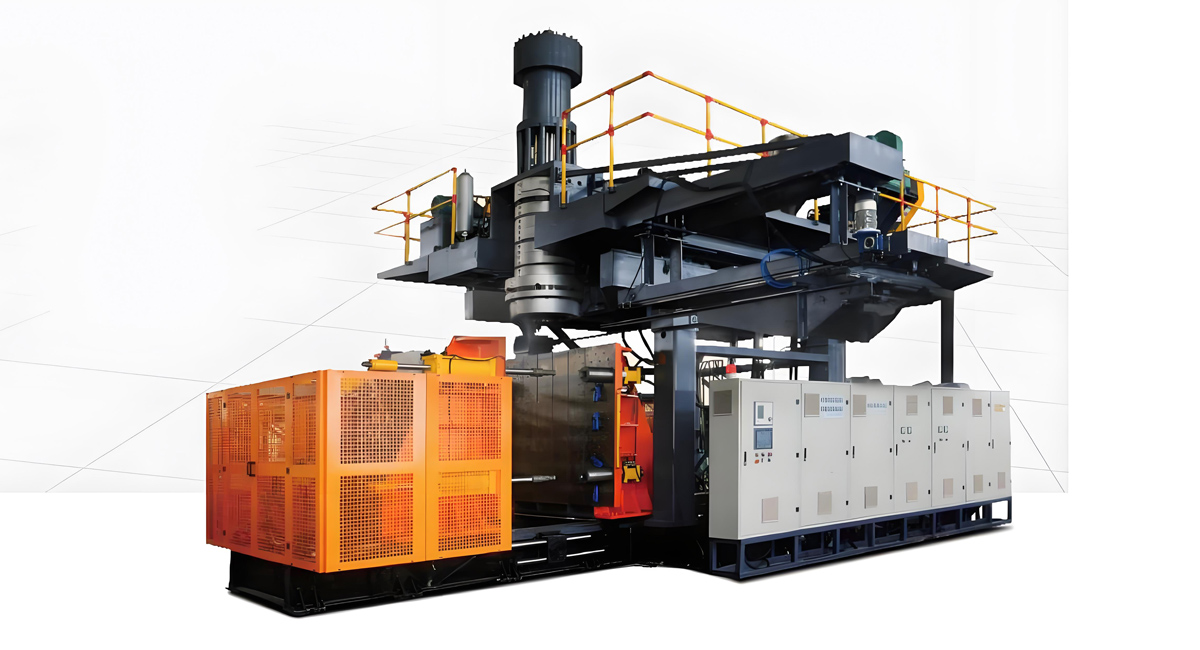
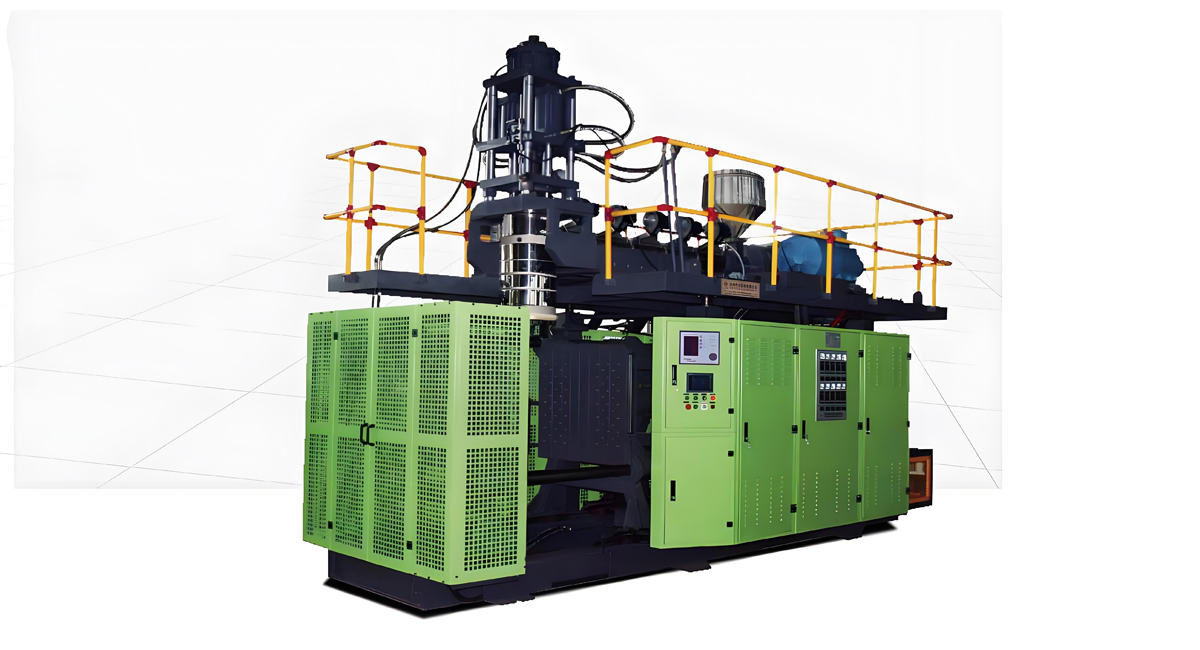
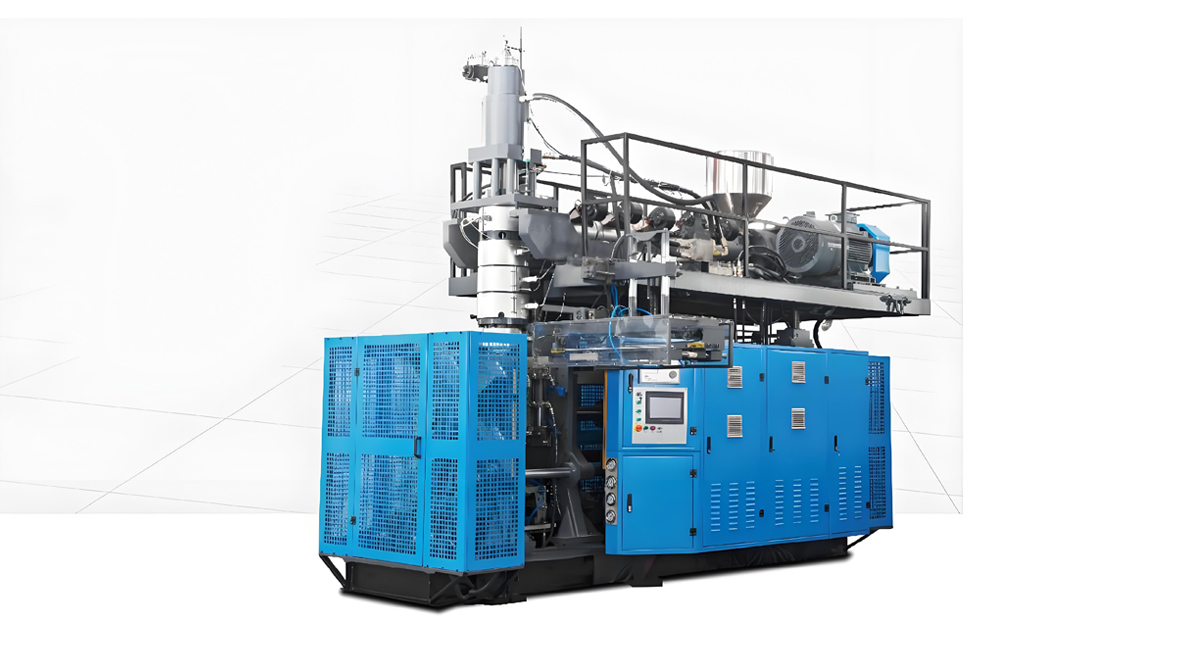
As a professional manufacturer focusing on R&D and manufacturing of extrusion blow molding equipment, Apollo has been deeply engaged in the cosmetic packaging industry for many years, and has launched a series of high-precision extrusion blow molding machines tailored for cosmetic tube production. Relying on advanced control technology, precision processing technology, and optimized process design, Apollo equipment can achieve micron-level production accuracy, ensure excellent appearance and stable performance of cosmetic tubes, and help customers stand out in the highly competitive packaging market. This article will systematically explain the unique quality requirements of cosmetic tube production, analyze the core technical advantages of high-precision extrusion blow molding machines, introduce Apollo’s product line and configuration options, provide detailed cost and return on investment analysis, share equipment selection and maintenance guidelines, and provide comprehensive reference for cosmetic packaging manufacturers and investors.
1. Unique Quality Requirements for Cosmetic Tube Production
Unlike ordinary industrial packaging or daily chemical packaging, cosmetic tubes have extremely high requirements for production accuracy and appearance quality because they directly affect brand image and consumer use experience. The following are the core quality indicators that must be met in the production of high-quality cosmetic tubes.
1.1 Ultra-high Dimensional Accuracy and Consistency
Cosmetic tubes need to be perfectly matched with bottle caps, pump heads, and other accessories, and also need to adapt to high-speed automated filling lines. Therefore, the dimensional tolerance requirements are extremely strict. Taking a common 100ml facial cleanser tube as an example, the diameter tolerance of the bottle mouth is usually required to be controlled within ±0.03mm, the thread pitch error is less than 0.02mm, and the overall height deviation of the tube body does not exceed ±0.1mm. If the size deviation is too large, it will lead to problems such as loose bottle caps, poor sealing, liquid leakage, or jamming on the filling line, which will not only reduce production efficiency but also cause serious quality complaints.
In addition to the dimensional accuracy of a single product, batch consistency is also crucial. For large-scale cosmetic brands, the packaging of the same batch of products must maintain a high degree of uniformity, and there should be no obvious differences in size, weight, and appearance between different products. This requires the blow molding equipment to maintain extremely high stability during long-term continuous production, and the parameter error of each molding cycle is controlled at a minimal level.
1.2 Flawless Appearance and High-gloss Surface Quality
As an important part of product marketing, the appearance quality of cosmetic packaging directly affects consumers’ first impression of the brand. High-end cosmetic tubes require a smooth and bright surface, no scratches, pitting, flow marks, or black spots, and the color is uniform and consistent without chromatic aberration. The parting line of the tube body must be fine and smooth, almost invisible to the naked eye, and there must be no burrs or flash that affect the feel.
For transparent or translucent cosmetic tubes made of PETG and PCTG materials, the appearance requirements are more stringent. Even tiny impurities or bubbles inside the product will be clearly visible, leading to product scrapping. To achieve such a high appearance standard, it is necessary to ensure uniform plasticization of materials, stable mold temperature, and precise control of the entire blow molding process, which puts forward very high requirements for the performance of extrusion blow molding machines.
1.3 Uniform Wall Thickness Distribution and Reliable Sealing Performance
The wall thickness uniformity of cosmetic tubes is directly related to the mechanical strength, material cost, and feel of the product. If the wall thickness is uneven, the thin part will have insufficient strength and be easily broken during extrusion and use, while the thick part will cause waste of raw materials and increase production costs. In particular, the shoulder and tail parts of the tube are prone to wall thickness deviation due to structural changes, which require precise process control.
Sealing performance is another core quality indicator of cosmetic tubes. The tube body and the tube shoulder must be perfectly fused, and the tail seal must be firm and leak-proof. For products containing volatile ingredients such as essential oils and active substances, the sealing performance directly affects the shelf life of the content. Poor sealing will lead to oxidation and deterioration of the content, which will not only cause economic losses but also damage the brand reputation. High-precision blow molding equipment can ensure stable and reliable sealing quality of each product through accurate parison control and stable mold clamping force.
1.4 Food-grade Material Safety and Clean Production Standards
Cosmetics directly contact human skin, and some products are even used around the mouth and eyes. Therefore, the safety of packaging materials is strictly regulated globally. Materials for cosmetic tubes must comply with relevant food contact safety standards such as FDA 21 CFR in the United States and EU 10/2011, ensuring that no harmful substances migrate into the content during use.
Correspondingly, the production equipment must also meet the requirements of clean production. All parts in contact with raw materials must be made of food-grade materials, with smooth surfaces and no dead corners for material accumulation, so as to avoid material residue, carbonization, and pollution of new materials. The production environment should be kept clean to reduce the mixing of dust and impurities. For high-end cosmetic packaging that requires GMP-grade production, the equipment must be designed with a fully enclosed structure to meet the requirements of clean workshops.
1.5 Diversified Material Adaptability and Process Flexibility
Cosmetic tubes use a wide range of materials, including ordinary PE and PP materials, as well as high-transparency PETG and PCTG materials, and multi-layer barrier structures with EVOH intermediate layers for high-end products to extend the shelf life of easily oxidized contents. Different materials have different processing temperatures, melt viscosities, and cooling characteristics, requiring equipment to have strong process adjustability to adapt to different material molding needs.
In addition, the cosmetic industry has a fast product renewal speed and rich product specifications. From 5ml sample tubes to 200ml body lotion tubes, different capacities and shapes correspond to different molds and process parameters. Equipment needs to have convenient product switching functions to reduce debugging time and material waste during model change, and improve production flexibility.
2. Core Technical Advantages of Apollo High Precision Extrusion Blow Molding Machines
Aiming at the various high requirements of cosmetic tube production, Apollo has carried out targeted optimization and upgrading of extrusion blow molding equipment from multiple dimensions such as extrusion system, mold clamping mechanism, control system, and structural design, achieving industry-leading production accuracy and stability. The following are the core technical features of Apollo high-precision blow molding machines.
2.1 High-efficiency and Uniform Plasticizing Extrusion System
The extrusion system is the core of the blow molding machine, and its plasticizing quality directly determines the appearance and performance of the final product. Apollo’s high-precision blow molding machines are equipped with independently developed barrier-type mixing screws, which are optimized for the characteristics of cosmetic-grade materials. The unique screw edge design can achieve gradual compression and uniform shearing of materials, ensuring that raw materials are fully melted and mixed at a relatively low temperature, avoiding local overheating leading to material degradation and discoloration.
The screw and barrel are made of high-quality alloy structural steel as a whole, and undergo strict nitriding treatment and precision polishing. The surface hardness reaches HV900-1100, and the surface roughness is less than Ra0.4. It not only has good wear resistance and corrosion resistance, but also ensures smooth material flow without residue, meeting the hygienic requirements of cosmetic production. For the production of highly transparent materials such as PETG, Apollo can also provide screw solutions with special treatment, which can effectively reduce crystal points and improve product transparency and surface gloss.
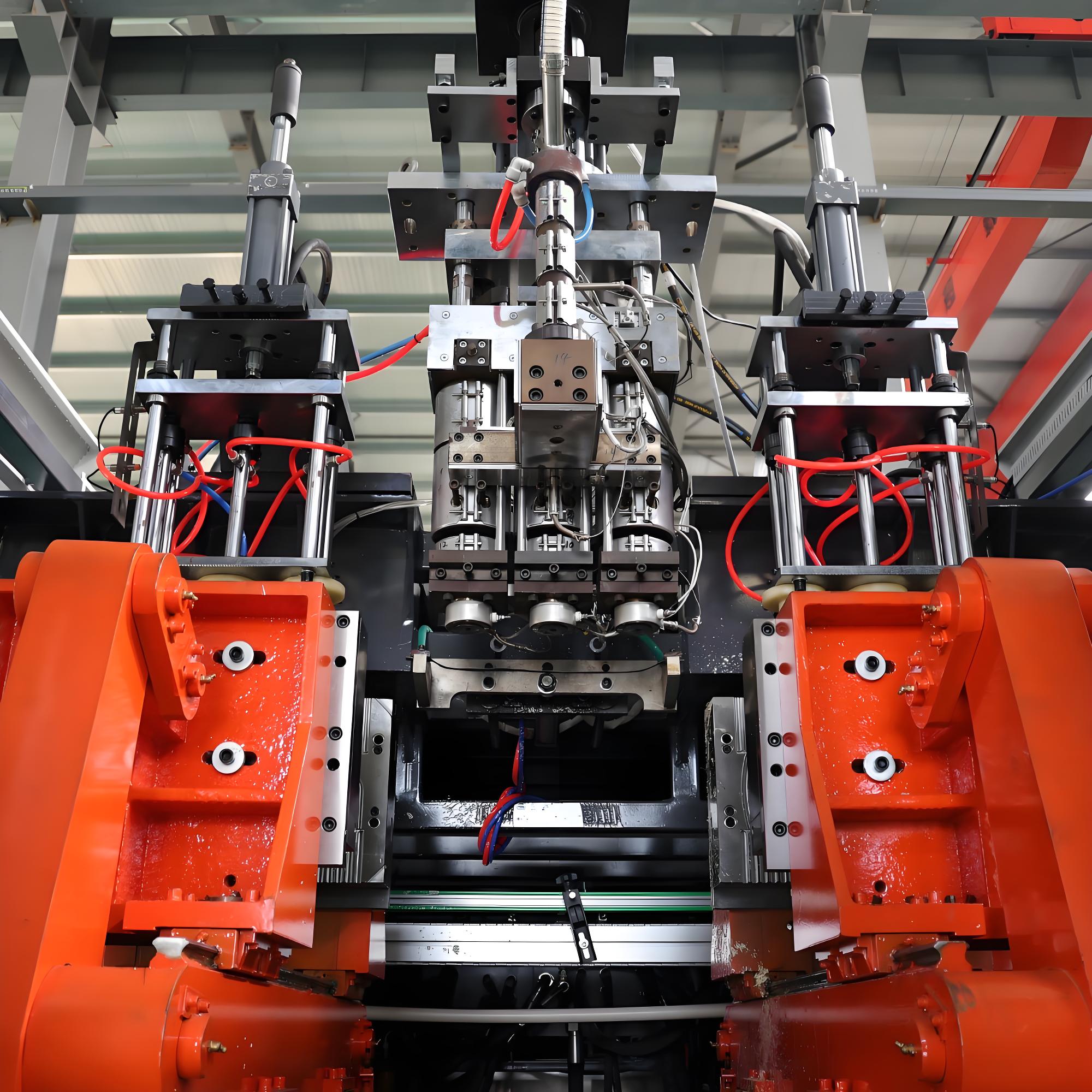
The die head part adopts a spiral flow channel distribution structure, which can make the melt flow evenly in the circumferential direction, ensuring consistent parison thickness around. The die head is processed by high-precision CNC machine tools, and the coaxiality error of the mandrel and die sleeve is less than 0.02mm, which fundamentally ensures the uniformity of the parison wall thickness. The die head temperature adopts multi-stage independent control, which can accurately adjust the temperature of each section according to different materials to achieve the best melt state. For multi-layer co-extrusion models, each layer of material is independently extruded and precisely compounded in the die head to ensure uniform thickness of each layer and stable barrier performance.
2.2 Precision Clamping Mechanism with High Parallelism
The clamping mechanism is directly related to the mold alignment accuracy and the quality of the parting line. Apollo’s high-precision blow molding machines adopt a double-toggle clamping structure optimized by finite element analysis. The template has high rigidity and is not easy to deform under high pressure, ensuring uniform force on the mold surface. The guide column is made of high-quality alloy steel with hard chrome plating on the surface, which is wear-resistant and durable. It is matched with high-precision guide sleeves to ensure that the moving template runs smoothly and horizontally, and the parallelism error between the moving template and the fixed template is controlled within 0.03mm.
The mold clamping force adopts closed-loop servo control, which can be adjusted steplessly according to product size and material characteristics. The pressure control accuracy reaches ±0.5bar, avoiding problems such as excessive flash caused by too large clamping force or weak sealing caused by too small clamping force. The mold clamping speed can be set in sections. In the fast approaching stage, the speed is increased to shorten the cycle time. In the slow mold closing stage, the speed is reduced to avoid impacting the parison and causing parison displacement, ensuring accurate mold closing and uniform wall thickness distribution.
Thanks to the high-precision clamping system, the parting line of the produced cosmetic tubes is fine and smooth, with a thickness of less than 0.05mm, which is almost invisible to the naked eye and does not affect the feel. There is no obvious burr or flash, which reduces the workload of subsequent trimming and improves the appearance grade of the product.
2.3 Advanced Servo Wall Thickness Control System
Wall thickness control is one of the key technologies to ensure the quality of cosmetic tubes. Apollo’s high-precision blow molding machines are equipped with an imported servo hydraulic wall thickness controller, which supports up to 128-point axial wall thickness programming. Operators can accurately set the parison thickness at different positions according to the structural characteristics of the product, especially for the tube shoulder, tube body, and tube tail, which can be individually adjusted to achieve the optimal wall thickness distribution.
The wall thickness control system adopts high-resolution displacement sensor feedback, with a control accuracy of ±0.02mm, which can dynamically adjust the die gap in real time during the parison extrusion process, effectively solving the problem of parison sagging caused by gravity, and ensuring uniform wall thickness of the final product. For products with special-shaped structures, the system can also realize complex curve control to ensure that the wall thickness of each part meets the design requirements.
Precise wall thickness control not only improves product quality and consistency, but also effectively saves raw materials. Under the premise of ensuring the same mechanical strength, products produced by high-precision wall thickness control can reduce the average wall thickness by 10%-15% compared with ordinary equipment, greatly reducing the production cost of single products. For large-scale mass production, the raw material cost saved every year is very considerable.
2.4 High-stability Intelligent Control System
Apollo high-precision blow molding machines adopt internationally renowned brand PLC as the core control unit, equipped with a large-size color touch screen human-machine interface. The system has stable performance and strong anti-interference ability, and can operate reliably for a long time in complex industrial environments. All process parameters can be set and adjusted on the touch screen, which is intuitive and easy to operate. The system supports storage of up to 200 sets of production formulas. When switching products, you only need to call the corresponding formula with one click, without resetting parameters one by one, which greatly shortens the product switching time and reduces the requirements for operators’ experience.
The control system has a perfect real-time monitoring function, which can display various operating parameters such as temperature of each zone, screw speed, clamping pressure, melt pressure, and production speed in real time. Once any parameter exceeds the set range, the system will automatically send out an acousto-optic alarm and display the cause of the fault and treatment suggestions on the screen to help operators eliminate problems in time and reduce the generation of defective products. All production data can be exported and saved, which is convenient for enterprises to carry out quality traceability and production management.
For customers who need intelligent production, Apollo equipment supports networking functions, can be connected to the enterprise MES system, and realizes centralized monitoring and data collection of multiple production lines. It also supports remote diagnosis function. With the authorization of the customer, after-sales engineers can remotely access the equipment control system to troubleshoot and solve most process and program problems online, greatly reducing downtime and maintenance costs.
2.5 Clean Production-oriented Structural Design
Combined with the hygienic requirements of cosmetic production, Apollo has optimized the equipment structure from multiple details to meet clean production standards. All parts in contact with raw materials, such as hoppers, feeding pipes, screws, barrels, and die heads, are made of food-grade stainless steel or high-quality alloy steel with non-toxic and harmless surface treatment, which will not pollute the raw materials and fully comply with food contact safety standards.
The flow channel design has no dead corners, and the material flows smoothly without residual accumulation, avoiding the problem of carbonization and discoloration of materials staying in the equipment for a long time. When changing materials or colors, it can be cleaned quickly with less cleaning material and high cleaning efficiency, reducing waste and cross-color pollution risks. The equipment shell adopts a fully enclosed design, which can effectively prevent external dust and impurities from entering the production area, and is suitable for use in clean workshops. The surface of the equipment is smooth and easy to wipe and clean, which helps to maintain a clean production environment.
3. Apollo Product Line for Cosmetic Tube Manufacturing
Apollo provides a variety of models and configurations of high-precision extrusion blow molding machines for cosmetic tube production, which can meet the production needs of different capacities, different outputs, and different process requirements. Customers can choose the most suitable model according to their own product characteristics and production scale.
3.1 ABL-2S Series Double-station Automatic Blow Molding Machine
The ABL-2S series is the most cost-effective model for cosmetic tube production, suitable for producing various small and medium-sized cosmetic tubes with a capacity of 5ml to 200ml. The equipment adopts a double-station alternating working mode, which greatly improves production efficiency compared with single-station models. It supports multi-cavity mold configuration, and can choose 2-cavity, 4-cavity, 6-cavity and other schemes according to product size and output demand.
The standard configuration of this series includes a high-efficiency plasticizing screw, PID precise temperature control system, hydraulic clamping mechanism, and touch screen operation system. It can meet the production of conventional PE and PP cosmetic tubes, and the product quality reaches the middle and high-end market standards. Customers can also choose to upgrade the servo wall thickness control system, servo energy-saving drive system, automatic trimming device, etc. according to actual needs, to further improve production accuracy and automation.
Price reference: The FOB Shanghai price of the standard configuration 4-cavity ABL-2S blow molding machine is about 38,000 to 45,000 US dollars. If upgraded to full servo configuration with wall thickness control system, the price is about 48,000 to 55,000 US dollars. The specific price will be adjusted according to the configuration details and additional functional requirements.
3.2 ABL-M Series Multi-layer Co-extrusion Blow Molding Machine
For high-end cosmetic tubes that require barrier properties, such as products containing active ingredients, essential oils, and easily oxidized ingredients, ordinary single-layer packaging cannot meet the shelf life requirements. Apollo’s ABL-M series multi-layer co-extrusion blow molding machines can produce 3-layer, 5-layer and other multi-layer composite structures, with EVOH or PA as the barrier layer in the middle, which can effectively block oxygen and water vapor, extend the shelf life of cosmetics, and maintain product activity.
This series of equipment is equipped with multiple independent extrusion units, each layer of material is independently plasticized and extruded, and precisely compounded through a special multi-layer co-extrusion die head. The thickness ratio of each layer can be flexibly adjusted according to product performance requirements to achieve the best cost performance. The equipment is equipped with a high-precision metering control system to ensure stable proportion of each layer of material and consistent barrier performance of products in the same batch.
Price reference: The FOB Shanghai price of the standard 3-layer co-extrusion 4-cavity ABL-M blow molding machine is about 75,000 to 85,000 US dollars. The 5-layer co-extrusion model with higher configuration is priced at about 88,000 to 95,000 US dollars. The price will vary according to the number of layers, extrusion volume, and automation configuration.
3.3 Optional Auxiliary Equipment and Automation Solutions
In addition to the main blow molding machine, Apollo can also provide a complete set of auxiliary equipment and automated production solutions to help customers build efficient and intelligent cosmetic tube production lines. Common optional equipment includes:
Raw material processing equipment: vacuum automatic loader, desiccant dryer, dehumidifier, metering mixer, etc., to realize automatic transportation and drying of raw materials, reduce manual intervention, and ensure stable material performance.
Cooling and auxiliary equipment: industrial water chillers, cooling towers, air compressors, etc., to provide stable cooling water source and compressed air for production, ensuring stable process parameters.
Post-processing equipment: automatic trimming machine, flame treatment machine, surface corona machine, leak testing machine, etc., to complete subsequent processing of products and quality inspection online, improving production automation and efficiency.
Quality testing equipment: online visual inspection system, which can automatically detect appearance defects, dimensional deviations, etc., screen out unqualified products, reduce manual inspection workload, and improve quality stability.
Customers can choose matching auxiliary equipment according to their own production needs and budget. Apollo will carry out overall design and joint debugging of the entire production line to ensure that all equipment can operate cooperatively and achieve the best production effect.
4. Cost and ROI Analysis for Cosmetic Tube Blow Molding Production
Investing in high-precision extrusion blow molding equipment requires a certain amount of capital expenditure. For enterprises, it is very important to clearly understand the cost composition and expected return on investment. The following takes the most widely used ABL-2S 4-cavity standard servo blow molding machine as an example to calculate the investment cost, operating cost and investment return cycle in detail for reference.
4.1 Initial Investment Breakdown
The initial investment of a complete cosmetic tube blow molding production line mainly includes the following parts:
Main equipment cost: The ABL-2S 4-cavity full servo configuration blow molding machine is about 52,000 US dollars, including the main engine, control system, hydraulic system and basic supporting devices.
Mold cost: The price of a set of 4-cavity cosmetic tube mold varies according to product complexity, material and precision requirements. Ordinary PP tube molds are about 6,000 to 8,000 US dollars per set, and high-precision transparent PETG tube molds with mirror polishing are about 9,000 to 12,000 US dollars per set. It is recommended that customers prepare 1-2 sets of molds according to product types.
Auxiliary equipment cost: Including automatic loader, material dryer, industrial chiller, air compressor, edge crusher, etc. The standard configuration of a complete set of auxiliary equipment is about 9,000 to 12,000 US dollars. If the enterprise already has general-purpose equipment such as air compressors and chillers, this part of the cost can be saved.
Installation, commissioning and training costs: Apollo provides on-site installation, commissioning and operation training services. For standard models, this part of the cost is included in the equipment quotation, and customers do not need to pay extra. For overseas customers, only the round-trip transportation and accommodation expenses of engineers need to be borne, which is about 3,000 to 5,000 US dollars.
Initial spare parts reserve: It is recommended that customers purchase a set of common wearing parts at the same time, such as heating rings, sealing elements, cutting blades, sensors, etc., for daily maintenance and replacement, with a cost of about 2,000 US dollars.
Overall calculation: The total initial investment of a standard 4-cavity cosmetic tube blow molding production line is about 70,000 to 80,000 US dollars (including 1 set of molds and complete auxiliary equipment). If you choose a multi-layer co-extrusion model, the initial investment will increase accordingly.
4.2 Annual Operating Cost Calculation
Based on 300 working days per year and 20 hours of effective production per day, the annual operating cost is calculated as follows:
Raw material cost: Taking the production of 100ml PP cosmetic tubes as an example, the single product weight is 10 grams. The 4-cavity equipment produces about 800 pieces per hour, and the annual output is about 4.8 million pieces. The annual raw material consumption is about 48 tons. Calculated at the average price of food-grade PP raw materials of 1,500 US dollars per ton, the annual raw material cost is about 72,000 US dollars. Thanks to the high product qualification rate (over 99%) of Apollo high-precision equipment and the recyclable edge waste, the actual raw material utilization rate is over 98%, which further saves raw material costs.
Electricity cost: The total installed power of the production line is about 45kW, and the actual average operating power is about 30kW due to the adoption of the servo energy-saving system. Calculated at an industrial electricity price of 0.1 US dollars per kWh, the annual electricity cost is about 18,000 US dollars. Compared with ordinary quantitative pump blow molding machines, it can save about 25%-30% of electricity bills, that is, save about 6,000 to 7,000 US dollars in electricity expenses every year.
Labor cost: A production line only needs 2 operators to be responsible for feeding, product collection, simple equipment maintenance, etc. Calculated based on an average annual salary of 6,000 US dollars per person, the annual labor cost is about 12,000 US dollars. If equipped with automated post-processing and packaging equipment, the number of operators can be further reduced.
Equipment maintenance and spare parts cost: Under normal use and standardized maintenance, the annual maintenance cost of the equipment is about 2% to 3% of the price of the main engine, that is, about 1,200 to 1,800 US dollars, mainly for the replacement of vulnerable parts such as heating rings, seals and cutting tools. The screw and barrel have a long service life, and the normal service life can reach more than 5 years under the condition of producing conventional materials.
Plant and other expenses: A production line plus raw material and finished product storage area requires about 200 square meters of plant. Calculated at a rent of 5 US dollars per square meter per month, the annual rent is about 12,000 US dollars. Plus other management expenses and utility expenses, about 5,000 US dollars per year.
Overall calculation: Excluding raw material costs, the annual operating cost is about 48,200 to 48,800 US dollars. Including raw material costs, the total annual operating cost is about 120,200 to 120,800 US dollars.
3.3 Revenue Projection and Payback Period
Revenue calculation: The ex-factory price of ordinary 100ml PP cosmetic tubes is about 0.08 US dollars per piece. With an annual output of 4.8 million pieces, the annual sales revenue is about 384,000 US dollars. If it is a high-end transparent PETG tube or multi-layer barrier tube, the product added value is higher, and the ex-factory price can reach 0.15 to 0.25 US dollars per piece, and the profit space is larger.
Profit calculation: Annual gross profit = sales revenue – raw material cost = 384,000 – 72,000 = 312,000 US dollars. Annual net profit = gross profit – operating costs (excluding raw materials) = 312,000 – 48,500 = 263,500 US dollars.
Investment payback period: Calculated based on the total initial investment of 75,000 US dollars, the static investment payback period = 75,000 / 263,500 ≈ 0.28 years, that is, about 3.4 months. Even considering factors such as insufficient capacity utilization (calculated at 70% capacity), the annual net profit is about 184,450 US dollars, and the investment payback period is only about 4.9 months.
It can be seen that investing in high-precision cosmetic tube blow molding production has the characteristics of high return on investment and short payback period. For enterprises with stable orders, they can recover the investment cost in a very short time and enter the profit stage. In addition, Apollo equipment has a long service life, which can normally be used for more than 10 years. After recovering the investment, it will continue to create stable profits for the enterprise for a long time.
5. How to Select the Suitable Blow Molding Machine for Your Cosmetic Tube Business
Choosing the right extrusion blow molding machine is crucial to the development of the enterprise. Blindly pursuing high configuration or low price will lead to problems such as waste of investment or failure to meet production needs. When selecting equipment, enterprises should comprehensively consider the following factors and combine their own actual situation to make the most appropriate choice.
5.1 Clarify Product Attributes and Quality Positioning
First of all, it is necessary to clarify the product type, capacity range, material type and quality grade positioning. If it is to produce ordinary low-end daily chemical tube products, the requirements for accuracy and appearance are relatively general, and you can choose cost-effective standard configuration models to control investment costs. If it is to produce mid-to-high-end cosmetic brand packaging, with high requirements for appearance finish, dimensional accuracy and sealing performance, it is necessary to choose models with servo wall thickness control, high-precision die head and advanced control system to ensure product quality meets high-end market standards.
At the same time, it is necessary to confirm whether barrier performance is required. If it is used to produce products that are easy to oxidize and deteriorate and require a long shelf life, multi-layer co-extrusion blow molding equipment must be selected. If it is ordinary products, single-layer equipment can meet the demand. In addition, the shape complexity of the product should also be considered. Special-shaped products have higher requirements for equipment process adjustability and mold design.
5.2 Match Production Capacity and Equipment Specifications
Enterprises should calculate the required production capacity according to their own order volume and market development plan, and then select the appropriate number of cavities and equipment models. It is necessary to avoid the problem that the production capacity is too small to meet the order demand and miss market opportunities, and also to avoid the problem that the production capacity is too large, resulting in idle equipment and waste of investment.
For start-ups or enterprises with many product types and small batch sizes, it is recommended to choose 2-cavity or 4-cavity models with moderate production capacity, which have strong flexibility and are convenient for product switching. For large-scale mass production enterprises with single product types and large order volumes, they can choose 6-cavity or even higher-cavity models, or purchase multiple devices at the same time to form large-scale production capacity and reduce unit product costs. When calculating production capacity, it is necessary to leave a certain margin to cope with the growth of orders and temporary production tasks.
5.3 Evaluate Equipment Stability and After-sales Service
For production-oriented enterprises, the stability of equipment and the timeliness of after-sales service are directly related to the normal operation of production. When purchasing equipment, we should not only look at the price and configuration, but also understand the brand reputation, market application cases and after-sales service system of the manufacturer.
It is necessary to choose manufacturers with rich industry experience and a large number of successful cases, whose equipment has been verified by the market and has reliable quality and stability. At the same time, it depends on whether the manufacturer has a perfect after-sales service system, whether it can provide timely on-site service and spare parts supply, and whether it has professional technical support capabilities. For overseas customers, it is particularly important to have global service capabilities. Apollo has a professional international after-sales service team that can provide rapid response and on-site service to customers around the world, effectively solving various problems encountered in the production process.
In addition, the manufacturer’s R&D capability and technical upgrading capability should also be considered. Choosing a manufacturer with continuous innovation capability can ensure that the equipment can keep up with the development of the industry, and can carry out technical upgrading and transformation in the later stage to extend the service life of the equipment and improve its competitiveness.
5.4 Consider Long-term Total Cost of Ownership
When measuring the cost of equipment, we should not only look at the one-time purchase price, but also consider the total cost of ownership during the entire service life of the equipment, including energy consumption, maintenance costs, spare parts costs, failure downtime losses, etc. Some low-priced equipment seems to save investment in the early stage, but due to poor quality and high energy consumption, the later use cost is very high, and frequent failures lead to large production losses, but the actual cost is higher.
High-quality high-precision equipment may have a slightly higher initial purchase price, but it has the advantages of high energy efficiency, low failure rate, low maintenance cost, long service life and high product qualification rate. In the long-term use process, it can save more costs and create more benefits, with higher cost performance. When selecting equipment, enterprises should calculate the long-term total cost of ownership from the perspective of the entire life cycle, rather than only focusing on the initial purchase price.
6. Best Practices for Maintaining Long-term High Precision Production
High-precision production cannot be achieved only by relying on advanced equipment. Standardized daily use and maintenance are also essential. Doing a good job in equipment maintenance can not only ensure that the equipment always maintains high-precision operation, but also extend the service life of the equipment and reduce the failure rate. The following are the best maintenance practices for cosmetic tube blow molding equipment summarized by Apollo based on years of experience.
6.1 Regular Calibration of Core Precision Components
The accuracy of key components directly affects the final product quality. It is necessary to formulate a regular calibration system. For the temperature control system, the temperature sensor and heating ring should be checked regularly to verify the temperature accuracy of each zone. If there is a large deviation, it should be corrected or replaced in time to ensure that the material processing temperature is accurate and stable. For the wall thickness control system, the displacement sensor and servo valve should be calibrated regularly to ensure the accuracy of wall thickness control. It is recommended to calibrate once every 3 to 6 months.
The parallelism of the template and the alignment accuracy of the mold also need to be checked regularly. After long-term use, the guide column and toggle hinge will be worn, which may lead to a decrease in template parallelism. It is necessary to check regularly. If the deviation exceeds the allowable range, it should be adjusted and repaired in time. When replacing the mold, it is necessary to carefully adjust the mold installation position to ensure accurate alignment of the moving and fixed molds, avoiding dislocation leading to uneven wall thickness and rough parting lines.
6.2 Scientific Maintenance of Screw and Barrel
The screw and barrel are the core components of the extrusion system, and their state directly affects the plasticizing quality. In daily use, attention should be paid to the correct operation method. It is forbidden to start the screw when the temperature does not reach the set value, so as to avoid damage to the screw due to excessive torque. When shutting down for a long time, the material in the barrel should be cleaned, and the temperature should be lowered before shutting down to avoid material degradation and carbonization in the barrel for a long time.
Regularly clean the screw and barrel. When changing materials or colors, or when continuous production reaches a certain cycle, thorough cleaning should be carried out. Special cleaning materials can be used for cleaning, or the screw can be pulled out for manual polishing and cleaning when the downtime is long. During the cleaning process, check the wear of the screw and barrel. If the wear is serious and affects the plasticizing quality and production efficiency, it should be repaired or replaced in time. For the production of filler-containing materials, the wear inspection frequency should be increased.
6.3 Mold Daily Maintenance and Nursing
The quality of the mold directly determines the appearance quality of the product. In daily production, attention should be paid to the maintenance of the mold. After each production, the residual material on the surface of the mold cavity should be cleaned in time to avoid material residue accumulating for a long time and forming carbon deposits, which will affect the surface finish of the product. When cleaning, use a soft copper scraper and clean cotton cloth to avoid scratching the mold surface with hard tools.
Regularly check the exhaust groove of the mold to keep it unobstructed, so as to avoid poor exhaust leading to bubbles, scorching and other problems on the product surface. Check the cooling water channel to prevent scaling and blockage, ensure uniform cooling of the mold, and stable product quality. For molds that are not used for a long time, they should be cleaned and coated with anti-rust oil, and stored in a dry and ventilated place to prevent rust and damage.
Regularly polish the mold cavity. For high-gloss transparent product molds, regular mirror polishing is required to maintain the smoothness of the mold surface and ensure the appearance quality of the product. If the mold surface is scratched or damaged, it should be repaired by professional maintenance personnel in time.
6.4 Hydraulic System and Transmission System Maintenance
The hydraulic system is the power source of the blow molding machine. Maintaining the good condition of the hydraulic system is the basis for stable operation of the equipment. Regularly check the oil level and oil quality of the hydraulic oil. If the oil level is insufficient, it should be replenished in time. If the oil quality deteriorates, it should be replaced in time. Generally, the hydraulic oil should be replaced once every 3000 to 5000 hours of operation. When replacing the hydraulic oil, the oil tank and filter element should be cleaned at the same time to keep the hydraulic oil clean.
Regularly check the sealing elements of the hydraulic system. If oil leakage is found, replace the sealing ring in time to avoid pressure drop caused by oil leakage and affect the normal operation of the equipment. Check the hydraulic pump, servo valve and other core components regularly, and deal with abnormal noise and temperature rise in time. The cooling system of the hydraulic station should be kept normal to avoid the oil temperature being too high, which will lead to accelerated aging of seals and reduced system stability.
For the transmission parts such as toggle hinges and guide columns, lubricating grease should be added regularly to reduce wear and ensure smooth movement. Check the fastening parts of each part regularly to avoid loosening and affecting the equipment accuracy.
6.5 Standardized Operation and Staff Training
Operators are the direct users of the equipment. Their operation level and professional quality directly affect the service life and production stability of the equipment. Enterprises should establish a perfect operation training system. New employees must undergo systematic training and pass the assessment before they can take up their posts. The training content includes equipment working principle, standard operation process, safety operation specifications, common fault judgment and treatment, etc.
Formulate strict operating procedures, require operators to operate in strict accordance with the specifications, and prohibit illegal operations such as arbitrarily modifying process parameters and overloading the equipment. Establish equipment use and maintenance records, record the operation status, maintenance time, replacement parts and other information of the equipment in detail, so as to facilitate subsequent query and fault analysis.
Regularly carry out re-education and training for operators, update technical knowledge, improve operation level, and share experience in problem handling. Encourage operators to find and report abnormal conditions of equipment in time, so as to achieve early detection, early treatment, and avoid small faults developing into large failures, resulting in greater losses.
7. Conclusion
With the continuous development of the cosmetic industry and the continuous improvement of consumers’ requirements for product quality, the demand for high-precision extrusion blow molding equipment in the cosmetic packaging industry will continue to grow. Choosing the right high-precision blow molding equipment is of great significance for enterprises to improve product quality, reduce production costs, enhance market competitiveness and achieve long-term stable development.
As a professional manufacturer of extrusion blow molding equipment, Apollo always takes technological innovation and quality improvement as its core development strategy. Its series of high-precision blow molding machines for cosmetic tube production have reached the international advanced level in terms of accuracy, stability and energy efficiency, and have been recognized and praised by customers in many countries and regions around the world. Relying on rich industry experience and strong technical strength, Apollo can not only provide customers with high-quality equipment products, but also provide targeted overall solutions according to the actual needs of different customers, from scheme design, equipment manufacturing, installation and commissioning to later technical support and after-sales service, fully escorting customers’ production and operation.
Whether you are a cosmetic packaging manufacturer looking to upgrade your production equipment, or an investor planning to enter the cosmetic packaging industry, Apollo’s high-precision extrusion blow molding machines are your reliable choice. With Apollo’s professional technical support and high-quality equipment products, you can produce high-quality cosmetic tube products that meet market demand, gain an advantage in the fierce market competition, and achieve better economic benefits.