Introduction
The household plastic products industry represents a massive global market that relies heavily on extrusion blow molding machines (EBM) for producing everyday items ranging from water bottles and storage containers to detergent bottles and packaging components. As consumer demand for high-quality, cost-effective, and sustainable household products continues to grow, manufacturers require advanced extrusion blow molding machinery that can deliver consistent quality, high production efficiency, and operational reliability. This comprehensive guide examines the top extrusion blow molding machine models specifically designed for household plastic products, with particular focus on Apollo’s extensive product range and competitive market positioning.
Extrusion blow molding technology has evolved significantly over the past two decades, with modern machines offering unprecedented levels of automation, precision, and energy efficiency. For household product manufacturers, selecting the right extrusion blow molding machine represents a critical investment decision that affects production capacity, product quality, operational costs, and long-term profitability. Understanding the available models, their specifications, applications, and total cost of ownership enables informed equipment selection that matches specific production requirements and business objectives.
This guide provides detailed analysis of extrusion blow molding machines for household applications, covering technical specifications, production capabilities, material compatibility, automation features, and comprehensive cost analysis. The information draws from Apollo’s 20 years of manufacturing experience and their extensive product portfolio, which includes over 80 different models capable of producing household plastic products from 5ml to 5000L capacity. With more than 4,000 machines installed in over 90 countries worldwide, Apollo offers proven solutions backed by extensive industry experience.
Understanding Extrusion Blow Molding for Household Products
Extrusion blow molding represents one of the most versatile and widely used manufacturing processes for producing hollow plastic products. The technology involves extruding a hollow tube (parison) of molten plastic, which is then captured in a mold and inflated with air to take the shape of the mold cavity. This process is particularly well-suited for household products due to its ability to produce uniform wall thickness, handle various plastic materials, and achieve high production rates with minimal labor requirements.
Process Fundamentals
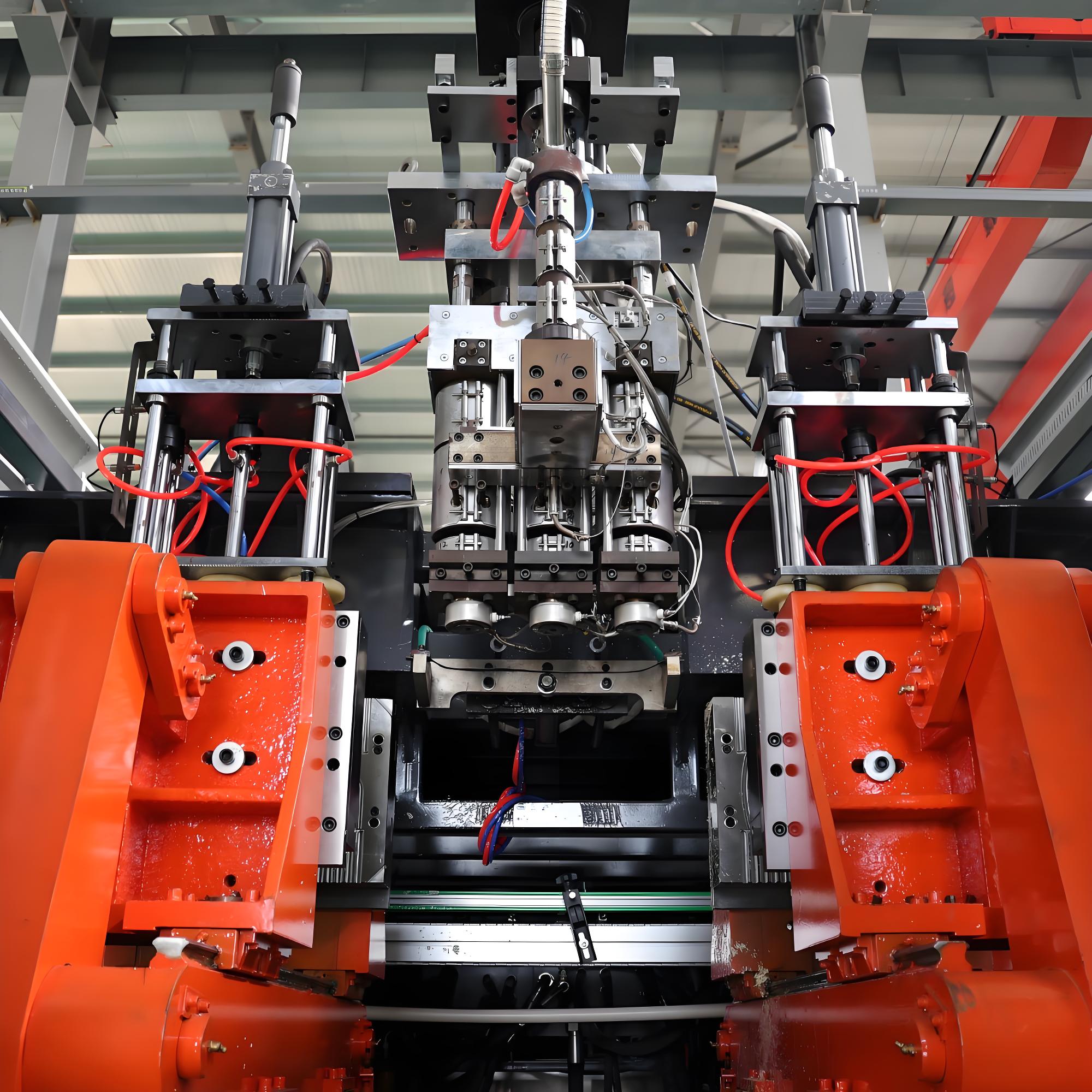
The extrusion blow molding process consists of several sequential stages that work together to transform raw plastic resin into finished household products. The process begins with plastic material feeding, where polymer granules are fed into the extruder hopper. The extruder then plasticizes the material, melting it to a uniform molten state while maintaining precise temperature control throughout the barrel zones. The molten plastic exits through the die head, forming a continuous parison that hangs vertically.
As the parison forms, the mold closes around it, capturing the plastic tube. The mold then moves to the blowing station where compressed air is introduced through the blow pin, inflating the parison against the mold cavity walls. The cooling process follows, where the formed product cools and solidifies while maintained under pressure. Once sufficiently cooled, the mold opens, and the finished product is removed. Modern machines incorporate automatic deflashing systems that remove excess plastic from the product, followed by ejection onto conveyors for downstream handling.
The entire cycle time for household products typically ranges from 8 to 20 seconds, depending on product size, wall thickness, and cooling requirements. Apollo’s extrusion blow molding machines are designed to optimize each stage of this process, maximizing production efficiency while maintaining product quality. Advanced control systems monitor and adjust process parameters in real-time, ensuring consistent production quality even with varying material properties and environmental conditions.
Material Compatibility
Household plastic products utilize a variety of polymer materials, each selected for specific performance requirements and cost considerations. Apollo’s extrusion blow molding machines are designed to process the complete range of materials commonly used in household applications, including high-density polyethylene (HDPE), low-density polyethylene (LDPE), polypropylene (PP), polyvinyl chloride (PVC), polycarbonate (PC), acrylonitrile butadiene styrene (ABS), polystyrene (PS), ethylene vinyl acetate (EVA), thermoplastic polyurethane (TPU), and polyethylene terephthalate glycol (PETG).
HDPE represents the most commonly used material for household products due to its excellent combination of strength, chemical resistance, low cost, and good processability. HDPE is widely used for water bottles, detergent bottles, household chemical containers, and storage bins. The material’s good impact resistance makes it suitable for products that may be dropped or subjected to rough handling. Apollo’s ABLB series machines are particularly well-suited for HDPE processing, with screw designs optimized for HDPE’s specific rheological properties.
PP offers superior clarity compared to HDPE while maintaining good chemical resistance and moderate cost. This material is commonly used for transparent household containers, food storage boxes, and beverage bottles where product visibility is important. PP’s higher processing temperature requirements demand machines with robust heating and cooling systems. Apollo’s extrusion blow molding machines feature multi-zone temperature control with precision ±1°C, ensuring consistent processing of temperature-sensitive materials like PP.
PVC provides excellent chemical resistance and flame retardant properties, making it suitable for household chemical containers and specialty applications. However, PVC’s corrosive decomposition products require machines with corrosion-resistant materials and adequate ventilation. Apollo offers PVC-compatible configurations with appropriate screw and barrel materials and optimized exhaust systems to handle corrosive decomposition products safely.
Production Efficiency Considerations
Production efficiency represents a critical factor for household product manufacturers due to the high-volume, low-margin nature of many household products. Modern extrusion blow molding machines must deliver high output rates while maintaining product quality and operational reliability. Apollo’s machines incorporate multiple efficiency-enhancing features designed specifically for high-volume household product production.
Cycle time optimization represents one of the most important efficiency considerations. Apollo’s advanced process control algorithms optimize the balance between production speed and product quality, minimizing cycle times while maintaining wall thickness uniformity and dimensional accuracy. For example, Apollo’s ABLB 90 II model achieves production rates of 500-800 pieces per hour for 16L products, representing industry-leading productivity for this product size range.
Automation integration significantly reduces labor requirements and improves production consistency. Apollo offers fully automatic configurations that include automatic feeding, deflashing, product ejection, and stacking capabilities. These automation systems reduce direct labor requirements by 70-80% compared to semi-automatic machines while improving product quality consistency. The automatic systems also enable unattended operation during night shifts, maximizing machine utilization and reducing overall labor costs.
Energy efficiency directly affects operational costs, particularly for high-volume production. Apollo’s extrusion blow molding machines incorporate servo motor drive technology that delivers 30-40% energy savings compared to traditional hydraulic systems. The variable frequency drives optimize energy consumption at each stage of the production cycle, providing substantial savings for operations running 24 hours per day. For a typical household product manufacturer operating two shifts per day, annual energy savings can exceed $25,000, providing significant contribution to overall profitability.
Top Apollo Extrusion Blow Molding Machine Models for Household Products
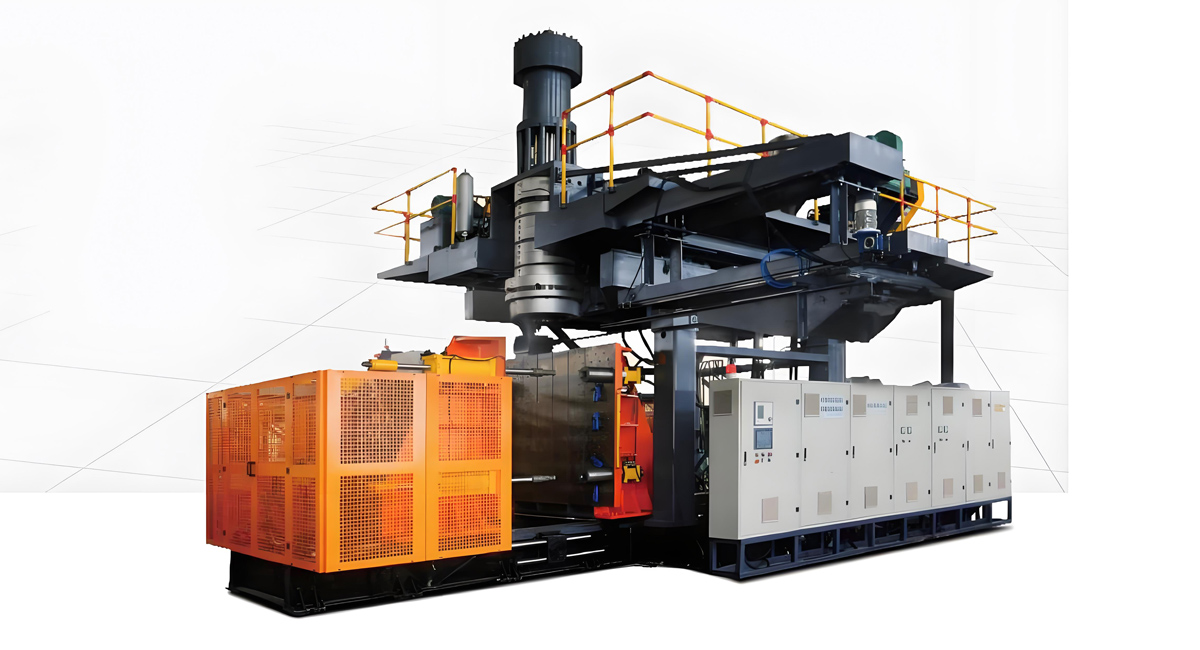
Apollo’s extensive product portfolio includes multiple model families specifically optimized for household plastic product manufacturing. The company’s three main series—ABLB, ABLD, and Fully Electric—cover the complete range of household product requirements from small containers under 200ml to large storage containers up to 5000L capacity. Each model family incorporates specific design features optimized for particular product ranges and production requirements.
ABLB Series: 200ML to 20L Household Products
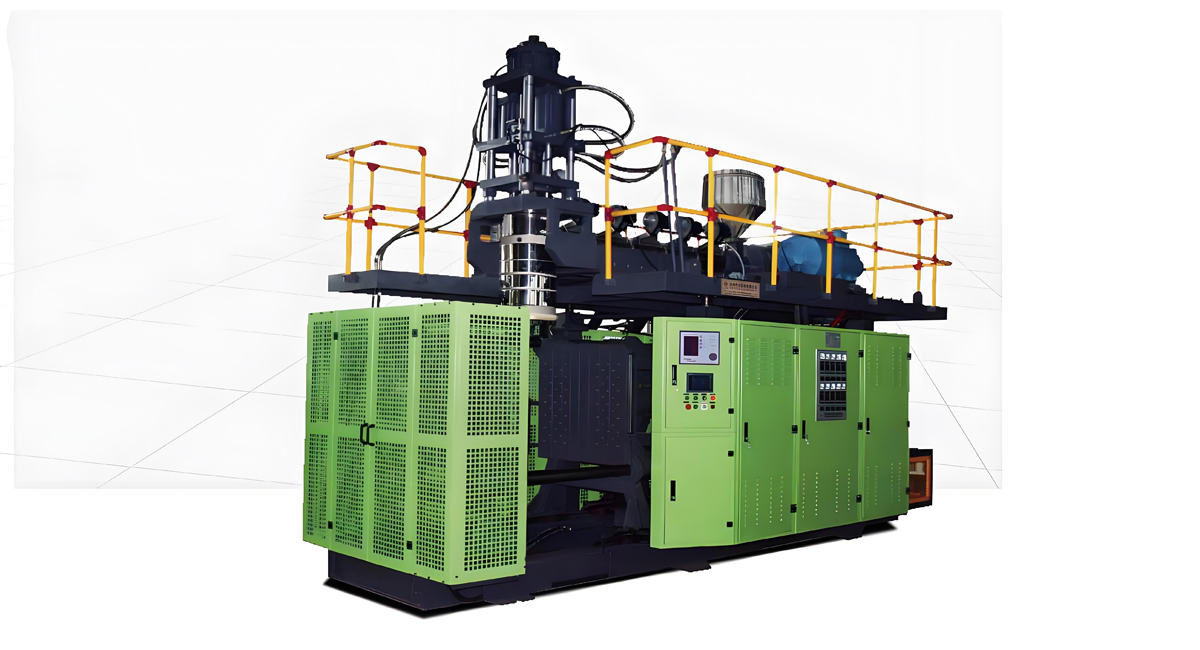
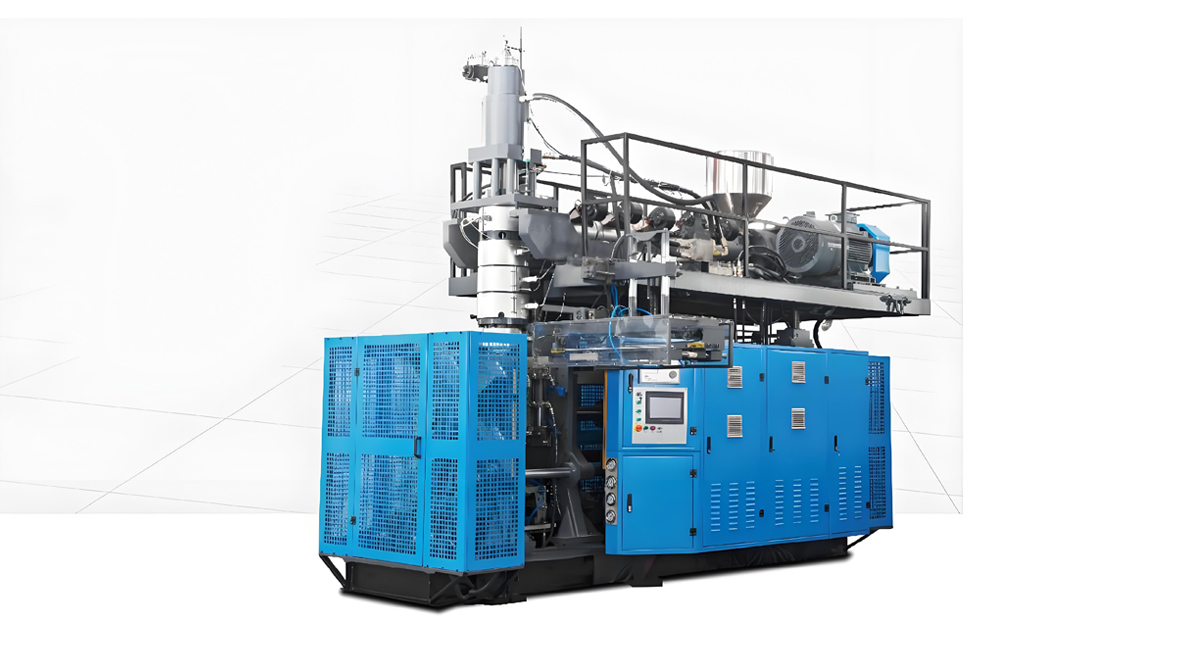
The ABLB series represents Apollo’s workhorse models for medium-volume household products in the 200ml to 20L capacity range. This series includes eight different models offering various production capacities and automation levels to match diverse manufacturing requirements. The ABLB series is particularly well-suited for producing water bottles, detergent bottles, household chemical containers, storage containers, and various other household items.
The ABLB 90 model serves as an excellent example of Apollo’s mid-range offering, capable of producing products up to 16L capacity. The machine features a 90mm diameter screw with 24:1 length-to-diameter ratio, providing optimal plasticization quality for HDPE and PP materials commonly used in household products. The screw drive power of 45kW delivers sufficient torque for consistent extrusion, while the 10kW heating capacity ensures rapid and uniform heating.
Production capacity for the ABLB 90 II model reaches 500-800 pieces per hour for 16L products, with HDPE output of 150kg per hour. The double-station design enables simultaneous operation of two molds, effectively doubling production capacity compared to single-station models. The clamping force of 120kN provides adequate mold closing pressure for typical household product applications, while the maximum die diameter of 200mm accommodates most product requirements in this size range.
Technical specifications for the ABLB 90 II include: Screw diameter: 90mm Screw L/D ratio: 24 Screw drive power: 45kW Screw heating capacity: 12kW Number of heating zones: 4 HDPE output: 150kg/h Oil pump drive power: 11kW Clamping force: 120kN Maximum mold size: 530×550mm Template size: 550×550mm Mold stroke: 320-600mm Maximum die diameter: 200mm Blowing pressure: 0.6MPa Air volume: 0.9m³/min Cooling water pressure: 0.3MPa Water consumption: 90L/min Machine dimensions: 4.3×2.3×3.0m Machine weight: 11 tons
The ABLB series incorporates Apollo’s advanced hydraulic system featuring YUKEN hydraulic components for reliable, consistent operation. The servo-driven hydraulic system reduces energy consumption by 30-40% compared to conventional hydraulic systems while maintaining fast response and precise control. The system also incorporates proportional pressure control, enabling precise adjustment of mold clamping and blow pressure for optimal product quality.
ABLD Series: 20L to 1500L Large Household Containers
The ABLD series addresses the production of large household containers and storage products in the 20L to 1500L capacity range. This series includes three model variants specifically designed for producing water storage tanks, chemical storage containers, industrial packaging, and other large-capacity household products. The ABLD series machines feature accumulator head designs that enable production of large, heavy-wall products with excellent wall thickness uniformity.
Large container production presents unique challenges compared to smaller household products. The substantial material volume per product requires higher output rates from the extruder, while the large product mass demands robust clamping systems and enhanced cooling capacity. Apollo’s ABLD series addresses these challenges through accumulator head technology that stores molten plastic for large parison production, heavy-duty clamping systems providing up to 240kN clamping force, and enhanced cooling systems capable of handling the substantial thermal mass of large products.
The ABLD series machines incorporate multiple head options including single-head and multi-head configurations to match various production requirements. Multi-head machines enable production of multiple products simultaneously, dramatically increasing production efficiency for standard product sizes. For example, a dual-head machine can produce two 200L containers per cycle, effectively doubling output compared to single-head models while maintaining the same cycle time.
Price analysis for the ABLD series shows significant variation based on capacity and configuration: ABLD 80 (30L-60L): $110,000-$120,000 ABLD 100 (100L-200L): $180,000-$290,000 ABLD 200 (200L-500L): $250,000-$350,000 ABLD 500 (500L-1500L): $400,000-$500,000 These prices include standard configurations with basic automation. Advanced automation features such as automatic deflashing, product handling systems, and integrated quality control can add $30,000-$80,000 to the machine price depending on the level of automation required.
Fully Electric Series: Premium Household Product Production
Apollo’s fully electric extrusion blow molding machines represent the premium offering for household product manufacturers requiring the highest precision, cleanliness, and energy efficiency. These machines completely eliminate hydraulic systems, using electric servo motors for all motion functions including extrusion, mold movement, and clamping. The fully electric design eliminates oil-related contamination risks, provides superior positional accuracy, and delivers exceptional energy efficiency.
The fully electric series is particularly suitable for household products requiring high clarity, tight dimensional tolerances, or food-grade production standards. Common applications include premium beverage bottles, cosmetic containers, medical household products, and any product where cleanliness and precision are critical. The elimination of hydraulic oil eliminates potential product contamination and reduces maintenance requirements by 50-60% compared to hydraulic machines.
Energy savings represent another significant advantage of fully electric machines. Compared to hydraulic models, fully electric machines consume 40-60% less energy while delivering 25-35% faster cycle times. This combination of reduced energy consumption and increased production output provides compelling economic benefits for high-volume production. For example, a fully electric machine operating 6000 hours per year can save approximately $30,000 annually in energy costs compared to a hydraulic alternative.
Price comparison between hydraulic and fully electric machines shows a significant premium for the electric models: Standard hydraulic ABLB 90 II: $70,000 Fully electric equivalent: $100,000-$145,000 While the fully electric machine requires 40-100% higher initial investment, the total cost of ownership analysis typically shows payback periods of 2-3 years based on energy and maintenance savings. For operations with high energy costs or stringent quality requirements, the premium for fully electric technology is quickly justified through operational benefits.
Product-Specific Model Recommendations
Household plastic products encompass a wide variety of items with different production requirements. Selecting the appropriate extrusion blow molding machine model depends on specific product characteristics including volume, material, wall thickness requirements, production volume targets, and quality standards. This section provides detailed recommendations for common household product categories.
Water Bottles and Beverage Containers
Water bottles and beverage containers represent one of the largest household product categories, with production volumes ranging from millions to billions of units annually. These products require machines capable of high-speed production while maintaining precise dimensional control and consistent wall thickness distribution. For small to medium water bottles (200ml-2L), Apollo recommends the ABLB series models with double-station configurations.
For 500ml water bottle production, the ABLB 80 II model delivers production rates of 800-1000 pieces per hour depending on mold configuration. The machine’s 80mm screw diameter provides appropriate output for this product size, while the double-station design enables simultaneous production of two bottles per cycle. The optional automatic deflashing system removes flash and trims the neck, delivering finished products ready for downstream packaging without manual intervention.
Large water containers and storage bottles (5L-20L) require machines with greater clamping force and higher output capacity. The ABLB 90 II model, with its 120kN clamping force and 150kg/h HDPE output, provides optimal performance for 5-gallon water bottles and similar containers. The machine’s accumulator head design ensures consistent parison formation for large products, while the enhanced cooling system accommodates the increased thermal mass of large containers.
Price analysis for water bottle production equipment shows: ABLB 80 II (500ml-2L bottles): $55,000-$70,000 ABLB 90 II (5L-20L bottles): $70,000-$85,000 ABLD 100 (20L-60L containers): $180,000-$220,000 Production capacity analysis demonstrates the economic advantages of appropriate model selection: ABLB 80 II: 800-1000 bottles/hour × 20 hours/day × 250 days/year = 4-5 million bottles/year ABLB 90 II: 500-700 bottles/hour × 20 hours/day × 250 days/year = 2.5-3.5 million bottles/year The appropriate machine selection depends on production volume requirements and product mix. Multi-product operations may benefit from flexible machine configurations that can handle multiple product sizes with quick mold changeover capabilities.
Detergent and Household Chemical Containers
Detergent bottles and household chemical containers present unique requirements due to chemical compatibility concerns and often-demanding design requirements. These products typically require HDPE or PP materials with specific additive packages for chemical resistance and UV stability. The containers often feature complex shapes with multiple handles, ribs, and design elements that challenge molding capability.
For detergent bottle production, Apollo recommends models with multi-layer co-extrusion capability for products requiring barrier properties or special material combinations. The ABLB 90 series offers optional multi-layer heads that enable production of 2-3 layer containers for enhanced barrier properties. This capability is particularly valuable for containers holding aggressive chemicals that require special barrier layers between the structural material and the product.
Complex container designs with handles, ribs, and other features require machines with sophisticated parison control systems. Apollo’s servo-controlled parison wall thickness control systems enable precise variation of parison thickness throughout its length, ensuring proper material distribution to achieve desired product geometry. For containers with handles or other features that create local wall thickness variations, this parison control capability is essential for achieving consistent product quality.
Chemical container production also demands attention to material compatibility and machine construction. Machines processing aggressive chemicals require corrosion-resistant materials in the extruder and mold areas. Apollo offers chemical-resistant configurations with appropriate screw and barrel materials, corrosion-resistant coatings, and enhanced ventilation systems to safely handle any decomposition products.
Storage and Organizational Products
Household storage and organizational products represent a diverse category including storage bins, toolboxes, drawer organizers, and various other organizing solutions. These products often feature large dimensions, complex geometries, and demanding strength requirements that challenge conventional blow molding capabilities. Apollo’s ABLD series, with its accumulator head technology and large clamping force, is particularly well-suited for these applications.
Large storage containers and boxes (20L-100L) require machines with substantial clamping force to handle the large mold surface area. The ABLD 100 model, with clamping force up to 200kN, provides adequate mold closing power for these applications. The accumulator head design ensures sufficient parison volume for large products while maintaining wall thickness uniformity throughout the product.
Toolboxes and similar products requiring structural strength demand precise material distribution to achieve optimal strength-to-weight ratios. Apollo’s parison control systems enable strategic material placement, putting more material in critical strength areas while minimizing material in less critical regions. This optimization reduces material consumption while maintaining product performance, providing both cost savings and environmental benefits.
For storage product production, cycle time optimization becomes increasingly important due to the large material volume per product. Apollo’s rapid cooling systems, which combine enhanced mold cooling and post-mold cooling stations, help minimize cycle times for large products. These cooling systems can reduce cycle times by 15-25% compared to conventional cooling approaches, providing significant productivity improvements for high-volume production.
Cost Analysis and Investment Considerations
Selecting the appropriate extrusion blow molding machine for household product production requires comprehensive cost analysis considering both initial investment and long-term operating costs. Total cost of ownership (TCO) analysis provides the most complete picture of economic performance, incorporating purchase price, operating costs, maintenance costs, and productivity factors.
Initial Investment Analysis
Initial investment for extrusion blow molding machines varies significantly based on model, capacity, automation level, and configuration options. Apollo offers a comprehensive price range from approximately $25,000 for basic semi-automatic models up to $500,000 for large-capacity fully automatic machines. Understanding the price structure and what factors influence cost enables better equipment selection decisions.
Small-capacity machines (200ml-5L) with basic automation typically range from $25,000-$40,000 for single-station models and $35,000-$55,000 for double-station configurations. These machines are suitable for startups or smaller production operations with modest volume requirements. The basic automation includes automatic feeding and simple ejection systems, but may require manual deflashing and product handling.
Medium-capacity machines (5L-20L) represent the mainstream range for household product production and typically cost $50,000-$100,000 depending on configuration. Standard hydraulic models with moderate automation fall in the $50,000-$70,000 range, while more automated configurations with servo systems, automatic deflashing, and integrated quality control can reach $80,000-$100,000. Apollo’s ABLB 90 II model, priced at approximately $70,000, represents a popular choice for medium-capacity household product production.
Large-capacity machines (20L-200L) require substantial investment ranging from $150,000-$350,000 depending on size and automation level. These machines incorporate accumulator head technology, heavy-duty clamping systems, and enhanced cooling capacity. The substantial investment reflects the advanced technology required for large product production. For operations requiring large container production, the investment is justified by the high value per product and often lower competition in large product market segments.
Automation options significantly impact final machine cost. Major automation options and their approximate cost impact include: Automatic deflashing system: $8,000-$15,000 Product handling and stacking: $10,000-$25,000 Integrated quality inspection: $12,000-$20,000 Advanced process control systems: $8,000-$15,000 In-mold labeling capability: $15,000-$30,000 These automation options can add 20-50% to base machine cost but provide substantial operational benefits through labor reduction, quality improvement, and production efficiency gains.
Operating Cost Analysis
Operating costs represent the ongoing expenses associated with machine operation and significantly impact overall profitability. Major operating cost components include energy consumption, material costs, labor costs, maintenance costs, and consumable costs. Understanding these costs enables accurate production cost calculation and profitability analysis.
Energy consumption varies significantly between machine types and configurations. Hydraulic machines typically consume 0.55-0.75 kWh of electricity per kilogram of HDPE processed. For a machine processing 100kg/hour of HDPE operating 6000 hours annually, annual energy consumption would be 330,000-450,000 kWh. At typical industrial electricity rates of $0.15/kWh, this represents annual energy costs of $49,500-$67,500.
Fully electric machines demonstrate dramatically lower energy consumption, typically 0.23-0.35 kWh per kilogram of processed HDPE. The same production scenario with an electric machine would consume 138,000-210,000 kWh annually, costing $20,700-$31,500 in electricity. This represents annual energy savings of $28,800-$36,000, providing substantial contribution to covering the higher initial investment in electric machines.
Material costs represent the largest variable cost component for household product production. Material efficiency directly affects profitability, with even small material savings representing significant annual costs for high-volume production. Apollo’s machines incorporate advanced parison control systems that optimize material distribution, typically reducing material consumption by 5-10% compared to machines without sophisticated parison control. For a production operation processing 500kg/hour of HDPE, a 7.5% material reduction saves 37.5kg/hour, or 225,000kg annually at 6000 hours of operation. At HDPE costs of $1.20/kg, this represents annual material cost savings of $270,000.
Labor costs vary dramatically based on automation level. A fully automatic machine may require only 0.5 operators per shift, while a semi-automatic machine may require 2-3 operators. At typical labor costs of $20/hour including benefits, this represents annual labor cost differences of $60,000-$100,000 per shift for fully automated vs semi-automatic operation. Multi-shift operations multiply these differences, making automation economically compelling despite higher initial investment.
Total Cost of Ownership Analysis
Total cost of ownership analysis provides the most complete picture of equipment economics by incorporating all costs over the equipment’s useful life. A five-year TCO analysis provides a useful timeframe for comparing equipment options, as this represents a typical planning horizon for household product manufacturers.
Five-year cost comparison between hydraulic and fully electric machines illustrates the economic benefits of electric technology despite higher initial investment: Hydraulic ABLB 90 II: Initial investment: $70,000 Annual energy cost: $55,000 Annual maintenance: $6,000 Annual labor: $40,000 (semi-auto) Five-year total: $835,000 Fully Electric Equivalent: Initial investment: $120,000 Annual energy cost: $26,000 Annual maintenance: $3,000 Annual labor: $20,000 (fully auto) Five-year total: $415,000 This analysis shows that while the fully electric machine costs 71% more initially, the five-year total cost is 50% lower, resulting in substantial net savings of $420,000 over the planning horizon. The payback period for the premium investment is approximately 1.3 years, making the electric machine economically compelling despite higher initial cost.
Automation and Technology Integration
Modern household product manufacturing demands advanced automation and technology integration to achieve competitive productivity and quality standards. Apollo’s extrusion blow molding machines incorporate state-of-the-art automation features and technology integration capabilities that enhance production efficiency, improve product quality, and reduce operational costs.
Advanced Process Control Systems
Apollo’s extrusion blow molding machines feature sophisticated process control systems based on programmable logic controllers (PLCs) with human-machine interfaces (HMIs). These control systems enable precise monitoring and control of all process parameters including temperatures, pressures, cycle times, and production speeds. The systems incorporate advanced algorithms that optimize process parameters in real-time, maintaining consistent product quality despite variations in material properties and environmental conditions.
The control systems provide comprehensive data acquisition and storage capabilities, enabling detailed production tracking and quality analysis. Operators can monitor current process parameters, review historical trends, and analyze production data to identify optimization opportunities. The systems also provide remote monitoring capabilities, enabling off-site supervision and technical support through internet connectivity.
Advanced features such as automatic parison wall thickness control enable precise material distribution optimization. The system measures parison characteristics in real-time and adjusts die gap settings to achieve target wall thickness profiles throughout the product. This capability is particularly valuable for complex product geometries requiring strategic material placement for optimal strength and weight reduction.
Quality Monitoring and Inspection
Integrated quality monitoring systems provide real-time inspection of product characteristics, enabling immediate detection of quality issues and rapid response to developing problems. Apollo offers various quality inspection options including wall thickness measurement, dimensional verification, leak testing, and visual inspection systems.
Wall thickness measurement systems use laser or ultrasonic technology to verify that wall thickness meets specifications throughout the product. These systems can detect wall thickness variations that may indicate process problems or wear-related changes in machine performance. Automatic feedback to the control system enables immediate correction of deviations, preventing production of non-conforming products.
Leak testing capabilities are particularly important for containers holding liquids or chemicals. Apollo offers integrated leak testing that can test every product or perform statistical sampling based on quality requirements. The systems detect leaks as small as 0.1mm diameter, ensuring product integrity for demanding applications. Automatic rejection of failed products prevents defective products from reaching downstream packaging operations.
Visual inspection systems use camera technology to detect cosmetic defects, dimensional variations, and labeling or printing defects. These systems can inspect products at line speeds matching production capacity, enabling 100% inspection without creating bottlenecks. Advanced vision systems can identify subtle defects that may be missed by human inspectors, improving overall product quality.
Material Handling and Integration
Comprehensive material handling integration enables fully automated production from material loading through finished product packaging. Apollo offers complete integration capabilities including material drying systems, automatic feeders, conveying systems, and product handling robots. This integration reduces labor requirements, improves production consistency, and enables 24-hour unattended operation.
Material drying systems are essential for hygroscopic materials such as polycarbonate and nylon. Apollo offers dehumidifying dryers with capacity matching machine throughput, ensuring consistent material moisture content for consistent processing. The dryers feature dew point control to achieve precise moisture content, typically below 0.02% for demanding applications. Proper drying eliminates processing problems such as bubbles, degradation, and surface defects.
Automatic feeding systems eliminate manual material loading and ensure consistent material supply to the extruder. Gravimetric feeding systems precisely measure material feed rates, ensuring consistent melt flow and product weight. These systems are particularly valuable for multi-material applications where precise material ratios must be maintained. The systems also provide material consumption data for production tracking and inventory management.
Product handling robots and conveying systems automatically remove finished products from the molding area and transport them to downstream packaging operations. These systems can handle delicate products without damage while maintaining high line speeds. Advanced systems can perform product orientation, stacking, and packaging functions, enabling completely hands-off operation from raw material to packaged finished products.
Market Trends and Future Developments
The household plastic products market continues to evolve driven by consumer preferences, regulatory requirements, and sustainability concerns. Understanding market trends helps manufacturers make strategic equipment investments that remain competitive over extended service lives. Apollo’s equipment development roadmap incorporates anticipated market trends, ensuring that current investments remain valuable as market conditions evolve.
Sustainability and Circular Economy
Sustainability considerations increasingly influence household product design and manufacturing processes. Consumers and regulators demand products with reduced environmental impact, driving changes in material selection, product design, and manufacturing processes. Apollo’s extrusion blow molding machines are designed to support sustainable production practices through material efficiency, energy efficiency, and compatibility with recycled materials.
Material efficiency improvements reduce raw material consumption and associated environmental impact. Advanced parison control systems optimize material distribution, typically reducing material consumption by 5-10% compared to conventional machines. This material reduction not only reduces costs but also decreases environmental impact through reduced polymer consumption and lower transportation costs for finished products.
Energy efficiency directly reduces the carbon footprint of household product production. Apollo’s servo-driven and fully electric machines consume 30-60% less energy than conventional hydraulic systems, providing substantial carbon footprint reduction. For companies with carbon footprint reduction targets, energy-efficient equipment represents an effective strategy for achieving environmental goals while simultaneously reducing operating costs.
Recycled material compatibility becomes increasingly important as regulatory requirements and consumer preferences drive demand for products containing recycled content. Apollo’s machines are designed to process recycled HDPE, rPET, and other recycled materials effectively. The machines feature screw designs optimized for recycled material processing, accommodating variations in material properties and potential contamination. Processing recycled materials typically requires 20-30% more energy than virgin materials, but the overall environmental benefit remains positive due to avoided virgin material production.
Digitalization and Industry 4.0
Digitalization and Industry 4.0 concepts transform manufacturing operations through data-driven decision making and automation. Apollo’s extrusion blow molding machines incorporate advanced digital capabilities that enable smart manufacturing, predictive maintenance, and optimized production planning. These capabilities enhance productivity, reduce downtime, and improve product quality consistency.
Comprehensive data acquisition systems capture detailed process data for analysis and optimization. Operators can access real-time process parameters, historical performance data, and production statistics through intuitive interfaces. Advanced analytics capabilities identify trends, predict maintenance requirements, and suggest process optimizations. Data analysis can reveal patterns that human operators might miss, enabling continuous improvement of production processes.
Predictive maintenance capabilities anticipate equipment problems before they cause failures or quality issues. Condition monitoring systems track equipment health parameters including temperatures, vibrations, energy consumption, and cycle times. Machine learning algorithms analyze this data to identify developing problems and predict maintenance requirements. Predictive maintenance reduces unplanned downtime by 40-60% compared to preventive maintenance schedules while extending equipment service life through proactive intervention.
Remote monitoring and support capabilities enable real-time access to machine status from anywhere with internet connectivity. Production managers can monitor production performance, quality metrics, and equipment health remotely, enabling prompt response to issues. Apollo’s technical support team can access machine data to diagnose problems without travel, reducing support response times and costs. Remote capabilities also facilitate commissioning and training, reducing installation time and accelerating operator skill development.
Conclusion
Extrusion blow molding machines represent critical production equipment for household plastic product manufacturers, enabling efficient production of the vast array of products used in everyday life. Apollo’s extensive product portfolio, developed over 20 years of manufacturing experience, provides appropriate solutions for virtually any household product requirement from small containers to large storage products. Understanding the available models, their capabilities, and the economic considerations enables informed equipment selection that supports business success.
The choice of extrusion blow molding machine involves balancing multiple factors including production volume requirements, product characteristics, quality standards, automation needs, and investment constraints. Total cost of ownership analysis provides the most complete economic perspective, incorporating not just initial investment but also operating costs, maintenance expenses, and productivity factors over the equipment’s service life. This comprehensive analysis often reveals that premium equipment with higher initial cost delivers superior long-term economics through energy efficiency, reduced labor requirements, and improved productivity.
Apollo’s commitment to quality, innovation, and customer success has established the company as a trusted partner for household product manufacturers worldwide. With over 4,000 machines installed in over 90 countries, Apollo’s equipment has proven its reliability and performance across diverse applications and operating environments. The company’s comprehensive support services, including installation assistance, training, and ongoing technical support, ensure that customers achieve maximum value from their equipment investment.
As the household products market continues to evolve, Apollo’s equipment development program anticipates future requirements including enhanced sustainability, digitalization, and automation capabilities. Investing in Apollo equipment provides not just immediate production capacity but also a platform that can adapt and evolve with changing market conditions and technologies. For manufacturers seeking competitive advantage in the dynamic household products market, Apollo’s extrusion blow molding machines provide the foundation for long-term success.