Aging extrusion blow molding equipment can still deliver value for your manufacturing operation when properly upgraded and modernized. Instead of investing in entirely new machinery, strategic upgrades to existing equipment can significantly improve performance, productivity, and product quality while extending the operational lifespan of your valuable assets. This comprehensive guide examines the various upgrade options available for extrusion blow molding machines and helps you develop an effective modernization strategy tailored to your specific needs and budget constraints.
The decision to upgrade rather than replace equipment represents a significant strategic choice that many manufacturing operations face. New extrusion blow molding machines offer advanced capabilities but require substantial capital investment, while targeted upgrades can breathe new life into existing equipment at a fraction of the cost. Understanding the scope of available upgrade options helps you make informed decisions about where to invest resources for maximum impact on your manufacturing capabilities.
Understanding Your Current Equipment Capabilities
Before pursuing any upgrade strategy, thoroughly assessing your current extrusion blow molding machine capabilities provides essential baseline information. This assessment identifies areas where upgrades will deliver the greatest benefit and helps establish realistic performance improvement expectations. A comprehensive equipment evaluation examines mechanical condition, control systems, production performance, and product quality characteristics.
Mechanical Condition Assessment
The mechanical condition of your extrusion blow molding machine determines which upgrades are practical and beneficial. Machines with severely worn components or structural issues may require extensive repairs before upgrades can deliver meaningful improvements. A qualified technician should evaluate critical mechanical systems including the extruder drive and gearbox, clamping mechanism and hydraulic system, die head and parison programming systems, and mold carriage and guide systems.
Key mechanical parameters to assess include extruder torque capacity and power consumption, maximum clamping force and force consistency, parison control capability and response time, cycle time capability and consistency, and overall machine rigidity and alignment. These baseline measurements help identify which components would benefit most from upgrade investments and establish realistic performance targets for upgraded equipment.
Control System Evaluation
Modern extrusion blow molding machines benefit significantly from advanced control systems that improve precision, consistency, and operational convenience. If your current equipment utilizes older control technology, understanding what control system upgrades are available and compatible with your machine helps prioritize this often-high-impact improvement area. Control system upgrades can deliver substantial productivity and quality improvements with relatively moderate investment.
Evaluating your current control system involves examining the age and type of your current controller, available input and output channels, programming capability for complex parison profiles, integration with auxiliary equipment, data collection and monitoring features, and operator interface functionality. Understanding these capabilities identifies whether your current system can be upgraded or requires complete replacement to achieve desired improvements.
High-Impact Control System Upgrades
Control system modernization represents one of the most effective upgrade paths for improving extrusion blow molding machine performance. Advanced control systems offer improved precision, better repeatability, enhanced monitoring capabilities, and often faster cycle times compared to older technology. These improvements translate directly to better product quality, higher productivity, and improved operational efficiency.
PLC and Touch Screen Interface Upgrades
Replacing outdated programmable logic controllers with modern PLC systems provides faster processing speeds, more reliable operation, and greater programming flexibility. Modern PLCs offer improved communication capabilities, easier troubleshooting, and expanded memory for storing production recipes and parameters. Touch screen interfaces replace traditional button panels, providing intuitive operation and clear visual feedback for operators.
The investment for a comprehensive PLC and touch screen upgrade typically ranges from $8,000 to $25,000 depending on the complexity of your extrusion blow molding machine and the features included. This investment typically pays for itself within 12 to 24 months through improved productivity and reduced scrap rates. Many upgrade packages include pre-engineered solutions specific to extrusion blow molding applications, reducing installation complexity and commissioning time.
Parison Programming System Improvements
Parison programming systems control wall thickness distribution throughout the blow molded part, directly impacting material usage, part quality, and structural integrity. Upgrading from analog control to digital parison programming systems enables precise control of wall thickness distribution, improved consistency between parts, and the ability to create complex wall thickness profiles that optimize material usage and part performance.
Modern parison programming systems utilize servo-controlled die pins that respond rapidly to programming commands, enabling sophisticated wall thickness profiles that were impossible with older technology. These systems can reduce material consumption by 5 to 15 percent through optimized wall distribution while improving product consistency and reducing rejected parts. Parison programming system upgrades typically cost between $10,000 and $35,000 depending on the complexity of the system and whether complete die head replacement is required.
Temperature Control System Modernization
Precise temperature control throughout the extrusion system directly impacts product quality, material properties, and production consistency. Upgrading temperature control systems to modern multi-zone controllers with precise sensors improves temperature stability, reduces energy consumption, and enables processing of more challenging materials. Modern temperature controllers offer faster response times, better temperature uniformity, and more reliable performance than older systems.
Temperature control upgrades may include new temperature controllers with improved algorithms, replacement of heating bands and insulation, installation of precise temperature sensors, and integration with the main control system for coordinated operation. These upgrades typically cost between $3,000 and $12,000 depending on the number of temperature zones and the extent of hardware replacement required. The improvements in temperature stability often translate to better product quality and reduced scrap rates that quickly offset the upgrade investment.
Mechanical System Upgrades and Rebuilds
Mechanical system upgrades address physical limitations of older equipment that control systems alone cannot overcome. These upgrades may involve replacing worn components, reinforcing structural elements, or upgrading to higher-capacity systems that expand the machine capabilities. Mechanical upgrades typically require more significant investment and downtime but often deliver the most dramatic performance improvements.
Extruder and Drive System Upgrades
The extruder and drive system determines maximum output capacity, material processing quality, and energy efficiency. Upgrading these systems can dramatically improve production throughput, enable processing of higher-performance materials, and reduce energy consumption. Common extruder upgrades include screw replacement with modern designs, barrel liner replacement for improved wear resistance, drive motor upgrades to higher-power or variable frequency models, and gearbox rebuilding or replacement.
Screw upgrades offer significant performance improvements without complete extruder replacement. Modern screw designs incorporate advanced mixing elements, improved melt channels, and better temperature management that improve material processing quality and output rates. Screw replacement costs typically range from $2,000 to $8,000 depending on size and design complexity. Drive motor upgrades with variable frequency drives improve energy efficiency and provide better control over extrusion rates, typically costing between $3,000 and $15,000 for motor and drive package.
Clamping System Improvements
The clamping system secures the mold during the blowing process and must provide sufficient force to prevent flash formation while enabling fast cycle times. Upgrading clamping systems can improve part quality, enable processing of larger parts, and increase production speeds. Common clamping system upgrades include hydraulic cylinder rebuilding or replacement, clamping force upgrades through larger cylinders or increased pressure, tie bar replacement for improved rigidity, and mold carriage and guide system rebuilding.
Hydraulic system upgrades may include pump replacement with more efficient models, valve upgrades for better flow control, accumulator installation for improved response, and hydraulic hose replacement. These improvements can reduce cycle times, improve clamping force consistency, and reduce energy consumption. Complete hydraulic system upgrades typically cost between $8,000 and $30,000 depending on the extent of the work and whether major components require replacement or can be rebuilt.
Die Head and Parison Control Upgrades
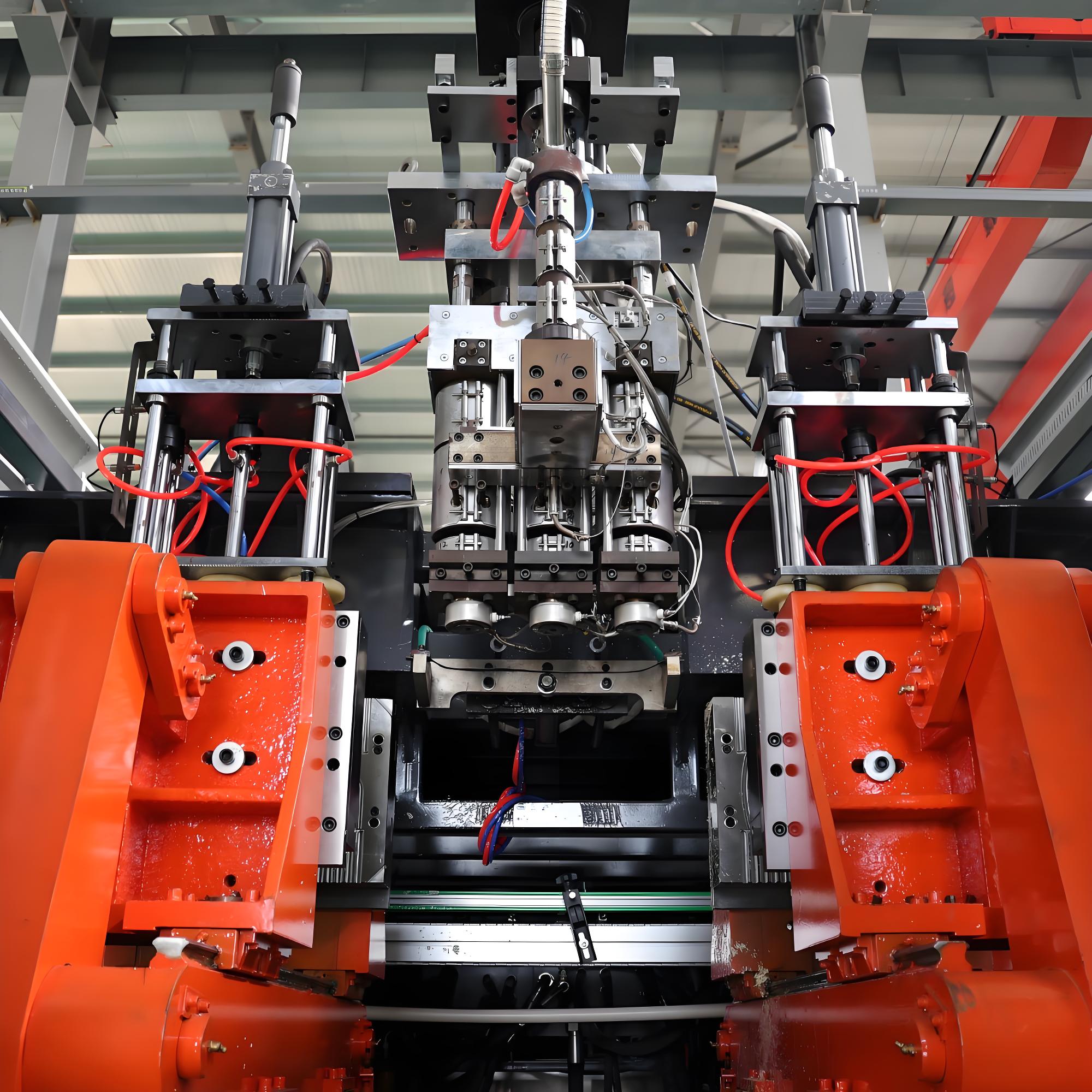
The die head forms the parison and must provide consistent material distribution for uniform wall thickness in finished parts. Die head upgrades can improve parison consistency, enable more complex parison profiles, and support higher extrusion rates. Modern die head designs incorporate improved flow channels, better temperature control, and advanced parison programming capabilities that significantly improve product quality and material efficiency.
Complete die head replacement costs vary widely based on size and complexity, typically ranging from $5,000 to $50,000. However, partial upgrades such as new flow control inserts, improved heating systems, or upgraded parison programming pins often provide significant improvements at lower cost. These partial upgrades can cost between $2,000 and $15,000 and may be appropriate when the existing die head body is in good condition but specific features need improvement.
Energy Efficiency Upgrades
Energy costs represent a significant ongoing expense for extrusion blow molding operations, and improving energy efficiency reduces operating costs while supporting sustainability goals. Various upgrade options can significantly reduce energy consumption without sacrificing production capacity or quality. These upgrades often pay for themselves relatively quickly through reduced utility expenses.
Variable Frequency Drive Installation
Variable frequency drives (VFDs) control motor speed based on actual demand rather than running at fixed speeds, significantly reducing energy consumption during periods of reduced demand. Installing VFDs on extruder drives, hydraulic pumps, and cooling systems can reduce energy consumption by 15 to 30 percent compared to traditional fixed-speed operation. VFDs also provide softer motor starts that reduce mechanical stress and extend component life.
The cost for VFD installation varies based on motor size and the number of drives being upgraded. Typical installations range from $2,000 to $15,000 for complete VFD packages on standard extrusion blow molding machines. Energy savings typically range from $2,000 to $8,000 annually depending on usage patterns and local electricity rates, meaning most VFD installations pay for themselves within 2 to 4 years through energy savings alone.
Insulation and Heating System Improvements
Heat loss from extruder barrels, die heads, and heating systems represents wasted energy that increases operating costs. Improving insulation and upgrading heating elements reduces heat loss, improves temperature stability, and lowers energy consumption. These upgrades are relatively inexpensive compared to major mechanical work but can deliver meaningful energy savings over time.
Barrel insulation upgrades using high-efficiency ceramic fiber blankets can reduce heat loss by 20 to 40 percent compared to standard insulation. Combined with upgraded heating elements that provide faster heat-up times and more precise temperature control, these improvements typically cost between $1,500 and $5,000 depending on barrel size. The energy savings from improved insulation typically range from $1,000 to $3,000 annually, providing reasonable returns on this relatively modest investment.
Cooling System Optimization
Cooling systems consume significant energy in extrusion blow molding operations, and optimizing these systems can deliver substantial energy savings. Upgrades may include variable speed cooling pumps, improved heat exchanger efficiency, water recycling systems, and optimized cooling channel designs. These improvements reduce water and electricity consumption while often improving cooling performance.
Variable speed pump controls offer particularly attractive returns on investment, automatically adjusting pump output based on cooling demand. These systems typically cost between $1,500 and $5,000 for complete installation but can reduce cooling energy consumption by 30 to 50 percent. Combined with other cooling optimizations, total cooling system upgrades typically cost between $3,000 and $15,000 and can reduce overall machine energy consumption by 5 to 15 percent.
Automation and Productivity Enhancements
Automation upgrades improve productivity, reduce labor requirements, and enhance product consistency by reducing reliance on manual intervention. Modern automation technology offers increasingly sophisticated capabilities that can be integrated into existing extrusion blow molding machines, transforming older equipment into highly productive manufacturing systems.
Automated Material Handling Systems
Automated material handling reduces labor requirements and material waste while improving material consistency. Upgrades may include automatic material loading systems, material drying automation, material blending and mixing systems, and material inventory monitoring. These systems reduce material handling costs and improve product quality by ensuring consistent material preparation.
Material loading automation typically costs between $5,000 and $20,000 depending on the complexity of the system and whether complete material handling systems are being installed. The labor savings from reduced manual material handling often justify this investment within 12 to 24 months, particularly in operations with multiple shifts or high material consumption rates. Material drying automation adds another $3,000 to $12,000 but ensures consistent material moisture content that directly impacts product quality.
Automated Part Handling and Quality Control
Automated part handling reduces labor costs and improves consistency by eliminating manual part removal and handling. Options include simple part removal systems, conveyor systems for continuous part transport, automated trimming and finishing stations, and in-line quality inspection systems. These upgrades reduce labor requirements while improving product quality and consistency.
Basic part removal systems typically cost between $8,000 and $25,000 depending on part complexity and the extent of automation. More sophisticated systems incorporating conveyors and trimming automation can cost $25,000 to $75,000 but provide comprehensive automation that significantly reduces labor requirements. In-line quality inspection systems using cameras and sensors add another $15,000 to $50,000 but can dramatically reduce scrap rates and ensure consistent product quality.
Production Monitoring and Data Collection
Modern production monitoring systems provide real-time visibility into machine performance, enabling continuous improvement and rapid problem identification. Upgrading to comprehensive monitoring systems helps identify production bottlenecks, track quality trends, and optimize operating parameters for maximum efficiency. These systems represent a relatively modest investment that delivers significant operational benefits.
Production monitoring system installation typically costs between $3,000 and $15,000 depending on the extent of data collection and analysis capabilities. Basic systems track cycle times, production counts, and fault events, while advanced systems monitor all machine parameters, calculate OEE metrics, and provide predictive maintenance alerts. The productivity improvements from better monitoring and faster problem identification typically deliver returns within 6 to 18 months.
Quality Improvement Through Upgrades
Product quality directly impacts customer satisfaction, pricing capability, and market competitiveness. Upgrades focused on quality improvement address the root causes of quality issues and enable production of higher-quality products. These upgrades often deliver returns through reduced scrap rates, improved customer satisfaction, and the ability to serve higher-value market segments.
Precision Measurement and Feedback Systems
Precision measurement systems provide real-time feedback on product characteristics, enabling closed-loop control that maintains consistent quality. Upgrades may include ultrasonic wall thickness measurement, optical dimension measurement systems, pressure monitoring during blow process, and weight control systems. These measurements enable precise control of product characteristics that were previously impossible to achieve.
Ultrasonic wall thickness measurement systems typically cost between $15,000 and $40,000 but enable precise wall thickness control that reduces material usage while ensuring product quality. Optical measurement systems for dimensional verification cost between $10,000 and $30,000 and provide comprehensive quality verification that reduces customer complaints and returns. The combined improvements in quality and material efficiency typically deliver full return on investment within 12 to 24 months.
Process Optimization and Recipe Management
Modern control systems enable sophisticated process optimization that improves quality while maximizing productivity. Upgrading to systems with comprehensive recipe management, statistical process control, and automated parameter optimization helps operators achieve consistent results and quickly adapt to different product requirements. These capabilities enable faster product changeovers and more consistent quality across production runs.
Recipe management systems allow storing complete process parameters for different products, enabling quick and accurate product changeovers. Statistical process control capabilities identify trends before they cause quality problems, enabling proactive intervention. Automated parameter optimization uses real-time data to continuously adjust operating parameters for optimal performance. These system upgrades typically cost between $5,000 and $20,000 depending on sophistication and integration requirements.
Planning Your Upgrade Strategy
Developing a comprehensive upgrade strategy requires balancing immediate needs against long-term objectives while managing budget constraints. A systematic approach to planning ensures upgrade investments deliver maximum benefit and support overall business goals. Understanding the upgrade decision-making process helps ensure resources are allocated effectively.
Prioritizing Upgrade Investments
With limited capital available for upgrades, prioritizing investments ensures the most impactful improvements receive attention first. A common prioritization framework evaluates upgrades based on expected return on investment, urgency based on current performance gaps, strategic importance for future capabilities, and dependencies between different upgrade components.
High-priority upgrades typically include those delivering quick returns through productivity or quality improvements, addressing safety or reliability concerns, enabling new capabilities that open market opportunities, and creating foundations for future improvements. Control system upgrades often rank highly due to their favorable cost-benefit ratios and significant impact on machine performance. Mechanical upgrades addressing critical limitations should also receive priority when identified.
Budget Planning and Phased Implementation
Many upgrade programs are implemented in phases based on available budget and the extent of changes required. Phased implementation allows spreading costs over multiple budget periods while building capabilities incrementally. Planning phases should account for dependencies between different upgrades and ensure each phase delivers meaningful improvements while setting up for subsequent phases.
A typical phased upgrade approach might begin with control system upgrades providing immediate performance improvements, followed by mechanical upgrades addressing critical limitations, then productivity and automation enhancements, and finally quality and efficiency optimizations. Each phase should deliver standalone benefits while building toward comprehensive modernization. Phase budgets might range from $15,000 to $50,000 depending on the scope of work and overall upgrade strategy.
Upgrade Provider Selection
Selecting the right upgrade provider significantly impacts the success of your modernization efforts. Providers range from original equipment manufacturers offering upgrade packages to third-party specialists focusing on specific upgrade types. Evaluating providers based on experience with your specific machine type, the quality of their upgrade components, their technical support capabilities, and references from similar upgrade projects helps ensure successful outcomes.
Original equipment manufacturers often offer upgrade packages specifically designed for their equipment, ensuring compatibility and comprehensive support. Third-party specialists may offer broader experience across different equipment brands and potentially more competitive pricing. For Chinese extrusion blow molding equipment from established manufacturers like Zhangjiagang Apollo Machinery Co., Ltd., working with the original manufacturer often provides the best combination of compatibility, support, and upgrade expertise.
Measuring Upgrade Success
Establishing clear metrics for measuring upgrade success ensures investments deliver expected returns and identifies areas requiring additional attention. These metrics should be established before upgrades begin and tracked consistently afterward to evaluate improvement and guide future upgrade decisions.
Performance Metrics
Production performance metrics directly measure the impact of upgrades on machine capabilities. Key metrics include production rate measured in parts or weight per hour, cycle time from part to part, machine uptime and availability, scrap and rework rates, and overall equipment effectiveness (OEE). Comparing these metrics before and after upgrades quantifies the actual improvement achieved.
A typical upgrade program should target improvements of 10 to 30 percent in production rate, 10 to 20 percent reduction in cycle time, and similar improvements in uptime and quality metrics. These improvements translate directly to increased capacity and reduced costs that improve profitability. Tracking these metrics over time also helps identify when additional upgrades or maintenance might be needed to maintain performance levels.
Financial Metrics
Financial metrics evaluate the return on investment from upgrade spending. Key financial metrics include the total cost of upgrades, the timeframe for achieving payback, ongoing operating cost savings, increased revenue from improved capacity or quality, and the net present value of upgrade investments. These metrics guide investment decisions and help prioritize future upgrade spending.
Well-planned upgrade programs typically achieve payback within 12 to 36 months depending on the scope of work and existing equipment condition. Control system upgrades often deliver the quickest payback due to their relatively modest cost and significant productivity improvements. More extensive mechanical upgrades typically require longer payback periods but often deliver larger total returns over the equipment lifecycle.
Conclusion
Upgrading your extrusion blow molding machine represents a strategic investment that can significantly extend equipment capabilities while controlling capital requirements. The comprehensive range of available upgrade options addresses every aspect of machine performance, from control systems to mechanical components to automation capabilities. By carefully assessing your current equipment, prioritizing upgrade investments, and implementing improvements systematically, you can transform aging equipment into highly capable production assets.
The key to successful upgrades lies in thorough planning, realistic expectations, and selecting appropriate upgrade providers. Each upgrade should deliver meaningful benefits that justify the investment while building toward comprehensive equipment modernization. Whether you pursue incremental improvements over time or comprehensive upgrades in a single project, the goal remains the same: maximizing the value from your existing equipment investment.
Chinese extrusion blow molding machine manufacturers like Zhangjiagang Apollo Machinery Co., Ltd. with over 20 years of experience and machines operating in over 90 countries understand the importance of equipment upgrades and often provide comprehensive support for modernizing their products. Working with experienced providers ensures upgrade investments deliver their full potential while maintaining equipment reliability and longevity.