
What Is PA Extrusion Blow Molding?
PA extrusion blow molding — the processing of polyamide (nylon) into hollow industrial containers — represents one of the most technically demanding yet commercially valuable segments of the blow molding industry. Polyamide’s exceptional combination of heat resistance, chemical compatibility, and mechanical strength enables the production of containers that operate reliably in environments where standard plastics like PE, PP, or even PC would fail. As of 2026, the global market for engineering-grade blow molded components continues to expand, driven by automotive lightweighting initiatives, chemical processing modernization, and the growing demand for high-performance industrial packaging.
The fundamental process mirrors standard extrusion blow molding: polyamide resin is melted in an extruder, formed into a parison, captured by a mold, and inflated with compressed air to form the container. What distinguishes PA processing is the material’s unique behavior at every stage. Polyamide has a sharp melting point — typically 220-265°C depending on the specific grade — with a rapid transition from solid to low-viscosity melt. This sharp melting behavior, combined with PA’s hygroscopic nature (it can absorb up to 8% moisture by weight in some grades), its sensitivity to thermal degradation if overheated, and its tendency to crystallize during cooling, creates a processing window that demands precision in equipment specification and process control far beyond what commodity plastics require.
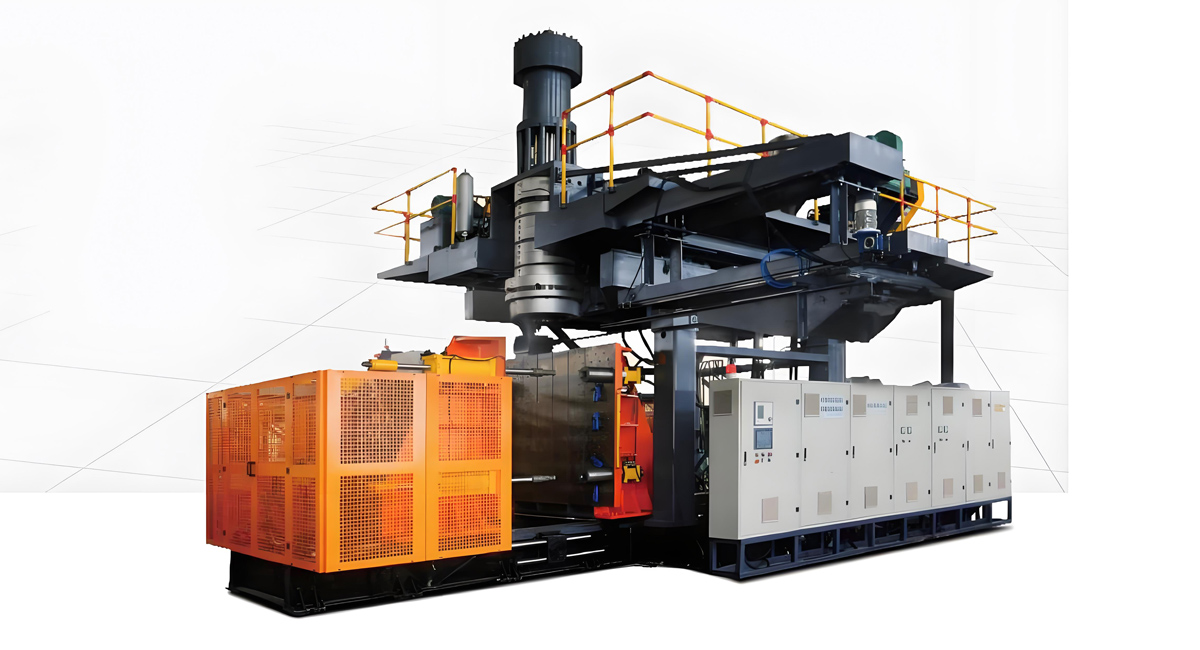
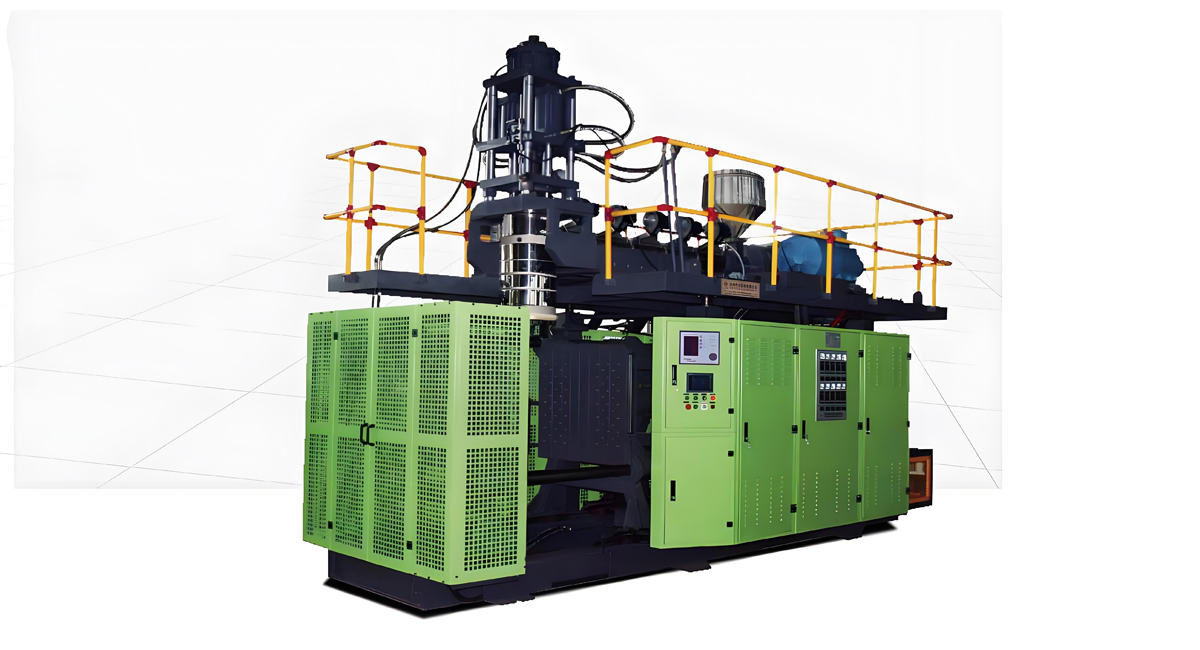
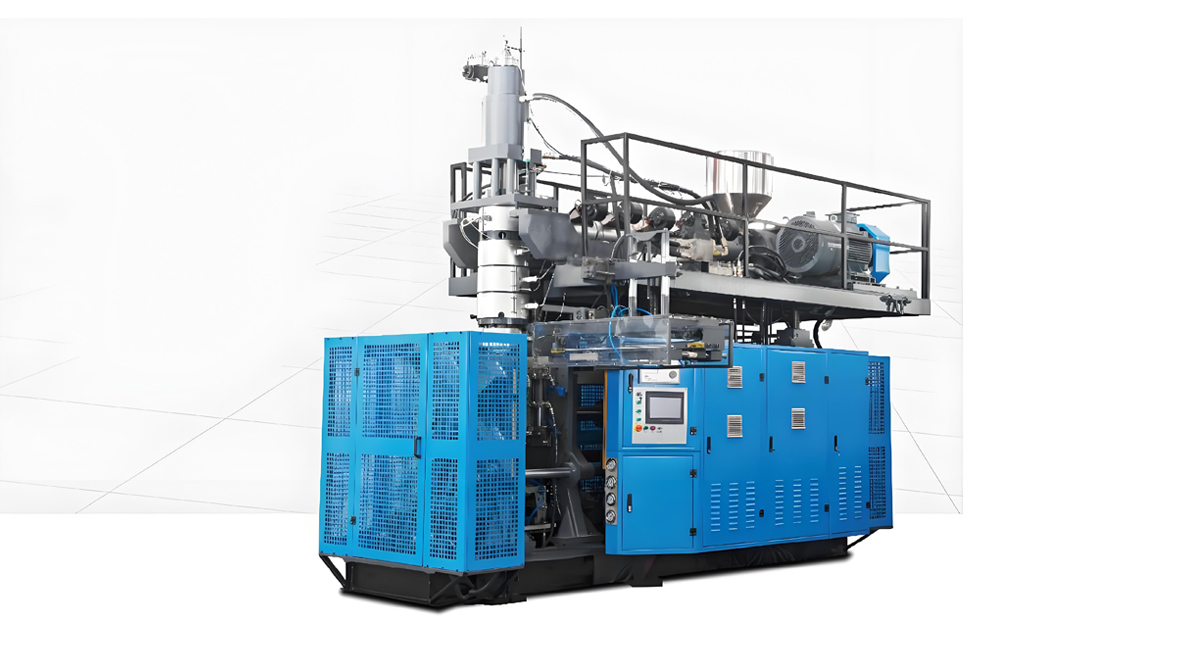
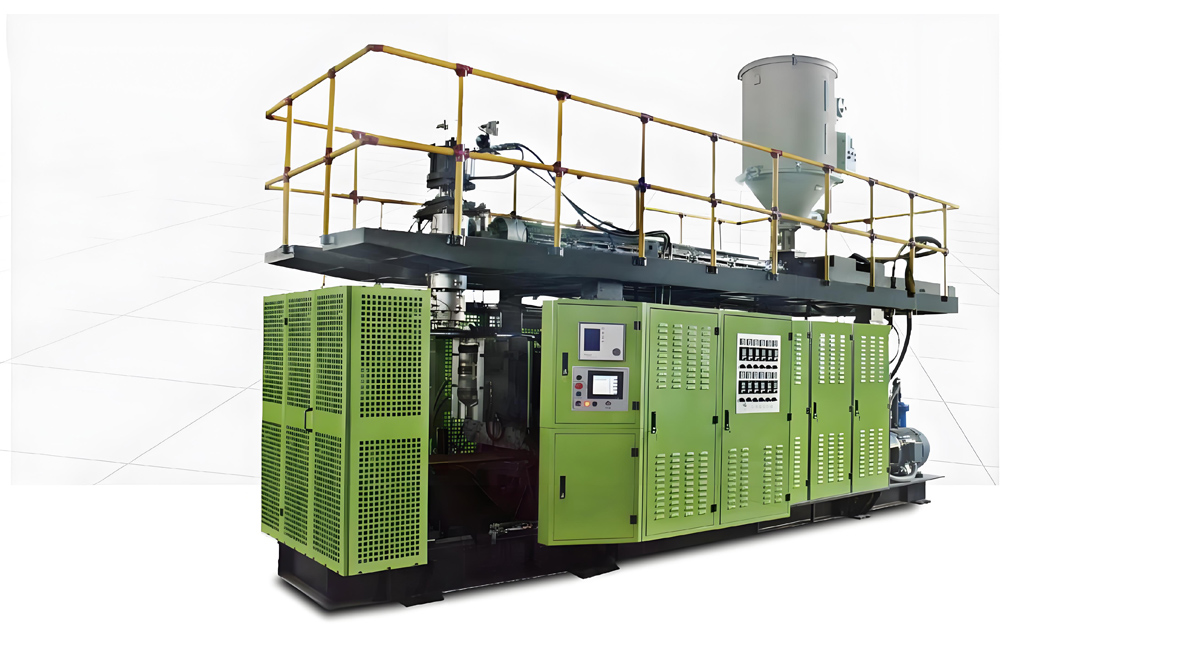
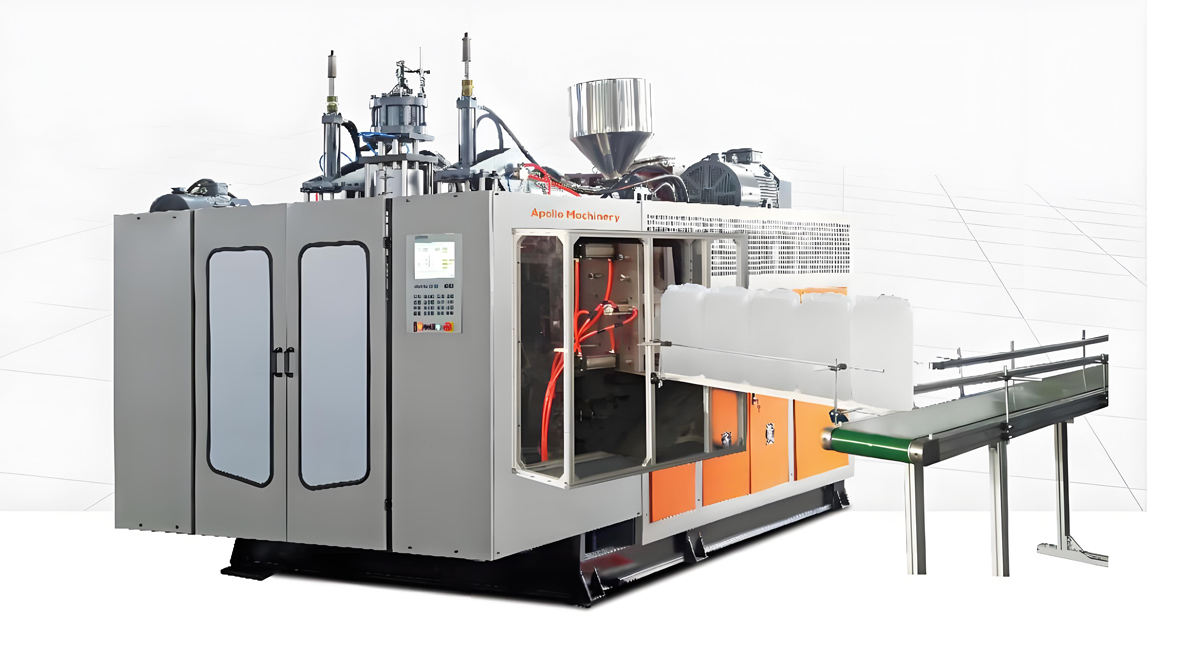
Apollo, a Wanplas factory with over 20 years of extrusion blow molding specialization, has developed machine configurations across its ABLB and ABLD series specifically engineered for polyamide processing. These machines address PA’s unique demands — from corrosion-resistant screw and barrel materials to precision temperature control systems capable of maintaining the narrow processing windows that PA requires — enabling manufacturers to produce industrial containers that withstand continuous service temperatures up to 150°C and intermittent exposure to 180°C or higher, depending on the specific PA grade.
- Polyamide engineering plastics market projected to exceed $40 billion globally by 2028
- PA containers withstand continuous temperatures up to 150°C — double the capability of standard PE
- PA’s tensile strength (60-85 MPa) is 3-4x that of polyethylene, enabling thinner, lighter container designs
- Properly processed PA EBM containers offer chemical resistance to fuels, oils, solvents, and aggressive chemicals
- Apollo extrusion blow molding machines process PA alongside nine other materials in the ABLB and ABLD series
Why Polyamide Is the Material of Choice for High-Temperature Industrial Applications
Polyamide occupies a unique position in the engineering plastics hierarchy, offering a combination of thermal, mechanical, and chemical properties that no single alternative material can match. Understanding these properties — and how they translate into real-world container performance — is the foundation for selecting PA as the material for your application and specifying the right blow molding equipment to process it effectively.
Thermal Performance
PA’s defining advantage over commodity blow molding materials is its heat resistance. Standard PA6 and PA66 grades offer continuous service temperatures of 100-120°C, with heat-stabilized grades extending this to 150°C and specialty high-temperature nylons (such as PA46 and semi-aromatic PAs) reaching 180°C or higher. This thermal capability makes PA containers suitable for under-hood automotive components (coolant reservoirs, intercooler ducts, air intake systems), chemical process containers exposed to elevated temperatures, and industrial fluid handling systems where hot-fill or process heating is involved. By comparison, HDPE containers typically soften above 90°C, PP above 110°C, and even PC — the next-highest performer — is limited to approximately 135°C continuous service.
Chemical Resistance
PA offers excellent resistance to hydrocarbons, oils, greases, fuels, and many organic solvents — the very substances that cause stress cracking, swelling, or dissolution in PE, PP, and PC. This chemical compatibility profile makes PA the preferred material for automotive fuel system components, industrial chemical containers, hydraulic fluid reservoirs, and lubricant packaging. It is important to note, however, that PA has limited resistance to strong acids, strong bases, and certain polar solvents — a chemical compatibility assessment against the specific contents of your container is always recommended before committing to PA as the material choice.
Mechanical Properties
The mechanical strength of polyamide — tensile strength of 60-85 MPa for unreinforced grades, compared to 20-30 MPa for HDPE — enables the design of containers with significantly thinner walls while maintaining or exceeding the burst strength and impact resistance of thicker PE or PP alternatives. This translates into material savings (a PA container can weigh 30-50% less than a PE container of equivalent performance), reduced shipping weight, and more compact component designs in space-constrained applications like automotive engine compartments.
PA vs. Alternative High-Performance Materials
| Property | PA6/PA66 | PC | PP | HDPE |
|---|---|---|---|---|
| Continuous Service Temp | 100-150°C | 120-135°C | 90-110°C | 80-90°C |
| Tensile Strength (MPa) | 60-85 | 55-75 | 25-40 | 20-30 |
| Chemical Resistance | Excellent (oils, fuels, solvents) | Limited (solvent-sensitive) | Excellent | Excellent |
| Processing Temp Range | 240-300°C | 280-320°C | 200-280°C | 180-250°C |
| Moisture Sensitivity | Very High (requires drying) | High (requires drying) | Low | Low |
| Relative Cost | High-Very High | Very High | Low | Low |
Machine Requirements for PA Extrusion Blow Molding
Processing polyamide on an extrusion blow molding machine demands equipment that is engineered for PA’s specific characteristics — not merely a standard machine with adjusted temperature settings. The machine’s screw design, barrel metallurgy, temperature control system, die head configuration, and even the mold materials must be selected or specified with PA processing in mind. Failing to address these requirements results in inconsistent product quality, excessive downtime, and premature equipment wear.
Screw and Barrel Design
The extruder screw for PA processing requires a compression ratio of 2.8:1 to 3.5:1 — higher than the 2:1-2.5:1 typical for PE — reflecting PA’s sharp melting behavior and the need for rapid, complete plastication in a relatively short compression zone. A barrier screw design with a dedicated melt channel is strongly recommended, as it separates the solid bed from the melt pool, ensuring that only fully molten material reaches the metering zone. The L/D ratio should be 24:1 to 30:1 to provide adequate residence time for complete melting and homogenization while maintaining sufficient throughput for productive cycle times.
Barrel and screw metallurgy deserve particular attention for PA processing. Polyamide at processing temperatures is mildly corrosive, and the combination of heat, shear, and the presence of moisture degradation byproducts can accelerate wear on standard nitrided steel surfaces. Bimetallic barrels with a wear-resistant inner lining and screws with hard-facing on the flight lands — typically using cobalt- or nickel-based alloys — significantly extend service life in PA processing environments. This investment in metallurgical quality pays for itself through reduced downtime for screw and barrel replacement, more consistent melt quality over time, and the ability to process filled PA grades (glass-reinforced, mineral-filled) that are even more abrasive than unfilled grades.
Temperature Control System
PA’s narrow processing window demands temperature control precision that matches or exceeds the requirements for PC processing. The barrel should feature at least 4-6 independently controlled heating zones with PID controllers capable of maintaining ±1°C accuracy. The temperature profile must ramp from the feed zone to the metering zone with sufficient gradient to achieve complete melting without creating temperature overshoots that could degrade the material at the die. Ceramic band heaters with embedded thermocouples provide faster response and better temperature uniformity than conventional mica band heaters, an advantage that becomes particularly apparent during production startups and material changeovers.
Die Head Configuration
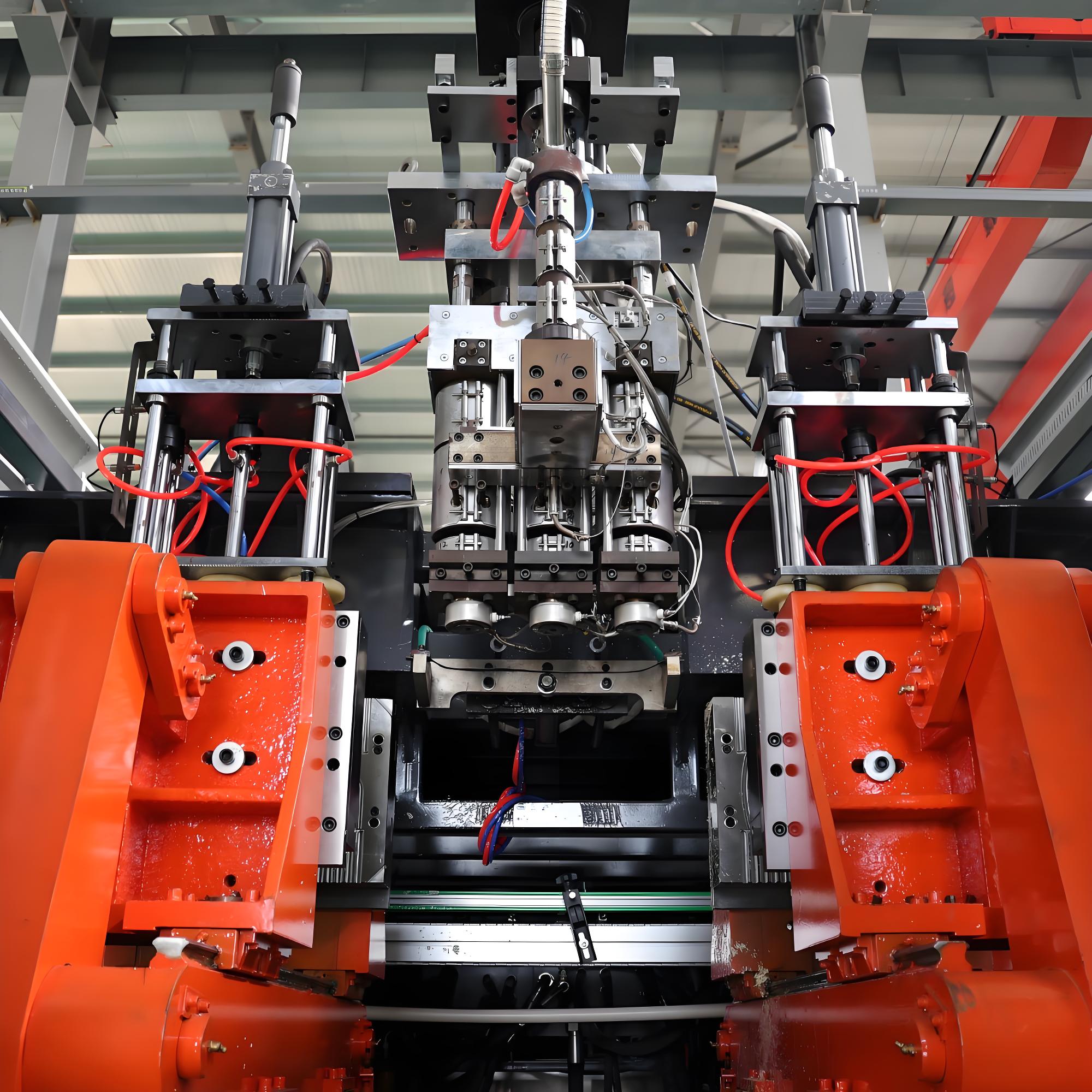
The die head for PA blow molding must address two PA-specific challenges: the material’s low melt viscosity at processing temperature and its tendency to degrade if held at temperature for extended periods. A converging, streamlined die geometry with no dead spots or stagnation zones is essential — any area where PA melt can stagnate will result in material degradation, black specks, and the need for frequent purging. The die should be designed for rapid parison formation to minimize the residence time of melt in the die head. For large containers requiring accumulator-type die heads, the accumulator should be sized to the shot weight with minimal excess capacity to limit melt residence time.
Die head temperature control is particularly critical for PA. The die should be maintained 5-10°C below the melt temperature to increase melt strength — PA’s low viscosity at processing temperature means that the parison can sag excessively if the die is too hot. However, the die must remain hot enough to prevent premature solidification at the die lips, which would create surface defects and parison instability. Apollo’s die head designs for the ABLB and ABLD series incorporate independent die zone heating with precision temperature controllers to maintain this thermal balance.
PA EBM Machine Specification Reference
| Specification | Small PA Containers (200ml-5L) | Large PA Containers (5L-30L) |
|---|---|---|
| Screw Type | Barrier screw with mixing section | Barrier screw with mixing section |
| Screw Diameter | 50-70mm | 80-100mm |
| Compression Ratio | 2.8:1-3.2:1 | 2.8:1-3.5:1 |
| L/D Ratio | 24:1-28:1 | 26:1-30:1 |
| Barrel Metallurgy | Bimetallic, wear-resistant | Bimetallic, wear-resistant |
| Heating Zones | 5-6 zones (ceramic heaters) | 6-8 zones (ceramic heaters) |
| Output Rate (PA6) | 25-70 kg/h | 70-160 kg/h |
| Cycle Time (typical) | 25-50 sec | 50-100 sec |
PA Grade Selection: Which Nylon for Your Application?
Polyamide is not a single material but a family of related polymers, each with distinct property profiles optimized for different application requirements. The choice between PA6, PA66, PA11, PA12, and specialty grades directly impacts not only the container’s performance in service but also its processability on the blow molding machine. Selecting the right grade requires balancing the container’s end-use requirements against the material’s processing characteristics.
PA6 — The Workhorse Nylon
PA6 is the most widely used polyamide for blow molding applications, offering an excellent balance of processability, mechanical properties, and cost. It melts at approximately 220°C and processes well in the 240-270°C range — a processing window that is manageable with properly specified equipment. PA6 offers good impact resistance (even at low temperatures), excellent chemical resistance to fuels and oils, and continuous service temperature capability to approximately 100-120°C for standard grades. Its primary processing challenge is moisture management: PA6 typically absorbs 2.5-3% moisture at saturation, and processing with moisture levels above 0.15-0.20% results in hydrolytic degradation and significant loss of mechanical properties.
PA66 — Higher Heat, Higher Strength
PA66 offers approximately 20-30% higher tensile strength and 15-20°C higher heat deflection temperature than PA6, making it the preferred choice for the most demanding under-hood automotive applications and high-temperature industrial containers. Its melting point of approximately 260°C requires processing temperatures in the 270-300°C range — at the upper end of what standard EBM equipment can manage, and demanding the precision temperature control and metallurgical quality discussed in the previous section. PA66 also crystallizes faster than PA6, which can be advantageous for reducing cycle times but requires careful mold temperature management to prevent warpage.
PA11 and PA12 — Flexibility and Chemical Resistance
PA11 and PA12 are long-chain nylons with lower moisture absorption (0.25-1.5%), better dimensional stability, and superior chemical resistance compared to PA6 and PA66. They process at lower temperatures (190-240°C) and have a wider processing window, making them more forgiving to process. Their lower modulus and higher elongation make them suitable for applications requiring flexibility and impact resistance at the expense of stiffness. These grades command a significant price premium — typically 3-5x the cost of PA6 — which limits their use to applications where their specific properties are essential and cannot be achieved with lower-cost alternatives.
PA Grade Selection Guide
| PA Grade | Melting Point | Processing Temp | Best Applications | Relative Cost |
|---|---|---|---|---|
| PA6 | ~220°C | 240-270°C | General industrial containers, automotive reservoirs, chemical packaging | Medium |
| PA66 | ~260°C | 270-300°C | High-temp under-hood automotive, demanding industrial environments | High |
| PA11 | ~185°C | 200-230°C | Flexible fuel lines, chemical-resistant containers, low-temp applications | Premium |
| PA12 | ~178°C | 190-240°C | Low-moisture applications, dimensional stability-critical parts | Premium |
Process Parameters and Optimization for PA EBM
Converting polyamide resin into high-quality industrial containers requires systematic control over a set of interdependent process parameters. PA’s sharp melting behavior and sensitivity to moisture and thermal history mean that parameter adjustments have more pronounced effects — both positive and negative — than when processing commodity plastics. The following parameters represent the critical control points for PA extrusion blow molding.
Material Preparation: Drying Is Mandatory
Polyamide’s hygroscopic nature makes thorough drying the most critical pre-processing step — arguably more important for PA than for any other commonly blow-molded plastic. PA6 can absorb up to 3% moisture, and processing material with moisture content above 0.15% will result in hydrolysis: the chemical reaction between water molecules and the polymer chains at processing temperature, which breaks the chains and permanently degrades the material’s mechanical properties. The visual indicator of inadequate drying — surface splay, bubbles, and a characteristic rough surface texture — is merely the visible symptom of molecular-level damage that compromises the container’s strength and chemical resistance.
Proper PA drying requires a desiccant dryer capable of achieving a dew point of -40°C or lower. Drying parameters vary by PA grade:
- PA6: 80-85°C for 4-6 hours (target moisture: <0.15%)
- PA66: 80-90°C for 4-6 hours (target moisture: <0.15%)
- PA11/PA12: 80-90°C for 4-5 hours (target moisture: <0.10%)
Dried material should be conveyed to the machine hopper through sealed, heated transfer lines to prevent moisture re-absorption — PA can pick up significant moisture from ambient air in as little as 15-30 minutes of exposure. A hopper dryer mounted directly on the machine feed throat provides a final moisture barrier before the material enters the extruder.
Temperature Profile Management
The barrel temperature profile for PA processing must accommodate the material’s sharp melting point while avoiding thermal degradation from excessive temperatures or residence time. A typical 5-zone profile for PA6 processing is:
- Feed Zone: 230-245°C — below the melting point to prevent premature melting at the feed throat
- Compression Zone: 250-265°C — rapid melting as material transitions through the barrier flight
- Metering Zone 1: 255-270°C — complete melting and initial homogenization
- Metering Zone 2: 250-265°C — maintain melt quality
- Die Head: 240-255°C — 5-10°C below melt temperature to increase melt strength
The critical rule for PA is: never allow the melt temperature to exceed 300°C (for PA6) or 310°C (for PA66). Temperatures above these thresholds initiate rapid thermal degradation, and once degradation begins, it accelerates autocatalytically. If a temperature overshoot occurs during startup or operation, the safest procedure is to purge the machine thoroughly before resuming production.
Parison Control and Mold Cooling
PA’s low melt viscosity at processing temperature makes parison control particularly challenging. The parison sags more aggressively than PE or even PC, requiring faster extrusion speeds and more aggressive parison programming to achieve acceptable wall thickness distribution. The parison programmer (PWDS) should be configured to thicken the die gap at the top of the parison (which will have experienced the most sag by the time the mold closes) and taper toward the bottom (which experiences minimal sag time). Apollo’s servo-controlled PWDS systems on the ABLB and ABLD series provide the speed and precision necessary for effective PA parison control.
Mold temperature for PA typically ranges from 60-100°C — significantly higher than the 15-30°C used for PETG or the 10-20°C for PE. This elevated mold temperature is necessary because PA crystallizes during cooling, and if the mold is too cold, the rapid crystallization at the mold surface creates a skin layer that inhibits proper crystallization in the container core, resulting in warpage, dimensional instability, and reduced mechanical properties. On the other hand, mold temperatures above 100-110°C extend cycle times unproductively without commensurate property improvements. Mold temperature controllers with closed-loop monitoring and the capacity to circulate oil (for temperatures above 90°C) or pressurized water (for the 60-90°C range) are recommended for consistent PA production.
Defect Troubleshooting in PA Blow Molding
PA extrusion blow molding defects are often more difficult to diagnose than those in commodity plastics because the root cause may be material-related (moisture, degradation), process-related (temperature, timing), or equipment-related (screw wear, die design). Systematic troubleshooting, starting with the most likely cause based on the specific defect appearance, is the most efficient approach to restoring quality production.
PA EBM Troubleshooting Guide
| Defect | Appearance | Primary Cause(s) | Solution |
|---|---|---|---|
| Brittleness / Low Impact | Container cracks or shatters under low impact loads | Moisture-induced hydrolysis, thermal degradation | Verify dryer dew point (-40°C); confirm drying time/temp; reduce melt temp 5-10°C; check residence time |
| Surface Splay / Silver Streaks | Silvery, fan-shaped surface marks | Moisture in resin — the definitive PA processing issue | Increase drying time; verify sealed material conveyance; check hopper dryer operation; test moisture content |
| Black Specks / Discoloration | Dark particles or yellow/brown discoloration in container wall | Thermal degradation from dead spots, excessive temp, or long residence time | Purge thoroughly with PA purge compound; inspect die for stagnation zones; reduce barrel/die temps; shorten cycle |
| Parison Sag / Thin Walls | Parison stretches excessively under gravity; thin bottom walls | Melt temperature too high, die temperature too high, extrusion speed too slow | Reduce die temp 5-10°C; increase extrusion speed; adjust PWDS to thicken upper parison section |
| Warpage / Distortion | Container deforms after demolding or during service | Uneven cooling, mold too cold, non-uniform wall thickness, crystallization issues | Increase mold temp to 60-80°C; optimize cooling channel design; adjust PWDS for uniform walls; increase cooling time |
| Gels / Unmelts | Small, hard lumps of unmelted or cross-linked material | Insufficient melting, cross-contamination, screw design inadequate | Increase barrel temps; verify screw design (barrier screw recommended); check for material contamination; purge thoroughly |
| Dimensional Instability | Container dimensions change after molding or in service | Post-molding moisture absorption, incomplete crystallization | Condition containers post-molding (sealed bag with controlled humidity); optimize mold temperature for proper crystallization |
Industrial Applications Across Sectors
PA extrusion blow molded containers serve in some of the most demanding environments in industry, where failure is not an option and material performance directly affects safety, reliability, and operational cost. Understanding the applications that PA enables helps manufacturers identify market opportunities where their investment in PA-capable blow molding equipment generates the highest return.
Automotive Industry
The automotive sector is the single largest consumer of PA blow molded components. Under-hood applications leverage PA’s heat resistance and chemical compatibility: coolant expansion tanks must withstand temperatures up to 130°C and continuous exposure to glycol-based coolants; turbocharger air ducts experience temperatures exceeding 150°C at the hot end while requiring the dimensional precision to maintain airtight connections; fuel system components must resist permeation of increasingly aggressive fuel blends including ethanol mixtures. PA’s ability to meet these diverse requirements while reducing component weight by 30-50% compared to metal alternatives has made it an essential material for automotive lightweighting strategies. Apollo’s ABLD series, with its large-format blow molding capability (20L-1500L), is well-suited for the larger automotive components in this category.
Chemical Processing Industry
PA containers for chemical processing combine chemical resistance with mechanical integrity in ways that metal containers (susceptible to corrosion) and PE containers (limited heat resistance) cannot match. Typical applications include solvent storage and dispensing containers, intermediate bulk containers (IBCs) for aggressive chemicals, and process vessels for chemical manufacturing operations where elevated temperatures are part of the process. The chemical compatibility of PA with a broad range of organic solvents, oils, and fuels — combined with its ability to be blow molded into complex shapes with integrated features such as handles, spouts, and mounting brackets — makes it a versatile solution for chemical handling challenges that simpler materials cannot address.
Transportation and Logistics
In the transportation sector, PA containers serve applications that combine the demands of chemical resistance, thermal cycling, and mechanical durability. Fuel tanks for small engines (generators, pumps, marine applications), hydraulic fluid reservoirs for mobile equipment, and lubricant containers for industrial maintenance all benefit from PA’s balanced property profile. The weight savings compared to metal alternatives reduce shipping costs and improve fuel efficiency in mobile applications, while the elimination of corrosion concerns extends service life and reduces maintenance requirements.
Building Material and Industrial Equipment
PA containers find growing use in building systems and industrial equipment where exposure to elevated temperatures, construction chemicals, or outdoor environments excludes commodity plastics. Applications include expansion tanks for heating systems, containers for construction adhesives and sealants, and industrial fluid handling components that must maintain integrity through summer heat exposure in unconditioned spaces. The ability of PA to be colored, labeled, and molded with surface textures expands its applicability to products where aesthetics and brand presentation matter alongside functional performance.
Apollo Machinery, headquartered in Zhangjiagang near Shanghai, is a Wanplas factory specializing in extrusion blow molding machines for over 20 years. With an 8,000 sqm manufacturing facility, annual production capacity of 100 machine sets, and more than 4,000 machines operating across 90+ countries, Apollo has accumulated extensive expertise in processing engineering-grade materials including PA (nylon), PC, PETG, and eight other materials across the ABLB Series (200ML-20L), ABLD Series (20L-1500L), and Fully Electric Series. As part of the Wanplas brand — operating under the mission “Warm Global Customers With China Plastic Machinery” — Apollo provides comprehensive customer support: engineer on-site installation and training, $500 in free parts annually, transportation and production capacity guarantees, and a quality standards guarantee backed by refund plus 10% compensation if specifications are not met. Apollo’s experience with PA processing spans automotive, chemical, industrial, and transportation applications, and the company offers complete machine customization including mold design and manufacturing support.
Frequently Asked Questions
Polyamide is highly hygroscopic, absorbing up to 3% moisture (PA6) or more from ambient air. Processing PA with moisture content above 0.15% causes hydrolysis — a chemical reaction at processing temperature that permanently breaks polymer chains, destroying the material’s mechanical properties. The result is brittle containers with dramatically reduced impact strength, tensile strength, and chemical resistance, even if they appear visually acceptable. Thorough drying at 80-85°C for 4-6 hours with a -40°C dew point desiccant dryer is mandatory.
Processing PA on a PE machine without modifications is not recommended and will likely result in poor quality and accelerated equipment wear. PA requires: (1) a barrier screw with higher compression ratio (2.8:1-3.5:1 vs. 2:1-2.5:1 for PE); (2) bimetallic barrel and hard-faced screw to resist PA’s corrosive melt; (3) higher temperature capability (up to 300°C vs. typical 250°C max for PE machines); (4) precision temperature control (±1°C); and (5) a die head designed for PA’s low melt viscosity. Apollo configures its ABLB and ABLD series specifically for PA processing, incorporating all these requirements.
PA66 offers approximately 20-30% higher tensile strength and 15-20°C higher heat deflection temperature than PA6, making it the choice for the most demanding high-temperature applications. However, PA66 processes at higher temperatures (270-300°C vs. 240-270°C), has a narrower processing window, crystallizes faster (potentially causing warpage issues), and costs more. PA6 provides the best balance of processability, properties, and cost for most industrial blow molding applications.
PA’s low melt viscosity at processing temperature makes parison sag a common challenge. The most effective countermeasures are: (1) reduce die head temperature 5-10°C below the melt temperature to increase melt strength; (2) increase extrusion speed to reduce the time the parison hangs before mold closure; (3) use parison programming (PWDS) to thicken the die gap at the top of the parison where sag is greatest; and (4) ensure mold closing speed is as fast as practical. Apollo’s servo-controlled parison programming system enables precise, repeatable control over all these factors.
PA typically requires mold temperatures of 60-100°C — significantly higher than PE (10-20°C) or PETG (15-30°C). This elevated temperature is necessary because PA crystallizes during cooling, and a mold that is too cold causes rapid surface crystallization that traps stress and leads to warpage. For PA6, 70-90°C is a good starting point; for PA66, 80-100°C. Mold temperature optimization is specific to your container geometry and wall thickness, and should be refined through systematic experimentation and dimensional stability testing.
Apollo provides comprehensive support for PA processing: (1) machine configuration specific to your PA grade and container specifications; (2) mold design and manufacturing support with materials and cooling optimized for PA; (3) engineer on-site installation and commissioning with PA process parameter setup; (4) operator training covering PA-specific procedures including drying, purging, and defect troubleshooting; and (5) ongoing after-sales support including $500 free parts annually and irregular visits to track machine performance. Apollo’s 20+ years of PA processing experience across 4,000+ machine installations worldwide ensures that customers benefit from accumulated expertise rather than learning through trial and error.
Glass-filled PA can be blow molded, but it requires specific equipment considerations. Glass fibers are highly abrasive, making bimetallic barrels and hard-faced screws essential — standard nitrided steel will wear rapidly. Glass fibers also increase melt viscosity, reducing parison sag but making parison formation more difficult. The fibers orient during parison extrusion and blowing, creating anisotropy in the finished container’s mechanical properties. For most blow molding applications, impact-modified unfilled PA grades provide the best balance of processability and performance. If glass-filled PA is required, consult Apollo’s engineering team for appropriate machine specification.
Conclusion
PA extrusion blow molding stands at the intersection of advanced material science and precision manufacturing technology, delivering industrial containers that perform reliably in environments where commodity plastics cannot compete. The combination of heat resistance up to 150°C, chemical compatibility with aggressive fluids, and mechanical strength 3-4 times that of polyethylene makes PA the definitive material for high-performance blow molded containers in the automotive, chemical processing, transportation, and industrial equipment sectors.
The path to successful PA blow molding production runs through properly specified equipment: a machine with the barrier screw design, bimetallic barrel metallurgy, precision temperature control, and parison programming capability that PA demands is the prerequisite for consistent quality. Attempting to process PA on standard PE equipment is a false economy that will produce substandard containers and accelerated equipment wear. Apollo, as a Wanplas factory with over two decades of extrusion blow molding specialization, offers machine configurations across the ABLB, ABLD, and Fully Electric series that are engineered from the ground up for engineering-grade materials including the full range of polyamide grades.
For manufacturers ready to enter the PA container market, or seeking to optimize existing PA production, the formula for success is clear: properly specified equipment, rigorous material handling protocols centered on moisture management, systematic process optimization, and a machine supplier partnership that provides ongoing technical support. With these foundations in place, PA extrusion blow molding opens access to high-value industrial markets where performance justifies investment and the barriers to entry protect margins. As industries worldwide continue their push toward lighter, stronger, more chemically resistant components, the role of PA blow molded containers will only grow — and the manufacturers prepared to meet that demand with quality production capability will be positioned to capture that growth.
For more information about Apollo’s PA extrusion blow molding machines, including the ABLB Series (200ML-20L) and ABLD Series (20L-1500L), contact the Apollo team at the Wanplas factory in Zhangjiagang, China.