
Many manufacturers in the household chemical, lubricant, food, and chemical industries need to produce a wide range of plastic bottles, from 200ml and 500ml up to 1L, 2L, and 5L, on the same production line. Such a diverse product range places high demands on the flexibility, stability, and efficiency of extrusion blow molding equipment.
When selecting a blow molding machine, it is essential to understand not only the customer’s product requirements but also their production process and future expansion plans. This enables the supplier to provide a complete and professional manufacturing solution rather than simply recommending a machine.
1. Production Process of 200ml–5L HDPE Bottles
Whether the bottles are made from HDPE or PP, the manufacturing process is generally the same.
Production Flow
HDPE Raw Material
          │
Automatic Material Loader
          │
(Optional) Material Dryer
          │
Plasticizing in Extruder
          │
Parison Extrusion
          │
Mold Closing
          │
Air Blowing
          │
Cooling
          │
Mold Opening
          │
Flash Trimming
          │
Leak Testing
          │
Conveying
          │
Packaging
For food-grade or pharmaceutical packaging, additional systems such as online vision inspection, automatic weighing, automated packaging, and clean-room production environments may also be required.
2. Challenges of Producing Bottles from 200ml to 5L
Producing bottles of different capacities involves much more than simply changing molds. The machine must be capable of meeting the different technical requirements of both small and large containers.
Wide Product Range
Different bottle sizes require different processing conditions.
| Bottle Size | Typical Bottle Weight |
|---|---|
| 200ml | 12–18 g |
| 500ml | 20–35 g |
| 1L | 35–50 g |
| 2L | 55–80 g |
| 5L | 100–160 g |
Small bottles require:
- High production speed
- Consistent bottle weight
- Excellent appearance
Large bottles require:
- Uniform wall thickness
- Strong bottom structure
- Reinforced handle and shoulder areas
- Stable melt flow
Therefore, the machine must balance high-speed production with stable extrusion capacity.
Frequent Mold Changes
Many manufacturers change production several times a week—or even several times a day.
For example:
- Morning: 200ml shampoo bottles
- Afternoon: 1L detergent bottles
- Next day: 5L chemical containers
Therefore, the machine should feature:
- Quick mold change system
- Recipe storage
- One-touch parameter recall
- Independent temperature control for each heating zone
- Automatic parison programming
These functions significantly reduce downtime and improve production efficiency.
3. Recommended Machine Solutions
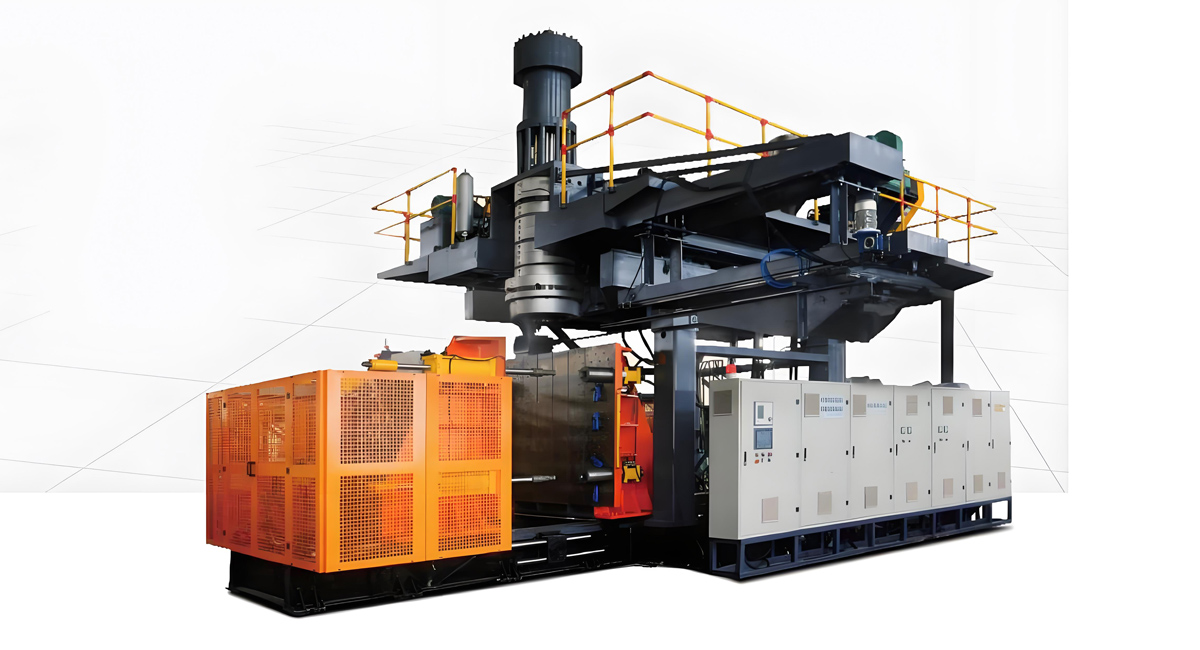
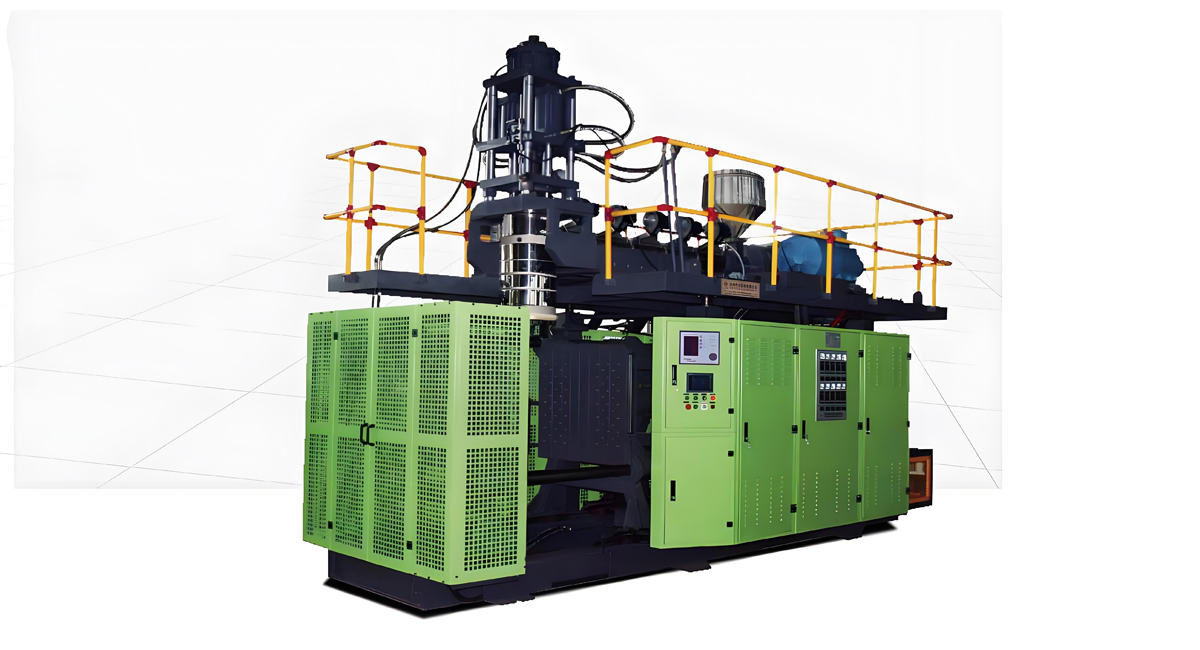
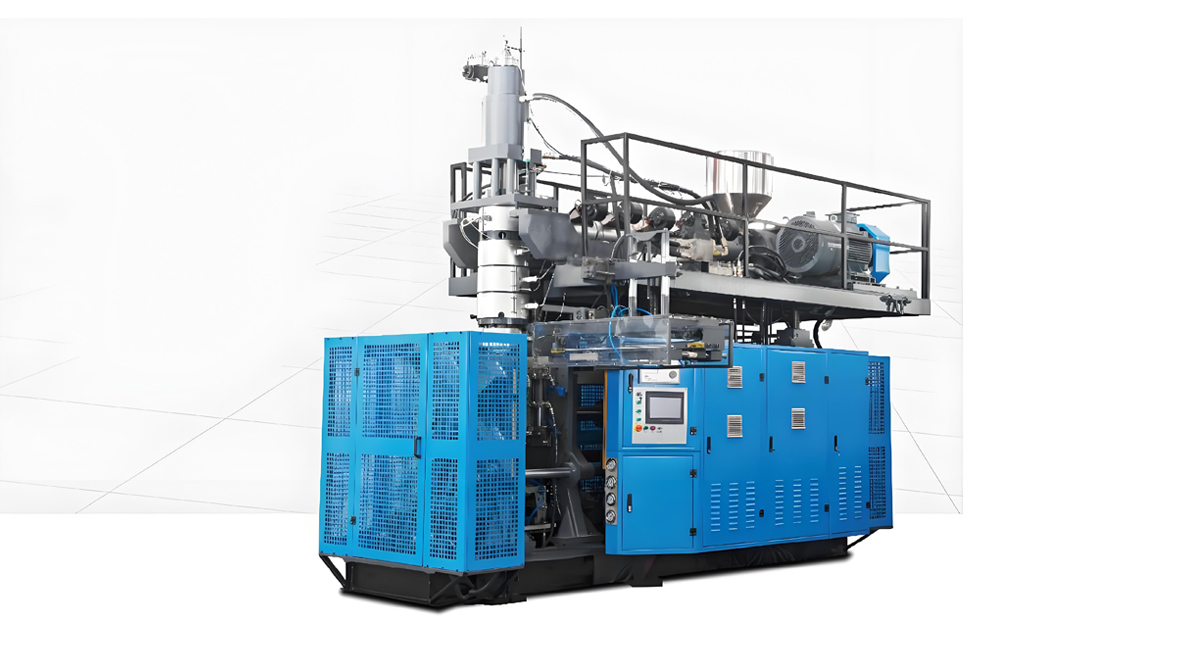
Option 1 – 80mm Double-Station Extrusion Blow Molding Machine (★★★★★ Recommended)
This is the most popular and well-balanced solution for manufacturing bottles from 200ml to 5L.
Suitable for:
- Shampoo bottles
- Detergent bottles
- Laundry detergent bottles
- Bleach bottles
- Lubricant bottles
- Agrochemical bottles
- Chemical containers
Recommended Configuration
- Double-station design
- 80mm high-efficiency screw
- 24:1 L/D ratio
- Variable-frequency drive
- Servo hydraulic system (energy saving)
- Automatic lubrication
- Automatic bottle take-out (optional)
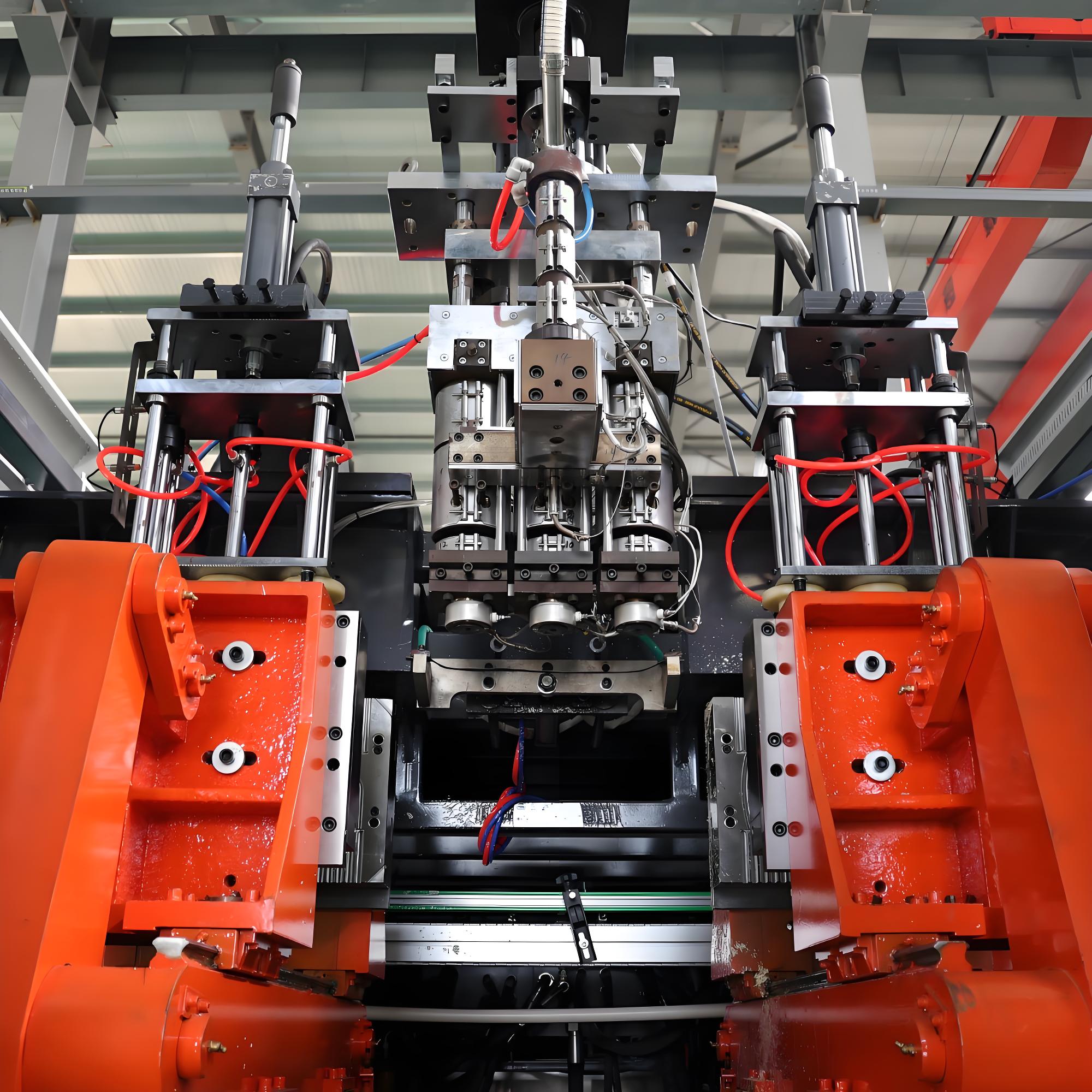
- Parison programming
- MOOG parison wall thickness control (optional)
Advantages
- Covers the complete range from 200ml to 5L
- High productivity for small bottles
- Stable extrusion for larger containers
- Lower energy consumption
- Excellent flexibility for future expansion
For most customers, the 80mm double-station machine offers the best balance between investment cost, production efficiency, and product versatility.
Option 2 – 90mm Double-Station Extrusion Blow Molding Machine
If 5L bottles account for a large proportion of production, a 90mm screw is recommended.
Typical products include:
- Laundry detergent containers
- Edible oil bottles
- Lubricant containers
- Chemical drums
Advantages
- Higher extrusion output
- Greater plasticizing capacity
- More stable wall thickness
- Shorter production cycles for large containers
A 90mm machine is generally recommended when 5L bottles represent more than 40% of total production.
Option 3 – Future Expansion Plan
For customers planning to increase production capacity, a phased investment strategy is recommended.
Phase 1
Install one 80mm machine to produce the complete product range.
Phase 2
Add one 90mm machine dedicated to producing larger bottles from 3L to 5L.
This creates two specialized production lines:
- Small bottle production line (200ml–2L)
- Large container production line (3L–5L)
This approach improves overall productivity while minimizing mold changes.
4. Recommended Mold Configuration
Different bottle sizes require different cavity numbers to maximize productivity.
| Bottle Size | Recommended Cavities |
|---|---|
| 200ml | 6–8 Cavities |
| 500ml | 4–6 Cavities |
| 1L | 4 Cavities |
| 2L | 2–4 Cavities |
| 5L | 1–2 Cavities |
A well-designed mold configuration helps maximize machine performance and production efficiency.
5. Recommended Auxiliary Equipment
A complete extrusion blow molding production line typically includes:
Automatic Material Loader
          │
Color Mixer
          │
Extrusion Blow Molding Machine
          │
Water Chiller
          │
Mold Temperature Controller (Optional)
          │
Air Compressor
          │
Air Receiver Tank
          │
Refrigerated Air Dryer
          │
Precision Air Filters
          │
Automatic Take-Out Robot
          │
Conveyor
          │
Leak Tester
          │
Packaging System
Proper auxiliary equipment ensures stable production, improves efficiency, and guarantees consistent product quality.
6. Key Process Control Points
1. Wall Thickness Control
For small bottles, maintaining consistent bottle weight is critical.
For large containers, the bottom, shoulder, and handle areas must have sufficient strength.
Recommended technologies include:
- Parison Programming
- MOOG Parison Wall Thickness Control (optional)
These systems optimize wall thickness distribution and reduce material waste.
2. Mold Cooling
Cooling time varies depending on bottle size.
| Bottle Size | Typical Cooling Time |
|---|---|
| 200ml | 5–8 sec |
| 500ml | 6–10 sec |
| 1L | 8–12 sec |
| 2L | 10–15 sec |
| 5L | 15–25 sec |
Efficient cooling channel design can significantly shorten cycle time and increase productivity.
3. Matching Screw Size to Production Requirements
Selecting the appropriate screw size is crucial.
If the screw is too small:
- Insufficient extrusion output for 5L bottles
- Unstable wall thickness
- Longer production cycles
If the screw is too large:
- Longer material residence time when producing small bottles
- Higher energy consumption
- Reduced efficiency for lightweight bottles
For manufacturers producing bottles from 200ml to 5L, an 80mm screw is generally considered the optimal choice, providing the best balance between extrusion capacity, energy efficiency, and production flexibility.
Conclusion
For manufacturers producing bottles ranging from 200ml to 5L, machine selection should consider not only current production requirements but also future expansion and production flexibility.
From the perspectives of investment cost, production efficiency, energy consumption, and product coverage, the 80mm double-station extrusion blow molding machine is the preferred solution for most applications. If 5L bottles account for a significant portion of production, a 90mm double-station machine is the better choice.
A high-quality extrusion blow molding machine should provide stable extrusion performance, precise wall thickness control, quick mold changes, recipe management, and energy-efficient operation. More importantly, customers are investing not only in a machine but also in a complete manufacturing solution that helps improve productivity, reduce operating costs, and support long-term business growth.
If you want more processing details guide , please contact shelley :
E-mail: shelley@wanplas .com
Whatsapp :+86 18251979295