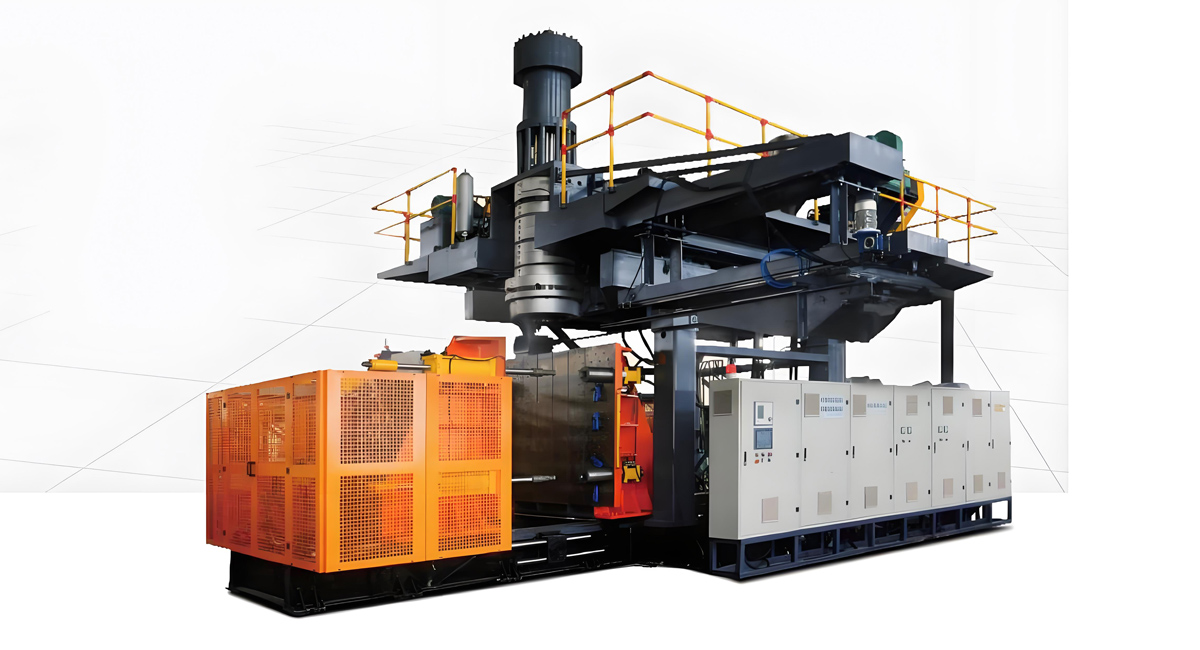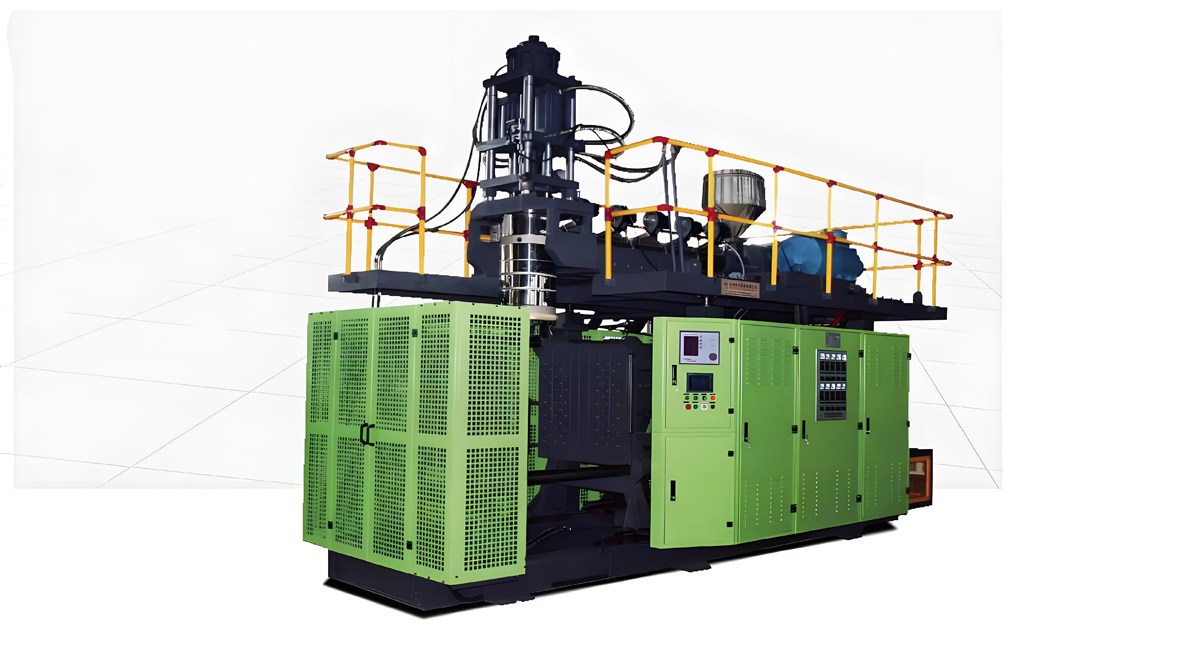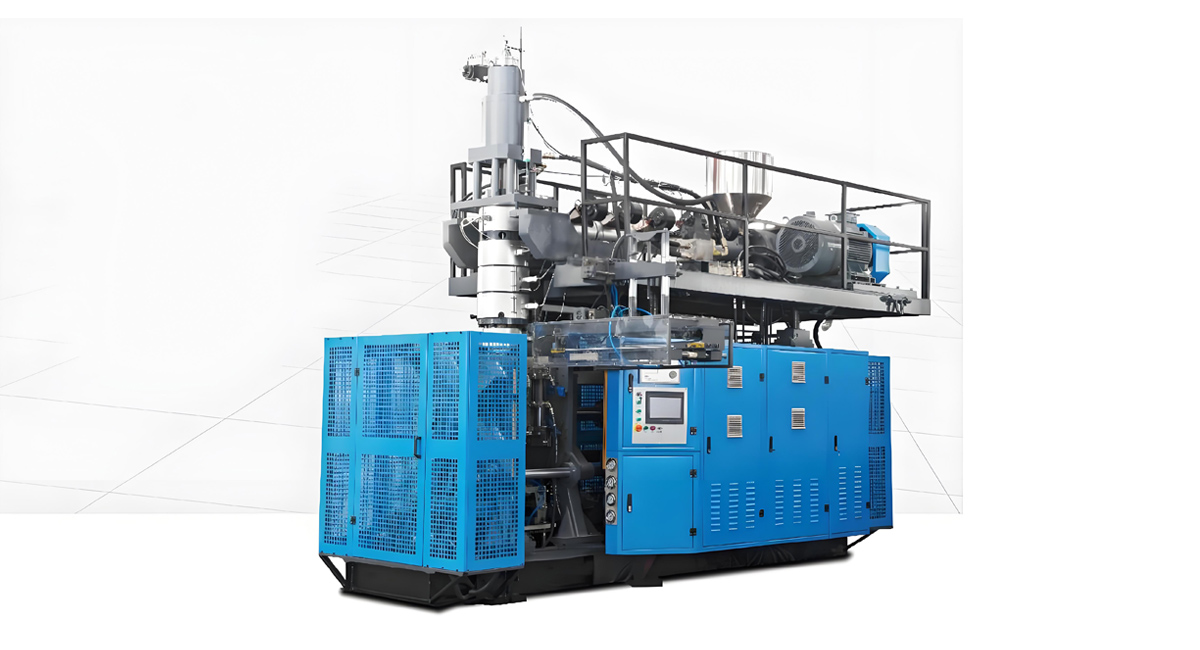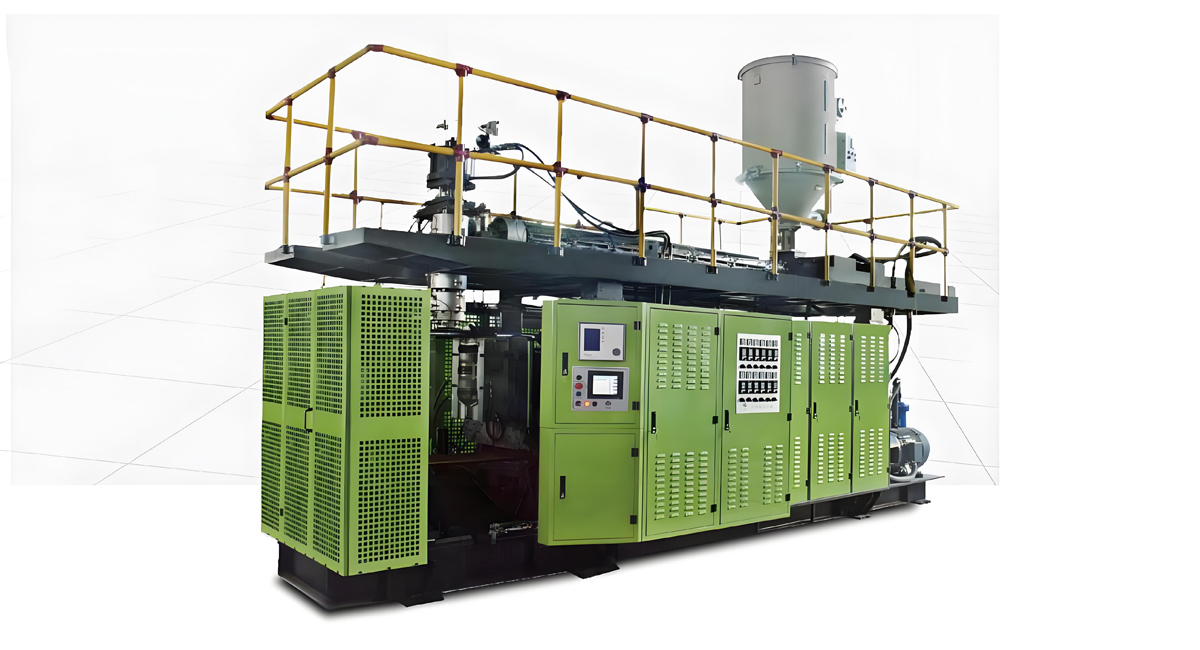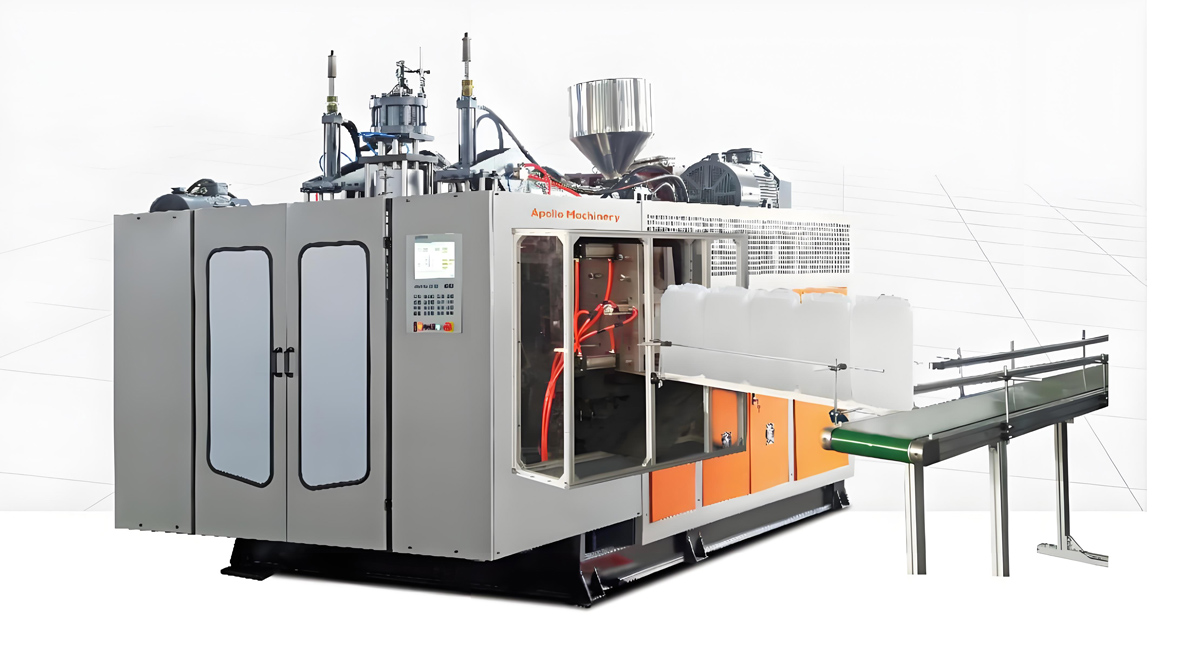

An extruded blow molding machine is a capital-intensive asset that sits at the heart of any plastic container production line. Whether you run a single-station unit for cosmetic bottles or a multi-layer accumulator-head system for industrial drums, the difference between a plant that ships on time and one that fights constant downtime usually comes down to one thing: maintenance discipline. This guide walks plant managers, maintenance leads, and first-time buyers through a practical, schedule-driven approach to keeping an extruded blow molding machine running at rated output for years longer than the warranty period.
If you are evaluating a purchase, the same maintenance realities below should shape your buying decision. A machine that is easy to service will cost far less over its life than a cheaper unit with buried components and scarce spare parts. Read on for daily, weekly, and monthly routines, a preventive maintenance schedule you can print and post, a fault-finding table your operators can use on the floor, and the spare-parts strategy that keeps unplanned stops to a minimum.
Why Maintenance Decides Your EBM Return on Investment
Extrusion blow molding converts molten polymer into hollow parts by forming a parison, clamping it inside a mold, inflating it with compressed air, and cooling it before ejection. Every one of those steps depends on mechanical, hydraulic, pneumatic, and electronic subsystems that degrade predictably if ignored. The extruder screw wears, the die head accumulates carbon, the clamp carriage drifts out of alignment, and the cooling channels scale up until cycle times creep upward. None of these failures announce themselves loudly at first, which is exactly why a reactive “run it until it breaks” philosophy is so expensive.
Industry surveys of plastic processing plants consistently show that unplanned downtime accounts for a large share of lost production hours, and that the majority of those stoppages trace back to wear that a routine inspection would have caught. A single clamp cylinder seal failure on a high-output line can idle the cell for a full shift while a replacement is sourced. Multiply that across a year and the lost output easily exceeds the price of a structured maintenance program many times over. Good maintenance is not a cost center; it is the single most reliable lever for protecting the return on a machine that may have cost hundreds of thousands of dollars.
Beyond uptime, maintenance protects part quality. การเปลี่ยนแปลงความหนา, flash, and weak weld lines are rarely caused by the polymer alone. They are caused by a worn breaker plate, an unbalanced die gap, or a parison controller that has drifted. Operators who understand the maintenance backbone of the process can separate “material problem” from “machine problem” in minutes instead of blaming the resin and scrapping a shift of product.
Anatomy of an เครื่องบีบพลาสติกและการชุบเย็น
To maintain the equipment you have to know what wears. A typical extruded blow molding machine breaks into a handful of subsystems, each with its own failure modes and service intervals.
The เครื่องอัดและสกรู
The extruder is where polymer is plasticated. A rotating screw inside a heated barrel pushes melt forward through a screen pack and breaker plate into the die head. The screw and barrel are the most wear-prone components because they operate under high shear, high temperature, and abrasive filler loads. Glass-filled compounds and regrind accelerate flight and barrel wear, which widens the clearance and reduces pumping efficiency. Once that clearance grows, you see surging, inconsistent parison weight, and higher amperage draw for the same output.
The Die Head and Parison System
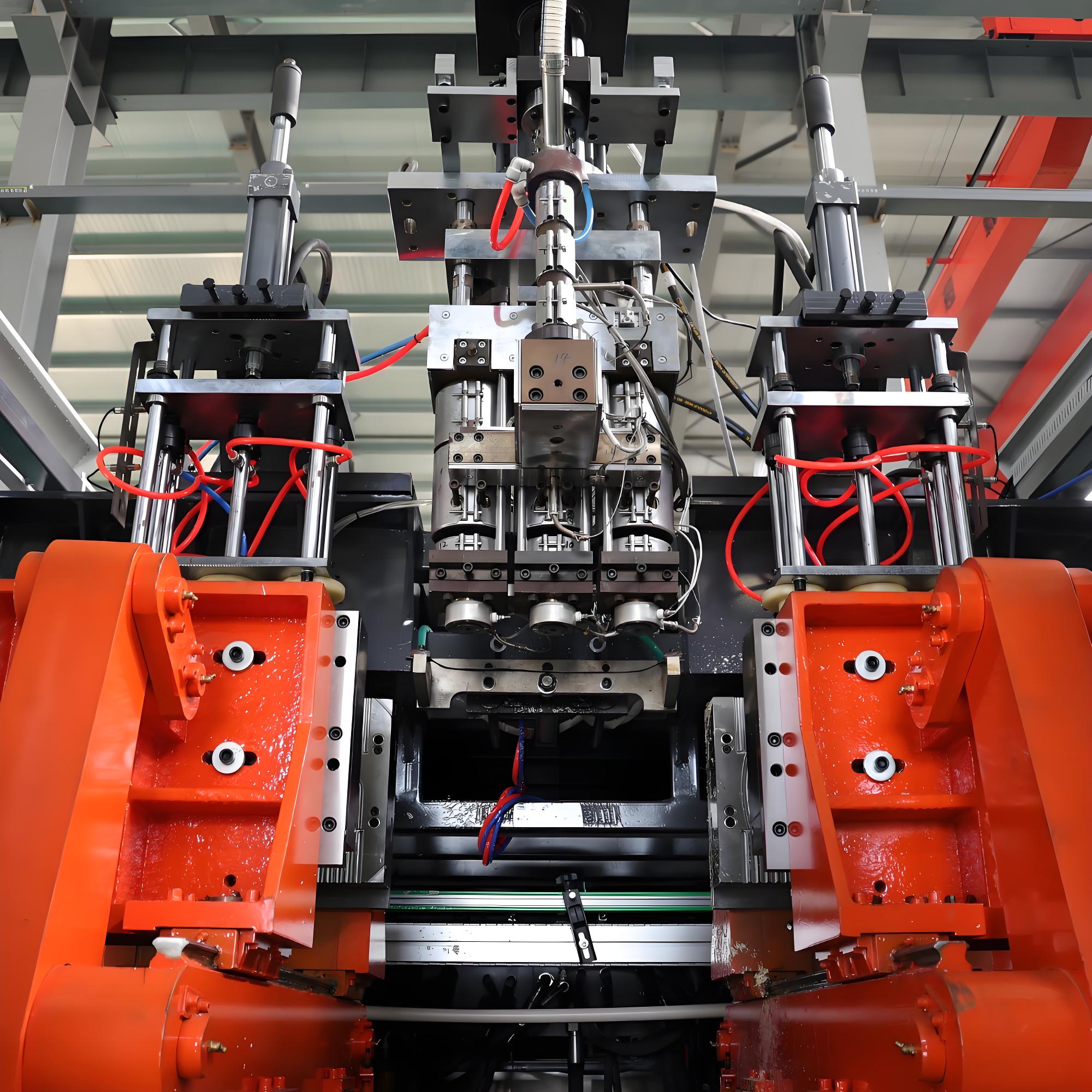
The die head shapes the parison, the hollow tube of melt that becomes the bottle or tank. In continuous-extrusion machines the melt flows steadily; in accumulator-head and reciprocating-screw machines it is stored and ejected rapidly. The die gap must stay symmetric, and the mandrel must stay centered, or the parison wall will be thicker on one side. Carbon buildup on the flow surfaces, often from degraded material or color changes, is a frequent source of streaking and black specks in the finished part.
The Clamping and Blow Unit
The clamp unit closes the mold, the blow pin inflates the parison, and the cooling circuit solidifies the part. Tie bars, platens, and the clamp cylinder take repeated shock loading. Misalignment here produces flash, shortened mold life, and uneven parting lines. The blow pin and its needle valves wear from abrasive dust and frequent cycling, leading to leaks and weak bottle necks.
Hydraulic, Pneumatic, and Control Systems
Hydraulic power moves the clamp and, on many machines, the carriage and extruder. Hydraulic oil degrades with heat and moisture, and contaminated oil destroys valves and pumps. The control system, typically a programmable logic controller with temperature modules and parison-programming electronics, is sensitive to electrical noise, heat, and vibration. Sensors for melt pressure, barrel temperature, and position are cheap to replace but catastrophic to ignore when they drift.
Daily Maintenance Checklist
Daily routines are the front line of defense. They take ten to twenty minutes per shift and prevent the majority of acute failures. Train every operator to complete this list at the start of the shift and to log it on a simple paper or digital form.
- Inspect the area around the extruder and hydraulic power unit for oil leaks, water drips, and accumulated dust.
- Check hydraulic oil level and look for milky discoloration that signals water ingress.
- Verify barrel and die-head temperatures against the set points; a drift of more than a few degrees warrants investigation.
- Confirm cooling water flow at the mold and barrel; restricted flow raises cycle time and can seize the screw.
- Listen for abnormal knocking, whining, or grinding from the gearbox, clamp, or hydraulic pump.
- Wipe the die lips and mandrel area to remove early carbon or bleed; small daily attention prevents large scrap runs.
- Check air pressure at the blow pin and verify the needle valve seals without leaking during the blow phase.
- Review the previous shift log for repeated faults, short stops, or quality alerts before starting production.
The value of this list is consistency. A machine that gets a clean daily check almost never suffers a “sudden” catastrophic failure, because the warning signs were caught while they were still cheap to fix.
Weekly Maintenance Routines
Weekly tasks go a level deeper and are usually performed by a maintenance technician rather than the operator. Budget thirty to sixty minutes per machine.
- Clean or replace hydraulic return-line and suction filters according to the pressure-differential indicator.
- Inspect the screw cooling line for blockage; restricted internal cooling causes screw slip and degraded melt.
- Tighten electrical terminals in the control cabinet and check for heat discoloration on contactors.
- Lubricate the clamp carriage, toggle joints, and mold-opening guides with the specified grease grade.
- Calibrate or at least cross-check key temperature sensors against a handheld probe.
- Inspect the parison programmer or moog-type wall-thickness controller for drift and re-zero if needed.
- Check belt tension on auxiliary drives and the air compressor that feeds the blow system.
- Sample hydraulic oil for water content and particulate count if your site runs a condition-monitoring program.
Weekly lubrication and filter attention is where most plants either gain years of life or lose them. The cost of a filter is trivial next to the cost of a pump destroyed by skipped filtration.
Monthly and Quarterly Service
Monthly and quarterly service is the domain of the maintenance lead or an outside service engineer. These intervals catch wear that daily and weekly checks cannot see.
- Measure screw and barrel wear using a clearance check or a periodic melt-output test; trend the numbers over time.
- Perform a full hydraulic oil analysis and replace the oil if the results exceed your acceptance limits.
- Inspect tie bars for cracks or bending and verify platen parallelism with a dial indicator.
- Clean the die head fully during a planned color or material change rather than running contaminated melt.
- Test emergency stops, guards, and interlocks to keep the cell safe and compliant.
- Review the fault log with production to find recurring stoppages and convert them into preventive actions.
- Quarterly, check the gearbox oil and the thrust bearing for the extruder, the most loaded mechanical elements.
- Quarterly, verify the calibration of the parison control and the weight of the finished part against the target.
The discipline of trending screw wear and oil condition turns maintenance from guesswork into predictable planning. You stop ordering parts in a panic and start replacing them on a schedule that fits your production calendar.
ค่าจัดมืออาชีพการดูแลรักษาเพื่อป้องกันสายรั่ว at a Glance
The table below summarizes a practical preventive maintenance plan for a continuous-extrusion blow molding cell. Adjust intervals for abrasive compounds, multi-shift operation, and ambient dust. A printed copy posted at the machine turns this from advice into habit.
| Interval | Subsystem | Action | Typical Time |
|---|---|---|---|
| ทุกวัน | Hydraulics | Check oil level, leaks, and milky discoloration | 5 min |
| ทุกวัน | Cooling | Confirm water flow at mold and barrel | 3 min |
| ทุกวัน | Die head | Wipe die lips, remove early carbon | 5 min |
| สัปดาห์ละครั้ง | Filtration | Service hydraulic return and suction filters | 20 min |
| สัปดาห์ละครั้ง | Lubrication | Grease clamp, toggle, and guides | 15 min |
| สัปดาห์ละครั้ง | Controls | Tighten terminals, check sensor drift | 15 min |
| ทุกเดือน | เครื่องบด | Screw and barrel wear trend check | 45 min |
| ทุกเดือน | Hydraulics | Oil analysis, replace if out of spec | 30 min |
| ทุกไตรมาส | บุคลากร | Tie-bar and platen parallelism check | 60 min |
| ทุกไตรมาส | Gearbox | Inspect oil and thrust bearing | 30 min |
| อุปกรณ์ประเภทปีน (Annual) | Full system | Complete overhaul and recalibration | 1 to 2 days |
Common Faults and How to Fix Them
Even with good maintenance, faults happen. The table below maps the most common extrusion blow molding symptoms to likely causes and first actions, so your team can recover quickly instead of guessing.
| อาการผิดปกติ | Likely Cause | First Action |
|---|---|---|
| Parison surges or varies in weight | Screw or barrel wear; screen pack clogged | Check melt pressure trend; replace screen pack; plan screw inspection |
| Black specks in the part | Carbon buildup in die head or degraded regrind | Purge with cleaning compound; disassemble and clean die head |
| Uneven wall thickness on one side | Mandrel off-center; die gap uneven | Re-center mandrel; measure and adjust die gap symmetrically |
| Excess flash at parting line | Clamp misalignment; worn mold; low clamp pressure | Check platen parallelism; raise clamp pressure; inspect mold |
| Slow cycle time | Scaling in cooling channels; low water pressure | Descale mold cooling lines; verify pump and flow rate |
| Hydraulic pump noise | Low oil, air ingress, or worn vanes | Top up and bleed oil; check suction filter; inspect pump |
| Weak or leaking bottle neck | Worn blow pin or needle valve | Replace blow pin seal; check valve seating |
| Temperature overshoot | Failed thermocouple or SSR | Swap sensor; verify solid-state relay and PID tuning |
Spare Parts You Should Always Stock
A maintenance program is only as fast as your ability to source parts during a failure. Stocking the right consumables locally is the cheapest insurance against a multi-day stop. Build a minimum inventory around the items that fail often and that carry long lead times from the original equipment supplier.
- Hydraulic filters, seals, and O-rings sized to your power unit, kept in sealed bags.
- Breaker plates and screen packs, plus a spare heater band and thermocouple for each zone.
- Blow pin seals and needle valves, which wear quickly under dusty conditions.
- Common contactors, relays, and fuses for the control cabinet.
- A spare parison control module or at least the service manual and part numbers.
- Grease and oil grades specified by the manufacturer, stored away from heat and moisture.
- Critical wear items such as clamp bushings if your machine runs multiple shifts.
For machines from a supplier with a global service network, confirm which parts are interchangeable across your fleet so a single stock covers several lines. Standardizing on one or two machine platforms, rather than mixing many brands, pays for itself the first time a shared spare part gets you running within the hour.
Lubrication Principles
Lubrication is where most plants either protect their investment or quietly destroy it. The rule is simple: use the specified grade, on the specified interval, and never mix incompatible greases. The clamp toggle, carriage guides, and mold-opening mechanism operate under shock loads and benefit from a high-load extreme-pressure grease. The extruder thrust bearing needs the gearbox oil grade called out in the manual, not a generic substitute.
Over-greasing is as harmful as under-greasing. Excess grease attracts abrasive dust and can migrate into the melt path or onto molded surfaces. Train technicians to wipe the excess and to watch for contaminated grease that has turned dark or gritty. A grease analysis program, feasible even for mid-size plants, catches bearing wear months before failure by reading the metal content in the lubricant.
Hydraulic and ระบบทำความเย็น Care
The hydraulic system deserves special attention because it is both powerful and unforgiving. Contaminated oil is the leading cause of valve sticking, pump wear, and erratic clamp motion. Keep the reservoir breather clean, never open the system without capping lines, and replace filters on the indicator rather than the calendar alone. If you see the oil turn milky, treat water ingress as an emergency: a water-contaminated system can corrode components internally within weeks.
Cooling is the hidden throttle on output. As scale builds inside mold channels, heat removal drops and cycle time climbs. A machine that once produced a part in fourteen seconds may quietly drift to seventeen, and nobody connects the lost output to a clogged water line. Periodic descaling with a compatible solution, and a simple flow-meter check, keeps the cell at its designed rate. For plants in hard-water regions, a water-softening or reverse-osmosis loop for the mold cooling supply is one of the highest-return investments available.
Electrical, PLC, and Sensor Care
Modern extruded blow molding machines are controlled by programmable logic controllers with multiple temperature loops, position feedback, and parison programming. These systems fail slowly and confusingly when neglected. Heat and vibration loosen terminals; electrical noise corrupts sensor signals; and a single failed thermocouple can drive a whole zone into overshoot, degrading the melt and the part.
Keep the control cabinet clean and cool, seal it against plastic dust, and verify the cabinet air conditioner or fan is working. Treat the annual recalibration of temperature and position sensors as non-negotiable. When a fault code appears, resist the reflex to clear it and restart; read it, log it, and address the root cause, because repeated clearing masks the trend that predicts a real failure.
How Good Maintenance Extends Machine Life
A well-maintained extruded blow molding machine routinely serves ten to fifteen years or more at near-design output, while a neglected one can require a major rebuild inside five. The gap is not luck. It is the compound effect of catching wear early, keeping oil and cooling clean, and respecting the manufacturer’s intervals. Each replaced seal, each cleaned die head, and each logged sensor check adds shifts of uptime that would otherwise have been lost to breakdowns.
For buyers, this is the real total cost of ownership story. A lower purchase price on a machine with poor service access and scarce parts is false economy if you cannot keep it running. When comparing suppliers, ask directly about mean time between failures reported by similar plants, the local availability of spare parts, and the depth of the technical documentation. A supplier that publishes a clear maintenance schedule and stocks wear parts regionally is worth a premium over one that sells cheap and disappears.
Training Your Operators
The best maintenance system in the world fails if the people on the floor cannot recognize trouble. Operator training should cover the daily checklist, the meaning of common alarm codes, and the difference between a process adjustment and a mechanical fault. When operators understand why they wipe the die lips or why they report a milky hydraulic sample, they stop treating the checklist as paperwork and start treating it as their own production insurance.
A practical approach is to pair new operators with a senior technician for a fixed period and to run a short monthly review of the fault log as a team. Over time the plant builds an internal knowledge base that survives staff turnover. Plants that invest in this kind of training consistently report fewer unplanned stops and tighter quality, because problems are caught at the shift level rather than discovered at the quality audit.
Commissioning and First-Week Care for a New Machine
The maintenance story of an extruded blow molding machine begins before the first part is molded. A careful commissioning phase sets the baseline that every future check is measured against. When the supplier’s engineers install the line, insist on witnessing the alignment verification, the initial hydraulic oil fill and filtration, and the first production trials under load. Record the as-installed temperatures, pressures, and cycle times; these numbers become your reference for detecting drift later.
The first week of production is a soft break-in period even for a new machine. Run at moderate rates, watch the barrel and oil temperatures settle to stable values, and confirm the parison program produces consistent wall distribution before you push for maximum output. Pay extra attention to the hydraulic reservoir temperature during this window, because a cooling loop that is marginally undersized will reveal itself only under sustained running. Catching that early, while the supplier is still on site, is far cheaper than discovering it after the warranty visit ends.
A practical commissioning habit is to build the machine’s first maintenance log on day one. Note the serial numbers of wear parts, the grades of oil and grease used, and the torque values of critical fasteners. That binder, kept at the cell, turns the inevitable future repair from a forensic exercise into a five-minute parts order. Plants that start this discipline during commissioning consistently outperform those that scramble to reconstruct history after the first breakdown.
Energy Efficiency: The Hidden Payoff of Clean Equipment
Maintenance is usually justified by uptime and quality, but it also governs energy consumption, a cost that compounds every hour the machine runs. A worn screw and barrel pair pumps less melt per revolution, so the motor draws more amperage to make the same part. Scaled cooling channels force longer cycle times, which means more electricity per bottle or tank. Contaminated hydraulic oil raises pump losses, and dry or misaligned bearings convert perfectly good power into heat instead of motion.
For a high-output line running continuously, even a few percent of avoidable energy waste equals a meaningful annual bill. The same routines that prevent breakdowns, regular filtration, screw and barrel monitoring, cooling-line descaling, and bearing lubrication, are also the levers that keep the machine near its design efficiency. Viewing maintenance as an energy strategy, not merely a repair function, reframes the spending: every filtered oil change and every cleaned heat exchanger is also a reduction in the cost per finished part.
Buyers comparing machines should ask suppliers for documented energy-per-part figures under representative conditions, and should verify that the quoted numbers depend on the recommended maintenance interval being followed. A specification that looks efficient on paper but requires impractical service to sustain is not the bargain it appears to be.
Maintenance Documentation and Logs
The most underrated maintenance tool is the logbook. A disciplined record of operating hours, parts replaced, faults encountered, and oil-sample results converts scattered memory into trend data that predicts failure. When a screw-wear trend line starts climbing, you order the replacement during a planned stop instead of during a crisis. When a recurring fault code appears every six weeks, the log makes the pattern impossible to ignore and points directly at the subsystem to rebuild.
Paper logs posted at the machine are a fine start, but a simple computerized maintenance management system, even a basic shared spreadsheet, multiplies their value by making the data searchable across the whole fleet. Link each entry to the specific machine serial number and the shift, and photograph replaced parts where useful. Beyond operations, thorough records protect your warranty position, because most suppliers require evidence of proper maintenance before honoring a claim, and they materially raise resale value, because a documented machine is worth more than an undocumented one with the same hours.
Common Maintenance Mistakes to Avoid
Even motivated teams fall into predictable traps. The first is treating the daily checklist as paperwork to be signed rather than a real inspection; a box ticked without looking finds nothing. The second is over-greasing, on the theory that more lubricant is safer, when in fact excess grease collects abrasive dust and can contaminate the melt path. The third is clearing fault codes and restarting without recording the cause, which deletes the very trend that would have prevented the next stoppage.
Another expensive mistake is deferring hydraulic oil and filter service to save an hour, only to replace a pump that costs hundreds of times more. A related one is mixing incompatible grease or oil grades because the specified product is temporarily out of stock; the short-term convenience quietly accelerates wear. Finally, many plants skip the annual recalibration of sensors, trusting that a zone “looks fine,” until a drifting thermocouple produces a batch of off-spec parts that were perfectly avoidable.
The antidote to all of these is culture, not just procedure. When supervisors treat the maintenance log as a production KPI and when operators are rewarded for catching early warnings, the mistakes above largely disappear. The most reliable plants are not those with the most sophisticated equipment; they are the ones where a small anomaly is never allowed to become a big failure.
คำถามที่พบบ่อย
How often should I change the hydraulic oil?
For a single-shift operation with clean conditions, a full hydraulic oil change every two to three years is typical, provided quarterly samples stay within limits. Multi-shift, dusty, or hot environments may require annual changes. Always decide on oil condition through analysis rather than a fixed calendar date alone.
What are the first signs a screw or barrel is wearing?
The earliest signs are subtle: melt pressure trends upward for the same output, parison weight becomes harder to hold steady, and motor amperage rises. By the time you see visible surging or frequent screen-pack clogging, wear is already significant. Trending melt pressure monthly is the most reliable early warning.
Can my own team perform most maintenance?
Yes. Daily, weekly, and most monthly tasks are straightforward with basic mechanical and electrical skills and the manufacturer’s manual. Annual overhauls, gearbox work, and major die-head rebuilds are best handled with the supplier’s service engineer or a trained contractor. The split is less about difficulty and more about specialized tooling and warranty considerations.
How much should I budget for annual maintenance?
A common planning figure is a few percent of the machine’s purchase price per year for parts and consumables, excluding major overhauls. The exact number depends on utilization, the abrasiveness of your compounds, and whether you run one or three shifts. The budget is small next to the cost of a single unplanned downtime day on a high-output line.
ความสำคัญ
Maintenance is the quiet determinant of profitability for any extrusion blow molding operation. A machine that is inspected daily, lubricated weekly, and serviced on a trended schedule will outperform a cheaper rival that is run hard and fixed rarely. Start with the checklists above, post the schedule at the machine, stock the right spare parts, and train your operators to recognize the early signals of wear. Do that consistently and your extruded blow molding machine will deliver rated output and consistent part quality long past the point where neglected equipment has already been rebuilt or replaced.
If you are specifying a new line, weigh service access, spare-parts availability, and supplier support as heavily as the headline price. The lowest total cost of ownership almost always belongs to the machine your team can keep running. For plants planning capacity, a conversation with an experienced equipment supplier about preventive maintenance packages and regional parts stock can shorten the learning curve and keep the first year of production on schedule.
The takeaway is straightforward. Maintenance is not a department you fund reluctantly; it is the operating system of a profitable molding cell. Invest in the checklists, the spare parts, the training, and the logs described here, and the machine will repay that discipline with uptime, quality, and a service life that protects every dollar you spent acquiring it.