
1. Definition
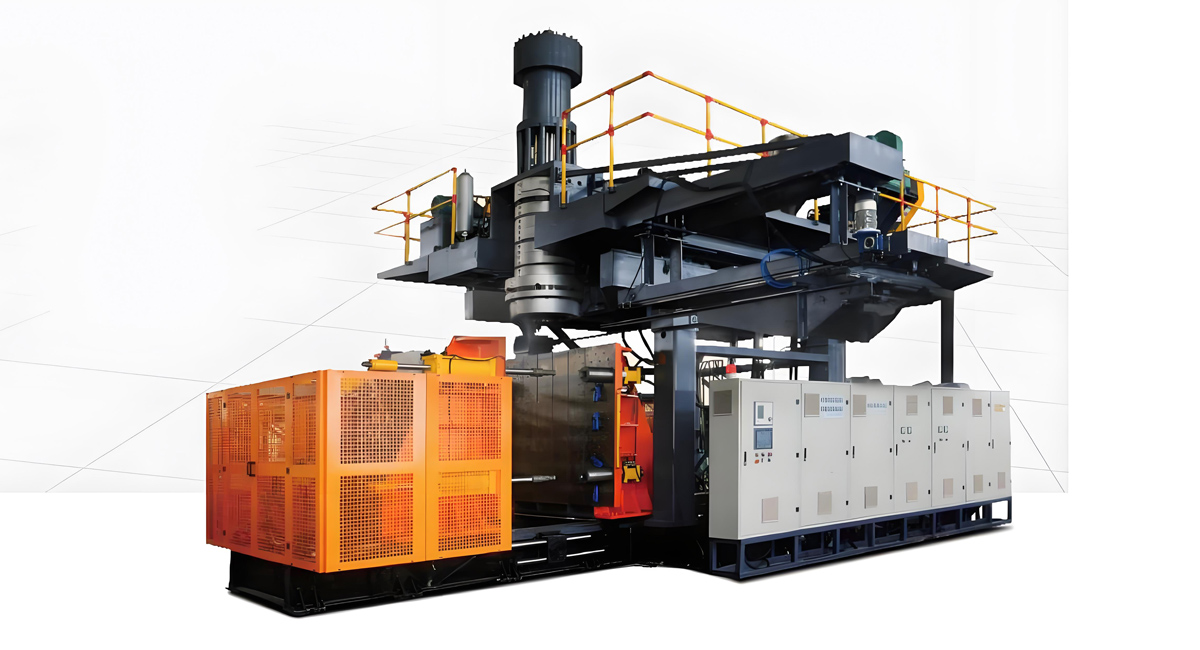
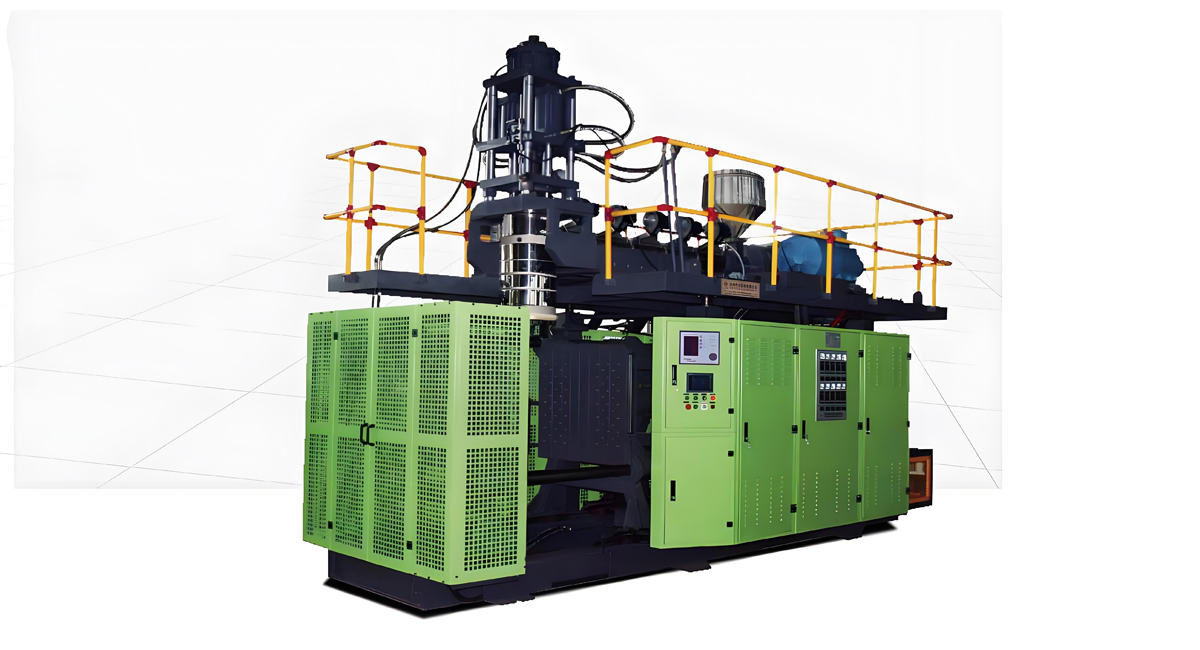
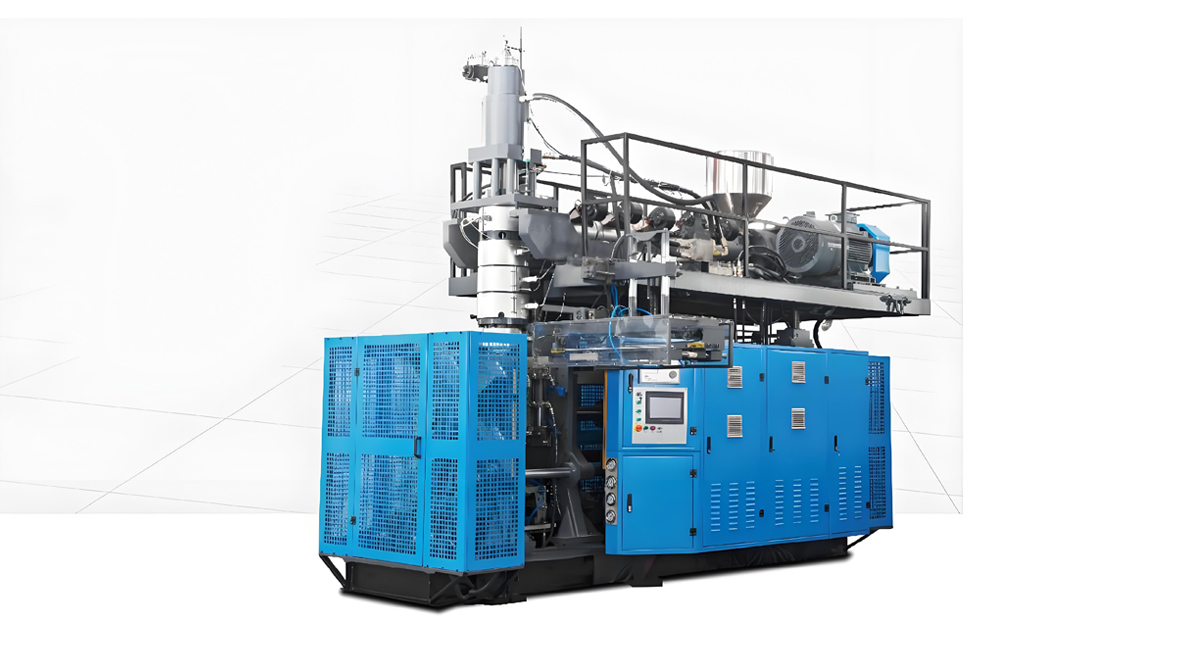
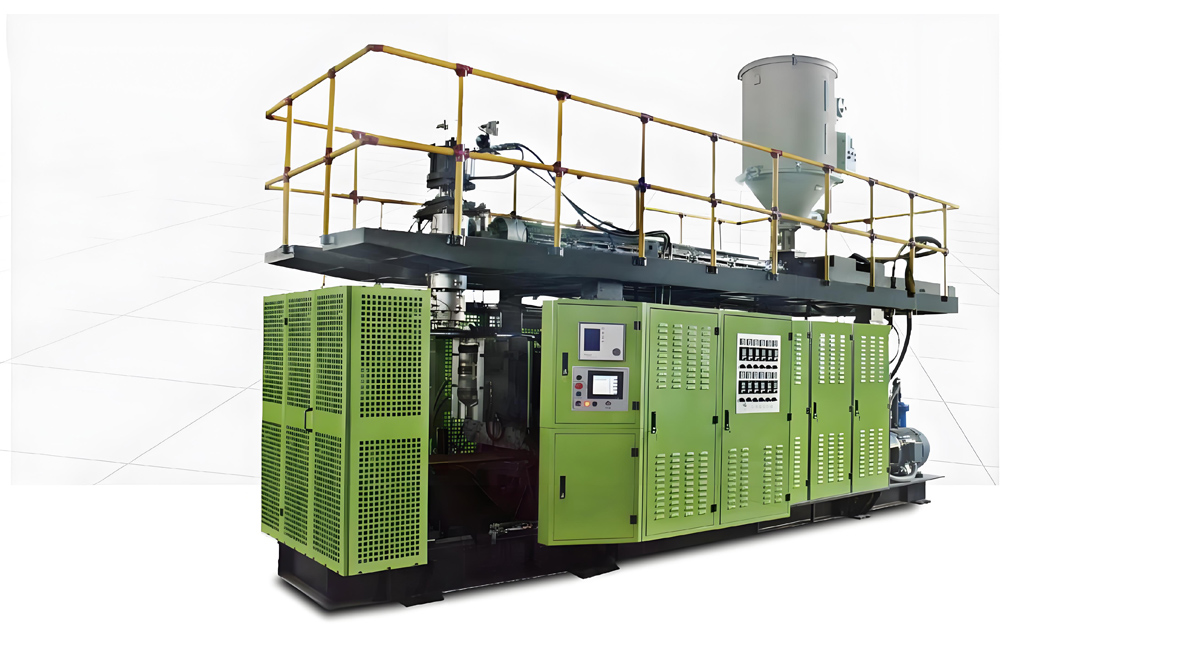
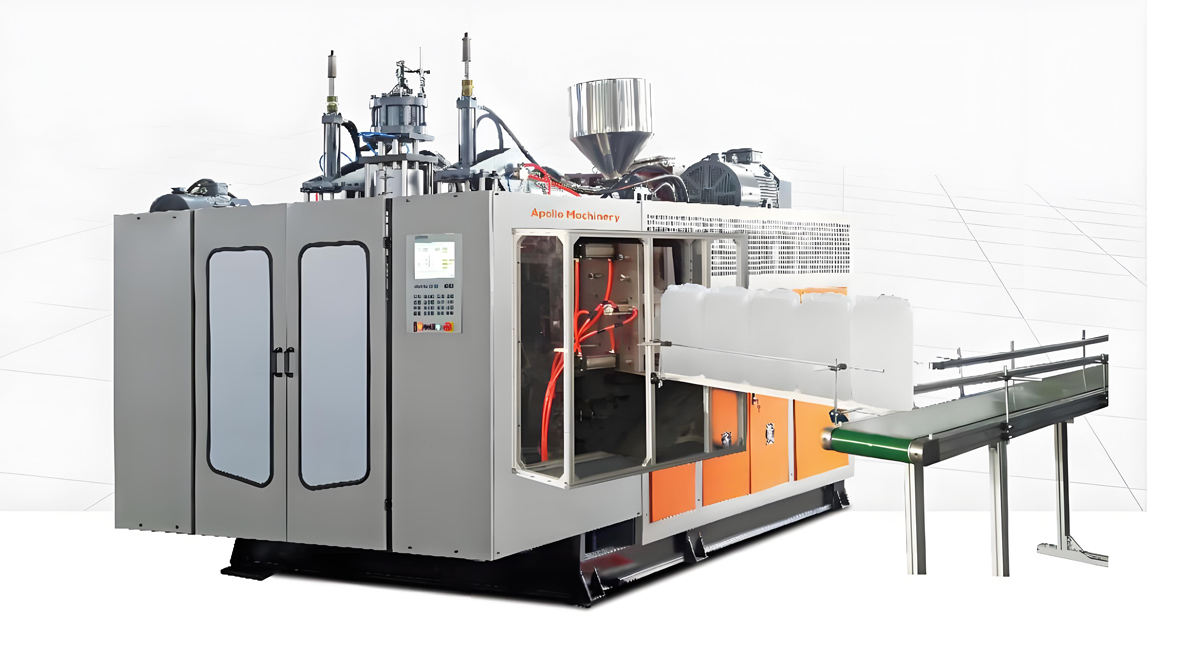
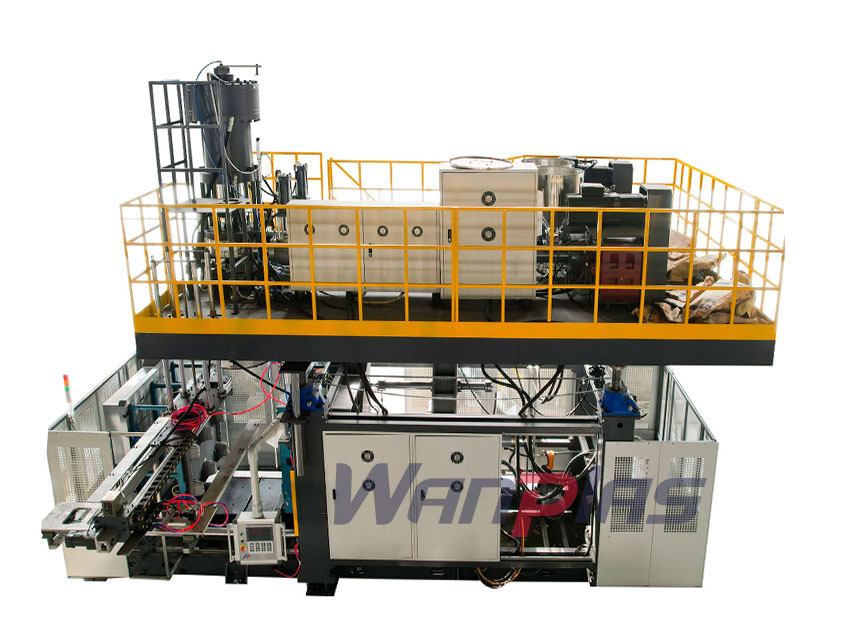
An IBC Tank Blow Molding Machine Production Line is a complete automated system designed to manufacture large hollow plastic containers, especially IBC (Intermediate Bulk Container) inner tanks, by using the extrusion blow molding process.
The production line mainly processes HDPE (High-Density Polyethylene) and similar thermoplastic materials, producing containers with the following characteristics:
- One-piece hollow structure
- High mechanical strength
- Excellent chemical resistance
- Long service life
- Suitable for storage and transportation of liquids or powders
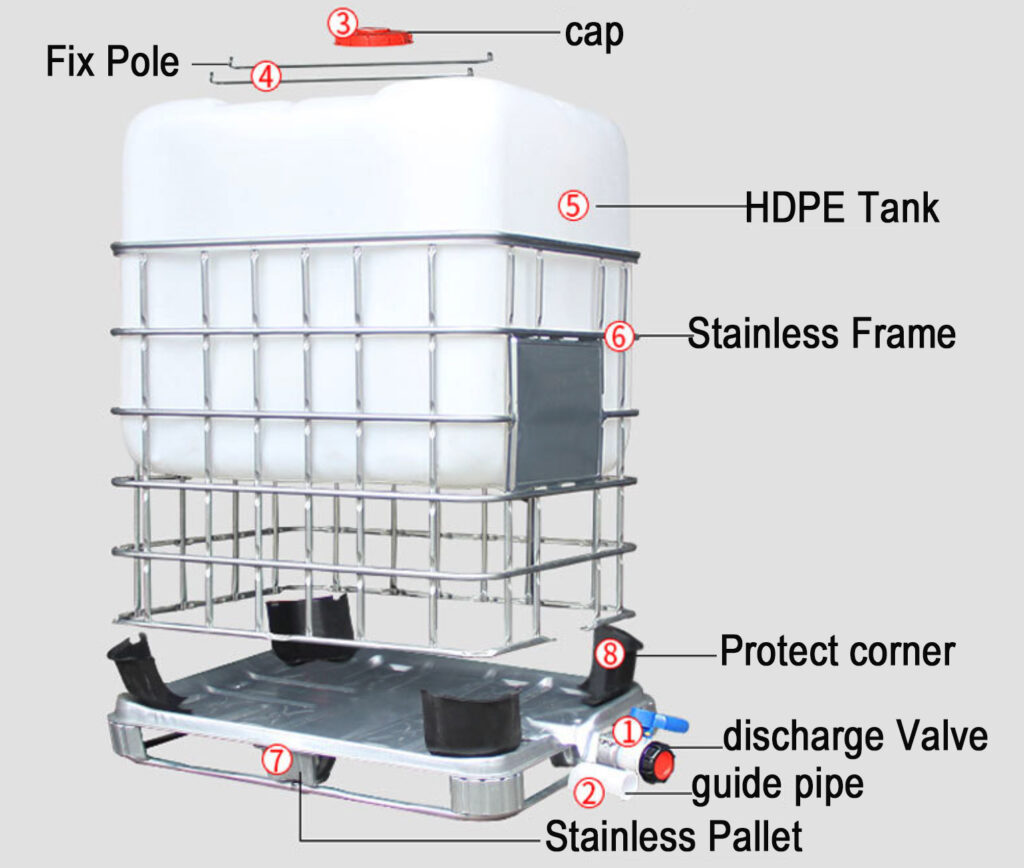
In practical applications, IBC inner tanks are usually combined with steel cage frames and pallets, forming standardized IBC containers widely used in global logistics.
2. Applications
2.1 Chemical Industry
- Industrial chemicals
- Solvents
- Additives
- Surfactants
Requirements:
✔ High chemical resistance
✔ Stress crack resistance
✔ Compliance with UN / ADR regulations
2.2 Food & Beverage Industry
- Edible oil
- Syrups
- Alcohol
- Food additives
Requirements:
✔ Food-grade HDPE
✔ Odor-free and contamination-free
✔ Compliance with FDA / EU food contact standards
2.3 Pharmaceutical & Fine Chemicals
- Pharmaceutical intermediates
- Disinfectants
- Medical solutions
Requirements:
✔ High dimensional accuracy
✔ Smooth internal surface
✔ Compatibility with clean-room production environments
2.4 Agriculture & Environmental Industries
- Pesticides
- Liquid fertilizers
- Environmental treatment liquids
3. Manufacturers and Brands
3.1 Chinese Manufacturers
Main Advantages:
- Competitive pricing
- Strong customization capability
- Flexible delivery time
- High cost-performance ratio
Suitable for:
- New factories
- Developing markets
- Middle East, Africa, Southeast Asia
3.2 International Brands
| Brand | Country | Key Strengths |
|---|---|---|
| Bekum | Germany | Heavy-duty machines, extreme stability |
| Kautex | Germany | High automation, Industry 4.0 solutions |
| SIPA | Italy | High-end container systems |
| Wanplas | China | High cost effective , good service |
Limitations:
- High investment cost
- Expensive spare parts
- Longer service response time
4. Production Line Structure
Main System Components
- Raw Material Handling System
- Automatic loader
- Dryer
- Gravimetric or volumetric dosing
- Extrusion & Plasticizing System
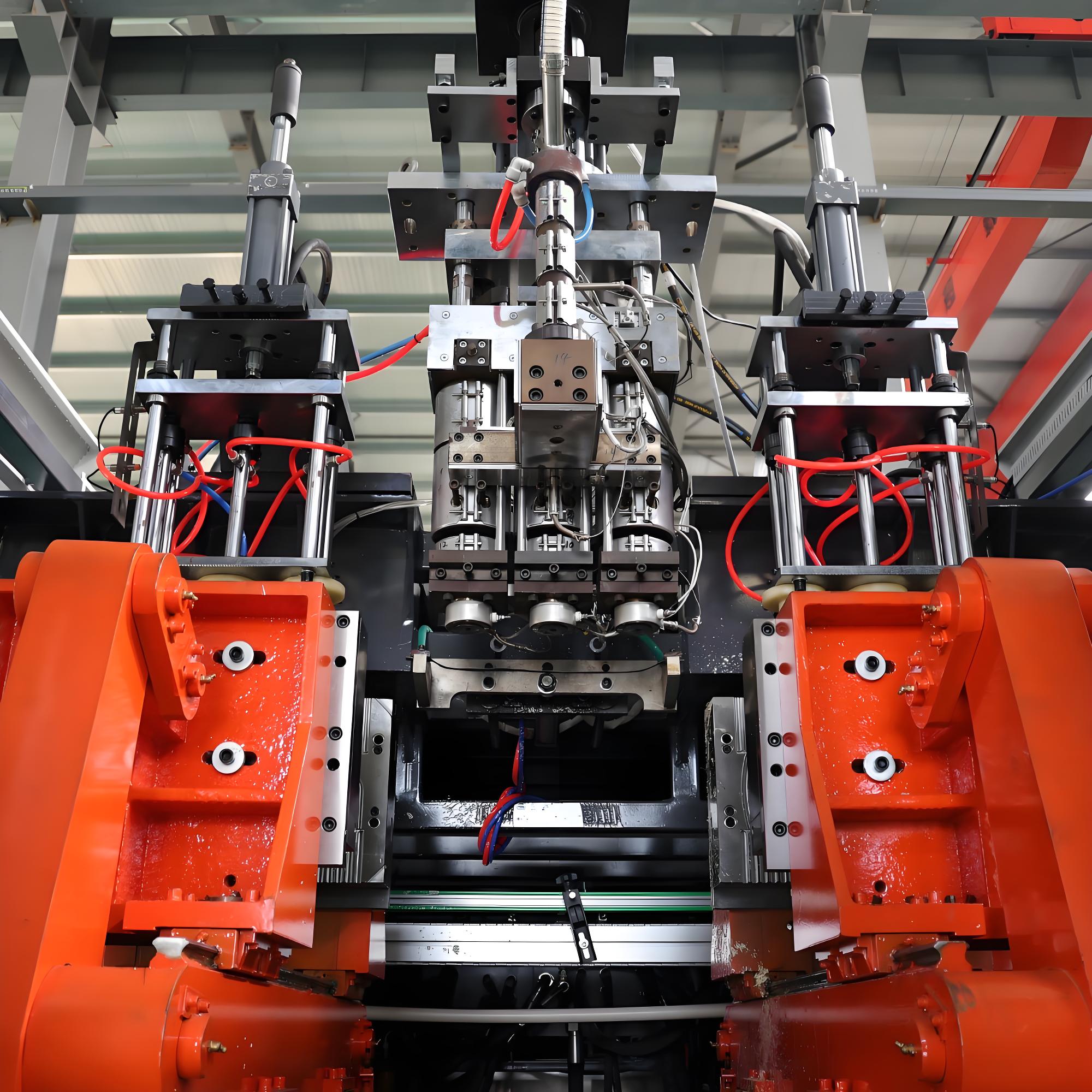
- High-efficiency screw
- Multi-zone temperature control
- Servo or inverter drive
- Die Head System
- Multi-layer co-extrusion (optional)
- Parison Wall Thickness Control System (PWDS)
- Clamping & Blowing Unit
- Heavy-duty clamping structure
- High-pressure air blowing system
- Precision molds
- Cooling & Demolding System
- Water + air cooling
- Automatic demolding
- Robot take-out system
- Post-processing System
- Deflashing
- Leak testing (optional)
- Automatic stacking
5. Classification
By Automation Level
- Semi-automatic production line
- Fully automatic production line
- Intelligent production line (Industry 4.0)
By Station Quantity
- Single-station blow molding line
- Double-station blow molding line
- Multi-station high-output line
By Product Capacity
- Containers below 200 L
- 500 L – 1000 L IBC inner tanks
- Customized large hollow tanks
6. Working Principle
- HDPE raw material is fed into the extruder
- The screw melts and homogenizes the material
- Melted plastic is extruded through the die head to form a parison
- The mold closes around the parison
- Compressed air inflates the parison to fit the mold cavity
- The product is cooled and solidified
- The mold opens and the product is released
- Flash and excess material are trimmed
- Finished products are inspected and stacked
7. Market Situation
Global Market Overview
- Growing demand for standardized bulk liquid packaging
- Increasing regulations on hazardous material transportation
- Replacement of traditional steel drums by IBC containers
Regional Characteristics
- Middle East: Strong demand driven by chemical and oil-related industries
- Europe: High focus on environmental compliance and recyclability
- Africa: Rapidly developing market
- Southeast Asia: Growth driven by food and agriculture sectors
8. Technology Development History
- Mechanical control era
- PLC-based automation
- Servo-driven systems
- Intelligent manufacturing integration
- Predictive maintenance and remote diagnostics
9. Future Trends
- Full servo drive technology
- AI-based parison thickness control
- Energy-saving and carbon reduction solutions
- Optimized use of recycled materials
- Remote monitoring and digital twin systems
10. Price Reference
Prices vary depending on configuration, automation level, and brand.
China (USD equivalent)
| Configuration | Price Range |
|---|---|
| Basic line | USD 60,000 – 120,000 |
| Fully automatic line | USD 120,000 – 250,000 |
| High-end intelligent line | USD 250,000 – 500,000+ |
International Brands
| Configuration | Price Range |
|---|---|
| Standard line | USD 200,000 – 500,000 |
| High-end line | USD 800,000 – 2,000,000+ |
11. Common Problems
- Unstable parison thickness
- Wall thickness inconsistency
- Air leakage in finished products
- PLC alarms or sensor errors
- Abnormally high energy consumption
12. Daily Maintenance
- Daily lubrication of moving parts
- Regular cleaning of die head and screw
- Inspection of heaters and temperature controllers
- Air circuit and cooling system checks
- Electrical cabinet dust removal
13. Purchasing Recommendations
Key advice for buyers:
“Selecting an IBC blow molding line is a long-term investment, not just a price comparison.”
Important evaluation factors:
- Real output capacity
- Energy consumption
- Stability and repeatability
- After-sales service response
- Spare parts availability
14. Advantages & Disadvantages
Advantages
- High production efficiency
- One-piece large container molding
- Lower unit production cost
- Compliance with international logistics standards
Disadvantages
- High initial investment
- Requires skilled operators and maintenance team
- Longer commissioning and setup period