Introduction
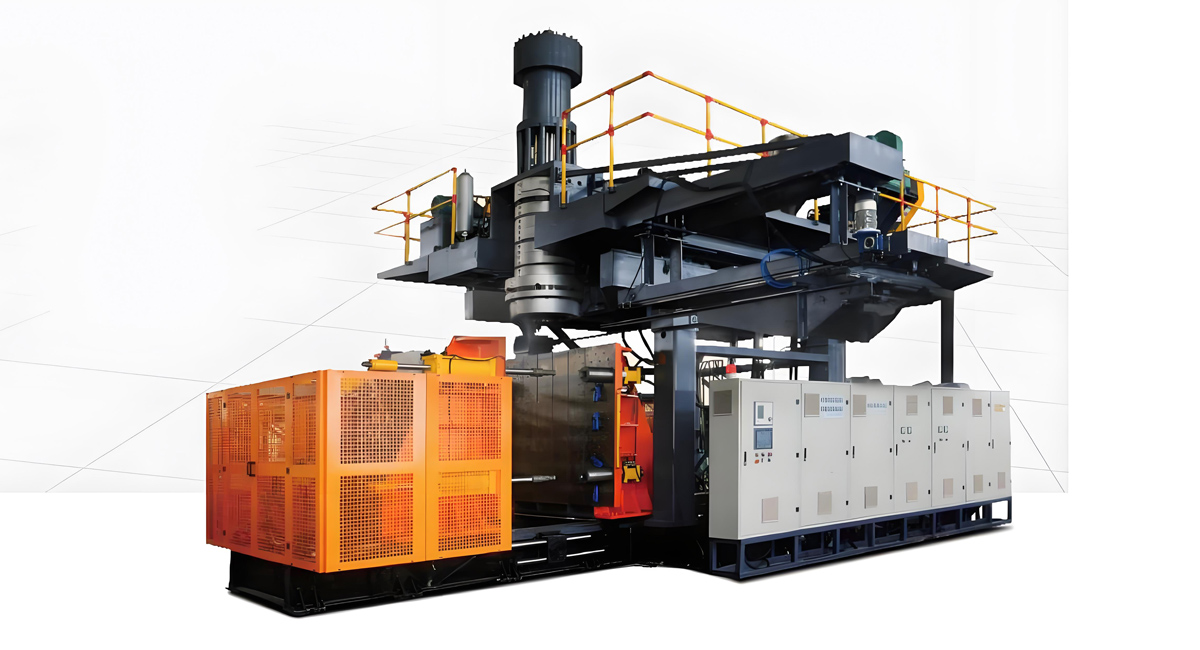
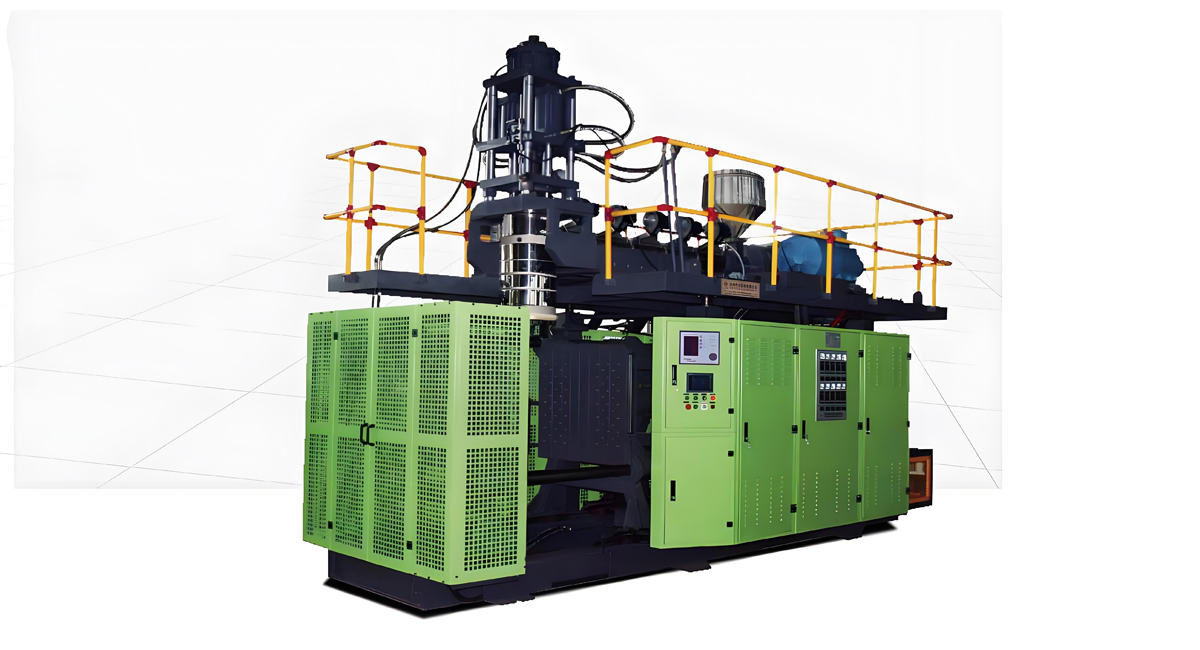
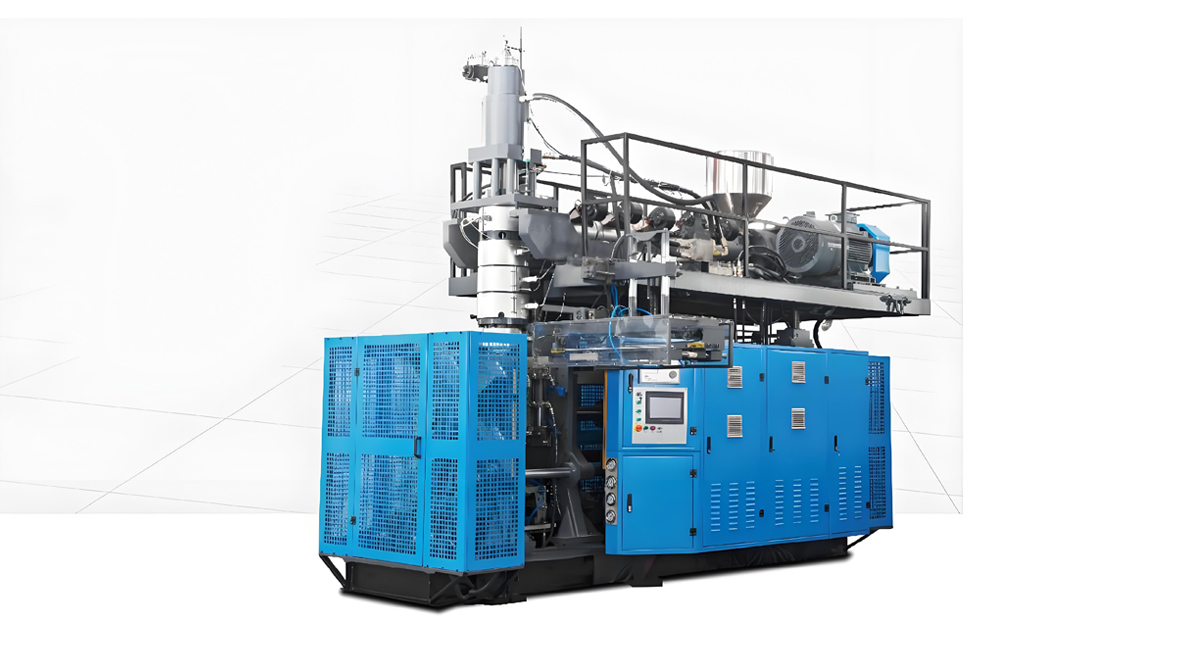
Heavy-duty plastic manufacturing demands equipment capable of producing large, robust containers and industrial products with consistent quality and reliability. Hydraulic extrusion blow molding machines have emerged as the preferred choice for manufacturers requiring the power, precision, and durability necessary for heavy-duty plastic products. Apollo China has developed a comprehensive range of hydraulic extrusion blow molding machines specifically designed to meet the demanding requirements of industrial applications including large water tanks, chemical containers, automotive components, and construction materials. These machines combine hydraulic power delivery with advanced control systems to deliver the performance needed for high-volume production of large and thick-walled plastic products.
The distinction between hydraulic and electric extrusion blow molding machines becomes particularly significant when considering heavy-duty applications. While electric machines offer advantages in energy efficiency for smaller products, hydraulic systems provide the superior force delivery and operational robustness required for large-scale production where clamping forces exceed 100 tons and shot weights reach several kilograms. Industrial applications such as 200-liter drums, 1000-liter intermediate bulk containers, automotive fuel tanks, and industrial storage tanks require equipment capable of generating and controlling substantial forces while maintaining precision and repeatability over extended production runs. Apollo China’s hydraulic extrusion blow molding machines are engineered to meet these exacting requirements while offering operational advantages including rapid cycle times, excellent product consistency, and long equipment lifespan.
The global market for heavy-duty plastic products continues to expand as industries increasingly adopt plastic solutions for storage, transportation, and material handling applications. Factors driving this growth include corrosion resistance advantages over metal alternatives, weight reduction benefits for transportation applications, and design flexibility enabling optimized product geometries. Manufacturers investing in heavy-duty extrusion blow molding equipment must carefully consider not only immediate production requirements but also future expansion plans, product portfolio diversification, and total cost of ownership over equipment lifespan. Apollo China’s hydraulic machines provide the flexibility and scalability to support evolving production needs while maintaining competitive operating costs and quality standards.
Hydraulic System Advantages for Heavy-Duty Applications
Hydraulic power systems offer inherent advantages that make them particularly suitable for heavy-duty extrusion blow molding applications. Understanding these advantages enables manufacturers to make informed decisions about equipment selection and understand why hydraulic systems remain the preferred choice for many industrial applications despite the increasing popularity of electric alternatives for lighter applications.
Superior force generation capability represents the most significant advantage of hydraulic systems for heavy-duty applications. Hydraulic systems can generate extremely high forces through relatively compact actuators, enabling the development of clamping forces exceeding 200 tons in standard industrial configurations. For comparison, generating equivalent forces through electric actuators would require substantially larger motors and more complex mechanical systems. This force capability is essential for producing large containers with thick walls that require substantial clamping forces to maintain mold closure during the high-pressure blow molding process. Apollo China’s hydraulic extrusion blow molding machines feature hydraulic systems optimized for heavy-duty applications, with clamping forces ranging from 50 tons to 300 tons depending on model configuration. The ability to generate and precisely control these forces enables production of large containers such as 200-liter drums, industrial totes, and storage tanks with uniform wall thickness and structural integrity.
Smooth force application provided by hydraulic systems ensures consistent mold closure and gentle treatment of molds and components. Unlike mechanical systems that apply force through discrete mechanical movements, hydraulic systems apply force through incompressible fluid, providing smooth and controllable force application throughout the mold closing cycle. This smooth force application reduces stress on molds and machine components, extending mold life and reducing maintenance requirements. For heavy-duty applications where mold costs can exceed USD 100,000 and replacement lead times extend for months, extending mold life through gentle force application represents substantial cost savings. Apollo China’s hydraulic systems feature proportional control valves that enable precise control of force application velocity and magnitude, optimizing the balance between cycle speed and equipment longevity.
Overload protection capability inherent in hydraulic systems provides protection against damage from unexpected pressure spikes or mold obstructions. Hydraulic systems can be configured with relief valves that open at predetermined pressures, preventing excessive forces from damaging molds or machine components. This protection is particularly valuable in heavy-duty applications where occasional material inconsistencies or foreign material introduction could cause pressure spikes in the blow molding process. Electric systems, in contrast, may deliver full motor power until mechanical failure occurs if protective systems are not properly configured. Apollo China’s hydraulic extrusion blow molding machines incorporate multiple safety systems including pressure relief valves, limit switches, and electronic monitoring systems that provide comprehensive protection against overload conditions. This protection reduces the risk of catastrophic equipment failure and extends equipment lifespan in demanding industrial environments.
Force application speed flexibility enables hydraulic systems to optimize cycle times while maintaining product quality. Hydraulic systems can vary the speed of force application independently of force magnitude, enabling rapid approach and closure followed by precise controlled clamping at the appropriate force level. This flexibility enables optimization of the mold closing cycle time, which directly impacts overall machine productivity. For heavy-duty applications where cycle times may extend to 30 seconds or more, even small reductions in cycle time represent substantial productivity improvements. Apollo China’s hydraulic systems feature advanced control capabilities that enable programmable mold closing profiles, allowing optimization for specific products and materials. The ability to independently control speed and force provides operational flexibility that enables production of diverse products on a single machine without requiring system reconfiguration.
Industrial Applications for Hydraulic Extrusion Blow Molding
Hydraulic extrusion blow molding machines serve diverse industrial applications requiring robust, large-scale plastic products. Understanding the specific requirements and market characteristics of different applications helps manufacturers select appropriate equipment and optimize their production processes. Apollo China provides comprehensive support for various industrial applications, with machine configurations and technical expertise tailored to specific market requirements.
Large container production represents one of the largest application segments for hydraulic extrusion blow molding machines. This segment includes production of water storage tanks ranging from 500 liters to 10,000 liters capacity, intermediate bulk containers (IBCs) typically 1000 liters capacity, and industrial totes used for material handling. These products require substantial clamping forces due to large mold sizes and thick wall requirements. For example, a 1000-liter IBC may require clamping forces of 180 to 250 tons depending on wall thickness specifications. Apollo China’s hydraulic extrusion blow molding machines for large container production feature extended mold opening strokes, specialized material handling systems for large products, and advanced parison programming systems that optimize material distribution. The market for large containers continues to grow as industries adopt plastic solutions for water storage, chemical handling, and bulk material transport. Large container manufacturers typically produce specialized products for specific industries, requiring equipment flexibility to handle different product sizes and configurations on the same production line.
Industrial drum production utilizes hydraulic extrusion blow molding for manufacturing 200-liter drums used extensively for chemical, petroleum, and food ingredient storage and transport. These drums require precise wall thickness distribution for structural integrity, leak prevention, and stacking performance. Production of 200-liter drums typically requires clamping forces of 150 to 220 tons depending on drum construction and wall thickness requirements. Apollo China offers specialized hydraulic extrusion blow molding machines for drum production with features including multi-layer extrusion capabilities for barrier layers, precision parison control for uniform wall thickness, and integrated leak testing systems. Industrial drum manufacturers typically produce high volumes, often exceeding 500,000 drums annually per production line, requiring equipment reliability and consistent product quality. The global industrial drum market continues to expand with increasing chemical production and expanding international trade of bulk materials.
Automotive component manufacturing represents a growing application for hydraulic extrusion blow molding machines. Automotive applications include fuel tanks, air ducts, fluid reservoirs, and other under-hood components that must meet strict dimensional tolerances, material specifications, and performance requirements. Automotive fuel tanks represent particularly challenging applications due to complex shapes, multi-layer construction for permeability control, and stringent safety requirements. Automotive component production typically requires clamping forces ranging from 80 to 200 tons depending on component size and complexity. Apollo China’s hydraulic extrusion blow molding machines for automotive applications feature advanced automation, integrated quality inspection systems, and rapid mold change systems to support the high-mix production environment characteristic of automotive suppliers. The automotive industry increasingly prefers blow-molded components for their design flexibility, weight reduction advantages over metal alternatives, and integration opportunities that reduce part count and assembly complexity.
Construction material production utilizes hydraulic extrusion blow molding for manufacturing various plastic components used in construction applications. These products include drainage pipes, cable conduits, protective housings, and various structural components. Construction materials often require high strength and environmental resistance, necessitating the use of engineering plastics and thicker wall sections. Production requirements vary widely depending on specific products, with clamping forces typically ranging from 50 to 150 tons. Apollo China’s hydraulic extrusion blow molding machines for construction applications feature enhanced material handling capabilities for engineering plastics, temperature control systems optimized for high-temperature materials, and robust construction for demanding factory environments. The construction sector represents a growing market for plastic materials due to corrosion resistance, installation advantages, and design flexibility that enables product innovations.
Machine Features and Technical Specifications
Hydraulic extrusion blow molding machines incorporate various features and technical capabilities that directly impact production efficiency, product quality, and operational reliability. Understanding these specifications enables manufacturers to select appropriate equipment configurations and optimize machine performance for specific applications. Apollo China offers a comprehensive range of hydraulic extrusion blow molding machines with various specifications to meet diverse industrial requirements.
Clamping force specifications define the maximum force that can be applied to maintain mold closure during the blow molding process. Clamping force requirements depend on product size, wall thickness, material characteristics, and internal pressure during blow molding. For heavy-duty applications, clamping forces typically range from 50 tons for medium-sized industrial containers to over 300 tons for very large containers. Apollo China’s hydraulic extrusion blow molding machines offer clamping force options including 65 tons, 100 tons, 150 tons, 200 tons, 250 tons, and 300 tons models, with custom configurations available for special applications. Clamping force must be specified conservatively to ensure reliable operation, typically with 20 to 30 percent margin above calculated requirements to accommodate process variations and ensure consistent product quality. Insufficient clamping force can cause mold opening during blow molding, resulting in product flash, dimensional inconsistencies, and potential equipment damage.
Shot capacity specifications determine the maximum weight of plastic that can be extruded in a single parison for each production cycle. Shot capacity requirements depend on product size, wall thickness, and material density. For large containers, shot capacities can exceed 10 kilograms per cycle. Apollo China’s hydraulic extrusion blow molding machines offer extruder sizes ranging from 65mm to 150mm diameter, with corresponding shot capacities ranging from approximately 3 kilograms to 15 kilograms depending on material and configuration. Shot capacity must be matched carefully to product requirements, as undersized extruders cannot produce adequate parison size while oversized extruders increase energy consumption and material residence time unnecessarily. Apollo China’s technical engineering team provides shot capacity analysis for specific applications to ensure optimal machine selection.
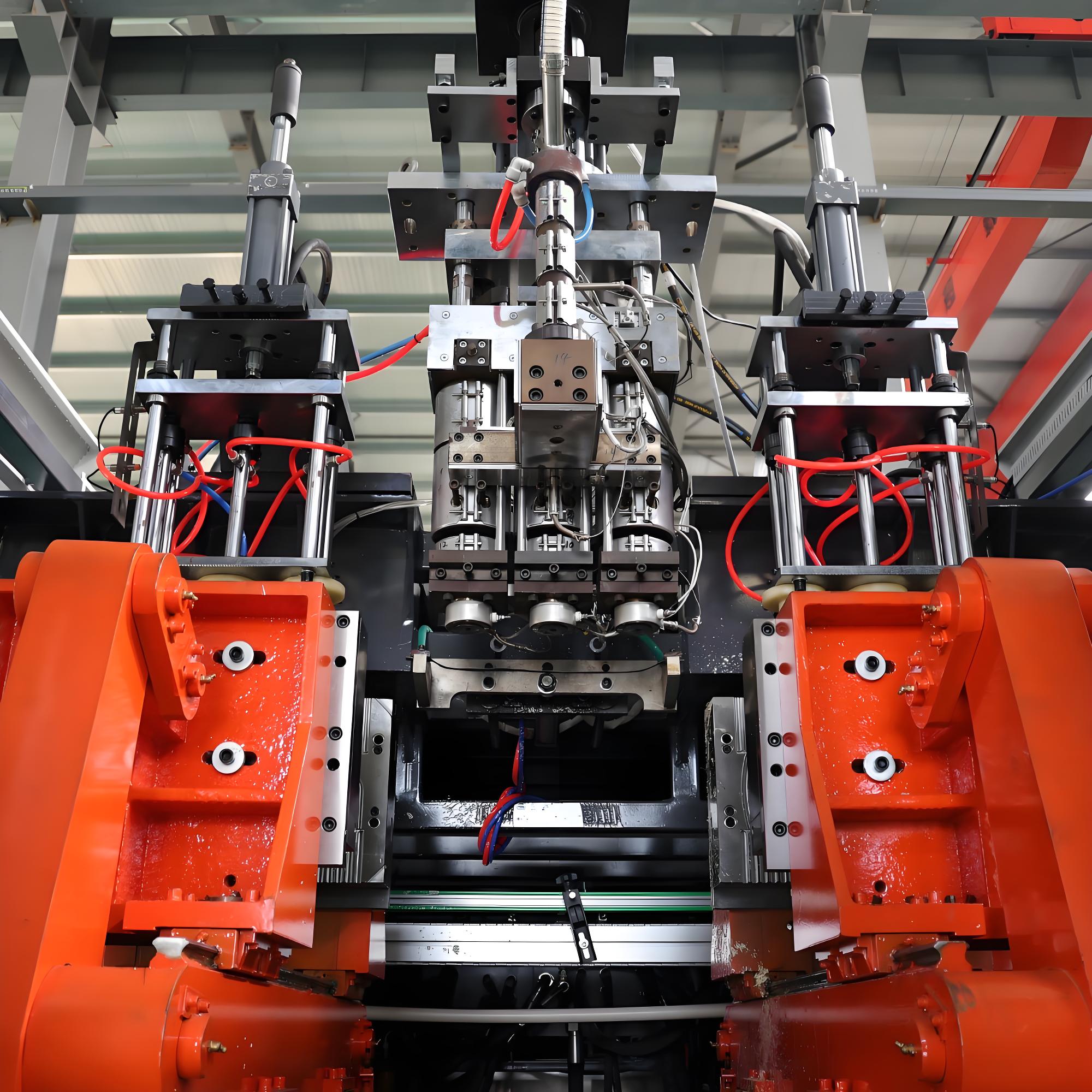
Die head design significantly impacts parison quality and product characteristics. For heavy-duty applications, die heads must deliver consistent parison dimensions, uniform wall thickness, and appropriate material flow characteristics. Apollo China offers various die head configurations including accumulator die heads for large shot capacities, continuous spiral flow die heads for material homogeneity, and multi-layer die heads for barrier applications. Accumulator die heads are particularly important for heavy-duty applications as they enable accumulation of material during the mold close cycle, then rapid extrusion of the complete parison when the mold is closed, reducing cycle time and improving material homogeneity. Die head selection must consider material type, product requirements, and desired cycle times. Apollo China provides die head engineering support to optimize die head configuration for specific applications.
Control system capabilities enable precise control of processing parameters and facilitate advanced automation. Modern hydraulic extrusion blow molding machines feature sophisticated control systems that manage hydraulic pressure, die head movement, blow air sequences, mold temperature, and numerous other parameters. Apollo China’s hydraulic machines utilize advanced PLC-based control systems with touchscreen interfaces that provide intuitive operation and comprehensive monitoring capabilities. Advanced control features include parison programming for wall thickness optimization, mold position control for precise timing, energy consumption monitoring, and recipe storage for quick changeovers between different products. Control system sophistication directly impacts operational flexibility, product consistency, and ease of use, making it a critical factor in equipment selection.
Production Cost and Pricing Analysis
Investment in hydraulic extrusion blow molding machines represents substantial capital commitment that requires comprehensive cost analysis to ensure favorable returns on investment. Understanding the complete cost structure including equipment purchase, operational expenses, and productivity impacts enables informed investment decisions. Apollo China offers competitive pricing while maintaining quality and reliability, providing excellent value for heavy-duty applications.
Equipment purchase pricing for hydraulic extrusion blow molding machines varies substantially based on capacity, features, and configuration. Apollo China’s hydraulic extrusion blow molding machines typically range from USD 120,000 to USD 450,000 depending on model size and features. Entry-level models with 65 to 100 tons clamping force typically cost approximately USD 120,000 to USD 180,000 including basic features. Mid-range models with 150 to 200 tons clamping force typically cost approximately USD 220,000 to USD 320,000 including advanced features such as parison programming systems. Heavy-duty models with 250 to 300 tons clamping force typically cost approximately USD 350,000 to USD 450,000 including comprehensive automation and quality control features. These prices typically include the extrusion blow molding machine, standard mold clamping system, basic die head, and control system. Additional costs may include custom die heads (USD 20,000 to USD 60,000), specialized molds (USD 50,000 to USD 150,000 depending on complexity), installation and commissioning (USD 10,000 to USD 25,000), and operator training (USD 3,000 to USD 8,000). Apollo China provides detailed quotations specifying all included features and any additional costs to enable accurate budget planning.
Operational cost analysis should consider energy consumption, hydraulic fluid costs, maintenance expenses, and labor requirements. Hydraulic extrusion blow molding machines typically consume 30 to 80 kilowatts of electrical power during operation depending on machine size and configuration, resulting in annual energy costs of approximately USD 24,000 to USD 64,000 assuming 5000 operating hours per year and electricity costs of USD 0.20 per kilowatt-hour. Hydraulic fluid consumption represents another operational cost, with typical fluid costs of USD 2,000 to USD 5,000 annually depending on fluid change schedules. Maintenance costs typically range from 3 to 6 percent of equipment purchase price annually, or approximately USD 6,000 to USD 27,000 for machines ranging from USD 120,000 to USD 450,000. Apollo China’s hydraulic systems are designed for reliability and extended service intervals, helping reduce maintenance costs compared to lower-quality alternatives. Labor requirements vary based on automation level, with automated lines requiring minimal operator oversight while less automated machines may require one or more operators per machine. Apollo China offers various automation options to reduce labor requirements while maintaining production flexibility.
Productivity analysis should consider cycle times, production rates, and equipment utilization. Cycle times for heavy-duty extrusion blow molding typically range from 20 to 60 seconds depending on product size and complexity, wall thickness, and cooling requirements. For example, production of 200-liter drums may have cycle times of 35 to 50 seconds, resulting in production rates of approximately 70 to 100 drums per hour. Larger containers such as 1000-liter IBCs may have cycle times of 50 to 70 seconds, resulting in production rates of approximately 50 to 70 containers per hour. Equipment utilization typically ranges from 80 to 90 percent assuming proper maintenance and efficient production scheduling. Apollo China’s hydraulic extrusion blow molding machines are designed for rapid cycle times through efficient hydraulic systems, optimized die head design, and advanced control capabilities. Productivity improvements through cycle time reduction represent significant revenue potential, with each second reduction in cycle time representing approximately 2 to 3 percent productivity improvement.
Return on investment analysis should project net returns over equipment lifespan, typically 10 to 15 years with proper maintenance. For example, a USD 250,000 machine producing 200-liter drums at 80 drums per hour for 6000 operating hours annually would produce 480,000 drums annually. At a gross profit of USD 8 per drum, annual gross profit would be USD 3,840,000. Subtracting annual operating costs of USD 150,000 including energy, maintenance, and labor yields net annual profit of USD 3,690,000. This represents a payback period of approximately 1 month on equipment investment, demonstrating excellent return potential. More conservative assumptions including lower utilization, higher operating costs, and lower profit margins still typically show payback periods of 1 to 2 years for heavy-duty extrusion blow molding applications. Apollo China’s competitive pricing and reliable equipment support excellent returns on investment. ROI analysis should consider factors including market demand, competition, product pricing trends, and potential technological changes that could affect future profitability.
Maintenance and Reliability
Maintenance practices and equipment reliability directly impact production efficiency, product quality, and total cost of ownership for hydraulic extrusion blow molding machines. Implementing comprehensive maintenance programs and understanding reliability characteristics helps maximize equipment uptime and extend equipment lifespan. Apollo China provides detailed maintenance recommendations and supports customers with spare parts availability and technical assistance.
Preventive maintenance schedules should be established based on manufacturer recommendations and operational conditions. Critical maintenance activities include regular oil analysis and replacement, filter replacement, seal inspection and replacement, hydraulic component inspection, and calibration of control systems. Apollo China recommends hydraulic oil changes every 2000 to 3000 operating hours depending on oil quality analysis results, with oil costs ranging from USD 800 to USD 2,500 per change depending on system capacity. Filters should be replaced at regular intervals, typically every 1000 to 1500 operating hours, with costs ranging from USD 200 to USD 600 per filter set. Seals should be inspected during scheduled maintenance and replaced proactively before failure, with seal kit costs ranging from USD 300 to USD 1,200 depending on component size and accessibility. Apollo China provides comprehensive maintenance schedules with recommended intervals and procedures for each machine model.
Reliability characteristics of hydraulic extrusion blow molding machines are influenced by component quality, operating conditions, and maintenance practices. Apollo China utilizes high-quality components from leading manufacturers including hydraulic pumps from Rexroth or Parker, valves from reputable suppliers, and control components from Siemens or Omron. The reliability of well-maintained hydraulic extrusion blow molding machines typically exceeds 98 percent availability, meaning unplanned downtime is less than 2 percent of scheduled operating time. Mean time between failures (MTBF) for major hydraulic components typically ranges from 8,000 to 15,000 hours, with proper maintenance. Mean time to repair (MTTR) for typical failures ranges from 2 to 8 hours depending on failure type and spare parts availability. Apollo China maintains spare parts inventory to support rapid repairs and minimize downtime. Understanding reliability characteristics helps manufacturers plan maintenance, predict performance, and develop contingency plans for equipment failures.
Condition monitoring technologies can predict developing problems before they cause equipment failure, enabling proactive maintenance that reduces unplanned downtime. Hydraulic systems are particularly well-suited for condition monitoring through monitoring of parameters such as oil temperature, system pressures, flow rates, and vibration levels. Apollo China offers optional condition monitoring systems that provide real-time monitoring and alerting for abnormal conditions that may indicate developing problems. For example, increasing oil temperature may indicate pump inefficiency, pressure variations may indicate valve problems, and increasing vibration may indicate bearing wear. Condition monitoring enables maintenance activities to be scheduled at convenient times rather than as emergency repairs after failure, reducing production disruption and maintenance costs. Implementation of condition monitoring typically represents an additional investment of USD 5,000 to USD 15,000 depending on system sophistication, but can reduce maintenance costs by 20 to 40 percent while improving equipment availability.
Energy Efficiency Considerations
Energy consumption represents a significant operational cost for hydraulic extrusion blow molding machines, making energy efficiency an important consideration for equipment selection and operation. While hydraulic systems typically consume more energy than electric systems for equivalent applications, various technologies and operational practices can significantly reduce energy consumption and operating costs. Apollo China offers energy-efficient options and recommendations for optimizing energy efficiency in hydraulic extrusion blow molding operations.
Pump system selection significantly impacts energy efficiency in hydraulic systems. Fixed displacement pumps operate continuously at full flow regardless of actual demand, wasting energy when flow requirements are lower. Variable displacement pumps adjust output to match actual flow demand, reducing energy consumption during portions of the cycle when lower flow is required. Apollo China offers both pump types, with variable displacement pumps typically adding USD 8,000 to USD 20,000 to equipment cost but providing energy savings of 15 to 30 percent compared to fixed displacement pumps. Servo-driven hydraulic pumps represent the most energy-efficient option, using servo motors to drive pumps only as needed and with precise control, providing energy savings of 30 to 50 percent compared to traditional fixed displacement pumps. Servo hydraulic systems typically add USD 15,000 to USD 35,000 to equipment cost but can provide payback through energy savings within 2 to 4 years depending on operating hours and energy costs. Apollo China recommends energy-efficient pump systems based on specific application requirements and operating patterns.
Process optimization can reduce energy consumption without requiring equipment changes. Optimizing cycle times reduces energy consumption per unit produced by reducing the time equipment operates at full power. Adjusting hydraulic pressure to the minimum required for proper operation rather than using maximum available pressure can reduce energy consumption by 10 to 20 percent. Optimizing mold temperature control, including proper insulation and temperature setpoint optimization, can reduce heating energy consumption by 10 to 15 percent. Implementing production scheduling that maximizes equipment utilization reduces idle energy consumption and improves overall energy efficiency. Apollo China’s technical support team can provide process optimization recommendations based on specific applications. These optimization activities typically involve minimal capital investment but can provide substantial energy cost reductions.
Energy recovery technologies can capture and reuse energy that would otherwise be wasted in hydraulic systems. For example, energy recovery systems can capture energy from the mold closing process or from decelerating hydraulic actuators and store it for use in subsequent operations. These systems can reduce energy consumption by 10 to 25 percent depending on application and operating patterns. Apollo China offers energy recovery options for selected machine models, typically adding USD 12,000 to USD 30,000 to equipment cost. Energy recovery systems are most beneficial for applications with frequent start-stop cycles or with substantial deceleration events where substantial energy can be recovered. ROI calculations for energy recovery systems should consider energy costs, operating hours, and specific application characteristics to determine payback periods.
Energy monitoring systems provide visibility into energy consumption patterns and help identify optimization opportunities. Apollo China offers energy monitoring systems that track energy consumption by process function, equipment component, and time, providing detailed insights into energy usage patterns. This information helps identify inefficient operations, quantify savings from optimization measures, and establish energy consumption baselines for continuous improvement. Energy monitoring systems typically cost USD 3,000 to USD 8,000 and can provide value through identification of savings opportunities and tracking of energy efficiency improvements. Understanding energy consumption patterns helps manufacturers make informed decisions about energy efficiency investments and operational practices.
Automation and Integration
Automation capabilities and production system integration significantly impact labor requirements, operational efficiency, and production flexibility for heavy-duty extrusion blow molding operations. Apollo China offers comprehensive automation options and system integration capabilities to support diverse production requirements and operational strategies.
Material handling automation reduces labor requirements and improves material consistency in heavy-duty applications. Automated material loading systems feed raw materials into extruders consistently, reducing manual handling and material variation. For heavy-duty applications using large material quantities, bulk material handling systems can automatically transport materials from silos to extruders with minimal operator intervention. Apollo China offers various material handling automation options including vacuum loaders, gravimetric feeders, and complete bulk handling systems. Material handling automation typically costs USD 8,000 to USD 35,000 depending on system sophistication and material types. Automation benefits include reduced labor costs, improved material consistency, reduced material contamination risk, and enhanced workplace safety by reducing manual material handling.
Product handling automation manages large, heavy products after molding, which represents significant challenges in heavy-duty applications. Automated product removal systems extract products from molds, convey them to secondary operations, and stage them for packaging or shipping. Apollo China offers robotic product removal systems, conveyor systems, and integrated downstream equipment including leak testing systems, trimming stations, and packaging stations. Product handling automation costs vary widely based on application requirements, ranging from USD 15,000 for basic conveyor systems to over USD 100,000 for comprehensive robotic handling systems. Automation benefits include reduced labor requirements, consistent handling that reduces product damage, improved safety by reducing manual handling of heavy products, and improved production flow through integrated operations.
Quality inspection automation ensures consistent product quality and reduces potential for quality problems reaching customers. Inline inspection systems can automatically check product dimensions, wall thickness, surface quality, and perform functional tests such as leak testing. Apollo China offers various inspection systems including vision systems, dimensional measurement systems, and specialized test equipment. Inline inspection systems typically cost USD 10,000 to USD 50,000 depending on complexity and capabilities. Automation benefits include improved product consistency, reduced labor costs for inspection, early detection of developing process problems, and documentation of quality performance. For heavy-duty applications where product failures can have serious consequences, automated inspection provides valuable assurance of product quality.
System integration enables communication between extrusion blow molding machines, upstream equipment, downstream equipment, and factory information systems. Apollo China offers comprehensive integration capabilities including PLC communication networks, data collection systems, and interface to enterprise resource planning (ERP) and manufacturing execution systems (MES). Integrated systems enable real-time production monitoring, automatic recipe downloads, production data collection for quality analysis, and remote diagnostics. System integration costs vary based on scope and complexity, typically ranging from USD 5,000 to USD 30,000 for integration with factory systems. Integration benefits include improved visibility into production performance, reduced data entry errors, enhanced ability to analyze production data for optimization, and support for advanced operational strategies such as predictive maintenance and performance benchmarking.
Conclusion
Hydraulic extrusion blow molding machines provide the power, precision, and reliability required for heavy-duty plastic manufacturing applications. Apollo China’s comprehensive range of hydraulic machines offers solutions for diverse industrial applications including large containers, industrial drums, automotive components, and construction materials. The superior force generation, smooth force application, and operational robustness of hydraulic systems make them ideal for demanding applications requiring high clamping forces and large shot capacities.
Investment in hydraulic extrusion blow molding equipment represents substantial capital commitment, but the strong market demand for heavy-duty plastic products and the productivity advantages of hydraulic systems enable excellent returns on investment when properly configured and operated. Apollo China’s competitive pricing, combined with quality components and engineering expertise, provides excellent value for manufacturers seeking equipment for heavy-duty applications. The flexibility of hydraulic systems to handle diverse products and materials supports business agility and market responsiveness.
For manufacturers requiring heavy-duty extrusion blow molding capabilities, Apollo China’s hydraulic machines provide the technology foundation for successful production operations. By implementing appropriate maintenance practices, optimizing energy efficiency, and leveraging automation opportunities, manufacturers can maximize equipment performance and achieve competitive advantage in demanding industrial markets. Apollo China’s commitment to customer support, technical expertise, and continuous innovation makes them a trusted partner for manufacturers seeking reliable hydraulic extrusion blow molding solutions for heavy-duty applications.