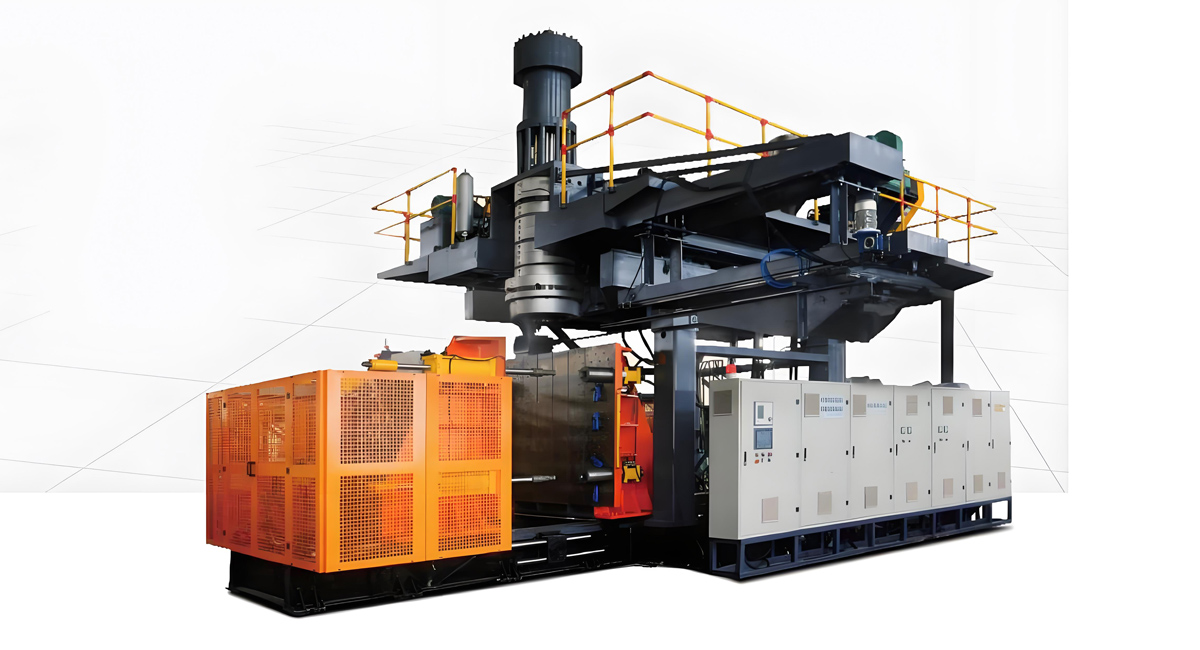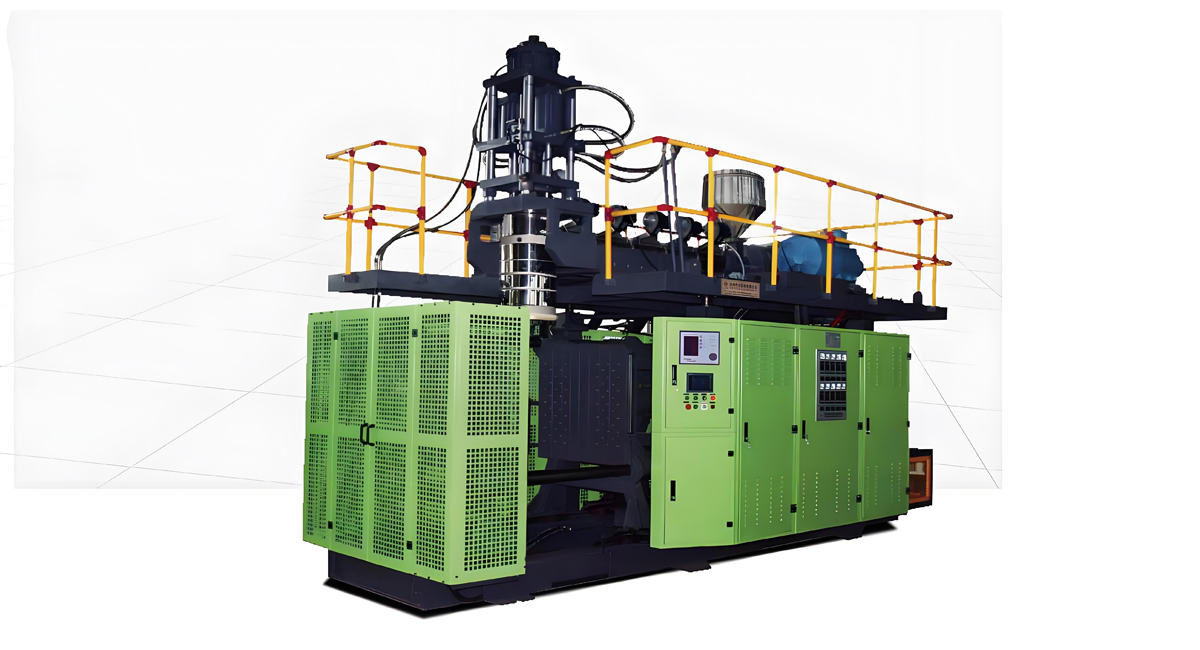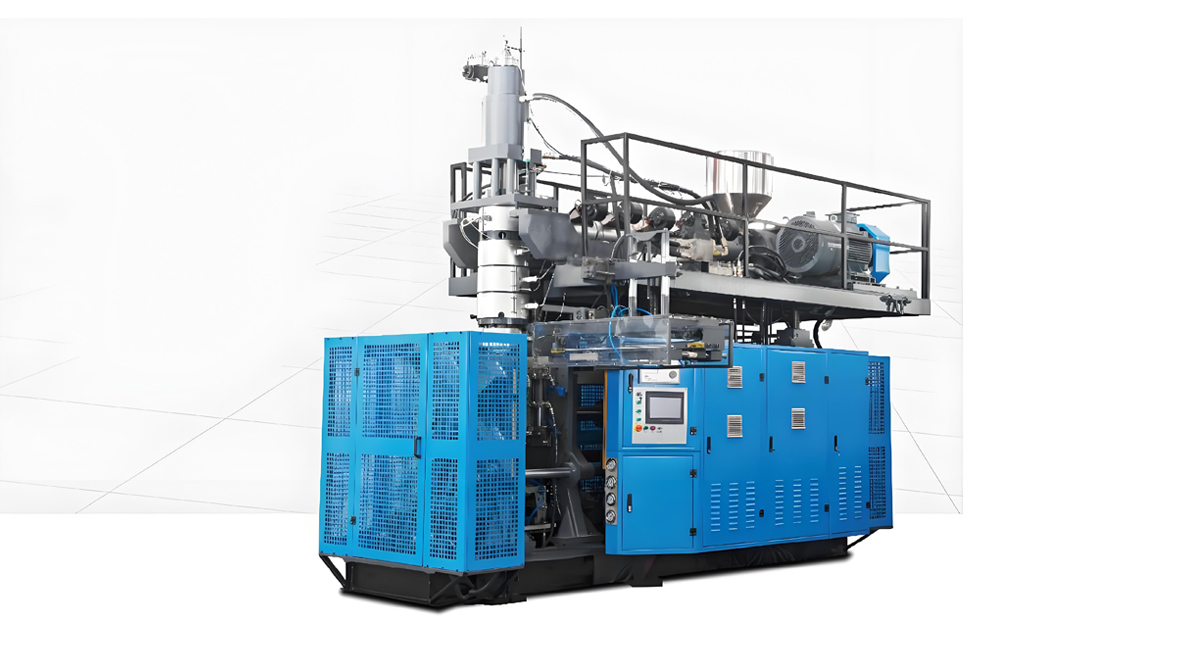
The global demand for plastic jugs—used for milk, detergents, chemicals, and food products—continues to rise due to their lightweight nature, durability, and cost-effectiveness. For manufacturers, the key to profitability lies in the efficiency of the Extrusion Blow Molding (EBM) machine. A high-efficiency EBM production line is not just about speed; it is about the perfect synchronization of extrusion, parison control, mold clamping, and cooling. This article provides an in-depth analysis of how to select and optimize an EBM machine specifically for plastic jug production, with a focus on the advanced technologies offered by Apollo-China.
The Critical Role of EBM in Plastic Jug Manufacturing
Plastic jugs are typically hollow containers with handles, requiring complex mold structures and precise wall thickness distribution. Unlike simple bottles, jugs often have varying cross-sections—narrow necks for pouring and wide bodies for volume. The EBM process is uniquely suited for this because it allows for the creation of complex hollow shapes that injection molding cannot achieve economically. The process involves extruding a molten plastic tube (parison), clamping it in a cold mold, inflating it with air, and cooling it until it retains the mold’s shape. The efficiency of this cycle determines the cost per unit. A high-efficiency line can produce up to 2,000 to 3,000 containers per hour, depending on size and complexity.
Understanding the Parison and Wall Thickness Distribution
One of the biggest challenges in jug production is achieving uniform wall thickness, especially around the handle area and the base. If the walls are too thick, material is wasted, and cycle times increase due to longer cooling. If too thin, the jug may burst or crack under load. Modern EBM machines use “Parison Programming” or “Wall Thickness Control” systems. These systems use servo motors to adjust the die gap in real-time as the parison is extruded. For example, the die opens wider when extruding the body of the jug and narrows for the neck. Apollo-China’s EBM machines utilize advanced accumulator head technology that allows for rapid changes in parison weight, ensuring that even complex jugs have consistent wall distribution, reducing scrap rates by up to 15%.
Key Components of a High-Efficiency EBM Production Line
A complete production line for plastic jugs consists of several integrated systems. Understanding each component is crucial for evaluating the total cost and efficiency.
1. The Extruder Unit
The extruder is the heart of the machine. For jug production, high-density polyethylene (HDPE) or polypropylene (PP) are common materials. A high-efficiency extruder must have a high length-to-diameter (L/D) ratio, typically 28:1 or 30:1, to ensure complete melting and homogenization. Single-screw extruders are standard for HDPE, but for multi-layer jugs (e.g., with an oxygen barrier layer), co-extrusion heads with multiple screws are required. Apollo-China offers extruders with specialized barrier screws that increase output by 20% while reducing melt temperature, which is critical for preventing material degradation in long cycle runs.
2. The Die Head and Accumulator
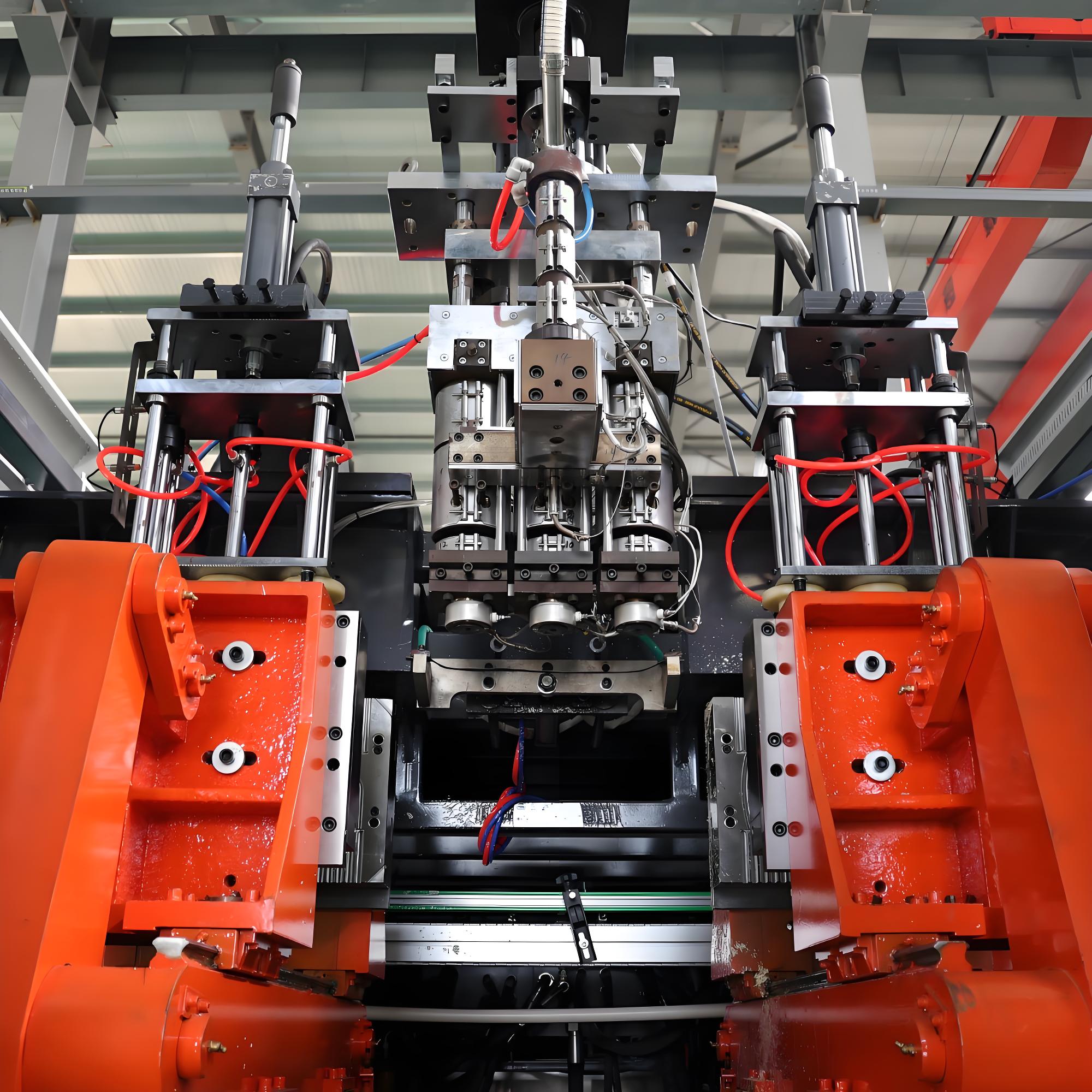
The die head shapes the molten plastic into a tube. An accumulator head is essential for large jugs (1 liter and above). It stores molten plastic while the mold is closing and the previous shot is cooling, then releases it all at once for a fast extrusion speed. This “burst” of speed ensures the parison doesn’t sag before the mold closes. For high-efficiency lines, the accumulator volume is precisely calculated based on the shot weight. A mismatched accumulator leads to slow cycles or inconsistent parisons.
3. Mold Clamping System
Jug molds are heavy due to the handle mechanisms. The clamping unit must be robust, usually hydraulic or hybrid (servo-hydraulic). Hybrid systems are becoming the standard for high efficiency because they consume less power and offer faster closing speeds. The clamp force must be sufficient to withstand the internal air pressure (usually 6-10 bar) without flashing. For a standard 1-gallon jug, a clamp force of 150-200 tons is typical. Apollo-China’s clamping systems feature quick-mold-change mechanisms, reducing downtime when switching between different jug sizes from hours to minutes.
4. Cooling and Handling
Efficient cooling is the bottleneck in EBM. Water channels in the mold must be optimized using conformal cooling designs (3D printed or drilled deep) to remove heat rapidly. For jugs, the handle area cools slowest; specialized cooling circuits target this area. After molding, automated deflashing trims the excess flash (the tail of the parison), and leak testers ensure 100% quality. High-speed trimming robots can keep up with cycle times of 15 seconds or less.
Cost Analysis and Price Estimation for EBM Jug Lines
Investing in an EBM production line is a significant capital expenditure. The cost varies based on output capacity, automation level, and machine configuration. Below is a detailed breakdown of costs for a mid-sized production line capable of manufacturing 1-5 liter HDPE jugs.
Capital Expenditure (CAPEX)
A standard entry-level EBM machine for jugs (single station, semi-automatic) might cost between $30,000 and $50,000. However, for a high-efficiency, fully automatic line with accumulator head and robot handling, the price range is significantly higher.
1. Extruder (90mm, 28:1 L/D): $45,000 – $60,000
2. Accumulator Die Head (Hydraulic): $25,000 – $35,000
3. Clamping Unit (200 Ton, Hybrid): $30,000 – $45,000
4. Control System (PLC/HMI with Parison Control): $15,000 – $20,000
5. Auxiliary Equipment (Chiller, Air Compressor, Dryer, Auto Loader, Robot): $40,000 – $60,000
6. Molds (2 sets, aluminum or beryllium copper): $10,000 – $20,000 per set
Total Estimated Cost for a Turnkey Line: $165,000 to $240,000 USD.
For a dual-station or multi-layer line (for barrier jugs), the cost can exceed $400,000. Apollo-China offers competitive factory-direct pricing, often reducing the total cost by 15-20% compared to European or American brands, while maintaining ISO and CE standards.
Operational Expenditure (OPEX) and ROI
The main operational costs are electricity, labor, and raw material (HDPE pellets).
1. Electricity: A 100kW line running 16 hours/day, 300 days/year, at $0.10/kWh costs approx. $48,000/year. Energy-efficient servo motors can reduce this by 30%.
2. Labor: A fully automatic line requires 1-2 operators per shift. Semi-auto requires 3-4. Labor cost savings alone can pay for the automation upgrade in 2 years.
3. Material Efficiency: Using parison programming can save 5-10% on raw material. For a line processing 1,000 kg/day, a 5% saving at $1.50/kg is $750/day, or $225,000/year.
ROI Calculation: Assuming a profit margin of $0.10 per jug and a daily production of 20,000 jugs, daily profit is $2,000. The payback period for a $200,000 machine is approximately 100 working days (4-5 months), excluding financing costs. This makes EBM one of the most profitable investments in plastic processing.
Why Choose Apollo-China for Jug EBM Machines?
Apollo-China has established itself as a leader in extrusion blow molding machinery by focusing on durability and application-specific engineering. Their machines for plastic jugs feature patented die heads that ensure perfect wall thickness distribution, even for complex handle geometries. The company uses high-quality components like Siemens PLCs and Schneider electric parts to ensure reliability. For manufacturers looking to upgrade, Apollo offers turnkey solutions including mold design, installation, and operator training. Their global service network ensures that spare parts are readily available, minimizing downtime. By choosing Apollo, you are not just buying a machine; you are investing in a process solution that guarantees consistent quality for high-volume jug production.
Maintenance and Troubleshooting for High Efficiency
To maintain high efficiency, regular maintenance is non-negotiable. Common issues include “die drool” (leakage), which can be mitigated by using anti-stick coatings or high-land-length designs. Carbon buildup in the die is another issue, often solved by periodic cleaning with copper wire brushes. For the hydraulic system, oil changes and filter replacements are critical to prevent valve sticking. Apollo-China machines are designed with easy-disassembly features, allowing operators to clean the internals without heavy machinery. Regular inspection of the screw and barrel for wear is crucial; even a minor scratch can cause material degradation. Implementing a predictive maintenance program (vibration analysis, oil checks) is essential for high-torque lines where downtime is extremely costly.
Conclusion
The efficiency of an EBM machine for plastic jugs is defined by its ability to produce consistent, high-quality containers at the lowest possible cost per unit. By selecting a machine with advanced parison control, a robust hybrid clamping system, and energy-efficient components, manufacturers can significantly improve their bottom line. While the initial investment in a high-efficiency line like those from Apollo-China is substantial, the long-term benefits of reduced waste, higher productivity, and energy efficiency make it a strategic asset for any plastic container manufacturing facility. Whether you are processing standard HDPE or complex multi-layer structures, the right extruder technology is the foundation of material excellence.