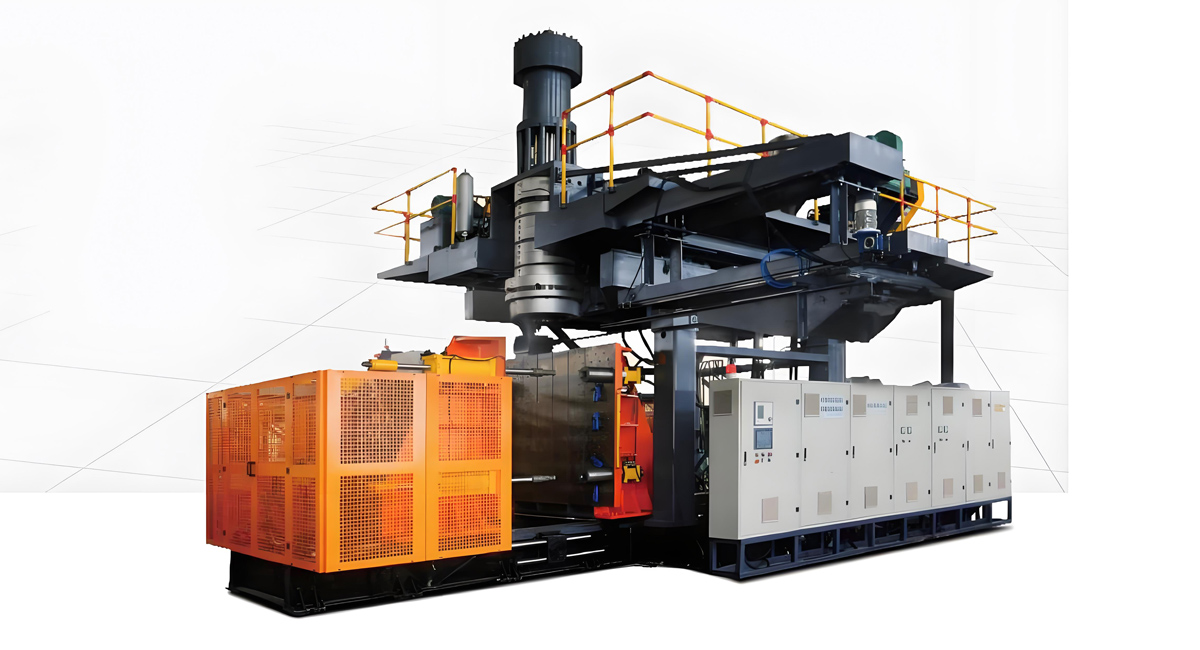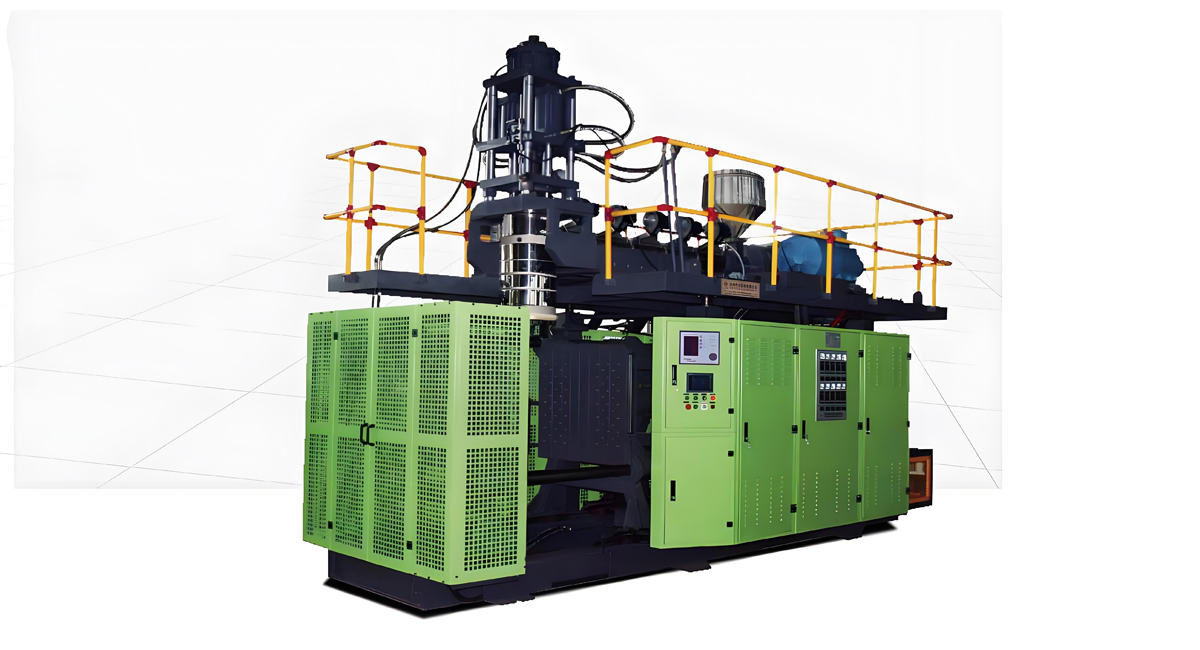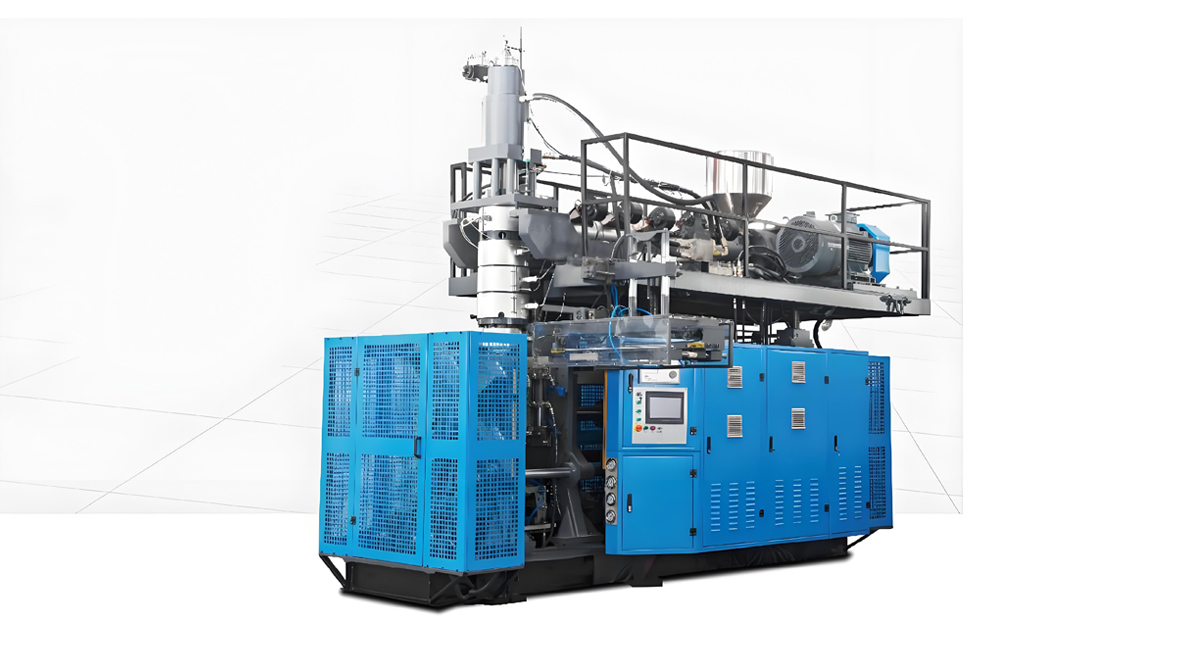
Introduction to Continuous Extrusion Blow Molding Technology
Continuous extrusion blow molding technology represents the dominant production method for large-scale plastic container manufacturing, enabling high-volume, efficient, and cost-effective production of diverse plastic products. Continuous operation provides substantial advantages over intermittent systems including higher production output, reduced energy consumption per unit, improved product consistency, and lower labor requirements. Apollo continuous extrusion blow molding machines, with over 20 years of manufacturing excellence and installations in more than 90 countries, deliver the performance, reliability, and efficiency required for large-scale production operations.
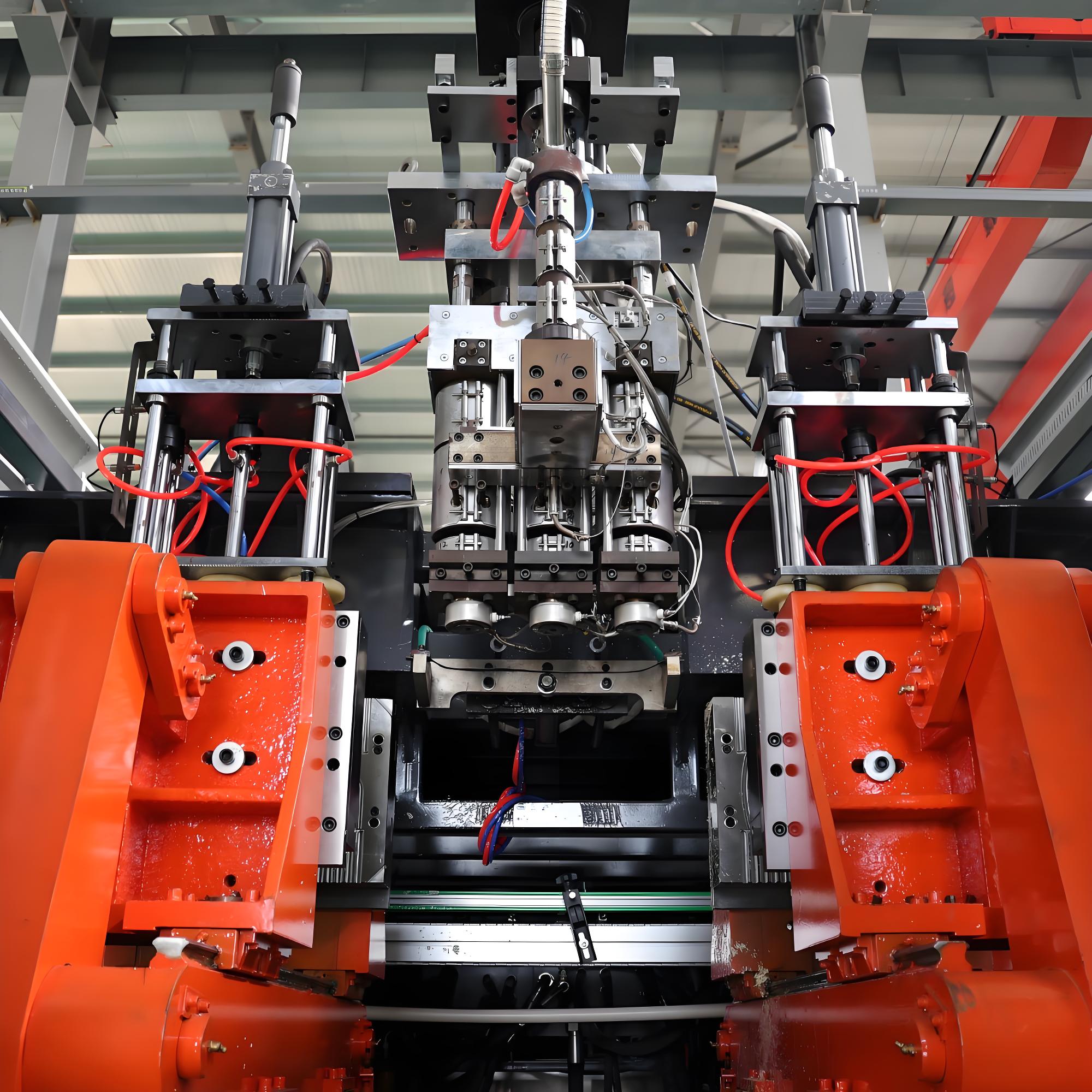
Continuous extrusion blow molding machines operate through a continuous parison extrusion process, where plastic material is continuously melted and extruded through a die head to form a parison (tube of molten plastic). The parison is captured by mold halves that close around it, and air is injected to inflate the parison against the mold walls, forming the desired container shape. The mold opens to release the formed product, and the cycle repeats continuously. This continuous operation enables consistent material flow, stable process conditions, and exceptional production efficiency.
Large-scale plastic production demands equipment capable of sustained operation with minimal downtime, consistent quality output, and competitive operating costs. Apollo continuous extrusion blow molding machines meet these requirements through robust design, advanced control systems, and proven technology. From ABLB series for high-speed small container production to ABLD series accumulator head machines for large containers, Apollo provides comprehensive solutions for large-scale production requirements across all product sizes and types.
Continuous vs Intermittent Extrusion Blow Molding
Understanding the differences between continuous and intermittent extrusion blow molding technologies enables appropriate equipment selection for specific production requirements. Each technology offers distinct advantages depending on production volume, product size, and operational requirements.
Continuous Extrusion Blow Molding Characteristics
Continuous extrusion blow molding maintains constant material flow through the extruder and die head, producing a continuous parison stream. This approach provides multiple advantages for large-scale production. Continuous operation eliminates start-stop cycling of extruder motors, reducing energy consumption by 20-30% compared to intermittent systems. Constant material flow provides stable process conditions, resulting in improved product consistency and quality. Production speeds of 500-1900 pieces per hour depending on product size enable high-volume output. Lower operating costs per unit result from reduced energy consumption, improved efficiency, and consistent quality reducing waste.
Apollo continuous extrusion machines from ABLB 45 (200ML-2L, 30 kg/h output, USD 15,000-25,000) to ABLD series large accumulator head machines (30L-1500L, 120-400 kg/h output, USD 150,000-400,000) provide comprehensive coverage for large-scale production. These machines excel in applications requiring sustained high-volume production, consistent quality requirements, and competitive operating costs.
Intermittent Extrusion Blow Molding Characteristics
Intermittent extrusion blow molding operates with start-stop extruder cycles, where material is extruded only during parison formation phases. This approach provides advantages for specific applications including lower initial equipment investment, flexibility for small batch production, and simpler operation. However, intermittent operation results in lower production efficiency, higher energy consumption per unit, and greater quality variability compared to continuous systems.
Intermittent systems are typically better suited for small-scale production, prototype development, or applications requiring frequent product changes. For large-scale production where efficiency, consistency, and cost per unit are critical, continuous extrusion blow molding provides superior performance and economics. Apollo offers both continuous and intermittent technologies, enabling customers to select appropriate technology for their specific requirements.
Production Efficiency Comparison
Production efficiency represents a key differentiator between continuous and intermittent technologies. Continuous machines from Apollo achieve production speeds of 1550-1900 pieces per hour for 1L-3L products (ABLB 55 double-station), 1000-1600 pieces per hour for 3.5L-5L products (ABLB 65 double-station), and 800-1400 pieces per hour for 8L-10L products (ABLB 75-80 double-station). These production speeds exceed intermittent systems by 30-50% for comparable products.
For large container production, Apollo continuous accumulator head machines produce 450-600 pieces per hour for 30L-60L containers (ABLD 80-90), providing substantial output for industrial applications. Continuous operation enables 24/7 production with minimal downtime, maximizing capacity utilization and reducing per-unit production costs. For manufacturers requiring maximum production efficiency, continuous extrusion blow molding technology provides clear advantages.
Operating Cost Analysis
Operating costs differ significantly between continuous and intermittent technologies. Continuous operation reduces energy consumption by eliminating extruder motor start-stop cycles. Apollo continuous machines achieve specific energy consumption of 0.08-0.15 kWh per bottle depending on product size, representing 20-30% savings compared to intermittent systems. Reduced quality variance from continuous operation lowers scrap rates, typically achieving 2-5% scrap rates compared to 5-10% for intermittent systems.
For typical 1L bottle production, continuous system operating cost of USD 0.225-0.335 per bottle compares favorably to intermittent system cost of USD 0.275-0.40 per bottle. This difference of USD 0.05-0.065 per bottle translates to substantial savings over annual production volumes. For high-volume producers, continuous technology delivers significant cost advantages and improved profitability.
Apollo Continuous Extrusion Machine Product Line
Apollo offers comprehensive continuous extrusion blow molding machine product line covering 200ML to 1500L capacity, enabling appropriate equipment selection for any large-scale production requirement. The product line includes ABLB series for standard continuous extrusion and ABLD series accumulator head machines for large containers, providing complete coverage across all product segments.
ABLB Series Continuous Extrusion Machines
Apollo ABLB series represents the core continuous extrusion blow molding product line, covering 200ML to 20L capacity with production speeds from 500-1900 pieces per hour. ABLB series machines feature precision extrusion systems, robust clamping units, advanced control systems, and proven reliability for continuous operation. The series includes multiple models providing appropriate capacity for different product sizes and production volumes.
ABLB 45 produces 200ML-2L products at 1550 pieces per hour (single station) or 1400 pieces per hour (double station) with 30 kg/h output, 45mm screw diameter, and 60KN clamping force. Pricing starts at USD 15,000-25,000 depending on configuration. ABLB 55 produces 2L-3L products at 1100 pieces per hour (single station) or 1900 pieces per hour (double station) with 60 kg/h output, 55mm screw diameter, and 80KN clamping force. Pricing ranges from USD 25,000-35,000.
ABLB 65 produces 3.5L-5L products at 1000 pieces per hour (single station) or 1600 pieces per hour (double station) with 75 kg/h output, 65mm screw diameter, and 100KN clamping force. Pricing ranges from USD 30,000-42,000. ABLB 75 produces 8L products at 800 pieces per hour (single station) or 1600 pieces per hour (double station) with 100 kg/h output, 75mm screw diameter, and 80KN clamping force. Pricing ranges from USD 37,000-45,000.
ABLB 80 produces 10L products at 700 pieces per hour (single station) or 1400 pieces per hour (double station) with 110-120 kg/h output, 80mm screw diameter, and 100KN clamping force. Pricing ranges from USD 42,000-55,000. ABLB 90 produces 16L products at 800 pieces per hour (single station) or 1000 pieces per hour (double station) with 130-150 kg/h output, 90mm screw diameter, and 120KN clamping force. Pricing ranges from USD 55,000-80,000.
ABLD Series Accumulator Head Machines
Apollo ABLD series accumulator head machines provide continuous extrusion blow molding for large containers from 20L to 1500L capacity. Accumulator head technology enables large parison formation for big containers while maintaining continuous material flow from the extruder. This approach provides the efficiency of continuous operation with capability for very large product production.
ABLD series features accumulator capacity from 1.6L to 25L depending on model, clamping force from 210KN to 3200KN for large molds, and output capacity from 120 kg/h to 400 kg/h for high-volume production. These machines are designed for industrial-duty operation with robust construction, heavy-duty components, and advanced control systems ensuring reliable 24/7 operation.
ABLD 80 produces 30L containers at 600 pieces per hour with 120 kg/h output, 80mm screw diameter, 4.4L accumulator, and 210KN clamping force. Pricing ranges from USD 150,000-170,000. ABLD 90 produces 60L containers at 450 pieces per hour with 150 kg/h output, 90mm screw diameter, 6.6L accumulator, and 320KN clamping force. Pricing ranges from USD 160,000-180,000. Larger ABLD models produce containers up to 1500L capacity with appropriate output capacity and clamping force.
Fully Electric Continuous Machines
Apollo fully electric continuous extrusion blow molding machines represent the ultimate in energy efficiency and precision control. Fully electric machines eliminate hydraulic systems entirely, using servo motors for all machine functions including extrusion, clamping, and blow air delivery. This approach provides substantial energy savings, precise control, and clean operation suitable for food and medical applications.
Apollo fully electric machines include ABLE 60 I (2L-5L, 65 kg/h output, 15-22 kW power, USD 45,000-50,000), ABLE 75 I (5L-10L, 90 kg/h output, 22-37 kW power, USD 70,000-90,000), and ABLE 80 I (10L-20L, 110 kg/h output, 30-55 kW power, USD 145,000-180,000). These machines achieve 30-40% energy savings compared to hydraulic machines while providing superior control and quality consistency.
Double-Station Continuous Machines
Apollo double-station continuous extrusion machines increase production output by enabling simultaneous operation of two molding stations. While one station blows and cools product, the other station receives parison and closes molds, maximizing machine utilization. Double-station configuration increases production output by 50-100% compared to single-station machines while requiring minimal additional investment.
Double-station configuration adds approximately USD 8,000-15,000 to machine cost depending on model size, providing excellent return on investment for high-volume production. For manufacturers requiring maximum production output from limited floor space, double-station continuous machines deliver exceptional capacity and efficiency. Apollo ABLB 55 double-station produces 1900 pieces per hour for 2L-3L products, compared to 1100 pieces per hour for single-station configuration, representing 73% increase in output for modest additional investment.
Large-Scale Production Applications
Continuous extrusion blow molding machines serve diverse large-scale production applications across multiple industries. Understanding specific application requirements enables appropriate equipment selection and configuration for optimal performance and economics.
Beverage Bottle Production
Beverage bottle production represents one of the largest applications for continuous extrusion blow molding machines. Water bottles, juice bottles, carbonated beverage bottles, and sports drink bottles require high-volume production with consistent quality. Apollo ABLB series machines excel in beverage bottle production, providing production speeds of 500-1900 pieces per hour depending on bottle size and configuration.
For 500ml-1L water bottles, Apollo ABLB 45 double-station produces 1400-1550 pieces per hour, enabling annual production of 8.4-9.3 million bottles at 6000 operating hours. At typical beverage bottle production margins, this output provides substantial revenue and profit potential. Apollo machines handle HDPE and PP materials commonly used for beverage bottles, providing excellent wall thickness control and consistent quality required for consumer products.
Detergent Bottle Production
Detergent bottle production for household cleaners, laundry detergents, and industrial cleaners requires robust equipment capable of processing HDPE with excellent chemical resistance. Apollo continuous extrusion machines provide the durability, output capacity, and quality consistency required for detergent bottle production. ABLB 55-75 models produce 2L-10L detergent bottles at 700-1900 pieces per hour depending on model and configuration.
Detergent bottle production demands excellent chemical resistance to withstand cleaning formulations. Apollo machines process HDPE and PP materials with precise temperature control ensuring optimal material properties and chemical resistance. For large 20L-60L industrial cleaner containers, Apollo ABLD accumulator head machines produce 450-600 pieces per hour, providing substantial capacity for industrial market supply.
Chemical Container Production
Chemical container production for industrial chemicals, lubricants, and specialty products requires equipment capable of producing robust containers with excellent chemical resistance and structural integrity. Apollo ABLD series accumulator head machines excel in chemical container production, producing containers from 20L to 1500L with appropriate wall thickness and strength requirements.
For 30L-60L chemical drums, Apollo ABLD 80-90 models produce 450-600 pieces per hour, providing substantial capacity for industrial chemical packaging. These machines feature robust construction, heavy-duty clamping systems, and appropriate accumulator capacity for large parison formation. Chemical container production typically requires HDPE materials with specific additives for chemical resistance, which Apollo machines handle effectively with appropriate screw designs and processing parameters.
Automotive Component Production
Automotive component production including fuel tanks, reservoirs, and fluid containers requires continuous extrusion blow molding for high-volume production with strict quality requirements. Apollo continuous machines provide the output capacity, quality consistency, and material processing capability required for automotive applications.
Apollo ABLD series machines produce automotive fuel tanks and reservoirs with appropriate capacity and wall thickness. Strict dimensional tolerances and leak performance requirements are met through precision control and quality systems. Apollo machines process engineering materials including multilayer materials for fuel tank production, requiring sophisticated processing capabilities that Apollo technology provides effectively.
Industrial Container Production
Industrial container production for bulk storage, material handling, and logistics applications requires large container capacity and robust construction. Apollo ABLD series accumulator head machines produce containers from 60L to 1500L with appropriate strength and durability for industrial applications. Production speeds of 200-450 pieces per hour depending on container size provide substantial capacity for industrial markets.
Industrial containers often require special features including reinforced bases, lifting provisions, and heavy-duty designs. Apollo machines produce these features through appropriate mold design and process control. For large IBC (Intermediate Bulk Container) production, Apollo machines produce containers up to 1500L capacity, providing complete coverage for industrial container requirements.
Production Efficiency and Optimization
Production efficiency and optimization are critical for successful large-scale blow molding operations. Maximizing output, minimizing costs, and ensuring consistent quality require comprehensive attention to equipment, process, and operational factors.
Maximizing Production Output
Maximizing production output requires optimizing multiple factors including machine configuration, cycle time, and operational availability. Apollo continuous extrusion machines provide excellent output capability, but optimal performance requires proper configuration and operation. Double-station configuration increases output by 50-100% for modest additional investment, providing excellent return for high-volume applications. Multi-cavity molds (2-4 cavities) further increase output capacity for small products.
Cycle time optimization involves balancing all cycle phases including parison formation, mold closing, blowing, cooling, and mold opening. Apollo machines enable cycle times of 4.5-8 seconds for 1L-5L products, enabling high production speeds. Optimized cooling systems reduce cooling time without sacrificing product quality. Fast mold closing via servo systems minimizes mold closing time. Proper process optimization achieves maximum output while maintaining quality.
Minimizing Downtime
Minimizing downtime is critical for maximizing effective production capacity. Downtime sources including maintenance, material changes, and product changeovers must be minimized through reliable equipment design and efficient operational procedures. Apollo continuous extrusion machines feature robust design for reliable 24/7 operation, achieving typical availability exceeding 95% with proper maintenance.
Maintenance downtime is minimized through robust construction, quality components, and preventive maintenance programs. Quick-change mold systems reduce mold changeover time. Automated color change systems reduce material changeover time. Comprehensive spare parts programs ensure rapid replacement of wear parts. Remote diagnostic capabilities enable rapid troubleshooting and repair. Apollo machines are designed for minimal downtime with proper maintenance and operation.
Energy Efficiency Optimization
Energy efficiency optimization reduces operating costs and improves environmental sustainability. Apollo continuous extrusion machines incorporate multiple energy-saving features. Servo-driven systems consume energy only during actual motion, eliminating constant energy consumption of hydraulic pumps. Insulated heating systems reduce heat loss and improve thermal efficiency. Variable speed drives match motor power to actual load, avoiding energy waste.
Process optimization eliminates unnecessary energy consumption by optimizing temperature profiles, cycle times, and machine functions. Apollo fully electric machines achieve 30-40% energy savings compared to conventional hydraulic machines. For typical 1L bottle production, energy consumption ranges from 0.08-0.15 kWh per bottle depending on machine size and configuration. Energy efficiency measures provide substantial cost savings at high production volumes.
Labor Productivity Improvement
Labor productivity improvement reduces per-unit labor costs and enables competitive pricing. Apollo continuous extrusion machines incorporate automation and efficient design to minimize labor requirements. Automated material handling eliminates manual material loading. Take-out robots remove products from molds automatically. Automated trimming and quality control reduce manual inspection requirements. Integrated packaging systems reduce manual packaging labor.
Complete automation enables one operator to manage multiple machines, significantly improving labor productivity. For fully automated production lines, labor requirements per unit can be reduced by 60-80% compared to manual operations. This labor cost reduction provides substantial savings at high production volumes. Apollo automation systems deliver excellent return on investment through labor cost reduction and quality improvement.
Cost Analysis and Economics
Cost analysis and economic assessment for continuous extrusion blow molding machines enable informed investment decisions and operational optimization. Understanding equipment costs, operating costs, and revenue potential ensures profitable large-scale production operations.
Equipment Investment Costs
Equipment investment costs for continuous extrusion blow molding machines vary based on capacity, configuration, and technology level. Entry-level ABLB 45 for 200ML-2L production costs USD 15,000-25,000. Mid-range ABLB 55-65 for 2L-5L production costs USD 25,000-42,000. Higher-capacity ABLB 75-90 for 8L-16L production costs USD 37,000-80,000. Large ABLD accumulator head machines for 30L-1500L production cost USD 150,000-400,000 depending on capacity and configuration.
Apollo machines provide excellent value across this price range, typically costing 20-30% less than European alternatives while maintaining comparable performance and quality. For double-station configuration, additional cost of USD 8,000-15,000 provides 50-100% output increase, delivering excellent return on investment. Fully electric machines cost 30-50% more than hydraulic versions but provide 30-40% energy savings and superior control.
Operating Cost Breakdown
Operating costs for continuous extrusion blow molding include material costs, energy costs, labor costs, maintenance costs, and miscellaneous overhead. Material costs typically represent 40-50% of total operating costs, making material efficiency critical for economic performance. Energy costs represent 5-10% of operating costs, with continuous machines achieving 20-30% savings compared to intermittent systems. Labor costs represent 10-20% depending on automation level. Maintenance costs represent 5-8% of equipment cost annually. Miscellaneous costs including utilities, consumables, and overhead represent 10-15%.
For typical 1L bottle production on Apollo ABLB 55 double-station machine, operating cost breakdown includes material USD 0.15-0.20 per bottle, energy USD 0.015-0.025 per bottle, labor USD 0.02-0.04 per bottle with automation, maintenance USD 0.01-0.02 per bottle, and miscellaneous USD 0.03-0.05 per bottle. Total operating cost of USD 0.225-0.335 per bottle provides good margin potential for manufacturers with appropriate pricing.
Production Capacity and Revenue
Production capacity for continuous extrusion blow molding depends on machine configuration, product size, and operating hours. Apollo ABLB 55 double-station produces approximately 1900 pieces per hour for 2L-3L products. At 6000 operating hours annually, annual production reaches 11.4 million bottles. At selling price of USD 0.60-0.80 per bottle depending on market and specifications, annual revenue reaches USD 6.84-9.12 million.
For larger machines, Apollo ABLD 80 produces 30L containers at 600 pieces per hour, or 3.6 million containers annually at 6000 hours. At selling price of USD 10-15 per container depending on specifications, annual revenue reaches USD 36-54 million. This substantial revenue potential provides excellent return on equipment investment and supports profitable large-scale operations.
Return on Investment Analysis
Return on investment analysis for continuous extrusion blow molding machines considers equipment investment, operating costs, revenue, and profit potential. Payback periods vary based on market conditions, product mix, and operational efficiency but typically range from 1-2 years for well-run operations.
For typical investment of USD 35,000 in Apollo ABLB 55 double-station machine producing 11.4 million bottles annually with profit of USD 0.10-0.15 per bottle after all costs, annual profit reaches USD 1.14-1.71 million. This provides payback of 2-3 months and exceptional return on investment over equipment service life of 15-20 years. Even conservative profit estimates deliver payback under one year, making continuous extrusion blow molding equipment an excellent investment for large-scale production.
Quality Assurance and Control
Quality assurance and control systems ensure continuous extrusion blow molding production meets customer specifications and regulatory requirements. Comprehensive quality management ensures consistent product quality, customer satisfaction, and competitive advantage.
Process Control Systems
Advanced process control systems enable precise management of critical process parameters ensuring consistent product quality. Apollo continuous extrusion machines feature PLC-based control systems with touch-screen interfaces providing comprehensive parameter monitoring and adjustment. Temperature control maintains barrel and die temperatures within ±1°C, ensuring consistent material processing. Parison wall thickness control maintains wall thickness within ±0.05-0.1mm depending on product size, optimizing material usage and container strength.
Blow pressure control ensures consistent forming and wall thickness. Clamping force control ensures proper mold closure and part quality. Advanced control systems include recipe storage for rapid product changeover, SPC (Statistical Process Control) for quality monitoring, and alarm systems for process deviation alerting. These control systems ensure consistent quality while minimizing operator involvement.
Automated Quality Inspection
Automated quality inspection systems enable 100% product inspection for critical quality parameters, preventing defective products from reaching customers. Quality inspection capabilities include dimensional inspection for critical dimensions, wall thickness measurement for consistent container performance, leak testing for container integrity, and visual inspection for cosmetic defects.
Apollo integrates quality inspection systems into production lines for comprehensive quality assurance. Vision inspection systems detect cosmetic defects and dimensional variations. Leak testing equipment verifies container integrity with 100% inspection. Sorting equipment removes defective products from production stream. Automated inspection ensures consistent quality while reducing manual inspection labor and human error.
Statistical Process Control
Statistical process control (SPC) systems monitor process trends and detect developing issues before defects occur. Apollo SPC capabilities include parameter tracking over time, trend analysis and alarm generation, capability analysis (Cpk) for process capability assessment, and report generation for quality documentation.
SPC systems enable proactive quality management by identifying process drift before quality problems occur. This approach prevents scrap production, reduces quality costs, and ensures consistent quality. Apollo SPC systems integrate with machine control systems for automatic parameter adjustment when trends indicate developing issues, maintaining consistent quality with minimal operator intervention.
Quality Documentation and Traceability
Quality documentation and traceability systems provide records of production parameters, quality results, and batch information for quality assurance and regulatory compliance. Documentation capabilities include production parameter logging, quality test results recording, batch and lot traceability, and certificate of compliance generation.
For industries requiring traceability such as food, pharmaceutical, and automotive, Apollo provides comprehensive documentation systems enabling complete production history for each product batch. This documentation supports quality audits, regulatory compliance, and customer requirements. Quality documentation enhances customer confidence and supports marketing claims of consistent quality.
Equipment Reliability and Maintenance
Equipment reliability and maintenance practices significantly affect production uptime, operating costs, and overall economics. Apollo continuous extrusion machines are designed for reliable operation with proper maintenance, providing long service life and low total cost of ownership.
Equipment Design for Reliability
Apollo continuous extrusion machines are designed for reliable 24/7 operation through robust construction, quality components, and conservative engineering. Critical components including Siemens motors, YUKEN hydraulic components, and FAG bearings ensure proven reliability. Robust frame construction withstands continuous operation without fatigue. Conservative design ratings ensure components operate well within capacity, extending service life. Quality manufacturing processes ensure dimensional accuracy and proper assembly for reliable operation.
Apollo machines typically achieve availability exceeding 95% with proper maintenance, minimizing unplanned downtime. Reliability design features include accessible components for maintenance, modular construction for easy repair, and comprehensive monitoring for early problem detection. These design features minimize maintenance requirements and maximize productive uptime.
Maintenance Program Requirements
Comprehensive maintenance programs ensure reliable equipment operation and long service life. Apollo provides detailed maintenance requirements and schedules covering daily inspections and lubrication, weekly component checks and cleaning, monthly preventive maintenance tasks, and annual comprehensive overhauls. Following recommended maintenance schedules prevents breakdowns and extends equipment life.
Maintenance costs typically represent 5-8% of equipment cost annually, representing reasonable investment for reliable operation. Preventive maintenance costs are far lower than repair costs from equipment failure. Apollo provides maintenance training for customer personnel and ongoing support for maintenance questions and issues. Proper maintenance ensures maximum return on equipment investment.
Spare Parts Management
Effective spare parts management ensures rapid repair and minimal downtime. Apollo provides comprehensive spare parts recommendations covering critical components and common wear items. Recommended spare parts kits include seals and gaskets, electrical components, hydraulic components, and mechanical wear parts. Maintaining appropriate spare parts inventory enables rapid repair when components fail.
Apollo maintains comprehensive spare parts inventory ensuring prompt delivery for replacement parts. International shipping capabilities support global customers. For critical applications, Apollo provides spare parts stocking agreements ensuring parts availability on-site for immediate use. Proper spare parts management minimizes downtime from component failures and ensures rapid repair when issues occur.
Technical Support Services
Comprehensive technical support services ensure customers receive expert assistance throughout equipment life. Apollo technical support includes remote support via phone, email, and video conferencing for rapid problem diagnosis and resolution, on-site service for complex problems requiring hands-on assistance, process optimization services for improved performance and quality, and training services for operators and maintenance personnel.
Apollo technical support teams have extensive experience with diverse applications and equipment configurations, providing expert guidance for issues and optimization opportunities. Support documentation including manuals, troubleshooting guides, and maintenance procedures provides comprehensive reference information. Ongoing support ensures equipment continues performing optimally throughout service life.
Conclusion: Excellence in Large-Scale Production
Continuous extrusion blow molding machines from Apollo provide exceptional solutions for large-scale plastic container production. With comprehensive product coverage from 200ML to 1500L, proven technology for reliable 24/7 operation, and excellent cost efficiency, Apollo machines enable manufacturers to achieve competitive advantage in high-volume markets.
Continuous technology provides substantial advantages over intermittent systems including higher production output, lower energy consumption, improved quality consistency, and reduced operating costs per unit. These advantages translate into significant economic benefits for large-scale producers, making continuous extrusion blow molding the preferred technology for high-volume production.
With over 20 years of manufacturing experience, installations in more than 90 countries, and comprehensive support capabilities, Apollo provides complete solutions for large-scale blow molding production. Investment in Apollo continuous extrusion machines delivers excellent return through superior performance, reliability, and value. For manufacturers seeking leadership in large-scale plastic container production, Apollo provides the technology and support needed for success.