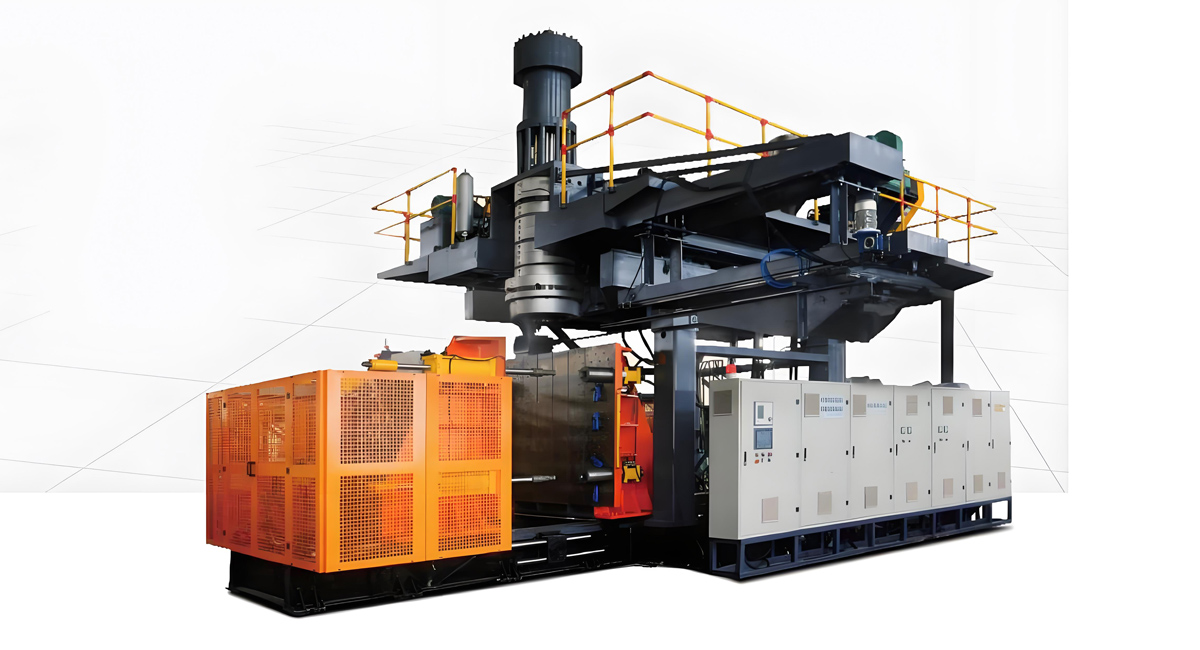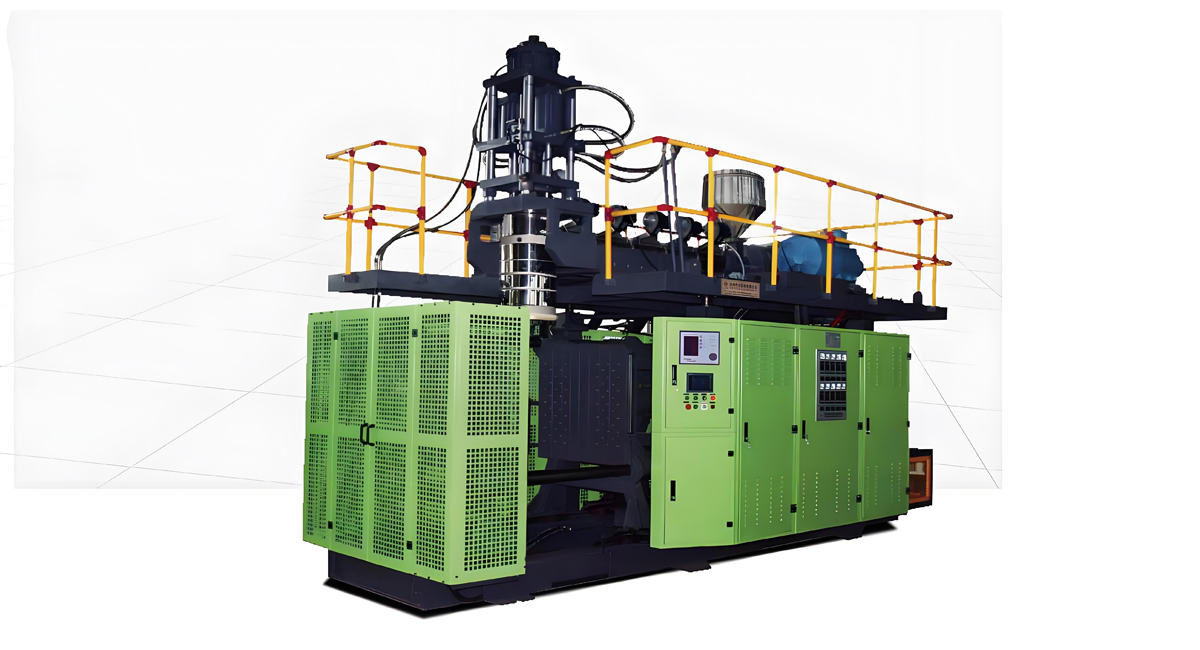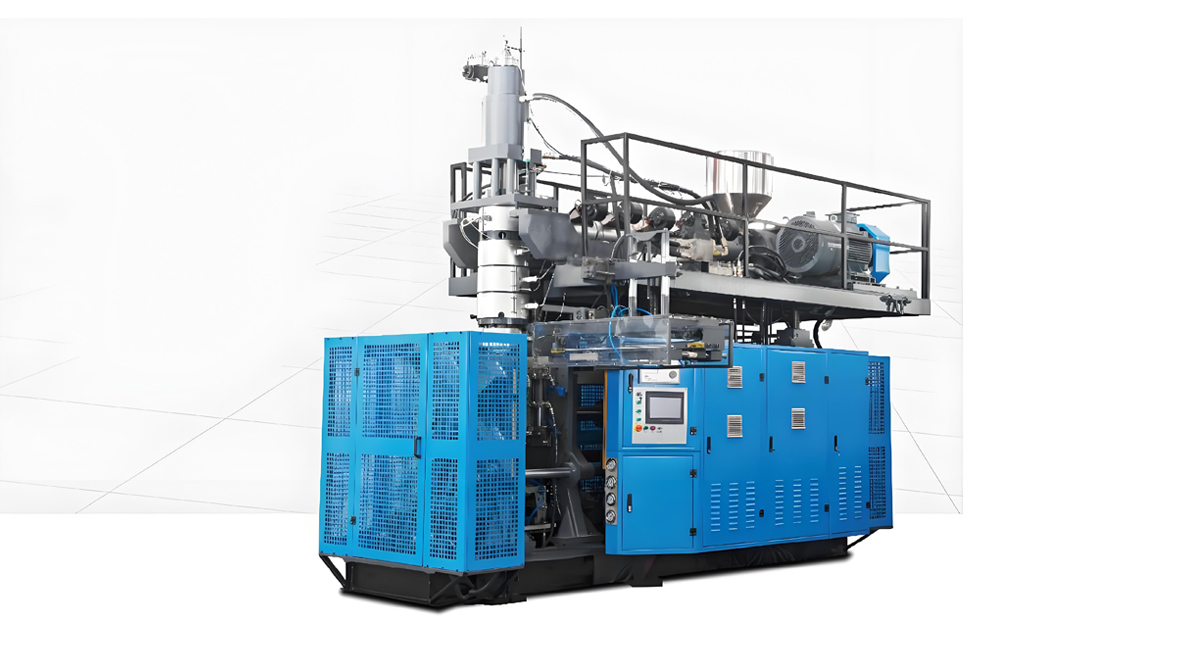
The market for disposable plastic products has experienced remarkable growth in recent years, driven by increasing demand from food service, healthcare, consumer goods, and industrial packaging sectors. This surge in demand has created significant opportunities for manufacturers who can efficiently produce high volumes of disposable plastic products using advanced extrusion blow molding technology. Apollo Extrusion Machinery has established itself as a leading provider of high-volume extrusion blow molding machines specifically designed for disposable plastic products, offering equipment that combines exceptional productivity with operational efficiency and cost-effectiveness. Understanding the capabilities, features, and economic considerations of high-volume extrusion blow molding machines is essential for manufacturers seeking to capitalize on the growing disposable products market.
High-volume production of disposable plastic products requires specialized equipment designed for rapid production cycles, consistent quality output, and operational reliability under demanding production schedules. Apollo’s extrusion blow molding machines for disposable products typically achieve production capacities ranging from 2000 to 8000 bottles or containers per hour depending on machine configuration, product size, and material type. These machines feature advanced automation systems, rapid cycle times, and robust construction designed to handle continuous operation across multiple shifts. The investment cost for high-volume extrusion blow molding machines typically ranges from $80,000 to $180,000, depending on capacity, automation level, and included features, representing a significant capital investment that can generate substantial returns through high production volumes and operational efficiency.
Market Trends for Disposable Plastic Products
The global market for disposable plastic products continues to expand, with annual growth rates exceeding 5% in most regions and even higher growth rates in developing markets. This growth is driven by multiple factors including increasing consumer convenience preferences, expanding food service and healthcare sectors, and growing demand for packaged products. Understanding these market trends helps manufacturers align production capabilities with market opportunities and make informed decisions about equipment investments and production capacity planning.
Food Service and Packaging Products
The food service sector represents one of the largest markets for disposable plastic products, including containers, cups, bottles, trays, and packaging materials. Food delivery services, takeout operations, and convenience food markets have experienced explosive growth, particularly following recent global events that accelerated the shift toward packaged and prepared foods. Disposable plastic cups alone represent a global market exceeding $25 billion annually, with plastic bottles for beverages representing an even larger market segment valued at over $100 billion globally. Food containers and trays for takeout and prepared foods represent additional market segments with annual values exceeding $15 billion.
Production equipment for food service disposable products typically requires high-volume capabilities to meet the massive demand in this sector. Apollo machines designed for food service products often feature multi-cavity molds capable of producing 4-16 containers simultaneously, enabling production rates of 4000-8000 units per hour for common product sizes. The investment in high-volume production equipment for food service products typically ranges from $100,000-160,000 for standard configurations, with specialized multi-cavity systems potentially exceeding $200,000. However, the high production volumes achievable with this equipment typically generate annual revenue of $500,000-2,000,000 depending on product mix and market conditions, providing attractive returns on equipment investment within 12-24 months for most applications.
Healthcare and Medical Disposable Products
The healthcare sector represents another significant market for disposable plastic products, with applications including medical containers, specimen bottles, packaging for medical devices, and various single-use medical products. The healthcare disposable products market is characterized by stringent quality requirements, regulatory compliance needs, and emphasis on material purity and product consistency. Healthcare products typically command premium pricing compared to consumer disposable products, with higher profit margins justifying investment in specialized equipment capable of meeting exacting quality standards.
Apollo extrusion blow molding machines designed for healthcare applications feature enhanced control systems, cleanroom-compatible construction, and specialized material handling systems designed to maintain product purity and meet regulatory requirements. These machines typically cost 15-25% more than standard equipment, with prices ranging from $120,000-220,000 depending on configuration and capacity. However, the premium pricing for healthcare disposable products, typically 2-3 times the price of comparable consumer products, provides superior profit margins that justify the higher equipment investment. Healthcare applications also typically involve long-term production contracts and stable demand, reducing production variability and providing more predictable cash flows that support equipment investment decisions.
Consumer Goods and Household Products
Consumer goods and household products represent diverse markets for disposable plastic products including storage containers, cleaning product bottles, personal care product packaging, and various single-use household items. This market segment is characterized by rapid product introductions, changing consumer preferences, and strong competition that drives continuous innovation and product differentiation. Production equipment for consumer goods must provide flexibility for rapid product changeovers while maintaining high production efficiency to support competitive pricing strategies.
Apollo machines designed for consumer goods applications feature rapid mold changeover systems, flexible control systems for multiple product types, and automation features that enable efficient operation across diverse product portfolios. These machines typically cost $90,000-150,000 depending on capacity and configuration, with flexible single-cavity systems often preferred over high-volume multi-cavity systems to accommodate product variety. The consumer goods market typically involves higher marketing and distribution costs compared to other disposable product segments, requiring production efficiency to maintain competitive pricing while preserving profit margins. Equipment investments in this segment typically achieve payback periods of 18-36 months depending on product mix, market penetration, and production volume achieved.
Machine Design Features for High-Volume Production
High-volume production of disposable plastic products requires specialized machine design features that maximize productivity while maintaining product quality consistency. Apollo’s extrusion blow molding machines incorporate numerous design elements specifically engineered for high-volume applications, enabling manufacturers to achieve maximum production efficiency and optimal return on equipment investment.
Rapid Cycle Time Capabilities
Rapid cycle times represent the cornerstone of high-volume production capability, with Apollo machines designed to minimize cycle times through optimized mechanical design, advanced control systems, and efficient process management. Cycle times for disposable plastic products typically range from 3-8 seconds depending on product size, material type, and wall thickness requirements. Apollo machines achieve these rapid cycle times through multiple design innovations including lightweight moving components, high-speed servo motor drives, optimized parison formation systems, and efficient cooling mechanisms.
The economic impact of cycle time optimization is substantial, with each second of cycle time reduction potentially increasing production capacity by 10-20% depending on the base cycle time. For a machine operating at 5-second cycles producing 720 units per hour, reducing the cycle time to 4 seconds increases production to 900 units per hour, a 25% capacity increase without additional capital investment. Over an annual production schedule of 6,000 operating hours, this cycle time reduction generates an additional 1,080,000 units annually, representing substantial additional revenue potential. Apollo’s cycle time optimization features typically add 5-10% to equipment cost but generate capacity increases that pay for this additional investment within 6-12 months through additional production volume.
Multi-Cavity Mold Systems
Multi-cavity mold systems represent one of the most effective methods for increasing production capacity without increasing machine footprint or operational complexity. Apollo machines support multi-cavity configurations ranging from 2-16 cavities depending on machine size, product size, and production requirements. Multi-cavity systems enable simultaneous production of multiple identical products, multiplying production capacity by the number of cavities while maintaining single-machine operation. The economic advantage of multi-cavity systems includes reduced per-unit production costs, lower labor requirements per unit, and improved overall equipment utilization.
The cost of multi-cavity mold systems includes both the initial investment in machine capability and the cost of additional mold cavities. Machine capability for multi-cavity operation typically adds 15-25% to machine cost, with prices ranging from $115,000-180,000 for multi-cavity capable systems compared to $100,000-150,000 for equivalent single-cavity systems. Additional mold cavities typically cost $8,000-25,000 each depending on product size and complexity, with typical multi-cavity configurations for disposable products using 4-8 cavities. The total investment for a 4-cavity system might range from $150,000-200,000 including machine and molds, compared to $100,000-150,000 for a single-cavity system. However, the 4-cavity system produces 4 times the output, reducing per-unit production costs by 60-75% and generating substantially higher profit margins despite the higher initial investment.
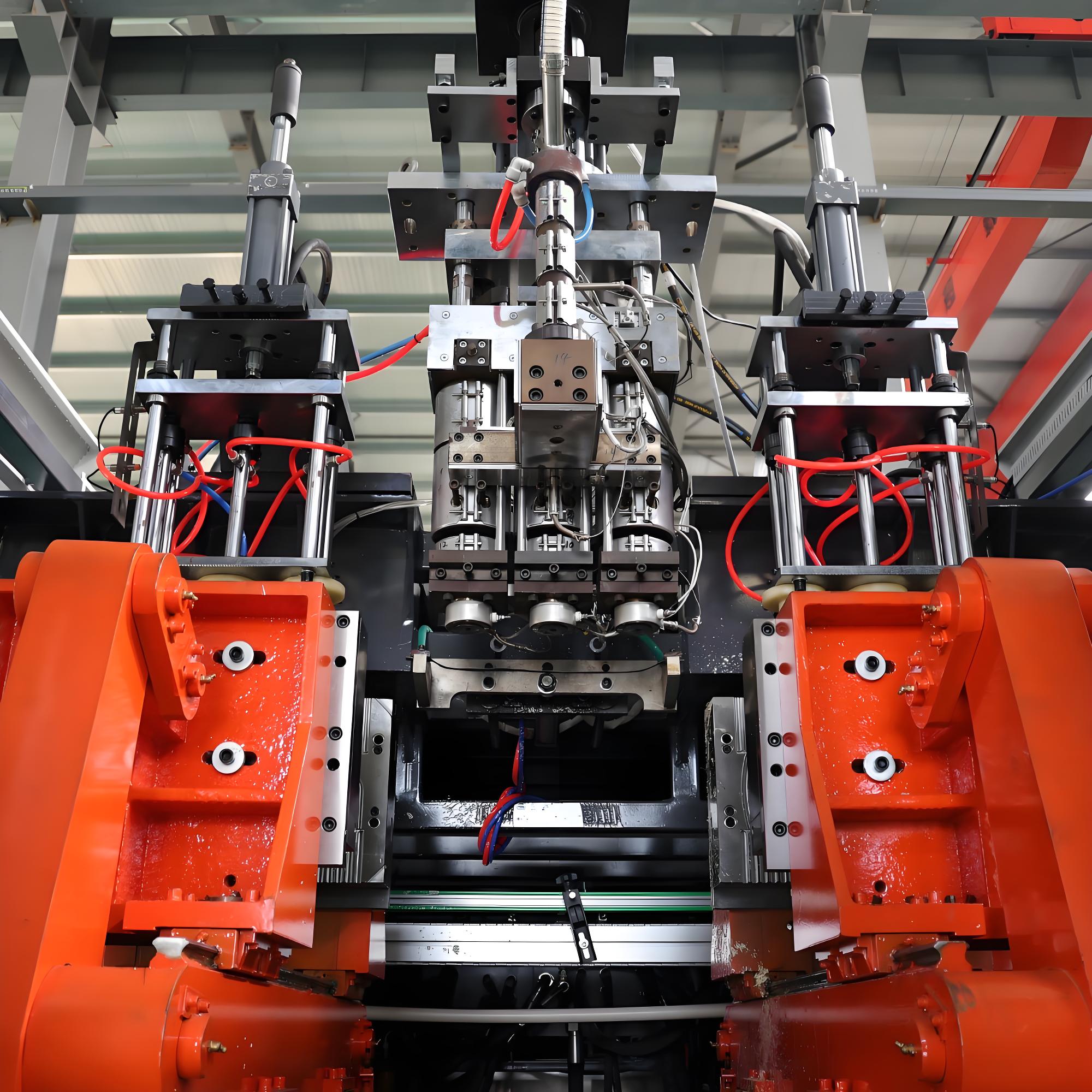
Advanced Parison Control Systems
Advanced parison control systems enable precise regulation of parison formation, ensuring consistent wall thickness and product quality while minimizing material waste. Apollo’s parison control systems include wall thickness control programming, parison diameter regulation, and timing optimization that work together to optimize material usage and production efficiency. Material savings of 5-15% are achievable through advanced parison control, representing substantial cost savings for high-volume production where material costs represent a significant portion of total production costs.
For a machine producing 5,000 units per hour using 30 grams of material per unit, annual material consumption at 6,000 operating hours would total 900,000 kilograms of material. With material costs typically ranging from $1.50-3.00 per kilogram depending on polymer type, annual material costs would range from $1,350,000-2,700,000. A 10% material savings through advanced parison control would reduce annual material costs by $135,000-270,000, representing savings that far exceed the additional investment in parison control technology, which typically adds 8-12% to machine cost or approximately $10,000-20,000 for most machine sizes. The return on investment for advanced parison control systems typically occurs within 3-6 months through material cost savings alone, with additional benefits from improved product quality consistency.
High-Speed Automation Integration
High-speed automation integration transforms extrusion blow molding from a semi-automated process to a fully automated production system capable of continuous operation with minimal operator intervention. Apollo’s automation systems include automatic material handling, product take-off systems, quality inspection, and packaging integration that together enable unattended operation for extended periods. Automation reduces labor requirements by 70-90% compared to manual or semi-automatic operation, while improving product consistency and reducing quality variations.
The economic benefits of automation include labor cost savings, quality improvements, and increased production availability. For a machine requiring 3 operators for semi-automatic operation at an annual labor cost of $150,000-225,000, full automation can reduce labor requirements to 0.5-1 operator, saving $100,000-187,000 annually in labor costs. Automation investments typically range from $30,000-80,000 depending on automation level and configuration, representing payback periods of 3-18 months depending on labor costs and production volume. Additionally, automation typically reduces product defects by 2-4%, generating additional annual savings of $8,000-25,000 depending on production volume and material costs. The combined labor savings and quality improvements provide compelling economic justification for automation investments in high-volume production environments.
Production Capacity Analysis
Analyzing production capacity and understanding the factors that influence production output is essential for optimizing equipment investment and maximizing return on investment. Production capacity depends on multiple interrelated factors including machine design, product specifications, operational parameters, and market demand. Understanding these factors enables manufacturers to select equipment appropriately sized for their production requirements and optimize machine operation for maximum productivity.
Theoretical vs. Actual Production Capacity
Theoretical production capacity represents the maximum output achievable under ideal conditions with continuous operation, perfect machine efficiency, and no downtime. Actual production capacity accounts for real-world factors including planned maintenance, unplanned downtime, product changeovers, and operational inefficiencies. For Apollo extrusion blow molding machines, theoretical capacity is typically calculated based on cycle time and number of cavities, while actual capacity typically ranges from 75-90% of theoretical capacity depending on application and operational practices.
For example, a machine with 4 cavities and a 4-second cycle time would have a theoretical capacity of 900 units per hour (60 minutes divided by 4 seconds per cycle times 4 cavities equals 900 units per hour). Assuming 85% actual capacity efficiency, the realistic production capacity would be 765 units per hour. Annual production at 6,000 operating hours would be 4,590,000 units. Production capacity optimization focuses on closing the gap between theoretical and actual capacity through improved maintenance practices, reduced changeover times, and operational efficiency improvements. Each percentage point increase in actual capacity efficiency represents substantial additional production capacity and revenue potential.
Capacity Planning and Utilization
Effective capacity planning requires understanding both current demand and future growth projections to select appropriately sized equipment. Over-sizing equipment results in inefficient capital utilization and higher per-unit fixed costs, while under-sizing equipment constrains growth opportunities and requires earlier equipment replacement. Capacity utilization typically targets 70-85% for optimal efficiency, with lower utilization providing flexibility for growth and higher utilization maximizing return on investment but reducing flexibility for demand fluctuations.
Capacity planning should consider market demand variability, seasonal patterns, and growth projections over the equipment’s 8-12 year service life. For a current annual demand of 3,000,000 units and projected annual growth of 10%, demand would reach approximately 4,800,000 units in five years. Equipment capable of producing 5,000,000 units annually at 85% efficiency would represent 60% current utilization, allowing for significant growth while maintaining operational efficiency. Equipment selection based on comprehensive capacity planning ensures that investments support business growth objectives while maintaining efficient operation throughout the equipment service life.
Production Volume Cost Structure
The cost structure of high-volume production varies significantly with production volume due to economies of scale, fixed cost spreading, and operational efficiency improvements. Fixed costs including equipment depreciation, facility costs, and basic staffing remain relatively constant regardless of production volume, causing per-unit fixed costs to decrease as production increases. Variable costs including materials, energy, and consumables typically decrease on a per-unit basis at higher production volumes due to improved efficiency, bulk purchasing advantages, and optimized process parameters.
For example, at 2,000,000 units annually, total production costs might average $0.15 per unit, including $0.05 fixed costs and $0.10 variable costs. At 4,000,000 units annually, fixed costs spread across double the volume reduce to $0.025 per unit, while variable costs might decrease to $0.085 per unit due to improved efficiency, resulting in total per-unit costs of $0.11, a 27% reduction. This cost advantage at higher production volumes supports competitive pricing strategies while maintaining profit margins, creating a virtuous cycle where higher volumes lead to lower costs, enabling pricing advantages that support further volume growth.
Material Considerations for Disposable Products
Material selection for disposable plastic products involves balancing cost, performance requirements, regulatory compliance, and processing considerations. Understanding material properties and their impact on production efficiency is essential for optimizing both product quality and production economics. Apollo extrusion blow molding machines are designed to accommodate a wide range of materials commonly used in disposable product applications, providing flexibility for diverse product portfolios.
Polyethylene Variants
Polyethylene represents the most widely used material family for disposable plastic products, with various formulations offering different property profiles. High-density polyethylene (HDPE) is commonly used for bottles and containers requiring stiffness and chemical resistance, with material costs typically ranging from $1.20-1.80 per kilogram. Low-density polyethylene (LDPE) offers greater flexibility and is used for squeeze bottles and flexible containers, with costs typically ranging from $1.40-2.00 per kilogram. Linear low-density polyethylene (LLDPE) provides an excellent balance of properties and is used for diverse applications, with costs typically ranging from $1.30-1.90 per kilogram.
Material selection significantly impacts production efficiency and economics. HDPE typically processes with shorter cycle times and lower energy consumption compared to other polyethylene variants, contributing to higher production capacity and lower operating costs. However, LDPE and LLDDPE offer enhanced properties that may justify slightly higher processing costs for certain applications. Apollo machines are optimized for all polyethylene variants, with control systems tailored to the specific processing requirements of each material type. Material selection decisions should consider both product performance requirements and production economics, with processing costs typically varying by 5-15% between different polyethylene grades.
Polypropylene Applications
Polypropylene offers advantages for certain disposable product applications, particularly where higher temperature resistance or chemical resistance is required. Polypropylene costs typically range from $1.40-2.10 per kilogram, positioning it slightly higher than many polyethylene grades. Processing polypropylene requires higher processing temperatures than polyethylene, typically 190-240°C compared to 160-220°C for polyethylene, resulting in energy consumption that is 10-20% higher. However, polypropylene’s superior properties for certain applications justify the additional processing costs when product requirements demand its specific characteristics.
Apollo machines designed for polypropylene processing feature enhanced heating systems and temperature control capabilities optimized for higher processing temperatures. Polypropylene’s shorter cooling time compared to many polyethylene grades can partially offset the higher energy requirements, with cycle times often comparable or slightly faster depending on product configuration. Material selection should consider total processing costs including energy consumption, cycle time impact, and material costs, rather than material costs alone. For applications where polypropylene’s properties provide significant advantages, the total cost impact may be minimal or even favorable compared to alternative materials.
Recycled Material Usage
Increasing emphasis on sustainability has led to growing interest in incorporating recycled materials into disposable plastic products. Recycled polyethylene (rHDPE) and recycled polypropylene (rPP) are available at costs typically 15-30% lower than virgin materials, providing substantial cost savings opportunities. However, recycled materials may require processing adjustments to accommodate variations in melt flow properties, contamination levels, and color consistency. Apollo machines are designed to accommodate recycled materials with appropriate process parameter adjustments and enhanced filtration systems.
Using recycled materials can reduce material costs by $0.20-0.60 per kilogram, representing annual savings of $180,000-540,000 for a machine processing 3,000,000 kilograms of material annually. However, recycled materials may reduce production capacity by 5-10% due to processing adjustments and may require additional quality control measures. The economic analysis of recycled material usage should consider the material cost savings against potential capacity reductions and quality control costs. For many applications, recycled materials provide substantial net economic benefits while supporting sustainability objectives, making them an attractive option for disposable product manufacturers.
Quality Considerations for Disposable Products
Quality considerations for disposable plastic products vary by application but typically include dimensional accuracy, wall thickness consistency, visual appearance, and functional performance requirements. Maintaining consistent quality at high production volumes requires robust quality systems, precise process control, and comprehensive monitoring capabilities. Apollo extrusion blow molding machines incorporate advanced quality control features that enable production of consistent quality products even at high production speeds.
Dimensional Accuracy and Consistency
Dimensional accuracy is critical for disposable products that must fit caps, lids, or integrate with packaging systems. Apollo machines achieve dimensional accuracy within plus or minus 0.2-0.5 mm for most applications, maintained through precise parison control, consistent molding conditions, and robust machine construction. High-volume production presents challenges for maintaining dimensional consistency, as process variations that are minor at lower speeds become more significant at high production rates. Apollo’s advanced control systems maintain dimensional consistency even at high production speeds through closed-loop process control and real-time parameter adjustments.
Dimensional deviations beyond specifications can result in downstream problems including assembly issues, packaging problems, or functional failures that generate customer returns and warranty claims. For disposable products with typical value of $0.05-0.30 each, quality issues resulting in rejection rates of just 1% can generate annual losses of $30,000-180,000 for a machine producing 5,000,000 units annually. Apollo’s quality control systems help maintain rejection rates below 0.5% for most applications, representing substantial cost savings through reduced scrap and customer returns. The economic value of quality consistency justifies investment in advanced control systems that may add 5-10% to equipment cost but provide returns through reduced quality-related costs.
Visual Quality and Aesthetics
Visual quality requirements for disposable products vary significantly by application but typically include control of surface finish, color consistency, absence of visible defects, and flash control. Consumer-facing disposable products require higher visual quality standards compared to industrial or utility applications. Apollo machines provide visual quality control through consistent molding conditions, optimized cooling, and flash control systems that minimize excess material formation. For applications requiring particularly high visual quality standards, additional quality control equipment including vision inspection systems can be integrated into the production line.
Visual quality problems including surface defects, color variations, or excessive flash can result in product rejection even when functional requirements are met. For consumer disposable products, visual quality often represents the primary quality determinant perceived by customers, making visual consistency critical for market acceptance. Apollo machines achieve visual quality standards suitable for most applications through standard machine features, with additional capabilities available through optional equipment upgrades. Investment in visual quality capabilities typically adds 3-8% to equipment cost but provides returns through reduced rejections and improved customer satisfaction.
Functional Performance Testing
Functional performance testing verifies that disposable products perform their intended function effectively. Testing requirements vary by product type but may include pressure testing for bottles, drop testing for durability, seal testing for containers, or other functional tests specific to product application. Apollo machines produce products with consistent functional performance through precise control of material distribution, wall thickness, and molding conditions. For applications with particularly demanding functional requirements, integrated testing systems can verify product functionality inline, providing real-time quality monitoring.
Functional failures can be particularly costly as they may not be discovered until product reaches the customer, potentially causing product recalls, reputation damage, or liability issues. For disposable products with potential value in use of $5-50 or more depending on application, functional failures can generate substantial liability costs. Apollo’s process control capabilities minimize functional performance variations, helping ensure products consistently meet functional requirements. Investment in functional testing capabilities typically adds 5-10% to equipment cost but provides substantial risk reduction and protection against costly failures in demanding applications.
Operational Efficiency Optimization
Optimizing operational efficiency is essential for maximizing the economic benefits of high-volume production. Efficiency improvements reduce per-unit costs, increase effective capacity, and improve profitability. Apollo extrusion blow molding machines provide numerous features and capabilities that support operational efficiency optimization when combined with proper operational practices and continuous improvement programs.
Preventive Maintenance Programs
Preventive maintenance programs reduce unplanned downtime, extend equipment life, and maintain optimal machine performance. Apollo provides comprehensive preventive maintenance recommendations for each machine model, typically including daily, weekly, monthly, and annual maintenance tasks. Implementing effective preventive maintenance programs typically costs 1-2% of equipment value annually but reduces unplanned downtime by 50-70% compared to reactive maintenance approaches. For a machine with potential production value of $1,000,000-2,000,000 annually, preventing even a few days of unplanned downtime provides substantial economic benefits.
Preventive maintenance costs typically include lubricants, filters, wear parts, and labor for maintenance activities. Annual preventive maintenance costs typically range from $2,000-4,000 for standard machines, depending on size and operating conditions. These costs are more than offset by reduced downtime costs, with unplanned downtime typically costing $5,000-20,000 per day depending on production volume and product value. Additionally, preventive maintenance extends equipment life by 2-4 years, delaying substantial replacement costs and providing additional years of productive operation. The economic case for preventive maintenance is compelling, with returns typically exceeding 300% when considering downtime avoidance and extended equipment life.
Energy Consumption Optimization
Energy consumption represents a significant operational cost for high-volume production, with typical energy costs ranging from $0.01-0.03 per unit depending on machine size, product size, and energy rates. Apollo machines incorporate energy-efficient design features including servo motor drives, optimized heating systems, and efficient cooling mechanisms that minimize energy consumption. Energy consumption optimization through proper machine operation and maintenance can reduce energy costs by 10-20%, generating annual savings of $30,000-120,000 for machines producing 5,000,000-10,000,000 units annually.
Energy monitoring systems provide real-time visibility into energy consumption patterns, identifying optimization opportunities. Energy recovery systems capture waste heat from machine operation for use in other facility processes, further improving overall energy efficiency. Investment in energy optimization typically includes monitoring systems costing $5,000-15,000 and potentially energy recovery systems costing $15,000-40,000 depending on capacity. These investments typically achieve payback periods of 12-36 months through energy cost savings, with additional benefits from reduced environmental impact and improved sustainability metrics.
Changeover Time Reduction
Changeover time between different products or product sizes represents lost production capacity in flexible production environments. Apollo machines feature rapid changeover capabilities including quick mold change systems, adjustable product handling, and programmable control systems that minimize changeover times. Advanced changeover systems can reduce changeover times from 2-4 hours for conventional machines to 30-60 minutes for Apollo rapid changeover systems, saving 1-3.5 hours of potential production time per changeover.
For machines producing multiple product types with weekly changeovers, rapid changeover capabilities can recover 50-180 hours of production time annually, equivalent to additional production of 200,000-1,000,000 units depending on machine capacity. With per-unit profit margins typically ranging from $0.02-0.10 for disposable products, this additional production represents $4,000-100,000 of additional profit opportunity annually. Investment in rapid changeover capabilities typically adds 5-10% to equipment cost but provides returns through increased production flexibility and recovered production capacity. The value of rapid changeover capabilities is particularly significant for manufacturers serving markets with diverse product requirements and frequent product changes.
Cost-Benefit Analysis
Comprehensive cost-benefit analysis provides the framework for making informed equipment investment decisions. Understanding the total cost of ownership, revenue potential, and return on investment characteristics of high-volume extrusion blow molding machines enables manufacturers to optimize equipment acquisition decisions and maximize long-term profitability.
Total Cost of Ownership Analysis
Total cost of ownership includes initial equipment investment, financing costs, operating costs, maintenance costs, and residual value at end of life. For Apollo high-volume extrusion blow molding machines, initial investment typically ranges from $80,000-180,000 depending on capacity and configuration. Operating costs including energy, materials, and labor typically range from $200,000-600,000 annually depending on production volume and product characteristics. Maintenance costs typically average 2-3% of equipment value annually. Over a 10-year equipment life, total cost of ownership typically totals 3-5 times the initial equipment investment when all costs are included.
For a machine with $120,000 initial investment and annual operating costs of $400,000, 10-year total cost of ownership would total approximately $4,000,000 including the initial investment and all operating and maintenance costs. Understanding total cost of ownership enables accurate comparison of equipment options and calculation of per-unit production costs. Per-unit costs typically range from $0.08-0.20 for disposable products depending on production volume and efficiency. Total cost of ownership analysis also identifies cost reduction opportunities that can improve profitability throughout the equipment service life.
Revenue Potential Calculation
Revenue potential depends on production capacity, product pricing, and market demand. For a machine producing 5,000,000 units annually at an average selling price of $0.10 per unit, annual revenue would total $500,000. Product pricing varies widely by application, with commodity disposable products typically priced at $0.05-0.15 each, specialty products at $0.15-0.50 each, and medical or specialized products potentially exceeding $1.00 each. Revenue potential should be calculated based on realistic production capacity, market pricing, and achievable market penetration rather than theoretical maximum capacity.
Revenue potential also considers market growth over the equipment service life. For markets growing at 5-10% annually, revenue potential can increase significantly over the 8-12 year equipment service life. For example, $500,000 annual revenue growing at 8% annually would reach approximately $1,000,000 annually by year 10, dramatically improving long-term profitability. Revenue potential analysis should consider both current market conditions and growth projections to understand the full revenue potential of equipment investments.
Return on Investment Calculation
Return on investment for high-volume extrusion blow molding equipment typically ranges from 25-50% annually depending on application, market conditions, and operational efficiency. Using the example of a $120,000 machine generating $500,000 annual revenue with $400,000 annual operating costs, annual profit would total $100,000, representing an 83% return on investment. Even after accounting for taxes and financing costs, returns typically remain attractive, with payback periods of 1-2 years typical for most high-volume disposable product applications.
Return on investment improves with operational efficiency improvements, cost reduction initiatives, and market expansion. Each 1% reduction in per-unit production costs adds $5,000-50,000 annually to profitability for machines producing 500,000-5,000,000 units annually. Production efficiency improvements that increase actual capacity utilization from 75% to 85% of theoretical capacity generate additional revenue of $50,000-500,000 annually depending on machine capacity. Continuous improvement initiatives that enhance operational efficiency provide substantial returns through increased profitability and improved competitive positioning.
Conclusion
High-volume production of disposable plastic products represents a substantial market opportunity supported by growing demand across diverse application sectors. Apollo Extrusion Machinery’s specialized extrusion blow molding machines for disposable products provide the productivity, efficiency, and quality capabilities required to compete effectively in this dynamic market. The combination of advanced machine design features, operational efficiency optimization, and comprehensive support services enables manufacturers to achieve superior returns on equipment investment while meeting the demanding requirements of high-volume disposable product production.
Investment in high-volume extrusion blow molding equipment requires careful consideration of market opportunities, production requirements, and economic factors. This comprehensive analysis has covered the critical aspects of equipment selection, operation, and optimization that enable manufacturers to maximize the value of their equipment investments. With typical payback periods of 1-2 years and attractive long-term returns, high-volume extrusion blow molding equipment represents excellent capital investment opportunities for manufacturers serving the growing disposable products market.
Apollo’s commitment to technology advancement, quality excellence, and customer support provides manufacturers with reliable equipment and the technical expertise needed for successful high-volume production. By partnering with Apollo and implementing the best practices outlined in this guide, manufacturers can establish competitive advantages in the disposable products market through superior production efficiency, product quality, and operational excellence. The future outlook for disposable products remains positive, with continued growth expected across multiple application segments, providing sustained opportunities for manufacturers equipped with appropriate high-volume production capabilities.