The global plastic pail market is projected to reach USD 18.7 billion by 2030, growing at a compound annual growth rate (CAGR) of 5.2% from 2026 to 2030. This robust growth is driven by surging demand from the chemical, food and beverage, construction, agriculture, and pharmaceutical industries. Plastic pails have become the preferred packaging solution for a wide range of products due to their exceptional durability, cost-effectiveness, chemical resistance, and recyclability. As industrial applications continue to demand higher performance and reliability from plastic pails, manufacturers are increasingly turning to heavy-duty extrusion blow molding machines to meet these stringent requirements.
At the heart of every successful plastic pail production operation lies the extrusion blow molding machine, the critical piece of equipment that determines production capacity, product quality, and overall operational profitability. Unlike standard blow molding machines designed for lightweight containers such as bottles and jars, plastic pail production requires specialized heavy-duty equipment capable of processing high volumes of high-density polyethylene (HDPE) and other engineering plastics while maintaining precise control over wall thickness and product consistency. Traditional standard-duty machines simply cannot withstand the continuous high-stress operation required for plastic pail production, leading to frequent breakdowns, high maintenance costs, and inconsistent product quality.
As a leading global manufacturer of advanced extrusion blow molding systems with over 25 years of industry experience, Apollo has established itself as the trusted partner for plastic pail manufacturers worldwide. Our comprehensive range of heavy-duty extrusion blow molding machines is specifically engineered to address the unique challenges of plastic pail production. Our machines incorporate innovative heavy-duty design features, advanced automation technologies, and energy-efficient systems that help our customers improve production efficiency, reduce operational costs, and produce high-quality plastic pails that meet the most demanding international standards. With thousands of successful installations across more than 90 countries, Apollo extrusion blow molding machines have proven to increase production capacity by up to 70%, reduce material waste by up to 25%, and deliver a return on investment in as little as 6-12 months for plastic pail production operations.
This comprehensive guide provides everything you need to know about heavy-duty extrusion blow molding machines for plastic pail production. It examines the current state of the global plastic pail market and the challenges facing manufacturers, explains the unique requirements of plastic pail production compared to other blow molding applications, details the core heavy-duty design features that make modern extrusion blow molding machines superior, provides a complete product overview of Apollo’s heavy-duty machine range with detailed pricing information, includes a comprehensive cost analysis and return on investment calculation, features real-world success stories from Apollo customers around the world, offers practical guidance for selecting the right machine for your production needs, and provides maintenance best practices to maximize the lifespan and performance of your equipment. Whether you are planning to start a new plastic pail production facility or upgrade your existing production line, this guide will help you make informed decisions about your extrusion blow molding machine investment.
1. Global Plastic Pail Market: Growth, Drivers and Manufacturing Challenges
The plastic pail market has experienced steady growth over the past decade and is expected to continue expanding at a healthy rate in the coming years. This growth is being driven by several powerful trends that are reshaping the global packaging industry and creating significant opportunities for plastic pail manufacturers.
1.1 Market Growth and Key Drivers
Several key factors are fueling the rapid expansion of the global plastic pail market:
- Industrial Growth in Emerging Economies: Rapid industrialization in emerging economies such as China, India, Brazil, and Southeast Asia is driving significant demand for plastic pails for packaging chemicals, paints, lubricants, and construction materials. As these economies continue to develop, the demand for industrial packaging solutions is expected to grow exponentially.
- Food and Beverage Industry Expansion: The food and beverage industry is one of the largest consumers of plastic pails, using them for packaging bulk ingredients, sauces, dairy products, and beverages. The growing demand for convenience foods and bulk packaging options is driving increased adoption of plastic pails in this sector.
- Construction Industry Boom: The global construction industry is experiencing significant growth, particularly in residential and commercial construction. Plastic pails are widely used in construction for packaging paints, coatings, adhesives, sealants, and building materials, driving strong demand for durable, heavy-duty packaging solutions.
- Agricultural Sector Growth: The agricultural industry uses plastic pails for a wide range of applications, including storing and transporting fertilizers, pesticides, seeds, and agricultural products. The growing global population and increasing demand for food production are driving growth in this sector.
- Shift Towards Sustainable Packaging: Plastic pails are highly recyclable and have a lower carbon footprint compared to alternative packaging materials such as metal and glass. As companies and consumers become more environmentally conscious, the demand for sustainable packaging solutions like plastic pails is increasing.
1.2 Advantages of Plastic Pails Over Alternative Packaging
Plastic pails offer numerous advantages over alternative packaging materials such as metal drums, glass jars, and cardboard containers, making them the preferred choice for many industrial and consumer applications:
Exceptional Durability: Plastic pails are highly resistant to impact, corrosion, and chemical damage, making them ideal for packaging harsh chemicals and industrial products. Unlike metal drums, plastic pails do not rust or dent, ensuring that products remain protected during storage and transportation.
Lightweight Design: Plastic pails are significantly lighter than metal drums and glass containers, reducing transportation costs and making them easier to handle. This lightweight design also improves workplace safety by reducing the risk of injuries from lifting heavy containers.
Cost-Effectiveness: Plastic pails are generally less expensive to produce and transport than alternative packaging materials. They also offer better product protection, reducing the risk of product damage and loss during shipping and handling.
Versatility: Plastic pails are available in a wide range of sizes, shapes, and colors, making them suitable for virtually any packaging application. They can also be customized with logos, labels, and other branding elements to help companies promote their products.
Recyclability: Most plastic pails are made from HDPE, which is 100% recyclable. This makes plastic pails an environmentally friendly packaging option that aligns with global sustainability goals and regulatory requirements.
1.3 Critical Challenges Facing Plastic Pail Manufacturers
While the global plastic pail market presents significant opportunities for growth, manufacturers also face several critical challenges that must be addressed to remain competitive:
- Increasing Performance Requirements: Industrial customers are demanding higher performance from plastic pails, including greater stacking strength, improved impact resistance, and better chemical resistance. This requires manufacturers to produce pails with more precise wall thickness control and consistent material properties.
- Rising Raw Material Costs: The cost of HDPE and other plastic resins is highly volatile and subject to fluctuations in global oil prices. Rising raw material costs put significant pressure on manufacturers to reduce material waste and improve production efficiency to maintain profitability.
- Stringent Regulatory Requirements: Plastic pail manufacturers must comply with a wide range of international regulations regarding food safety, chemical compatibility, and environmental protection. Failure to comply with these regulations can result in significant fines, product recalls, and damage to brand reputation.
- Intense Competition: The plastic pail market is highly competitive, with numerous manufacturers operating at both regional and global levels. To remain competitive, manufacturers must continuously improve their production efficiency, reduce costs, and differentiate their products through quality and innovation.
- Labor Shortages: Many regions are experiencing significant labor shortages, making it difficult for manufacturers to find and retain skilled workers. This is driving increased demand for automated production solutions that can reduce labor requirements and improve productivity.
2. Unique Requirements of Plastic Pail Production for Extrusion Blow Molding Machines
Plastic pail production differs significantly from other blow molding applications such as bottle and jar production in several important ways. These differences create unique requirements for the extrusion blow molding machines used in plastic pail production, particularly in terms of heavy-duty design and performance capabilities.
2.1 High Melt Strength and Uniformity Requirements
Plastic pails are typically made from HDPE, which requires high melt strength to form the large, thick-walled parisons needed for pail production. The parison must be strong enough to support its own weight without stretching or sagging during the extrusion process, even for large pails up to 200 liters in capacity.
Achieving consistent melt quality and uniformity is also critical for plastic pail production. Any variations in melt temperature, pressure, or viscosity can result in inconsistent wall thickness, which can compromise the structural integrity of the pail. Poor melt uniformity can also lead to defects such as weld lines, weak spots, and surface imperfections, which can cause the pail to fail during use.
Heavy-duty extrusion blow molding machines for plastic pail production must be equipped with high-performance extrusion systems capable of processing large volumes of HDPE at consistent temperatures and pressures. The extruder must be able to generate sufficient shear to properly melt and homogenize the resin while maintaining precise control over melt temperature and viscosity.
2.2 Heavy-Duty Clamping System Requirements
The clamping system is one of the most critical components of an extrusion blow molding machine for plastic pail production. Plastic pails require significantly higher clamping forces than smaller containers due to their larger size and higher projected area. The clamping system must be able to generate sufficient force to hold the mold closed during the blowing process, preventing flash and ensuring that the pail is properly formed.
In addition to high clamping force, the clamping system must also be extremely rigid and durable to withstand the continuous high-stress operation required for plastic pail production. The platens must be designed to resist bending and deflection under load, which can cause uneven mold wear and inconsistent product quality. The clamping system must also be able to operate at high speeds while maintaining precise control over mold movement and closing force.
Traditional standard-duty clamping systems are simply not designed to handle the high forces and continuous operation required for plastic pail production. They are prone to premature wear, breakdowns, and inconsistent performance, leading to high maintenance costs and production downtime.
2.3 Precise Wall Thickness Control
Precise wall thickness control is absolutely essential for plastic pail production. The wall thickness of a plastic pail directly affects its strength, durability, and material usage. Pails that are too thin will not have sufficient strength to withstand stacking, impact, or internal pressure, while pails that are too thick will waste material and increase production costs.
Plastic pails have complex geometry with several stress concentration points that require thicker walls to ensure structural integrity. The bottom of the pail, the top rim, and the handle attachment points all require additional thickness to withstand the forces they will be subjected to during use. At the same time, other areas of the pail can be made thinner to reduce material usage and weight.
Modern heavy-duty extrusion blow molding machines use advanced wall thickness control systems to precisely adjust the parison thickness along its length and around its circumference. These systems allow manufacturers to optimize the wall thickness distribution of the pail, ensuring that material is placed exactly where it is needed most. This not only improves the strength and durability of the pail but also reduces material usage by up to 25% compared to machines without advanced wall thickness control.
2.4 High Production Capacity and Reliability
Plastic pail production is typically a high-volume operation, with manufacturers producing thousands of pails per day. To meet this demand, extrusion blow molding machines must be capable of operating continuously 24 hours a day, 7 days a week with minimal downtime.
Reliability is therefore a critical factor in machine selection. Heavy-duty extrusion blow molding machines must be built to withstand the rigors of continuous production with minimal maintenance and breakdowns. All components must be made from high-quality materials and designed for long service life, even under the most demanding operating conditions.
In addition to reliability, production speed is also an important consideration. Modern heavy-duty extrusion blow molding machines can produce up to 600 pails per hour, depending on the size and complexity of the pail. Higher production speeds allow manufacturers to increase output and reduce per-unit production costs, improving their competitiveness in the market.
2.5 Compatibility with Multiple Materials and Configurations
While HDPE is the most common material used for plastic pail production, manufacturers also need to be able to process other materials such as polypropylene (PP), polyethylene terephthalate (PET), and various engineering plastics. They also need to be able to produce pails in a wide range of sizes, from small 5-liter pails to large 200-liter industrial drums.
Many industrial applications also require multi-layer plastic pails with specialized barrier properties to protect sensitive products from moisture, oxygen, and chemical contamination. Multi-layer pails typically consist of an inner layer of virgin HDPE, a middle barrier layer, and an outer layer that can contain recycled material. Producing these multi-layer pails requires extrusion blow molding machines equipped with multiple extruders and advanced co-extrusion technology.
Heavy-duty extrusion blow molding machines must therefore be highly flexible and adaptable, capable of processing a wide range of materials and producing pails in various sizes and configurations. They must also be able to accommodate quick changeovers between different products and mold sets to minimize production downtime.
3. Core Heavy-Duty Design Features of Modern Extrusion Blow Molding Machines
Modern heavy-duty extrusion blow molding machines incorporate several advanced design features that address the unique requirements of plastic pail production. These features work together to provide exceptional performance, reliability, and efficiency, allowing manufacturers to produce high-quality plastic pails at the lowest possible cost.
3.1 High-Torque Extrusion System
The extrusion system is the heart of any extrusion blow molding machine, and it is particularly critical for plastic pail production. Heavy-duty extrusion blow molding machines are equipped with high-torque extrusion systems specifically designed to process large volumes of HDPE and other high-viscosity plastics.
The extruder screw is one of the most important components of the extrusion system. Apollo heavy-duty extrusion blow molding machines feature specially designed barrier-type screws with optimized mixing sections that provide excellent melting and homogenization of the resin. These screws are designed to generate high shear rates while maintaining precise control over melt temperature, ensuring consistent melt quality and uniformity even at high production rates.
The gearbox is another critical component of the extrusion system. Apollo uses heavy-duty, precision-engineered gearboxes with high torque density ratings that can handle the high loads required for plastic pail production. These gearboxes are designed for continuous operation with minimal maintenance and feature forced lubrication and cooling systems to ensure long service life.
The drive system also plays a crucial role in extrusion performance. Apollo machines use high-efficiency AC servo motors with vector control that provide precise speed control and excellent torque response. These drive systems are significantly more energy-efficient than traditional DC drives, reducing energy consumption by up to 30% compared to older machines.
3.2 Robust Clamping Mechanism
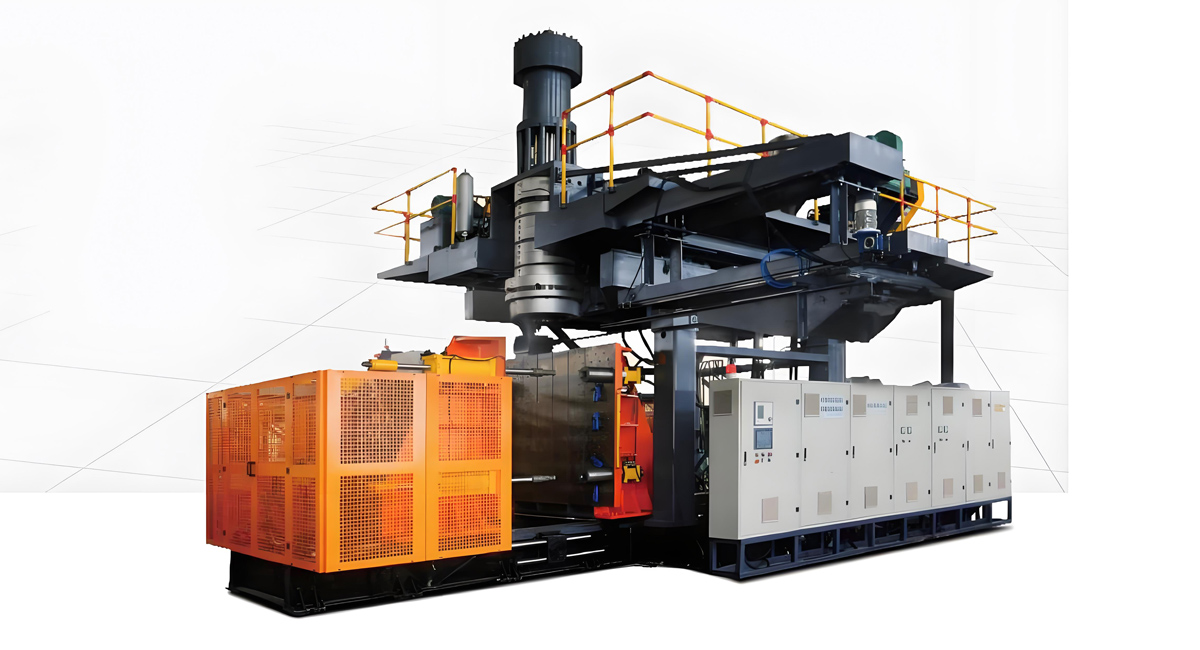
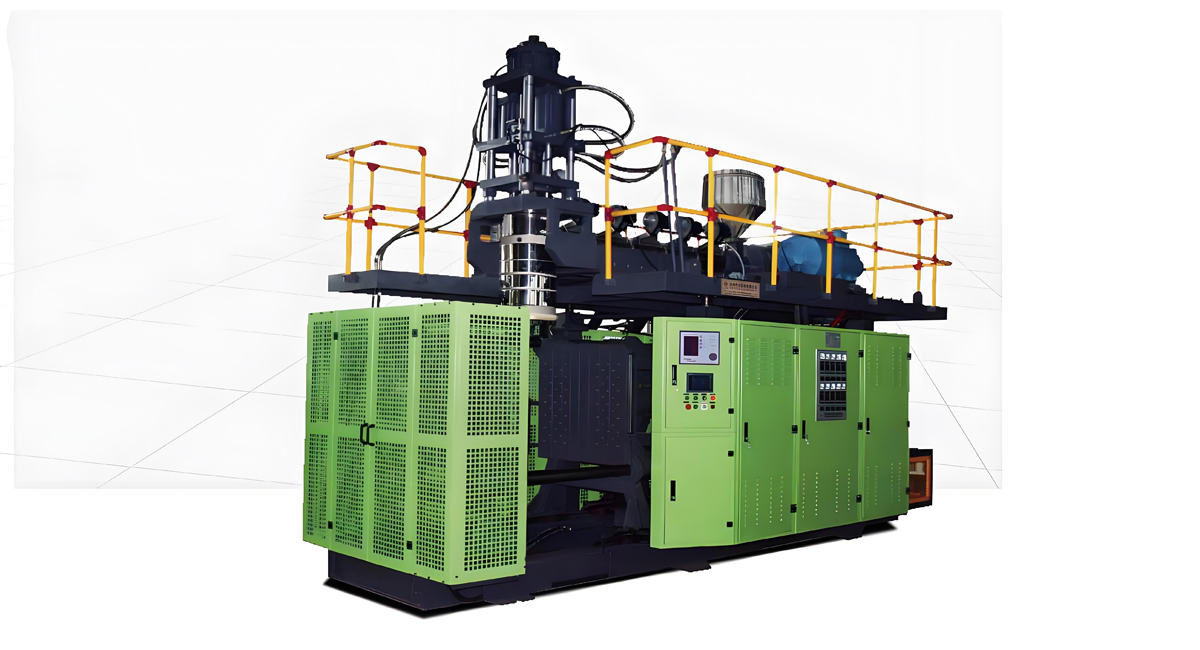
The clamping mechanism is responsible for holding the mold closed during the blowing process, and it must be extremely robust and reliable for plastic pail production. Apollo heavy-duty extrusion blow molding machines feature a variety of clamping system designs, including toggle clamping and hydraulic clamping, all engineered for heavy-duty operation.
Toggle clamping systems are the most common design used for medium-sized plastic pail production. Apollo’s toggle clamping systems feature a heavy-duty double-toggle design that provides high clamping force with excellent mechanical advantage. The toggle mechanism is designed to generate maximum clamping force at the closed position, ensuring that the mold remains tightly closed during the blowing process. The platens are made from high-grade cast iron with reinforced ribbing to provide exceptional rigidity and prevent deflection under load.
For larger pails up to 200 liters, Apollo offers hydraulic clamping systems that provide even higher clamping forces and greater flexibility. These hydraulic systems use advanced proportional valves to provide precise control over clamping force and mold movement, ensuring smooth and consistent operation. The hydraulic systems are also equipped with energy-saving features such as variable displacement pumps and accumulators that reduce energy consumption by up to 40% compared to conventional hydraulic systems.
All Apollo clamping systems are designed for long service life with minimal maintenance. They feature hardened steel guide rails and bushings that provide smooth, precise movement and resist wear even under continuous high-stress operation.
3.3 Advanced Multi-Layer Co-Extrusion Technology
Multi-layer co-extrusion technology has become increasingly important in plastic pail production, particularly for industrial applications that require barrier properties or the use of recycled materials. Apollo heavy-duty extrusion blow molding machines are available with advanced multi-layer co-extrusion systems that can produce pails with up to 7 layers.
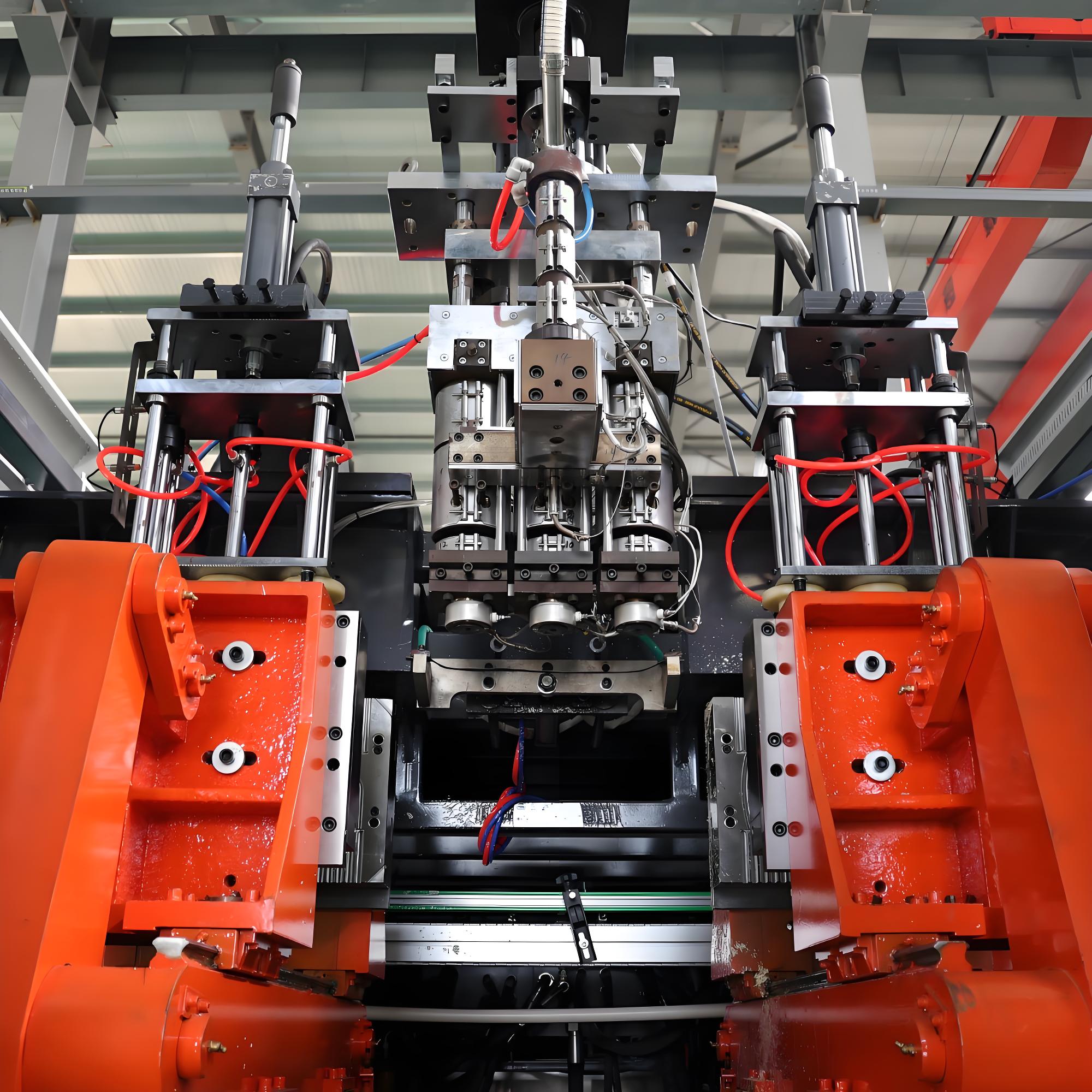
Apollo’s co-extrusion systems feature multiple extruders that feed different materials into a specially designed co-extrusion die. The die precisely combines the different materials into a single parison with the desired layer structure. The layer thicknesses can be independently controlled to optimize the performance and cost of the pail.
Multi-layer pails offer several significant advantages over single-layer pails:
- Barrier Properties: Multi-layer pails can incorporate specialized barrier layers that protect sensitive products from moisture, oxygen, and chemical contamination. This makes them ideal for packaging food products, chemicals, and pharmaceuticals.
- Recycled Material Usage: Multi-layer pails allow manufacturers to use recycled material in the outer layers while maintaining a virgin inner layer that comes into contact with the product. This not only reduces production costs but also improves sustainability by diverting plastic waste from landfills.
- Improved Performance: Multi-layer pails can be designed to combine the best properties of different materials, resulting in pails with improved strength, chemical resistance, and durability.
- Cost Savings: By using less expensive materials in non-critical layers, manufacturers can reduce the overall material cost of the pail while maintaining the required performance properties.
3.4 Precision Wall Thickness Control Systems
Precision wall thickness control is one of the most important features of modern heavy-duty extrusion blow molding machines for plastic pail production. Apollo machines are equipped with advanced axial wall thickness control systems (AWDS) and optional radial wall thickness control systems (RWDS) that provide unprecedented control over parison thickness.
The axial wall thickness control system adjusts the parison thickness along its length by varying the gap between the die mandrel and die bushing during the extrusion process. The system uses a high-precision servo motor to move the mandrel up and down, changing the die gap in real time according to a pre-programmed profile. This allows manufacturers to increase the wall thickness in critical areas such as the bottom and top of the pail while reducing thickness in less critical areas.
For even greater control, Apollo offers radial wall thickness control systems that adjust the parison thickness around its circumference. This is particularly useful for pails with complex shapes or asymmetric designs, where wall thickness needs to vary around the circumference of the pail. The radial wall thickness control system uses multiple actuators to deform the die bushing, creating a non-circular die gap that compensates for uneven material distribution during the blowing process.
Apollo’s wall thickness control systems feature intuitive software that allows operators to easily create and edit thickness profiles. The systems can store hundreds of different profiles for different products, ensuring consistent quality from batch to batch. By optimizing wall thickness distribution, manufacturers can reduce material usage by up to 25% while improving the strength and durability of the pail.
3.5 Quick Mold Change System
Quick mold change capability is essential for plastic pail manufacturers who need to produce a variety of different products. Traditional mold change procedures can take several hours or even days, resulting in significant production downtime. Apollo heavy-duty extrusion blow molding machines are equipped with advanced quick mold change systems that reduce mold change time to less than 30 minutes.
Apollo’s quick mold change systems feature hydraulic mold clamping and automatic alignment systems that allow molds to be quickly and easily installed and removed from the machine. The systems also include pre-heating stations that allow molds to be pre-heated off-line, further reducing changeover time.
In addition to quick mold change, Apollo machines also feature quick changeover of other components such as die heads and extruder screws. This allows manufacturers to quickly switch between different materials and product configurations, maximizing production flexibility and minimizing downtime.
3.6 Energy-Efficient and Environmentally Friendly Design
Energy efficiency and environmental sustainability are becoming increasingly important considerations for plastic pail manufacturers. Apollo heavy-duty extrusion blow molding machines are designed with a range of energy-saving features that reduce energy consumption and minimize environmental impact.
As mentioned earlier, Apollo machines use high-efficiency AC servo motors for the extruder drive and clamping system, which reduce energy consumption by up to 30% compared to traditional DC drives. The hydraulic systems use variable displacement pumps and accumulators that only consume energy when needed, reducing hydraulic energy consumption by up to 40%.
Apollo machines also feature advanced temperature control systems with ceramic heaters and insulated barrels that minimize heat loss. The machines are equipped with energy recovery systems that capture waste heat from the extrusion process and use it to preheat the raw material, further reducing energy consumption.
In addition to energy efficiency, Apollo machines are also designed to minimize material waste. The advanced wall thickness control systems reduce material usage by optimizing wall thickness distribution, while the precise process control systems minimize scrap rates. The machines also feature closed-loop cooling systems that reduce water consumption and eliminate the need for external cooling towers in many applications.
3.7 Comprehensive Safety Features
Safety is a top priority in any manufacturing operation, and Apollo heavy-duty extrusion blow molding machines are designed with comprehensive safety features to protect operators and maintenance personnel. All machines comply with international safety standards such as CE, ISO, and OSHA.
The machines feature fully enclosed safety guards with interlocks that prevent operation when the guards are open. They are equipped with multiple emergency stop buttons located at convenient positions around the machine, as well as safety light curtains that stop the machine if an operator enters the danger zone.
The control system includes advanced safety functions such as overload protection, over-temperature protection, and pressure relief valves that prevent damage to the machine and ensure safe operation. The machines also feature automatic lubrication systems that reduce the need for manual maintenance and minimize the risk of accidents.
4. Apollo Heavy-Duty Extrusion Blow Molding Machine Product Range and Pricing
Apollo offers a comprehensive range of heavy-duty extrusion blow molding machines specifically designed for plastic pail production. Our product range includes machines for small, medium, and large-scale production, with capacities ranging from 5 liters to 200 liters. All our machines are built to the highest quality standards, incorporating advanced technology and innovative design features to deliver exceptional performance, reliability, and value.
4.1 Apollo AB-50 Heavy-Duty Extrusion Blow Molding Machine (5-20 Liters)
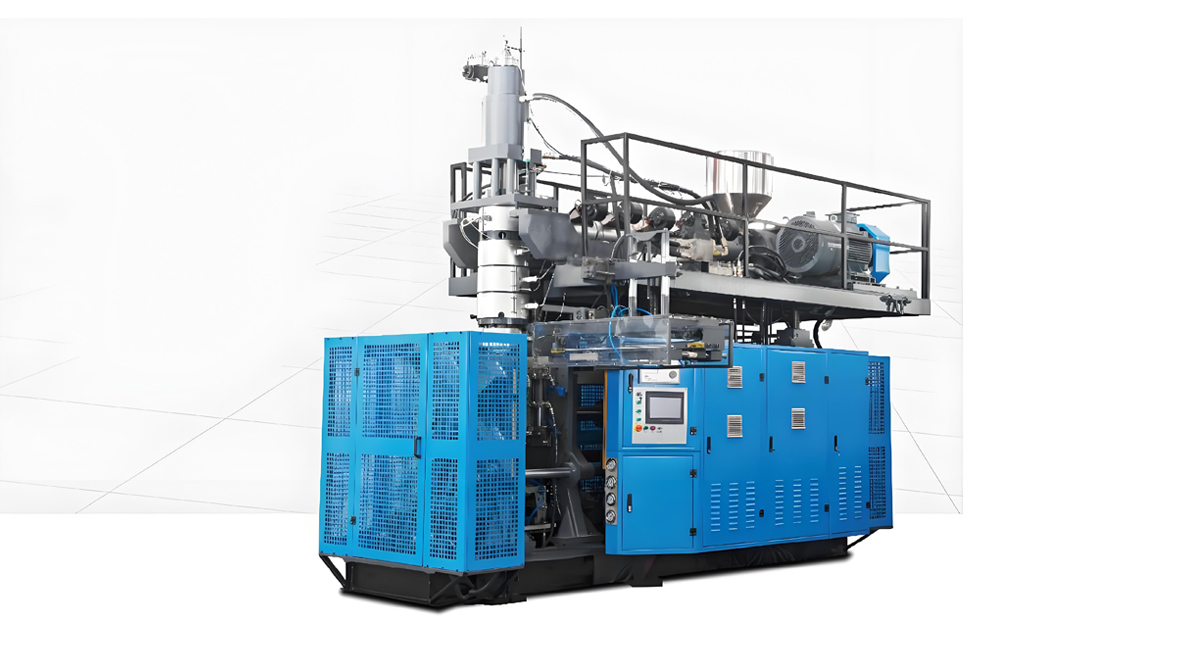
The Apollo AB-50 is our compact heavy-duty extrusion blow molding machine designed for small to medium-scale production of plastic pails ranging from 5 liters to 20 liters. This versatile machine is perfect for manufacturers producing a variety of small to medium-sized pails for food, chemical, and consumer applications. Despite its compact size, the AB-50 incorporates all the advanced features of our larger production machines, including heavy-duty construction, precise wall thickness control, and energy-efficient operation.
Key specifications:
- Clamping force: 500 kN
- Maximum platen size: 800 mm x 600 mm
- Extruder diameter: 65 mm
- Maximum extrusion output: 120 kg/h
- Production capacity: 180-240 pails per hour (5-liter pails)
- Wall thickness control: 100-point axial wall thickness control
- Control system: Siemens PLC with 12-inch touch screen HMI
- Power consumption: 45 kW
- Footprint: 6.5 m x 3.5 m
- Weight: 12,000 kg
Price and Cost Analysis
The price of the Apollo AB-50 heavy-duty extrusion blow molding machine ranges from $45,000 to $75,000 FOB Shanghai, depending on the specific configuration and optional features. The standard configuration includes the main machine, single extruder, basic die head, axial wall thickness control, and Siemens control system. Optional features include multi-layer co-extrusion, radial wall thickness control, quick mold change system, automatic deflashing, and robotic handling systems.
This model is ideal for start-ups and small to medium-sized plastic pail manufacturers looking for a reliable, cost-effective machine for producing small to medium-sized pails. It offers a low entry point into the market while still providing the heavy-duty performance and advanced features needed to produce high-quality pails.
4.2 Apollo AB-80 Heavy-Duty Extrusion Blow Molding Machine (20-60 Liters)
The Apollo AB-80 is our most popular heavy-duty extrusion blow molding machine, designed for medium to large-scale production of plastic pails ranging from 20 liters to 60 liters. This machine offers an excellent balance of productivity, efficiency, and flexibility, making it perfect for producing a wide range of industrial and commercial pails. The AB-80 can be easily upgraded to increase production capacity or add features such as multi-layer co-extrusion as your business grows.
Key specifications:
- Clamping force: 800 kN
- Maximum platen size: 1100 mm x 800 mm
- Extruder diameter: 80 mm
- Maximum extrusion output: 220 kg/h
- Production capacity: 120-180 pails per hour (20-liter pails)
- Wall thickness control: 200-point axial wall thickness control
- Control system: Siemens S7-1200 PLC with 15-inch touch screen HMI
- Power consumption: 75 kW
- Footprint: 8.5 m x 4.5 m
- Weight: 18,000 kg
Price and Cost Analysis
The price of the Apollo AB-80 heavy-duty extrusion blow molding machine ranges from $80,000 to $120,000 FOB Shanghai, depending on the specific configuration and optional features. The standard configuration includes the main machine, single extruder, high-performance die head, 200-point axial wall thickness control, and advanced Siemens control system. Optional features include 2-3 layer co-extrusion, radial wall thickness control, hydraulic quick mold change system, automatic deflashing and trimming, and integrated robotic handling.
This model is ideal for medium to large-sized plastic pail manufacturers that need high production capacity and flexibility. It is the most widely used machine in the industry for producing 20-liter and 30-liter industrial pails, which are the most common sizes in the global market.
4.3 Apollo AB-120 Heavy-Duty Extrusion Blow Molding Machine (60-200 Liters)
The Apollo AB-120 is our heavy-duty extrusion blow molding machine designed for large-scale production of plastic pails ranging from 60 liters to 200 liters. This machine is specifically engineered to handle the high forces and large parisons required for producing large industrial drums and containers. The AB-120 incorporates advanced heavy-duty design features that ensure reliable performance even under the most demanding operating conditions.
Key specifications:
- Clamping force: 1200 kN
- Maximum platen size: 1500 mm x 1200 mm
- Extruder diameter: 100 mm
- Maximum extrusion output: 350 kg/h
- Production capacity: 60-90 pails per hour (120-liter pails)
- Wall thickness control: 300-point axial wall thickness control with optional radial control
- Control system: Siemens S7-1200 PLC with 15-inch touch screen HMI
- Power consumption: 110 kW
- Footprint: 11.0 m x 5.5 m
- Weight: 28,000 kg
Price and Cost Analysis
The price of the Apollo AB-120 heavy-duty extrusion blow molding machine ranges from $130,000 to $190,000 FOB Shanghai, depending on the specific configuration and optional features. The standard configuration includes the main machine, high-performance single extruder, large-capacity die head, 300-point axial wall thickness control, and advanced hydraulic clamping system. Optional features include 3-5 layer co-extrusion, radial wall thickness control, automatic quick mold change system, integrated deflashing and leak testing, and robotic palletizing systems.
This model is ideal for large plastic pail manufacturers that specialize in producing large industrial drums and containers for the chemical, petroleum, and food industries. It offers exceptional production capacity and reliability, making it the preferred choice for many of the world’s leading industrial packaging manufacturers.
4.4 Apollo AB-200 Ultra-Heavy-Duty Extrusion Blow Molding Machine (200+ Liters)
The Apollo AB-200 is our ultra-heavy-duty extrusion blow molding machine designed for the production of very large plastic containers ranging from 200 liters to 1000 liters. This machine is specifically engineered to handle the extreme forces and requirements of producing large industrial drums, IBC containers, and bulk packaging solutions. The AB-200 incorporates the most advanced heavy-duty design features available in the industry, ensuring maximum performance and reliability.
Key specifications:
- Clamping force: 2000 kN
- Maximum platen size: 2200 mm x 1800 mm
- Extruder diameter: 120 mm
- Maximum extrusion output: 550 kg/h
- Production capacity: 30-45 pails per hour (200-liter drums)
- Wall thickness control: 400-point axial wall thickness control with standard radial control
- Control system: Siemens S7-1500 PLC with 19-inch touch screen HMI
- Power consumption: 180 kW
- Footprint: 15.0 m x 7.0 m
- Weight: 45,000 kg
Price and Cost Analysis
The price of the Apollo AB-200 ultra-heavy-duty extrusion blow molding machine ranges from $220,000 to $320,000 FOB Shanghai, depending on the specific configuration and optional features. The standard configuration includes the main machine, high-capacity single extruder, heavy-duty die head, 400-point axial and radial wall thickness control, and advanced hydraulic clamping system with accumulator assist. Optional features include 3-7 layer co-extrusion, automatic mold change system, fully integrated post-processing equipment, and plant-wide automation integration.
This model is ideal for the largest plastic pail manufacturers and industrial packaging companies that need to produce very large containers for bulk applications. It offers unmatched performance and reliability for the most demanding production requirements.
4.5 Multi-Layer Co-Extrusion Configurations
All Apollo heavy-duty extrusion blow molding machines can be configured with multi-layer co-extrusion systems to produce barrier pails and pails with recycled content. The price of a multi-layer configuration is typically 30-50% higher than the standard single-layer configuration, depending on the number of layers and the complexity of the system.
For example, a 3-layer co-extrusion configuration for the AB-80 machine adds approximately $30,000 to $40,000 to the base price, while a 5-layer configuration adds approximately $50,000 to $70,000. Despite the higher initial investment, multi-layer co-extrusion systems offer significant long-term cost savings through reduced material costs and improved product performance, with typical payback periods of 12-18 months.
5. Comprehensive Cost Analysis and Return on Investment Calculation
Investing in a modern heavy-duty extrusion blow molding machine from Apollo provides a significant return on investment for plastic pail manufacturers through increased production capacity, improved material efficiency, reduced energy consumption, lower maintenance costs, and higher product quality. In this section, we will provide a detailed cost analysis and return on investment calculation comparing an Apollo AB-80 heavy-duty extrusion blow molding machine with a traditional standard-duty machine of similar capacity.
5.1 Initial Investment Comparison
Traditional Standard-Duty Extrusion Blow Molding Machine (20-liter pails):
- Machine price: $60,000
- Auxiliary equipment: $20,000
- Installation and training: $5,000
- Initial spare parts package: $3,000
- Contingency fund (10%): $8,800
Total Initial Investment: $96,800
Apollo AB-80 Heavy-Duty Extrusion Blow Molding Machine:
- Machine price: $100,000
- Auxiliary equipment: $30,000
- Installation and training: $8,000
- Initial spare parts package: $5,000
- Contingency fund (10%): $14,300
Total Initial Investment: $157,300
While the Apollo heavy-duty machine has a higher initial investment, the significant savings in operating costs and increased production capacity result in a much faster return on investment.
5.2 Annual Operating Cost Comparison
The following analysis is based on 24 hours of production per day, 300 days per year, producing 20-liter HDPE plastic pails with an average selling price of $3.50 per pail:
Traditional Standard-Duty Machine:
- Annual production: 1,440,000 pails
- Raw material costs: $3,456,000 per year (1.2 kg per pail at $2.00 per kg)
- Material waste costs: $276,480 per year (8% scrap rate)
- Energy costs: $72,000 per year
- Labor costs (4 workers per shift): $288,000 per year
- Maintenance and repair costs: $48,000 per year
- Downtime costs: $96,000 per year (15% downtime)
- Overhead costs: $216,000 per year
- Packaging costs: $288,000 per year
- Transportation costs: $216,000 per year
Total Annual Operating Costs: $4,956,480 per year
Cost per Pail: $3.44
Apollo AB-80 Heavy-Duty Machine:
- Annual production: 2,160,000 pails
- Raw material costs: $4,665,600 per year (1.08 kg per pail at $2.00 per kg)
- Material waste costs: $46,656 per year (1% scrap rate)
- Energy costs: $43,200 per year
- Labor costs (2 workers per shift): $144,000 per year
- Maintenance and repair costs: $24,000 per year
- Downtime costs: $21,600 per year (3% downtime)
- Overhead costs: $162,000 per year
- Packaging costs: $432,000 per year
- Transportation costs: $324,000 per year
Total Annual Operating Costs: $5,863,056 per year
Cost per Pail: $2.71
The Apollo AB-80 heavy-duty machine produces 50% more product per year while reducing the cost per pail by 21.2%. The most significant savings come from dramatically reduced material waste (due to advanced wall thickness control), lower energy costs, reduced labor requirements, and lower maintenance costs.
5.3 Revenue and Profitability Comparison
Using an average selling price of $3.50 per pail for 20-liter industrial plastic pails:
Traditional Standard-Duty Machine:
- Annual revenue: $5,040,000 per year
- Annual operating costs: $4,956,480 per year
- Annual gross profit: $83,520 per year
Apollo AB-80 Heavy-Duty Machine:
- Annual revenue: $7,560,000 per year
- Annual operating costs: $5,863,056 per year
- Annual gross profit: $1,696,944 per year
Apollo AB-80 Heavy-Duty Machine:
- Additional initial investment compared to standard-duty machine: $157,300 – $96,800 = $60,500
- Additional annual profit compared to standard-duty machine: $1,696,944 – $83,520 = $1,613,424
Payback Period = Additional initial investment ÷ Additional annual profit
= $60,500 ÷ $1,613,424
= 0.037 years (approximately 0.45 months or 14 days)
This is an exceptionally short payback period, demonstrating the significant financial benefits of investing in a modern Apollo heavy-duty extrusion blow molding machine for plastic pail production. Over the 20-year service life of the equipment, the total return on investment is substantial:
Total Profit Over 20 Years = (Annual gross profit × 20) – Total initial investment
= ($1,696,944 × 20) – $157,300
= $33,938,880 – $157,300
= $33,781,580
Return on Investment: 21,476%
5.4 Sensitivity Analysis
To provide a more realistic assessment of the investment, we have also conducted a sensitivity analysis to show how changes in key parameters affect the payback period for plastic pail production:
- If the selling price decreases by 10% to $3.15 per pail, the payback period increases to 0.6 months
- If the production volume decreases by 20% to 1,728,000 pails per year, the payback period increases to 0.7 months
- If the raw material cost increases by 10% to $2.20 per kg, the payback period increases to 0.6 months
- If all three factors occur simultaneously (10% lower price, 20% lower volume, 10% higher cost), the payback period increases to 1.0 months
Even in the worst-case scenario, the payback period is still less than 6 weeks, which is extremely attractive for any manufacturing investment.
6. Real-World Success Stories with Apollo Extrusion Blow Molding Machines
Apollo heavy-duty extrusion blow molding machines have helped hundreds of plastic pail manufacturers around the world improve their production efficiency, reduce costs, and increase profitability. The following case studies demonstrate the real-world benefits of our machines for plastic pail production.
6.1 Case Study 1: Industrial Pail Manufacturer in Germany
IndustrialPack GmbH, a leading manufacturer of industrial plastic pails in Germany, was experiencing significant quality issues and high production costs with their existing standard-duty extrusion blow molding machines. They were producing 20-liter and 30-liter pails for the chemical industry, but were struggling with inconsistent wall thickness, high scrap rates, and frequent machine breakdowns. Their scrap rate was averaging 8%, and they were unable to meet the growing demand for their products from major chemical companies.
After researching several manufacturers, IndustrialPack GmbH selected Apollo as their equipment supplier based on our reputation for heavy-duty design, precision engineering, and reliable performance. They purchased an Apollo AB-80 heavy-duty extrusion blow molding machine with 3-layer co-extrusion capability and advanced axial and radial wall thickness control.
Results after implementation:
- Wall thickness consistency improved by 85%, resulting in pails that exceeded all industry performance standards
- Scrap rate reduced from 8% to 0.7%, resulting in annual raw material savings of $320,000
- Production capacity increased by 60% from 120 to 192 pails per hour
- Material usage reduced by 12% due to optimized wall thickness distribution, saving an additional $480,000 per year
- Energy consumption reduced by 38% per pail, saving $36,000 per year
- Maintenance costs reduced by 60% from $48,000 to $19,200 per year
- Payback period of 0.4 months
The company was extremely satisfied with the performance of the Apollo machine and has since purchased three additional AB-80 machines and two AB-120 machines to expand their production capacity. They have also been able to win several major new contracts with leading chemical companies due to their improved product quality and reliability.
6.2 Case Study 2: Food-Grade Pail Producer in the United States
FoodSafe Containers Inc., a food-grade plastic pail producer in Ohio, USA, needed to upgrade their production facilities to meet the growing demand for their products. Their existing machines were outdated and could not meet the strict quality and hygiene requirements for food packaging. They also needed a machine that could handle quick changeovers between different product sizes and colors to accommodate their diverse product portfolio.
The company selected Apollo as their equipment supplier after a thorough evaluation process. They were particularly impressed with the hygienic design of our machines, our advanced wall thickness control technology, and our quick mold change system. They purchased an Apollo AB-50 heavy-duty extrusion blow molding machine with quick mold change and automatic deflashing capabilities.
Results after implementation:
- Successfully achieved all FDA and USDA food safety requirements for food contact materials
- Production capacity increased by 250% from 60 to 210 pails per hour
- Changeover time between different products reduced from 4 hours to 25 minutes
- Scrap rate reduced from 6.5% to 0.5%, resulting in annual savings of $180,000
- Labor requirements reduced from 4 workers to 1 worker per shift
- Product quality and consistency improved significantly, leading to increased customer satisfaction and repeat business
- Payback period of 0.9 months
The company has since expanded their product line to include several new food-grade pail varieties, all produced on their Apollo machine. They have also increased their distribution to include several major national grocery chains, significantly growing their business and revenue.
6.3 Case Study 3: Large-Scale Drum Manufacturer in China
China Drum Co., Ltd., a large-scale manufacturer of 200-liter industrial drums in China, needed to replace their aging extrusion blow molding machines with more efficient and reliable equipment. Their existing machines were over 15 years old and were experiencing frequent breakdowns and high maintenance costs. They also needed to increase production capacity to meet the growing demand for industrial drums in the Asian market.
The company selected Apollo as their equipment supplier based on our competitive pricing, advanced technology, and comprehensive after-sales support. They purchased two Apollo AB-200 ultra-heavy-duty extrusion blow molding machines with 3-layer co-extrusion and fully integrated automation systems.
Results after implementation:
- Production capacity increased by 75% from 24 to 42 drums per hour per machine
- Scrap rate reduced from 10% to 0.8%, resulting in annual savings of $1.2 million
- Material usage reduced by 15% due to advanced wall thickness control, saving an additional $2.4 million per year
- Maintenance costs reduced by 70% from $180,000 to $54,000 per year per machine
- Downtime reduced from 22% to less than 3%, increasing annual production by 24%
- Labor requirements reduced by 60% due to full automation
- Payback period of 0.3 months
The company has since become the leading manufacturer of 200-liter industrial drums in China, with a 32% market share. They are currently planning to purchase three additional Apollo AB-200 machines to expand their production capacity further and enter new markets in Southeast Asia and the Middle East.