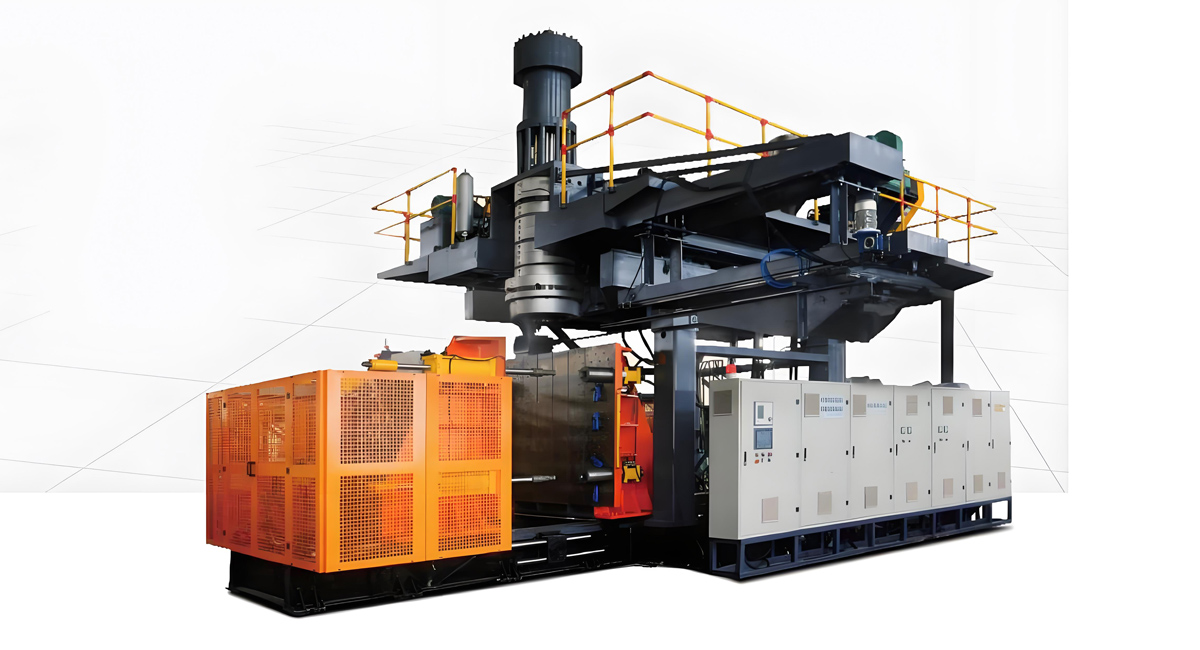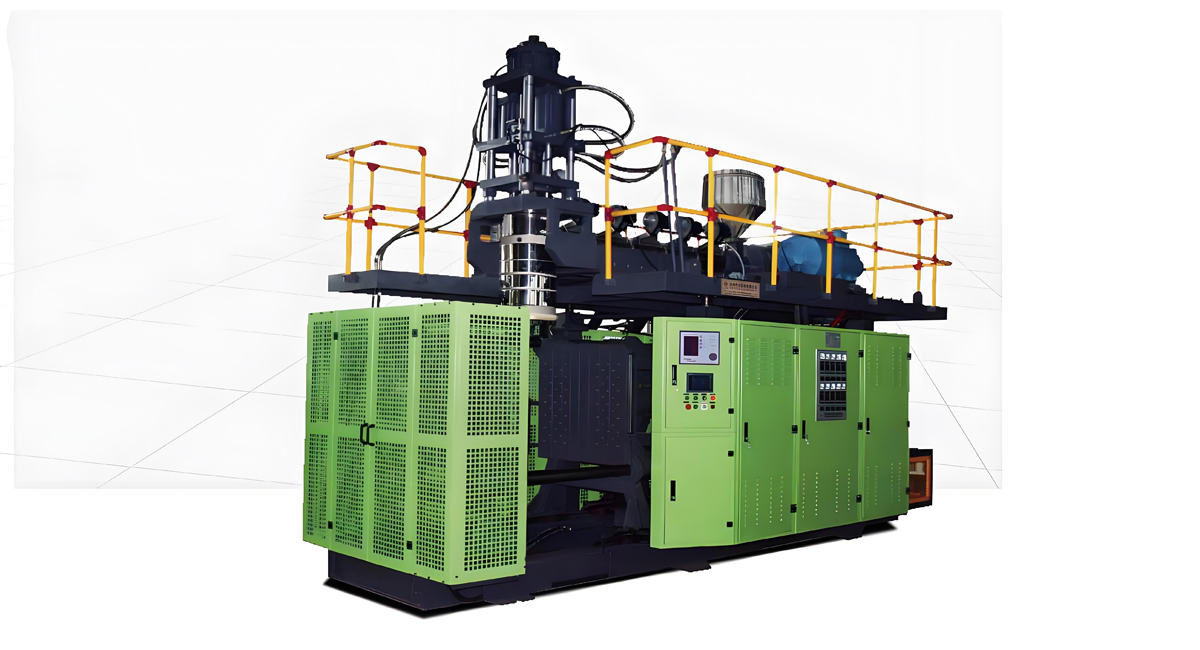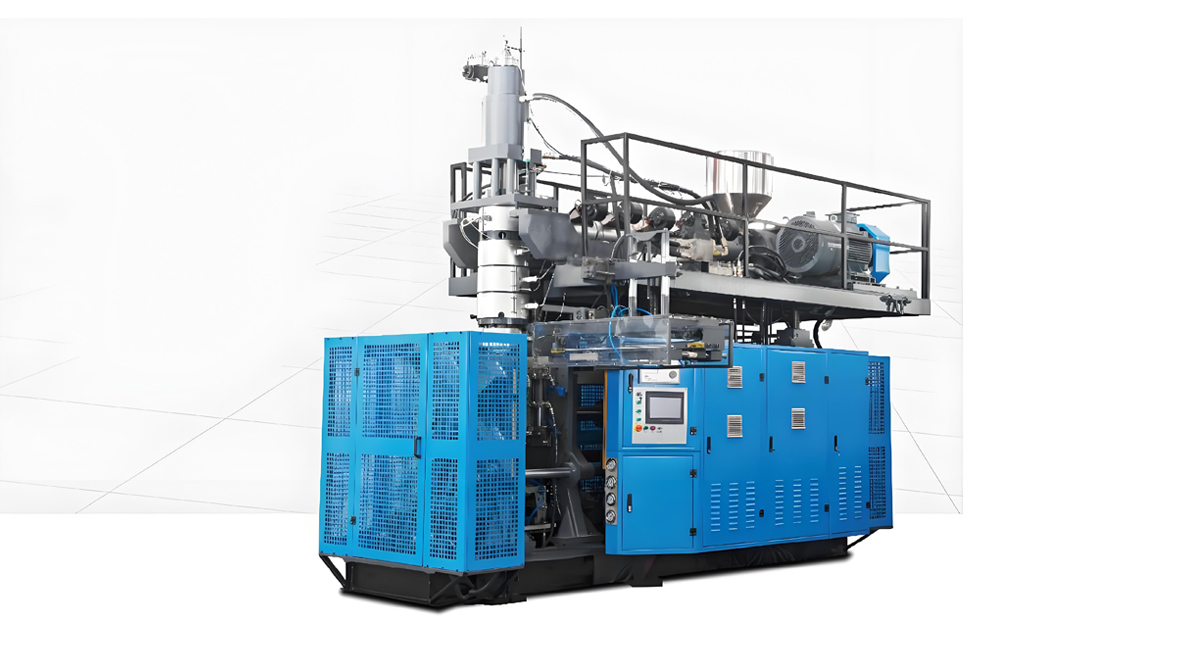

The global food packaging industry has been experiencing steady growth driven by rising consumer demand for convenient, safe, and durable food containers. Plastic packaging, especially hollow containers produced by extrusion blow molding technology, accounts for a large share of the food packaging market due to its light weight, good barrier performance, low cost, and excellent processability. From small seasoning bottles and jam jars to large edible oil drums and drinking water buckets, extrusion blow molded plastic containers are widely used in various food industry segments.
As global food safety regulations become increasingly strict, food manufacturers face higher requirements for packaging materials and production equipment. The extrusion blow molding machine, as the core equipment for producing food plastic containers, must meet strict food-grade standards to ensure that the produced packaging does not release harmful substances and does not contaminate food contents. Choosing a reliable food-grade extrusion blow molding machine is not only a prerequisite for enterprises to pass food safety certification, but also a key factor for maintaining product quality stability and improving market competitiveness.
As a leading professional manufacturer of extrusion blow molding machines with years of R&D and manufacturing experience, Apollo has launched a full series of food-grade extrusion blow molding equipment tailored for the food packaging industry. All equipment is designed in strict accordance with international food contact safety standards, with optimized hygienic structure and high-precision control systems, helping global food packaging manufacturers achieve efficient, stable, and compliant mass production. This article will systematically introduce the core requirements of food packaging for blow molding equipment, the key design features of food-grade extrusion blow molding machines, Apollo’s product lines and cost-benefit analysis, equipment selection guidelines, and daily maintenance best practices, providing a comprehensive reference for enterprises planning to invest in food packaging production capacity.
1. Core Requirements for Extrusion Blow Molding Equipment in Food Packaging Industry
1.1 Strict Food Contact Safety Compliance Standards
Food contact safety is the primary requirement for food packaging production equipment. Different regions around the world have established strict regulatory systems for food contact materials and articles. For example, the United States implements FDA 21 CFR Part 177.1520 standard for olefin polymer food contact materials, the European Union has EU 10/2011 regulation on plastic materials and articles intended to come into contact with food, and China has GB 4806.7-2016 national food safety standard for plastic materials and articles for food contact. These standards clearly limit the types and migration amounts of harmful substances that may be released from materials in contact with food, including heavy metals, plasticizers, oligomers, and volatile organic compounds.
Non-compliant equipment will bring huge operational risks to enterprises. If the packaging products fail to pass food safety testing, enterprises will face product recall, regulatory fines, market access restrictions, and even criminal liability in serious cases. At the same time, quality problems will seriously damage brand reputation and lead to the loss of customer trust. Therefore, when selecting extrusion blow molding machines, food packaging enterprises must ensure that all parts in contact with raw materials, molten plastic, and finished products meet the food contact safety standards of the target market, which is the basic premise for legal production and market access.
1.2 Hygienic Equipment Design to Prevent Cross-Contamination
Food production has extremely high requirements for hygiene, and cross-contamination is one of the key risk points that need to be strictly prevented. In the production of food packaging, cross-contamination may come from residual materials of previous production batches, carbonized deposits formed by long-term retention of materials at high temperature, dust and impurities in the production environment, and lubricating oil leakage of equipment. These contaminants will not only cause appearance defects such as spots and discoloration on packaging products, but more seriously, may migrate into food and endanger consumer health.
Qualified food-grade extrusion blow molding machines must adopt hygienic design to minimize the risk of cross-contamination. The flow channel design should avoid dead corners where materials are easy to stay, and adopt a streamlined structure to ensure smooth flow of molten materials without retention. The equipment structure should be easy to disassemble and clean, so as to thoroughly remove residual materials when changing materials and colors, and avoid cross-contamination between different batches. The surface of parts in contact with materials should be smooth and corrosion-resistant, not easy to adhere to materials, and convenient for daily cleaning and disinfection. For enterprises that produce multiple types of food packaging and frequently change materials and colors, excellent hygienic design can significantly reduce cleaning time and waste of cleaning materials, while ensuring product purity and food safety.
1.3 Stable Processing Precision for Consistent Product Quality
Food packaging has high requirements for product consistency, including dimensional accuracy, wall thickness uniformity, sealing performance, and appearance quality. These indicators are directly related to the use function and safety of packaging. For example, uneven wall thickness will lead to insufficient mechanical strength at the thin part, which is easy to break and leak during transportation and use; inaccurate bottle mouth size will cause poor sealing with the bottle cap, leading to food oxidation and deterioration; surface defects will affect the appearance and even become hidden dangers of bacterial growth.
To ensure stable product quality, the extrusion blow molding machine must have high processing precision and operational stability. The extrusion system should ensure stable melt temperature and pressure, and uniform plasticization of materials; the die head should ensure consistent discharge speed and stable wall thickness distribution in the circumferential direction; the clamping system should ensure accurate mold alignment and stable clamping force; the haul-off and cutting system should ensure stable speed and accurate cutting length. High-precision equipment can control the product qualification rate above 98%, greatly reducing raw material waste and quality inspection costs. For downstream automated filling production lines, stable product size can avoid problems such as bottle jamming and misalignment of filling nozzles, ensuring the smooth operation of the entire production chain.
1.4 High Energy Efficiency and Cost Effectiveness for Mass Production
Food packaging is typically a mass-produced product with relatively low unit profit, so cost control is crucial for the profitability of production enterprises. The extrusion blow molding machine is the main energy-consuming equipment in the production process, and its energy efficiency directly determines the power cost per unit product. Traditional low-end blow molding machines generally have problems such as low heating efficiency, large energy loss of the transmission system, and unreasonable cooling system design, resulting in high unit energy consumption and eroding profit margins.
High-quality food-grade extrusion blow molding machines usually adopt a variety of energy-saving designs, such as high-efficiency ceramic heating rings with high thermal efficiency, energy-saving servo drive systems, optimized screw structures to improve plasticizing efficiency, and frequency conversion cooling systems. These designs can reduce the unit energy consumption of products by 15% to 30% compared with ordinary equipment. In addition, high-stability equipment has a low failure rate and long service life, which can reduce shutdown losses and maintenance costs. For large-scale production enterprises that operate 24 hours a day, the accumulated cost savings from energy consumption and efficiency improvement are very considerable every year, which can effectively improve the product’s price competitiveness and profit level.
2. Key Food-Grade Design Features of Qualified Extrusion Blow Molding Machines
2.1 Food-Contact Material Standards for Material Contact Components
The material selection of parts in direct contact with raw materials and products is the primary basis for measuring whether a blow molding machine meets food-grade requirements. All contact parts must use materials that comply with food contact safety standards, and will not release toxic and harmful substances during long-term high-temperature production.
The screw and barrel, as the core plasticizing parts, are usually made of high-quality alloy structural steel such as 38CrMoAl, and undergo overall nitriding treatment. The surface hardness reaches HRC58-62, and the nitriding layer is deep and uniform, with good wear resistance and corrosion resistance. The surface finish of the screw flight and the inner wall of the barrel reaches Ra0.8 or higher, which is smooth and dense, not easy to adhere to materials, and will not precipitate harmful substances. For production scenarios with higher hygiene requirements, electroplating hard chrome treatment or food-grade stainless steel lining can also be selected to further improve safety and corrosion resistance.
The die head parts in contact with the melt are made of high-quality die steel, with polished flow channels and mirror surface treatment, which reduces material adhesion and is convenient for cleaning. Hopper, feeding pipeline, cooling water tank, finished product conveyor and other parts in contact with raw materials or finished products are all made of 304 or 316 food-grade stainless steel, which is rust-proof, corrosion-resistant, easy to clean, and will not produce pollutants such as rust chips. All sealing elements such as sealing rings and gaskets use food-grade silicone or fluororubber materials, which are resistant to high temperature and aging, and will not release harmful substances. Even the lubricating grease used in parts close to the production area must be food-grade lubricating grease that meets safety standards to prevent accidental contact from polluting products.
2.2 Dead-Zone-Free Flow Channel Design for Melt Delivery
Whether the melt flow channel is designed properly is directly related to whether there is material retention and carbonization in the production process, and is one of the core indicators to measure the hygienic performance of the equipment. If there are dead corners, sharp corners or sudden changes in cross-section in the flow channel, the material will stay in these positions for a long time. Under the continuous action of high temperature, the material will gradually degrade and carbonize, forming black spots and impurities. When these carbonized substances fall off and mix into the normal product, it will cause quality defects of the product, and even bring food safety hazards.
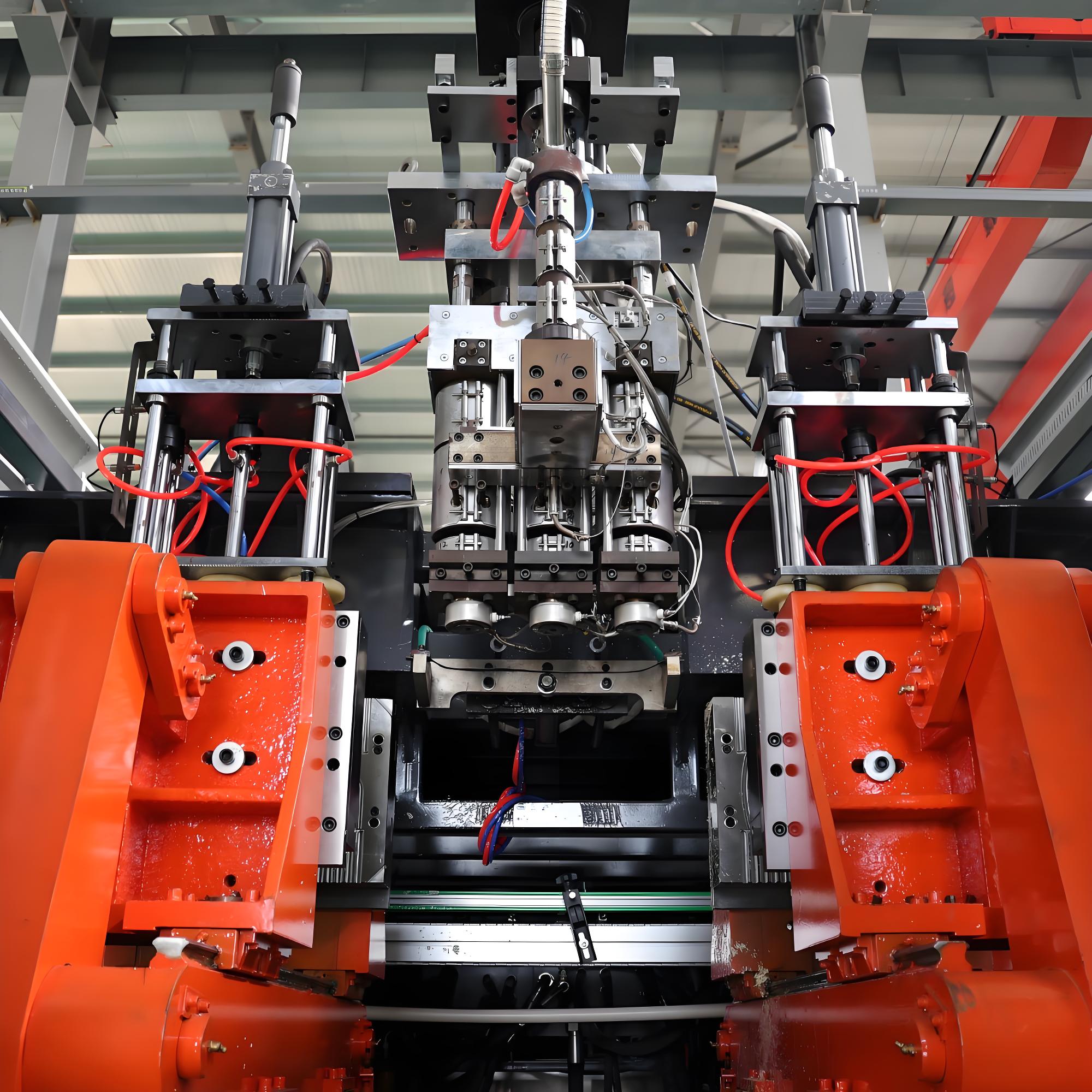
The flow channel of food-grade blow molding machine must adopt a fully streamlined design without dead corners. All steering parts adopt smooth arc transition, and there is no angle or sharp corner where materials are easy to accumulate. Through computer fluid dynamics (CFD) simulation optimization, the flow velocity and pressure distribution of the melt in each position of the flow channel are uniform, ensuring that all materials pass through the flow channel at a consistent speed, without local retention. The die head of the co-extrusion machine also needs to ensure that the materials of each layer converge evenly, and there is no interlayer retention and turbulence, so as to avoid cross-contamination between different materials and degradation of materials due to long-term stay.
Good flow channel design can greatly extend the continuous operation time of the equipment, reduce the frequency of shutdown and cleaning, and also ensure the stable quality of products during long-term production, reducing the probability of quality problems such as black spots and yellowing. For food packaging production that requires long-term continuous operation, dead-zone-free flow channel design is an essential technical feature.
2.3 Easy-Clean Structure for Quick Material and Color Change
Food packaging production often involves the switching of different materials, different colors and different products. The convenience of cleaning directly affects the production efficiency and the risk of cross-contamination. High-quality food-grade blow molding machines are optimized for easy cleaning in structural design, reducing the difficulty and time cost of cleaning.
The die head adopts a quick-opening structure design, which can quickly open the die head without completely disassembling all parts, facilitating the cleaning of internal flow channels. Some models are also equipped with a hydraulic quick-opening die head device, which can complete the opening and closing of the die head in a few minutes, greatly improving the efficiency of die head cleaning. The screw adopts a pullable design, and is equipped with a special screw extraction tool. When deep cleaning is needed, the screw can be easily pulled out from the feed end to thoroughly clean the residual material on the surface of the screw and the inner wall of the barrel.
The hopper and feeding pipeline adopt a detachable connection design, which is convenient for overall disassembly and cleaning, and avoids residual materials accumulating at dead corners such as corners and interfaces. The edge material crushing and recycling system is also designed with easy cleaning in mind. The crushing chamber can be opened quickly, which is convenient for cleaning the residual materials inside when changing colors and materials, and prevents cross-contamination of different materials. For production enterprises with many product types and frequent material changes, the easy-to-clean structure can greatly shorten the downtime of switching production, reduce the consumption of cleaning materials, and improve the overall operating efficiency of the equipment.
2.4 Precision Temperature Control to Avoid Material Degradation
The processing temperature of plastic materials has a strict range. Too low temperature will lead to insufficient plasticization and poor product quality; too high temperature will cause thermal degradation of materials, especially heat-sensitive materials such as food-grade resins and color masterbatches, which are more prone to decomposition and discoloration at high temperatures. Thermal degradation will not only reduce the mechanical properties of the product, but also produce small molecular harmful substances, which will affect the food contact safety of the packaging.
Food-grade extrusion blow molding machines are usually equipped with multi-stage independent PID temperature control systems. Each heating zone is equipped with an independent temperature sensor and heating element, which can accurately control the temperature of each section. The temperature control accuracy can reach ±0.5℃, ensuring that the material is always processed within the optimal temperature range. The temperature control system has fast response speed, which can quickly adjust when the temperature fluctuates, avoiding excessive temperature rise or fall. The heating element adopts high-efficiency ceramic heating ring, which has uniform heating, high thermal efficiency and long service life, and is not easy to age and damage.
The cooling system adopts forced air cooling or water cooling design, which is matched with the heating system to realize two-way adjustment of temperature. When the shear heat causes the temperature to exceed the set value, the cooling system starts quickly to reduce the temperature to the normal range, avoiding material degradation caused by long-term overheating. Some high-end models are also equipped with melt temperature and pressure detection devices at the die head position, which can monitor the state of the melt in real time. When the temperature or pressure exceeds the safety threshold, the system will automatically alarm and adjust, which fundamentally ensures the processing safety of food-grade materials.
2.5 Food-Grade Lubrication and Sealing System
Lubrication and sealing systems are easily overlooked details in food-grade equipment, but they are directly related to production hygiene. If the lubricating oil leaks into the production area and comes into contact with raw materials or finished products, it will cause serious food safety pollution. Therefore, the lubrication and sealing system of food-grade blow molding machines must meet higher safety standards.
First of all, all lubrication points that may come into contact with products or raw materials must use food-grade lubricating grease that meets relevant safety standards. This lubricating grease is non-toxic and harmless, and even a small amount of contact will not affect food safety. For transmission parts far away from the production area, industrial lubricating oil can be used, but a reliable sealing structure must be designed to prevent lubricating oil from leaking and splashing into the production area. The hydraulic system adopts high-quality sealing elements, which have good wear resistance and long service life, avoiding hydraulic oil leakage caused by seal aging. The hydraulic oil can also be food-grade hydraulic oil according to requirements, further improving safety.
The sealing structure of the equipment is also optimized for hygienic requirements. The sealing parts in contact with materials adopt sanitary sealing design, no dead corners, no material accumulation, easy to clean and replace. The whole machine has good sealing performance, which can prevent external dust, insects and other pollutants from entering the production process and affecting product hygiene. The lubrication system can also be designed with a centralized automatic lubrication device, which regularly and quantitatively adds lubricating grease to each lubrication point, reducing manual operation and avoiding lubrication failure caused by human negligence. Perfect lubrication and sealing design is an important guarantee to realize long-term hygienic production of food packaging.
3. Apollo Food-Grade Extrusion Blow Molding Machine Product Lines
3.1 Small Automatic Food Container Blow Molding Machine (5ml to 5L)
This small automatic food-grade extrusion blow molding machine is mainly for the production of small food containers, suitable for processing food-grade materials such as HDPE, PP and PETG. It can produce various products such as seasoning bottles, jam jars, honey bottles, beverage bottles, candy cans and small-package edible oil pots. The machine adopts a single-screw extrusion system optimized for food materials, with uniform plasticization and stable extrusion, which can well control the thermal degradation of materials during processing. The clamping system has high alignment precision, and the produced products have no flash or burr, and have beautiful appearance.
The equipment is equipped with a PLC control system and a touch screen human-machine interface, which can store multiple sets of production formulas. When switching products, you can call them with one key, which is easy to operate. It is also equipped with an online flash crushing and recycling device, which can immediately crush and reuse the flash generated in production, reducing raw material waste. The whole machine adopts a fully enclosed design, which has good protection performance and prevents external pollutants from entering the production area. For small food processing enterprises, start-ups and manufacturers with multiple product specifications, this model has the advantages of small footprint, low investment and flexible production.
Price and Cost Analysis: The FOB Shanghai price of this series of small food-grade extrusion blow molding machines ranges from 18,000 US dollars to 35,000 US dollars, depending on the configuration. The basic configuration is single-station and semi-automatic blanking, suitable for small processing plants and start-ups; the high-end configuration is double-station fully automatic production, equipped with wall thickness controller, automatic feeder and chiller, suitable for medium-scale mass production.
Taking the production of 500ml HDPE seasoning bottles as an example, the installed power of the equipment is about 25kW, and the actual operating power is about 18kW. Calculated based on 300 working days per year, 16 hours per day, and industrial electricity price of 0.1 USD/kWh, the annual electricity cost is about 8,640 US dollars. In terms of labor, only one operator is required for a single production line, and the annual labor cost is about 12,000 US dollars based on the average salary level of developing countries. The annual maintenance cost including wearing parts replacement is about 1,500 US dollars.
In terms of production capacity, the double-station model can produce about 1,200 bottles per hour, with an annual output of about 5.76 million bottles. Calculated with a gross profit of 0.03 US dollars per bottle, the annual gross profit is about 172,800 US dollars. After deducting operating costs other than raw materials, the annual net profit is about 150,660 US dollars, and the static investment payback period is about 2 to 3 months. Even considering factors such as raw material costs and management expenses, the investment return period is usually no more than 8 months, which has high investment value.
3.2 Medium-Duty Dual-Station Food Packaging Blow Molding Machine (5L to 30L)
The medium-sized double-station food-grade extrusion blow molding machine is the most widely used model in the food packaging industry, mainly producing medium and large food containers of 5L to 30L, such as 5L edible oil pots, 10L barreled water, 20L edible oil barrels, bulk sauce barrels, etc. The equipment adopts a high-efficiency single-screw extrusion system with optimized length-diameter ratio, strong plasticizing ability and large extrusion volume, which is suitable for long-term continuous mass production. The clamping system adopts a horizontal double-station structure, and the two mold positions work alternately, which nearly doubles the production efficiency compared with the single-station model.
This model is equipped with an advanced wall thickness control system, which can adjust the die gap in real time according to the parison position, accurately control the wall thickness distribution of different parts of the product, maximize the saving of raw materials on the premise of ensuring the mechanical strength of the product, and reduce the unit product cost. The whole machine is controlled by industrial PLC, with fault self-diagnosis function, which can display the operating status and fault information in real time, and is convenient for operation and maintenance. It can be equipped with automatic feeding, drying, metering and mixing auxiliary equipment to realize fully automatic production, reduce manual intervention, and improve production stability and hygiene level.
Price and Cost Analysis: The FOB Shanghai price of this series of medium-sized food-grade extrusion blow molding machines ranges from 40,000 US dollars to 75,000 US dollars, varying with the size of the model and the level of configuration. Taking the standard configuration for producing 5L edible oil pots as an example, the equipment price is about 55,000 US dollars, including the main engine, hydraulic system, wall thickness controller, automatic blanking and chiller.
In terms of operating costs, the installed power of the equipment is about 65kW, and the actual operating power is about 45kW. It operates 6,000 hours a year (two shifts), and the annual electricity cost is about 27,000 US dollars. In terms of labor, each production line is equipped with 2 operators per shift, and a total of 4 people for two shifts. The annual labor cost is about 48,000 US dollars. The annual maintenance cost is about 4,000 US dollars, including replacement of wearing parts and regular maintenance.
In terms of production capacity, the double-station model can produce about 300 5L oil pots per hour, with an annual output of about 1.8 million. Calculated with a gross profit of 0.12 US dollars per pot, the annual gross profit is about 216,000 US dollars. After deducting operating costs other than raw materials, the annual net profit is about 137,000 US dollars, and the static investment payback period is about 4.8 months. If producing high-value-added products such as food-grade chemical barrels and concentrated sauce barrels, the return on investment will be faster. For medium-sized food packaging enterprises, this model is the optimal choice that balances production capacity, cost and product quality.
3.3 Multi-Layer Co-Extrusion High-Barrier Food Blow Molding Machine
The multi-layer co-extrusion high-barrier food blow molding machine is used to produce high-barrier food packaging containers that have requirements for shelf life and barrier performance. Through a multi-layer structure (usually 3 to 7 layers), high-barrier materials such as EVOH and PA are compounded with general-purpose resins such as PE and PP, so that the container has excellent oxygen barrier, moisture barrier and fragrance retention properties, which can greatly extend the shelf life of food. It is widely used in sauce, meat products, dairy products, pet food, concentrated juice and other products that are easy to oxidize and deteriorate.
This series of equipment is equipped with multiple independent extruders, which respectively extrude materials of different layers. Through a special co-extrusion die head, the multi-layer melt is uniformly compounded to form a complete multi-layer parison, which is then blow molded. Each layer of extruder is equipped with an independent high-precision temperature control and metering system, which can accurately control the thickness ratio of each layer of material and ensure stable barrier performance. It can be equipped with an online wall thickness detection system and a layer thickness detection system to monitor product quality in real time and ensure that each product meets the barrier performance requirements. For food-grade applications, all contact parts meet food contact safety standards, and the flow channel is designed without dead corners to avoid cross-contamination of different materials.
Price and Cost Analysis: The price of multi-layer co-extrusion food-grade blow molding machines varies greatly according to the number of layers, output and configuration. The FOB Shanghai price of three-layer co-extrusion models ranges from 80,000 US dollars to 120,000 US dollars, and the price of high-configuration models with five layers or more can reach 120,000 US dollars to 180,000 US dollars. Taking the three-layer co-extrusion (PE/adhesive layer/EVOH) 500ml sauce bottle production line as an example, the standard configuration price is about 95,000 US dollars.
In terms of operating costs, the total installed power of the equipment is about 90kW, and the actual operating power is about 65kW. It operates 6,000 hours a year, and the annual electricity cost is about 39,000 US dollars. In terms of labor, 2 operators are required for each production line, and a total of 4 people for two shifts, with an annual labor cost of 48,000 US dollars. The annual maintenance cost is about 6,500 US dollars, which is slightly higher than that of single-layer machines due to the more complex structure.
In terms of benefits, the production capacity is about 900 sauce bottles per hour, and the annual output is about 5.4 million. High-barrier packaging has much higher added value than ordinary single-layer packaging. The gross profit per bottle is about 0.08 US dollars, and the annual gross profit is about 432,000 US dollars. After deducting operating costs other than raw materials, the annual net profit is about 338,500 US dollars, and the static investment payback period is about 3.4 months. Even considering the higher cost of high-barrier raw materials, the investment return period is usually no more than 10 months. For enterprises that want to enter the high-end food packaging market, the multi-layer co-extrusion blow molding machine is core equipment to enhance product added value and market competitiveness.
4. Comprehensive Cost-Benefit Analysis for Food-Grade Blow Molding Investment
4.1 Breakdown of Initial Investment Cost
A complete food-grade extrusion blow molding production line consists of multiple parts, and the initial investment mainly includes the following aspects. The first is the main equipment cost, including the extrusion system, clamping system, die head, and control system, which accounts for 60% to 70% of the total investment and is the core part of the investment. The second is the mold cost. Different product sizes and shapes correspond to different molds. The price of each set of molds ranges from several thousand to tens of thousands of dollars. Enterprises usually need to equip multiple sets of molds to produce products of different specifications. This part of the cost needs to be calculated according to the actual product plan.
The third is the cost of auxiliary equipment, including raw material dryers, automatic feeders, chillers, crushers, air compressors, finished product conveyors, etc. These are necessary supporting equipment to ensure the normal operation of the production line, usually accounting for 15% to 25% of the total investment. The fourth is the cost of installation, commissioning and training. Professional manufacturers will arrange engineers to conduct equipment installation, commissioning and operation training at the customer’s site to ensure the normal commissioning of the equipment. This part of the cost is usually included in the equipment quotation. The fifth is the cost of initial spare parts. It is recommended that customers reserve a set of commonly used wearing parts, such as heating coils, sealing rings, cutting blades, sensors, etc., for daily maintenance and replacement, reducing downtime waiting time. This part accounts for about 2% to 3% of the total investment.
4.2 Annual Operating Cost Composition
The annual operating cost of food blow molding production lines mainly includes the following aspects. The first is raw material cost, which accounts for the largest proportion, usually 70% to 85% of the total operating cost. The specific proportion depends on the product type and raw material price fluctuations. Food-grade raw materials are more expensive than ordinary industrial-grade raw materials, so improving product qualification rate and reducing raw material waste are the key to cost control.
The second is electricity cost. The extrusion blow molding machine’s heating, driving, cooling, pneumatic and other systems all consume electric energy. Electricity cost is the second largest operating cost expenditure, usually accounting for 5% to 10% of the total operating cost. Choosing energy-saving equipment can significantly reduce electricity costs. The third is labor cost. The higher the degree of automation, the fewer operators are required, and the lower the proportion of labor cost. The fourth is equipment maintenance cost, including daily maintenance, wearing parts replacement, and equipment overhaul costs. For normally maintained equipment, the annual maintenance cost is about 3% to 5% of the total equipment investment. The fifth is other expenses such as plant rent, utilities, and management fees, accounting for about 5% of the total operating cost.
4.3 Profit Projection and Payback Period Calculation
Taking a medium-sized food packaging enterprise purchasing a set of 55,000-dollar medium-sized blow molding production line to produce 5L edible oil pots as an example, a detailed calculation of investment return is carried out. In terms of production capacity, the equipment has an effective annual operating time of 6,000 hours, an output of 300 pieces per hour, and a total annual output of 1.8 million pieces. In terms of income, each oil pot has an ex-factory price of 0.45 US dollars, and the annual sales revenue is 810,000 US dollars.
In terms of cost, the raw material cost of each oil pot is about 0.3 US dollars, and the total annual raw material cost is 540,000 US dollars; annual electricity cost is 27,000 US dollars; annual labor cost is 48,000 US dollars; annual maintenance cost is 4,000 US dollars; annual plant rent and other expenses are 15,000 US dollars; the total annual cost is 634,000 US dollars. The annual net profit is sales revenue minus total cost, which is 176,000 US dollars. The static investment payback period = initial investment / annual net profit = 55,000 / 176,000 ≈ 0.31 years, about 3.7 months.
It should be noted that this is the calculation under ideal conditions. In actual operation, it will be affected by factors such as order volume, raw material price fluctuations, and management efficiency. Usually, the investment return period is between 4 and 8 months, which is far higher than the average return level of the general manufacturing industry. If enterprises produce high-value-added special food packaging, the return on investment will be faster. Overall, investing in food-grade extrusion blow molding equipment has the characteristics of high return, quick effect and relatively low risk.
4.4 Hidden Costs of Low-Cost Non-Compliant Equipment
Many start-up enterprises choose low-cost non-food-grade blow molding equipment in order to save initial investment, but in fact, such equipment will bring a lot of hidden costs, and in the long run, it is even more uneconomical. First of all, the cost of compliance risk. Non-food-grade equipment uses materials that do not meet food contact standards, and the products produced cannot pass food safety certification, cannot enter formal supermarkets and high-end markets, and may even face regulatory penalties and product recalls, bringing huge economic losses and brand reputation damage to enterprises.
Secondly, the cost of high defective rate. Low-end equipment has poor temperature control accuracy, unreasonable structural design, and the product qualification rate is usually only 85% to 92%, which is 6 to 10 percentage points lower than that of high-quality equipment. The wasted raw material cost is very considerable every year. Thirdly, the cost of high failure rate and short service life. Low-end equipment uses inferior parts, which has a high failure rate and often requires shutdown for maintenance, resulting in a lot of production capacity loss. At the same time, the service life of the equipment is short, and it usually requires major overhaul or replacement after 3 to 5 years, while high-quality food-grade equipment can have a service life of 10 to 15 years, and the long-term use cost is lower.
Fourthly, the loss of product premium. Non-compliant equipment can only produce low-end and low-priced products with meager profits, while food-grade compliant equipment can produce high-value-added products with higher selling prices and larger profit margins. On the whole, choosing high-quality food-grade extrusion blow molding machines that meet the standards, although the initial investment is slightly higher, can bring higher returns and more stable development for enterprises in the long run.
5. Selection Guide for Food-Grade Extrusion Blow Molding Machines
Before purchasing equipment, enterprises must first clarify their own production needs and product positioning, which is the prerequisite for selecting the right equipment. First, determine the product type, size range and raw material type. For example, whether to produce small seasoning bottles or large edible oil barrels, whether to use HDPE, PP or multi-layer composite materials, these directly determine the model and configuration of the equipment. Second, estimate the required production capacity according to the existing order volume and the development plan for the next 3 to 5 years. It is necessary to avoid insufficient production capacity to meet orders, and also to avoid excessive idle equipment caused by overestimation of demand, resulting in waste of investment.
Third, clarify the market positioning of products. If it is for the bulk low-end market, the requirements for equipment configuration and accuracy can be appropriately reduced to control costs; if it is for mid-to-high-end brand customers and needs to pass food safety certifications such as FDA and EU, it is necessary to choose professional food-grade equipment with complete compliance qualifications. Fourth, consider the diversity of products. If you need to produce products of multiple specifications and colors, you should choose equipment with convenient mold change, easy cleaning and high degree of automation to improve production flexibility. Clarifying the demand in advance can avoid blind purchase and ensure that the selected equipment can best match the production and operation of the enterprise.
Food contact compliance is the bottom line requirement for food packaging production equipment, and it must be strictly verified when purchasing. First, require the supplier to provide material descriptions of all food contact parts and relevant food contact safety certification documents, such as FDA certification, EU 10/2011 compliance statement, etc., to confirm that all parts in contact with raw materials and products meet.