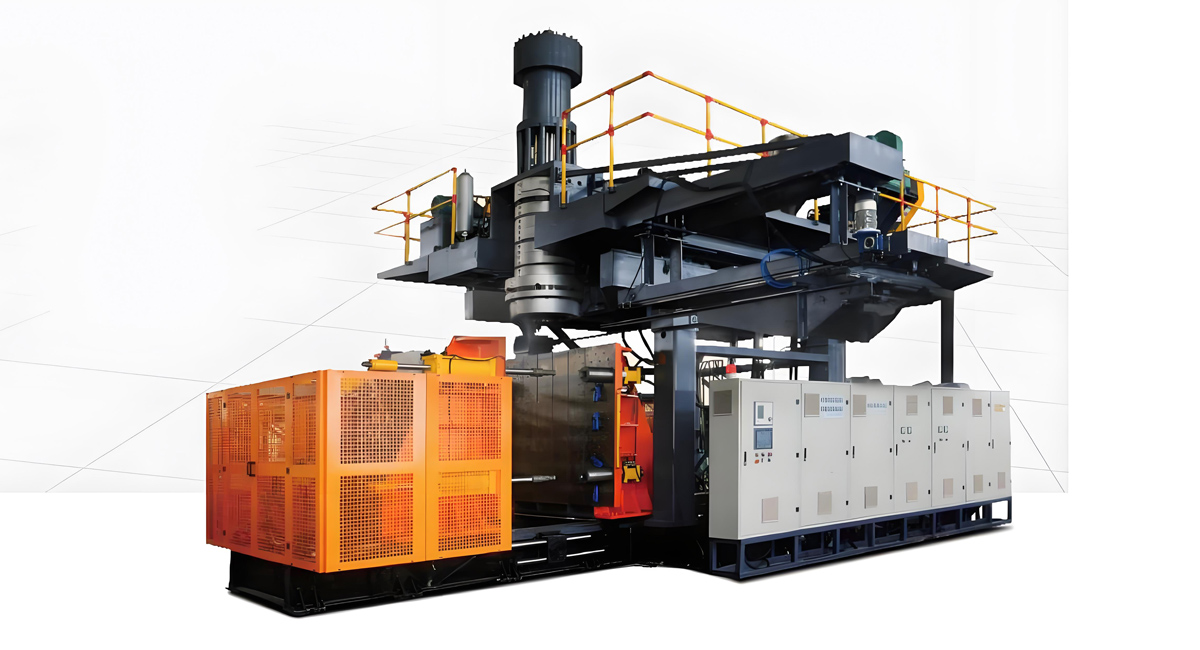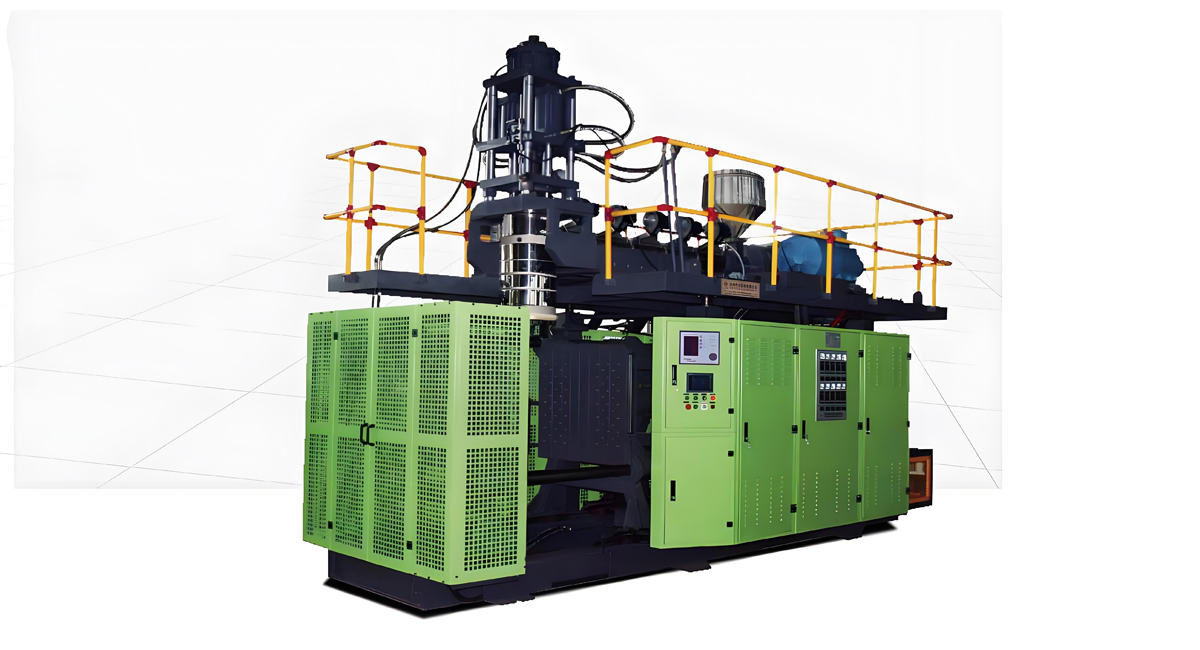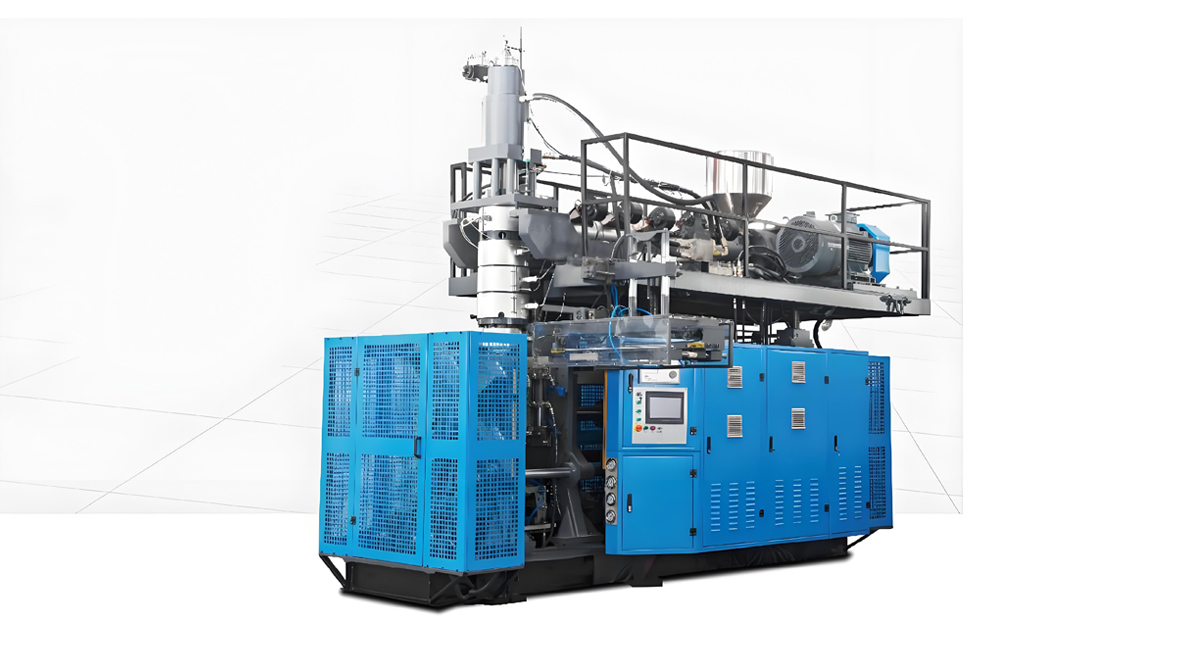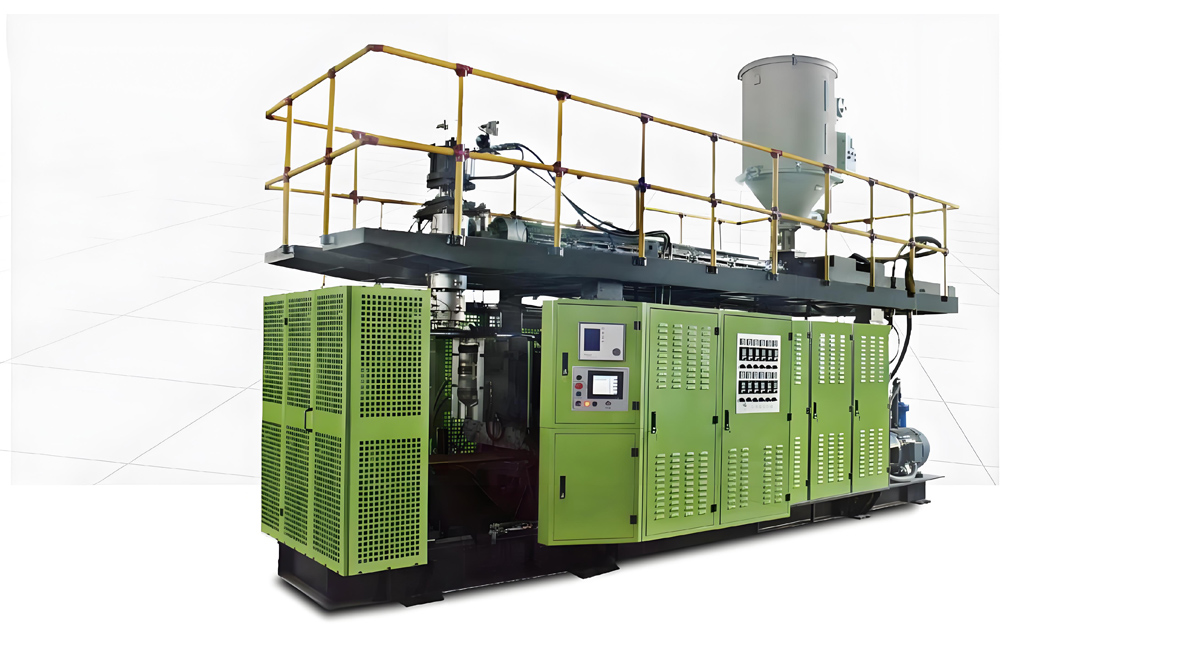
Large plastic containers ranging from 20L to 1500L are indispensable packaging and storage carriers for chemical industry, food processing, environmental protection water treatment, pharmaceutical manufacturing, and industrial logistics fields. Common products include plastic chemical drums, edible oil barrels, pure water storage tanks, sewage treatment containers, and large industrial hollow plastic parts. Different from small and medium-sized blow molding products, large-capacity plastic containers have strict technical requirements in terms of wall thickness uniformity, pressure resistance, impact resistance, sealing performance, and overall molding stability, which puts forward higher standards for extrusion blow molding machine equipment.
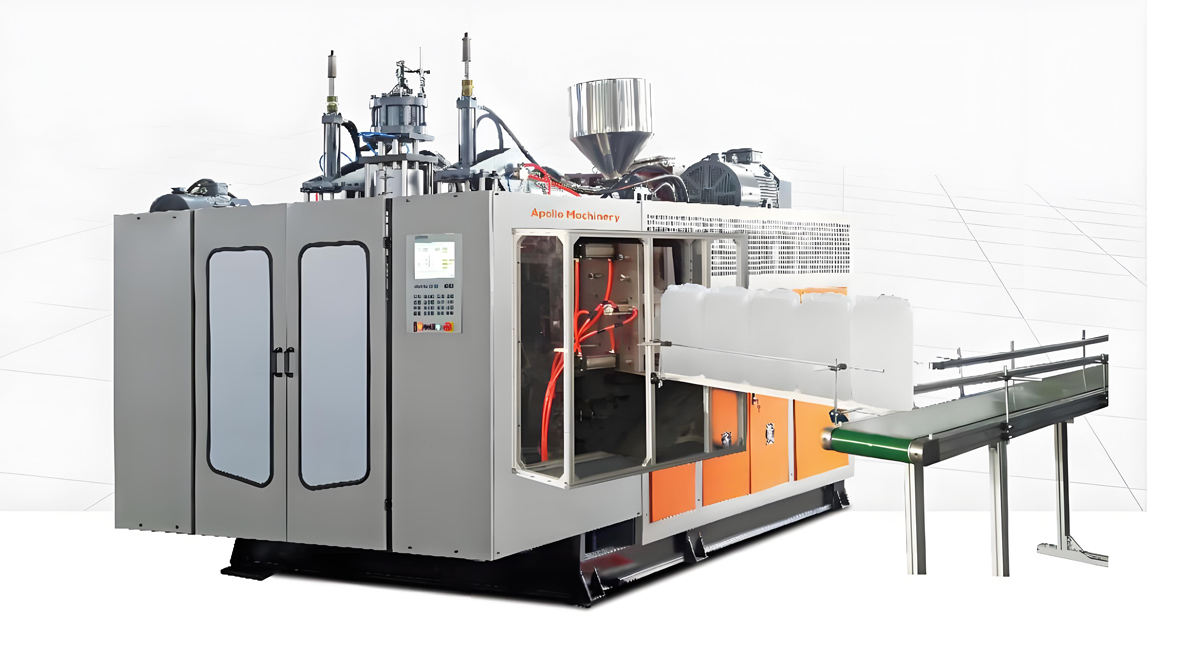
Extrusion blow molding machines are the core special equipment for one-time hollow molding of large plastic containers. Among numerous industrial blow molding equipment, ABLD series blow molding machines independently developed and produced by APOLLO stand out in the large container manufacturing market with stable molding performance, high production efficiency, strong raw material adaptability, and low comprehensive operating costs. APOLLO, as a professional manufacturer of high-performance extrusion blow molding machine solutions, has upgraded and optimized three core types of ABLD series blow molding equipment for 20L to 1500L large container production scenarios, covering small-capacity industrial barrels, medium-large storage containers, and ultra-large hollow plastic products.
This comprehensive selection guide systematically sorts out the structural characteristics, performance advantages, applicable product ranges, production capacity parameters, investment costs, and applicable industrial scenarios of the three ABLD blow molding machine models. It solves the core confusion of equipment selection for large container manufacturers, such as mismatched model capacity, insufficient product molding accuracy, excessive production energy consumption, and high equipment maintenance costs. The full content covers all technical parameters, cost analysis, selection standards, and after-operation optimization strategies that users need to know, providing authoritative and practical reference for equipment procurement and production line upgrading.
1. Overview of ABLD Series Extrusion Blow Molding Machines for Large Containers
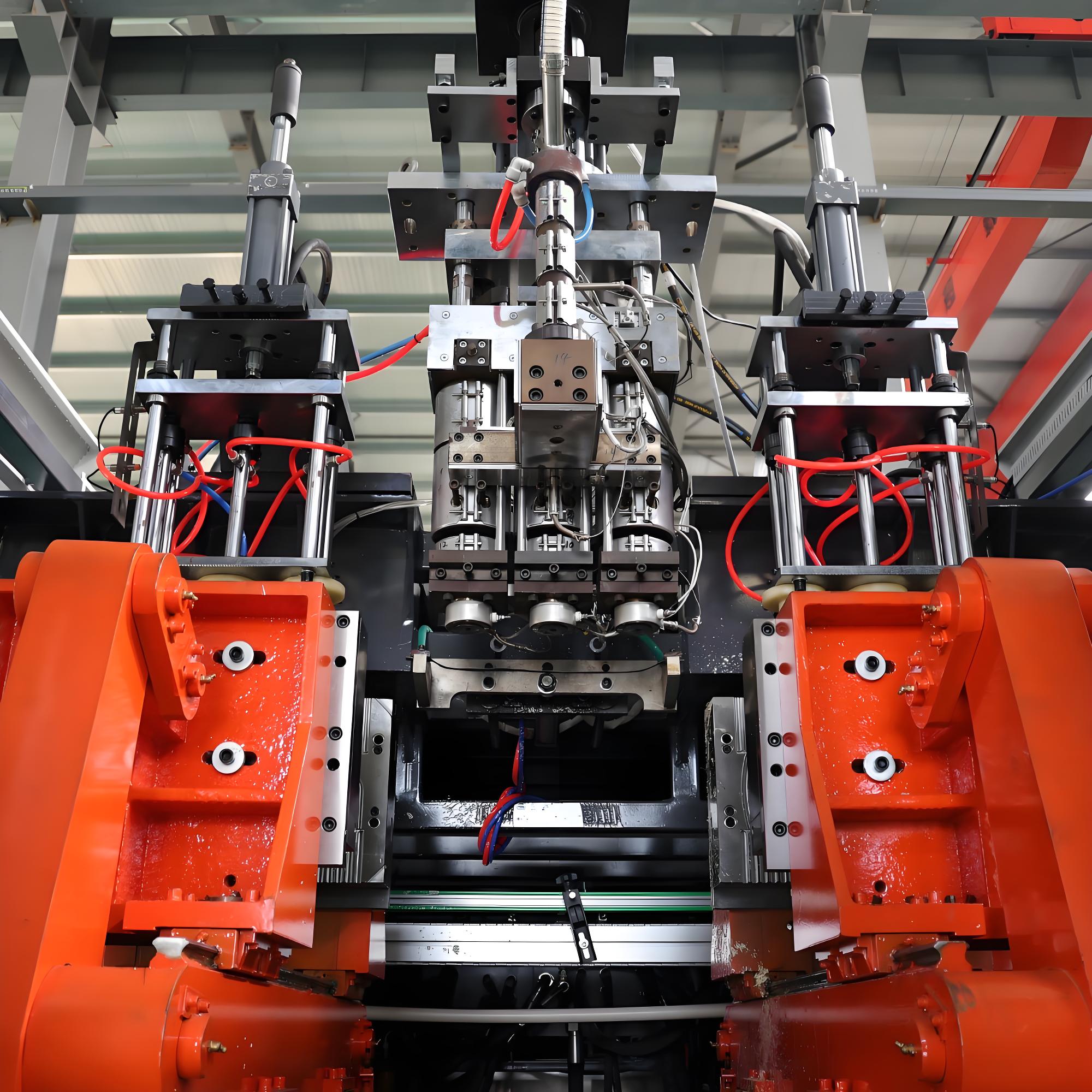
ABLD series blow molding machines are dedicated large-scale extrusion blow molding equipment launched by APOLLO for 20L-1500L hollow plastic container production. Different from ordinary small blow molding machines, this series of equipment adopts enhanced extrusion system, high-rigidity locking mold structure, intelligent wall thickness control system, and high-precision blowing molding technology, which can perfectly adapt to the molding production of HDPE, PP, and other high-toughness plastic raw materials required for large containers.
In actual industrial production, large plastic containers have prominent production pain points. Ultra-large cavity molding is prone to uneven wall thickness, local thin walls, and deformation; long molding cycle leads to low production efficiency; large-scale equipment operation has high energy consumption; and heavy-duty operation easily causes mold locking instability and equipment vibration. APOLLO ABLD series extrusion blow molding machines completely solve the above industry pain points through targeted structural optimization and technological upgrading, and are widely used in batch production of various industrial large plastic containers.
According to the covering container capacity, production efficiency configuration, and functional positioning, the ABLD series is divided into three core models, which respectively correspond to 20L-200L small and medium large containers, 200L-800L medium and large storage containers, and 800L-1500L ultra-large hollow containers. The three models form a complete large container production equipment system, covering the full capacity range of industrial large plastic containers, and meeting the differentiated production needs of small-batch customized production, medium-batch standardized production, and large-scale mass production.
2. Core Production Challenges of 20L-1500L Large Plastic Containers
The production process of large-capacity plastic containers is completely different from that of daily small plastic bottles. The super-large mold cavity, long plastic melt extrusion stroke, and large-volume blowing molding process bring unique technical challenges to extrusion blow molding machines. Only by matching professional targeted equipment can we ensure product qualification rate and production stability.
2.1 Strict Wall Thickness Uniformity Requirements
Large containers need to bear liquid pressure, stacking pressure, and external impact during storage and transportation. Uneven wall thickness will lead to local stress concentration, resulting in barrel body cracking, deformation, and liquid leakage. For 20L-1500L containers, the wall thickness error of qualified products must be controlled within ±0.2mm. Ordinary blow molding machines lack precise wall thickness adjustment functions, and it is difficult to control the uniform molding of ultra-large cavity products, resulting in a large number of defective products.
2.2 High Rigidity and Stability Requirements for Equipment Operation
The molding of large containers requires large locking mold force and stable extrusion pressure. Ordinary blow molding machines have insufficient frame rigidity, which is prone to mold displacement and equipment vibration during long-term heavy-duty operation, resulting in uneven mold closing gaps, product flash, and inconsistent molding size. Long-term operation will also cause equipment structural deformation and accelerated component wear.
2.3 Long Molding Cycle and Low Production Efficiency
The large-volume melt extrusion and slow cooling molding process of large containers lead to a long single product cycle. Traditional equipment has low extrusion efficiency and single cooling mode, resulting in low hourly output and restricting enterprise production capacity expansion. At the same time, unreasonable parameter matching will lead to excessive energy consumption per unit product and increased production costs.
2.4 Diverse Raw Material and Product Adaptability Requirements
Different industrial containers have different raw material requirements. Chemical corrosion-resistant barrels need high-density polyethylene raw materials, food-grade storage barrels need food-grade PP raw materials, and high-strength stacking barrels need modified toughened raw materials. The equipment needs to have strong raw material adaptability and flexible parameter adjustment functions to meet the differentiated production needs of multiple products.
3. Detailed Introduction of Three Types of APOLLO ABLD Blow Molding Machines
APOLLO precisely divides the ABLD series into three professional models according to the capacity range, production process difficulty, and market demand of large containers. Each model has independent structural design, parameter configuration, and functional advantages, with clear applicable scenarios, which can help users accurately match equipment according to their own product positioning and production scale.
3.1 ABLD-I Small and Medium Large Container Blow Molding Machine (20L-200L)
ABLD-I is a cost-effective basic model in the ABLD series extrusion blow molding machines, specially designed for standardized production of 20L to 200L industrial plastic barrels. It is mainly used for the production of daily chemical packaging barrels, small chemical solvent barrels, 20L pure water barrels, and industrial auxiliary material storage barrels. This model adopts a mature and stable single-station double-mold structure, with moderate locking mold force and high-cost performance configuration, which is the mainstream equipment for small and medium-sized container manufacturing enterprises.
In terms of structural performance, the ABLD-I extrusion blow molding machine is equipped with a high-efficiency single-screw extrusion system, which has stable melt plasticization performance and uniform plastic extrusion output. The independent hydraulic locking mold system provides stable and balanced mold clamping force, effectively avoiding product flash and mold displacement. Equipped with a basic intelligent wall thickness controller, it can realize segmented wall thickness adjustment for barrel body, barrel bottom, and barrel mouth, ensuring uniform wall thickness of 20L-200L containers. The equipment adopts an integrated frame structure, with small floor space and simple installation and debugging.
In terms of production efficiency, the single product molding cycle of the ABLD-I model is controlled at 45 to 60 seconds, and the hourly output can reach 60 to 80 pieces. It supports continuous 24-hour uninterrupted production, with low failure rate and stable operation. The equipment is equipped with an energy-saving frequency conversion system, which can automatically adjust power output according to production load, effectively reducing idle energy consumption. In terms of raw material adaptability, it fully adapts to HDPE and conventional PP raw materials, meeting the production needs of most conventional industrial small and medium large containers.
This model is very suitable for start-up enterprises, small-scale plastic container factories, and processing enterprises with single product and stable output. It balances equipment investment cost and production efficiency, and is the preferred basic equipment for entering the large container blow molding industry.
3.2 ABLD-II Medium and Large Container Blow Molding Machine (200L-800L)
ABLD-II is an upgraded high-efficiency model of APOLLO ABLD series, positioned in the batch production of 200L to 800L medium and large capacity containers. It is widely used in standard chemical ton barrels, large edible oil storage barrels, environmental protection water purification tanks, and industrial liquid storage containers. Compared with the I-type model, this equipment has been comprehensively upgraded in terms of extrusion power, locking mold rigidity, wall thickness control accuracy, and cooling system, solving the molding difficulties of medium and large volume containers.
The ABLD-II extrusion blow molding machine adopts an enhanced large-diameter screw extrusion system, with higher melt plasticization efficiency and more uniform extrusion output, which can meet the melt supply demand of large-volume container molding. The upgraded high-rigidity integral welding frame and hydraulic synchronous locking mold system provide super stable mold clamping pressure, completely avoiding mold vibration and displacement during large cavity molding. The equipment is equipped with a high-precision 36-point wall thickness automatic controller, which realizes fine adjustment of the whole barrel wall thickness, with wall thickness control accuracy up to ±0.15mm, ensuring that the product meets industrial pressure resistance and stacking standards.
In terms of cooling configuration, ABLD-II adopts a multi-circulation water cooling and air cooling combined system, which accelerates the cooling and shaping speed of large containers, shortens the molding cycle, and improves production efficiency. The single product cycle is stabilized at 70 to 90 seconds, and the hourly output reaches 40 to 50 pieces. The equipment supports multi-formula raw material production, including modified plastic raw materials, high-toughness raw materials, and corrosion-resistant raw materials, with strong product adaptability.
In terms of intelligent configuration, the equipment is equipped with a full-touch intelligent operating system, which can store multiple product process parameters, realize one-key switching of different product specifications, and greatly reduce parameter debugging time. It has automatic fault alarm and abnormal shutdown protection functions, which improve production safety and stability. This model is suitable for medium-sized professional container manufacturers with diversified product specifications and stable medium-scale production volume.
3.3 ABLD-III Ultra-Large Container Blow Molding Machine (800L-1500L)
ABLD-III is a high-end customized ultra-large extrusion blow molding machine of APOLLO, specially developed for 800L to 1500L super-large hollow plastic containers. It is mainly used for the production of large industrial storage tanks, sewage treatment containers, large agricultural water storage tanks, and super-large chemical anti-corrosion containers. This model is the top configuration of the ABLD series, with ultra-high locking mold force, super-large extrusion capacity, and ultra-precise molding control, solving the molding technical problems of ultra-large containers that are difficult to shape and prone to deformation.
The ABLD-III equipment is equipped with a super-large high-torque extrusion system, which can complete uniform plasticization and quantitative extrusion of high-viscosity modified raw materials, meeting the melt supply demand of 1500L ultra-large cavity molding. The super-rigidity heavy-duty frame and hydraulic proportional locking mold system provide ultra-stable mold clamping pressure, ensuring no deformation or displacement of the mold during long-term heavy-duty operation. The imported high-precision wall thickness control system realizes full-scale dynamic monitoring and adjustment of the container wall thickness, with the wall thickness error strictly controlled within ±0.1mm, and the product pressure resistance and impact resistance reach the highest industrial standards.
In terms of production efficiency and cooling technology, ABLD-III adopts a dual-circulation rapid cooling system and layered air blowing molding technology, which effectively solves the problems of slow cooling and uneven shaping of ultra-large containers. The single product molding cycle is 110 to 140 seconds, and the hourly output is 25 to 32 pieces. The equipment supports full-automatic unmanned production, with automatic feeding, automatic mold opening and closing, automatic blowing molding, and automatic product unloading functions, realizing streamlined production.
In terms of adaptability and customization, ABLD-III can customize mold cavities and process parameters according to customer special product specifications, supporting the production of irregular ultra-large hollow plastic parts. It is suitable for large-scale professional container production bases and enterprises engaged in customized ultra-large plastic container processing business, with high production accuracy and product stability.
4. Equipment Price and Full-Cycle Operation Cost Analysis
Equipment investment cost and long-term operating cost are the core factors for users to select extrusion blow molding machines. The following is the detailed FOB price estimation and full-cycle cost-benefit analysis of the three APOLLO ABLD series models, covering initial investment, daily energy consumption, maintenance cost, and production loss cost, providing accurate economic reference for user procurement.
4.1 ABLD-I Model Price and Cost Analysis (20L-200L)
The FOB price of APOLLO ABLD-I small and medium large container extrusion blow molding machine ranges from 52,800 US dollars to 61,500 US dollars. The equipment has a moderate initial investment threshold and complete basic functions, which is very suitable for small-scale production projects.
In terms of daily operating costs, the equipment adopts energy-saving frequency conversion technology, with an average daily power consumption of 280 to 350 degrees, and the annual electricity cost is controlled at 9,500 to 11,800 US dollars. The equipment has a simple structural design, low wear of vulnerable parts, and the annual maintenance and accessory replacement cost is only 600 to 900 US dollars. The stable molding performance reduces the product defective rate to below 1%, and the annual product scrap loss is extremely low.
Based on the annual output of 180,000 pieces of 200L containers, the comprehensive per-unit production cost including equipment depreciation, energy consumption, and maintenance is about 2.8 US dollars per piece. The comprehensive investment payback period is 9 to 11 months, with low investment risk and high cost performance.
4.2 ABLD-II Model Price and Cost Analysis (200L-800L)
The FOB price of APOLLO ABLD-II medium and large container extrusion blow molding machine ranges from 72,600 US dollars to 83,200 US dollars. The equipment is upgraded in terms of performance and intelligence, with a moderate increase in initial investment, but significant advantages in long-term production efficiency and cost saving.
The equipment adopts an optimized energy-saving extrusion system, with an average daily power consumption of 420 to 480 degrees, and the annual electricity cost is 14,200 to 16,500 US dollars. The upgraded wear-resistant structural design prolongs the service life of core components, and the annual maintenance cost is controlled at 1,000 to 1,300 US dollars. The high-precision molding system reduces the defective rate to below 0.6%, greatly reducing raw material waste and rework losses.
Based on the annual output of 120,000 pieces of 500L standard containers, the comprehensive per-unit production cost is about 4.2 US dollars per piece. The intelligent operation function reduces manual intervention, saving more than 8,000 US dollars in annual labor costs. The comprehensive investment payback period is 7 to 9 months, with stable long-term economic benefits.
4.3 ABLD-III Model Price and Cost Analysis (800L-1500L)
The FOB price of APOLLO ABLD-III ultra-large container extrusion blow molding machine ranges from 98,500 US dollars to 112,000 US dollars. As a high-end customized model, the initial investment is relatively high, but it has absolute advantages in ultra-large container production efficiency and product qualification rate.
The equipment adopts an intelligent energy-saving linkage system, with reasonable power matching, and the average daily power consumption is 580 to 650 degrees, with an annual electricity cost of 19,800 to 22,500 US dollars. The high-strength wear-resistant and anti-vibration structure greatly reduces component wear, and the annual maintenance cost is only 1,500 to 1,800 US dollars. The full-automatic production mode realizes unattended operation, saving more than 15,000 US dollars in annual labor costs.
Based on the annual output of 80,000 pieces of 1000L ultra-large containers, the comprehensive per-unit production cost is about 6.5 US dollars per piece. The product qualification rate is stable above 99.5%, almost no batch scrap loss. The comprehensive investment payback period is 8 to 10 months, which is very suitable for large-scale high-value ultra-large container production projects.
5. Core Selection Standards for ABLD Blow Molding Machines
To select the most suitable ABLD series extrusion blow molding machine, users need to comprehensively judge according to product capacity range, production scale, product quality standards, raw material type, and budget. The following systematic selection standards can help users avoid selection mistakes and realize the optimal matching of equipment and production projects.
5.1 Select Model According to Product Capacity Range
Capacity matching is the primary selection principle. For mass production of 20L-200L small and medium industrial barrels, the ABLD-I model is the best choice, with low investment and high cost performance. For 200L-800L medium and large standard storage containers and chemical barrels, the ABLD-II model with higher precision and efficiency should be selected. For customized production of 800L-1500L ultra-large hollow containers, only the ABLD-III ultra-large professional model can meet the molding precision and structural stability requirements.
5.2 Select Model According to Production Scale and Capacity Demand
Small-batch and multi-batch trial production and small-scale annual output projects below 200,000 pieces are suitable for ABLD-I equipment. Medium-scale standardized mass production with annual output of 200,000 to 500,000 pieces matches the efficient production capacity of ABLD-II. Large-scale industrial production bases with annual output exceeding 500,000 pieces and long-term continuous production need to be equipped with ABLD-III high-efficiency intelligent equipment to meet high-capacity production demand.
5.3 Select Model According to Product Quality Requirements
Ordinary industrial containers with low wall thickness precision requirements and common pressure resistance standards can be produced by ABLD-I models. Food-grade, corrosion-resistant, and stacking-resistant containers with medium precision requirements need ABLD-II high-precision wall thickness control equipment. High-end customized ultra-large containers used in pharmaceutical, environmental protection, and high-precision industrial fields, which require ultra-uniform wall thickness and high structural stability, must be equipped with ABLD-III top-level configuration equipment.
5.4 Select Model According to Raw Material Characteristics
Conventional HDPE and ordinary PP raw materials can adapt to all three models. Modified raw materials, high-toughness raw materials, and high-viscosity anti-corrosion raw materials require the high-power extrusion system of ABLD-II and ABLD-III models to ensure full plasticization and uniform extrusion. Special customized raw material formulas need the parameter flexible adjustment function of ABLD-III equipment to meet personalized production needs.
6. Comparison of Advantages of Three ABLD Blow Molding Machine Models
There are obvious differentiated advantages among the three ABLD series extrusion blow molding machines in terms of performance, efficiency, cost, and applicable scenarios. Horizontal comparison can help users accurately grasp the equipment positioning and select the most cost-effective equipment.
6.1 ABLD-I Advantage Analysis
The core advantages of ABLD-I are low initial investment, low daily operating cost, simple operation and maintenance, and high cost performance. The equipment has a compact structure, small floor space, low requirements for workshop site and foundation, and low installation and debugging costs. It is easy for novice operators to get started, with low technical threshold for daily production and maintenance. It is the most cost-effective equipment for standardized production of conventional small and medium large containers.
6.2 ABLD-II Advantage Analysis
ABLD-II balances production efficiency, molding precision, and investment cost, with comprehensive performance advantages. Compared with the I-type model, it has higher production efficiency, better product molding uniformity, and stronger raw material adaptability. Compared with the III-type model, it has lower investment and operating costs. It is a versatile model with no obvious shortcomings, suitable for most medium and large container production enterprises, and has the widest market applicability.
6.3 ABLD-III Advantage Analysis
ABLD-III has absolute leading advantages in molding precision, production stability, ultra-large container adaptability, and intelligent level. It can complete the production of ultra-large containers that cannot be realized by ordinary equipment, with ultra-low defective rate and ultra-high product stability. The full-automatic intelligent production mode greatly saves labor costs and improves enterprise intelligent production level, which is the core equipment for high-end large container production and customized processing.
7. Common Selection and Operation Mistakes & Solutions
In the actual procurement and production process, many enterprises have equipment selection deviations and operation errors, resulting in low production efficiency, high defective rate, and increased comprehensive costs. The common mistakes and targeted correction schemes are summarized as follows.
7.1 Blindly Purchasing Low-Power Equipment for Large-Capacity Products
Some enterprises choose low-investment ABLD-I model to produce 200L or even larger containers in order to save initial costs. Insufficient extrusion power and locking mold force lead to insufficient product molding, uneven wall thickness, serious flash, and high defective rate. The correct solution is to strictly match the model according to the product capacity, and not exceed the equipment production range for overloaded production.
7.2 Excessively Pursuing High-End Configuration for Small-Batch Production
Enterprises with small-batch and single-product production blindly purchase high-end ABLD-III equipment, resulting in equipment performance surplus, idle production capacity, and excessively high depreciation and operating costs. The correct selection logic is to match low-cost basic models for small-batch standardized production to avoid performance waste.
7.3 Ignoring Daily Maintenance Leading to Performance Attenuation
Many enterprises only pay attention to production output and ignore daily equipment maintenance, resulting in wear of extrusion screw, aging of hydraulic system, and deviation of wall thickness control parameters after long-term operation, which seriously affects product quality. It is necessary to establish daily inspection and regular maintenance mechanisms to ensure long-term stable equipment performance.
8. Daily Maintenance and Production Optimization Suggestions for ABLD Blow Molding Machines
Standardized maintenance and scientific production parameter optimization can effectively extend the service life of ABLD series extrusion blow molding machines, reduce failure rate, and further reduce per-unit production costs. Combined with APOLLO's after-sales service experience, the professional optimization scheme is as follows.
8.1 Daily Inspection Maintenance
Check the extrusion system temperature, hydraulic system pressure, and air blowing pressure before daily startup to ensure that all parameters are within the standard range. Clean the mold surface and extrusion die regularly to prevent material residue from affecting product surface flatness. Check the operation of transmission components and locking mold structure to ensure stable equipment operation without abnormal vibration and noise.
8.2 Regular Parameter Calibration
Calibrate the wall thickness control system, extrusion speed, and molding cycle parameters every week to avoid parameter drift caused by long-term operation. Adjust process parameters according to raw material batch changes to ensure consistent product molding quality. Regularly test product wall thickness, pressure resistance, and impact resistance to timely optimize production parameters.
8.3 Seasonal Equipment Optimization
Adjust the cooling system operating parameters according to seasonal temperature changes. Increase cooling water circulation volume in high-temperature summer seasons to avoid slow product cooling and deformation; appropriately reduce cooling energy consumption in low-temperature winter seasons to save production costs. Inspect equipment heat preservation and heating system in winter to ensure stable plasticization effect.
9. Long-Term Comprehensive Benefits of APOLLO ABLD Blow Molding Equipment
Selecting APOLLO ABLD series professional extrusion blow molding machines for large container production can bring multi-dimensional long-term benefits to manufacturing enterprises. First, professional model matching ensures stable product quality, improves product qualification rate, and reduces raw material waste and rework losses. Second, the equipment's energy-saving design effectively reduces daily energy consumption costs and optimizes production cost structure.
Third, the high-rigidity and wear-resistant structure reduces equipment failure rate and maintenance frequency, saves a lot of after-sales maintenance costs and shutdown losses. Fourth, intelligent and efficient production improves enterprise production capacity and delivery efficiency, helping enterprises undertake large orders and expand market share. Fifth, diversified model coverage meets the differentiated production needs of multiple specifications of large containers, enriching enterprise product lines and improving market competitiveness.
10. Conclusion
The production of 20L-1500L large plastic containers has high requirements on the performance, precision, and stability of extrusion blow molding machines. APOLLO ABLD series divides professional equipment into three core models, which accurately cover the full capacity range of large containers from small and medium specifications to ultra-large specifications. ABLD-I, ABLD-II, and ABLD-III models have their own targeted applicable scenarios and performance advantages, which can solve various production pain points in large container blow molding processing.
As a professional supplier of high-performance extrusion blow molding machine solutions, APOLLO relies on mature equipment technology, reliable product quality, reasonable price positioning, and perfect after-sales service system to provide targeted equipment selection and production optimization solutions for global large plastic container manufacturers. Scientific selection of ABLD series blow molding machines can effectively improve production efficiency, stabilize product quality, reduce comprehensive operating costs, and help enterprises gain stable competitive advantages in the large container manufacturing market.