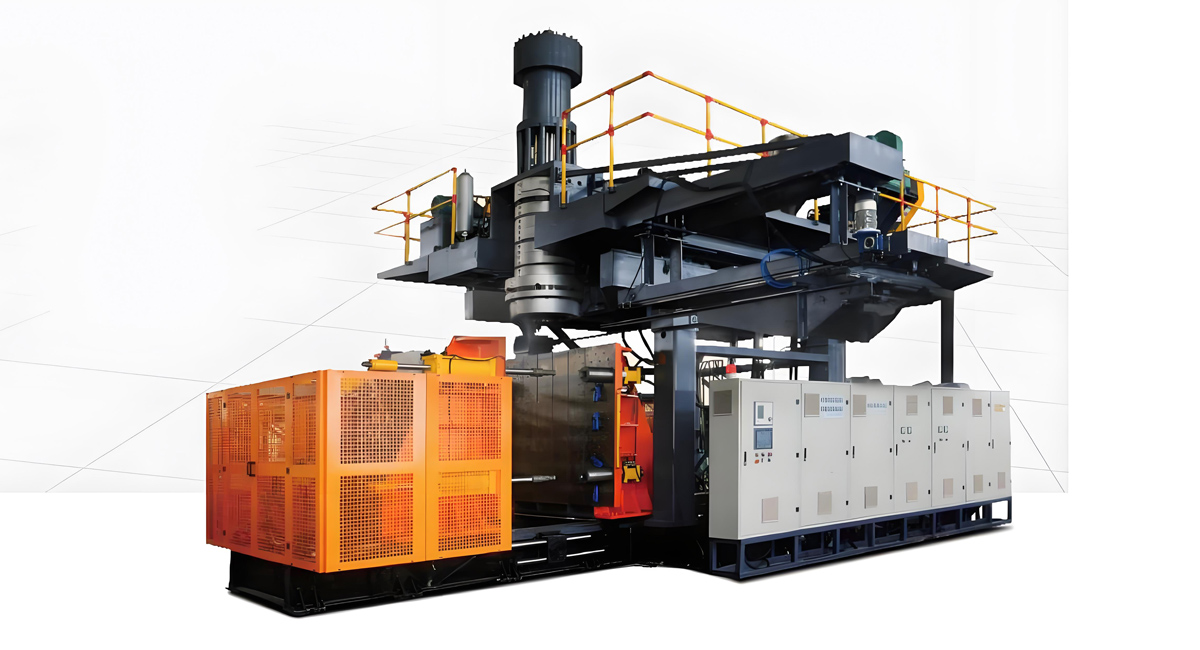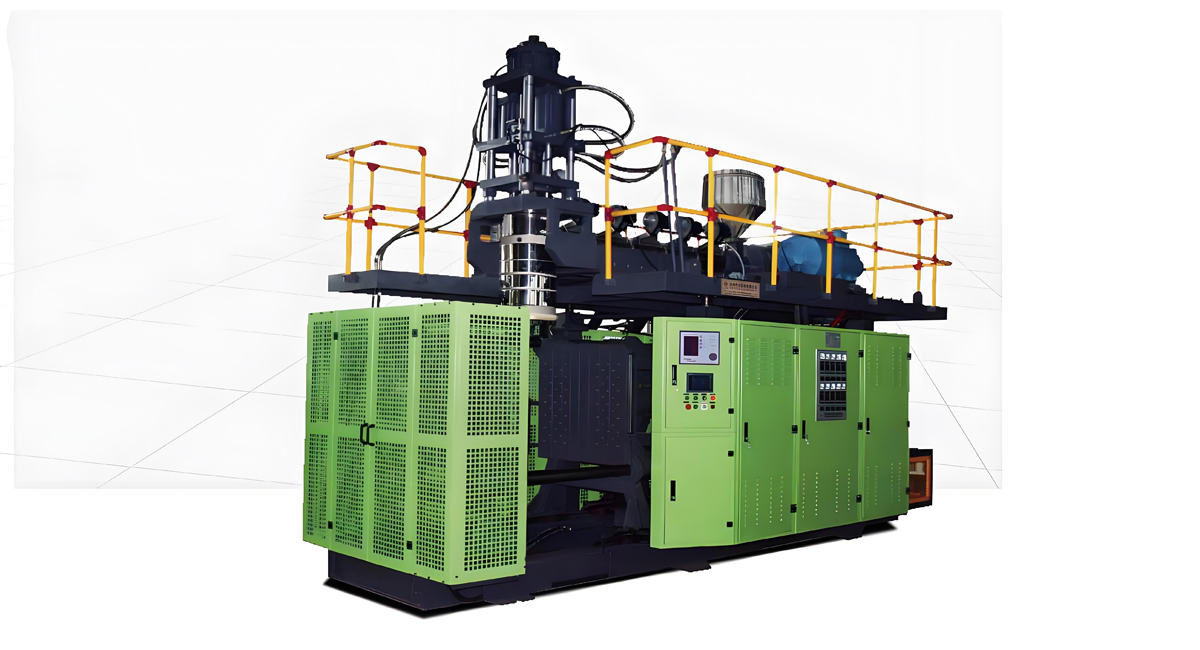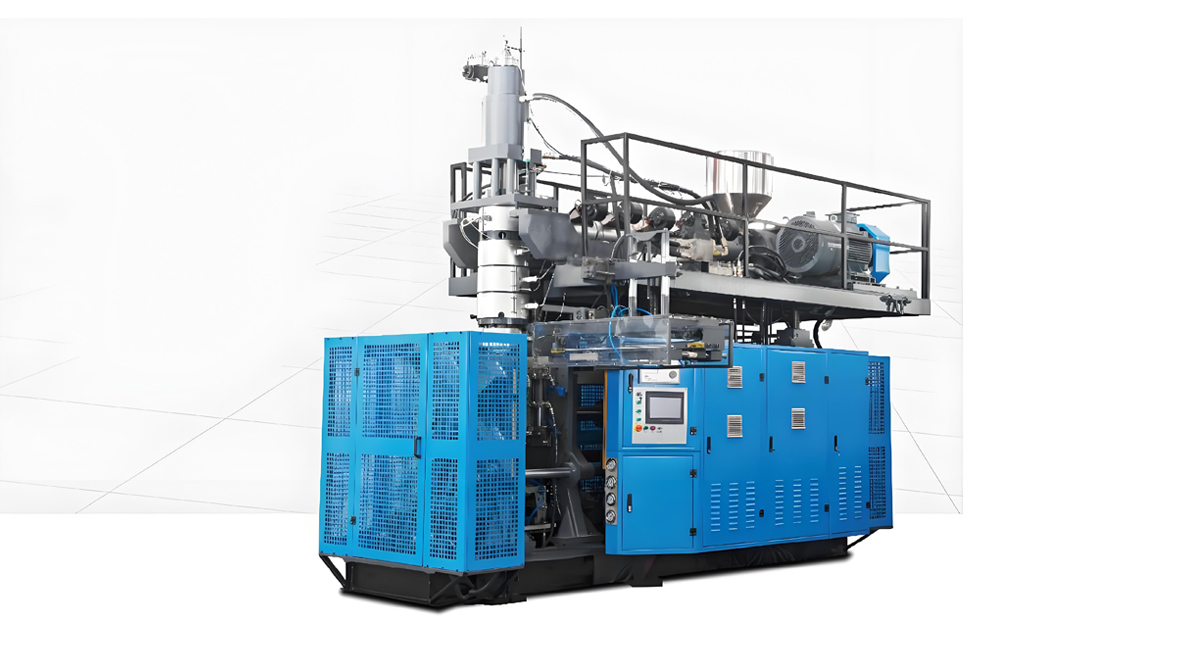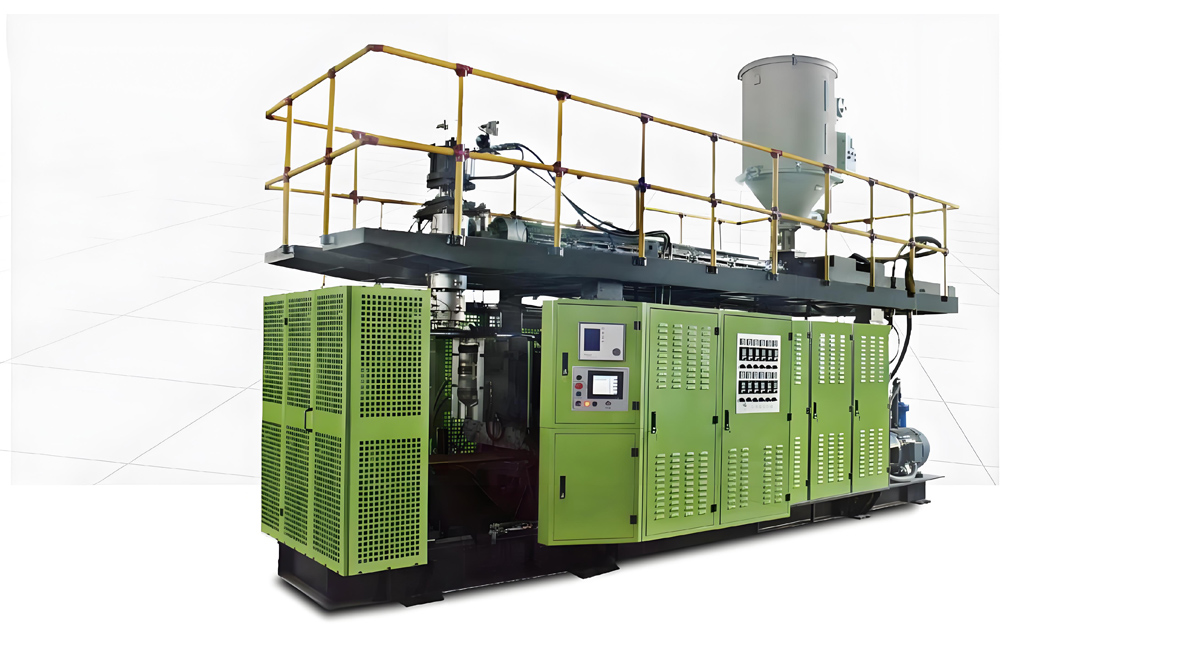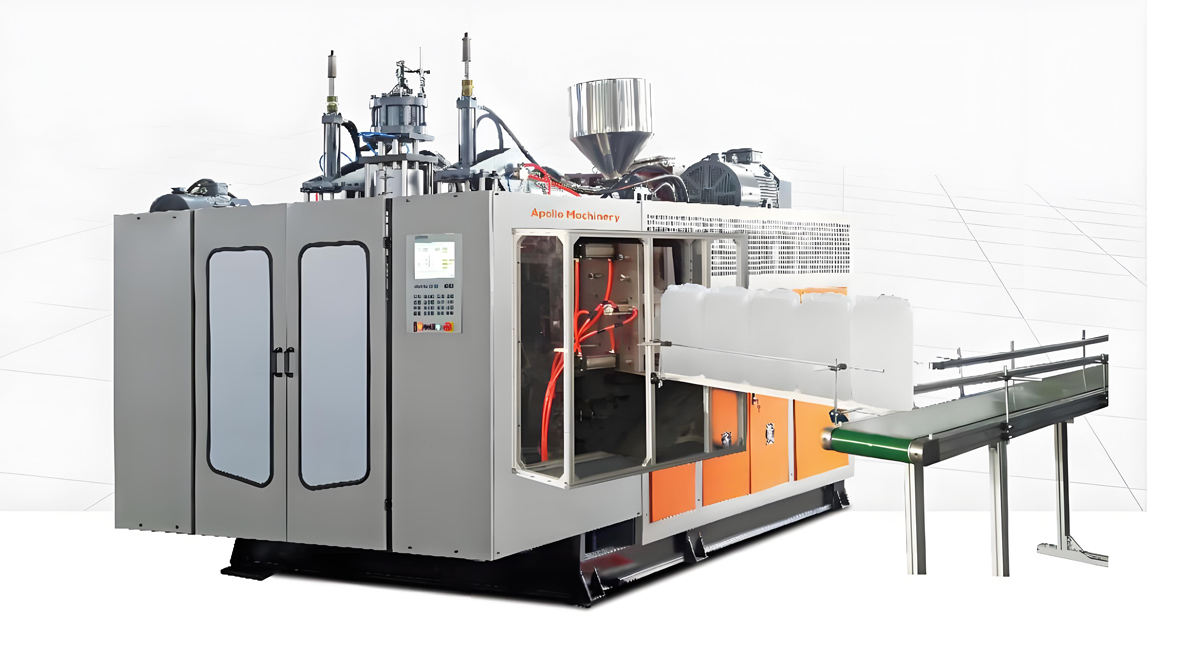
Choosing an extrusion blow molding (EBM) machine is ultimately a decision about the manufacturer behind the machine, because the reliability of every hollow container you produce depends on how consistently that machine was built. Apollo, a Wanplas factory, has spent more than 20 years specializing in automatic extrusion blow molding machines from its base in Zhangjiagang, near Shanghai. The plant covers an 8,000 square meter factory area, supports an annual production capacity of 100 sets, and has placed more than 4,000 machines into operation across more than 90 countries. This article explains how that scale translates into a quality control system you can audit before you buy, and how Apollo structures its production so that capacity, lead time, and machine consistency move together rather than against each other. You will learn how the factory organizes its 8,000 square meters, how it plans 100 sets per year without sacrificing calibration, which series fit which container sizes, and what service guarantees protect your investment after the machine lands in your plant. Wanplas, as the parent brand, sets the shared standards that every factory in the group follows, so the practices described here reflect both Apollo’s specialization and the group’s broader commitments to buyers worldwide.
Understanding Extrusion Blow Molding and Why Factory Capacity Defines Machine Reliability
Extrusion blow molding is the process of forming hollow plastic articles by extruding a molten tube of parison into a clamped mold, then inflating that parison with compressed air until it takes the shape of the cavity. The process suits containers that must hold liquid or gas, from a 200 milliliter shampoo bottle to a 1,500 liter chemical storage tank. EBM differs from injection blow molding and stretch blow molding because the parison is formed by continuous or accumulator extrusion rather than by injecting a preform, which gives it a structural advantage for handles, irregular shapes, and very large volumes. A buyer evaluating an EBM manufacturer is really evaluating two things at once: the process knowledge encoded into the machine, and the discipline of the factory that assembled it.
Factory capacity is not a vanity number. An 8,000 square meter plant running 100 sets per year forces a manufacturer to standardize workflows, because hand-built one-off machines cannot scale to that volume without documented procedures. When procedures are documented, every machine passes through the same inspection gates, the same calibration tolerances, and the same test protocols. That is why a documented production capacity and a documented quality control system are two sides of the same coin: you cannot sustain one without the other. Apollo’s stated capacity of 100 sets annually is therefore a signal that its assembly lines, hydraulic and electric power units, extrusion barrels, and mold clamping units are built to repeatable standards rather than to bespoke interpretations.
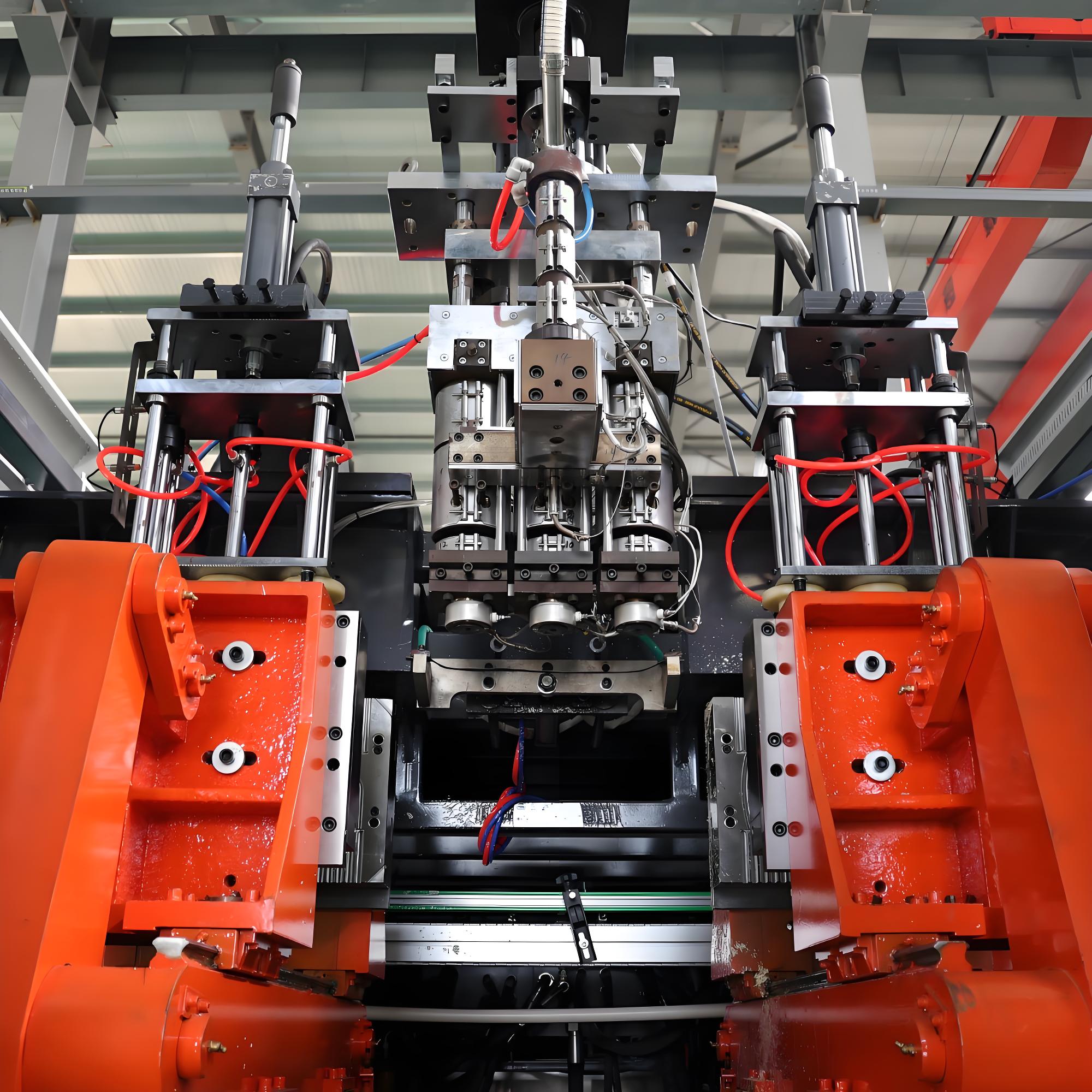
The core components of an EBM machine are the extrusion system, the parison programming head, the clamping unit, the blow system, and the control system. The extrusion system plasticizes the resin in the barrel using a screw whose geometry and temperature profile determine melt homogeneity. The parison head distributes melt to the die and, on programmable machines, varies wall thickness along the parison so that corners and handles receive more material while flat walls receive less. The clamping unit holds the mold and absorbs the force of closing and blowing. The control system coordinates these elements and stores recipes so that a given container can be reproduced shift after shift. Each of these subsystems is where factory discipline shows up as machine performance, and each is addressed by the quality control steps described later in this article.
Wall thickness programming deserves emphasis because it is the single feature that separates a capable EBM machine from a merely functional one. A uniform parison wastes resin on flat walls and starves corners, producing either heavy containers or weak handles. A programmable head lets the operator assign more melt to the handle bridge and less to the sidewall, holding container weight down while meeting drop-test and stack-load requirements. For a buyer, this capability directly affects material cost per thousand containers, which over a year can outweigh the difference in machine procurement cost. The calibration of that head, and the repeatability of its profile from one shift to the next, is therefore a primary target of the factory’s quality gates.
Cooling is the second hidden driver of both quality and output. After the parison is blown against the cavity, the container must solidify enough to eject without deformation, and the cooling time often sets the cycle limit more than the extrusion rate does. Apollo tunes cooling-channel layout in the mold and matches blow-air pressure to the resin so that cycle time is minimized without warpage. Because cooling depends on mold design as much as machine design, Apollo’s in-house mold fitting and customization matter: a mold supplied and tuned by the same factory that built the machine closes the loop between specification and result.
From a buyer’s perspective, the practical question is whether the manufacturer can deliver a machine that holds tolerance on your container, arrive on the promised date, and keep running after commissioning. The remainder of this article shows how Apollo’s factory footprint, production planning, machine portfolio, and quality system answer those three questions with concrete, verifiable detail.
Apollo at a Glance: A Wanplas Factory With 8,000 Square Meters of Production Area
Apollo is a Wanplas factory dedicated to extrusion blow molding machines, positioned within the Wanplas group as the specialist for hollow plastic container production. The Wanplas brand operates under the mission of warming global customers with China plastic machinery, and Apollo carries that mission into the EBM category with a focused product range rather than a scattered one. Focus matters: a factory that builds only blow molding machines develops deeper know-how in parison control, clamping rigidity, and cooling optimization than a generalist that touches many unrelated processes.
The physical footprint is straightforward and worth stating plainly. Apollo’s factory area measures 8,000 square meters, located in Zhangjiagang close to Shanghai for convenient logistics and customer visits. Within that area the factory organizes machining, welding, hydraulic and electric assembly, extrusion barrel production, mold fitting, wiring, testing, and packing. An 8,000 square meter area is large enough to separate dirty operations such as welding and machining from clean operations such as control wiring and final inspection, which reduces the risk of contamination and mis-calibration. Spatial separation is itself a quality control measure, because it prevents metal swarf, dust, and hydraulic residue from reaching sensitive assemblies.
Experience compounds the advantage of space. With more than 20 years in extrusion blow molding, Apollo has accumulated engineering routines for container families that repeat across industries: bottles, jerry cans, drums, tanks, and technical hollow parts. That history shows up in more than 4,000 machines running in more than 90 countries, a deployment base that generates field feedback the factory uses to refine designs. Field feedback loops are how a manufacturer learns which screw geometries resist degradation, which clamping designs resist deflection, and which control settings survive harsh shop floors. Apollo’s global install base is therefore not only a sales metric but an input into continuous improvement.
Apollo produces ten series with more than eighty models suitable for different shapes of hollow plastic products, a breadth that lets a buyer stay with one supplier as volume and container size change. For the purposes of this article the three series that define the portfolio are the ABLB series for 200 milliliters to 20 liters, the ABLD series for 20 liters to 1,500 liters, and the Fully Electric series for 200 milliliters to 20 liters where a hydraulic-free, energy-efficient cell is preferred. These three are detailed with specifications in the next major section.
Annual Production Capacity of 100 Sets and How It Is Planned
An annual production capacity of 100 sets does not mean Apollo builds one hundred identical machines. It means the factory plans its material flow, labor, and test benches so that up to 100 configured machines can be completed, inspected, and shipped within a year without overloading any single stage. Capacity planning in a custom machine factory starts with the bill of materials and the longest-lead components. For EBM machines the longest-lead items are typically the extrusion barrel and screw, the clamping platen castings, the servo and hydraulic components, and the control system hardware. Apollo stocks or pre-orders these based on a rolling forecast so that a confirmed order does not wait for raw castings.
Capacity is balanced across stations rather than maximized at one. If welding runs faster than calibration, finished frames pile up and quality slips; if calibration is the bottleneck, the whole line starves. Apollo schedules so that machining, welding, assembly, hydraulic and electric build, and final testing each carry a predictable load. That balance is what protects lead time. A buyer who orders a standard ABLB configuration can expect a shorter slot than a buyer who orders a heavily customized ABLD drum line, because the customized order consumes more engineering and calibration hours per set.
The 100 sets capacity also supports the Wanplas production capacity guarantee, one of the group’s shared promises. When Apollo commits to a delivery window, that commitment rests on a planned line that already accounts for test time. Too many small manufacturers quote aggressive dates and then slip because they underestimate calibration and trial runs. Apollo’s capacity figure is conservative by design: it includes the hours needed to run each machine, not just to bolt it together. This is the difference between a factory that ships and a factory that promises.
Planning discipline extends to customization. Apollo offers machine customization for molds and voltage, which means a single annual capacity must absorb both standard and tailored builds. The factory manages this by holding buffer slots in the schedule for custom engineering, so a custom order does not displace a standard one. For the buyer, the practical takeaway is that capacity and flexibility are planned together, and the 8,000 square meter area provides the physical room to stage both without congestion.
The Apollo EBM Machine Portfolio: ABLB, ABLD, and Fully Electric Series
Apollo’s portfolio is organized by container size and by drive technology. The ABLB series covers 200 milliliters to 20 liters using standard hydraulic extrusion blow molding, the workhorse range for bottles, jerry cans, and small drums. The ABLD series covers 20 liters to 1,500 liters using heavy-duty blow molding for large containers, tanks, and technical parts. The Fully Electric series covers 200 milliliters to 20 liters using all-electric drives for plants where energy efficiency and a hydraulic-free environment are required. The three series share Apollo’s control philosophy and quality gates while differing in frame, clamping force, and extrusion capacity.
ABLB Series: 200 Milliliters to 20 Liters, Standard Extrusion Blow Molding
The ABLB series is the entry and mid-range backbone of the Apollo lineup, with eight types in the series to match different output and cavity counts. It is built for continuous extrusion blow molding of containers from 200 milliliters up to 20 liters, making it the natural choice for dairy bottles, edible oil bottles, detergent jerry cans, and cosmetic containers. The series uses a hydraulic clamping unit and a programmable parison head so wall thickness can be tuned to the container shape. Below is a representative specification set for the ABLB family; exact values vary by model and configuration.
| Specification | ABLB Range (Typical) | Notes for Buyers |
|---|---|---|
| Container volume range | 200 mL to 20 L | Covers bottles and small jerry cans |
| Number of types in series | 8 | Scales output via cavity count |
| Drive type | Hydraulic clamp, extrusion | Robust, service-friendly |
| Parison control | Programmable wall thickness | Optimizes material use |
| Typical processable materials | PE, PP, PVC, PC, PETG | See material section |
| Relative procurement cost | Medium | Best value for volume range |
ABLD Series: 20 Liters to 1,500 Liters, Heavy-Duty Blow Molding
The ABLD series is Apollo’s heavy-duty line, with three types engineered for large containers from 20 liters up to 1,500 liters. These machines use accumulator heads and reinforced clamping to handle the high melt volume and clamp force that large drums, tanks, and automotive components demand. The ABLD is the right answer when a buyer outgrows the 20 liter ceiling of the ABLB and needs IBC components, chemical drums, or bulky technical hollow parts. Heavy-duty framing and a larger accumulator reduce parison sag and improve wall uniformity at scale.
| Specification | ABLD Range (Typical) | Notes for Buyers |
|---|---|---|
| Container volume range | 20 L to 1,500 L | Drums, tanks, large parts |
| Number of types in series | 3 | Tiered by clamp force |
| Extrusion method | Accumulator blow molding | High melt volume per shot |
| Frame | Heavy-duty, reinforced | Resists deflection at scale |
| Typical processable materials | HDPE, PP, large-part resins | Chemical and water tanks |
| Relative procurement cost | High | Reflects scale and force |
Fully Electric Series: 200 Milliliters to 20 Liters, Hydraulic-Free and Energy Efficient
The Fully Electric series covers the same 200 milliliters to 20 liters range as the ABLB but replaces hydraulic power with servo-electric drives throughout the clamping and transfer motions. The result is a cleaner cell with no hydraulic oil, lower energy consumption, and quieter operation, which suits plants with strict environmental requirements, clean rooms, or high energy costs. Because there is no hydraulic system to leak or warm up, the Fully Electric series also stabilizes cycle consistency from the first shot of a cold start. For buyers weighing total cost of ownership, the higher procurement cost is offset by lower utility and maintenance spend over the machine’s life.
| Specification | Fully Electric Range (Typical) | Notes for Buyers |
|---|---|---|
| Container volume range | 200 mL to 20 L | Same range as ABLB |
| Drive type | Fully electric, servo | No hydraulic oil |
| Energy profile | Low to Medium | Optimizes operating cost |
| Environment fit | Clean, low-noise plants | High environmental requirement |
| Relative procurement cost | High | Lower lifetime cost |
Together these three series let a buyer standardize on Apollo from laboratory-scale 200 milliliter bottles to 1,500 liter bulk containers, with a clean electric option in the small range. The selection table later in this article maps output need to the correct series so that capacity, not guesswork, drives the decision.
Inside the Manufacturing Workflow: From Steel Frame to Calibrated Blow Molding Machine
Understanding the workflow helps a buyer audit a factory, because each stage is a place where discipline either protects or erodes quality. Apollo’s workflow begins with machining and welding of the base frame and clamping platen. The frame must hold geometric tolerance under clamp force, so welding is followed by stress relief and precision machining of the platen surfaces. A frame that is not flat transfers deflection into the mold, which shows up as flash or wall variation in the finished container. This is why frame preparation is the first quality gate, not merely a structural step.
The second stage is extrusion barrel and screw production. The barrel is the heart of plasticizing: a hardened, precisely bored cylinder through which the screw conveys, compresses, and melts the resin. Apollo machines the barrel bore and pairs it with a screw whose compression ratio and mixing sections are matched to the target materials. Screw geometry is not generic; a screw tuned for HDPE differs from one tuned for PVC, and the factory records the pairing so the documented specification matches the physical machine. After the barrel and screw are assembled, they are checked for run-out and heating uniformity across zones.
The third stage is hydraulic or electric assembly. On ABLB and ABLD machines this means the clamping power unit, the accumulator, and the blow valves; on Fully Electric machines it means servo drives and actuators. Wiring and the control system are built on a separate clean bench to keep electronics away from swarf and oil. The control system loads Apollo’s firmware, which stores container recipes, parison profiles, and alarm history. At this point the machine is mechanically complete but not yet trusted.
The fourth stage is dry run and wet trial. Apollo runs the machine empty to verify motion, then runs it with resin to produce sample containers. During the wet trial the parison profile is tuned, cooling time is set, and scrap rate is measured. Only after the trial produces containers within tolerance does the machine move to final inspection. This staged workflow is what allows 100 sets per year to leave the 8,000 square meter plant with consistent behavior, because no machine skips a gate to make a date.
The control system deserves a closer look because it is where the workflow becomes repeatable for the operator. Apollo’s human-machine interface stores container recipes that capture extrusion temperature zones, parison profile, clamp and blow timing, and cooling duration, so a product can be recalled exactly on the next run or on a sister machine. Recipe management reduces operator error and shortens changeover when a plant runs several container families. The control layer also logs alarms and cycle counts, giving the factory and the buyer a data trail that supports preventive maintenance. When Apollo tracks usage status after installation, this logged history is the basis for those checks, turning a one-time sale into a managed machine life.
The Quality Control System: How Apollo Validates Every Machine Before Shipment
Apollo’s quality control system is a sequence of checkpoints tied to the workflow above, documented so that any machine can be traced back through its inspections. The system covers incoming material, in-process measurement, final trial, and shipment preparation. Because Apollo is a Wanplas factory, it also operates under the group’s quality standards guarantee: if a delivered machine fails to meet the contracted quality specification, Apollo issues a refund and pays 10 percent compensation. That guarantee is only credible because the factory already runs the inspections that would catch the failure before it ships.
Incoming control verifies that barrels, screws, castings, servo components, and electrical parts meet the drawing. In-process control measures frame flatness, barrel bore, screw run-out, and heater zone resistance at defined stations. Final control runs the wet trial and records container weight, wall thickness distribution, flash, and cycle time against the agreed sample. Shipment control confirms packing, rust protection, and spare part kits. The table below summarizes the gates a buyer can ask to see during a factory inspection visit.
| QC Gate | What Is Checked | Why It Matters |
|---|---|---|
| Incoming material | Castings, barrel, screw, electronics | Bad parts caught before build |
| Frame and platen | Flatness, weld, stress relief | Prevents flash and wall variation |
| Barrel and screw | Bore, run-out, zone heating | Drives melt homogeneity |
| Wet trial | Weight, wall, flash, cycle | Proves the container is in spec |
| Shipment | Packing, rust proof, spares | Protects machine in transit |
Documentation is the quiet engine of the system. Each machine carries a build and inspection record that the buyer can review, and the Wanplas quality standards guarantee backs that record with a refund and 10 percent compensation clause. For a purchaser, the practical value is simple: you can request the trial data for your exact machine before it leaves the 8,000 square meter plant, and you can witness the run during a factory inspection. Quality control that you can observe is quality control you can trust, and that observability is the reason Apollo structures capacity the way it does.
Standards such as CE and ISO mark the baseline of the factory’s compliance mindset, while food and pharmaceutical applications are addressed with material and cleaning practices consistent with FDA and EU 10/2011 expectations when the buyer specifies a food-contact or medical grade container. Apollo states these as plain commitments tied to the application rather than as optional extras, because hollow containers in food, beverage, and medical channels must satisfy regulators from the first production batch.
Material Compatibility: What You Can Process on Apollo EBM Machines
Apollo EBM machines process a broad resin set: PE, PP, PVC, PA, PC, ABS, PS, EVA, TPU, and PETG. This range covers most commodity and many engineering hollow applications, but each material has processing rules that the factory encodes into screw and barrel selection. PE, especially HDPE, is the most common EBM resin for bottles, jerry cans, and drums because of its toughness and chemical resistance. PP follows for hotter-fill and rigid containers. PVC requires corrosion-resistant barrel and die treatment and careful temperature control to avoid degradation. PA and PC suit technical and automotive parts where strength or clarity matters. PETG gives clear, glossy containers without the orientation step of stretch blow molding.
The table below maps typical materials to the properties that drive machine configuration. Buyers should treat it as a starting point and confirm screw and barrel pairing with Apollo during configuration, because the right plasticizing setup determines both output and container quality.
| Material | Typical Use | Processing Note |
|---|---|---|
| PE (HDPE/LDPE) | Bottles, jerry cans, drums | Standard screw, robust |
| PP | Hot-fill, rigid containers | Higher melt temperature |
| PVC | Clear bottles, profiles | Corrosion-resistant barrel |
| PA, PC | Technical, automotive parts | Drying and high temperature |
| ABS, PS | Cosmetic, display items | Surface quality focus |
| EVA, TPU, PETG | Flexible, clear parts | Special screw tuning |
Material choice also interacts with the selection of series. Large PA or PC technical parts lean toward the ABLD heavy-duty line, while clear PETG cosmetic bottles sit comfortably on the ABLB or Fully Electric lines. The next two sections connect material and volume to end products and then to a concrete recommendation table.
Application Industries: End Products Across Eight Sectors
Apollo serves eight application areas, and the value of an EBM article is in naming the actual end products rather than stopping at the industry label. The eight sectors are food and beverage, daily chemical products, chemical industry, building material, medical and pharmaceutical, automobile production, transportation, and cultural and sports. Below, each sector is tied to representative hollow products that Apollo machines can produce.
In food and beverage, Apollo machines make water bottles, edible oil bottles, milk bottles, condiment containers, and beverage jerry cans. These demand consistent wall thickness for stacking and clean material handling for food contact. In daily chemical products, the output includes shampoo bottles, body wash bottles, detergent jerry cans, and lotion containers, where surface finish and handle strength matter. In the chemical industry, EBM produces aggressive-liquid containers, reagent bottles, and small drums built from chemical-resistant resins such as HDPE and PP, often on the ABLD line for larger volumes.
In building material, Apollo machines form adhesive and sealant cartridges, foam canisters, and solvent containers used on construction sites. In medical and pharmaceutical, the relevant end products are wash bottles, reagent containers, and single-use hollow devices produced under stricter material and cleaning discipline, consistent with FDA and EU 10/2011 expectations for the specified grade. In automobile production, EBM delivers air duct components, washer fluid reservoirs, and technical hollow parts, frequently larger pieces that suit the ABLD series. In transportation, the products extend to fuel-compatible and fluid containers for vehicles and equipment. In cultural and sports, Apollo machines produce inflated-article precursors, sport bottles, and equipment housings.
This breadth is possible because EBM excels at handles, irregular shapes, and large volumes that alternative processes struggle with. A buyer in any of these eight sectors is not adopting a generic machine but a configured one aimed at a known end product, and Apollo’s more than 4,000 installed machines across 90 plus countries reflect that the configurations hold up in real plants.
The same machine family also serves several sectors through mold change rather than machine change, which protects the buyer’s investment as demand shifts. A Fully Electric or ABLB line set up for shampoo bottles in the daily chemical sector can be retooled for sport bottles in the cultural and sports sector by swapping the mold and loading a stored recipe, with no change to the extrusion or clamping hardware. For a contract packer or a regional manufacturer serving multiple industries, this flexibility is a strong argument for standardizing on one Apollo series and growing cavity count or moving to the ABLD line only when container size crosses the 20 liter boundary. The eight application sectors are therefore not eight separate machines but one configurable platform expressed through tooling and recipe.
How to Select the Right Apollo Series for Your Output Need
Selection should start from the container size and the required output, then move to drive technology. The table below gives a practical map from need to recommended Apollo series. Treat the output columns as guidance; the factory confirms cavity count, cycle time, and material during configuration. The key principle is to match the series ceiling to your largest container, not your average one, so the machine is never the bottleneck when an order shifts upward.
| Your Need | Recommended Series | Recommended Drive | Why |
|---|---|---|---|
| 200 mL to 20 L, general | ABLB series | Hydraulic | Best value, proven |
| 200 mL to 20 L, clean plant | Fully Electric series | Electric | No oil, lower energy |
| 20 L to 200 L drums | ABLD series | Hydraulic, accumulator | Heavy-duty clamp |
| 200 L to 1,500 L tanks | ABLD series (large type) | Hydraulic, accumulator | High force and volume |
| Automotive technical parts | ABLD or ABLB by size | Hydraulic | PA, PC capable |
For buyers comparing processes rather than brands, the comparison below is technology against technology. EBM is chosen over injection blow molding when the container is large, handled, or irregular, and over stretch blow molding when the resin is not PET or when biaxial orientation is not required. Apollo’s specialization in EBM means the factory’s deepest expertise, spares, and tooling sit in this one process, which is an argument for EBM when your product fits its envelope.
| Factor | Extrusion Blow Molding | Injection Blow Molding | Stretch Blow Molding |
|---|---|---|---|
| Best container size | 200 mL to 1,500 L | 3 mL to 1 L | Small PET bottles |
| Handles and odd shapes | Excellent | Limited | Limited |
| Typical resin | PE, PP, PVC, more | PE, PP, PS | PET |
| Relative tooling cost | Medium | High | Medium |
Service and Support: Inspection, Installation, Spare Parts, and Guarantees
Apollo’s service model is built on the Wanplas group’s shared promises, which means a buyer gets both factory-level attention and brand-level backing. The first service is transparency: Apollo welcomes machine inspection at the factory, where a buyer can watch assembly, the wet trial, and the quality gates described earlier. This open factory policy lets you verify the 8,000 square meter operation and the 100 sets annual capacity with your own eyes before committing freight.
After purchase, Apollo sends engineers for on-site installation and commissioning, then tracks usage status and makes irregular customer visits to catch issues early. Machine customization covers molds and voltage so the machine fits your product and your grid. On spare parts, Apollo provides USD 500 of free spare parts every year under the Wanplas policy, and replaces damaged parts free within warranty. The group also commits to a transportation guarantee, a production capacity guarantee, and a quality standards guarantee that refunds and pays 10 percent compensation if quality fails to meet the contract. These guarantees turn the factory’s internal discipline into a contractual promise you can rely on.
For the buyer, the combined message is that capacity, quality, and support are one system. A factory that plans 100 sets per year, inspects every machine, and backs it with USD 500 in annual free parts and a 10 percent quality compensation clause is structured to keep your line running rather than to win a single order. That is the practical meaning of Apollo’s position as a Wanplas factory with two decades of focus on extrusion blow molding.
Frequently Asked Questions
How large is the Apollo EBM manufacturing plant?
Apollo operates an 8,000 square meter factory area in Zhangjiagang, near Shanghai, dedicated to automatic extrusion blow molding machines, with an annual production capacity of 100 sets and more than 20 years of specialization in this process.
Which Apollo series should I choose for containers under 20 liters?
For 200 milliliters to 20 liters, choose the ABLB series for standard hydraulic extrusion blow molding or the Fully Electric series when energy efficiency and a hydraulic-free cell are required. Both cover the same volume range with different drive technology.
What materials can Apollo EBM machines process?
Apollo machines process PE, PP, PVC, PA, PC, ABS, PS, EVA, TPU, and PETG, covering most commodity and engineering hollow container applications. Screw and barrel pairing is tuned to the selected material during configuration.
Does Apollo offer a spare parts policy?
As a Wanplas factory, Apollo provides USD 500 of free spare parts every year plus warranty replacement for damaged parts, under the group’s shared service promises that apply across all factories.
Can customers visit the factory before ordering?
Yes. Apollo follows the Wanplas open factory policy and welcomes machine inspection visits, where buyers can review assembly, calibration, and the quality control workflow in person before shipment.
What happens if a machine fails to meet the agreed quality standard?
Under the Wanplas quality standards guarantee, Apollo issues a refund and pays 10 percent compensation if the delivered machine fails to meet the contracted quality specification, backed by the inspection records from the 8,000 square meter plant.
How do I decide between ABLB and Fully Electric for the same bottle size?
If your plant prioritizes lowest upfront cost and proven hydraulic serviceability, choose ABLB. If you need a clean, low-noise cell with lower energy consumption and no hydraulic oil, choose the Fully Electric series; the higher procurement cost is recovered through lower operating spend.
Conclusion
An EBM manufacturer’s factory is the real product, and Apollo demonstrates that through measurable facts rather than claims: an 8,000 square meter plant area, an annual production capacity of 100 sets, more than 20 years of focus, and more than 4,000 machines running in over 90 countries as a Wanplas factory. The ABLB, ABLD, and Fully Electric series cover containers from 200 milliliters to 1,500 liters with hydraulic or all-electric drives, while the quality control system ties every machine to documented inspection gates and a wet trial you can witness. Applications span food and beverage, daily chemical, chemical, building material, medical, automotive, transportation, and sports, each reaching a concrete end product. Selection follows container size and output, service includes factory inspection, on-site installation, USD 500 of free spare parts per year, and guarantees on transport, capacity, and quality with refund plus 10 percent compensation. If you are planning a hollow container line, send your container size, material, and target output, and Apollo will configure the right series, invite you to inspect the build, and stand behind the machine with the Wanplas group’s promises.