1. Overview of 1500L Ultra-Large Capacity Extrusion Blow Molding Machine
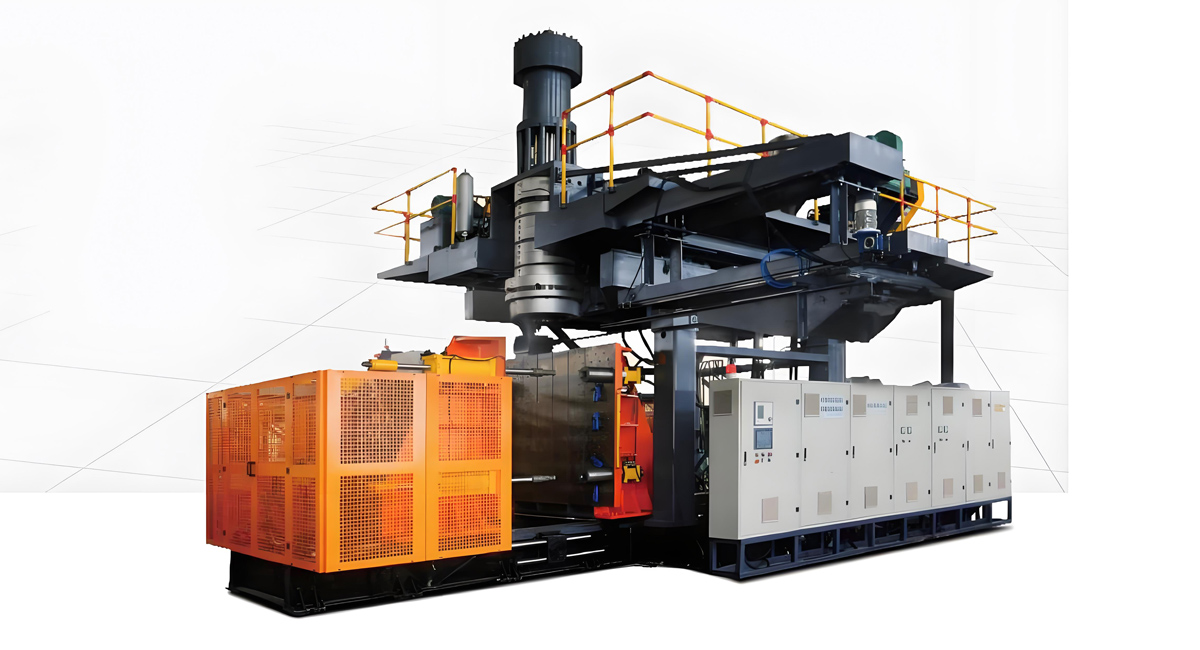
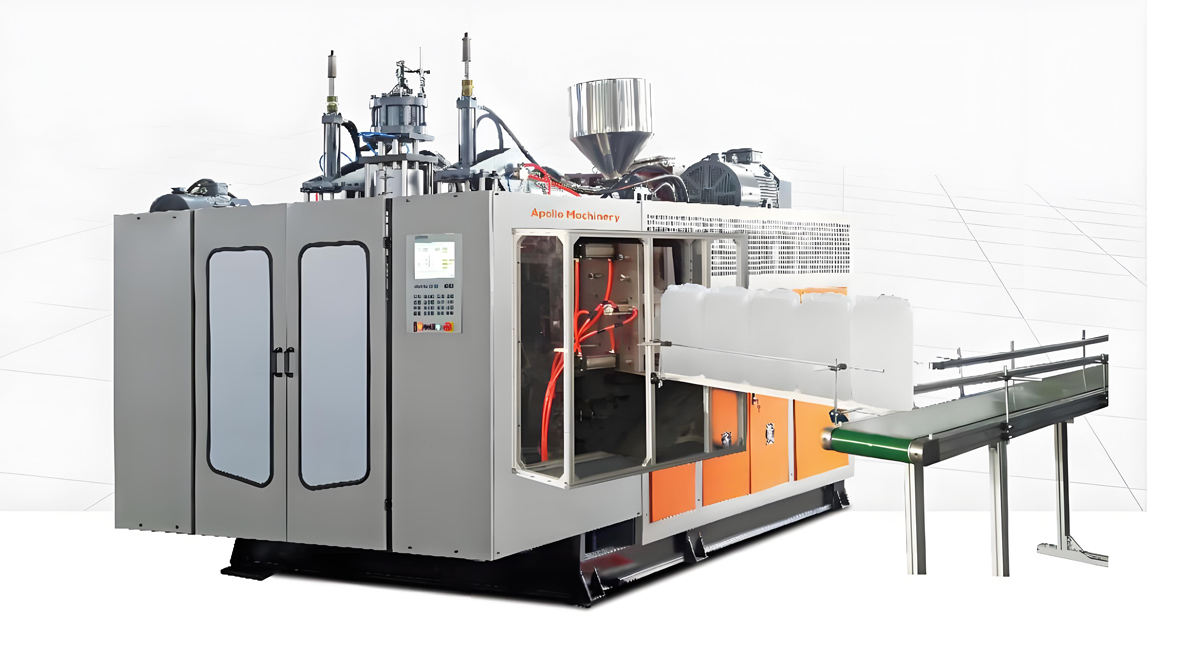
The extrusion blow molding machine is the core specialized equipment for hollow plastic product manufacturing, widely used in the mass production of large-capacity plastic containers, industrial packaging barrels, chemical storage tanks, and large hollow engineering plastic parts. The 1500L ultra-large capacity EBM machine belongs to the high-end customized model in the blow molding industry, specifically designed for super-large hollow plastic product production scenarios that ordinary medium and small blow molding equipment cannot support. As the top flagship model of the ABLD series, the Apollo ABLD 1500L extrusion blow molding machine breaks through the capacity limit of traditional blow molding equipment, realizing one-time molding of 1500-liter ultra-large plastic containers, and has become the preferred equipment for large chemical packaging, environmental water storage, industrial liquid storage, and special engineering plastic product manufacturers.
Different from conventional small and medium-sized EBM machines, the 1500L ultra-large capacity blow molding equipment features super-large mold opening stroke, high-pressure stable extrusion system, heavy-duty clamping structure, and intelligent constant-temperature molding control system. It can adapt to high-viscosity raw materials such as HDPE, LDPE, LLDPE, and modified polyethylene materials, meeting the production requirements of thick-wall, high-strength, and high-toughness large plastic containers. Apollo, as a professional manufacturer of high-end extrusion blow molding machines, has optimized the mechanical structure, hydraulic system, extrusion unit, and intelligent control system of the ABLD series top model for ultra-large capacity production characteristics, solving industry pain points such as unstable parison extrusion, uneven wall thickness, low molding efficiency, and easy deformation of super-large products.
This guide comprehensively sorts out the core technical parameters, structural composition, working principles, performance advantages, applicable materials, production costs, operation specifications, and maintenance standards of the Apollo ABLD 1500L ultra-large capacity EBM machine, providing systematic technical reference and production guidance for enterprise equipment selection, production process debugging, daily operation, and later maintenance. It covers all key information that users need to know in the process of purchasing, using, and maintaining ultra-large blow molding equipment.
2. Core Structural Composition of ABLD Series 1500L EBM Machine
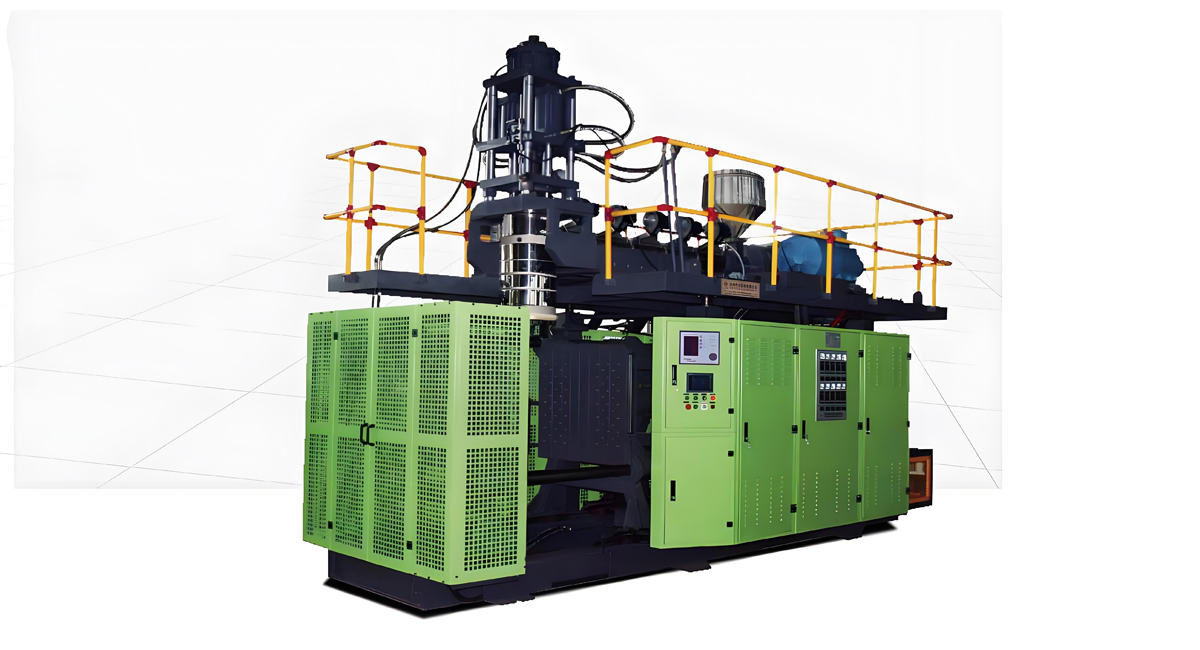
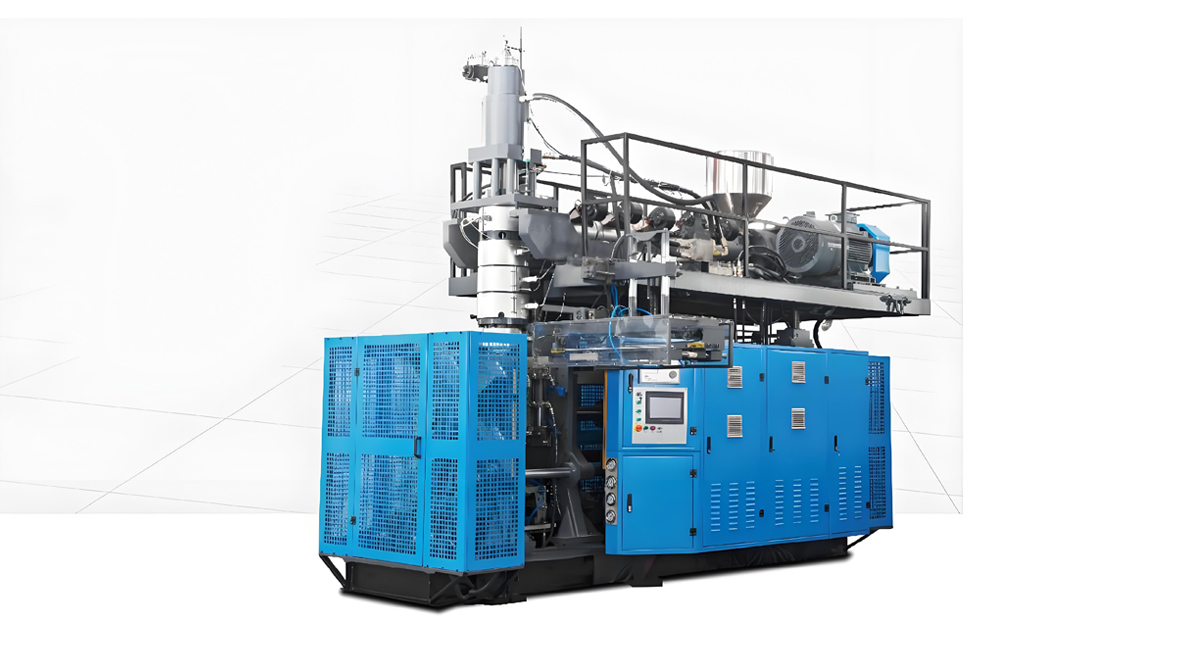
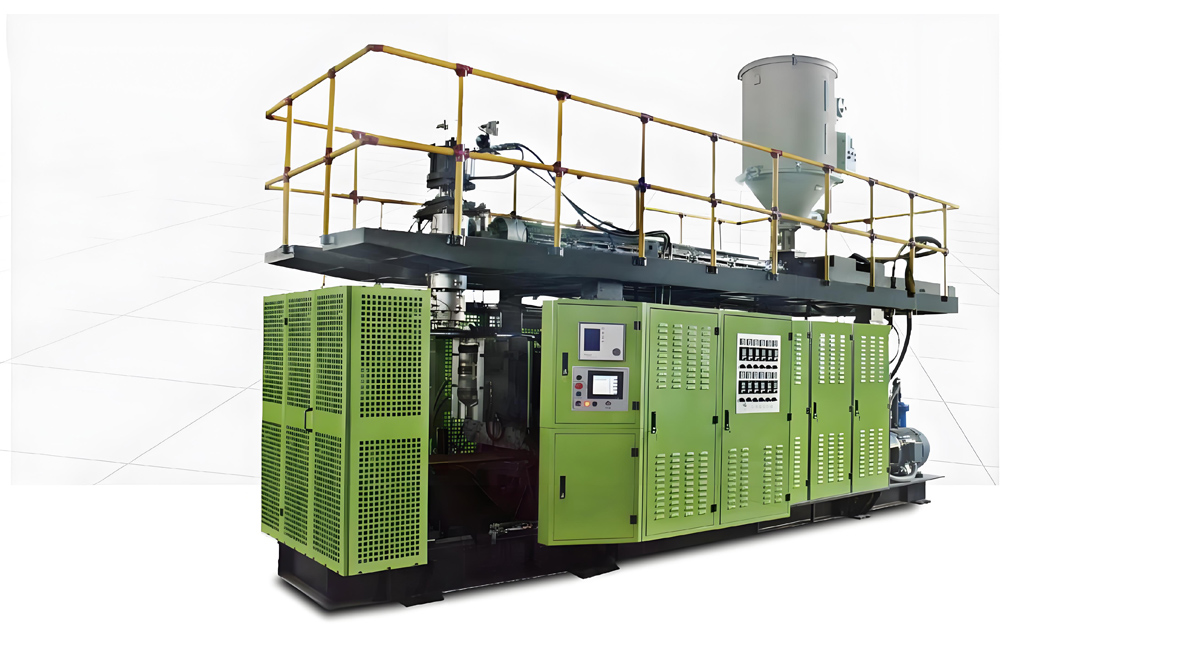
The Apollo ABLD 1500L ultra-large capacity extrusion blow molding machine adopts an integrated heavy-duty frame structure and modular design, which is divided into six core functional modules: extrusion plasticizing system, hydraulic clamping system, parison control system, blow molding inflation system, intelligent electrical control system, and cooling circulating system. Each module is independently optimized and precisely matched, ensuring stable operation, high molding accuracy, and long service life of ultra-large capacity equipment. The modular structure also facilitates daily maintenance, component replacement, and later equipment upgrading, reducing long-term operating costs for enterprises.
2.1 Extrusion Plasticizing System
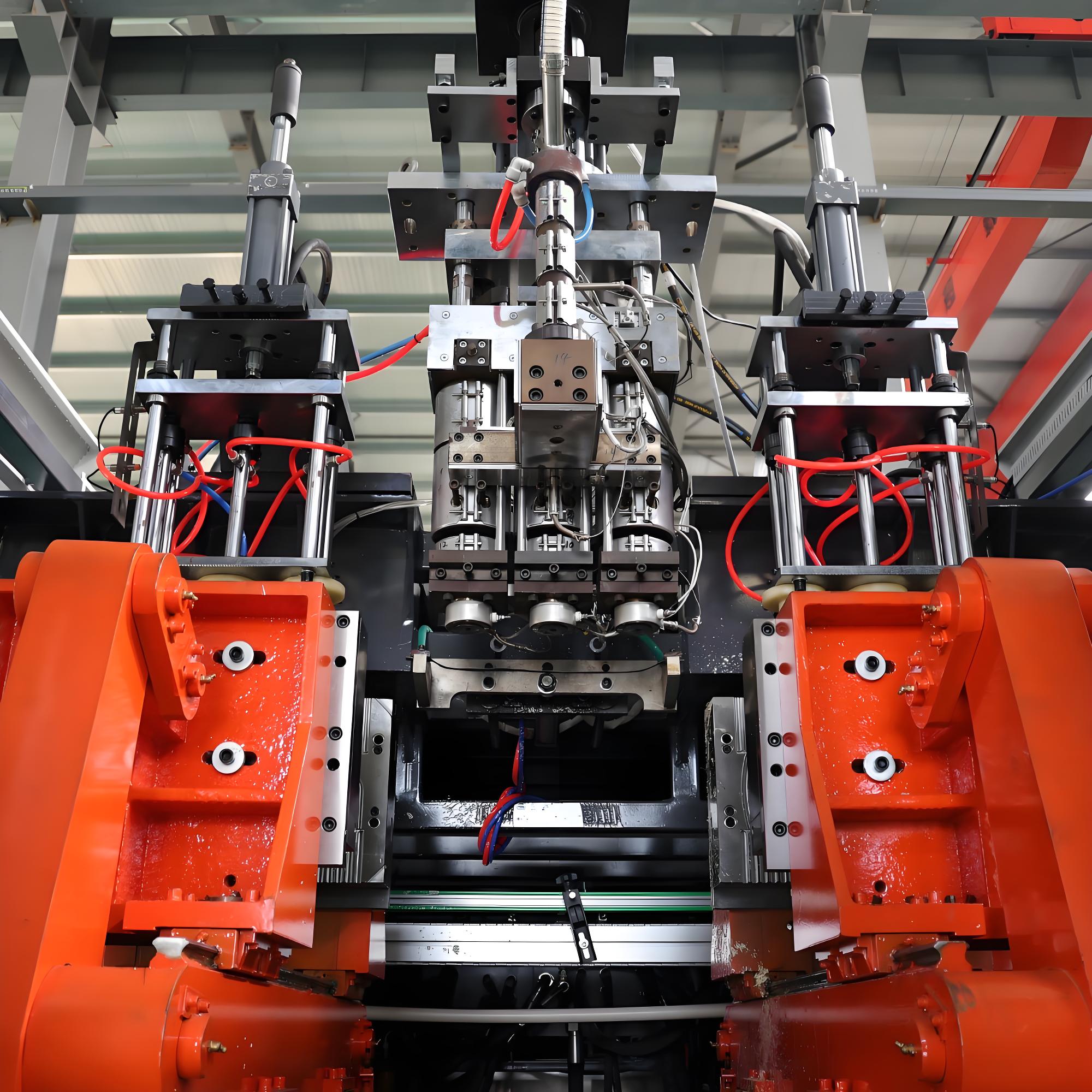
The extrusion system is the core component that determines the parison molding quality and extrusion stability of ultra-large blow molding products. The ABLD 1500L model is equipped with a customized large-diameter high-efficiency plasticizing screw and barrel, specially optimized for high-output and high-viscosity plastic raw materials. The screw adopts a multi-stage gradual compression structure, which realizes low-shear uniform plasticization, effectively avoiding material overheating decomposition, carbonization, and uneven melting during high-output extrusion. The barrel is made of high-temperature and wear-resistant alloy materials, with integral quenching and precision grinding treatment, featuring strong corrosion resistance and long service life.
Equipped with a quantitative constant-pressure extrusion device, the system can maintain stable melt pressure and uniform discharging speed during long-term high-load operation, ensuring consistent wall thickness of ultra-large parisons. The segmented independent temperature control module realizes precise temperature adjustment of the feeding section, compression section, metering section, and die head section, adapting to the plasticizing temperature requirements of different modified plastic materials. Compared with ordinary large blow molding machines, the extrusion plasticizing efficiency of the ABLD 1500L model is increased by more than 30%, and the parison uniformity error is controlled within ±0.1mm, laying a foundation for high-precision molding of 1500L super-large containers.
2.2 Heavy-Duty Hydraulic Clamping System
Ultra-large 1500L plastic containers require super-high mold clamping force to resist melt pressure and inflation pressure during molding and avoid product flash, deformation, and dimensional deviation. The ABLD 1500L EBM machine is equipped with a customized heavy-duty hydraulic clamping system, adopting a four-column balanced clamping structure, with stable force transmission and uniform mold locking force distribution. The maximum mold clamping force of the equipment reaches 2800KN, which can fully meet the high-pressure molding requirements of thick-wall super-large plastic products and effectively eliminate mold expansion and product edge overflow problems.
The hydraulic system adopts imported proportional hydraulic valves and silent oil pumps, with adjustable clamping speed and pressure, realizing fast mold closing, constant-pressure mold locking, and slow mold opening, which not only improves production efficiency but also protects the precision of large molds. The integrated hydraulic oil circuit design reduces pipeline loss and oil leakage failure rate, ensuring 24-hour continuous stable operation of the equipment. The structural rigidity of the clamping frame is strengthened through integral casting and heat treatment, avoiding frame deformation caused by long-term high-load pressure, and maintaining long-term molding accuracy stability.
2.3 Intelligent Parison Wall Thickness Control System
Wall thickness uniformity is the key technical index of ultra-large blow molding products, which directly determines the mechanical strength, pressure resistance, and service life of 1500L storage containers. The ABLD series top model is equipped with a 100-point intelligent parison wall thickness controller, which can realize real-time dynamic adjustment of parison thickness in all directions according to product molding characteristics. The system pre-sets the wall thickness curve of super-large containers through intelligent programming, automatically thickening the stress parts such as the bottom and shoulder of the container and thinning the uniform wall parts, realizing scientific material distribution.
The high-precision displacement sensor and servo drive system ensure fast and accurate response of wall thickness adjustment, effectively solving the common problems of uneven wall thickness, local thinness, and insufficient pressure resistance of traditional ultra-large blow molding products. The wall thickness control accuracy of the equipment reaches the international advanced level, which can reduce raw material waste by 8% to 12% on the premise of ensuring product mechanical performance, greatly reducing the unit production cost of 1500L large containers.
2.4 High-Pressure Blow Molding Inflation System
The inflation system undertakes the core function of parison expansion and mold shaping. The ABLD 1500L EBM machine is equipped with a high-pressure stable inflation unit, with adjustable inflation pressure and flow rate, which can complete uniform inflation and rapid shaping of 1500L ultra-large parisons in a short time. The multi-point inflation structure ensures uniform air distribution inside the container, avoiding local shrinkage, depression, and uneven shaping of super-large products caused by insufficient inflation or unbalanced air pressure.
Equipped with a precise pressure maintaining and deflation device, the system can maintain constant inflation pressure during product cooling and shaping, effectively preventing product rebound deformation after mold opening. The high-efficiency air filtration and drying device ensures clean and dry inflation air, avoiding internal impurities and water marks on the inner wall of the container, improving the surface smoothness and internal cleanliness of finished products, and meeting the production standards of food-grade and chemical-grade large storage containers.
2.5 Full Intelligent Electrical Control System
The equipment adopts a full-automatic PLC intelligent control system with a human-machine touch screen operation interface, integrating parameter setting, automatic operation, fault monitoring, and data statistics functions. All production parameters such as extrusion temperature, screw speed, clamping pressure, inflation pressure, and wall thickness curve can be directly set and adjusted on the touch screen, with simple operation and high parameter precision. The system supports one-key start of fully automatic cycle production, realizing unmanned continuous operation of feeding, extrusion, clamping, inflation, cooling, mold opening, and product discharging.
Built-in multi-dimensional fault self-diagnosis function, the equipment can automatically detect abnormal parameters such as over-temperature, over-pressure, oil circuit failure, and feeding abnormality, and trigger alarm and protection mechanisms in real time to avoid equipment damage and product batch defects. The data storage function can record production data of each batch of products, facilitating production quality traceability and process parameter optimization, improving the standardization level of enterprise production management.
2.6 Efficient Circulating Cooling System
Ultra-large 1500L plastic products have large volume and thick wall thickness, requiring stable and efficient cooling systems to ensure rapid shaping and avoid internal stress and product deformation. The ABLD 1500L EBM machine is equipped with an industrial high-flow circulating water cooling system, adopting multi-channel uniform heat dissipation design for molds, barrel, and die head. The constant-temperature cooling water machine maintains stable cooling water temperature and flow rate, ensuring uniform cooling speed of all parts of the product.
The closed-loop circulating water design reduces water resource waste, and the high-efficiency heat exchange device improves cooling efficiency, shortening the single product molding cycle and improving hourly output. The cooling system is equipped with a water quality filtering and anti-scaling device to avoid pipeline blockage and heat dissipation attenuation caused by scale deposition, ensuring long-term stable cooling effect and reducing later maintenance frequency and cost.
3. Complete Technical Parameter Table of ABLD 1500L EBM Top Model
The Apollo ABLD 1500L ultra-large capacity extrusion blow molding machine has standardized and precise technical parameters, covering product molding specifications, equipment operation parameters, power configuration, dimensional parameters, and performance indicators. All parameters are professionally optimized for ultra-large container production, with high matching degree and stable performance, fully meeting the industrial production standards of 1500L large hollow plastic products.
The maximum product molding capacity of the equipment is 1500 liters, supporting the production of various hollow plastic products within 1500L including large chemical storage barrels, environmental protection water storage tanks, agricultural irrigation containers, industrial sewage treatment tanks, and special customized large hollow parts. The applicable product wall thickness ranges from 5mm to 30mm, which can meet the production requirements of light-duty daily storage products and heavy-duty pressure-resistant industrial products.
In terms of extrusion performance, the equipment is equipped with a Φ120mm high-efficiency plasticizing screw, with a maximum hourly extrusion output of 850kg, ensuring sufficient melt supply for ultra-large product molding. The screw speed adjustment range is 0 to 120r/min, with stepless speed regulation, which can flexibly adapt to different material plasticization requirements. The segmented temperature control range is 160℃ to 230℃, with a temperature control accuracy of ±1℃, realizing precise plasticization of HDPE, modified PE, and other raw materials.
In terms of clamping performance, the maximum mold clamping force is 2800KN, the maximum mold opening stroke is 2200mm, and the maximum mold installation size is 2800mm×1800mm, which is compatible with various customized large molds for 1500L products. The hydraulic system working pressure is 16Mpa, with stable pressure output and low failure rate. The inflation pressure adjustment range is 0.4 to 0.8Mpa, meeting the shaping requirements of different wall thickness products.
In terms of power configuration, the total installed power of the equipment is 185KW, the actual average operating power is about 110KW, and the hourly power consumption is stable and controllable. The equipment overall dimension is 8500mm×4200mm×6800mm, and the net weight is about 48 tons, belonging to heavy-duty industrial blow molding equipment. The standard single product molding cycle is 380 to 450 seconds, and the daily continuous production capacity can reach 180 to 220 pieces, with high production efficiency and stable batch output.
4. Applicable Materials and Typical Production Products
4.1 Applicable Plastic Raw Materials
The Apollo ABLD 1500L ultra-large EBM machine has strong material adaptability, supporting the molding of multiple high-performance plastic materials. The main applicable raw materials include high-density polyethylene (HDPE), low-density polyethylene (LDPE), linear low-density polyethylene (LLDPE), and modified polyethylene materials such as anti-ultraviolet modified PE, anti-static modified PE, and flame-retardant modified PE. It can also adapt to mixed molding of recycled PE materials after standardized pretreatment, meeting the differentiated production needs of high-end new materials and economical recycled materials.
For different materials, the equipment can adjust extrusion temperature, screw speed, wall thickness curve, and inflation parameters in a targeted manner to ensure full plasticization of materials and stable product molding. The low-shear extrusion design avoids molecular chain damage of modified materials, retaining the original mechanical properties, weather resistance, and chemical corrosion resistance of raw materials, ensuring that finished products meet industrial application standards.
4.2 Typical Molding Product Scenarios
The 1500L ultra-large capacity positioning makes the equipment mainly used in industrial large-capacity hollow container production fields. The most mainstream products include 1500L chemical liquid storage barrels, used for packaging and storing industrial chemical raw materials, chemical solvents, and corrosive liquids, featuring strong corrosion resistance and sealing performance. 1500L environmental protection water storage tanks are widely used in factory water storage, rural domestic water storage, and outdoor rainwater collection projects, with high weather resistance and anti-aging performance.
In addition, the equipment can produce 1500L agricultural irrigation containers, large aquaculture water storage tanks, industrial sewage buffer tanks, and customized ultra-large hollow engineering plastic parts for special industries. All finished products have uniform wall thickness, high structural strength, no leakage, and long service life, which can adapt to harsh outdoor and industrial working environments, and are widely recognized in chemical, environmental protection, agriculture, and engineering industries.
5. Equipment Cost, Price Analysis and Operating Cost Budget
The Apollo ABLD 1500L ultra-large capacity extrusion blow molding machine is a high-end customized industrial equipment, with professional configuration and stable performance, and its investment cost and daily operating cost have standardized industry budget standards. This section provides detailed price estimation and cost analysis for equipment procurement, installation, annual maintenance, and daily production operation, providing accurate cost reference for enterprise project investment budgeting.
5.1 Equipment Procurement Price Estimation
The 2026 FOB price of the standard configuration Apollo ABLD 1500L ultra-large EBM machine ranges from $198,000 to $225,000. The standard configuration includes complete extrusion system, hydraulic clamping system, intelligent wall thickness control system, inflation system, PLC intelligent control system, and circulating cooling system, supporting direct installation and commissioning for production. For customized configurations such as automatic deflashing device, automatic product picking system, and high-precision customized mold matching, the price will increase by $12,000 to $28,000 according to the customization degree.
Compared with other brands of 1500L ultra-large blow molding equipment in the market, Apollo ABLD series models have higher cost performance. Although the initial procurement price is slightly lower than imported high-end equipment, the equipment configuration, molding accuracy, and stable operation performance reach the international advanced level, and the price is 20% to 25% lower than similar imported equipment, with obvious investment cost advantages.
5.2 Installation and Commissioning Cost
The equipment belongs to heavy-duty large industrial equipment, requiring professional on-site installation, debugging, and parameter calibration. The on-site installation and commissioning service is provided by Apollo professional technical engineers, with a comprehensive service cost of $3,500 to $5,000, including equipment assembly, pipeline connection, circuit debugging, parameter optimization, and production trial run. The installation cycle is 5 to 7 working days, which can quickly help enterprises complete equipment put into production.
5.3 Annual Maintenance and Failure Cost Budget
The ABLD series EBM machine adopts high-quality alloy materials and imported core components, with low failure rate and long service life. The annual routine maintenance cost of the equipment is controlled at $4,200 to $5,800, mainly including hydraulic oil replacement, filter element replacement, screw and barrel wear detection, electrical component calibration, and lubrication maintenance. The average annual failure maintenance cost is less than $1,500, far lower than the industry average of similar equipment.
The equipment has a design service life of more than 15 years, with stable performance attenuation. Long-term use can greatly reduce equipment replacement frequency and secondary investment cost, bringing stable long-term economic benefits for enterprises.
5.4 Daily Production Operating Cost Analysis
In terms of power consumption, the average hourly power consumption of the equipment in continuous production is about 110KW, and the daily power consumption of 24-hour continuous operation is about 2640KW, with low unit product power consumption. In terms of raw material consumption, the intelligent wall thickness control system reduces raw material waste by about 10% compared with ordinary equipment, and the raw material utilization rate is as high as 92% or above, greatly reducing the unit raw material cost of finished products.
In terms of labor cost, the fully automatic intelligent production mode only requires 1 to 2 operators to monitor the production line, realizing unmanned continuous operation, greatly saving manual labor cost. Comprehensive calculation shows that the unit production cost of 1500L large containers produced by Apollo ABLD 1500L EBM machine is 12% to 18% lower than that of ordinary equipment, with significant cost advantages and high project profit margins.
6. Core Performance Advantages of ABLD 1500L Top Model EBM Machine
6.1 Ultra-High Molding Accuracy and Product Consistency
Relying on the 100-point intelligent parison wall thickness control system and high-precision hydraulic clamping structure, the Apollo ABLD 1500L EBM machine realizes ultra-high-precision molding of 1500L ultra-large products. The product wall thickness error is strictly controlled within ±0.1mm, and the dimensional deviation of batch products is less than 0.5%, solving the common problems of large dimensional difference and uneven wall thickness of traditional ultra-large blow molding products. The stable molding accuracy ensures that the finished products have uniform mechanical strength, consistent pressure resistance and corrosion resistance, and excellent batch quality consistency, meeting high-standard industrial supply requirements.
6.2 High Production Efficiency and Stable Continuous Operation
The optimized extrusion plasticizing structure and efficient cooling system shorten the single product molding cycle, and the daily output of the equipment is significantly improved compared with similar equipment. The modular high-stability structure and imported core hydraulic and electrical components ensure that the equipment can operate continuously for 24 hours without failure, with an annual stable operation rate of more than 98%. The automatic fault diagnosis and protection function avoid unplanned shutdowns caused by abnormal parameters, effectively improving production continuity and annual comprehensive output of the production line.
6.3 Strong Adaptability and Low Material Loss Rate
The equipment can adapt to new materials, modified materials, and qualified recycled materials, with wide material coverage and flexible production switching, which can meet the diversified product customization needs of enterprises. The intelligent material distribution and low-shear plasticizing design maximize the utilization rate of raw materials, reduce material waste and defective product rate. The product qualified rate of mass production is as high as 99.2%, which greatly reduces reprocessing cost and raw material loss, and improves enterprise production benefits.
6.4 Intelligent Operation and Low Labor Dependence
The full PLC automatic control system realizes one-key automatic cycle production, with simple operation and low technical threshold for operators. The equipment supports parameter storage and one-click calling of mature production formulas, avoiding quality deviation caused by manual parameter adjustment errors. The intelligent monitoring and early warning function realizes real-time perception of equipment operating status, reducing manual monitoring pressure and labor cost investment, realizing intelligent and unmanned management of the production line.
6.5 Durable Structure and Low Long-Term Maintenance Cost
The whole machine adopts heavy-duty integral frame and high-wear-resistant alloy components, with strong structural rigidity and impact resistance, avoiding structural deformation and performance attenuation caused by long-term high-load operation. The optimized oil circuit and circuit design reduce failure points, and the modular structure is convenient for daily inspection and component replacement. The long-term stable operation performance greatly reduces the frequency of equipment maintenance and component replacement, and the comprehensive operating cost of the whole life cycle is far lower than that of ordinary similar equipment.
7. Standard Operating Procedures for 1500L Ultra-Large EBM Machine
7.1 Pre-Production Inspection and Preparation
Before the equipment is started, conduct a comprehensive inspection of all functional modules. Check whether the hydraulic oil level, cooling water volume, and lubricating oil volume are within the standard range, and confirm that there is no oil leakage or water leakage in the pipeline. Inspect the screw, barrel, and die head for residual materials and impurities to avoid affecting the plasticization quality of new materials. Check the mold installation firmness and sealing performance to ensure no mold displacement and gap leakage. Turn on the power to preheat the equipment, set the segmented temperature parameters according to the production material characteristics, and start production after the temperature reaches the standard and stabilizes for 30 minutes.
7.2 Formal Production Operation Specifications
After the preheating is completed, start the automatic feeding system for uniform feeding, and adjust the screw speed and extrusion output according to the product specification requirements. Call the matched wall thickness curve program to realize automatic parison molding. The equipment automatically completes mold closing, inflation, constant-pressure cooling, mold opening, and product discharging in a cyclic manner. During the production process, operators regularly observe the product molding status, check the wall thickness uniformity, surface smoothness, and dimensional accuracy of finished products, and fine-tune the parameters in time if abnormal conditions are found to ensure stable product quality.
7.3 Post-Shutdown Maintenance and Material Cleaning
After daily production is completed, stop the feeding system first, and continue to extrude the residual materials in the barrel and screw to avoid material aging and carbonization caused by long-term retention. After the materials are completely discharged, turn off the heating system, and continue to operate the cooling system until the equipment temperature drops to the safe range. Cut off the power supply and water source, clean the equipment surface and production site, and check the wear of key components. Record the daily production data and equipment operation status, and make a good production log for later quality traceability and equipment maintenance.
8. Common Operation Faults, Causes and Troubleshooting Methods
8.1 Unstable Parison Extrusion and Uneven Discharging
Unstable parison extrusion is mainly manifested as fluctuating parison thickness, uneven discharging speed, and intermittent material output. The main causes include unstable feeding speed, abnormal extrusion temperature, screw wear, and blocked die head flow channel. The troubleshooting methods are to calibrate the feeding system to ensure uniform feeding, adjust the segmented temperature parameters to stabilize plasticization state, inspect and polish the screw and die head, clean residual impurities and carbonized materials, and replace severely worn screw accessories in time to restore extrusion stability.
8.2 Product Wall Thickness Deviation and Local Thinness
Excessive wall thickness error and local thin and thick deviation of products are caused by inaccurate wall thickness controller parameters, damaged sensor components, and unreasonable inflation pressure matching. The solution is to recalibrate the wall thickness control curve, detect and replace faulty sensors, adjust the inflation pressure and air supply speed according to the product wall thickness requirements, and optimize the parison extrusion and inflation matching rhythm to ensure uniform material distribution and consistent product wall thickness.
8.3 Product Deformation, Shrinkage and Depression
Finished products are prone to surface depression, shrinkage deformation, and uneven shaping after molding, which is mainly due to insufficient inflation pressure, short pressure maintaining time, unstable cooling temperature, and unreasonable molding cycle setting. The troubleshooting measures are to appropriately increase the inflation pressure and extend the constant-pressure cooling time, stabilize the cooling water temperature and flow rate, adjust the molding cycle parameters according to the product wall thickness, and ensure sufficient cooling and shaping time to eliminate internal stress and product deformation defects.
8.4 Excessive Product Flash and Edge Overflow
Product edge flash and material overflow are caused by insufficient mold clamping force, mold surface wear and gap deviation, and excessive extrusion output. The improvement methods are to appropriately increase the hydraulic clamping pressure, polish and repair the mold sealing surface, adjust the extrusion output speed to avoid excessive instantaneous melt pressure, and ensure tight mold closing and no gap overflow during molding.
8.5 High Equipment Noise and Hydraulic Abnormity
Abnormal noise and jitter during equipment operation are mostly caused by insufficient hydraulic oil, oil pump failure, pipeline blockage, and loose structural parts. The maintenance method is to replenish hydraulic oil to the standard liquid level, clean the hydraulic filter element and oil circuit pipeline, inspect and repair the oil pump and hydraulic valve components, and fasten the loose structural bolts to ensure stable and low-noise operation of the equipment.
9. Daily Maintenance and Long-Term Maintenance Specifications
9.1 Daily Routine Maintenance
Complete equipment cleaning and inspection work every day after production. Clean the residual plastic scraps and dust on the equipment surface and mold surface to avoid hardening and adhesion of residual materials affecting subsequent molding quality. Check the operating status of the cooling system and hydraulic system to ensure unobstructed water and oil circulation. Detect the temperature control accuracy and sensor sensitivity to ensure real-time and accurate parameter feedback. Add lubricating oil to the moving parts such as mold guide columns to ensure flexible operation of mechanical structures.
9.2 Weekly Standard Maintenance
Carry out comprehensive inspection and maintenance every week. Clean the extrusion die head and filter screen to remove internal residual carbonized materials and impurities. Check the wear degree of the screw and barrel, and record the wear data for later comparison and analysis. Inspect the tightness of the hydraulic pipeline and circuit to eliminate hidden dangers of oil leakage and circuit failure. Calibrate the wall thickness control system and inflation system parameters to ensure molding accuracy stability. Sort out production data and optimize process parameters according to weekly production quality.
9.3 Monthly In-Depth Maintenance
Complete in-depth disassembly and maintenance of key components every month. Replace the aging hydraulic filter element and air filter element, test the hydraulic oil quality, and replace the hydraulic oil regularly according to the usage cycle. Inspect and maintain the electrical control system, clean the dust inside the electrical cabinet, and check the aging of lines and components. Polish and maintain the mold surface, repair minor scratches and wear defects, and ensure mold precision and sealing performance. Conduct full-machine parameter calibration to restore the best operating state of the equipment.
9.4 Annual Overhaul and Upgrade Maintenance
Carry out a full-machine comprehensive overhaul every year, disassemble and inspect the core components such as screw, barrel, hydraulic valve group, and servo system, replace severely worn and aging parts. Conduct structural stress detection and frame calibration of the equipment to eliminate structural deformation hidden dangers. Upgrade and optimize the control system program according to the latest production process requirements, improve equipment operation efficiency and intelligent level. Complete full-machine debugging and trial production to ensure that the equipment performance meets the factory standard.
10. Equipment Selection Advantages and Project Application Value
The Apollo ABLD 1500L ultra-large capacity extrusion blow molding machine, as the top flagship model of the series, has irreplaceable advantages in the field of ultra-large hollow plastic product production. Compared with medium and small blow molding equipment, it can realize one-time molding of 1500L super-large containers, breaking the capacity limit of traditional equipment and expanding the product production range of enterprises. Compared with other brands of large blow molding equipment, it has higher molding accuracy, more stable operation, lower failure rate, and more economical comprehensive operating cost.
For enterprises engaged in large chemical packaging, environmental protection water storage, and industrial plastic product production, the selection of ABLD 1500L EBM machine can effectively improve product grade and market competitiveness. The high-precision and high-strength finished products can meet the high-standard procurement requirements of large industrial customers, helping enterprises expand high-end market resources. The high-efficiency and low-consumption production characteristics reduce the unit production cost, significantly improve the profit margin of single products, and bring stable and sustainable economic benefits for enterprise projects.
In addition, the equipment’s diversified material adaptability and flexible production performance enable enterprises to realize multi-product flexible production, meet customized market demand, avoid single product operation risk, and improve the overall anti-risk ability and market adaptability of the production line. The long service life and low maintenance cost of the equipment ensure the long-term stable operation of the project, maximizing the return on equipment investment.
11. Conclusion
The Apollo ABLD series 1500L ultra-large capacity extrusion blow molding machine is a high-end customized professional EBM equipment developed for super-large hollow plastic container production. With its complete and optimized structural design, precise technical parameters, stable operating performance, and intelligent production system, it solves many industry pain points in ultra-large blow molding production such as unstable extrusion, uneven wall thickness, low efficiency, and high defect rate. The equipment is suitable for mass production of 1500L chemical storage barrels, environmental protection water tanks, industrial containers, and other products, covering multiple high-value industrial application scenarios.
From the perspective of project investment and production operation, the ABLD 1500L EBM machine has reasonable procurement cost, low daily operating and maintenance cost, high production efficiency and product qualified rate, and excellent comprehensive cost performance. Standardized operation and scientific daily maintenance can effectively extend the service life of the equipment, stabilize production quality, and create long-term stable economic benefits for enterprises. As a high-quality ultra-large blow molding equipment, it has become the core preferred model for upgrading and building high-standard large hollow plastic product production lines, providing strong equipment support for the high-quality development of the plastic blow molding industry.