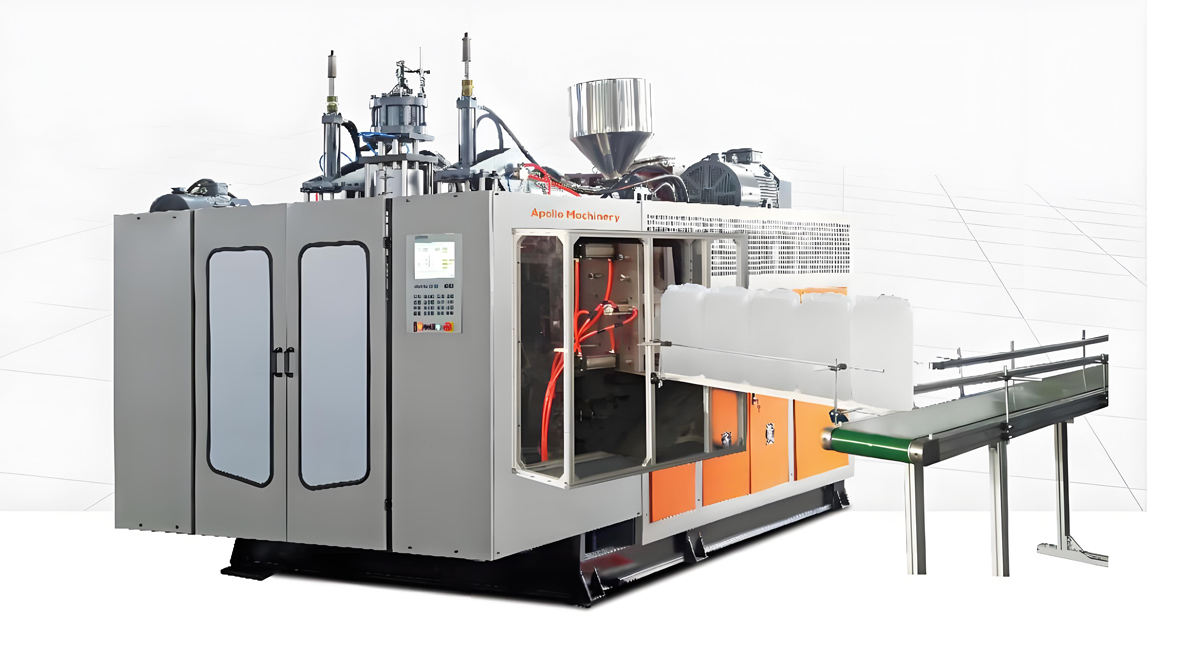

What Is PC Extrusion Blow Molding?
PC extrusion blow molding is a manufacturing process that transforms polycarbonate resin into hollow, high-transparency containers with exceptional impact resistance. The process combines the unique optical and mechanical properties of polycarbonate with the versatility of extrusion blow molding technology to produce containers ranging from 200ml water bottles to 20-liter industrial vessels. As of 2026, the global market for polycarbonate containers continues to expand, driven by growing demand in the medical, food and beverage, and automotive sectors where clarity combined with durability is non-negotiable.
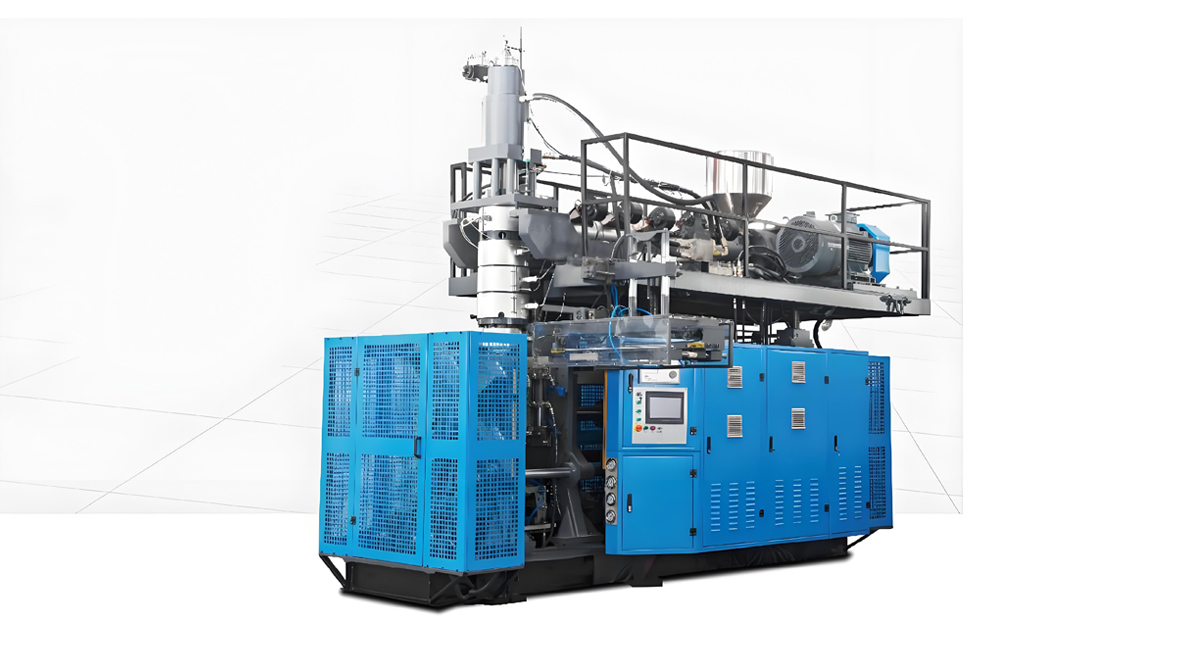
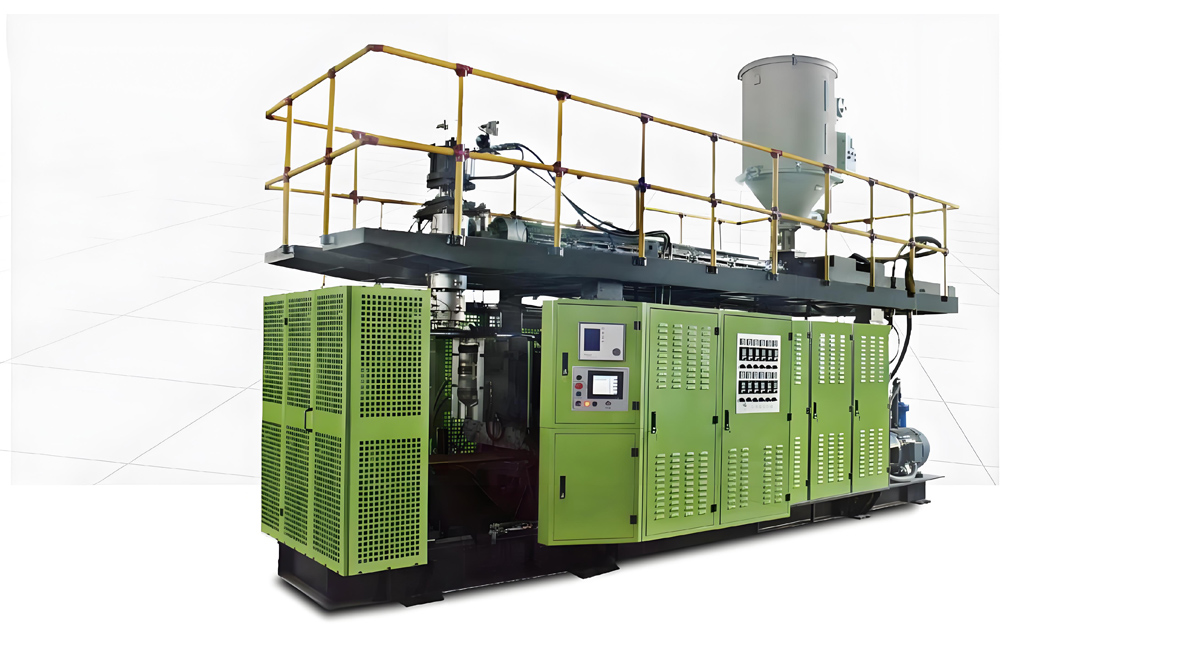
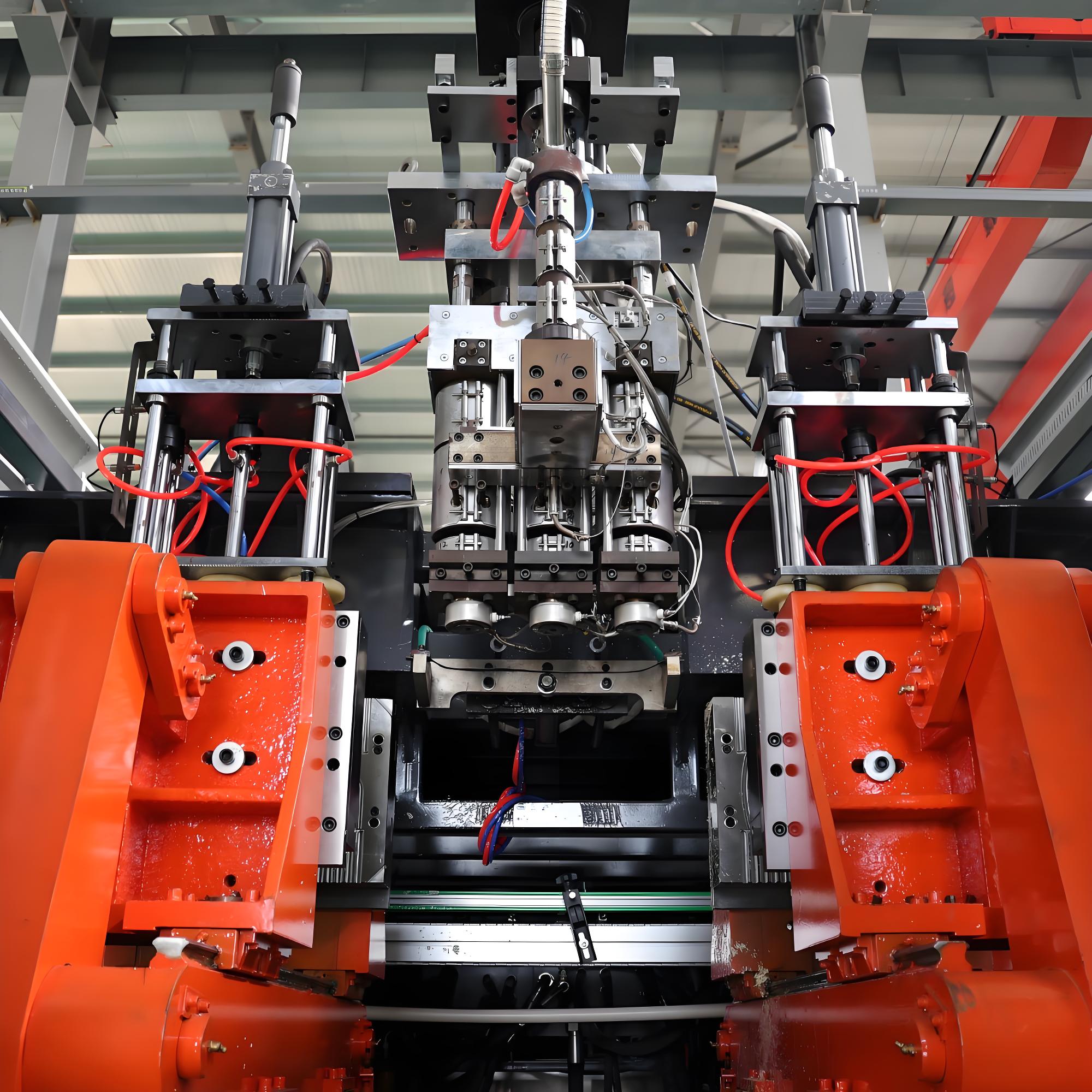
In a PC extrusion blow molding machine, polycarbonate pellets are first melted in a heated extruder barrel at precisely controlled temperatures typically between 280°C and 320°C. The molten material is then extruded downward through a die head to form a parison — a hollow tube of hot plastic. This parison is captured by a two-part mold, which closes around it. Compressed air is then injected into the parison, inflating it against the mold cavity walls where it cools and solidifies into the final container shape. The entire cycle, depending on container size and wall thickness, typically takes 20 to 90 seconds.
The critical distinction with PC compared to more common materials like PE or PP lies in its processing requirements. Polycarbonate is hygroscopic — it absorbs moisture from the air — and requires thorough pre-drying before processing. It also demands higher processing temperatures, precise temperature control across multiple heating zones, and specific screw designs to prevent material degradation while achieving uniform melt quality. Apollo, a Wanplas factory with over 20 years of extrusion blow molding expertise, has developed specialized screw and barrel configurations in its ABLB and ABLD series machines specifically optimized for polycarbonate processing, ensuring consistent parison formation and superior container clarity.
- Global polycarbonate market projected to reach approximately $25 billion by 2028
- PC containers offer up to 250x the impact resistance of glass at a fraction of the weight
- PC processing requires temperatures 40-60°C higher than standard PE blow molding
- Properly processed PC EBM containers achieve optical clarity exceeding 90% light transmission
- Apollo has over 4,000 extrusion blow molding machines operating in 90+ countries
Why Polycarbonate Is the Material of Choice for High-Performance Containers
Polycarbonate stands apart from conventional blow molding materials through a unique combination of properties that no single alternative can match. Its exceptional impact resistance — approximately 250 times greater than glass and 30 times greater than acrylic — makes it the preferred choice for applications where container failure could result in product loss, contamination, or safety hazards. This inherent toughness allows PC containers to withstand repeated drops, stacking pressure during shipping, and rough handling in industrial environments without cracking or shattering.
The optical clarity of polycarbonate is equally remarkable. With light transmission rates exceeding 90%, PC containers provide glass-like transparency that allows consumers and quality control inspectors to visually assess contents without opening the container. This property is particularly valuable for premium water bottles, luxury cosmetic packaging, and medical fluid containers where visual inspection is a critical quality control step.
Temperature resistance is another defining advantage. Polycarbonate maintains its structural integrity and optical properties across a wide temperature range from approximately -40°C to 135°C. This thermal stability makes PC containers suitable for hot-fill applications, steam sterilization (autoclaving), and use in both freezer and microwave environments — capabilities that materials like PET, PE, or PP cannot match across the full temperature spectrum.
PC vs. Alternative Blow Molding Materials
| Property | PC | PET | PP | HDPE |
|---|---|---|---|---|
| Impact Resistance | Excellent (250x glass) | Good | Moderate | Good |
| Optical Clarity | Excellent (>90%) | Excellent | Translucent to Opaque | Translucent |
| Heat Resistance | Up to 135°C | Up to 70°C | Up to 110°C | Up to 90°C |
| Processing Temp | 280-320°C | 260-290°C | 200-280°C | 180-250°C |
| Chemical Resistance | Moderate | Good | Excellent | Excellent |
| Cost (relative) | Very High | Medium | Low | Low |
Key Machine Specifications for PC Blow Molding
Producing high-quality PC containers requires an extrusion blow molding machine engineered with specifications that address polycarbonate’s unique processing demands. The differences between a standard PE blow molding machine and one properly configured for PC are substantial, affecting everything from screw geometry to the die head design and temperature control system. Understanding these specifications is essential for manufacturers looking to enter the PC container market or optimize existing PC production lines.
Extruder and Screw Design
The extruder is the heart of any blow molding machine, and for PC processing, it demands particular attention to design. PC requires a screw with a compression ratio typically between 2.5:1 and 3.5:1 — higher than the 2:1 to 2.5:1 commonly used for polyethylene. The screw should feature a gradual transition zone to apply shear heat progressively, preventing localized hot spots that can cause material degradation and yellowing. A length-to-diameter (L/D) ratio of 24:1 to 30:1 provides sufficient residence time for complete melting and homogenization without excessive material exposure to heat.
Barrel temperature control is equally critical. PC processing demands at least 4 to 6 independently controlled heating zones with PID temperature controllers capable of maintaining accuracy within ±1°C. The extruder barrel and screw should be constructed from nitrided steel or bimetallic alloys with high wear resistance, as PC’s viscosity at processing temperatures creates significant abrasive wear over extended production runs. Apollo’s ABLB series extrusion blow molding machines, manufactured at the Wanplas factory in Zhangjiagang, feature precisely these screw and barrel configurations, optimized through over two decades of PC processing experience across more than 4,000 machine installations worldwide.
Die Head and Parison Control
The die head design for PC extrusion blow molding must address polycarbonate’s relatively high melt strength and its tendency toward die swell. A converging die head geometry with a streamlined flow path minimizes material stagnation points where PC can degrade and form black specks or gels in the finished product. The die gap should be adjustable through a parison programming system — typically a servo-hydraulic or fully electric wall thickness control (PWDS) system — that enables precise manipulation of parison thickness at up to 100 points along its length. This is particularly important for PC containers with varying cross-sectional geometries, such as bottles with handle sections or containers with graduated wall thickness requirements.
Clamping and Mold System
The clamping unit must deliver sufficient force to hold the mold closed against inflation pressures that can reach 8 to 12 bar for PC processing. Apollo’s ABLB series provides clamping forces appropriate for containers from 200ml to 20L. The mold itself should incorporate efficient cooling channels — PC’s high processing temperature means that rapid, uniform cooling is essential for maintaining dimensional stability and preventing warpage. Copper-beryllium or aluminum mold materials with high thermal conductivity can reduce cycle times by up to 25% compared to standard steel molds when processing PC.
PC EBM Machine Specification Reference
| Specification | Small PC Containers (200ml-5L) | Large PC Containers (5L-20L) |
|---|---|---|
| Extruder Screw Diameter | 50-70mm | 80-100mm |
| L/D Ratio | 24:1-28:1 | 25:1-30:1 |
| Heating Zones | 4-5 zones | 5-6 zones |
| Clamping Force | 50-150 kN | 200-500 kN |
| Die Head Type | Single/double head, accumulator | Accumulator type |
| Output Rate (PC) | 30-80 kg/h | 80-180 kg/h |
| Cycle Time (typical) | 20-45 sec | 45-90 sec |
Process Parameters That Determine PC Container Quality
Achieving consistently high-quality PC containers requires meticulous control over multiple process parameters that interact in complex ways. Unlike more forgiving materials, polycarbonate has a relatively narrow processing window, and deviations from optimal parameters quickly manifest as visible defects or compromised mechanical properties. The following parameters represent the critical control points that every PC blow molding operator and process engineer must master.
Material Preparation: The Non-Negotiable First Step
Polycarbonate’s hygroscopic nature makes pre-drying the single most critical pre-processing step. PC resin can absorb up to 0.35% moisture from ambient air, and processing material with moisture content above 0.02% will result in hydrolysis during melting. This chemical reaction breaks polymer chains, causing a cascade of problems: reduced impact strength, surface splay marks, bubbles in the container wall, and a characteristic “silver streaking” that ruins optical clarity. A desiccant dryer capable of maintaining a dew point of -40°C or lower should be used, with drying temperatures of 120°C for 3 to 4 hours being standard. In-line moisture analyzers are strongly recommended for continuous production environments to verify material dryness before it enters the extruder throat.
Temperature Profile Management
The barrel temperature profile for PC extrusion blow molding follows a gradual ramp from the feed zone to the metering zone. A typical 5-zone profile for PC processing is:
- Zone 1 (Feed): 260-270°C — sufficiently high to begin melting without causing bridging at the feed throat
- Zone 2 (Compression): 280-290°C — progressive melting with increasing shear
- Zone 3 (Metering): 290-305°C — complete homogenization
- Zone 4 (Metering/Adapter): 290-300°C — maintain melt quality
- Die Head: 285-295°C — slightly lower to increase melt strength for parison formation
Melt temperature at the die exit should ideally measure between 285°C and 305°C. Temperatures below 280°C produce incomplete melting and poor parison surface quality, while temperatures exceeding 320°C risk thermal degradation that manifests as yellowing, reduced impact resistance, and the generation of decomposition byproducts that can impart off-tastes to food-contact containers.
Parison Programming and Wall Thickness Control
Parison wall thickness control is arguably the most sophisticated aspect of PC extrusion blow molding. Because PC has high melt strength, the parison resists sagging better than materials like PE, but this advantage comes with the need for more precise die gap control to achieve targeted wall thickness distribution. Modern parison programmers — such as the servo-hydraulic systems integrated into Apollo’s EBM machines — allow operators to define wall thickness profiles at up to 100 discrete points along the parison length. This enables thinning of material in areas that undergo high stretch ratios during blowing while maintaining thickness in areas that experience minimal expansion.
For PC containers, a typical parison profile programs thicker walls at the top (closure area) and bottom (base), with optimized distribution through the body to achieve a target finished wall thickness while minimizing material usage. Weight variation between consecutive shots should be kept within ±1% for premium applications; achieving this level of consistency requires precise shot size control and a stable melt delivery system.
Blow Pressure and Cooling Optimization
Blow pressure for PC typically ranges from 7 to 10 bar — higher than the 4 to 7 bar commonly used for PE. The higher pressure is necessary because PC’s higher melt viscosity requires more force to fully conform the parison to the mold cavity, particularly for containers with detailed surface textures, embossed logos, or sharp corners. Pre-blow timing — the moment at which low-pressure air is introduced to begin parison expansion before the mold fully closes — must be precisely calibrated: too early and the parison may contact the mold before closure is complete; too late and material distribution becomes uneven.
Cooling time represents the largest portion of the total cycle time in PC blow molding and is a prime target for optimization. Because PC enters the mold at approximately 290°C and must cool to below 140°C (its glass transition temperature) for demolding, efficient mold cooling is essential. Chilled water at 8-12°C circulated through generously sized cooling channels can reduce cooling time by 15-20% compared to ambient-temperature cooling water. Apollo recommends mold temperature controllers with closed-loop temperature monitoring for consistent cycle-to-cycle thermal management.
Common Defects and Troubleshooting in PC EBM
Even with properly specified equipment and well-established process parameters, PC extrusion blow molding can produce defects that require systematic troubleshooting. Understanding the root cause of each defect — rather than adjusting parameters by trial and error — is the hallmark of a skilled process engineer. The following table addresses the most common PC EBM defects encountered in production environments.
PC EBM Troubleshooting Guide
| Defect | Appearance | Root Cause(s) | Solution |
|---|---|---|---|
| Silver Streaking | Silvery lines or streaks on container surface | Moisture in resin (hydrolysis), excessive melt temperature | Verify dryer dew point (-40°C or lower); dry 120°C/3-4hr; reduce melt temp 5-10°C |
| Yellowing/Discoloration | Amber or yellow tint in clear containers | Thermal degradation, excessive residence time, dead spots in die head | Reduce all zone temps 5-10°C; shorten cycle; purge thoroughly; inspect die for stagnation points |
| Black Specks | Small dark particles embedded in container wall | Carbonized material from hot spots or long residence time | Purge with high-viscosity purging compound; inspect screw and barrel for wear; reduce barrel temps |
| Bubbles/Voids | Entrapped air bubbles visible in container wall | Moisture, trapped volatiles, insufficient back pressure | Improve drying; increase back pressure slightly; verify venting in die and mold |
| Warpage | Distortion of container after demolding | Uneven cooling, insufficient cooling time, non-uniform wall thickness | Optimize cooling channel design; increase cooling time 10-15%; adjust PWDS profile for uniform walls |
| Poor Impact Resistance | Containers crack or shatter under normal use | Material degradation, moisture, excessive regrind percentage | Limit regrind to max 20%; verify drying; check melt temperature is within specification |
| Surface Roughness | Matte or orange-peel surface instead of glossy | Mold too cold, insufficient blow pressure, die lines | Increase mold temp to 80-100°C; raise blow pressure; polish die lips; check for material contamination |
Selecting the Right PC Extrusion Blow Molding Machine
Choosing the appropriate extrusion blow molding machine for PC container production involves evaluating your specific production requirements against machine capabilities. A structured selection process prevents costly mismatches between machine specifications and production needs. The following framework guides decision-making for manufacturers at every scale, from startups launching their first PC product line to established producers expanding capacity.
Container Size and Output Requirements
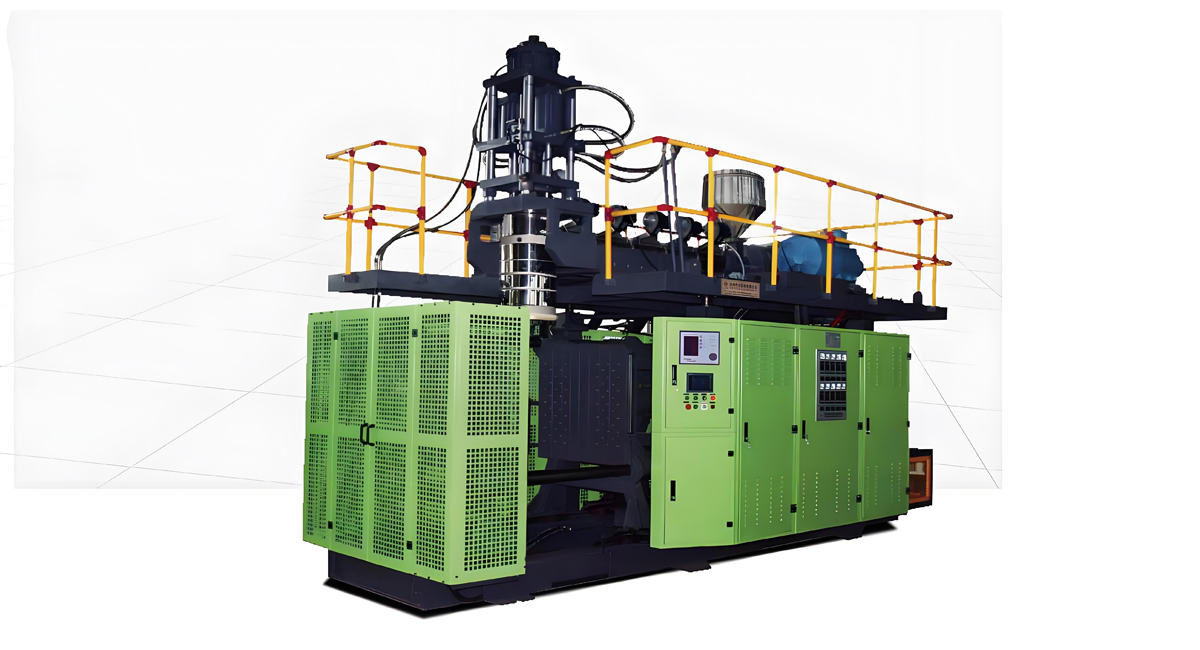
The first selection criterion is the container volume range you intend to produce. For small to medium PC containers in the 200ml to 5L range, Apollo’s ABLB series provides the ideal platform with its Standard extrusion blow molding configuration. The series includes 8 machine types, each sized for specific container volumes within the 200ml to 20L range, ensuring you can select a machine precisely matched to your product portfolio without paying for excess capacity or accepting insufficient capabilities.
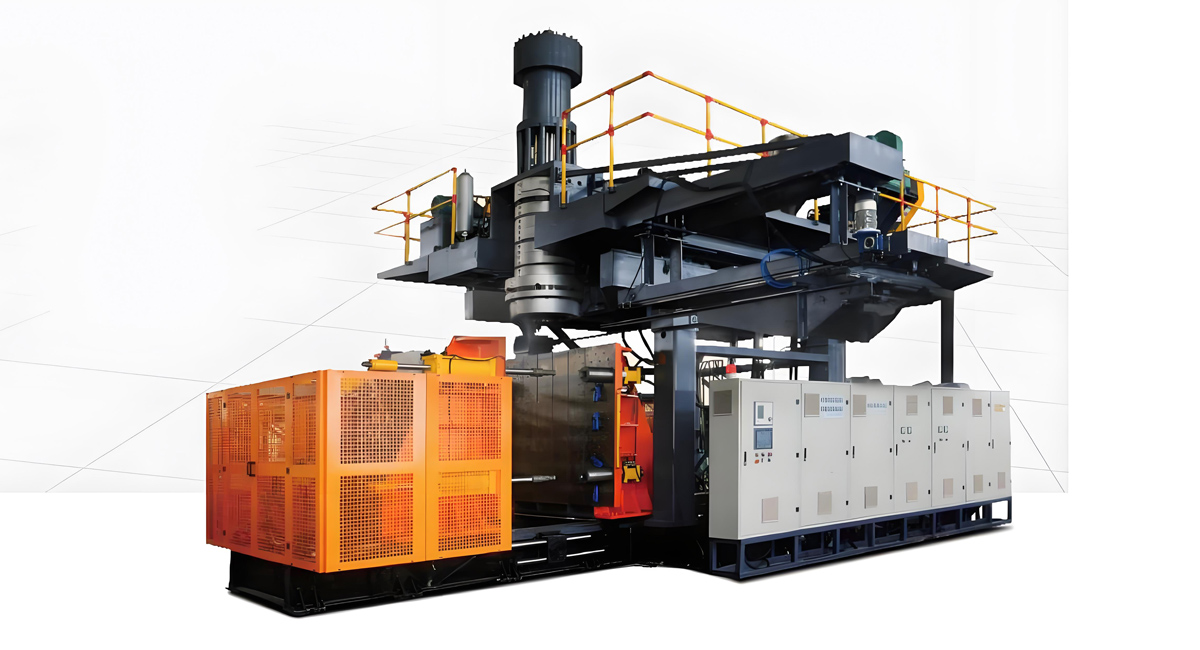
For large-format PC containers from 20L to 1500L — such as industrial storage tanks, automotive fluid reservoirs, and bulk water containers — Apollo’s ABLD series offers three heavy-duty machine types designed for large-capacity blow molding. These machines feature accumulator-type die heads that can rapidly deliver the large shot sizes required for big containers while maintaining the melt quality essential for PC processing. The accumulator design minimizes residence time for the bulk of the melt, reducing the risk of thermal degradation that can occur when large quantities of PC sit in a conventional continuous-extrusion die head.
Production Environment Considerations
For applications with stringent environmental or cleanliness requirements — medical device packaging, pharmaceutical containers, food-grade bottles — Apollo’s Fully Electric Series extrusion blow molding machines provide significant advantages. By eliminating the hydraulic system entirely, these machines remove the risk of hydraulic fluid contamination in cleanroom environments. The fully electric servo drives also offer energy savings of 30-50% compared to hydraulic equivalents and provide superior precision in parison control, shot size repeatability, and clamp positioning — all critical for producing medical-grade PC containers with tight dimensional tolerances.
Supplier Evaluation Criteria
When selecting a PC extrusion blow molding machine supplier, evaluate beyond the machine specifications to assess the long-term value of the partnership. Key evaluation criteria include:
- PC-specific experience: Has the manufacturer demonstrated successful PC processing installations? Apollo, with over 4,000 machines running in more than 90 countries and 20+ years specifically in extrusion blow molding, has accumulated substantial PC processing expertise across diverse applications.
- Technical support and training: Does the supplier offer on-site installation by engineers, operator training, and ongoing technical support? Apollo provides engineer on-site installation, irregular customer visits to track usage status, and machine inspection at the factory before shipment.
- After-sales service: What warranty, spare parts availability, and service response times are offered? As part of the Wanplas brand, Apollo shares the group’s commitment to service: $500 in free parts annually, free replacement for damaged parts within warranty, and a quality guarantee backed by a refund plus 10% compensation if quality standards are not met.
- Machine customization: Can the supplier customize molds, voltage, and machine configuration to your specific requirements? Apollo offers comprehensive machine customization including mold design and manufacturing support.
- Factory capability: With an 8,000 sqm factory area and an annual production capacity of 100 sets, Apollo has the manufacturing scale to deliver machines on schedule while maintaining quality standards.
Applications Across Industries
PC extrusion blow molded containers serve a remarkably diverse range of industries, each with unique requirements that leverage polycarbonate’s distinctive property profile. Understanding these applications helps manufacturers identify market opportunities and align their machine investments with high-value end uses.
Food and Beverage
PC water bottles — particularly the iconic 5-gallon (19L) returnable water cooler bottles — represent the largest single market for PC extrusion blow molding. These containers must withstand repeated use, industrial washing at elevated temperatures, and the physical abuse of delivery and collection cycles while maintaining absolute clarity for visual inspection. PC’s combination of impact resistance, clarity, and hot-wash durability makes it effectively irreplaceable for this application. The ABLD series from Apollo is specifically engineered for containers in this size range, with accumulator die heads capable of delivering the large, high-quality parisons required for uniform 19L bottle production.
Medical and Pharmaceutical
The medical sector demands containers that combine clarity for fluid level monitoring, impact resistance for safety, and the ability to withstand sterilization processes including autoclaving (steam at 121°C) and gamma irradiation. PC containers are extensively used for surgical fluid collection, laboratory sample containers, pharmaceutical packaging, and medical device housings. Apollo’s Fully Electric Series is particularly well-suited for medical applications, as the oil-free operation and precise process control align with cleanroom manufacturing requirements and the documentation demands of ISO 13485 quality management systems for medical devices.
Automotive and Transportation
Under-hood automotive components such as coolant reservoirs, washer fluid tanks, and power steering fluid containers benefit from PC’s heat resistance and durability. These components must maintain integrity through temperature cycles from -40°C winter starts to 120°C+ engine bay operating temperatures. The chemical resistance of PC to automotive fluids and its ability to be blow molded into complex shapes with integrated mounting features make it a preferred material for these demanding applications.
Building Material and Chemical Industry
PC containers are used for chemical storage, construction material packaging, and industrial fluid handling where the combination of clarity, chemical compatibility, and impact resistance provides operational and safety advantages. The ability to visually confirm fill levels and detect contamination without opening containers reduces handling risk and improves operational efficiency in industrial environments.
Apollo Machinery, headquartered in Zhangjiagang near Shanghai, is a Wanplas factory specializing in extrusion blow molding machines. With over 20 years of manufacturing experience, 8,000 sqm of factory space, and an annual production capacity of 100 machine sets, Apollo has delivered more than 4,000 machines to customers in over 90 countries. As part of the Wanplas brand, Apollo shares the group’s commitment to “Warm Global Customers With China Plastic Machinery” and offers comprehensive after-sales support including $500 free parts per year, transportation guarantees, production capacity guarantees, and quality standards backed by refund plus 10% compensation.
Frequently Asked Questions
PC offers significantly higher impact resistance (approximately 250x that of glass) and heat resistance up to 135°C compared to PET’s approximately 70°C limit. While both offer excellent clarity, PC containers can be hot-filled, steam-sterilized, and used in applications requiring repeated thermal cycling — capabilities PET cannot match. However, PC costs more than PET and has lower chemical resistance to certain solvents.
Polycarbonate is hygroscopic and absorbs moisture from ambient air. Processing PC with moisture content above 0.02% causes hydrolysis during melting, which breaks polymer chains and results in silver streaking, bubbles, reduced impact strength, and poor surface quality. Proper drying at 120°C for 3-4 hours with a desiccant dryer achieving -40°C dew point is essential for quality production.
Yes, but with strict limitations. PC regrind should be limited to a maximum of 20% of the total material mix to avoid cumulative degradation effects. Regrind must be thoroughly dried before reuse, and any material showing signs of yellowing or contamination should be discarded. For food-contact and medical applications, regrind use may be restricted by regulatory requirements — consult your specific application standards.
The most critical features are: (1) a screw with appropriate compression ratio (2.5:1-3.5:1) and L/D ratio (24:1-30:1) designed for PC; (2) multi-zone PID temperature control with ±1°C accuracy; (3) a parison programmer (PWDS) for precise wall thickness distribution; (4) a streamlined die head design that eliminates stagnation points; and (5) efficient mold cooling with temperature-controlled water circulation.
Cycle time depends on container size and wall thickness. Small containers (200ml-1L) typically cycle in 20-35 seconds, medium containers (1L-5L) in 30-50 seconds, and large containers (5L-20L) in 50-90 seconds. Cooling time typically represents 60-70% of the total cycle. Optimizing mold cooling through efficient channel design and chilled water can reduce cooling time by 15-20%.
Yes. Apollo’s Fully Electric Series is particularly well-suited for food-grade and medical applications because it eliminates hydraulic oil contamination risk entirely. All Apollo machines are CE certified, and the ABLB and ABLD series can be configured with stainless steel components and food-grade lubricants. Apollo offers complete customization for specific application requirements, and as a Wanplas factory, provides comprehensive quality guarantees.
With proper maintenance, a well-built PC extrusion blow molding machine can operate productively for 15-20 years or longer. The key factors affecting longevity are the quality of the original manufacturing, adherence to preventive maintenance schedules, and proper operation within specified parameters. Apollo’s machines are built at an 8,000 sqm facility with rigorous quality control, and the company offers ongoing after-sales support including irregular customer visits to track usage status, helping maximize machine lifespan.
Conclusion
PC extrusion blow molding represents one of the most technically demanding yet commercially rewarding segments of the blow molding industry. The unique combination of optical clarity, impact resistance, and thermal stability that polycarbonate offers is unmatched by any single alternative material, making PC the definitive choice for applications where container failure is not an option — from 5-gallon water cooler bottles to medical fluid containers and automotive reservoirs.
Success in PC blow molding begins with selecting the right machine — one engineered specifically for polycarbonate’s processing requirements rather than adapted from standard PE equipment. The screw design, temperature control precision, parison programming capability, and cooling efficiency of the machine directly determine container quality, production efficiency, and long-term operational costs. Apollo, as a Wanplas factory with over two decades of extrusion blow molding specialization, offers machine series — ABLB, ABLD, and Fully Electric — that span the complete range of PC container sizes and application requirements, supported by the global Wanplas brand’s service infrastructure in 90+ countries.
For manufacturers evaluating entry into PC container production or optimizing existing operations, the combination of properly specified equipment, rigorous material preparation protocols, and systematic process optimization provides the foundation for producing high-transparency, impact-resistant containers that meet the most demanding industry standards. With the right machine and process discipline, PC extrusion blow molding delivers products that combine the clarity of glass with the durability of engineered plastic — a combination that continues to drive market growth across food and beverage, medical, automotive, and industrial sectors worldwide.
For more information about Apollo’s extrusion blow molding machines for PC container production, including the ABLB Series (200ML-20L), ABLD Series (20L-1500L), and Fully Electric Series, contact the Apollo team at the Wanplas factory in Zhangjiagang, China.