
Understanding Production Capacity Fundamentals
Production output represents one of the most critical metrics for extrusion blow molding machine operations, directly impacting profitability, market competitiveness, and return on investment. Maximizing daily capacity requires a comprehensive understanding of the numerous factors that influence production efficiency, from equipment specifications and process parameters to maintenance practices and operational strategies. Apollo Machinery, with over 20 years of experience and 4,000+ installations across 90 countries, has developed extensive expertise in optimizing production output across diverse applications.
The theoretical production capacity of an extrusion blow molding machine depends on several key variables: cycle time, product weight, operating efficiency, and material handling capabilities. However, actual achievable output typically ranges from 60% to 85% of theoretical maximum due to various operational factors including downtime for material changes, maintenance activities, quality inspections, and minor equipment adjustments. Understanding the gap between theoretical and actual production capacity provides the foundation for implementing effective optimization strategies.
Equipment Specifications and Selection Optimization
Machine Capacity Matching
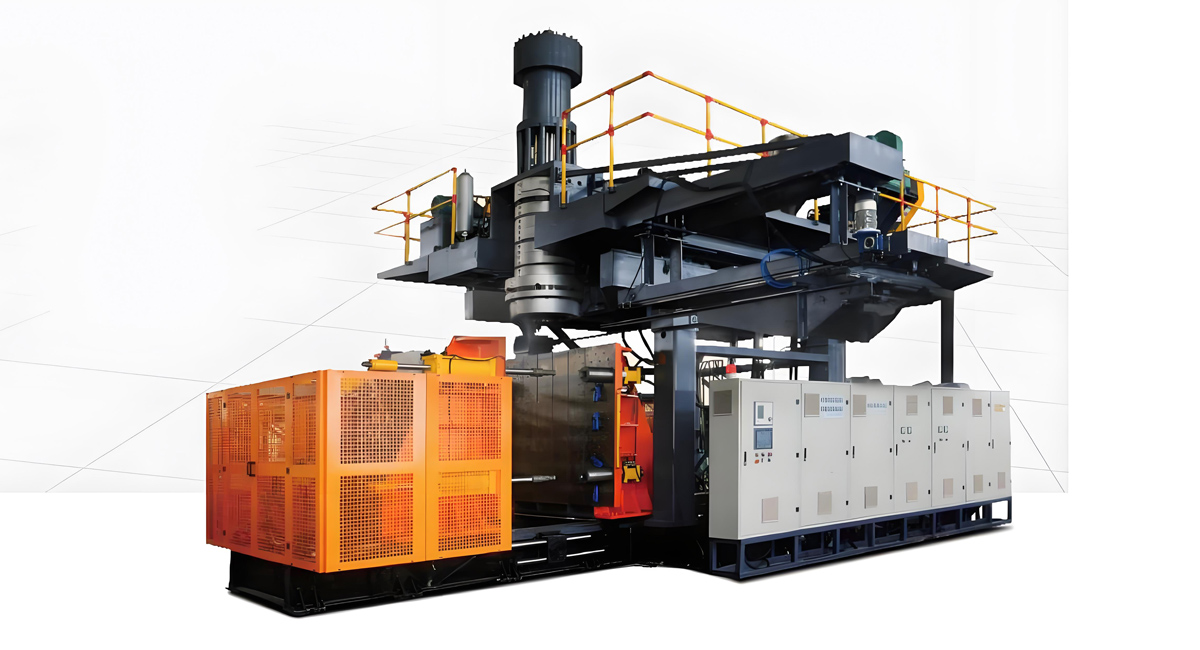
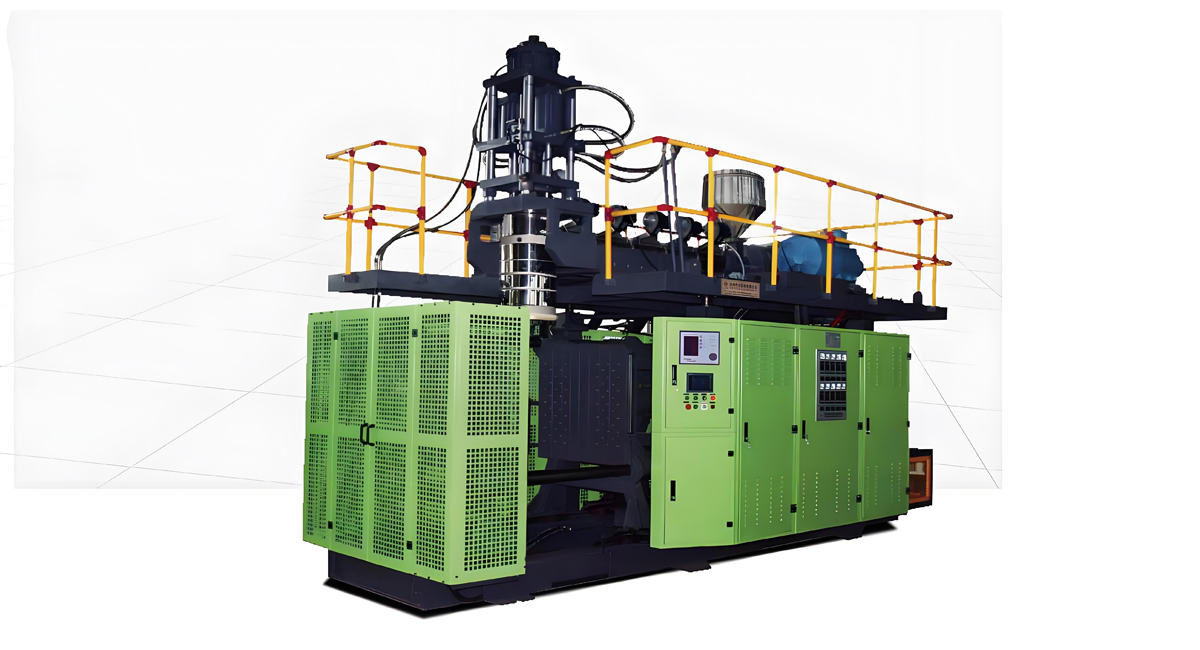
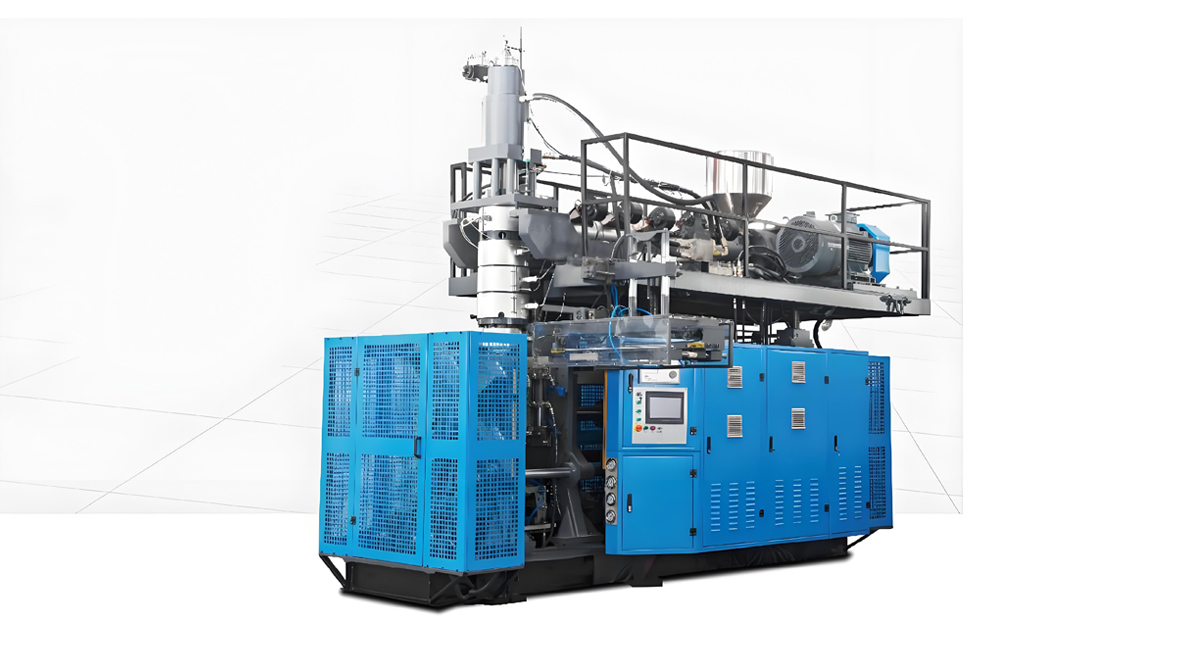
Selecting equipment with appropriate capacity specifications is fundamental to achieving optimal production output. Extrusion Blow Molding MachineApollo offers three main machine series: ABLB series for 200ML-20L products, ABLD series for 20L-1500L containers, and fully electric machines for environmentally sensitive applications. Each series is designed for specific capacity ranges, and choosing the right machine for your product requirements prevents inefficiencies that can red
Under-capacity machines operating at maximum load experience increased wear, higher failure rates, and extended cycle times that reduce output. Extrusion Blow Molding MachineConversely, over-capacity machines waste energy and may operate inefficiently at low production volumes. The optimal approach involves selecting machines that operate at 70-85% of their maximum capacity under normal production conditions, providing headroom for demand fluctuations while maintaining efficient operation.
aining efficient oper
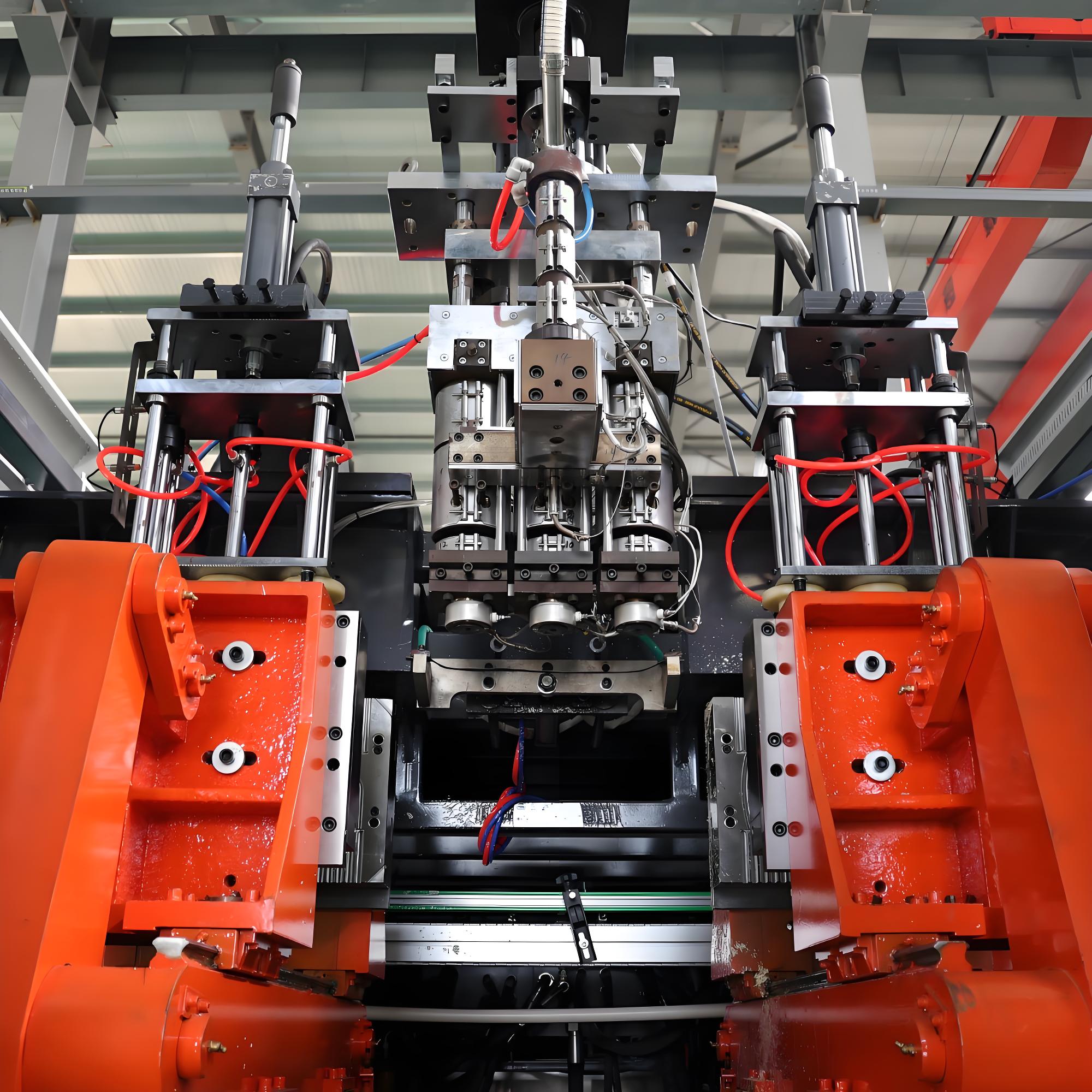
Multi-cavity molds represent one of the most effective strategies for increasing production output without additional equipment investment. Extrusion Blow Molding MachineA single-cavity mold producing one 500ml container per cycle might achieve 600 pieces per hour, while a four-cavity mold with the same cycle time can produce 2,400 pieces per hour. This fourfold increase in output typically represents an investment of 50-150% over single-cavity mold cost, delivering substantial ROI improvements.
cavity mold cost, delivering substantial ROI improvements.
Multi-cavity mold costs vary significantly based on product complexity and material type. For a simple HDPE bottle, a four-cavity mold might cost $15,000-$25,000 compared to $5,000-$8,000 for a single cavity Extrusion Blow Molding Machine . Assuming the machine operates 20 hours daily at 300 cycles per hour, the four-cavity mold produces 24,000 pieces daily versus 6,000 pieces for the single cavity. This additional 18,000 pieces daily can justify the additional mold investment within 3-6 months for most commercial products.<
Cycle time optimization represents one of the most impactful approaches to increasing production output. Extrusion Blow Molding MachineEach second of cycle time reduction directly translates to increased daily capacity. For example, reducing cycle time from 12 seconds to 11 seconds on a machine running 300 cycles per hour increases daily output by 2,500 pieces (from 144,000 to 146,500 pieces in a 20-hour shift).
creases daily output by 2,500 pieces (from 144,000 to 146,500 pieces in a 20-hour shift).
Cycle time reduction strategies include optimizing cooling times through improved mold temperature control, reducing parison programming time through advanced controls, minimizing mold opening/closing times through maintenance and optimization, and accelerating extrusion start-up through preheating strategies. Apollo’s advanced control systems enable precise temperature regulation and parison programming, facilitating faster cycle times while maintaining product quality.
Temperature Control Optimization
Precise temperature control significantly impacts both cycle time and product quality. Modern extrusion blow molding machines feature multiple heating zones with individual temperature controllers that maintain optimal resin temperatures. Optimized temperature settings enable faster mel
Advanced temperature control systems with ±1°C accuracy enable material consistency that reduces scrap rates and improves overall production efficiency. Extrusion Blow Molding MachineApollo’s machines support a wide range of materials including PE, PP, PVC, PA, PC, ABS, PS, EVA, TPU, and PETG, each requiring specific temperature profiles. Implementing material-specific temperature optimization can reduce cycle times by 5-15% while improving product consistency.
ementing material-specific temperature optimization can reduce cycle
Implementing material preheating systems can significantly reduce cycle time and increase production capacity. Extrusion Blow Molding MachinePreheating systems warm resin to 80-120°C before it reaches the extruder, reducing the heating time required in the main extruder and enabling faster cycle starts. This approach is particularly beneficial for machines starting from cold or experiencing frequent material changes.
r and enabling faster cycle starts. This approach is particularly beneficial for machines starting from cold or experiencing frequent material changes.
Material preheating system investment typically ranges from $8,000 to $25,000 depending on capacity and sophistication. Extrusion Blow Molding Machine The return on investment depends on production volume, material type, and operating patterns. For a facility operating 20 hours daily with 30 material changes per week, a preheating system reducing material change downtime by 15 minutes per change saves 7.5 hours of production time weekly, equivalent to 2,250 additional pieces per week for a 300-piece-per-hour machine.
Material Feeding Optimization
Consistent, reliable material feeding is essential for maintaining optimal production rates. Automated material handling systems including gravimetric feeders, vacuum conveying systems, and drying units ensu
Gravimetric feeding systems cost $12,000-$30,000 but enable precise material dispensing that maintains consistent melt quality, reducing scrap rates by 30-50%. Extrusion Blow Molding MachineFor a facility producing 100,000 pieces daily with a 2% scrap rate, reducing scrap to 1% saves 1,000 pieces daily, equivalent to 3.5 additional hours of production time at 300 pieces per hour. This improvement justifies the investment in automated feeding systems within 6-12 months for most operations.
lent to 3.5 additional hours of production time at 300 pieces per hour. This improvement justifies the investment in automated feeding systems within 6-12 months for most operations.
Maintenance and Reliability Optimization
Preventive Maintenance Programs
Preventive maintenance represents one of the most cost-effective strategies for maximizing production output. Unplanned downtime due to equipment failures can reduce daily ou
Apollo’s warranty includes $500 worth of free parts annually and comprehensive service support including regular tracking of machine usage status, periodic customer visits, and thorough machine inspections. Extrusion Blow Molding MachineThis proactive approach to maintenance identifies potential issues before they cause failures, maintaining optimal production output. Implementing similar preventive maintenance programs typically costs 1-3% of equipment value annually but prevents 70-90% of unplanned downtime events.
e they cause failures, maintaining optimal production output. Implementing similar preventive maintenance programs typically costs 1-3% of equipment value annually but prevents 70-90% of unplanned downtime events.
Predictive Maintenance Implementation
Predictive maintenance technologies including vibration monitoring, thermal imaging, and oil analysis enable e
Predictive maintenance system investment ranges from $5,000 to $25,000 depending on equipment sophistication. Extrusion Blow Molding MachineThe return on investment depends on equipment criticality, downtime costs, and current failure rates. For a critical machine where unplanned downtime costs $500 per hour, preventing just 10 hours of annual downtime through predictive maintenance provides $5,000 in direct savings, justifying the investment and preventing production capacity losses.
a critical machine where unplanned downtime costs $500 per hour, preventing just
Well-trained operators significantly impact production efficiency and output quality. Extrusion Blow Molding MachineComprehensive operator training covering machine operation, material handling, quality control, and basic troubleshooting enables faster cycle times, reduced scrap rates, and quicker problem resolution. Apollo provides on-site installation by experienced engineers and comprehensive training as part of their service package, recognizing the importance of op
Training costs typically range from $500 to $2,000 per operator depending on program depth and duration. Extrusion Blow Molding MachineHowever, the return on investment is substantial: trained operators can achieve 5-15% higher production rates than untrained operators while reducing scrap rates by 20-40%. For a 300-piece-per-hour machine operating 20 hours daily, a 10% output improvement adds 600 pieces daily, equivalent to $90-150 in additional revenue depending on product value.
ial: trained operators can achieve 5-15% higher production rates than untrained operators while reducing scrap rates by 20-40%. For a 300-piece-per-hour machine operating 20 hours daily, a 10% output improvement adds 600 pieces daily, equivalent to $90-150 in additional revenue depending on product value.
Production Scheduling Optimization
Effective production scheduling minimizes changeover downtime and maximizes machine utiliz
Quick changeover techniques including standardized procedures, pre-staged materials, and optimized mold preparation can reduce changeover time from 2-4 hours to 30-60 minutes. Extrusion Blow Molding MachineFor a facility experiencing 20 changeovers monthly, this improvement saves 40-60 hours of production time monthly, equivalent to 12,000-18,000 additional pieces at 300 pieces per hour. The investment in quick changeover implementation typically ranges from $10,000 to $50,000 depending on facility size and complexity.
to 30-60 minutes. For a facility experiencing 20 changeovers monthly, this improvement saves 40-60 hours of production time monthly, equivalent to 12,000-18,000 additional pieces at 300 pieces per hour. The investment in quick changeover implementation typically ranges from $10,000 to $50,000 depending on facility size and complexity.
Quality Control and Scrap Reduction
In-Process Qua
Quality monitoring system investment varies from $15,000 to $75,000 depending on sophistication and coverage. Extrusion Blow Molding MachineHowever, reducing scrap rates by just 1-2% on a facility producing 100,000 pieces daily provides significant benefits. For a product costing $0.50 per piece to produce, reducing scrap from 3% to 2% saves $500 daily in material costs, equivalent to $15,000 monthly, justifying the quality monitoring investment within 6-12 months.
ending on sophistication and coverage. However, reducing scrap rates by just 1-2% on a facility producing 100,000 pieces daily provides significant benefits. For a product costing $0.50 per piece to produce, reducing scrap from 3% to 2% saves $500 daily in material costs, equivalent to $15,000 monthly, justifying the quality monitoring investment within 6-12 months.
Process Capability Analysis
Regular proce
Process capability improvements often enable production rate increases while maintaining or improving quality. Extrusion Blow Molding MachineFor example, better understanding of process relationships might enable cycle time reduction from 12 seconds to 11.5 seconds while maintaining quality standards, increasing daily output by 2,500 pieces on a 300-piece-per-hour machine. This improvement generates $125-250 in additional revenue daily for products selling at $0.05-0.10 per piece.
rate increases while maintaining or improving quality. For exam
Energy recovery systems capture waste heat from extrusion blow molding processes and redirect it for useful purposes such as facility heating or material preheating. Extrusion Blow Molding MachineThese systems reduce energy costs while potentially improving production efficiency through more stable operating conditions. Energy recovery system investment typically ranges from $20,000 to $100,000 depending on facility size and complexity.
Systems
Energy recovery systems capture waste heat from extrusion blow molding processes and redirect it for useful purposes such as facility heating or material preheating. These systems reduce energy costs while potentially improving production efficiency through more stable operating conditions. Energy recovery system investment typically ranges from $20,000 to $100,000 depending on facility size and complexity.
For a 40kW extrusion blow molding machine operating 20 hours daily, energy costs at $0.12 per kilowatt-hour amount to approximately $3,500 monthly. Energy recovery systems can reduce these costs by 15-30%, saving $525-1,050 monthly. The return on investment for a $50,000 system would be approximately 4-8 years through energy cost savings, with additional benefits from improved production st
For a product requiring 50 grams of material and produced at 300 pieces per hour, material consumption equals 150 kilograms hourly or 3,000 kilograms daily over a 20-hour shift. Extrusion Blow Molding MachineA 10% material efficiency improvement saves 300 kilograms daily, equivalent to $300-900 in material cost savings depending on resin type (at $1-3 per kilogram). Additionally, reduced material consumption can enable faster cycle times, further increasing production output.
For a product requiring 50 grams of material and produced at 300 pieces per hour, material consumption equals 150 kilograms hourly or 3,000 kilograms daily over a 20-hour shift. A 10% material efficiency improvement saves 300 kilograms daily, equivalent to $300-900 in material cost savings depending on resin type (at $1-3 per kilogram). Additionally, reduced material consumption can enable faster cycle times, further increasing production output.
Automation and Technology
Manual inspection typically requires examining 10-20% of production, potentially allowing defective products to reach customers. Extrusion Blow Molding MachineAutomated inspection examining 100% of production eliminates this risk while reducing labor requirements. For a facility producing 100,000 pieces daily with two quality inspectors earning $25 hourly, automated inspection can save $1,000 daily in labor costs while improving quality assurance, justifying the investment within 2-3 months.
tication.
M
Advanced digital monitoring and control systems provide real-time visibility into production parameters, enabling rapid identification and resolution of issues that reduce output. Extrusion Blow Molding MachineIoT sensors, predictive analytics, and remote monitoring capabilities enhance process control and minimize unplanned downtime. Digital system investment ranges from $15,000 to $75,000 depending on capabilities and integrat
Digital monitoring typically reduces unplanned downtime by 30-50% through early issue detection and predictive maintenance. Extrusion Blow Molding MachineFor a facility experiencing 10 hours of unplanned downtime monthly costing $500 per hour, a 40% reduction saves $2,000 monthly or $24,000 annually. Additionally, improved process control can increase production rates by 3-5%, providing additional capacity improvements.
nd minimize unplanned downtime. Digital system investment ranges from $15,000 to $75,000 depending on capabilities and integration requirements.
Digital monitoring typically reduces unplanned downtime by 30-50% through early issue detection and predictive maintenance. For a facility experiencing 10 hours of unplanned downtime monthly costing $500 per hour, a 40% reduction saves $2,000 monthly or $24,000 annually. Additionally, improved process control can increase production rates by 3-5%, providing additional capacity improvements.
Performance Monitoring and Continuous Improvement
Production Analytics and KPI Tracking
Comprehensive production analytics and key performance indicator (KPI) tracking enable data-driven optimization decisions. Monitoring metrics such as actual versus theoretical capacity, downtime causes, scrap rates, and energy consumption per piece provides insights into impr
Implementing formal continuous improvement programs ensures ongoing optimization rather than one-time improvements. Extrusion Blow Molding MachineLean manufacturing principles, Six Sigma methodologies, and Kaizen events provide structured approaches to identifying and eliminating waste, reducing downtime, and improving output. Continuous improvement program implementation costs vary but typically represent 1-2% of annual revenue in training and consulting.
aily or $30,000 monthly in additional profit, justifying analytics investment within 6-12 months.
Continuous Improvement Programs
Implementing formal continuous improvement programs ensures ongoing optimization rather than one-time improvements. Lean manufacturing principles, Six Sigma methodologies, and Kaizen events provide structured approaches to identifying and eliminating waste, reducing downtime, and improving output. Continuous improvement program implementation costs vary but typically represent 1-2% of annual revenue in training and consulting.
Successful continuous improvement programs typically deliver 5-10% annual production improvements through accumulated small gains. For a facility generating $10 million in annual revenue, a 7% improvement represents $700,0
For example, operator training ($1,000 per operator) providing 10% output improvement generates 30 additional pieces per hour on a 300-piece-per-hour machine. Extrusion Blow Molding MachineAt $0.10 profit per piece operating 20 hours daily, this improvement generates $60 daily or $1,800 monthly, paying back the training investment in under 2 weeks. Such high-ROI opportunities should be prioritized before larger capital investments.
expected capacity improvements, revenue impact, and payback period. Generally, quick wins with low investment and fast payback should be implemented first, building momentum for larger projects.
For example, operator training ($1,000 per operator) providing 10% output improvement generates 30 additional pieces per hour on a 300-piece-per-hour machine. At $0.10 profit per piece operating 20 hours daily, this improvement generates $60 daily or $1,800 monthly, paying back the training investment in under 2 weeks. Such high-ROI opportunities should be prioritized before larger capital investments.
Total Production Capacity Improvement
Implementing multiple optimization strategies can yield cumulative production capacity improvements of 20-40% compared to baseline operations. However, improvements are subject to diminishing returns, and the highest ROI typically comes from addressing the most significant bottlenecks first. Apollo’s experience across 4,000+ installations helps identify the most impactful improvements for specific applications.
A comprehensive optimization approach might include multi-cavity mold implementation (200-400% capacity increase), cycle time reduction (8-15% improvement), preventive maintenance (5-10% outp
The new mold increased theoretical capacity to 1,600 bottles per shift, and operator training achieved 85% efficiency compared to 70% previously. Extrusion Blow Molding MachineActual production increased from 280 to 1,360 bottles per shift, an improvement of 1,080 bottles daily. At $0.08 profit per bottle, this improvement generates $86.40 daily or $25,920 monthly, paying back the investment in just 2.2 months while meeting market demand growth.
ty machine produced 400 bottles per 12-hour shift, insufficient for market needs. The company invested $45,000 in a four-cavity mold and $12,000 in operator training, totaling $57,000 in optimization investment.
The new mold increased theoretical capacity to 1,600 bottles per shift, and operator training achieved 85% effi
These improvements reduced scrap rates to 1.5%, saving 2.5% of production. Producing 500 containers daily weighing 2 kilograms each, scrap reduction saves 25 kilograms of material daily Extrusion Blow Molding Machine. At $2.50 per kilogram for HDPE, this saves $62.50 daily in material costs while adding 12.5 containers to effective daily capacity. The combined benefits justified the investment in 8 months while improving profitability.
n 20-liter container production, consuming significant raw materials and reducing effectiv
Artificial intelligence and machine learning technologies are increasingly being applied to extrusion blow molding optimization. Extrusion Blow Molding MachineThese technologies can analyze production data to identify subtle optimization opportunities, predict equipment failures before they occur, and automatically adjust process parameters to maximize output while maintaining quality. AI implementation costs are decreasing and becoming more accessible to mid-sized manufacturers.
ntainers to effective daily capacity. The combined benefits justified the investment in 8 months while improving profitability.
Future Trends and Technology Evolution
Artificial Intelligence and Machine Learning
Artificial intelligence and machine learning technologies are increasingly being applied to extrusion blow molding optimization. These technologies can analyze production data to identify subtle optimization opportunities, predict equipment failures before they occur, and automatically adjust process parameters to maximize output while maintaining quality. AI implementation costs are decreasing and becoming more accessible to mid-sized manufacturers.
Early AI adopters report 5-12% additional production improvements beyond traditional optimization methods, with 20-30% reduction in unplanned downtime. As these technologies mature and become more affordable, they will likely become standard features in extrusion blow molding equipment from manufacturers like Apollo, providing customers with autonomous optimization capabilities.
Industry 4.0 Integration
Industry 4.0 principles including interconnected machines, digital twins, and smart factory integration provide new opportunities for production optimization. Digital simulation enables testing of optimization strategies before implementation, reducing risk and accelerating improvement cycles. Interconnected equipment enables coordinated optimization across entire production lines rather than individual machines.
While full Industry 4.0 implementation requires significant investment, selective integration of digital mo
Apollo Machinery’s 20 years of experience, 4,000+ installations, and global service network provide invaluable expertise in production optimization. Extrusion Blow Molding MachineTheir warranty including $500 annual free parts, transportation damage guarantees, and production capacity guarantees demonstrates their commitment to helping customers achieve optimal output. By implementing proven optimization strategies and leveraging supplier expertise, manufacturers can significantly increase daily capacity, improve profitability, and strengthen competitive positi
Start with comprehensive production analysis to identify current performance levels and the most impactful improvement opportunities. Prioritize investments based on ROI, implementation complexity, and strategic importance Extrusion Blow Molding Machine. Implement improvements systematically, measuring results and adjusting strategies based on actual outcomes. Continuous monitoring and adjustment ensures ongoing optimization and sustained production capacity improvements throughout equipment lifecycle.
tes their commitment to helping customers achieve optimal output. By implementing proven optimization strategies and leveraging supplier expertise, manufacturers can significantly increase daily capacity, improve profitability, and strengthen competitive position in the market.
Start with comprehensive production analysis to identify current performance levels and the most impactful improvement opportunities. Prioritize investments based on ROI, implementation complexity, and strategic importance. Implement improvements systematically, measuring results and adjusting strategies based on actual outcomes. Continuous monitoring and adjustment ensures ongoing optimization and sustained production capacity improvements throughout equipment lifecycle.