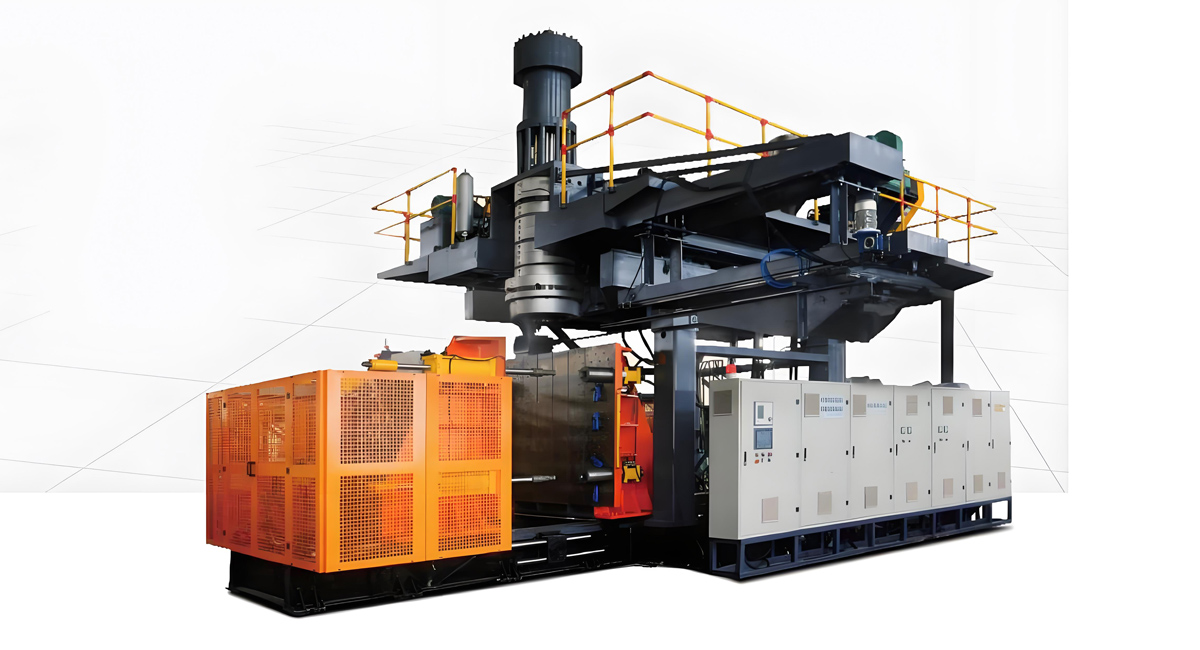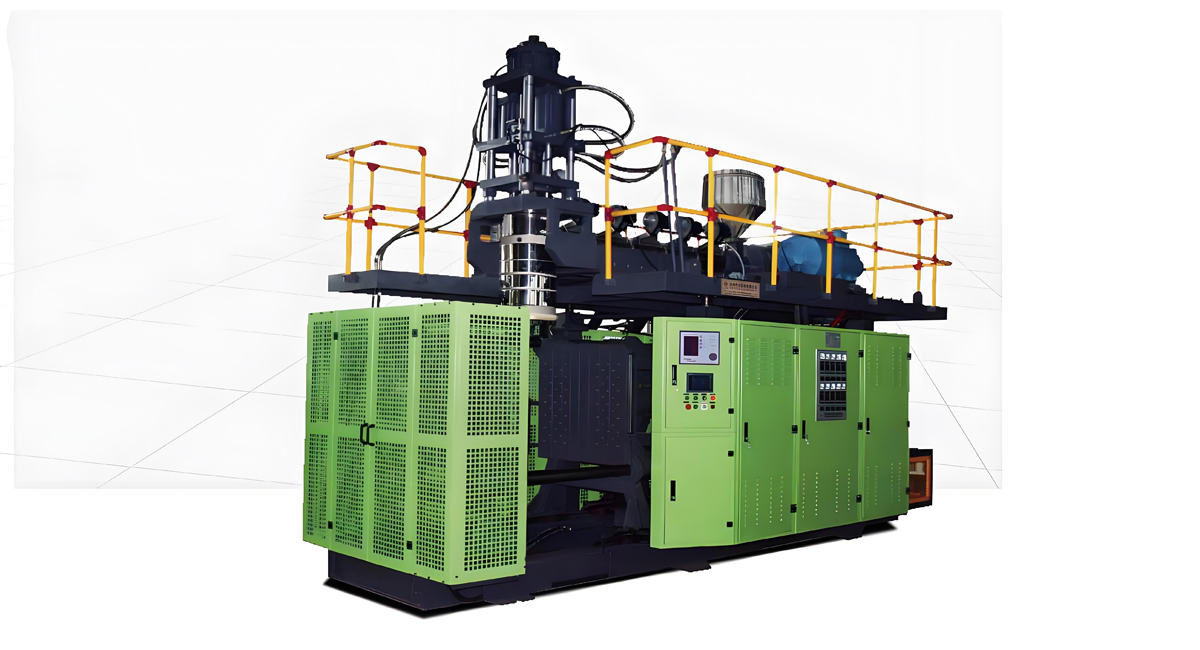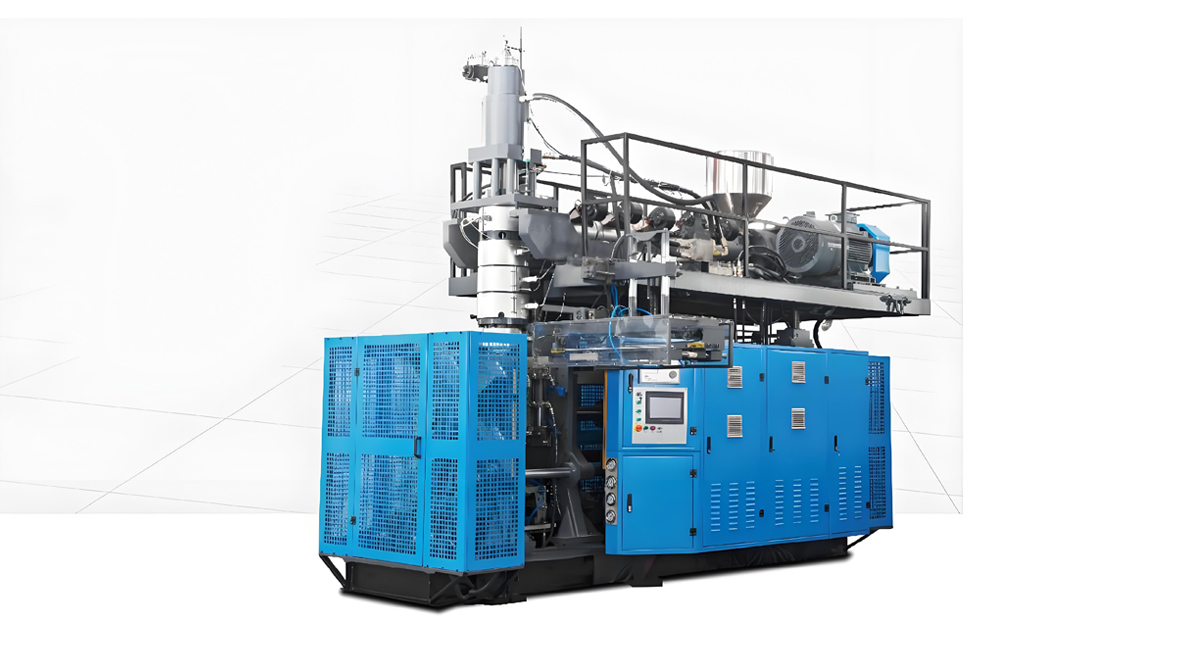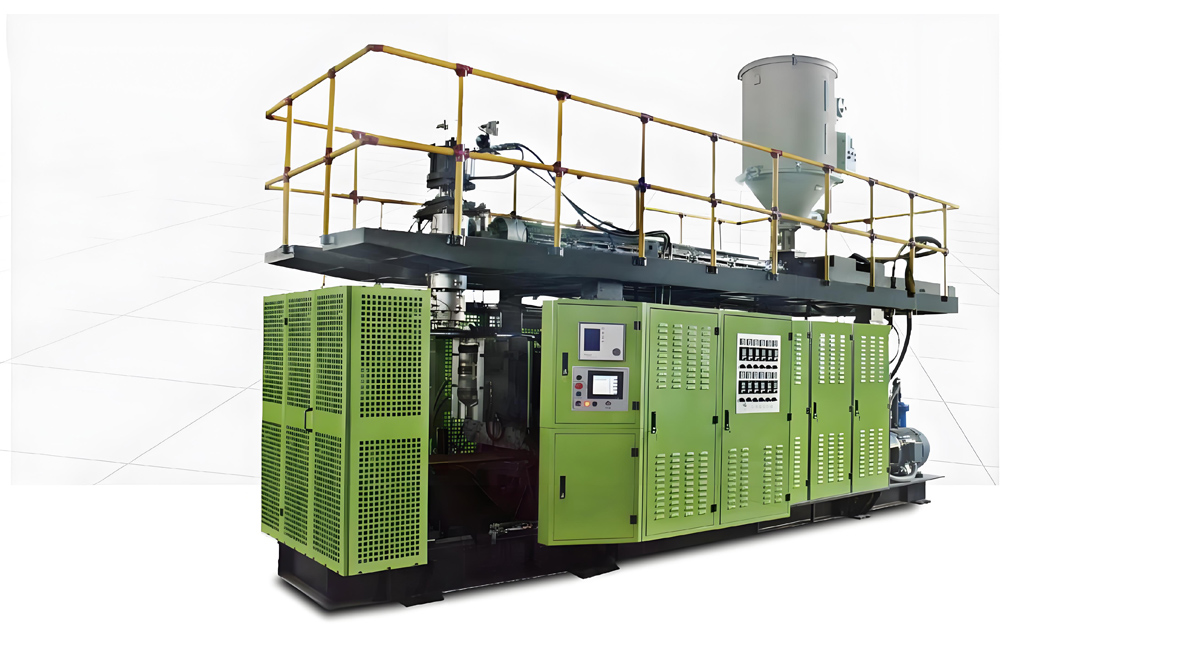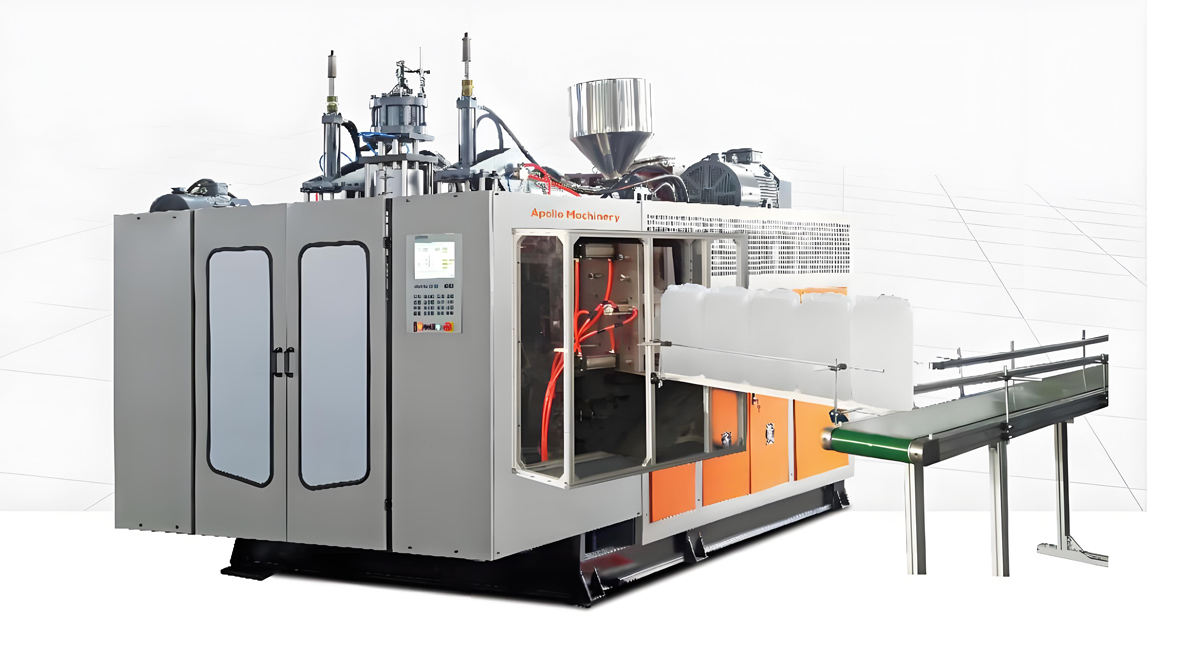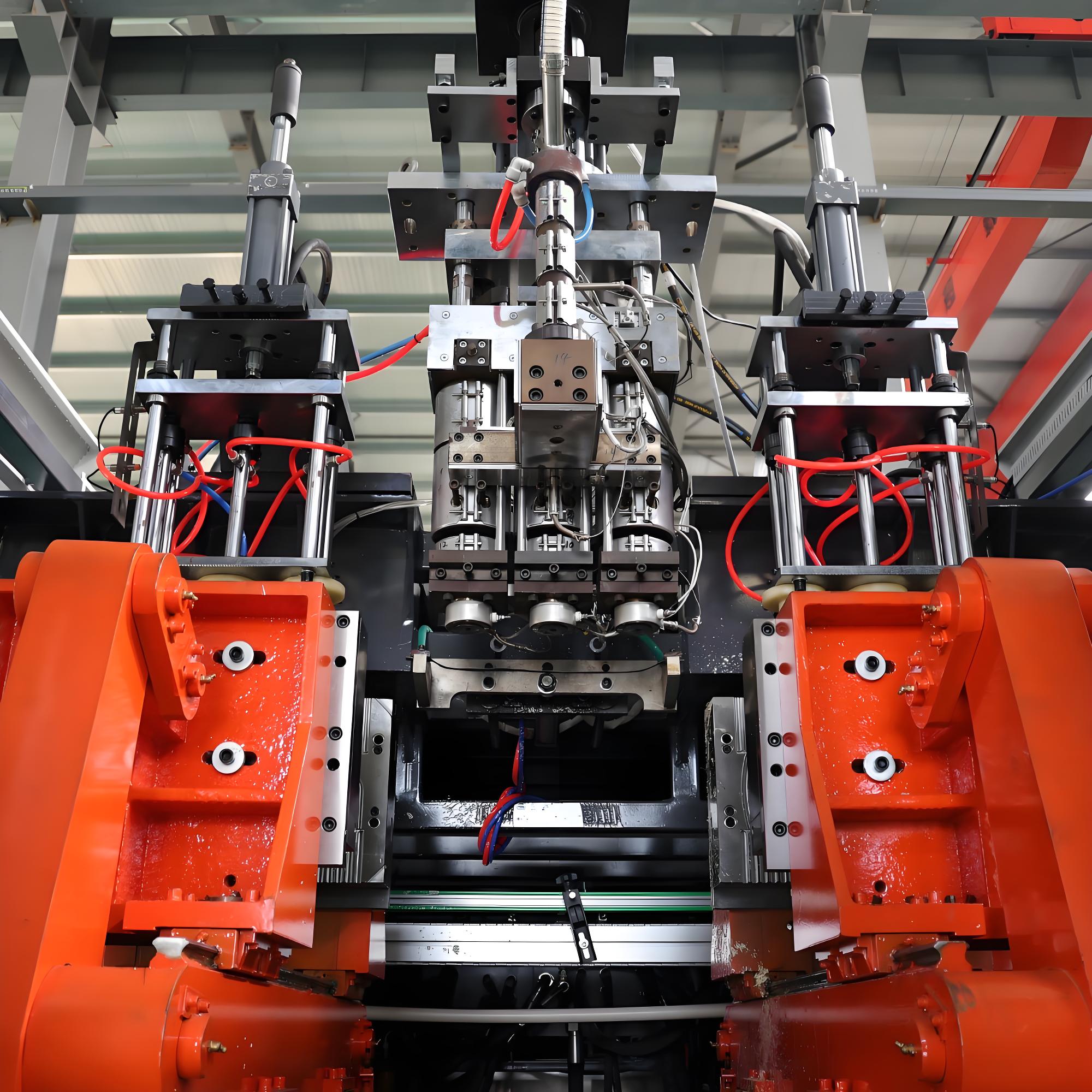

Extrusion Blow Molding (EBM) is a widely used manufacturing process for producing hollow plastic products, from small bottles to large drums. Understanding the working principle of an EBM machine is essential for anyone involved in the plastic packaging industry. This article provides a comprehensive overview of the EBM process, including its core components, step-by-step operation, and Apollo Machinery’s innovative approach to this technology.
Introduction to Extrusion Blow Molding
Extrusion blow molding is a manufacturing technique that involves melting plastic resin, shaping it into a hollow tube (parison), and then inflating the tube inside a mold to form the desired shape. This process is used to produce a wide range of plastic products, including bottles, containers, drums, and automotive components.
EBM is known for its versatility, as it can handle various types of thermoplastic materials, such as polyethylene (PE), polypropylene (PP), polyvinyl chloride (PVC), and polyethylene terephthalate glycol-modified (PETG). The process is also highly automated, making it suitable for high-volume production.
Core Components of an EBM Machine
An extrusion blow molding machine consists of several key components that work together to produce high-quality plastic products. Let’s take a closer look at each component:
1. Extruder
The extruder is the heart of the EBM machine. It is responsible for melting and transporting the plastic resin to the die head. The extruder consists of a heated barrel and a rotating screw that pushes the resin forward. As the resin moves through the barrel, it is heated to its melting point, creating a molten plastic material.
Apollo’s extruders are designed with high-torque motors and precise temperature control systems to ensure consistent melting and extrusion. The screw design is optimized for each type of plastic material, ensuring efficient mixing and processing.
2. Die Head
The die head is the component that shapes the molten plastic into a parison. It consists of a die mandrel and a die bushing, which together form a circular opening through which the molten plastic flows. The die head also includes an adjustable ring that allows operators to control the thickness of the parison.
Apollo’s die heads are made from high-quality steel and feature precision machining to ensure uniform wall thickness throughout the parison. The company also offers custom die head designs to meet specific production requirements, such as multi-layer co-extrusion for enhanced product performance.
3. Clamping Unit
The clamping unit is responsible for holding the mold closed during the blowing process. It consists of two mold halves, which are attached to the machine’s platens. The clamping force is provided by hydraulic or electric actuators, which ensure that the mold remains tightly closed during inflation.
Apollo’s clamping units are designed with high clamping force to handle large molds and thick-walled products. The company offers both hydraulic and electric clamping systems, depending on the machine model and application requirements.
4. Blow Pin
The blow pin is the component that injects air into the parison to inflate it. It is located at the top of the mold and is inserted into the parison after the mold has closed. The blow pin delivers compressed air at a specific pressure, causing the parison to expand and conform to the shape of the mold.
Apollo’s blow pins are made from stainless steel and feature precise air distribution systems to ensure uniform inflation of the parison. The company also offers automatic blow pin positioning systems, which help improve production efficiency and reduce setup time.
5. Cooling System
The cooling system is essential for solidifying the plastic product after it has been inflated. It consists of water channels or air vents that circulate cooling fluid or air around the mold. The cooling process reduces the temperature of the plastic, allowing it to retain its shape after ejection from the mold.
Apollo’s cooling systems are designed to provide efficient and uniform cooling, reducing cycle time and improving product quality. The company uses advanced temperature control systems to ensure that the mold temperature remains consistent throughout the production process.
6. Ejection System
The ejection system is responsible for removing the finished product from the mold after it has cooled. It consists of ejector pins or blades that push the product out of the mold. The ejection system is synchronized with the machine’s cycle to ensure that the product is ejected at the right time.
Apollo’s ejection systems are designed to minimize damage to the product during ejection. The company offers both mechanical and servo-driven ejection systems, depending on the machine model and product requirements.
Step-by-Step EBM Working Principle
The extrusion blow molding process involves several sequential steps, each of which is critical for producing high-quality plastic products. Let’s walk through the process step by step:
Step 1: Preparation of Raw Materials
The first step in the EBM process is to prepare the raw materials. Plastic resin pellets are loaded into the machine’s hopper, which feeds the extruder. The pellets are typically dried before processing to remove any moisture, which can affect the quality of the final product.
Apollo provides guidance on material selection and preparation, helping customers choose the right plastic resin for their specific application. The company also offers material testing services to ensure that the resin meets the required quality standards.
Step 2: Extrusion of Molten Plastic
Once the raw materials are prepared, the extruder heats and melts the resin. The rotating screw inside the extruder pushes the molten plastic forward through the barrel, where it is further mixed and homogenized. The molten plastic is then forced through the die head, where it forms a continuous tube of plastic known as a parison.
Apollo’s extruders feature precise temperature control systems that ensure the plastic is heated to the correct temperature for optimal processing. The company also uses high-quality screws and barrels that are resistant to wear and corrosion, ensuring long-lasting performance.
Step 3: Parison Formation
The parison is formed as the molten plastic exits the die head. The die head’s adjustable ring allows operators to control the thickness of the parison, ensuring that the wall thickness is uniform throughout the tube. This is important for ensuring that the final product has consistent strength and durability.
Apollo’s die heads are equipped with advanced thickness control systems that allow operators to adjust the parison thickness in real time. This helps minimize material waste and improve product quality.
Step 4: Mold Closing
Once the parison reaches the correct length, the mold closes around it. The clamping unit applies sufficient force to ensure that the mold remains tightly closed during the blowing process. The mold halves are designed to fit together precisely, ensuring that the parison is properly sealed to prevent air from escaping during inflation.
Apollo’s clamping units are designed with high-precision mold alignment systems that ensure the mold halves fit together perfectly. This helps reduce the risk of parison defects and improve product quality.
Step 5: Blowing the Parison
After the mold has closed, the blow pin is inserted into the parison. Compressed air is injected into the parison at a specific pressure, causing it to expand and conform to the shape of the mold. The air pressure is carefully controlled to ensure that the parison expands evenly, avoiding wrinkles or thin spots.
Apollo’s blow pins are designed to deliver air at a consistent pressure, ensuring uniform inflation of the parison. The company also offers automatic blow pin positioning systems that help improve production efficiency and reduce setup time.
Step 6: Cooling the Product
Once the parison has been inflated, the cooling system activates to solidify the plastic product. Water or air is circulated around the mold, reducing the temperature of the plastic. The cooling time depends on the size and thickness of the product, as well as the type of plastic material being used.
Apollo’s cooling systems are designed to provide efficient and uniform cooling, reducing cycle time and improving product quality. The company uses advanced temperature control systems to ensure that the mold temperature remains consistent throughout the production process.
Step 7: Ejecting the Product
After the product has cooled sufficiently, the mold opens, and the ejection system removes the finished product from the mold. The product is then conveyed to a packaging station or stored for further processing. The machine then prepares for the next cycle by ejecting the scrap material from the parison.
Apollo’s ejection systems are designed to minimize damage to the product during ejection. The company offers both mechanical and servo-driven ejection systems, depending on the machine model and product requirements.
Apollo’s Innovations in EBM Working Principle
Apollo Machinery has been at the forefront of innovation in extrusion blow molding technology. The company has developed several advanced features and technologies that improve the performance and efficiency of its EBM machines. Let’s take a look at some of these innovations:
1. Precise Temperature Control
Apollo’s EBM machines feature precise temperature control systems that ensure the plastic is heated to the correct temperature for optimal processing. The company uses advanced sensors and controllers to monitor and adjust the temperature in real time, ensuring consistent quality throughout the production process.
2. Energy Efficiency
Apollo’s machines are designed with energy-saving features that reduce operational costs and minimize environmental impact. The company uses variable frequency drives (VFDs) to control the speed of the extruder and other components, reducing energy consumption by up to 30% compared to traditional machines.
3. Quick Mold Change System
Apollo’s quick mold change system allows operators to switch between different mold sizes or designs in minutes. This helps reduce setup time and improve production efficiency, especially for manufacturers who need to produce multiple product types on the same machine.
4. Multi-Layer Co-Extrusion Technology
Apollo offers multi-layer co-extrusion technology, which allows manufacturers to produce products with multiple layers of different materials. This technology is ideal for applications that require enhanced barrier properties, such as food packaging and chemical containers.
5. Integrated Quality Control Systems
Apollo’s EBM machines are equipped with integrated quality control systems that detect defects in real time. These systems use sensors and cameras to monitor the production process, ensuring that only high-quality products are shipped to customers.
Troubleshooting Common EBM Working Issues
Despite the advanced technology used in EBM machines, there are several common issues that can arise during the production process. Let’s take a look at some of these issues and how to troubleshoot them:
1. Parison Defects
Parison defects are one of the most common issues in EBM production. These defects can include uneven wall thickness, bubbles, and wrinkles. To troubleshoot parison defects, check the following:
– Temperature settings: Ensure that the extruder and die head temperatures are set correctly for the plastic material being used.
– Screw speed: Adjust the screw speed to ensure that the molten plastic is being extruded at a consistent rate.
– Die head alignment: Check that the die head is aligned properly to ensure that the parison is formed evenly.
2. Mold Alignment Issues
Mold alignment issues can cause the parison to be sealed improperly, leading to leaks during inflation. To troubleshoot mold alignment issues, check the following:
– Clamping force: Ensure that the clamping force is set correctly to hold the mold closed tightly.
– Mold alignment: Check that the mold halves are aligned properly to ensure a tight seal.
– Blow pin positioning: Ensure that the blow pin is positioned correctly to inject air into the parison.
3. Cooling Problems
Cooling problems can lead to products that are not fully solidified, causing them to deform after ejection. To troubleshoot cooling problems, check the following:
– Cooling system settings: Adjust the cooling water temperature or air flow rate to ensure that the mold is being cooled efficiently.
– Cycle time: Increase the cooling time to ensure that the product has sufficient time to solidify.
– Mold temperature: Check that the mold temperature is consistent throughout the production process.
4. Product Warpage
Product warpage can occur if the plastic cools unevenly after inflation. To troubleshoot product warpage, check the following:
– Cooling system settings: Adjust the cooling system to ensure that the mold is being cooled evenly.
– Cycle time: Increase the cooling time to allow the product to cool more slowly and uniformly.
– Material selection: Choose a plastic material with better dimensional stability to reduce warpage.
Comparing EBM with Other Blow Molding Technologies
Extrusion blow molding is one of several blow molding technologies used in the plastic packaging industry. Let’s compare EBM with other common blow molding technologies:
1. Injection Blow Molding (IBM)
Injection blow molding is a process that involves injecting molten plastic into a mold to form a preform, which is then blown into the final shape. IBM is ideal for producing small, high-precision products, such as pharmaceutical bottles. Compared to EBM, IBM is less suitable for large or complex products.
2. Stretch Blow Molding (SBM)
Stretch blow molding is a process that involves stretching a preform before blowing it into the final shape. SBM is commonly used to produce PET bottles for carbonated beverages. Compared to EBM, SBM is more limited in terms of the types of materials it can process.
3. Injection Stretch Blow Molding (ISBM)
Injection stretch blow molding combines injection molding and stretch blow molding to produce high-quality PET bottles. ISBM is ideal for producing bottles with precise dimensions and uniform wall thickness. Compared to EBM, ISBM is less suitable for producing large or thick-walled products.
4. Compression Blow Molding (CBM)
Compression blow molding is a process that involves compressing a plastic preform into a mold and then blowing it into the final shape. CBM is ideal for producing products with complex shapes or thick walls. Compared to EBM, CBM is less common in the plastic packaging industry.
Future Trends in EBM Working Principle
The extrusion blow molding industry is constantly evolving, with new technologies and innovations emerging to improve the performance and efficiency of EBM machines. Let’s take a look at some of the future trends in EBM working principle:
1. Automation and Robotics
Automation and robotics are becoming increasingly common in the EBM industry. These technologies help improve production efficiency, reduce labor costs, and ensure consistent quality. Apollo is already integrating robotics into its machines, offering automated mold change systems and robot pickers for product handling.
2. Industry 4.0 Integration
Industry 4.0 is transforming the manufacturing industry, and the EBM industry is no exception. Apollo is integrating Industry 4.0 technologies into its machines, such as IoT sensors, big data analytics, and cloud-based monitoring systems. These technologies help manufacturers optimize their production processes and reduce downtime.
3. Sustainable Materials and Processes
Sustainability is becoming increasingly important in the plastic packaging industry. Apollo is developing new technologies to support the use of sustainable materials, such as bio-based plastics and recycled materials. The company is also focusing on reducing energy consumption and waste in its production processes.
4. Advanced Materials
Advanced materials, such as multi-layer co-extruded plastics and high-performance polymers, are becoming more common in the EBM industry. These materials offer enhanced properties, such as improved barrier properties, chemical resistance, and mechanical strength. Apollo is investing in research and development to support the use of advanced materials in its machines.
Conclusion
The working principle of an extrusion blow molding machine is a complex process that involves several key components and sequential steps. Understanding this process is essential for anyone involved in the plastic packaging industry, as it helps ensure that high-quality products are produced efficiently and consistently.
Apollo Machinery is at the forefront of innovation in EBM technology, developing advanced features and technologies that improve the performance and efficiency of its machines. The company’s commitment to quality, reliability, and customer service has made it a leading supplier of extrusion blow molding machines in China and around the world.
Whether you’re a small-scale manufacturer or a large industrial facility, Apollo’s EBM machines can help you meet your production needs. With a wide range of models and customization options, the company offers solutions for applications ranging from small bottles to large drums.
For more information on Apollo’s extrusion blow molding machines and their working principle, visit the company’s website at www.apollo-china.com. The company also offers on-site demonstrations and technical support to help customers choose the right machine for their specific application.