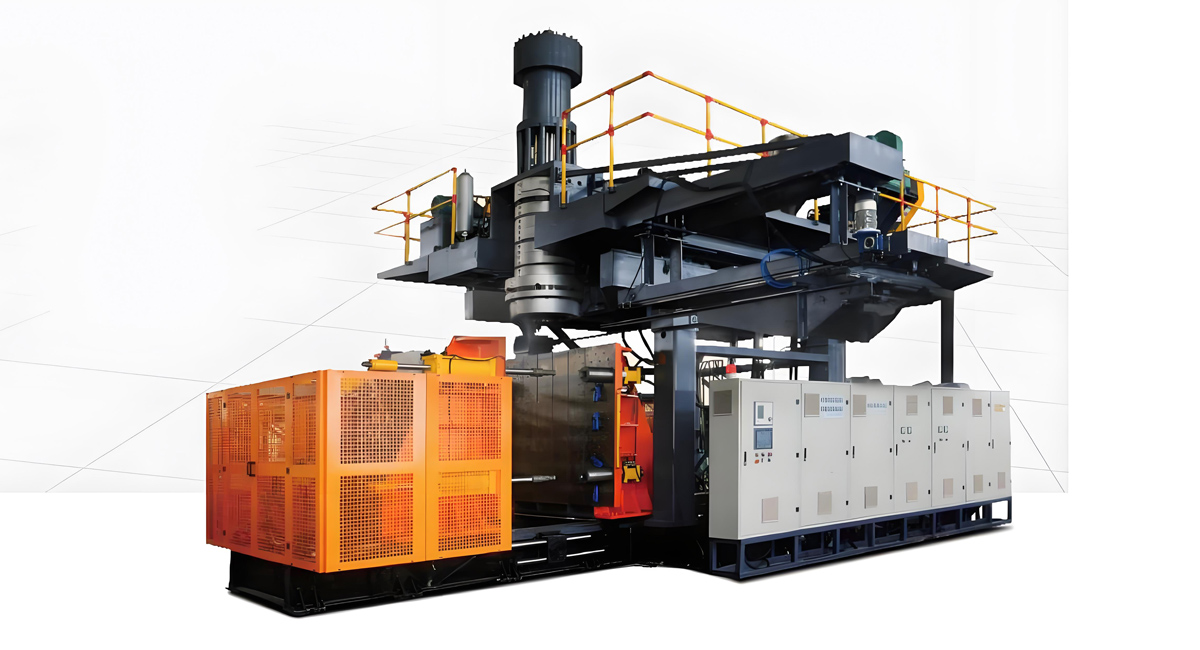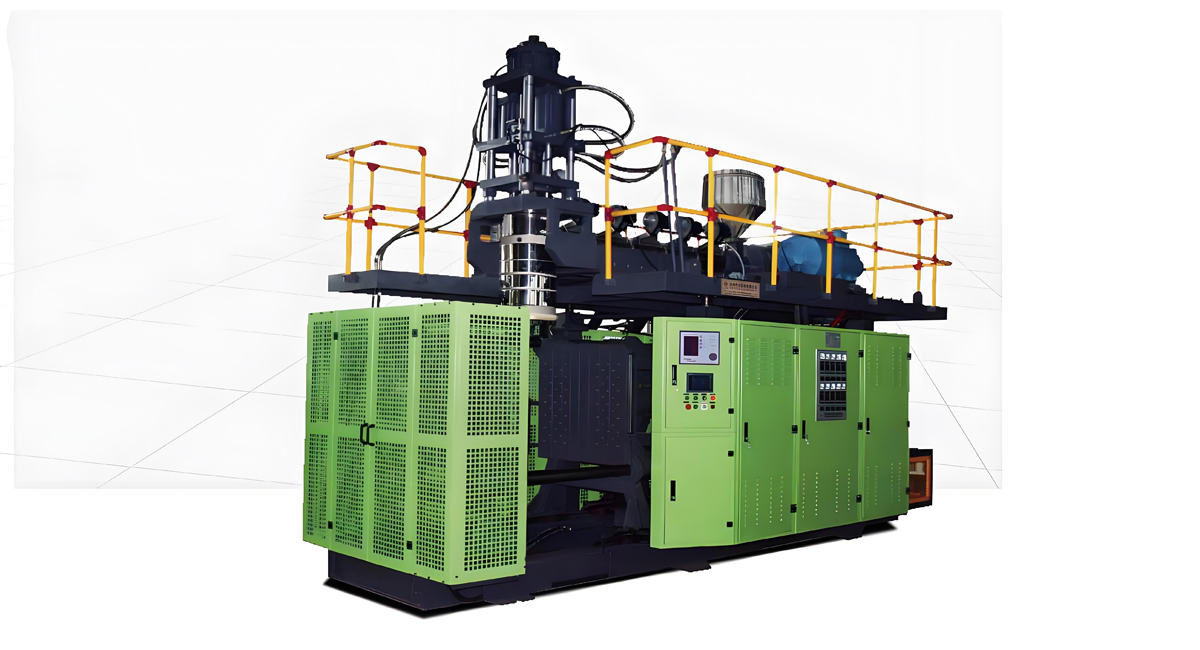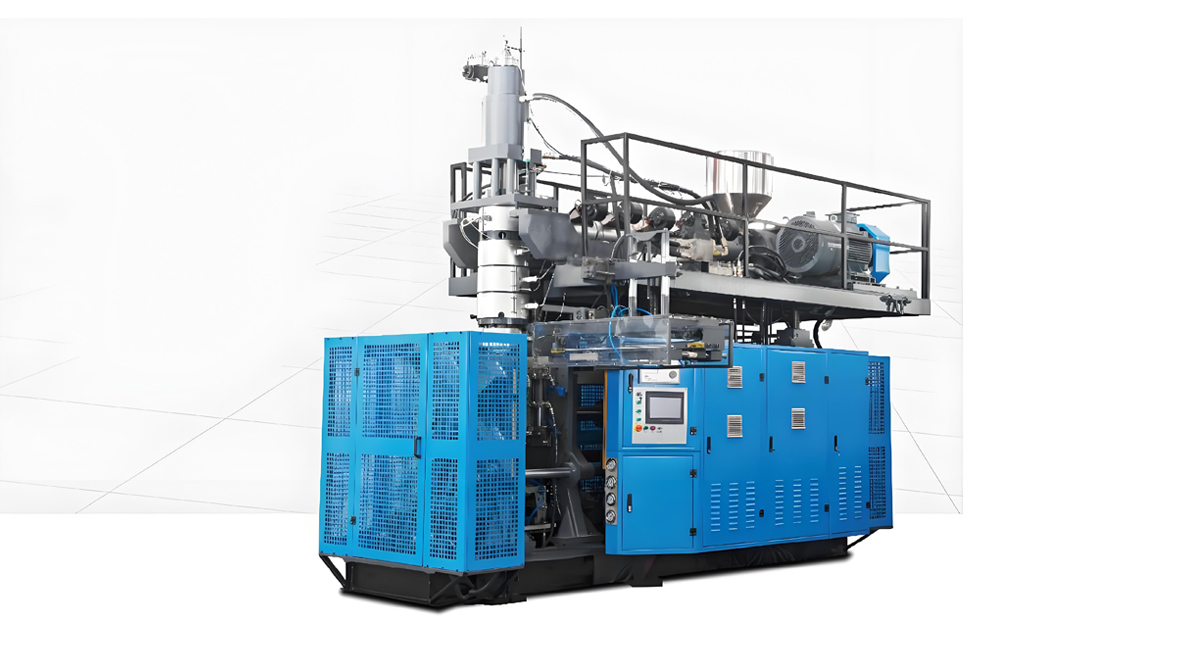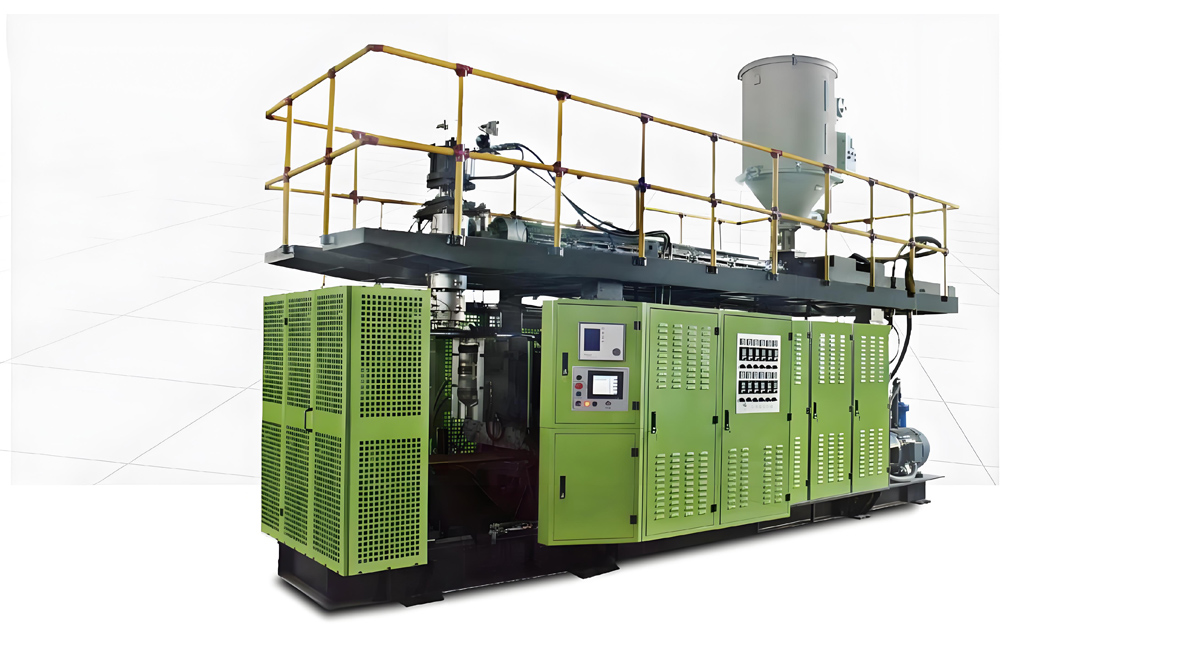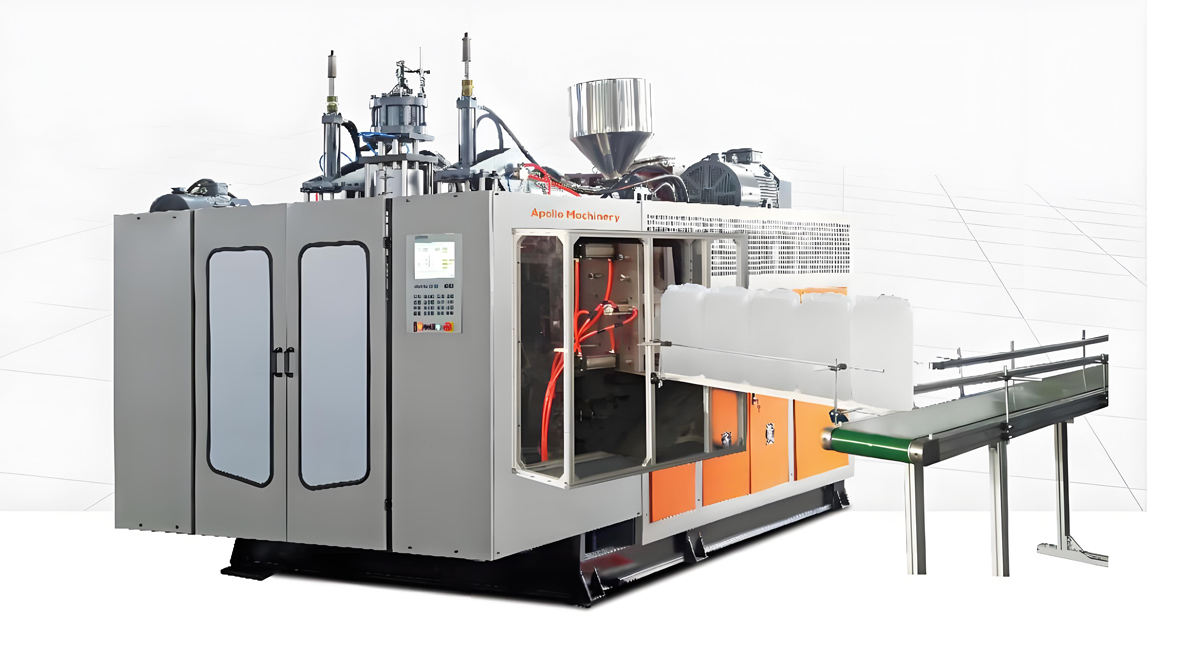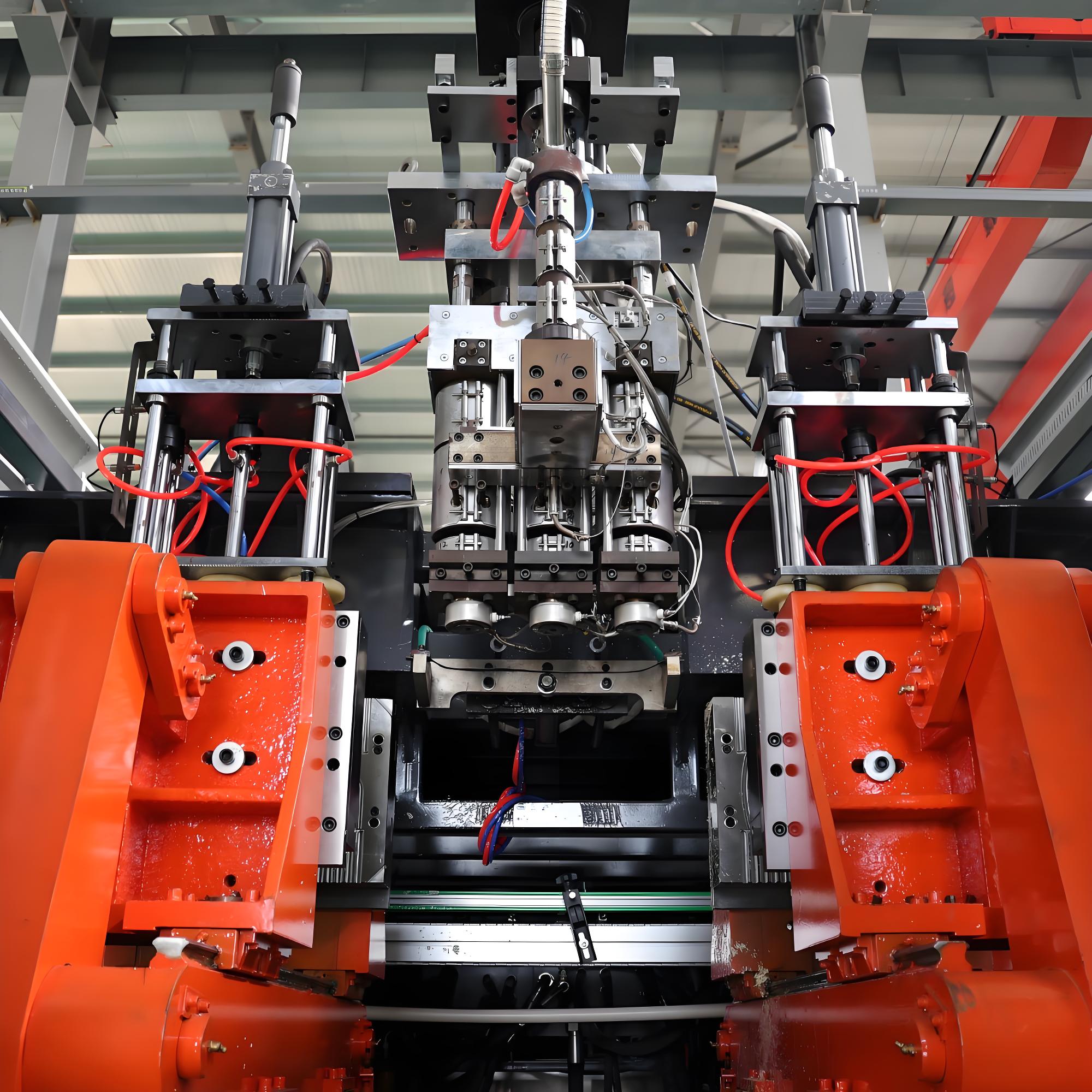
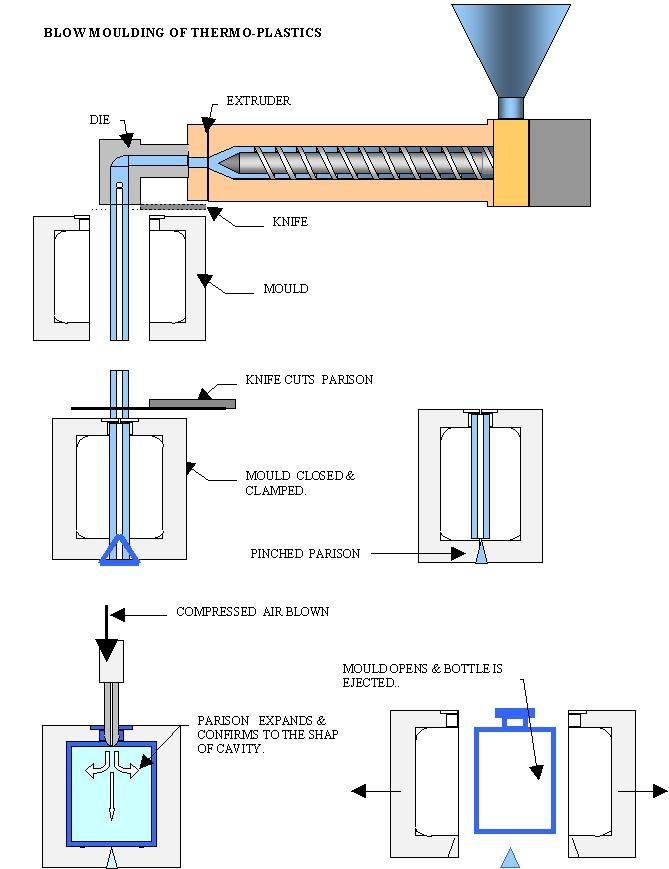
In extrusion blow molding (EBM), the parison cutting system plays a critical role in determining production efficiency, product quality, and process stability. Different cutting methods are designed to suit different materials, production speeds, and product requirements.
This article introduces the most common parison cutting systems, their applications, advantages, disadvantages, and the differences between them.
| Cutting Method | Working Principle | Suitable Materials | Advantages | Disadvantages | Typical Applications |
|---|---|---|---|---|---|
| Hot Knife | Uses a heated blade to melt and cut the parison. | PE, PP, PETG, EPET, etc. | Compatible with a wide range of materials; clean cut; minimizes stringing. | Higher energy consumption; requires precise temperature control; more complex maintenance. | Multilayer bottles, high-barrier bottles, PETG bottles. |
| Cold Knife | Uses a sharp mechanical blade to cut the parison at high speed. | HDPE, LDPE, PP | High cutting speed; low operating cost; no heating required. | Some materials are prone to stringing; cut quality may be slightly lower. | Household chemical bottles, industrial containers, chemical drums. |
| Parison Sealing Knife | Two opposing blades cut the parison while simultaneously sealing its bottom. | HDPE, PP | Cuts and seals the parison in one operation; enables support air pre-inflation for improved parison stability. | More complex mechanism; higher equipment cost. | Square containers, automotive fuel tanks, IBC containers, and other large hollow products. |
| Flying Knife (Swing Knife) | A high-speed swinging or rotary blade synchronizes with the moving parison to perform the cut. | PE, PP | Fast cycle times; ideal for continuous extrusion blow molding. | More difficult to adjust; faster blade wear. | High-speed continuous extrusion blow molding lines. |
1. Hot Knife Cutting
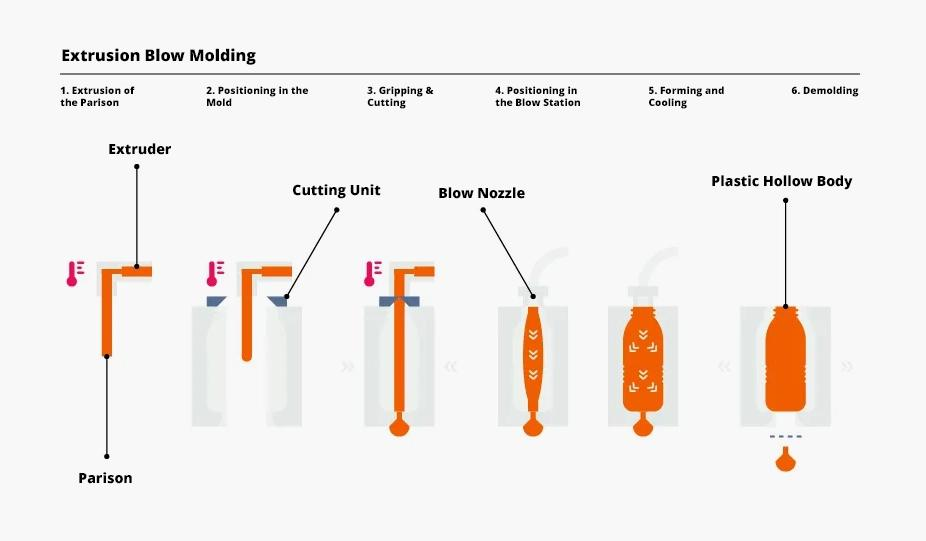
How It Works
A hot knife uses an electrically heated blade to melt and cut the parison. Depending on the processing material, the blade temperature is typically maintained between 200°C and 500°C.
Instead of mechanically slicing the parison, the blade melts through the plastic, producing a smooth and sealed cut.
Suitable Materials
- HDPE
- LDPE
- PP
- PETG
- EVOH multilayer structures
- Other materials prone to stringing
Advantages
- Excellent cutting quality with smooth edges
- Significantly reduces stringing and burr formation
- Suitable for a wide range of materials, especially difficult-to-cut resins
- Ideal for multilayer and barrier packaging
Disadvantages
- Higher energy consumption
- Requires precise temperature control
- Blade replacement and maintenance are more demanding
- Longer startup time due to blade heating
Typical Applications
- Cosmetic bottles
- Pharmaceutical containers
- Multilayer barrier bottles
- PETG packaging
2. Cold Knife Cutting
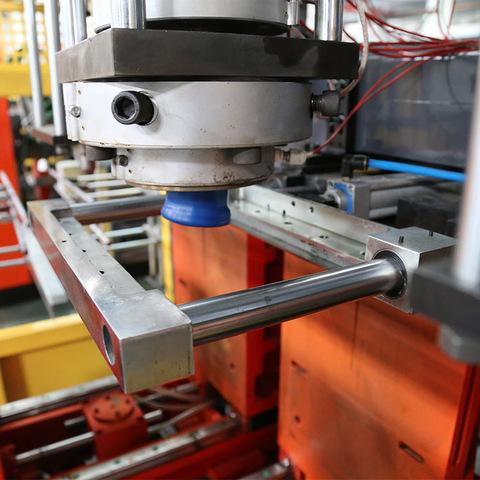
How It Works
A cold knife uses a sharp mechanical blade driven by a pneumatic cylinder, servo motor, or linkage mechanism to cut the parison without heating.
Suitable Materials
- HDPE
- LDPE
- PP
Advantages
- High cutting speed
- Simple mechanical structure
- Low operating and maintenance costs
- No heating system required
- Ideal for high-speed production
Disadvantages
- May cause stringing when processing certain materials
- Cutting edges may not be as clean as those produced by a hot knife
- Blade wear requires periodic replacement
Typical Applications
- Detergent bottles
- Household chemical containers
- Industrial bottles
- Daily-use packaging
3. Parison Sealing Knife (Sealing Cut)
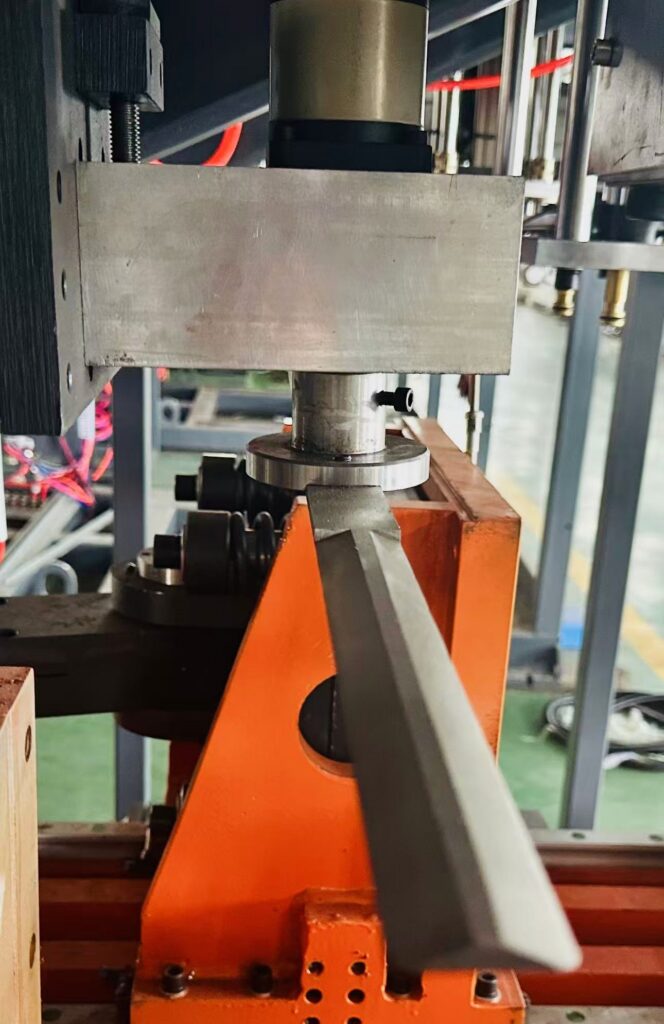
How It Works
Unlike a standard cutting blade, a sealing knife uses two opposing blades to simultaneously:
- Cut the parison
- Seal the bottom end of the parison
- Prepare the parison for support air injection
The sealed parison can then be slightly inflated before mold closing.
Why Is Support Air Important?
Without support air, the molten parison tends to collapse under its own weight, especially when producing large or square-shaped containers.
After the parison is sealed, low-pressure air is introduced to slightly inflate it, allowing it to maintain its tubular shape.
This results in:
- Better corner definition
- More uniform wall thickness
- Improved material distribution
- Reduced risk of wrinkles and folding
Advantages
- Excellent wall thickness distribution
- Better dimensional accuracy
- Ideal for large containers and complex shapes
- Improves product consistency
Disadvantages
- Higher equipment cost
- More complex mechanical structure
- Requires more maintenance and precise adjustment
Typical Applications
- Large industrial drums
- IBC containers
- Automotive fuel tanks
- Square bottles
- High-capacity packaging
4. Flying Knife
How It Works
A flying knife is designed for continuous extrusion blow molding lines.
Because the parison is continuously moving downward during extrusion, the knife synchronizes its motion with the moving parison before making a rapid cut.
This synchronized movement allows cutting without interrupting production.
Advantages
- Extremely high production speed
- Ideal for continuous extrusion systems
- Suitable for fully automated production lines
- Excellent productivity
Disadvantages
- More complicated synchronization control
- Higher mechanical wear
- More demanding setup and maintenance
Typical Applications
- High-output extrusion blow molding machines
- Continuous production of packaging bottles
- Large-volume manufacturing
5. Scissor-Type Knife
How It Works
Two blades close together like a pair of scissors to mechanically shear the parison.
Advantages
- High cutting force
- Suitable for thick-wall parisons
- Reliable and durable
Disadvantages
- Slower than flying knife systems
- Less suitable for ultra-high-speed production
Typical Applications
- Large-diameter parisons
- Heavy-duty industrial containers
- Thick-wall products
Comparison of Different Parison Cutting Systems
| Cutting Method | Cutting Quality | Speed | Cost | Maintenance | Best Applications |
|---|---|---|---|---|---|
| Hot Knife | Excellent | Medium | High | Medium | Multilayer bottles, PETG, PP |
| Cold Knife | Good | Excellent | Low | Easy | HDPE bottles, daily chemical packaging |
| Parison Sealing Knife | Excellent | Medium | High | Complex | Fuel tanks, IBCs, square containers |
| Flying Knife | Good | Excellent | Medium | Medium | Continuous high-speed production |
| Scissor Knife | Good | Medium | Medium | Medium | Thick-wall and large parisons |
If you want to know more details of the cutter for blow molding machine , welcome to contact us .
E-mail: shelley@wanplas .com