
The versatility required in modern plastic bottle manufacturing demands equipment capable of producing wide-ranging container sizes without sacrificing quality, efficiency, or economic viability. From tiny five-milliliter sample containers to large twenty-liter industrial jugs, manufacturers serving diverse market segments require blow molding equipment that adapts to varied production requirements efficiently. Understanding size capabilities, specification ranges, and selection criteria for extrusion blow molding equipment enables manufacturers to choose solutions matching their specific production requirements while positioning for market expansion opportunities. The strategic importance of size flexibility has grown as market dynamics increasingly reward manufacturers who can serve diverse customer requirements without excessive equipment inventory or operational complexity.
Understanding Plastic Bottle Size Categories and Market Applications
Plastic bottles serve virtually every consumer and industrial market category, creating demand for manufacturing equipment capable of producing containers across vast size ranges. Each size category presents distinct production challenges, market dynamics, and equipment requirements that influence optimal manufacturing solutions. Understanding these categories helps manufacturers identify which equipment investments best serve their current and anticipated market positions.
Small Container Production: Miniature to Travel-Size Bottles
The small container category encompasses bottles ranging from miniature single-use samples of five milliliters or less to travel-size containers of approximately one hundred milliliters. These containers serve numerous applications including sample products, travel toiletries, pharmaceutical dosing, food sampling, and promotional giveaways. Production efficiency challenges increase as container size decreases, requiring specialized equipment and process optimization that differs substantially from larger container production. The economics of small container production depend heavily on production volume and per-unit pricing that high-volume applications typically enable.
Precision requirements escalate for small containers where wall thickness variations represent larger percentage deviations from target specifications. A half-millimeter thickness variation on a bottle with two-millimeter walls represents substantial percentage deviation compared to the same variation on a container with five-millimeter walls. Equipment must deliver exceptional thickness control to produce quality small containers consistently. Thickness control technology investments that might seem unnecessary for larger containers become essential for small container quality.
Demolding and handling challenges increase for small containers where dimensional tolerances remain strict despite reduced absolute sizes. Automated handling systems must accommodate smaller, lighter containers without damage while maintaining production speeds necessary for economic viability. Equipment design for small container production incorporates specialized handling features addressing these challenges that larger container equipment might not address adequately. Investment in handling automation often proves essential for economically viable small container production.
Market dynamics favor small container producers who can deliver consistent quality at competitive prices. High-volume applications like travel-size toiletries and sample packets create substantial demand while regulatory requirements for pharmaceutical and food applications demand exceptional quality consistency. Manufacturers serving these markets require equipment delivering both precision and economy that specialized small container equipment typically provides more effectively than versatile equipment attempting to serve all size categories.
Standard Container Production: Consumer Package Sizes
The standard container category covering sizes from approximately one hundred milliliters to five liters represents the largest market segment for plastic bottles. This category includes beverage containers, household cleaning products, personal care packaging, food products, and countless other consumer applications. Equipment producing these sizes must balance throughput efficiency with quality consistency across diverse product requirements that may vary substantially within this broad category.
Production economics favor equipment capable of rapid cycle times and efficient material utilization for standard-sized containers. High production volumes in these categories require equipment maximizing output while minimizing per-unit production costs. Equipment selection must consider not only acquisition cost but ongoing efficiency that determines long-term production economics. Higher acquisition costs for efficient equipment often prove economical over equipment lifecycles through reduced per-unit production costs.
Design flexibility enables manufacturers serving standard container markets to address diverse customer requirements without excessive changeover time or material waste. Equipment supporting rapid configuration changes, efficient material transitions, and flexible mold setups provides competitive advantages in markets requiring variety alongside volume. Changeover efficiency becomes particularly important for manufacturers serving customers across multiple product categories that require different container specifications.
Quality requirements span a broad range from basic packaging where appearance matters primarily to food and pharmaceutical applications demanding regulatory compliance and validation capabilities. Equipment must support appropriate quality systems while maintaining production efficiency appropriate for each market segment. Segmentation of quality requirements often justifies equipment investments optimized for specific market segments rather than compromise equipment attempting to serve all requirements equally.
Large Container Production: Industrial and Commercial Sizes
Large containers ranging from five liters to twenty liters or more serve industrial, commercial, and agricultural applications. These containers include motor oil packaging, chemical storage, water cooler bottles, agricultural chemical containers, and bulk food packaging. Production requirements differ substantially from consumer packaging, with emphasis on durability, chemical resistance, and handling strength rather than aesthetic appeal. Equipment selection for large containers prioritizes different capabilities than consumer packaging equipment.
Wall thickness requirements increase for large containers to provide structural integrity and handling durability. Blow ratios, representing the ratio between parison diameter and finished container diameter, must be carefully managed to achieve uniform wall distribution across larger surfaces. Equipment must deliver sufficient parison programming capability to control thickness distribution across extended surfaces that present greater challenges than smaller containers. Programming sophistication directly affects material efficiency and structural quality in large container production.
Handle integration becomes necessary for many large containers, adding production complexity beyond simple bottle shapes. Handle molds, additional stations, and specialized assembly equipment increase equipment requirements and production costs for containers with integrated handles. Equipment selection should consider handle requirements when evaluating solutions for large container production. Handle integration capabilities distinguish equipment designed for large containers from equipment merely capable of large container dimensions.
Regulatory compliance for hazardous material packaging imposes additional requirements for containers intended for chemical storage. Certification testing, material specifications, and documentation requirements increase operational complexity for manufacturers serving these regulated markets. Equipment selection should consider whether current compliance capabilities will meet anticipated market requirements that might demand additional certifications or validation capabilities.
Equipment Specifications for Size Range Coverage
Extrusion blow molding machines offer various specifications determining their capability ranges for producing different container sizes. Understanding these specifications enables matching equipment to production requirements while avoiding over- or under-specification that results in inefficient operations. Specification analysis should consider both current requirements and anticipated growth that might justify capability expansion.
Clamping Force Requirements
Clamping force represents the pressure the machine applies to keep mold halves closed during the blowing process. Insufficient clamping force results in flash, part defects, or safety hazards from mold separation during production. Required clamping force scales with container size, projected area, and internal pressure during blowing. Understanding actual clamping force requirements prevents both undersized equipment that cannot produce required quality and oversized equipment that wastes investment on capability not needed.
Small container production typically requires clamping forces from twenty to fifty tons depending on projected area and production speed requirements. Compact machines in this force range provide economical solutions for small container applications while maintaining quality and safety standards that production requires. Force requirements should be analyzed against actual production pressure requirements rather than estimated based on container size alone.
Standard container production generally requires clamping forces from fifty to three hundred tons. The wide range reflects substantial size variation within this category and different production speed requirements. Mid-range machines typically address standard container production efficiently while larger machines serve high-volume applications requiring maximum throughput. Production volume projections should influence whether investment in higher-force equipment pays for itself through productivity improvements.
Large container production may require clamping forces exceeding three hundred tons, with some applications needing forces exceeding five hundred tons for the largest industrial containers. High-force machines require more substantial construction, increased investment, and greater operational costs that must be justified by market opportunities and pricing. Force requirements beyond three hundred tons typically indicate specialized applications that deserve careful evaluation of market potential before equipment investment.
Platen Size and Stroke Requirements
Platen dimensions determine maximum container size the machine can accommodate, with platen travel stroke affecting container height capability. Equipment selection must ensure platen dimensions exceed finished container dimensions while stroke accommodates required heights plus mold thickness. Insufficient platen dimensions create immediate limitations that cannot be overcome through operational adjustments.
Small container molds typically measure under three hundred millimeters in any dimension, allowing use of compact machines with correspondingly smaller platens. However, production economics often favor machines producing multiple small containers per cycle, requiring larger platens despite small individual container sizes. Multi-cavity production economics should be analyzed against single-cavity equipment investments to determine optimal production approaches.
Standard containers requiring heights from one hundred fifty to four hundred millimeters require machines with appropriate stroke dimensions. Many standard containers fall within common machine capability ranges, enabling versatile equipment selection serving multiple customer requirements. Equipment serving diverse standard container requirements benefits from flexibility that reduces changeover time and setup costs across different production runs.
Large containers requiring heights exceeding four hundred millimeters require machines with extended strokes and substantial platen dimensions. Equipment for these applications typically falls into specialized categories with corresponding investment and operational requirements. Large container equipment represents significant investment that requires confident market opportunity assessment before commitment.
Extruder and Parison Specifications
Extruder size, measured by screw diameter, determines throughput capacity and material melting capability. Larger extruders deliver higher throughput but consume more energy and require greater material quantities for purging and changeovers. Matching extruder size to actual production requirements optimizes efficiency that mismatched equipment would compromise. Throughput analysis should consider not only average requirements but peak demand that might exceed average by substantial margins.
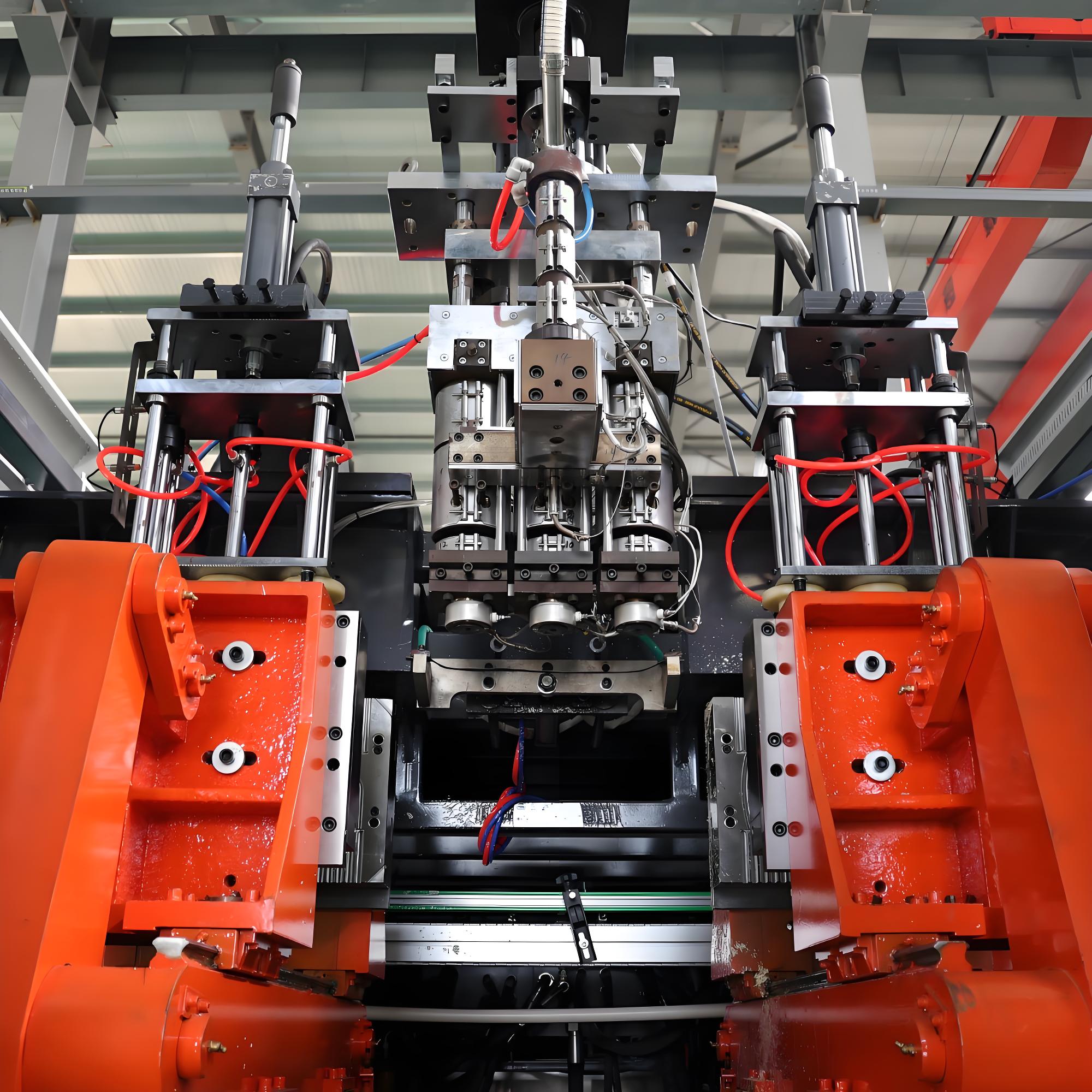
Parison programming capability determines wall thickness control quality, particularly important for large containers where uniform wall distribution affects structural integrity and appearance. Multi-point parison programming enables sophisticated thickness profiles that optimize material usage while meeting performance requirements. Programming sophistication varies substantially across equipment categories, with premium machines offering capabilities that economy equipment cannot match.
Accumulator head designs provide advantages for large container production by delivering rapid material shots without excessive extruder size requirements. The accumulator stores melted material between shots, enabling brief high-flow deliveries that support efficient large container production. Understanding accumulator specifications helps evaluate equipment suitability for specific applications where shot size requirements exceed continuous extrusion capability.
Apollo Equipment Solutions for Multi-Size Production
Apollo manufactures extrusion blow molding equipment spanning the full range of container size requirements, enabling manufacturers to select optimally matched solutions or versatile equipment serving multiple size categories. Their product development strategy addresses market needs across all size segments while maintaining quality and reliability standards that customers depend upon. Understanding Apollo offerings helps clarify what premium equipment provides across size categories.
Compact Machine Line for Small Container Production
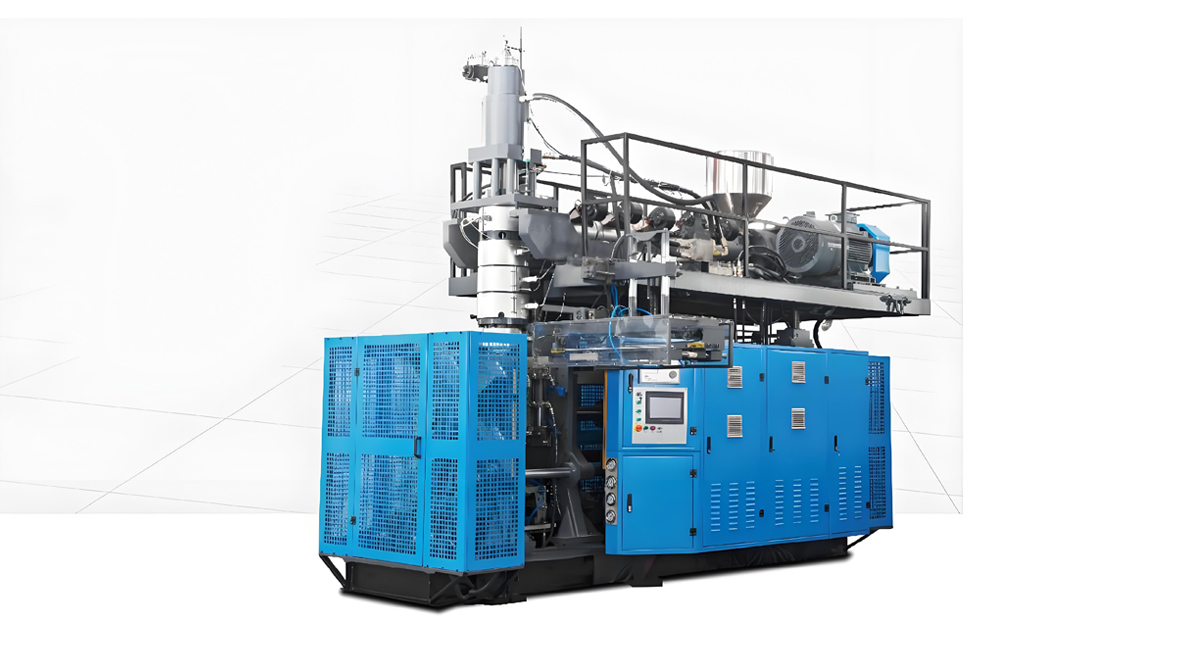
Apollo compact machines provide efficient solutions for small container production, offering clamping forces from twenty to eighty tons with correspondingly sized platens and strokes. These machines combine precision capability with economical operation that supports profitable small container production. Equipment design balances capability against cost in ways that serve small container economics appropriately.
Multi-cavity mold capability enables compact machines to produce multiple small containers per cycle, improving production efficiency for high-volume small container applications. Mold designs accommodating four, six, or more cavities dramatically increase output without requiring large machine investments. Cavity count optimization should consider both equipment capability and mold cost implications that higher cavity counts create.
Precision control systems on Apollo compact machines deliver the thickness control small containers require despite reduced absolute dimensions. Servo-driven parison programming, precise temperature control, and advanced process monitoring ensure consistent quality across production runs. Control system investments that might seem excessive for larger containers become essential for achieving small container quality standards.
Versatile Mid-Range Equipment for Standard Containers
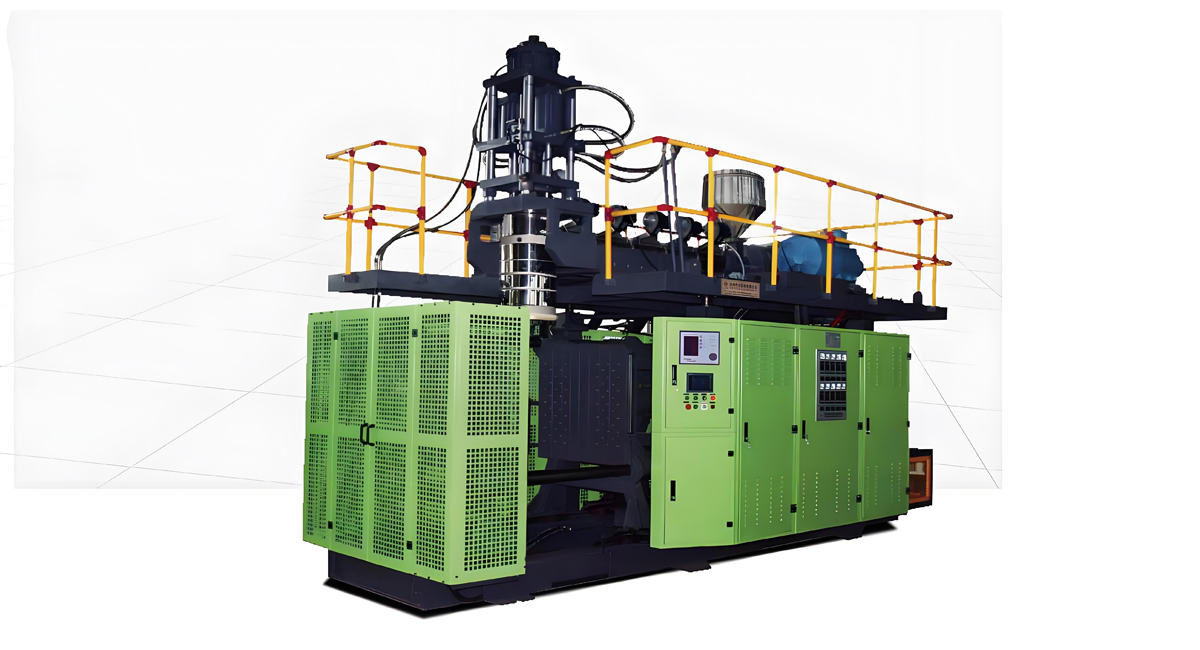
Apollo mid-range machines spanning clamping forces from eighty to three hundred tons address the majority of standard container production requirements. These machines balance capability, efficiency, and investment to deliver optimal value for manufacturers serving consumer packaging markets. Balanced approach delivers capability without excessive investment that would compromise return on equipment purchases.
Flexible configuration options enable mid-range machines to accommodate diverse customer requirements within single equipment investments. Quick-change mold systems, adjustable process parameters, and versatile control interfaces support efficient changeovers between different container specifications. Configuration flexibility becomes increasingly valuable as customer bases diversify and order sizes decrease.
Throughput capabilities on mid-range machines range from approximately two hundred to over one thousand containers per hour depending on container size and configuration complexity. This range addresses diverse market requirements while maintaining per-unit production economics that support competitive pricing. Throughput optimization should balance production speed against quality requirements that higher speeds might compromise.
Heavy-Duty Machines for Large Container Production
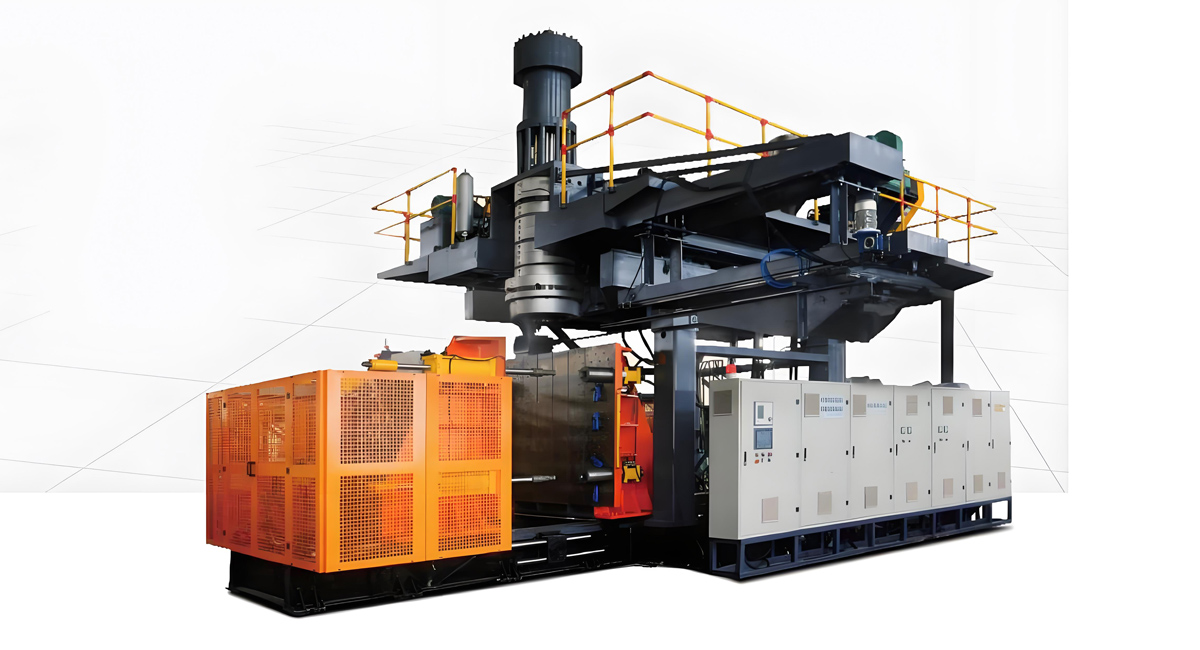
Apollo heavy-duty machines with clamping forces exceeding three hundred tons address large container production requirements across industrial, commercial, and agricultural applications. These machines incorporate robust construction, advanced control systems, and capabilities matching the demanding requirements of large container manufacturing. Construction quality directly affects longevity and reliability that justifies substantial equipment investment.
Extended platen sizes and stroke dimensions accommodate large container geometries while providing clearance for handle molds and other specialized tooling. Equipment flexibility enables manufacturers to serve diverse large container requirements without excessive equipment inventories. Versatile heavy-duty equipment can serve multiple large container specifications that narrow-focus equipment would require separate machines to address.
Advanced parison programming on Apollo heavy-duty machines provides the wall thickness control large containers require. Multi-point programming with precise servo control achieves uniform distribution across extensive surfaces, ensuring structural integrity and appearance quality that large container applications demand. Programming sophistication directly affects material efficiency and product quality in large container production.
Cost Analysis Across Size Categories
Equipment investment and production costs vary substantially across size categories, influencing optimal equipment selection and market positioning strategies. Comprehensive cost analysis considering multiple factors enables informed decisions that optimize return on equipment investments. Analysis should consider not only current costs but projected changes that might shift optimal equipment selection over equipment lifecycles.
Equipment Investment by Size Category
Compact machines for small container production typically range from $25,000 to $55,000 depending on configuration complexity and capability levels. Multi-cavity capabilities, precision control systems, and automation integration influence pricing within this range. Price variations should be evaluated against capability differences rather than assumed to represent equivalent value.
Mid-range machines for standard containers typically range from $55,000 to $120,000. Wider capability ranges, higher throughput potential, and more sophisticated control systems contribute to higher pricing compared to compact alternatives. Investment levels should align with production volumes and margin structures that determine whether premium capability investments deliver acceptable returns.
Heavy-duty machines for large containers typically range from $120,000 to $250,000 or more. Substantial construction requirements, extended capabilities, and specialized features for large container applications justify higher investment levels. Large container equipment investments require confident market opportunity assessment that justifies substantial capital commitment.
Production Cost Factors by Size
Material costs scale with container volume, but material efficiency varies across size categories. Small containers often exhibit higher material efficiency ratios because percentage losses from startup scrap and edge trim represent smaller portions of total material usage. Large containers may show lower efficiency percentages but generate substantial absolute material quantities that affect total production costs significantly.
Cycle time economics differ across size categories, with small containers often achieving cycle times under three seconds while large containers may require thirty seconds or more. Throughput differences must be considered alongside per-container margins when evaluating production economics. Profitability analysis should consider throughput capability rather than simply cycle times that might mislead without margin context.
Labor intensity varies with size category due to differences in handling requirements, automation applicability, and packaging complexity. Small containers often benefit from fully automated handling and packaging while large containers may require manual or semi-automated handling that increases labor costs. Labor cost analysis should consider automation investment against labor savings to determine optimal approaches.
Quality control requirements scale with application criticality rather than container size alone. Pharmaceutical or food containers regardless of size may require equivalent inspection intensity while basic packaging applications may accept minimal quality verification. These requirements influence operational costs independent of container size and should be evaluated based on actual application requirements rather than assumed based on size category.
Return on Investment Considerations
Payback periods depend on market pricing, production volumes, and efficiency factors that vary across size categories and applications. Small containers with high volumes may achieve rapid payback despite lower per-container margins while large containers with lower volumes may require longer payback periods. Projected payback periods should be evaluated against acceptable investment thresholds that business circumstances establish.
Capacity utilization assumptions significantly affect payback calculations. Equipment purchased expecting high utilization but achieving lower volumes produces extended payback periods that may not meet investment criteria. Conservative utilization projections provide more realistic expectations than optimistic assumptions that might not materialize. Utilization analysis should consider market development time that might delay reaching projected utilization levels.
Market growth potential influences strategic equipment investments that accept longer payback periods in exchange for market positioning opportunities. Equipment enabling entry into new market segments may justify investment even with extended payback expectations. Strategic positioning analysis should complement financial analysis when evaluating equipment investments that create market opportunities.
Selection Criteria for Multi-Size Production Operations
Manufacturers serving diverse size requirements face complex equipment selection decisions that must balance multiple competing factors. Systematic evaluation using established criteria improves decision quality and reduces risk of suboptimal selections that might not become apparent until after equipment installation. The cost of selection errors increases with equipment investment levels, making thorough evaluation increasingly important for larger equipment purchases.
Primary Size Range Assessment
Identifying primary size range requirements focuses equipment evaluation on solutions matching dominant production demands. Equipment selection optimized for primary requirements delivers better economics than compromise selections attempting to serve all requirements equally. Clear understanding of primary requirements prevents both over-specification that wastes investment and under-specification that constrains production.
Volume analysis by size category reveals the relative importance of different size ranges within total production. If eighty percent of volume falls within a single size category, equipment optimized for that category likely delivers superior economics despite limitations for smaller volume categories. Volume analysis should consider both current distribution and projected shifts that might change optimal equipment selection over time.
Growth projections indicating anticipated shifts in size mix inform equipment selection that anticipates future requirements rather than simply addressing current circumstances. Forward-looking selection avoids equipment obsolescence that rapid growth might otherwise create. Growth planning should consider realistic timelines rather than aspirational projections that might not materialize.
Versatility Requirements Evaluation
Changeover frequency between size categories determines how much versatility equipment must provide. Infrequent changeovers may justify separate equipment investments optimized for each size category while frequent changeovers favor versatile equipment capable of efficient transitions. Analysis should consider both actual changeover frequency and projected patterns that market dynamics might shift.
Changeover time impacts production economics when changeovers interrupt ongoing production. Equipment with quick-change capabilities reduces changeover losses but may carry premium pricing. Analyzing actual changeover costs reveals whether changeover efficiency investments justify their costs. Time-value analysis should quantify the cost of changeover time against equipment premium pricing.
Mold investment considerations influence whether dedicated or flexible equipment approaches prove more economical. Separate equipment for each size category requires corresponding mold inventories while versatile equipment enables mold changes that reduce total tooling investments. Total cost analysis should consider tooling investment alongside equipment investment to determine optimal approaches.
Quality and Compliance Requirements
Application-specific quality requirements may dictate equipment selection regardless of size considerations. Food contact, pharmaceutical, or hazardous material applications impose requirements that standard equipment may not satisfy without modifications or upgrades. Compliance requirements should be clearly understood before equipment evaluation begins to prevent selecting equipment that cannot meet required standards.
Documentation and traceability requirements increase for regulated applications, potentially favoring equipment with comprehensive data logging and process monitoring capabilities. These capabilities add cost but may prove essential for certain market segments where regulatory compliance determines market access. Documentation capability investments should be evaluated against market opportunity sizing that compliance enables.
Validation and certification requirements for specific applications may necessitate equipment meeting particular standards or undergoing specific testing. Understanding applicable requirements before equipment selection prevents costly discoveries after purchase. Regulatory compliance planning should involve regulatory experts who understand application-specific requirements that general equipment selection might overlook.
Operational Best Practices for Multi-Size Production
Successfully operating equipment across multiple size categories requires attention to procedures, training, and quality systems that ensure consistent results regardless of production configuration. Operational excellence maximizes return on equipment investments while minimizing quality issues that might damage customer relationships. Best practices should be documented, trained, and continuously improved based on operational experience.
Mold Management and Changeover Optimization
Organized mold storage and maintenance preserves tooling investments while ensuring availability when production requirements shift. Climate-controlled storage prevents moisture accumulation and dimensional variations that affect production quality. Mold storage systems should prevent damage while enabling efficient retrieval when production requirements shift to different container specifications.
Mold changeover procedures should be documented, standardized, and trained to ensure consistent execution regardless of operator. Checklists, standard operating procedures, and training programs reduce variation and errors during changeovers. Procedure standardization enables efficient changeover execution that ad hoc approaches cannot match consistently.
Mold maintenance schedules based on production counts rather than calendar time ensure maintenance occurs based on actual usage. Tracking production counts enables predictive maintenance that prevents unexpected failures while avoiding unnecessary maintenance. Maintenance tracking systems should monitor both usage hours and production counts that might affect maintenance timing differently.
Process Optimization for Size Variations
Process parameters optimized for specific sizes should be documented and stored in recipe management systems. Retrieving optimized parameters ensures consistent results when production returns to previously produced sizes. Recipe documentation should include parameter rationale and acceptable adjustment ranges rather than simply target values.
Wall thickness profiles require adjustment when moving between significantly different sizes. Understanding how parison programming should change across size ranges enables efficient optimization rather than extended trial-and-error approaches. Parison programming knowledge should be documented and trained rather than remaining with individual operators who might leave.
Cooling time adjustments accommodate different thermal masses across size categories. Larger containers require extended cooling while smaller containers may cool faster than initially assumed. Optimizing cooling reduces cycle times without compromising quality. Cooling optimization should be validated through production testing rather than assumed from theoretical calculations.
Quality Control Adaptation
Inspection procedures must adapt to different quality requirements across size categories and applications. Higher-value containers may justify more intensive inspection while commodity products may require streamlined approaches. Inspection efficiency should balance quality assurance needs against operational costs that excessive inspection might create.
Statistical process control systems should account for size-specific variation characteristics. Control limits appropriate for one size category may be inappropriate for others, requiring calibration across the production range. SPC implementation should be sized to actual quality requirements rather than uniformly applied across all products regardless of actual importance.
Documentation requirements vary by application and market. Understanding applicable requirements for each production run ensures appropriate records while avoiding unnecessary documentation for less critical applications. Documentation efficiency should be balanced against compliance requirements that might require comprehensive records regardless of application.
Future Trends in Multi-Size Manufacturing
Technology evolution and market dynamics continue shaping multi-size manufacturing in ways that will influence future equipment selection and operational strategies. Understanding these trends informs strategic planning that positions operations for future success rather than creating obsolescence risks. Trend analysis should consider both opportunities and risks that emerging developments create.
Flexibility and Quick-Change Technologies
Equipment design continues evolving toward greater flexibility that reduces changeover penalties and enables efficient multi-product production. Modular designs, standardized interfaces, and automated changeover systems improve responsiveness to diverse requirements. Flexibility investments should be evaluated against actual changeover patterns that flexibility would address.
Industry 4.0 integration enables smart changeover processes that optimize parameters automatically based on stored configurations. These capabilities reduce changeover times and quality variations while enabling more frequent product changes than traditional approaches supported. Digital capability investments should consider both current requirements and anticipated evolution that might increase flexibility demands.
Market Fragmentation Effects
Consumer preference for product variety drives demand for smaller production batches across more SKUs. Equipment capable of efficient small-batch production becomes more valuable as batch sizes decrease and changeover frequency increases. Market evolution toward greater variety justifies flexibility investments that might not have proven economical under historical mass-production dynamics.
Sustainability pressures encourage package downsizing and lightweighting that shifts production toward smaller containers. Equipment flexibility enabling adaptation to evolving requirements becomes strategically important as market dynamics shift toward smaller, lighter packaging. Sustainability trends should be monitored for signals that might shift optimal equipment selection.
Regional market service models favor distributed manufacturing closer to consumption points, requiring versatile equipment that enables local production across diverse size requirements without requiring extensive specialized inventories. Geographic manufacturing strategies increasingly favor flexibility that enables serving diverse local requirements rather than concentrating production in optimized facilities.
Conclusion
Multi-size plastic bottle production requires thoughtful equipment selection matching specific requirements while positioning for market evolution. Understanding size categories, equipment specifications, and selection criteria enables decisions that optimize current operations while building capabilities for future opportunities. Selection decisions create constraints that persist throughout equipment lifecycles, making thorough evaluation increasingly important.
Apollo equipment spanning compact through heavy-duty categories provides solutions for manufacturers across all size requirements. Their focus on quality, reliability, and customer support ensures equipment investments deliver value throughout operational lifecycles. Premium equipment investments typically prove economical over extended periods despite higher initial costs that smaller alternatives might appear to avoid.
Cost analysis across size categories reveals varying economics that should influence equipment selection and market positioning strategies. Equipment optimized for primary requirements typically delivers superior economics compared to compromise selections attempting to serve all needs equally. Comprehensive analysis should consider not only direct costs but strategic factors that affect long-term competitiveness.
Operational excellence in multi-size production requires systematic attention to procedures, training, and quality systems that ensure consistent results regardless of production complexity. Manufacturers who master these operational aspects build sustainable competitive advantages in diverse markets. Operational excellence compounds over time, creating advantages that competitors cannot easily replicate.