
Introduction to High Speed Plastic Bucket Production
Plastic buckets represent high-volume products requiring efficient production capabilities to meet market demand while maintaining competitive pricing. High speed extrusion blow molding machines specifically designed for bucket production enable manufacturers to achieve exceptional production rates through optimized cycle times, automated handling, and material efficiency. This comprehensive guide explores high speed production requirements for plastic buckets, machine selection criteria, operational optimization strategies, and detailed recommendations from Apollo for maximizing bucket production efficiency.
Plastic Bucket Market Overview and Production Requirements
The plastic bucket market encompasses diverse applications from household use to industrial requirements, with production volume requirements ranging from thousands to millions of units annually. Understanding market dynamics and production requirements enables informed equipment selection and operational optimization strategies.
Market Segments and Volume Requirements
The plastic bucket market serves diverse segments including household buckets ranging from 2-20 liters for general consumer use, industrial buckets from 10-35 liters for chemical and industrial applications, food-grade buckets from 5-25 liters meeting food safety regulations, and specialty buckets for specific applications. Market growth drives increased production requirements, with typical high-speed bucket production lines targeting 300-1200 buckets per hour depending on size and complexity. Production efficiency directly impacts profitability due to high volumes and competitive pricing pressures characteristic of bucket market segments.
Material Specifications for Bucket Production
High-density polyethylene (HDPE) represents the predominant material for bucket production due to excellent impact resistance, chemical compatibility, and cost-effectiveness. Material grades vary by application with general-purpose HDPE suitable for most applications, UV-stabilized grades for outdoor use, food-contact grades meeting FDA or equivalent regulations for food applications, and antistatic or conductive grades for applications requiring static dissipation. Material specifications significantly affect production parameters including processing temperatures, cycle times, and quality requirements. Apollo high-speed bucket machines accommodate various HDPE grades with optimized processing parameters for each material type.
Production Quality Requirements
Bucket quality requirements include dimensional consistency ensuring proper stacking and fit, wall thickness uniformity for structural integrity, surface finish for appearance requirements, and handle integrity for load-bearing applications. Food-grade buckets require additional considerations including material compliance with food contact regulations, clean surface finish facilitating cleaning, and absence of defects affecting food safety. Quality control systems for high-speed production must maintain standards despite rapid cycle times, requiring automated inspection capabilities and statistical process control systems.
High Speed Machine Design and Performance
High speed extrusion blow molding machines for bucket production incorporate specific design features and capabilities enabling rapid cycle times while maintaining quality standards. Understanding these design elements facilitates appropriate machine selection and operational optimization.
Extrusion System Optimization
High-speed bucket production requires extrusion systems capable of delivering consistent parison formation at rapid cycle intervals. Apollo bucket machines feature extruder screw designs optimized for HDPE processing with L/D ratios of 25-30:1 providing excellent melt homogeneity and output stability. Dual extruder configurations with diameters from 80-100mm deliver output capacities from 200-500 kg/h depending on model, ensuring adequate material supply for high-speed operation. Advanced temperature control with 5-7 heating zones provides ±1°C precision enabling consistent parison formation. Extrusion system design balances melt quality with output requirements enabling cycle times as fast as 12-18 seconds for small buckets.
Parison Control and Wall Thickness Optimization
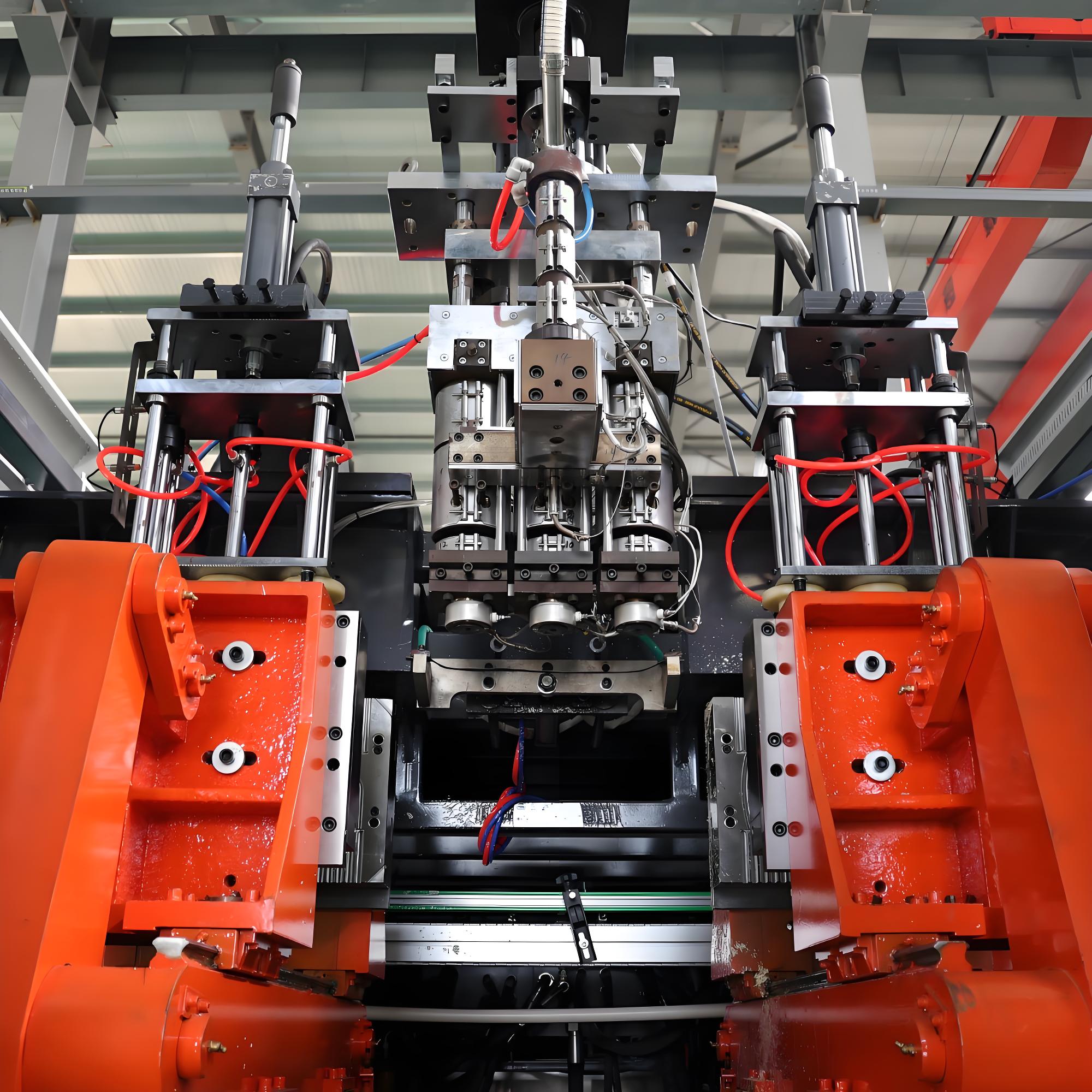
Precise parison control enables production of uniform bucket walls with minimum material usage, directly affecting production efficiency and cost. Apollo high-speed bucket machines feature electronic parison programming systems with 20-30 point control enabling wall thickness optimization across complex bucket geometries. Closed-loop control systems incorporate wall thickness sensors providing real-time feedback maintaining consistency throughout production runs. Advanced parison head designs minimize material dead zones reducing cycle time while improving material distribution. Proper parison control reduces material usage by 8-15% compared to manual control while maintaining or improving quality.
Clamping System Performance
Rapid clamping cycles enable reduced overall cycle times critical for high-speed production. Apollo bucket machines feature clamping forces from 350-1000 KN providing adequate force for bucket sizes up to 35 liters. Clamping systems incorporate proportional control enabling optimized force application reducing cycle times while preventing flash formation. Clamping speed control enables multi-speed clamping cycles with rapid approach, controlled mold contact, and quick mold opening. Some models feature electric clamping systems providing faster cycle times and improved energy efficiency compared to hydraulic systems. Clamping systems designed for millions of cycles provide reliability required for high-speed production.
Apollo High Speed Bucket Production Machine Models
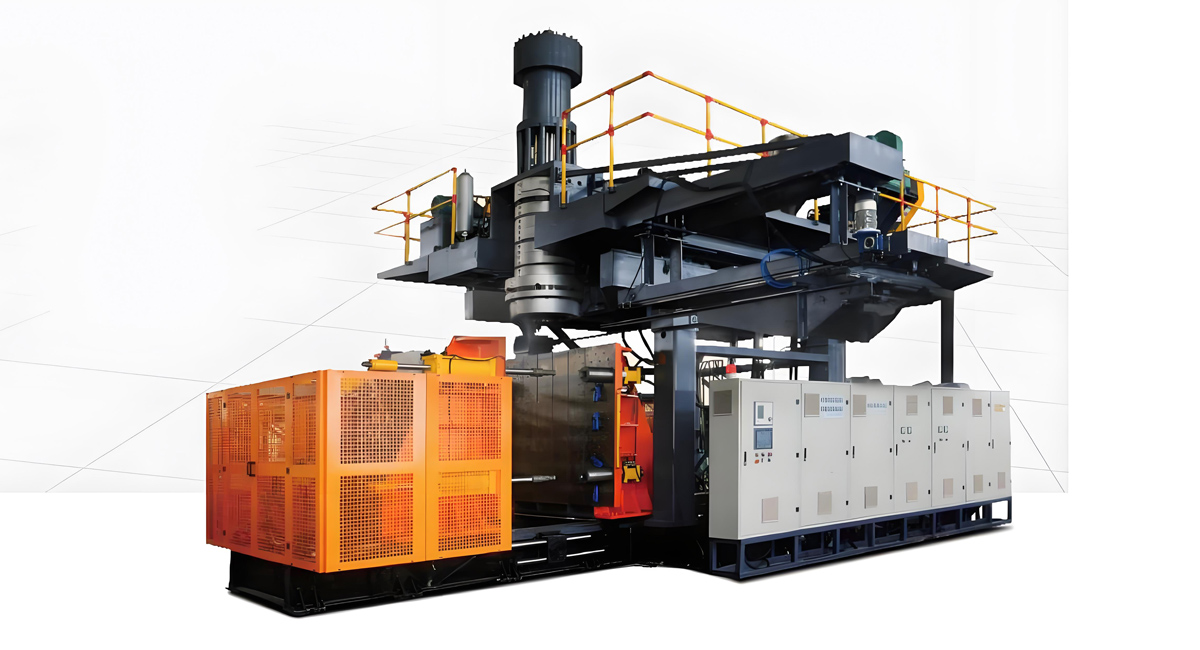
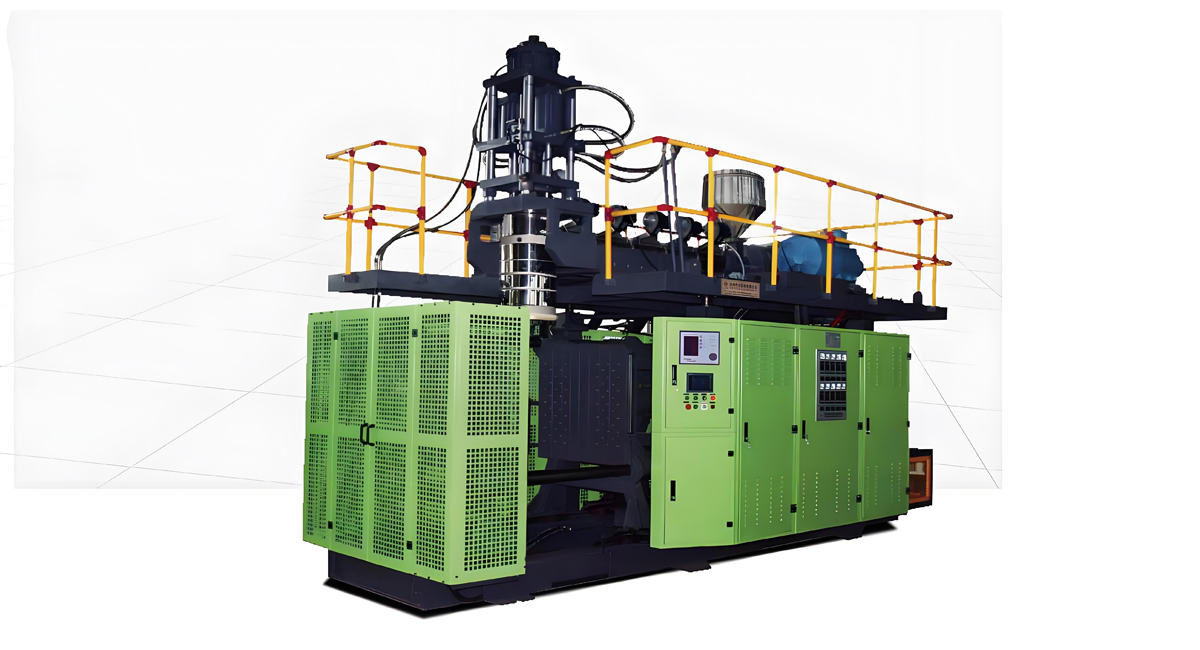
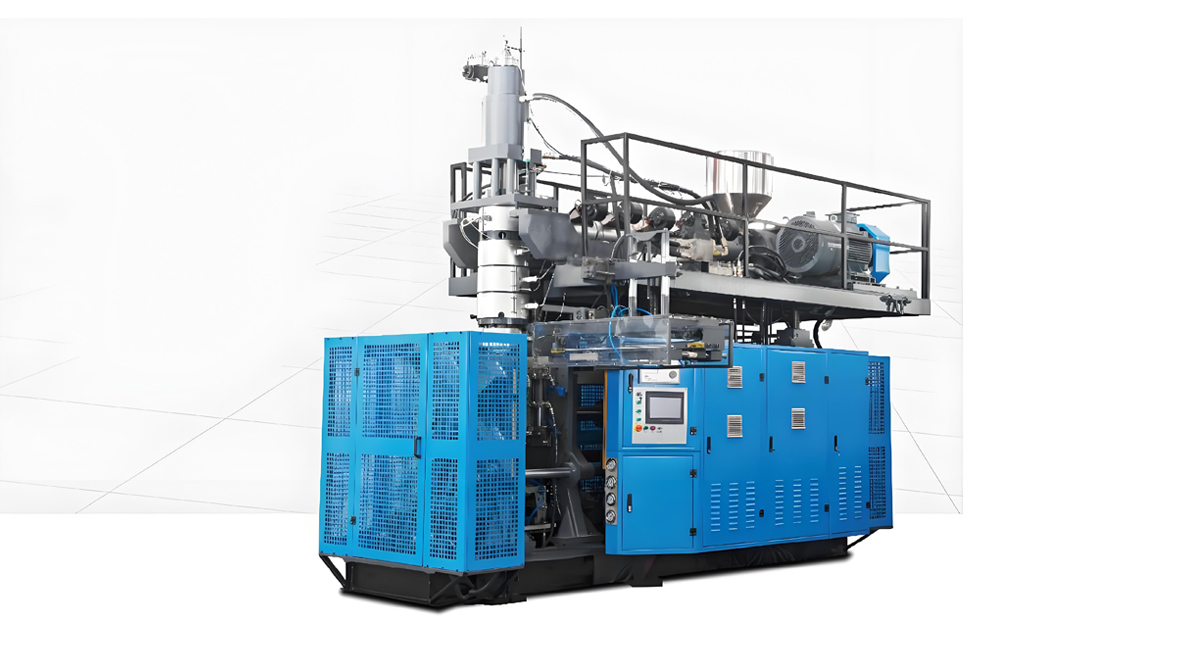
Apollo offers comprehensive range of high-speed extrusion blow molding machines specifically configured for plastic bucket production across various sizes and production requirements. From compact models for small buckets to large systems for industrial buckets, Apollo provides equipment meeting diverse production needs.
ABLB Series Small Bucket Production
The Apollo ABLB series provides high-speed production for small buckets ranging from 2-10 liters ideal for household and food-grade applications. ABLB-200 model produces 2-5 liter buckets at 800-1200 pieces per hour, featuring 80mm dual extruder with 37+37 kW motor power, clamping force of 350 KN, and maximum mold capacity of 10 liters. Cycle times range 12-18 seconds depending on bucket size. System pricing ranges from $65,000-90,000 depending on automation level and included features. This model represents excellent choice for manufacturers targeting high-volume small bucket production with exceptional production efficiency.
ABLD Series Medium Bucket Production
The Apollo ABLD series provides optimized production for medium buckets ranging from 10-20 liters suitable for industrial and commercial applications. ABLD-90 model produces 10-20 liter buckets at 500-800 pieces per hour, featuring 90mm dual extruder with 45+45 kW motor power, clamping force of 500 KN, and maximum mold capacity of 20 liters. Cycle times range 15-25 seconds depending on bucket size. System pricing ranges from $90,000-130,000 depending on configuration and automation. This model provides ideal solution for manufacturers requiring versatility across bucket sizes while maintaining high production rates.
ABLD Large Bucket Production
The Apollo ABLD series large bucket models provide capability for large buckets from 20-35 liters suitable for industrial and bulk applications. ABLD-100 model produces 20-35 liter buckets at 300-600 pieces per hour, featuring 100mm dual extruder with 55+55 kW motor power, clamping force of 700 KN, and maximum mold capacity of 35 liters. Cycle times range 20-30 seconds depending on bucket size and complexity. System pricing ranges from $130,000-180,000 depending on configuration and included equipment. This model provides optimal solution for manufacturers targeting larger bucket markets requiring substantial production capabilities.
Advanced Automation Options
Apollo high-speed bucket machines feature advanced automation options maximizing production efficiency and reducing labor requirements. Automatic take-out systems remove buckets from mold at cycle completion, transferring to downstream handling systems. Automated leak testing equipment verifies bucket integrity at production speeds. Labeling and printing integration enables complete product decoration inline. Palletizing systems stack buckets on pallets automatically for shipping preparation. These automation options typically represent additional investment of $30,000-80,000 depending on automation level but provide substantial labor savings and production consistency benefits.
Production Rate Optimization Strategies
Maximizing production rates for bucket production requires systematic optimization of multiple factors including machine operation, material handling, quality control, and workflow management. Implementing comprehensive optimization strategies enables achievement of theoretical maximum production capacities.
Cycle Time Reduction Techniques
Reducing individual cycle times directly increases overall production rate. Cycle time reduction techniques include optimizing blow time profiles balancing complete inflation against time efficiency, implementing multi-speed clamping cycles reducing clamping time, optimizing parison programming minimizing excess material requiring additional blow time, and utilizing optimized cooling system designs accelerating bucket cooling. Apollo bucket machines incorporate advanced control systems enabling these optimizations through programmable parameters and real-time monitoring. Typical cycle time reductions of 15-25% are achievable through systematic optimization.
Material Handling Efficiency
Efficient material handling prevents production interruptions and reduces manual labor requirements. Automated loader systems continuously feed HDPE resin to extruders eliminating manual loading interruptions. Bulk material storage systems provide extended run capability without material changeovers. Automated color changeover systems enable rapid product color changes minimizing downtime between production runs. Integrated material drying systems ensure consistent material quality eliminating defects that cause production stoppages. Proper material handling design enables continuous operation maximizing machine utilization.
Mold Design and Cooling Optimization
Mold design significantly affects cycle times and production rates for bucket production. Advanced mold cooling systems including conformal cooling channels provide uniform and rapid cooling enabling reduced cycle times. Optimized mold temperature control prevents quality issues while enabling faster cooling. Mold designs incorporating internal cooling channels for handle areas reduce overall cooling requirements. Quick-change mold systems reduce setup time between product changes increasing overall productivity. Collaboration with experienced mold designers familiar with high-speed bucket production provides significant optimization opportunities.
Quality Control for High Speed Production
High-speed bucket production requires robust quality control systems maintaining standards despite rapid production rates. Implementing automated inspection and statistical process control ensures consistent quality while maximizing production efficiency.
Automated Inspection Systems
Automated inspection systems provide continuous quality monitoring at production speeds compatible with high operation rates. Visual inspection systems detect surface defects including sink marks, flash, and cosmetic issues. Dimensional measurement systems verify bucket dimensions ensuring compliance with specifications. Weight measurement systems verify material usage and detect significant wall thickness variations. Leak testing systems automatically test bucket integrity at production speeds. Apollo machines integrate with various inspection systems providing continuous quality monitoring without interrupting production.
Statistical Process Control
Statistical process control (SPC) systems monitor production parameters and quality metrics enabling proactive identification and correction of quality trends before defects occur. Key monitored parameters include cycle time consistency, mold temperature, extrusion temperature, blow pressure, parison wall thickness, and bucket weight. SPC systems generate trend analysis and statistical reports enabling continuous process optimization. Integration with machine control systems enables automatic parameter adjustment for process optimization. SPC implementation typically reduces scrap rates by 30-50% while improving consistency.
Traceability and Documentation
Production traceability systems track each batch through production process enabling quality investigation and process improvement. Batch tracking records material lots, production parameters, quality measurements, and operator information for each production run. Quality documentation systems maintain records of inspection results and product certifications for regulatory compliance. Traceability systems support root cause analysis when quality issues occur and provide evidence of compliance for food-grade or regulatory requirements. Apollo high-speed bucket machines support integration with traceability systems providing comprehensive production documentation.
Cost Analysis and Production Economics
Understanding complete cost structure for high-speed bucket production enables operational optimization and competitive pricing. Cost analysis includes equipment investment, operating costs, material utilization, and production capacity utilization.
Equipment Investment and Financing
Equipment investment for high-speed bucket production varies significantly based on production capacity and automation level. Entry level ABLB-200 systems require investment of $65,000-90,000 suitable for small bucket production up to 5 liters. Medium capacity ABLD-90 systems require $90,000-130,000 for production of 10-20 liter buckets. Large capacity ABLD-100 systems require $130,000-180,000 for production of 20-35 liter buckets. Automation additions typically add $30,000-80,000 depending on included systems. Financing options including equipment leasing provide alternatives to capital purchases with monthly payments based on equipment value and financing terms.
Annual Production Capacity
Annual production capacity depends on machine capability, operating hours, and production mix. ABLB-200 system operating 6000 hours annually at 1000 pieces per hour produces approximately 6,000,000 2-5 liter buckets annually. ABLD-90 system operating 6000 hours annually at 600 pieces per hour produces approximately 3,600,000 10-20 liter buckets annually. ABLD-100 system operating 6000 hours annually at 400 pieces per hour produces approximately 2,400,000 20-35 liter buckets annually. Actual production capacity affected by production changeovers, maintenance downtime, and quality-related downtime.
Operating Cost Structure
Operating costs for high-speed bucket production include electricity, labor, materials, maintenance, and consumables. Electricity consumption for ABLB-200 with 37+37 kW motor power operating 6000 hours annually at $0.15/kWh represents approximately $66,600 annually. Labor costs depend on automation level, with automated systems requiring 1 operator per shift versus 2-3 for semi-automated systems. Material costs represent 70-80% of production costs with HDPE typically $1.20-1.60/kg depending on grade and additives. Maintenance typically costs 3-5% of equipment investment annually. Total operating costs typically range $0.08-0.15 per bucket depending on size and automation level.
Production Cost Per Unit Analysis
Production cost per bucket calculation requires consideration of material cost, energy cost, labor cost, and overhead allocation. For 10 liter bucket weighing 400g with $1.40/kg material cost, material cost equals $0.56 per bucket. Energy cost approximately $0.015 per bucket. Labor cost approximately $0.02-0.05 per bucket depending on automation. Overhead allocation including depreciation, maintenance, and facility costs typically adds $0.03-0.06 per bucket. Total production cost typically ranges $0.60-0.70 per 10 liter bucket. Market pricing typically ranges $0.80-1.50 per bucket depending on size, quality, and market conditions. Gross margin typically ranges 30-50% before overhead allocation.
Energy Efficiency and Sustainability
Energy efficiency and sustainability represent increasingly important considerations for bucket production facilities, affecting operating costs, environmental impact, and market positioning. Apollo high-speed bucket machines incorporate features supporting energy efficiency and sustainable production.
Energy Consumption Optimization
Apollo bucket machines feature energy-efficient technologies reducing operating costs and environmental impact. Electric drive systems reduce energy consumption by 30-40% compared to equivalent hydraulic systems. Variable frequency drives optimize motor speed matching actual demand rather than constant operation. Efficient extrusion screw designs reduce energy requirements for material melting. Advanced thermal insulation on barrel and mold areas reduces heat loss. Regenerative braking on servo drives recovers energy during deceleration phases. These efficiency features can reduce annual energy costs by 20-35% compared to conventional machines.
Material Efficiency and Waste Reduction
Material efficiency improvements reduce both raw material costs and environmental impact. Optimized parison control reduces material usage by 8-15% while maintaining quality. Automated flash collection and recycling systems reclaim excess material for reprocessing. Reduced scrap rates through process optimization minimize material waste. Precise weight control ensures consistent material usage without excess. Apollo machines support recycled HDPE content use where application requirements permit, further reducing environmental impact and material costs.
Sustainability Certifications
Sustainability certifications provide market advantages and demonstrate environmental responsibility. ISO 50001 certification demonstrates energy management systems. Various recycling certifications verify recycled content usage. Carbon footprint analysis enables quantification and reporting of environmental impact. Life cycle assessment documents total environmental impact from raw material through end-of-life. Apollo machines support sustainability goals through energy efficiency, material efficiency, and capability to incorporate recycled materials enabling certification achievement.
Installation and Facility Requirements
Proper facility preparation and installation ensures reliable machine operation and optimal production efficiency for high-speed bucket production lines. Understanding facility requirements enables appropriate planning and preparation before equipment delivery.
Space Requirements
Facility space requirements depend on machine size, automation level, and material handling needs. ABLB-200 systems require approximately 200-300 square meters including machine area, material storage, and product handling areas. ABLD-90 systems require 300-400 square meters for complete operation including larger molds and material handling systems. ABLD-100 systems require 400-500 square meters accommodating larger equipment and additional space for handling large buckets. Space planning should accommodate material flow from receiving through production, quality inspection, packaging, and shipping. Adequate space enables efficient material handling and optimized production flow.
Utility Requirements
Utility requirements include electrical power, compressed air, cooling water, and ventilation appropriate for high-speed production. ABLB-200 systems require 3-phase electrical power for 75 kW total motor power plus lighting and auxiliary equipment. ABLD-90 systems require capacity for 90 kW plus ancillary equipment. ABLD-100 systems require capacity for 110 kW plus ancillary equipment. Compressed air requirements typically 6-8 bar pressure with 400-600 liters/minute flow. Cooling water requirements vary based on mold cooling but typically 30-50 m3/h depending on production rate and bucket size. Proper utility capacity ensures reliable operation without interruptions.
Material Handling and Storage
High-speed bucket production requires efficient material handling and storage systems supporting continuous operation. Bulk storage silos typically store 20-50 tons of HDPE depending on production rate and supply frequency. Automated weighing and dosing systems ensure precise additive incorporation for color or functional additives. Automated resin loaders provide continuous feeding to extruders eliminating manual loading interruptions. Finished product handling systems including conveyors, automated palletizing, and storage systems manage high production volumes efficiently. Proper material handling systems maximize machine utilization and minimize manual labor requirements.
Workforce and Training Requirements
Operating high-speed bucket production lines requires appropriately trained workforce with skills in machine operation, quality control, maintenance, and process optimization. Apollo provides comprehensive training programs ensuring workforce capability for efficient operation.
Operator Training
Apollo provides operator training covering machine operation, startup and shutdown procedures, parameter adjustment, basic troubleshooting, and safety procedures. Training duration typically 3-5 days for basic operation to 7-10 days for advanced operation including optimization techniques. Training may be provided at customer facility or Apollo factory depending on preference. Operator training materials including operation manuals, quick reference guides, and training videos support ongoing knowledge refreshment. Well-trained operators maximize machine utilization and minimize production problems.
Maintenance Training
Maintenance training covers preventive maintenance procedures, component replacement, machine adjustment, and troubleshooting techniques. Training includes identification of wear indicators, proper component replacement procedures, and precision adjustment techniques for maintaining machine performance. Maintenance training typically requires 5-7 days depending on machine complexity. Apollo provides detailed maintenance manuals specifying procedures, intervals, and spare parts requirements. Skilled maintenance personnel minimize downtime through preventive maintenance and rapid problem resolution.
Process Engineering Support
Process engineering support from Apollo helps optimize production processes for maximum efficiency and quality. Support services include production parameter optimization, mold design review and recommendations, quality system design and implementation, and troubleshooting assistance for complex production issues. Process engineering support often provided during initial startup and periodically for continuous improvement. Skilled process engineers implement systematic optimization approaches achieving maximum production rates and quality consistency.
Market Development and Production Planning
Successful high-speed bucket production requires strategic market development and production planning aligned with market opportunities and business objectives. Understanding market dynamics and planning production accordingly maximizes business success.
Market Opportunity Analysis
Market analysis identifies opportunities for bucket production across various segments and geographic regions. Household bucket markets require cost-effective production and distribution networks. Industrial bucket markets emphasize quality and performance characteristics. Food-grade bucket markets require regulatory compliance and food safety certifications. Geographic analysis identifies regions with growth potential and market entry considerations. Market research provides demand estimates enabling appropriate production capacity investment.
Production Planning and Scheduling
Effective production planning maximizes machine utilization and production efficiency. Production scheduling balances demand requirements with production capabilities minimizing changeovers and setup time. Production mix optimization considers material compatibility reducing changeover complexity. Inventory planning ensures adequate finished goods availability while minimizing inventory carrying costs. Advanced production planning systems integrate with machine control systems enabling automated scheduling and real-time adjustment.
Quality Certification and Market Access
Quality certifications enable market access to various regions and customer segments. Food-grade bucket production requires FDA certification for US market and European food contact regulations for EU markets. Various industry-specific certifications may be required for chemical or pharmaceutical applications. ISO 9001 quality system certification demonstrates quality management capabilities. Apollo machines support production meeting various certification requirements through quality control capabilities and documentation systems.
Conclusion and Recommendations
High-speed extrusion blow molding machines for plastic bucket production enable manufacturers to achieve exceptional production rates and competitive positioning in high-volume markets. Apollo provides comprehensive machine solutions from compact high-speed systems for small buckets to large-scale production systems for industrial buckets. Proper machine selection, combined with process optimization, advanced automation, and quality control systems, enables achievement of production rates exceeding 1000 buckets per hour for small sizes while maintaining quality consistency and cost efficiency.
Key Success Factors
Success in high-speed bucket production requires appropriate machine selection matching production targets, implementation of comprehensive automation reducing labor requirements, robust quality control systems maintaining standards at high production rates, systematic process optimization achieving maximum efficiency, and strategic market development aligning production capabilities with market opportunities. Apollo bucket machines demonstrate excellence across all critical factors providing competitive advantages in bucket production markets.
Next Steps
Contact Apollo technical sales to discuss specific bucket production requirements and receive personalized equipment recommendations. Request detailed machine specifications and performance data for models matching target bucket sizes and production rates. Consider production trials with actual bucket molds and materials to validate machine capability before final investment decisions. Develop comprehensive business plans addressing equipment selection, market development, workforce training, and quality system implementation to ensure successful high-speed bucket production operations.