The production of plastic jerrycans represents one of the most demanding applications in the blow molding industry, requiring specialized extrusion blow molding machines capable of producing containers that meet stringent leak-proof requirements. Plastic jerrycans, typically ranging from 5 to 25 liters in capacity, serve critical functions in storing and transporting fuel, chemicals, lubricants, and food products, making container integrity and leak resistance absolutely essential. Apollo extrusion blow molding machines have established themselves as industry leaders in manufacturing leak-proof plastic jerrycans, incorporating advanced technologies and precision engineering that ensure every produced container meets the highest quality and safety standards. This comprehensive guide examines the leak-proof design features, production considerations, material compatibility, and economic aspects of extrusion blow molding machines specifically engineered for plastic jerrycan manufacturing.
Understanding Plastic Jerrycans and Leak-Proof Requirements
Plastic jerrycans have emerged as superior alternatives to traditional metal containers due to their lightweight properties, corrosion resistance, and design flexibility. However, the critical challenge in manufacturing plastic jerrycans lies in achieving complete leak-proof performance across the container’s entire structure, including the main body, cap interface, handle connections, and bottom construction. Leak-proof requirements for plastic jerrycans are particularly stringent when the containers are intended for fuel storage, chemical applications, or food products, where even minimal leakage can result in significant economic losses, environmental damage, and safety hazards.
The leak-proof performance of plastic jerrycans depends on multiple factors including material selection, wall thickness uniformity, weld seam integrity, cap sealing mechanism, and handle attachment strength. Apollo extrusion blow molding machines address each of these factors through specialized design features that ensure consistent production of leak-proof containers. The machines incorporate advanced parison control systems that maintain uniform wall thickness throughout the container, particularly at critical areas such as the cap neck, handle attachment points, and the bottom weld seam where most leak problems originate.
Quality control and testing procedures for plastic jerrycans have become increasingly stringent, with international standards requiring containers to withstand pressure testing, drop testing, and leak detection protocols without failure. Apollo extrusion blow molding machines produce jerrycans that consistently pass these rigorous tests, enabling manufacturers to access demanding markets in automotive, chemical, and food industries. The combination of machine precision, process control, and quality assurance systems makes Apollo equipment the preferred choice for manufacturers seeking reliable leak-proof plastic jerrycan production.
Advanced Leak-Proof Design Features in Apollo Extrusion Blow Molding Machines
Precision Parison Wall Thickness Control
The foundation of leak-proof jerrycan production lies in precise control of parison wall thickness during the blow molding process. Uneven wall thickness creates weak points in the container structure where leaks are likely to occur, particularly at weld seams and stress concentration areas. Apollo extrusion blow molding machines incorporate advanced wall thickness control systems that achieve wall thickness uniformity within ±0.05mm, ensuring consistent material distribution throughout the jerrycan structure.
The wall thickness control system in Apollo machines utilizes servo-driven parison programming technology that dynamically adjusts the parison profile based on container geometry and material characteristics. This technology enables thicker wall construction at critical areas such as the cap neck, handle attachment points, and bottom reinforcement zones while maintaining optimal thickness in main body walls for material efficiency. The result is a leak-proof container that optimizes material usage while maintaining structural integrity throughout the container.
Apollo’s wall thickness control systems are particularly effective for multi-cavity production where maintaining consistency across multiple jerrycans presents significant challenges. The system ensures uniform wall thickness across all cavities simultaneously, preventing production variations that could result in some containers meeting leak-proof requirements while others fail. This consistency is essential for manufacturers producing large quantities of jerrycans where even small failure rates can result in significant costs and customer dissatisfaction.
Weld Seam Integrity Enhancement
The bottom weld seam represents one of the most critical areas for leak prevention in plastic jerrycans. This seam, formed during the blow molding process when the parison closes around the bottom blow pin, must be completely sealed and sufficiently strong to withstand the stresses encountered during filling, transportation, and use. Apollo extrusion blow molding machines incorporate specialized bottom mold designs that ensure perfect weld seam formation with enhanced strength characteristics.
The bottom mold configuration in Apollo machines features precise temperature control and optimized pinch-off geometry that creates a strong, uniform weld seam. The system maintains consistent temperature at the pinch-off point throughout production, preventing variations that could lead to weak seams and potential leaks. Additionally, the mold design incorporates material accumulation at the weld seam that reinforces the joint area, providing extra strength where it’s most needed.
Advanced Apollo models include weld seam inspection and testing systems that automatically detect and reject containers with incomplete or defective bottom seams. These inline inspection systems utilize optical sensors and pressure testing to verify seam integrity before containers proceed to downstream operations. This automated quality control prevents leak-prone containers from reaching customers while providing real-time feedback for process adjustments that maintain optimal production conditions.
Cap Neck and Handle Design Optimization
The cap neck and handle areas of plastic jerrycans present particular challenges for leak prevention due to complex geometry and stress concentration during use. The cap neck must provide a perfect sealing surface for the cap gasket, while handle attachment points must withstand lifting forces without developing cracks or deformations that could compromise container integrity. Apollo extrusion blow molding machines address these challenges through specialized neck and handle formation technologies.
The cap neck formation system in Apollo machines ensures precise dimensions and surface finish at the cap sealing area. The system produces necks with consistent inner diameter, thread profile, and sealing surface flatness that create optimal conditions for gasket sealing and cap engagement. This precision eliminates gaps and irregularities that could create leak paths around the cap interface.
Handle formation technology in Apollo extrusion blow molding machines creates robust handle attachments with reinforced material at connection points. The system optimizes material distribution to ensure handles can withstand repeated lifting and carrying without developing fatigue cracks that could compromise container integrity. This handle strength is particularly important for fuel and chemical jerrycans that may be frequently moved and subjected to rough handling conditions.
Material Selection and Processing Optimization
Material selection plays a crucial role in achieving leak-proof performance in plastic jerrycans. Different materials offer varying levels of chemical resistance, environmental stress crack resistance, and weldability that directly impact leak prevention capabilities. Apollo extrusion blow molding machines are designed to process a wide range of jerrycan materials including HDPE, LDPE, PP, and specialized compounds, enabling manufacturers to select optimal materials for their specific applications.
High-Density Polyethylene (HDPE) represents the most common material for leak-proof jerrycans due to its excellent chemical resistance, impact strength, and environmental stress crack resistance. Apollo machines process HDPE with precise temperature control and optimized melt homogeneity that maximizes material properties and ensures leak-proof performance. The equipment can also process specialized HDPE grades with enhanced chemical resistance for aggressive applications such as fuel and chemical storage.
For applications requiring higher temperature resistance or different material properties, Apollo extrusion blow molding machines can process polypropylene (PP) and multi-layer materials that combine different polymers in a single container. Multi-layer jerrycans might include HDPE for structural strength, EVOH for chemical barrier properties, and tie layers for material compatibility. Apollo machines produce these complex multi-layer containers with excellent layer bonding and overall leak-proof performance.
Apollo Jerrycan Production Machine Models
ABLD Series for Large Capacity Jerrycans
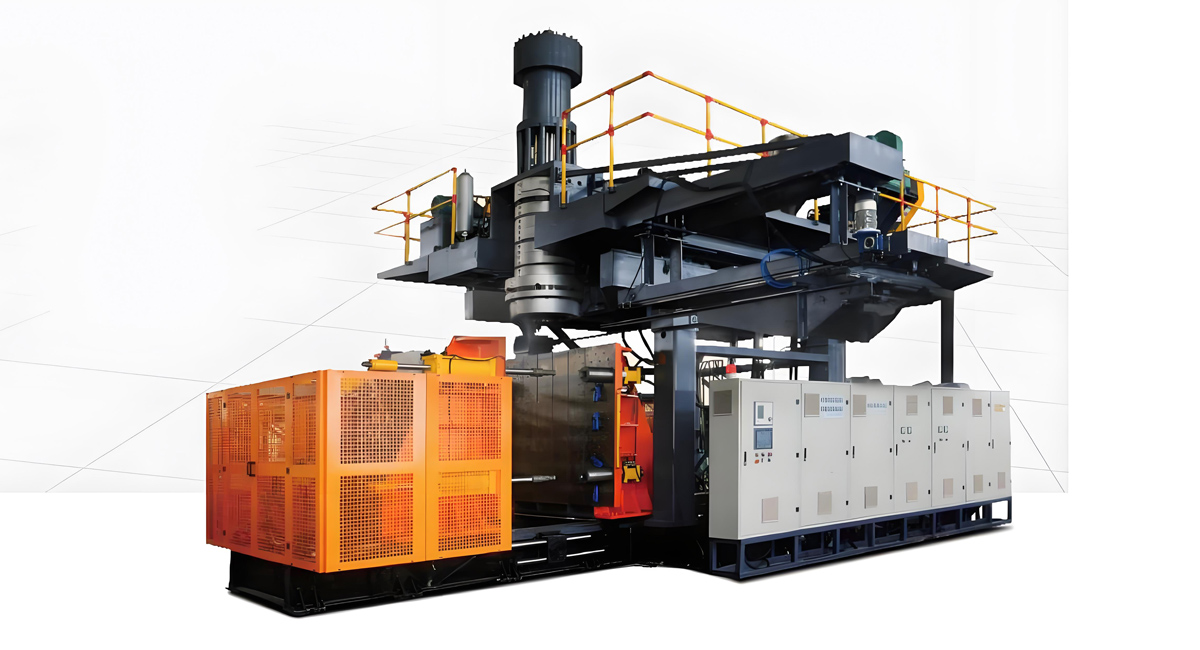
Apollo’s ABLD series extrusion blow molding machines are specifically designed for large capacity jerrycan production ranging from 20L to 1500L. These machines feature powerful clamping systems, large die heads, and robust construction that enables production of substantial containers with excellent leak-proof characteristics. The ABLD series represents the ideal solution for manufacturers producing industrial jerrycans, IBC containers, and large capacity storage tanks where container integrity is absolutely critical.
The ABLD series incorporates accumulator head designs that provide consistent parison delivery for large capacity containers. The accumulator system ensures uniform material distribution throughout the parison, preventing thickness variations that could create weak points and leak paths in large containers. The system also enables multi-layer production for enhanced chemical barrier and strength characteristics in large capacity jerrycans.
Key specifications of the ABLD series for jerrycan production include clamping forces from 200kN to 800kN, die diameters up to 300mm, and single or double station configurations that balance production capacity with container quality. The machines feature advanced control systems with wall thickness programming, multi-zone temperature control, and automated quality inspection that ensures consistent leak-proof production across all container sizes.
ABLB Series for Medium Capacity Jerrycans
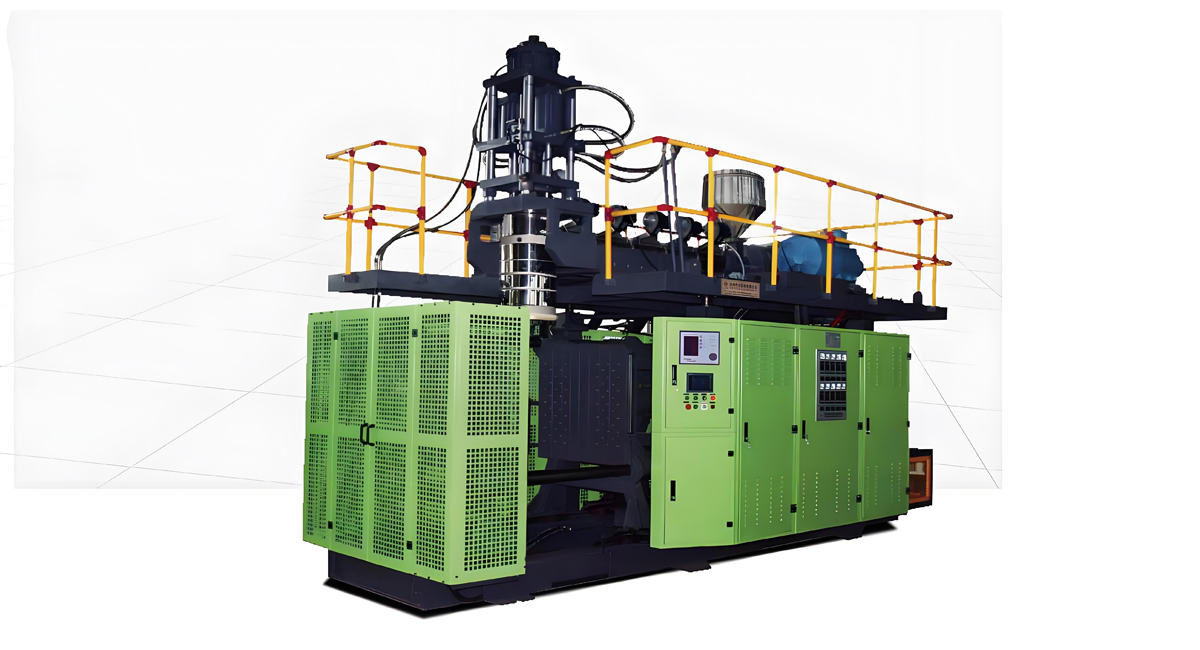
The ABLB series from Apollo covers the medium capacity range from 200ml to 20L, making it ideal for standard jerrycan sizes including 5L, 10L, 20L, and 25L containers. This series combines production efficiency with excellent quality control, making it suitable for manufacturers producing jerrycans for fuel oil, lubricants, chemicals, and food products where leak-proof performance is mandatory.
The ABLB series features continuous extrusion systems with single or multiple die heads that provide flexibility for different production requirements. Single head configurations offer simplicity and cost efficiency for focused production on specific jerrycan sizes, while multiple head systems enable high-volume production through simultaneous operation of several dies. Both configurations maintain the wall thickness control and process consistency necessary for leak-proof jerrycan manufacturing.
Popular models in the ABLB series for jerrycan production include the ABLB 75 (up to 8L), ABLB 90 (up to 16L), and ABLB 100 (up to 20L). These machines feature screw diameters from 75mm to 100mm, motor power from 22kW to 55kW, and production capacities ranging from 60 to 1600 containers per hour depending on configuration and jerrycan size. The advanced control systems in these machines ensure precise parameter control for consistent leak-proof production.
Fully Electric Models for High-Precision Applications
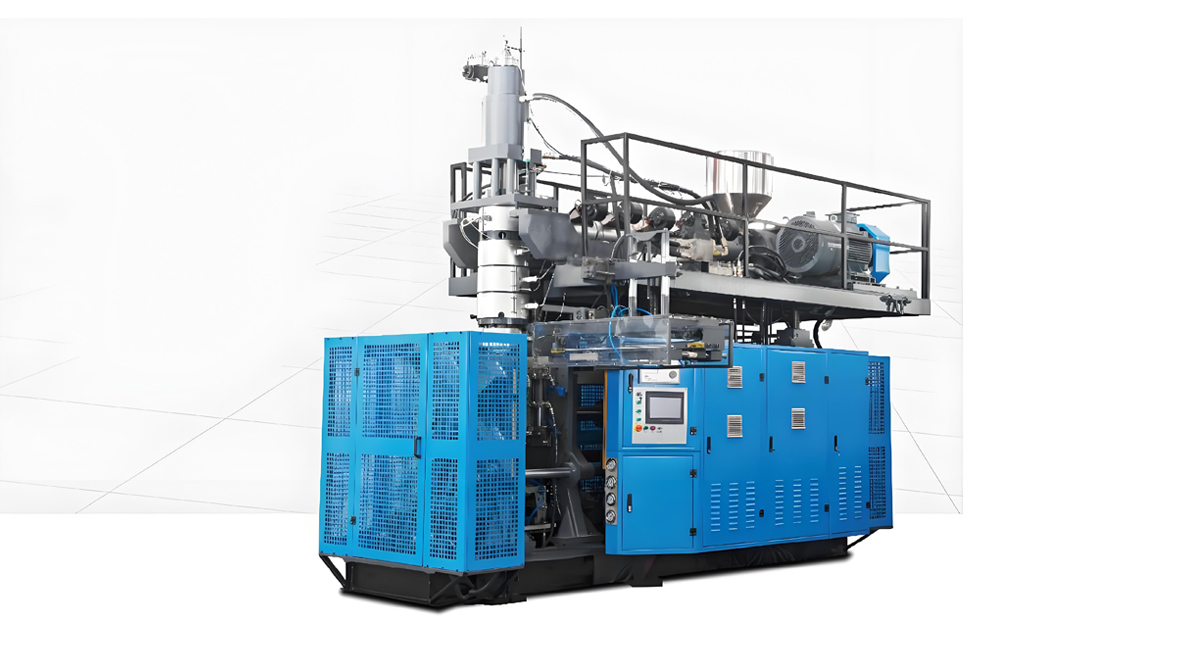
Apollo’s fully electric extrusion blow molding machine series (ABLE) represents the cutting edge of technology for leak-proof jerrycan production. These all-electric machines eliminate hydraulic systems that can introduce contaminants and process variations, providing the ultimate precision and cleanliness for applications requiring the highest quality standards. The fully electric series is particularly suitable for food-grade and pharmaceutical jerrycans where product contamination must be absolutely prevented.
The fully electric machines feature servo motors for all motion control, including screw rotation, die head positioning, mold closing, and blow pin actuation. This all-servo configuration provides unprecedented positioning accuracy (±0.03mm) and response time (less than 0.1 seconds) that enables perfect control over the entire blow molding process. The result is exceptional wall thickness uniformity and weld seam integrity that ensures leak-proof performance in every produced jerrycan.
Energy efficiency represents another significant advantage of Apollo’s fully electric jerrycan production machines. These systems consume 30-40% less energy compared to hydraulic models, reducing operating costs while improving precision. The absence of hydraulic oil also eliminates oil contamination risks that could compromise food-grade or pharmaceutical container production. Apollo fully electric models are available in sizes from ABLE 80 (up to 10L) to ABLE 110 (up to 30L), providing options for various jerrycan production requirements.
Production Process Optimization for Leak-Proof Performance
Temperature Control and Material Homogeneity
Precise temperature control throughout the extrusion and blow molding process represents a critical factor in achieving leak-proof jerrycan production. Apollo machines feature multi-zone temperature control with individual zone regulation that maintains optimal melt temperatures from the extruder barrel through the die head. This precise temperature control ensures proper material melting, homogeneous melt quality, and consistent material flow that prevents thickness variations and weak points in the final container.
The extrusion system in Apollo jerrycan machines incorporates efficient plasticization through twin-screw designs that ensure thorough material melting and mixing. The twin-screw configuration provides superior heat transfer and material homogeneity compared to single-screw systems, preventing unmelted particles or material inconsistencies that could create leak paths in the container structure. The system maintains melt temperature within ±1°C throughout the extrusion process, ensuring consistent material properties for leak-proof production.
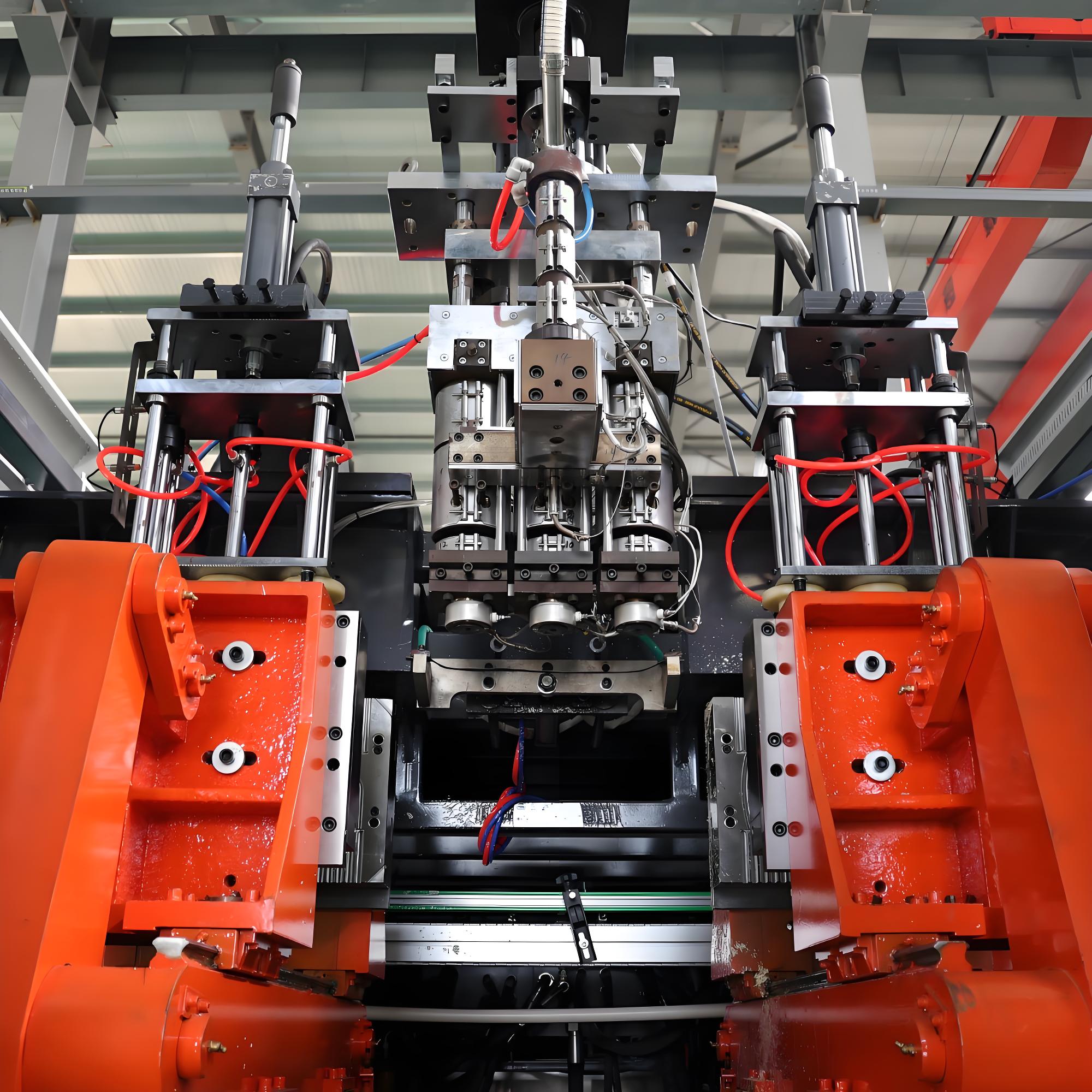
Die head temperature control is particularly critical for leak-proof jerrycan production, as variations in die temperature can affect parison thickness and weld seam formation. Apollo machines feature independent temperature control for die head zones that maintain optimal conditions for consistent parison formation. The die head design also incorporates heating elements that provide uniform heat distribution, preventing cold spots that could create weak weld seams.
Blow Pressure and Mold Cooling Optimization
The blow pressure system and mold cooling process significantly influence the final quality and leak-proof characteristics of plastic jerrycans. Apollo extrusion blow molding machines incorporate advanced blow pressure control that provides consistent, repeatable blowing conditions throughout production runs. The system maintains precise pressure levels that ensure complete container formation without over-stressing or under-forming that could create weak points or incomplete weld seams.
Apollo machines typically operate with blowing pressures of 0.6-0.8 MPa for jerrycan production, with precise pressure control within ±0.02 MPa. This pressure consistency ensures that every container receives identical blowing conditions, preventing production variations that could result in some containers meeting leak-proof requirements while others fail. The system also features pressure profiling that adjusts blowing pressure based on container geometry, optimizing pressure distribution for complex jerrycan shapes.
Mold cooling systems in Apollo jerrycan machines are designed for rapid, uniform cooling that prevents temperature-related defects and ensures consistent quality. The cooling system incorporates multiple cooling channels that provide even temperature distribution throughout the mold cavity, preventing warping or differential shrinkage that could compromise container integrity. The cooling capacity is matched to production requirements, ensuring adequate cooling time even at high production rates while maintaining quality standards.
Quality Control and Testing Integration
Integrated quality control systems in Apollo extrusion blow molding machines provide real-time monitoring and verification of leak-proof performance during production. These systems include inline inspection for dimensional accuracy, wall thickness verification, and leak detection that identifies defective containers before they proceed to downstream operations or reach customers. The integration of quality control directly into the production process enables immediate correction of process deviations and prevents production of defective batches.
Wall thickness measurement systems utilize ultrasonic or laser sensors that continuously monitor wall thickness at critical points throughout the container. The system compares measured thickness against programmed specifications and provides feedback to the wall thickness control system for automatic correction. This closed-loop control maintains wall thickness within tight tolerances (±0.05mm) throughout production, preventing thin wall areas that could create leak paths.
Leak testing systems integrate directly into the production line and perform pressure or vacuum testing on every produced jerrycan. The testing system applies pressure or vacuum and monitors for any indication of leakage, automatically rejecting containers that fail the test. This 100% inspection ensures that only leak-proof containers proceed to packaging and shipping, providing customers with confidence in product quality and preventing costly returns and recalls.
Material Compatibility and Applications
Fuel and Lubricant Jerrycans
Fuel and lubricant jerrycans represent one of the most demanding applications for leak-proof performance due to the chemical aggressiveness of the contents and the potential environmental consequences of leaks. Apollo extrusion blow molding machines produce jerrycans using specialized HDPE grades with enhanced fuel and chemical resistance, ensuring long-term performance without degradation or leakage. The machines maintain precise processing conditions that preserve material properties and achieve leak-proof performance essential for these demanding applications.
Fuel jerrycans typically require materials with excellent resistance to hydrocarbon degradation and environmental stress cracking. Apollo machines process HDPE grades with fuel resistance additives that prevent material degradation from long-term fuel contact. The processing conditions maintain the effectiveness of these additives while achieving the structural integrity necessary for leak-proof performance. The result is jerrycans that can safely store gasoline, diesel, and other fuels without developing cracks or leaks.
Lubricant jerrycans require similar leak-proof performance with additional considerations for different oil chemistries. Apollo machines produce lubricant containers that resist oil degradation while maintaining flexibility at low temperatures for use in cold environments. The precise control systems enable production of jerrycans with consistent wall thickness and handle strength that withstand repeated handling and pouring without developing leaks.
Chemical Container Production
Chemical jerrycans store industrial chemicals, solvents, and other aggressive substances that demand exceptional leak-proof performance and chemical resistance. Apollo extrusion blow molding machines produce chemical containers using specialized materials and processing techniques that ensure container integrity even with challenging chemical contents. The equipment’s ability to process multi-layer materials enables production of containers with barrier layers that prevent chemical permeation and degradation.
Chemical jerrycans often incorporate barrier layers such as EVOH or specialized nylon that provide chemical resistance while HDPE provides structural strength and cost efficiency. Apollo machines produce these multi-layer containers with excellent layer bonding and consistent thickness distribution across all layers. The multi-layer technology prevents chemical permeation that could cause material degradation and eventual leakage, ensuring long-term container performance.
Processing considerations for chemical jerrycans include maintaining material compatibility between layers and preventing contamination between different material streams. Apollo machines feature dedicated extruders for each material layer in multi-layer applications, ensuring that each layer receives appropriate processing conditions without cross-contamination. The system maintains precise control over material distribution ratios, ensuring consistent barrier layer thickness for reliable chemical resistance.
Food Grade and Pharmaceutical Jerrycans
Food grade and pharmaceutical jerrycans require the highest standards of leak-proof performance combined with hygiene and material safety considerations. Apollo extrusion blow molding machines, particularly the fully electric models, are designed for these demanding applications where container contamination must be absolutely prevented and leak-proof performance is mandatory. The machines incorporate clean design features, hygienic construction, and contamination prevention systems that meet food and pharmaceutical industry requirements.
Food grade jerrycan production requires materials certified for food contact and processing equipment that prevents contamination. Apollo machines for food applications feature stainless steel material contact surfaces, easy-clean designs, and contamination prevention systems that maintain hygienic production conditions. The all-electric models eliminate hydraulic oil contamination risks, making them ideal for food and pharmaceutical applications where product purity is absolutely essential.
Pharmaceutical jerrycans have even more stringent requirements, often requiring clean room compatible equipment and validated cleaning procedures. Apollo provides equipment options that meet pharmaceutical production requirements including clean room designs, validated cleaning systems, and documentation support for regulatory compliance. The machines produce pharmaceutical containers with leak-proof performance that meets the highest quality standards while maintaining the hygiene requirements essential for medical applications.
Economic Considerations and Cost Analysis
Equipment Investment Costs
Investment in extrusion blow molding machines for jerrycan production varies based on machine size, configuration, and included technology. Apollo offers a range of options to suit different production requirements and budget considerations. Entry-level machines for small jerrycan production typically range from $18,000 to $30,000, while mid-range models for standard jerrycan sizes cost $35,000 to $65,000. Large capacity machines for industrial jerrycans and IBC containers represent higher investments ranging from $80,000 to $300,000 depending on capacity and automation level.
Specific examples of Apollo jerrycan machine pricing include the ABLB 65 model for up to 5L jerrycans at approximately $26,000, the ABLB 75 model for up to 8L containers at $30,000 to $35,000, and the ABLB 90 model for 10-16L jerrycans at $45,000 to $55,000. These prices include standard configurations with essential leak-proof features. Advanced features such as wall thickness control systems, multi-layer production capability, and automated quality inspection add $10,000 to $30,000 to the base machine cost depending on configuration.
Hydraulic machines generally offer lower initial investment compared to fully electric models, with the hydraulic ABLB series costing 25-35% less than comparable electric ABLE models. However, the total cost of ownership analysis must consider operating costs, energy consumption, maintenance requirements, and quality factors that may make electric models more economical over the equipment lifecycle despite higher initial investment.
Operating Cost Analysis
Operating costs for jerrycan production machines include energy consumption, material usage, labor, maintenance, and quality-related costs. Apollo machines are designed for energy efficiency, with hydraulic models consuming 0.55-0.75 kWh per kilogram of produced material and fully electric models consuming only 0.23-0.35 kWh/kg. At typical production rates and energy costs of $0.15 per kWh, this represents annual energy cost savings of $15,000 to $25,000 for electric models compared to hydraulic alternatives.
Material costs represent the largest operating expense in jerrycan production, typically accounting for 60-75% of total variable costs. Apollo machines optimize material usage through precise wall thickness control that minimizes excess material while maintaining leak-proof performance. Average material yield for Apollo jerrycan machines exceeds 99.5%, reducing waste material costs to below 0.5% of material usage. For production consuming 500 tons of HDPE annually at $1.50 per kg, this material efficiency represents annual savings of $3,750 compared to 97% yield systems.
Maintenance costs for jerrycan production machines vary significantly between hydraulic and electric models. Hydraulic machines require regular oil changes (every 2000-2500 hours), filter replacement, and hydraulic system maintenance, with annual maintenance costs typically ranging from $5,000 to $10,000. Fully electric models eliminate hydraulic oil requirements and have fewer moving parts, reducing annual maintenance to $2,000 to $5,000. The 50-60% reduction in maintenance costs represents significant savings over the equipment lifecycle.
Return on Investment Analysis
The return on investment for extrusion blow molding machines for jerrycan production depends on production volume, product value, and market positioning. High-volume production of standard fuel or lubricant jerrycans typically achieves ROI in 18-30 months, while specialized applications such as chemical or pharmaceutical containers may require 24-36 months due to lower volumes and higher quality requirements. Apollo machines provide excellent ROI through their combination of leak-proof quality assurance, production efficiency, and competitive pricing.
Production capacity represents a key factor in ROI calculation, as higher production rates generate more revenue to offset equipment investment. Apollo’s double-station ABLB models can produce 1200-1600 jerrycans per hour depending on size, representing daily production of 10,000-13,000 containers in 8-hour operations. This high production capacity enables rapid payback of equipment investment, particularly for standard jerrycan types serving established markets.
Quality advantages of Apollo machines contribute to ROI through reduced customer returns, lower warranty costs, and enhanced market positioning. The leak-proof performance of Apollo-produced jerrycans reduces customer returns to below 0.1% compared to industry averages of 1-3% for less precise equipment. This quality advantage saves $20,000 to $50,000 annually in return processing and replacement costs for a production facility manufacturing 500,000 jerrycans per year.
Advanced Technologies and Future Developments
Smart Manufacturing Integration
Industry 4.0 technologies are transforming jerrycan production through enhanced automation, data analytics, and smart process control. Apollo extrusion blow molding machines incorporate IoT sensors, cloud connectivity, and advanced analytics that enable real-time monitoring, predictive maintenance, and process optimization. These smart manufacturing capabilities improve leak-proof performance consistency while reducing operating costs and improving overall equipment effectiveness.
Predictive quality systems analyze process data to anticipate potential quality issues before they affect production. The systems monitor wall thickness trends, weld seam formation, and other critical quality parameters, providing alerts when deviations indicate potential problems. This predictive capability enables operators to make adjustments before defective containers are produced, maintaining leak-proof performance while reducing scrap generation.
Digital twin technology enables simulation and optimization of jerrycan production processes without disrupting actual production. Apollo provides digital twin capabilities that simulate different machine configurations, material combinations, and processing parameters to identify optimal conditions for leak-proof production. This technology accelerates development of new jerrycan designs and optimizes existing production without risking current production.
Material Innovations and Sustainability
Material innovations continue to enhance leak-proof performance while improving sustainability characteristics of plastic jerrycans. Apollo machines are designed to process these advanced materials including bio-based polymers, recycled content materials, and multi-layer structures with enhanced barrier properties. The ability to process these materials positions manufacturers for evolving market requirements and sustainability initiatives.
Recycled HDPE usage in jerrycans represents a growing trend driven by sustainability requirements and cost considerations. Apollo machines process recycled HDPE with the same precision and leak-proof performance as virgin materials, enabling manufacturers to incorporate recycled content without compromising quality. The equipment’s advanced filtration and homogenization systems ensure consistent quality even with recycled materials that may have variable characteristics.
Multi-layer jerrycans incorporating barrier layers provide enhanced chemical resistance while reducing material requirements for equivalent performance. Apollo’s multi-layer production technology enables containers with thin barrier layers that provide chemical protection while HDPE layers provide structural strength. This material efficiency reduces material usage by 10-20% compared to single-layer thick-wall containers, improving sustainability while maintaining leak-proof performance.
Automation and Labor Optimization
Automation systems integrated with Apollo extrusion blow molding machines reduce labor requirements while improving consistency and quality in jerrycan production. Automated systems include robotic material handling, automatic container take-out, inline quality inspection, and integrated packaging systems that minimize manual intervention while enhancing production efficiency.
Robotic material handling systems automatically load raw materials into hoppers and convey finished containers to packaging stations. These systems reduce labor requirements by 1-2 operators per shift while improving material handling consistency. The precise material feeding maintained by automated systems reduces material variations that could affect melt quality and leak-proof performance.
Automatic take-out systems remove finished jerrycans from molds and place them on conveyors or packaging stations. These systems operate with precision that prevents container damage during removal, maintaining leak-proof performance through final handling stages. The automation also increases production speed by 15-25% compared to manual removal, improving overall equipment utilization and ROI.
Conclusion
Extrusion blow molding machines designed for plastic jerrycan production must achieve exceptional leak-proof performance while maintaining production efficiency and economic viability. Apollo extrusion blow molding machines establish industry leadership in this demanding application through advanced technologies, precision engineering, and comprehensive quality systems that ensure every produced container meets the highest standards for leak prevention.
The combination of precision parison control, weld seam enhancement, material compatibility, and integrated quality assurance makes Apollo equipment the optimal choice for manufacturers producing leak-proof jerrycans for fuel, chemical, lubricant, and food applications. The available range from hydraulic ABLD and ABLB series to fully electric ABLE models provides options suitable for various production requirements, quality standards, and budget considerations.
As requirements for container integrity continue to evolve and sustainability considerations become increasingly important, Apollo’s commitment to innovation and technology advancement ensures that customers benefit from the latest developments in leak-proof jerrycan production. The integration of smart manufacturing, material innovations, and automation systems positions manufacturers for future success while maintaining the quality standards that customers demand and applications require.