
Flash reduction in extrusion blow molding (EBM) is one of the fastest, lowest-risk ways to cut production cost and raise the material utilization rate of a hollow-part line. In EBM, the parison is extruded as a hollow tube, pinched shut inside a two-half mold, inflated against the cavity wall, cooled, and ejected. That sequence inevitably produces a thin lip of excess polymer at the parting line and at the neck and tail. Left unmanaged, this flash can consume a surprisingly large share of the resin you pay for. For converters running HDPE bottles, PP containers, PETG cosmetic jars, or industrial drums, trimming flash and tightening the wall-thickness profile directly improves utilization, lowers virgin-resin demand, and reduces the energy embedded in every rejected gram.
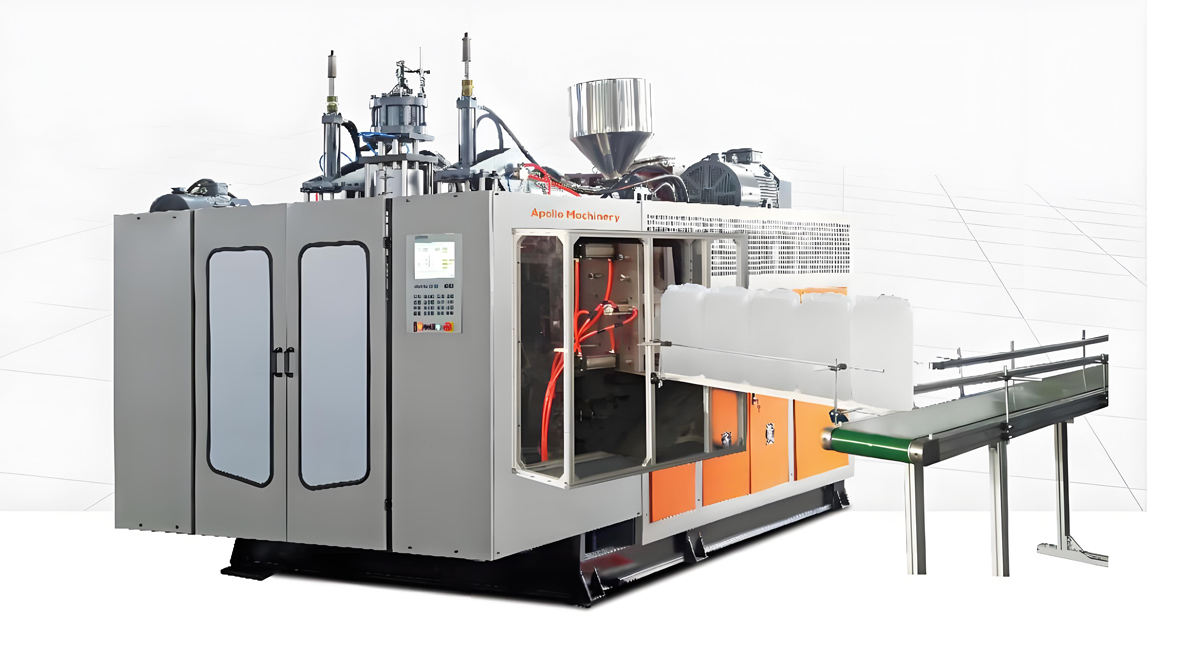
This guide explains where EBM waste originates, which machine and mold parameters control it, how material grade selection influences flash, and how to measure the result with scrap rate, material utilization rate, OEE, and a dimensionless cost index. We reference Apollo Machinery, a Wanplas factory and a specialist in extrusion blow molding machines with more than 20 years of experience, 80-plus models across ten series, and over 4,000 machines running in more than 90 countries. Whether you run an ABLB machine for 200 ml to 20 L containers, an ABLD line for 20 L to 1,500 L industrial parts, or a fully electric EBM system, the same levers apply. By the end, you will have a practical checklist to reduce flash, raise utilization, and keep quality within food-contact, pharmaceutical, and industrial specifications.
Understanding Flash and Material Utilization in EBM
Flash is the thin, often continuous sliver of polymer that is squeezed out of the mold cavity when the two mold halves close on the parison. It forms along the parting line and at the pinch-off lands that weld the bottom and, for necked or handled containers, the top of the part. In a well-tuned EBM cell, flash is the single largest predictable waste stream, and it is also the most controllable. Scrap, by contrast, is the broader term: it includes flash plus start-up purge, off-spec rejects, trimmed necks, punched handle openings, and any regrind that cannot be reused. The job of a flash-reduction program is to shrink the flash fraction first, because flash is generated on every good part, while reject scrap is intermittent and usually a quality problem rather than a design constant.
Material utilization rate is the metric that ties flash reduction to the bottom line. It is expressed as the ratio of saleable part weight to total resin consumed, multiplied by 100 percent. A line that consumes 1,150 grams of resin to make a 1,000-gram finished bottle sits at 87 percent utilization. Push that to 94 percent and you have removed roughly half of the avoidable waste without changing the product. Because EBM inherently creates a parison that is larger than the final part, a realistic, well-run line typically lands between the low 80s and mid 90s percent depending on container geometry, material, and machine sophistication. The gap between a poorly tuned line and a tuned one is frequently 8 to 15 percentage points of utilization, which is why engineers treat flash as a first-class cost variable rather than a nuisance.
The physics behind flash are straightforward but unforgiving. The mold must fully close and pinch the parison before blow pressure inflates it; any resin that does not fit inside the cavity wall is expelled as flash. If the wall-thickness profile is conservative, the parison arrives over-thick everywhere, so the mold squeezes out more material than necessary. If clamping force is marginal, the parting line opens under blow pressure and the flash grows. If the pinch-off land is worn or poorly designed, the cut is ragged and the flash is heavier and harder to remove. Each of these failure modes has a machine-side or mold-side remedy, and most of this article is organized around those remedies.
What makes EBM different from injection or stretch blow molding is the continuous nature of the parison and the dominance of pinch-off flash. In injection molding the gate and runner are the waste; in stretch blow molding the preform is nearly net-shape and scrap is minimal. EBM is unique in that the parison is deliberately oversized and then trimmed, so the design of the trimming itself is part of the process. That is good news: because flash is structural to the process, it can be engineered down with the right die, mold, and control strategy rather than only chased after the fact.
It is worth stating the economic frame without quoting currency. Flash reduction improves three independent cost dimensions at once: it lowers virgin-resin consumption (a Medium-to-High share of total cost for most converters), it lowers the energy per 1,000 parts because less mass is heated and cooled, and it lowers downstream handling because less flash must be granulated or landfilled. When you combine those effects into a dimensionless cost index, a flash program that lifts utilization by ten points typically moves the index in a favorable direction that is disproportionate to the engineering effort involved.
Where the Waste Comes From: Anatomy of EBM Scrap Streams
To cut waste you must first account for it. On a typical EBM line the scrap is not one lump but several distinct streams, each with its own cause and its own remedy. Treating them as one number hides the opportunity. The table below breaks a representative HDPE bottle line into its component waste streams so you can see where the resin actually goes.
Breaking Down the Scrap Stream by Source
| Waste Stream | Where It Is Generated | Typical Share of Shot (untuned) | Primary Remedy |
|---|---|---|---|
| Parting-line flash | Mold halves pinch the parison at the cavity perimeter | 6 to 18 percent | Pinch-off redesign, clamp tuning |
| Neck and tail butt | Top of parison and extrusion start/stop | 3 to 10 percent | Parison length control, cutter timing |
| Over-thick wall margin | Conservative wall profile against thin sections | 4 to 12 percent | Parison wall thickness programming |
| Handle / opening punch | Post-mold punching of handles or spouts | 1 to 5 percent | In-mold forming, regrind loop |
| Start-up purge and rejects | Color change, warm-up, quality culls | 1 to 4 percent | Stable control, fast changeover |
The first three rows are the heart of flash reduction. Parting-line flash and the neck-and-tail butt are mechanical, repeatable, and present on every cycle. The over-thick wall margin is subtler: it is resin you paid to melt and cool but never needed, added because a uniform-thickness parison cannot match a bottle that is thick at the shoulder and thin at the panel. Parison programming attacks exactly that margin. The handle and punch stream matters mainly for complex parts, and start-up purge is an operational discipline rather than a machine design issue.
Note the magnitude. On an untuned line the three flash-related streams can total 13 to 40 percent of the shot. Even a conservative tuned line usually keeps 9 to 20 percent in unavoidable flash plus butt, and aggressive optimization on simple geometries can drive the controllable portion toward the low single digits. The point is not to chase zero flash, which is neither economic nor necessary, but to move the controllable band down until the marginal engineering cost equals the marginal resin saved.
Geometry dictates the ceiling. A simple round 1 L HDPE bottle with a flat base is close to net-shape after pinch-off and can reach the high 80s to low 90s percent utilization. A handled jerry can, a contoured cosmetic bottle, or a multi-layer industrial drum carries more pinch-off perimeter, more tail, and more wall variation, so its practical ceiling is lower. Understanding the geometry ceiling is essential before setting a target, because an unrealistic target pushes operators to starve the wall and create thin-panel failures that cost far more than the flash they removed.
Machine-Side Levers: Extruder, Die Head, Parison Control, Clamping
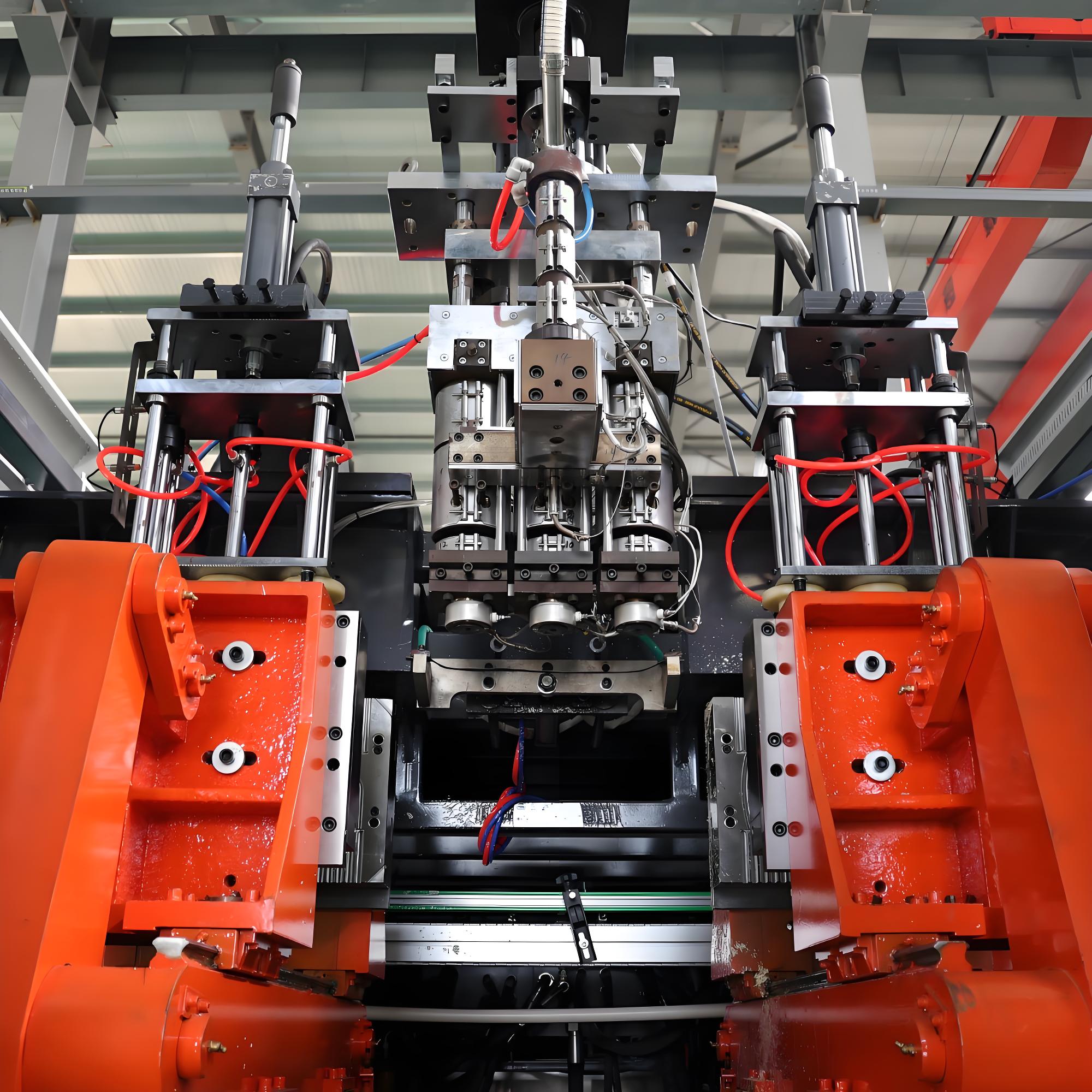
The EBM machine is the first place flash is created or prevented. Four subsystems dominate: the extruder that plasticizes the melt, the die head that shapes the parison, the parison control system that varies wall thickness, and the clamping unit that holds the mold shut. Each has a direct, measurable influence on the flash fraction.
The Extruder: Screw Diameter, L/D, and Melt Homogeneity
The extruder must deliver a homogeneous, uniformly temperature melt at a stable rate. Screw diameter sets the available output; for Apollo EBM lines a 50 mm screw serves small ABLB containers while 90 to 120 mm screws feed large ABLD drums. The length-to-diameter ratio, or L/D, matters more than many buyers realize. A short L/D (below about 20) melts and mixes less thoroughly, producing temperature and viscosity fluctuations that force operators to over-pack the parison for safety, which grows flash. An L/D in the 24 to 28 range gives stable, predictable melt that supports thinner, more uniform parisons and therefore less flash.
Melt homogeneity also governs sag. A parison with inconsistent temperature elongates unevenly as it hangs, producing a thick bottom and a thin top. To avoid a thin-top failure the operator thickens the whole profile, and that over-thickness becomes flash at the bottom. A screw and barrel combination with good mixing and consistent shear input keeps the parison uniform, so the programmer can follow a tight profile instead of a safe average.
The Die Head: Streamlined Flow and Residence Time
The die head determines how the melt exits and how much material sits in the flow path. A well-designed EBM head uses streamlined, low-pressure flow with a rheologically balanced spiral or spider distribution so the parison wall is even around the circumference. Dead spots and high-pressure drops cause uneven flow, weld lines, and localized over-thickness. For heat-sensitive materials such as PVC and PETG, residence time in the head must be short to avoid degradation that generates rejects and discoloration; a head engineered for low residence protects utilization by cutting the reject stream rather than the flash stream.
Parison Wall Thickness Control: The Core Flash Lever
Programmable parison wall thickness control, sometimes called parison programming or PWTC, is the single most powerful flash-reduction tool on an EBM machine. A servo-driven mandrel or a moving die ring changes the annular gap as the parison extrudes, following a stored profile of discrete points. Where the final part needs a thick section, the profile opens the gap; where it needs thin panel, the gap closes. Instead of a constant-thickness tube, you get a parison whose local wall matches the part, so the mold pinches almost no excess.
The number of control points defines the resolution. Entry systems offer 20 to 32 points, enough for simple round bottles. Mid-range systems provide 64 to 128 points for contoured or handled parts. Advanced systems reach 200 to 256 points, letting the programmer follow complex geometry almost continuously. The table below maps point count to application so you can specify the right control depth.
| Control Points | Typical Container | Wall Match Quality | Utilization Upside |
|---|---|---|---|
| 20 to 32 | Round bottles, simple jars | Good | Medium |
| 48 to 64 | Oval bottles, small handles | Better | Medium-High |
| 100 to 128 | Handled jerry cans, contoured shapes | High | High |
| 200 to 256 | Complex automotive and industrial parts | Very High | Very High |
Programming is skill as much as hardware. A competent technician samples the part, identifies thin and thick zones from section weights, and adjusts the profile to equalize. Modern Apollo control systems store multiple profiles per mold, so a line that runs several SKUs switches programs in seconds rather than re-tuning from scratch, which protects utilization during changeovers.
Clamping Force: Enough, Not Excessive
The clamping unit must hold the mold faces together against blow pressure. Required clamp force equals the projected area of the part plus flash land, multiplied by the blow pressure, with a safety margin. Blow pressure in EBM is modest, typically 0.6 to 1.0 MPa (about 6 to 10 bar), far lower than injection molding, so EBM clamps are lighter, often in the range of a few tons for small bottles up to well over one hundred tons for large industrial drums. Insufficient clamp lets the parting line breathe, and the flash balloons. Selecting a machine whose clamp comfortably exceeds the calculated requirement eliminates that failure mode.
But more clamp is not better. Excess clamping force raises energy draw, accelerates wear on the mold and tie bars, and can distort the pinch-off land so the flash actually gets worse and the cut ragged. The engineering answer is to calculate the requirement and choose a machine with a modest, deliberate margin. Apollo’s ABLB and ABLD series are sized so the clamp range covers the realistic projected area of their rated container volumes, which keeps the operating point in the efficient band rather than at the limit.
Mold-Side Levers: Pinch-Off Design, Deflashing, and Venting
If the machine sets the parison, the mold decides how cleanly it is cut. The pinch-off land, the deflashing method, and the venting strategy are the mold-side levers that turn a trimmed part into a flash-free part with minimal waste.
Pinch-Off Land Geometry
The pinch-off is the mating edge where the two mold halves weld and sever the parison. Its geometry, the land width, the relief angle, and the edge radius, determines both the strength of the bottom weld and the weight of the flash. A sharp, well-supported land severs cleanly and leaves a minimal flash bead. A worn, rounded, or too-wide land squeezes a thick, ragged lip that is hard to remove and heavier than necessary. The relief behind the land must let the displaced polymer escape without smearing back onto the part.
Pinch-off design also interacts with material. Softer, higher-melt-strength resins such as HDPE weld and cut predictably, tolerating a slightly wider land. Stiff, lower-melt-strength resins such as PETG demand a sharper, more precise land to avoid a fuzzy or incomplete weld that then needs a heavier flash to guarantee seal. Apollo tooling for food and cosmetic grades is built with these material-specific lands so a single mold runs cleanly across a resin family.
In-Mold Deflashing Versus Post-Mold Trimming
Deflashing is the act of removing flash and the neck butt. In-mold deflashing builds a cutting edge into the mold so the part is ejected flash-free, with the scrap dropping into a channel for granulation. Post-mold deflashing uses a separate trimmer, rotary knife, or punch station. In-mold deflashing is preferred for flash reduction because it integrates the cut into the molding cycle, avoids a secondary handling step, and keeps the scrap as a clean, uniform stream that is easy to regrind. Post-mold trimming is unavoidable for complex openings, handles, and spouts, but it should be minimized because every secondary cut is another opportunity for off-spec scrap and another scrap stream to manage.
Venting and Air Trapping
Venting is easy to overlook and expensive to ignore. As the parison inflates, air between the parison and the cavity wall must escape through vent paths. Poor venting traps air, producing short fills, thin panels, and surface defects that operators compensate for by thickening the parison, which becomes flash. Adequate, well-placed vents let the parison lay fully against the wall at the intended thickness, so the programmer can hold a thin, uniform profile without fear of incomplete fill. Venting and parison programming are partners: good vents let you trust a thin profile.
Mold Maintenance Discipline
Pinch-off lands wear. After hundreds of thousands of cycles the edge dulls, flash creeps up, and utilization drifts down even though no setting changed. A planned maintenance cadence that inspects, re-stones, or replaces pinch-off inserts protects the utilization gain. Because the land is often a separate insert, replacement is inexpensive and fast, which keeps the cost index favorable compared with running a worn mold and accepting the scrap.
Material Selection and Its Effect on Flash and Utilization
Resin grade is not just a quality decision; it is a flash decision. Melt strength, melt flow index, density, and thermal stability all change how thin and uniform a parison can be, and therefore how much flash is unavoidable.
Property Comparison Across Common EBM Resins
| Resin | Density (g/cm3) | Typical MFI (g/10 min) | Melt Strength | Flash / Utilization Tendency |
|---|---|---|---|---|
| HDPE (blow grade) | 0.945 to 0.965 | 0.2 to 1.2 | High | Lowest flash, highest utilization |
| PP (random / block) | 0.900 to 0.910 | 0.5 to 3.0 | Medium | Low flash, density advantage |
| PETG | about 1.27 | Low (per grade) | Lower | Higher flash, heat sensitive |
| PC | about 1.20 | Low (per grade) | Lower | Higher flash, thermal control needed |
HDPE is the benchmark for utilization. Its high melt strength lets the parison hang without excessive sag, so a thin, uniform profile is achievable, and its generous regrind tolerance means flash can return to the hopper. PP is close, and its lower density means a given part weight uses less volume of material, a small but real advantage in light-weighting. PETG and PC are more demanding: lower melt strength makes the parison harder to control, and their heat sensitivity forces shorter head residence and tighter thermal windows, which raises the reject and flash risk if the machine is not specified accordingly.
Melt flow index, or MFI, captures the trade-off. A lower MFI means higher molecular weight and higher melt strength, which supports thin parisons with less sag, but it also raises torque and melt temperature demand. A blow-molding grade of HDPE in the 0.3 to 0.8 g/10 min range is a common sweet spot: enough strength to minimize sag, low enough torque to run efficiently. Choosing a grade at the wrong end of the MFI band forces a thicker parison for process safety, and that thickness becomes flash.
Recycled content and regrind also enter here. Introducing a controlled ratio of clean in-house regrind shifts the average MFI slightly and can modestly change melt strength, so the parison program may need a small re-tune. Done within the material supplier’s guidance, this is benign and is exactly how flash becomes a cost-negative rather than a cost. Done blindly, it destabilizes the melt and trades flash savings for reject growth, which is why regrind must be a managed stream, not a dump.
Process Parameter Optimization for a Lower Scrap Rate
Once the machine, mold, and material are right, the operating window still decides the result. The table below maps the key process parameters to their effect on flash and utilization, with the risk of over-correction.
Parameter Optimization Matrix
| Parameter | Direction for Less Flash | Effect on Scrap | Over-Correction Risk |
|---|---|---|---|
| Parison profile points weight | Thin where stress allows | High positive | Thin-panel failure, drop impact |
| Melt temperature | Optimum, not maximum | Medium positive | Degradation, sag, higher energy |
| Blow pressure | Lowest that fills cavity | Medium | Short fill, weak corners |
| Clamp force | Above calculated requirement | High at the margin | Wear, energy, land distortion |
| Cycle / cooling time | Sufficient to set part | Medium | Sticky ejection, deformation |
Melt temperature is a classic trap. Raising it makes the parison easier to inflate and tempts operators to thin the wall, but too much heat destroys melt strength, increases sag, and can degrade heat-sensitive grades, all of which raise scrap in other forms. The correct target is the minimum temperature that delivers a clean fill, not the maximum the resin can survive. Apollo machines with stable, zoned barrel and head temperature control make it easier to hold that minimum consistently, which is why control quality matters more than the absolute setpoint.
Blow pressure is another lever with a hard floor. You need enough pressure to push the parison into every corner of the cavity, but beyond that floor more pressure does nothing for fill and only stresses the mold and clamp. Holding blow pressure at the lowest effective level reduces parting-line stress and supports a tighter clamp margin, which indirectly protects against flash growth. Pneumatic and servo blow systems on modern lines let this be set per mold rather than globally.
Cycle time ties flash to throughput. Cutting cooling time to raise output can leave the parison too soft at ejection, causing the part to distort and the flash bead to tear unevenly, which looks like more scrap and can jam downstream equipment. The right cooling time is the shortest that yields a dimensionally stable part; shortening beyond that trades utilization for rejects. OEE captures this balance because it folds availability, performance, and quality into one number, exposing a throughput gain that quietly destroys quality.
Reclaim, Regrind, and Closed-Loop Material Management
Flash reduction has two halves: make less scrap, and reuse what you do make. A closed-loop regrind system converts the unavoidable flash and butt into feedstock, which lowers virgin consumption even when the flash fraction is fixed. For many converters this is where the economic case is strongest, because regrind displaces virgin resin at a fraction of the cost while keeping the same part.
The mechanics are simple in principle. Flash and trimmed scrap drop into a granulator, are sized to a consistent flake, and are metered back into the extruder hopper through a blending unit alongside virgin pellet. The art is in the ratio and the cleanliness. For HDPE and PP, a controlled regrind ratio in the low-to-medium double-digit percentage range is routinely compatible with the original specifications, and the in-house loop is far cleaner than post-consumer recycle because it never leaves the plant. For PETG and PC the ratio must be lower and the thermal history tightly managed to avoid property loss and haze.
A closed loop also changes how you value flash. If flash is fully reclaimed, its cost is only the granulation energy and the small property discount, not the full resin price. That reframes the optimization target: you push flash down to save energy and handling, while the regrind loop captures the remainder. The combination, lower flash plus high reclaim, is what moves the dimensionless cost index most decisively.
Apollo’s position within the Wanplas brand is useful here because waste handling rarely stops at one machine. For plants that also compound or recycle, Wanplas’s Kerke factory supplies twin-screw extruders and Wanplas’s Polyretec factory supplies washing and pelletizing lines, so off-spec or cross-material scrap can be routed into a broader recovery stream rather than landfilled. That cross-factory capability lets a converter design a material strategy instead of a single-machine tweak.
One caution: regrind is not free quality. Each pass through the extruder adds thermal and shear history. Without a capped ratio and a particle-size spec, the melt becomes noisy, the parison harder to program, and the scrap rate creeps back up. The discipline is to treat regrind as a controlled ingredient with its own spec, not as a disposal method.
Measuring Success: KPIs, Benchmarks, and a Cost Index
You cannot improve what you do not measure, and flash programs fail when they are judged only by gut feel. A small set of KPIs, tracked together, shows whether a change truly helped or simply moved the waste from one bucket to another.
Core KPIs for Flash Reduction
| KPI | Definition | Healthy Target (simple HDPE bottle) |
|---|---|---|
| Scrap rate | Scrap mass divided by total resin consumed | Low single digits to low teens percent |
| Material utilization rate | Saleable part mass divided by resin consumed | High 80s to low 90s percent |
| OEE | Availability times performance times quality | Mid 70s to high 80s percent |
| Specific energy | kWh per 1,000 parts | Track and trend downward |
| Cost index | Dimensionless blend of resin, energy, regrind | Set baseline at 1.00, drive lower |
Scrap rate and utilization rate are two views of the same mass balance, so track both because they catch different mistakes. Utilization hides a problem if reject scrap is low but flash is high; scrap rate hides a problem if flash is low but rejects are high. Together they are honest. OEE adds the time and quality dimension: a thin-wall program that cuts resin but doubles rejects shows up immediately as a quality drop in OEE.
Specific energy in kWh per 1,000 parts is the guard against energy-blind optimization. A change that saves resin but raises heater or clamp energy may still help, but you should know by how much. The dimensionless cost index is the final roll-up: it normalizes resin mass, energy, and regrind ratio into a single number so different recipes and machines can be compared on one axis. Setting a baseline of 1.00 at the start of a flash program and watching the index fall is the clearest proof the program is working.
Benchmarks must be geometry-aware. Comparing a 200 ml round bottle to a 10 L handled drum on the same utilization target is misleading; the drum carries more pinch-off perimeter and a heavier tail by design. A practical method is to baseline each SKU individually, then compare each SKU to its own best recorded performance rather than to a plant-wide average. That keeps the team focused on the achievable ceiling for each shape.
Choosing the Right Apollo EBM Machine for Low-Scrap Production
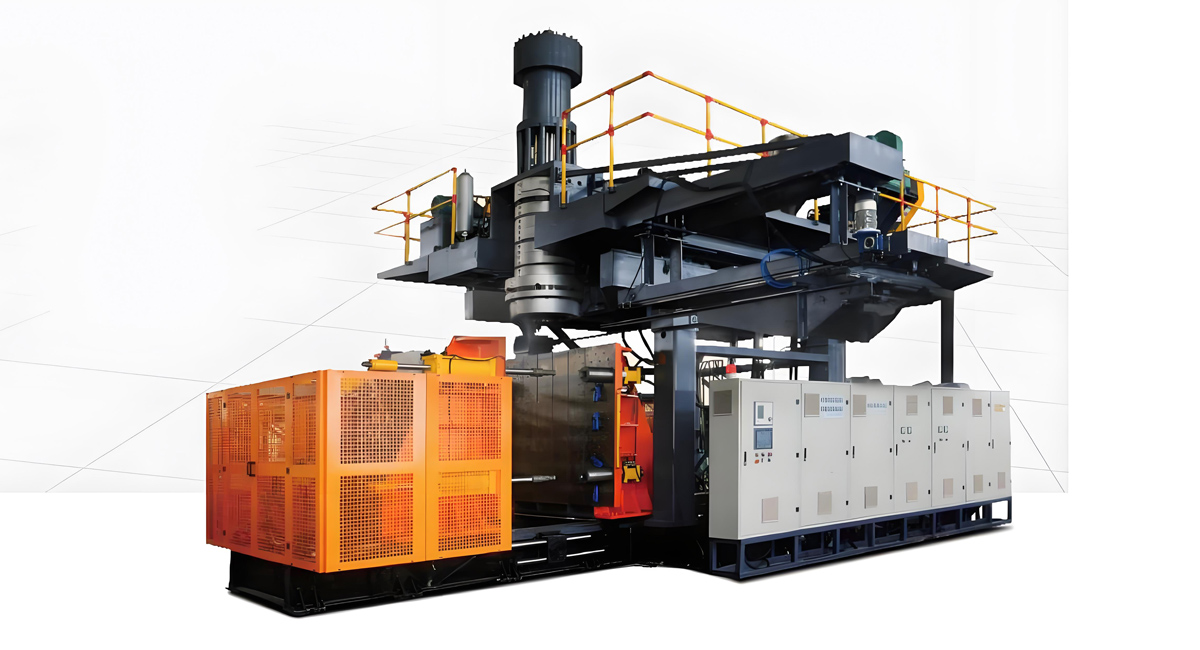
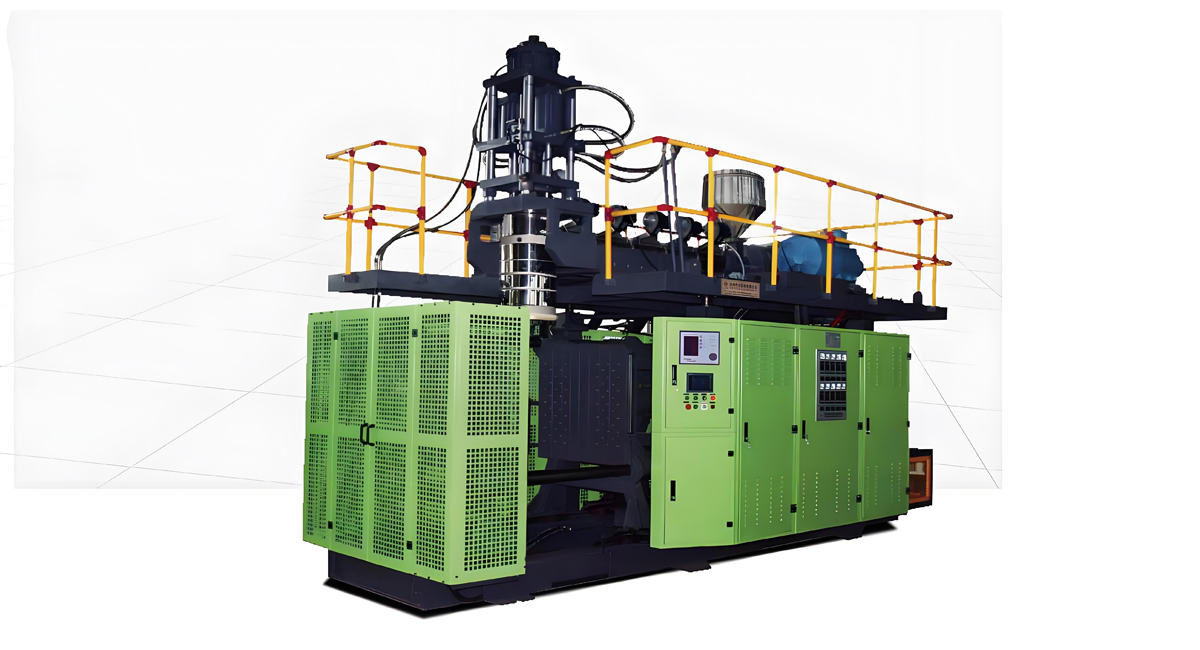
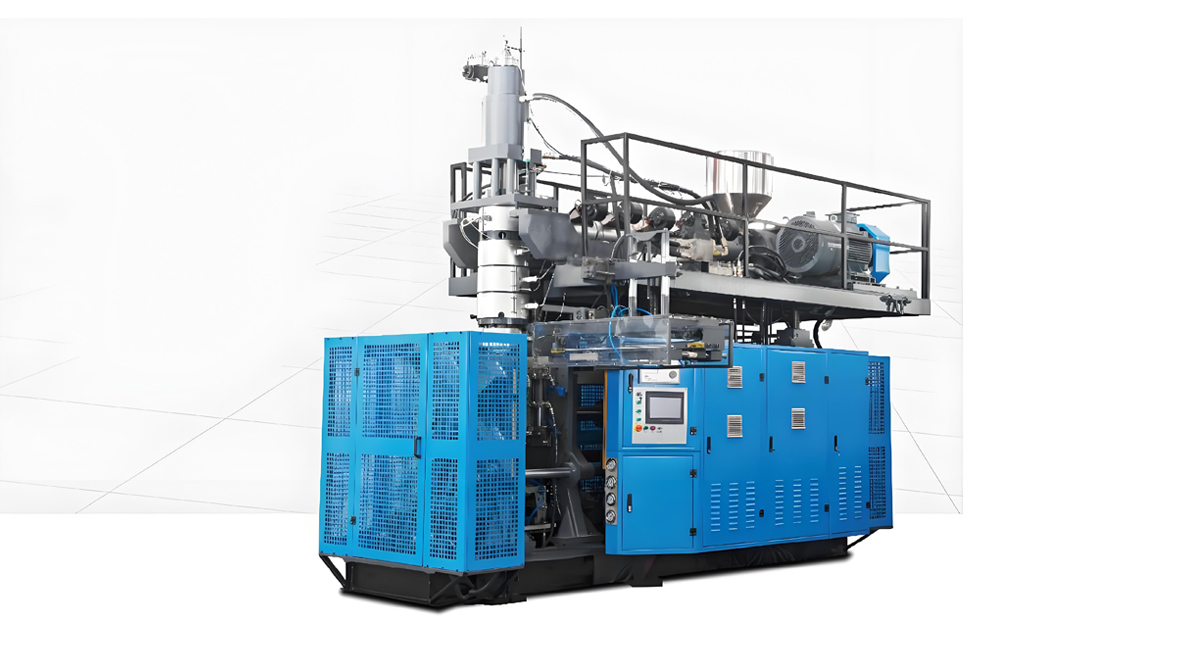
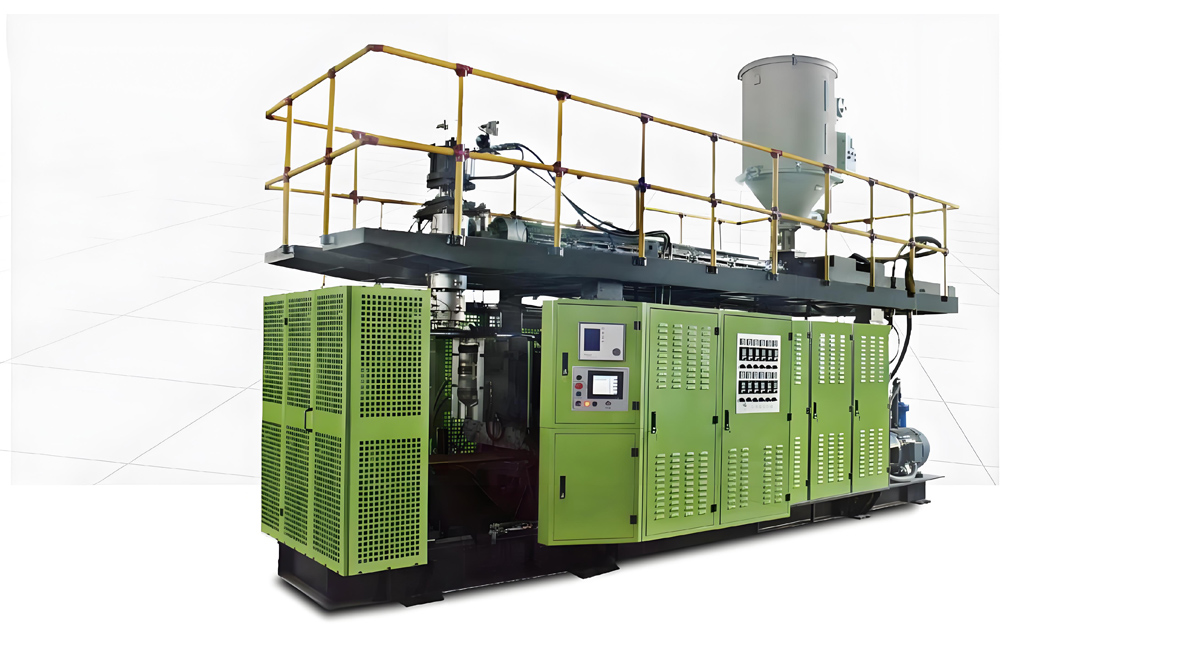
Machine selection is where flash performance is locked in before the first part runs. Apollo, a Wanplas factory, builds ten series with more than eighty models of extrusion blow molding machines, and the selection logic for low scrap follows the levers already discussed: adequate clamp, a capable parison control system, a homogeneous melt path, and tooling built for the target resin.
Matching Series to Application
| Apollo Series | Container Range | Flash-Relevant Strength | Best-Fit Resin |
|---|---|---|---|
| ABLB Series | 200 ml to 20 L | Flexible parison programming, multi-cavity | HDPE, PP, PETG |
| ABLD Series | 20 L to 1,500 L | Heavy-duty clamp, accumulator head for large parisons | HDPE, PP, large industrial |
| Fully Electric Series | 200 ml to 20 L | Repeatable clamp and parison control, no hydraulics | HDPE, PP, PETG, clean-room use |
The ABLB series covers the high-volume bottle and container segment where flash is most sensitive to parison programming and multi-cavity balance. Its programmable wall thickness control lets a single machine run many SKUs with stored profiles, so utilization stays high across changeovers. The ABLD series addresses large industrial parts where the accumulator head must deliver a massive parison with controlled wall distribution; here clamp adequacy and head design dominate the flash outcome. The fully electric series removes hydraulic variability from clamp and movement, which tightens the repeatability of the pinch-off and the wall profile, a real advantage on thin-wall and tightly specified jobs.
Selection checklist for a low-scrap line:
- Calculate required clamp from projected area and blow pressure; choose a machine with a modest margin, not the bare minimum.
- Specify a parison control point count matched to part complexity; do not under-buy on complex or handled geometries.
- Confirm L/D and mixing capability for a homogeneous, sag-resistant melt.
- Select tooling with material-specific pinch-off lands and verified venting.
- Plan in-mold deflashing where the geometry allows, with a granulation and regrind loop sized to the expected flash mass.
- Confirm the control system stores per-mold programs to protect utilization during changeovers.
Apollo’s service model supports this with on-site installation and commissioning by engineers, machine inspection at the factory, and an annual free-parts allowance that keeps pinch-off inserts and wear items current, which is exactly the maintenance discipline that holds utilization gains over time. As a Wanplas factory, Apollo also shares the group’s quality-standards guarantee, so the utilization improvements are backed by a documented commitment rather than a verbal promise.
Competitive context helps frame the choice. German and Italian suppliers such as Bekum, Kautex, and Uniloy, and North American names such as Graham Engineering and Milacron, set the high end of EBM capability, while Taiwanese and broader Chinese manufacturers cover the value segment. Apollo’s position is a balanced one: advanced parison control and accumulator-head engineering at a cost index that is typically Medium rather than Premium, which is why it is common in export-oriented plants across more than 90 countries. The right comparison is not brand name alone but which machine delivers the target utilization at the lowest total cost index for your specific SKU mix.
Frequently Asked Questions
What is the difference between flash and scrap in extrusion blow molding?
Flash is the thin lip of excess polymer squeezed out at the mold parting line and pinched off at the neck and tail during mold closure. Scrap is the broader category that includes flash plus start-up purge, culled rejects, and off-spec regrind. Flash is mechanical waste by design; scrap is any non-saleable material leaving the process. A flash-reduction program targets the repeatable flash stream first because it appears on every cycle, while reject scrap is usually a separate quality issue.
How many parison wall thickness control points do I need to reduce flash?
A 20 to 32 point profile is sufficient for simple round bottles, while contoured, handled, or asymmetric containers benefit from 64 to 256 point systems. More points let the programmer match wall thickness to local stress and geometry, removing the over-thick safety margin that is the main source of pinch-off flash. Buy the point count that matches your most complex SKU, then store simpler profiles for the rest, because the control hardware is a one-time decision that bounds every future optimization.
Can regrind from EBM flash be reused in the same line?
Yes. HDPE and PP flash can be granulated and reintroduced at a controlled ratio, commonly in the low-to-medium double-digit percentage range, without sacrificing short-term mechanical properties. Heat-sensitive materials such as PVC and PETG require tight degradation control and a lower, well-monitored regrind ratio. Treat regrind as a spec-controlled ingredient with a capped ratio and consistent flake size rather than as free disposal, or the melt will become noisy and scrap will creep back.
Does higher clamping force always reduce flash?
No. Flash from insufficient clamp force disappears once the clamp exceeds the required tonnage, but excess clamping force raises energy consumption, accelerates mold wear, and can distort the pinch-off land. The correct approach is to calculate required clamp from projected area and blow pressure, then select a machine with a modest safety margin. On Apollo ABLB and ABLD machines the clamp range is sized to the rated container volumes so the operating point stays in the efficient band rather than at the limit.
Which resin gives the best material utilization rate in EBM?
HDPE typically delivers the highest utilization because its high melt strength supports thin, uniform parisons with low sag and a generous regrind tolerance. PP is close behind with a slight density advantage. PETG and PC are more demanding: lower melt strength and heat sensitivity raise the scrap risk and lower the achievable utilization rate. The choice should balance utilization against the barrier, clarity, and compliance needs of the final package.
How does a fully electric EBM machine affect scrap and utilization?
Fully electric clamp and parison control remove hydraulic variability, so the pinch-off repeatability and wall-thickness profile are more stable cycle to cycle. That stability translates into a narrower scrap-rate band and a higher, more predictable material utilization rate, especially on thin-wall or multi-cavity lightweighting jobs. The trade-off is a higher acquisition cost index, which pays back fastest on high-value, tightly specified, or clean-environment production.
What KPIs should I track to manage flash reduction?
Track scrap rate percentage, material utilization rate, OEE, specific energy in kWh per 1000 parts, and a dimensionless cost index that folds resin, energy, and regrind ratio together. Trending these together exposes whether a flash reduction gain is real or simply shifting waste from scrap to energy or cycle time. Baseline each SKU individually, because container geometry sets a different achievable ceiling for every shape.
Are Apollo EBM machines suitable for food-contact and pharmaceutical containers?
Yes. Apollo EBM lines process PE, PP, and PETG grades used for food, dairy, personal care, and pharmaceutical packaging, and the machines and tooling are built to support compliance pathways such as FDA, EU 10/2011, GB 4806, and ISO 9001 quality management. Final compliance depends on the selected resin grade and the buyer’s validation documentation, because the regulation attaches to the material and the finished article rather than to the machine alone.
Conclusion
Flash reduction in extrusion blow molding is a discipline, not a trick. It starts with accounting for the waste stream, then attacks it on three fronts: the machine through parison wall thickness control, clamp adequacy, and a homogeneous melt path; the mold through pinch-off design, in-mold deflashing, and venting; and the material through grade selection that maximizes melt strength and regrind tolerance. Layered on top is a closed-loop regrind system that converts the unavoidable remainder into feedstock, and a KPI set, scrap rate, material utilization rate, OEE, specific energy, and a dimensionless cost index, that proves the program is working.
For converters evaluating or upgrading a line, Apollo Machinery, a Wanplas factory with more than 20 years in extrusion blow molding and over 4,000 machines in 90-plus countries, offers the ABLB, ABLD, and fully electric series with the programmable parison control, accumulator-head engineering, and service support needed to push utilization into the high 80s to low 90s percent range on the right geometries. The practical next step is to baseline your current SKUs, identify whether your flash is machine-side or mold-side, and specify the control depth and clamp margin that remove it. When flash is engineered down rather than merely tolerated, the same resin, the same machine, and the same shift produce more saleable parts, and that is the quietest, most durable cost reduction available on an EBM floor.