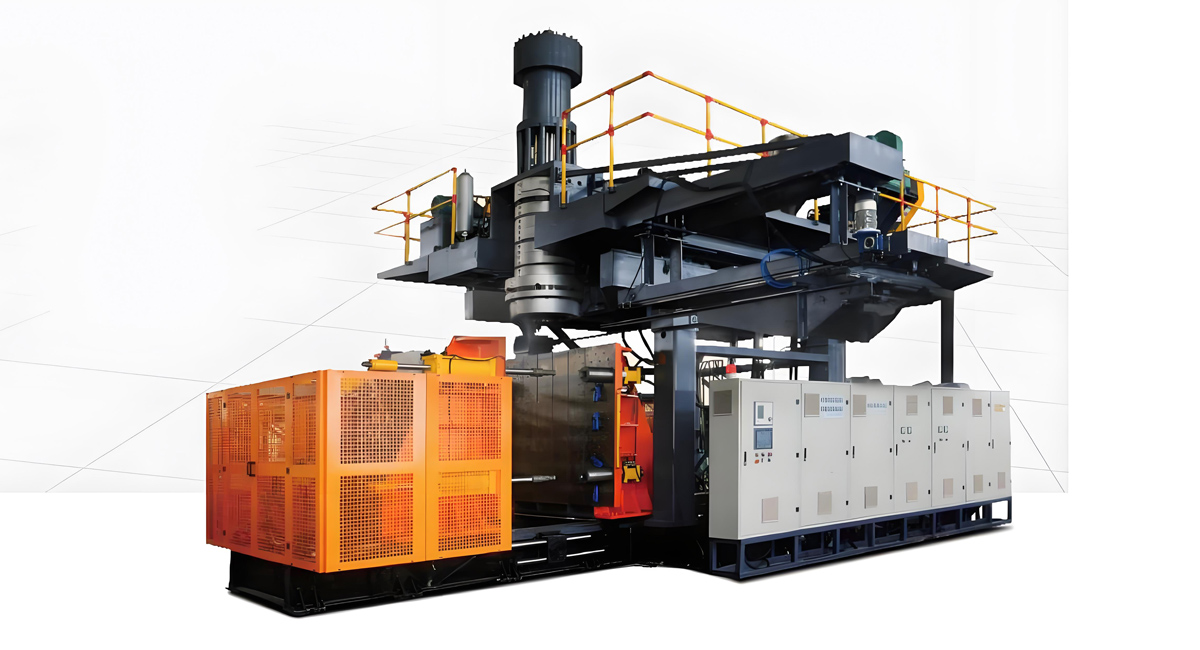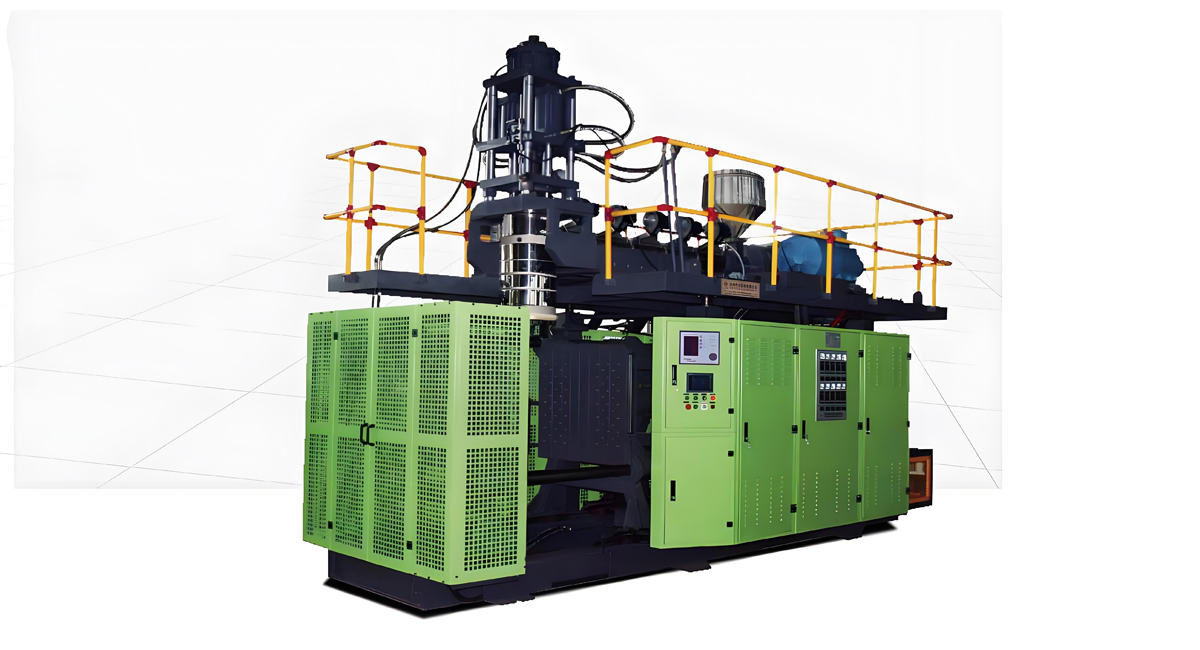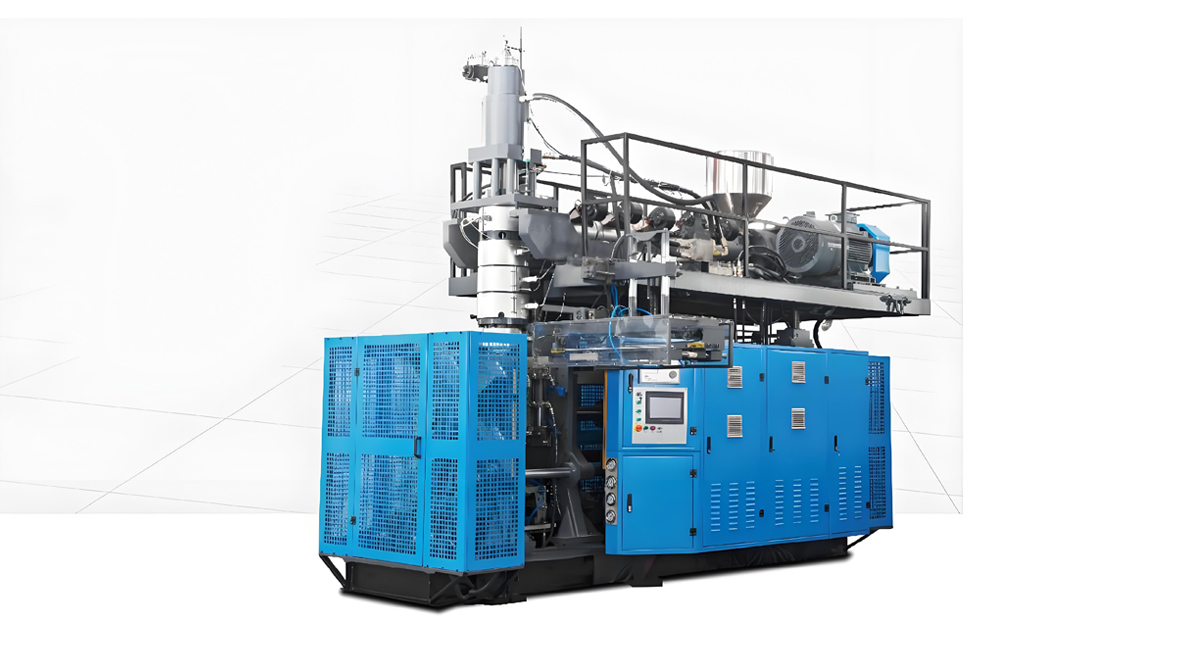

High speed extrusion blow molding machines represent critical equipment for manufacturers requiring high-volume production of plastic products including bottles, containers, automotive components, and industrial products. These machines combine advanced extrusion technology with rapid cycle capabilities enabling production rates exceeding 2000 pieces per hour depending on product specifications and machine configuration. Apollo high speed extrusion blow molding machines deliver exceptional productivity through optimized mechanical systems, advanced control technologies, and robust construction ensuring reliable continuous operation under demanding production schedules.
The global market for high-speed blow molding machines continues expanding at compound annual growth rate of 6.8% through 2030, driven by increasing demand for packaged consumer goods, automotive lightweight components, and industrial products requiring efficient large-scale manufacturing capabilities. This growth creates significant opportunities for manufacturers investing in advanced high-speed equipment capable of meeting market demands while maintaining competitive production costs. Apollo’s comprehensive portfolio of high-speed extrusion blow molding machines provides solutions addressing diverse production requirements from medium-volume operations to high-capacity manufacturing facilities producing millions of units annually.
High Speed Technology Fundamentals
High speed extrusion blow molding technology integrates multiple advanced systems working together to minimize cycle times while maintaining product quality and dimensional accuracy. Cycle time reduction strategies include rapid parison formation, fast mold closing and opening, efficient blow molding systems, quick product ejection, and optimized cooling systems. Apollo high-speed machines achieve cycle times as low as 3-5 seconds for small containers and 8-12 seconds for medium-sized products, representing 40-60% improvement over conventional machine capabilities.
Advanced extruder designs with high L/D ratios and specialized screw geometries enable rapid plastication and parison formation without compromising material homogeneity. Apollo high-speed extruders feature L/D ratios from 30:1 to 35:1 compared to conventional ratios of 24:1 to 28:1, providing increased melting capacity and improved mixing efficiency. These designs enable parison formation times reduced by 30-40% compared to standard extruders, directly contributing to overall cycle time reduction and productivity improvements.
High-Torque Drive Systems
High-torque drive systems provide necessary power for rapid material processing while maintaining precise speed control essential for product consistency. Apollo high-speed machines incorporate premium AC servo drives with torque ratings from 2,000 to 8,000 Nm depending on machine capacity, providing acceleration and deceleration capabilities enabling rapid cycle changes. Servo drive systems achieve response times under 50 milliseconds, significantly faster than hydraulic or conventional AC motor systems with response times exceeding 200 milliseconds.
Servo drive technology provides additional benefits including reduced energy consumption, quieter operation, and precise speed control maintaining consistent product quality. Energy savings of 25-35% compared to hydraulic systems reduce operating costs significantly for high-volume operations. Annual electricity cost savings for Apollo AB-HS-110 high-speed model reach $15,000 to $25,000 compared to equivalent hydraulic machine, providing substantial ROI over equipment life. Servo drive systems typically cost 15-25% more than hydraulic alternatives but deliver payback within 18-30 months through energy savings and productivity gains.
Rapid Mold Closing Systems
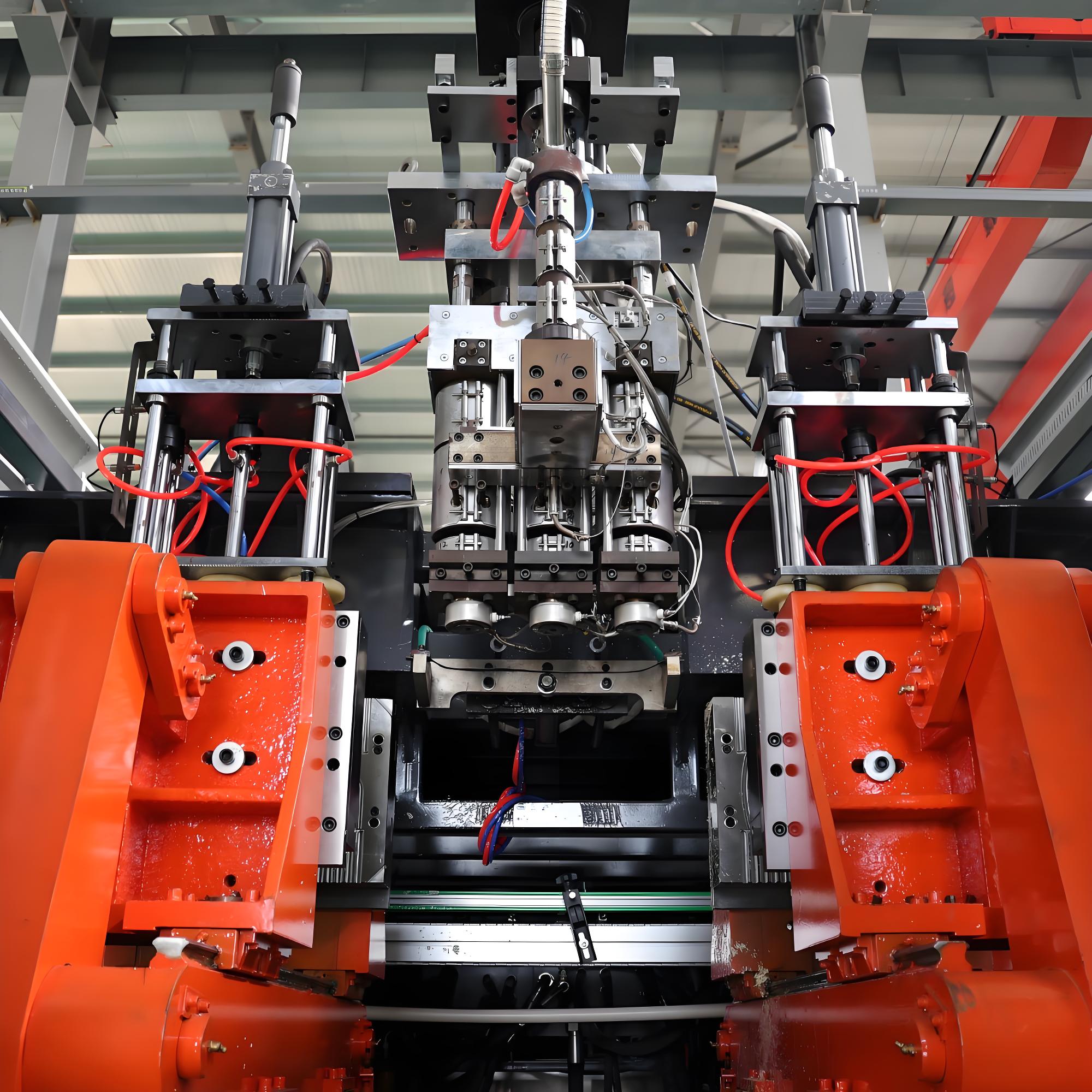
Mold closing speed significantly impacts overall cycle time, particularly for products requiring fast production rates. Apollo high-speed machines feature optimized toggle mechanisms or hydraulic systems designed for rapid mold movement while maintaining adequate clamping force for product quality. Toggle mechanisms achieve mold closing times of 0.8-1.2 seconds for medium-sized molds, while hydraulic systems provide similar performance with enhanced control capabilities.
Advanced mold closing systems incorporate variable-speed control enabling fast initial movement slowing to precise positioning before final closure. This approach minimizes cycle time while preventing mold damage from excessive closing forces. Apollo machines with optimized mold closing achieve overall cycle time reductions of 8-12% compared to machines without variable-speed control. Mold maintenance costs decrease by 20-30% due to reduced impact forces and more controlled movement.
Apollo High Speed Machine Models
Apollo offers comprehensive range of high-speed extrusion blow molding machine models designed to meet diverse production requirements from small containers to large industrial products. Model selection depends on product dimensions, production volume requirements, material specifications, and budget considerations. Apollo application engineers provide expert guidance selecting optimal equipment configurations based on specific production needs and economic analysis.
Apollo AB-HS-65 model represents popular mid-range high-speed configuration for container production up to 5-liter capacity. This machine features 65mm extruder diameter with 32:1 L/D ratio delivering throughput capacity of 200-400 kg per hour depending on material and product specifications. The model accommodates mold clamping force of 150 kN suitable for containers up to 5-liter volume with maximum cavity dimensions of 200mm x 200mm x 350mm. Pricing for Apollo AB-HS-65 ranges from $75,000 to $95,000 depending on configuration options including multi-cavity molds and automation systems.
Large-Capacity High-Speed Models
Apollo AB-HS-90 and AB-HS-110 models provide high-capacity high-speed solutions for large-scale production operations. The AB-HS-90 model with 90mm extruder diameter achieves throughput capacity of 400-700 kg per hour, while the AB-HS-110 model with 110mm extruder diameter delivers 600-900 kg per hour. These models feature clamping forces from 250 to 400 kN enabling production of products up to 20-liter capacity depending on model and configuration.
Large-capacity Apollo high-speed models incorporate advanced features including multi-cavity mold capabilities, automatic product removal systems, and integrated quality control systems. These systems enable production rates exceeding 3,000 pieces per hour for small containers and 1,200-1,800 pieces per hour for medium-sized products. Investment for large-capacity models ranges from $120,000 to $180,000 depending on configuration and automation level. Production capacity increases of 300-500% compared to standard machines justify the additional investment for high-volume operations targeting economies of scale.
Specialized High-Speed Configurations
Apollo offers specialized high-speed configurations for specific product categories including automotive components, industrial containers, and medical products. These configurations feature modified extruder designs, specialized mold systems, and process controls optimized for particular material and product requirements. Automotive component production machines handle engineering plastics including HDPE and PP with enhanced thermal management for processing filled compounds and recycled materials.
Specialized configurations typically require 15-30% premium over standard high-speed models but deliver superior performance for target applications. Automotive component machines achieve dimensional tolerances within ±0.15mm critical for fit and function requirements. Medical product machines incorporate cleanroom-compatible designs and enhanced sanitation capabilities meeting ISO 13485 requirements for medical device production. These specialized capabilities enable premium product pricing and market access in regulated industries.
Production Capacity Analysis
Production capacity analysis represents critical factor for equipment selection and business planning for high-volume manufacturing operations. High-speed extrusion blow molding machine capacity depends on multiple variables including product volume, wall thickness, material properties, cycle time, and operational efficiency. Understanding these factors enables accurate capacity planning and investment decisions supporting business growth and market expansion strategies.
Product volume significantly affects cycle time and production rate due to material volume and cooling requirements. For Apollo AB-HS-65 model, production rates vary from approximately 1,800 to 2,200 pieces per hour for 500ml bottles with 2mm wall thickness to approximately 400 to 500 pieces per hour for 5-liter containers with 4mm wall thickness. Capacity planning must account for product mix variations and production scheduling optimization to maximize equipment utilization and profitability.
Multi-Cavity Mold Applications
Multi-cavity molds represent essential technology for high-volume production maximizing machine utilization and reducing per-unit production costs. Apollo high-speed machines accommodate multi-cavity molds from 2 to 16 cavities depending on product size and machine clamping capacity. Multi-cavity mold applications achieve production rate increases proportional to cavity count minus minor cycle time penalties for larger mold masses.
Investment analysis for multi-cavity molds shows significant capacity increases with moderate cost increases. Doubling cavity count typically increases mold cost by 60-80% rather than 100% due to shared mold bases and common features. For small containers, four-cavity mold investment of $30,000 to $40,000 provides production capacity of 6,000 to 8,000 pieces per hour, reducing per-unit fixed costs by approximately 70% compared to single-cavity production. ROI for multi-cavity mold investment typically occurs within 6-12 months depending on production volume and product pricing.
Operational Efficiency Factors
Operational efficiency significantly impacts actual production capacity compared to theoretical machine specifications. Apollo high-speed machines typically achieve operational efficiency of 80-90% with proper operation and maintenance. Efficiency factors include changeover time between product specifications, material changeover time, maintenance downtime, quality control interruptions, and production scheduling optimization. Implementing lean manufacturing practices and automation can improve operational efficiency to 90-95%.
Changeover time reduction represents significant opportunity for efficiency improvement. Apollo high-speed machines feature quick-change mold systems reducing mold changeover time from 4-6 hours for conventional systems to 45-90 minutes. Quick-change systems add $8,000 to $15,000 to equipment cost but enable rapid product changes supporting just-in-time production strategies. Annual capacity improvements from reduced changeover time typically exceed 200,000 pieces for facilities with frequent product changes.
Cost Analysis and Economic Benefits
Comprehensive cost analysis enables accurate economic evaluation of high-speed extrusion blow molding machine investments. High-speed equipment represents significant capital investment but delivers substantial economic benefits through reduced per-unit production costs, increased market competitiveness, and capacity expansion enabling business growth. Understanding cost structures and economic factors supports informed investment decisions.
Capital equipment investment for Apollo AB-HS-90 high-speed model ranges from $120,000 to $150,000 including basic configuration. Additional investments for multi-cavity molds, automation systems, and auxiliary equipment typically add $40,000 to $80,000 depending on application requirements. Complete production system investment ranges from $160,000 to $230,000 for high-capacity high-speed configuration including all necessary equipment for turnkey operation.
Per-Unit Cost Reduction
High-speed equipment achieves significant per-unit cost reductions through improved productivity and operational efficiency. For production of 500ml bottles with total production cost of $0.35 per unit on conventional equipment, high-speed equipment with 60% higher production capacity reduces fixed cost allocation by 37.5% to approximately $0.22 per unit assuming material costs remain constant. This 37.5% per-unit cost reduction provides substantial competitive advantage and profitability improvement.
Labor cost reduction represents additional economic benefit of high-speed equipment. Higher production capacity with similar labor requirements reduces labor cost per unit by 40-50%. For operations with annual labor cost of $150,000 producing 10 million units annually, labor cost per unit decreases from $0.015 to $0.008 with high-speed equipment, saving $70,000 annually in labor costs. Combined material and labor cost reductions often exceed 50% for high-volume production.
ROI and Payback Period
Return on investment analysis for high-speed equipment typically shows attractive payback periods and substantial long-term economic benefits. For Apollo AB-HS-90 investment of $180,000 including multi-cavity mold and automation, assuming production of 12 million units annually with per-unit cost reduction of $0.15 compared to conventional equipment, annual cost savings reach $1.8 million. Simple payback period of 3 months demonstrates exceptional economic returns.
More conservative scenarios with realistic production ramp-up and market conditions still show favorable economics. Assuming production reaches 8 million units annually over first year and 10 million units thereafter, with per-unit cost reduction of $0.12, annual savings of $960,000 to $1.2 million provide payback periods of 6-9 months. Extended equipment life of 10-15 years generates cumulative economic benefits of $12-18 million justifying the initial investment multiple times over.
Material Processing Capabilities
High-speed extrusion blow molding machines must accommodate diverse materials including HDPE, PP, PVC, PETG, and engineering plastics. Apollo high-speed machines feature optimized screw designs and processing parameters for various materials ensuring consistent product quality and rapid cycle times. Material-specific processing capabilities enable manufacturers to serve diverse market segments with single equipment platform.
HDPE represents most common material for blow molded products including bottles, containers, and industrial components. Apollo high-speed machines process HDPE with melt flow indices from 0.2 to 10.0 g/10min, accommodating diverse product requirements from thin-walled containers to heavy-duty industrial products. Optimized HDPE processing enables cycle times as low as 3-4 seconds for small containers while maintaining product quality and dimensional accuracy.
Polypropylene Processing
Polypropylene processing presents unique challenges due to crystallization behavior affecting cycle times and product properties. Apollo high-speed machines incorporate optimized cooling systems and mold temperature control managing PP crystallization for rapid cycle times while maintaining product clarity and mechanical properties. PP processing cycle times typically run 15-20% longer than HDPE for equivalent products due to higher crystallization temperature.
Random copolymer PP applications including clear containers and medical products require precise temperature control and fast cooling to maintain clarity. Apollo machines achieve PP clarity requirements with mold temperature control systems maintaining surface temperatures within ±2°C across mold surfaces. This precise control enables production of clear PP products with cycle times competitive with HDPE products despite material differences.
Engineered Plastic Processing
Engineering plastics including filled HDPE, PETG, and specialty compounds require specialized processing capabilities for high-speed production. Apollo high-speed machines for engineered plastics feature reinforced screw designs, enhanced thermal management, and specialized wear protection for abrasive filled compounds. These capabilities enable production of high-performance products including automotive components, chemical containers, and specialty industrial products.
Material cost savings through use of filled compounds represent significant economic advantage. HDPE filled with 30% calcium carbonate reduces material cost by 20-25% compared to unfilled HDPE while maintaining adequate properties for many applications. Apollo high-speed machines process filled compounds without significant cycle time penalty, enabling material cost savings without productivity loss. Annual material cost savings for operations consuming 1,000,000 kg of HDPE reach $200,000 to $250,000 when using filled compounds.
Quality Control Systems
Quality control systems ensure high-speed production maintains product quality standards and customer specifications. Advanced inspection and monitoring systems integrated into Apollo high-speed machines detect defects early, preventing production of large quantities of non-conforming products. Comprehensive quality control represents essential capability for high-speed operations where defect rates can generate significant material waste and rework costs.
In-line weight inspection systems measure product weight accuracy within ±0.5% detecting underfilled or overfilled products indicating process problems. Apollo integrates weight inspection systems with machine controls enabling automatic adjustment of material delivery and process parameters correcting drift before significant defect production occurs. Weight inspection systems cost $15,000 to $25,000 but prevent material waste valued at $0.10 to $0.30 per unit, providing ROI within 6-12 months for high-volume production.
Dimensional Inspection Systems
Dimensional inspection systems including optical measuring devices and laser scanning verify critical dimensions including overall height, neck finish dimensions, and wall thickness distribution. Apollo high-speed machines incorporate vision systems performing 100% dimensional inspection for critical product specifications. Vision systems detect dimensional variations exceeding ±0.1mm for precise specifications and ±0.3mm for general product requirements.
Vision inspection systems typically cost $20,000 to $35,000 depending on inspection requirements and product complexity. These systems prevent quality problems including fit issues, leakage, and aesthetic defects that could cause customer complaints and product returns. For products valued at $0.50 to $2.00 each, preventing defect rates of 0.5% saves $25,000 to $200,000 annually depending on production volume and product value.
Leak Testing Systems
Leak testing represents critical quality requirement for containers holding liquids or gases. Apollo high-speed machines integrate automated leak testing systems using pressure decay, vacuum decay, or tracer gas methods depending on product requirements. Leak testing systems achieve detection sensitivities down to 0.01 cc/min ensuring reliable detection of even minor leaks.
Automated leak testing systems process products at high rates matching machine output without creating bottlenecks. System costs range from $25,000 to $50,000 depending on test method and throughput requirements. Preventing leak-related product returns and customer complaints provides substantial economic benefits. For products with 2% leak rate reducing to 0.1% with improved testing, savings reach $9,500 to $38,000 annually for production of 500,000 units assuming $1.00 to $4.00 product value and return costs.
Automation and Integration
Automation and integration capabilities represent essential features for high-speed production maximizing equipment utilization and reducing labor requirements. Apollo high-speed machines incorporate comprehensive automation options including automatic product removal, product sorting systems, packaging integration, and material handling automation. These systems enable fully automated production lines requiring minimal operator intervention.
Automatic product removal systems utilize robotic arms or mechanical take-out devices removing products from molds without operator assistance. These systems handle production rates exceeding 2,000 pieces per hour without bottlenecks. Automatic removal systems typically cost $18,000 to $30,000 but reduce labor requirements by 1-2 operators per shift, saving $80,000 to $150,000 annually depending on location and labor rates. System payback typically occurs within 6-12 months through labor cost savings.
Downstream Integration
Downstream integration including automatic trimming, labeling, and packaging systems creates fully automated production lines from raw material to finished packaged products. Apollo offers integration capabilities with leading downstream equipment suppliers providing turnkey solutions. Complete automated production lines reduce total labor requirements by 70-90% compared to manual operations while improving consistency and quality.
Investment for complete automated line including labeling, packaging, and palletizing ranges from $80,000 to $150,000 beyond base machine cost. However, automated lines achieve labor cost savings of $150,000 to $250,000 annually while increasing throughput capacity by 30-50% compared to manual operations. Combined economic benefits provide ROI of 150-250% over equipment life.
Data Management and Connectivity
Data management systems collect production data, quality information, and equipment performance metrics enabling continuous improvement and optimization. Apollo high-speed machines feature data logging capabilities capturing production rates, cycle times, quality parameters, and equipment status. Data connectivity enables integration with factory management systems and remote monitoring capabilities.
Data-driven optimization typically improves production efficiency by 5-10% and reduces quality problems by 15-25%. For high-speed operations producing 20 million units annually, 5% efficiency improvement adds 1 million units annual capacity without additional equipment investment. Data management system costs of $12,000 to $20,000 provide excellent returns through improved decision making and operational optimization.
Energy Efficiency Considerations
Energy efficiency represents important consideration for high-speed operations due to significant energy consumption at high production rates. Apollo high-speed machines incorporate multiple energy-efficient design features reducing energy consumption while maintaining productivity. Energy savings directly impact operating costs and environmental sustainability objectives.
Servo drive systems provide significant energy savings compared to hydraulic or conventional electric drive systems. Apollo high-speed machines with servo drives achieve energy consumption reduction of 25-35% compared to hydraulic systems. For Apollo AB-HS-110 model consuming 80 kW during production, servo drive implementation reduces consumption to 52-60 kW, saving $24,000 to $32,000 annually assuming electricity cost of $0.12/kWh and 6,000 annual operating hours.
Efficient Heating Systems
Efficient heating systems including ceramic band heaters, induction heating, and optimized thermal insulation reduce energy consumption for plastication. Apollo machines feature optimized barrel insulation reducing heat loss by 40-50% compared to uninsulated barrels. Insulation investment of $3,000 to $5,000 saves $4,000 to $7,000 annually in heating energy costs.
Ceramic band heaters provide faster heating with reduced energy consumption compared to conventional mica heaters. Ceramic heaters achieve 20-30% energy savings during heating cycles while maintaining excellent temperature control accuracy within ±1°C. Premium ceramic heaters cost 40-60% more than mica heaters but pay back through energy savings within 18-30 months depending on operation frequency and energy costs.
Variable Frequency Drives
Variable frequency drives (VFDs) on pumps and fans reduce energy consumption by matching motor speed to actual demand. Apollo machines incorporate VFDs on cooling water pumps, cooling fans, and material handling systems reducing energy consumption by 15-25% compared to fixed-speed operation. VFD investment of $2,000 to $4,000 per system provides payback within 12-18 months through energy savings.
Overall energy efficiency improvements from multiple systems combined reduce total energy consumption by 35-45% compared to conventional equipment. For high-speed operations with annual energy costs of $120,000, comprehensive efficiency measures save $42,000 to $54,000 annually, representing substantial economic benefit and environmental improvement.
Maintenance and Reliability
Equipment reliability and maintenance significantly affect high-speed production economics through impact on equipment availability and operating costs. Apollo high-speed machines feature robust construction and quality components ensuring reliable operation with minimal maintenance requirements. Preventive maintenance strategies and condition monitoring extend equipment service life and maintain optimal performance throughout equipment lifecycle.
Reliability improvements through robust design and quality components reduce unplanned downtime from 5-8% for conventional equipment to 2-3% for Apollo high-speed machines. For operations running 6,000 hours annually, downtime reduction from 400 to 500 hours to 120 to 180 hours saves 280 to 320 production hours annually. Assuming production value of $1,000 to $2,000 per hour, downtime reduction saves $280,000 to $640,000 annually in lost production value.
Predictive Maintenance
Predictive maintenance utilizing vibration monitoring, thermal imaging, oil analysis, and performance trend analysis enables early detection of developing problems before failures occur. Apollo high-speed machines incorporate monitoring points for critical components facilitating predictive maintenance implementation. Predictive approaches reduce maintenance costs by 20-30% compared to preventive maintenance based on fixed schedules while preventing catastrophic failures.
Condition monitoring system investment of $8,000 to $15,000 provides continuous monitoring of critical component health. Early detection prevents failures that could cost $20,000 to $100,000 in repairs and lost production. Preventive approach typically prevents 2-3 major failures annually on high-speed equipment, easily justifying monitoring system investment multiple times over.
Component Life and Replacement
High-speed operation increases component wear rates requiring careful attention to maintenance intervals and replacement schedules. Screw and barrel life for high-speed operation typically ranges from 6,000 to 9,000 operating hours compared to 8,000 to 12,000 hours for standard operation due to increased mechanical stress and higher material throughput. Apollo offers hardened and coated screw options extending service life by 50-100% for high-speed applications.
Mold life for high-speed operation depends on product specifications and maintenance practices. High-speed production typically reduces mold life by 30-40% compared to standard operation due to increased thermal cycling and mechanical stress. Premium mold steels and surface treatments including nitriding and titanium nitride coating extend mold life by 50-100% for high-speed applications. Mold refurbishment services restore worn molds to original specifications at 30-50% of new mold cost.
Market Applications and Opportunities
High-speed extrusion blow molding machines serve diverse market segments requiring high-volume production capabilities. Understanding market applications and requirements enables product development and market opportunity identification. High-speed equipment provides competitive advantages in markets characterized by large volume requirements, cost sensitivity, and rapid product changeover needs.
Beverage bottles represent largest application segment for high-speed blow molding machines. Market demand for bottled water, carbonated beverages, and juices continues growing at 4-6% annually driving demand for high-speed bottle production equipment. Apollo high-speed machines produce beverage bottles at rates exceeding 3,000 bottles per hour for small sizes and 1,200 to 1,500 bottles per hour for 1-liter and 2-liter bottles, meeting requirements of large beverage bottlers.
Household and Personal Care Products
Household and personal care products including detergent bottles, shampoo bottles, and cosmetic containers represent significant market segment with diverse product requirements. High-speed production capabilities enable manufacturers to serve multiple brands and product variations with rapid changeover capability. Apollo machines accommodate frequent product changes with quick-change mold systems and automated material changeover capabilities.
Personal care product markets typically offer higher profit margins compared to commodity products but require excellent surface finish and dimensional precision. Apollo high-speed machines with precise temperature control and advanced mold surface capabilities produce cosmetic-quality containers meeting demanding aesthetic requirements. Premium product pricing for personal care applications typically ranges from $0.15 to $0.40 more per unit than commodity products, significantly improving profitability.
Automotive and Industrial Products
Automotive and industrial products including coolant reservoirs, washer fluid bottles, and industrial containers require specialized capabilities including dimensional precision, material strength, and chemical resistance. Apollo high-speed machines for automotive applications achieve dimensional tolerances within ±0.2mm critical for fit and function requirements. Material capabilities include filled HDPE for chemical resistance and engineering plastics for temperature resistance.
Automotive market access requires quality systems meeting IATF 16949 automotive quality standards. Apollo provides equipment documentation and support facilitating customer compliance with automotive requirements. Automotive products typically command premium pricing of 25-50% compared to consumer products, providing attractive margins for manufacturers with appropriate capabilities and quality systems.
Future Trends and Technology Development
High-speed blow molding technology continues evolving with emerging trends influencing equipment requirements and production strategies. Understanding future trends enables strategic planning and technology investment decisions positioning manufacturers for competitive advantage. Key trends include increased automation, enhanced sustainability, and expanded digital capabilities.
Smart manufacturing and Industry 4.0 adoption drive demand for equipment with advanced connectivity, data analytics, and autonomous operation capabilities. Apollo development efforts focus on integrated automation, predictive analytics, and remote monitoring enabling smart factory implementation. Future equipment generations will feature enhanced AI capabilities for autonomous optimization and predictive quality control.
Sustainability Initiatives
Sustainability trends emphasize energy efficiency, material efficiency, and use of recycled materials. Apollo high-speed machines accommodate high recycled content formulations enabling circular economy approaches while maintaining productivity and product quality. Equipment developments focus on energy efficiency improvements achieving 50% reduction in energy consumption compared to current standards.
Lightweight product designs reduce material consumption while maintaining functionality. Apollo high-speed machines produce thin-walled containers with material thickness reduction of 15-25% compared to conventional designs, enabling material cost savings and environmental benefits. Lightweight designs typically reduce material costs by $0.02 to $0.08 per unit depending on product size and material.
Advanced Material Capabilities
Advanced material development including bioplastics, nanocomposites, and specialty compounds creates new opportunities and processing requirements. Apollo high-speed machines incorporate flexibility enabling processing of emerging materials with appropriate screw designs and process parameters. Material versatility enables manufacturers to develop innovative products with superior properties and sustainability profiles.
Bioplastic materials including PLA and PHA offer sustainability advantages but present processing challenges requiring specialized equipment capabilities. Apollo machines for bioplastic processing feature precise temperature control, optimized screw geometries, and specialized cooling systems managing bioplastic characteristics. Bioplastic products typically command premium pricing of 20-40% offsetting higher material costs and enabling market differentiation.
Conclusion and Strategic Recommendations
High-speed extrusion blow molding machines represent critical enabling technology for manufacturers serving high-volume plastic product markets. Apollo high-speed machines deliver exceptional productivity, quality, and reliability through advanced technology, robust construction, and comprehensive support capabilities. Strategic investment in high-speed equipment provides substantial economic benefits and competitive advantages in demanding markets characterized by cost sensitivity and volume requirements.
Investment decisions should consider production requirements, market conditions, quality standards, and total cost of ownership including capital investment, operating costs, maintenance costs, and economic benefits. Apollo offers comprehensive portfolio of high-speed models matching diverse requirements from medium-volume specialty production to large-scale commodity manufacturing. Technical support, training programs, and after-sales service ensure customers achieve optimal equipment performance and productivity.
Future market development including automation adoption, sustainability initiatives, and material innovation will continue influencing equipment requirements and production strategies. Apollo remains committed to innovation and continuous improvement developing next-generation high-speed extrusion blow molding machines addressing emerging market requirements while maintaining reliability, efficiency, and product quality. By partnering with Apollo for high-speed production equipment, manufacturers ensure competitive positioning and sustainable growth in evolving global markets.