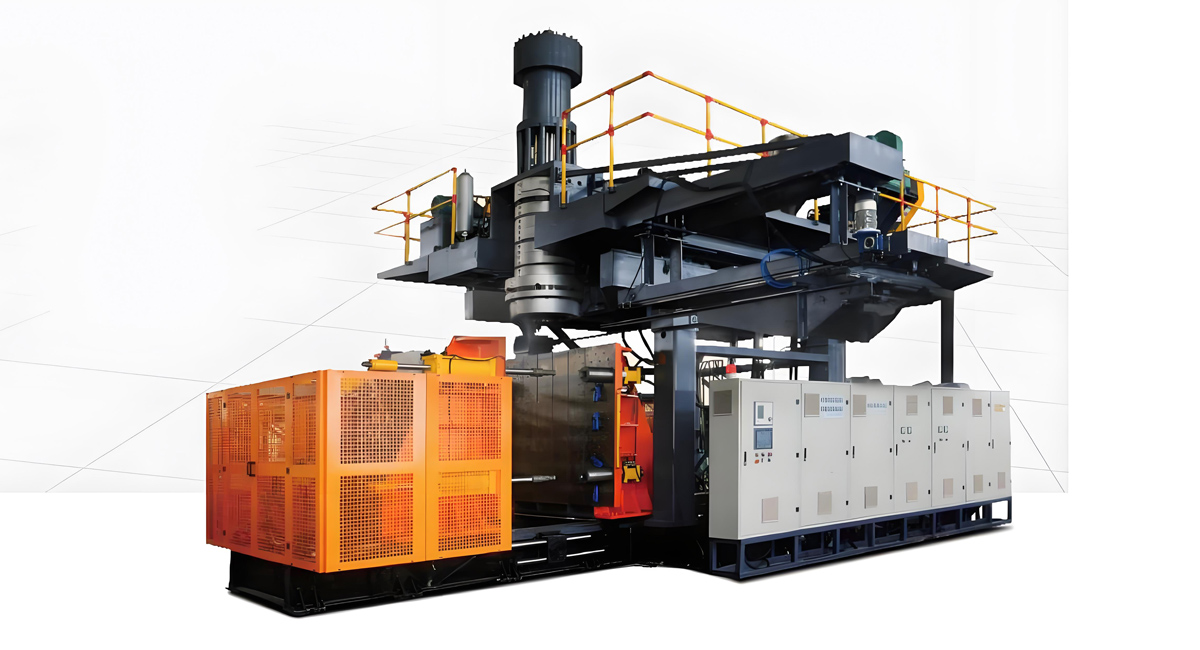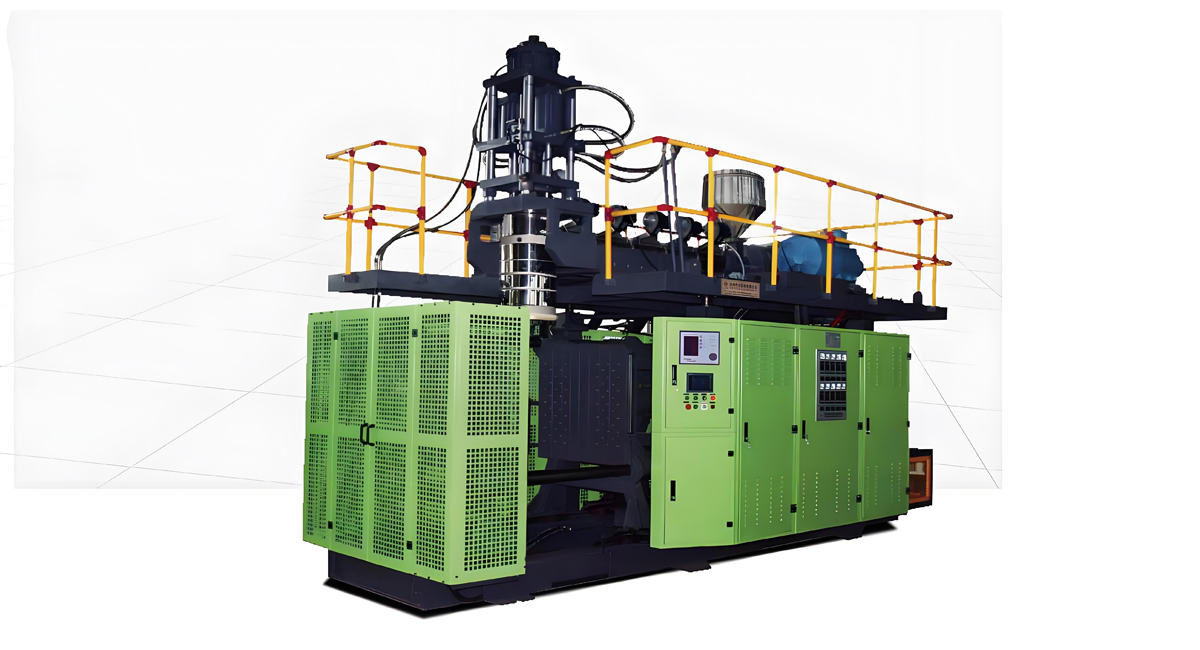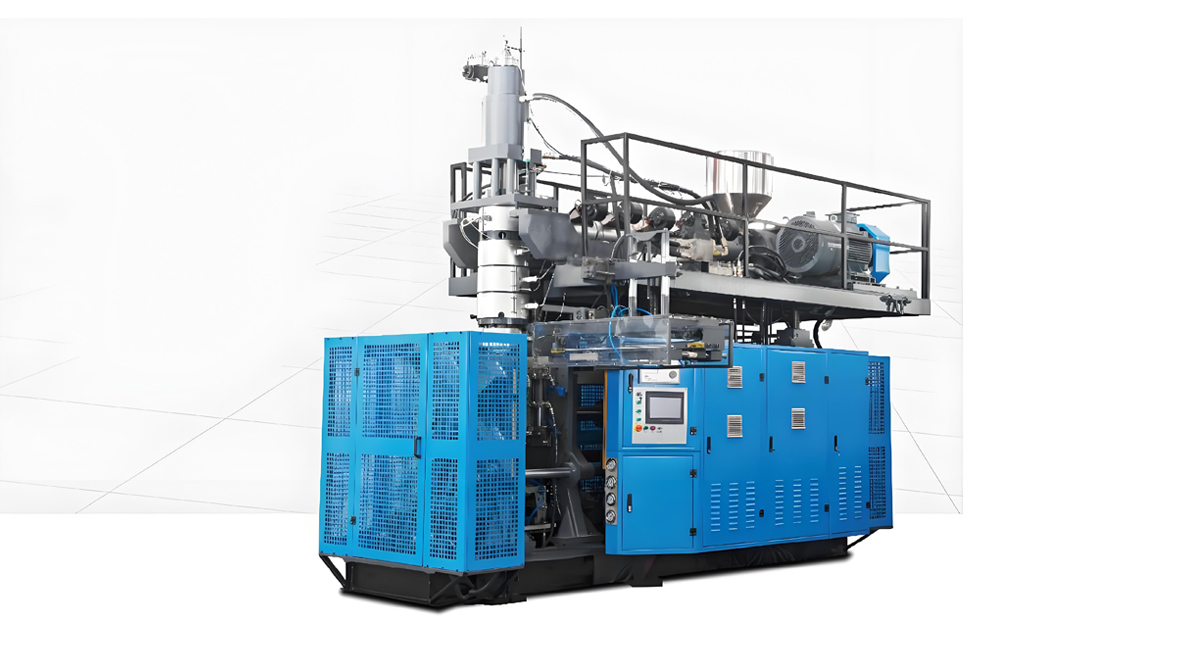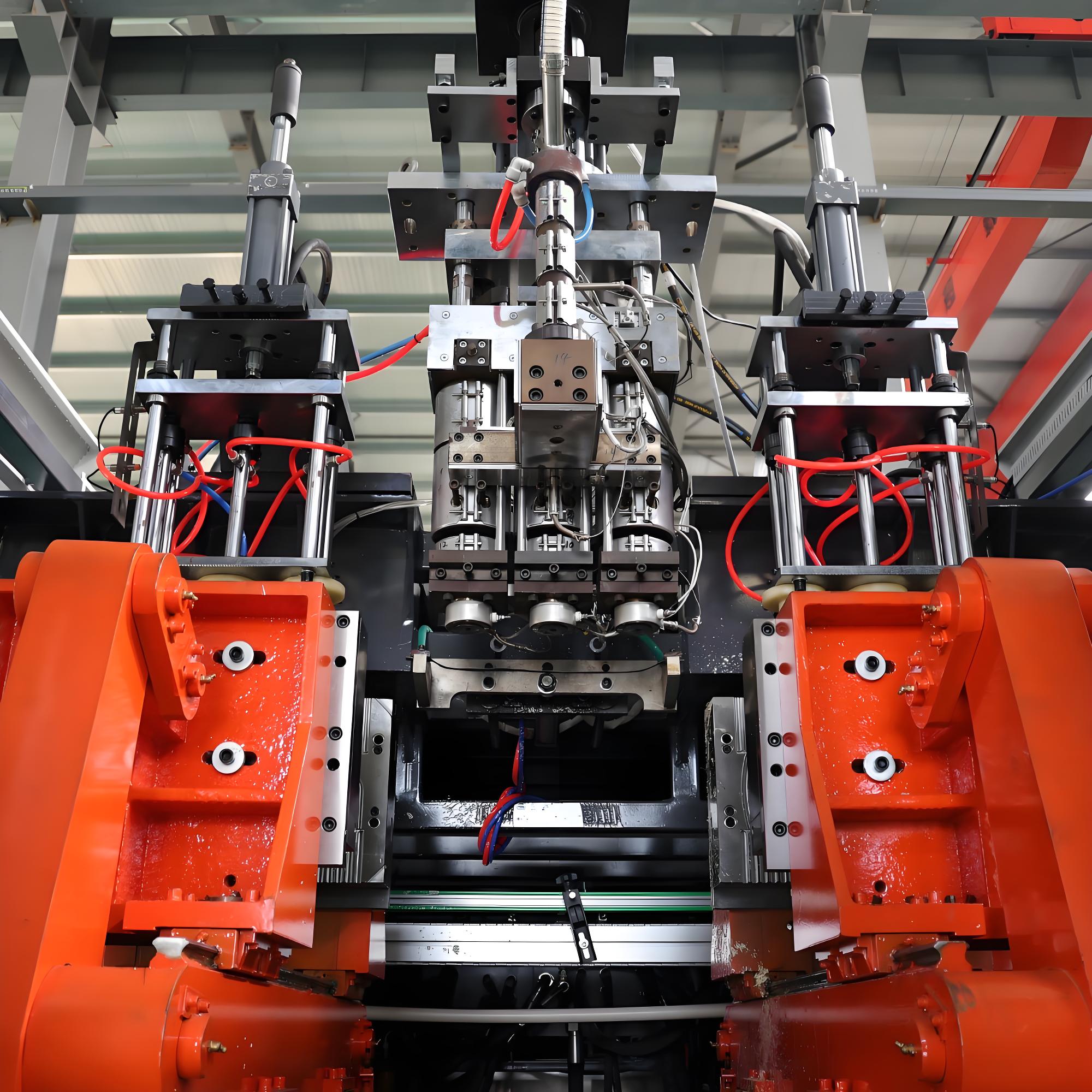
Hollow plastic extrusion blow molding machines represent essential equipment for manufacturing diverse hollow plastic products including bottles, containers, automotive components, and industrial products. The year 2026 brings significant technological advancements including enhanced automation, improved energy efficiency, and expanded material capabilities. Apollo extrusion blow molding machines lead the industry with innovative features addressing evolving market demands for productivity, sustainability, and versatility in hollow plastic product manufacturing.
The global hollow plastic blow molding machine market valued at approximately $9.8 billion in 2024 continues growing at compound annual growth rate of 6.2% through 2030. Technological advancements drive market growth including servo drive systems replacing hydraulic systems, integrated automation reducing labor requirements, and advanced control systems enabling smart manufacturing capabilities. These developments position 2026 as pivotal year for equipment upgrades and new investments addressing competitive production requirements.
2026 Technology Trends and Innovations
Technology trends for 2026 focus on enhanced productivity, improved sustainability, and expanded manufacturing flexibility. Key innovations include servo-driven systems providing energy savings of 30-40% compared to hydraulic systems, integrated quality inspection systems detecting defects with 99.5% accuracy, and IoT connectivity enabling remote monitoring and predictive maintenance. These technological advances enable significant productivity improvements while reducing operating costs and environmental impact.
Automation integration represents major trend for 2026 with equipment featuring automated product removal, mold changing, and quality inspection systems. Advanced Apollo models incorporate collaborative robots working alongside human operators for material handling and product packaging. Automation integration typically adds 20-30% to equipment cost but reduces labor requirements by 60-80% and improves consistency and quality. ROI for automation typically ranges from 18 to 30 months depending on labor costs and production volume.
Servo Drive Technology
Servo drive technology replaces conventional hydraulic systems providing precise motion control, reduced energy consumption, and quieter operation. Apollo 2026 models feature all-servo drive systems on extruder, clamp, and blow mechanisms. Servo systems achieve energy savings of 25-35% compared to hydraulic equivalents while maintaining superior control accuracy and repeatability. Energy savings for typical operation reach $15,000 to $30,000 annually depending on machine size and operating hours.
Servo drive systems provide additional benefits including reduced maintenance requirements, cleaner operation without hydraulic fluids, and improved environmental compliance. Maintenance cost reductions of 40-50% compared to hydraulic systems stem from elimination of hydraulic component replacement and fluid changes. Servo systems typically cost 15-25% more than hydraulic alternatives but provide total cost of ownership advantages through energy savings and reduced maintenance.
Smart Manufacturing Capabilities
Smart manufacturing capabilities including IoT connectivity, data analytics, and machine learning algorithms transform blow molding equipment into intelligent production systems. Apollo 2026 models feature integrated sensors monitoring process parameters, equipment health, and production quality. Data collected from sensors enables real-time optimization, predictive maintenance, and continuous improvement initiatives.
Predictive maintenance capabilities utilize AI algorithms analyzing equipment performance data predicting component failures before occurrence. Predictive approaches reduce unplanned downtime by 60-80% compared to preventive maintenance based on fixed schedules. Data-driven optimization typically improves production efficiency by 5-10% and reduces energy consumption by 8-12%. Smart manufacturing capabilities typically add 10-15% to equipment cost but deliver ROI of 150-250% through improved efficiency and reduced downtime.
Apollo 2026 Top Model Lineup
Apollo presents comprehensive lineup of 2026 extrusion blow molding machines addressing diverse production requirements from small containers to large industrial products. Model selection depends on product specifications, production volume, material requirements, and automation needs. Apollo application engineers provide expert guidance selecting optimal equipment based on specific application requirements and economic considerations.
Apollo AB-EBM-2026-65 model represents popular mid-range configuration for container production up to 10-liter capacity. This 2026 model features 65mm servo-driven extruder with 32:1 L/D ratio delivering throughput capacity of 200-400 kg per hour. The model incorporates advanced control system with touchscreen interface, integrated weight inspection, and automated product removal capabilities. Pricing for Apollo AB-EBM-2026-65 ranges from $95,000 to $125,000 depending on configuration and automation level.
Large-Capacity 2026 Models
Apollo AB-EBM-2026-110 and AB-EBM-2026-135 models provide high-capacity solutions for large-scale production operations. The AB-EBM-2026-110 model features 110mm servo-driven extruder with 35:1 L/D ratio achieving throughput capacity of 600-900 kg per hour. The AB-EBM-2026-135 model with 135mm extruder delivers 900-1,200 kg per hour capacity. These models accommodate multi-cavity molds for small containers and single-cavity production for large products up to 30-liter capacity.
Large-capacity 2026 models incorporate advanced features including multi-layer parison programming for wall thickness optimization, infrared heaters for rapid mold temperature control, and integrated cooling systems reducing cycle times. Advanced control systems enable recipe management for rapid product changes with minimal setup time. Investment for large-capacity 2026 models ranges from $165,000 to $240,000 depending on configuration and automation capabilities.
Specialized 2026 Configurations
Apollo offers specialized 2026 configurations for specific applications including automotive components, industrial containers, and medical products. Automotive models handle engineering plastics including HDPE and PP with enhanced thermal management for filled compounds and recycled materials. Medical models feature cleanroom-compatible designs and enhanced sanitation capabilities meeting ISO 13485 and US FDA requirements for medical device production.
Specialized configurations typically require 20-35% premium over standard 2026 models but deliver superior performance for target applications. Automotive models achieve dimensional tolerances within ±0.12mm critical for precise fit requirements. Medical models incorporate hygienic design features including stainless steel surfaces, washdown capability, and validated sanitization procedures. These specialized capabilities enable premium product pricing and market access in regulated industries with profit margins 25-50% higher than commodity products.
Performance Specifications and Capabilities
2026 Apollo extrusion blow molding machines deliver enhanced performance specifications compared to previous generations. Improvements include faster cycle times, greater production capacity, improved energy efficiency, and enhanced quality capabilities. Performance specifications enable evaluation of equipment capabilities against production requirements and market demands.
Cycle time improvements represent significant advancement for 2026 models. For 500ml bottle production, Apollo AB-EBM-2026-65 achieves cycle times of 3.5-4.5 seconds compared to 5-6 seconds for previous generation models, representing 30-40% improvement. Cycle time reduction directly increases production capacity without additional equipment investment. Production rate increases from 1,200 bottles per hour to 2,000 bottles per hour for 500ml bottles enable substantial capacity expansion.
Production Capacity Analysis
Production capacity varies by product size, wall thickness, and material characteristics. Apollo AB-EBM-2026-65 model produces approximately 1,800 to 2,200 pieces per hour for 500ml containers with 2mm wall thickness. For 5-liter containers with 4mm wall thickness, production rates reach 400 to 500 pieces per hour. Multi-cavity mold applications proportionally increase capacity with four-cavity molds producing 7,000 to 8,000 pieces per hour for small containers.
Annual production capacity depends on operational efficiency and available production time. Assuming 85% operational efficiency and 6,000 annual production hours, Apollo AB-EBM-2026-65 produces approximately 9 to 11 million 500ml containers annually. Production capacity optimization through efficiency improvements including reduced changeover time and preventive maintenance can increase annual capacity by 15-25% without additional equipment investment.
Energy Efficiency Specifications
Energy efficiency improvements represent major advancement for 2026 models addressing sustainability objectives and operating cost reduction. Apollo AB-EBM-2026-65 achieves specific energy consumption of 0.25-0.35 kWh per kilogram of processed material, 20-30% improvement compared to previous generation models. For operations processing 400 kg per hour, energy consumption decreases from 160 kW to 110-140 kW, saving $12,000 to $20,000 annually assuming electricity cost of $0.12/kWh.
Efficiency improvements result from multiple technologies including servo drives, efficient heating systems, variable frequency pumps, and optimized insulation. Combined efficiency measures reduce total energy consumption by 30-40% compared to equipment 5 years older. Energy efficiency improvements provide substantial economic benefits while reducing environmental footprint supporting sustainability initiatives.
Advanced Control Systems
Control system advancements for 2026 models enhance operational capabilities, ease of use, and integration with factory automation systems. Apollo 2026 models feature PLC-based control systems with 15-inch touchscreen interfaces, recipe management capabilities, and remote monitoring functionality. Advanced control systems enable consistent operation, rapid product changes, and data-driven optimization.
Touchscreen control systems provide intuitive interfaces reducing training requirements and operator error. Color graphics display process parameters, production data, and alarm information enabling comprehensive equipment monitoring. Recipe management stores up to 500 production recipes enabling rapid product changes with automatic parameter adjustment. Product changeover times reduce from 2-3 hours for manual setup to 15-30 minutes with automated recipe changes.
Remote Monitoring and Control
Remote monitoring capabilities enable equipment supervision from any location with internet connectivity. Apollo 2026 models incorporate web-based interfaces accessible from computers, tablets, and smartphones. Remote monitoring enables real-time observation of production status, alarm conditions, and performance metrics without requiring physical presence at equipment location.
Remote control capabilities enable parameter adjustments and recipe changes from remote locations. These capabilities particularly benefit manufacturers with multiple facilities or distributed operations enabling centralized monitoring and control. Remote monitoring and control typically add $5,000 to $8,000 to equipment cost but enable reduced staffing requirements and faster response to operational issues.
Data Analytics and Reporting
Data analytics capabilities collect and analyze production data enabling performance optimization and quality improvement. Apollo 2026 models log production rates, cycle times, energy consumption, quality parameters, and equipment status. Automated reports provide daily, weekly, and monthly summaries highlighting performance trends and improvement opportunities.
Data-driven optimization typically improves production efficiency by 5-8% and reduces quality problems by 15-20%. Analytics identify production bottlenecks, parameter drift, and maintenance requirements enabling proactive optimization. Data analytics systems cost $8,000 to $12,000 but provide substantial returns through improved decision making and operational excellence.
Material Processing Capabilities
Material processing capabilities expand for 2026 models accommodating diverse materials including HDPE, PP, PVC, PETG, and engineering plastics. Enhanced material capabilities enable manufacturers to serve diverse market segments with single equipment platform. Material-specific processing optimizations ensure consistent quality and productivity across material types.
HDPE processing improvements enable cycle time reductions of 15-20% through optimized screw design and enhanced cooling capabilities. Apollo 2026 models process HDPE with melt flow indices from 0.2 to 12.0 g/10min, accommodating diverse product requirements from thin-walled containers to heavy-duty industrial products. Enhanced parison control systems achieve wall thickness accuracy within ±5% enabling material optimization while maintaining performance.
Advanced Material Processing
Engineering plastics including filled HDPE, PETG, and specialty compounds require specialized processing capabilities. Apollo 2026 models for engineering plastics feature reinforced screw designs, enhanced thermal management, and specialized wear protection for abrasive filled compounds. These capabilities enable production of high-performance products including automotive components, chemical containers, and specialty industrial products.
Recycled material processing capabilities support sustainability initiatives and material cost reduction. Apollo 2026 models process recycled HDPE and PP with performance matching virgin materials through optimized screw designs and processing parameters. Recycled content levels up to 80% achieve acceptable product quality for many applications, enabling material cost savings of 20-30% compared to virgin materials.
Multi-Layer Processing
Multi-layer processing capabilities enable production of containers with barrier properties, light protection, or cost optimization through material combinations. Apollo 2026 models offer optional multi-layer extruder heads producing 2-5 layer structures. Multi-layer containers for food and beverage applications incorporate EVOH barrier layers providing oxygen barrier extending product shelf life.
Multi-layer processing adds 40-60% to equipment cost but enables premium product pricing and market expansion. Multi-layer barrier containers command pricing 25-40% higher than single-layer alternatives while providing enhanced product protection. ROI for multi-layer capabilities typically ranges from 24 to 36 months depending on product mix and market positioning.
Quality Assurance Systems
Integrated quality assurance systems ensure 2026 models maintain product quality standards and customer specifications. Advanced inspection systems detect defects early preventing production of large quantities of non-conforming products. Comprehensive quality control represents essential capability for competitive markets requiring consistent quality and regulatory compliance.
In-line weight inspection systems measure product weight accuracy within ±0.5% detecting underfilled or overfilled products indicating process problems. Apollo 2026 models integrate weight inspection with machine controls enabling automatic adjustment preventing quality drift. Weight inspection systems cost $18,000 to $25,000 but prevent material waste valued at $0.15 to $0.35 per unit, providing ROI within 8-14 months for high-volume production.
Vision Inspection Systems
Vision inspection systems utilize high-resolution cameras and image analysis detecting visual defects including surface imperfections, dimensional variations, and contamination. Apollo 2026 models feature vision systems performing 100% inspection for critical quality characteristics. Detection capabilities include defects as small as 0.5mm enabling comprehensive quality assurance.
Vision systems typically cost $25,000 to $40,000 depending on inspection requirements and product complexity. These systems prevent quality problems causing customer complaints and product returns. For products with 1% defect rate reducing to 0.1% with improved inspection, savings reach $45,000 to $180,000 annually for production of 5 million units assuming $1.00 to $4.00 product value.
Leak Testing Integration
Automated leak testing systems integrated into 2026 models ensure container integrity for liquid-holding applications. Apollo offers various leak testing methods including pressure decay, vacuum decay, and tracer gas testing depending on product requirements. Automated systems achieve testing rates matching production without creating bottlenecks.
Leak testing integration costs $30,000 to $55,000 depending on test method and throughput requirements. Reliable leak testing prevents product returns and customer complaints. For products with 3% leak rate reducing to 0.2% with improved testing, savings reach $14,000 to $56,000 annually for production of 500,000 units assuming $1.00 to $4.00 product value.
Automation and Integration Features
Automation and integration features for 2026 models create fully automated production lines requiring minimal operator intervention. Comprehensive automation reduces labor requirements, improves consistency, and enables continuous operation. Integration capabilities connect equipment with upstream and downstream processes creating seamless production flows.
Automatic product removal systems utilize robotic arms or mechanical take-out devices removing products from molds without operator assistance. Apollo 2026 models handle production rates exceeding 2,500 pieces per hour without bottlenecks. Automatic removal systems cost $22,000 to $35,000 but reduce labor requirements by 1-2 operators per shift, saving $100,000 to $180,000 annually depending on location and labor rates.
Material Handling Automation
Material handling automation includes automatic material loading, drying, and conveying systems ensuring continuous material supply without manual intervention. Apollo 2026 models integrate with material handling systems from leading suppliers providing turnkey solutions. Automated material handling eliminates manual material handling reducing labor requirements and improving safety.
Complete material handling automation costs $15,000 to $30,000 depending on material requirements and system complexity. Automation benefits include reduced labor, consistent material quality through proper drying and handling, and prevention of material contamination. ROI for material handling automation typically ranges from 18 to 30 months depending on labor costs and production volume.
Factory Integration Capabilities
Factory integration capabilities connect 2026 models with factory management systems, MES systems, and ERP systems. Apollo machines provide communication protocols including OPC UA, Modbus, and Ethernet/IP enabling seamless data exchange. Integration enables production scheduling, inventory management, and performance monitoring across entire factory.
Factory integration typically costs $8,000 to $15,000 for software and configuration. Benefits include improved scheduling efficiency, reduced manual data entry, and enhanced visibility into production performance. Integration typically improves overall equipment effectiveness by 5-10% through better coordination and reduced setup times.
Cost Analysis and Economic Benefits
Comprehensive cost analysis enables accurate economic evaluation of 2026 extrusion blow molding machine investments. Advanced 2026 models represent significant capital investment but deliver substantial economic benefits through improved productivity, reduced operating costs, and enhanced capabilities. Understanding cost structures and economic factors supports informed investment decisions.
Capital equipment investment for Apollo AB-EBM-2026-110 model ranges from $165,000 to $200,000 including basic configuration. Additional investments for multi-cavity molds, automation systems, and quality inspection typically add $50,000 to $90,000 depending on application requirements. Complete production system investment ranges from $215,000 to $290,000 for high-capacity 2026 configuration including all necessary equipment for turnkey operation.
Per-Unit Cost Reduction
2026 models achieve significant per-unit cost reductions through improved productivity and operational efficiency. For production of 1-liter bottles with total production cost of $0.25 per unit on previous generation equipment, 2026 equipment with 40% higher production capacity reduces fixed cost allocation by 28% to approximately $0.18 per unit assuming material costs remain constant. This 28% per-unit cost reduction provides substantial competitive advantage.
Labor cost reduction represents additional economic benefit. Higher production capacity with similar labor requirements reduces labor cost per unit by 50-60%. For operations with annual labor cost of $180,000 producing 15 million units annually, labor cost per unit decreases from $0.012 to $0.005 with 2026 equipment, saving $105,000 annually in labor costs. Combined material and labor cost reductions often exceed 40% for high-volume production.
ROI Calculation Examples
ROI calculation for 2026 equipment demonstrates attractive economic returns. For Apollo AB-EBM-2026-110 investment of $240,000 including multi-cavity mold and automation, assuming production of 18 million units annually with per-unit cost reduction of $0.12 compared to previous equipment, annual cost savings reach $2.16 million. Simple payback period of 1.3 months demonstrates exceptional economic returns.
Conservative scenarios with realistic production ramp-up show favorable economics. Assuming production reaches 12 million units annually over first year and 15 million units thereafter, with per-unit cost reduction of $0.10, annual savings of $1.2 million to $1.5 million provide payback periods of 3-5 months. Extended equipment life of 12-15 years generates cumulative economic benefits of $18-22 million justifying the initial investment multiple times over.
Installation and Commissioning
Installation and commissioning processes for 2026 models incorporate advanced technologies and streamlined procedures minimizing downtime and accelerating startup. Apollo provides comprehensive installation services including equipment placement, utility connections, system calibration, and operational training. Proper installation ensures optimal performance from initial operation.
Installation timelines for 2026 models typically range from 10 to 15 business days depending on equipment complexity and site preparation. Timeline includes equipment delivery and placement (2-3 days), utility connections (2-3 days), system setup and calibration (3-5 days), and training and commissioning (2-4 days). Pre-installation site preparation including foundation preparation, utility provision, and access clearance can reduce installation time by 30-40%.
Site Preparation Requirements
Site preparation requirements include concrete foundation capable of supporting equipment weight, electrical supply with appropriate capacity and voltage, compressed air supply, cooling water system, and material handling access. Apollo provides detailed specifications for site requirements enabling proper preparation prior to equipment delivery. Adequate site preparation prevents installation delays and additional costs.
Foundation requirements vary by equipment size but typically include reinforced concrete 200-300mm thick with load capacity of 1,000-2,000 kg per square meter. Electrical requirements for AB-EBM-2026-110 model include 480V 3-phase supply with 150A capacity depending on configuration. Cooling water system typically requires flow of 15-25 cubic meters per hour depending on production rate and cooling requirements.
Commissioning and Testing
Commissioning includes system verification, performance testing, and initial production with customer materials and molds. Apollo engineers perform comprehensive testing ensuring equipment meets guaranteed performance specifications. Testing includes production rate verification, energy consumption measurement, quality characteristic verification, and control system functionality testing.
Commissioning typically requires 3-5 days including system checkout, production trials, and operator training. Performance testing verifies production rate within ±5% of specified capacity, energy consumption within ±10% of specified values, and product quality meeting customer specifications. Performance guarantee issues addressed through equipment adjustment or optimization ensuring customer satisfaction.
Market Applications and Opportunities
2026 extrusion blow molding machines serve diverse market segments requiring advanced capabilities and high-volume production. Understanding market applications and requirements enables product development and market opportunity identification. Advanced 2026 capabilities provide competitive advantages in markets characterized by quality requirements, sustainability demands, and cost sensitivity.
Beverage bottle market represents largest application segment driven by consumer demand for packaged beverages. Market growth of 4-5% annually creates demand for high-speed bottle production equipment. Apollo 2026 models produce beverage bottles at rates exceeding 3,000 bottles per hour for small sizes and 1,500 to 1,800 bottles per hour for 1-liter and 2-liter bottles, meeting requirements of large beverage bottlers.
Sustainable Packaging Solutions
Sustainable packaging trends drive demand for equipment capabilities supporting material reduction, recycled content, and lightweight designs. Apollo 2026 models produce lightweight containers with material thickness reduction of 15-25% compared to conventional designs, enabling material cost savings and environmental benefits. Equipment accommodates 100% recycled content for appropriate applications supporting circular economy initiatives.
Lightweight designs reduce material consumption while maintaining functionality. Material savings of 0.02 to 0.08 per unit depending on product size and material provide significant cost reductions at high volumes. For operations producing 20 million units annually, 20% material reduction saves $0.80 to $3.20 per unit, representing annual savings of $16-64 million justifying investment in advanced lightweighting capabilities.
Automotive and Industrial Applications
Automotive and industrial markets require specialized capabilities including dimensional precision, material strength, and chemical resistance. Apollo 2026 models for automotive applications achieve dimensional tolerances within ±0.12mm critical for fit and function requirements. Material capabilities include filled HDPE for chemical resistance and engineering plastics for temperature resistance.
Automotive market access requires quality systems meeting IATF 16949 automotive quality standards. Apollo provides equipment documentation and support facilitating customer compliance with automotive requirements. Automotive products typically command premium pricing of 30-50% compared to consumer products, providing attractive margins for manufacturers with appropriate capabilities and quality systems.
Future Outlook Beyond 2026
Technology development beyond 2026 continues advancing extrusion blow molding capabilities with emerging trends influencing future equipment requirements. Anticipated developments include enhanced AI capabilities, expanded material options, and improved sustainability features. Understanding future trends enables strategic planning and technology investment decisions.
AI and machine learning capabilities will enable autonomous equipment operation with minimal human intervention. Future equipment generations will feature closed-loop optimization automatically adjusting parameters to maximize productivity and quality. AI-powered predictive quality control will prevent defects before occurrence rather than detecting defects after production. These capabilities will further reduce operating costs and improve consistency.
Advanced Material Capabilities
Material development continues creating new opportunities and processing requirements. Future equipment will accommodate advanced materials including bioplastics with enhanced performance, nanocomposites with improved properties, and smart materials with functional characteristics. Material versatility will enable manufacturers to develop innovative products with superior performance and sustainability profiles.
Bioplastic materials including advanced PLA and PHA formulations will offer sustainability advantages with performance matching conventional materials. Equipment for bioplastics will require precise temperature control, optimized screw geometries, and specialized cooling systems managing unique material characteristics. Bioplastic products typically command premium pricing of 25-40% offsetting higher material costs.
Sustainability Advancements
Sustainability initiatives will drive equipment development focusing on energy efficiency, material efficiency, and circular economy support. Future equipment will achieve 50% reduction in energy consumption compared to current standards through advanced technologies including regenerative drives, optimized insulation, and waste heat recovery. Material efficiency will improve through advanced wall thickness control enabling further material reduction.
Circular economy capabilities will enable processing of 100% recycled materials including post-consumer waste with quality matching virgin materials. Equipment designs will incorporate disassembly and recycling considerations enabling end-of-life material recovery. These advancements will support sustainability objectives while maintaining economic viability.
Conclusion and Strategic Recommendations
2026 Apollo extrusion blow molding machines represent significant advancement in hollow plastic product manufacturing technology. Enhanced performance, advanced automation, improved energy efficiency, and expanded material capabilities provide substantial competitive advantages. Strategic investment in 2026 equipment enables manufacturers to address evolving market demands while optimizing production economics and sustainability performance.
Investment decisions should consider production requirements, technology needs, quality standards, and total cost of ownership including capital investment, operating costs, and economic benefits. Apollo 2026 model lineup provides solutions matching diverse requirements from medium-volume specialty production to large-scale commodity manufacturing. Technical support, training programs, and after-sales service ensure customers achieve optimal equipment performance and productivity.
Future technology development including AI advancement, material innovation, and sustainability emphasis will continue influencing equipment requirements and production strategies. Apollo remains committed to innovation and continuous improvement developing next-generation extrusion blow molding machines addressing emerging market requirements. By investing in Apollo 2026 technology, manufacturers ensure competitive positioning and sustainable growth in evolving global markets for hollow plastic products.