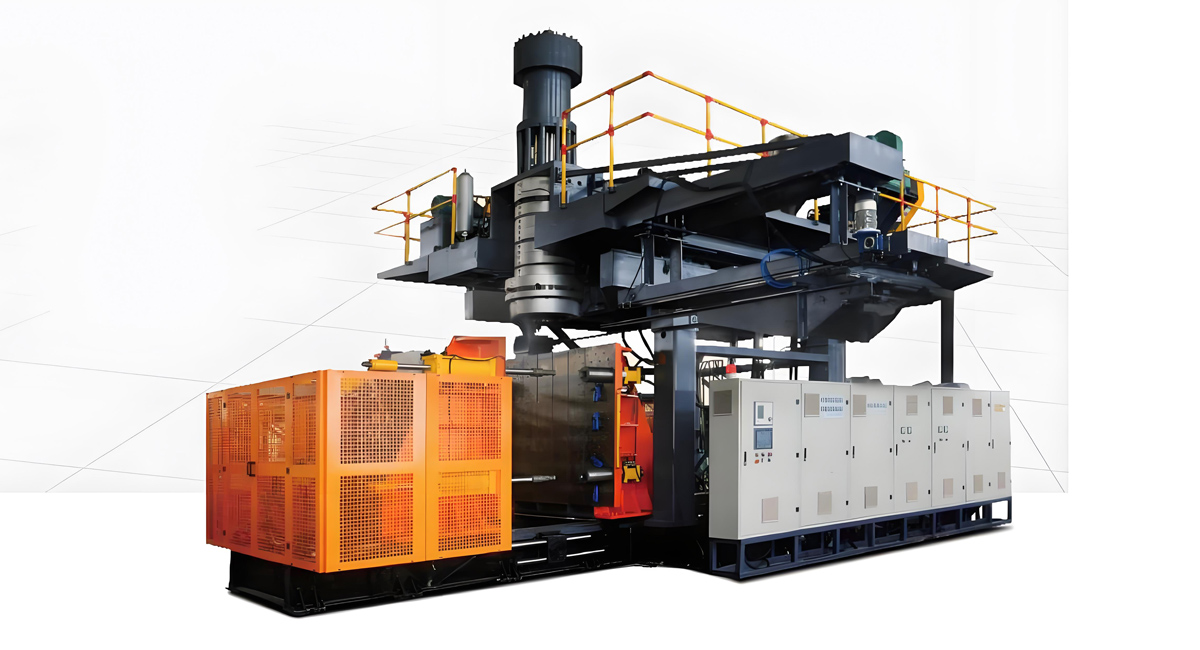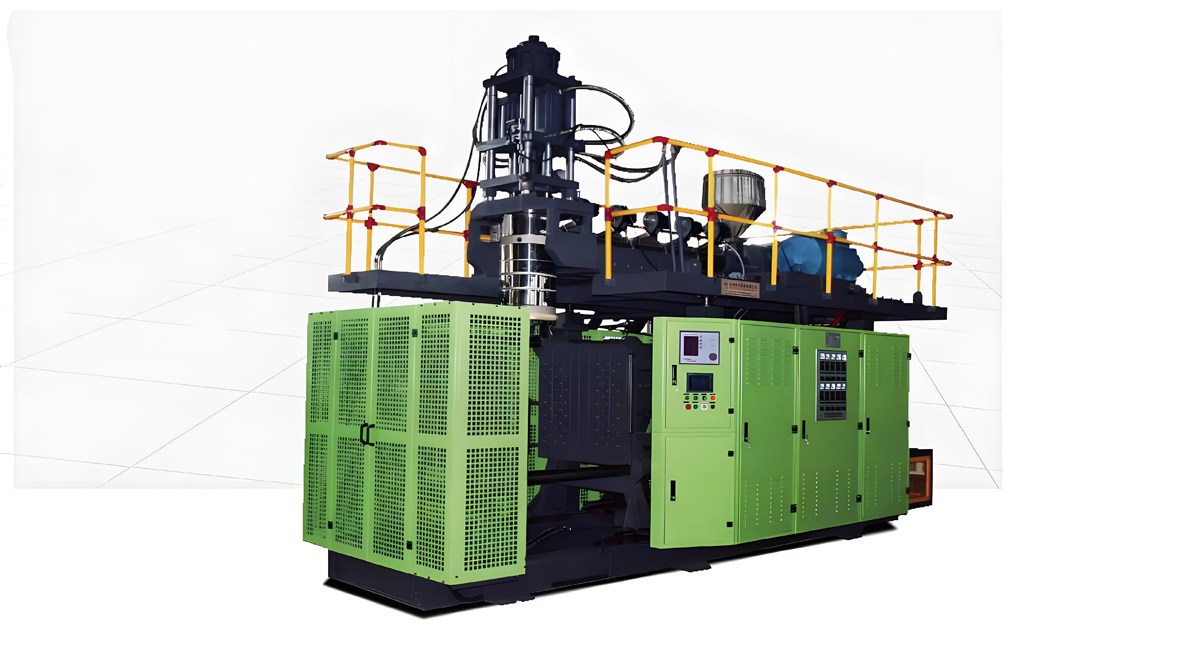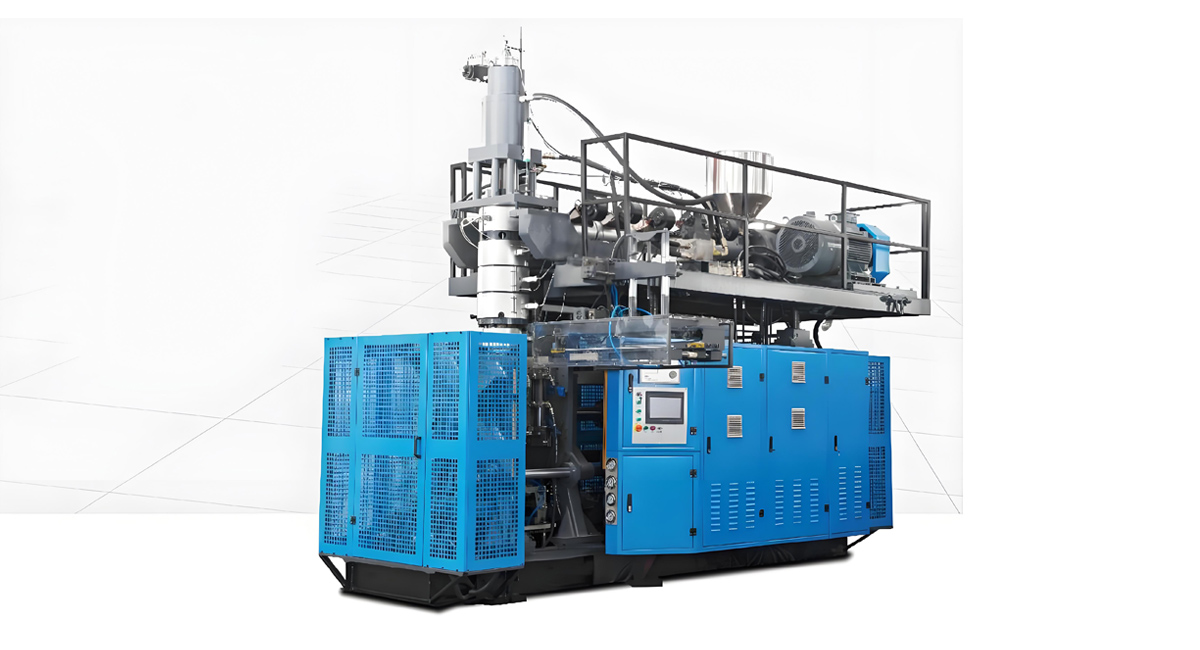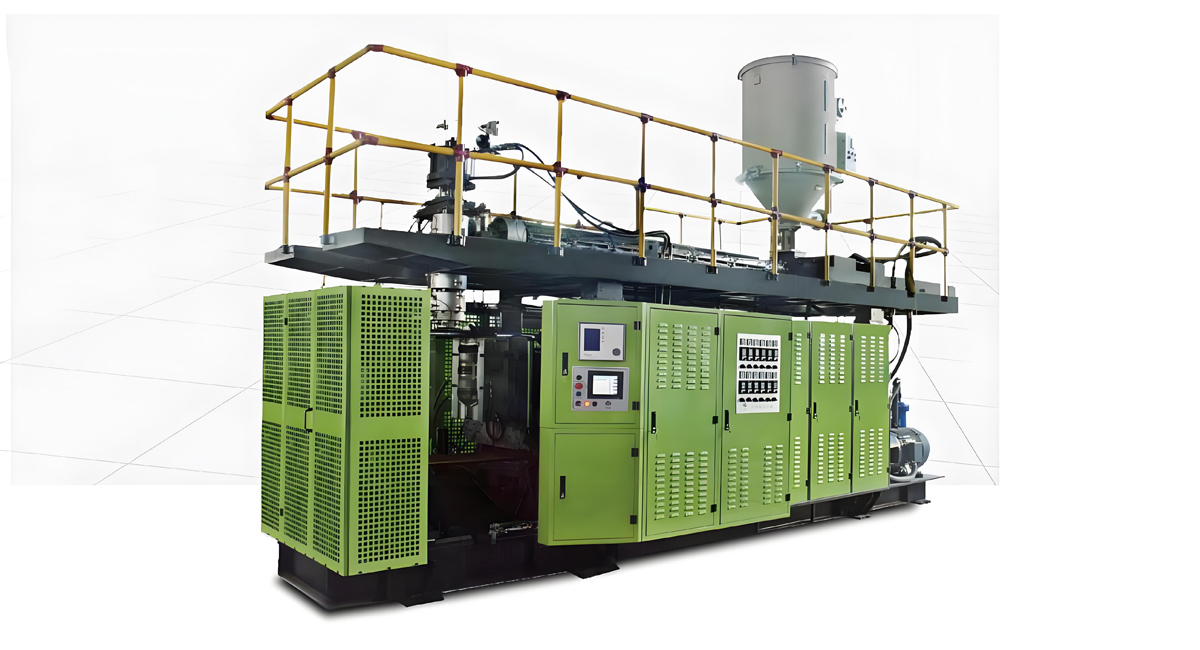

Choosing the right plastic-forming technology is one of the most consequential decisions a packaging or industrial-parts buyer makes. The phrase 압출 블로우 몰딩 기계 shows up constantly in procurement searches, but it is only one of three mainstream blow molding families. The other two, injection blow molding and stretch blow molding, look similar on a factory floor and are often confused by first-time buyers. This guide compares all three on the factors that actually move the needle: material compatibility, wall thickness control, tooling cost, cycle time, output, and total cost of ownership. By the end you should be able to match a technology to a product without relying on a sales pitch.
The confusion is understandable because all three start from a hot plastic melt and end with a hollow part inflated by air. What differs is the order of operations, the tooling that defines the part, and the range of resins and geometries each can handle. Buyers who skip this comparison often overpay for capability they do not need, or under-spec a machine that cannot hold the tolerances their product demands. The pages that follow are written for the person writing the purchase order, not for the machinery engineer, so the language stays practical and the numbers stay in ranges you can plan around.
The Quick Answer
If your part is a hollow container made from HDPE, PP, or PVC, and you value design freedom, multi-layer structures, and lower tooling cost, an 압출 블로우 몰딩 기계 is usually the right call. If you need tight tolerances on small pharmaceutical or cosmetic bottles in PET or clear PP, injection blow molding wins. If you are blowing carbonated beverage bottles from PET and need maximum clarity and barrier, stretch blow molding is the only serious option. The technology is not “better” or “worse” than the others; it is optimized for a different slice of the hollow-part universe.
How an 압출吹기 성형기 Works
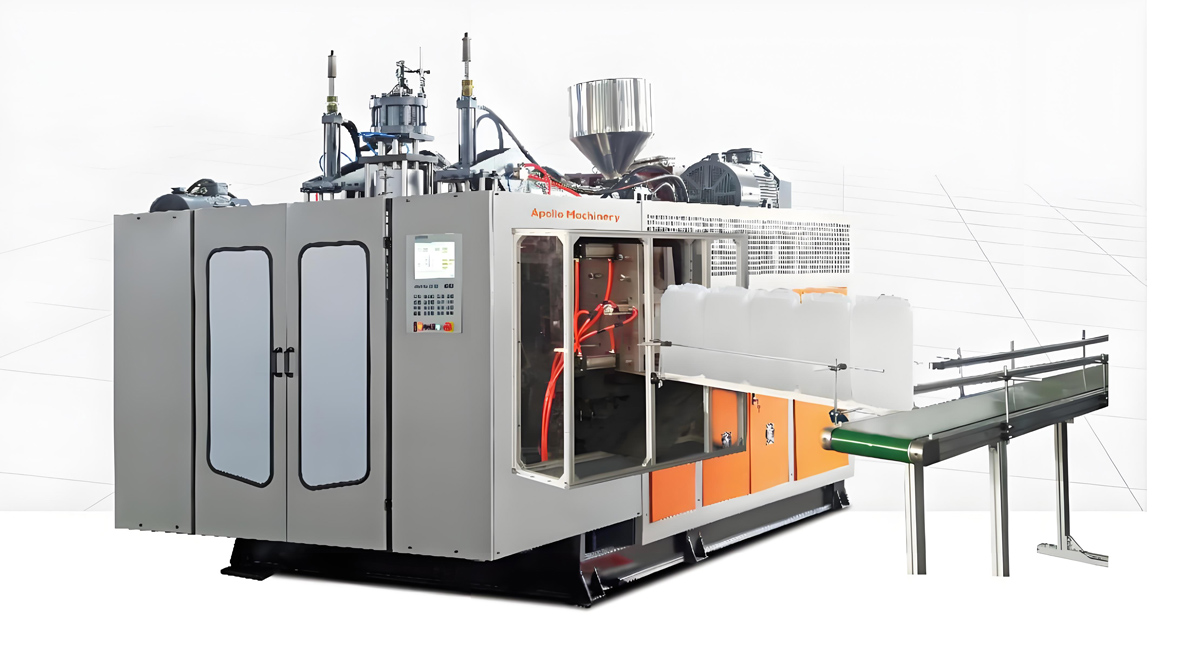
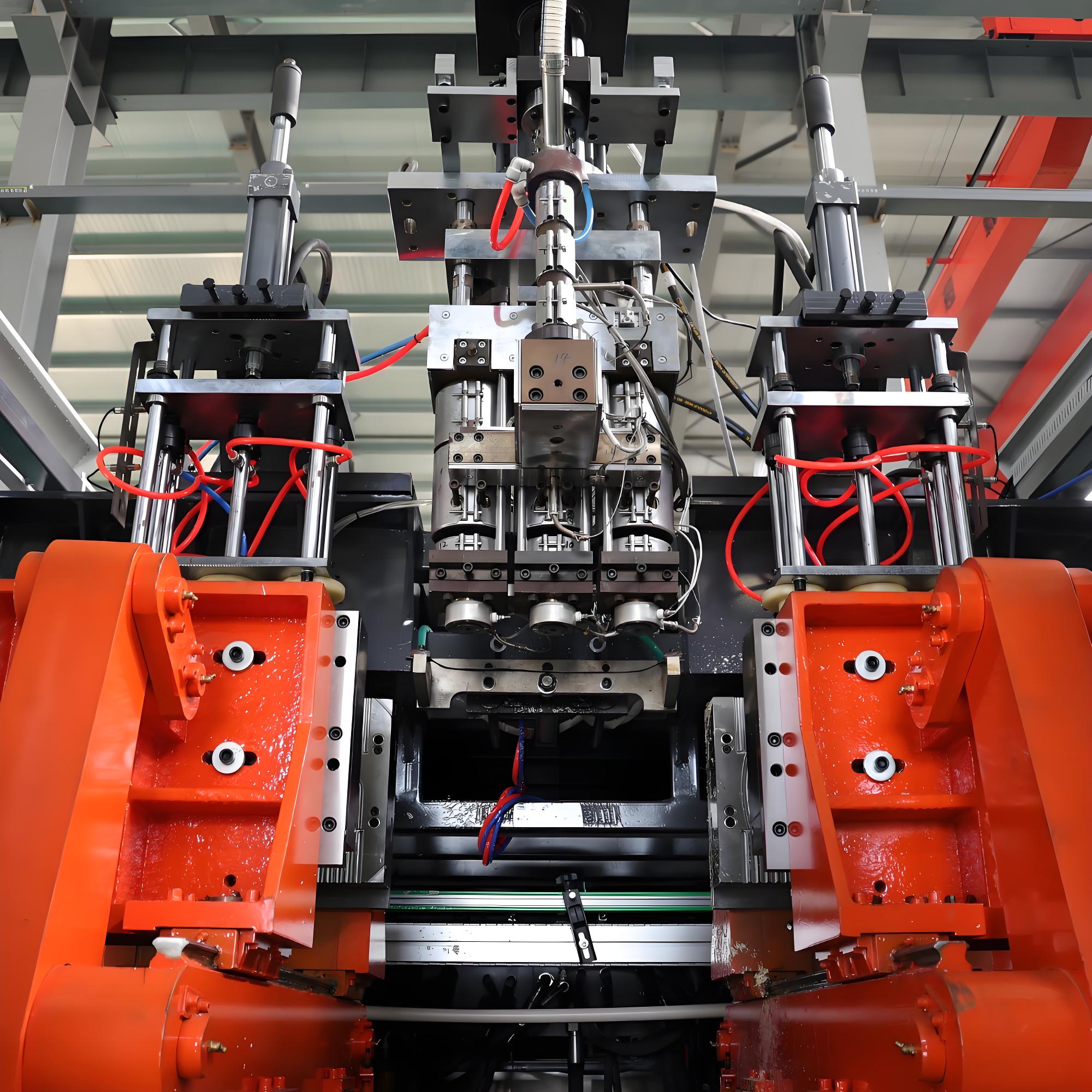
An 압출 블로우 몰딩 기계 starts by extruding a molten tube of plastic, called a parison, from a die head. The parison drops between two halves of a mold. The mold closes, pins the neck, and the trapped air is blown into the parison so it expands against the cooled cavity walls. Once the part freezes, the mold opens and the finished container is ejected. Because the parison is extruded continuously, the machine can be configured with single or multiple heads, and with one or more stations, to trade floor space for output.
The defining feature is that the plastic is shaped by extrusion first and blowing second. That sequence gives the process three structural advantages: it can handle a very wide viscosity range, it can layer multiple resins in the parison for barrier or recycled-content structures, and it can produce asymmetric or handled parts that would be difficult to injection mold. The trade-off is that wall thickness is controlled by die gap and parison programming rather than by a rigid steel cavity, so it demands more process skill to hold tight tolerances.
How Injection Blow Molding Works
Injection blow molding inverts the order. A preform is first injection molded around a steel core rod, forming a precise neck finish and an exact parison shape. The core rod, carrying the hot preform, is then rotated into a blow station where air expands the preform against the cavity. There is no flash, no trimming of the parting line in the traditional sense, and the neck is molded to a finished tolerance that often needs no secondary operation.
The strength of injection blow molding is dimensional precision. The neck, thread, and seal surface are defined by steel, not by a pinched-off parison. That makes it the default for pharmaceutical bottles, diagnostic vials, and high-end cosmetic jars where a cap must seat perfectly every time. The limitation is geometric: the preform must be injectable, so very large containers, heavily handled parts, and multi-layer barrier structures are harder or impossible to produce this way.
How Stretch Blow Molding Works
Stretch blow molding adds a mechanical stretching step. A PET preform is heated to its orientation temperature and then stretched axially with a rod while being blown radially. The biaxial orientation aligns the polymer chains, which is what gives a PET bottle its sparkling clarity, top-load strength, and carbon-dioxide barrier. Stretch blow molding is almost synonymous with PET beverage bottles, though it is also used for some PP containers.
Stretch blow molding delivers the lightest possible bottle for a given volume, which is why every major water and soft-drink brand depends on it. The orientation step is the whole point: without stretching, PET would be cloudy and weak. The process is highly automated and extremely fast at volume, but it is essentially locked to PET and a narrow range of compatible resins, and it is built around a single dominant application.
Material Compatibility
Material is the first filter in any technology decision. An 압출 블로우 몰딩 기계 is the most versatile of the three. It runs HDPE, LDPE, PP, PVC, and a long list of engineering blends, and it can run regrind and post-consumer recycled content at meaningful percentages because the parison does not require the optical clarity that stretch processes demand. That is why milk jugs, detergent bottles, Industrial Bulk Containers, and chemical drums are almost all extrusion blown.
Injection blow molding favors amorphous and easy-flowing resins such as PET, PP, and some clear styrenics. It is less friendly to highly filled or recycled-content compounds because the injection step needs a clean, predictable melt. Stretch blow molding is overwhelmingly PET, with BOPP a distant second. If your spec sheet says PET and carbonated, the answer is already decided for you.
Wall Thickness and Part Design
벽 두께 control is where the three processes diverge most sharply. A 압출 블로우 몰딩 기계 programs the parison profile, so a skilled operator can thicken the corners of a rectangular container and thin the flat panels to save material. Modern machines do this with servo-driven die heads and parison controllers, but the control is analog in nature and tolerances are typically plus or minus a few percent. For most industrial containers that is more than enough.
Injection blow molding fixes the preform wall everywhere except where the blow step stretches it, giving very repeatable thickness. Stretch blow molding stretches a precisely injection-molded preform, so the final wall is governed by the preform design and the stretch ratio. Both of the latter processes beat extrusion blow molding on consistency, which matters when a bottle must fit a filling line within a fraction of a millimeter.
Design freedom runs the other way. Only extrusion blow molding comfortably produces handles, asymmetric shapes, and multi-layer constructions such as a recycled-core barrier bottle. If the part has a handle you can grip, it was almost certainly extrusion blown.
Tooling and Mold Cost
Tooling cost is usually the second question after material. An 압출 블로우 몰딩 기계 needs a relatively simple two-cavity mold with a pinch-off and a die head or tooling insert sized to the parison. The mold does not have to define the neck to the same precision as the other processes, so mold steel and machining are less demanding. For a standard industrial bottle, a single-cavity blow mold might land in the range of 6,000 to 15,000 USD, with multi-cavity automotive or drum tooling higher.
Injection blow molding requires a preform mold plus a blow mold plus a core rod set, so the tooling package is more complex and typically costs more, often 20,000 to 50,000 USD for a production set, before counting the preform mold. Stretch blow molding tooling is specialized and high-precision; a blow mold for a water bottle can be modest, but the integrated preform and stretch tooling for a custom PET bottle climbs quickly, and the machine itself is a larger capital commitment than a comparable extrusion blow unit.
Cycle Time and Output
Cycle time depends on part size more than on process family. A small 압출 블로우 몰딩 기계 making a 500 milliliter bottle might cycle in 8 to 14 seconds per cavity, while a large drum machine takes minutes per part. Multi-head and multi-station configurations multiply output without multiplying machines. Injection blow molding cycles are comparable for small parts and excel at very small precise bottles. Stretch blow molding is the throughput champion at scale: a single rotary machine can produce tens of thousands of PET bottles per hour.
The practical takeaway is that for low to medium volume, any of the three can keep up. For extremely high volume PET beverages, only stretch blow molding makes economic sense. For large or complex industrial parts, only extrusion blow molding is on the table.
Downtime and changeover deserve a separate mention because they erode effective output more than the rated cycle suggests. An 압출 블로우 몰딩 기계 with quick-mold-change tooling can switch products in well under an hour, which protects uptime in a multi-product shop. Injection and stretch blow molding lines change over more slowly because preform or core-rod tooling is involved, so their effective throughput assumes a stable product mix. When a buyer compares quoted cycle times, the honest comparison includes the time the machine is not running because it is being reconfigured.
Total Cost of Ownership
| Factor | Extrusion Blow Molding | Injection Blow Molding | Stretch Blow Molding |
| Typical machine investment | 40,000 to 180,000 USD | 80,000 to 300,000 USD | 120,000 to 600,000 USD |
| Tooling cost per project | 6,000 to 30,000 USD | 20,000 to 50,000 USD | 15,000 to 60,000 USD |
| Best material | HDPE, PP, PVC, recycled | PET, PP, clear resins | PET only |
| Wall consistency | Moderate | 높은 수준 | 높은 수준 |
| Design freedom | 매우 높음 | Moderate | 낮음 |
| Handled parts | Yes | Rarely | No |
| Multi-layer barrier | Yes | Limited | No |
| Peak output | 중간 | 중간 | 매우 높음 |
The table above is a planning range, not a quote. A buyer should treat the machine investment plus tooling plus the per-part material and energy cost as a single lifetime number. An 압출 블로우 몰딩 기계 usually wins on entry cost and flexibility, which is why contract manufacturers and industrial-parts makers gravitate to it. The other two win on part precision or on beverage-scale economics.
Which Technology Should You Choose
Use the decision guide below rather than a vendor’s preference. If the product is a handled jerrycan, a chemical drum, an automotive fuel or washer tank, an Industrial Bulk Container, or any large hollow part in HDPE or PP, choose an 압출 블로우 몰딩 기계. If the product is a small, high-precision bottle for pharma or cosmetics where the cap must seat perfectly and clarity is secondary, choose injection blow molding. If the product is a carbonated or still PET beverage bottle where weight and clarity rule, choose stretch blow molding.
A common hybrid situation is a company that makes both HDPE industrial bottles and PET water bottles. In that case there is no single machine; the two product families belong to two different processes and the buyer should budget for both, or outsource one family to a specialist molder.
Multi-Layer and Recycled Content
Sustainability requirements are pushing more buyers toward recycled content and barrier structures. This is a clear advantage area for the 압출 블로우 몰딩 기계. By co-extruding layers in the parison, a molder can place a recycled-content core between virgin skins, or sandwich an oxygen-barrier layer inside an HDPE wall, without the optical clarity that stretch processes require. Injection and stretch blow molding can use recycled PET in specific grades, but the multi-layer freedom of extrusion blow molding is unmatched for industrial and chemical packaging.
Application Map: Matching Real Products to Processes
The fastest way to internalize the comparison is to map real products to the process that makes them. The list below reflects where each technology actually dominates in high-volume production, and it is the single best sanity check before requesting quotes.
| Product family | Dominant process | Why |
| Milk, water, and juice bottles in HDPE | Extrusion blow molding | Low cost, food contact, handled jugs possible |
| Detergent and personal-care bottles | Extrusion blow molding | Design freedom, in-mold labeling, recycled content |
| Chemical drums and jerrycans | Extrusion blow molding | Large part, multi-layer barrier, handled |
| Automotive fuel and washer tanks | Extrusion blow molding | Complex shape, barrier layers, size |
| Industrial Bulk Containers | Extrusion blow molding | Very large, multi-layer, structural |
| Pharmaceutical and diagnostic vials | Injection blow molding | Precision neck, no trimming, clarity |
| Premium cosmetic jars and bottles | Injection blow molding | Exact neck, surface quality |
| Carbonated and still beverage bottles | Stretch blow molding | PET clarity, barrier, light weight |
| PET jars and wide-mouth containers | Stretch blow molding | Orientation strength, scale |
Notice that extrusion blow molding appears in the largest number of rows. That is not an endorsement of one process over another; it reflects the sheer diversity of industrial and household hollow parts that are not PET beverages. When a buyer says they need an 압출 블로우 몰딩 기계, they are usually describing a product in one of the top five rows, where no alternative is practical.
Common Misconceptions
The first misconception is that one process is universally superior. It is not; each is optimized for a different part family, and the right answer depends on the product. 두 번째는 that extrusion blow molding is somehow old or low-tech. In reality, modern 압출 블로우 몰딩 기계 platforms use servo drives, parison profiling, in-mold labeling, and closed-loop process control that rival any other molding cell. The third misconception is that wall thickness inconsistency makes extrusion blow molding unsuitable for food. With proper parison programming and validation, extrusion blown HDPE milk and juice bottles meet food-contact standards worldwide.
에너지 소비 and Utilities
Energy is a larger share of per-part cost than many buyers expect, and the three processes spend it differently. An 압출 블로우 몰딩 기계 carries the continuous load of melting and extruding plastic plus the hydraulic or servo power of clamp and blow. A typical mid-size unit draws in the range of 25 to 60 kilowatts depending on head size and number of stations, with the extruder heater band accounting for the bulk of steady consumption. Injection blow molding shifts energy into the injection clamp and the precision temperature control of the preform, while stretch blow molding concentrates energy in oven reheating of PET preforms, which can be significant at high output.
For a buyer building a business case, the useful number is cost per thousand parts, not nameplate power. A machine that uses more electricity but wastes less material through better parison control can still be cheaper per bottle. As a planning figure, extrusion blow molding of a standard one-liter HDPE bottle often lands in the range of 3 to 8 USD of energy per thousand parts at industrial electricity rates, before labor and resin. Resin is almost always the dominant cost, typically five to fifteen times the energy cost, which is why wall-thickness optimization matters more than shaving a few kilowatts off the drive.
Decoration and In-Mold Labeling
How the container is decorated affects both the machine choice and the production flow. Extrusion blow molding supports in-mold labeling, where a preprinted film label is placed in the mold and fused to the part during blowing, giving a durable, wrap-around graphic without a separate labeling step. This is widely used for consumer detergent and personal-care bottles. Injection blow molding produces a high-quality surface that suits offset or pressure-sensitive labeling, and stretch blow molding is the natural home of shrink-sleeve and wrap labels on PET beverage bottles.
The decision matters because post-mold labeling adds a separate machine, labor, and floor space. If the brand requires a premium all-over print, choosing a process that supports in-mold labeling can remove an entire downstream operation. An 압출 블로우 몰딩 기계 with in-mold labeling capability is therefore attractive for branded household and industrial bottles, where the label must survive chemical contact and rough handling better than a glued-on sticker.
Automation, Labor, and Floor Footprint
Labor and footprint are where total cost of ownership is won or lost in smaller operations. A basic 압출 블로우 몰딩 기계 is a single integrated cell: extruder, head, clamp, and blow in one frame, often run by one operator who also handles deflashing and packing. Injection and stretch blow molding tend to involve more ancillary equipment, such as preform injection or purchasing, temperature-controlled ovens, and more conveying, which increases the skill required to run the line and the floor space it occupies.
For a contract molder serving many customers, the extrusion blow molding cell is attractive precisely because it is self-contained and flexible: the same machine can run dozens of different bottles by swapping molds and reloading a parison program. That flexibility reduces the risk of a single customer changing volume. For a beverage producer with one SKU at massive scale, the opposite logic applies: a dedicated stretch blow molding line with minimal changeover is more efficient than a flexible cell that is never used flexibly.
Quality Control and Validation
Regulated industries treat validation as a project, not an afterthought. In pharmaceutical and food applications, injection and stretch blow molding benefit from the precision of steel-defined necks and preforms, which simplifies validation of fill-line compatibility. Extrusion blow molding is fully capable of food-contact and pharmaceutical containment, but because wall thickness is programmed rather than cavity-defined, validation must include parison-profile confirmation, top-load and drop testing, and periodic audits of wall distribution, usually with a sectional or ultrasonic gauge.
A practical quality plan for an 압출 블로우 몰딩 기계 includes first-article inspection of the neck and seal, routine top-load and leak testing, and a statistical check of part weight to catch parison drift before it becomes a customer complaint. Because the process is forgiving on material but sensitive to setup, the highest-return quality investment is usually operator training and a locked, documented setup sheet per mold, not additional inspection hardware.
Supplier and Regional Considerations
Where the machine is built and supported affects uptime as much as the specification does. Buyers sourcing from Asian, European, or domestic suppliers will find that an 압출 블로우 몰딩 기계 is the most widely available of the three families, with a deep supplier base and a large installed population, which keeps spare parts competitive and shortens support response times. Injection and stretch blow molding equipment is more concentrated among specialized builders, and lead times for tooling and service can be longer.
Regional utility costs, labor rates, and resin prices should enter the comparison explicitly. A process that looks cheaper on a European energy tariff may look different on an Asian one, and vice versa. The right move is to build the total cost of ownership model in the currency and utility environment where the machine will actually run, rather than comparing nameplate prices across catalogs. For most industrial and household hollow parts, the breadth of the extrusion blow molding supplier base makes it the lowest-risk choice to commission and keep running.
Typical Failure Modes by Process
Knowing how each process fails helps a buyer plan maintenance and quality checks. An 압출 블로우 몰딩 기계 most often suffers from parison drift, where a worn die bushing or inconsistent melt temperature thins one panel and thickens another; the symptom is variable part weight and occasional weak corners. The fix is usually a parison-program correction and bushing replacement, not a mold change. Flash at the pinch-off and tail waste are secondary, manageable through clamp setup.
Injection blow molding fails differently: a damaged core rod or a contaminated preform cavity produces short shots, neck eccentricity, or unmelted streaks. Because the neck is steel-defined, a neck defect almost always points to tooling, not process tuning, which makes diagnosis fast but repair more involved. Stretch blow molding fails through preform heating, where a mis-set oven zone causes uneven stretching, hazy bottles, or base failures under pressure. The failure modes are process-specific, which is why operator training should be built around the exact technology rather than blow molding in general.
자주 묻는 질문들
Can one machine do all three processes? No. The machines are fundamentally different in tooling and melt handling. Some suppliers offer combined platforms for related variants, but a buyer should plan for separate equipment per process family.
Is extrusion blow molding cheaper than the others? On entry cost and tooling, usually yes. On per-part cost at beverage scale, stretch blow molding wins because of material savings from orientation. The cheapest process depends on volume and part.
Which process is best for recycled plastic? Extrusion blow molding is the most forgiving for post-consumer recycled content and for multi-layer barrier structures built around a recycled core.
Do I need clean-room conditions for any of these? Pharmaceutical and some food applications of injection and stretch blow molding may require controlled environments, while most extrusion blow molding for industrial and household containers runs in standard factory conditions.
What to Specify in a Purchase Order
Once the technology is chosen, the purchase order determines whether the machine meets the product for the next decade. For an 압출 블로우 몰딩 기계, specify the number of heads and stations needed for target output, the die-head configuration for the parison sizes you will run, the clamp force and platen size for your largest mold, and the control system’s parison programming resolution. Ask for documented energy consumption at your typical cycle, not a nameplate figure.
Equally important are the items that are easy to overlook. Require a documented setup sheet per mold, spare-part pricing and lead time for the wear items such as heads, bushings, and seals, and a clear statement of the supplier’s remote-support capability. If you plan to run recycled content, confirm the screw and screen-pack design handles your regrind percentage without frequent filtration stops. For food or pharmaceutical use, request material-contact certifications and a validation protocol template so commissioning does not stall at the quality gate.
For injection or stretch blow molding purchases, the equivalent list shifts toward preform tooling, oven or core-rod thermal control, and the precision of neck finishes. In all three cases, the cheapest offer that omits setup documentation, spare parts, and support will usually cost more over five years than a slightly higher offer that includes them. The purchase order is where total cost of ownership is effectively locked in.
결론
The choice between an 압출 블로우 몰딩 기계 and its injection or stretch cousins is not a matter of quality but of fit. Extrusion blow molding owns the world of large, handled, multi-layer, and recycled-content hollow parts in HDPE and PP. Injection blow molding owns small, precise, neck-critical bottles. Stretch blow molding owns high-volume PET beverages. Match the technology to the product, validate wall thickness and cycle time on real tooling, and the total cost of ownership will take care of itself.
For buyers specifying a new line, weigh material, part geometry, required precision, and annual volume before requesting a quote. A short conversation with an experienced equipment supplier about parison control, mold design, and regional parts support will shorten the learning curve and keep the first year of production on schedule. The right machine is the one your team can keep running at the wall thickness your product demands.
If the comparison still feels close, the safest default for a general industrial or household hollow part is the 압출 블로우 몰딩 기계, because its flexibility absorbs changes in volume, material, and product mix that would strand a more specialized line. Reserve injection blow molding for precision-neck small bottles and stretch blow molding for high-volume PET beverages, and the rest of the hollow-part world is extrusion blow molding’s to lose. Make the technology choice first, validate it on real tooling, and the economics will follow.
Finally, treat the comparison as a living document. Resin prices, energy tariffs, and recycled-content mandates shift the total cost of ownership year to year, and a process that was the clear winner when a line was commissioned may need re-evaluation at the next capacity expansion. Revisit the material, wall-thickness, and output assumptions whenever volume changes by a meaningful step, and the right technology will stay right for the life of the investment.