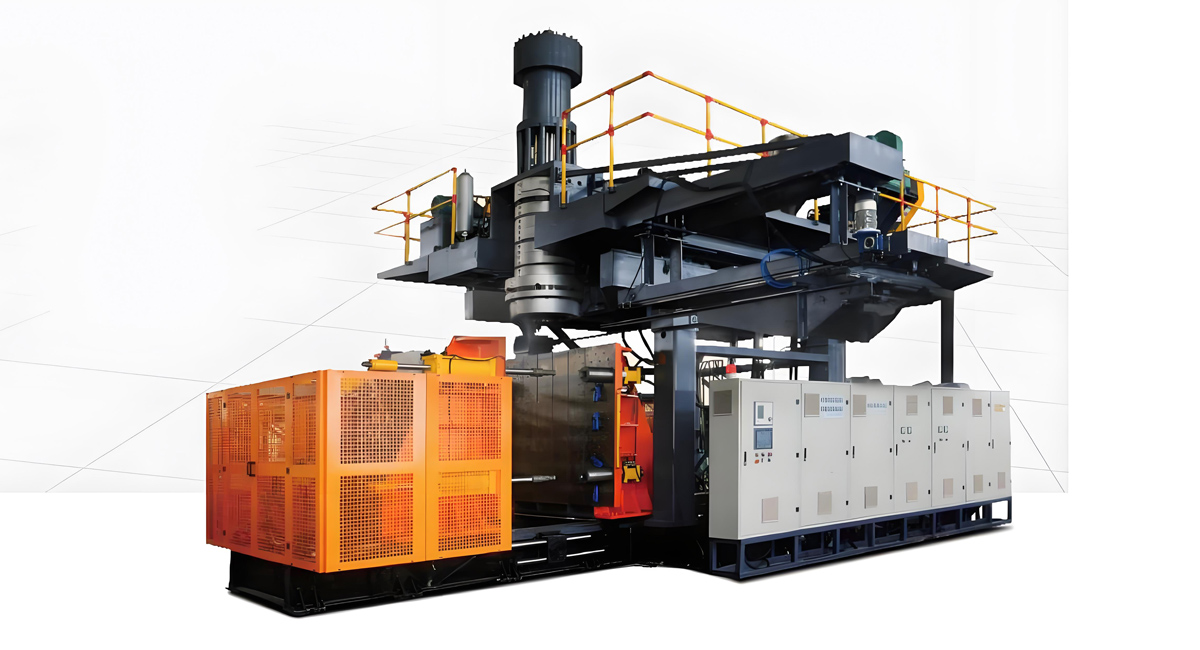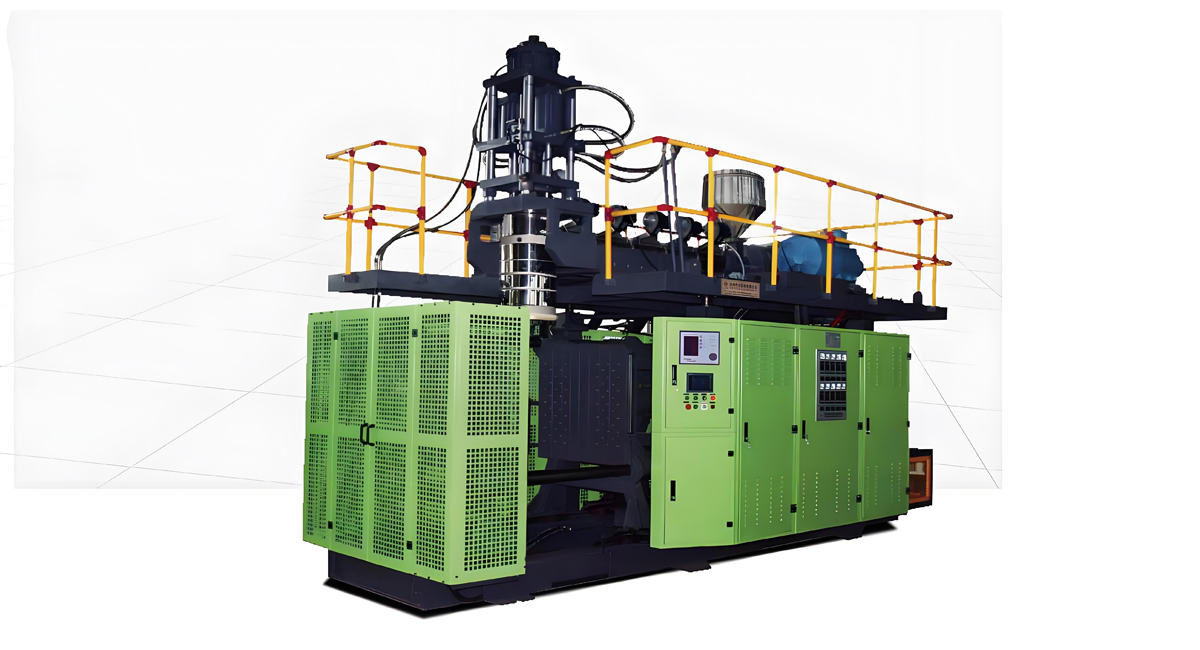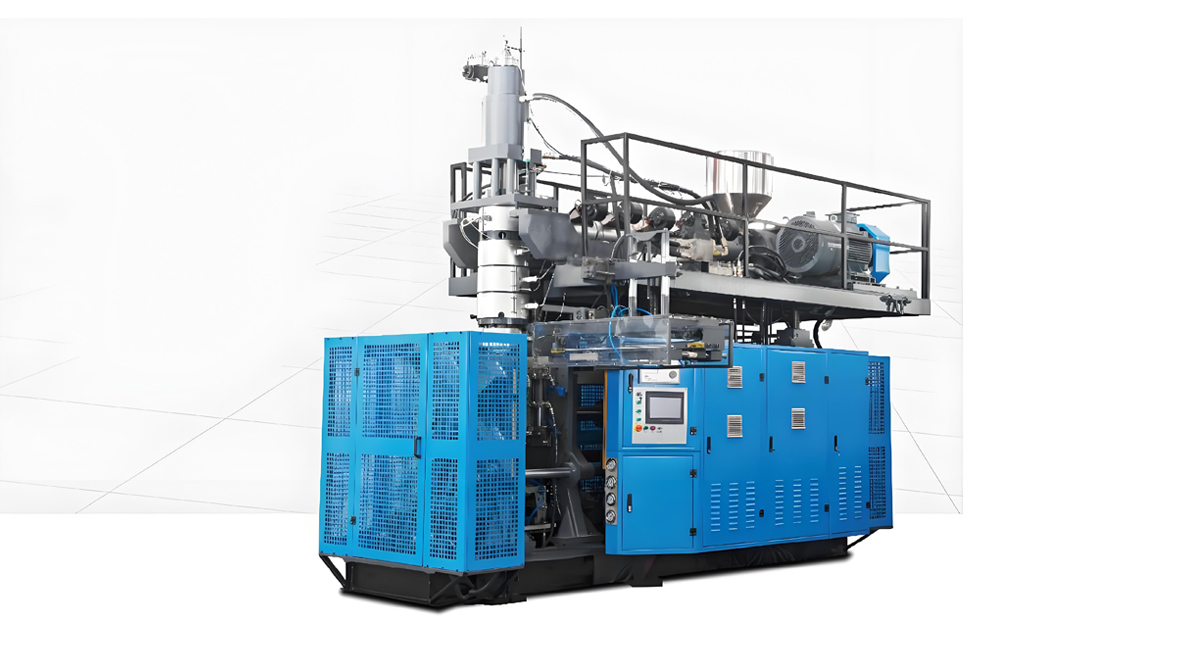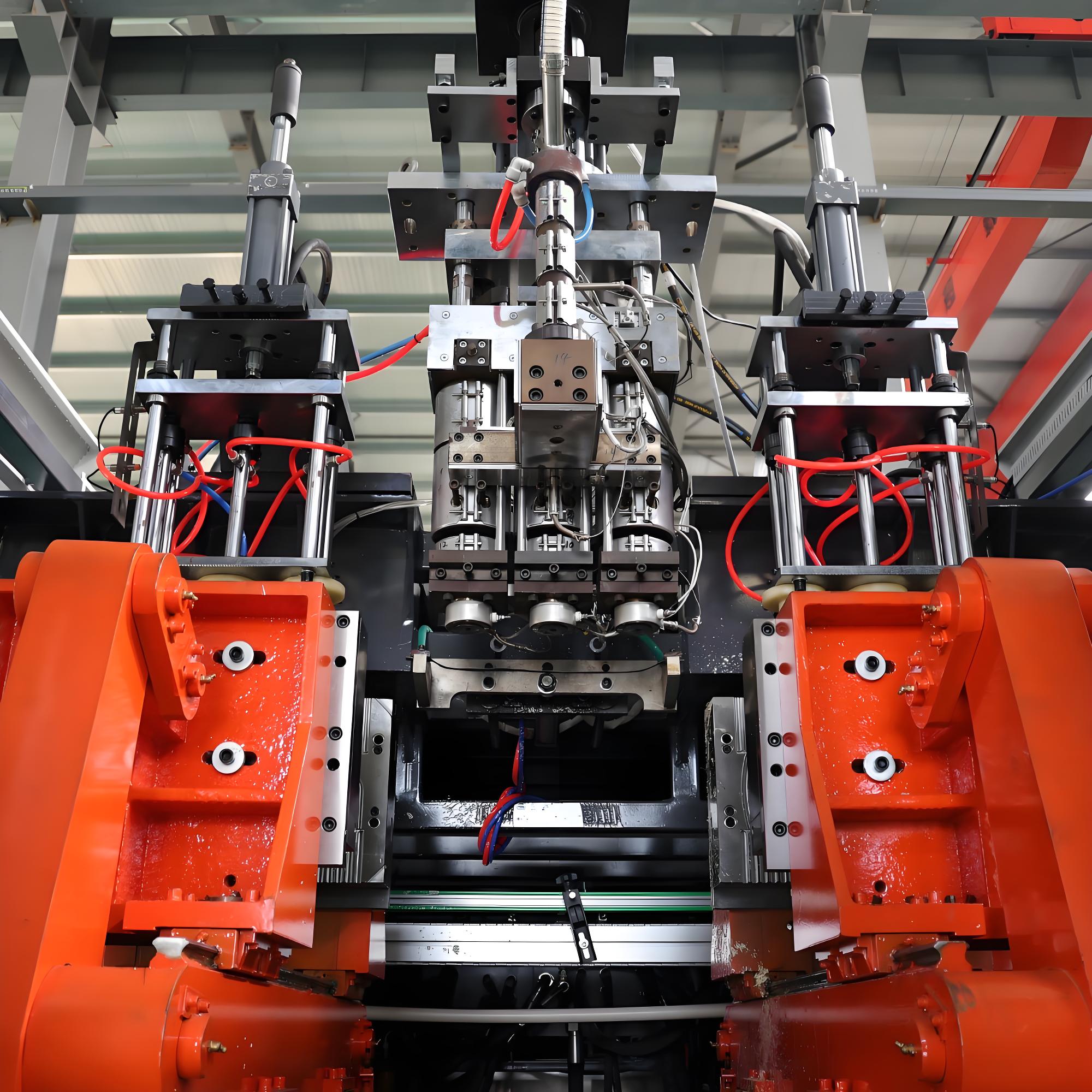
Introduction
Extrusion blow molding (EBM) machines represent significant investment opportunities for small businesses entering plastic container production, startup companies diversifying into manufacturing, and established businesses seeking vertical integration. The challenge lies in selecting machines that balance affordability with efficiency and quality while meeting specific production requirements and budget constraints. Small businesses face unique considerations including limited capital availability, need for operational flexibility, requirement for quick payback periods, and necessity for minimal technical staff requirements. This comprehensive guide examines EBM machine options for small business applications, with particular focus on Apollo’s affordable and high-efficiency models specifically designed for small-scale operations.
Modern EBM machine technology has evolved to offer excellent performance at entry-level price points, making plastic container production accessible to small businesses. Advances in manufacturing technology, automation systems, and control systems have reduced equipment costs while improving performance and ease of operation. Apollo, with 20 years of manufacturing experience and over 4,000 machines installed worldwide, has developed a comprehensive product line specifically addressing small business needs including compact footprints, simplified operation, rapid changeover capabilities, and optimized cost structures. Understanding the full spectrum of small business EBM machine options enables informed decision-making that supports business success and growth.
Small business EBM applications span diverse industries including food and beverage packaging, household products, automotive components, industrial containers, and specialty products. The appropriate machine selection depends heavily on production volume requirements, product specifications, material types, quality standards, and growth plans. This guide provides detailed analysis of machine options, cost considerations, performance expectations, and strategic factors that enable small businesses to select and implement EBM equipment successfully. The information draws from Apollo’s extensive experience serving small business customers across diverse markets and application requirements.
Understanding Small Business EBM Machine Requirements
Small businesses have distinct requirements from large manufacturers when selecting EBM machines. These requirements encompass capital considerations, operational capabilities, support needs, and growth planning. Understanding these requirements forms the foundation for appropriate machine selection.
Capital Investment Considerations
Capital availability represents the most significant constraint for small businesses when investing in EBM equipment. Understanding capital requirements and financing options enables realistic planning and decision-making.
Entry-level EBM machine pricing has become increasingly attractive for small businesses, with basic models starting as low as $25,000 for simple semi-automatic machines producing up to 2L containers. These entry-level machines provide basic functionality suitable for startup operations or low-volume production. Apollo’s entry-level ABLB50 series offers semi-automatic operation with manual product handling, suitable for production volumes up to 300 containers per hour. These machines provide excellent return on investment for small businesses testing markets or establishing production capabilities with minimal capital commitment.
Mid-range EBM machines for small businesses typically cost $40,000-80,000 and offer enhanced automation including automatic product handling, improved cycle times, and expanded capacity range. Apollo’s ABLB60 series represents this category, offering fully automatic operation with product capacities up to 10L and production rates up to 600 containers per hour. These machines provide the performance needed for growing businesses while maintaining affordable pricing structures. The enhanced automation reduces labor requirements and improves consistency, supporting business growth and profitability.
Financing options for small businesses include equipment leasing, installment payment plans, and government programs supporting small business development. Apollo works with financing partners to offer flexible payment terms that enable small businesses to acquire equipment while managing cash flow effectively. Equipment leasing requires minimal upfront payment and payments can be structured to match production revenue. Installment plans typically require 30-50% down payment with remaining balance spread over 12-36 months. Government programs in many countries provide grants or low-interest loans for manufacturing equipment, particularly for small businesses entering new markets or creating jobs.
Operational Requirements
Small businesses typically have limited technical staff and require equipment that is simple to operate and maintain. Operational simplicity represents a critical selection criterion for small business EBM equipment.
Operator skill requirements must match available staff capabilities. Small businesses may lack experienced plastic processing operators, requiring machines with intuitive interfaces and automated processes. Apollo’s small business machines feature simplified HMI interfaces with step-by-step operation guidance, automatic recipe management, and minimal parameter adjustment requirements. The machines include startup wizards that guide operators through machine setup from cold start to production, reducing training time and operational complexity. The control systems include automatic parameter optimization based on material and product selection, further reducing operator burden.
Changeover time minimization supports production flexibility important for small businesses serving multiple customers or producing various products. Apollo’s small business machines feature quick-change die systems, modular mold systems, and automatic recipe changes that enable product changeovers in 30-60 minutes compared to 2-3 hours for conventional machines. This reduced changeover time enables efficient small-batch production and quick response to customer demands. The quick-change systems use standardized tooling and positioning systems that enable rapid mold and die changes without specialized tools or extensive operator skill.
Maintenance simplicity enables small businesses to maintain equipment without specialized technical staff. Apollo’s small business machines are designed for reliability with maintenance intervals extended to 3-6 months for routine maintenance. The machines include maintenance reminders and step-by-step maintenance instructions displayed on the HMI. Common maintenance tasks including lubrication, filter changes, and component replacement are designed for completion by general maintenance staff rather than specialized technicians. Additionally, Apollo provides remote diagnostic capabilities that enable support technicians to troubleshoot issues remotely, reducing the need for on-site service visits.
Production Flexibility
Small businesses often require production flexibility to serve diverse customer requirements or adapt to changing market conditions. EBM equipment selection should consider flexibility requirements carefully.
Capacity range flexibility enables production of different container sizes on a single machine, reducing the need for multiple machines. Apollo’s small business machines typically accommodate capacity ranges from 200ml to 10L or 20L depending on model selection. The modular design enables capacity expansion through component upgrades rather than complete machine replacement. For example, the ABLB60 series can be configured initially for 2L production and later expanded to 10L capacity through die and mold upgrades. This flexibility enables small businesses to start with basic configurations and expand as market requirements evolve.
Material compatibility allows processing of different plastic materials, expanding product opportunities and reducing dependency on single material suppliers. Apollo’s small business machines process standard materials including HDPE, PP, PVC, and PETG without configuration changes. Engineering plastics including PC and ABS may require minor configuration adjustments but can be processed on the same machine. The machines include temperature profiles and processing parameters for common materials, reducing process development time for new materials. Material flexibility enables small businesses to serve diverse market segments and adapt to changing customer requirements.
Production rate scalability enables increased output as business grows without complete equipment replacement. Apollo’s small business machines offer optional upgrades including enhanced cooling, higher capacity extruders, and improved automation that can increase production rates by 30-50%. These upgrades can be implemented as business grows, providing a cost-effective path to capacity expansion. Additionally, machine architectures support integration of additional automation including automatic deflashing, leak testing, and packaging systems as production volumes increase and labor constraints emerge.
Apollo’s Small Business EBM Machine Portfolio
Apollo has developed a comprehensive portfolio of EBM machines specifically optimized for small business applications. These machines balance affordability, performance, ease of operation, and growth potential to meet small business requirements across diverse applications.
Entry-Level Models
Apollo’s entry-level EBM machines provide essential functionality at affordable price points, making plastic container production accessible to startup businesses and low-volume applications.
ABLB40 series represents Apollo’s most economical EBM offering, priced at $25,000-35,000 depending on configuration. The ABLB40 produces containers from 200ml to 2L capacity with production rates of 200-300 containers per hour. The machine features single-station operation with manual product handling, simple PLC control, and basic safety systems. The ABLB40 is ideal for startups testing markets or businesses requiring low-volume production of specialty containers. Despite its economical price, the ABLB40 includes Apollo’s quality engineering including precision extrusion system, accurate temperature control, and robust construction ensuring reliability and product quality.
ABLB50 series provides enhanced functionality while maintaining affordability, with pricing from $35,000-45,000. The ABLB50 produces containers from 200ml to 5L capacity with production rates of 300-450 containers per hour. The machine features semi-automatic operation with automatic parison formation and manual product removal, enhanced PLC control with recipe storage, and improved safety systems. The ABLB50 suits growing businesses requiring higher production capacity than the ABLB40 while maintaining capital efficiency. The machine includes automatic cycle sequencing that reduces operator intervention while maintaining simplicity of operation.
Technical specifications for entry-level models include screw diameters from 45-60mm, heating power from 8-12kW, and machine weights from 3-5 tons. Despite their economical pricing, Apollo’s entry-level machines include premium components including Siemens PLC systems, YUKEN hydraulic components, and precision extrusion components ensuring reliability and performance. The machines feature compact footprints requiring as little as 3×3 meters floor space, enabling installation in small facilities. Electrical requirements are typically 380V three-phase power, compatible with standard industrial power supplies.
Mid-Range Models
Apollo’s mid-range EBM machines offer enhanced automation and performance while maintaining attractive pricing for small businesses requiring higher capacity or more automated operation.
ABLB60 series provides fully automatic operation with production capacities up to 10L, priced at $45,000-70,000 depending on configuration. The ABLB60 produces containers from 200ml to 10L capacity with production rates of 500-700 containers per hour. The machine features automatic product handling, enhanced control system with HMI touch screen, and comprehensive safety interlocks. The ABLB60 suits growing businesses transitioning from manual or semi-automatic operation to fully automated production. The automatic product handling includes take-out conveyors and stacking systems that reduce labor requirements and improve consistency.
ABLB70 series offers expanded capacity range and enhanced performance, with pricing from $60,000-85,000. The ABLB70 produces containers from 500ml to 20L capacity with production rates of 600-900 containers per hour. The machine features advanced automation including automatic deflashing, integrated leak testing options, and enhanced cycle control. The ABLB70 serves businesses requiring higher capacity containers or enhanced quality capabilities. The integrated quality inspection options enable inline quality verification, reducing scrap and ensuring consistent product quality.
Mid-range model specifications include screw diameters from 75-90mm, heating power from 15-20kW, and machine weights from 6-9 tons. These machines include advanced control systems with recipe management, production tracking, and diagnostic capabilities. The machines support higher capacity molds and dies, enabling production of larger containers while maintaining excellent wall thickness uniformity and dimensional accuracy. The enhanced automation systems include servo-driven movements that improve precision and reduce cycle times compared to pneumatic systems used on entry-level models.
Small Business Special Configurations
Apollo offers special configurations optimized for specific small business applications or operational requirements, providing tailored solutions for unique needs.
Compact configuration models feature reduced footprints and simplified material handling for facilities with limited space. These models integrate material drying, conveying, and storage into compact packages requiring as little as 4×4 meters total floor space including material handling. Compact configuration ABLB60C models cost approximately 10% more than standard models but significantly reduce facility requirements. The compact models are ideal for urban facilities or installations where space constraints limit equipment size. Despite the reduced footprint, these models maintain full production capabilities of standard machines.
Multi-material configuration machines enable processing of different material types on the same machine without extensive changeover. These models include multiple material feed systems, dedicated barrels for different materials, and rapid switching capabilities. Multi-material configuration machines cost 15-25% more than standard models but provide exceptional flexibility for businesses serving diverse markets. The systems include automatic material identification and recipe selection that reduce operator involvement in material changes. This flexibility enables small businesses to respond quickly to customer demands for different materials without dedicated equipment for each material type.
Energy-efficient configuration models incorporate enhanced insulation, servo-driven systems, and advanced control algorithms that reduce energy consumption by 30-40% compared to standard models. These energy-efficient machines cost 20-30% more than standard models but provide substantial energy cost savings that deliver payback in 2-3 years. The enhanced insulation reduces heat loss while servo-driven systems eliminate continuous hydraulic pump operation. The energy savings are particularly valuable for small businesses operating with high electricity rates or emphasizing environmental sustainability in their market positioning.
Cost Analysis and Return on Investment
Comprehensive cost analysis considering total cost of ownership and return on investment enables informed EBM machine selection decisions for small businesses. Understanding cost structures and ROI calculations supports business planning and investment justification.
Total Cost of Ownership Analysis
Total cost of ownership (TCO) analysis considers all costs over equipment lifetime, providing accurate economic comparison between different machine options and purchase versus outsourcing decisions.
Initial equipment cost includes machine purchase price, installation expenses, facility preparation costs, and initial tooling costs. For Apollo’s ABLB60 series, initial costs typically include machine at $55,000, installation and training at $5,000, facility preparation including power and foundation at $5,000-10,000, and initial molds and dies at $10,000-20,000 depending on product range. Total initial investment ranges from $75,000-90,000 for a complete small business production setup. Financing arrangements may reduce initial cash requirements while increasing total cost through interest payments.
Operating costs include material costs, labor costs, energy consumption, maintenance expenses, and consumables. Material costs represent the largest operating expense, typically $0.30-0.80 per container depending on container size and material type. For a machine producing 500 containers per hour at $0.50 material cost, daily material cost for 8-hour operation equals $2,000. Labor costs vary from $0.05-0.15 per container for semi-automatic operation to $0.02-0.05 per container for fully automatic operation. Energy costs average $0.01-0.03 per container depending on machine efficiency and local electricity rates. Maintenance costs average $0.02-0.05 per container including routine maintenance and occasional repairs.
Hidden costs often overlooked in ROI analysis include quality costs, changeover costs, downtime costs, and compliance costs. Quality costs including scrap and rework average 2-5% of material cost, representing $0.01-0.04 per container. Changeover costs including lost production during product changeovers can add 2-5% to operating costs for businesses producing multiple products. Downtime costs including lost production from machine failures average 1-3% of production value annually. Compliance costs including certification documentation and testing may add 0.5-1% to operating costs depending on market requirements. Including these hidden costs in analysis provides realistic ROI projections.
Return on Investment Calculations
ROI calculations quantify the financial return from EBM machine investment, enabling comparison with alternative investments and outsourcing options. ROI analysis considers revenue generation, cost savings, and investment payback periods.
Revenue generation from in-house production versus purchasing containers provides direct ROI justification. For a small business purchasing 5L containers at $2.00 each and consuming 1,000 containers daily, annual container purchase cost equals $730,000. Producing these containers internally using Apollo’s ABLB60 with total operating cost of $1.20 per container reduces annual cost to $438,000, generating annual savings of $292,000. With initial investment of $90,000, the payback period equals approximately 4 months, with subsequent years generating substantial profit contribution. Even conservative assumptions accounting for quality costs, downtime, and additional overhead still deliver payback periods of 6-12 months.
Cost savings from vertical integration extend beyond container costs to include reduced inventory carrying costs, reduced lead times, and enhanced quality control. In-house production enables just-in-time inventory management reducing carrying costs by 30-50% compared to purchasing containers with longer lead times. Production flexibility enables rapid response to customer demands, reducing inventory requirements for finished goods. Enhanced quality control through in-house production reduces customer returns and warranty claims, typically saving 1-3% of product value. These additional savings further improve ROI beyond direct container cost reductions.
Profit enhancement opportunities from in-house production include revenue from contract production, premium pricing for differentiated products, and market expansion opportunities. Small businesses with excess capacity can offer contract production services to other businesses, generating additional revenue. In-house production capabilities enable product differentiation through unique designs or materials, supporting premium pricing. Production flexibility enables rapid market entry for new products, expanding business opportunities. These profit enhancement opportunities provide additional ROI beyond simple cost reduction from vertical integration.
Break-Even Analysis
Break-even analysis determines the production volume required to cover fixed costs and generate profit, providing insight into minimum production requirements for financial viability.
Fixed costs include machine depreciation, facility costs, and fixed labor regardless of production volume. For a typical small business installation, fixed costs include machine depreciation of $9,000 annually based on 10-year equipment life, facility costs including rent, utilities, and insurance of $15,000-20,000 annually, and fixed labor costs for one operator at $35,000-45,000 annually. Total fixed costs range from $60,000-75,000 annually. Variable costs including material, energy, and maintenance average $1.00-1.30 per container depending on size and material.
Break-even volume calculation divides fixed costs by contribution margin per container. For containers selling at $2.00 with variable costs of $1.20, contribution margin equals $0.80 per container. With fixed costs of $70,000 annually, break-even volume equals 87,500 containers annually or approximately 350 containers daily for 250 operating days annually. This break-even volume is well within the capacity of Apollo’s small business machines, which typically produce 500-900 containers per hour. Even considering conservative assumptions and overhead allocations, break-even volumes remain achievable for most small business applications.
Profit margin increases dramatically as production volume exceeds break-even point, as fixed costs are spread across higher production volumes. At break-even volume of 87,500 containers annually, profit margin equals 0%. At double break-even volume of 175,000 containers annually, profit margin improves to 28%. At typical utilization of 50% capacity producing 500,000 containers annually, profit margin reaches 35-40%. This increasing profitability with volume provides incentive for market expansion and capacity utilization. The high profit margins at reasonable production volumes demonstrate strong economic justification for in-house production capabilities.
Small Business Implementation Success Factors
Successful implementation of EBM machines in small business environments requires attention to planning, training, and operational practices. Understanding critical success factors enables smooth implementation and rapid realization of expected benefits.
Pre-Implementation Planning
Thorough pre-implementation planning reduces startup problems and accelerates achievement of target performance levels. Planning encompasses facility preparation, market validation, and staffing considerations.
Facility requirements assessment ensures adequate space, utilities, and infrastructure for successful operation. EBM machines require adequate floor space, proper ventilation, appropriate electrical supply, and material storage areas. Apollo’s ABLB60 series requires approximately 4×6 meters floor space including material handling and product staging areas. Electrical requirements typically include 380V three-phase power with capacity of 40-60kW depending on machine configuration. Ventilation requirements include adequate air exchange to remove plastic fumes, particularly when processing certain materials. Material storage requires dry, protected storage for plastic resin plus space for finished product storage. Assessing these requirements early prevents costly facility modifications after equipment installation.
Market validation reduces risk by confirming market demand and pricing before making significant capital investment. Small businesses should secure customer commitments or conduct thorough market analysis to validate demand projections. Prototype production using contract manufacturers can validate product quality and market acceptance before equipment investment. Pricing analysis should compare in-house production costs versus current supplier prices to ensure adequate margin for profitable operation. Market validation should include customer quality requirements and regulatory compliance needs that may affect equipment selection. Validated market demand provides confidence in ROI projections and reduces investment risk.
Staff planning ensures availability of qualified personnel for operation and maintenance of EBM equipment. Small businesses typically require one operator per shift plus one maintenance person for multiple machines. Operators require training on machine operation, quality inspection, and basic troubleshooting. Maintenance staff require more extensive training on mechanical, electrical, and hydraulic systems. Apollo provides comprehensive training programs covering operation, maintenance, and troubleshooting. For small businesses with limited technical staff, Apollo’s enhanced support options including remote monitoring and annual service contracts provide additional technical support. Staff planning should consider shift requirements for continuous operation and backup personnel to cover absences.
Training and Skill Development
Comprehensive training ensures operators and maintenance personnel can effectively operate and maintain EBM equipment, maximizing uptime and product quality. Training should address both technical skills and operational best practices.
Operator training encompasses machine operation, quality inspection, parameter adjustment, and troubleshooting. Apollo provides 3-5 days on-site operator training covering machine components, startup procedures, production operation, quality inspection, and basic troubleshooting. Training includes both classroom theory and hands-on practice. Operator training materials include comprehensive operation manuals, quick reference guides, and video tutorials. Operators should understand cause-effect relationships between process parameters and product quality, enabling effective problem identification and resolution. Ongoing training including annual refresher courses keeps skills current and introduces new capabilities.
Maintenance training covers routine maintenance procedures, component identification, failure recognition, and repair techniques. Apollo provides 2-3 days maintenance training covering mechanical systems, electrical systems, hydraulic systems, and control systems. Training includes preventive maintenance procedures, component inspection techniques, and common failure modes and corrective actions. Maintenance personnel should understand maintenance intervals, proper lubrication procedures, and safety requirements. Advanced maintenance training may include specific component repair techniques, calibration procedures, and root cause analysis methodologies. Maintenance training reduces downtime and extends equipment life through proper maintenance practices.
Quality training ensures personnel understand quality standards, measurement techniques, and defect identification. Small businesses should establish quality standards based on customer requirements and industry best practices. Training should include measurement techniques for dimensional accuracy, wall thickness uniformity, and visual appearance. Personnel should learn to identify common defects including flash, short shots, wall thickness variations, and surface imperfections. Quality training includes understanding relationship between process parameters and quality characteristics, enabling adjustment of parameters to correct quality issues. Quality documentation procedures including inspection records and trend analysis provide ongoing monitoring of quality performance.
Operational Best Practices
Implementing operational best practices from the outset establishes strong foundations for consistent performance and continuous improvement. Best practices cover maintenance, quality management, and production optimization.
Preventive maintenance adherence is critical for equipment reliability and longevity. Small businesses should establish maintenance schedules based on Apollo recommendations including daily inspections, weekly lubrication, monthly filter changes, and quarterly comprehensive inspections. Preventive maintenance should be documented with records of maintenance activities and component replacement. Small businesses with limited maintenance staff may implement simplified maintenance programs focusing on critical tasks while outsourcing more complex maintenance. Apollo’s maintenance support programs can assist with maintenance planning and execution. Consistent preventive maintenance reduces unexpected downtime by 60-80% compared to reactive maintenance approaches.
Quality management systems establish processes for consistent quality and continuous improvement. Small businesses should implement basic quality management including inspection procedures, quality standards documentation, and defect tracking. Statistical process control (SPC) can be implemented for key quality dimensions including wall thickness and dimensional accuracy. Quality trends should be tracked to identify gradual degradation before it becomes a significant problem. Customer feedback should be solicited and incorporated into quality improvement initiatives. Even simple quality management systems significantly improve consistency and reduce quality costs.
Production optimization focuses on maximizing efficiency and output while maintaining quality. Small businesses should establish production goals based on customer demand and market opportunities. Production monitoring should track key metrics including production rates, scrap rates, downtime, and energy consumption. Bottleneck identification and elimination improves overall efficiency. Lean manufacturing principles can be applied to reduce waste and improve flow. Continuous improvement initiatives including operator suggestions and regular process reviews drive incremental improvements. Production optimization enables small businesses to maximize return on their EBM equipment investment.
Growth and Expansion Planning
Small businesses often experience growth after successful EBM machine implementation. Planning for growth enables smooth scaling of operations and prevents operational constraints from limiting business expansion.
Capacity Expansion Strategies
Multiple capacity expansion strategies exist for small businesses, ranging from equipment upgrades to addition of new machines. Selecting appropriate expansion strategies depends on growth rate, capital availability, and facility constraints.
Equipment upgrades provide incremental capacity improvements without facility expansion or major capital investment. Apollo’s machines support various upgrades including enhanced cooling systems that reduce cycle times by 15-25%, higher capacity extruders that increase output by 20-30%, and enhanced automation that reduces cycle times and labor requirements. These upgrades typically cost $10,000-25,000 each but provide significant capacity improvements. Upgrades can be implemented incrementally as growth occurs, spreading capital investment over time. Equipment upgrades are particularly appropriate for growth rates of 20-50% annually.
Additional machines provide capacity expansion when upgrades reach limits or when growth requires significant capacity increases. Adding a second machine enables approximately double production capacity while providing flexibility for parallel production of different products. Apollo provides discounts for multiple machine purchases, typically 5-10% for second machines and larger discounts for subsequent machines. Facility requirements should be assessed before adding machines including floor space, utilities, and material handling capacity. Staffing requirements increase with additional machines but benefit from experience gained operating the first machine. Additional machines are appropriate for growth rates exceeding 50% annually or for businesses producing multiple distinct product lines.
Production shifts expansion increases output without additional capital investment by extending operating hours. Adding a second shift can increase daily output by 80-90% while requiring only incremental staffing costs. Third shift operations can further increase capacity but face operational challenges and labor availability issues. Shift expansion requires adequate staffing for all shifts plus supervision and support functions. Lighting, security, and environmental systems may require upgrades for extended operation. Shift expansion provides rapid capacity increase with minimal capital investment but increases operating complexity and costs.
Diversification Opportunities
EBM capabilities enable product and market diversification that drives business growth and reduces dependence on single markets. Diversification opportunities include new products, new materials, and contract production.
New product development leverages EBM capabilities to expand product offerings. Once small businesses establish core production capabilities, developing additional products requires primarily new molds and dies rather than additional equipment. Apollo provides mold and die design services to support new product development. New products can serve additional customer segments or expand relationships with existing customers. Product diversification should consider market demand, production requirements, and profit potential. New products with higher margins or larger volumes improve overall business profitability. Successful product development creates a growth engine leveraging existing production capabilities.
Material expansion enables processing of different plastic materials, expanding market opportunities. Apollo’s small business machines process standard materials without modification and can be configured for engineering plastics with minor upgrades. Material expansion enables small businesses to serve market segments requiring specific materials such as food grade applications requiring specific material certifications or chemical applications requiring corrosion-resistant materials. Material expertise acquisition may require additional training and process development, but provides diversification benefits. Material expansion should consider market demand, pricing differences, and processing requirements.
Contract production offers opportunities to utilize excess capacity and generate additional revenue. Small businesses with established EBM capabilities can offer contract production services to other businesses lacking in-house production capabilities. Contract production provides revenue to cover fixed costs during capacity ramps and diversifies customer base. Contract production pricing should cover all operating costs plus margin for equipment utilization and profit contribution. Contract production customers may have different quality requirements and delivery expectations, requiring flexible production capabilities. Apollo’s equipment flexibility supports diverse contract production requirements.
Conclusion
EBM machines present compelling opportunities for small businesses to establish in-house plastic container production capabilities, reduce costs, improve quality control, and support growth strategies. Apollo’s comprehensive small business product line, spanning entry-level models at $25,000-35,000 to advanced configurations up to $85,000, provides options for diverse small business applications and budgets. The combination of affordable pricing, high efficiency, operational simplicity, and growth potential enables small businesses to successfully implement EBM technology and achieve rapid return on investment.
Small business success with EBM technology requires thorough planning including market validation, facility preparation, and staff training. Understanding total cost of ownership and conducting realistic ROI analysis provides financial justification and sets appropriate expectations. Implementing operational best practices from the outset establishes strong foundations for consistent performance and continuous improvement. Planning for growth enables smooth scaling as business expands, preventing operational constraints from limiting success.
For small businesses seeking to enter plastic container production or vertically integrate existing operations, Apollo provides equipment, expertise, and support designed specifically for small business success. The combination of 20 years of manufacturing experience, more than 4,000 successful installations worldwide, and dedicated small business support ensures implementation success. Apollo’s small business customers achieve typical payback periods of 4-12 months and profit margins of 30-40% at reasonable utilization levels, demonstrating strong economic justification for EBM technology investment.
As plastic container demand continues to grow across diverse markets, small businesses with EBM capabilities are well-positioned to capture opportunities and achieve sustainable growth. The combination of accessible technology, compelling economics, and Apollo’s support makes EBM machine acquisition a strategic investment for ambitious small businesses seeking growth and market expansion. With proper planning, execution, and Apollo as technology partner, small businesses can successfully leverage EBM technology to build competitive advantages and achieve business objectives.