
Understanding Single Cavity Blow Molding Technology
Single cavity extrusion blow molding machines represent the foundation of plastic container manufacturing, providing manufacturers with the flexibility and precision needed for custom plastic product production. Unlike multi-cavity machines designed for high-volume standard products, single cavity machines excel at producing specialized containers, prototypes, small batches, and custom-designed products where flexibility and quick changeover capabilities take priority over maximum output volume. Apollo Machinery Co., Ltd., with over 20 years of expertise in plastic machinery manufacturing, offers a comprehensive range of single cavity extrusion blow molding machines engineered to meet the diverse requirements of custom product manufacturing across various industries.
The fundamental advantage of single cavity extrusion blow molding lies in its simplicity and focus on individual product quality. With only one molding cavity to manage, these machines can dedicate all available machine resources to producing a single product with exceptional precision and quality control. This focused approach enables production of complex geometries, specialized shapes, and unique container designs that would be difficult or impossible to produce efficiently in multi-cavity configurations. The single cavity design also facilitates rapid product changeovers, enabling manufacturers to switch between different products with minimal downtime and setup time.
Custom plastic product manufacturing encompasses a wide range of applications including specialized containers for unique products, prototype development for new packaging concepts, limited edition product packaging, and small volume production for niche markets. Single cavity extrusion blow molding machines provide the ideal production platform for these applications because they offer the flexibility to produce diverse products efficiently while maintaining the quality and consistency required for commercial applications. The ability to quickly adapt to different product requirements makes single cavity machines invaluable for manufacturers serving diverse customer needs or developing new product lines.
Apollo Single Cavity Machine Product Portfolio
Apollo offers an extensive portfolio of single cavity extrusion blow molding machines designed to serve the complete spectrum of custom product manufacturing requirements. The product line includes models ranging from small laboratory machines suitable for prototype development to large industrial machines capable of producing substantial containers for specialized applications. Each machine is engineered to deliver optimal performance for custom production, combining precision control with operational flexibility.
Small Capacity Models (200ml-5L)
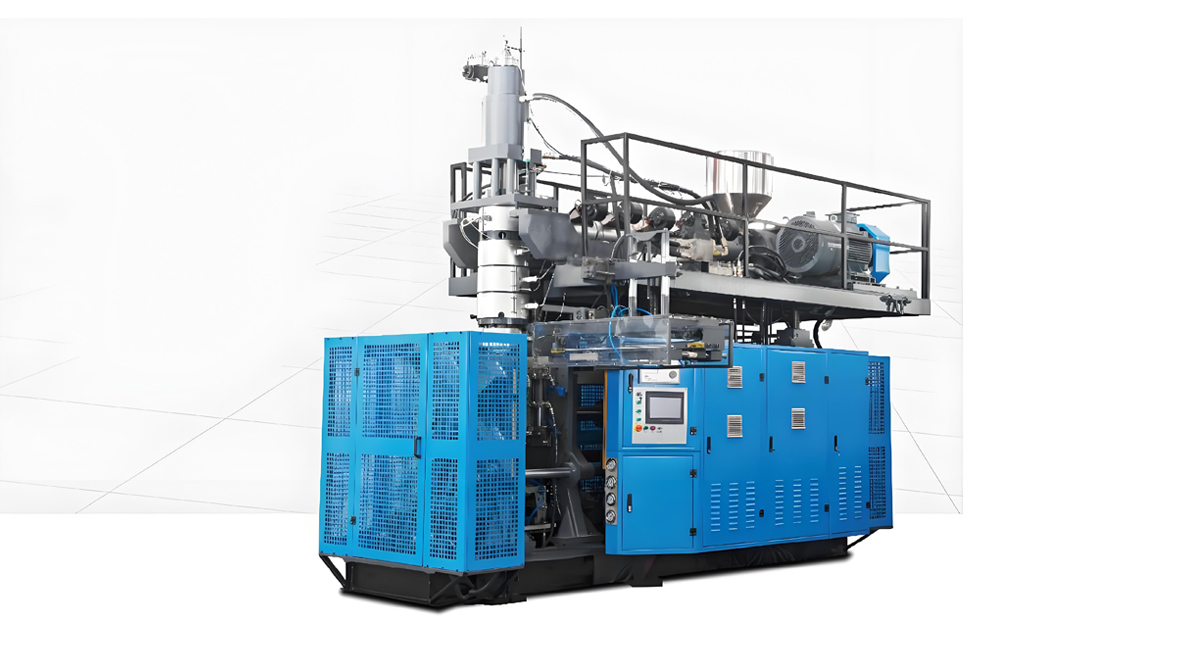
Apollo small capacity single cavity extrusion blow molding machines are specifically designed for producing small containers including cosmetic bottles, pharmaceutical containers, beverage bottles, and household product containers where precision and aesthetics are critical. The ABLB series includes models ABLB 45, ABLB 55, and ABLB 65, covering production capacities from 200ml to 5 liters. These compact machines provide excellent versatility for custom product manufacturing while maintaining production efficiency for small to medium volume requirements.
The ABLB 45 model features a 45mm screw diameter with 24:1 screw L/D ratio, 15kW screw drive power, and HDPE output of 30-50kg per hour. With maximum product capacity of 2 liters and dry cycle times reaching 1550 pieces per hour, this model provides excellent production speed for small containers while maintaining the precision required for custom products. The machine dimensions of 3.5m x 1.8m x 2.3m and weight of 4.5 tons make it suitable for limited floor space facilities while still providing substantial production capabilities.
The ABLB 55 model increases capacity to 2-3 liter products with 55mm screw diameter and 22kW screw drive power, achieving HDPE output of 50-70kg per hour. The ABLB 65 model extends the range to 3.5-5 liter containers with 65mm screw diameter and 30kW screw drive power, producing 70-90kg per hour. These progressive capacity options enable manufacturers to select the optimal machine size for their specific product requirements while maintaining the single cavity advantages of flexibility and precision.
Medium Capacity Models (5L-20L)
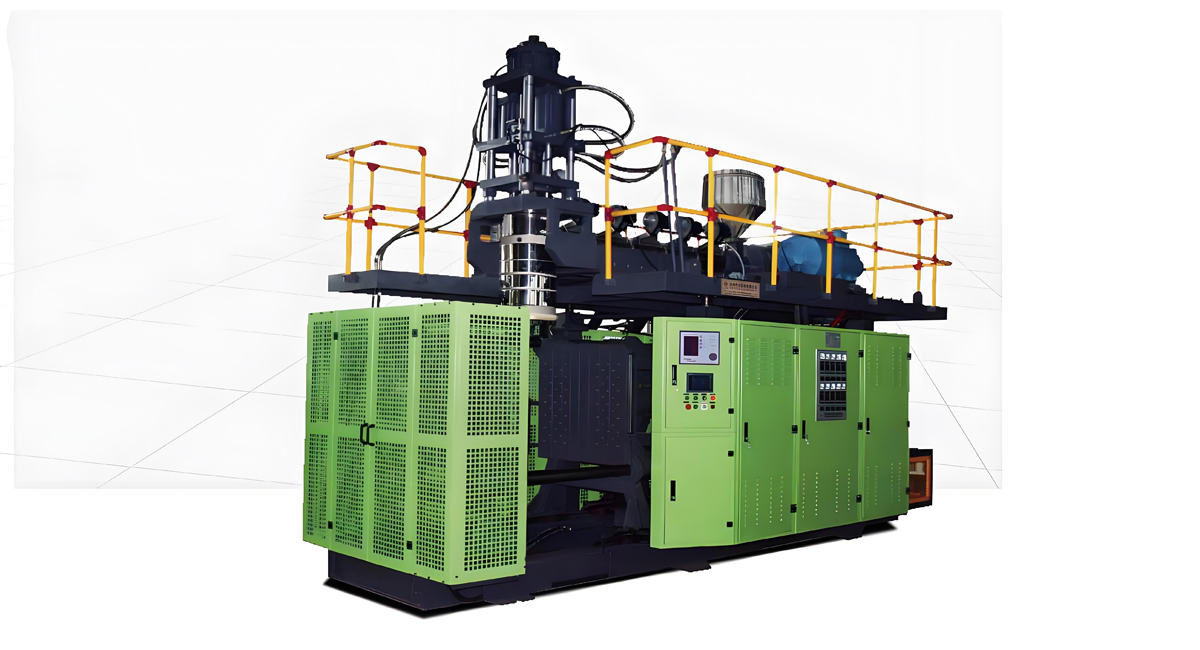
Apollo medium capacity single cavity machines serve applications including household chemical containers, automotive fluid containers, lubricant bottles, and industrial containers requiring intermediate sizes. The ABLB 75 and ABLB 90 models provide production capacities from 8 liters to 16 liters, offering excellent versatility for medium-sized custom products where production volumes may not justify multi-cavity investment but quality requirements remain high.
The ABLB 75 model features 75mm screw diameter, 30kW screw drive power, and HDPE output of 90-130kg per hour. With maximum product capacity of 8 liters and dry cycle times of 800-1000 pieces per hour, this model provides substantial production capability for medium-sized containers while maintaining single cavity precision advantages. The machine incorporates advanced parison control systems enabling production of complex shapes and varied wall thickness profiles for specialized product requirements.
The ABLB 90 model extends capacity to 16 liter products with 90mm screw diameter and 37kW screw drive power, achieving HDPE output of 130-150kg per hour. Dry cycle times of 600-800 pieces per hour provide excellent production efficiency for this size category. The larger machine dimensions of 4.3m x 2.2m x 3.0m and weight of 8 tons accommodate the increased product size and capacity while maintaining operational stability and precision control for custom manufacturing requirements.
Large Capacity Models (20L-1500L)
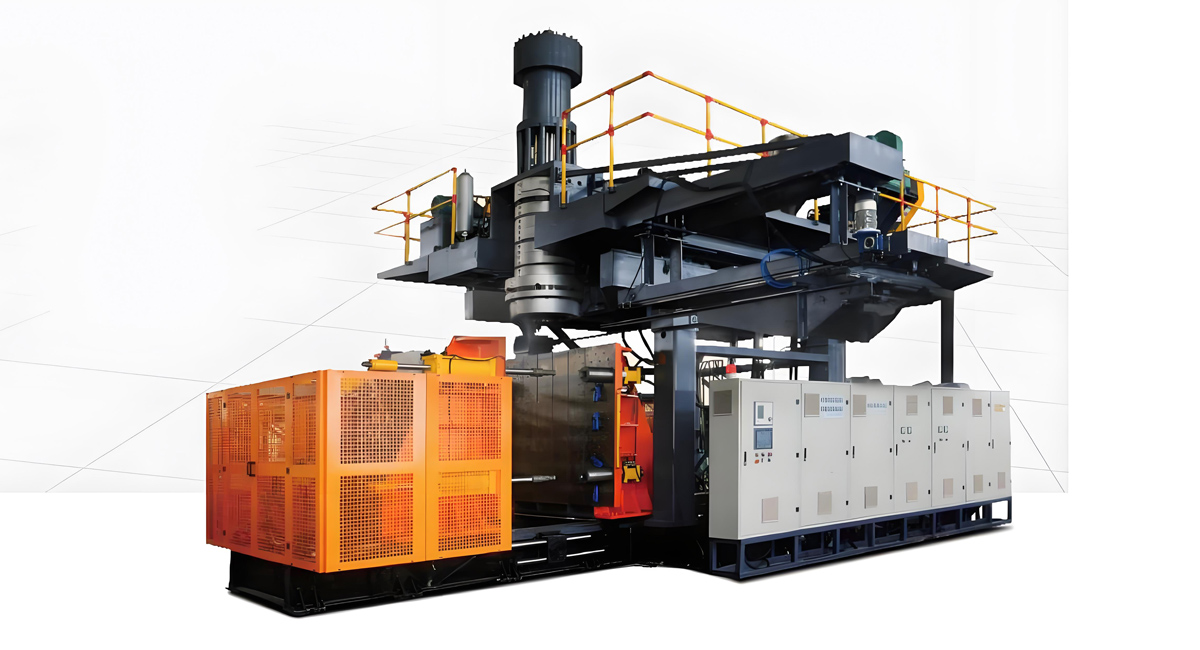
Apollo ABLD series large capacity single cavity extrusion blow molding machines are engineered for producing substantial containers including chemical drums, IBC tanks, storage containers, and large industrial vessels. The ABLD series includes models ABLD 80, ABLD 90, and ABLD 150, covering production capacities from 20 liters to 1500 liters. These robust machines are specifically designed for single cavity operation because the substantial size of individual products makes multi-cavity production impractical or impossible.
The ABLD 80 model provides production capacity for 30 liter containers with 80mm screw diameter, 45kW screw drive power, and HDPE output of 120-180kg per hour. The machine incorporates heavy-duty clamping systems and reinforced structures to handle the substantial product weights and clamping forces required for large containers. Storage-type die heads enable production of large parisons necessary for big containers while maintaining material distribution control.
The ABLD 150 model represents the largest machine in the Apollo single cavity portfolio, capable of producing containers up to 1500 liters. With 150mm screw diameter, 75kW screw drive power, and HDPE output of 500-840kg per hour, this machine delivers exceptional production capacity for large industrial containers. The substantial machine dimensions and weight reflect the massive scale of production capability, making it ideal for manufacturers producing very large containers in single cavity configurations.
Fully Electric Single Cavity Options
Apollo fully electric single cavity extrusion blow molding machines combine the flexibility advantages of single cavity production with the precision, cleanliness, and energy efficiency of fully electric technology. The ABLE series fully electric models cover capacities from 200ml to 30 liters, providing excellent options for custom product manufacturing where environmental considerations and operational precision are critical priorities.
The ABLE 80 I fully electric model provides 10 liter maximum product capacity with 80mm screw diameter and 30kW screw drive power, achieving HDPE output of 110kg per hour. The fully electric design eliminates hydraulic systems, reducing energy consumption by 40-60 percent compared to hydraulic alternatives while providing exceptional control accuracy for precision manufacturing. The absence of hydraulic oil contamination makes these machines ideal for food, medical, and pharmaceutical applications where cleanliness requirements are stringent.
The ABLE 100 I model extends capacity to 30 liter products with 100mm screw diameter and 55kW screw drive power, achieving HDPE output of 200kg per hour. This model provides excellent production capability for medium-large custom products while maintaining the precision advantages of fully electric operation. The machine dimensions of 5.0m x 3.0m x 3.2m and weight of 15 tons reflect the substantial production capability while maintaining the compact footprint typical of single cavity machines relative to their production capacity.
Advantages for Custom Product Manufacturing
Single cavity extrusion blow molding machines provide distinct advantages specifically valuable for custom product manufacturing applications. These advantages enable manufacturers to meet unique customer requirements while maintaining operational efficiency and economic viability.
Rapid Product Changeover Capability
One of the primary advantages of single cavity machines for custom manufacturing is the ability to perform rapid product changeovers. With only one mold to change, transition times between different products typically range from 30 minutes to 2 hours depending on product complexity and machine size. This rapid changeover capability enables manufacturers to efficiently produce small batches of multiple different products, serving diverse customer requirements without dedicating separate machines to each product.
The streamlined changeover process for single cavity machines involves removing and replacing the single mold, adjusting machine parameters for the new product, and performing trial runs to ensure quality specifications are met. This process is significantly faster and less complex than multi-cavity machine changeovers that require handling multiple molds and ensuring uniform quality across all cavities. The simplicity of single cavity changeovers reduces changeover downtime and enables higher overall machine utilization for manufacturers producing multiple product variations.
Optimal Precision and Quality Control
Single cavity extrusion blow molding machines deliver optimal precision and quality control for custom product manufacturing because all machine resources can be dedicated to producing a single product with exceptional accuracy. The focus on individual cavity production enables tighter control over wall thickness distribution, dimensional accuracy, weight control, and surface finish quality compared to multi-cavity machines where quality must be maintained across multiple cavities simultaneously.
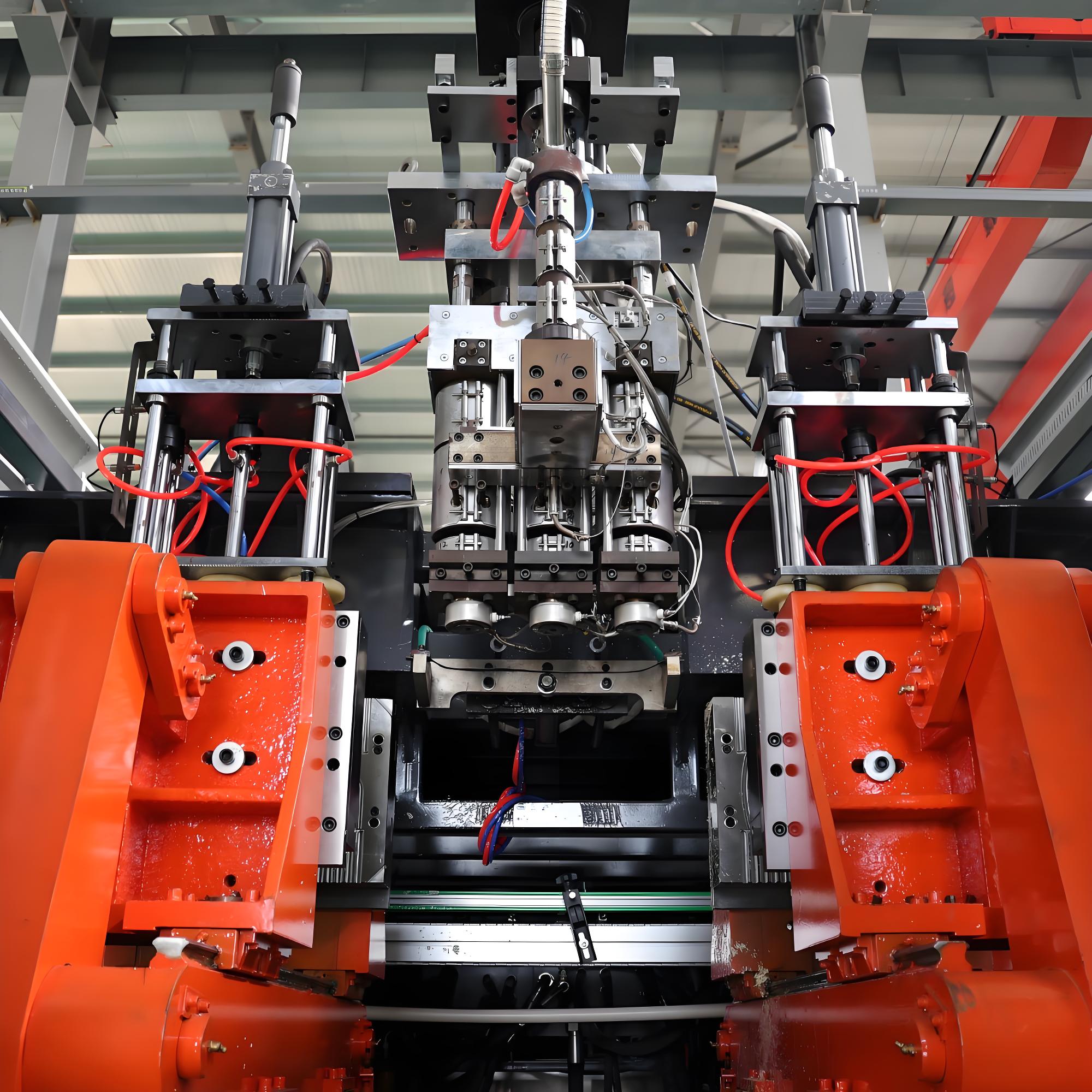
Apollo single cavity machines incorporate advanced parison control systems with wall thickness deviation controlled to within plus or minus 0.05mm, weight variation controlled to within plus or minus 0.3 grams for small containers and plus or minus 5 grams for larger containers, and dimensional accuracy maintained within plus or minus 0.2 percent. This exceptional precision capability enables production of custom products with tight tolerance requirements, meeting the quality specifications demanded by sophisticated applications including medical devices, technical components, and premium consumer products.
Cost-Effective for Small Batches
Single cavity extrusion blow molding machines provide cost-effective production for small batches and custom product runs because they avoid the substantial investment required for multi-cavity equipment while maintaining reasonable production efficiency. For custom product manufacturing where annual volumes may range from thousands to hundreds of thousands of units rather than millions, single cavity machines offer the optimal balance of production capability and investment cost.
The lower investment cost of single cavity machines, typically 60-75 percent of the cost of equivalent capacity multi-cavity machines, makes them accessible to smaller manufacturers or those testing new product concepts. The reduced tooling costs associated with single molds compared to multi-cavity mold sets further enhance cost-effectiveness for custom products. For annual production volumes below 200,000 units, single cavity machines typically provide lower total cost of ownership than multi-cavity alternatives due to reduced equipment and tooling costs.
Material Flexibility and Experimentation
Single cavity extrusion blow molding machines offer excellent material flexibility and enable experimentation with different materials and formulations because machine parameters can be optimized specifically for each material and product combination. Unlike multi-cavity machines where compromises must often be made to accommodate multiple cavities, single cavity machines can be precisely tuned for optimal performance with specific materials and products.
This material flexibility enables manufacturers to serve diverse customer requirements by producing containers from various polymer types including PE, PP, PVC, PA, PC, ABS, PS, EVA, TPU, and PETG. Single cavity machines can efficiently switch between different materials during production schedules, enabling manufacturers to offer material variety to customers without requiring separate equipment investments. For experimental product development, this material flexibility is invaluable for testing different material formulations and identifying optimal materials for new applications.
Cost Analysis and Investment Considerations
Comprehensive cost analysis reveals that single cavity extrusion blow molding machines provide excellent value for custom product manufacturing, offering appropriate capabilities at investment levels aligned with production volumes and economic realities of custom product markets.
Equipment Investment Costs
Apollo single cavity extrusion blow molding machines represent a significant investment but are substantially more affordable than multi-cavity alternatives for equivalent production capacity. Small capacity models (200ml-5L) range in price from $45,000 to $75,000 depending on specific model, configuration, and included features. The ABLB 45 base model typically costs approximately $45,000-$55,000, while the ABLB 65 larger capacity model costs approximately $65,000-$75,000.
Medium capacity models (5L-20L) range in price from $85,000 to $130,000. The ABLB 75 model typically costs approximately $85,000-$100,000, while the ABLB 90 model costs approximately $115,000-$130,000. Large capacity ABLD series models range from $180,000 to $300,000 depending on capacity and specifications. The ABLD 80 model typically costs approximately $180,000-$220,000, while the large ABLD 150 model costs approximately $280,000-$300,000.
Fully electric single cavity models command premium prices due to the advanced technology and energy efficiency benefits. The ABLE 80 I fully electric model typically costs approximately $145,000-$160,000, while the larger ABLE 100 I model costs approximately $180,000-$200,000. These prices represent premiums of 45-85 percent over equivalent hydraulic models but deliver substantial energy savings and operational benefits that often justify the higher investment for appropriate applications.
Mold Investment Costs
Mold costs for single cavity extrusion blow molding are substantially lower than multi-cavity molds, representing an important economic advantage for custom product manufacturing. Single cavity molds typically cost $5,000-$25,000 depending on product size, complexity, material, and precision requirements. Small container molds (200ml-1L) typically cost $5,000-$10,000, medium container molds (1L-10L) cost $8,000-$18,000, and large container molds (10L+) cost $15,000-$25,000.
These mold costs are 50-70 percent lower than multi-cavity molds for equivalent products because single cavity molds require less material, simpler construction, and less complex engineering. For manufacturers producing multiple different custom products, the ability to use lower cost single cavity molds represents significant savings, enabling investment in product variety rather than mold capacity. This economic advantage makes single cavity machines particularly attractive for manufacturers serving diverse customer requirements across many different products.
Operational Cost Structure
Operational costs for single cavity extrusion blow molding machines follow patterns typical of manufacturing equipment but vary significantly based on machine size, product characteristics, and production volume. Energy consumption represents 30-40 percent of operational costs for hydraulic single cavity machines, with consumption rates of 0.55-0.75 kWh per kilogram of plastic processed. Fully electric single cavity machines reduce energy consumption to 0.23-0.35 kWh per kilogram, reducing energy costs by 50-60 percent.
Labor costs typically represent 15-25 percent of operational costs for single cavity machines, with one operator typically managing 2-4 machines depending on automation level and product complexity. Maintenance costs range from 3-5 percent of machine value annually for hydraulic machines and 2-3 percent for fully electric machines, representing annual maintenance costs of $2,000-$6,000 for small models, $4,000-$8,000 for medium models, and $8,000-$15,000 for large models.
Per-Unit Production Cost Analysis
Per-unit production costs for single cavity machines are higher than multi-cavity alternatives for high volume production but become competitive or advantageous for small to medium production volumes. For small containers (200ml-1L), production costs typically range from $0.15-$0.30 per unit for annual volumes of 10,000-100,000 units, decreasing to $0.08-$0.18 per unit for annual volumes of 100,000-500,000 units. These costs are 20-40 percent higher than multi-cavity machine production costs for equivalent volumes above 500,000 units but are comparable or lower for volumes below 200,000 units.
For medium containers (1L-10L), production costs typically range from $0.50-$1.20 per unit for annual volumes of 5,000-50,000 units, decreasing to $0.30-$0.80 per unit for annual volumes of 50,000-200,000 units. Large containers (10L+) cost $5-$25 per unit depending on size and volume, with costs decreasing significantly at higher volumes. These cost structures demonstrate that single cavity machines provide economic viability for custom product manufacturing where volumes are moderate but quality requirements and product variety are high.
Custom Product Applications
Single cavity extrusion blow molding machines serve diverse custom product applications across numerous industries, each with unique requirements and considerations that single cavity technology is particularly well-suited to address.
Prototype Development and Product Testing
Prototype development represents one of the most valuable applications for single cavity extrusion blow molding machines. Manufacturers developing new packaging concepts, testing product designs, or exploring market opportunities need efficient production capability for limited quantities of prototypes and test samples. Single cavity machines provide ideal production platforms for these applications because they offer the flexibility to produce diverse products efficiently without requiring substantial investment in production capacity for unproven concepts.
Prototype production typically involves small quantities ranging from dozens to thousands of units for market testing, consumer research, performance evaluation, and regulatory submissions. Single cavity machines can efficiently produce these quantities while maintaining production quality that represents commercial production capability. The ability to quickly iterate designs based on prototype testing results, changing molds and adjusting parameters as needed, makes single cavity technology invaluable for product development processes.
Limited Edition and Seasonal Products
Limited edition and seasonal product packaging represents another ideal application for single cavity extrusion blow molding machines. Products that are only produced for limited periods, seasonal promotions, or special editions often involve small to moderate production volumes that do not justify multi-cavity investment but require professional production quality and appearance. Single cavity machines provide the optimal balance of production capability and investment cost for these applications.
Examples of limited edition products include holiday-themed packaging, promotional campaigns, product anniversary editions, and regional market variations. These products often require unique designs, special colors or effects, and distinctive shapes that differentiate them from standard product lines. Single cavity machines enable manufacturers to produce these specialized products efficiently while maintaining the flexibility to return to standard production when limited edition runs conclude.
Niche Market Products
Niche market products with specialized requirements and moderate production volumes are excellent candidates for single cavity extrusion blow molding. Niche markets often have unique container requirements for specialized products that may include unusual shapes, special material requirements, or specific performance characteristics that standard packaging cannot provide. These products typically serve focused customer bases with volumes that do not justify large-scale multi-cavity investment but require professional production capabilities.
Niche market examples include specialized chemical containers for unique industrial processes, custom containers for agricultural products, specialized packaging for marine applications, and containers for specialized automotive fluids. These products often involve unique requirements such as chemical resistance, UV stability, impact resistance, or temperature performance that standard containers cannot meet. Single cavity machines enable efficient production of these specialized products while providing the flexibility to customize production parameters for specific requirements.
High-Precision Applications
High-precision applications requiring exceptional dimensional accuracy and consistency are particularly well-suited to single cavity extrusion blow molding machines. Products with tight tolerance requirements, complex geometries, or precise performance specifications benefit from the focused precision capability that single cavity machines can provide because all machine resources can be dedicated to producing a single product with optimal accuracy.
High-precision application examples include medical device components, pharmaceutical containers requiring exact dosing accuracy, technical components with precise dimensional requirements, and consumer products where aesthetic perfection is critical. These applications often require wall thickness variation control within plus or minus 0.05mm, weight variation within plus or minus 0.2 grams, and dimensional accuracy within plus or minus 0.1 percent. Single cavity machines, particularly fully electric models, can achieve this level of precision while maintaining production efficiency.
Technology Selection Guidelines
Selecting the appropriate single cavity extrusion blow molding technology requires consideration of multiple factors including production requirements, product characteristics, operational constraints, and strategic priorities. Following systematic guidelines ensures optimal technology selection.
Production Volume Considerations
Production volume represents the primary consideration when selecting between single cavity and multi-cavity technology. For annual volumes below 200,000 units for small products, below 50,000 units for medium products, and below 10,000 units for large products, single cavity machines typically provide better economic viability than multi-cavity alternatives. Above these volume thresholds, multi-cavity machines become increasingly attractive due to their lower per-unit production costs.
However, production volume should not be the sole deciding factor. Other considerations including product variety, changeover frequency, quality requirements, and capital availability may justify single cavity selection even at higher volumes. Manufacturers serving multiple customers with diverse product requirements may prefer single cavity machines for their flexibility even if individual product volumes would justify multi-cavity investment.
Product Complexity Analysis
Product complexity significantly influences appropriate technology selection. Complex products with unusual geometries, multiple material requirements, or tight tolerance specifications often perform better in single cavity configurations where machine parameters can be optimized specifically for each product. Simple standard products with minimal complexity are better suited to multi-cavity production for maximum output.
Complexity factors to consider include shape complexity, wall thickness variation requirements, material handling difficulty, and surface finish requirements. Products requiring complex parison programming, unusual material combinations, or specialized processing conditions often benefit from single cavity production where processing parameters can be tailored without compromises necessary for multi-cavity operation.
Quality Requirements Assessment
Quality requirements for specific applications often drive technology selection decisions. Applications requiring exceptional precision, consistency, and cleanliness such as medical, pharmaceutical, or high-end consumer products often justify the advantages of single cavity production. The ability to focus all machine resources on single cavity quality control enables tighter specifications and more consistent quality than multi-cavity machines can achieve.
Fully electric single cavity machines are particularly suitable for applications requiring the highest quality levels because they combine the precision advantages of single cavity production with the cleanliness and accuracy benefits of fully electric technology. These machines eliminate hydraulic oil contamination risks while providing exceptional control accuracy, making them ideal for the most demanding quality applications.
Changeover Frequency Evaluation
Changeover frequency represents a critical consideration in technology selection. Manufacturers with frequent product changes due to diverse product offerings, small batch requirements, or prototype development activities often find single cavity machines more suitable despite their lower output per changeover. The rapid changeover capability of single cavity machines becomes a significant advantage when changeovers are frequent.
Multi-cavity machines suffer from longer changeover times because each cavity must be changed, adjusted, and verified for quality, requiring substantially more time and labor. For manufacturers changing products daily or multiple times per week, single cavity machines often provide higher overall productivity due to reduced changeover downtime, even though their per-cycle production rate is lower.
Operational Best Practices
Following operational best practices for single cavity extrusion blow molding machines maximizes their effectiveness and efficiency for custom product manufacturing applications.
Optimization for Custom Production
Optimizing single cavity machines for custom production requires attention to setup efficiency, parameter management, and quality control procedures. Implementing standardized setup procedures, maintaining detailed parameter documentation for each product, and utilizing quick-change mold systems significantly reduces changeover times and improves overall machine utilization for custom manufacturing operations.
Documenting optimal processing parameters for each product including temperature profiles, screw speed, parison programming, and blowing pressures enables faster repeat setups and reduces trial runs during changeovers. Maintaining this parameter database as company knowledge ensures consistent product quality regardless of which operators perform setup and production operations.
Quality Control Protocols
Implementing rigorous quality control protocols ensures custom products meet specification requirements consistently. First-piece inspection, statistical process control, and dimensional verification procedures should be established for each product. For custom manufacturing where products may be produced infrequently, having detailed quality specifications and inspection criteria documented is essential for maintaining quality across production runs.
Apollo single cavity machines incorporate advanced measurement and monitoring capabilities that enable real-time quality monitoring and data logging. Utilizing these capabilities for quality control provides objective evidence of product quality and enables rapid identification and correction of quality issues before significant quantities of non-conforming products are produced.
Maintenance and Reliability
Implementing preventive maintenance programs ensures single cavity machines maintain optimal performance and reliability for custom production operations. Single cavity machines typically experience more frequent changeovers and varied operating conditions than dedicated production machines, making maintenance particularly important for ensuring consistent performance across diverse products.
Maintenance focus areas include parison control systems, mold locking mechanisms, heating systems, and control systems. Regular calibration of parison programming systems ensures consistent quality across different products. Inspection of mold alignment and locking mechanisms prevents quality issues related to improper mold positioning. Heating system maintenance ensures consistent temperature control critical for quality across varied product requirements.
Conclusion: Value for Custom Manufacturing
Single cavity extrusion blow molding machines from Apollo provide exceptional value for custom plastic product manufacturing, offering the perfect combination of flexibility, precision, and cost-effectiveness required for diverse custom production applications. The ability to rapidly change between products, maintain exceptional quality control, and achieve reasonable production efficiency makes single cavity technology ideal for manufacturers serving diverse customer requirements or developing new products.
Investment in single cavity extrusion blow molding technology represents strategic positioning for manufacturers focusing on custom manufacturing capabilities rather than commodity high-volume production. The flexibility to produce diverse products efficiently enables manufacturers to serve niche markets, develop new product lines, and respond quickly to changing customer requirements. These capabilities create competitive advantages based on product variety and customization rather than pure volume production.
Apollo Machinery Co., Ltd. combines 20 years of plastic machinery expertise with comprehensive single cavity product offerings to provide solutions tailored to custom manufacturing requirements. Whether through hydraulic models for cost-effective operation or fully electric models for maximum precision and cleanliness, Apollo delivers single cavity extrusion blow molding machines that provide the foundation for successful custom product manufacturing across diverse industries and applications.