Table of Contents
- Introduction: A Dedicated Hand Wash Bottle Solution
- What Is Extrusion Blow Molding and Why It Fits Hand Wash Bottles
- The ABLB Series: Apollo’s Core Extrusion Blow Molding Platform
- Machine Construction and Working Principle
- Material Selection for Household Hand Wash Bottles
- Technical Specifications of the 1L ABLB Dedicated Model
- Production Process and Cycle Time Breakdown
- Comparison: The 1L ABLB vs Conventional Hydraulic Lines
- Application Industries Served by the ABLB Platform
- Selection and Recommendation Guide
- Service and Support Commitments
- Frequently Asked Questions
- Conclusion and Next Step
Introduction: A Dedicated Hand Wash Bottle Solution
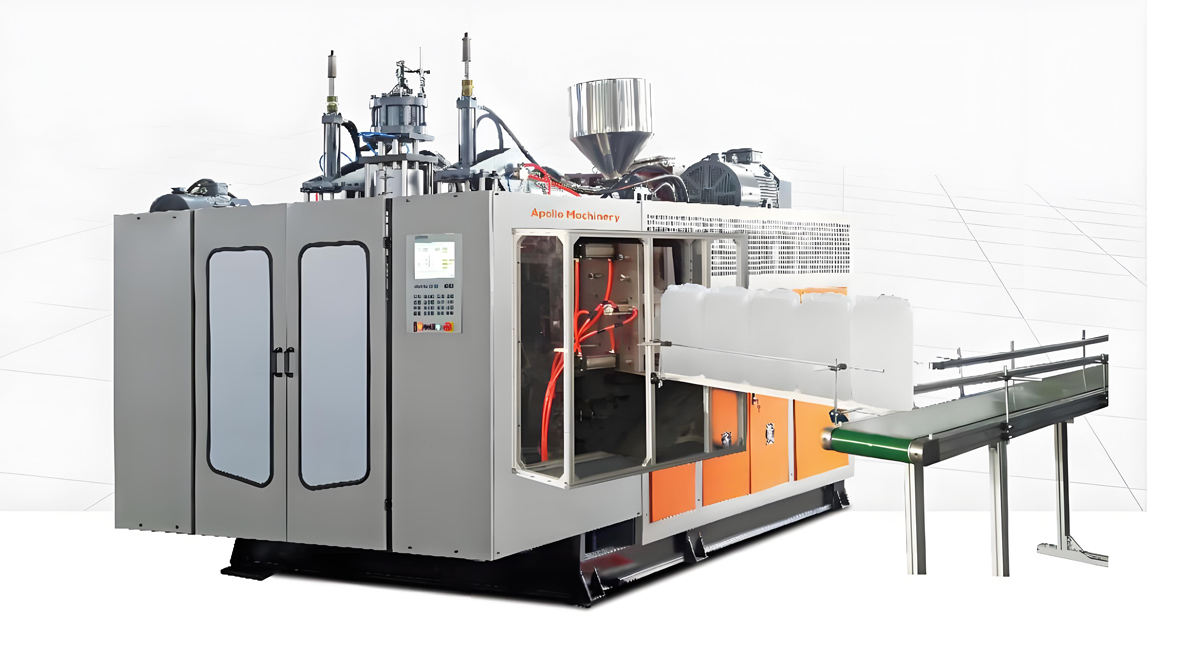
Apollo, a Wanplas factory, has built its reputation over more than twenty years as a specialized manufacturer of extrusion blow molding machines, and the 1L ABLB Series extrusion blow molding machine described here is the company’s dedicated model for the household hand wash bottle segment. The global household and personal care market keeps shifting toward pump-dispensed and squeeze-dispensed liquid soap, hand sanitizer, and body wash formats, and the one-liter container has become one of the most repeated, highest-volume shapes on the daily chemical production floor. Producing that shape consistently, at low unit cost, and with the surface quality that retail buyers expect is exactly the problem this machine family is engineered to solve.
This article is written for production managers, packaging engineers, and procurement specialists who need a clear, technically grounded picture of what a dedicated 1L extrusion blow molding machine delivers. We explain the extrusion blow molding process itself, walk through the ABLB Series platform, present real specification tables for the 1L dedicated configuration, compare it against conventional hydraulic machines, review material choices for hand wash bottles, and give a practical selection and recommendation framework. Along the way we reference the actual capabilities of Apollo and the wider Wanplas brand network so the reader can place this machine in a credible supplier context.
The primary takeaway is straightforward: a purpose-built 1L ABLB machine removes the compromise that general-purpose blow molding lines force onto high-volume daily chemical producers. Instead of tuning a large multi-cavity line down to a single-liter bottle, the dedicated model optimizes every subsystem — extruder screw, die head, parison control, clamping, and cooling — around one target container. The result is higher effective output, tighter weight control, lower scrap, and a faster return on the installed capital. For a product as price-sensitive and volume-driven as hand wash, those gains compound directly into margin.
Apollo operates from Zhangjiagang, near Shanghai, with an 8,000 square meter factory and an annual production capacity of around 100 machines, and more than 4,000 Apollo machines are running in over 90 countries. Those facts matter because they signal both the manufacturing maturity behind the ABLB Series and the depth of field service experience the factory can draw on. When you source a dedicated 1L line, you are not buying a prototype; you are buying a configuration from a platform that has been shipped and supported at scale.
In the sections that follow, all specifications are expressed in plain engineering units, and cost is discussed on a relative index basis with the ABLB Series 1L model set as the 100 baseline. That approach keeps the comparison honest and avoids currency symbols while still letting buyers understand the total-cost-of-ownership position of each option.
What Is Extrusion Blow Molding and Why It Fits Hand Wash Bottles
Extrusion blow molding is a continuous-melt process in which a plasticating extruder pushes molten polymer through a die head to form a hollow tube called a parison, which is then captured between two mold halves and inflated with compressed air until it conforms to the cavity. The shaped part cools, the mold opens, and the finished hollow article is ejected. For a household hand wash bottle, that article is the familiar squeeze or pump container with an integrated handle, a threaded neck, and a leak-tight wall.
The core steps of the extrusion blow molding cycle
The cycle has four repeating phases. First, the extruder plasticates the resin and the die head forms a parison of controlled length and wall thickness. Second, the blow mold closes on the parison and transfers it to the blowing station. Third, a blow pin injects compressed air, expanding the parison against the cooled cavity wall. Fourth, the part cools and is ejected, while the next parison begins forming — on continuous and shuttle machines the phases overlap to maximize throughput. The simplicity of this loop is why extrusion blow molding remains the dominant route for bottles from roughly 200 milliliters up to many liters.
Why the one-liter hand wash bottle is an ideal extrusion blow molding part
Hand wash bottles sit squarely in the sweet spot of extrusion blow molding for several reasons. They are hollow, handle-integrated, and produced in very high annual quantities, which favors a process with low per-part tooling cost and fast cycles. Their wall thickness is non-critical for pressure containment, so the process can be tuned for material savings rather than structural safety margins. Their neck finish must accept a standard pump or flip-cap closure, and extrusion blow molding holds neck precision well enough for leak-free capping. Finally, the surface is large and visible, so the process must deliver a clean, glossy finish without sink marks — a requirement the ABLB die head and calibrated cooling address directly.
Where extrusion blow molding wins against other hollow-forming routes
Compared with injection blow molding, extrusion blow molding handles larger parts, complex handles, and wider material latitude at lower tooling cost, which is exactly what a hand wash bottle needs. Compared with stretch blow molding of PET, extrusion blow molding of polyolefins gives better chemical resistance for surfactant-rich formulations and avoids the preform-and-reheat overhead. The trade-off is that extrusion blow molding typically yields a slightly heavier bottle and a scrap tail (the pinch-off flash) that must be reground, but for HDPE and PP hand wash bottles that scrap is fully recyclable back into the same product. Apollo’s ABLB platform is built around this polyolefin strength.
The one-liter hand wash bottle is the textbook extrusion blow molding product: high volume, hollow geometry, chemical-resistant material, and a visible surface where finish quality sells the brand.
The ABLB Series: Apollo’s Core Extrusion Blow Molding Platform
The ABLB Series is Apollo’s standard extrusion blow molding product line covering containers from 200 milliliters to 20 liters, with eight machine types inside the series. It is the workhorse platform on which the 1L dedicated hand wash model is based. Within the Wanplas group, Apollo positions the ABLB Series as the balanced choice between flexibility and output — flexible enough to handle multiple daily chemical shapes, yet stable and productive enough for dedicated single-product runs.
ABLB Series model range and capacity ladder
The series scales the extruder, clamping force, and station count with container size. The table below shows the representative capacity ladder of the ABLB family, with the 1L hand wash configuration positioned in the lower-middle of the range where it shares the same proven extruder architecture as larger siblings.
| ABLB Model Class | Container Volume Range | Screw Diameter (mm) | L/D Ratio | Clamping Force (kN) | Typical Stations | Installed Power (kW) |
|---|---|---|---|---|---|---|
| ABLB 55 class | 0.2 L – 3 L | 55 | 22:1 | 40 | Single / Double | 22 |
| ABLB 65 class | 1 L – 5 L | 65 | 22:1 | 60 | Single / Double | 30 |
| ABLB 75 class | 2 L – 8 L | 75 | 20:1 | 80 | Double | 37 |
| ABLB 90 class | 5 L – 12 L | 90 | 20:1 | 120 | Double | 45 |
| ABLB 100 class | 8 L – 15 L | 100 | 20:1 | 150 | Double | 55 |
| ABLB 120 class | 10 L – 20 L | 120 | 18:1 | 200 | Double | 75 |
The figures above are representative of the ABLB Series architecture; the exact screw diameter and L/D ratio are confirmed against the specific configuration ordered. Apollo treats the 1L hand wash model as a tuned member of the ABLB 55 / ABLB 65 class, which means buyers gain the maturity of a high-volume platform while targeting a single container.
The 1L dedicated hand wash configuration
A dedicated model is not simply a smaller general machine. In the 1L ABLB configuration, Apollo narrows the die head to the hand wash neck diameter, tunes the parison programmer for the bottle’s handle and bodywall, sets the clamping stroke to the hand wash mold height, and calibrates the cooling channels for the one-liter wall mass. The mold is single-cavity or double-cavity depending on required output, and the deflashing is automated so the finished bottles need no manual trimming before filling. This is the configuration most daily chemical fillers want when hand wash is their core SKU.
Materials the ABLB platform can process
The ABLB Series processes PE, PP, PVC, PA, PC, ABS, PS, EVA, TPU, and PETG. For household hand wash bottles the dominant choices are HDPE and PP, with HDPE preferred for squeezable bottles and PP favored when higher temperature resistance or a glossier surface is needed. The extruder and die head on the 1L model are specified for these polyolefins, with melt temperature and shear profile tuned to keep the surfactant-compatible resin stable through the parison.
Machine Construction and Working Principle
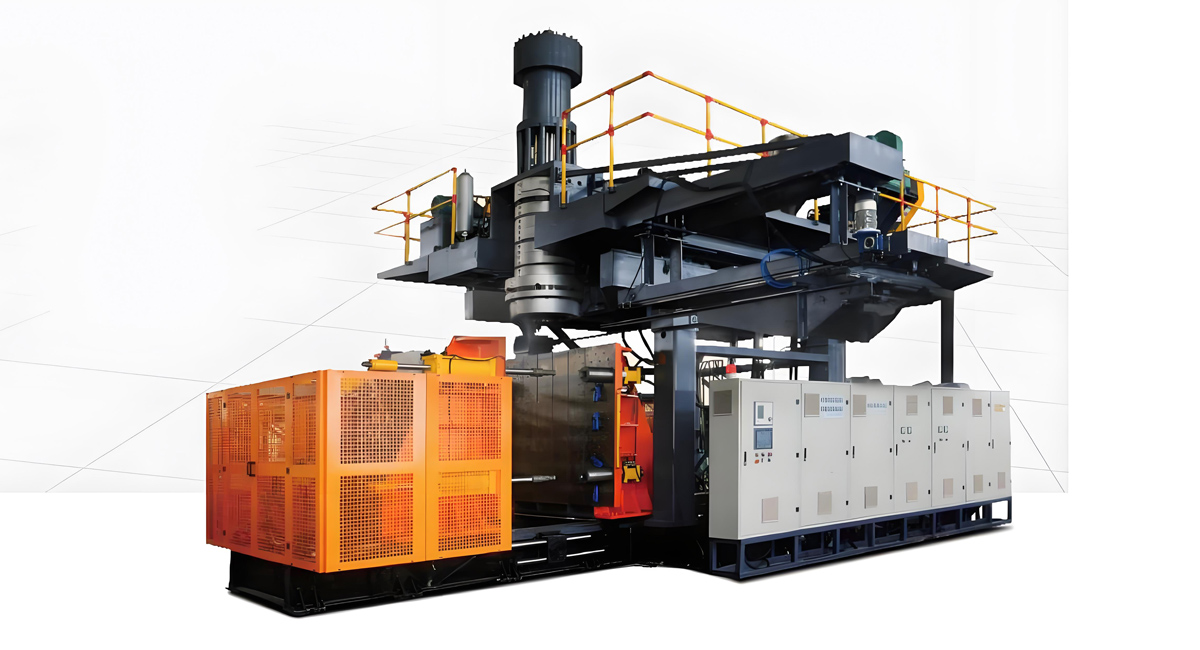
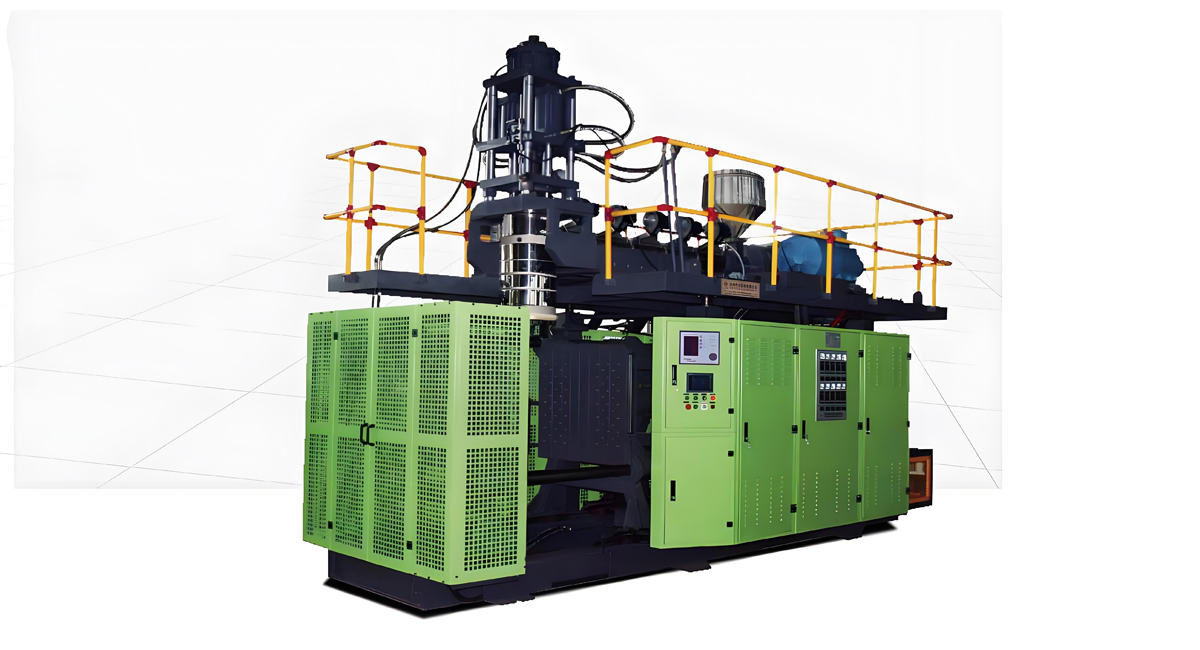
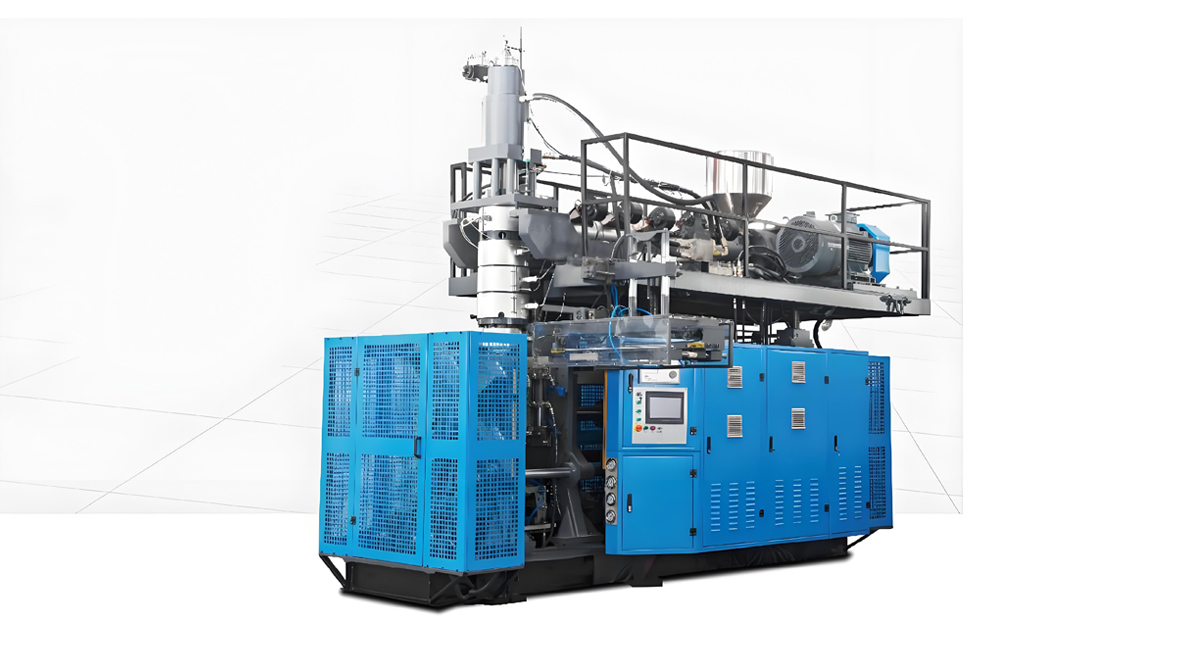
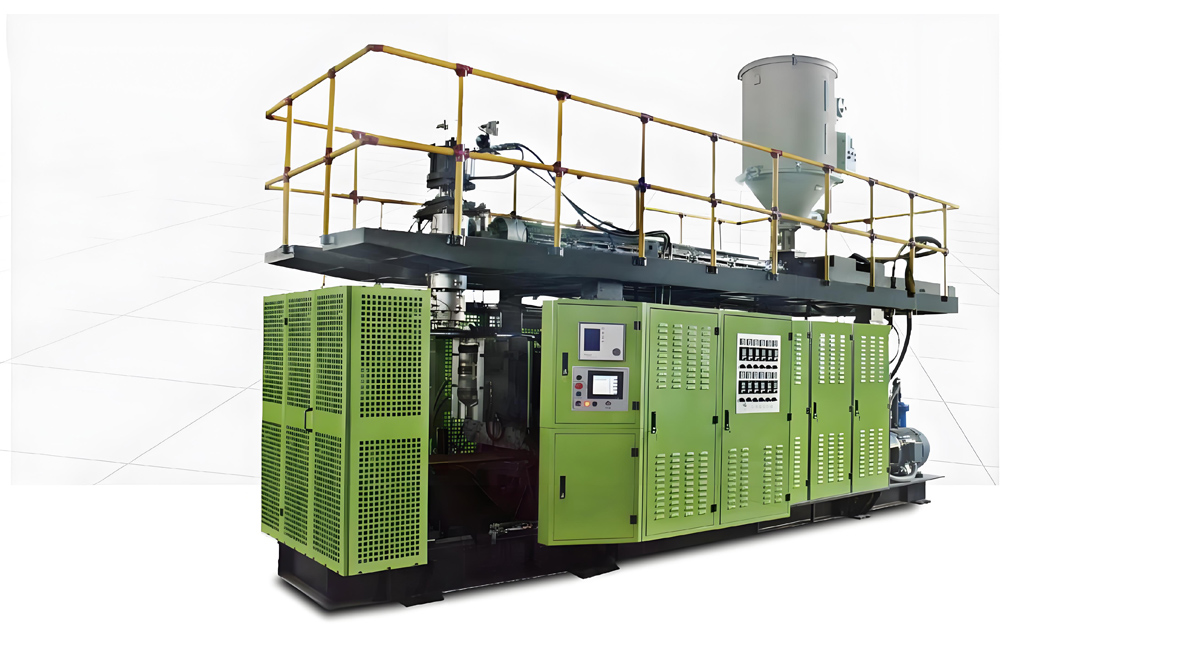
Understanding the subsystems of the 1L ABLB helps a buyer judge build quality and predict maintenance. The machine is organized around five functional groups: the plasticating extruder, the die head and parison control, the clamping and blowing unit, the hydraulic and pneumatic system, and the control system.
The plasticating extruder and screw
The extruder uses a single screw inside a temperature-controlled barrel. For the 1L hand wash model the screw diameter is typically 55 millimeters with an L/D ratio of 22:1, a geometry that gives stable melt and good mixing for color masterbatch without over-shearing the polymer. The barrel is zoned for feed, compression, and metering, and the melt temperature is held within a tight window so the parison does not sag or freeze prematurely. A properly designed screw here is the difference between consistent bottle weight and drift that wastes resin.
The die head and parison programmer
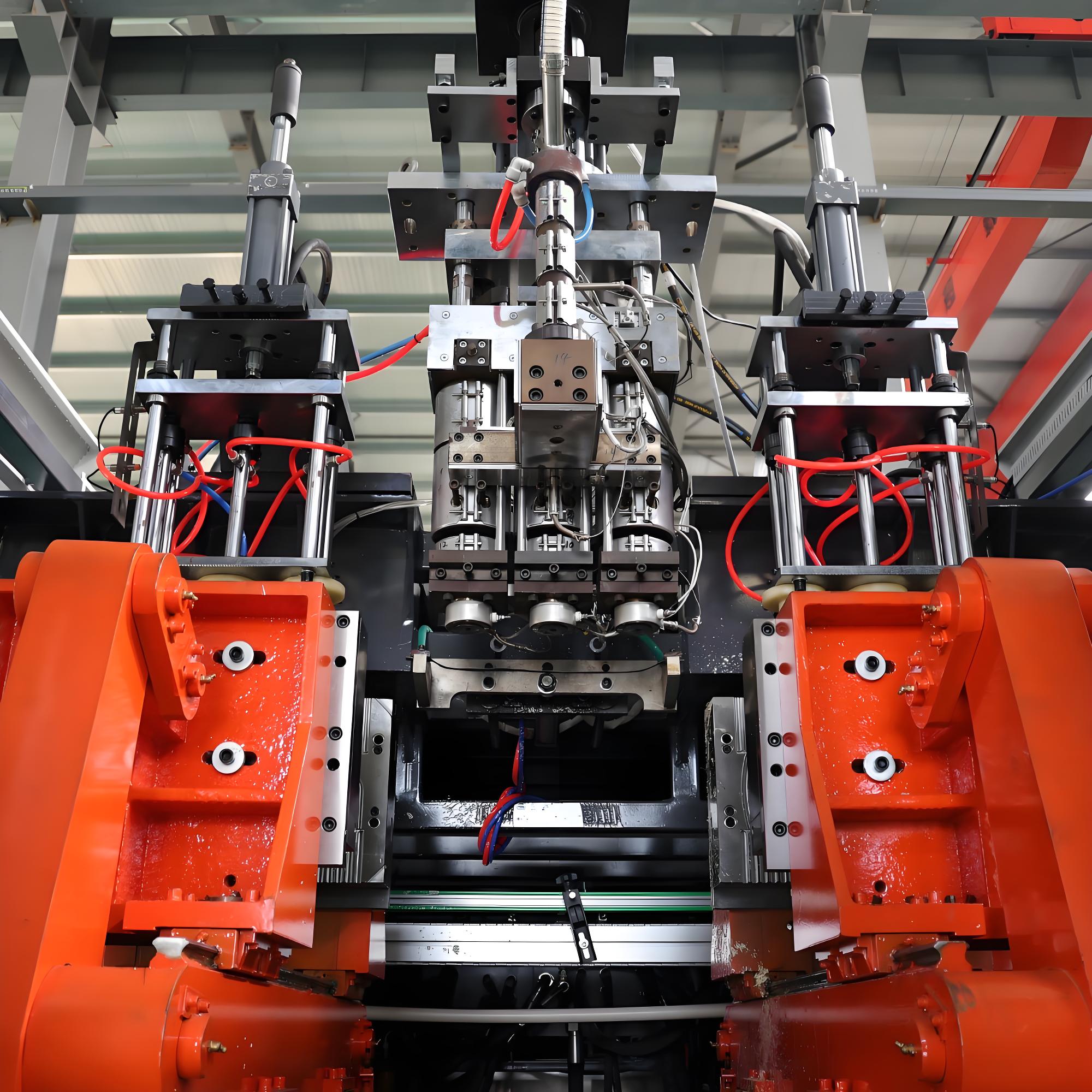
The die head shapes the molten tube. On the 1L ABLB it is a dedicated center-fed or side-fed head sized to the hand wash neck, with a programmable parison controller that varies wall thickness along the parison length. This matters because a hand wash bottle has a thick handle and a thin body; without programmable wall distribution, the handle would be thin and weak or the body would be heavy and wasteful. The parison programmer lets the operator place resin exactly where the bottle needs it, typically cutting material use by a meaningful double-digit percentage versus a fixed die.
Clamping, blowing, and ejection
The clamping unit closes the mold on the parison with controlled force — around 40 kilonewtons on the 1L class — enough to seal the flash line without distorting the cavity. A blow pin enters through the neck or base and injects clean compressed air, expanding the parison. After cooling, the mold opens and the part is stripped by an automated take-out, then conveyed to deflash. Because the 1L model is dedicated, the clamp stroke and platen size are matched to the hand wash mold, which shortens the non-productive part of the cycle.
Control system and operator interface
The machine runs on a PLC with a touch-screen HMI. Operators set screw speed, melt temperature zones, parison profile, blow pressure, and cooling time as stored recipes, so switching from one hand wash SKU to another is a recipe recall rather than a re-tune. Recipe management reduces operator skill dependence and keeps bottle weight stable across shifts — a quiet but significant contributor to low cost per unit over a year of production.
On a dedicated 1L line, the control system’s job is to make the machine boring: same bottle, same weight, same surface, every shift, with no heroics required from the operator.
Material Selection for Household Hand Wash Bottles
Material choice drives bottle cost, feel, chemical resistance, and recyclability. For hand wash the decision is almost always between HDPE and PP, with occasional use of recycled-content HDPE blends to meet sustainability targets.
HDPE versus PP for hand wash containers
HDPE is the default for squeezable hand wash bottles: it has excellent chemical resistance to surfactants, good impact strength at room temperature, and a soft natural squeezability that consumers associate with liquid soap. PP offers higher heat resistance and a harder, glossier surface, which suits premium or hot-fill-adjacent formats, but it is stiffer and slightly more expensive per kilogram. Both are fully recyclable in established polyolefin streams, which supports brand sustainability claims.
| Property | HDPE (typical) | PP (typical) | Implication for 1L Hand Wash |
|---|---|---|---|
| Density (g/cm3) | 0.94 – 0.96 | 0.90 – 0.91 | PP gives lighter bottle at equal volume |
| Squeeze feel | Soft, flexible | Firmer, rigid | HDPE preferred for pump/squeeze feel |
| Heat resistance | Moderate | Higher | PP better for warm storage or premium |
| Surface gloss | Medium | High | PP reads more premium on shelf |
| Chemical resistance to surfactants | Excellent | Excellent | Both safe for hand wash formula |
| Relative material cost index | 100 (baseline) | 105 – 115 | HDPE slightly lower resin cost |
Recycled content and sustainability
Many daily chemical brands now specify post-consumer recycled HDPE at 25 percent to 50 percent in the bottle body. The 1L ABLB handles recycled-content HDPE blends well because the extruder and die head are tolerant of regrind, and the parison programmer compensates for the slightly different melt behavior of recycled resin. Using regrind also turns the machine’s own flash into feedstock, closing the loop on the production floor. Apollo can supply the line with in-house regrind handling guidance as part of the Wanplas group’s material-efficiency approach.
Color, additive, and closure compatibility
Hand wash bottles are rarely natural resin; they carry brand color via masterbatch dosed at the extruder throat. The ABLB screw mixes masterbatch uniformly, and the parison programmer keeps wall thickness even so color looks consistent across the bottle. The neck is molded to accept standard closures — pump dispensers, flip-tops, or disc caps — and Apollo matches neck dimensions to the customer’s closure specification during machine customization. UV stabilizer and antibacterial additive packages are also processed without special modification to the base machine.
Technical Specifications of the 1L ABLB Dedicated Model
The following table is the core specification sheet for the 1L ABLB dedicated hand wash model. Values are representative of the ABLB 55 / ABLB 65 class tuned for a one-liter polyolefin bottle; final numbers are fixed at order confirmation against the customer’s mold and material.
| Parameter | 1L ABLB Dedicated Model (typical) | Unit / Note |
|---|---|---|
| Max container volume | 1.0 (up to 2.0) | Liter |
| Machine class | ABLB 55 / 65 | Apollo series |
| Screw diameter | 55 | mm |
| L/D ratio | 22:1 | Length-to-diameter |
| Extruder motor power | 15 – 22 | kW |
| Number of stations | 1 or 2 | Single / double station |
| Clamping force | 40 | kN |
| Max die diameter | 90 | mm |
| Cavity count (mold) | 1 – 2 | Per station, by mold |
| Blow pressure | 0.6 – 0.8 | MPa |
| Dry cycle rate | up to 12 | cycles/min (per station) |
| Installed power | 22 – 30 | kW |
| Machine weight | approx. 4.0 | ton |
| Air consumption | 0.4 – 0.6 | Nm3/min |
Estimated output for a one-liter bottle
Output depends on cavity count, cycle time, and material. For a one-liter HDPE hand wash bottle on a double-station, double-cavity configuration, a realistic effective rate is in the low-hundreds of bottles per hour after cooling and deflash losses; a single-cavity single-station setup runs lower but costs less to install. The table below translates configuration into indicative hourly and annual output, using a standard 6,000 operating hours per year baseline and an assumed 92 percent utilization.
| Configuration | Cycle Time (s) | Bottles / Hour | Bottles / Year (6,000 h) |
|---|---|---|---|
| Single station, 1 cavity | 11 | ~330 | ~1.83 million |
| Double station, 1 cavity each | 11 | ~655 | ~3.65 million |
| Double station, 2 cavity each | 11 | ~1,310 | ~7.30 million |
These are planning figures, not guaranteed rates; the actual cycle is set by bottle weight, cooling, and mold design. Apollo validates output during factory acceptance testing before shipment so the buyer receives a documented number rather than an estimate.
Production Process and Cycle Time Breakdown
To control cost, a buyer must understand where the cycle seconds go. On the 1L ABLB the cycle splits into parison extrusion, mold close and transfer, blow and cooling, and open and eject. Cooling dominates for a one-liter wall, so mold cooling design is the biggest lever on output.
Where the seconds go
| Phase | Share of Cycle | What Controls It |
|---|---|---|
| Parison extrusion | ~25% | Screw speed, melt temperature, die gap |
| Mold close and transfer | ~10% | Clamp speed, station motion |
| Blow and cooling | ~55% | Mold cooling, wall thickness, resin |
| Open and eject | ~10% | Take-out, deflash, conveyor |
Because cooling is more than half the cycle, Apollo’s dedicated 1L mold uses balanced cooling channels and often a chilled mold-temperature circuit so the bottle releases quickly without warping. Shaving even one second off cooling can lift annual output by a low-single-digit percentage, which over millions of bottles is a large material and labor saving.
In-process quality control
The control system logs melt temperature, screw load, cycle time, and rejects per hour. Operators watch bottle weight trend and top-load; a drift in weight is the earliest signal of parison or regrind variation. For hand wash, the two failure modes that matter most are neck out-of-round (causes cap leak) and handle thinness (causes drop failure). The parison programmer and clamping setpoint are the controls that prevent both, and Apollo trains the buyer’s team on these during commissioning.
Comparison: The 1L ABLB vs Conventional Hydraulic Lines
Buyers often weigh a dedicated electric-assisted ABLB against an older-generation hydraulic blow molding line. The comparison below is technology-versus-technology, not brand-versus-brand, and uses the ABLB 1L as the 100 baseline for cost and energy.
| Criterion | 1L ABLB (Apollo) | Conventional Hydraulic Line | Older-Generation Line |
|---|---|---|---|
| Energy consumption index | 100 (baseline) | 120 – 140 | 150 – 180 |
| Parison wall control | Programmable, precise | Limited / fixed | Fixed die |
| Material use per bottle | Lowest (optimized) | Medium | Highest |
| Noise and oil leakage | Minimal | Present | Frequent |
| Recipe / changeover speed | Fast (stored recipes) | Slow | Slow |
| Maintenance index | 100 | 130 | 160 |
| Surface finish quality | High, consistent | Medium | Variable |
| Initial cost tier | Medium | Medium | Low (used) |
The table shows that the dedicated ABLB wins on the running costs that dominate a high-volume hand wash program — energy, material, and maintenance — even where the initial purchase tier is comparable. Older-generation lines look cheap on day one but lose on every operating metric that matters across millions of bottles per year.
Application Industries Served by the ABLB Platform
Although this article focuses on the household hand wash bottle, the ABLB Series serves a broad set of industries because the extrusion blow molding process is versatile. Apollo lists these application areas for the platform: food and beverage, daily chemical products, the chemical industry, building material, medical and pharmaceutical, automobile production, transportation, and cultural and sports goods.
Daily chemical and personal care
This is the home segment for the 1L model. Beyond hand wash, the same machine family produces shampoo, conditioner, body lotion, detergent, and disinfectant bottles. The ability to switch molds between related one-liter shapes makes the ABLB a flexible asset for a personal care filler with several SKUs.
Food, beverage, and medical
For food-contact and pharmaceutical containers, material choice and cleanliness matter. The ABLB processes HDPE and PP suitable for many non-hot-fill food and medical containers, and Apollo can configure the line for clean operation and documented material traceability. Buyers in these segments should specify food- or medical-grade resin and closure compatibility at order time.
Chemical, building, automotive, and beyond
The chemical industry uses blow molded containers for detergents, additives, and samples; building material and automobile production use small blow molded tanks, ducts, and reservoirs. The ABLB’s material latitude — including PA, PC, and PVC in addition to polyolefins — lets one platform serve these tougher containers when the 1L hand wash line is not the only product in the plant.
Selection and Recommendation Guide
Choosing the right ABLB configuration starts from the production requirement, not from a catalog number. The table below maps common buyer situations to a recommended Apollo configuration, using the real ABLB Series ladder and the Wanplas group’s application knowledge.
| Buyer Requirement | Recommended Apollo Configuration | Rationale |
|---|---|---|
| New hand wash SKU, low volume, tight budget | ABLB 55 class, single station, 1 cavity | Lowest install cost, enough for pilot and regional runs |
| Stable one-liter hand wash, medium volume | ABLB 55 / 65 class, double station, 1 cavity | Doubles output, keeps mold cost modest |
| High-volume single hand wash shape | ABLB 65 class, double station, 2 cavity | Maximizes 1L throughput per floor area |
| Hand wash plus shampoo/conditioner family | ABLB 65 class, double station, quick-change molds | One line, several SKUs, fast changeover |
| Hand wash plus larger 5L refill jug | ABLB 75 / 90 class, double station | Scales screw and clamp for bigger volume |
| Premium glossy PP bottle | ABLB 65 class, PP-tuned screw and cooling | Matches PP processing window for surface quality |
Factors that change the recommendation
Three variables shift the choice. Annual volume sets station and cavity count. Bottle weight and wall design set screw size and cooling needs. Material — HDPE versus PP versus recycled blend — sets the extruder tuning. Apollo’s sales engineers confirm the final configuration against the customer’s sample bottle and target output, so the recommendation table is a starting point, not a substitute for a tailored quotation.
Total cost of ownership on the 100 index
Using the 1L ABLB as the 100 baseline, a conventional hydraulic line sits near 120 on energy and 130 on maintenance, while an older-generation line climbs to 150–180 on energy. Initial machine cost tiers run Low for used older lines, Medium for the ABLB and conventional hydraulic, and Premium for a fully electric ABLB variant. Over a typical five-year horizon the running-cost advantage of the dedicated ABLB usually outweighs a small initial saving on an older line, which is why Apollo recommends the dedicated model for any program above pilot scale.
Service and Support Commitments
Apollo, as a Wanplas factory, backs the ABLB Series with the group’s shared service promises. These commitments are part of the reason more than 4,000 Apollo machines run in over 90 countries with confidence.
Spare parts and the USD 500 free parts/year policy
Every Apollo machine is covered by the Wanplas group policy of USD 500 free parts every year during the support period, which reduces the buyer’s consumable and wear-part burden. Beyond that, damaged parts within warranty are replaced free, so a clamp seal or a heater band that fails early does not become a surprise cost. Apollo also stocks the common ABLB wear items so a regional service call does not wait on a long international shipment.
Installation, commissioning, and training
Apollo sends engineers for on-site installation and commissioning, runs the machine with the customer’s mold and material, and trains the operator and maintenance team on recipe setting, parison programming, and routine service. The factory also offers machine inspection at the Apollo plant before shipment, including a running trial, so the buyer sees the 1L hand wash bottle produced before paying the balance. This factory acceptance step is where the documented output and bottle quality are confirmed.
Extended support and open-factory policy
Support continues after commissioning through production-capacity guarantees, a quality-standards guarantee (refund plus 10 percent compensation if quality fails to agreed terms), and a transportation guarantee. Apollo also runs the Wanplas open-factory policy: customers are welcome to visit the Zhangjiagang plant, review the ABLB build, and audit the process. For daily chemical buyers scaling hand wash volume, that transparency supports supplier-qualification and audit needs.
| Support Element | What Apollo / Wanplas Provides |
|---|---|
| Free parts | USD 500 free parts every year |
| Warranty parts | Free replacement of damaged parts in warranty |
| Engineers | On-site installation and commissioning |
| Testing | Factory inspection and running trial before shipment |
| Capacity | Production capacity guarantee |
| Quality | Refund plus 10 percent compensation if quality fails |
| Transparency | Open factory visits welcomed |
Frequently Asked Questions
What container sizes can the ABLB Series produce besides the 1L hand wash bottle?
The ABLB Series covers containers from 200 milliliters up to 20 liters across its eight machine types, so a buyer who starts with a 1L hand wash bottle can later scale to larger refill jugs or smaller trial sizes on related ABLB classes. The 1L dedicated model itself is tuned for around 1.0 liter, with headroom to about 2.0 liters on the same class.
Which material is best for a household hand wash bottle on this machine?
HDPE is the best all-round choice for squeezable hand wash bottles because of its chemical resistance to surfactants, soft feel, and low cost, while PP suits premium or warmer-storage formats with a glossier, firmer surface. Both run on the 1L ABLB, and recycled-content HDPE blends are supported for sustainability programs.
How many bottles per hour can a 1L ABLB line make?
Output depends on station and cavity count. A single-station single-cavity setup yields roughly 330 bottles per hour, a double-station single-cavity about 655 per hour, and a double-station double-cavity about 1,310 per hour for a one-liter HDPE bottle. Apollo confirms the exact rate during factory acceptance testing with the customer’s mold and material.
Why choose a dedicated 1L model instead of a larger general-purpose blow molding line?
A dedicated model optimizes the extruder, die head, parison program, clamping, and cooling around one container, which lowers material use, raises effective output, and improves surface consistency compared with tuning a large line down to a small bottle. For a high-volume SKU, those efficiencies recover the machine cost faster than a compromise general line.
What after-sales support comes with the machine?
Support includes the Wanplas group policy of USD 500 free parts every year, free replacement of warranty-damaged parts, on-site engineer installation and commissioning, factory inspection before shipment, production capacity and quality guarantees, and an open-factory visit policy. Apollo also tracks machine usage and makes irregular customer visits to keep lines running.
Can the line handle recycled HDPE and color masterbatch?
Yes. The ABLB extruder and die head tolerate regrind and recycled-content HDPE blends, and the parison programmer compensates for the slightly different melt behavior of recycled resin. Color masterbatch is dosed at the throat and mixed uniformly by the screw, while the parison programmer keeps wall thickness even so color stays consistent across the bottle.
Is the 1L ABLB suitable for food or medical containers too?
The platform processes HDPE and PP suited to many non-hot-fill food and medical containers, and Apollo can configure clean operation and material traceability for those segments. Buyers must specify food- or medical-grade resin and closure compatibility at order time, and validate against the relevant regional contact regulations.
How long does commissioning and operator training take?
After the machine arrives, Apollo engineers install and commission on-site, run the customer’s mold and material, and train operators and maintenance staff on recipe setting, parison programming, and routine service. The on-site phase is typically completed within a short window, with the factory acceptance trial at Apollo preceding shipment so the buyer already has a confirmed output and bottle quality.
Conclusion and Next Step
The 1L ABLB Series extrusion blow molding machine is Apollo’s purpose-built answer to the household hand wash bottle — a high-volume, chemical-resistant, visually demanding container that rewards a dedicated process configuration. Built on the proven ABLB platform that spans 200 milliliters to 20 liters and backed by more than twenty years of Apollo manufacturing experience within the Wanplas group, the 1L model pairs a 55-millimeter, 22:1 screw with programmable parison control, matched clamping, and calibrated cooling to deliver low material use, consistent weight, and a clean retail-ready surface.
For daily chemical producers, the buying logic is simple. Start from your annual volume and bottle design, pick the station and cavity count from the selection guide, and let Apollo tune the extruder and mold to your HDPE or PP formulation — including recycled content if sustainability targets require it. Against conventional hydraulic or older-generation lines, the dedicated ABLB wins on the running costs that dominate a multi-million-bottle program: energy near the 100 baseline, lower maintenance, and the tightest material control. The Wanplas group’s USD 500 free parts per year, warranty replacement, on-site commissioning, factory acceptance trial, and open-factory policy reduce the risk of scaling hand wash production.
If you are planning a hand wash bottle line, the most useful next step is to send Apollo your target bottle drawing, material, annual volume, and closure specification. The factory will confirm the ABLB configuration, document the expected output in a factory trial, and outline the commissioning plan so you can budget with confidence. Whether you run a single one-liter SKU or a family of personal care bottles, the 1L ABLB dedicated model is engineered to make that production boring, stable, and profitable — exactly what a high-volume daily chemical line should be.