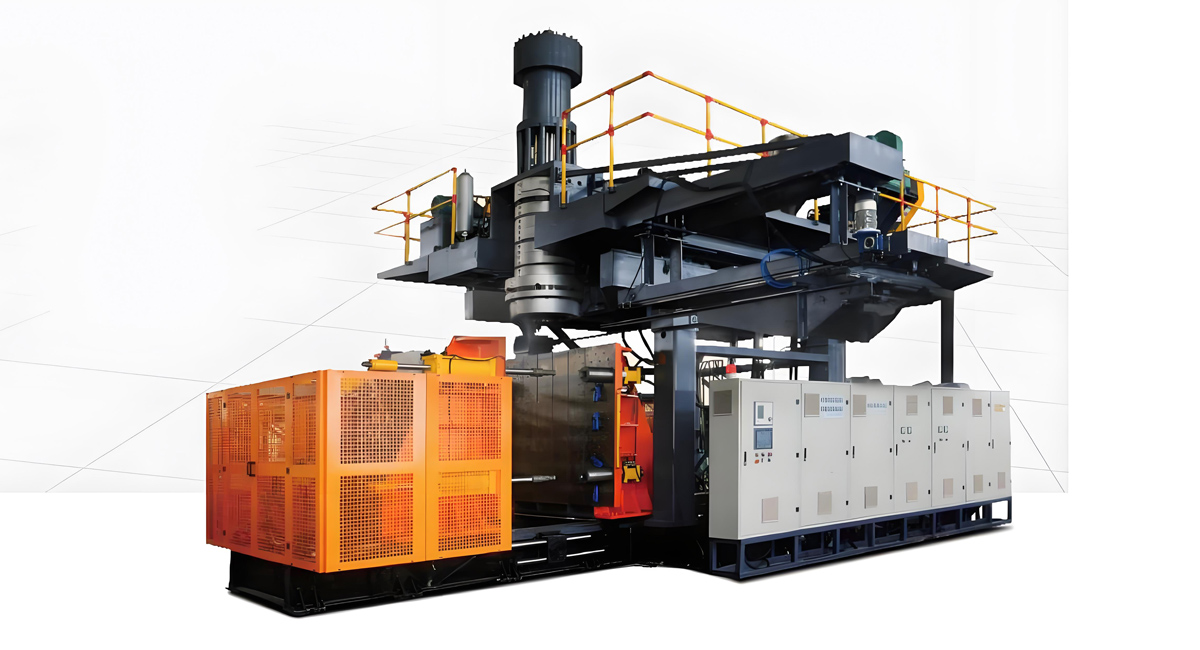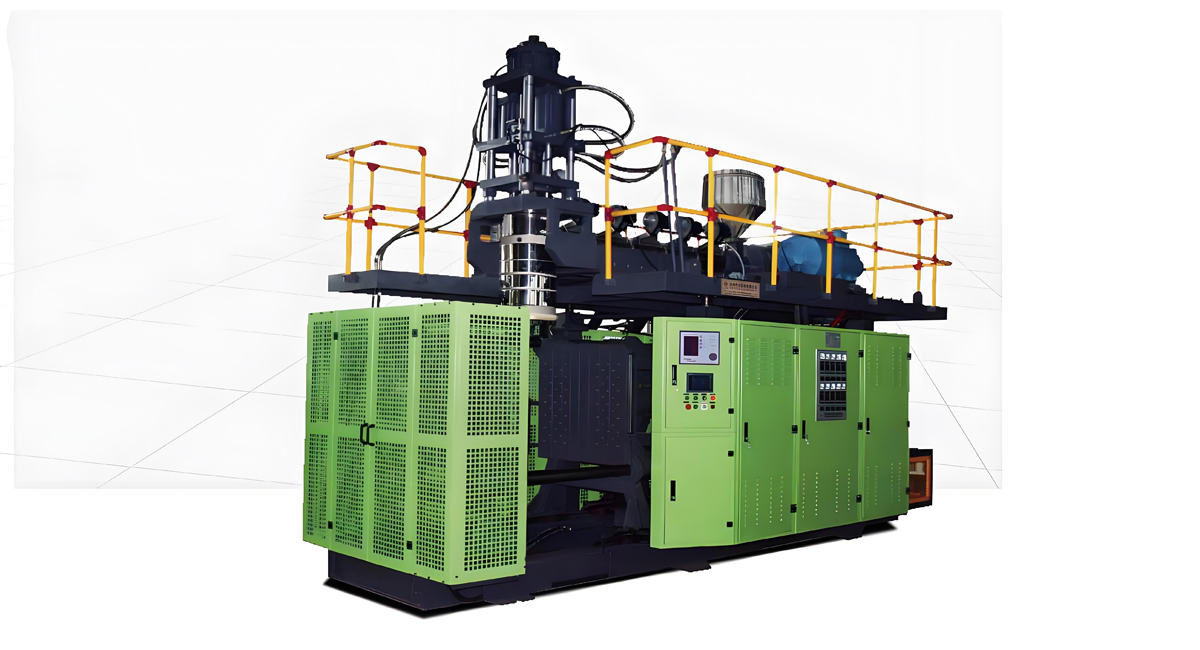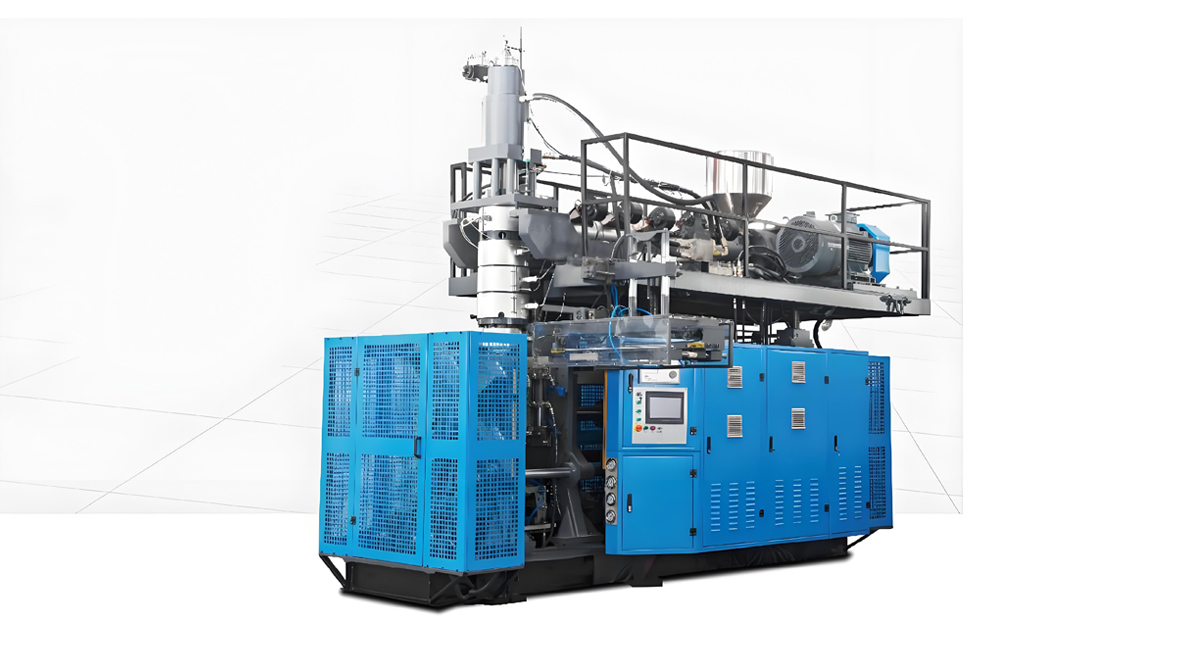

Extrusion blow molding machine is the dedicated core production equipment for manufacturing hollow plastic containers of various specifications, and large capacity extrusion blow molding machines have become the standard configuration for mass production of agricultural jars. Agricultural jars cover fertilizer packaging barrels, pesticide storage containers, farm chemical mixing tanks, seed storage pails and large-volume agricultural liquid holding vessels, which put forward unique and strict requirements for equipment load capacity, parison extrusion stability, mold clamping force and continuous production efficiency. Ordinary small and medium-sized blow molding equipment cannot meet the production demands of large-volume agricultural plastic containers, leading to thin wall thickness, insufficient structural strength, slow production speed and frequent equipment overload shutdown.
Agricultural jar products require thick wall design, strong impact resistance, good chemical corrosion resistance and uniform overall wall thickness to adapt to harsh outdoor storage, transportation and farm operation environments. Only specially optimized large capacity extrusion blow molding machines can stably extrude long and thick parisons, provide enough mold locking force for large-size molds, and realize uninterrupted high-output production. Many agricultural plastic product manufacturers blindly select general blow molding equipment in the early stage of investment, resulting in low production capacity, high defective rate and rising long-term operating costs, which seriously restricts enterprise market supply capacity and profit space.
As a professional manufacturer specializing in customized extrusion blow molding equipment for industrial and agricultural hollow containers, Apollo independently develops a full series of large capacity extrusion blow molding machines specially oriented to agricultural jar mass production. All equipment is optimized in extrusion system, mold clamping mechanism, cooling circulation and servo drive according to the production characteristics of large agricultural plastic containers, with mature industrial verification and stable long-term operation performance. This article systematically elaborates the production characteristics of agricultural jars, core technical configuration of large capacity extrusion blow molding machines, equipment structural advantages, project cost price analysis, daily operation maintenance and Apollo customized equipment supporting solutions, covering all key reference information for agricultural plastic container factory investment and equipment selection.
1. Production Characteristics and Special Technical Requirements of Large Agricultural Jars
1.1 Main Product Types and Application Scenarios of Agricultural Jars
Large agricultural jars produced by extrusion blow molding machines include multiple mainstream specifications ranging from 5 liters to 200 liters. Small and medium agricultural pails of 5L to 25L are mainly used for liquid fertilizer, wettable powder pesticides, seed packaging and farm small reagent storage. Medium-large agricultural barrels of 30L to 100L are applied to concentrated liquid pesticide packaging, farm irrigation liquid mixing and feed additive storage. Ultra-large agricultural containers above 100L serve as outdoor rainwater storage barrels, farm chemical storage tanks and mobile liquid transport vessels for large planting bases.
All agricultural jar products need to withstand long-term erosion of acidic and alkaline pesticides, fertilizers and chemical additives, and maintain structural integrity under bumpy long-distance transportation and low-temperature outdoor storage. Compared with food packaging plastic containers, agricultural jars have higher standards for wall thickness uniformity, anti-impact performance and chemical resistance, which puts forward differentiated design demands for supporting large capacity extrusion blow molding machines.
1.2 Unique Technical Barriers for Manufacturing Large-Capacity Agricultural Jars
The first technical difficulty lies in stable long thick parison extrusion. Large agricultural jars need extra-long parisons with large melt output, and ordinary blow molding machines have insufficient plasticizing capacity, resulting in parison sagging, uneven upper and lower wall thickness and local material shortage. The second difficulty is high-load mold clamping matching. Large-size agricultural jar molds occupy a large space and need huge locking force to avoid flash under high blow molding air pressure, while small standard equipment has limited clamping tonnage, which cannot suppress mold opening gap and produces a large number of flash defective products.
The third core barrier is efficient uniform cooling. Thick-walled agricultural containers have slow internal heat dissipation speed. If the equipment cooling circulation system is insufficient, the product cooling cycle will be greatly prolonged, reducing hourly output and increasing energy consumption. The fourth barrier is continuous high-load long-term operation. Agricultural plastic factories mostly implement 24-hour shift production, and equipment needs stable mechanical structure and wear-resistant transmission parts to avoid frequent shutdown maintenance caused by overload aging.
1.3 Core Quality Indicators of Qualified Agricultural Jars
Qualified agricultural jar finished products produced by large capacity extrusion blow molding machines must meet multiple mandatory physical indicators. The overall wall thickness error of the barrel body is controlled within ±0.2mm, the bottom and barrel mouth thickening area has no thin-wall hidden danger, and the drop impact test from a height of 1.5 meters without cracking and leakage. The barrel body has good chemical corrosion resistance without swelling, cracking and penetration after long-term contact with acidic and alkaline agricultural chemicals.
In addition, the finished agricultural jars need to have smooth barrel mouth threads, no flash burrs, stable barrel body roundness and uniform color distribution without streaks and color spots. All these quality indicators depend entirely on the comprehensive performance matching degree of supporting large capacity extrusion blow molding machine.
2. Core Composition and Working Principle of Large Capacity Extrusion Blow Molding Machine for Agricultural Jars
2.1 Complete Structural Module Composition of Special Agricultural Blow Molding Equipment
Apollo large capacity extrusion blow molding machine dedicated to agricultural jar production consists of seven core independent functional modules optimized for large container molding, including high-output plasticizing extrusion unit, heavy-duty four-column mold clamping mechanism, long-stable parison die head assembly, multi-circulation constant-temperature cooling system, high-pressure blow molding air circuit system, full-servo intelligent traction parison control unit and PLC full-link centralized control system. Each module carries targeted structural reinforcement and parameter optimization for thick-wall large agricultural container production, and cannot be replaced by ordinary small blow molding machine accessories.
The whole machine adopts split modular assembly design, which is convenient for single-module disassembly, maintenance and later performance upgrading. Each functional unit realizes signal interconnection and synchronous action through the central control system, realizing automatic continuous flow production from raw material plasticization, parison extrusion, mold clamping blow molding, cooling shaping to automatic demoulding of agricultural jars.
2.2 Standard Production Flow of Agricultural Jars on Large Capacity Blow Molding Equipment
The first production link is raw material feeding and full plasticization. HDPE raw materials specially used for agricultural containers are quantitatively conveyed to the extrusion barrel through the automatic feeding system. The segmented temperature control system heats and plasticizes the raw materials evenly, and the large-diameter wear-resistant screw stably extrudes sufficient uniform melt to meet the raw material demand of large-volume agricultural jars.
The second link is constant tension long parison extrusion. The special long-stroke die head extrudes thick and long hollow parisons matched with agricultural jar volume, and the servo traction system controls the parison descending speed in real time to eliminate sagging and wall thickness deviation of long parisons.
The third link is high-tonnage mold clamping and high-pressure blow molding. The heavy-duty clamping mechanism quickly closes and locks the large agricultural jar mold with sufficient tonnage. High-pressure clean air is injected into the parison through the blow needle to expand the melt and fit the inner wall of the mold to form the complete outline of the agricultural jar.
The fourth link is multi-channel circulating cooling and automatic demoulding. The mold internal multi-layer water circulation system quickly takes away the heat of thick-walled products to complete shaping. After cooling reaches the standard time, the mold is opened automatically, and the finished agricultural jar is pushed out by the ejection device to complete a full production cycle.
2.3 Core Parameter Standards of Large Capacity Blow Molding Machine for Agricultural Jars
The key performance parameters that distinguish agricultural large capacity extrusion blow molding machines from ordinary equipment include plasticizing output, mold clamping tonnage, maximum parison length, die head diameter and servo power configuration. Small agricultural jar special models have hourly plasticizing output above 180kg, mold clamping tonnage above 120 tons, and support single mold production of 5L to 25L pails. Medium and large agricultural barrel equipment has hourly plasticizing output exceeding 350kg, mold clamping tonnage ranging from 200 tons to 400 tons, which can match molds of 30L to 100L agricultural containers.
Ultra-large agricultural tank production models adopt super-large plasticizing extrusion unit, with hourly plasticizing output reaching 600kg and mold clamping tonnage above 500 tons, specially used for continuous production of 100L to 200L large farm storage jars. All Apollo agricultural special blow molding machines reserve parameter expansion space, which can adjust output and clamping force according to the upgrading of customer agricultural jar specifications without replacing the whole machine.
3. Unique Technical Advantages of Apollo Large Capacity Extrusion Blow Molding Machine for Agricultural Jars
3.1 Reinforced High-Output Plasticizing Extrusion System
Apollo equips agricultural jar large capacity blow molding machines with oversized alloy wear-resistant screw and thickened composite barrel structure. The screw adopts variable pitch deep groove plasticizing design, which greatly improves the single-hour melt output and ensures uniform mixing of HDPE raw materials and anti-aging additives for agricultural use. The inner wall of the barrel is treated with high-hardness nitriding to resist long-term friction of filled modified agricultural plastic raw materials, reducing screw and barrel wear rate by more than 60% compared with ordinary blow molding equipment.
The segmented independent precise temperature control module of the extrusion barrel controls the temperature error of each zone within ±0.5℃, effectively avoiding melt overheating decomposition or insufficient plasticization that easily occur in large-output extrusion, solving the common defects of agricultural jars such as streaks, uneven wall thickness and poor impact resistance caused by unstable plasticization of ordinary equipment.
3.2 Heavy-Duty Reinforced Four-Column Mold Clamping Mechanism
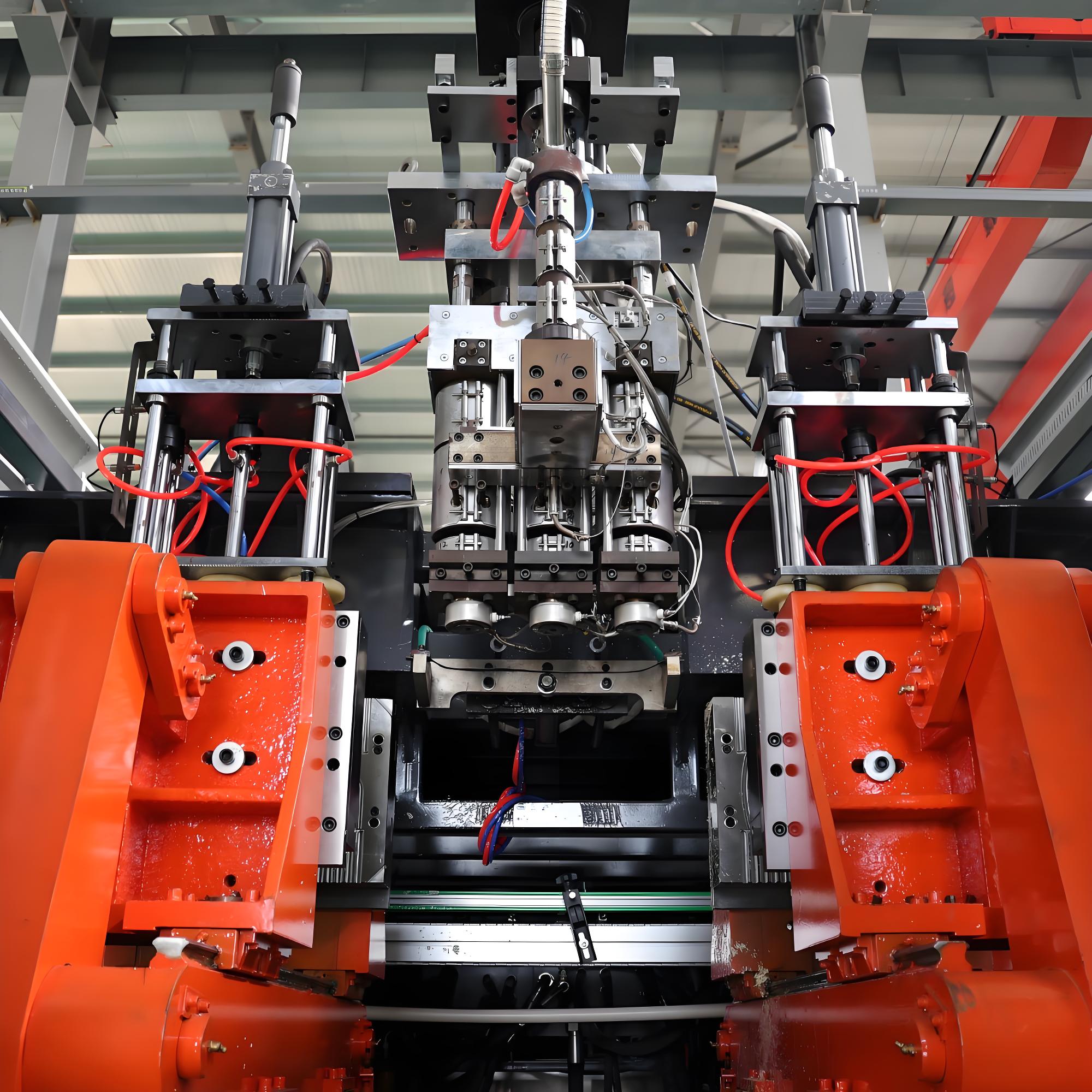
Apollo optimizes the four-column balanced mold clamping structure for large agricultural jar molds, adopting thickened high-tensile steel tie rods and integral cast steel movable and fixed mold plates. The overall frame undergoes secondary stress relief treatment to eliminate structural deformation caused by long-term high-tonnage clamping load. The maximum mold opening stroke is expanded to adapt to the installation and production of oversized agricultural container molds, and the linear guide rail with large load capacity ensures stable and jitter-free mold opening and closing action under full load.
The hydraulic clamping system adopts double servo pressurization design, which can instantly output stable locking tonnage to eliminate mold gap expansion under blow molding air pressure, fundamentally reducing the flash rate of large agricultural jar products to below 0.3%. Ordinary small blow molding machines lack heavy-duty clamping configuration, and flash waste materials account for more than 5% of raw materials during large agricultural barrel production, greatly increasing production raw material costs.
3.3 Long Parison Anti-Sagging Servo Wall Thickness Control System
Long thick parisons required by large agricultural jars are prone to gravity sagging, resulting in too thin upper wall and too thick bottom wall of finished barrels. Apollo agricultural special blow molding machine is equipped with a 100-point servo wall thickness control die head system, which dynamically adjusts the die gap in real time according to the parison descending speed, automatically compensating the wall thickness of each section of the long parison to ensure uniform thickness distribution from the barrel mouth to the barrel bottom of agricultural jars.
The closed-loop servo traction device synchronously matches the parison extrusion speed and descending speed, effectively suppressing parison elongation and sagging deformation. This exclusive control technology makes the wall thickness uniformity of Apollo-produced agricultural jars far exceed the production level of general large capacity blow molding machines on the market, improving the drop resistance and service life of finished agricultural containers.
3.4 Multi-Circulation High-Efficiency Constant Temperature Cooling System
Thick-walled agricultural jars have slow heat dissipation and long cooling cycle, which is the main bottleneck restricting the hourly output of blow molding production lines. Apollo large capacity extrusion blow molding machine configures independent double-layer multi-channel cooling water circuit for molds, with large-flow industrial refrigeration supporting circulation system. The low-temperature cooling water evenly covers all contact surfaces of the mold cavity, accelerating the internal heat conduction speed of thick-walled agricultural containers and shortening the single product molding cooling time by 20% to 30% compared with ordinary single-circulation cooling equipment.
The independent constant-temperature cooling system for the extrusion die head avoids parison premature cooling and local solidification during long-distance extrusion, ensuring continuous smooth extrusion of long parisons without breakage, and greatly improving the stability of continuous mass production of agricultural jars.
3.5 Energy-Saving Full Servo Drive and Stable Intelligent Control System
All transmission and hydraulic units of Apollo agricultural large capacity blow molding machines adopt full servo energy-saving drive configuration. The servo system only outputs corresponding power according to the actual load demand of extrusion, mold clamping and traction actions, eliminating the idle energy waste of traditional constant power hydraulic equipment. The comprehensive power consumption per kilogram of agricultural jar finished products is reduced by 18% to 25%, and the long-term electricity cost saving advantage of mass production projects is prominent.
The industrial-grade PLC central control system solidifies exclusive agricultural jar production process parameters, supports one-click calling of parameter formulas of different volume specifications of agricultural jars, and automatically alarms and corrects abnormal fluctuations of temperature, pressure and parison wall thickness during 24-hour continuous production. The system has strong anti-interference performance and can adapt to the dusty and high-temperature working environment of agricultural plastic product processing workshops for long-term stable operation.
4. Classification of Apollo Large Capacity Extrusion Blow Molding Machine for Agricultural Jars and Price Estimation
4.1 Small Large-Capacity Model for 5L-25L Agricultural Pails
This series of equipment is specially developed for mass production of small and medium agricultural pails such as seed barrels, pesticide small packaging pails and farm reagent storage buckets. The hourly plasticizing output reaches 200kg, the mold clamping tonnage is 150 tons, and it supports single-cavity or double-cavity mold configuration to improve hourly output. The complete machine is equipped with basic servo wall thickness adjustment, single refrigeration circulation system and full-automatic demoulding device, which is suitable for small and medium agricultural packaging factories with medium production demand.
The market price range of this small agricultural dedicated large capacity extrusion blow molding machine is 36,000 to 48,000 US dollars. The equipment has low floor space requirement, simple operation and low daily maintenance cost, and is the mainstream entry-level configuration for enterprises newly entering the agricultural plastic container production industry.
4.2 Medium Large-Capacity Model for 30L-100L Agricultural Barrels
This medium-sized model is the most widely sold mainstream configuration of Apollo agricultural blow molding equipment, targeting concentrated liquid fertilizer barrels, large pesticide packaging barrels and farm liquid mixing tanks of 30L to 100L. The hourly plasticizing output is 400kg, the heavy-duty mold clamping tonnage reaches 300 tons, and it is matched with a 60-point full servo long parison wall thickness control die head and double-circulation high-efficiency cooling system, supporting 24-hour uninterrupted high-load continuous production.
The complete machine is equipped with full automatic raw material batching feeding unit, finished product conveying and stacking auxiliary mechanism, with high degree of automation and low manual labor demand. The price range of this medium agricultural large capacity extrusion blow molding machine is 52,000 to 68,000 US dollars, with balanced production capacity, energy consumption and investment cost, and the investment return speed is the fastest among all agricultural blow molding models.
4.3 Ultra-Large Capacity Model for 100L-200L Agricultural Storage Tanks
Apollo ultra-large agricultural blow molding machine is oriented to large planting bases and large chemical agricultural packaging enterprises, specially used for producing ultra-large-volume rainwater storage barrels, farm chemical storage tanks and mobile liquid transport containers above 100L. The super-large diameter extrusion screw realizes an hourly plasticizing output of 620kg, and the 500-ton heavy-duty four-column mold clamping mechanism perfectly matches oversized single-cavity agricultural tank molds. The 100-point full servo wall thickness adjustment system completely solves the serious sagging problem of ultra-long parisons above 1.8 meters.
The complete machine is equipped with independent large industrial refrigeration unit, heavy-duty automatic material pushing and stacking auxiliary equipment and remote real-time production data monitoring system. The price range of this ultra-large capacity extrusion blow molding machine dedicated to agricultural jars is 76,000 to 95,000 US dollars, suitable for large-scale mass production projects with high annual output demand of ultra-large agricultural containers.
5. Comprehensive Project Cost-Benefit Analysis of Agricultural Jar Large Capacity Blow Molding Production Line
5.1 Daily Operating Cost Composition Accounting
Raw material cost accounts for the largest proportion of daily production expenditure, and high-output large capacity blow molding equipment reduces unit raw material waste by controlling flash and defective rate. Taking Apollo medium-sized agricultural dedicated model as an example, the defective and flash waste rate is controlled below 0.5%, while ordinary non-agricultural special blow molding machines have a waste rate of more than 4% when producing large agricultural jars, forming long-term continuous raw material cost differences.
Energy consumption cost is the second major daily expenditure. The full servo energy-saving configuration of Apollo agricultural large capacity extrusion blow molding machine reduces hourly power consumption by nearly 20% compared with traditional hydraulic blow molding equipment of the same output. The daily electricity cost of medium-sized models under 20-hour continuous production is controlled within 90 US dollars, and the annual electricity saving amount of mass production projects is very considerable.
Maintenance and wearing parts replacement cost is relatively low for agricultural special reinforced equipment. The annual total cost of screw, sealing ring, hydraulic oil and other vulnerable accessories of Apollo large capacity blow molding machine is controlled within 1,400 US dollars. Ordinary general blow molding machines produce thick-walled agricultural containers under long-term high load, with accelerated component wear, and the annual accessory replacement cost exceeds 3,000 US dollars.
Labor cost can be greatly saved by high automation configuration. A complete set of Apollo full-automatic agricultural jar blow molding production line only needs 1 to 2 on-duty operators to complete feeding, finished product inspection and equipment daily monitoring work, while semi-automatic ordinary blow molding equipment needs at least 3 to 4 staff, reducing annual labor expenditure for enterprises.
5.2 Annual Production Profit and Investment Return Cycle Calculation
Agricultural plastic jars have stable market demand and fixed downstream purchasing channels from pesticide factories, fertilizer manufacturers and large-scale planting cooperatives, with stable gross profit margin per finished product. Taking Apollo medium-sized 30L-100L agricultural barrel large capacity blow molding machine as an example, the daily qualified finished product output under 20-hour continuous production reaches 2.8 to 3.5 tons after deducting waste materials.
After deducting daily raw material, energy, labor and maintenance comprehensive costs, the daily net profit of the production line is stably maintained at 420 to 580 US dollars. Calculated based on 300 effective production days per year, the annual net profit increment brought by the equipment reaches 126,000 to 174,000 US dollars.
Although the initial purchase cost of Apollo agricultural special large capacity extrusion blow molding machine is slightly higher than that of ordinary general blow molding equipment, the comprehensive annual cost saving and profit increment offset the initial price difference. The overall investment return cycle of the complete equipment is controlled within 11 to 16 months. The service life of all Apollo blow molding equipment reaches more than 15 years, which can maintain stable high-output and low-waste production for a long time and bring continuous stable economic income to agricultural container manufacturers.
6. Common Production Defects of Agricultural Jars Caused by Unmatched Blow Molding Equipment and Solutions
6.1 Long Parison Sagging and Uneven Wall Thickness of Barrel Body
This defect mostly occurs when using small general blow molding machines to produce large agricultural jars. The insufficient plasticizing output and simple non-servo die head cannot control the thickness distribution of ultra-long parisons, resulting in thin upper barrel wall and thick bottom wall of finished agricultural jars, which fails the drop impact test and is prone to leakage during transportation. The fundamental solution is to replace with Apollo large capacity extrusion blow molding machine equipped with multi-point servo wall thickness control die head, dynamically adjusting the die gap to balance the wall thickness of each section of the parison.
6.2 Severe Flash on Barrel Mouth and Barrel Edge
Insufficient mold clamping tonnage of small ordinary blow molding machines is the core cause of flash defects of large agricultural jars. High blow molding air pressure pushes the mold cavity to open a tiny gap, and the melt overflows to form flash waste materials, which need manual trimming and cause raw material waste. Apollo heavy-duty four-column clamping mechanism provides sufficient locking force to eliminate mold expansion gaps during blow molding, fundamentally reducing flash generation and saving manual trimming labor and raw material consumption.
6.3 Slow Cooling, Long Production Cycle and Low Hourly Output
Single small-flow cooling water circuit of general blow molding machines cannot quickly take away the internal heat of thick-walled agricultural jars, leading to prolonged cooling waiting time per cycle and greatly reduced hourly production capacity. Apollo multi-circulation large-flow constant temperature cooling system accelerates product shaping speed, shortens single cycle time and effectively improves the daily total output of agricultural jars without expanding workshop area and adding equipment sets.
6.4 Frequent Equipment Overload Shutdown and Fast Wearing Parts Aging
General blow molding machines lack structural reinforcement design and cannot bear long-term high-load production of thick-walled large agricultural containers. Long-term overload operation causes frequent hydraulic system failures, screw wear and tie rod deformation, resulting in unplanned shutdown and delayed order delivery. Apollo agricultural dedicated large capacity blow molding machine carries out overall structural reinforcement and wear-resistant upgrade for high-load working conditions, with low failure rate and stable continuous operation performance, avoiding production loss caused by frequent equipment faults.
7. Standard Daily Operation and Long-Term Maintenance Specifications for Large Capacity Agricultural Jar Blow Molding Equipment
7.1 Pre-Production Inspection and Standard Startup Process
Complete full equipment inspection before daily startup of Apollo large capacity extrusion blow molding machine for agricultural jars. Check the residual material cleaning state inside the extrusion screw and die head to avoid carbonized old materials mixing into new raw materials and causing agricultural jar surface streaks and color spots. Inspect the hydraulic oil volume, cooling water circulation pipeline smoothness and air circuit pressure stability to eliminate hidden dangers of pressure loss and water leakage during production.
Carry out segmented preheating of the extrusion barrel according to the HDPE raw material formula for agricultural use, and start the refrigeration system to pre-cool the mold circulation water circuit in advance. After the temperature of each zone reaches the set standard, conduct 3 to 5 groups of small-batch trial production, sample and inspect the wall thickness, surface appearance and impact resistance of trial agricultural jars, and start formal mass production only after all indicators are qualified.
7.2 Real-Time Monitoring Key Parameters During Continuous Production
Arrange special operators to monitor the central control system data in real time during 24-hour shift production. Track the plasticizing temperature of each barrel zone, melt extrusion pressure, servo parison wall thickness parameters, mold clamping tonnage and cooling water temperature data every hour. Once parameter drift beyond the standard range is found, adjust and correct it in time to prevent batch defective agricultural jars from being produced.
Regularly take finished agricultural jar samples from the automatic stacking area for wall thickness measurement and drop impact spot check every two hours, record product quality data to form production traceability files, and quickly adjust equipment process parameters according to abnormal quality test results.
7.3 Daily, Weekly and Monthly Regular Maintenance Standards
Daily maintenance work includes cleaning the die head outer surface and mold parting surface residual flash materials, checking the operation noise and temperature rise of servo motors and reducers, and replenishing lubricating grease for linear guide rails and moving hinge parts to ensure smooth mechanical action.
Weekly maintenance requires a comprehensive inspection of all hydraulic sealing rings, cooling water pipeline filters and air circuit solenoid valves, cleaning filter scale and replacing aging sealing parts to avoid water leakage and air pressure fluctuation affecting blow molding quality. Calibrate the servo wall thickness control die head system to ensure accurate parison thickness adjustment effect.
Monthly full maintenance includes stopping the machine to disassemble and inspect the screw surface wear degree, testing the mold clamping parallelism and locking force stability, cleaning the internal scale of the mold cooling water channel, and calibrating the temperature and pressure sensors of the control system to maintain the long-term high-precision operation state of the large capacity extrusion blow molding machine.
8. Apollo Full-Cycle Technical Service Support for Agricultural Jar Production Projects
As a professional supplier of customized large capacity extrusion blow molding machines for agricultural jars, Apollo provides one-stop full-cycle technical service support covering pre-sales scheme design, factory production delivery, on-site installation and commissioning, operation training and long-term after-sales maintenance for all agricultural plastic container manufacturers.
8.1 Pre-Sales Customized Production Line Scheme Design
Apollo professional technical team carries out one-on-one demand communication according to customers’ agricultural jar specification range, annual output target, factory space size and project investment budget. Match the most suitable model of large capacity extrusion blow molding machine, design workshop equipment layout and raw material batching auxiliary supporting scheme, optimize equipment configuration to avoid redundant investment or insufficient production capacity, and formulate targeted agricultural jar blow molding process parameter formula in advance according to customer raw material brands.
8.2 Factory Pre-Debugging and On-Site Installation Commissioning
All Apollo agricultural dedicated blow molding machines complete full-line assembly, no-load aging test and agricultural jar simulation trial production in the factory before delivery, calibrate all process parameters to ensure stable equipment performance when leaving the factory. After the equipment arrives at the customer’s workshop, professional after-sales engineers go to the site for complete equipment assembly, pipeline connection, electrical wiring and overall linkage debugging, complete mass production trial run of customer’s actual agricultural jar molds and raw materials, and adjust the optimal production parameters to help the production line reach full stable output in the shortest time.
8.3 Free System Operation and Maintenance Technical Training
Provide free systematic training for customer production operators and maintenance technicians after equipment commissioning, covering equipment startup and shutdown operation flow, agricultural jar process parameter adjustment method, servo wall thickness control system operation, daily fault judgment and quick elimination, standardized disassembly and maintenance steps of extrusion screw and die head. The training enables the customer’s internal team to independently complete all daily production and equipment maintenance work without relying on external technical personnel for a long time.
8.4 Long-Term 24-Hour Remote and On-Site After-Sales Support
Apollo establishes a global 24-hour remote technical guidance system, which can remotely access the equipment control system to check abnormal parameters and guide customers to eliminate production faults in real time when agricultural jar production quality problems or equipment minor failures occur. For complex mechanical failures that cannot be solved remotely, local after-sales service engineers rush to the customer’s factory for on-site maintenance within the shortest time to minimize production line shutdown loss. Regular return visits are carried out every quarter to detect equipment operation performance and provide free parameter calibration and maintenance guidance to extend the service life of large capacity extrusion blow molding machines.
Conclusion
Manufacturing large-volume agricultural jars has extremely high requirements for the plasticizing output, mold clamping load, parison control and continuous production stability of extrusion blow molding machines. Ordinary general blow molding equipment cannot adapt to the thick-wall, long-parison and high-load production characteristics of agricultural containers, which easily leads to multiple quality defects of finished barrels, low hourly output, high raw material waste and frequent equipment overload faults, increasing comprehensive production costs of enterprises.
Apollo series large capacity extrusion blow molding machines specially optimized for agricultural jar production solve all core production pain points of agricultural plastic containers through reinforced high-output plasticizing system, heavy-duty balanced mold clamping mechanism, multi-point servo anti-sagging wall thickness control technology, high-efficiency circulating cooling system and full servo energy-saving drive configuration. The equipment has stable long-term high-load operation performance, low defective product and flash waste rate, remarkable energy-saving effect and low daily maintenance cost, which can help agricultural packaging manufacturers achieve high-yield, low-cost and stable mass production of various specifications of agricultural jars from 5L to 200L.
For plastic product enterprises planning to invest in agricultural jar production lines or upgrade old blow molding equipment to expand production capacity, selecting Apollo customized large capacity extrusion blow molding machine dedicated to agricultural containers is a reliable solution to improve finished product qualification rate, reduce comprehensive operation costs and enhance market supply competitiveness, realizing stable and sustainable profit growth of agricultural packaging projects.