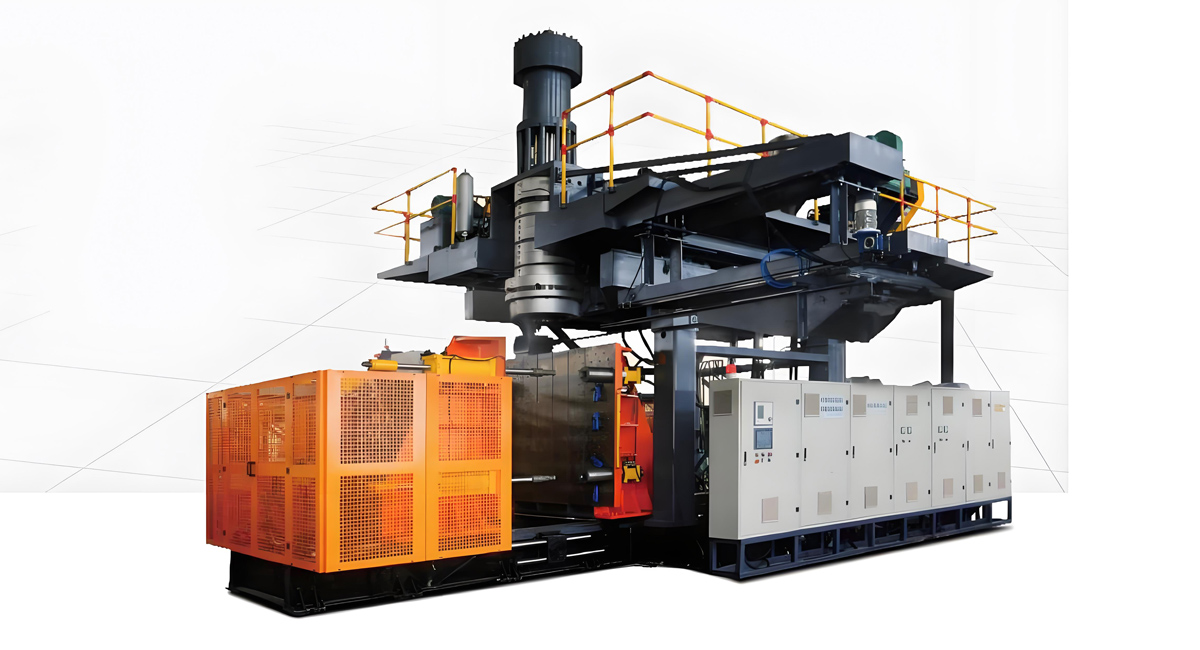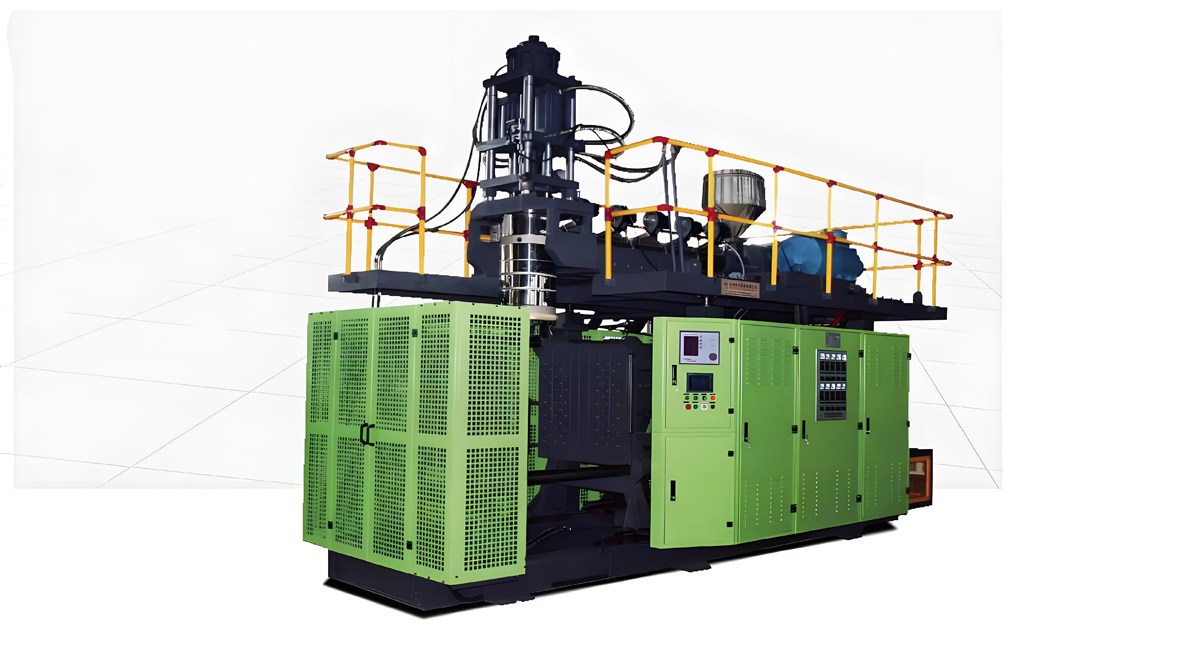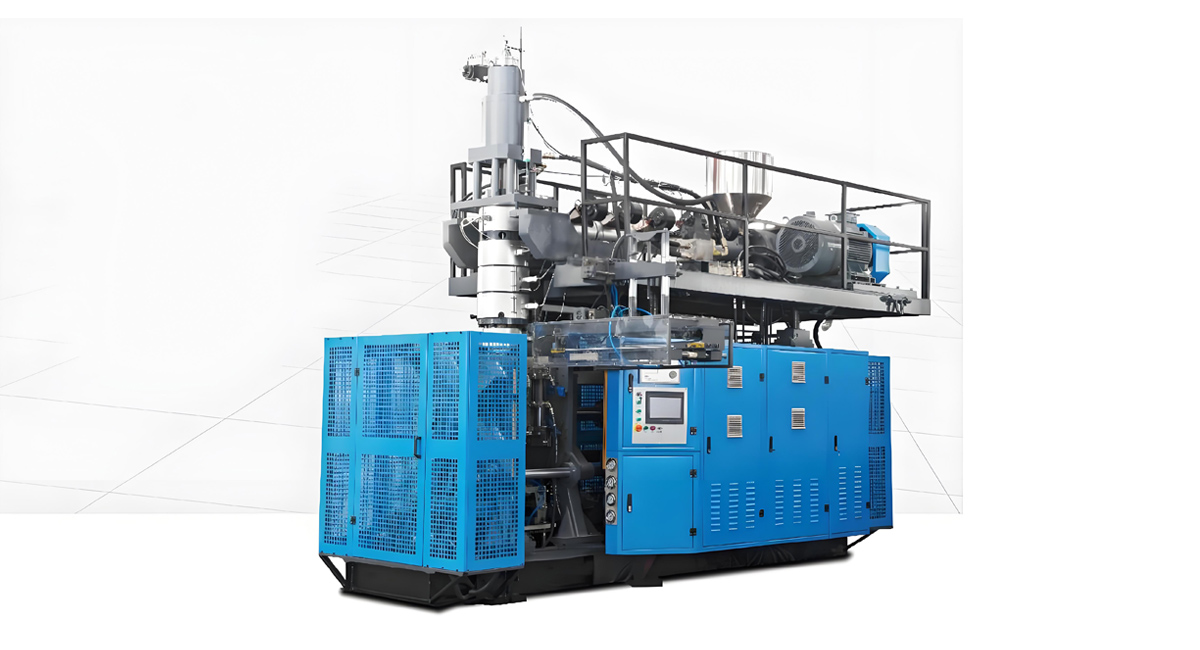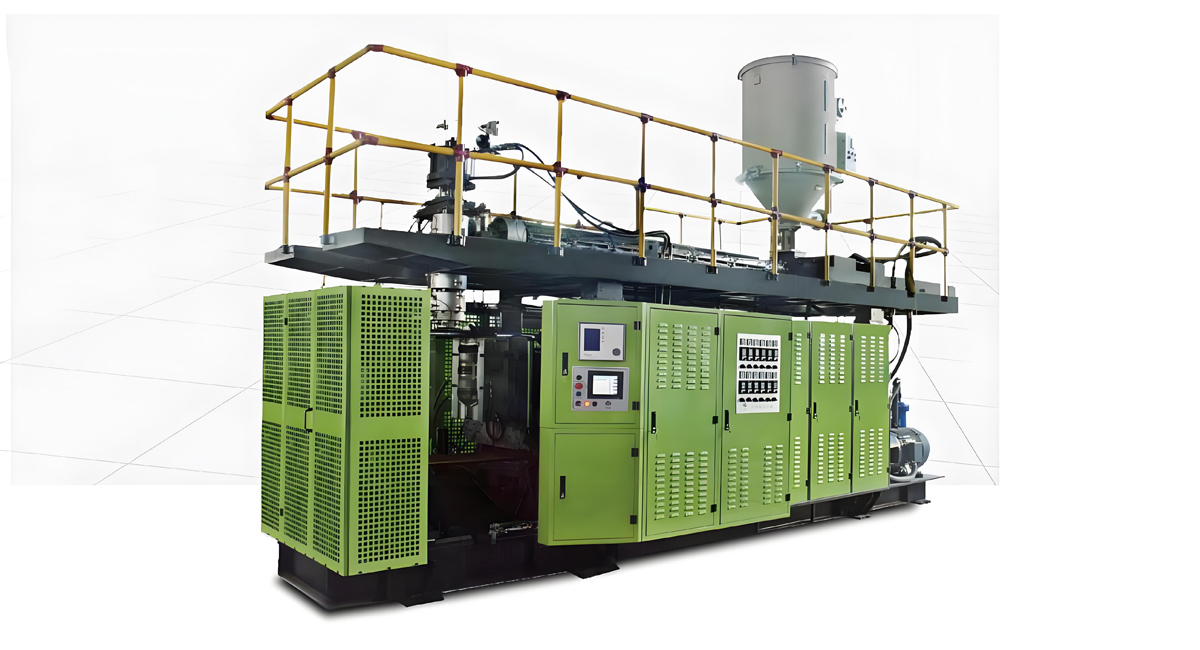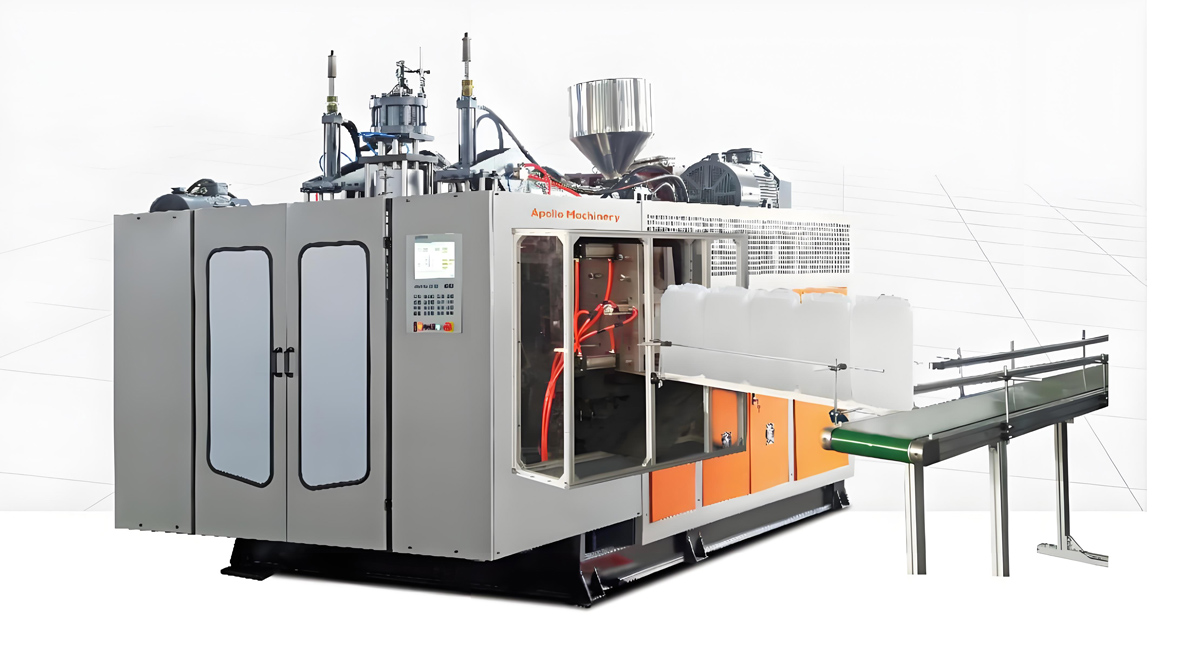

Five years ago, running recycled plastic through an 압출 블로우 몰딩 기계 was a niche experiment for sustainability-minded brands. Today it is becoming a baseline requirement. A wave of packaging laws in Europe, North America, and parts of Asia now mandates minimum post-consumer recycled (PCR) content in bottles and containers, and major consumer-goods companies have published public targets to cut virgin plastic by half or more. For any converter or brand owner operating an 압출 블로우 몰딩 기계, the question is no longer whether to run recycled content, but how to do it without sacrificing output, wall-thickness control, or product safety. This guide explains what recycled content actually means, why extrusion blow molding is the most accessible pathway for it, what the 2026 regulatory map looks like, which machine adaptations matter, and how to select and run equipment that turns post-consumer plastic back into saleable bottles, drums, and tanks.
What This Guide Covers
If you are evaluating an 압출 블로우 몰딩 기계 for recycled-content production, the sections below walk through the definitions, the market and regulatory drivers, the machine technology, the real processing challenges, the winning application segments, and a practical selection checklist. Use the anchor list to jump to the part that matches your current bottleneck.
- PCR versus PIR: why the distinction decides compliance
- Which recycled resins run on an 압출 블로우 몰딩 기계
- The recycled blow-molding market in 2026
- The 2026 regulatory map: EU, 미국, 영국, China
- How an 압출 블로우 몰딩 기계 processes recycled content
- Five processing challenges and how to solve them
- Application segments winning with PCR and EBM
- Machine selection checklist for recycled-content lines
- Cost perspective: recycled versus virgin resin
- Regional outlook and where capacity is moving
- A practical roadmap for converters switching to PCR
PCR versus PIR: Why the Distinction Decides Compliance
Before discussing equipment, it is worth being precise about vocabulary, because regulators do. Post-consumer recycled (PCR) material is plastic that reached an end user, was collected, and came back through a recovery system. A milk jug that becomes a new detergent bottle is PCR. Post-industrial recycled (PIR), by contrast, is factory scrap and regrind generated on the same production line or within the same supply chain. Both reduce virgin-resin demand, but the laws that mandate recycled content almost always count only the post-consumer fraction toward the legal minimum. A supplier who quotes a blended “recycled content” number that mixes PCR and PIR can leave a brand legally short even when the label arithmetic looks fine.
For an 압출 블로우 몰딩 기계, this matters operationally. In-house regrind from flash, necks, and rejected parts is PIR and is trivial to reuse; most machines already run 10~30% regrind as standard practice. The hard part is sourcing and qualifying PCR feedstock, because its composition varies batch to batch and its history is outside your control. The rest of this guide focuses on PCR, since that is the fraction regulators and retailers actually audit.
Traceability is the connective tissue between the material and the claim. Because recycled-content percentages are now audited, brands and converters lean on certification schemes such as the Global Recycled Standard and on documented chain-of-custody from the recycler through the pelletizer to the molding line. An 압출 블로우 몰딩 기계 itself does not certify anything, but the data it can record, lot numbers, blend ratios, and cycle parameters, becomes part of the evidence package a brand shows a regulator or retailer. Treating the molding line as a documented node in that chain, rather than a black box, is what separates a defensible recycled claim from a marketing one that collapses under audit.
Which Recycled Resins Run on an 압출吹기 성형기
Three recycled polymers dominate blow-molded packaging: recycled high-density polyethylene (rHDPE), recycled polyethylene terephthalate (rPET), and recycled polypropylene (rPP). Of these, rHDPE is the natural fit for an 압출 블로우 몰딩 기계, and extrusion blow molding is in turn the most technically accessible pathway for rHDPE. The reason is structural. Extrusion blow molding does not require the optical clarity that stretch processes demand, and it does not require the pristine, low-contamination melt that injection processes prefer. The parison is shaped by a die and a programmed profile, so the process tolerates a wider viscosity range and a higher filler or recycled-content load than its injection and stretch cousins.
Industry research published in 2026 notes that extrusion blow molding accepts PCR HDPE at levels ranging from 25 percent to 100 percent depending on the application and the regulatory target, which is a wider band than almost any competing process. rPET is more commonly associated with stretch blow molding for carbonated and water bottles, but food-grade rPET can also be extrusion blown for non-carbonated jars and containers where clarity is less critical. rPP is gaining ground in closures and some thin-wall containers, though its recycling stream is younger and less standardized than HDPE’s. For the remainder of this guide the focus stays on rHDPE, because that is where the 압출 블로우 몰딩 기계 has both the clearest technical advantage and the largest installed base.
The Recycled Blow-Molding Market in 2026
The numbers explain why equipment investment is accelerating. Recycled HDPE used in blow molding reached roughly 2.8 million metric tonnes globally in 2025 and is projected to grow to about 4.1 million metric tonnes by 2028, a compound annual growth rate of 13.7 percent. That pace is several times faster than virgin HDPE demand, and it is driven less by preference than by binding law and brand procurement contracts.
Looking at finished bottles rather than resin tonnage, the PCR HDPE blow-molded bottle market was valued at about 8.95 billion USD in 2025 and is forecast to reach roughly 18.2 billion USD by 2034, a compound annual growth rate near 8.5 percent. The broader PCR packaging market, covering all polymers and formats, was estimated at 18.4 billion USD in 2026 and is projected to reach 34.5 billion USD by 2033, growing at about 9.4 percent per year. Even allowing for differences between research houses, the directional story is consistent: recycled-content packaging is shifting from a premium niche to a default specification, and blow molding is one of the largest, most accessible application pathways for that resin.
The feedstock economics behind those figures are worth a moment. The typical HDPE bale that becomes blow-molding-grade rHDPE is composed mostly of natural, unpigmented material from milk jugs, with pigmented material from detergent and shampoo bottles making up a smaller share and industrial scrap a minor remainder. Natural rHDPE commands a premium over pigmented grades because it can be used in light-colored and some food-contact applications. In China, natural HDPE bale has traded at a 20 to 35 percent premium over pigmented bale, a spread that signals how tight high-quality natural feedstock already is.
The 2026 Regulatory Map: EU, 미국, 영국, China
A buyer evaluating an 압출 블로우 몰딩 기계 for recycled content cannot ignore the legal calendar, because it determines which products must contain PCR and by when. The picture varies by region, but the trend is uniformly upward.
European Union: the PPWR
The European Union’s Packaging and Packaging Waste Regulation, Regulation (EU) 2025/40, entered into force in February 2025 and begins to apply from 12 August 2026. From 1 January 2030 it sets minimum recycled-content targets: 30 percent for single-use PET beverage bottles, 30 percent for PET contact-sensitive packaging, 10 percent for contact-sensitive packaging in other polymers such as HDPE and PP, and 35 percent for non-contact-sensitive plastic packaging. Those figures climb sharply by 2040 to 65, 50, 25, and 65 percent respectively. The regulation also requires all packaging to be designed for recyclability, bans packaging graded below 70 percent recyclable from 2030, and from 12 August 2026 prohibits PFAS above 25 parts per billion in individual substances in food-contact packaging. Crucially, the targets are calculated per manufacturing plant and per packaging type, which ends the old practice of averaging one green stock-keeping unit across a non-compliant portfolio. For a converter running an 압출 블로우 몰딩 기계 in or for the EU market, 10 percent recycled content in HDPE contact-sensitive packaging is the near-term floor, rising to 25 percent by 2040.
미국: state-led mandates
At the federal level the 미국 has no blanket recycled-content mandate for packaging. Instead, leadership comes from states. California’s AB 793 has required 25 percent PCR in covered plastic beverage containers since 1 January 2025, rising to 50 percent by 2030, with penalties calculated per pound of shortfall. California’s SB 54 pushes single-use packaging and food-service ware toward 65 percent recycled content by 2032 through an extended-producer-responsibility framework. Washington’s HB 1021 imposes similar recycled-content mandates with enforcement beginning in 2027, and Oregon, Colorado, and others have passed or proposed their own laws. The practical effect is that a brand selling nationally tends to specify rHDPE to satisfy the strictest applicable state, which pulls recycled content into product lines that ship everywhere.
영국: plastic packaging tax
The 영국 applies a Plastic Packaging Tax of 223.69 GBP per tonne on plastic packaging manufactured in or imported into the country that contains less than 30 percent recycled content. This is a direct financial incentive rather than a ban, and it has pushed many importers and fillers to reformulate toward rHDPE and rPET simply to avoid the levy. From 2026 the UK’s extended-producer-responsibility scheme also modulates fees based on recyclability and recycled content, so the cost pressure compounds.
China: rapidly improving recovery systems
China does not yet impose the same binding recycled-content percentages as the EU, but its national recycling standards and collection infrastructure are tightening, and Chinese recyclers and converters are expanding food-grade and near-virgin rHDPE capacity to serve export customers who must comply with EU and US rules. For an 압출 블로우 몰딩 기계 built or operated in China, the immediate driver is export demand rather than domestic law, but the feedstock quality gap between China and mature European systems is narrowing quickly.
How an 압출吹기 성형기 Processes Recycled Content
Running PCR through an 압출 블로우 몰딩 기계 is not a different process; it is the same extrude-parison-blow sequence with specific adaptations that manage contamination, odor, moisture, and consistency. The core machine still extrudes a molten tube from a die head, captures it in a mold, blows it to shape, and ejects the finished hollow part. What changes is the material handling and the melt conditioning around that core.
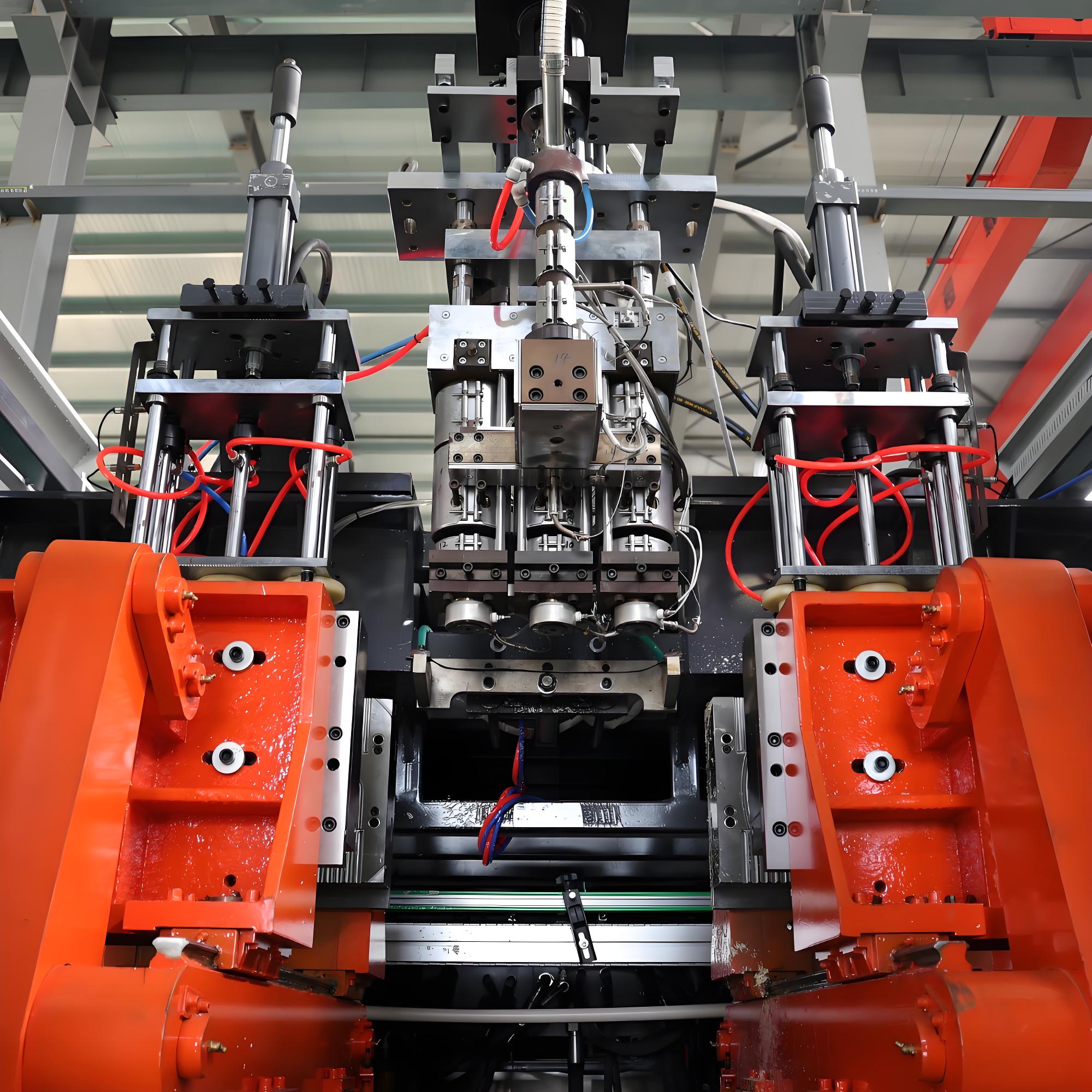
The first adaptation is the screw and barrel. Recycled HDPE is more variable in melt-flow index and more likely to contain fines and contamination than virgin resin, so the screw benefits from a deeper, more gradual feed section, aggressive mixing elements, and controlled shear to avoid thermal degradation of already-processed polymer. A vented or degassing barrel is valuable because recycled material often carries moisture and volatiles that would otherwise become bubbles or odor in the part. The second adaptation is a screen changer or continuous melt filter placed before the die head. A breaker plate with a fine screen, or a self-cleaning slide-plate filter, captures gels, carbon specks, and unmelted contaminants that would otherwise show up as black spots or weak points in the bottle wall.
The third and most strategic adaptation is multi-layer or co-extrusion capability. A three-layer head lets a converter place a recycled-content core between thin virgin or food-grade skins. This structure solves two problems at once: it isolates odor and any trace contamination in the core behind a clean barrier, and it lets a brand claim a high recycled percentage while keeping the surface and neck finish at virgin quality. For household and industrial chemical bottles this is the dominant configuration. The fourth adaptation is upstream rather than on the machine: near-infrared sorting and rigorous washing at the recycler determine whether the pellet is natural, light-colored, and low-odor enough to use. The 압출 블로우 몰딩 기계 performs best when it receives a consistent, dried, filtered pellet, so the real quality work starts at the recycler.
Five Processing Challenges and How to Solve Them
Converters new to PCR hit a predictable set of problems. None is fatal, but each needs a deliberate countermeasure rather than hope.
1. Contamination and black spots
Post-consumer bales contain labels, closures, residual product, and incompatible resins. Even after washing, the pellet can carry gels and carbonized specks. The defense is layered: tight incoming specification from the recycler, a fine screen changer on the machine, and a documented source-control program that rejects off-spec lots. Running a coarse initial screen and a finer final screen in series reduces the frequency of filter changes while still catching defects.
2. Odor and volatile organic compounds
Recycled HDPE, especially from detergent and food bottles, can carry odor. A vented barrel and adequate degassing remove much of it, but the most reliable fix for odor-sensitive products is a multi-layer structure with a virgin or specialty barrier skin over the recycled core. Advanced decontamination at the recycler, including elevated-temperature devolatilization, also makes a measurable difference.
3. Color variability
Pigmented PCR shifts shade batch to batch, which frustrates brand owners who need a consistent shelf color. The common solution is to sort feedstock by color at the recycler, use natural or light-colored PCR where the design allows, and correct with a calibrated masterbatch at the machine hopper. Color-sorting capability at the recycler is now a premium differentiator, because natural, low-odor PCR commands a higher price precisely for this reason.
4. Consistency of melt-flow and strength
Recycled resin varies in melt-flow index, and that variation shows up as wall-thickness drift on the parison. A well-tuned parison programmer and consistent blend ratio stabilize output, but the root control is blend management: holding the PCR-to-virgin ratio within a tight band and qualifying each lot before production. Process recipe storage on the controller helps lock in the correct profile per material grade so operators are not tuning by feel.
5. Environmental stress crack resistance for demanding fills
For detergent, chemical, and fuel-container applications, environmental stress crack resistance is the property that decides whether a bottle survives its shelf life. Some recycled streams show reduced stress-crack resistance compared with virgin resin. The countermeasures are material selection of a suitable PCR grade, compatibilizers where needed, and conservative design margins on wall thickness and corner radii. For automotive fuel tanks, where the requirement is most severe, OEM qualification alone typically takes two to four years of testing, so recycled content enters that segment cautiously and only with approved grades.
Quality Control and Testing for PCR Bottles
Recycled content raises the testing bar because the incoming material is less predictable than virgin resin. A disciplined 압출 블로우 몰딩 기계 program pairs incoming-material qualification with finished-part validation so that a higher recycled percentage never silently degrades the product. The incoming checks start with melt-flow index and density to confirm the lot matches the qualified grade, followed by contamination screening and an odor panel for sensitive applications. These simple gates catch most off-spec material before it reaches the hopper.
Finished-part testing is where recycled content earns or loses trust. Top-load and drop testing confirm the container survives filling, transit, and shelf handling, and both should be run on production parts rather than lab plaques. For chemical and detergent bottles, an environmental stress crack resistance test under realistic fill and temperature conditions verifies that the recycled blend will not fail in the field. Visual inspection for black specks and gels remains essential, and many lines add automated vision to catch defects that manual inspection misses at speed. For food-contact products, migration testing against the applicable food-contact regulation is non-negotiable, and the result must trace back to the specific decontamination process used by the recycler. None of this requires exotic equipment, but it does require treating PCR as a variable material rather than a drop-in substitute.
Application Segments Winning with PCR and EBM
Not every product is ready for high recycled content, but several segments are already there, and they show where an 압출 블로우 몰딩 기계 pays for itself fastest. The pattern across these segments is consistent: the products that adopted PCR first are the ones where the container is functional rather than premium, where a slight color shift is acceptable, and where the brand has a public sustainability commitment to defend.
Household and industrial chemical bottles are the largest and most mature segment. Detergent, cleaner, and disinfectant bottles routinely run 25 to 100 percent rHDPE, and several major converters have publicly shipped lines at 45 to 60 percent recycled content using engineered blending and multi-layer heads. Personal care and cosmetics bottles are the fastest-growing segment, driven by retailer sustainability requirements and consumer preference; brands use natural or light-colored PCR to keep the package on-brand. Food-grade applications, including dairy and juice bottles, are the most demanding because they require decontaminated, food-contact-approved rHDPE, often supported by a regulatory no-objection letter in the 미국 or an authorized recycling process in the EU. Industrial drums and intermediate bulk containers use a recycled core with a virgin or barrier skin to combine economy with chemical resistance. Automotive tanks remain the cautious edge case, where recycled content is trialed under long qualification cycles rather than deployed broadly.
The segments that are still climbing the learning curve share a different profile: tight optical or tactile expectations, or a safety-critical function. Clear premium water and beverage bottles in PET remain dominated by virgin or narrowly qualified food-grade rPET, because consumers reject any haze or flavor carryover. Thin-wall, high-clarity cosmetic jars are similarly conservative. And anything load-bearing or pressure-containing, from pressure vessels to fuel systems, moves slowly because the cost of a field failure dwarfs the resin saving. The practical takeaway for a converter is to enter recycled content through the mature segments first, bank the process knowledge, and only then approach the demanding ones with the multi-layer and qualification tooling those products require.
Machine Selection Checklist for Recycled-Content Lines
If you are specifying an 압출 블로우 몰딩 기계 specifically to run recycled content, the standard criteria still apply, but a few items move from nice-to-have to essential. Insist on a robust, shear-controlled screw and a vented barrel for degassing. Require a continuous screen changer or fine filtration as standard, not an option. Prioritize a multi-layer or co-extrusion head if you will serve odor-sensitive or food-contact customers, because the barrier skin is the cleanest route to high recycled claims. Look for precise parison control with recipe storage so each qualified PCR grade has a locked-in profile. Confirm the supplier can support material trials on your actual feedstock, because recycled resin behaves differently from the virgin sample used in a showroom. Finally, weigh service depth: running PCR surfaces contamination and consistency issues that a responsive engineering team resolves far faster than a manual.
Capacity and configuration follow the product. Single-station and double-station machines suit lower to mid volumes with frequent changeovers, while multi-head and accumulator-head configurations suit large containers and drums where a thick, uniform parison matters more than cycle speed. The right answer depends on your container size, annual volume, and how many SKUs share the line, but the recycled-content adaptations above are the same regardless of scale.
Cost Perspective: Recycled Versus Virgin Resin
The economics of recycled content have flipped compared with a decade ago. In the first quarter of 2026, European natural blow-molding-grade rHDPE traded around 950 to 1,150 EUR per metric tonne, while virgin blow-molding grades traded around 1,350 to 1,550 EUR per metric tonne, a saving of roughly 25 to 30 percent for equivalent performance. That spread is the single biggest financial argument for an 압출 블로우 몰딩 기계 running PCR. The caveat is that food-grade and near-virgin PCR can carry a premium over standard recycled material, because decontamination, color sorting, and traceability cost real money. Food-grade rPET, for example, has at times traded 15 to 30 percent above virgin PET when collection and processing capacity could not keep pace with mandated demand.
The smarter framing is total cost rather than resin price alone. A brand facing a plastic packaging tax, a penalty for missing a recycled-content threshold, or a retailer gatekeeping shelf placement gains value from PCR that a simple resin spreadsheet misses. Equally, the risk of waiting is real: mandated demand is hitting fixed reclaimer capacity across multiple regions at once, and buyers who contracted multi-year PCR supply early are paying less today than those shopping the spot market. Treat PCR feedstock the way you would treat any regulated input, with contracts rather than assumptions.
Regional Outlook and Where Capacity Is Moving
Europe led the recycled HDPE market in 2025 with close to 39 percent of global share, reflecting mature collection systems and regulation-driven demand. North America followed with about 28 percent, a procurement-led market with strong retail and contract-manufacturing channels. The fastest growth, however, is in Asia-Pacific, where China and India are improving waste-management infrastructure and building food-grade and near-virgin recycling capacity to serve both domestic and export demand. For an 압출 블로우 몰딩 기계 investor, that geographic shift matters: capacity and expertise are diffusing away from a handful of mature markets, which lowers entry cost for converters in developing regions while raising feedstock competition everywhere.
The competitive axis is also shifting from volume to purity. As collection and basic mechanical recycling become commoditized, the premium segment is high-purity, odor-free, food-contact-grade recycled resin, where specialized recyclers and large converters compete on quality rather than tonnage. A blow-molding operation that can reliably run that premium feedstock is positioned for the strictest regulatory tiers, not just the easy ones.
A Practical Roadmap for Converters Switching to PCR
Moving an 압출 블로우 몰딩 기계 from virgin to recycled content is less a leap than a staged program. Start by auditing your current regrind practice and qualifying one or two PCR grades against your most forgiving product, typically a non-food industrial or chemical bottle. Install or confirm filtration and degassing on the machine, and lock a parison recipe per grade. Run a trial batch, measure wall thickness, drop performance, and visual defects, then expand the recycled percentage only as quality holds. For food-contact or odor-sensitive lines, move to a multi-layer structure and secure the required decontamination documentation before commercial runs. Throughout, keep a documented chain of custody with your recycler, because regulators and retailers will ask for it.
The converters who treat recycled content as a compliance cost will always lag. The ones who treat it as a process-discipline upgrade, investing in filtration, degassing, blending control, and material qualification, end up with lower resin exposure, a defensible sustainability story, and equipment that is ready for the next tightening of the rules. An 압출 블로우 몰딩 기계 is uniquely suited to this transition, and 2026 is the year the regulatory calendar makes the case for it.
결론
Recycled-content blow molding is no longer optional for brands selling into Europe, California, and an expanding list of jurisdictions, and extrusion blow molding is the most accessible way to get there. The 압출 블로우 몰딩 기계 already handles the wide viscosity range and multi-layer structures that recycled HDPE demands, and the remaining hurdles are engineering problems with known solutions: filtration for contamination, venting for odor, color sorting for consistency, and barrier skins for food contact. With a market growing at double-digit rates and laws ratcheting recycled-content minimums upward through 2040, the converters who build recycled-content competence now will own the lower-risk, lower-resin-cost position for the next decade. The technology is ready; the feedstock is scaling; the only variable left is execution.
If you are deciding where to start, the lowest-risk first move is a single non-food industrial or chemical bottle on your existing machine, with a qualified PCR grade and a fine screen changer as the only new requirements. Prove the quality gate, document the blend, and let one successful line become the template for the rest of your portfolio. The brands and converters that win the next decade of packaging will not be the ones who waited for the rules to arrive; they will be the ones who already had the 압출 블로우 몰딩 기계, the filtration, and the material qualification in place when the deadlines landed.