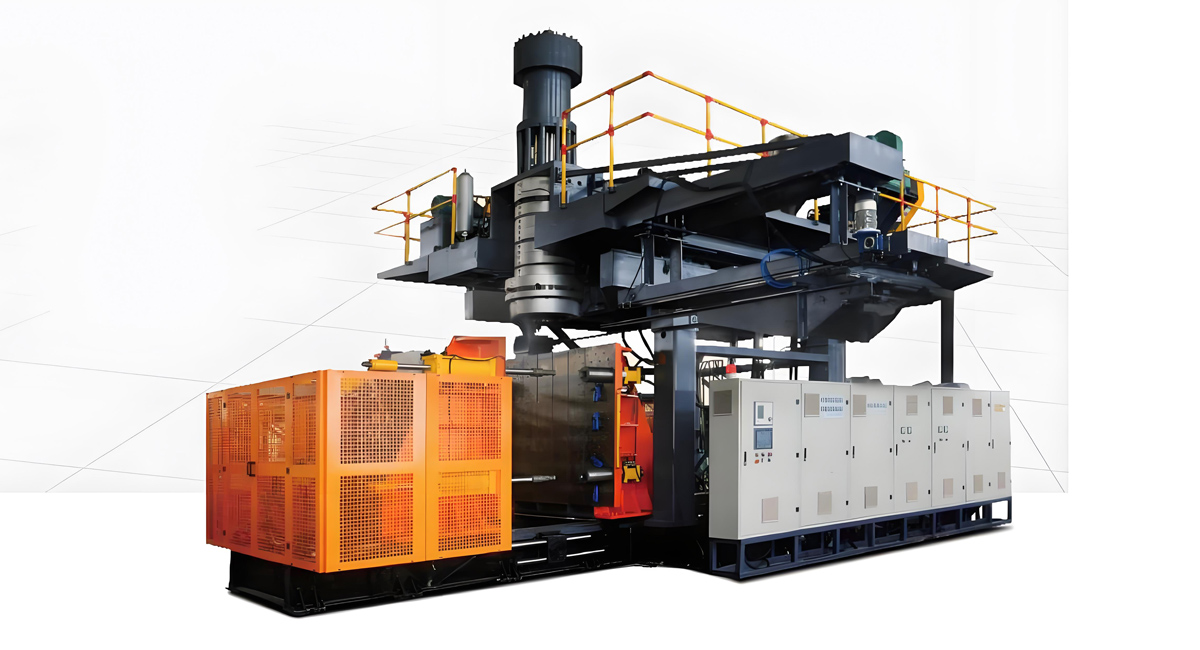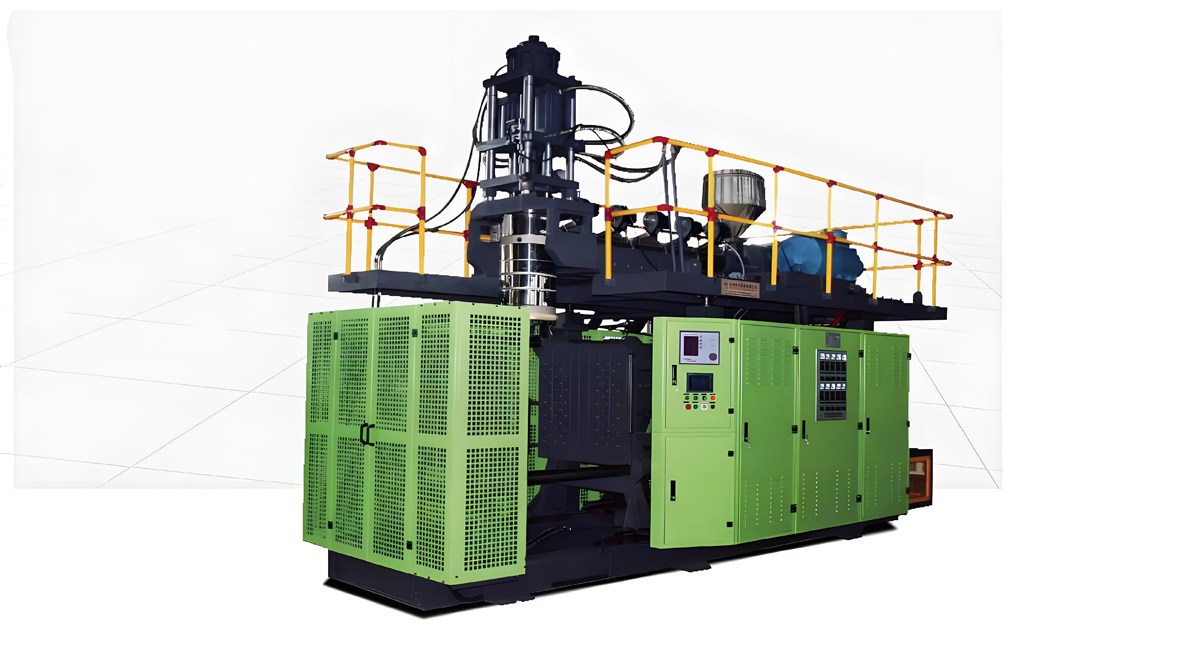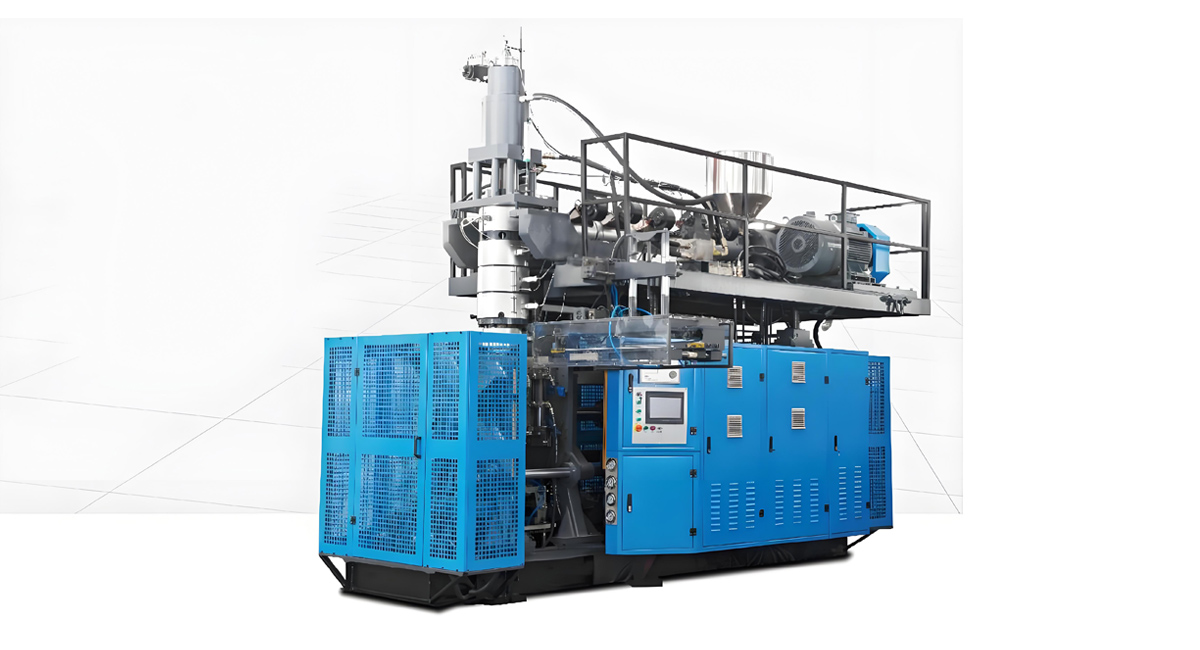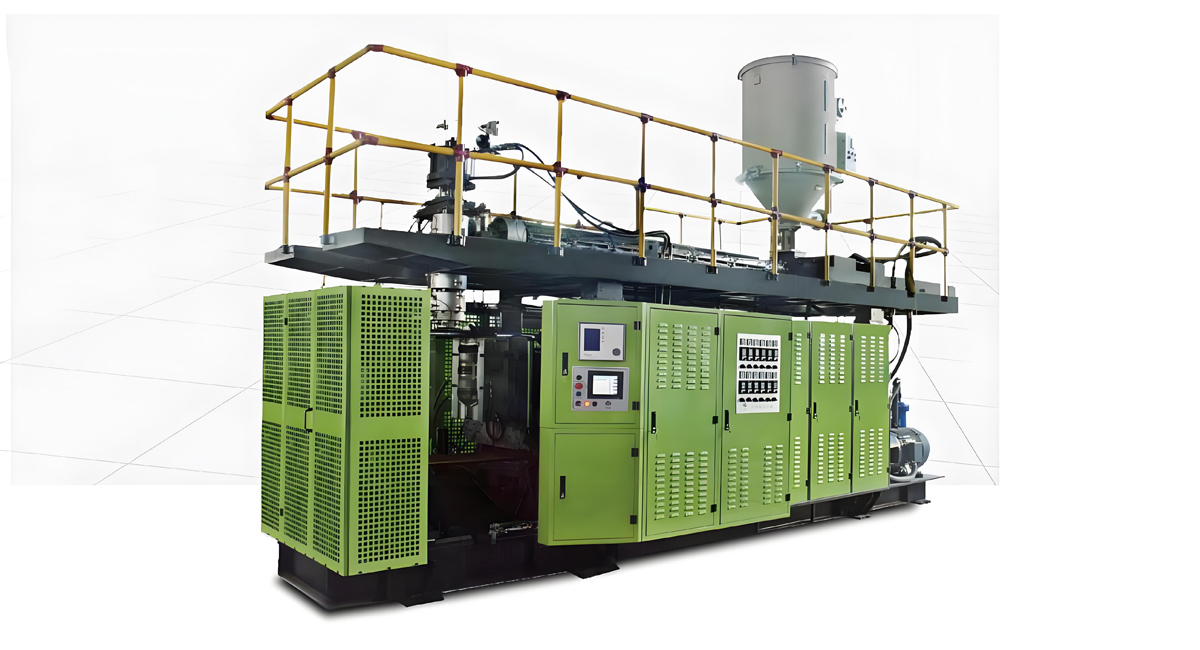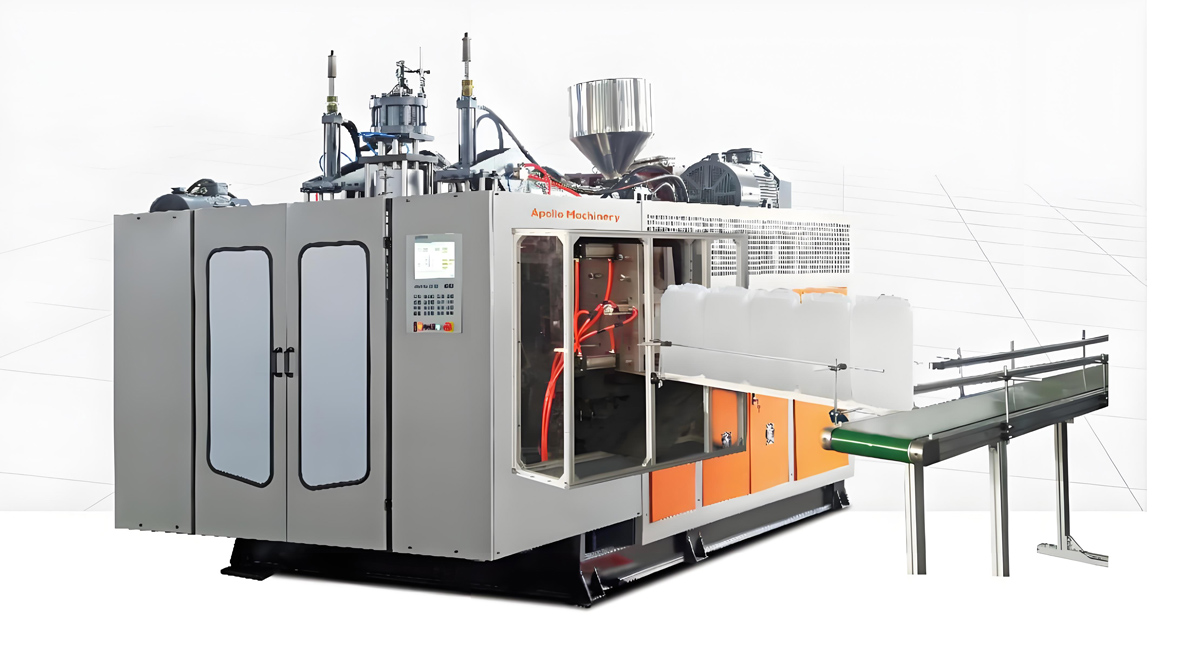

Extrusion Blow Molding Machine Selection: Matching Machine Series, Material and Output to Container Volume
Selecting the right Extrusion Blow Molding Machine is a critical engineering decision that dictates production efficiency and product quality. The optimal machine series depends on container volume, resin type, target output rates, and specific plant constraints such as floor space or utility availability. Apollo manufactures machines covering an extensive capability range from 5ML to 5000L, ensuring precise solutions for diverse packaging needs. This guide details how volume maps to the ABLB Series for small containers between 200ML and 20L, the ABLD Series for large industrial drums ranging from 20L to 1500L, and the Fully Electric series offering high precision for volumes from 200ML to 20L. We examine material compatibility including barrier requirements, cycle time optimization, die head design, layering choices, automation integration, and energy consumption profiles. A thorough cost analysis is included, with indicative budget ranges starting at approximately 50,000 US dollars for basic units up to over 1 million US dollars for complex multilayer systems, though actual prices vary significantly based on configuration. By reading this article, you will gain the technical knowledge required to match machine specifications directly to your production goals, ensuring a robust and profitable manufacturing process.
Why Machine Selection Determines Quality, Output and Cost
An extrusion blow molding machine is a long term production asset that dictates operational efficiency for over a decade. Selecting the correct series balances container quality, hourly output, energy consumption, and capital expenditure. A mismatched machine creates either wasted capacity or chronic bottlenecks. For instance, using an ABLB Series unit rated for 200ML to 20L containers to produce small bottles is inefficient if the cycle time cannot be optimized, while attempting large drums on this series causes mechanical stress and poor wall thickness control. Conversely, deploying an ABLD Series machine designed for 20L to 1500L containers on small packaging results in excessive energy use and slow cycle times due to oversized clamping forces and die head dimensions.
This choice locks in specific die head configurations, clamping tonnage, and automation compatibility for years, making retrofits expensive. A badly matched machine on a medium line can cause significant financial loss. If a line intended for 500ML bottles runs at half speed due to undersized extrusion capacity, the annual cost of lost output could range from 150,000 to 300,000 US dollars, depending on local labor rates and material costs. This figure is indicative and assumes standard market pricing for polyethylene feedstock and typical utility rates in North America or Europe. The Fully Electric series offers precise control for the 200ML to 20L range, reducing energy waste compared to hydraulic systems. Ultimately, aligning machine capability with container volume ensures consistent wall thickness and maximizes return on investment without compromising throughput stability.
How Extrusion Blow Molding Works and What It Demands
The extrusion blow molding machine begins by melting polymer resin and forcing it through an annular die to form a continuous tube called a parison. This vertical column of molten plastic descends between two steel mold halves that close around it. Compressed air then inflates the parison against the cooled cavity walls, replicating the container shape before cooling solidifies the part for ejection. For small bottles ranging from 5 milliliters to 20 liters, continuous extrusion is efficient because the screw motor runs constantly, maintaining steady output rates. In contrast, accumulator head systems store a large volume of melt in a chamber before rapid discharge. This method suits heavy containers like drums up to 1500 liters or even 5000 liters, where gravity would otherwise stretch and thin the parison during slow extrusion. The ABLB Series handles the mid range, while the ABLD Series manages these larger capacities with robust accumulator technology. Precise wall thickness control relies on programmable die rings that adjust the gap between the mandrel and die lip as the parison descends. This programming compensates for elongation, ensuring uniform strength at corners and bases. Melt strength is critical because weak polymers sag under gravity, causing uneven walls or rupture during inflation. High melt strength materials resist this deformation, allowing tighter tolerances without defects. Selecting the right die head type directly impacts cycle time and material waste. Continuous heads offer lower initial investment, often starting around 30,000 US dollars for entry level units, whereas accumulator systems require higher capital expenditure, potentially exceeding 150,000 US dollars due to complex hydraulic controls. These indicative budget ranges vary by configuration but highlight the engineering trade off between speed and container size.
Matching Container Volume to ABLB, ABLD and Fully Electric Series
Container volume is the primary driver when selecting an Extrusion Blow Molding Machine from Apollo’s portfolio. The ABLB Series covers containers from 200ML to 20L, making it ideal for consumer bottles, jerrycans and canisters. This hydraulic platform offers robust performance for medium duty production runs where reliability outweighs the need for extreme precision. For larger industrial applications, the ABLD Series handles volumes ranging from 20L to 1500L. This series is engineered for heavy wall drums, chemical tanks and large hollow parts that require significant clamping force and extrusion capacity. When cleanliness, energy saving and dimensional precision are critical, the Fully Electric series covering 200ML to 20L provides a superior solution. These machines eliminate hydraulic oil contamination risks and reduce power consumption by up to thirty percent compared to conventional systems, which is vital for food grade or pharmaceutical packaging lines. Choosing between overlapping ranges requires evaluating your specific output targets and material requirements. For instance, a high volume producer of one liter bottles might prefer the speed of the Fully Electric series despite its higher initial investment, whereas a mixed production facility handling various sizes up to twenty liters may find the versatility of the ABLB Series more economical. Indicative budget ranges vary significantly based on automation level and tooling complexity, typically spanning from fifty thousand to two hundred thousand US dollars for these core platforms, though actual costs depend heavily on specific configuration details and local installation requirements. Always ensure your selected machine offers sufficient capacity headroom above current needs. This margin protects against future product line expansions or increased cycle time demands without requiring immediate capital expenditure on new equipment.
Resin, Barrier and Chemical Compatibility
Resin selection fundamentally dictates the engineering configuration of any Extrusion Blow Molding Machine. Polyethylene remains the industry standard for its broad melt processing window and excellent chemical resistance, requiring moderate barrel temperatures around 180 to 230 degrees Celsius. In contrast, polypropylene demands tighter thermal control due to its narrower processability range, often necessitating specialized screw designs in the ABLB Series to prevent degradation while maintaining high output rates for containers between 200 milliliters and 20 liters. Styrene based resins like polystyrene, ABS, SAN, and acrylics such as PC or PCTG exhibit higher melt viscosities and require precise die gap adjustments to ensure uniform wall thickness without excessive cooling time. These materials typically operate at elevated temperatures exceeding 220 degrees Celsius, impacting cycle times and energy consumption.
For applications involving aggressive chemicals or fuels, multilayer barrier constructions are essential. Coextrusion heads integrated into machines like the ABLD Series allow simultaneous deposition of layers such as ethylene vinyl alcohol or polyamide between structural polyethylene skins. This architecture prevents permeation while maintaining mechanical integrity for tanks ranging from 20 to 1500 liters. The Fully Electric series also supports these complex layer structures with high precision, ensuring consistent barrier performance across small volumes up to 20 liters. When selecting materials for corrosion resistant storage, chemical compatibility data must align with machine capability. A resin that swells or degrades under specific solvent exposure will compromise container life regardless of machine quality. Therefore, material certification and pilot testing are mandatory before full production runs. Indicative budget ranges for barrier capable systems typically span 80,000 to 250,000 US dollars depending on layer count and automation level, though actual pricing varies significantly by configuration and regional labor costs.
Output, Cycle Time and Clamping Requirements
Estimating hourly output for an Extrusion Blow Molding Machine requires multiplying cavity count by cycles per hour and applying a realistic uptime factor of eighty five percent. Cycle time is dictated primarily by cooling duration, which scales with the square of wall thickness because heat transfer depends on thermal diffusion rather than linear distance. A doubling in wall thickness can quadruple cooling requirements. Blowing pressure and mold handling also contribute to total cycle length. Clamping force must exceed the product of projected part area and internal blow pressure to prevent flash or burst defects. For instance, a container with a thirty square centimeter projected area under four bar pressure demands over twelve tons of clamping force.
Consider an ABLB Series machine producing five hundred milliliter bottles using four cavities with a fifteen second cycle. The theoretical output is nine hundred sixty bottles per hour. Reducing cycle time by just one second raises this to one thousand and eighty units, adding one hundred twenty bottles hourly. Over a six thousand hour year, that single second saves significant material and labor costs. Indicative outputs for small containers on ABLB or Fully Electric series range from two thousand to eight thousand pieces per hour depending on cavity count. Large drums on the ABLD Series may produce only ten to thirty units per hour due to massive cooling demands. Capital budgets vary widely, with entry level Extrusion Blow Molding Machine configurations starting near forty thousand US dollars and large capacity lines exceeding three hundred thousand US dollars. These figures are indicative only and depend heavily on automation levels and specific material processing requirements.
Die Head, Parison Programming and Multilayer Options
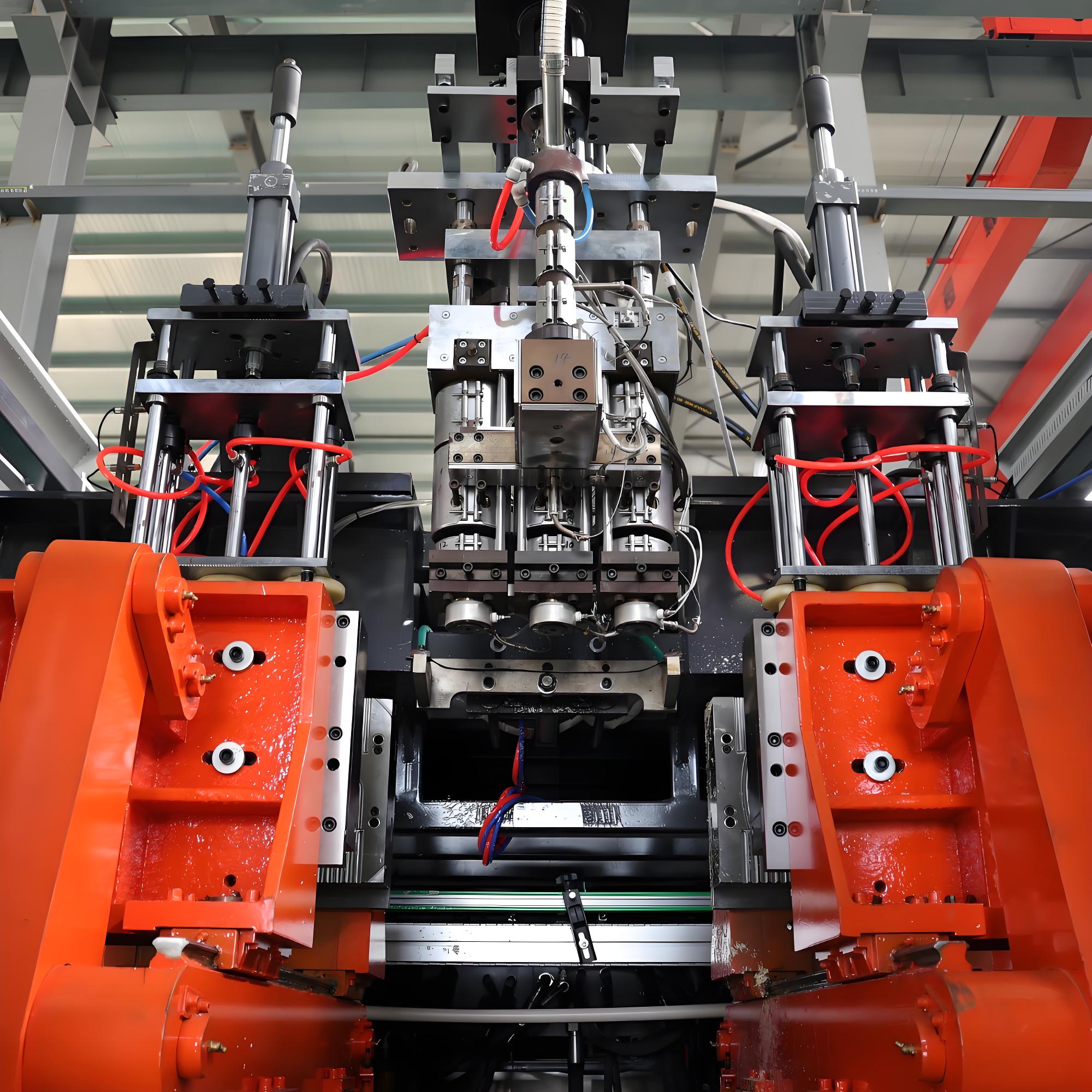
The die head serves as the critical interface where molten polymer transitions from flow to shape, defining the final quality of every Extrusion Blow Molding Machine output. For small bottles in the ABLB Series, continuous heads provide steady material flow, allowing precise control over parison drop and cycle times. In contrast, large containers within the ABLD Series require accumulator heads that store melt under pressure before extruding a thick parison rapidly to support heavy parts up to 1500L without sagging or distortion. Die gap selection is equally vital, as it determines initial wall thickness before air inflation stretches the material.
Parison programming utilizes axial and radial controls to vary wall thickness dynamically during extrusion. This ensures adequate polymer distribution at stress points like handles on jugs or corners of rectangular containers, while reducing weight in flat panel areas. Such precision minimizes resin waste and maintains structural integrity across complex geometries found in the 200ML to 20L range.
Multilayer heads introduce barrier properties by co extruding layers such as EVOH for oxygen protection in food packaging. These systems significantly increase machine complexity, requiring precise layer ratio control and dedicated melt channels. While single layer machines are standard, multilayer configurations add substantial value but also cost. An indicative premium for a multilayer head on a mid range line typically ranges from 15,000 to 40,000 US dollars, depending on the number of layers and supplier specifications. This investment must be weighed against material savings from thinner wall designs and extended shelf life benefits.
Automation, Take Out and Downstream Integration
Automation transforms an Extrusion Blow Molding Machine from a standalone unit into a synchronized production line, directly improving dimensional consistency while reducing manual labor costs. For small containers in the ABLB Series or Fully Electric series, automatic take out arms remove bottles within seconds of cooling, preventing deformation and ensuring uniform wall thickness across thousands of cycles. Semi automatic operation remains acceptable for low volume runs under ten thousand units per month, where initial capital expenditure is a primary constraint. However, full automation delivers a clear return on investment at higher volumes by eliminating operator variability. A typical integrated line including conveyors, automatic trimming, and leak testing systems requires an indicative budget of one hundred fifty thousand to three hundred thousand US dollars, though actual costs vary significantly based on specific facility requirements and local labor rates. Downstream integration is critical for packaging efficiency. Conveyors transport finished containers directly to filling or labeling stations, minimizing handling damage and floor space usage. For complex geometries like jerry cans in the ABLD Series, a dedicated deflash or handle trim station is often added immediately after demolding. This ensures sharp edges are removed before leak testing, preventing false rejects and protecting downstream machinery. The Fully Electric series offers precise servo control that synchronizes perfectly with automated take out systems, reducing cycle times by up to fifteen percent compared to hydraulic models. Proper selection of these auxiliary modules ensures the entire system operates as a cohesive unit rather than isolated machines, maximizing overall equipment effectiveness and long term profitability for high speed production environments.
Energy Use, Hydraulic and Fully Electric Drives
Energy consumption on an Extrusion Blow Molding Machine primarily stems from three subsystems: barrel heating, hydraulic power units, and cooling water circulation. Barrel heaters typically account for forty to sixty percent of total electrical demand, while hydraulics consume the remainder during clamping and parison extrusion. For small containers in the ABLB Series range, hydraulic systems often dominate idle energy use due to constant pump operation. In contrast, Fully Electric series machines replace hydraulic pumps with servo motors, eliminating standby losses and reducing fluid friction. This drive configuration also enhances cleanliness by removing oil leakage risks, a critical factor for food grade packaging applications.
Energy savings arise from several engineering features. Insulated heater bands reduce surface heat loss by up to twenty percent compared to bare elements. Variable displacement hydraulic pumps adjust flow to actual demand rather than running at full capacity, cutting motor load significantly during low pressure phases. Heat recovery systems can capture waste heat from exhaust air or cooling water for preheating incoming resin, further lowering net energy input.
Indicative energy savings range from fifteen to thirty percent when upgrading from older hydraulic models to modern electric drives, though actual results depend heavily on cycle time and material viscosity. For a mid sized production line running eight thousand hours annually, this translates to operating cost reductions between five thousand and fifteen thousand US dollars per year. These figures are estimates; precise calculations require site specific utility rates and machine configuration audits. Apollo’s ABLD Series for large volume containers benefits similarly from optimized hydraulic circuits, ensuring efficient energy use across the entire capability range from five milliliters to five thousand liters.
Plant Layout, Utilities and Installation
Proper site preparation is critical for successful Extrusion Blow Molding Machine deployment. Floor space must accommodate not just the footprint of ABLB Series or ABLD Series units but also peripheral equipment like resin dryers and conveyors. For small containers in the 200ML to 20L range, ensure at least fifteen square meters per line plus aisle space. Large drums up to 1500L require significantly more room. Ceiling height is equally vital; vertical clamping forces demand clearance for mold changes and overhead hoists. A minimum of four meters is typical for standard lines, while large capacity machines may need six meters or more.
Utilities must be sized generously. Compressed air requirements often exceed initial estimates due to pneumatic actuators and cooling circuits. Install a dedicated chiller capable of removing heat generated by the extruder screw and mold channels. Cooling water flow rates should match machine tonnage, typically requiring thirty to fifty liters per minute for mid range units. Electrical supply must support high power draw during startup and continuous operation. Plan three phase power with adequate amperage reserves to prevent voltage sag that affects motor performance.
Layout dictates workflow efficiency from resin intake to finished container ejection. Straight line flow reduces handling time and labor costs. Ensure clear access paths for maintenance personnel and mold change operations to minimize downtime. An indicative budget for utilities and installation ranges from twenty thousand to eighty thousand US dollars depending on scale and local infrastructure conditions. This estimate excludes major structural modifications or long distance utility runs which can substantially increase total project cost.
Wall Thickness, Neck Accuracy and Defect Control
Wall thickness control begins with parison programming and die gap adjustment. In an Extrusion Blow Molding Machine, precise parison drop timing ensures uniform material distribution across complex geometries. If the die gap is too wide for the resin viscosity, sagging occurs before mold closure, causing bottom thinning. Conversely, a narrow gap increases shear heating and can lead to melt fracture. Blow pressure typically ranges from 4 to 8 bar, forcing the parison against cold mold walls. Higher pressure improves detail reproduction but requires robust clamping force to prevent flash. Mold temperature must remain stable between 10 and 25 degrees Celsius for polyethylene to ensure proper heat extraction and dimensional stability.
Neck accuracy is critical for reliable capping and sealing integrity. Tolerances should stay within plus or minus 0.1 millimeters on thread pitch and outer diameter. Poor neck roundness leads to leakage in carbonated beverages or pharmaceutical containers. Common defects like thin corners often result from insufficient parison programming weight distribution. Correct this by adding material mass to corner zones via the controller interface. Flash usually indicates excessive blow pressure relative to clamping tonnage or worn mold seals. Weld lines appear where two flow fronts meet, often due to slow die closure speed. Reduce cycle time slightly or increase melt temperature to improve fusion strength. Sagging parisons require tighter programming curves and lower melt temperatures. For small volume applications under 20 liters, the ABLB Series offers precise servo driven control. Larger containers from 20 to 1500 liters benefit from the rigid platen structure of the ABLD Series. Budget expectations for a capable mid range unit generally fall between 80,000 and 150,000 US dollars, depending on automation level and auxiliary equipment requirements.
Cost and Price Analysis of Extrusion Blow Molding Machines
Capital expenditure for an Extrusion Blow Molding Machine varies significantly based on series, automation level, and material capability. For small containers ranging from 200ml to 20 liters, the ABLB Series typically falls within a budget of forty thousand to eighty thousand US dollars. These hydraulic machines offer robust performance for standard single layer applications. In contrast, large volume production for containers between twenty liters and fifteen hundred liters requires the ABLD Series, with indicative prices ranging from one hundred fifty thousand to four hundred fifty thousand US dollars due to larger clamping forces and complex screw designs.
For applications demanding precision and lower energy consumption, the Fully Electric series covering 200ml to 20 liters commands a premium, often costing between eighty thousand and one hundred sixty thousand US dollars. The higher initial investment is frequently offset by reduced electricity bills and faster cycle times. Multilayer configurations for barrier packaging can increase costs by thirty to fifty percent over standard models, pushing budgets above two hundred thousand US dollars depending on the number of coextruded layers.
Capital allocation primarily covers the extruder, clamping unit, control system, and auxiliary equipment like chillers. Operational economics depend heavily on throughput. A high speed electric machine might produce ten thousand bottles per hour, reducing labor cost per unit to fractions of a cent. Energy costs for hydraulic models can reach fifteen cents per kilowatt hour in some regions, whereas electric drives cut this by half. Scrap rates below two percent are critical for profitability. Payback periods often range from twelve to twenty four months for high volume lines. Actual prices depend on specific configuration, optional features like automatic neck orientation, and supplier negotiations. These figures serve as rough planning budgets rather than firm quotes.
Startup, Changeover and Routine Operation
Begin every production run on an Extrusion Blow Molding Machine by verifying resin lot numbers against the specification sheet to prevent contamination issues that cause downstream failures. Set barrel and die temperatures precisely, allowing adequate soak time for thermal uniformity before initiating extrusion. Establish parison programming and blow pressure parameters based on container volume, ensuring clamping force matches mold requirements. Measure first articles thoroughly using calibrated gauges to confirm wall thickness distribution and neck finish dimensions before releasing the batch. Avoid common startup errors such as cold purging which damages screw components or selecting incorrect die gaps that result in poor material flow and excessive trim waste. For ABLB Series machines handling 200ML to 20L containers, precise temperature control is critical during initial heating cycles. Similarly, when operating ABLD Series units for larger volumes up to 1500L, ensure hydraulic systems reach stable operating pressures before full cycle initiation. Maintain detailed logs of set points, material batches, and dimensional results for every changeover event. This disciplined record keeping enables rapid replication of successful parameters for repeat orders, significantly reducing trial and error time. Proper changeover procedures directly minimize off spec material generation, protecting profit margins. Consider that a typical small to mid sized line setup may involve initial tooling and integration costs ranging from 50,000 to 150,000 US dollars depending on automation levels, though these figures vary widely by region and configuration. Consistent adherence to startup protocols ensures stable output quality across the entire capability range from 5ML to 5000L, supporting reliable production schedules and customer satisfaction.
Maintenance and Preventing Downtime
A disciplined preventive maintenance plan protects the Extrusion Blow Molding Machine and sustains production efficiency across the ABLB Series for small containers and the ABLD Series for large industrial drums. Inspect heater bands monthly to ensure uniform temperature distribution, preventing resin degradation that ruins costly batches. Clean die heads every shift or at least weekly depending on material cleanliness to avoid flow marks and blockages. For hydraulic systems in standard models, check fluid levels and filter condition quarterly, while fully electric series units require minimal drive maintenance but demand regular encoder calibration. Verify air system pressure stability daily since inconsistent blowing causes thin walls and rejects. Cool water circuits must be flushed every six months to remove scale that reduces heat transfer efficiency by up to twenty percent. Mold alignment should be checked after every changeover using dial indicators to prevent flash and uneven wall thickness. Scheduled service costs roughly five hundred to two thousand dollars per machine annually, a fraction of emergency repair bills which can exceed ten thousand dollars for major component failures. Stock critical spares like heater bands, seals, and hydraulic hoses on site. This inventory strategy minimizes downtime from hours to minutes, ensuring that the capability range from 5ML to 5000L remains reliably available for demanding packaging schedules without unexpected interruptions.
How Apollo Supports Machine Selection and Projects
Apollo operates as a Chinese manufacturer of extrusion blow molding machines with a total capability range spanning 5ML to 5000L. This breadth allows engineers to match specific container volumes to the appropriate machine series without compromise. For small packaging needs between 200ML and 20L, buyers typically select the ABLB Series or the Fully Electric series. The latter offers precise control for high speed production of standard bottles. When applications demand larger capacities ranging from 20L to 1500L, the ABLD Series provides the necessary clamping force and extrusion head design to handle heavy wall containers reliably.
The selection process begins with a technical consultation where Apollo engineers analyze resin properties and target output rates. This dialogue ensures the chosen machine aligns with cycle time requirements and material viscosity. Once the series is confirmed, the team plans the auxiliary line layout, including chiller capacity and air compressor sizing. Installation support covers on site commissioning to verify that the extrusion blow molding machine achieves stable parison formation and consistent wall thickness distribution.
Budget planning requires realistic expectations. A single unit for mid range volumes often falls between 50000 and 150000 US dollars, though this indicative range varies significantly based on automation level and peripheral integration. After sales support includes spare parts logistics and remote troubleshooting to minimize downtime. By focusing on these practical engineering steps, Apollo helps manufacturers avoid costly mismatches between machine size and product requirements, ensuring long term operational stability for their plastic packaging lines.
Sonuç
Selecting the right Extrusion Blow Molding Machine requires aligning container volume, resin properties, and output targets with specific machine capabilities. The ABLB Series handles 200ML to 20L applications efficiently, while the ABLD Series manages larger containers from 20L up to 1500L. For high precision needs within the 200ML to 20L range, Fully Electric series offer superior energy efficiency and control. Apollo supports capabilities from 5ML to 5000L across these platforms. Critical factors include die head design for wall thickness uniformity, cooling system capacity to minimize cycle times, and energy consumption profiles that impact long term operational costs. Initial capital investment varies significantly based on automation levels, with typical budgets ranging from fifty thousand to several hundred thousand US dollars depending on configuration complexity. Proper matching of these elements ensures stable production and profitability. Apollo remains committed to providing comprehensive support for customers selecting extrusion blow molding machines tailored to their specific manufacturing requirements.