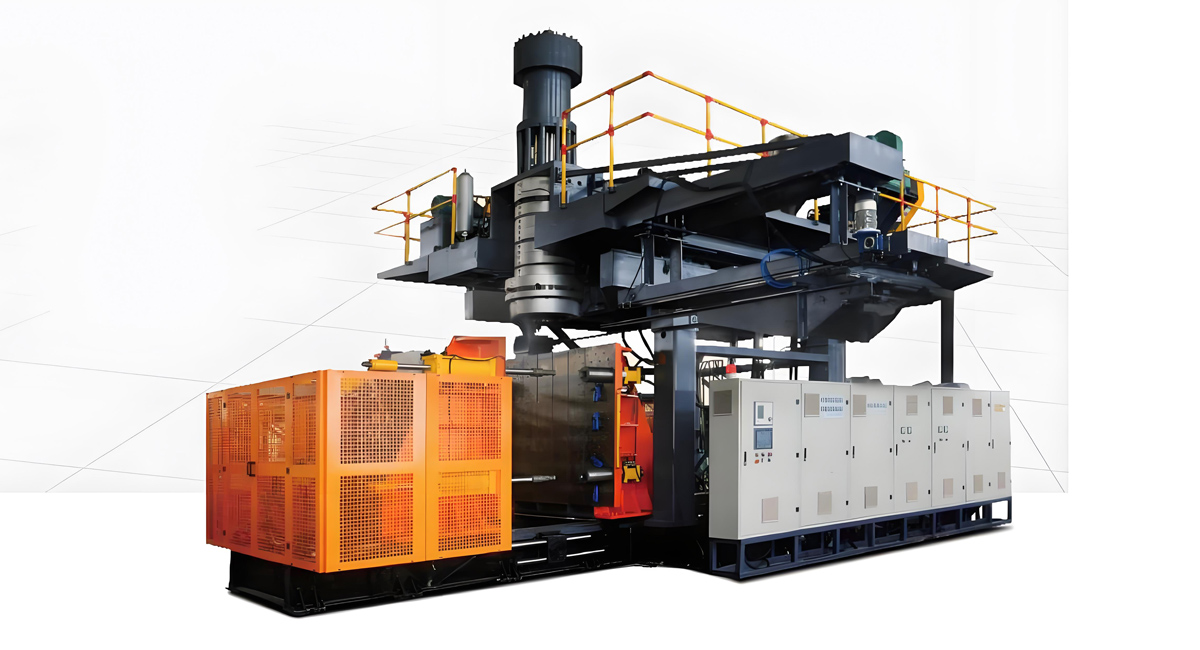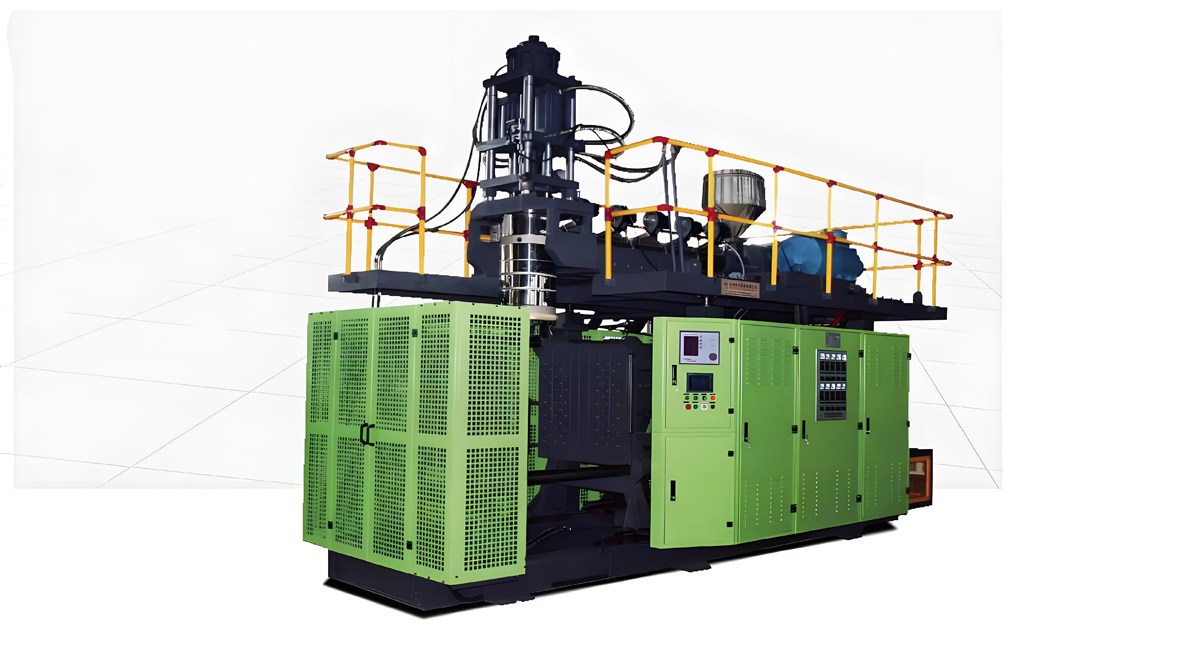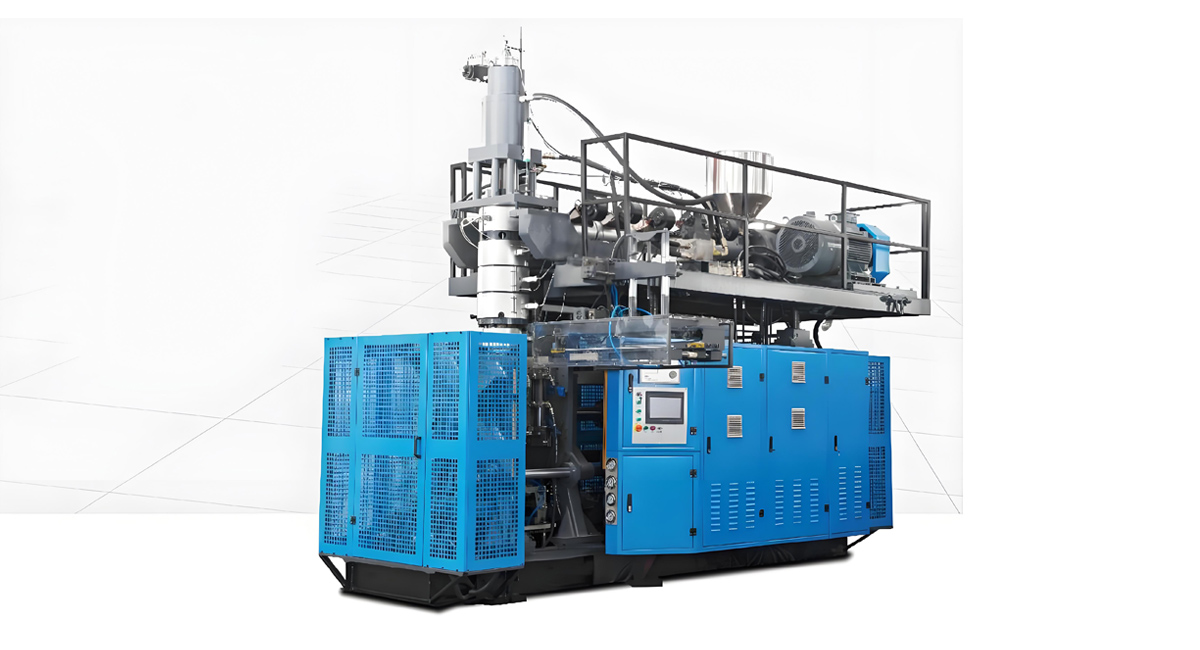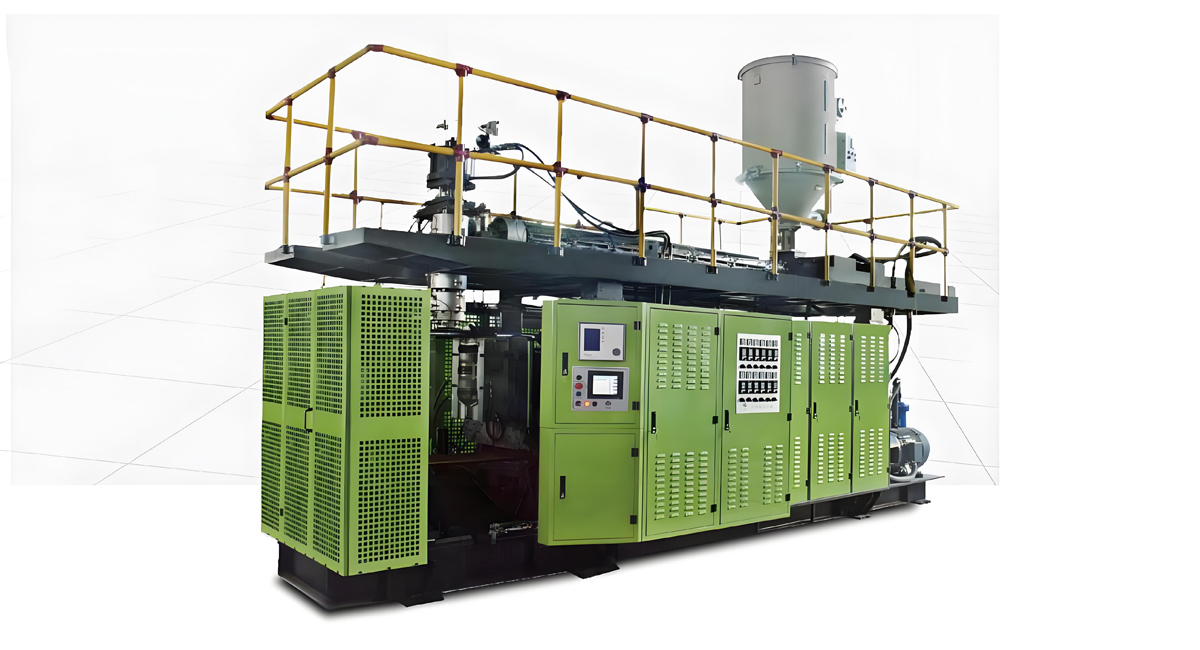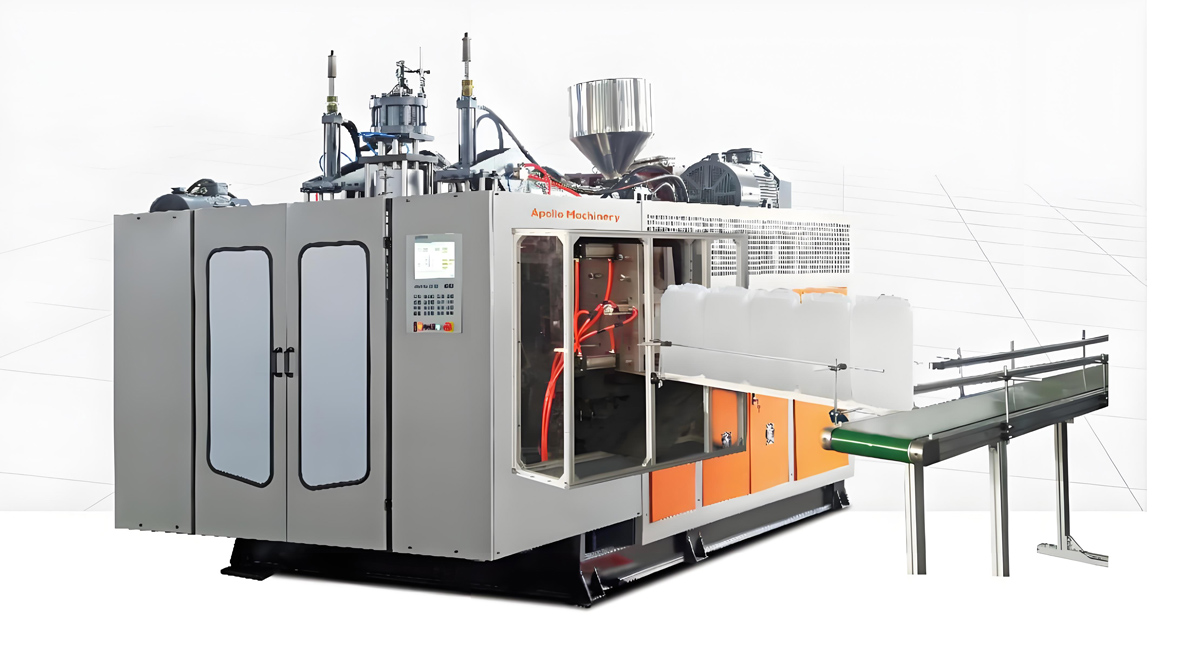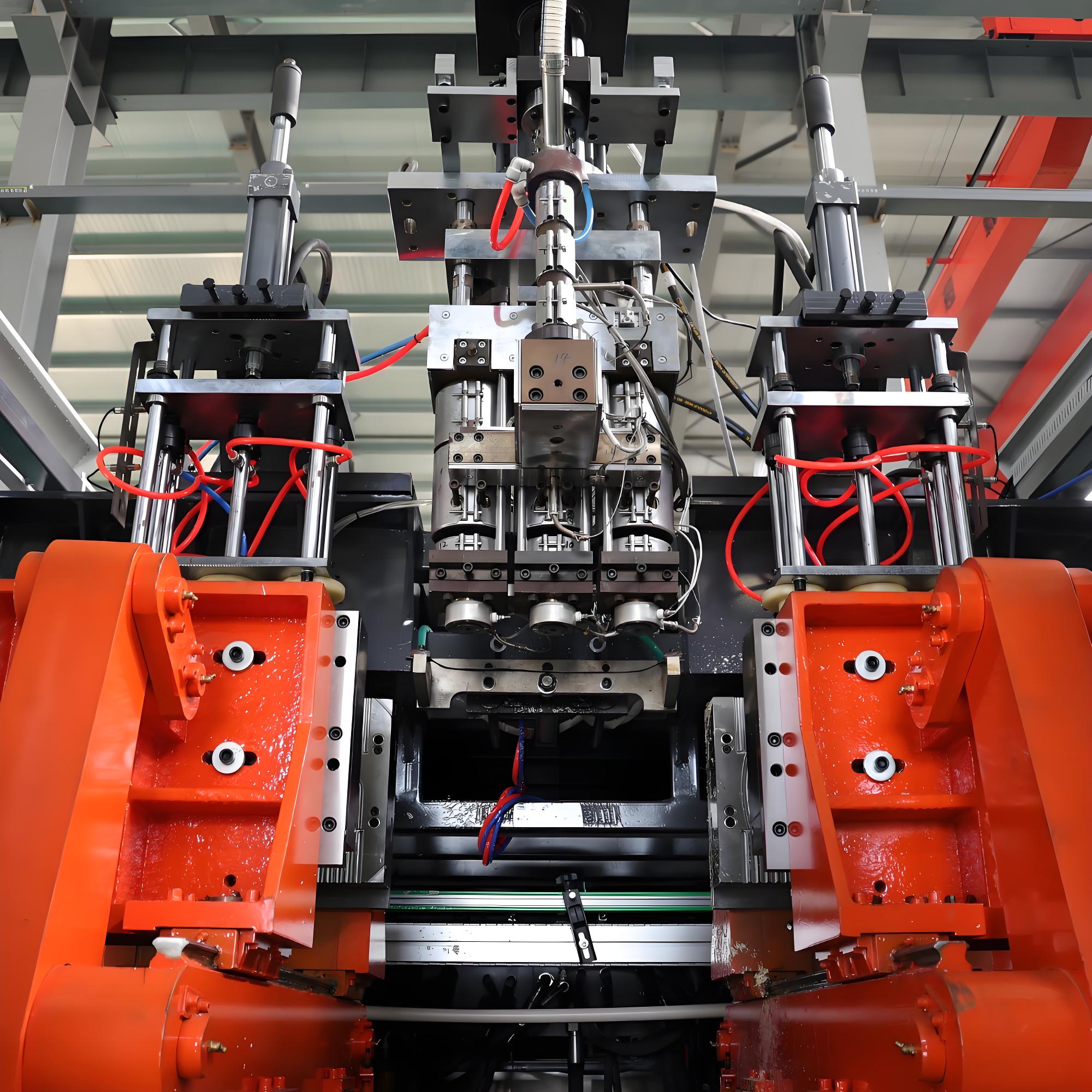

When most buyers think about an Máy gia công đùn phun, they picture bottles, jerrycans, and chemical drums. Those markets are mature and crowded. A faster-growing and less contested opportunity sits under the hood and beneath the floor of the vehicle itself: the hollow plastic parts that keep a car cool, light, and increasingly electric. As internal-combustion engines give way to battery and fuel-cell powertrains, the bill of materials for blow-molded automotive components is quietly expanding. This guide explains where an Máy gia công đùn phun fits in new energy vehicle production, what those parts are, how big the markets are, and what machine configuration actually delivers qualified automotive output.
Why Blow Molding Fits Automotive Hollow Parts
Automotive components are judged on three competing axes: weight, durability, and cost. Blow molding is uniquely positioned on all three for hollow, thin-walled geometries. An Máy gia công đùn phun forms a parison, captures it in a mold, and inflates it against the cavity wall in a single continuous cycle. Compared with stamping and welding steel tanks, or injection molding thick-walled housings, blow molding produces a seamless, stress-free hollow shell with minimal material and no secondary welding. With global vehicle production running above eighty million units a year, even a small per-vehicle gain in blow-molded content compounds into an enormous qualified-volume opportunity for the suppliers who can meet automotive standards.
For vehicle programs, that translates into four concrete advantages. First, weight: a blow-molded polypropylene reservoir can weigh 40 to 60 percent less than the stamped steel part it replaces, directly improving fuel economy or electric driving range. Second, corrosion resistance: plastic does not rust, which matters for coolant, washer fluid, and urea tanks exposed to aggressive chemistries. Third, design freedom: complex multi-chamber shapes, integrated mounting bosses, and sensor pockets are molded in one shot rather than assembled from many stampings. Fourth, cost at volume: once the mold is amortized, the per-part conversion cost is dominated by resin, which is far cheaper than fabricated metal. These properties are exactly why blow molding has moved from underbody fuel tanks into the broader thermal and fluid management architecture of modern vehicles.
The cost comparison is worth making explicit. A stamped and welded steel tank carries tooling that is cheap per program but assembly labor and corrosion protection that accumulate over the product life, plus the mass penalty of steel. An injection-molded thick-walled housing avoids welding but uses far more material than a hollow blow-molded shell of the same function. Blow molding lands between them: modest tooling, low conversion labor, minimal material, and no secondary joining for the hollow core. The trade-off is tolerances, because blow-molded parts are not as dimensionally precise as injection-molded ones, so designers reserve blow molding for parts where a few tenths of a millimeter of variation at a non-critical feature is acceptable. For the vast majority of automotive fluid and air paths, that trade is an easy win.
EV Thermal Management Reservoirs and Coolant Tanks
The single biggest shift for blow molders is the electric powertrain. A battery electric vehicle has no engine to overheat, but it has more heat management demand than a comparable combustion car because the battery, power electronics, and motor each run inside narrow temperature windows. That creates a new family of sealed, pressurized reservoirs engineered for dielectric coolants and aggressive thermal cycling. An Máy gia công đùn phun is the natural producer of these expansion and surge tanks.
Market scale confirms the trend. The global automotive fluid reservoir market was valued at roughly USD 4.8 billion in 2026 and is projected to reach about USD 7.91 billion by 2035, a 5.7 percent compound annual growth rate. Electric vehicle platforms are the accelerant: battery thermal management loops now demand reservoirs compatible with non-conductive fluids and pressure profiles that legacy combustion designs cannot meet. In the European Union alone, the coolant reservoir tank market is estimated at EUR 1.2 to 1.6 billion in 2026, with battery thermal management growing from roughly 6 to 8 percent of demand in 2026 to an estimated 18 to 25 percent by 2035. Sensor-integrated and dual-chamber tanks, while only a single-digit share of volume today, are the fastest-growing slice at 12 to 18 percent annually.
What this means for the machine buyer is straightforward. EV reservoirs need consistent wall thickness, clean interiors free of contamination, and reliable weld lines at the parting plane because the tank is pressurized to 1.2 to 2.0 bar. Leading thermal management suppliers such as TI Fluid Systems, Continental, and MANN plus HUMMEL already run captive blow-molding capacity, and German OEM platforms from Volkswagen Group to BMW are consolidating coolant circuits around centralized multi-chamber modules. A capable Máy gia công đùn phun with precise parison control and clean material handling is what lets tier suppliers qualify for those programs.
The engineering detail that surprises newcomers is how unforgiving the coolant chemistry is. EV thermal loops increasingly use dielectric or low-conductivity coolants so that a leak cannot create a short path through the battery pack, and those fluids are more aggressive to some polymers than traditional ethylene glycol. The reservoir must therefore be qualified against fluid compatibility, not just pressure. Thermal cycling is the other stress: a pack can swing from sub-zero charging to forty-degree-plus operation within minutes, and the tank must hold its shape and seal without creep. A molder that validates wall thickness distribution under simulated cycle profiles, rather than only at room temperature, is far more likely to pass OEM durability testing on the first attempt.
Blow Molded Air Ducts for EVs and Hybrids
The second high-growth automotive application is air ducts. Underhood and underfloor ducts route HVAC air, engine intake, and increasingly battery cooling air through tight, three-dimensional paths. Traditional injection molding struggles with long, hollow, non-planar geometries, which is why manufacturers have adopted suction blow molding and three-dimensional blow molding to make complex ducts that fit around batteries and powertrains.
The worldwide blow molded air duct market reached about USD 1.49 billion in 2026 and is forecast to approach USD 1.99 billion by 2032. By material, polypropylene leads at roughly 49 percent, high-density polyethylene at about 33 percent, and thermoplastic elastomers at roughly 18 percent. By application in 2025, HVAC ducting accounted for about USD 784 million, engine air intake about USD 421 million, and battery cooling circuits about USD 180 million. That last segment is the one to watch: as EV production scales, battery cooling ducts grow faster than the overall market because every battery pack needs distributed airflow or coolant routing. Blow-molded ducts cut vehicle weight versus injection-molded alternatives, which helps extend battery range, a direct selling point for EV platforms.
For production, ducts demand a different machine setup than bottles. They are often large, thin, and asymmetric, so parison programming and uniform wall distribution matter more than raw cycle speed. Suction blow molding, where a vacuum draws the parison into the mold before inflation, is common for long ducts. A flexible Máy gia công đùn phun that supports both continuous and intermittent extrusion, with programmable die heads, is the right platform for a supplier serving both intake and battery-cooling duct programs.
Washer Fluid and Auxiliary Reservoirs
Less glamorous but high-volume are washer fluid reservoirs and small auxiliary tanks. Nearly every vehicle carries a windshield washer tank, and many now add secondary reservoirs for brake fluid, urea solution for diesel aftertreatment, and refrigerant-containing modules for heat-pump cabins. These parts are ideal entry products for a molder moving into automotive because they are simpler than pressurized coolant tanks yet still require the cleanliness and consistency that qualify a supplier for the broader program.
The aftermarket sustains steady demand as well. Coolant and washer reservoirs are common failure items after seven to ten years of service, and replacement incidence runs into the millions of units per year in mature markets. A molder with an Máy gia công đùn phun producing both OEM and aftermarket versions of the same part can smooth demand across the vehicle lifecycle and build a durable, lower-risk business than chasing only new-platform awards.
Type IV Hydrogen Tank Liners: The High-Value Frontier
The most technically demanding and fastest-growing automotive blow molding application is the liner for Type IV hydrogen storage tanks. A Type IV tank is a plastic liner, usually high-density polyethylene, fully overwrapped with carbon-fiber composite, capable of storing hydrogen at pressures up to 700 bar. The liner must be leak-tight, chemically compatible with hydrogen, and uniform enough that the composite wrap carries the load without stress concentrations. According to the U.S. Department of Energy, Type IV composite tanks are the preferred standard for onboard hydrogen storage in fuel cell vehicles precisely because the polymer liner eliminates the corrosion and hydrogen-embrittlement risks of metal tanks.
Market momentum is steep. The global Type IV hydrogen storage tank market was about USD 1.7 billion in 2026 and is expected to reach roughly USD 4.1 billion by 2034, a compound annual growth rate near 11.5 percent. Some regional analyses project even faster expansion for vehicle-specific bottles, citing compound rates above 35 percent through 2030 as fuel-cell truck and bus deployment accelerates. China alone accounts for an estimated 35 to 40 percent of global automotive high-pressure cylinder demand by volume, and Type IV cylinders are projected to capture 20 to 30 percent of new high-pressure cylinder demand by 2030, up from roughly 10 to 15 percent in 2025. A single heavy-duty hydrogen truck requires 8 to 10 Type IV bottles totaling 40 to 50 kilograms of storage capacity, an order of magnitude more content per vehicle than a passenger car fuel-cell model.
Producing a qualified liner is where an Máy gia công đùn phun earns its keep. Liners are typically made on multi-layer or co-extrusion heads that place a virgin inner layer against the gas, a recycled or structural middle layer, and sometimes a barrier layer, all in one parison. Wall uniformity is critical because the composite wrap assumes a smooth, dimensionally stable substrate. Contamination, weld-line weakness, or out-of-spec wall thickness can scrap an otherwise expensive part. Leading liner producers and tank integrators including Quantum Fuel Systems, Luxfer, Hexagon, NPROXX, Iljin, and Plastic Omnium have invested heavily in controlled clean molding cells for exactly this reason.
Two technical realities shape liner production. First, fatigue: a passenger-car liner sees roughly five thousand to eleven thousand pressurization cycles over a certified fifteen to twenty year service life, and a heavy-duty truck liner sees far more, so the blow-molded substrate must be free of stress risers that would initiate cracks under the carbon wrap. Second, permeation: hydrogen is the smallest molecule and will migrate through any micro-path, so the inner layer must be dense and continuous, and the parting-line weld must be as strong as the surrounding wall. This is why Type IV liners are almost always high-density polyethylene rather than recycled blends, and why the Máy gia công đùn phun running them is held to tighter process windows than a bottle line. The contrast with Type III aluminum-lined tanks is instructive: Type III trades some weight saving for simpler liner production, while Type IV pushes the liner difficulty upstream to the blow molder in exchange for the lightest possible vessel.
Material Selection: PP, HDPE, and Barrier Layers
Material choice follows function. Polypropylene dominates underhood and fluid reservoirs because it tolerates heat, resists many coolants, and is economical; it is the leading resin in automotive blow molding at close to half of duct volume. High-density polyethylene remains the workhorse for washer tanks, larger reservoirs, and hydrogen liners because of its toughness, low permeability, and weldability. Thermoplastic elastomers appear where a flexible or soft-touch section is needed, such as duct sections that must absorb vibration.
For fuel and hydrogen systems, barrier performance decides the layer stack. A blow-molded fuel tank or hydrogen liner often uses a multilayer construction with an inner virgin layer, a structural layer that may include recycled content, and a thin functional barrier. The Máy gia công đùn phun must therefore support multi-layer die heads and tight layer-ratio control, because a barrier that is too thin leaks and one that is too thick wastes expensive resin. Specifying the right material system up front is cheaper than re-qualifying a part after a program launch.
Machine Tùy chỉnh for Automotive Parts
Moving from consumer packaging to automotive grade changes the machine specification. Four capabilities separate a qualified automotive cell from a general-purpose bottle line. Programmable parison control is first: hydraulic or servo-driven die profiles let the operator thicken the parison where the part needs strength and thin it elsewhere, directly improving material efficiency and burst performance. Multi-layer co-extrusion heads are second, required for barrier tanks and hydrogen liners. Clean material handling is third, because automotive interiors and liners cannot tolerate dust or regrind cross-contamination; dedicated feed systems and filtered air are standard. Automation and in-line inspection are fourth, because automotive programs demand traceability, leak testing, and statistical process control rather than spot checks.
An Máy gia công đùn phun aimed at this segment should also support both continuous and intermittent extrusion, since ducts and liners favor intermittent or suction modes while reservoirs and washer tanks favor faster continuous cycles. Servo-driven clamp and blow units reduce energy and improve repeatability, which matters when a tier supplier must hold capability across multi-year production runs. Quick mold change reduces changeover loss when a cell serves several part numbers for one platform.
Quality, Validation, and Standards
Automotive qualification is the real barrier to entry, not the molding itself. Reservoirs and tanks must pass pressure-cycle, burst, vibration, and permeation testing, and electronic-integrated parts fall under functional safety expectations such as ISO 26262 for battery thermal management sensing. Hydrogen liners answer to a stack of regulations including ECE R110 for compressed gas systems, ISO 19881 for gaseous hydrogen tanks, SAE J2579 for fuel-cell vehicle storage, and regional standards such as GB/T 42612 in China. New tank designs typically require 12 to 18 months of validation and type approval before series production, which is why molders partner early with OEM and tier-1 engineering teams.
Practically, this means the Máy gia công đùn phun should be embedded in a quality system that records resin lot, cycle parameters, leak-test results, and serial traceability for every part. In-line leak testing, vision inspection of weld lines, and automated part handling reduce human variation. Suppliers that can present a validated process package win programs even when their unit price is not the lowest, because the cost of a field failure in a pressurized or hydrogen system dwarfs any saving at the press.
Process Tuning and Defect Prevention for Automotive Parts
Automotive grade is won or lost at the press, and a handful of defects account for most scrap. Flash, the thin fin at the parting line, is the most visible; on large asymmetric automotive parts it is controlled through clamp force, parison temperature, and blow timing rather than by trimming after the fact, because post-trim can leave a stress concentrator. Wall thickness variation is the silent killer: a thin spot becomes the burst or fatigue origin, so parison programming with die-swell and sag compensation is standard practice, especially on long ducts where the parison stretches under its own weight. Weak weld lines at the pinch-off are addressed with blow rate, pre-blow, mold venting, and melt temperature, because the sealed plane of a pressurized tank must be as strong as the surrounding wall.
Contamination is the defect that has no process fix once it is inside the melt. Automotive interiors and hydrogen liners cannot tolerate dust, moisture, or cross-contaminated regrind, so qualified cells use dedicated feed systems, dried resin where specified, and segregated reclaim. Sink marks and short shots on thick bosses are managed with cooling balance and local wall adjustment. The disciplined countermeasure across all of these is statistical process control: first-article inspection, capability studies on wall thickness and burst pressure, and in-line leak testing that records a result for every part. An Máy gia công đùn phun that exports cycle parameters and test data to a manufacturing execution system is what lets a supplier demonstrate the process capability automotive customers require before they release a program to production.
Cost Perspective in US Dollars
Buyers reasonably want numbers. In European OEM programs, a standard pressurized coolant reservoir runs about EUR 8 to 18 per unit under annual contracts with tooling amortized over three to five years, which is roughly USD 9 to 19 at current exchange rates. Service-channel list prices run 40 to 80 percent higher, about EUR 15 to 30 or USD 16 to 32, reflecting lower volumes and aftermarket margins. Sensor-integrated and multi-chamber EV tanks can cost two and a half to four times a standard polyethylene overflow tank because of added validation and embedded electronics. On the liner side, the liner is only part of a Type IV tank cost; the carbon-fiber wrap dominates, but a well-controlled blow-molded liner reduces scrap and rework that would otherwise erode margin on an already expensive component.
From the machine-owner perspective, the economics favor higher utilization. A single automotive cell producing several reservoir and duct part numbers across one platform can amortize tooling quickly, and material savings from precise parison control compound over millions of cycles. The caution is tooling lead time and validation cost, which can exceed standard reservoir programs when sensor integration is involved. Budgeting for qualification, not just the press, is the disciplined way to enter this segment.
Sustainability and End-of-Life Recovery
Regulation pushes automotive plastics toward recoverability. In the European Union the End-of-Life Vehicles directive sets reuse and recovery targets that cascade down to component design, and OEMs increasingly specify mono-material, easily sorted parts. Blow-molded polypropylene and polyethylene reservoirs score well here because they are straightforward to separate and remelt compared with multi-material bonded assemblies. Production scrap, the flash and reject parts generated at the press, is already recycled in-house as process-induced regrind, and many programs now include a defined percentage of post-industrial recycled content in non-safety layers.
The harder case is the hydrogen liner and its carbon-fiber wrap. The composite shell is difficult to mechanically recycle today, and responsible end-of-life handling relies on energy recovery or emerging pyrolysis and chemical-recycling routes that recover the fiber. This is an active area of supplier investment because recyclability is becoming a purchase criterion for public hydrogen programs. The offsetting sustainability story is weight: every kilogram removed from a vehicle reduces lifetime emissions, and a blow-molded plastic tank or duct avoids the embodied carbon and mass of the steel part it replaces. For a converter, the pragmatic path is to maximize in-house regrind on the blow-molding side while tracking the maturation of composite recycling on the liner side, so the Máy gia công đùn phun contributes to the circular story where it already can.
Market Outlook Through 2035
The combined picture is a structurally growing demand pool for blow-molded automotive parts that is less cyclical than consumer packaging and more defensible than commodity bottles. The automobile blow mold market itself stood near USD 3.24 billion in 2025, about USD 3.55 billion in 2026, and is projected to reach roughly USD 4.82 billion by 2032 at a 5.85 percent compound annual growth rate, with Asia Pacific capturing over 40 percent of revenue. Layered on top are the fluid reservoir market at USD 4.8 billion in 2026 heading to USD 7.91 billion by 2035, the vehicle air duct market at USD 1.49 billion in 2026 heading to USD 1.99 billion by 2032, and the Type IV hydrogen tank market at USD 1.7 billion in 2026 heading to USD 4.1 billion by 2034. Even taking conservative compound rates, the blow-molded content per vehicle is rising as electrification multiplies cooling loops and hydrogen adds high-value liners.
The regional center of gravity is Asia Pacific, led by China, Japan, and South Korea, where vertically integrated supply chains and dense domestic vehicle output concentrate capacity. Europe follows on the strength of premium electrified platforms and strict efficiency rules, and North America grows with clean-energy and hydrogen infrastructure investment. For a molder deciding where to deploy an Máy gia công đùn phun, the automotive segment offers a rare combination of volume, value growth, and qualification moats that protect margin once a program is won.
How OEMs Select Blow Molding Suppliers
Landing an automotive program is less about the lowest machine quote and more about demonstrated system capability. The baseline qualification is a recognized automotive quality management system, typically IATF 16949, which governs how a supplier controls variation, manages suppliers, and reacts to non-conformance. Beyond the certificate, OEMs and tier-1 integrators evaluate whether the Máy gia công đùn phun cell can run multi-cavity or multi-layer, whether it supports automated leak testing and traceability, and whether the supplier can hold capability across a multi-year production run rather than only at launch.
Geography and logistics weigh heavily. Just-in-sequence delivery rewards suppliers located near the assembly plant or within a favorable trade zone, and tariff and logistics volatility have pushed OEMs toward regional near-sourcing, which benefits molders in the major vehicle-producing regions. Financial resilience and spare capacity matter because automotive volumes swing with the model cycle, and a supplier that cannot absorb a ramp or survive a downturn is a program risk. The suppliers that win consistently practice early supplier involvement, engaging OEM engineering during the prototype stage so the part is designed for manufacturability before tooling is cut. A transparent cost model that separates resin, conversion, tooling, and qualification also builds the trust needed for long-term awards. For a molder, the message is clear: invest in the quality system and engineering collaboration first, and the press utilization follows.
Getting Started With Automotive-Grade Production
For a converter moving from packaging into automotive, the prudent path is staged. Start with washer and auxiliary reservoirs to build clean-room discipline and prove process capability. Add EV coolant tanks once parison control and leak testing are validated. Move into ducts with intermittent or suction blow molding for asymmetric geometries. Reserve hydrogen liners for last, because they demand multi-layer co-extrusion, clean cells, and the longest validation timelines. At each stage, the same Máy gia công đùn phun platform, upgraded with programmable heads and automation, can carry the business upward rather than requiring a wholesale reinvestment.
Suppliers should also plan for certification early. Engaging OEM and tier-1 engineering during prototype stage, documenting the process, and investing in in-line inspection shorten the 12 to 18 month qualification window that otherwise gates series production. The molders who build automotive competence now will own the lower-risk, higher-value position as vehicle platforms electrify and hydrogen mobility scales through the next decade.
Kết luận
The Máy gia công đùn phun is no longer only a packaging tool. In new energy vehicles it produces the cooling reservoirs that keep batteries alive, the ducts that route air and coolant through tight spaces, and the liners at the heart of hydrogen storage. These applications pay better and grow faster than commodity bottles, and they reward suppliers who invest in parison control, multi-layer co-extrusion, clean molding, and validated quality systems. With automotive blow-molded content expanding across EV thermal management and hydrogen storage, the converters who build this competence today will be the ones supplying the vehicles of the next decade. For equipment buyers evaluating a platform, the practical checklist is short but non-negotiable. Confirm the machine supports programmable parison control with enough profile points to shape long or asymmetric parts. Confirm it can be configured with a multi-layer co-extrusion head if fuel or hydrogen liners are in scope, even if only at a later stage. Confirm the supplier delivers clean material handling and in-line leak testing as part of the cell, not as a retrofit after a failed audit. Confirm the control system logs cycle and test data for traceability, because automotive customers will ask for it. And confirm the service organization can support a three-shift rhythm, since downtime on a just-in-sequence program is measured in stopped assembly lines rather than idle machines. A molder that buys against this checklist, rather than the lowest headline price, positions itself for the programs that actually pay. The technology is ready; the markets are moving; the only variable left is execution.