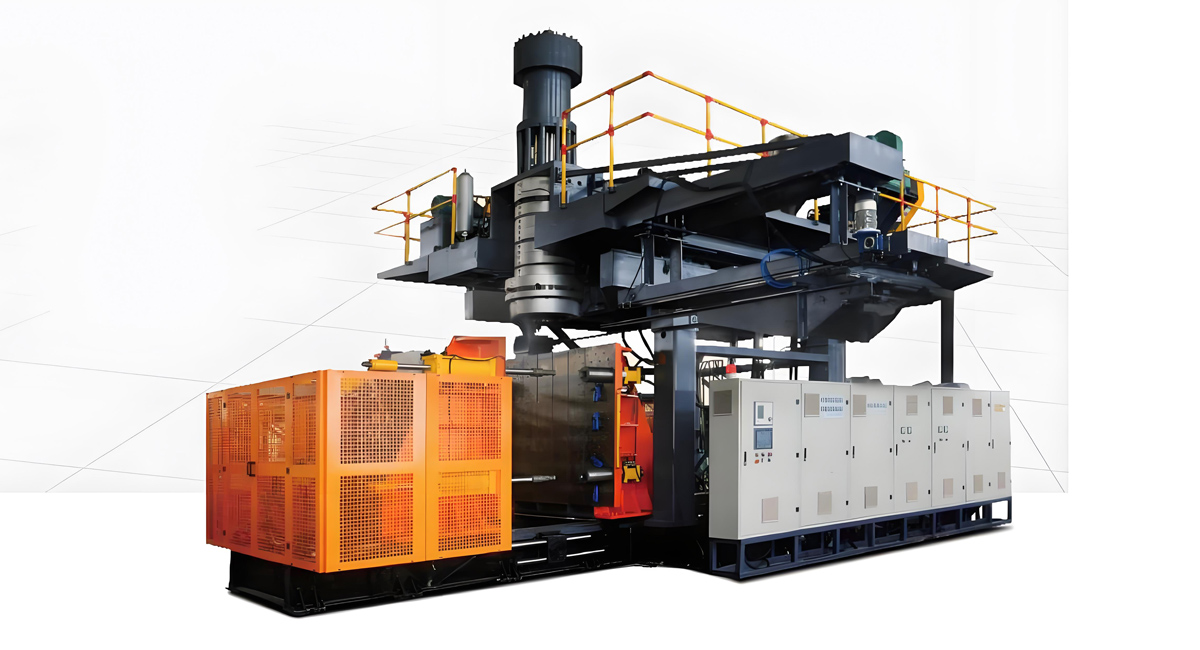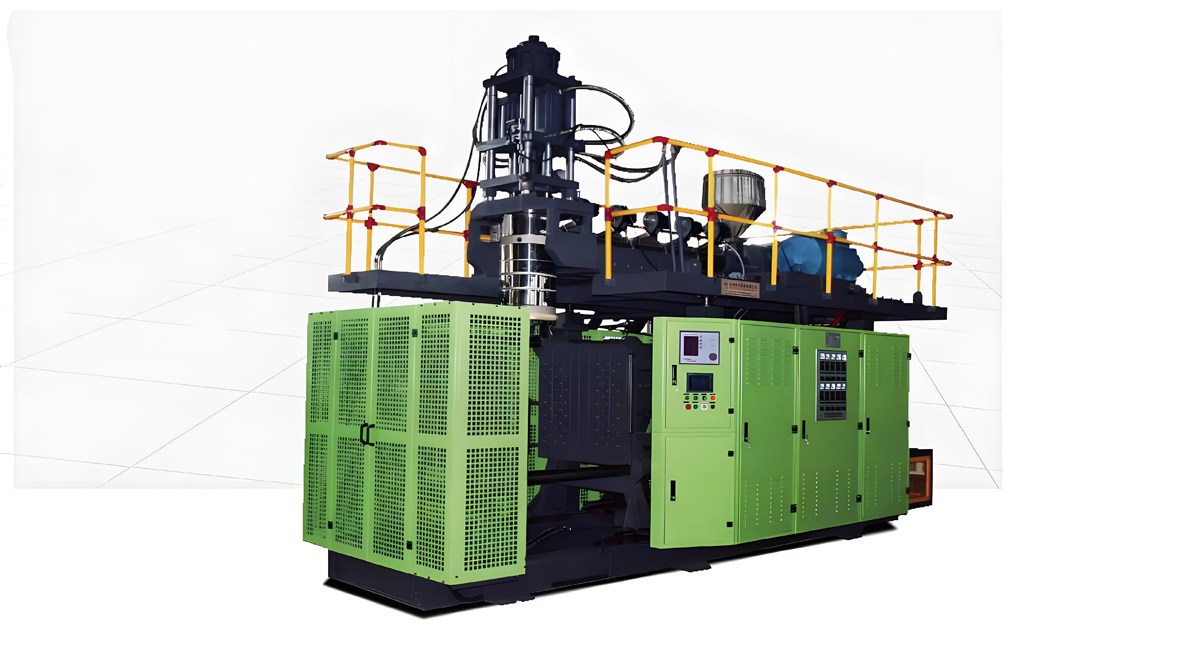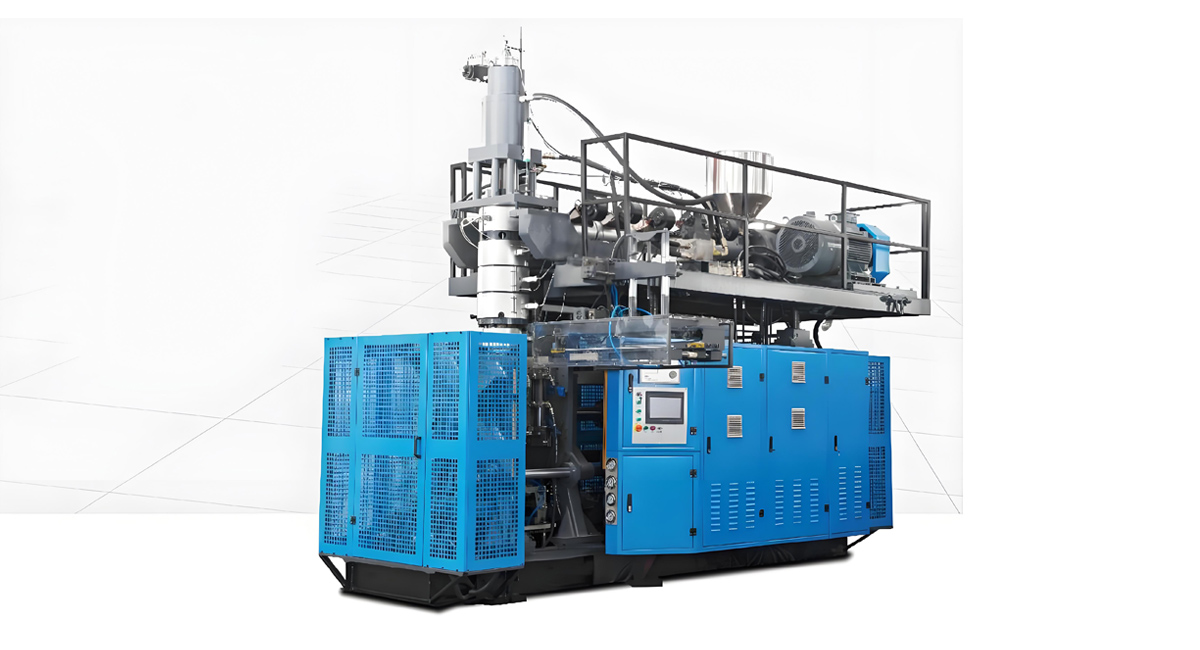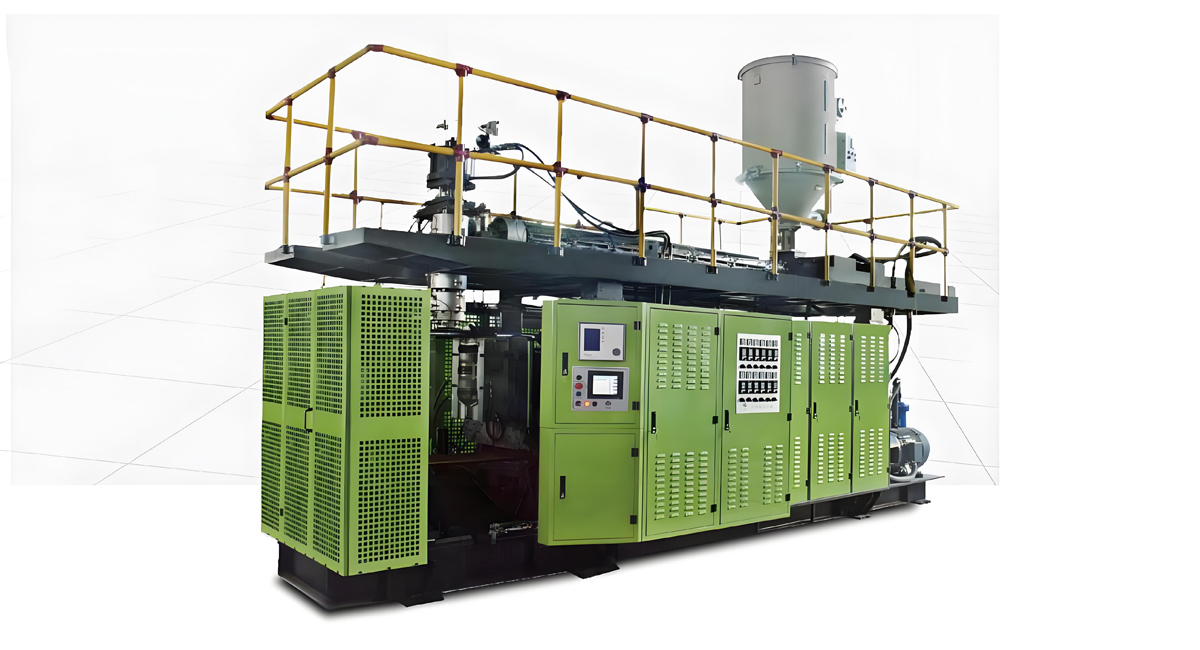

Giới thiệu:
Modern packaging demands require containers that protect sensitive contents from oxygen, carbon dioxide, light, and moisture while maintaining structural integrity and consumer appeal. Single layer polyethylene or polypropylene bottles often fail these stringent requirements because their inherent permeability allows gas transmission that degrades flavor, color, and shelf life in beverages, pharmaceuticals, and agrochemical products. To overcome these limitations, manufacturers increasingly rely on multilayer extrusion blow molding to create composite structures that combine the mechanical strength of common polyolefins with the superior barrier properties of specialized resins. This approach allows for precise control over layer thickness and composition, enabling customized solutions that balance performance with material cost efficiency.
The core principle involves coextruding multiple polymer melts into a single parison before it is inflated into the final container shape. Each layer serves a distinct function: an inner layer provides chemical resistance and product compatibility, a central barrier layer blocks gas transmission, and outer layers offer structural support and printability. This layered architecture is essential for extending shelf life in high value markets where even minor oxygen ingress can lead to significant product loss or safety concerns.
The selection of specific barrier materials depends heavily on the target application and required permeability levels. The following table outlines common barrier resins used in multilayer structures and their typical end uses.
| Barrier Resin | Primary Function | Typical Application | Shelf Life Extension |
|---|---|---|---|
| Ethylene Vinyl Alcohol (EVOH) | Oxygen barrier | Fruit juices, beer, dairy | 3 to 6 months |
| Polyamide (PA/ Nylon) | Oxygen and aroma barrier | Hot fill beverages, sauces | 2 to 4 months |
| Polyethylene Terephthalate (PET) | Structural and gas barrier | Carbonated soft drinks | 6 to 12 months |
| Aluminum foil laminate | Absolute light and gas barrier | Pharmaceuticals, vitamins | 12 to 24 months |
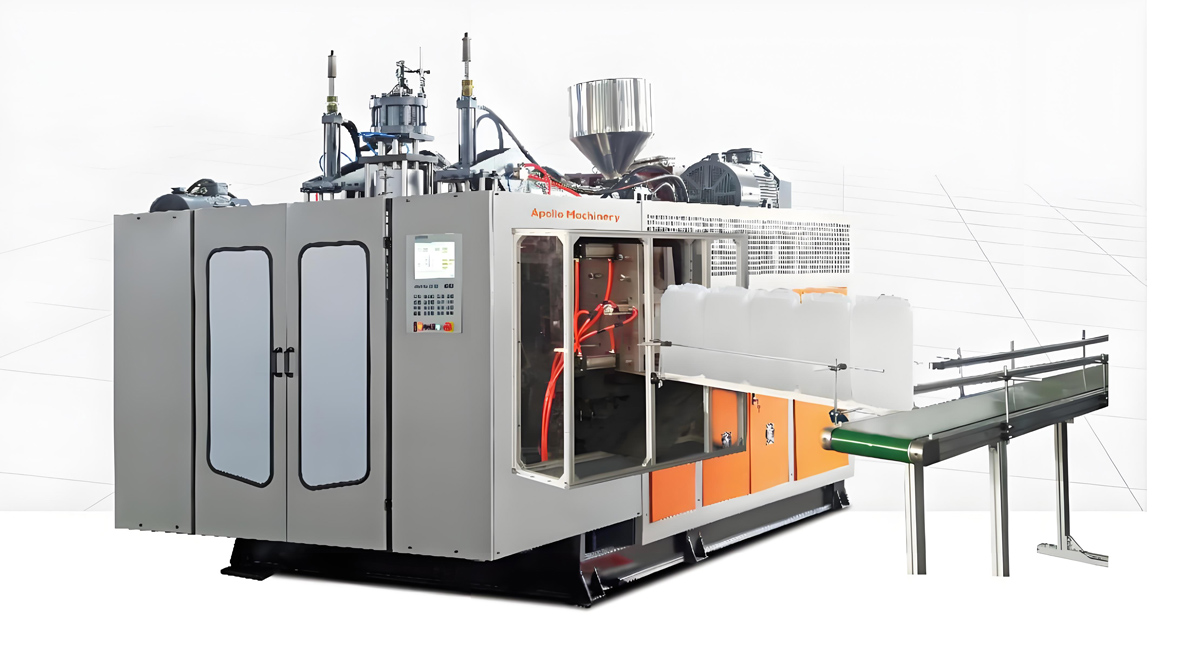
Implementing these complex structures requires advanced machinery capable of precise melt distribution and temperature control. Apollo’s ABLB Series machines, designed for capacities ranging from 200 milliliters to 20 liters, provide the necessary precision for high speed production of small to medium barrier containers. For larger industrial applications, the ABLD Series supports volumes from 20 liters up to 1500 liters, accommodating bulk chemical and food packaging needs. Investment in such specialized equipment typically ranges from 80,000 to 300,000 US dollars depending on layer count and automation level, though this estimate varies significantly based on regional labor costs and auxiliary system requirements.
Common Multilayer Structures and Barrier Resins
Designing a functional container requires balancing mechanical strength with gas impermeability. Most commercial barrier bottles utilize a symmetric layer stack where the core barrier material is sandwiched between structural polyolefin layers. This arrangement ensures that the sensitive barrier resin remains protected from external abrasion and internal chemical attack while maintaining uniform wall thickness during inflation. The complexity of multilayer extrusion blow molding lies in managing the interface between chemically dissimilar polymers, which often do not bond naturally due to differences in polarity and melt viscosity.
EVOH as the Primary Oxygen Barrier
Ethylene Vinyl Alcohol serves as the most common oxygen barrier material in food and beverage packaging because of its exceptionally low permeability when dry. However, EVOH is hygroscopic and loses its barrier effectiveness if exposed directly to moisture or high humidity. Consequently, it must be completely encapsulated by hydrophobic polyethylene or polypropylene layers on both sides. Typical EVOH content ranges from 10 to 20 percent of the total wall thickness. If the layer is too thin, pinholes and processing defects compromise performance; if too thick, material costs rise without proportional gains in shelf life.
Polyamide for Aroma and Mechanical Strength
Polyamide, commonly known as Nylon, offers robust resistance to aroma loss and moderate oxygen transmission. Unlike EVOH, polyamide maintains its barrier properties even at elevated temperatures, making it suitable for hot fill applications up to 85 degrees Celsius. It also provides superior puncture resistance compared to other barrier resins. In many agrochemical containers, polyamide layers replace or supplement EVOH to withstand aggressive solvents and physical impacts during transport.
Tie Layer Functionality
Tie layers are critical adhesives that bond the polar barrier materials like EVOH or PA to nonpolar polyolefins such as HDPE or PP. Without these specialized copolymers, delamination occurs at the interface, creating channels for gas leakage and structural failure. Modern tie resins are designed with specific melt flow indices to match adjacent layers, ensuring stable coextrusion through the die head.
The following table illustrates a standard five layer structure used in beverage packaging.
| Layer Position | Loại vật liệu | Hình thức điều hành bơm | Typical Thickness Percentage |
|---|---|---|---|
| Outer Skin | HDPE or PP | Structural support and printability | 30 to 40 percent |
| Tie Layer | Modified Polyolefin | Adhesion between skin and barrier | 5 to 10 percent |
| Core Barrier | EVOH or PA | Oxygen and aroma blockage | 10 to 20 percent |
| Inner Skin | HDPE or PP | Product contact and chemical resistance | 30 to 40 percent |
Equipment like the ABLB Series handles these precise layer ratios effectively for containers between 200 milliliters and 20 liters. Capital investment for a five layer system typically falls between 150,000 and 250,000 US dollars, depending on automation level and regional supply chain factors.
Multilayer Die Head Design and Layer Control
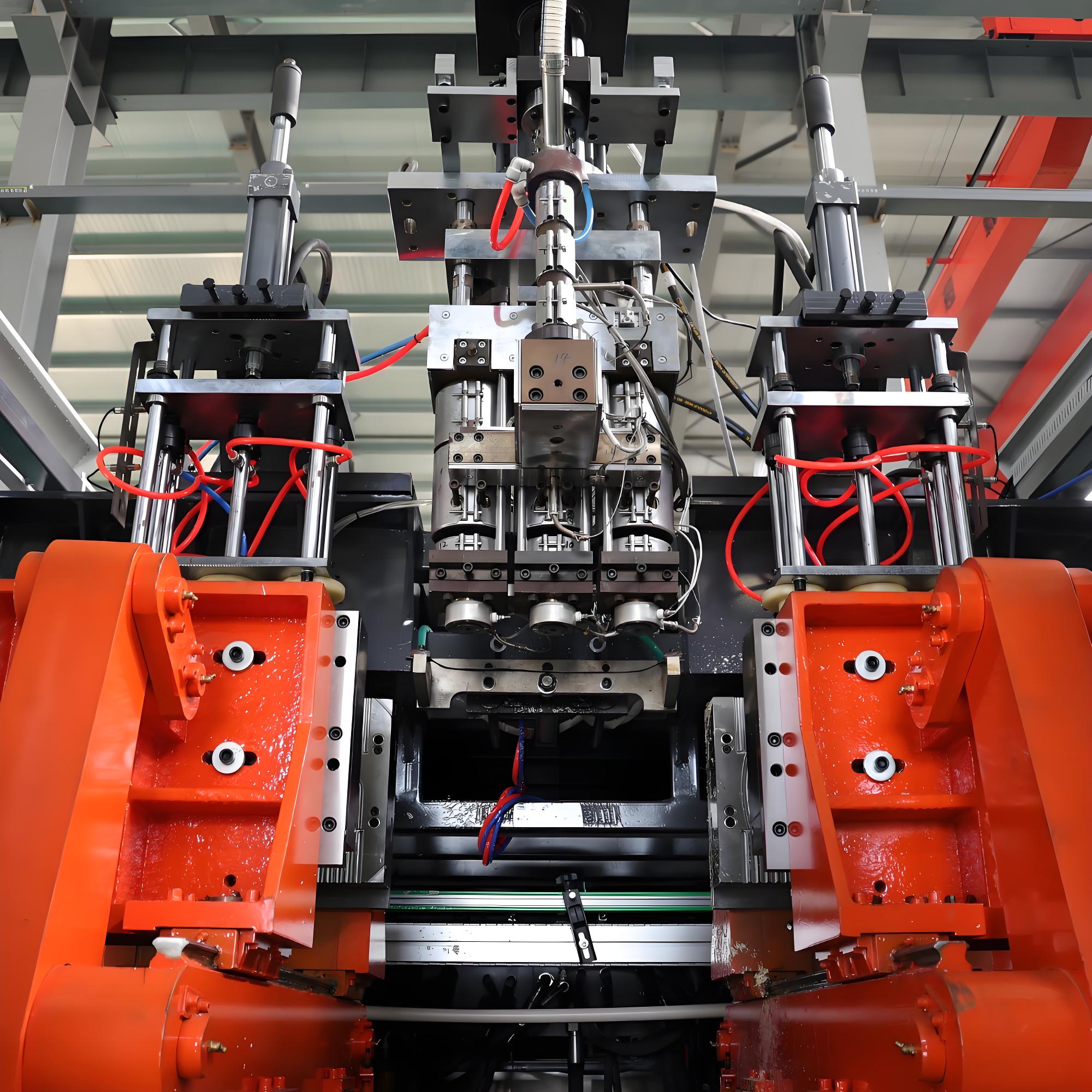
The die head is the critical interface where separate polymer streams merge into a single parison with precise layer thicknesses. In multilayer extrusion blow molding, achieving uniform distribution across the circumference requires sophisticated internal geometry that manages melt velocity and pressure drop for each material. Any deviation in flow rate or temperature causes layer distortion, leading to weak spots or barrier failure. The design must account for the significant differences in viscosity between polyolefins and high viscosity barrier resins like EVOH or Nylon.
Coextrusion Distribution Systems
Modern die heads use either spiral mandrel or stack manifold designs to distribute melt evenly before it exits the annular gap. Spiral systems are preferred for their ability to minimize residence time, which is crucial for heat sensitive materials like EVOH that degrade if held at processing temperatures too long. Stack manifolds offer simpler cleaning but may introduce longer flow paths. For small containers produced on machines such as the ABLB Series or Fully Electric series, spiral designs ensure consistent wall thickness even at high cycle rates.
Interface Stability and Viscosity Matching
Stable interfaces between layers depend on matching melt viscosity indices across all materials in the stack. If the barrier resin has a significantly higher viscosity than the adjacent polyolefin, it tends to migrate toward the center of the parison or form irregular boundaries during inflation. Tie layers help mitigate this by providing an intermediate viscosity bridge. Temperature control within the die head must be precise, often requiring individual heating zones for each layer channel to maintain optimal flow characteristics without thermal degradation.
The following table compares typical design parameters for different die head configurations used in barrier packaging production.
| Loại đầu đùn | Layer Count Capability | Cleaning Complexity | Best Application Range |
|---|---|---|---|
| Spiral Mandrel | Up to 7 layers | Moderate | Small to medium bottles, heat sensitive resins |
| Stack Manifold | Up to 9 layers | High | Large containers, thick wall applications |
| Multi Zone Feed Block | Up to 5 layers | Thấp | Simple two layer barrier structures |
Replacing a standard single layer die head with a multilayer assembly increases tooling costs significantly. A high precision five layer die head for mid range containers typically costs between 15,000 and 35,000 US dollars, while larger dies for the ABLD Series can exceed 60,000 US dollars. These figures vary based on steel grade, coating requirements, and supplier location. Proper maintenance of these components is essential to prevent channel clogging and ensure long term production stability.
Tie Layers and Adhesion Between Resins
The structural integrity of a barrier container depends entirely on the bond strength between its distinct polymer layers. Since polyolefins like HDPE and PP are nonpolar, while barrier resins such as EVOH and Nylon are polar, they do not adhere naturally during coextrusion. Tie layers act as molecular bridges, creating strong interfacial adhesion that prevents delamination under stress or thermal cycling. In multilayer extrusion blow molding, selecting the correct tie resin is as critical as choosing the barrier material itself, because poor adhesion leads to immediate packaging failure and costly product recalls.
Adhesion Mechanisms and Selection Criteria
Effective tie layers function through chemical bonding or mechanical interlocking at the interface. Most commercial ties are maleic anhydride grafted polyolefins that react with the amine groups in Nylon or the hydroxyl groups in EVOH to form covalent bonds. This reaction occurs within the melt phase inside the die head, requiring precise temperature control to ensure sufficient reactivity without degrading the base polymers. The tie layer thickness typically ranges from 2 to 5 percent of the total wall thickness. If too thin, coverage is incomplete; if too thick, it adds unnecessary cost and can alter the flow dynamics of the parison.
Common Failure Modes
Delamination often results from moisture contamination in hygroscopic barrier resins, which inhibits the chemical reaction between the tie layer and the barrier material. Another frequent failure mode is thermal degradation of the tie resin due to excessive shear heating in the screw or die head, leading to brittle interfaces that crack during inflation. Visual inspection after blow molding can reveal these defects as white stress marks at the interface.
The following table outlines standard compatibility pairings for common barrier systems.
| Barrier Resin | Compatible Tie Layer Base | Primary Adhesion Mechanism | Typical Moisture Limit |
|---|---|---|---|
| EVOH | Polyethylene based graft | Hydrogen bonding and diffusion | Less than 0.1 percent |
| Nylon 6 | Polypropylene based graft | Covalent amide linkage | Less than 0.3 percent |
| PET | Modified PP or PE | Ester exchange reaction | Less than 0.05 percent |
Processing these materials on machines like the ABLB Series requires dedicated extruder channels for each tie layer to maintain separate melt histories. Upgrading an existing line to handle additional tie layers may involve retrofitting feed blocks, with costs ranging from 20,000 to 45,000 US dollars depending on the complexity of the manifold system and local labor rates.
Parison Programming for Multilayer Walls
In single layer blow molding, parison programming adjusts wall thickness to match container geometry. However, multilayer extrusion blow molding introduces a critical constraint: the relative proportion of each layer must remain constant even as the total wall thickness varies along the length of the parison. If the die gap changes but the flow rates of individual extruders do not adjust synchronously, the barrier layer may become too thin in certain zones or disappear entirely at the neck and base radii. This requires advanced servo control systems that coordinate vertical movement with precise volumetric output from each material channel.
Maintaining Layer Proportions During Extrusion
Modern controllers calculate the required flow rate for each extruder based on the programmed die gap profile. For a five layer structure, this means managing five independent screw speeds simultaneously while maintaining stable melt pressure. The ABLB Series and Fully Electric series utilize high response servo drives that can adjust output within milliseconds to compensate for fluctuations in melt viscosity. This dynamic balancing ensures that the EVOH or Nylon core remains centered and continuous throughout the inflation process, preventing weak points that could lead to oxygen ingress.
Risk of Layer Breakup and Instability
Layer breakup occurs when extensional forces during parison sagging exceed the cohesive strength of the interface between layers. High viscosity barrier resins are particularly susceptible to this phenomenon if the temperature profile is not optimized. If the barrier layer cools faster than the surrounding polyolefins, it becomes brittle and fractures under the weight of the hanging parison. This defect is often invisible until the container is subjected to internal pressure or mechanical stress.
The following table illustrates typical programming parameters for maintaining stability in complex structures.
| Thông số | Standard Single Layer | Three Layer Barrier | Five Layer Barrier |
|---|---|---|---|
| Die Gap Adjustment Zones | 10 to 20 points | 30 to 50 points | 60 to 100 points |
| Extruder Sync Tolerance | Plus or minus 2 percent | Plus or minus 1 percent | Plus or minus 0.5 percent |
| Parison Sag Compensation | Manual adjustment | Automatic servo control | Advanced predictive algorithm |
Upgrading control software and sensors for precise multilayer programming on existing lines can cost between 10,000 and 30,000 US dollars, depending on the age of the machine and the complexity of the retrofit. These investments are essential for producing consistent barrier containers on machines like the ABLD Series, where large parisons experience significant gravitational stress during formation.
Recycling Layer Scrap and Regrind Management
Edge trim generated during neck finishing and flash removal represents a significant material loss in production. In multilayer extrusion blow molding, this scrap consists of all polymer layers mixed together, creating a heterogeneous waste stream that cannot be simply reintroduced into the main feed without careful management. Improper handling leads to contamination of the barrier layer, causing visual defects, reduced gas impermeability, and potential structural failure. Effective regrind strategies are essential for maintaining economic viability while preserving product quality.
Segregation and Processing Challenges
The primary challenge is that barrier resins like EVOH or Nylon have much higher melting points than the surrounding polyolefins. When mixed regrind enters the extruder, these high melting point particles may not fully melt, resulting in unmelted specks that act as stress concentrators. Furthermore, moisture absorbed by hygroscopic barrier materials during storage can degrade tie layer adhesion. To mitigate this, many facilities use inline granulators with immediate drying systems to process scrap before it reaches the extruder throat. This ensures that moisture content remains below critical thresholds and that particle size is uniform enough for stable flow.
Reintroduction Strategies and Limits
Most manufacturers limit regrind content to 10 to 25 percent of the total feed, depending on the application. Higher percentages increase the risk of layer distortion because the recycled material has undergone thermal degradation, altering its viscosity profile. For food grade containers, strict regulatory limits often dictate that only virgin material can contact the product, requiring the regrind to be restricted to outer structural layers. This necessitates complex feed block designs that segregate recycled streams from inner and barrier channels.
The following table outlines recommended practices for different scrap types.
| Scrap Source | Recommended Regrind Limit | Processing Requirement | Risk of Barrier Contamination |
|---|---|---|---|
| Neck Flash | 10 to 15 percent | Immediate drying and sieving | Low if segregated correctly |
| Body Trim | 20 to 30 percent | Inline granulation with air cooling | Moderate due to high surface area |
| Start up Purge | 0 to 5 percent | Discard or downcycle to non barrier products | High due to thermal degradation |
Implementing a closed loop recycling system for multilayer scrap requires investment in specialized grinding and conveying equipment. A basic inline regrind unit integrated with a dryer costs approximately 8,000 to 15,000 US dollars, while advanced systems with metal detection and moisture monitoring can exceed 30,000 US dollars. These costs vary by region and supplier but are often offset by material savings over time on machines like the ABLB Series or ABLD Series where high volume production generates substantial trim waste.
Barrier Performance Testing and Quality Control
Ensuring the efficacy of multilayer extrusion blow molding requires rigorous validation of gas impermeability and structural integrity. Unlike single layer containers where wall thickness is uniform, barrier bottles must maintain consistent layer proportions across complex geometries such as shoulders and bases. A minor deviation in EVOH or Nylon thickness can drastically increase oxygen transmission rates, leading to premature spoilage. Therefore, quality control protocols focus on measuring actual barrier performance rather than just visual appearance or dimensional accuracy.
Oxygen Transmission Rate Measurement
The primary metric for barrier effectiveness is the Oxygen Transmission Rate, measured in cubic centimeters per package per day per atmosphere. For beverages like juice or beer, acceptable levels often fall below 0.5 cubic centimeters per day. Testing involves placing a sealed container in a chamber with high oxygen concentration and measuring the amount that permeates through the wall over time using coulometric sensors. This destructive test is typically performed on sampled units from each production batch to verify that the multilayer structure meets specification limits under simulated storage conditions.
Layer Thickness and Interface Verification
Verifying internal layer distribution requires non destructive or semi destructive techniques. Microscopy of cross sections taken from specific container zones allows engineers to measure individual layer thicknesses in microns. This confirms that the barrier core remains centered and continuous without pinholes or delamination. Advanced ultrasonic scanning can also detect interface defects without cutting the sample, providing rapid feedback during production runs on machines like the ABLB Series or Fully Electric series.
Leak Testing for Structural Integrity
Even if barrier properties are correct, micro leaks at seams or neck finishes compromise product safety. Pressure decay tests inflate the container to a specific pressure and monitor for drops over time, detecting holes as small as 0.1 millimeters. This is critical for carbonated drinks where internal pressure stresses the multilayer interfaces.
The following table summarizes standard testing methods and their typical costs or operational parameters.
| Test Method | Parameter Measured | Typical Cost per Test | Frequency |
|---|---|---|---|
| Oxygen Transmission Rate | Gas permeability in cubic centimeters per day | 50 to 100 US dollars | Per batch or shift |
| Cross Section Microscopy | Layer thickness in microns | 20 to 40 US dollars | Hourly during setup |
| Pressure Decay Leak Test | Sealing integrity and pinholes | 5 to 15 US dollars | Inline or per sample |
Investing in automated inline inspection systems for high volume lines can cost between 40,000 and 80,000 US dollars, though this varies by region. These systems reduce labor costs and catch defects before they reach the customer, ensuring that large scale production on ABLD Series machines remains profitable and compliant with strict food safety standards.
Selecting ABLB, ABLD or Fully Electric for Multilayer Work
Choosing the right machine platform is critical when producing barrier containers with multilayer extrusion blow molding. The decision depends on container volume, layer count complexity, and energy efficiency requirements. Apollo’s product line offers distinct advantages for different market segments, ensuring that manufacturers can match their specific production needs to the appropriate technology without overinvesting in unnecessary capacity or underestimating the precision required for thin barrier layers.
ABLB Series for Mid Range Precision
The ABLB Series covers capacities from 200 milliliters to 20 liters, making it ideal for consumer beverages and pharmaceuticals where consistency is paramount. These machines feature robust hydraulic systems capable of handling up to five or seven coextruded layers with stable parison programming. For standard oxygen barrier applications using EVOH or Nylon, the ABLB Series provides a cost effective balance between initial capital expenditure and long term reliability. Typical investment for a configured multilayer unit ranges from 120,000 to 220,000 US dollars, depending on automation level and auxiliary equipment.
Fully Electric Series for High Speed Small Containers
For high volume production of small bottles between 200 milliliters and 20 liters, the Fully Electric series offers superior energy efficiency and faster cycle times. The electric drive system provides precise control over screw speed and parison movement, which is essential for maintaining thin barrier layers without breakup. This technology reduces energy consumption by up to 30 percent compared to hydraulic models, offsetting higher upfront costs of 180,000 to 350,000 US dollars through operational savings in regions with high electricity rates.
ABLD Series for Large Industrial Barriers
Large containers from 20 liters to 1500 liters require significant clamping force and large die heads to manage heavy parisons. The ABLD Series is engineered for these demanding applications, such as agrochemical jugs or bulk food packaging. Its powerful extrusion units ensure uniform layer distribution even in thick walled structures where gravitational sagging poses a risk to interface stability.
| Machine Series | Nhiệt độ hoạt động | Best Application | Energy Efficiency |
|---|---|---|---|
| ABLB Series | 200 milliliters to 20 liters | General purpose barrier bottles | Moderate |
| Fully Electric series | 200 milliliters to 20 liters | High speed small volume runs | High |
| Dòng ABLD | 20 liters to 1500 liters | Large industrial containers | Standard |
Selecting the correct platform ensures that multilayer structures meet permeability specifications while maintaining economic viability across the entire production lifecycle.
Process Windows for Multilayer Coextrusion
Successful multilayer extrusion blow molding depends on maintaining precise melt temperatures and synchronized throughput rates across multiple extruders. Each polymer in the stack has a unique thermal stability range and viscosity profile, creating narrow processing windows that must be respected to prevent degradation or poor layer adhesion. Deviations of even five degrees Celsius can alter flow behavior significantly, leading to interface instability or barrier failure.
Melt Temperature Control Strategies
Polyolefins like HDPE typically process between 180 and 230 degrees Celsius, while EVOH requires lower temperatures around 190 to 210 degrees to avoid thermal degradation of its hydroxyl groups. Nylon processes at higher temperatures, often exceeding 240 degrees. When these materials coextrude, the die head must manage heat transfer between zones to prevent cross contamination or uneven cooling. Individual barrel heating zones and independent temperature controllers are essential for isolating each material stream before they merge in the feed block.
Throughput Matching and Screw Design
Extruder screw design must be tailored to the specific resin being processed. Barrier resins often require lower compression ratios to reduce shear heating, while polyolefins benefit from higher output rates. The total throughput of all extruders must match the die head capacity exactly; if one material flows faster than others, it will dominate the layer thickness distribution. Servo driven screw motors on machines like the ABLB Series and Fully Electric series allow for fine adjustments to maintain volumetric balance during startup and steady state operation.
The following table outlines typical processing parameters for common barrier systems.
| Vật liệu | Melt Temperature Range | Screw Speed Adjustment | Risk of Degradation |
|---|---|---|---|
| HDPE Skin Layer | 180 to 230 degrees Celsius | High compression screw | Low thermal sensitivity |
| EVOH Barrier Core | 190 to 210 degrees Celsius | Low shear barrier screw | High above 220 degrees |
| Nylon 6 Barrier | 230 to 250 degrees Celsius | Moderate compression screw | Moisture induced hydrolysis |
Calibrating these parameters for a new product mix can take several hours of trial runs, costing between 2,000 and 5,000 US dollars in wasted material and labor. Advanced process control software on the ABLD Series helps automate this balancing act, reducing setup time and ensuring consistent quality for large volume industrial containers.
Troubleshooting Multilayer Defects
Diagnosing faults in multilayer extrusion blow molding requires a systematic approach because defects often stem from interactions between multiple material streams rather than a single mechanical failure. Unlike single layer production, where issues are usually confined to one melt flow path, barrier containers involve complex interfaces that can fail due to thermal mismatch, viscosity imbalance, or contamination. Identifying the root cause quickly is essential to minimize scrap rates and maintain production efficiency on platforms like the ABLB Series or Fully Electric series.
Layer Breakup and Pinholes
Layer breakup appears as visible cracks or gaps in the barrier resin, often concentrated at the container base or shoulder where stretch ratios are highest. This typically results from excessive parison sagging caused by low melt strength or high temperatures that reduce viscosity. If the barrier layer thins beyond its critical limit, it fractures under inflation pressure. Adjusting die gap programming to maintain constant wall thickness and lowering melt temperature can restore continuity. Pinholes may also arise from unmelted regrind particles acting as stress concentrators during expansion.
Delamination and Interface Failure
Delamination manifests as white stress marks or separated layers at the interface between tie and barrier resins. This failure mode indicates poor adhesion, often caused by moisture contamination in hygroscopic materials like EVOH or Nylon. Even small amounts of water vapor inhibit the chemical bonding mechanism of maleic anhydride grafted tie layers. Drying systems must be verified to ensure dew points below minus 40 degrees Celsius. Additionally, insufficient tie layer thickness or incorrect screw speed ratios can lead to incomplete coverage and weak interfaces.
The following table maps common defects to their primary causes and corrective actions.
| Defect Type | Nguồn gây ra khả năng cao | Corrective Action | Impact on Quality |
|---|---|---|---|
| Layer Breakup | High parison sag or low melt strength | Reduce temperature, adjust programming | Barrier failure, leakage |
| Delamination | Moisture in barrier resin or poor tie flow | Verify dryer efficiency, check screw speeds | Structural weakness, peeling |
| Orange Peel Surface | Uneven cooling or die head turbulence | Polish die surfaces, optimize air rings | Cosmetic rejection, printability issues |
Resolving these issues often requires specialized diagnostic tools such as cross section microscopy, which can cost between 15,000 and 40,000 US dollars for a high resolution setup. Regular maintenance of die heads and extruder screws prevents many recurring problems, ensuring consistent performance across large production runs on machines like the ABLD Series.
Cost and Price Analysis of Multilayer Systems
Investing in multilayer extrusion blow molding requires a clear understanding of capital expenditures beyond the base machine price. The complexity of coextruding multiple resins drives up costs for specialized tooling, additional extruder units, and precision control systems. While barrier containers command higher market prices, the return on investment depends heavily on optimizing these initial setup costs against long term material savings and production efficiency.
Coextrusion Die Head Investment
The die head is often the most expensive single component in a multilayer upgrade. A standard single layer die might cost 5,000 US dollars, whereas a five layer assembly with independent heating zones and precision flow channels can range from 15,000 to 35,000 US dollars for mid sized containers. For large capacity machines like the ABLD Series handling volumes up to 1500 liters, die head costs can exceed 60,000 US dollars due to the increased mass and thermal management requirements. These figures vary significantly based on steel grade, coating hardness, and supplier location.
Extruder and Control System Costs
Adding barrier capability typically requires retrofitting or purchasing additional extruders. Each new material channel demands a dedicated screw barrel assembly, which costs between 10,000 and 25,000 US dollars per unit depending on size and drive type. Integrating these into the existing control architecture requires upgraded servo drives and software capable of synchronizing multiple axes. For the ABLB Series or Fully Electric series, this integration ensures that layer proportions remain constant during parison programming, a critical factor for maintaining barrier performance.
Measurement and Quality Assurance
Ensuring consistent quality adds operational costs through specialized testing equipment. Inline thickness monitors and oxygen transmission rate testers are essential for verifying that the multilayer structure meets specifications without excessive scrap rates. While these systems add to the initial budget, they prevent costly recalls and ensure compliance with food safety standards.
The following table provides indicative budget ranges for key multilayer components.
| Bộ phận | Typical Cost Range | Notes on Variation |
|---|---|---|
| Five Layer Die Head | 15,000 to 35,000 US dollars | Higher for large diameter or complex geometries |
| Additional Extruder Unit | 10,000 to 25,000 US dollars | Depends on screw size and drive type |
| Control Software Upgrade | 5,000 to 15,000 US dollars | Varies by vendor and license model |
| Inline Thickness Monitor | 20,000 to 40,000 US dollars | Includes sensors and data processing units |
These estimates are indicative and may fluctuate based on regional labor rates, import duties, and specific technical requirements. A complete retrofit of an existing line to support multilayer production typically ranges from 50,000 to 120,000 US dollars, offering a cost effective alternative to purchasing new dedicated machinery for manufacturers with established infrastructure.
Startup and Grade Changeover for Multilayer
Operational efficiency in multilayer extrusion blow molding hinges on minimizing downtime during startup and material transitions. Unlike single layer processes, changing resins or adjusting layer configurations requires careful sequencing to prevent cross contamination and ensure interface stability. Poor changeover practices can result in significant waste of expensive barrier materials like EVOH or Nylon, eroding profit margins despite high production speeds.
Startup Sequencing Protocols
Initiating a multilayer run begins with purging the die head using compatible flushing resins to remove residual material from previous batches. The sequence typically starts with polyolefins, followed by tie layers, and finally the barrier core. This order prevents high viscosity barrier resins from trapping air or unmelted particles in the narrow flow channels. Machines such as the ABLB Series utilize automated purge cycles that adjust screw speeds individually to maintain melt pressure balance during this transition. Skipping steps often leads to immediate layer breakup or delamination defects in the first few hundred units produced.
Minimizing Changeover Waste
Grade changes between different barrier systems require thorough cleaning of feed blocks and manifolds. Residual tie resin can react with new barrier materials, causing discoloration or weak adhesion. Using dedicated flushing compounds designed for specific polymer pairs reduces cleaning time and scrap volume. For large containers produced on the ABLD Series, the sheer mass of material in the die head means that waste during changeover can reach several kilograms per event, making efficient purging critical for cost control.
The following table outlines typical changeover parameters and associated costs.
| Changeover Type | Estimated Duration | Material Waste Volume | Cleaning Complexity |
|---|---|---|---|
| Same Barrier, Different Color | 30 to 60 minutes | Thấp | Moderate |
| EVOH to Nylon System | 2 to 4 hours | High | High due to temperature shift |
| Layer Count Reduction | 1 to 2 hours | Trung bình | Requires die head disassembly |
Proper planning reduces changeover time by up to 50 percent, saving between 500 and 2,000 US dollars per event in lost production and material costs. Investing in quick change tooling systems for the Fully Electric series further accelerates these processes, allowing manufacturers to handle small batch orders with greater flexibility and lower operational risk.
Maintenance of Multilayer Die Heads
The die head is the heart of multilayer extrusion blow molding, requiring meticulous maintenance to preserve layer alignment and flow stability. Unlike single layer dies, multilayer assemblies contain intricate internal channels where different polymers merge under high pressure. Contamination or wear in these zones directly impacts barrier performance, leading to defects that are often invisible until container failure occurs.
Cleaning and Purging Protocols
Residual material buildup is the primary threat to die head integrity. High viscosity barrier resins like EVOH can degrade and carbonize if left in hot zones during extended shutdowns. Regular purging with compatible flushing compounds removes these deposits before they harden into blockages. For machines such as the ABLB Series, automated purge sequences reduce manual intervention risks. When changing grades, a complete disassembly may be necessary to clean stack manifolds or spiral mandrels. This process requires specialized tools and trained technicians to avoid damaging precision surfaces.
Layer Alignment and Wear Inspection
Over time, abrasive additives in regrind can cause wear on internal flow channels, altering the velocity profile of each layer. Misalignment results in uneven wall thickness and potential barrier breaches. Periodic inspection using borescopes or disassembly checks ensures that channel geometries remain within tolerance limits. Replacing worn components restores uniform melt distribution across the circumference of the parison.
The following table outlines typical maintenance intervals and associated costs.
| Maintenance Task | Frequency | Estimated Cost | Impact on Production |
|---|---|---|---|
| Routine Purge Check | Hàng ngày | Low labor cost | Prevents minor blockages |
| Full Disassembly Cleaning | Every 500 to 1000 hours | 2,000 to 5,000 US dollars | Restores flow stability |
| Channel Wear Inspection | Chúng quý | 500 to 1,500 US dollars | Ensures layer uniformity |
These estimates vary by region and service provider. Neglecting maintenance can lead to catastrophic failures requiring die head replacement, which costs between 15,000 and 60,000 US dollars depending on size and complexity for systems like the ABLD Series.
How Apollo Supports Multilayer Projects
Apollo provides comprehensive engineering support to help manufacturers transition from single layer packaging to advanced multilayer extrusion blow molding solutions. This assistance begins with layer design consultation, where specialists analyze the specific barrier requirements of the product, such as oxygen transmission limits for beverages or chemical resistance for agrochemicals. By evaluating these needs early, Apollo helps select the optimal resin combination and tie layer system to ensure structural integrity and cost efficiency before any hardware is commissioned.
Layer Design Consultation
The design phase involves calculating precise layer thicknesses to meet permeability targets while maintaining mechanical strength. Engineers simulate flow behavior through the die head to predict potential interface instabilities. This virtual modeling reduces the risk of defects like layer breakup during initial trials. For containers ranging from small pharmaceutical vials on the Fully Electric series to large industrial drums on the ABLD Series, this tailored approach ensures that each machine configuration matches the specific rheological properties of the chosen materials.
Trial Production and Validation
Apollo facilitates trial runs at their facility using production scale equipment. These trials allow clients to verify barrier performance and cycle times before finalizing capital investment. Testing includes oxygen transmission rate measurements and leak checks to confirm that the multilayer structure meets industry standards. This hands on validation minimizes the learning curve for in house teams and ensures smooth ramp up when the machinery arrives at the customer site.
The following table summarizes typical support services and associated indicative costs.
| Service Type | Scope of Support | Indicative Cost Range | Outcome |
|---|---|---|---|
| Layer Design Analysis | Resin selection and thickness calculation | 2,000 to 5,000 US dollars | Optimized material usage |
| Trial Production | Run tests on ABLB or ABLD Series | 5,000 to 15,000 US dollars | Validated process parameters |
| Operator Training | Setup and troubleshooting protocols | Included with machine purchase | Reduced startup waste |
These figures are estimates and may vary based on project complexity and regional service rates.
Kết luận
Success in multilayer extrusion blow molding depends on integrating precise material science with advanced machine control. The process requires strict adherence to thermal windows for each resin, ensuring that EVOH or Nylon barriers maintain their integrity without degrading during high speed production. Consistent layer alignment is achieved through synchronized servo drives and carefully calibrated die head geometries that prevent interface instability under extensional stress.
Selecting the appropriate platform is equally critical. The ABLB Series offers robust performance for mid range containers, while the Fully Electric series provides energy efficient precision for high volume small bottle applications. For large industrial packaging needs, the ABLD Series delivers the necessary clamping force and parison stability to manage heavy wall structures without compromising barrier continuity.
Operational excellence further relies on rigorous quality control protocols. Regular oxygen transmission rate testing and cross section microscopy verify that layer proportions remain within specification limits throughout the production run. Effective management of regrind and scrap prevents contamination of sensitive barrier layers, maintaining cost efficiency without sacrificing product safety.
Investing in comprehensive training and maintenance programs ensures long term reliability. Proper purging sequences during changeovers minimize waste of expensive barrier materials, while routine die head inspections prevent subtle wear patterns that lead to permeability failures. By balancing initial capital expenditure with operational discipline, manufacturers can produce high performance barrier packaging that meets stringent shelf life requirements across diverse market segments from food and beverage to pharmaceuticals.