
What Is PETG and Why Is It Revolutionizing Cosmetic Packaging?
PETG — polyethylene terephthalate glycol-modified — is rapidly emerging as the material of choice for luxury cosmetic packaging, displacing traditional materials with a combination of aesthetic appeal, processing versatility, and safety that no single alternative can match. As of 2026, the global PETG market continues to expand at approximately 7% annually, driven overwhelmingly by demand from the cosmetics, personal care, and premium beverage sectors where packaging is as much a brand statement as it is a functional container.
PETG is a copolyester produced by modifying standard PET with cyclohexanedimethanol (CHDM) during polymerization. This glycol modification disrupts the crystalline structure that gives standard PET its cloudy, semi-crystalline appearance when extruded, resulting instead in an amorphous material with exceptional optical clarity, a high-gloss surface finish, and the ability to be processed on conventional extrusion blow molding equipment without the specialized drying and processing regimes that materials like polycarbonate demand. For cosmetic brands, PETG offers the glass-like transparency that premium packaging requires, combined with the shatter resistance and lightweight properties that make plastic packaging practical for retail distribution and consumer handling.
The material’s food-grade safety profile — PETG complies with FDA 21 CFR, EU 10/2011, and other global food-contact regulations — makes it suitable not only for cosmetic primary packaging but also for food, beverage, and pharmaceutical applications where product safety is paramount. Unlike polycarbonate, PETG is BPA-free, addressing the growing consumer and regulatory demand for packaging materials free from bisphenol compounds. This combination of visual appeal, safety compliance, and processing accessibility has positioned PETG extrusion blow molding as one of the most dynamic growth segments in the packaging machinery market.
- PETG market growing at approximately 7% CAGR, driven by cosmetics and premium packaging
- PETG offers 90%+ light transmission — comparable to glass with 1/5th the weight
- Processing temperature range of 210-260°C — 40-60°C lower than PC, reducing energy costs
- BPA-free and compliant with FDA 21 CFR, EU 10/2011, and REACH regulations
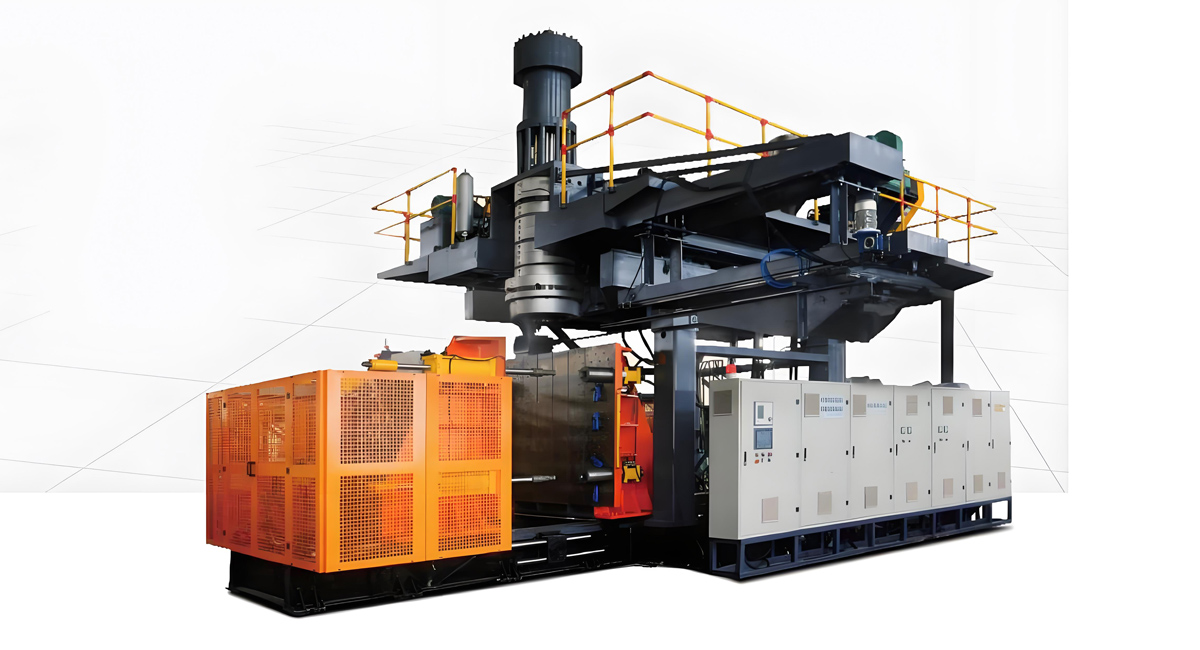
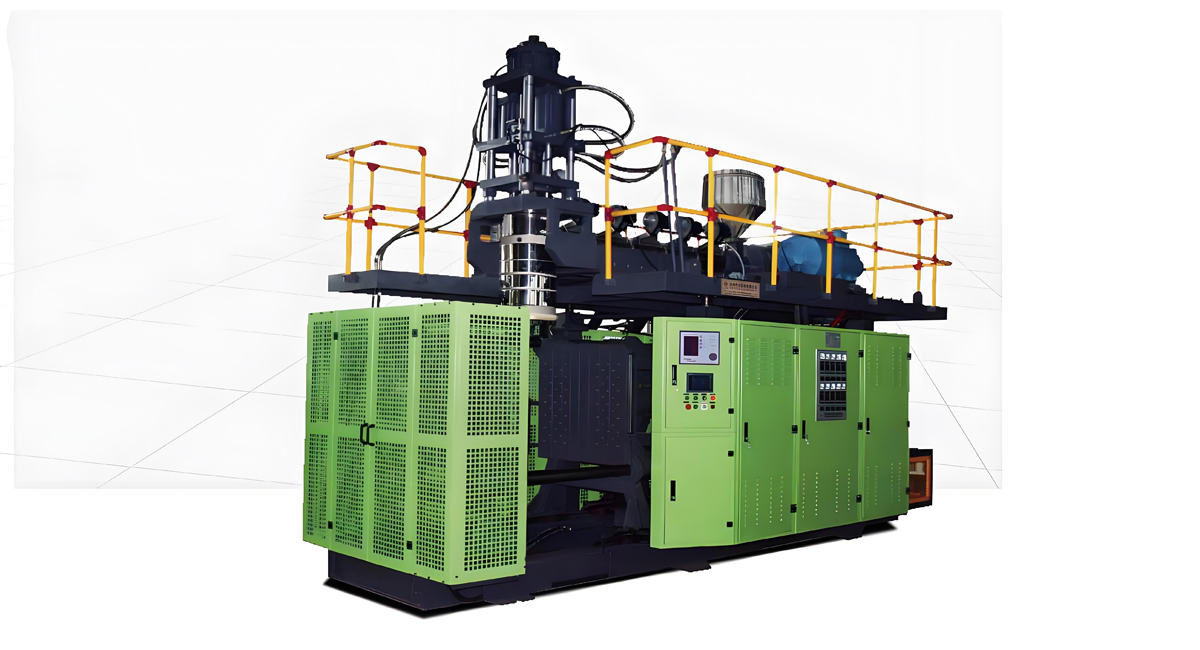
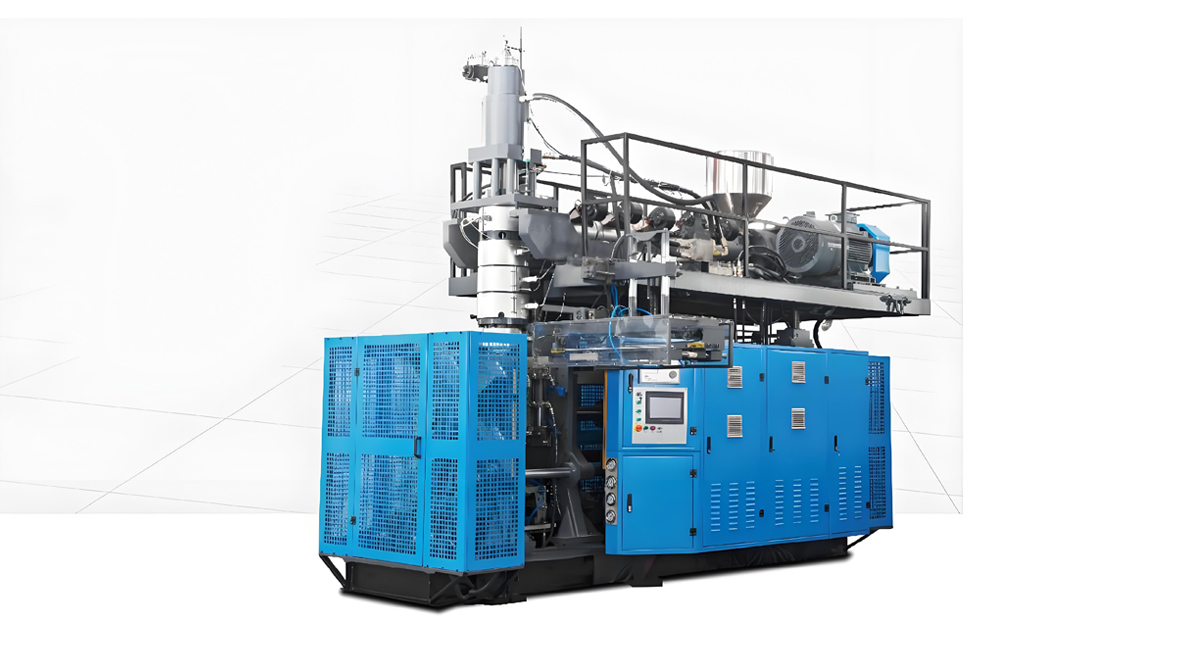
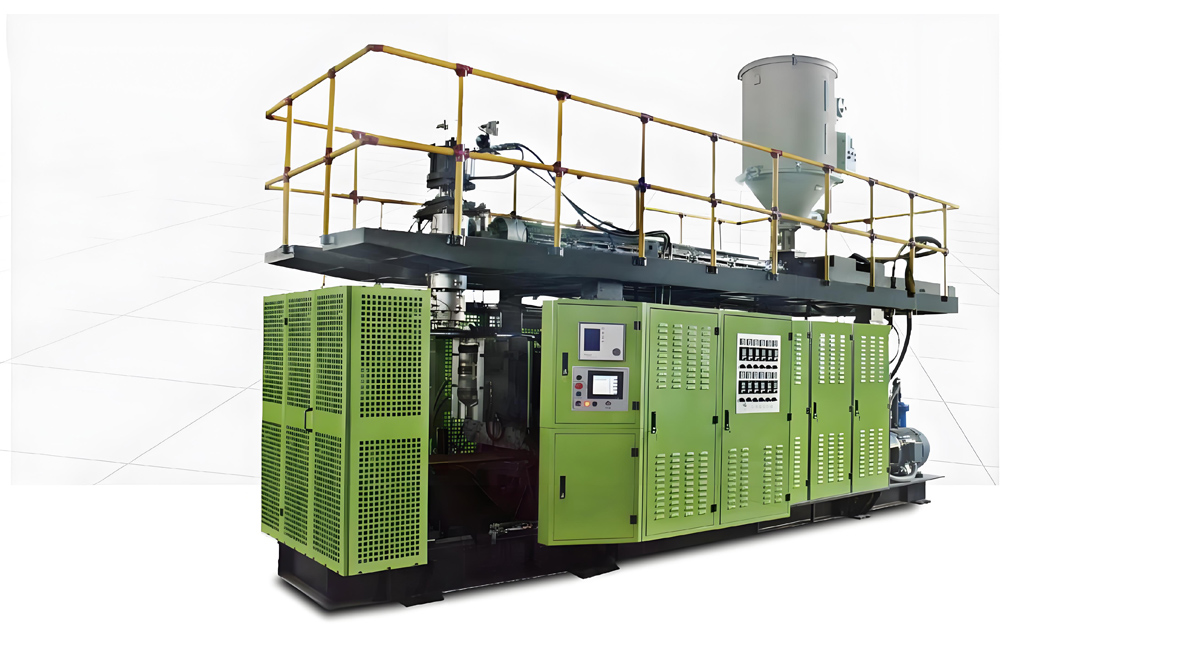
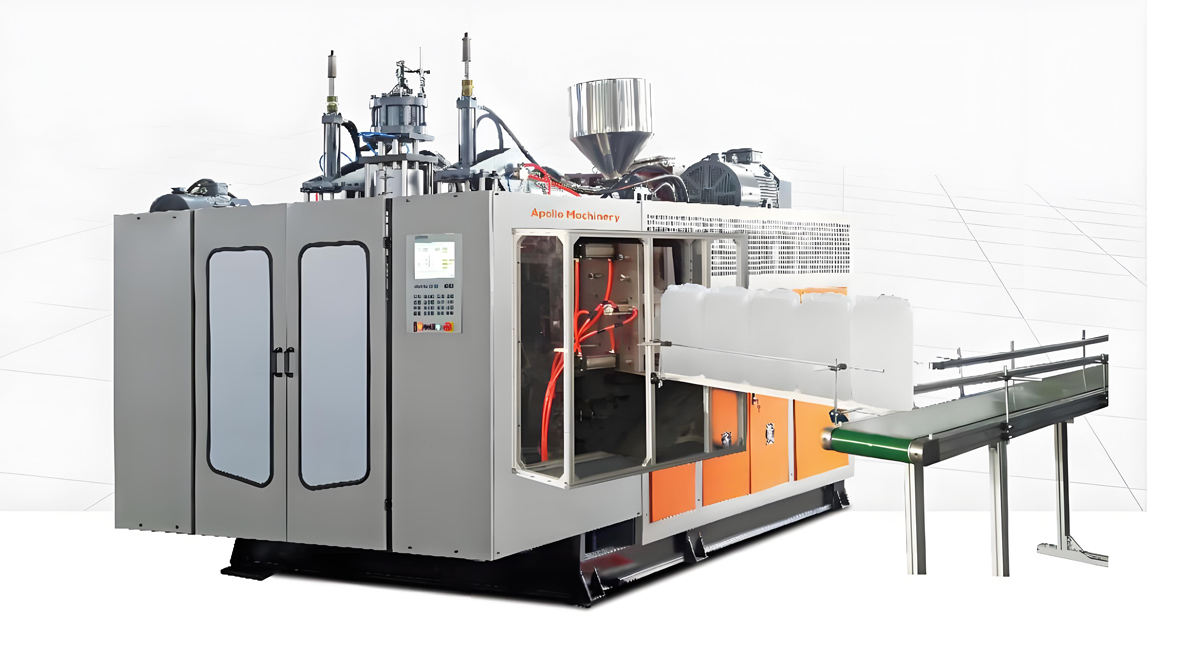
- Apollo extrusion blow molding machines process PETG across the ABLB series (200ML-20L)
How PETG Extrusion Blow Molding Works
PETG extrusion blow molding follows the same fundamental process as other EBM applications but with material-specific parameters that determine the difference between premium-quality, crystal-clear containers and substandard production with visible defects. Understanding the complete process flow — from raw material handling through finished container ejection — is the foundation for consistent, high-quality PETG container production.
The process begins with PETG resin pellets, which, unlike polycarbonate, have relatively low moisture sensitivity. While PETG does absorb some ambient moisture, its processing tolerance is far more forgiving than PC. A desiccant dryer set to 65-75°C for 3-4 hours, achieving a moisture content below 0.03%, is typically sufficient for cosmetic-grade production. This lower drying requirement represents a significant operational advantage: reduced energy consumption, shorter material preparation time, and less stringent humidity control in the production environment compared to PC processing.
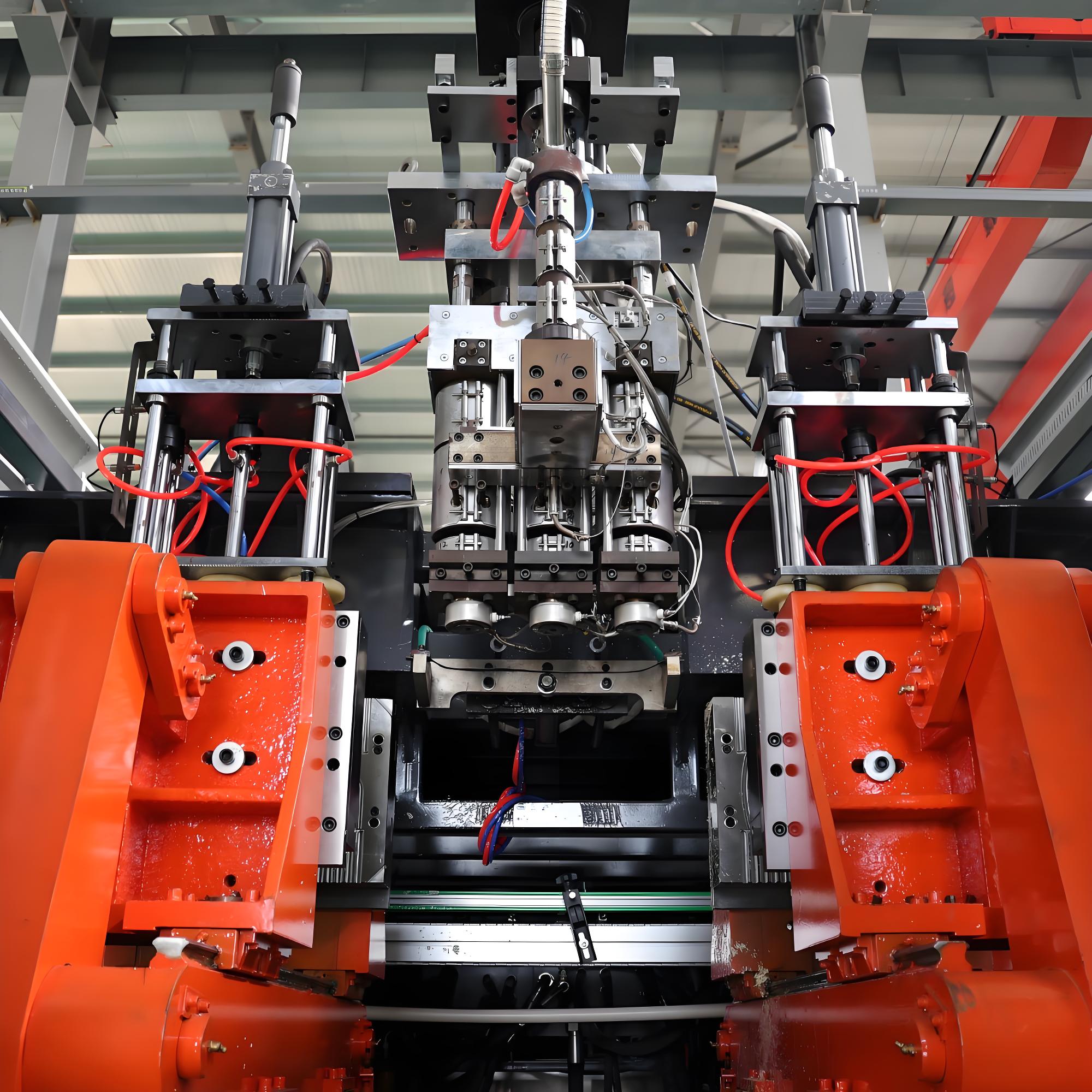
In the extruder, PETG pellets are heated progressively through multiple barrel zones to a melt temperature of 210-260°C. The material transitions cleanly from solid to melt, with its amorphous nature ensuring uniform flow characteristics through the screw channels and die head. A critical process characteristic of PETG is its relatively low melt strength compared to PE or PC — the molten parison has a greater tendency to elongate under its own weight. This makes precise parison control essential: the die gap, extrusion speed, and mold closing timing must be carefully coordinated to maintain consistent wall thickness distribution. Apollo’s ABLB series machines address this challenge with servo-controlled parison programming systems that enable precise wall thickness profiling, a feature that has proven invaluable for PETG cosmetic container production where aesthetic uniformity is non-negotiable.
Once the parison reaches the target length, the mold closes around it at a speed calibrated to the material’s melt strength characteristics. Compressed air at 5-8 bar inflates the parison against the mold cavity walls. The mold temperature for PETG is typically maintained at 15-30°C — cooler than PC processing but warmer than PE — to achieve an optimal balance between surface gloss and cycle time. The entire cycle for a typical 200ml cosmetic bottle ranges from 18 to 35 seconds, depending on wall thickness, container geometry, and cooling efficiency.
Key Machine Requirements for PETG Blow Molding
While PETG is more forgiving to process than polycarbonate, achieving the consistently high clarity and surface finish demanded by luxury cosmetic brands requires an extrusion blow molding machine with specific capabilities. Selecting a machine designed or configured for PETG — rather than adapting standard PE equipment — directly impacts product quality, production efficiency, and the ability to meet premium brand specifications.
Extruder Configuration
The extruder for PETG processing benefits from a screw with a compression ratio of 2.5:1 to 3.0:1 and an L/D ratio of 24:1 to 28:1. The screw should feature a gradual compression zone that applies shear progressively, ensuring complete melting without creating localized hot spots that could cause material degradation and yellowing. A general-purpose screw with a Maddock-style mixing section at the metering zone provides sufficient homogenization for cosmetic-grade clarity. Unlike PC, PETG does not require specialized screw metallurgy — standard nitrided steel provides adequate wear resistance for PETG processing in production environments running standard cosmetic-grade resin formulations.
Temperature control precision is important but less demanding than for PC. PID-controlled heating zones with ±2°C accuracy are generally sufficient, though tighter control (±1°C) provides additional process stability for the highest-clarity applications. Apollo’s machines feature 4-6 independently controlled heating zones with digital temperature controllers, providing the thermal precision needed for consistent PETG melt quality across extended production runs.
Die Head Design
The die head for PETG should feature a converging, streamlined flow geometry that eliminates stagnation zones. PETG’s moderate melt viscosity and amorphous structure mean it flows cleanly through properly designed die channels without the hang-up tendencies of some engineering resins. However, the die lips must be polished to a mirror finish — surface imperfections on the die lips transfer directly to the parison surface and become visible as flow lines or haze on the finished container. For cosmetic applications, die lip finishing to Ra 0.1μm or better is strongly recommended.
Parison Wall Thickness Control
PETG’s lower melt strength makes parison wall thickness control particularly important. The parison programmer (PWDS) must be capable of rapid, precise die gap adjustments to compensate for parison sag and to achieve targeted wall thickness distribution. For cosmetic containers — which often feature complex geometries with varying cross-sections, decorative contours, and integrated features such as neck threads and snap-fit bases — the ability to program wall thickness at 50-100 points along the parison length is essential for achieving uniform container walls while minimizing material usage. Apollo’s servo-hydraulic PWDS systems provide this level of control, enabling cosmetic manufacturers to produce containers with consistent wall thickness meeting the demanding aesthetic and functional requirements of luxury brands.
PETG EBM Machine Specification Guide
| Specification | Small Cosmetic (30ml-500ml) | Medium Cosmetic (500ml-2L) | Large Format (2L-10L) |
|---|---|---|---|
| Screw Diameter | 45-55mm | 60-75mm | 80-100mm |
| L/D Ratio | 24:1 | 25:1-26:1 | 26:1-28:1 |
| Die Head Type | Single/double head | Single/double head | Single head, accumulator |
| Clamping Force | 30-80 kN | 80-150 kN | 150-300 kN |
| Output (PETG) | 20-50 kg/h | 50-90 kg/h | 90-150 kg/h |
| Cycle Time (typical) | 15-25 sec | 25-40 sec | 40-65 sec |
PETG vs. Alternative Materials for Cosmetic Containers
Cosmetic packaging sits at the intersection of aesthetic performance, functional requirements, cost constraints, and regulatory compliance. The material choice for a container directly influences brand perception, shelf appeal, consumer safety, and manufacturing economics. Understanding how PETG compares to the alternatives clarifies when it is the right choice — and when another material may be more appropriate.
PETG vs. PET (Standard)
Standard PET is the dominant material for water and beverage bottles, processed primarily through injection stretch blow molding (ISBM) rather than extrusion blow molding. In EBM applications, standard PET tends to crystallize during cooling, resulting in a hazy, semi-opaque appearance that is unacceptable for premium cosmetic packaging. PETG’s glycol modification prevents this crystallization, delivering the crystal-clear transparency that cosmetics brands require. Additionally, PETG processes at lower temperatures (210-260°C vs. 260-290°C for PET), reducing energy consumption and thermal stress on the material. However, PETG costs typically 20-30% more than standard PET resin, a premium justified by the superior aesthetics and broader processing window.
PETG vs. Polycarbonate (PC)
Both PETG and PC offer excellent optical clarity, but their performance profiles diverge significantly in ways that matter for cosmetic packaging. PC provides superior impact resistance and heat resistance (up to 135°C vs. PETG’s approximately 70°C), making it the choice for applications requiring hot-fill capability or extreme durability. However, PC contains BPA, requires intensive pre-drying (120°C for 3-4 hours), and processes at higher temperatures (280-320°C). For room-temperature cosmetic products — creams, lotions, serums, shampoos — PETG’s properties are more than adequate, and its BPA-free status provides a significant marketing and regulatory advantage. PETG also offers better chemical resistance to certain cosmetic formulations containing alcohols, oils, and fragrances than PC, an often-overlooked compatibility consideration.
PETG vs. HDPE and PP
HDPE and PP dominate high-volume, cost-sensitive packaging segments due to their low raw material cost and excellent chemical resistance. However, their translucent-to-opaque appearance fundamentally limits their use in premium cosmetic packaging where transparency is a brand requirement. For mass-market personal care products where clarity is not a selling point, HDPE and PP remain the cost-effective standard. For luxury-tier products where the container is part of the brand experience, PETG’s glass-like clarity and high-gloss surface finish deliver the premium aesthetic that justifies the higher material cost.
Comprehensive Material Comparison
| Property | PETG | PC | PP | HDPE |
|---|---|---|---|---|
| Clarity | Excellent (90%+) | Excellent (90%+) | Translucent | Translucent |
| BPA-Free | Yes | No | Yes | Yes |
| Processing Temp | 210-260°C | 280-320°C | 190-280°C | 160-240°C |
| Drying Required | Yes (65-75°C, 3-4hr) | Yes, intensive (120°C, 3-4hr) | No | No |
| Chemical Resistance | Good | Moderate (solvent-sensitive) | Excellent | Excellent |
| Surface Gloss | High | High | Medium | Medium |
| Material Cost (relative) | High | Very High | Low | Low |
Process Optimization for Premium Container Quality
Producing PETG containers that meet the exacting aesthetic standards of luxury cosmetic brands requires more than just appropriate equipment — it demands systematic process optimization across every stage of production. The difference between acceptable and exceptional PETG container quality often comes down to fine-tuning parameters that are easy to overlook in initial setup but critical for consistent premium output.
Material Preparation and Handling
PETG’s moderate moisture sensitivity means drying is important but manageable. A desiccant dryer with a dew point of -30°C or lower, operating at 65-75°C for 3-4 hours, achieves the target moisture content of less than 0.03% for cosmetic-grade production. The dried material should be conveyed to the machine hopper through sealed, preferably heated, transfer lines to prevent moisture re-absorption before processing. For high-value cosmetic production, an in-line moisture analyzer at the hopper provides an additional verification layer, confirming that every gram of material entering the extruder meets the moisture specification.
Temperature Profile
A typical barrel temperature profile for PETG follows a moderate upward ramp:
- Feed Zone: 200-215°C — initiate melting without premature softening at the feed throat
- Compression Zone: 220-240°C — progressive melting with increasing shear energy input
- Metering Zone: 235-255°C — final homogenization before die entry
- Die Head: 220-240°C — slightly lower temperature to increase melt strength for parison stability
Melt temperature at the die exit should ideally measure 230-250°C. Temperatures above 260°C risk thermal degradation that manifests as yellowing or loss of impact properties, while temperatures below 210°C produce incomplete melting with poor surface quality and visible flow lines. The wider processing window of PETG compared to PC is a significant operational advantage, providing greater tolerance for the temperature variations that occur during production start-up, material changeovers, and extended runs.
Parison Formation and Mold Timing
The key to cosmetic-grade PETG container quality is parison control. PETG’s melt strength characteristics mean the parison elongates measurably under gravity during the time between die exit and mold closure. The extrusion speed, die gap, and mold closing timing form an interdependent triangle that must be precisely tuned for each container design. Apollo’s servo-driven parison programming system enables operators to define and store parison profiles for multiple container designs, ensuring consistent wall thickness distribution across production batches and operator shifts. This capability is particularly valuable for cosmetic manufacturers running multiple SKUs with different bottle geometries on the same machine platform.
Common PETG Defects and Solutions
| Defect | Cause | Solution |
|---|---|---|
| Haze/Cloudiness | Moisture in resin, mold too cold, die lines | Verify drying (-30°C dew point); increase mold temp to 20-30°C; polish die lips |
| Bubbles | Residual moisture, trapped air in melt | Extend drying time; increase back pressure slightly; check hopper venting |
| Wall thickness variation | Parison sag, uneven die gap, incorrect PWDS profile | Adjust extrusion speed; verify die centering; reprogram PWDS profile |
| Surface scratches | Rough mold surface, ejector contact, handling damage | Polish mold to mirror finish; check ejector clearance; automate handling |
| Weld lines | Melt temperature too low, pinch-off design inadequate | Increase melt temp 5-10°C; optimize pinch-off geometry; increase clamp force |
Quality Standards and Regulatory Compliance
Cosmetic packaging operates within a complex regulatory framework that governs everything from material composition to manufacturing practices. For PETG extrusion blow molded containers, compliance with these standards is not merely a legal requirement — it is a competitive necessity that distinguishes qualified suppliers from those unable to serve regulated markets. Understanding the key standards and how to achieve compliance is essential for any manufacturer entering the cosmetic packaging sector.
Food-Grade and Cosmetic-Grade Compliance
PETG resin formulations designed for packaging applications are inherently compliant with major global food-contact regulations, which typically also satisfy cosmetic packaging requirements due to the similar safety considerations for consumer products. The key standards include:
- FDA 21 CFR 177.1315: US regulation governing PETG for food-contact applications, specifying acceptable composition limits and migration testing requirements.
- EU 10/2011: European Union regulation on plastic materials and articles intended to come into contact with food, including specific migration limits (SMLs) for PETG constituents.
- REACH (EC 1907/2006): European chemical substances regulation requiring registration, evaluation, and authorization of chemical substances used in products sold in the EU.
- China GB 4806.7: Chinese national standard for food-contact plastic materials and articles, applicable to PETG containers manufactured in or imported into China.
Beyond the base resin certifications, cosmetic manufacturers typically require additional testing specific to their product formulations. Compatibility testing — exposing PETG containers to the actual cosmetic formulation under accelerated aging conditions (typically 40-50°C for 4-12 weeks) — verifies that the container material does not interact adversely with the product. This testing confirms that the container maintains its structural integrity, clarity, and mechanical properties while ensuring that no detectable material migration occurs into the product.
Manufacturing Quality Systems
For cosmetic packaging suppliers, conformance to Good Manufacturing Practice (GMP) standards — typically ISO 22716 for cosmetics — is becoming a standard customer requirement. This standard covers personnel, premises, equipment, raw materials, production, quality control, and documentation. Apollo, as a Wanplas factory with over 20 years of manufacturing experience, produces CE-certified extrusion blow molding machines that support the documentation and process control requirements of GMP-compliant production environments. The company’s quality management practices — including pre-delivery machine inspection, on-site engineer installation, and ongoing performance tracking — provide a structured foundation for manufacturers establishing their own GMP-compliant PETG container production operations.
Production Efficiency and Cost Considerations
The business case for PETG extrusion blow molding in cosmetic packaging ultimately rests on production economics. While PETG resin commands a premium price compared to commodity plastics, the total cost of ownership analysis reveals why the material’s processing advantages often offset the higher raw material cost in high-value cosmetic applications.
Energy Efficiency
PETG’s processing temperature range of 210-260°C is 40-60°C lower than polycarbonate (280-320°C) and moderately lower than standard PET (260-290°C). This translates directly into reduced energy consumption for barrel heating — typically 15-25% less than PC processing for equivalent output rates. Over the course of a year of continuous production, this energy differential represents a meaningful operating cost reduction. Apollo’s Fully Electric Series extrusion blow molding machines amplify this advantage by eliminating hydraulic system energy losses entirely, with operators typically reporting 30-50% total energy savings compared to hydraulic equivalents — a particularly compelling proposition for cosmetic manufacturers prioritizing sustainability alongside production economics.
Material Yield and Scrap Management
PETG’s processing characteristics support efficient material utilization. The material’s amorphous nature means that flash and trim material from the blow molding process — typically 15-25% of total shot weight for cosmetic containers — can be reground and reintroduced into the production stream. For non-food-contact cosmetic applications, regrind levels of up to 30% are commonly used without detectable impact on container clarity or mechanical properties, provided the regrind is properly dried and free from contamination. This closed-loop material utilization, combined with optimized parison programming that minimizes flash generation, enables overall material yield rates exceeding 90% for well-optimized production lines.
Cycle Time Optimization
PETG’s moderate mold temperature requirements (15-30°C) and relatively low processing temperature enable competitive cycle times. A typical 200ml cosmetic bottle on a properly specified ABLB series machine from Apollo can achieve cycle times of 18-25 seconds with a single-cavity mold. Multi-cavity molds — commonly 2-4 cavities for small cosmetic containers — multiply output proportionally, with the primary constraint being the extruder’s plasticizing capacity rather than the cooling or handling systems. For manufacturers evaluating PETG production capacity, the key metric is often containers per hour rather than kilograms per hour of material throughput, as the value-add in cosmetic packaging lies in the finished container rather than the material weight.
Cost Structure Analysis
| Cost Component | PETG Cosmetic Bottle (200ml) | % of Total |
|---|---|---|
| Raw Material (PETG resin) | $0.08-0.12/bottle | 35-45% |
| Machine Depreciation | $0.02-0.04/bottle | 10-15% |
| Energy | $0.01-0.02/bottle | 5-8% |
| Labor | $0.03-0.05/bottle | 12-18% |
| Mold Amortization | $0.02-0.03/bottle | 8-12% |
| Quality/Scrap/Overhead | $0.02-0.04/bottle | 10-15% |
Apollo Machinery, located in Zhangjiagang near Shanghai, is a Wanplas factory specializing in extrusion blow molding machines. With over 20 years of industry experience, an 8,000 sqm manufacturing facility, and an annual production capacity of 100 machine sets, Apollo has delivered more than 4,000 extrusion blow molding machines to customers across 90+ countries. The company’s ABLB Series (200ML-20L), ABLD Series (20L-1500L), and Fully Electric Series process PETG alongside nine other materials including PE, PP, PVC, PA, PC, ABS, PS, EVA, and TPU. As part of the Wanplas brand — which operates under the mission “Warm Global Customers With China Plastic Machinery” — Apollo shares the group’s comprehensive service commitments: $500 free parts annually, transportation guarantees, production capacity guarantees, and quality standards backed by refund plus 10% compensation.
Frequently Asked Questions
Yes. PETG is fully compliant with global food-contact regulations including FDA 21 CFR 177.1315, EU 10/2011, and China GB 4806.7. It is BPA-free and does not contain bisphenol compounds, making it a preferred choice for cosmetics, personal care products, and food packaging where consumer safety and regulatory compliance are paramount.
PETG’s glycol modification prevents the crystallization that causes standard PET to appear hazy when extrusion blow molded. This enables PETG to achieve the crystal-clear, glass-like transparency that luxury cosmetic brands require. PETG also processes at lower temperatures, has a wider processing window, and offers better compatibility with cosmetic formulations containing alcohols and oils.
PETG can be processed on many standard EBM machines with appropriate modifications, particularly to the screw design (compression ratio 2.5:1-3.0:1 recommended) and temperature control system. However, for cosmetic-grade clarity and consistency, a machine specifically configured for PETG — with a polished die head, precise temperature control, and advanced parison programming — will deliver superior results. Apollo’s ABLB series is available in configurations optimized for PETG processing.
PETG requires drying at 65-75°C for 3-4 hours using a desiccant dryer with a dew point of -30°C or lower. The target moisture content is below 0.03%. While PETG is less moisture-sensitive than polycarbonate, inadequate drying will result in haze, bubbles, and reduced mechanical properties in the finished container.
PETG containers typically cost less than glass equivalents when total supply chain costs are considered. PETG is approximately 1/5 the weight of glass, reducing shipping costs significantly. PETG’s shatter resistance eliminates breakage losses during filling, shipping, and retail handling — losses that can reach 3-5% for glass cosmetic packaging. Additionally, PETG containers can be produced with thinner walls and more complex geometries than glass, enabling design flexibility that glass cannot match.
For small to medium cosmetic containers (30ml-2L), Apollo’s ABLB Series provides the ideal platform with precise parison control and the temperature accuracy needed for consistent PETG clarity. For manufacturers with cleanroom or sustainability requirements, the Fully Electric Series eliminates hydraulic oil contamination risk and reduces energy consumption by 30-50%. Apollo configures machines to your specific production requirements and offers complete customization including mold design support.
As a Wanplas factory, Apollo provides comprehensive after-sales support including: engineer on-site installation and commissioning, operator training, irregular customer visits to track machine usage status, $500 in free parts annually, free replacement for damaged parts within warranty, transportation guarantees, and a quality standards guarantee backed by refund plus 10% compensation if specifications are not met.
Conclusion
PETG extrusion blow molding has established itself as the definitive technology for premium cosmetic packaging, delivering the glass-like transparency, high-gloss surface finish, and BPA-free safety profile that luxury brands demand. For cosmetic manufacturers, the combination of visual appeal, regulatory compliance, and processing accessibility makes PETG the material of choice for products where packaging is inseparable from brand identity.
Success in PETG container production begins with selecting the right extrusion blow molding machine — one configured for PETG’s specific processing characteristics rather than adapted from general-purpose equipment. The screw design, parison programming precision, temperature control, and die head quality of the machine directly determine whether your containers achieve the crystal clarity and dimensional consistency that cosmetic brands specify. Apollo, with over 20 years of extrusion blow molding specialization and 4,000+ machines operating worldwide, offers the ABLB, ABLD, and Fully Electric series — each configurable for PETG processing — supported by the comprehensive service infrastructure of the Wanplas brand across 90+ countries.
For manufacturers considering entry into PETG cosmetic container production, or those seeking to upgrade existing capacity, the path to premium-quality output is clear: invest in properly specified equipment, establish rigorous material handling and process control protocols, and partner with a machine supplier whose expertise and after-sales support can sustain production quality over the machine’s full service life. With these foundations in place, PETG extrusion blow molding delivers containers that combine the clarity of glass, the design freedom of plastic, and the safety profile that consumers and regulators increasingly expect — a combination that continues to drive PETG adoption across the global cosmetics and personal care industry.
For more information about Apollo’s PETG extrusion blow molding machines, including the ABLB Series (200ML-20L) and Fully Electric Series, contact the Apollo team at the Wanplas factory in Zhangjiagang, China.