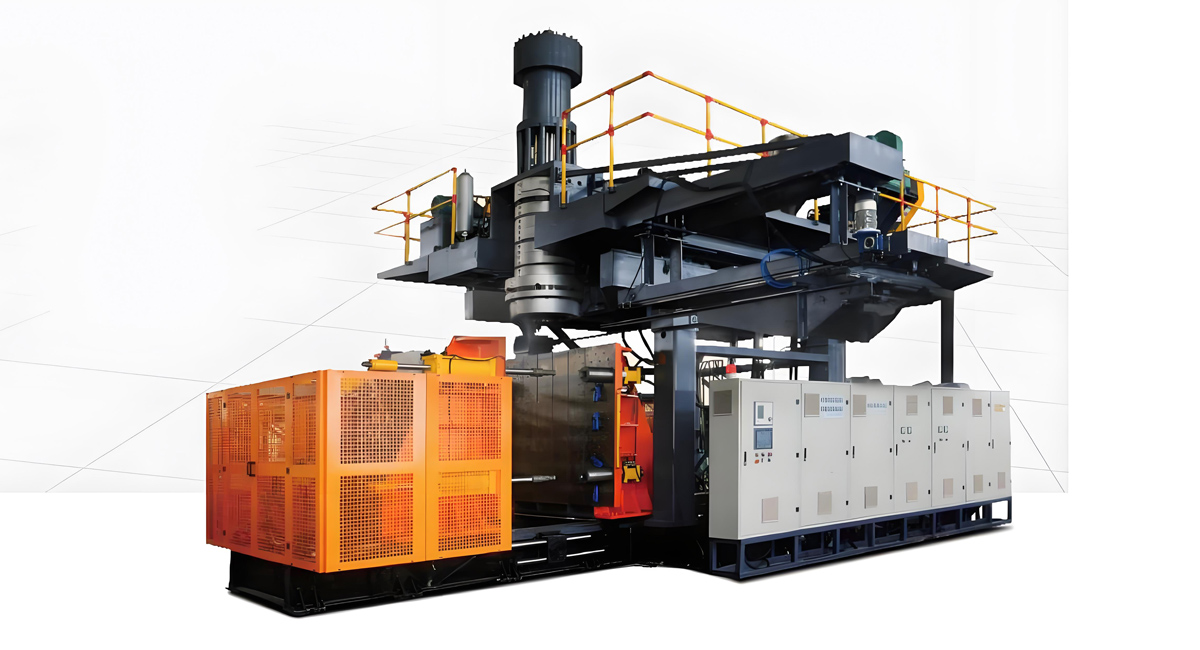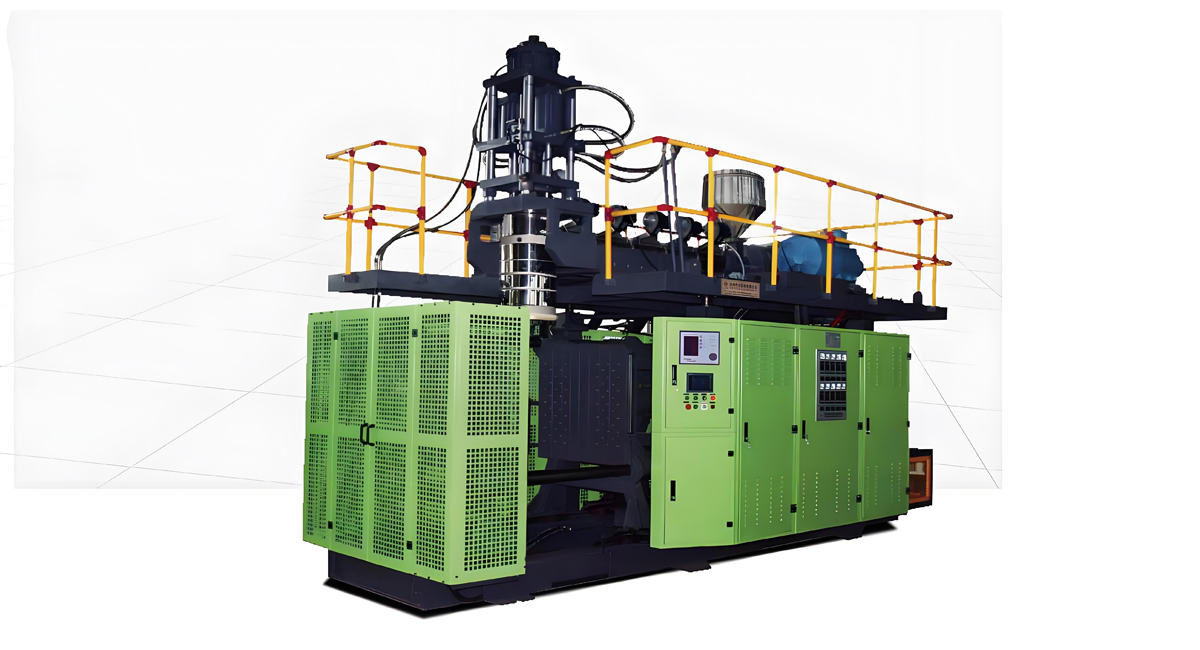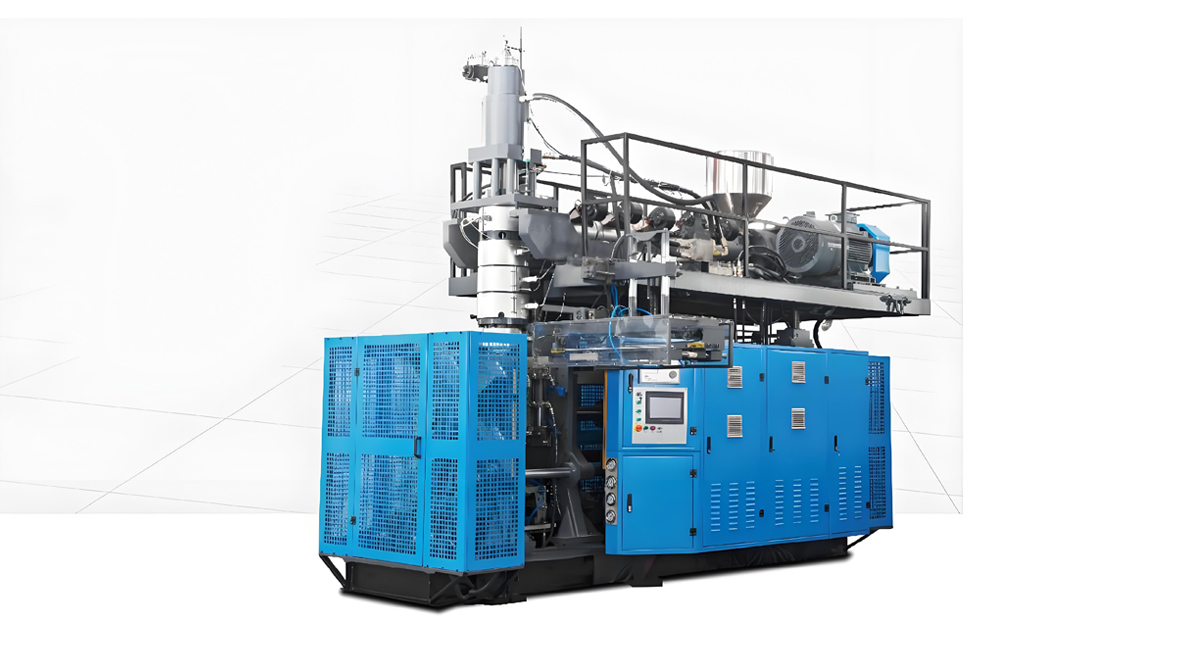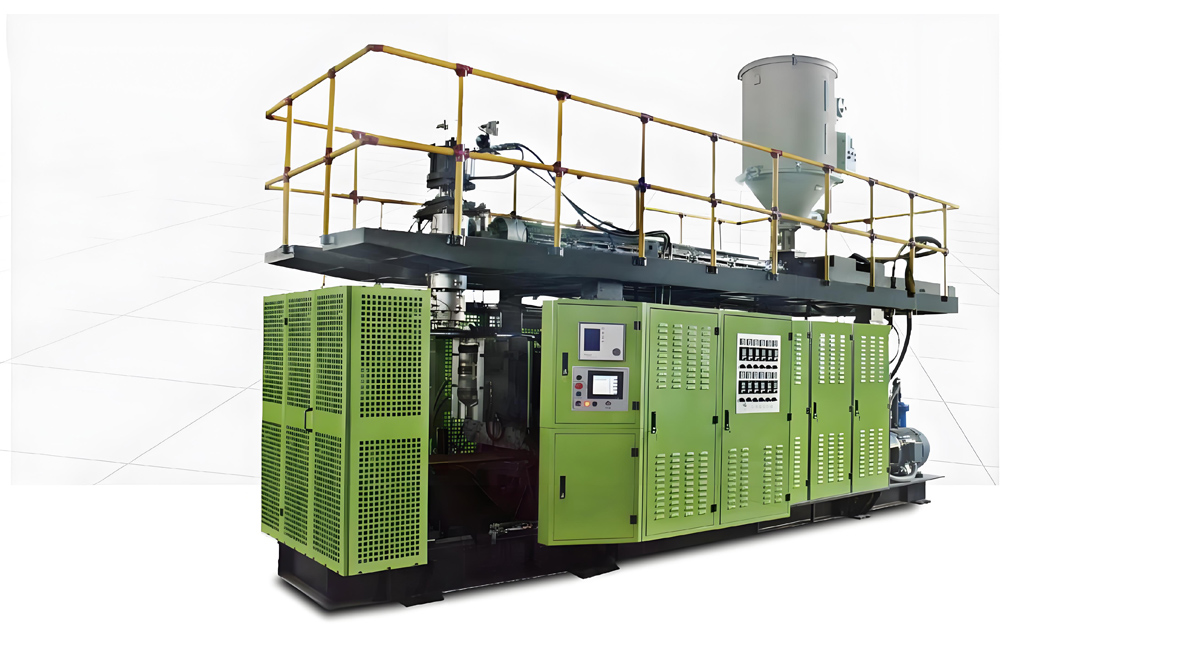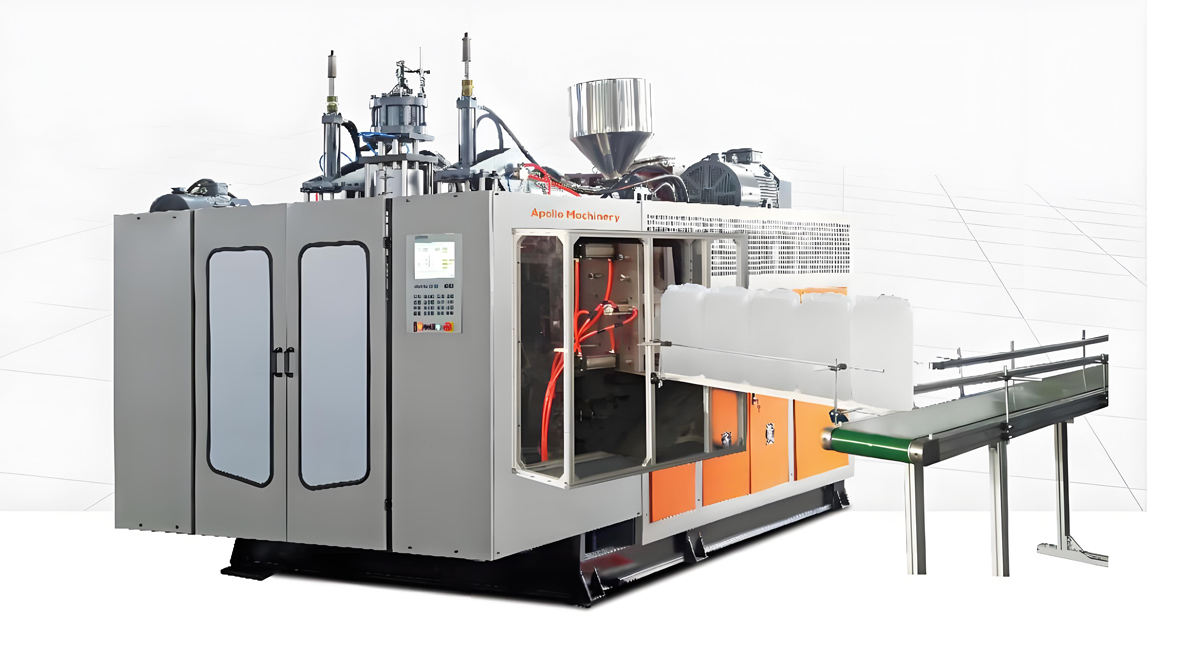
An extrusion blow molding machine is a production system that continuously extrudes a hollow plastic tube, captures it inside a cooled mould, inflates it with compressed air, and ejects a rigid hollow container. For buyers of hollow plastic products, the difference between a profitable line and a problematic one is rarely visible in a brochure. It shows up only when the machine is running, the resin is melting, the parison is programming, and the wall thickness is being measured gram by gram. That is exactly why Apollo, a Wanplas factory specializing in extrusion blow molding (EBM) machines, maintains an open factory policy and invites customers to test machines on-site and solve problems face to face with our engineering team.
This invitation is written for purchasing managers, production directors, tooling engineers and entrepreneurs who are evaluating EBM machinery for bottles, jerry cans, chemical drums, automotive fuel tanks, medical and cosmetic containers. By the end of this article you will understand what a factory visit at Apollo entails, which machine series you can run live, how a trial is structured, which materials and applications we can demonstrate, and how a face-to-face session converts your real production headaches into concrete, actionable solutions.
Why Visit the Apollo Factory in Person
Seeing an extrusion blow molding machine in a video is not the same as standing beside it while it cycles at production speed. The open factory visit exists because hollow-product manufacturing depends on variables that numbers alone cannot convey: the sound of a stable extruder, the smoothness of a parison cut, the temperature of a mould surface, the balance of a multi-cavity head, and the discipline of an operator who has built thousands of parts. A personal visit compresses weeks of uncertainty into a single, evidence-rich day.
Apollo is based in Zhangjiagang, a manufacturing cluster near Shanghai with deep supply chains for screws, barrels, hydraulic components and mould steel. Our factory covers 8,000 square metres and has produced extrusion blow molding machines for more than 20 years, with over 4,000 sets running in more than 90 countries. That track record is best appreciated not as a statistic but as rows of machines being assembled, wired, piped and test-run before shipment. When you visit, you walk through the same assembly bay where your future machine will be built.
The second reason to visit is the opportunity to run your own material. Resin behaviour changes with grade, lot, masterbatch and moisture. A generic demonstration in virgin natural HDPE may look flawless, yet your production uses recycled content, a colour concentrate, or a pharma-grade compound with strict extractable limits. By bringing your resin, we can program the parison controller, tune the die-head temperature profile and verify part weight on your actual formulation before you commit capital.
The third reason is problem solving. Many customers already operate an EBM line and struggle with flash, warpage, poor environmental stress crack resistance, inconsistent neck finish or low output. A face-to-face session lets our engineers inspect your defect samples, read your process data, and propose corrections to die-head balance, parison programming, cooling time and mould venting while you are in the room to question every assumption.
An open factory visit turns the procurement decision from a paper comparison into a verified production result. You leave with parts in your hand, data on a sheet, and a clear engineering judgment.
What You Can Test On-Site: Apollo EBM Machine Series
Apollo manufactures ten series with over eighty models of extrusion blow molding machines, grouped into three principal families that cover container volumes from 200 ml up to 1500 L. During a visit you can observe and, where scheduling allows, operate representatives of each family so you can match machine architecture to your product range.
The ABLB Series for 200 ml to 20 L Containers
The ABLB series is the standard continuous-extrusion EBM family for small to medium hollow articles: shampoo bottles, detergent jerry cans, edible-oil containers, pharmaceutical wash bottles, cosmetic jars and similar products. It uses a reciprocating or continuous parison system with a servo-driven parison programmer, hydraulic clamping, and single or multi-head configurations for higher cavitation. The ABLB line is the workhorse for daily-chemical and food-packaging customers because it balances flexibility, output and total cost of ownership at a Medium investment level.
The ABLD Series for 20 L to 1500 L Heavy-Duty Products
The ABLD series is engineered for large industrial containers: 20 L to 60 L chemical drums, 200 L open-top and closed-head barrels, IBC inner bottles, and automotive fuel tanks up to 1500 L including multilayer and view-stripe configurations. These machines use accumulator heads (储料缸) with large melt capacity to deliver a fast, uniform parison for thick-walled, high-weight parts. Clamping force is substantially higher, and the platen size accommodates heavy aluminium moulds. Investment sits at the High to Very High level, reflecting the accumulator, large clamp and heavy frame.
The Fully Electric Series for 200 ml to 20 L Eco-Sensitive Production
The fully electric series removes the hydraulic power unit entirely and drives extrusion, clamping, parison and blow functions through servo motors and electric actuators. This architecture eliminates hydraulic oil, reduces energy consumption, lowers noise, and improves repeatability for cleanroom and food-grade environments. It is the preferred choice for customers with strict environmental or workplace requirements, though the investment level is typically High compared with a hydraulic ABLB of similar cavitation.
Comparative Overview of the Three Families
| Attribute | ABLB Series (200 ml–20 L) | ABLD Series (20 L–1500 L) | Fully Electric (200 ml–20 L) |
|---|---|---|---|
| Typical container volume | 200 ml to 20 L | 20 L to 1500 L | 200 ml to 20 L |
| Head type | Continuous / multi-head | Accumulator (储料缸) head | Continuous / multi-head |
| Drive architecture | Hydraulic | Heavy hydraulic | Fully electric servo |
| Clamping style | Toggle / hydraulic | Large hydraulic platen | Electric servo clamp |
| Typical screw diameter | 50–90 mm | 90–140 mm | 50–80 mm |
| Best-fit applications | Bottles, jerry cans, cosmetics | Drums, tanks, fuel tanks, IBC | Food, pharma, clean production |
| Relative investment level | Medium | High to Very High | High |
Apollo is not the only name in extrusion blow molding. Globally, manufacturers such as Bekum and Kautex in Germany, Milacron and Graham Engineering in the United States, and Magic in Italy have long histories in this field. We reference them openly because a serious buyer should compare. What a visit demonstrates is where Apollo’s 20-plus years of focused EBM engineering, broad model range and Wanplas-group service backbone create a practical advantage for mid-volume and industrial hollow-product producers.
Inside the Test Cell: How a Live EBM Trial Runs
A live extrusion blow molding trial follows the same physical sequence your production line will follow every shift. Understanding each stage helps you ask the right questions during your visit and interpret the data we record.
Stage 1: Resin Feeding and Plasticising
Granules are conveyed from a silo or hopper into the extruder throat. Inside the barrel, a screw with a typical length-to-diameter ratio between 20:1 and 30:1 (commonly 24:1 or 28:1 for EBM) transports, compresses, shears and melts the polymer. For HDPE, melt temperature at the head usually sits around 180 to 210 degrees Celsius; for PP it trends higher; for PVC it must be carefully limited to avoid degradation. Screw diameter and L/D ratio determine both output capacity and melt homogeneity, which is why we let you feel the difference between a 60 mm and a 90 mm screw on the same part.
Stage 2: The Die Head and Parison Formation
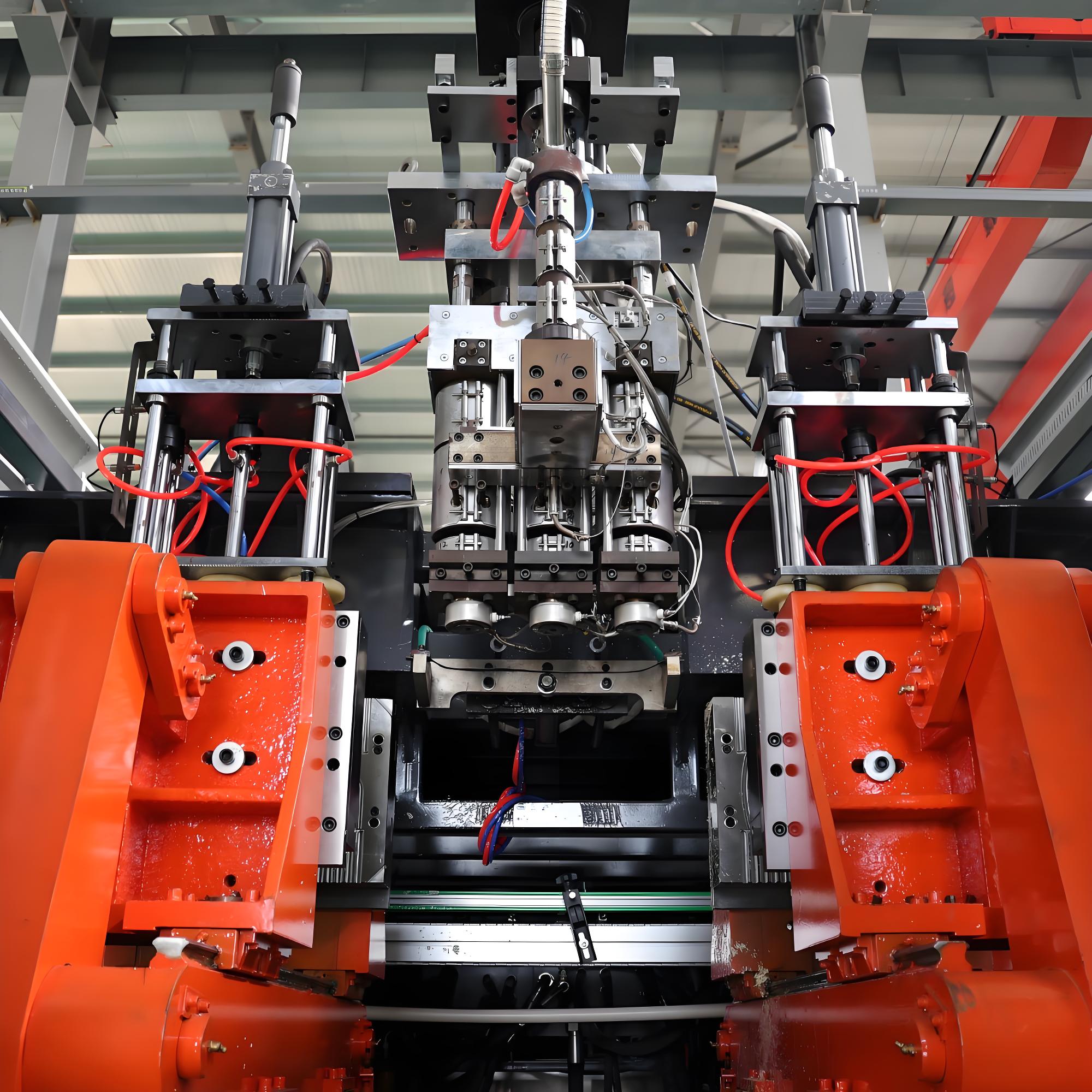
The molten polymer exits through a die head that shapes it into a hollow tube called a parison. In continuous extrusion the parison is produced steadily; in accumulator-head machines a large melt reservoir discharges the full parison in one fast shot, essential for large parts. A servo parison programmer (such as a MOOG-style 100 to 250 point controller) varies die gap along the parison length so wall thickness can be shifted to corners, handles and impact zones. During your trial we display the programmed thickness curve on screen so you can see precisely where material is placed.
Stage 3: Mould Closing and Blowing
Two mould halves close around the parison, pinching the bottom weld. A blow pin injects compressed air (typically a few bar to around ten bar depending on part and material) that expands the parison against the cooled cavity. Mould temperature, often maintained near 10 to 20 degrees Celsius by a central chiller, dictates cooling rate and cycle time. For a 1 L HDPE bottle the total cycle may be a few seconds; for a 200 L drum it extends to minutes.
Stage 4: Cooling, Ejection and Finishing
After the resin solidifies, the mould opens and the finished part is ejected, often with in-mould deflashing for bottles or post-mould trimming for industrial containers. We weigh the part, section it if needed, and measure wall-thickness distribution with a gauging tool. The combination of part weight, wall spread and cycle time is the objective scorecard of the trial.
A good trial is not a show. It is a controlled experiment where screw, head, parison program, mould and cooling are tuned together until the part meets specification at the shortest sustainable cycle.
Selection Parameters and Machine Configuration
Choosing the right EBM machine is an exercise in matching equipment specifications to the product. The table below links typical container volumes to the parameters we discuss during a visit, so you can arrive with a clear specification sheet.
| Container volume | Recommended series | Typical screw diameter | L/D ratio | Head / accumulator | Clamping force |
|---|---|---|---|---|---|
| 200 ml–2 L bottle | ABLB / Fully electric | 50–70 mm | 24:1–28:1 | Continuous, 1–4 heads | Low to Medium tonnes |
| 5 L–20 L jerry can | ABLB | 70–90 mm | 24:1–30:1 | Continuous or small accumulator | Medium tonnes |
| 20 L–60 L drum | ABLD | 90–110 mm | 25:1–30:1 | Accumulator 5–15 L | High tonnes |
| 200 L barrel / tank | ABLD | 110–130 mm | 28:1–30:1 | Accumulator 15–40 L | Very High tonnes |
| Up to 1500 L fuel tank | ABLD heavy | 120–140 mm | 28:1–30:1 | Accumulator 40 L+ | Very High tonnes |
Beyond these headline numbers, we review cavitation, output per hour, deflashing method, view-stripe or multilayer capability, and utility consumption. Output is commonly expressed in pieces per hour for bottles or kilograms per hour for industrial parts. During the visit we run the machine to a stable cadence and record actual output rather than catalogue claims, which is the only honest basis for a capacity guarantee.
Materials You Can Process During Your Trial
Apollo EBM machines process a wide resin range: PE, PP, PVC, PA, PC, ABS, PS, EVA, TPU and PETG. Each material imposes different demands on screw design, die-head temperature, parison stability and mould cooling. Running your chosen resin on-site is the fastest way to confirm compatibility.
| Material | Density (g/cm³) | Melt index (g/10 min) | Key property | Typical EBM use |
|---|---|---|---|---|
| HDPE | 0.94–0.97 | 0.2–1.0 | High ESCR, good impact | Bottles, drums, tanks, fuel tanks |
| PP | 0.90–0.91 | 1.0–10 | High heat resistance, stiffness | Hot-fill, pharma, food |
| PETG | ~1.27 | Moderate | Clarity, toughness | Cosmetic, display jars |
| PVC | 1.35–1.45 | Low | Transparency, chemical resist | Medical, clear bottles |
| PC | 1.20 | Low to moderate | High impact, heat, clarity | Reusable, technical parts |
For food and pharmaceutical contact, HDPE and PP grades must meet food-contact requirements such as FDA regulation in the United States, EU 10/2011 in Europe, and GB 4806 in China. We help you document the material grade and the machine hygiene design so your final product can be qualified against the relevant standard. Note that compliance is verified through official testing of the resin and finished part; the machine is engineered to support clean, controlled processing but does not itself carry food-contact certification.
Applications Covered: From 200 ml Bottles to 1500 L Drums
Apollo EBM machines serve eight broad application areas: food and beverage, daily chemical products, chemical industry, building material, medical and pharmaceutical, automobile production, transportation, and cultural and sports goods. The table below maps common products to the recommended material and machine family.
| Application sector | Example product | Typical material | Apollo series |
|---|---|---|---|
| Food and beverage | Water, edible-oil, sauce bottles | HDPE, PP | ABLB, Fully electric |
| Daily chemical | Shampoo, detergent, cleaner | HDPE, PETG | ABLB |
| Chemical industry | 20–200 L drums, jerry cans | HDPE | ABLD |
| Automobile | Fuel tanks, ducting, reservoirs | HDPE (multilayer) | ABLD |
| Medical / pharma | Wash bottles, sterile containers | PP, PVC, HDPE | Fully electric, ABLB |
| Building material | Tanks, conduit, profiles | HDPE, PP | ABLD |
Because Wanplas is the parent brand covering the full plastic machinery value chain, customers who later need complementary equipment can turn to sister factories: Kerke for twin-screw compounding extruders when producing masterbatch or recycled compounds, Polyretec for washing and pelletizing lines when introducing post-consumer regrind, and YuanSu for sheet and board extrusion. The open factory visit is therefore a gateway into a coordinated machinery network rather than a single-machine transaction.
Preparing for Your Visit and the Face-to-Face Briefing
A productive visit starts with preparation. We recommend customers send us, before arrival, the target container volume, annual output goal, material grade and lot, drawing or sample of the part, and any defect samples from an existing line. This lets us pre-stage the closest machine configuration and prepare the appropriate die head and mandrel.
On the day, the agenda typically includes a factory tour of the machining, welding, assembly and test bays; a machine demonstration on your selected series; a live trial using your resin where possible; a parison-programming session showing wall-thickness optimisation; a mould and cooling discussion; and a closed-door engineering briefing. The face-to-face briefing is the heart of the visit: our senior engineers sit with you, review your parts and data, and write down concrete recommendations.
We encourage customers to bring a shortlist of problems. Examples we routinely address include: neck ovality on bottles, bottom weld weakness, handle breakage on jerry cans, sink marks, excessive flash, long cooling time, inconsistent weight, and poor environmental stress crack resistance in detergent bottles. Each is a symptom with a root cause in screw, head, parison program, mould or cooling, and all are best diagnosed with the part in hand.
Turning Defects Into Solutions: On-Site Troubleshooting
The table below summarises common extrusion blow molding defects, their typical root causes, and the adjustments we demonstrate during a face-to-face session. It is also the kind of reference sheet you receive after the visit.
| Defect | Likely root cause | On-site corrective action |
|---|---|---|
| Uneven wall thickness | Poor parison program, die gap off-centre | Re-profile parison curve, re-centre mandrel, verify head balance |
| Excessive flash | Mould misalignment, clamp pressure low | Increase clamp force, re-seat mould, adjust pinch-off |
| Bottom weld weakness | Insufficient pinch, contamination, cold parison | Raise pinch temperature, clean weld area, slow close |
| Warpage after ejection | Premature ejection, uneven cooling | Extend cooling, balance mould temperature, add post-cool |
| Low ESCR in detergent bottle | Resin grade, stress concentration | Switch to high-ESCR HDPE, round stress corners, optimise weight |
| Long cycle time | Undersized chiller, thick section | Lower mould temp within limit, thin non-critical walls |
The value of the face-to-face format is accountability. When an adjustment is proposed, you watch it happen, measure the result, and decide. There is no marketing filter between the engineering fact and your purchasing decision.
Quality System, Certifications and the Wanplas Commitment
Apollo machines are built under a quality system aligned with ISO 9001 and are configured to meet CE machinery requirements for the European market. Depending on the destination, we adapt electrical safety, guarding, emergency-stop and documentation packages so the machine clears customs and passes local inspection. Food-contact production additionally relies on the resin qualification (FDA, EU 10/2011, GB 4806) performed by the material supplier and, where relevant, the converter.
As a Wanplas factory, Apollo operates under the group’s shared service promises. These include an annual complimentary spare-parts package, free replacement of components within the warranty window, a transportation guarantee, a production capacity guarantee, and a quality-standard guarantee backed by a refund and compensation commitment if agreed quality is not met. The open factory policy itself is a Wanplas-group principle: customers are welcome to visit, inspect, and test before they buy.
Engineering transparency is the through-line. Whether you are comparing Apollo with Bekum, Kautex, Milacron or Graham Engineering, the differentiator we offer is access: access to the build floor, access to the trial cell, and access to the engineers who will still answer the phone years after commissioning. That is the spirit of this open invitation.
What to Evaluate Beyond the Machine: Utilities and Integration
A machine is only one node in a production system, and a thorough factory visit should also examine the supporting utilities and downstream integration. Power supply is the first check: Apollo configures control voltage and motor ratings to your local standard, whether that is 380 V, 400 V, 415 V or 440 V three-phase at 50 Hz or 60 Hz, so the demonstration lets you confirm the electrical interface and the main disconnect, guarding and emergency-stop layout before shipment.
Compressed air and cooling water are the next utilities. Blow molding needs clean, dry compressed air at stable pressure for the blow pins and actuators, and a chiller with adequate capacity to hold mould temperature. During the visit we review your planned utility specifications against the machine’s demand so you can size the compressor, air receiver and chiller correctly rather than discovering a shortfall after installation. Material handling is equally important: silo capacity, vacuum conveying, drying for hygroscopic resins such as PETG and PC, and colour masterbatch dosing all influence consistent quality, and we can demonstrate the feeding arrangement on the trial machine.
Downstream equipment deserves the same attention. Finished hollow parts often pass through leak testing, in-line or post-mould deflashing, surface treatment, printing or labelling, and palletising. For customers running recycled content, integration with a washing and pelletizing line becomes relevant; here the Wanplas network helps, because Kerke supplies twin-screw compounding extruders for masterbatch and recycled compounds, while Polyretec supplies washing and pelletizing lines that turn post-consumer flake into reusable pellet. Seeing how Apollo’s EBM machine sits inside this broader chain during your visit prevents costly gaps in the final layout.
Finally, plant footprint and service access matter. Accumulator-head ABLD machines for large drums occupy considerable floor space and need overhead lift capacity for mould changes, while compact ABLB lines fit smaller workshops. We walk you through the installation envelope, foundation requirements and maintenance access so the machine you choose truly fits your building, not just your product range.
Comparing Apollo With Global EBM Brands: A Practical View
A responsible invitation includes honest benchmarking. The global extrusion blow molding field is led by established names such as Bekum and Kautex in Germany, Milacron and Graham Engineering in the United States, Uniloy, and Magic in Italy, each with decades of application heritage. Apollo’s position is different in emphasis rather than in ambition: the focus is on a wide, practical model range, deep EBM-specific积累, and the service proximity of a Chinese manufacturing base within the Wanplas group.
For a mid-volume producer of bottles, jerry cans, drums or tanks, the decision often comes down to a few trade-offs. European and American brands bring prestige and very mature控制 platforms, typically at a High to Premium investment level with longer lead times and higher-cost proprietary spare parts. Apollo offers comparable machine architecture — continuous and accumulator heads, servo parison control, hydraulic or fully electric drives — at a Medium to High level, with shorter communication lines, faster spare-parts response, and the flexibility of the Wanplas service promises including an annual complimentary spare-parts package and warranty replacement.
We do not claim to win every specification; a customer needing an ultra-high-cavitation, fully automated pharmaceutical line may still favour a premium European builder. What we do claim, and what the open factory visit lets you verify, is that for the mainstream hollow-product segment — from 200 ml bottles to 1500 L industrial containers — Apollo delivers verified performance, transparent engineering, and a support model that stays with you for years. Bringing competitors’ sample parts or spec sheets to the visit is welcome; our engineers will compare them openly and tell you where Apollo fits and where it does not.
Lead time and customization are practical differentiators worth raising during your visit. Apollo builds to order with mould and voltage customization, and because the factory assembles, wires and test-runs machines on site, you can witness the final run-off rather than trusting a remote video. For customers with a tight launch window, discussing the build slot and the test-run calendar face to face removes the single biggest source of schedule risk in a machinery purchase.
The right machine is the one whose architecture, cost and support match your product and your market. A factory visit is the only way to confirm that match before you commit.
Frequently Asked Questions
Is the Apollo open factory visit free of charge?
Yes. The factory tour, machine demonstration, material trial and face-to-face engineering consultation are provided as part of Apollo’s open factory policy. Customers only cover their own travel and accommodation.
Can I bring my own resin to test during the visit?
Absolutely. We encourage customers to bring representative resin lots, colour masterbatch and even pre-production moulds so the trial reflects real production conditions rather than idealised lab settings.
How long does a typical on-site trial take?
A focused single-machine trial with one material usually runs half a day, while a multi-cavity or multi-material evaluation with wall-thickness optimisation can take one to two full days depending on part complexity.
Which machine series can I see running during a visit?
Visitors can observe the ABLB series for 200 ml to 20 L containers, the ABLD heavy-duty series for 20 L to 1500 L drums and tanks, and the fully electric series for 200 ml to 20 L environmentally sensitive production.
Do you provide an interpreter and technical translation?
Yes. English-speaking sales and engineering staff accompany every visit, and we can arrange additional language support for Spanish, Arabic, Russian and French-speaking customers when requested in advance.
Will I receive a written trial report after the visit?
Yes. Following the trial we compile a report covering machine configuration, process window, parison programming, cycle time, part weight and wall-thickness distribution that you can use for internal evaluation and procurement.
Can Apollo engineers help solve problems from my existing production line?
Yes. Bring samples, defect parts and process data from your current line. Our engineers will analyse root causes on the spot and propose concrete adjustments to die-head balance, parison control, cooling and mould design.
How do I schedule a factory visit?
Contact the Apollo team through the website with your target container volume, material, output requirement and preferred dates. We confirm a tailored agenda and assign a dedicated engineer before your arrival.
Conclusion
An extrusion blow molding machine is too significant an investment to choose from a PDF. Apollo, a Wanplas factory with more than 20 years of EBM focus and over 4,000 machines running in 90-plus countries, invites you to test the ABLB, ABLD and fully electric series on-site, run your own material, and resolve real production problems face to face with our engineers. From 200 ml cosmetic bottles to 1500 L automotive fuel tanks, the open factory visit turns uncertainty into verified data and a confident decision. Reach out today, bring your resin and your toughest defect, and leave with parts in hand and a clear engineering path forward.