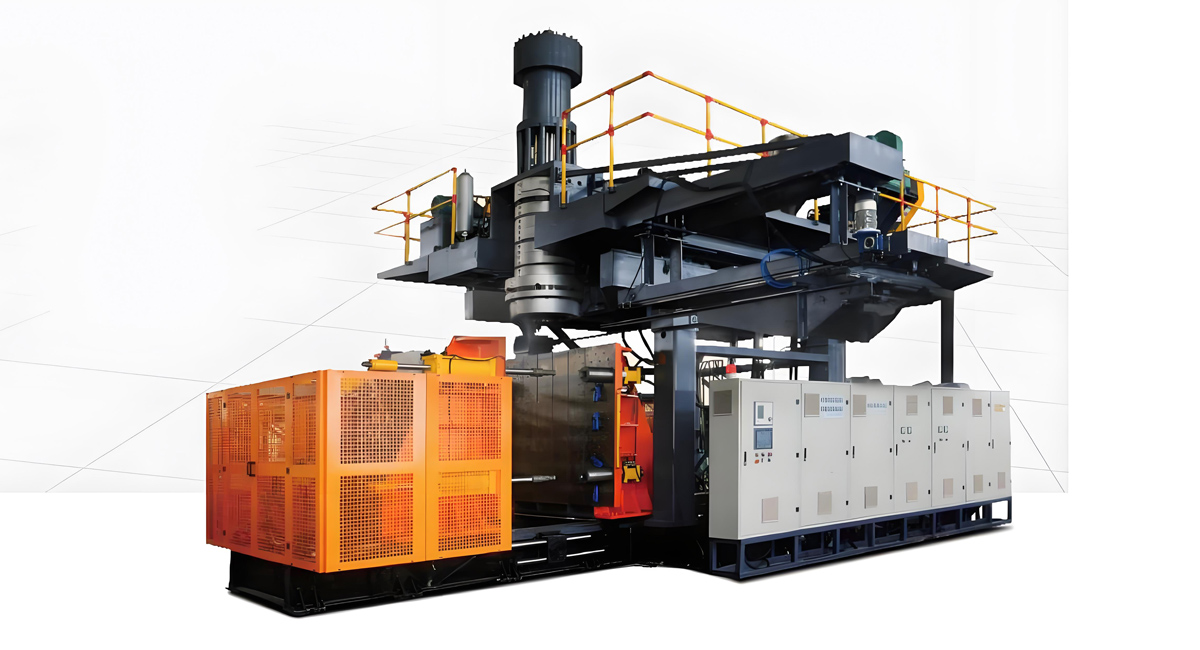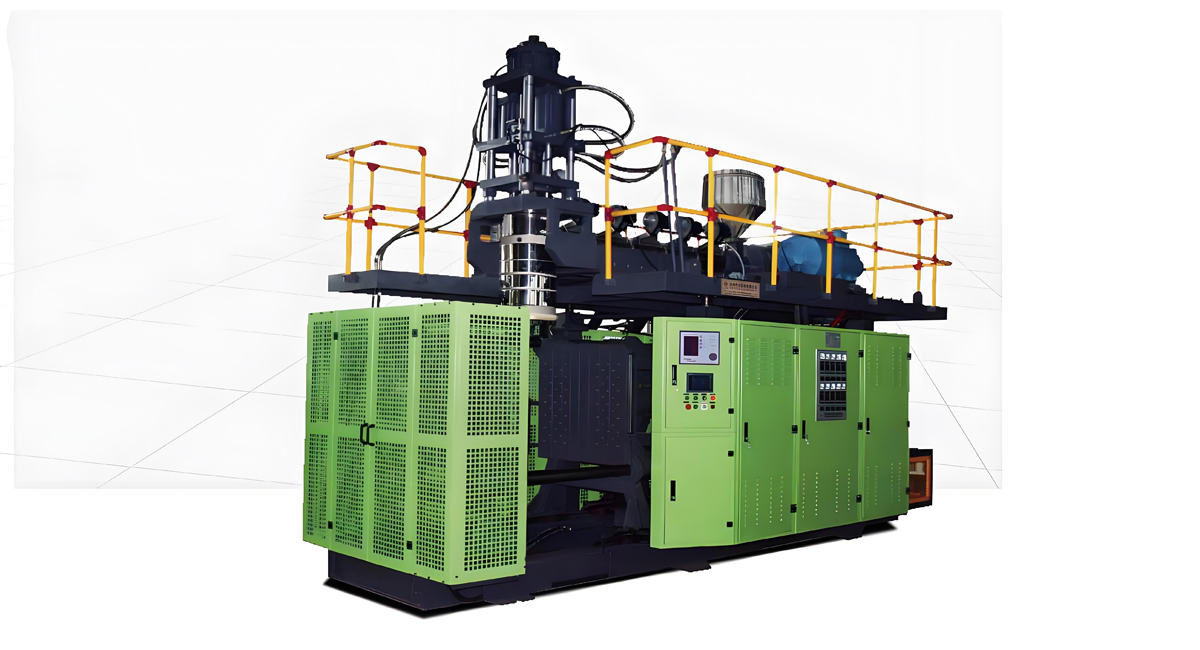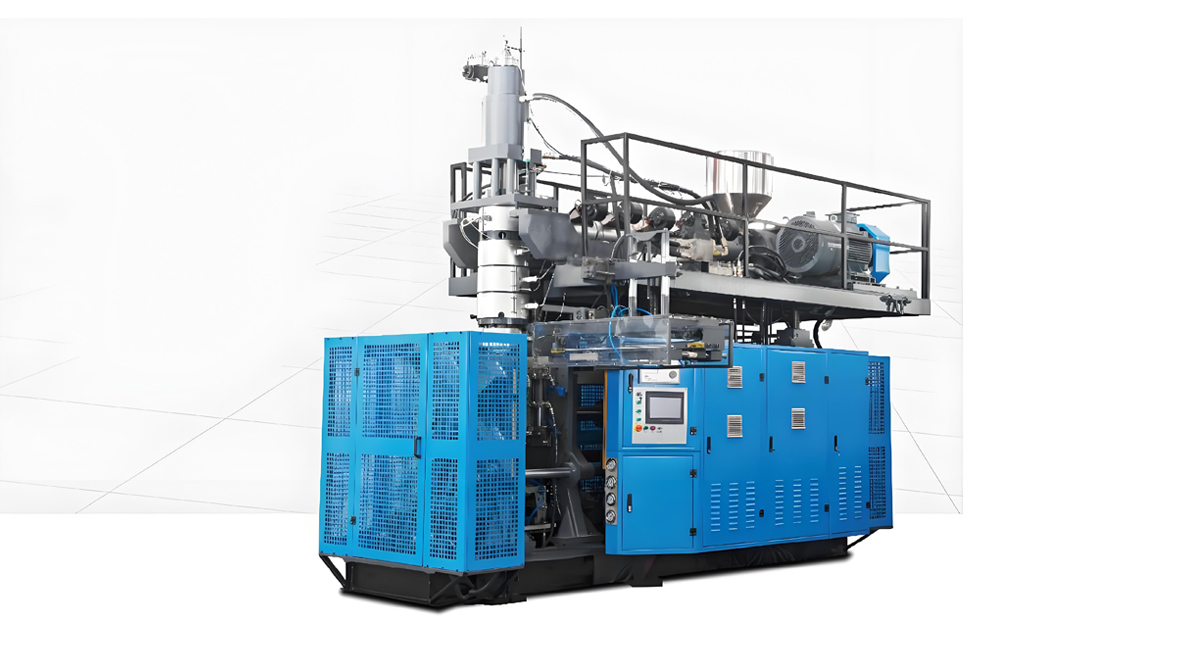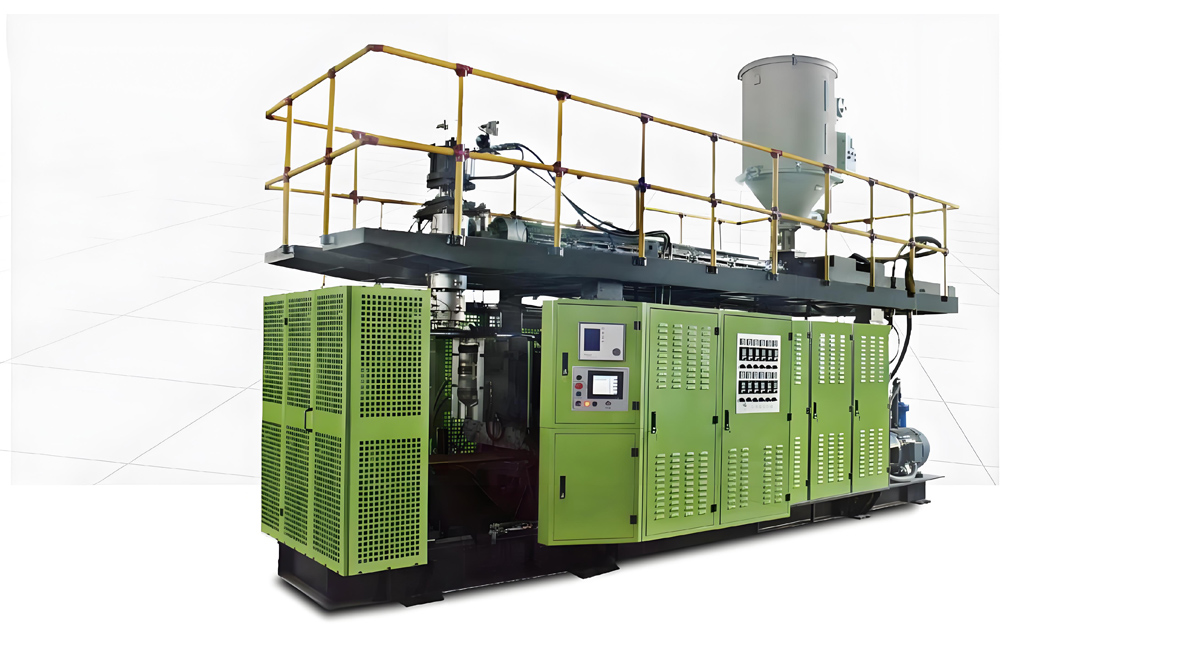
Choosing a small factory EBM machine for 500ml to 5L containers is less about finding the cheapest line and more about matching capacity, footprint, and running profile to a realistic entry budget. Extrusion blow molding, or EBM, remains the most flexible route for hollow plastic packaging in this volume band because it handles polyethylene, polypropylene, and a wide range of other resins on a single continuous platform. For an entrepreneur starting with one shift, limited floor space, and a two- to four-person crew, the right configuration avoids both over-specification and painful capacity shortfalls. Apollo, a Wanplas factory based in Zhangjiagang near Shanghai, has spent more than 20 years building ten machine series with over eighty models of automatic extrusion blow molding equipment, and more than 4,000 sets now run in over 90 countries. This guide walks through the real constraints of a small workshop, the molding science behind 500ml to 5L bottles, concrete Apollo ABLB series options, an energy and capacity model built on index points rather than currency, and a clear expansion path from a single machine toward a fully electric line.
Small Factory Reality: Space, Power, and Workforce Constraints
The first step in any small factory EBM machine selection is to stop comparing brochures and start measuring the room, the supply, and the team. A realistic 500ml to 5L entry line is not the machine alone; it is the machine plus a minimum viable auxiliary package plus the aisles and utility drops that keep it running. Most small workshops begin with a single shift and grow into a second shift only after orders stabilize, so the planning should assume one shift first and reserve the space for expansion.
Floor area is the easiest constraint to underestimate. A single ABLB series machine with a crusher, loader, chiller, and a small air compressor fits comfortably inside 60 to 90 square meters when the layout is tight, but that number excludes finished-goods staging and raw material storage. As soon as a double-station machine and a scrap recycle loop enter the plan, the comfortable footprint moves toward 120 to 200 square meters. Planning the bay at the higher end from day one avoids a costly relocation later, even if only one machine is installed initially.
Power supply is the second hard limit. Continuous extrusion blow molding draws three-phase power, and the entry class sits in the Low to Medium power band, while double-station and accumulator-equipped machines climb toward the Medium to High band. Before quoting a machine, confirm the available supply capacity with the local utility because an undersized drop forces either a derated cycle or a transformer upgrade that is far harder to reverse than a machine choice.
Workforce is the third constraint and the one most often ignored. A small EBM cell needs roughly two to four operators across a single shift: one tending the machine and mold changeovers, one handling deflash and inspection, and one managing material handling and packing. Two operators can run a single-station cell if upstream and downstream tasks are simplified, but a double-station line at full output leans toward three or four. Training time matters more than headcount, which is why the service and support program described later includes hands-on operator training.
Utility independence is the final reality check. Many small factories do not have a central compressed-air plant or a central chilled-water station. The minimum viable package therefore carries its own compressor and its own chiller, sized to the machine rather than to a campus. This raises the entry investment slightly but removes a dependency that would otherwise block commissioning. Treating the cell as a self-contained module is the safest way to launch a small 500ml to 5L blow molding operation.
Molding Essentials for 500ml to 5L Containers
Extrusion blow molding of 500ml to 5L bottles lives or dies on parison control. The parison is the hollow tube of molten polymer that the machine extrudes downward into the open mold, and its wall profile determines the final bottle wall thickness everywhere from the neck to the base. Within the 500ml to 5L band the geometry spans lightweight beverage and detergent bottles at the low end to heavier edible-oil and lubricant jugs at the high end, and each endpoint stresses a different part of the process.
Neck and Closure Design
The neck is the most dimensionally critical feature because it carries the closure and the fill thread. For 500ml to 5L containers the neck is usually molded by a dedicated neck insert rather than by free parison pinch, which protects thread accuracy and reduces scrap. A well-designed neck insert also supports the parison during transfer so the thread stays concentric. Small factories should standardize on a small set of neck finishes shared across SKUs to keep mold cost and changeover time low.
Handleware and Integral Handle Formation
Many 2L to 5L containers, especially detergent and edible-oil bottles, use an integral handle, sometimes called handleware. The handle is formed by capturing a loop of parison in a separate mold cavity and welding it to the body during blow. Handleware adds cycle time and mold complexity, so a small factory should decide early whether the target market requires it. Where the handle is optional, a handled and a handle-less version of the same bottle let the line serve more customers without doubling the machine count.
Parison Sag Control for Large Volumes
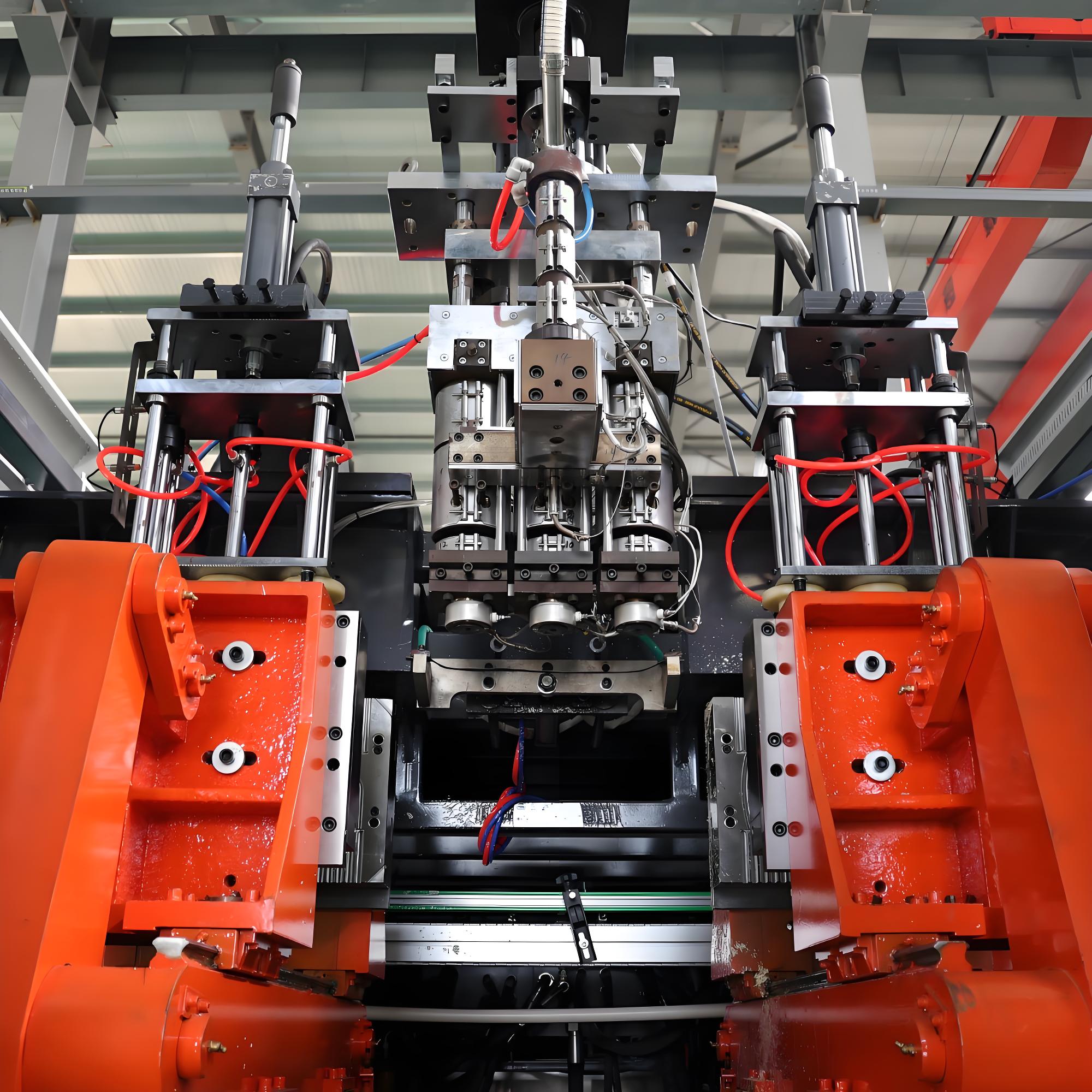
As container volume approaches 5L, parison weight grows and the molten tube tends to sag under its own weight before the mold closes. Sag thins the lower parison and thickens the upper section, producing eccentric walls and weak spots. Melt temperature, die gap, and extrusion speed are the primary levers, supported by a properly tuned parison programmer on the die head. For a small-factory entry, selecting the right screw and barrel temperature profile for the chosen resin prevents most sag issues without expensive accumulator hardware.
Wall thickness distribution is the practical expression of all the above. The goal is to place material where stress concentrates, typically at the handle root, the base radius, and the thread, and to thin it elsewhere for gram-weight economy. Lightweighting of 5 to 15 percent against a legacy baseline is achievable on a well-tuned ABLB cell, and every gram removed improves both material cost index and cooling time. Cooling time, in turn, sets the cycle, so wall optimization feeds directly back into output.
Material choice closes the molding picture. High-density polyethylene dominates 500ml to 5L packaging for its balance of stiffness, chemical resistance, and processability, while polypropylene appears where higher temperature resistance or clarity is needed. Both run cleanly on the ABLB series, and the same machine can often switch resins with only a screw and barrel temperature and parison program adjustment rather than a new machine.
Apollo ABLB 55: Compact Single-Station Workhorse for 0.5L to 3L
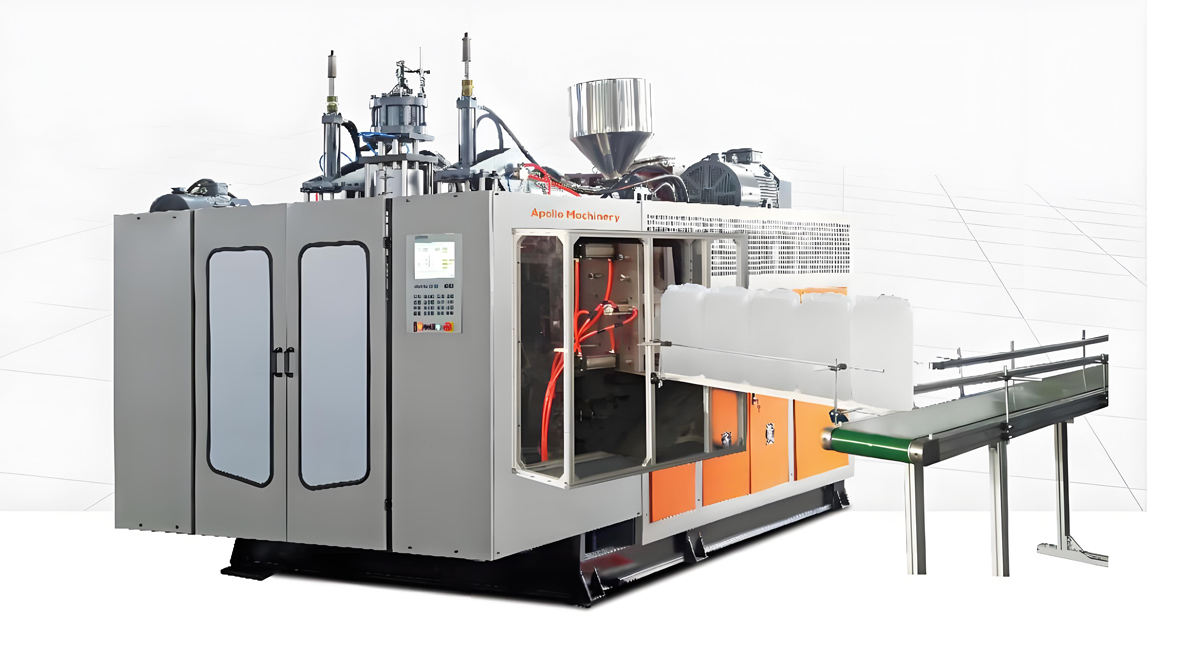
The ABLB 55 is the natural entry point for a small factory targeting the 500ml to 3L band. As a member of the ABLB series built by Apollo, a Wanplas factory, it pairs a compact footprint with the flexibility to run single-station or double-station layouts and single-head or double-head die configurations. For a first machine, the single-station single-head version keeps the investment at the Low level while still covering the most common beverage, dairy, and personal-care bottle sizes.
Technically, the ABLB 55 uses a continuous extrusion die head with a programmable parison controller, so wall distribution is tunable per SKU rather than fixed by tooling. The clamping system is sized for the 0.5L to 3L parison load, and the platen accepts neck inserts and handle cavities for the handled bottles in this range. The machine is offered with either a conventional hydraulic drive or a servo-hydraulic drive, the latter lowering the energy index as discussed in the running-cost section.
ABLB 55 Specification
| Parameter | ABLB 55 Single-Station | ABLB 55 Double-Station |
|---|---|---|
| Max container volume | 3 L | 3 L |
| Station layout | Single station | Double station |
| Head configuration | Single head or double head | Single head or double head |
| Screw diameter | 55 mm | 55 mm |
| L/D ratio | 24:1 | 24:1 |
| Clamping force | 50 kN | 50 kN per station |
| Drive option | Hydraulic or servo-hydraulic | Servo-hydraulic recommended |
| Typical installed power class | Low to Medium | Medium |
| Processable materials | PE, PP, PVC, PS, and more | PE, PP, PVC, PS, and more |
The ABLB 55 double-station version is the recommended step once single-shift output saturates, because it nearly doubles effective throughput on the same mold set. The incremental entry investment moves from the Low to the Medium level, but capacity utilization improves enough that unit output man-hours drop, which is the more meaningful small-factory metric.
Apollo ABLB 65 and ABLB 75: Double-Station Output for 3L to 5L
When the target moves into the 3L to 5L jug class, parison weight and cooling time grow, and the ABLB 65 and ABLB 75 earn their place. These machines share the ABLB series architecture and mold platen philosophy with the ABLB 55, so a small factory that starts on the 55 can later add a 65 or 75 without relearning the control system or discarding platen know-how.
The ABLB 65 covers up to 5L and is offered in both single-station and double-station form, while the ABLB 75 is the heavy variant for the top of the 500ml to 5L band where thicker walls, handled jugs, or higher output demand a stronger clamp and a larger screw. Both accept double-head tooling for two-cavity production of smaller items, which is how a 5L-oriented cell also absorbs 1L to 2L runs efficiently.
ABLB 65 and ABLB 75 Specification
| Parameter | ABLB 65 | ABLB 75 |
|---|---|---|
| Max container volume | 5 L | 5 L heavy duty |
| Station layout | Single or double station | Double station |
| Head configuration | Single or double head | Single or double head |
| Screw diameter | 65 mm | 75 mm |
| L/D ratio | 24:1 | 24:1 |
| Clamping force | 60 kN per station | 80 kN per station |
| Drive option | Servo-hydraulic | Servo-hydraulic |
| Typical installed power class | Medium | Medium to High |
| Best-fit volume | 2L to 5L | 3L to 5L heavy |
For a small factory that expects to grow into edible-oil and lubricant jugs, the ABLB 75 double-station double-head configuration is the most future-proof choice in the 500ml to 5L band. It carries the Medium to High entry level but absorbs the full volume range on one platform, which avoids buying a second small machine later.
Configuration Trade-off Checklist: What You Actually Need
Every small-factory EBM purchase is a chain of either-or decisions. Framing them as capability boundaries rather than price points keeps the conversation honest, because the right answer depends on volume, resin, and defect tolerance rather than on a fixed budget number. The checklist below separates must-have from optional for a 500ml to 5L entry cell.
| Decision | Recommended for small factory | When to upgrade |
|---|---|---|
| Single vs double station | Single station to start | When single-shift capacity saturates |
| Single vs double head | Single head for large 3L to 5L | Two cavities for 500ml to 2L runs |
| Accumulator head | Optional, usually not required | Very large parison or wide-mouth fast fill |
| Online deflash | Optional manual deflash first | When labor reduction matters |
| Leak detection | Recommended for filled goods | Mandatory for edible oil and lubricant |
| Auto takeoff and conveyor | Optional at Low level | Standard at double-station output |
The single most common mistake is buying double-head tooling for a 5L jug where one cavity already fills the cycle. Conversely, a factory running only 500ml to 1L bottles leaves output on the table without double-head cavities. Matching head count to bottle volume is the cheapest optimization available, and it costs nothing to plan on paper before ordering tooling.
Online deflash and leak detection deserve separate thought. Manual deflash keeps the entry investment at the Low level and is acceptable at low volume, but it adds labor per bottle and introduces a quality variable. Leak detection, by contrast, is rarely worth skipping for anything that will hold liquid in the supply chain, because a single leaking bottle can trigger a customer rejection far larger than the detector cost. Treat leak detection as a must-have for edible oil, lubricant, and agrochemical packaging.
Minimum Viable Auxiliary Equipment Package
An EBM machine cannot run as a standalone island. The minimum viable auxiliary package for a 500ml to 5L small-factory cell includes material handling, cooling, air supply, and scrap recovery. Each item is sized to the machine, not to a campus, which keeps the entry level controlled while preserving independence from shared utilities.
| Auxiliary item | Function | Key parameter for 500ml to 5L |
|---|---|---|
| Crusher or granulator | Reclaim flash and reject scrap | Low to Medium throughput |
| Vacuum loader | Convey resin to machine hopper | Matched to screw throughput |
| Chiller or mold temperature controller | Cool mold and stabilize cycle | Cooling capacity estimated in kW by heat load |
| Air compressor | Supply blow and pneumatic actuation | Blow 0.6 to 0.8 MPa, high pressure 2.5 to 4.0 MPa by model |
| Dryer for hygroscopic resin | Remove moisture before processing | Required for PP, PETG, and some grades |
The chiller sizing is best expressed by cooling load in kilowatts rather than by a fixed model, because mold cooling dominates the cycle for thick 5L walls. Undersizing the chiller extends cooling time and silently erodes output, so the heat-load estimate should include both the mold and the hydraulic or servo oil cooler. A small factory that skips this step often blames the machine for low output when the real bottleneck is a weak chiller.
Compressed air deserves equal care. The blow pressure for 500ml to 5L bottles typically sits at 0.6 to 0.8 MPa, while certain machine models and high-speed parison pinch functions need high-pressure air in the 2.5 to 4.0 MPa range. Sizing the compressor only for the low-pressure figure leaves the high-pressure actuator starved, which produces incomplete parison pinch and flash. A two-stage compressor or a separate high-pressure tank solves this within the minimum viable package.
Energy and Running Index Comparison
Energy is the largest recurring operating load after material, and it is the one place where drive technology changes the long-term math more than the entry price. To keep this comparison free of currency, the conventional hydraulic fixed-pump machine is set as the baseline at 100 index points, and every other drive is measured against it.
Index Points Versus Real Consumption
Index points express relative energy draw per unit of output, not a utility bill. A servo-hydraulic drive that follows only the pressure and flow the cycle demands lands near 70 to 75 index points, and a fully electric line with no hydraulic power unit reaches 55 to 65 index points. The gap widens with running hours: a two-shift operation accumulates the saving roughly twice as fast as a single-shift line, so the efficiency upgrade pays back through capacity utilization rather than through a lower sticker.
| Drive technology | Energy index (baseline 100) | Noise and oil profile | Entry investment level |
|---|---|---|---|
| Conventional hydraulic fixed pump | 100 | Higher noise, oil maintenance | Low |
| Servo-hydraulic | 70 to 75 | Lower noise, less oil heat | Medium |
| Fully electric | 55 to 65 | Lowest noise, no hydraulic oil | High to Premium |
Maintenance labor follows the same direction. Conventional hydraulic machines need oil filtration, seal inspection, and periodic hydraulic cylinder service, while fully electric lines remove the oil loop entirely and reduce maintenance man-hours by a meaningful multiple. For a small factory with a thin maintenance team, the labor saving can matter as much as the energy index, because it protects uptime during peak order periods.
Capacity Calculation Model and Output Sensitivity
Output is the number that decides whether a configuration is right, and it is fully calculable before any metal is cut. The model is simple: bottles per hour equals 3,600 divided by the cycle time in seconds, multiplied by the number of cavities, then adjusted by the overall equipment effectiveness and the good-product rate.
For example, a single-cavity ABLB 55 running a 12-second cycle yields 300 bottles per hour at the machine level. Over a single 8-hour shift that is 2,400 bottles, and at a 22-working-day month that is roughly 52,800 bottles before effectiveness losses. Apply an overall equipment effectiveness of 0.75 and a good-product rate of 0.97, and the realistic monthly output falls to about 38,400 good bottles. The same machine with double-head two-cavity tooling and a 13-second cycle more than doubles that figure, which is why head count tracks volume so directly.
| Scenario | Cycle time (s) | Cavities | OEE x yield | Good bottles per shift |
|---|---|---|---|---|
| ABLB 55 single head, 1L | 12 | 1 | 0.73 | 1,752 |
| ABLB 55 double head, 1L | 13 | 2 | 0.73 | 3,385 |
| ABLB 75 double station, 5L | 22 | 2 | 0.70 | 1,147 |
| ABLB 75 double head, 2L | 16 | 4 | 0.72 | 3,240 |
Sensitivity matters more than the point estimate. A one-second cycle slip on a 12-second bottle is an 8 percent output loss; a two-point drop in good-product rate from 0.97 to 0.95 is another 2 percent. For a small factory, the practical levers are cycle discipline, mold cooling, and deflash quality, all of which are operator-controlled before any capital upgrade. The capacity model is therefore a management tool, not just a sales number.
Monthly output scales linearly from the shift figure, and a second shift roughly doubles it provided material and labor keep pace. The expansion path later in this guide shows how to add shift and cavity before adding machine, because that order minimizes the entry investment while maximizing the return on the first cell.
Application Industries and Concrete End Products
The 500ml to 5L band is the workhorse of packaged goods, and the ABLB series serves a broad set of industries without changing the core machine. The value of naming concrete products is that it forces the configuration decision: neck finish, handle requirement, resin, and leak testing all follow from the end use rather than from a generic budget.
In food and beverage, the clearest example is the 5L edible-oil jug, a heavy polyethylene container that demands a secure neck, often a handled design, and strict leak performance because the contents are high-value and viscous. The 2L to 3L juice and water bottle sits at the lighter end and benefits from double-head cavities for volume. Daily chemical products center on the 2L laundry detergent bottle and the 1L to 3L personal-care refill, where handled versions dominate and gram-weight optimization protects margin. Lubricant packaging is the 1L motor-oil bottle and the 4L to 5L oil jug, both requiring excellent chemical resistance and reliable closure seating. Agrochemical and crop-protection packaging uses the 1L pesticide bottle and the 500ml to 1L concentrate bottle, where regulatory labeling and leak integrity are non-negotiable. Home care rounds out the list with 500ml to 2L cleaner and disinfectant bottles that favor fast cycles and high cavity counts.
Each of these end products maps to a concrete ABLB configuration. The 5L edible-oil jug suits the ABLB 75 double-station single-head for wall control, the 2L detergent bottle suits the ABLB 65 double-head for output, the 1L motor-oil bottle suits the ABLB 55 double-head for density, and the 1L pesticide bottle suits the ABLB 55 single or double head with leak detection. The same machine family thus covers the entire small-factory product list, which is exactly why the ABLB series fits a constrained entry budget.
Demand-to-Model Selection Recommendation Table
The recommendation table translates real order patterns into a concrete Apollo model. Daily volume is expressed as good bottles per shift, bottle volume anchors the mold, material sets the screw and barrel profile, and shift plan sets the station count. The result is a defensible first purchase rather than a guess.
| Daily demand (per shift) | Bottle volume | Material | Shift plan | Recommended Apollo model |
|---|---|---|---|---|
| Up to 1,800 | 500ml to 2L | PE or PP | Single shift | ABLB 55 single station single head |
| 1,800 to 3,400 | 500ml to 2L | PE or PP | Single shift | ABLB 55 double station double head |
| 1,000 to 2,000 | 3L to 5L | PE | Single shift | ABLB 65 double station single head |
| 2,000 to 3,200 | 2L to 3L multi-SKU | PE or PP | Single or double shift | ABLB 75 double station double head |
| Above 3,200 | Mixed 500ml to 5L | PE or PP | Double shift | ABLB 75 plus second cell or fully electric line |
The table intentionally avoids a single headline model because the right answer depends on volume and shift. The consistent theme is that the ABLB series covers the whole 500ml to 5L demand range, so a small factory can start at the Low entry level on an ABLB 55 and climb the same series instead of switching brands or platforms.
Workshop Layout and Utility Engineering
Good layout protects output and safety long after the machine is installed. The 500ml to 5L cell needs clear machine spacing for mold change and maintenance access, a defined aisle for forklift or hand-cart movement, a dedicated resin silo or day-bin location, a scrap return loop to the crusher, and controlled noise and ventilation.
Machine spacing should allow the clamp to open fully and a mold to be withdrawn sideways without hitting the neighbor. For a double-station machine this means reserving roughly one machine-width of clear space on each side. The forklift or pallet-truck channel should be separate from the operator walking path so finished goods and raw material movements never cross the molding zone. The resin day-bin sits close to the loader to keep the vacuum line short, while the crusher and regrind bin form a closed loop that returns flash directly to the process without floor contamination.
Ventilation and noise complete the utility picture. Extrusion blow molding releases some process heat and, with certain additives, a light odor, so local exhaust at the die head and general workshop exchange keep the environment within comfort limits. Noise from a conventional hydraulic unit is higher than from a servo or fully electric line, so the drive choice made earlier also shapes the workshop acoustic plan. A small factory that plans ventilation and noise together avoids retrofits that interrupt production.
Expansion Path: From One Machine to a Fully Electric Line
The smartest small-factory strategy is to treat the first purchase as the seed of a line, not a one-off. The expansion order that protects the entry budget is: run one machine on one shift, add a second shift, add cavities and molds, add a second machine position, then upgrade the drive technology to fully electric. Each step raises output or efficiency before the next capital outlay.
Mold compatibility is the key enabler. Because the ABLB 55, 65, and 75 share platen mounting logic and neck-insert standards, molds bought for the entry machine remain useful on larger machines in the series. This means the tooling investment made at the Low level is not wasted when volume grows; it migrates upward. Changeover time is the metric to watch, because a fifteen-minute mold swap supports mixed-SKU production while a one-hour swap pushes a factory toward dedicated runs. Standardizing neck finishes and handle options is what keeps changeover short.
The fully electric upgrade is the final step and the one that moves the energy index from the 70 to 75 band of servo-hydraulic down to the 55 to 65 band. A small factory reaches this point only after volume justifies the Premium entry level, and by then the fully electric line slots into the same utility and layout plan as the earlier machines. The Wanplas group, of which Apollo is a factory, supports this path with shared engineering so the control philosophy stays consistent across the series.
Common Defects and Troubleshooting for 500ml to 5L Parts
Even a well-specified cell produces defects until the process is tuned. The common failure modes in the 500ml to 5L band are predictable, and each has a structured fix that does not require new capital.
| Defect | Likely cause | Corrective action |
|---|---|---|
| Parison sag and thin base | Melt too hot, extrusion too slow | Lower barrel temperature, raise extrusion speed, program parison |
| Weak neck or leaky thread | Neck insert misaligned or cooled late | Re-seat neck insert, improve neck cooling, verify transfer |
| Eccentric wall thickness | Die gap uneven or parison off-center | Center die head, tune parison programmer |
| Sink mark or collapse | Insufficient cooling, wall too thick | Increase cooling, lighten wall, raise blow pressure |
| Handle break or weak weld | Handle cavity timing or temperature off | Adjust handle capture timing, balance cavity temperature |
| Low base load capacity | Base radius too sharp, wall thin at punt | Open base radius, add wall at base, verify stack test |
The base load issue deserves a note because stack performance is the field test customers care about. A bottle that passes a drop test but fails a stack test in a warehouse usually has a base radius that is too sharp or a punt wall that is too thin. The fix is geometric, not material, and a stack test using a loaded pallet column is the simplest way to confirm the correction before shipping a production run.
Certification and Factory Acceptance Testing
Certification is the framework that turns a purchase into a defensible asset. The ABLB series is built under an ISO 9001 quality management system, and machines are prepared for CE conformity for the markets that require it. These references stay as plain text in this guide; they describe the quality framework rather than a sales claim.
Factory acceptance testing, or FAT, is where the small factory protects itself. A proper FAT runs the machine continuously for a defined duration on the target bottle, records the good-product rate across the run, and measures the gram-weight standard deviation of a sampled batch. The good-product rate should be high and stable, and the gram-weight standard deviation should be tight, because a drifting gram weight signals parison control or material feed problems that will surface as customer complaints. The machine should ship only after these acceptance items are documented and reviewed with the buyer.
Beyond FAT, the small factory should agree on the acceptance criteria before order confirmation, not after delivery. Stating the target bottle, the resin, the cycle, and the acceptable gram-weight range in the order turns acceptance from a debate into a checklist. This discipline is especially important for handled and leak-sensitive 500ml to 5L containers where the cost of a missed defect is a customer rejection.
Apollo Service and Support Commitments
A small factory lives or dies on support responsiveness, which is why the service program matters as much as the machine spec. Apollo, a Wanplas factory, backs the ABLB series with a structured program that begins before shipment and continues through the life of the cell.
Before shipment, every machine undergoes testing on the agreed bottle so the buyer receives a validated configuration rather than a bare frame. After arrival, engineers support installation and commissioning on site, bringing the cell to stable production rather than leaving the factory to interpret a manual. The Wanplas group policy of USD 500 free parts per year covers a defined annual parts allowance, and warranty replacement applies to damaged parts within the covered period. Operator training is part of the handover so the two- to four-person crew can run, clean, and perform basic troubleshooting independently.
Remote operation support closes the loop. Because the control system records process data, abnormal conditions can be reviewed from the factory, reducing downtime when an on-site engineer is not immediately available. Finally, the open-factory policy welcomes buyers to visit Zhangjiagang, observe machines running, and audit the production and quality process before committing. For a first-time small-factory buyer, seeing the line run is often the most reassuring step in the whole selection.
Frequently Asked Questions
What is the minimum floor space and power a small factory needs for a 500ml to 5L EBM machine?
A single ABLB series machine with its minimum viable auxiliary package typically fits inside 60 to 90 square meters including aisle space, and operates on a three-phase supply in the Low to Medium power class. Double-station layout and scrap recycle loops push the footprint toward 120 to 200 square meters, which still stays within a modest workshop bay.
Is a double-station EBM machine worth it for a small factory producing 500ml to 5L bottles?
A double-station layout roughly doubles effective output for the same mold set because one station cools and ejects while the other molds. For daily volumes above a Medium threshold it improves capacity utilization and lowers unit output man-hours, while a single-station machine keeps the entry investment at the Low level and suits a single-shift start.
Which Apollo model covers the 500ml to 5L range most efficiently?
The ABLB 55 handles 0.5L to 3L containers in single or double station, while the ABLB 65 and ABLB 75 extend the range to 5L with double-station and heavier clamping. All three belong to the ABLB series built for small and medium hollow packaging, and share mold platens that simplify later expansion.
How much can servo-hydraulic or fully electric EBM reduce energy use versus conventional hydraulic machines?
Using a hydraulic fixed-pump machine as the 100 index-point baseline, a servo-hydraulic drive lands near 70 to 75 index points and a fully electric line reaches 55 to 65 index points. The saving scales with running hours, so a two-shift operation recovers the efficiency gap faster than a single-shift line.
Do I need an accumulator head for 500ml to 5L bottles?
For most 500ml to 5L containers made from PE or PP on continuous extrusion, a standard head is sufficient. An accumulator head becomes valuable when very large parison weight or fast fill of wide-mouth containers is required, so for a small-factory entry configuration it is usually an optional upgrade rather than a must-have.
What quality checks should a small factory perform before accepting an EBM machine?
Require a factory acceptance test with continuous running for a defined duration, a documented good-product rate, and a measured gram-weight standard deviation across a production batch. Standards such as ISO 9001 and CE define the quality framework, and the machine should ship only after these acceptance items are recorded and reviewed.
Conclusion
Selecting a small factory EBM machine for 500ml to 5L containers is a discipline of matching capacity, footprint, and drive technology to a realistic entry level rather than chasing the lowest sticker. The ABLB series from Apollo, a Wanplas factory with more than 20 years of experience and over 4,000 machines running in over 90 countries, covers the entire 500ml to 5L band on one consistent platform, from the compact ABLB 55 through the ABLB 65 and the heavier ABLB 75. By starting single-station, adding cavities and shifts before machines, and upgrading to fully electric only when volume justifies the Premium level, a small factory can grow output while keeping the energy index and unit man-hours under control. The capacity model, the configuration checklist, and the demand-to-model table in this guide turn the purchase into a planned expansion rather than a gamble. If you are planning a 500ml to 5L blow molding cell, share your target bottle, daily volume, material, and shift plan with the Apollo team, arrange a visit to the Zhangjiagang factory, and request a validated sample run on the ABLB configuration that fits your starting point and your growth path.