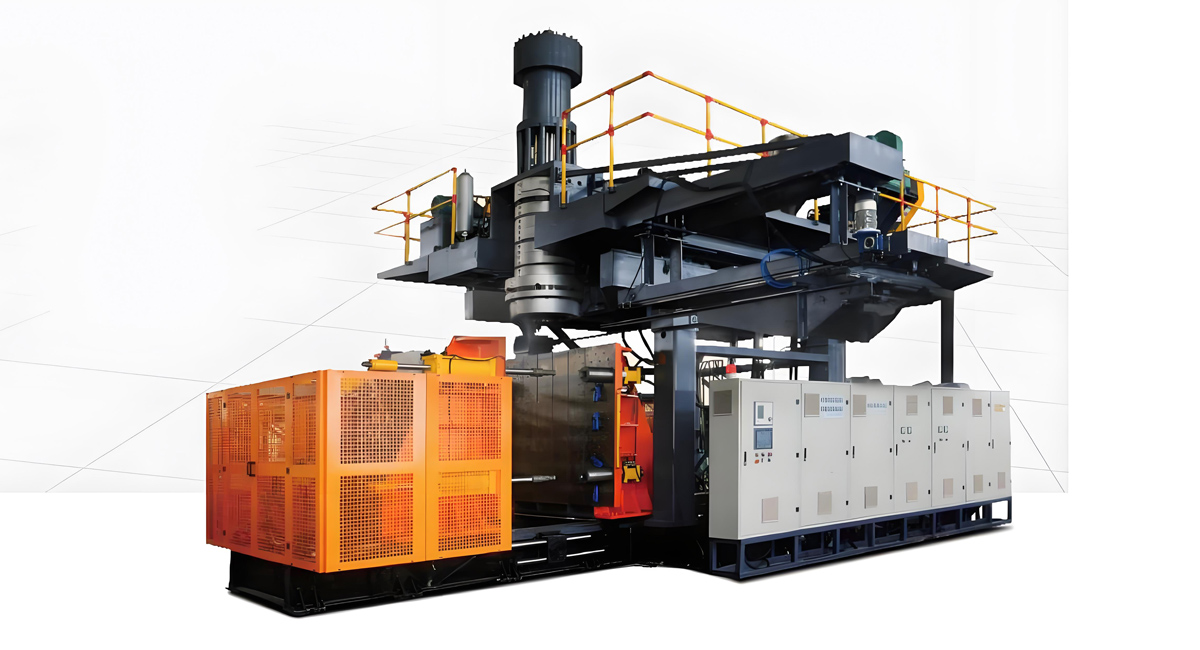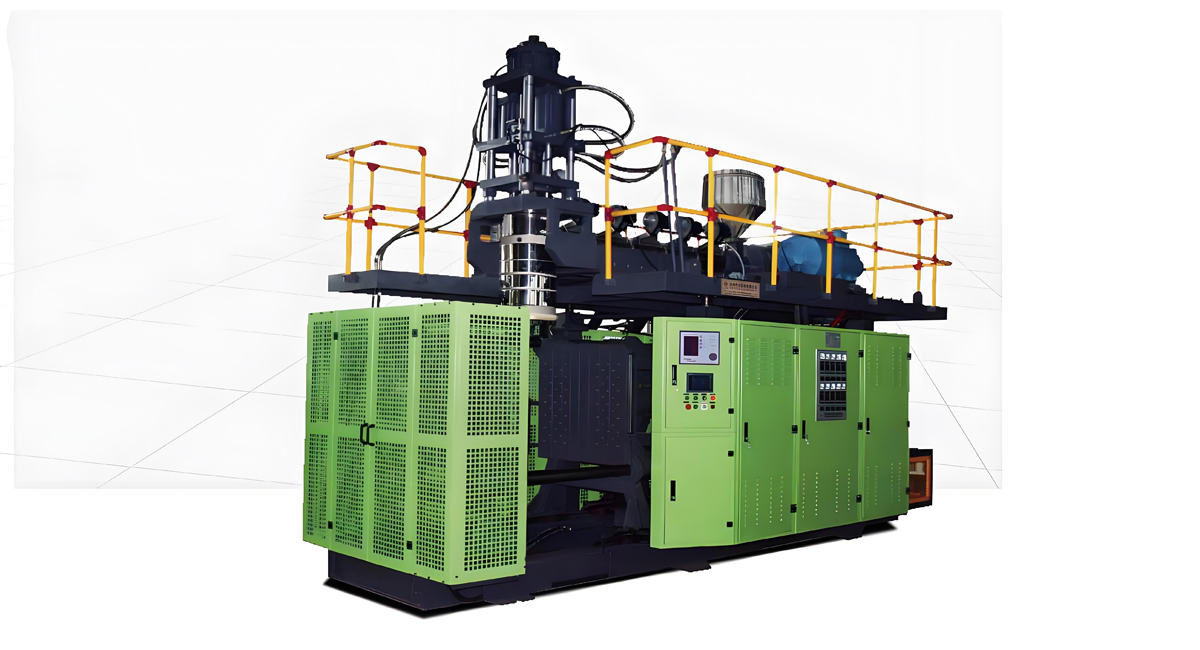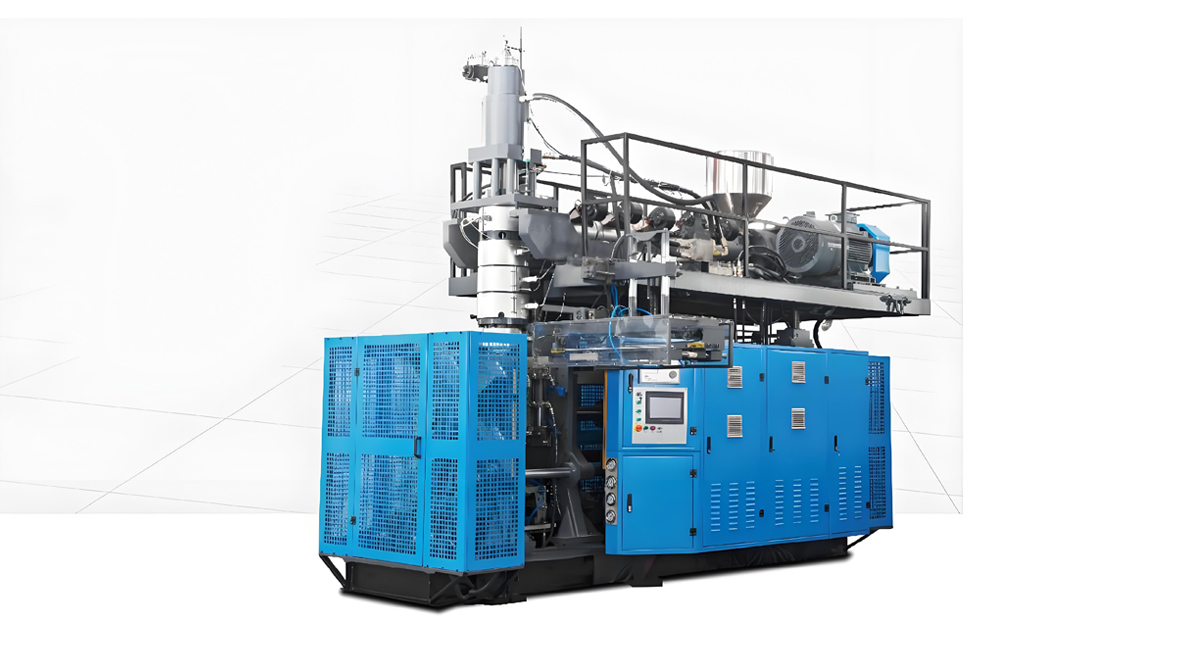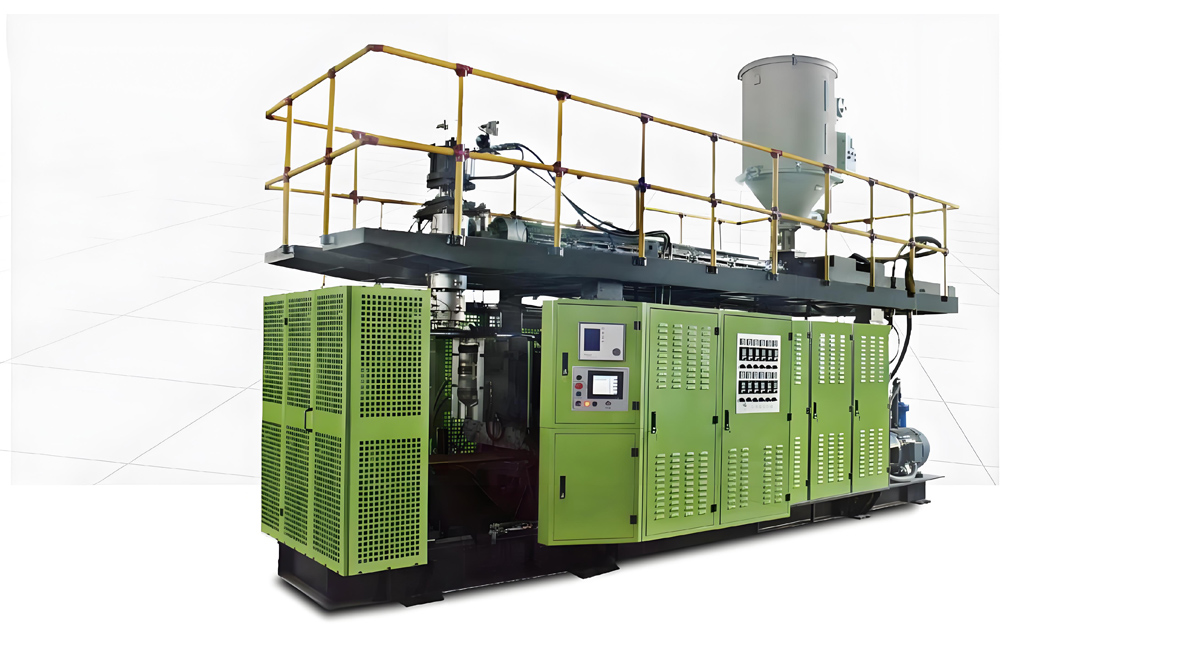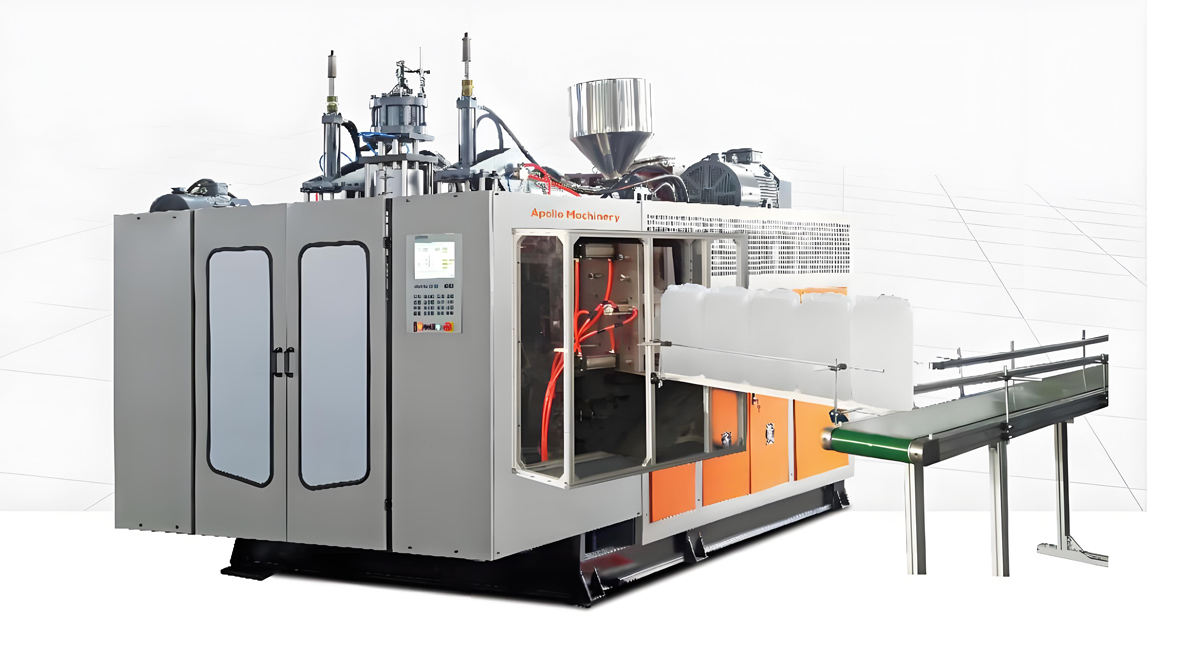
Choosing the right extrusion blow molding machine for 100ml to 2L cosmetic bottles is less about the machine brand and more about matching the forming route to the bottle’s shape, material, and output target. Apollo, a Wanplas factory based in Zhangjiagang near Shanghai, has built extrusion blow molding machines for over 20 years, runs ten series with more than eighty models, and has placed over 4,000 sets in more than 90 countries. For the 100ml to 2L cosmetic range, the two routes that matter most are the hydraulic ABLB series and the Fully Electric series, both spanning 200ml to 20L containers with configurations tuned for small, high-gloss, multi-cavity personal care and cosmetic packaging.
This guide explains the forming characteristics of small cosmetic bottles, the resin choices that work best, and the technical differences between a conventional hydraulic ABLB line and a fully electric line. It then gives concrete Apollo model specifications, a parison control and troubleshooting section, a capacity model, and a requirement-to-model selection table so a buyer can move from a bottle drawing to a machine recommendation without guesswork. The comparison is technology versus technology and parameter versus parameter, never brand versus brand, because the decisive factors are drive system, energy index, repeatability, cleanliness, and cycle time rather than the nameplate.
Whether the target is an essence bottle at 100ml, a toner bottle at 200ml, a lotion bottle at 500ml, or a 2L body wash bottle, the fundamentals are the same: control the parison, cool the mold efficiently, hold the neck finish, and balance the number of cavities against the available extrusion output. The sections below walk through each of these decisions with the numbers that drive the final choice.
Forming Characteristics of 100ml-2L Cosmetic Bottles
Cosmetic bottles in the 100ml to 2L range share a set of forming challenges that distinguish them from large industrial containers or high-volume PET water bottles. They are produced in multi-cavity tooling to keep per-part cost down, they demand a high surface quality that shows every scratch and flow line, and they frequently use oval or otherwise non-round cross sections that make wall distribution harder than on a simple round bottle. The neck finish must accept pumps, droppers, and caps with tight tolerances, and the gram weight must be controlled so the bottle feels consistent from run to run.
Why Small-Volume Multi-Cavity Production Differs
At 100ml to 2L, the individual shot weight is small but the part count is high. A six-cavity tool for a 100ml bottle still needs a steady parison supply, and the cavities must be balanced so every bottle weighs within tolerance. Multi-cavity production shifts the engineering focus from raw extrusion throughput toward parison programming precision and mold cooling uniformity. A hydraulic ABLB machine or a fully electric machine in this range is normally rated for 1 to 8 cavities, and the practical limit is set by the screw diameter, the die head type, and how fast the mold can shed heat.
Gloss, Matte, and Surface Aesthetics
Cosmetic packaging lives or dies on surface appearance. High-gloss bottles need a polished, temperature-stable mold surface and a clean melt to avoid flow marks, while matte finishes need a controlled texture and a process window that prevents blooming. Because the melt contacts the cavity only briefly during blow, the mold surface temperature and the parison temperature at contact decide the final gloss. The fully electric route helps here indirectly: with no hydraulic system dumping heat into the frame, the ambient temperature around the mold stays steadier, which protects the surface finish during long runs.
Oval and Non-Round Cross Sections
Most premium cosmetic bottles are oval, flat, or otherwise non-round. A round bottle cools symmetrically; an oval bottle has thick wide faces and thin narrow sides, so the wide faces need more cooling and the narrow sides risk over-blowing. Wall thickness control on a non-round bottle is a two-dimensional problem: the axial profile sets the top-to-bottom distribution, and the radial profile, where available, sets the thin-to-thick distribution around the perimeter. This is where parison programming point count and, for advanced tools, radial control earn their place in the specification.
Neck Finish Precision and Thread Accuracy
The neck finish is the only dimension the consumer and the filler both see and feel. A pump or dropper cap demands a clean thread, a flat sealing land, and no flashing on the neck. Neck precision depends on the blow pin cooling, the clamp timing relative to parison drop, and the stability of the parison so it does not shift and thin one side of the neck. On a 100ml to 2L bottle the neck is small, so a small absolute error becomes a large relative error; this is why repeatability, not just average accuracy, drives the choice between hydraulic and fully electric.
Wall Thickness Uniformity and Gram Weight Control
Uniform wall thickness keeps the bottle light, strong, and free of sink marks, and it keeps the gram weight inside the tolerance the brand owner paid for. In extrusion blow molding the wall is set by the parison: a thicker parison section becomes a thicker bottle wall. With 50 to 100 parison programming points the operator shapes the parison to put material where the bottle needs strength, typically at the base and the pinch-off, and removes it from the body to save resin. Tight gram weight control, typically within plus or minus 2 percent to 3 percent, comes from a stable barrel temperature, a stable die head gap, and a drive system without pressure drift.
Material Selection for Cosmetic Bottles
The resin decides what the bottle can hold, how it looks, and how it behaves on the blow molding machine. For 100ml to 2L cosmetic bottles the common choices are HDPE, LDPE, PP, PETG, and recycled-content PCR-HDPE. Each has a melt flow window that the screw, barrel, and die head must respect, and each interacts differently with cosmetic contents such as alcohol, essential oils, and surfactants.
HDPE, LDPE, PP, PETG, and PCR-HDPE Basics
HDPE is the workhorse for squeezable bottles because it is tough, has good environmental stress crack resistance, and accepts color and additive masterbatch cleanly. LDPE is softer and more flexible, used where a very soft squeeze is wanted. PP gives a higher heat-deflection temperature and a crisper sound, which suits caps and some premium bottles. PETG is the clear, glass-like option for premium cosmetic presentation, though it needs a tighter process window. PCR-HDPE is recycled HDPE blended in for sustainability claims, and it behaves like HDPE with slightly more variability.
MFR Windows and Melt Behavior
Melt flow index, measured as MFR in g/10min at 190°C under 2.16kg load for polyolefins, is the single number that tells you whether a resin will extrude and balloon correctly. Blow molding grade HDPE typically runs 0.2 to 0.7 g/10min at 190°C and 2.16kg, a low enough flow that the parison holds its shape without sagging yet high enough to weld at the pinch-off. LDPE runs higher, roughly 0.3 to 2.0 g/10min. PP blow molding grades sit around 0.5 to 3.0 g/10min. PETG flows far more, in the 5 to 15 g/10min range, which is why it demands careful temperature and blow control. Running a resin outside its window causes parison sag, melt fracture, or weak welds, so the machine must be specified for the resin family.
Material Property Reference for Cosmetic Resins
| Resin | MFR window (g/10min, 190°C/2.16kg) | Density (g/cm3) | ESCR | Cosmetic content compatibility |
|---|---|---|---|---|
| HDPE (blow molding grade) | 0.2 to 0.7 | 0.945 to 0.965 | Good | Alcohols, surfactants, essential oils (with barrier note) |
| LDPE | 0.3 to 2.0 | 0.918 to 0.930 | Very good | Mild formulations, soft-touch bottles |
| PP (block copolymer) | 0.5 to 3.0 | 0.900 to 0.910 | Moderate | Heat-stable contents, premium feel |
| PETG | 5 to 15 | 1.27 | Moderate | Clear cosmetic presentation, fragrances |
| PCR-HDPE | 0.3 to 0.8 | 0.945 to 0.960 | Good (slightly lower) | Same as HDPE with content check |
The values above are typical ranges; the exact numbers depend on the resin grade and any modification, so the resin data sheet remains the final authority. For a cosmetic bottle the deciding compatibility question is the content: alcohol-based toners and essential-oil serums can stress certain polyolefins, so the resin grade and, where needed, a barrier layer or a different neck material should be confirmed by compatibility testing rather than assumed.
Cosmetic Content Compatibility
Alcohol-based toners and astringents, surfactant-rich shampoos and body washes, and essential-oil serums each stress the bottle differently. HDPE resists most of these well and is the default for squeezable personal care bottles. PETG gives the clear look brands want for premium serums but needs confirmation against high-alcohol or high-oil contents. For any bottle that touches the contents over months, a compatibility check against the actual formulation is the responsible step; the machine does not change compatibility, but the wall thickness the machine delivers does change how much resin stands between the content and the outside air.
Hydraulic ABLB vs Fully Electric Technology Route
The ABLB series is Apollo’s standard hydraulic extrusion blow molding line, driven by servo-proportional hydraulics for clamp, carriage, and blow movement. The Fully Electric series replaces the hydraulic power unit with servo-electric actuators on the main motions, keeping only the extruder and, where used, a small hydraulic cylinder for a specific auxiliary if required. The choice between them is the central decision for a 100ml to 2L cosmetic project, and it is best made on a parameter table rather than on a headline claim.
Drive Systems
The ABLB hydraulic route uses a pump and valve set to move the clamp and the mold carriage, with the extruder screw turned by an AC or servo motor. It is a mature, well-understood architecture with service parts available in almost every market. The fully electric route turns the clamp, carriage, and blow motions with servo motors and ball screws, removing the hydraulic power unit. The extruder itself is still screw-driven, so both machines plasticize the resin the same way; the difference is in how the mold moves and how the parison is handled.
Energy Consumption
Energy use is where the two routes separate most clearly. A hydraulic unit spends energy keeping the pump primed and overcoming valve losses even when the clamp is holding still, whereas a servo-electric axis draws current only while moving. On a 100ml to 2L cosmetic line that cycles thousands of times per day, the fully electric route typically uses a markedly lower energy index. The relative figures are given in the energy section as an indexed comparison with the hydraulic baseline set at 100 points, so the reader can see the gap without reading a utility bill.
Repeatability and Precision
Repeatability is the ability to make the same bottle on the thousandth cycle as on the first. Hydraulic pressure drifts with oil temperature and valve wear, so a hydraulic line needs more frequent correction to hold gram weight and neck dimensions. A servo-electric axis holds its position from command to command with no pressure decay, which is why the fully electric route gives the tighter band on small, tolerance-critical cosmetic bottles. For a brand owner auditing gram weight lot to lot, that consistency is often the deciding factor.
Noise, Cleanliness, and Maintenance
Noise follows the pump: hydraulic lines are louder, fully electric lines are noticeably quieter, which matters on a factory floor shared with filling and packing. Cleanliness is the stronger argument for cosmetics. A hydraulic system carries oil, and any seal weep can put an oil mist near the bottle, a risk no cosmetic filler accepts lightly. The fully electric route removes hydraulic oil from the machine entirely, so there is no oil-contamination path. Maintenance flips the other way: hydraulic components are familiar to most technicians and spare parts are cheap, while servo-electric components need a technician comfortable with servo drives.
Startup Warm-up and Cycle Time
A hydraulic line must warm the oil to a stable viscosity before the motions are repeatable, which adds a warm-up window at start of day. A fully electric line has no oil to warm, so it reaches stable process conditions faster after a cold start. Cycle time itself is close between the two when both are well tuned, because the bottleneck on a small cosmetic bottle is usually parison extrusion and mold cooling rather than the clamp speed; the fully electric edge shows up as steadier cycle-to-cycle variation more than a shorter absolute cycle.
Technology Route Comparison
| Parameter | ABLB (hydraulic) | Fully Electric |
|---|---|---|
| Drive system | Servo-proportional hydraulics | Servo-electric actuators |
| Energy consumption (index) | Baseline (High) | Low (about 40 percent lower) |
| Repeatability | Medium | High |
| Noise level | Medium to High | Low |
| Cleanliness (no oil path) | Oil present (risk managed) | Oil-free (best for cosmetics) |
| Maintenance | Simple, low-cost parts | Servo-trained technician |
| Startup warm-up | Required (oil warm) | Minimal |
| Relative cost level | Medium | Premium |
The table is a technology comparison only. It does not name any competitor, and it benchmarks the fully electric route against the conventional hydraulic approach that both Apollo and older-generation lines use. The right pick depends on whether the project values the lowest capital level or the cleanest, most repeatable process.
Key Selection Parameters
Before naming a model, the buyer should fix the parameters that actually size the machine. For 100ml to 2L cosmetic bottles these are cavity number, clamping force and platen stroke, screw diameter and L/D ratio, extrusion output, die head type, and parison programming point count. Each of these interacts with the others, so they should be chosen as a set rather than one at a time.
Cavity Number (1 to 8)
Cavity count is the main lever on hourly output. A 100ml bottle can run 4 to 6 cavities; a 500ml bottle usually 2 to 4; a 2L bottle typically 1 to 2 because the shot weight and cooling load grow with size. More cavities need more extrusion output and a wider or multi-head die, and they make cavity balance more important. The machine must list a cavity range that covers the target; the ABLB and Fully Electric series in this range both support 1 to 8 cavities depending on the model.
Clamping Force and Platen Stroke
Clamping force must exceed the blow pressure acting on the bottle projected area plus a margin for the pinch-off weld. For small cosmetic bottles the force is modest, but oval and tall bottles need enough platen stroke to open the mold clear of the part and enough daylight to fit the tool. Insufficient clamp force shows up as flashing or a weak weld at the base; too much is simply wasted energy. The platen must also accept the multi-cavity mold width without crowding the parison heads.
Screw Diameter and L/D Ratio
The screw diameter sets how much melt the extruder can deliver per turn, and the L/D ratio (length-to-diameter) sets how well the resin is plasticized and homogenized. For 100ml to 2L cosmetic bottles a screw of 45mm to 80mm with an L/D around 22:1 to 24:1 is typical. A longer L/D gives steadier melt temperature and better color dispersion, which matters for tinted cosmetic bottles; the fully electric models tend toward the longer L/D end for that reason.
Extrusion Output (kg/h)
Extrusion output in kg/h must cover the total shot weight across all cavities within the cycle time. If the output is too low, the parison cannot be delivered fast enough and the cycle stretches. The output depends on screw diameter, L/D, screw speed, and barrel temperature, and it varies with the resin MFR. Matching output to shot weight times cavity count times cycles per hour is the core of capacity planning covered later.
Die Head Types (Single, Multi, Accumulator)
The die head shapes the parison. A single head serves one parison per station, a multi-head serves several parisons at once for multi-cavity or multi-station work, and an accumulator head stores melt for very large shots. For 100ml to 2L cosmetic bottles the choice is single or multi-head; the accumulator is reserved for the large ABLD containers. A well-designed die head centers the parison, holds a stable wall, and allows the gap to be set for the target bottle weight.
Parison Programming Points (50 to 100)
Parison programming point count is the resolution of axial wall thickness control. Fifty to one hundred points let the operator shape the parison so the base and pinch-off are thick and the body is thin, saving resin while keeping strength. More points mean finer control, which is why both Apollo series in this range support 50 to 100 point programming. For an oval bottle the same points must be combined with radial control where the tool provides it.
Parameter Reference by Apollo Model
| Parameter | Small (45-50) | Mid (55-65) | Large (75-80) |
|---|---|---|---|
| Cavity number | 1 to 6 | 1 to 4 (to 6 electric) | 1 to 3 |
| Clamping force | 40 kN | 60 to 80 kN | 95 to 100 kN |
| Screw diameter | 45 to 50 mm | 55 to 65 mm | 75 to 80 mm |
| L/D ratio | 22:1 | 22:1 to 24:1 | 22:1 to 24:1 |
| Extrusion output | 45 to 50 kg/h | 65 to 90 kg/h | 120 kg/h |
| Parison points | 50 to 100 | 50 to 100 | 50 to 100 |
Apollo ABLB Series for 100ml-2L Bottles
The ABLB series is Apollo’s standard hydraulic extrusion blow molding line covering 200ml to 20L containers, with eight model types in the family. For the 100ml to 2L cosmetic range the smaller ABLB models are the natural fit: they deliver the output, cavity count, and parison control a personal care bottle needs while keeping the capital level at the medium band. The ABLB line is the pragmatic choice when oil-free operation is not a contract requirement and the buyer wants the simplest, lowest-cost service path.
ABLB Models and Specification
| Model | Container range | Cavity number | Clamping force | Screw diameter | L/D | Output kg/h | Die head |
|---|---|---|---|---|---|---|---|
| ABLB 45 | 100ml to 1L | 1 to 6 | 40 kN | 45 mm | 22:1 | 45 | Single / double |
| ABLB 55 | 200ml to 2L | 1 to 4 | 60 kN | 55 mm | 22:1 | 65 | Single / double / multi |
| ABLB 65 | 500ml to 2L | 1 to 4 | 80 kN | 65 mm | 22:1 | 90 | Single / double / multi |
| ABLB 75 | 1L to 3L | 1 to 3 | 100 kN | 75 mm | 22:1 | 120 | Single / multi |
All ABLB models in this range support 50 to 100 point parison programming, accept the full cosmetic resin set from HDPE through PETG and PCR-HDPE, and run on configurable voltage for export markets. The ABLB 45 is the entry point for 100ml essence and serum bottles, the ABLB 55 covers the broad 200ml to 2L personal care band, and the ABLB 65 or 75 suit larger lotion and body wash bottles that still fall inside the 2L ceiling of this guide.
Apollo Fully Electric Series for 100ml-2L Bottles
The Apollo Fully Electric series covers the same 200ml to 20L container range but replaces the hydraulic power unit with servo-electric motion. It is the route of choice when the production environment is a controlled-cleanliness area, when noise must stay low, or when the brand owner demands the tightest lot-to-lot gram weight and neck consistency. Because there is no hydraulic oil, the contamination risk path is removed, which is a strong argument for cosmetic and personal care filling lines.
Fully Electric Models and Specification
| Model | Container range | Cavity number | Clamping force | Screw diameter | L/D | Output kg/h | Die head |
|---|---|---|---|---|---|---|---|
| Fully Electric 50 | 100ml to 1L | 1 to 8 | 40 kN | 50 mm | 24:1 | 50 | Single / double |
| Fully Electric 65 | 200ml to 2L | 1 to 6 | 70 kN | 65 mm | 24:1 | 85 | Single / double / multi |
| Fully Electric 80 | 500ml to 2L | 1 to 4 | 95 kN | 80 mm | 24:1 | 120 | Single / multi |
The fully electric models share the 50 to 100 point parison programming and the full cosmetic resin set with the ABLB line, and they add the longer 24:1 L/D for steadier melt. The Fully Electric 50 is the direct counterpart to the ABLB 45 for small essence and serum bottles but with oil-free operation; the Fully Electric 65 covers the 200ml to 2L band with up to 6 cavities; the Fully Electric 80 is the large end of this guide for 2L body wash and shampoo bottles.
Parison Control and Wall Thickness Distribution
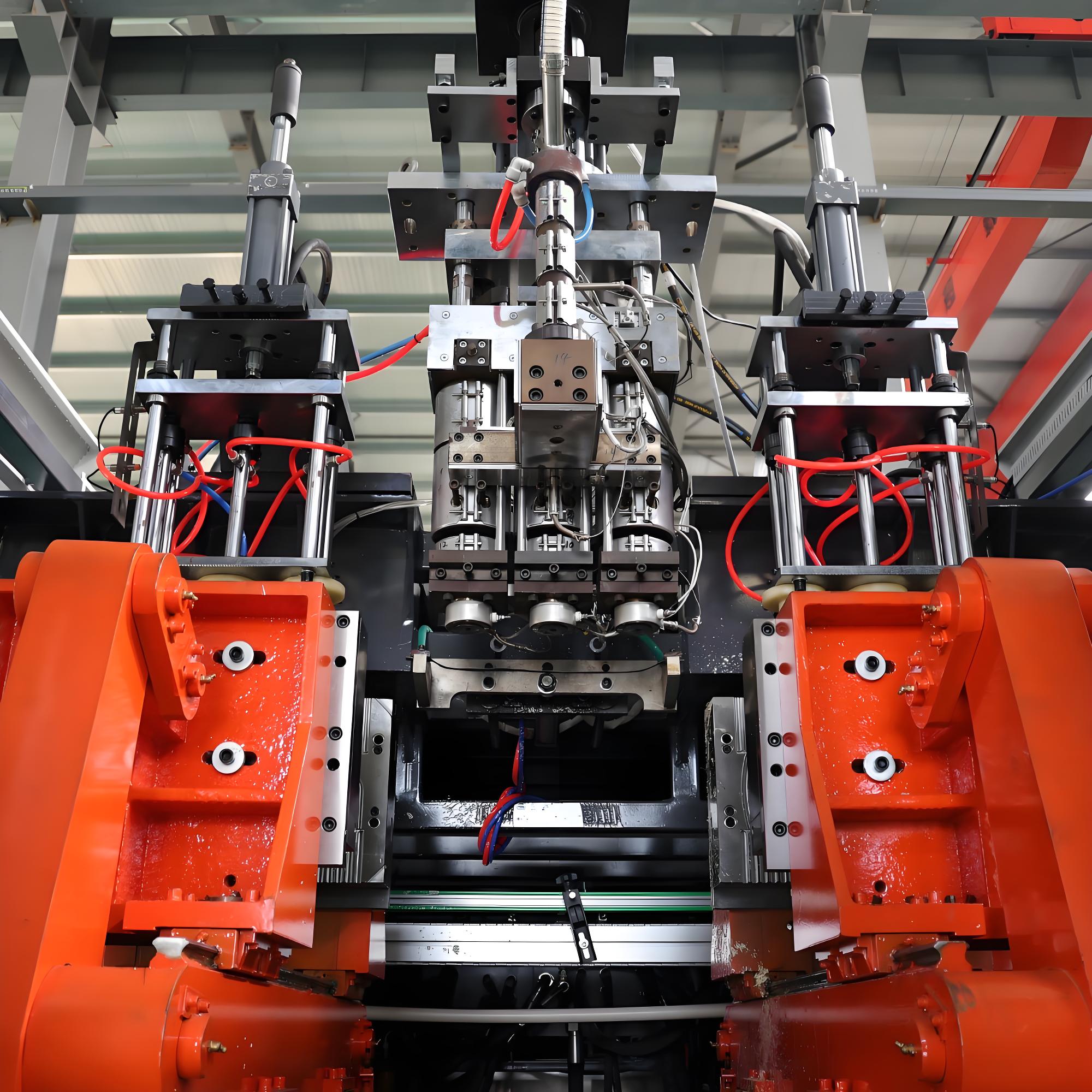
Wall thickness distribution is where a cosmetic bottle is won or lost. Too little wall and the bottle splits or reads as flimsy; too much and the gram weight climbs and the cycle lengthens. Extrusion blow molding controls the wall through the parison, and the two main tools are axial wall thickness control and, for non-round bottles, radial control.
Axial Wall Thickness Control (AWDS)
Axial wall thickness control, often called AWDS, varies the die head gap as the parison extrudes so the parison is thick at the base and at the pinch-off and thin in the body. With 50 to 100 programming points the profile is fine enough to follow the bottle shape. On a 100ml bottle the absolute wall is small, so a fine point count protects the base without over-weighting the body. The control is set on the HMI as a profile and stored as a recipe, so switching between bottle sizes is a recipe call rather than a mechanical change.
Radial Wall Thickness Control for Non-Round Bottles
An oval or flat bottle needs radial control because the wide faces cool slower and the narrow sides blow faster. Radial wall thickness control adjusts the gap around the circumference of the die head so the parison is thicker where the mold is far and thinner where the mold is close. Not every tool carries radial control, but for premium oval cosmetic bottles it removes the thin-side weakness that axial control alone cannot fix. When radial control is not fitted, the mold cooling circuit must compensate by cooling the wide faces harder.
Mold Cooling Circuit Design
The mold cooling circuit decides how fast the bottle sets and how straight the wall stays. Balanced drilled channels placed close to the cavity surface, fed by a stable chiller, give even cooling and fewer sink marks. For oval bottles the wide faces need extra channel density because they hold more plastic. A well-designed circuit also cools the neck insert so the thread sets cleanly before the mold opens. Cooling is a design task done with the mold maker, and Apollo supplies the mold clamping unit and cooling interface to match.
Cooling Time Share of Cycle
On thin cosmetic bottles cooling can be 40 percent to 60 percent of the total cycle, which makes it the real output limiter. Cutting cooling time by even a few seconds raises hourly output meaningfully, so the chiller setpoint, the channel design, and the blow air recovery all matter. The fully electric route helps indirectly because it adds less stray heat to the frame, letting the mold temperature controller hold its setpoint; the hydraulic route needs the oil cooler to do the same job. Either way, optimizing cooling is the highest-leverage change after the model is chosen.
Secondary Operations and Downstream Integration
A cosmetic bottle leaves the blow mold with a flash and a tail that must be removed, and it often needs surface treatment and decoration before it reaches the filler. Planning these downstream steps at the same time as the machine selection avoids a bottleneck after commissioning.
Deflashing
Deflashing removes the pinch-off flash and the neck tail. On cosmetic bottles the flash must go without leaving a witness mark, so automated deflashing integrated with the machine or a downstream trim station is preferred over manual trimming. The tighter the clamp and the cleaner the parison, the less flash there is to remove, which is another reason repeatability pays off on cosmetic work.
Online Leak Testing
Leak testing confirms the bottle holds pressure and has no pinhole at the weld or the base. On-line inspection can be built into the conveyor so every bottle is checked, or a statistical sample can be taken off-line. For cosmetic contents that must not leak in transit, a 100 percent on-line leak test is common, and the machine’s consistent wall distribution makes the pass rate high and stable.
Flame and Corona Treatment
Polyolefin surfaces are low-energy and resist ink, so flame treatment or corona treatment raises the surface energy to make screen printing and hot stamping stick. Flame treatment is the traditional route for bottles; corona treatment is cleaner and easier to control. The treatment is applied just before printing, and the bottle must be handled so the treated surface is not re-contaminated before decoration.
Screen Printing and Hot Stamping
Screen printing lays ink through a mesh for logos and text, while hot stamping transfers a foil for a metallic or glossy mark. Both need a flat, clean, treated surface and a bottle held to a fixed position. For an oval bottle the print must register to the wide face, so the fixture must locate the part repeatably. These decoration steps are downstream of the blow molder and are usually supplied as part of a filling and decoration line that Wanplas can coordinate as a complete package.
Capacity Calculation and OEE
Capacity is the bridge from a machine specification to a business case. The simple form is cycle time multiplied by cavity number to get bottles per hour, then adjusted by overall equipment effectiveness for the real world. OEE folds in availability, performance, and quality, and it is the honest number a planner should use.
Cycle Time Multiplied by Cavities
The theoretical hourly output is 3600 divided by cycle time in seconds, times cavity number. A 100ml bottle at a 12-second cycle in 6 cavities gives about 1,800 bottles per hour theoretical; a 2L bottle at a 30-second cycle in 1 cavity gives about 120 per hour. The gap between small and large bottles in this range is enormous, which is why cavity count and cycle time must be set together with the target volume.
OEE, Yield, and Changeover Time
Real output equals theoretical output times OEE. A line running at 80 percent OEE delivers about 80 percent of the theoretical number after downtime, speed loss, and reject allowance are counted. Yield, the share of good bottles, depends on wall control and deflash quality; changeover time between bottle sizes eats into available hours on a multi-SKU line. Planning for an OEE of 75 percent to 85 percent is realistic for a well-run cosmetic bottle line, and the fully electric route’s faster warm-up and recipe recall help shorten changeovers.
Capacity Reference Examples
| Bottle | Cavities | Cycle (s) | Theory /h | At 80 percent OEE /h |
|---|---|---|---|---|
| 100ml essence | 6 | 12 | 1,800 | 1,440 |
| 200ml serum | 4 | 14 | 1,028 | 822 |
| 500ml lotion | 4 | 18 | 800 | 640 |
| 1L shampoo | 2 | 22 | 327 | 262 |
| 2L body wash | 1 | 30 | 120 | 96 |
The numbers above assume stable resin and a tuned process; they are planning references, not guarantees, and the actual result depends on mold quality, cooling water temperature, and operator skill. They do show clearly that a 100ml six-cavity run and a 2L single-cavity run are different businesses, and the machine model should match the volume tier rather than the ceiling of the range.
Quality Defect Troubleshooting
Even a well-specified line shows defects when the process drifts. The common failures on 100ml to 2L cosmetic bottles each have a root cause tied to parison, melt, clamp, or cooling. A short cause-and-remedy table keeps the line running while the real fix is planned.
Parison Sag
Parison sag is the parison stretching under its own weight before the mold closes, which thins the top and thickens the base. It comes from melt temperature too high or resin MFR too high for the head. Lower the barrel temperature, widen the die gap to extrude faster so the parison spends less time hanging, or move to a lower-MFR grade. Sag is the most common cause of gram weight drift on tall bottles.
Melt Fracture
Melt fracture is a sharkskin or ridged surface from shear stress at the die. It appears when screw speed or head pressure is too high for the resin. Reduce screw speed, widen the die gap, or raise melt temperature slightly to lower viscosity. A clean die land and a well-polished mandrel also reduce fracture, which matters for high-gloss cosmetic surfaces.
Weak Pinch-Off
A weak pinch-off is a poor weld at the base where the mold halves meet. It shows as a split or a thin line at the bottom seam. Increase clamping force, clean the pinch-off land of regrind, or adjust the parison so more material sits at the base. On a multi-cavity tool, check that the cavities are balanced so one cavity is not starved.
Blushing and Whitening
Blushing, or whitening, is a stress mark from over-blowing or blowing at the wrong temperature. Reduce blow pressure, delay the blow timing so the parison is warmer, or lower the blow air volume. Blushing is most visible on tinted and clear bottles, so it is a cosmetic reject even when the bottle is structurally fine.
Wall Eccentricity
Wall eccentricity is an off-center wall, thick on one side and thin on the other. It comes from a parison that drops off-center or a mandrel that is not aligned in the die head. Center the parison, check mandrel alignment, and verify the mold is seated square. On oval bottles eccentricity is tied to missing radial control, so add radial correction or compensate with cooling.
Sink Marks and Short Neck Finish
Sink marks are local dents from insufficient cooling or a section that is too thick; lengthen cooling or re-profile the parison to remove excess wall. A short neck finish is a neck that is not fully formed, from clamp timing that pinches before the parison fills the neck, or from resin too cold to flow. Adjust the clamp timing, raise melt temperature slightly, and confirm the blow pin cools the neck correctly. Both defects hurt the fill line, so they are top priorities on cosmetic work.
Defect Cause and Remedy Summary
| Defect | Likely cause | Remedy |
|---|---|---|
| Parison sag | Melt too hot, MFR too high | Lower barrel temp, widen die gap, lower-MFR resin |
| Melt fracture | Shear too high at die | Reduce screw speed, widen gap, raise temp |
| Weak pinch-off | Low clamp, dirty land | Raise clamp force, clean land, add base wall |
| Blushing | Over-blow, wrong timing | Lower blow pressure, delay blow, warm parison |
| Wall eccentricity | Off-center parison, mandrel | Center parison, align mandrel, add radial control |
| Sink mark | Cooling short, thick section | Extend cooling, re-profile parison |
| Short neck finish | Early clamp, cold resin | Adjust timing, raise melt temp, cool pin |
Certification and Compliance
Cosmetic packaging enters regulated supply chains, so the machine and the process must sit on recognized quality and safety footing. Apollo operates under ISO 9001 for its quality management system and builds machines to CE machinery safety requirements for the European market. These are stated as plain commitments; the buyer should request the current certificates for their destination market rather than assume coverage.
Quality Management and Machine Safety
ISO 9001 covers how the machine is designed, built, and documented so that one unit matches the next. CE covers the guarding, electrical safety, and emergency stops on the equipment. For a cosmetic filler the machine safety file is part of the site’s own compliance, so the CE documentation should travel with the machine and be kept with the validation records.
Cosmetic Packaging Compatibility Testing
Beyond the machine, the bottle itself may need cosmetic packaging compatibility testing against the actual formulation, especially for alcohol-based toners, essential-oil serums, and surfactant-rich products. This testing checks that the resin and any additive or color masterbatch do not interact with the content over the product shelf life. The blow molding machine does not perform this test, but the wall thickness and gram weight it delivers set how much resin stands between the content and the outside, so process consistency supports a passing result. Compatibility is confirmed with the resin supplier and, where required, with a laboratory using the applicable regional standard.
Energy Consumption and Relative Cost
The cost of running the machine is best compared as an energy index rather than as a utility figure, because the actual bill depends on local tariffs and the duty cycle. Setting the hydraulic ABLB baseline at 100 index points, the fully electric route lands around 60 index points, a reduction of roughly 40 percent. The comparison below is indexed so no currency amount appears, and the relative cost levels follow the same logic.
Indexed Energy Comparison
| Metric | ABLB (hydraulic) | Fully Electric |
|---|---|---|
| Energy index (baseline 100) | 100 | 60 |
| Capital cost level | Medium | Premium |
| Spare parts cost level | Low | Medium |
| Payback driver | Lower purchase, simple service | Energy saving, oil-free, repeatability |
The fully electric route costs more to buy but returns part of that through lower energy and a cleaner process; the hydraulic ABLB route costs less to buy and to maintain. The break-even depends on run hours and local energy price, so the buyer should weigh the indexed saving against the premium using their own duty cycle. No specific amount is stated here because the right comparison is the index and the relative levels, not a number that varies by site.
Selection Guide: Requirement to Model
The fastest way to a recommendation is to map the requirement set to a model. The table below takes the common 100ml to 2L cosmetic cases and points to the Apollo model that fits, noting where the fully electric route is preferred for cleanliness or consistency. These are starting points; the final model is confirmed on the bottle drawing, the resin, and the target output.
Requirement-to-Model Recommendation
| Target bottle | Material | Cavities | Recommended Apollo model | Note |
|---|---|---|---|---|
| 100ml essence | HDPE / PETG | 4 to 6 | ABLB 45 or Fully Electric 50 | Electric preferred for cleanroom |
| 200ml serum | PETG | 4 | ABLB 55 or Fully Electric 65 | Tight temp window for PETG |
| 500ml lotion | HDPE | 2 to 4 | Fully Electric 65 | Oil-free best for filler |
| 300ml oval (PP) | PP | 2 to 4 | ABLB 55 with radial control | Radial control for oval wall |
| 1L shampoo | HDPE | 2 to 4 | ABLB 65 or Fully Electric 80 | Watch cooling time |
| 2L body wash | HDPE / PCR-HDPE | 1 to 2 | ABLB 75 or Fully Electric 80 | Large shot, 1 to 2 cavities |
| 500ml sustainable | PCR-HDPE | 2 to 4 | ABLB 65 or Fully Electric 65 | Dry flake, widen parison envelope |
The recommendation always stays inside the Apollo lineup: the ABLB hydraulic series for the medium capital route and the Fully Electric series for the oil-free, high-repeatability route. Where a bottle exceeds 2L or needs a very large shot, the larger ABLD series from the same Wanplas factory is the next step, but that sits outside the scope of this 100ml to 2L guide.
Service and Support from Apollo and Wanplas
Apollo, as a Wanplas factory, backs its machines with the group’s shared service promises, which are written into every project rather than offered as an option. The support covers the full life of the line from pre-shipment proof to remote operation.
Pre-Shipment Testing
Before a machine leaves the Zhangjiagang factory it runs a production test using the buyer’s bottle drawing and, where possible, the buyer’s resin. Engineers record cycle time, cavity balance, neck finish, wall distribution, and leak rate so the performance is proven, not promised. A pre-shipment trial is also the moment to lock the parison program and the process recipe that travel with the machine.
Installation, Commissioning, and Training
Apollo sends engineers for on-site installation and commissioning, then trains the buyer’s operators and maintenance staff on running, cleaning, and basic fault recovery. Training covers the HMI recipe system, the parison programmer, and the daily checks that keep gram weight and neck quality stable. Because the Wanplas group runs multiple specialized factories, the same service discipline applies across the product range.
Spare Parts Policy
The Wanplas group policy provides USD 500 free spare parts per year for the supported machines, and damaged parts within the warranty are replaced. The free parts allowance covers the wear items that keep a cosmetic bottle line running, and it is stated in words rather than as a symbol. Local stocking of common ABLB hydraulic parts is straightforward, while fully electric servo parts are supplied through the service channel with the same annual allowance.
Remote Operation and Open Factory
The control system supports remote monitoring so Apollo engineers can read PLC data and help diagnose faults without a site visit, shortening downtime on a busy cosmetic line. The factory also runs an open-factory policy: buyers are welcome to visit Zhangjiagang, audit the build, watch a trial run, and review the quality records before delivery. An open-factory visit is the simplest way to confirm that the machine, the mold, and the process meet the specification on paper.
Frequently Asked Questions
Which Apollo machine is best for 100ml essence and serum bottles?
For 100ml essence or serum bottles in HDPE or PETG, the ABLB 45 hydraulic model or the Fully Electric 50 model are the right entry points. Both accept 1 to 6 cavities and hold parison programming of 50 to 100 points so the thin side walls of a small bottle stay uniform. Choose the Fully Electric 50 when the line must run inside a controlled-cleanliness area or when energy reduction and low noise are contract requirements.
Is a fully electric blow molding machine worth the premium over a hydraulic ABLB unit for cosmetics?
It depends on the production environment. The fully electric route removes hydraulic oil entirely, so there is no risk of oil mist or leakage contaminating a cosmetic bottle, and it gives the best repeatability with the shortest warm-up. The ABLB hydraulic route costs less to purchase and is simpler to service in most regions. If your contract demands oil-free cleanliness, low noise, or maximum per-part consistency, the fully electric model is justified; otherwise the ABLB hydraulic model delivers the same bottle quality at a lower capital level.
Can the Apollo ABLB and Fully Electric series process PCR-HDPE for sustainable cosmetic packaging?
Yes. Both series accept recycled HDPE content. The practical limit is driven by the recycled resin’s melt flow index and environmental stress crack resistance rather than by the machine. Keep the PCR-HDPE MFR in the 0.3 to 0.8 g/10min window, dry the flake before feeding, and widen the parison programming envelope slightly because regrind can show more melt variability. A pre-shipment trial on the actual resin is the safest way to lock the process window.
How many cavities should I run for a 2L body wash or shampoo bottle?
A 2L bottle is a large shot for the 100ml-2L segment, so 1 to 2 cavities per station is typical to keep the parison weight and cooling time manageable. The ABLB 75 or Fully Electric 80 models are sized for this. If you need higher hourly output, split production across two machines or step up to a larger ABLD model rather than forcing 4 cavities on a 2L part, which would stretch cycle time and wall control.
What gram weight tolerance can I expect on a 100ml-2L cosmetic bottle?
With parison programming of 50 to 100 points and stable resin, a well-tuned Apollo line holds gram weight within roughly plus or minus 2 percent to 3 percent of target. The fully electric models tend toward the tighter end of that band because servo control removes hydraulic pressure drift. Tighter tolerance is reached by stabilizing the barrel temperature profile, the die head gap, and the blow timing rather than by chasing the machine alone.
How does Apollo guarantee the machine runs before it reaches my factory?
Apollo runs a pre-shipment production test using your bottle drawing and, where possible, your resin. Engineers verify cycle time, cavity balance, neck finish, wall distribution, and leak rate, then record the data. The Wanplas group policy also provides USD 500 free spare parts per year, on-site installation and commissioning, operator training, remote monitoring support, and an open-factory visit so you can audit the build before delivery.
Why does neck finish precision matter so much for cosmetic bottles?
Cosmetic bottles are closed with pumps, droppers, or snap caps that demand a clean thread and a flat sealing land. A short or off-center neck finish leaks or cross-threads at the filling line. Neck precision comes from a well-cooled blow pin, correct clamp timing, and a stable parison drop. On oval and non-round bottles the die head must be centered so the parison does not shift and thin one side of the neck, and the mold neck insert must be held to a tight tolerance.
What cooling design gives the best cycle time on small cosmetic bottles?
Cooling time can be 40 percent to 60 percent of the total cycle on thin cosmetic bottles, so the mold cooling circuit decides output. Use balanced drilled channels close to the cavity surface, a stable chiller setpoint, and, for oval shapes, extra cooling on the wide faces where the wall is thickest. The fully electric models help indirectly because they waste less heat into the frame, letting the mold temperature controller hold a steadier setpoint.
Conclusion
For 100ml to 2L cosmetic bottles the decision is not hydraulic versus electric as a status symbol but hydraulic versus electric as a fit to the bottle, the material, and the production environment. The Apollo ABLB hydraulic series gives the medium capital route with simple, low-cost service and full coverage of the 100ml to 2L personal care range from the ABLB 45 through the ABLB 75. The Apollo Fully Electric series gives the oil-free, low-noise, high-repeatability route from the Fully Electric 50 through the Fully Electric 80, which is the stronger choice for controlled-cleanliness filling lines and brand owners who audit gram weight lot to lot.
Both routes share the same engineering fundamentals: 50 to 100 point parison programming, cavity counts from 1 to 8, screw diameters of 45mm to 80mm, and full support for HDPE, LDPE, PP, PETG, and PCR-HDPE. The selection table in this guide maps the common cosmetic bottle cases to a specific Apollo model, and the capacity and defect sections give the numbers and the fixes that keep the line profitable. As a Wanplas factory with over 20 years of blow molding experience, more than eighty models shipped worldwide, and a service policy that includes USD 500 free spare parts per year, Apollo is positioned to take a bottle drawing to a running line.
If you are specifying a 100ml to 2L cosmetic bottle project, send us your bottle drawing, target material, and hourly output, and we will return a tailored machine configuration with a confirmed model, cavity count, and cycle estimate. You are also welcome to visit our Zhangjiagang factory to watch a trial run on your resin and audit the build before delivery. For sampling and pilot production, we can run your bottle on the recommended ABLB or Fully Electric model so you validate wall distribution, neck finish, and decoration readiness before you commit to a full line.