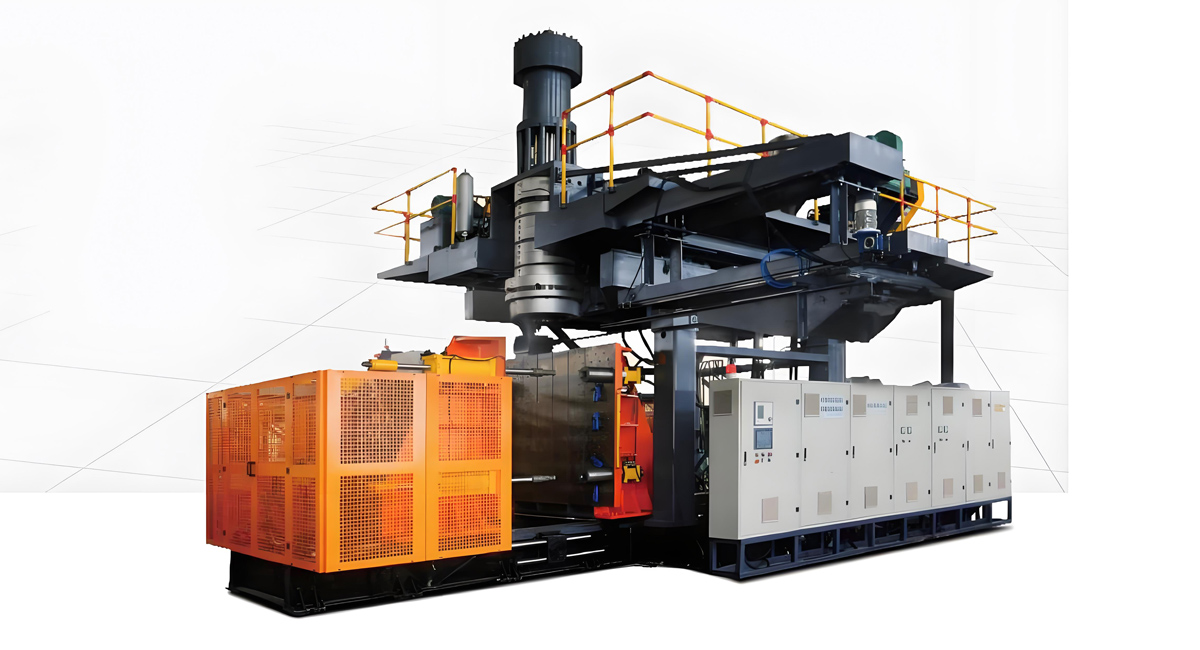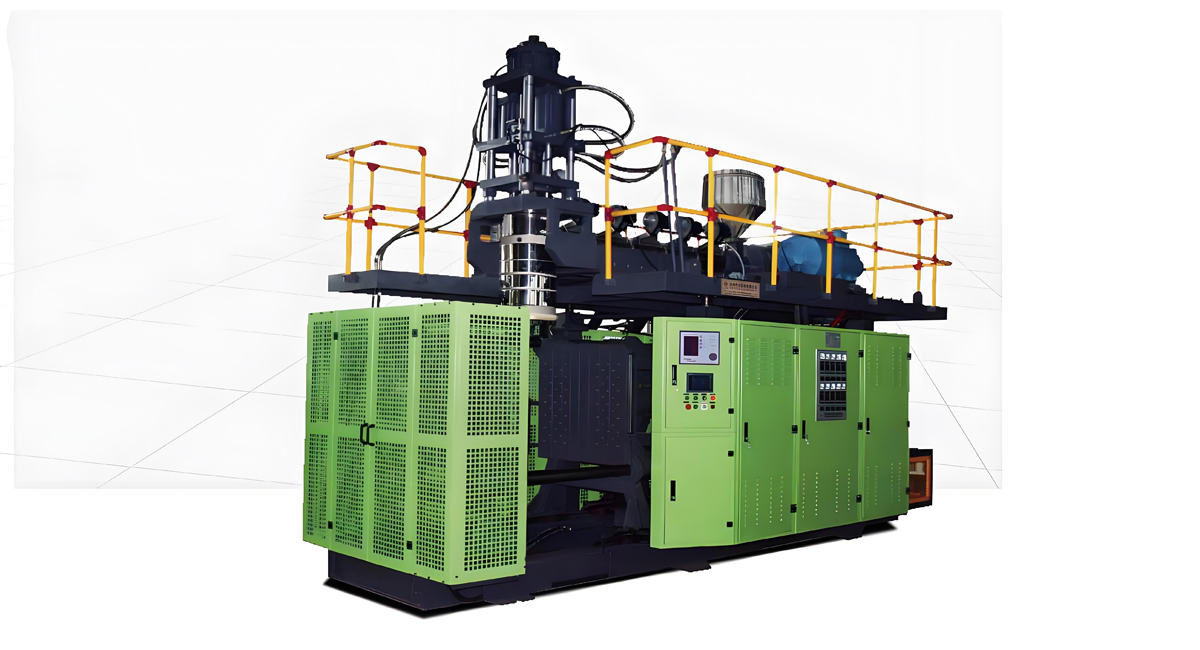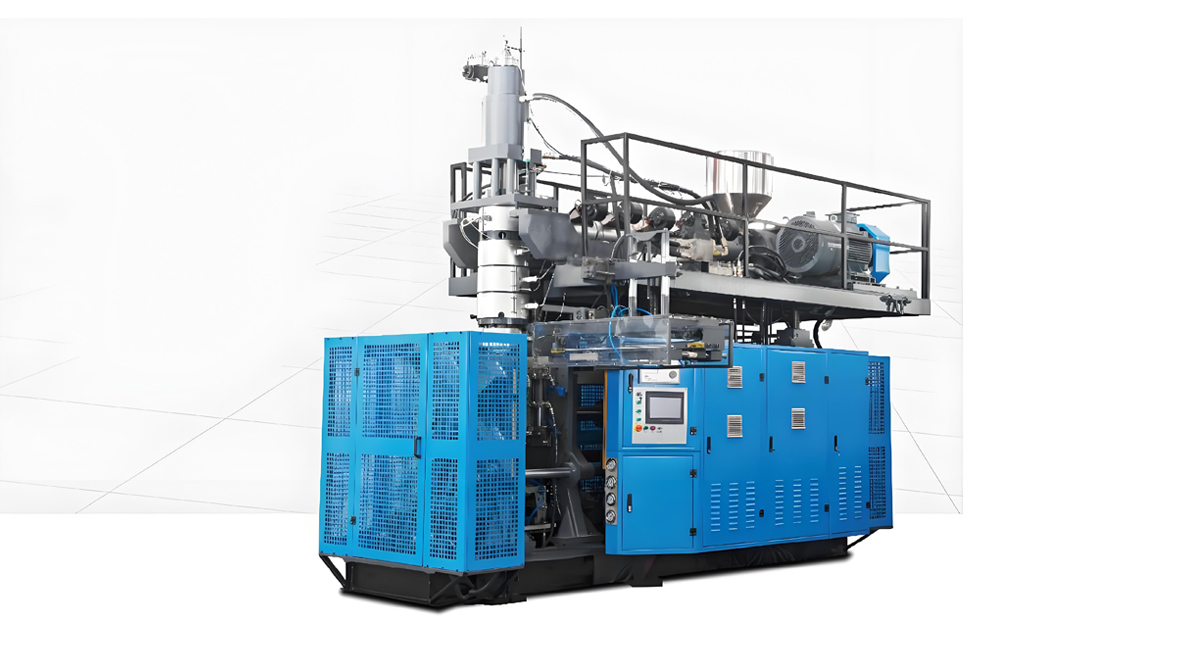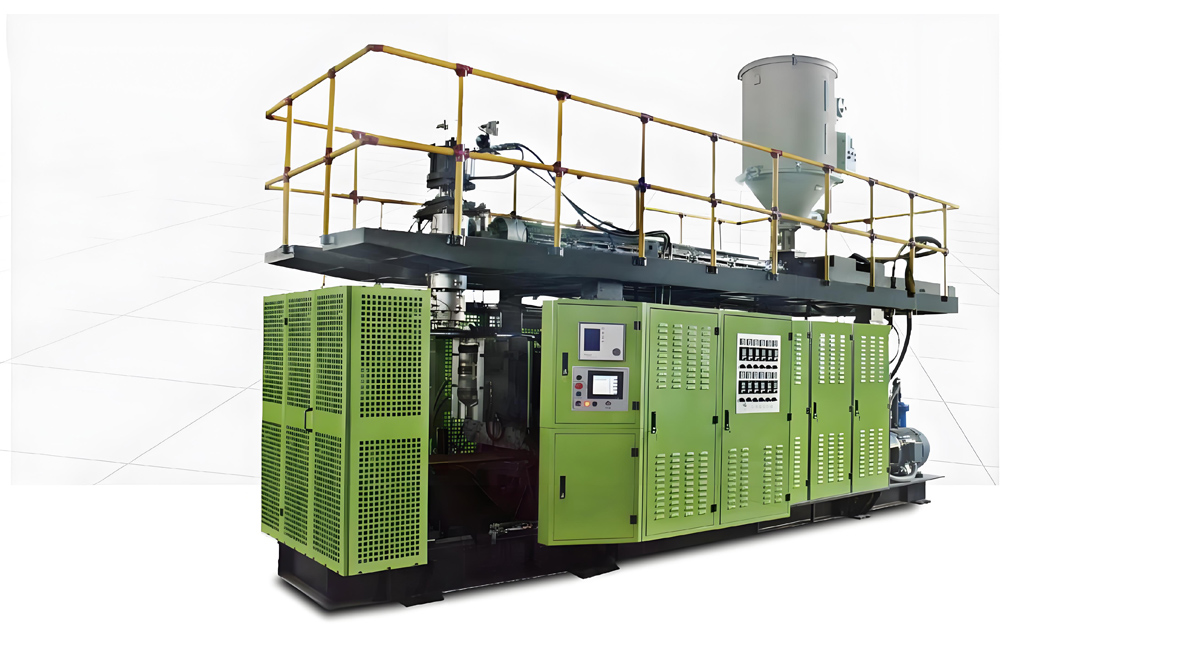
Apollo Hydraulic Blow Molding Lines for Industrial Drum Production
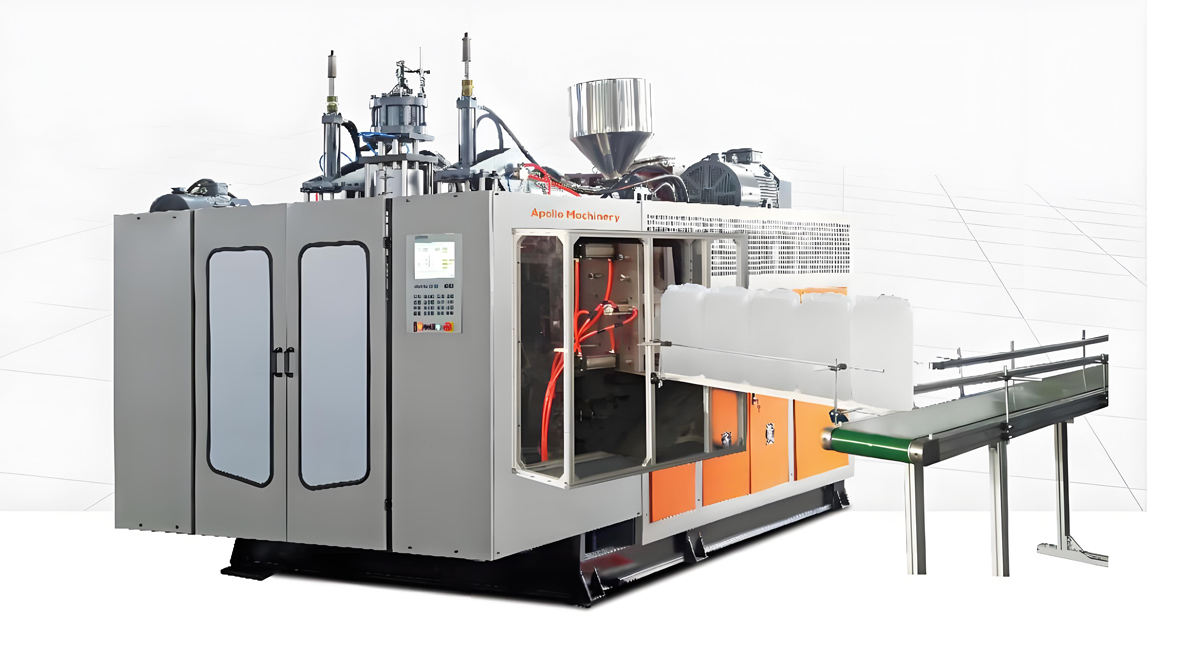
Zhangjiagang Apollo Machinery Co., Ltd., a Wanplas factory, has spent more than two decades building automatic extrusion blow molding machines for hollow plastic 製品, with over 4,000 sets running in more than 90 countries and a production base of 8,000 square meters near Shanghai. Within the Wanplas group of specialized machinery factories, Apollo focuses exclusively on extrusion blow molding technology, and the ABLB and ABLD series cover containers from 200 milliliters up to 1,500 liters across ten machine families and more than eighty models. The 18-liter chemical drum is one of the most demanding mid-size hollow articles because it must survive stacking, transportation shock, and long-term contact with aggressive media, so the production line behind it has to deliver consistent wall distribution, repeatable cycle times, and a stable hydraulic clamping system that does not drift under continuous running. This article explains how a stable hydraulic blow molding line is built, why a structured pre-market test program matters before a chemical drum enters series production, and how Apollo configures its ABLB series machinery to meet those requirements without compromising on output or part quality.
Chemical packaging buyers rarely care about the machine for its own sake; they care about whether every drum that leaves the line will hold its contents, resist drop impact, and pass the leak and wall-thickness checks that regulatory and logistics chains impose. That is why the conversation about an 18-liter drum line has to start with process capability rather than with a price tag. Extrusion blow molding remains the dominant route for this container size because it handles HDPE and other polyolefins economically, produces a single seamless hollow body with a built-in handle and neck, and scales from a few dozen units per hour to high-volume continuous operation. The hydraulic system is the backbone of that process: it drives the clamping unit, supports the parison die head, and absorbs the reaction forces generated when the mold closes on the molten parison. A stable hydraulic line is therefore not a marketing phrase but a measurable engineering condition involving pressure holding, temperature control, and repeatability across thousands of cycles per shift.
Why Extrusion Blow Molding Fits the 18-Liter Chemical Drum
Extrusion blow molding produces a hollow part by continuously extruding a tube of molten plastic called a parison, capturing that parison between two mold halves, and inflating it with compressed air until it conforms to the cavity wall. For an 18-liter drum, the parison is large and heavy, so the extruder must deliver a steady, well-plasticized melt at a controlled temperature and output rate. Apollo machines process PE, PP, PVC, PA, PC, ABS, PS, EVA, TPU, and PETG, but the chemical drum segment is overwhelmingly HDPE because of its balance of chemical resistance, impact strength, and low cost. The extrusion route is preferred over injection stretch blow molding for this size because it handles the thicker, more robust wall sections and the integrated handle and collar that industrial drums require, and it avoids the brittle behavior that can appear in oriented containers when they are filled with aggressive solvents.
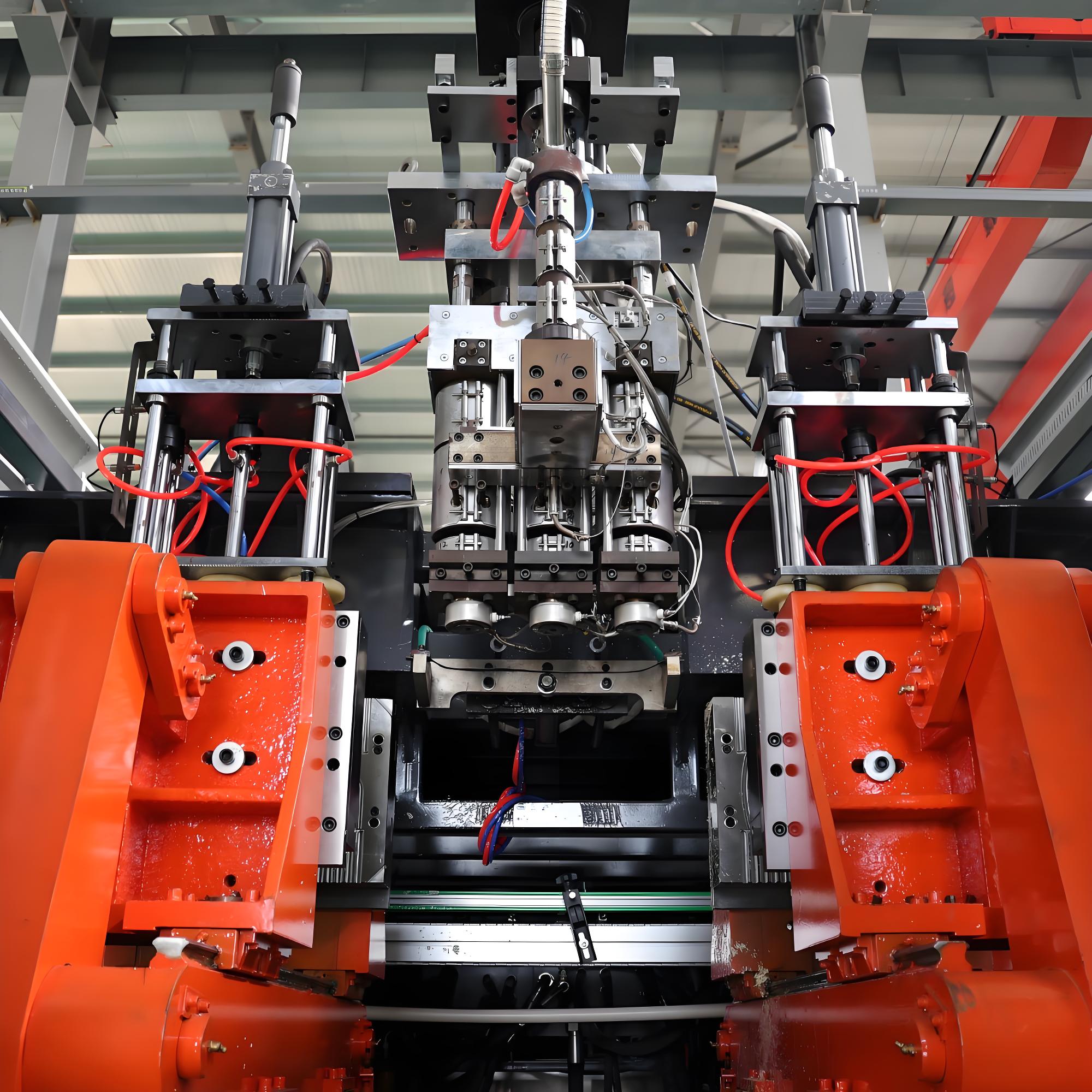
The geometry of an 18-liter drum places specific demands on the parison programming. The parison must be thicker near the base and the lug areas where stress concentrates, and thinner across the sidewall to save material while keeping the drop-test performance. Modern Apollo ABLB lines use a parison programmer that modulates die gap along the extrusion length so the wall stock is placed where it is needed, which directly improves material utilization and uniform cooling. Because the drum is a load-bearing container that is often stacked three or four high when full, the base and top chime must be dimensionally stable, and that stability comes from a mold that closes accurately and a clamping unit that holds tonnage without creep. A hydraulic clamping system, when properly stabilized, gives the high and adjustable force needed for large-part molding while remaining cost-effective compared with an all-electric alternative at this container scale.
What a Stable Hydraulic System Actually Delivers
Stability in a hydraulic blow molding line means that the same command produces the same result on the ten-thousandth cycle as on the first, with no drift in clamping force, no pressure sag during the hold phase, and no thermal runaway in the oil. Apollo achieves this through a closed-loop hydraulic circuit with proportional valves, a temperature-controlled oil tank, and an accumulator that smooths the peak demand when the clamp closes. The accumulator stores pressurized fluid so the pump does not have to supply the entire clamping stroke instantaneously, which reduces motor size, cuts energy spikes, and keeps the close-and-blow sequence smooth. Closed-loop control reads the actual clamp position and pressure and corrects deviations in real time, so variations in melt viscosity caused by small batch-to-batch resin differences are absorbed rather than transferred into the part.
A stable hydraulic line also protects the mold and the machine. When clamping pressure is allowed to sag, flash appears at the parting line and the neck finish distorts, which then forces downstream trimming and raises rejection rates. When the oil runs hot, seal life falls and cycle consistency degrades, which is exactly the slow drift that escapes notice until a batch of drums fails a drop test. Apollo configures the hydraulic package with adequate cooling capacity, monitored filtration, and alarms that warn the operator before a condition becomes a defect, and because the brand is part of Wanplas, the same quality standards and service promises apply across the group. For a chemical drum producer, that consistency is the difference between a line that runs unattended through a night shift and one that needs an operator babysitting the pressure gauge, and it is the foundation on which any credible pre-market test must be built.
The Role of the Pre-Market Test Before Series Production
A pre-market test is the structured validation run performed before a drum design and its production line are released for full commercial output, and for chemical packaging it is not optional. The test answers a simple question: will this container, made on this line, at this cycle time, with this material, reliably do its job in the field? It typically combines machine qualification, part qualification, and material qualification into a fixed protocol that is repeated until the results are stable and reproducible. Skipping this step is the most common reason a new drum program stalls, because defects that look minor on the bench, such as a slightly thin sidewall or a marginally soft handle, become recalls and leakage claims once thousands of units are in a warehouse or on a truck.
For an 18-liter chemical drum, the pre-market test has to prove mechanical robustness and chemical compatibility at the same time. Mechanical validation covers drop testing from a defined height, stack load testing, and top-lift or handle strength, while chemical validation covers resistance to the specific filling product over the intended storage temperature range. The line itself is validated for cycle-to-cycle repeatability, wall-thickness distribution measured by ultrasonic or gravimetric methods, and neck dimensional accuracy checked against the closure specification. Apollo supports this phase by running the configured ABLB line in its factory, producing sample drums, and documenting the process window so the customer receives a qualified starting recipe rather than an empty machine. This factory trial also doubles as operator training and as the moment where tooling, neck inserts, and handle geometry are finalized before shipment.
Apollo ABLB Series: The 18-Liter-Class Hydraulic Line
The ABLB series from Apollo covers containers from 200 milliliters to 20 liters, which places the 18-liter chemical drum squarely inside its design envelope, and the series includes eight machine types so the exact configuration can be matched to drum weight, output target, and material. The ABLB 55 is the well-known representative of the family for 2-liter to 3-liter containers, and the larger ABLB configurations extend the same proven extrusion and clamping architecture up to the 20-liter ceiling that an 18-liter drum occupies. Because the family shares screw, barrel, die-head, and control-platform design, a producer who later adds smaller jerry cans or containers can standardize on one spare-parts pool and one operator skill set, which lowers total cost of ownership across a mixed packaging plant.
The table below lists the typical specification envelope for an 18-liter-class ABLB hydraulic blow molding line. Values are representative of this machine class and are finalized during the pre-market test against the customer’s actual drum drawing, resin grade, and target output, so the delivered machine is tuned to a qualified process rather than to a generic catalog number.
| Parameter | ABLB 18L-class | Note |
|---|---|---|
| Container range | 200 mL – 20 L | 18 L drum inside range |
| Screw diameter | 70 – 90 mm | Class dependent |
| L/D ratio | 20 – 24:1 | Good plasticizing |
| Clamping force | 80 – 150 kN | Hydraulic |
| Output | Up to ~150/h | Drum dependent |
| Installed power | 45 – 75 kW | Typical |
Beyond the core machine, the 18-liter drum line is delivered as a coordinated cell. The extruder and die head are paired with a calibrated parison programmer, the clamping unit carries the drum mold with neck insert and handle cavity, and the downstream side adds automatic deflashing or post-cooling handling depending on whether the customer wants a finished drum or a pre-trimmed blank. Apollo also integrates leak testing and optional weight-check stations so that the pre-market test data can be generated continuously rather than only on a sample basis. Because the Wanplas group maintains shared engineering standards, the line can later be connected to upstream resin handling and downstream palletizing under one control philosophy, which matters for plants that want a turnkey chemical-packaging workflow.
Choosing the Right Material for Chemical Drum Service
Material selection decides whether the drum passes both the drop test and the chemical resistance test, and for most industrial chemicals HDPE is the default choice. HDPE offers broad resistance to acids, alkalis, and many solvents, it absorbs impact well at room temperature, and it is inexpensive and easy to process on an extrusion blow molding line. The table below summarizes the common drum materials and where each fits, using the Apollo process window as the reference.
| Material | Chemical resistance | Typical use | Apollo note |
|---|---|---|---|
| HDPE | Broad | General chemicals | Primary drum resin |
| PP | Good, hotter fluids | Hot-fill, detergents | Higher HDT |
| PVC | Broad, rigid | Specialty fluids | Process with care |
| PC / ABS | Selective | Clear or tough parts | Higher cost |
For aggressive solvents or aromatic hydrocarbons, the compatibility question has to be answered by testing the actual filling product against the actual resin grade, because generic statements about HDPE resistance do not capture every formulation, and the pre-market test is exactly where that verification belongs. Additives such as UV stabilizer, color masterbatch, and slip agent are dosed through the gravimetric feeding system so the recipe is repeatable, and the same recipe is locked into the machine controller after qualification so production cannot drift away from the tested condition. Apollo advises customers to specify the filling product and temperature at the inquiry stage so the parison program, cooling time, and material recommendation are correct from the first trial rather than discovered after a failed field claim.
Hydraulic Versus Fully Electric for the Same Drum
Apollo also offers a fully electric series covering 200 milliliters to 20 liters, and the choice between hydraulic and electric is a real engineering decision rather than a simple upgrade. The hydraulic ABLB line delivers the high clamping force and robust parison control that heavy 18-liter drums need, at a lower equipment cost and with proven field reliability across thousands of installed units. The fully electric line removes the hydraulic oil entirely, reduces energy consumption, and offers very clean operation for plants with strict environmental or cleanliness rules, but at this container size the capital cost is higher and the clamping architecture is different.
| Aspect | Hydraulic ABLB | Fully Electric | Which to choose |
|---|---|---|---|
| Clamp force | High, adjustable | High, precise | Both fit 18 L |
| Energy use | Medium | Lower | Electric if saving key |
| Oil / cleanliness | Has hydraulic oil | Oil-free | Electric for clean rooms |
| Investment | Lower | Higher | Hydraulic for value |
| Field base | 4,000+ sets | Growing | Hydraulic proven |
The practical recommendation for most chemical drum producers is the hydraulic ABLB line, because the drum application values robustness, lower capital cost, and a large installed service base over the marginal energy saving of electric drive, and because the hydraulic accumulator provides the smooth high-force clamping that large parisons require. The fully electric series is the better fit when the plant already runs oil-free by policy, when energy cost dominates the business case, or when the drum is aimed at a market that rewards the cleanest possible production footprint. Both lines are configured and tested by Apollo engineers before shipment, and both draw on the same Wanplas group service promise, so the decision can be made on process economics rather than on support uncertainty.
Pre-Market Test Checklist for the Drum Line
A disciplined pre-market test turns a promising prototype into a released production process, and Apollo structures the drum qualification around the items in the table below so nothing is left to assumption. Each item is checked on sample drums produced on the actual configured line, and the recorded values become the acceptance baseline for series production and for any future audit.
| Test item | Method | Acceptance |
|---|---|---|
| Cycle time | Timed run | Stable over 1 hour |
| Wall thickness | Ultrasonic scan | Meets min spec |
| Drop test | Free fall | No rupture |
| Leak / air | Pressure check | No loss |
| Chemical fit | Immersion | No swell or crack |
The value of this checklist is not the list itself but the discipline of repeating it until the numbers stop moving. Apollo engineers run the line, capture the data, and adjust the parison program, cooling time, and clamping profile until the drum is stable, and only then is the process recipe locked into the controller. This is also the point where the customer’s quality team can witness the result, approve the sample drums, and take away a documented starting point for their own incoming inspection. For chemical packaging, where a single leaked drum can trigger a logistics and environmental incident, that documented proof of capability is worth far more than a lower headline machine price.
Matching the Line to the Production Requirement
Different drum programs need different configurations, and the table below maps common requirements to the recommended Apollo approach. The goal is to right-size the line so the producer pays for the capability they actually use while keeping headroom for future volume, rather than over-specifying a plant that sits idle or under-specifying one that bottlenecks at the filler.
| Requirement | Recommended | Note |
|---|---|---|
| 18 L HDPE chemical drum | ABLB 18L-class | Hydraulic, standard |
| Food-grade drum | ABLB + clean resin | Recipe controlled |
| Oil-free plant | Fully Electric | Same size range |
| Mixed small containers | ABLB family | Shared spares |
| Over 20 L IBC | ABLD series | Wanplas ranges up |
For the typical 18-liter chemical drum, the ABLB 18-liter-class hydraulic line is the matched answer, and the same family also covers the smaller jerry cans and bottles that often share a filling hall, which simplifies maintenance and training. When the program grows beyond 20 liters into intermediate bulk containers, the Wanplas group’s ABLD heavy-duty series extends the same blow molding principle to 1,500 liters, so the producer can stay within one supplier relationship and one control philosophy as the business scales. Apollo’s role is to recommend the smallest configuration that meets the validated requirement, then prove it through the pre-market test rather than promising a number on paper.
Application Industries for the 18-Liter Drum Line
The 18-liter blow-molded drum serves a wide band of industries because the same HDPE hollow body can be tuned by color, additive, and neck design to very different filling 製品. In the chemical industry it carries detergents, agrochemicals, solvents, and maintenance fluids; in food and beverage it handles edible oils, syrups, and bulk condiments where food-contact grades are used; in daily chemical production it packages liquid soaps and disinfectants; and in building material and automotive sectors it holds adhesives, coatings, and additives. The medical and pharmaceutical segment uses blow-molded containers for non-sterile bulk media where validated cleaning and controlled materials are required, and the transportation and cultural-sports segments use similarly built jerry cans for fuels, lubricants, and outdoor liquids.
What unites these applications is the need for a container that is light enough to handle when full, strong enough to survive the supply chain, and compatible with the product inside, and the stable hydraulic ABLB line is built to serve all of them from one platform by swapping molds and neck inserts rather than by changing the machine. Apollo’s application experience across more than 90 countries means the line is delivered with a process window already close to the target for common resins, which shortens the time from installation to qualified production. For a producer serving several of these markets, that flexibility is a direct competitive advantage because one line can absorb shifting demand without a second capital investment.
Services and サポート Behind the Line
Buying a blow molding line is the start of a multi-year operating relationship, and Apollo, as a Wanplas factory, backs its machines with the group’s shared service promises. Each line is customized to the customer’s mold, voltage, and resin requirements, and Apollo engineers perform on-site installation and commissioning so the machine reaches qualified output at the customer’s plant rather than only at the factory. The Wanplas group policy provides USD 500 free spare parts every year, free replacement of damaged parts within the warranty period, a transportation guarantee, a production capacity guarantee, and a quality standards guarantee that includes refund plus ten percent compensation if quality fails to meet the agreed standard.
サポート does not stop at the physical machine. Apollo tracks usage status after delivery, conducts irregular customer visits, and welcomes customers to inspect the machine at the factory before shipment, which is also the natural moment to run the pre-market test together. Training is part of commissioning so the customer’s operators understand the parison program, the hydraulic alarms, and the recipe lock that keeps production on the qualified process. Because the Wanplas group operates an open factory policy, customers are encouraged to visit, witness a trial on a similar line, and verify build quality before committing, and the same engineering team that configures the line remains reachable for remote troubleshooting through the control system’s data interface.
Frequently Asked Questions
What does a stable hydraulic blow molding line mean?
A stable hydraulic line holds clamping force, pressure, and oil temperature constant across thousands of cycles so every drum is made to the same specification. It uses closed-loop control, proportional valves, and an accumulator to remove drift and peaks, which prevents flash, neck distortion, and slow quality degradation during long runs.
Why run a pre-market test before buying a drum line?
The test proves that the drum, the material, and the line together produce containers that pass drop, leak, wall-thickness, and chemical-resistance checks before series production starts. It converts assumptions into documented proof and protects the buyer from field leakage claims and recalls.
Which material is best for an 18-liter chemical drum?
HDPE is the default because it balances broad chemical resistance, impact strength, and low cost, with PP chosen for hotter fluids and PVC or engineered resins for specialty media. Final compatibility must be tested against the actual filling product during the pre-market program.
Can the ABLB line make containers other than 18-liter drums?
Yes. The ABLB series covers 200 milliliters to 20 liters across eight machine types, so the same family produces jerry cans, bottles, and smaller drums by changing molds and neck inserts, which lets one plant share spares and operator skills.
How long does installation and commissioning take?
Timing depends on line complexity, foundation readiness, and voltage customization, but Apollo engineers perform on-site installation and commissioning and run a qualifying trial so the machine reaches validated output at the customer’s plant. The factory pre-market test shortens this on-site phase.
What after-sales support does Apollo provide?
Apollo, as a Wanplas factory, provides USD 500 free spare parts per year, warranty replacement of damaged parts, on-site engineer support, usage tracking, irregular visits, and an open factory policy. The shared quality guarantee includes refund plus ten percent compensation if agreed standards are not met.
Is the line suitable for food-grade or pharmaceutical drums?
The ABLB line processes food-contact resin grades and can be configured with controlled recipes and clean handling for food and non-sterile pharmaceutical bulk media. Specific food-contact or pharmaceutical certification must be confirmed against the official standard and the actual filling product during qualification.
Work With Apollo on Your Drum Line
If you are planning an 18-liter chemical drum program or upgrading an existing blow molding cell, the right next step is a focused technical conversation about your drum drawing, target output, filling product, and available floor space. Share your specification and Apollo, a Wanplas factory with more than twenty years in extrusion blow molding and over 4,000 machines running in 90-plus countries, will configure the matched ABLB hydraulic line, run a pre-market test on your resin and container, and deliver a qualified process rather than just a machine. You are welcome to visit the factory, witness a trial on a similar line, and verify build quality before shipment, and our engineers will support installation, commissioning, and operator training so your line reaches stable production quickly. Tell us what you need to produce and we will propose the configuration that meets the requirement without overspending.